
LEAD ANALYST
Utkarsh Khirodkar is a Lead Market Research Analyst at MetaStat Insight, specializing in market intelligence, technology sector assessments, and competitive strategy.

Mycorrhizae-based Biofertilizer Market Size, Share, By Type (Ectomycorrhiza and Endomycorrhiza), By Form (Liquid and Solid), By Mode of Application (Seed Treatment, Soil Application, Root Dipping, Foliar Spray, and Others), By Crop Type (Cereals, Grains, Oilseeds, Pulses, Fruits, Vegetables, Plantation Crops, and Others), Industry Analysis, Growth, Trends, and Forecast, 2026-2033
Report ID
MSI-4727
Published
May, 2026
Pages
315 Pages
Format
Report Details
Choose Your License
Mycorrhizae-based Biofertilizer Market
Global Mycorrhizae-based Biofertilizer market size is valued at USD 805.1 million in 2025 and projected to grow at a CAGR of 13.1% during the forecast period, reaching USD 2,152.9 million by 2033.
North America holds 25.5% in 2025 with US leading the market share.
Ectomycorrhiza segment accounts for a market share of 36.4% in 2025.
Key trends driving growth: Rising shift toward organic and regenerative agriculture practices is accelerating adoption of biological soil inputs, along with increasing soil degradation and nutrient imbalance concerns are promoting biofertilizer-based nutrient management strategies.
Opportunities include integration of mycorrhizal inoculants with precision agriculture and microbial consortia formulations presents high-growth potential in sustainable crop intensification.
Key insight: Rising soil degradation concerns and sustainable agriculture targets accelerate commercial adoption of mycorrhizae-based biofertilizers across conventional and organic farming systems.
The Global Mycorrhizae-based Biofertilizer market is positioned at the intersection of biological innovation and sustainable agriculture, shaping how future farming systems improve crop nutrition while preserving soil health. Over the coming years, market participants will move beyond conventional distribution channels and toward integrated agronomic partnerships, where microbial solutions are embedded into seed treatments, precision farming platforms, and regenerative land management programs. Continued advances in strain specificity for local soil microbiomes will support customized formulations aligned with climatic conditions and crop requirements.
Cross-regional collaboration will reshape the competitive landscape. Biotechnology companies will align with carbon farming initiatives, positioning mycorrhizal products within measurable soil carbon sequestration programs. Agritech software providers will integrate microbial performance analytics into farm dashboards, enabling growers to monitor colonization efficiency alongside nutrient uptake indicators. This convergence is set to shift value perception from a standalone input to a performance-linked biological solution.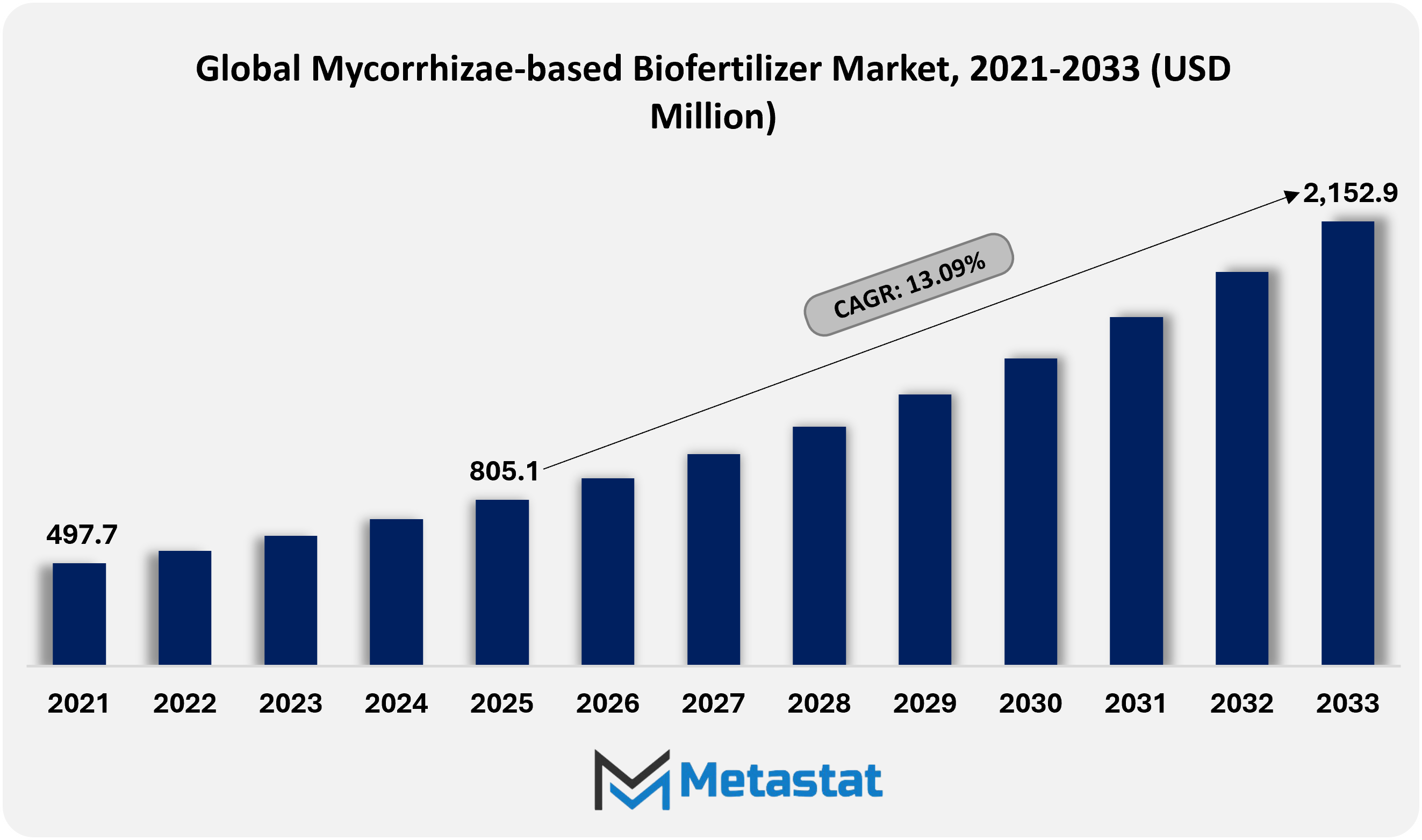
Rising shift toward organic and regenerative agriculture practices is accelerating adoption of biological soil inputs.
A steady transition toward organic and regenerative farming systems will support demand in the Global Mycorrhizae-based Biofertilizer market. Agricultural policies promoting chemical input reduction, soil carbon improvement, and biodiversity restoration are encouraging farmers to adopt fungal symbiosis solutions. Long-term soil health management strategies will position mycorrhizal applications as an important component of sustainable crop production systems.
Increasing soil degradation and nutrient imbalance concerns are promoting biofertilizer-based nutrient management strategies.
Widespread soil erosion, declining organic matter content, and micronutrient deficiencies are increasing the need for biological nutrient restoration approaches. The Global Mycorrhizae-based Biofertilizer market is benefiting from rising emphasis on improving root-soil interaction and phosphorus uptake efficiency. Agricultural extension programs and sustainability benchmarks will strengthen biofertilizer integration across diverse cropping systems.
Limited farmer awareness and variability in field performance under diverse soil conditions restrict large-scale penetration.
Limited awareness of mycorrhizal benefits continues to restrict faster adoption across rural farming communities. Field performance variability driven by soil pH, moisture levels, and crop compatibility also creates uncertainty around yield outcomes. The Mycorrhizae-based Biofertilizer market requires standardized agronomic guidelines, demonstration trials, and region-specific strain development to improve adoption consistency.
Short shelf life and sensitivity to storage conditions affect commercial distribution efficiency.
Sensitivity to temperature fluctuations and humidity exposure can reduce product stability during storage and transport. Supply chain inefficiencies will lower product viability before field application. Investment in improved carrier materials, encapsulation technologies, and cold-chain infrastructure will improve commercial distribution efficiency in the Global Mycorrhizae-based Biofertilizer market.
Integration of mycorrhizal inoculants with precision agriculture and microbial consortia formulations presents high-growth potential in sustainable crop intensification.
Technological convergence between digital farming tools and advanced microbial formulations is creating scalable growth opportunities. Precision application systems will improve inoculant placement, colonization rates, and nutrient exchange efficiency. Development of microbial consortia is also likely to enhance crop resilience under climate stress, supporting long-term expansion in sustainable crop intensification.
The Global Mycorrhizae-based Biofertilizer market is classified based on Type, Form, Mode of Application, and Crop Type.
Ectomycorrhiza segment is valued at USD 331.3 million in 2026 and is projected to reach USD 696.9 million by 2033, at a CAGR of 11.2% during the forecast period.
Ectomycorrhiza will gain strong traction in forestry, plantation crops, and high-value timber cultivation, where root symbiosis improves nutrient absorption and soil stability. Expansion of reforestation initiatives and carbon credit programs will support adoption. Scientific advances in strain selection will improve compatibility across diverse soil conditions, supporting sustainable land management practices.
Endomycorrhiza segment is valued at USD 578.4 million in 2026 and is projected to reach USD 1,456 million by 2033, at a CAGR of 14.1% during the forecast period.
Endomycorrhiza will witness strong demand across commercial agriculture owing to its role in phosphorus mobilization and crop resilience improvement. Rising focus on soil regeneration and reduced chemical fertilizer dependency is accelerating integration across large-scale farming systems. Improved formulations with higher spore viability are also enhancing field performance and yield predictability across multiple crop categories.
Liquid segment is projected to reach USD 1,112.2 million by 2033, at a CAGR of 15.2% during the forecast period.
Liquid formulations will witness strong growth owing to ease of application through drip irrigation and fertigation systems. Precision agriculture practices support uniform distribution and faster root colonization. Improved shelf-life stability and compatibility with integrated nutrient management programs are positioning liquid formulations as a preferred solution in modern farming systems.
Solid segment is projected to reach USD 1,040.7 million by 2033, at a CAGR of 11.2% during the forecast period.
Solid formulations will maintain steady demand in regions with limited irrigation infrastructure and conventional broadcasting methods. Granular and carrier-based products offer longer storage life and easier transport. Continued improvement in carrier technology will increase microbial survival rates, supporting more consistent field performance across diverse climatic conditions.
Seed Treatment segment is projected to reach USD 511.6 million by 2033.
Seed treatment will expand owing to its early-stage root colonization benefits and reduced input wastage. Mechanized sowing systems support uniform coating and efficient microbial delivery. Advanced seed treatment strategies are also likely to strengthen germination rates and early plant vigor under stress-prone conditions.
Soil Application segment is projected to reach USD 870.4 million by 2033.
Soil application will remain a dominant method owing to its compatibility with conventional fertilization practices. Large-acreage cultivation continues to rely on broadcast and basal incorporation techniques. Advances in soil microbiome research will support product customization based on regional nutrient deficiencies and cropping intensity patterns.
Root Dipping segment is projected to reach USD 317.9 million by 2033.
Root dipping will grow steadily in horticulture and plantation nurseries, where transplant survival rates directly affect profitability. Controlled microbial exposure during transplantation supports faster root establishment. Commercial nurseries will adopt standardized dipping protocols to improve crop uniformity across expanding greenhouse operations.
Foliar Spray segment is projected to reach USD 223 million by 2033.
Foliar spray adoption will rise through integration with organic crop protection schedules. Although root interaction remains the primary mechanism, ongoing research is exploring complementary plant health responses through leaf-surface interaction. Combined application methods within integrated farming systems will create supportive nutrient uptake pathways.
Others segment is projected to reach USD 229.9 million by 2033.
Other application methods, including fertigation mixing and nursery bed incorporation, will evolve alongside technological progress in irrigation systems. Customized delivery models for protected cultivation will improve microbial efficiency. Controlled-environment agriculture will also encourage innovative application formats aligned with automated nutrient management systems.
Cereals & Grains segment is projected to grow at a CAGR of 11.3% during the forecast period.
Cereals and grains will account for a significant share of consumption owing to their extensive cultivation area and the need to improve soil fertility. Large-scale producers are increasingly integrating biological inputs to stabilize yields under nutrient depletion conditions. Policy support for sustainable staple crop production will stimulate adoption across emerging agricultural economies.
Oilseeds & Pulses segment is projected to grow at a CAGR of 14.4% during the forecast period.
Oilseeds and pulses will benefit from symbiotic nutrient exchange that supports nitrogen fixation and phosphorus uptake. Rising demand for plant-based protein sources is encouraging biological soil enrichment practices. Crop rotation systems are also increasingly incorporating microbial inputs to sustain long-term soil productivity.
Fruits & Vegetables segment is projected to grow at a CAGR of 14.4% during the forecast period.
Fruits and vegetables will generate premium demand owing to their high-value output and quality sensitivity. Export-oriented growers are increasingly prioritizing residue-free cultivation supported by biological solutions. Expansion of protected cultivation and vertical farming will support adoption through improved nutrient efficiency and crop quality.
Plantation Crops segment is projected to grow at a CAGR of 13.6% during the forecast period.
Plantation crops such as coffee, tea, and rubber will adopt microbial formulations to improve root network strength and drought tolerance. Long crop cycles require sustained soil health management. Concerns related to climate variability are also encouraging the integration of biological soil amendments within estate management programs.
Others segment is projected to grow at a CAGR of 11% during the forecast period.
Other crop categories, including ornamental plants and medicinal herbs, will gradually incorporate microbial inputs to improve soil vitality. Urban landscaping and greenhouse cultivation will create additional pockets of demand. Sustainable certification frameworks are also encouraging biological alternatives across broader agricultural portfolios linked to the Global Mycorrhizae-based Biofertilizer market.
Based on geography, the Global Mycorrhizae-based Biofertilizer market is divided into North America, Europe, Asia-Pacific, South America, Middle East, and Africa.
North America Mycorrhizae-based Biofertilizer Market is set to expand at a CAGR of 13.1% within the forecast period, reaching a market size (TAM) of USD 475.6 million by the end of 2033.
In North America, strong adoption of sustainable agriculture practices is accelerating demand in the Mycorrhizae-based Biofertilizer market.
In Europe, supportive regulatory frameworks for organic farming and sustainable nutrient management are strengthening adoption in the Mycorrhizae-based Biofertilizer market.
In Asia Pacific, expanding organic farming acreage is creating new revenue potential in the Mycorrhizae-based Biofertilizer market.
Across South America and the Middle East & Africa, increasing focus on improving crop productivity under nutrient-poor soil conditions is supporting gradual expansion in the Mycorrhizae-based Biofertilizer market.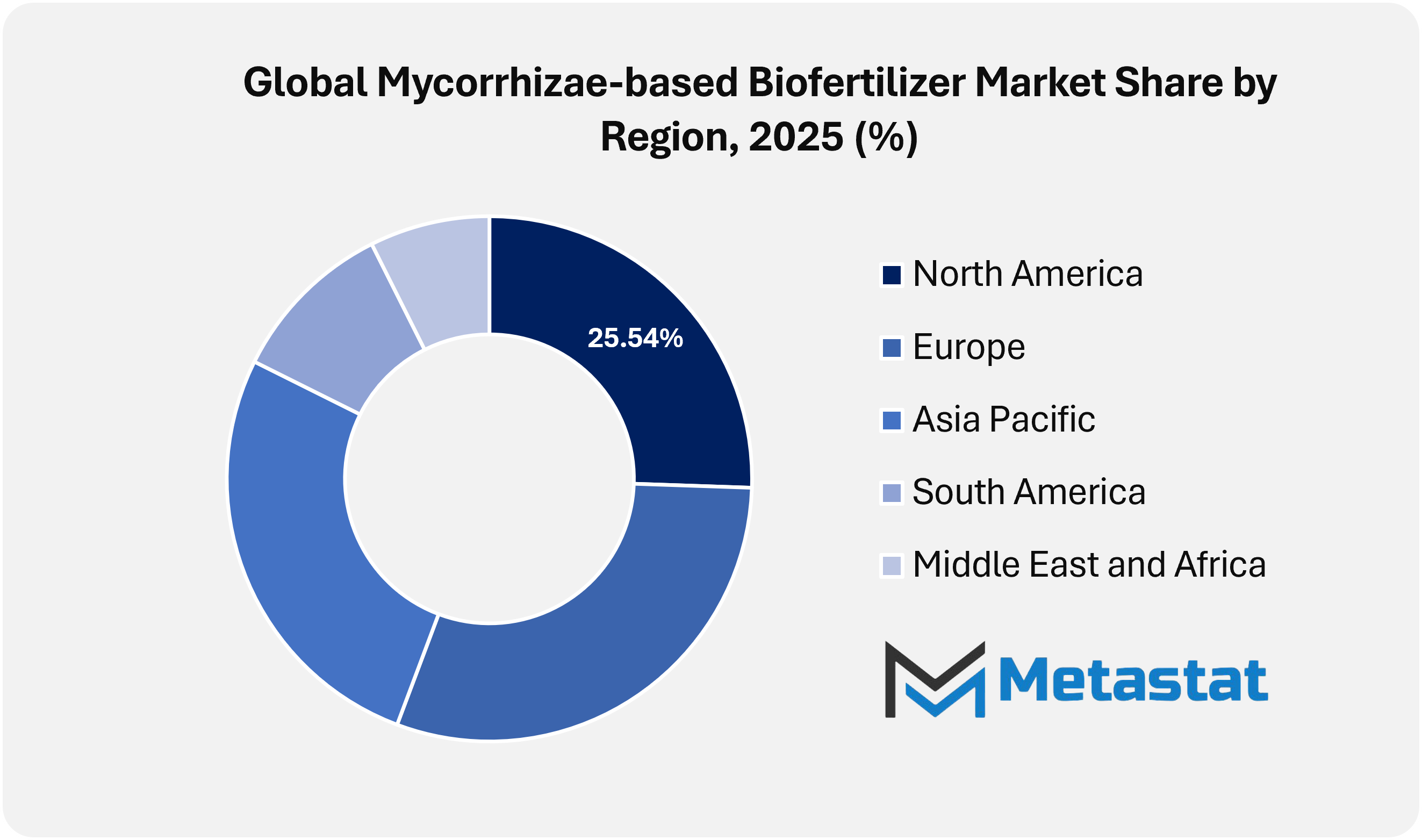
The Global Mycorrhizae-based Biofertilizer market is gaining strong attention as farmers seek practical solutions to improve soil health and crop productivity without excessive reliance on chemical inputs. Mycorrhizae are beneficial fungi that form a natural association with plant roots, helping plants absorb nutrients such as phosphorus and micronutrients more efficiently. With growing awareness of soil degradation and rising input costs, growers are shifting toward biological solutions to support long-term soil fertility. Governments and agricultural institutions are also encouraging sustainable farming practices, which will further strengthen demand for mycorrhizae-based products across both developed and emerging economies.
Farmers increasingly recognize that soil is a living system, and biological amendments can help restore balance in fields affected by prolonged synthetic fertilizer use. Mycorrhizae-based biofertilizers play an important role in improving root development, enhancing drought tolerance, and increasing nutrient uptake. These advantages are particularly valuable in regions facing water stress and declining soil organic matter. Small- and medium-scale farmers are adopting these products to reduce input costs over time, while large commercial farms are integrating them into precision agriculture programs. With rising awareness, the market will expand further across horticulture, plantation crops, forestry, and greenhouse cultivation.
Several companies are actively contributing to product innovation and geographic enlargement. Key players in the Global Mycorrhizae-primarily based Biofertilizer market consist of Groundwork BioAg Ltd., Premier Tech Ltd., Indo Gulf BioAg, Central Biotech Pvt. Ltd., IPL Biologicals Limited, Koppert B.V., Biofabrica Siglo XXI, S.A. De C.V., JH Biotech, Inc., Tainio Biologicals, Inc., Vegalab Inc., Biokrone, S.A. De C.V., Mycorrhizal Applications, LLC, Reforestation Technologies International, Symbiom s.R.O., MycoGold (M) Sdn. Bhd., Corteva Agriscience, Peptech Bio, Sheti Udyog, Sumitomo Chemical Chile S.A., Valent USA LLC, Suståne Natural Fertilizer, Inc., Innovative Solution Enterprise Pvt Ltd, Kay Bee Bio Organics Pvt. Ltd., Atens, Anand Agro Care, UNISUN Agro Private Limited, Italpollina S.P.A., Arizona Biotech Pvt. Ltd., EBS Krishi Bhandar, Mahesh Agri Science. These organizations specialize in research, product components, farmer education, and distribution partnerships to grow their presence in both domestic and global markets.
The competitive landscape reflects a mix of regional producers and multinational companies investing in biological crop nutrition. Many market participants are developing specialized strains suited to specific crops and soil conditions to improve performance consistency. Partnerships with agricultural cooperatives and input distributors will expand market reach into rural farming areas. As sustainability standards become stricter and consumers increasingly prefer residue-free produce, adoption of mycorrhizae-based biofertilizers will rise steadily. Over the coming years, the market will benefit from stronger scientific validation, supportive regulations, and broader farmer awareness regarding soil health and long-term productivity.
Market size is forecast to rise from USD 805.1 million in 2025 to over USD 2,152.9 million by 2033.
Investment will expand into vertical farming and controlled-environment agriculture, where root-fungal symbiosis will be optimized within advanced cultivation systems. As climate volatility intensifies, adaptive crop resilience strategies will incorporate mycorrhizal science into long-term food security planning. Through technological convergence, policy alignment, and scientific refinement, the industry will extend its influence from field-level supplementation to broader agricultural system transformation.
This research report categorizes the Mycorrhizae-based Biofertilizer market based on key segments and regions, forecasts revenue growth, and analyses trends in each submarket. The report analyses the key growth drivers, opportunities, and challenges influencing the Mycorrhizae-based Biofertilizer market. Recent market developments and competitive strategies such as expansion, product launch, partnership, merger, and acquisition have been included to draw the competitive landscape in the market.
The report strategically identifies and profiles the key market players and analyses their core competencies in each sub-segment of the Mycorrhizae-based Biofertilizer market.
|
Report Attributes |
Details |
|
Study Period |
2021-2033 |
|
Base Year |
2025 |
|
Estimated Year |
2026 |
|
Forecast Period |
2026-2033 |
|
Historical Period |
2021-2025 |
|
Growth Rate |
CAGR 13.1% from 2026 to 2033 |
|
Revenue Unit |
USD million |
|
Sales Volume Unit |
Kilotons |
|
Segmentation |
By Type, Form, Mode of Application, Crop Type, and Region |
|
By Region |
North America (By Type, Form, Mode of Application, Crop Type, and Country)
|
|
Europe (By Type, Form, Mode of Application, Crop Type, and Country)
|
|
|
Asia Pacific (By Type, Form, Mode of Application, Crop Type, and Country)
|
|
|
South America (By Type, Form, Mode of Application, Crop Type, and Country)
|
|
|
Middle East and Africa (By Type, Form, Mode of Application, Crop Type, and Country)
|
Find answers to common questions about this report
Top players operating in the Mycorrhizae-based Biofertilizer industry include Groundwork BioAg Ltd., Premier Tech Ltd., Indo Gulf BioAg, Central Biotech Pvt. Ltd., IPL Biologicals Limited, Koppert B.V., and Biofabrica Siglo XXI.
Global Mycorrhizae-based Biofertilizer market is estimated to reach USD 2,152.9 million by 2033.
Limited farmer awareness and variability in field performance under diverse soil conditions restrict large-scale penetration. will hamper the market growth within the forecast period.
Europe region dominates the market.
The Endomycorrhiza is the leading type segment in the Global market.
The Metastat Insights analysis shows that the North America Mycorrhizae-based Biofertilizer market size is estimated to be USD 475.6 million by 2033.
The Global Mycorrhizae-based Biofertilizer market is expected to grow at a CAGR of 13.1% over the forecast period (2026-2033).
The Metastat Insights study shows that the Global Mycorrhizae-based Biofertilizer market size was USD 805.1 million in 2025.
The analysts below cover Chemicals and Materials research at Metastat Insights.
LEAD ANALYST
Utkarsh Khirodkar is a Lead Market Research Analyst at MetaStat Insight, specializing in market intelligence, technology sector assessments, and competitive strategy.

INDUSTRY CONSULTANT - CHEMICALS & ADVANCED MATERIALS
Chemicals and Materials · Machinery & Equipment · Packaging
Amit Gadhekar Consultant for Chemicals and Materials at MetaStat Insight, directing sector-specific intelligence, research, and strategic consulting across global chemical and processing markets.
Floating offshore wind feasibility relies heavily on specialized installation vessel availability and port crane limits, which most broad renewable energy forecasts ignore. The report delivered a thorough analysis of dry dock capacity, mooring chain supply constraints, and raw material pricing trends for deepwater anchor installations. It served as a solid independent sanity check for our offshore project capital expenditure assumptions.
Assessing commercial microgrid software adoption requires looking past top-level installation numbers and examining utility interconnection queues. The research provided verifiable data on average permitting timelines, tariff structures, and battery storage integration costs across regional utility territories. That grounded perspective was valuable for our team when building five-year demand projections for industrial microgrid controllers.
Ambulatory surgical centers have very different purchasing cycles for robotic-assisted surgery platforms than major hospital networks. The MetaStat Insight study focused squarely on capital expenditure depreciation, procedural reimbursement pathways, and surgeon training overhead. That operational clarity made it much simpler to validate multi-year procedure growth forecasts against actual ambulatory center adoption patterns.
Explore related market intelligence reports worth reading alongside this one.
Starting from
$2950