
LEAD ANALYST
Utkarsh Khirodkar is a Lead Market Research Analyst at MetaStat Insight, specializing in market intelligence, technology sector assessments, and competitive strategy.

Global 2-Shot (2K) Injection Molding Market Size, Share, By Resin Type (Polypropylene (PP), Polycarbonate (PC), Acrylonitrile Butadiene Styrene (ABS), Polyamide (PA), Polystyrene (PS), Thermoplastic Elastomers (TPE), Thermoplastic Polyurethane (TPU), Silicone Rubber and Others (Nitrile Rubber, EPDM, Other Engineering Plastics), By Molding Process (Rotary-Platen Molding, Movable-Core Molding, Index-Plate Molding, Transfer Molding and Sliding-Table Molding), By Application (Automotive Components, Electrical and Electronics Components, Consumer Products, Medical Devices and Healthcare Components, Packaging Components, Industrial Components and Others (Specialty Functional Components), By End-Use Industry (Automotive, Electrical and Electronics, Medical and Healthcare, Consumer Goods, Packaging, Industrial Manufacturing and Others (Construction, Household Appliances), Industry Analysis, Growth, Trends, and Forecast, 2026-2033
Report ID
MSI-5724
Published
November, 2026
Pages
303 Pages
Format
Historical
Base year
Forecast
Forecast period
Report Details
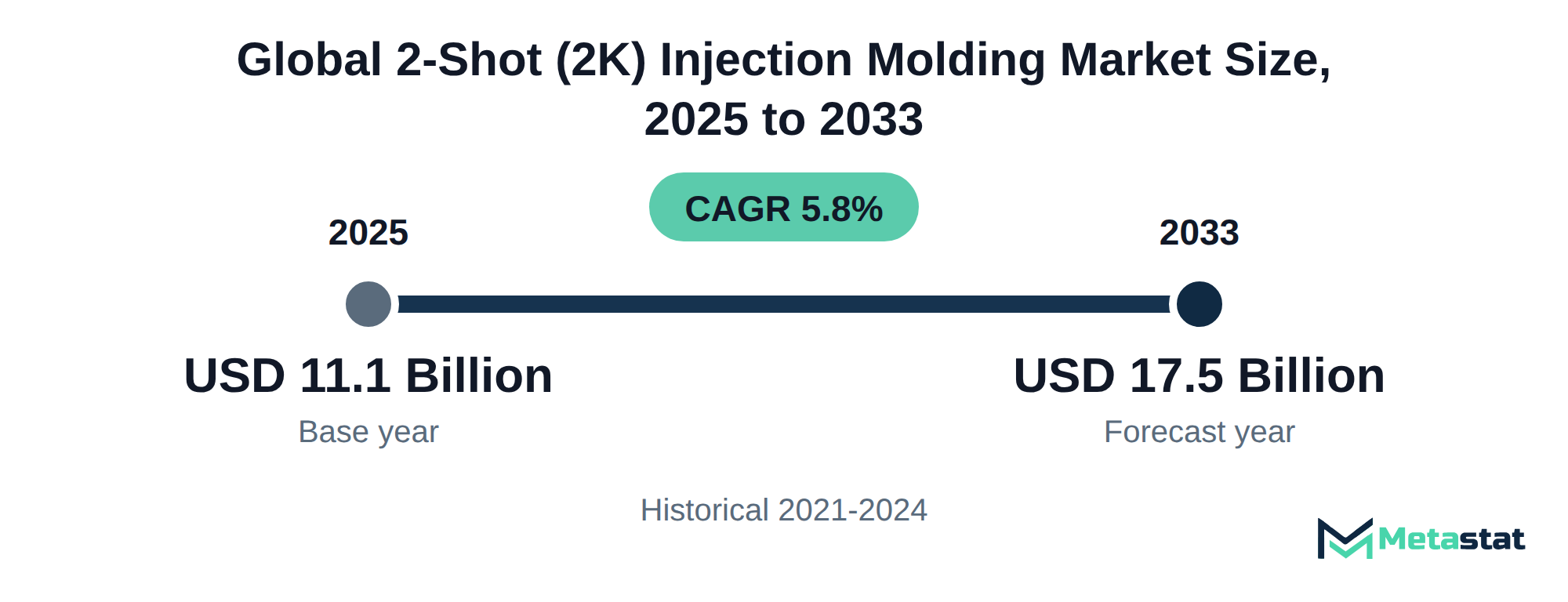
Market Valuation: Valued at $11.1 Billion in 2025, projected to reach $17.5 Billion by 2033 at a 5.8% CAGR.
Dominant Segment: The automotive components segment leads the market, driven by the industry's demand for lightweight and high-performance materials that enhance fuel efficiency and innovation.
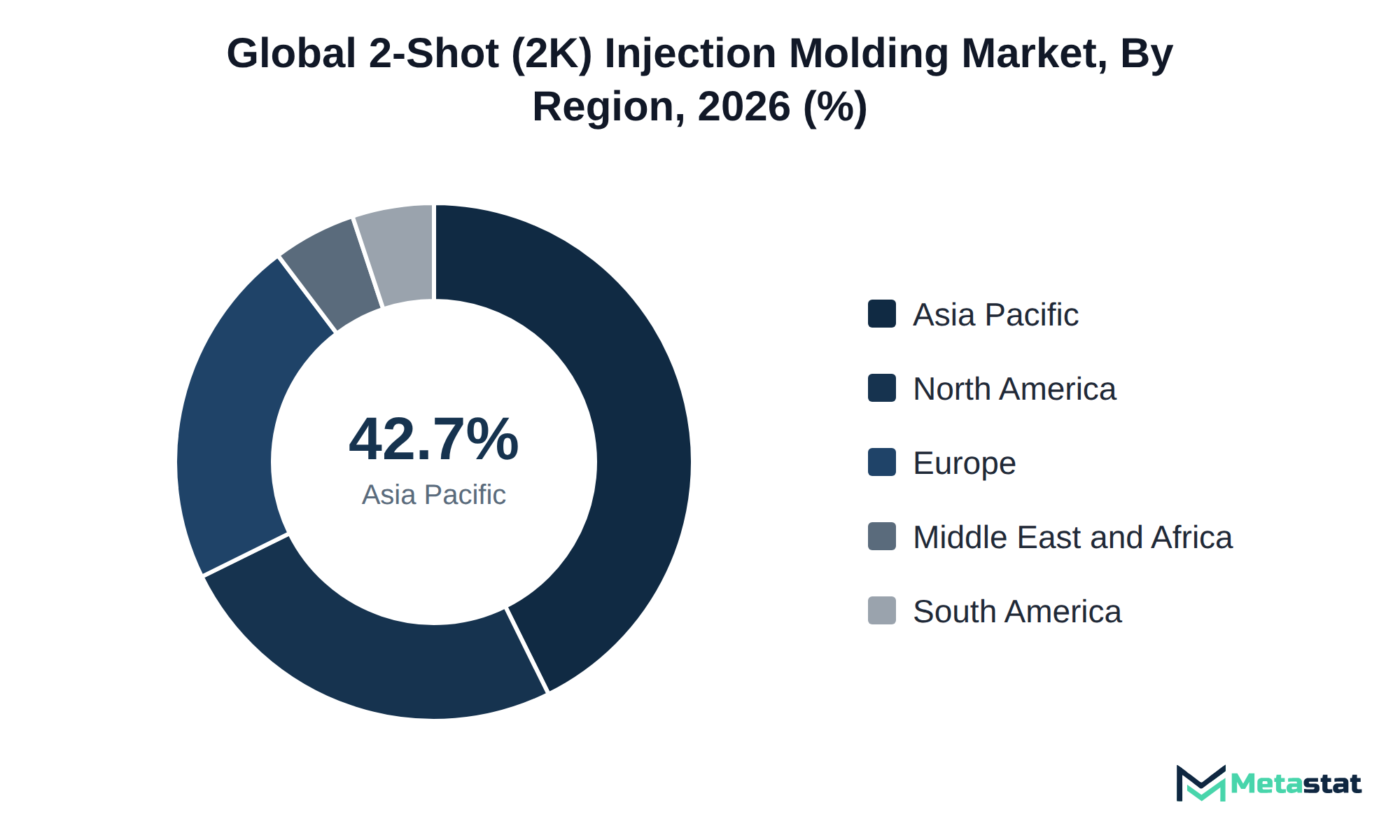
Geographic Lead: Asia Pacific dominates the market with a 42.7% share, attributed to its robust manufacturing capabilities and growing consumer markets.
What's Inside: The report provides comprehensive competitive coverage, detailed analyses of market dynamics, and forecasts extending from 2026 to 2033.
Key Growth Segments: The electrical and electronics components segment is projected to grow at a CAGR of 6.3%, reflecting advancements in technology and increasing demand for precision in consumer electronics.
Emerging Applications: Rapid growth in the automotive sector creates opportunities for innovative applications of 2-Shot molding technology, particularly in producing lightweight and complex parts.
Choose Your License
Global 2-Shot (2K) Injection Molding Market
The global 2-Shot (2K) Injection Molding market was valued at USD 11.1 billion in 2025 and is projected to reach USD 17.5 billion by 2033, growing at a CAGR of 5.8% over the forecast period.
The 2-Shot (2K) Injection Molding market encompasses a variety of processes and materials used to produce complex plastic parts through a dual-injection technique. Buyers invest in this market primarily due to the efficiency and versatility it offers for manufacturing high-quality components across multiple industries, including automotive, electronics, and healthcare. Combining different materials in a single part improves product functionality and adds to demand.
Growth in the market is fueled by increasing demand for lightweight and durable materials, particularly in the automotive sector. Readers interested in lightweight vehicle parts can also review the automotive lightweight plastic components market. Among the various segments, Polypropylene (PP) stands out with significant value, anticipated to reach USD 3.5 billion by 2033. In terms of regional distribution, Asia Pacific dominates the market with a share of 42.7%, reflecting the region's robust manufacturing capabilities and rising consumer markets.
North America holds 25.0% of the market in 2025, with the US leading in 2026. The integration of advanced technologies in the molding process, including automation and smart manufacturing techniques, supports efficiency and productivity, contributing to market expansion. Industries keep seeking new solutions to meet consumer demand, which supports sustainable growth in the 2-Shot (2K) Injection Molding market.
The 2-Shot (2K) Injection Molding market serves industries requiring high precision and efficiency in producing complex plastic components. Buyers invest in this market to use advanced manufacturing techniques that improve product quality and cut production time. The dual-injection process enables the creation of intricate designs and functionalities within a single component, appealing to sectors including automotive, medical, and electronics, where performance and durability are critical.
Growth in the market is driven by the increasing demand for lightweight, high-performance materials that improve the functionality of consumer products. The automotive components segment represents the largest share, reflecting trends toward innovation and sustainability in vehicle manufacturing. The focus on enhancing the efficiency of production processes contributes significantly to market expansion.
Key players within the market invest in research and development to meet evolving consumer demands and enhance production capabilities. Companies that adapt to market trends and technological advances gain a stronger competitive position. Continuous improvements in molding techniques raise operational efficiency and cost-effectiveness, supporting investment and growth.
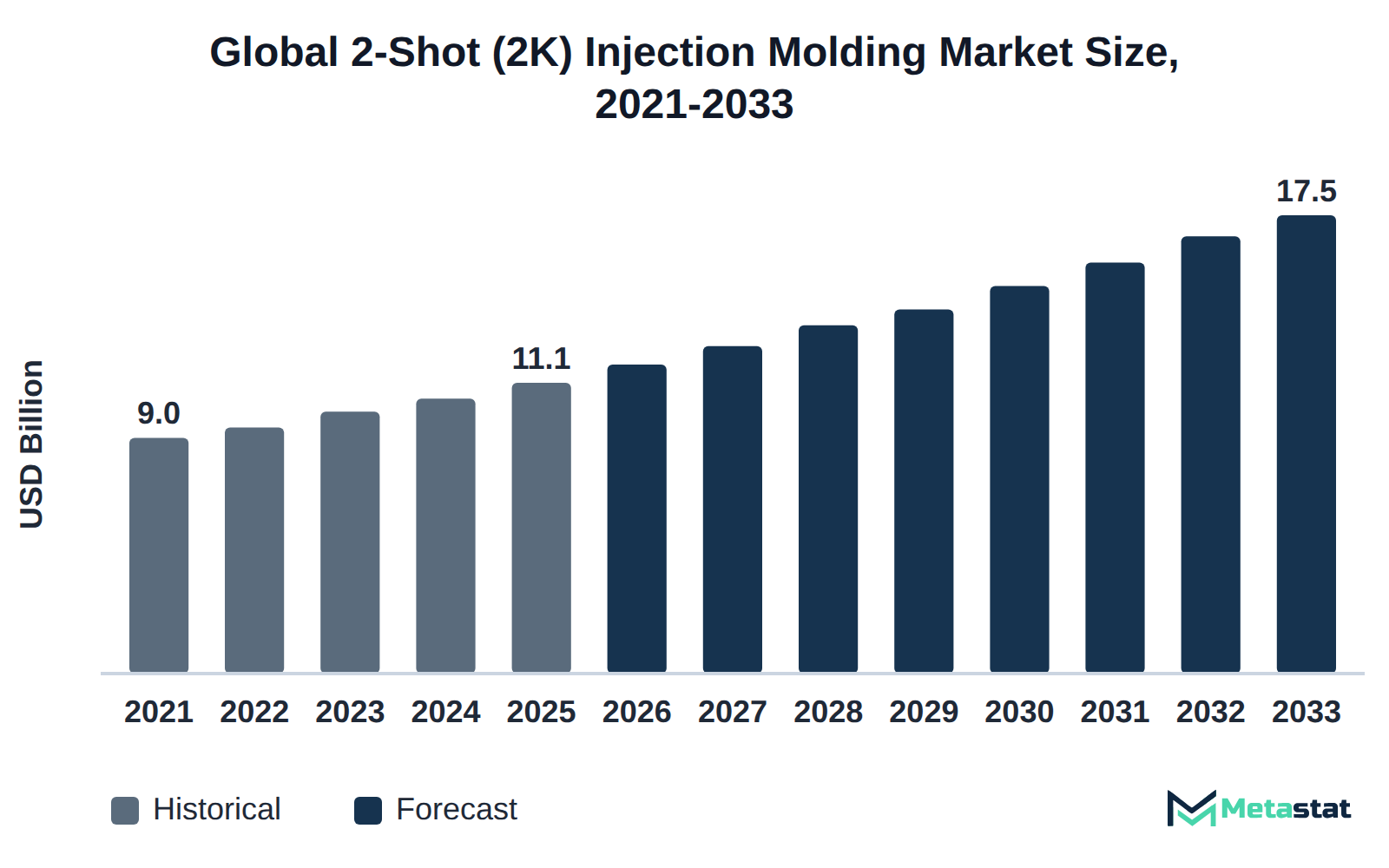
The integration of advanced robotics in the 2-Shot (2K) Injection Molding market enhances precision and efficiency in the manufacturing process. Robotics streamline repetitive tasks and improve overall productivity, enabling manufacturers to meet rising demand for high-quality molded components. In 2026, the market for automotive components is projected to reach USD 3.8 billion, reflecting the automotive industry's increasing reliance on efficient manufacturing methods. Automation reduces cycle times and minimizes human error, ensuring consistent product quality.
The adoption of smart technology and Industry 4.0 principles transforms traditional injection molding practices. Equipped with sensors and IoT capabilities, modern molding machines allow for real-time monitoring and data analysis, facilitating predictive maintenance and reducing downtime. This technological shift lowers operational costs and supports sustainability initiatives by optimizing resource consumption. The growth in efficiency and quality management positions manufacturers favorably in a competitive landscape.
These technological advancements in the 2-Shot (2K) Injection Molding market raise market share and profitability for companies that implement them successfully. The ability to produce complex geometries and multi-material components further differentiates offerings, catering to diverse consumer needs across various end-use industries.
The procurement process in the 2-Shot (2K) Injection Molding market emphasizes cost-effective strategies and value-driven contracts. Buyers evaluate multiple suppliers based on pricing models that include both fixed pricing and variable rate agreements. This flexibility allows manufacturers to optimize their budgets while ensuring quality and timely delivery.
In 2025, the market value reached USD 11.1 billion, reflecting strong competition among suppliers. Buyers leverage increased bargaining power, often negotiating terms that favor long-term partnerships. Several contracts include performance-based metrics, incentivizing suppliers to maintain high standards in production.
Specific applications, including automotive components, fetch varying prices based on material inputs and complexity. For instance, the anticipated growth in automotive components, with a value increase from USD 3.8 billion in 2026 to USD 5.4 billion by 2033, highlights the importance of cost management in procurement strategies. Buyers seek to align their purchasing decisions with market trends, ensuring they invest in technologies that enhance product durability and performance.
Overall, purchasing dynamics shape competition, pushing suppliers toward innovation and efficiency while they meet the needs of diverse industries.
Automotive manufacturers represent a significant buyer group in the 2-Shot (2K) Injection Molding market, prioritizing high-quality and durable components. This sector demands advanced manufacturing processes due to the stringent safety standards and performance requirements in vehicle production. The automotive components segment is projected to grow from USD 3.8 billion in 2026 to USD 5.4 billion by 2033, reflecting a compound annual growth rate (CAGR) of 5.2%. This growth indicates that automotive manufacturers increasingly rely on innovative molding techniques for producing complex parts efficiently.
In this competitive landscape, automotive companies emphasize lightweight materials to enhance fuel efficiency and performance. The shift towards electric vehicles further intensifies the focus on advanced manufacturing processes, necessitating suppliers to invest in advanced technologies and processes. This trend drives pricing strategies and operational investments across the supply chain. Meeting the specific requirements of automotive manufacturers ensures compliance with regulatory frameworks and drives innovation in product development.
The 2-Shot (2K) Injection Molding market experiences notable growth in specific segments driven by increasing demand across various applications. This expansion results from a rising need for lightweight, durable components in automotive manufacturing, aligning with industry trends favoring efficiency and sustainability.
Another significant area of growth lies in electrical and electronics components, expected to reach USD 4.6 billion by 2033, with a CAGR of 6.3%. This segment's development correlates with ongoing advancements in technology and consumer electronics, where manufacturers prioritize precision and performance. The market's ability to meet these evolving requirements enhances its attractiveness to buyers in this sector.
Identifying high-growth segments within the 2-Shot (2K) Injection Molding market allows stakeholders to align their strategies effectively. Focusing on automotive and electrical components, with their robust forecasts, presents valuable opportunities for investment and innovation in the coming years.
Automotive manufacturers drive significant demand for 2-Shot (2K) Injection Molding due to the industry's ongoing push for lightweight, durable, and high-performance materials. This demand reflects a shift towards incorporating advanced functionalities in vehicle components, requiring intricate designs that 2-shot molding effectively fulfills. The automotive sector increasingly adopts this technology for producing parts including dashboards and exterior trims, leveraging the dual-material capability to enhance aesthetics and functionality. This transition significantly influences production volume, necessitating larger investments in 2-shot molding technology to meet evolving consumer expectations for quality and innovation.
Heightened adoption of electrical and electronics components contributes to the 2-Shot (2K) Injection Molding market's growth, with manufacturers focused on delivering versatile, high-tech products in competitive segments.
Escalating prices for traditional resins significantly influence the 2-Shot (2K) Injection Molding market, prompting manufacturers to explore alternative material options. This shift stems from the increasing expenses associated with common plastics, which impacts overall production costs. Industries engaging in injection molding processes, including automotive and consumer goods, face financial pressure to maintain profit margins. In response, manufacturers invest in research and development to identify cost-effective substitutes that offer similar performance and durability. These alternative materials, including recycled plastics and bio-based resins, emerge as viable options to meet the evolving demands of end users while reducing dependency on volatile resin markets. The ongoing transition toward affordable materials drives innovation across the supply chain, stimulating competition among suppliers and expanding market opportunities. The drive to adopt alternative materials is expected to shape the future direction of the market, aligning production strategies with the economic realities of raw material pricing.
Escalating costs of resins present a significant restraint for buyers in the 2-Shot (2K) Injection Molding market, particularly impacting automotive and consumer goods manufacturers. The financial burden associated with higher material prices leads to a cautious approach in procurement, resulting in smaller order sizes and delayed replacement of existing machinery. Buyers often face challenges in aligning budgets with increasing operational costs, which slow down the adoption of advanced molding technologies. Consequently, manufacturers postpone investments in new equipment and processes, directly affecting market growth. This situation creates a ripple effect throughout the supply chain, where suppliers experience reduced demand for their products. The reluctance to invest in innovative solutions due to rising costs ultimately constrains market expansion and diminishes competitive positioning. Without favorable pricing structures, the potential for growth within the market diminishes, impacting overall profitability for stakeholders involved.
Suppliers in the 2-Shot (2K) Injection Molding market face significant challenges related to rising input costs, particularly for resins and energy. Continuous fluctuations in raw material prices impact profit margins, forcing suppliers to explore alternative sourcing strategies and materials. The escalation of energy prices further exacerbates this issue, particularly affecting manufacturing processes involving large energy consumption.
In response to these challenges, suppliers adopt various strategies, including optimizing production processes to enhance efficiency and reduce energy consumption. Investing in technology improvements is essential for minimizing waste and operational costs. Several suppliers investigate supply chain diversification to mitigate risks associated with reliance on specific materials or suppliers. These strategies aim to maintain competitiveness while navigating the prevailing cost pressures in the market.
Rapid growth in the automotive sector creates substantial opportunities within the market. This expansion results from strong demand for lightweight and high-performance parts in vehicles, driven by increasing consumer preferences for fuel efficiency and sustainability. Manufacturers actively seek innovative solutions that enhance performance while reducing overall vehicle weight.
Companies focusing on advanced materials and efficient production processes will capitalize on this trend. The integration of two-shot injection molding technology provides manufacturers with the capability to create complex geometries and multi-material components, addressing the growing requirements of automotive manufacturers. The combination of increased demand and technological advancements in production methods positions the market favorably for significant revenue growth during the forecast period.
The Global 2-Shot (2K) Injection Molding market is segmented based on Resin Type, Molding Process, Application, and End-Use Industry.
Polypropylene (PP) segment is valued at USD 2.5 billion in 2026 and is projected to reach USD 3.5 billion by 2033, at a CAGR of 5.1% during the forecast period. This resin type is extensively used in various applications, particularly in automotive components, packaging, and consumer products, where durability and lightweight properties are essential. The automotive sector represents a significant driver, with demand growing due to the increasing focus on fuel efficiency and performance. Compared to other resin types, Polypropylene (PP) demonstrates a moderate growth rate, differing from higher growth segments including Polycarbonate (PC), which experiences a CAGR of 6%. The application of Polypropylene (PP) provides cost advantages, appealing to manufacturers seeking efficient production methods while addressing environmental considerations through its recyclability.
Polycarbonate (PC) segment is estimated to reach USD 3.2 billion by 2033, at a CAGR of 6% during the forecast period. This resin type finds extensive use in industries including electrical and electronics, where durability and high transparency are critical. The segment experiences growth due to increasing demand for lightweight materials that offer excellent impact resistance, particularly in consumer electronics and automotive applications. The superior thermal stability of polycarbonate positions it advantageously compared to other resins like Acrylonitrile Butadiene Styrene (ABS), which grows at a CAGR lower than that of polycarbonate. Investment in R&D for innovative applications and processes enhances its competitive edge within the market. Factors including regulatory standards and the need for sustainable materials drive innovation, supporting further development and adoption across various sectors.
Acrylonitrile Butadiene Styrene (ABS) segment is expected to reach USD 2.9 billion by 2033. This resin type is predominantly used in the production of durable consumer products, automotive components, and electrical housings. Industries favor ABS due to its excellent impact resistance, rigidity, and versatility, which support design flexibility. Growth in this segment is driven by increasing demand from the automotive and electronics sectors, reflecting a shift toward lighter and more efficient materials. With a projected CAGR of 6.1%, ABS outpaces many other resin types in terms of growth, highlighting its competitive edge. Buyers prefer ABS for its cost-effectiveness compared to alternatives, while continuous advancements in molding technologies enhance its applicability across various sectors. These factors together fuel the expansion of ABS within the 2-Shot (2K) Injection Molding market.
Polyamide (PA) segment is projected to grow at a CAGR of 6.1% during the forecast period. This material finds extensive use in automotive, electrical, and healthcare applications, where durability and strength are critical requirements. Demand stems from the increasing focus on lightweight components that enhance fuel efficiency and performance in vehicles. The automotive industry particularly benefits from the favorable properties of Polyamide, including its resistance to heat and chemicals, which sets it apart from other resin types. Compared to Polypropylene (PP) and Acrylonitrile Butadiene Styrene (ABS), which have lower growth rates of 5.1% and 5% respectively, Polyamide's higher growth potential reflects its expanding applications and the trend toward advanced materials. Increased innovation in processing technologies further supports this segment's prominence in the market.
Polystyrene (PS) functions as a versatile thermoplastic commonly used in the production of consumer goods, packaging, and various industrial applications. Manufacturers in the automotive and electronics sectors frequently seek Polystyrene components due to its lightweight nature and ease of processing. Demand for this resin type experiences fluctuations driven by market dynamics, particularly in response to shifts in oil prices, which directly influence production costs. Compared to other resin types, Polystyrene typically exhibits a lower price point, making it an attractive option for budget-conscious manufacturers. However, its growth potential is limited relative to segments like Polycarbonate (PC) or Polypropylene (PP), which demonstrate higher CAGR figures, reflecting stronger demand in specific applications. The market increasingly recognizes the value of Polystyrene for its unique properties, although its overall adoption does not parallel that of faster-growing alternatives.
Thermoplastic Elastomers (TPE) are a unique category of materials exhibiting rubber-like flexibility combined with thermoplastic processing capabilities. These materials find utility in various applications, including automotive components, consumer products, and medical devices, where resilience and durability are critical. The demand for TPEs is driven primarily by the automotive and electronics industries, which seek lightweight and flexible materials that maintain performance under diverse conditions. Compared to other resin types, TPE typically commands higher prices due to its specialized properties and manufacturing requirements. The segment's growth is supported by the increasing push for sustainable and recyclable materials, compelling manufacturers to innovate and adapt their product offerings. This shift positions TPEs favorably against traditional materials, further enhancing their appeal in the market.
Thermoplastic Polyurethane (TPU) stands out for its versatility and durability, making it a valuable material in various applications. This resin type serves primarily in automotive, electrical, and consumer product sectors, meeting demands for high-performance components. The increasing focus on lightweight materials drives adoption in the automotive industry, where manufacturers prioritize fuel efficiency and reduced emissions. The trend toward enhanced flexibility and abrasion resistance in consumer products supports growth in this segment. Comparison with other resin types shows that TPU typically commands a higher price point, reflecting its specialized properties and performance benefits. Demand within the 2-Shot (2K) Injection Molding market aligns with advancements in technology and material requirements, further influencing the segment's trajectory.
Silicone Rubber is a versatile material used in various applications, particularly in industries including medical devices and consumer products. This material exhibits rubber-like elasticity and durability, making it suitable for high-performance products that require both flexibility and resistance to extreme conditions. Demand for Silicone Rubber experiences growth driven by increased innovation in medical device design and a rising emphasis on quality and performance in consumer goods. Compared to other resin types, Silicone Rubber often commands higher prices due to its specialized properties and processing requirements. Manufacturers focusing on this segment prioritize advanced production techniques to meet stringent quality standards, enabling them to cater to specific buyer needs within sectors that require reliable and durable materials. The market is expected to show strong potential for further expansion as more industries recognize the advantages of Silicone Rubber in their applications.
Others (Nitrile Rubber, EPDM, Other Engineering Plastics) encompass a variety of materials in specialized applications. These materials serve crucial roles in sectors including automotive manufacturing, medical devices, and consumer goods, where performance and durability are essential. Demand for these materials is driven by an increasing focus on sustainability and the need for lightweight solutions that enhance product efficiency. The segment distinguishes itself from other resin types through its unique properties, which cater to specific buyer requirements. In particular, the adoption of Nitrile Rubber and EPDM offers advantages in applications requiring strong resistance to chemicals and temperature variations. This segment typically appeals to manufacturers prioritizing reliability and performance rather than cost, influencing purchasing decisions and market dynamics. The 2-Shot (2K) Injection Molding market benefits from advancements in material technology, leading to improved formulations that meet evolving industry standards.
Rotary-Platen Molding segment is valued at USD 4.5 billion in 2026 and is projected to reach USD 6.4 billion by 2033, at a CAGR of 5.3% during the forecast period. This molding process finds application in producing intricate parts for industries including automotive and electronics, where precision and efficiency are critical. The driving force behind this segment lies in the increasing demand for high-quality components requiring fine detail and complex shapes. Compared to other molding processes, Rotary-Platen Molding offers faster cycle times and enhanced flexibility in design, appealing to manufacturers seeking to optimize production efficiency. The significant growth of the automotive sector, emphasizing lightweight and durable components, favors this segment's expansion. Ongoing technological advancements in molding equipment are expected to enhance production capabilities, further supporting the growth of the Rotary-Platen Molding segment within the 2-Shot (2K) Injection Molding market.
Movable-Core Molding segment is estimated to reach USD 4.4 billion by 2033, at a CAGR of 6.2% during the forecast period. This molding process is primarily applied in the production of complex components that require precision and flexibility. Industries including automotive and electronics use this technology extensively due to its ability to create intricate designs with high repeatability. The increasing demand for lightweight and advanced materials acts as a significant driver for this segment. Compared to other molding processes, Movable-Core Molding demonstrates a faster growth rate, appealing to manufacturers seeking enhanced efficiency and product performance. This segment's growth trajectory contrasts with traditional methods, positioning it favorably in the evolving 2-Shot Injection Molding market.
Index-Plate Molding segment is expected to reach USD 3.4 billion by 2033. This process is primarily for producing complex geometries and high-precision components, frequently serving the electrical and electronics sector, along with the automotive industry. Demand for efficient manufacturing processes drives growth in this segment, driven by technological advancements that enhance production capabilities. Compared to other molding processes, Index-Plate Molding is characterized by its ability to create intricate designs that require precise alignment, a feature that appeals to industries requiring high quality and reliability. The segment's anticipated growth rate reflects a CAGR aligned with ongoing innovations and increasing product requirements, positioning it strategically within the broader 2-Shot (2K) Injection Molding market.
Transfer Molding segment is projected to grow at a CAGR of 5.3% during the forecast period. This process is frequently used in the production of intricate components for various applications, particularly in the automotive and electrical industries. Demand for this segment arises from manufacturers seeking efficient methods to produce complex parts with high precision. The technology supports faster production rates compared to traditional molding processes, attracting buyers focused on reducing time-to-market. While other molding processes like Movable-Core Molding exhibit higher growth potential, Transfer Molding remains competitive due to its ability to accommodate a wide range of materials and designs. This versatility positions Transfer Molding strategically within the market, catering to diverse consumer needs while enhancing overall manufacturing efficiency.
Sliding-Table Molding is a specialized process used in the creation of complex geometries and components requiring intricate designs. This method serves several industries, including automotive and consumer goods, where precision and efficiency are critical. Demand for this segment is driven by the increasing complexity of product designs, leading manufacturers to seek innovative molding techniques. The rising emphasis on lightweight materials in automotive applications further supports this segment, with Sliding-Table Molding facilitating the creation of lightweight yet durable components. Compared to other molding processes, Sliding-Table Molding offers unique capabilities in producing multi-material parts, enhancing its appeal to specific buyer groups in high-performance applications. In the 2-Shot (2K) Injection Molding market, this sub-segment stands out due to its adaptability and precision, catering to the evolving requirements of modern manufacturing.
This segment is primarily applied in the automotive industry for manufacturing parts including dashboards, bumpers, and interior components. Factors driving demand include the increasing production of vehicles and the growing trend toward lightweight materials in automotive design. Compared to other applications, this segment experiences steady growth due to the consistent demand for vehicles and automotive upgrades. Automotive Components differs from segments like Electrical and Electronics Components, which is projected to grow at a higher CAGR of 6.3%, reflecting the dynamic nature of technology in consumer electronics. The market supports innovation and efficiency in automotive production, with manufacturers seeking to enhance vehicle performance while reducing weight and costs.
This segment is primarily used in the manufacturing of devices including smartphones, computers, and household appliances, serving industries that require high precision and reliability in their components. Demand for lightweight and durable materials drives growth in this segment, differentiating it from other applications in the market. The segment benefits from technological advancements that enhance production efficiency and product performance. Its faster growth compared to Automotive Components, which has a CAGR of 5.2%, highlights the increasing adoption of advanced electronics across various sectors. The market evolves as manufacturers seek innovative solutions to meet consumer expectations and regulatory standards.
Consumer Products segment is expected to reach USD 2.4 billion by 2033. This segment serves various consumer markets, including household items, personal care products, and leisure goods, appealing primarily to manufacturers focused on high-volume production. Growth in this segment is driven by increasing consumer demand for innovative and convenient household solutions, particularly in regions with rising disposable incomes. Unlike other segments, Consumer Products experiences faster growth, with a projected CAGR of 6.3%, reflecting a strong market trend toward personalization and sustainability. The segment's pricing strategies focus on affordability without compromising quality, which positions it favorably against other applications in the market. The ongoing shift toward e-commerce continues to enhance sales opportunities, improving the segment's overall performance in the 2-Shot (2K) Injection Molding market.
Medical Devices and Healthcare Components segment is projected to grow at a CAGR of 7% during the forecast period. This segment focuses on producing critical components used in medical devices and healthcare applications, serving manufacturers and healthcare providers. The increase in demand for advanced medical technologies and devices drives this segment, reflecting a growing global emphasis on healthcare quality and innovation. Regulatory standards, particularly in the medical field, require stringent compliance, impacting production processes. Compared to other segments, this segment experiences faster growth due to heightened investment in health technologies and increasing consumer awareness of healthcare solutions. The market shows a strong trajectory, distinguishing itself through higher demand and price sensitivity relative to other applications.
Packaging Components involve various types of containers and packaging solutions developed for multiple applications. These components serve essential roles in industries including food and beverage, consumer goods, and pharmaceuticals. The driving force behind this segment includes increasing demand for sustainable and eco-friendly packaging solutions among consumers and regulatory agencies. This trend compels manufacturers to innovate and adapt their offerings. Compared to other applications in the segment, Packaging Components typically feature a different pricing structure and reflect faster growth due to rising focus on sustainability and convenience in packaging solutions. The 2-Shot (2K) Injection Molding market benefits from advancements in materials and processes that enhance the efficiency and functionality of these components.
Industrial Components consist of various components used in a range of industrial applications, including machinery, equipment, and tools. Industries including manufacturing, construction, and automation heavily rely on these components to enhance operational efficiency and productivity. Demand in this segment is influenced by ongoing industrialization and advancements in automation technologies. Unlike other application segments, Industrial Components experience slower growth, reflecting a more stable demand compared to the changing market for Automotive Components or Electrical and Electronics Components. This stability is attributed to the long-term nature of industrial projects and the necessity for high-quality, durable components that ensure reliable performance over time. The 2-Shot (2K) Injection Molding market continues to support the growth of this segment, driven by persistent demand for innovative and efficient manufacturing solutions.
Specialty functional components serve specific purposes in diverse applications, addressing unique consumer needs. These components find usage in industries including automotive, medical devices, and electronic equipment, contributing to product differentiation and performance enhancement. Demand for these components is driven by technological advancements and customization requirements across various end-use sectors. This sub-segment typically experiences growth aligned with innovations in material science and design, setting it apart from more standardized applications like automotive components. While other segments focus on high-volume production, specialty functional components prioritize quality and tailored solutions, which often results in higher price points compared to mass-market alternatives. The 2-Shot (2K) Injection Molding market continues to evolve, reflecting increasing demand for specialized components that meet the exacting standards of modern industries.
Valued at USD 3.7 billion in 2026, this segment is projected to reach USD 5.2 billion by 2033, at a CAGR of 5.2% during the forecast period. The automotive sector employs 2-Shot (2K) injection molding for manufacturing components including dashboards, interior trim, and exterior panels. Key drivers of this segment include increasing demand for lightweight materials and the trend toward electric vehicles, which require innovative components. Compared to other applications, the automotive segment experiences a moderate growth rate and caters to a diverse range of buyers, including automotive manufacturers and suppliers. This segment's focus on advanced materials and technologies differentiates it from others, including consumer products, which prioritize cost efficiency over specialized applications. The growth of the automotive industry directly influences demand for 2-Shot (2K) injection molding, contributing to the overall expansion of the market.
Electrical and Electronics segment is estimated to reach USD 4.4 billion by 2033, at a CAGR of 6.4% during the forecast period. This segment provides components for various electronic devices, including consumer electronics, telecommunications equipment, and industrial electronics. The segment benefits from advancements in technology and increased demand for high-performance components, driven primarily by innovations in smart devices and automation. Compared to other segments, this area experiences a faster growth rate due to the rising integration of electronics across various industries. This trend reflects the shift towards more sophisticated electronic solutions, resulting in higher demand for injected molded components tailored to specific functionalities and performance standards.
The Medical and Healthcare segment is expected to reach USD 2.4 billion by 2033. This segment focuses on the production of medical devices and healthcare components used in hospitals, clinics, and home care settings. The increasing demand for advanced healthcare solutions drives growth, alongside a rising emphasis on patient safety and compliance with stringent regulations. This segment differentiates itself through a higher growth rate, with a CAGR of 7% anticipated during the forecast period, outperforming other segments. Factors including technological advancements in medical devices and the need for improved healthcare outcomes significantly influence this segment's trajectory. Unlike other segments, the Medical and Healthcare segment attracts buyers focused on quality and regulatory adherence, impacting pricing strategies.
The Consumer Goods segment is projected to grow at a CAGR of 5.2% during the forecast period. This segment focuses on products intended for everyday use, catering primarily to individual consumers. Several factors influence growth in this area, including changing consumer preferences and increasing disposable incomes, which drive demand for innovative and functional products. Compared to other segments, including Automotive Components, which targets a specific industry, the Consumer Goods segment appeals to a broader audience, resulting in a more diverse product range. The growing trend toward sustainable products further enhances the appeal of this segment, creating opportunities for companies to innovate and differentiate their offerings. The market's expansion in this segment reflects a shift toward consumer-driven product development, emphasizing the importance of understanding market dynamics in the 2-Shot (2K) Injection Molding market.
Packaging serves a critical role in the distribution and protection of goods across various industries, including food and beverage, cosmetics, and pharmaceuticals. Manufacturers in these sectors apply 2-Shot (2K) Injection Molding technology to create durable, lightweight, and cost-effective packaging solutions. Demand for sustainable and innovative packaging drives growth within this segment, as companies seek to enhance product appeal while addressing environmental concerns. This segment differentiates itself from others through its focus on customization and material efficiency, often leading to higher production costs due to the intricacies involved in creating multi-material packaging. Growth in e-commerce further increases the need for effective packaging solutions, aligning with broader trends in the 2-Shot (2K) Injection Molding market.
Industrial Manufacturing encompasses a range of processes involved in the production of goods for various sectors. This segment serves industries including machinery, tooling, and equipment manufacturing, where precision and durability are crucial. Adoption of advanced technologies and innovative materials drives growth in this segment. Companies focus on enhancing product performance and reducing production costs to attract buyers. Compared to other segments, the Industrial Manufacturing sub-segment experiences steadier demand due to consistent needs across multiple industries. This stability contrasts with more volatile segments that cater to rapidly changing consumer preferences, reinforcing the position of Industrial Manufacturing within the market.
This segment includes products used in construction and household appliances, serving a diverse range of applications. Construction firms and appliance manufacturers rely on these products for durability and design versatility. Demand for innovative and efficient materials drives growth in this segment, with companies seeking to enhance product functionality while minimizing costs. This segment differs from others by focusing on specialized applications that require unique material properties, influencing pricing strategies. Compared to segments including Automotive Components, this area experiences slower growth due to the established nature of the construction and household appliance markets.
Based on geography, the Global 2-Shot (2K) Injection Molding market is divided into North America, Europe, Asia-Pacific, South America, Middle East, and Africa.
Strong demand for the 2-Shot (2K) Injection Molding market in North America stems from significant investment in the automotive and electrical industries. The United States, Canada, and Mexico drive this demand, particularly within sectors requiring high precision in manufacturing processes. North America benefits from a well-developed infrastructure and advanced technological capabilities, enhancing production efficiencies. The market is projected to reach USD 4.2 billion by the end of 2033. Regulatory support for sustainable manufacturing practices influences production choices, facilitating the adoption of advanced materials. The automotive sector, in particular, emphasizes lightweight and durable components, creating opportunities for growth within the market.
Key drivers include the automotive and electrical sectors, which rely heavily on advanced molding techniques to produce high-precision components. Countries including Germany and France exhibit a well-established manufacturing infrastructure, allowing for efficient production processes. Rising demand for lightweight and durable materials in automotive components drives investment in innovative molding technologies. The region's focus on sustainability and regulatory compliance further shapes market dynamics, compelling suppliers to adopt environmentally friendly practices and materials. France and Italy enhance market growth by prioritizing research and development initiatives in the medical devices sector, highlighting the region's emphasis on technological advancement. The market trajectory reflects broader economic conditions, consumer preferences, and regulatory shifts.
Asia-Pacific stands out in the 2-Shot (2K) Injection Molding market, driven by robust demand from various industries, particularly automotive and electrical. Countries including China and India lead in production capacity and consumption, significantly influencing regional growth. The development of advanced manufacturing infrastructure in these nations enhances efficiency and reduces costs, improving competitiveness. Regulatory frameworks supporting innovation and sustainability further stimulate market expansion. The market share is projected to reach 42.7% in 2025, reflecting the region's important role in global trends. Suppliers in Japan and South Korea emphasize technology integration and product development to meet evolving consumer needs, ensuring the market remains dynamic and responsive.
Brazil and Argentina drive the 2-Shot (2K) Injection Molding market in South America, primarily due to the growing automotive and consumer goods sectors. The adoption of advanced manufacturing technologies influences production efficiency, enhancing the competitiveness of local manufacturers. Cost factors, including raw material pricing and labor, impact operational strategies in this region. By 2025, South America is projected to capture a 5.1% share of the global market, reflecting steady growth opportunities. Investments in infrastructure improvements support increasing demand for innovative products in the medical and consumer sectors, propelling market expansion. Sustainability practices gain traction, prompting the market to adapt to evolving consumer preferences and driving new applications across various industries.
In the Middle East and Africa, the market accounts for USD 1,004.1 million of the global total in 2025. Countries including Saudi Arabia and the UAE exhibit an increasing focus on enhancing manufacturing capabilities, creating an environment conducive to growth. South Africa contributes to this trend, leveraging its diverse industrial base to support expansion in the market. Challenges related to infrastructure and regional economic conditions influence the adoption rates of advanced molding technologies, impacting overall growth potential.
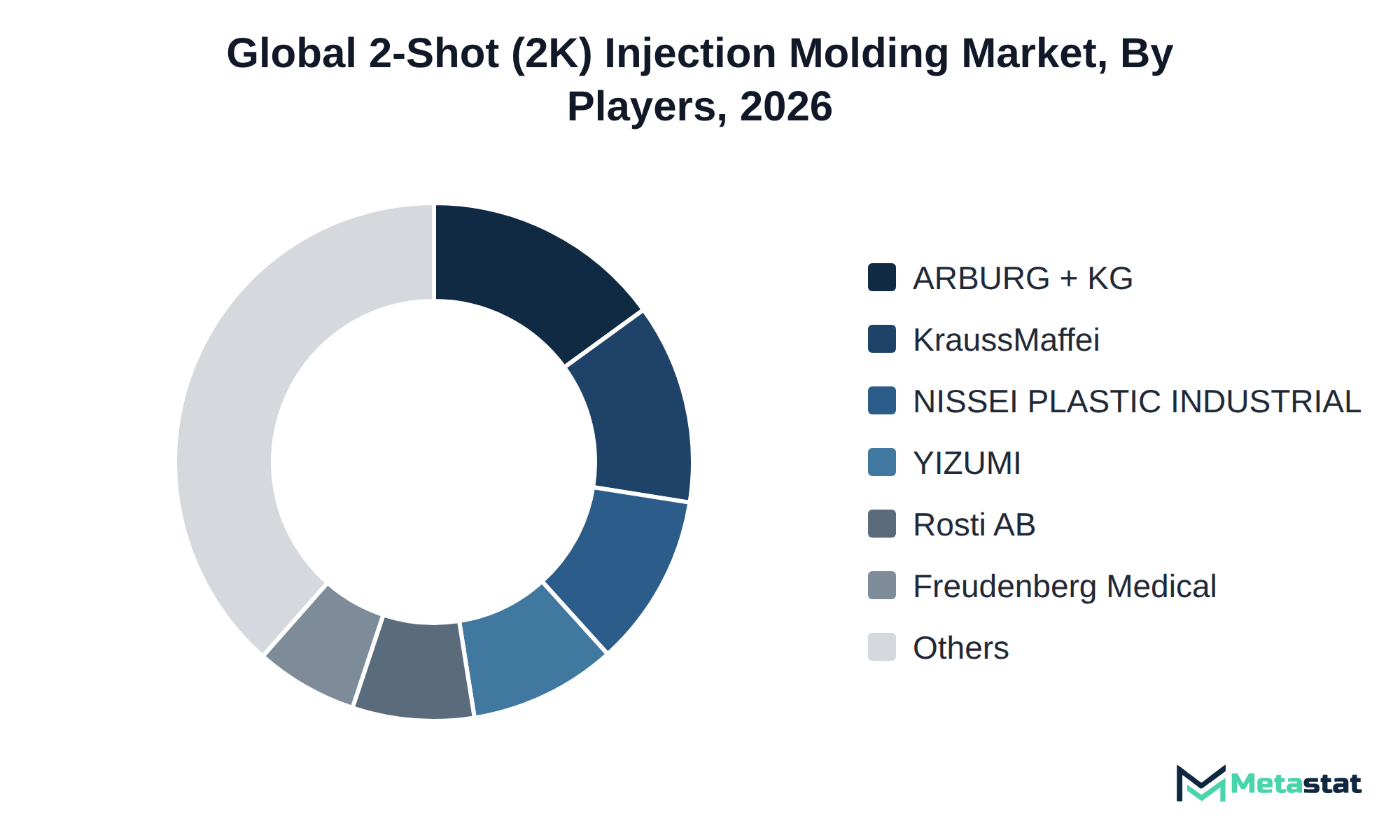
Competition in the 2-Shot (2K) Injection Molding market reflects varied strategies among participating companies. Firms differentiate themselves through factors including price, customization, certifications, and service offerings, catering to various buyer preferences. Buyers prioritize these aspects based on their specific needs and industry demands, influencing their purchasing decisions.
ARBURG GmbH + Co KG focuses on innovative solutions and advanced technology within the market. KraussMaffei Group GmbH emphasizes comprehensive service offerings and technical support to enhance customer satisfaction. NISSEI PLASTIC INDUSTRIAL CO., LTD. highlights expertise in delivering high-quality machinery tailored for precision applications.
YIZUMI Holdings Co., Ltd. stands out through a commitment to cost-effective production methods, appealing to budget-conscious buyers. Dr. Boy GmbH & Co. KG targets niche segments within the market with specialized products. This competitive mix drives continuous advancements and service improvements, ensuring alignment with evolving market trends.
First, increased adoption of advanced molding processes, including Movable-Core Molding, is expected to drive efficiency and respond to the rising demand across various applications, particularly in the automotive and electronics sectors. Second, the growth of high-performance resin types, including Polycarbonate (PC) and Polyamide (PA), will enhance product performance, appealing to manufacturers seeking competitive advantages in the market. On the other hand, potential risks exist that could impede this growth. Economic fluctuations, particularly in key regions like Asia Pacific, affect overall investment in manufacturing and production capabilities. Should these risks materialize, the market could experience slower expansion, impacting the forecasted revenue for 2033. Therefore, while the outlook points to a growth trajectory, careful attention to these factors will shape the market's future path.
By Resin Type: Polypropylene (PP), Polycarbonate (PC), Acrylonitrile Butadiene Styrene (ABS), Polyamide (PA), Polystyrene (PS), Thermoplastic Elastomers (TPE), Thermoplastic Polyurethane (TPU), Silicone Rubber, Others (Nitrile Rubber, EPDM, Other Engineering Plastics)
By Molding Process: Rotary-Platen Molding, Movable-Core Molding, Index-Plate Molding, Transfer Molding, Sliding-Table Molding
By Application: Automotive Components, Electrical and Electronics Components, Consumer Products, Medical Devices and Healthcare Components, Packaging Components, Industrial Components, Others (Specialty Functional Components)
By End-Use Industry: Automotive, Electrical and Electronics, Medical and Healthcare, Consumer Goods, Packaging, Industrial Manufacturing, Others (Construction, Household Appliances)
The report strategically identifies and profiles the key market players and analyses their core competencies in each sub-segment of the 2-Shot (2K) Injection Molding market.
Report Attributes | Details |
Study Period | 2021-2033 |
Base Year | 2025 |
Estimated Year | 2026 |
Forecast Period | 2026-2033 |
Historical Period | 2021-2025 |
Growth Rate | CAGR 5.8% from 2026 to 2033 |
Revenue Unit | USD billion |
Segmentation | By Resin Type, Molding Process, Application, End-Use Industry, and Region |
By Region | North America (By Resin Type, Molding Process, Application, End-Use Industry, and Country)
|
Europe (By Resin Type, Molding Process, Application, End-Use Industry, and Country)
| |
Asia Pacific (By Resin Type, Molding Process, Application, End-Use Industry, and Country)
| |
South America (By Resin Type, Molding Process, Application, End-Use Industry, and Country)
| |
Middle East and Africa (By Resin Type, Molding Process, Application, End-Use Industry, and Country)
|
Find answers to common questions about this report
The 2-Shot (2K) Injection Molding market size was valued at USD 11.1 billion in 2025.
The market is projected to grow at a CAGR of 5.8% during the forecast period from 2026 to 2033.
The North America 2-Shot (2K) Injection Molding market size is estimated to reach USD 4.2 billion by 2033.
Polypropylene (PP) leads the 2-Shot (2K) Injection Molding market with a projected value of USD 3.5 billion by 2033, based on its growth trajectory compared to other resin types.
Key drivers for the 2-Shot (2K) Injection Molding market include significant demand from automotive manufacturers seeking lightweight, durable, and high-performance materials. The shift toward affordable alternative materials encourages innovation across the supply chain, enhancing competition among suppliers and expanding market opportunities.
Escalating costs of resins restrain growth in the 2-Shot (2K) Injection Molding market, particularly impacting automotive and consumer goods manufacturers. Higher material prices lead to cautious procurement approaches, resulting in smaller order sizes and delayed investments in advanced technologies.
Rapid growth in the automotive sector creates substantial opportunities, with the automotive components segment projected to reach USD 5.4 billion by 2033. The demand for lightweight and high-performance parts, driven by consumer preferences for fuel efficiency and sustainability, favors the adoption of advanced materials and efficient production processes.
The 2-Shot (2K) Injection Molding market is estimated to reach a valuation of USD 17.5 billion by 2033.
Key players operating in the 2-Shot (2K) Injection Molding market include ARBURG GmbH + Co KG, KraussMaffei Group GmbH, NISSEI PLASTIC INDUSTRIAL CO., LTD., YIZUMI Holdings Co., Ltd., Dr. Boy GmbH & Co. KG, and Rosti Group AB.
The automotive industry drives demand for 2-Shot (2K) Injection Molding due to the need for lightweight, durable, and high-performance materials. This shift involves incorporating advanced functionalities in vehicle components, enhancing aesthetics and functionality.
The analysts below cover Chemicals and Materials research at Metastat Insights.
LEAD ANALYST
Utkarsh Khirodkar is a Lead Market Research Analyst at MetaStat Insight, specializing in market intelligence, technology sector assessments, and competitive strategy.

INDUSTRY CONSULTANT - CHEMICALS & ADVANCED MATERIALS
Chemicals and Materials · Machinery & Equipment · Packaging
Amit Gadhekar Consultant for Chemicals and Materials at MetaStat Insight, directing sector-specific intelligence, research, and strategic consulting across global chemical and processing markets.
Replacing petrochemical surfactants with bio-based alternatives requires realistic timelines on industrial precision fermentation scaling. The market research broke down commercialization timelines, feedstock sugar price sensitivities, and regional cosmetic ingredient regulatory approvals in Europe and East Asia. That supplier readiness mapping gave our formulations team reliable context when comparing renewable chemical sourcing roadmaps.
Tracking ceramic matrix composite adoption in high-bypass aero engines requires strict attention to material qualification cycles and FAA airworthiness testing milestones. The MetaStat Insight team provided a detailed timeline of silicon carbide fiber manufacturing capacity and commercial foundry lead times. Having clear visibility into upstream thermal barrier coating supply helped us stress-test our long-term component procurement strategy.
Transitioning ultra-class mining haul trucks to alternative power requires concrete data on remote hydrogen refueling infrastructure economics. The report evaluated megawatt-scale electrolyzer installation expenses, onsite storage safety mandates, and heavy-duty fuel cell stack degradation under continuous duty cycles. That technical rigor helped our engineers benchmark realistic total operating cost horizons for off-highway fleet decarbonization.
Explore related market intelligence reports worth reading alongside this one.