
LEAD ANALYST
Utkarsh Khirodkar is a Lead Market Research Analyst at MetaStat Insight, specializing in market intelligence, technology sector assessments, and competitive strategy.

Global Thermoplastic Polyurethane (TPU) Market Size, Share, By Product Type (Polyester-Based TPU, Polyether-Based TPU, Polycaprolactone-Based TPU, Polycarbonate-Based TPU and Hybrid Polyol-Based TPU), By Form (TPU Pellets, TPU Powder, TPU Films and Sheets, TPU Adhesive Films and TPU Compounding Grades), By Processing Method (Injection Molding, Extrusion, Calendering, Additive Manufacturing and Compression Molding), By End-Use Industry (Footwear, Industrial Machinery and Equipment, Automotive and Transportation, Electrical and Electronics, Textiles and Apparel, Healthcare and Medical Devices, Consumer Goods, Building and Construction, Packaging and Agriculture), Industry Analysis, Growth, Trends, and Forecast, 2026-2033
Report ID
MSI-5528
Published
October, 2026
Pages
290 Pages
Format
Historical
Base year
Forecast
Forecast period
Report Details
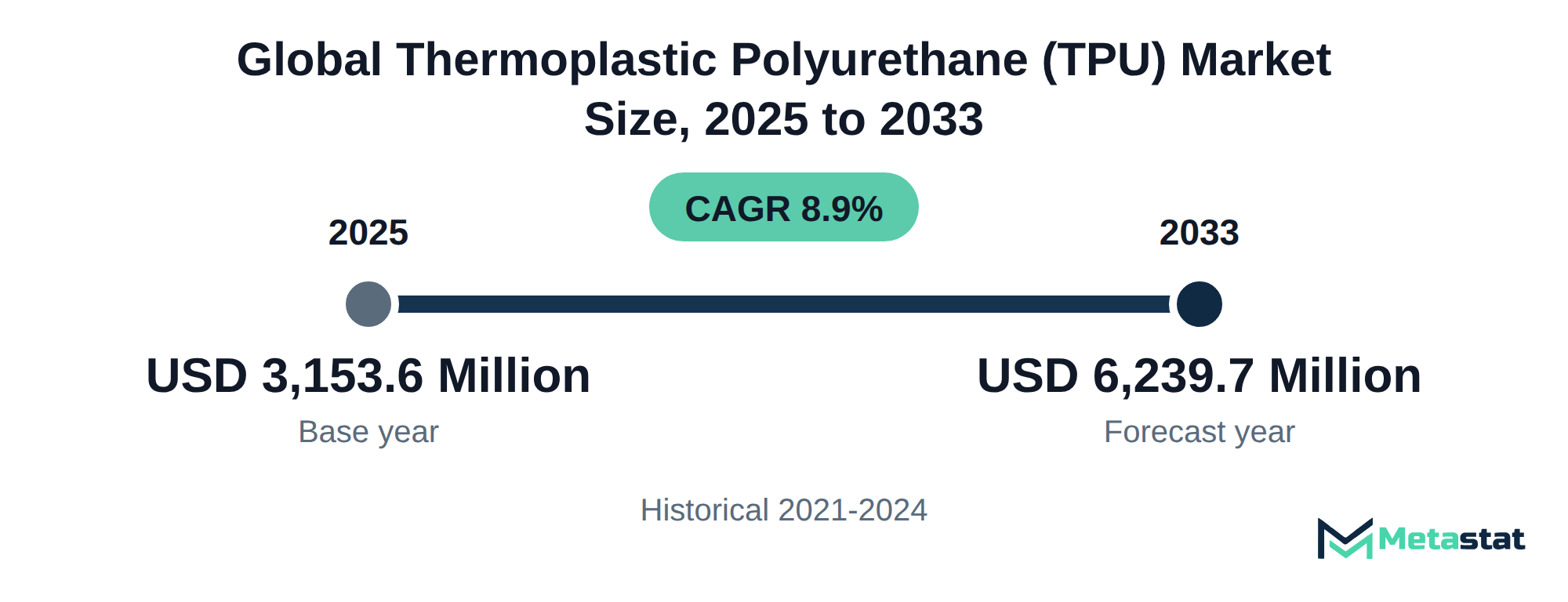
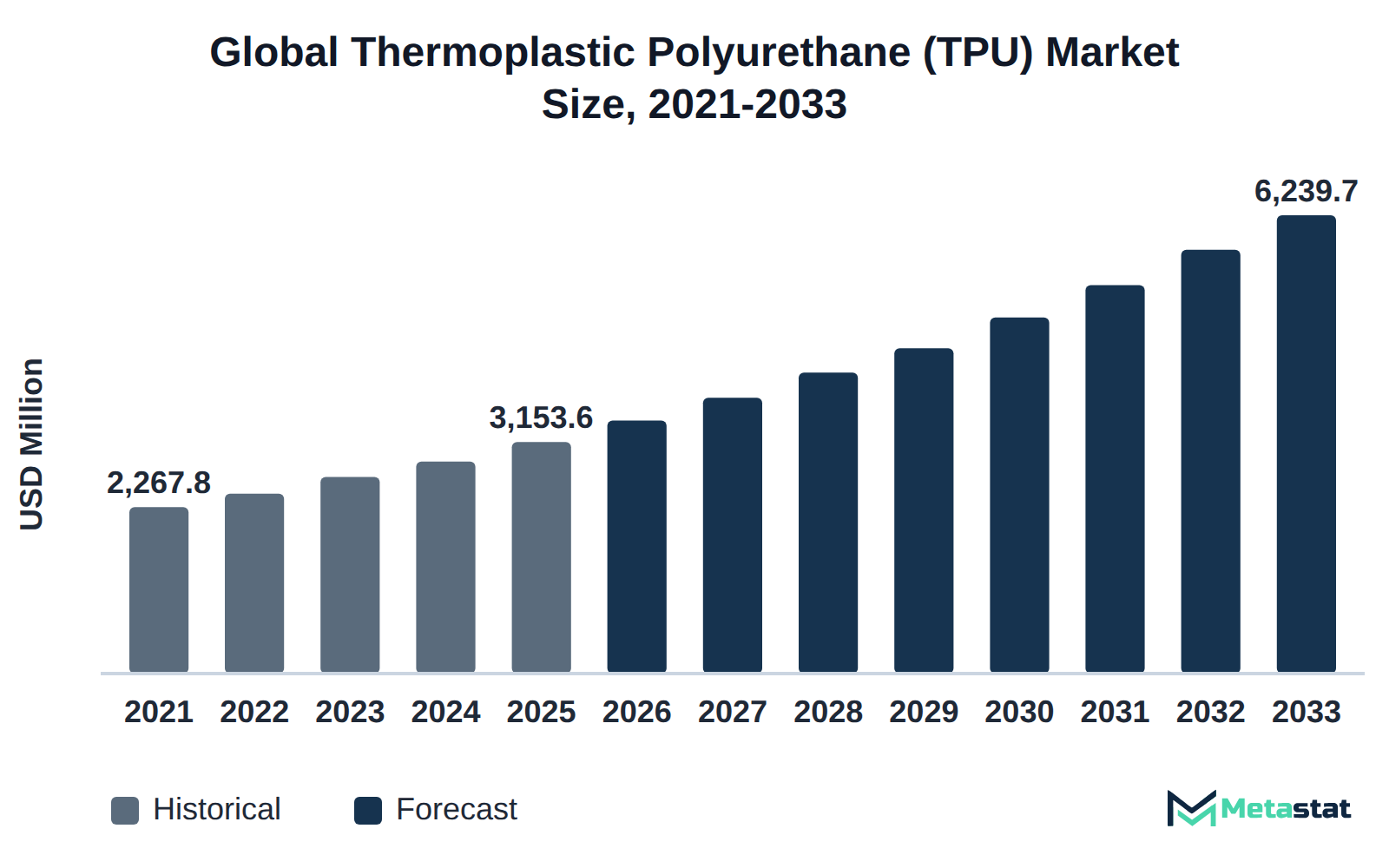
Market Valuation: Valued at $3,153.6 Million in 2025, projected to reach $6,239.7 Million by 2033 at a 8.9% CAGR.
Dominant Segment: Polyester-Based TPU leads the market, driven by its widespread adoption in high-performance applications across industries such as automotive and footwear.
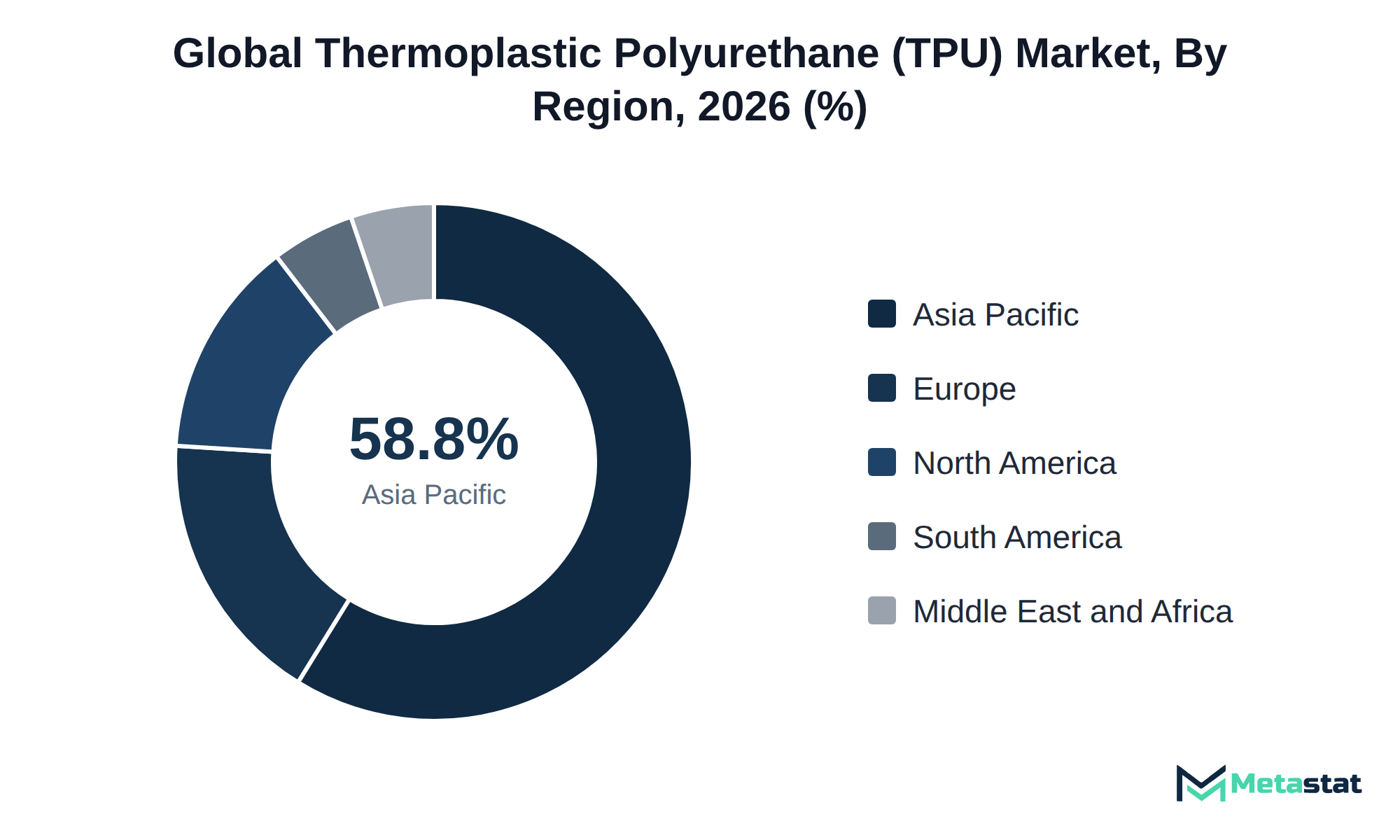
Geographic Lead: The Asia Pacific region dominates the market with a 58.8% share, fueled by rapid industrialization and a growing consumer base.
What's Inside: The report provides a comprehensive analysis of market segmentation by product type, form, processing method, and end-use industry, along with competitive insights and growth forecasts through 2033.
Emerging Trends: There is a notable rise in demand for bio-based and recycled TPU, particularly in the footwear sector, reflecting a shift toward sustainable materials.
Innovative Processing Methods: Technological advancements in processing methods like injection molding and extrusion are enhancing production efficiency and material versatility, driving market growth.
Choose Your License
Global Thermoplastic Polyurethane (TPU) Market
The global Thermoplastic Polyurethane (TPU) market was valued at USD 3,153.6 million in 2025 and is projected to reach USD 6,239.7 million by 2033, growing at a CAGR of 8.9% over the forecast period.
The Thermoplastic Polyurethane (TPU) market encompasses a versatile range of applications, driven by the need for durable and flexible materials across various industries. Buyers invest in TPU products for their excellent performance characteristics, including abrasion resistance and elasticity, which enhance product longevity and functionality. The market serves sectors including automotive, footwear, and industrial machinery, where high-performance materials are essential for product quality and operational efficiency.
Growth in the market is primarily fueled by increasing demand for lightweight and high-performance materials. The Asia Pacific region holds the largest market share at 58.8%, significantly outpacing other regions, with North America holding 13.6% of the market in 2025, with the US leading in 2026. Within the product segments, Polyester-Based TPU represents the highest value, reflecting its widespread adoption in numerous applications.
Rising environmental and regulatory pressures influence the need for sustainable materials, impacting product development and innovation. Manufacturers focus on developing bio-based and recyclable TPU options to meet these demands and strengthen their competitive position. Continuous advancements in processing technologies further enhance the material's applications, supporting increased market penetration.
The market shows a strong focus on innovative applications where TPU improves product performance. Buyers invest in TPU due to its strong properties, including chemical resistance, elasticity, and durability, making it suitable for demanding environments. The sector spans multiple industries, with notable segments including footwear, automotive, and industrial machinery, each contributing to growing demand through various product requirements.
Asia Pacific emerges as the leading region in the Thermoplastic Polyurethane (TPU) market, capturing 58.8% of the share. This region's growth trajectory is significantly influenced by rapid industrialization and an expanding consumer base. The polyester-based TPU segment holds the most value, reflecting its widespread application across diverse sectors.
One primary factor driving growth in the market is the increasing need for lightweight and high-performance materials in the automotive industry. Manufacturers seek to enhance fuel efficiency and reduce emissions, leading to rising demand for advanced materials like TPU. This trend shows how TPU helps manufacturers meet industry standards and consumer demand for sustainable solutions.
The selection between polyester-based and polyether-based Thermoplastic Polyurethane (TPU) significantly influences product performance in footwear, cables, and industrial components. Polyester-based TPU, projected to reach USD 3,199.7 million by 2033, offers improved abrasion resistance and tensile strength, making it particularly suitable for high-wear applications. In contrast, polyether-based TPU is expected to achieve a value of USD 2,087.8 million in the same period, providing excellent flexibility and low-temperature performance, which benefits industries requiring material durability in varied conditions.
In the footwear sector, polyester-based TPU is favored for its robustness, lending itself to performance footwear that endures rigorous conditions. The material's superior mechanical properties enhance longevity, reducing replacement costs for manufacturers. Conversely, polyether-based TPU suits casual and athletic footwear due to its lightweight and comfortable feel, appealing to a broader consumer base. This strategic differentiation enables brands to address specific consumer preferences effectively.
For cable manufacturers, polyester-based TPU's resistance to environmental factors including humidity and temperature fluctuations establishes it as a preferred choice for insulation. This selection minimizes failure in critical applications, ensuring reliability and safety in electric and electronic devices. In industrial components, polyether-based TPU is chosen for parts that require flexibility and resilience, thereby extending the lifespan and reliability of machinery.
The distinct material properties of polyester and polyether TPUs actively shape market strategies across these applications. Targeted material selection improves product performance and helps manufacturers differentiate their offerings.
Medical-grade thermoplastic polyurethane (TPU) formulations play a critical role in the production of catheter tubing and minimally invasive devices. Buyers in this segment focus on obtaining high-quality materials that meet stringent regulatory standards for safety and performance. In the thermoplastic polyurethane (TPU) market, pricing strategies vary significantly based on the formulation and application requirements. Polyester-based TPU is expected to grow significantly from USD 1,850.2 million in 2026 to USD 3,199.7 million by 2033, reflecting increasing investment in specialized applications.
Contract models within the medical-grade TPU sector often involve long-term agreements, ensuring stable supply and pricing for manufacturers. These contracts typically include clauses that allow for price adjustments based on raw material costs, which is essential in the volatile materials market. Buyers seek suppliers who provide flexible terms and a reliable supply chain, impacting operational efficiency and product pricing.
The development of high-performance TPU formulations for medical applications represents an opportunity for manufacturers to enhance their competitive positioning in the market. Firms focusing on innovation and compliance with regulatory standards capture more market share, driving growth and profitability within the sector.
Demand for bio-based and recycled Thermoplastic Polyurethane (TPU) in the footwear and apparel sectors is increasing significantly. The footwear industry is expected to drive this trend, with a projected market value of USD 1,642.3 million by 2033, reflecting a compound annual growth rate (CAGR) of 8.0% from 2026. Companies prioritize sustainable materials, responding to consumer preferences for environmentally friendly products. This shift supports the broader industry movement toward sustainability, impacting manufacturing processes and product design.
Adoption of bio-based and recycled TPU in footwear aligns with the growing consumer demand for eco-conscious products. Companies in this market face pressure to innovate while addressing environmental concerns. This trend differentiates brands and enhances market competitiveness. The Thermoplastic Polyurethane (TPU) market increasingly values sustainable practices, and those that adapt quickly capture substantial market share. Sustainable innovations in this segment are anticipated to enhance customer loyalty and drive long-term growth.
Pricing for Thermoplastic Polyurethane (TPU) resins varies significantly based on multiple factors, including production methods, raw material costs, and performance characteristics. In the segment of polyether-based TPU, a notable growth of 9.3% CAGR is projected through 2033. This growth is largely influenced by increasing demand in sectors including automotive and electrical industries, where high-performance materials offer advantages including flexibility and durability.
The processing methods used, including injection molding and extrusion, further contribute to price variability. For example, injection molding is expected to reach USD 2,877.8 million by 2033, reflecting a CAGR of 8.2%. Lower production costs associated with efficient processing enable suppliers to offer competitive pricing while maintaining quality. Consequently, buyers in the market assess the processing methods and material properties essential for their applications, which directly impact pricing and the overall cost-effectiveness of their final products.
Increased footwear manufacturing has driven demand for thermoplastic polyurethane (TPU), particularly in athletic and casual shoe segments. The footwear industry experiences a shift toward lightweight and durable materials that enhance comfort and performance. This transition results from consumer preferences for high-quality products, necessitating materials that provide both flexibility and strength. Manufacturers invest in TPU to meet evolving demands, leading to heightened sales and production volumes. The footwear segment is projected to grow from USD 958.1 million in 2026 to USD 1,642.3 million by 2033, reflecting an 8% CAGR. This growth creates a strong opportunity, and suppliers are responding by expanding TPU production capabilities.
Technological advancements in processing methods have significantly influenced the Thermoplastic Polyurethane (TPU) market. Injection molding and extrusion techniques allow for enhanced production efficiency and material versatility, appealing to manufacturers across various sectors. These methods streamline operations, reduce waste, and improve the overall quality of finished products, thereby attracting investments in modern machinery and infrastructure. The growing demand for specialized TPU formulations, particularly in applications requiring specific performance characteristics, reinforces the need for such innovations. Effective processing techniques result in cost savings for manufacturers, enabling competitive pricing in the market. Consequently, advanced technology enhances production capabilities and drives the expansion of the TPU market, allowing suppliers to meet the increasing demands of diverse industries.
Increasing pricing pressures present a significant constraint on the Thermoplastic Polyurethane (TPU) market. Buyers in sectors including automotive and industrial machinery face challenges when sourcing high-quality TPU products due to rising material costs. This situation results in smaller order volumes and delayed procurement decisions, particularly among manufacturers prioritizing cost efficiency. Heightened competition among suppliers further complicates pricing dynamics, leading to restrained profit margins for buyers. In response, businesses explore lower-cost alternatives, which compromise performance standards. Consequently, this adjustment impacts overall market growth, hindering the speed of TPU adoption across various applications.
Rising input costs present a significant challenge for suppliers in the Thermoplastic Polyurethane (TPU) market. Increased prices for raw materials, particularly polyols and isocyanates, pressure margins, hindering profitability. Suppliers face difficulties in passing these costs onto customers, resulting in tighter operating budgets and constrained financial performance. Competition intensifies, prompting suppliers to explore cost-reduction strategies through vertical integration, securing raw material sources, and optimizing production processes. Several companies invest in technological advancements to enhance material efficiency and reduce waste, contributing to cost savings. The ongoing shift toward sustainable and bio-based materials adds complexity, requiring suppliers to balance compliance with environmental standards against economic viability. Suppliers must adapt continually to maintain profitability amid fluctuating input costs and changing market expectations.
The polycaprolactone-based TPU segment presents significant growth potential within the Thermoplastic Polyurethane (TPU) market. With a projected value reaching USD 506.7 million by 2033, this segment benefits from rising interest in biodegradable and sustainable materials. Various industries, including packaging and consumer goods, increasingly adopt these formulations due to their environmentally friendly properties.
This shift toward sustainability aligns with consumer preferences and regulatory pressure, promoting the use of polycaprolactone-based TPU. Manufacturers focusing on these materials tap into under-penetrated markets, enhancing competitiveness and market share. Investment in innovation within this segment enables suppliers to cater to an expanding customer base that prioritizes sustainability while maintaining performance standards.
The Global Thermoplastic Polyurethane (TPU) market is segmented based on Product Type, Form, Processing Method, and End-Use Industry.
This segment finds extensive application in industries including footwear, automotive, and industrial machinery, where its superior durability and flexibility enhance product performance. A notable driver for this segment stems from the increasing demand for high-performance materials in athletic footwear, reflecting a broader trend toward lightweight and durable components in various applications. Compared to polyether-based TPU, which registers a higher CAGR of 9.3%, polyester-based TPU presents slightly slower growth yet serves a distinct buyer demographic focused on specific performance characteristics. Enhanced resistance to abrasion and hydrolysis positions polyester-based TPU as a preferred choice in demanding applications, ensuring its relevance across multiple sectors while contributing to the overall growth of the market.
Polyether-Based TPU segment is estimated to reach USD 2,087.8 million by 2033, at a CAGR of 9.3% during the forecast period. This sub-segment finds extensive use in applications requiring flexibility, durability, and chemical resistance, particularly in industries including automotive and electrical. The growth of electric vehicles and advancements in electrical components drive demand for polyether-based TPU, with manufacturers seeking materials that improve performance and reduce weight. Compared to polyester-based TPU, this segment experiences faster growth due to its superior resilience and adaptability to diverse processing methods. Adoption in applications including wire and cable insulation highlights its competition with other types, enhancing demand across various end-user sectors while reflecting a preference for high-performance materials that support market expansion.
Polycaprolactone-Based TPU segment is expected to reach USD 506.7 million by 2033. This type of TPU is often used in applications requiring flexibility and durability, appealing to sectors including automotive, electronics, and medical devices. Increased demand for sustainable solutions drives interest in this segment, with its growing adoption in environmentally conscious designs and products. Compared to other types, Polycaprolactone-Based TPU experiences a relatively lower growth rate, focusing on niche applications where high-performance attributes are significant. The CAGR for this segment is projected at 9.3%, which does not match the higher-performing polyether-based TPU. Buyers seeking enhanced biodegradability and specific mechanical properties gravitate towards polycaprolactone-based options, highlighting the diversity in consumer needs within the overall Thermoplastic Polyurethane (TPU) market.
Polycarbonate-Based TPU segment is projected to grow at a CAGR of 11% during the forecast period. This type of thermoplastic polyurethane finds applications in industries requiring high-performance materials, particularly in automotive and electronics. Demand for polycarbonate-based TPU is driven by excellent mechanical properties and resistance to impact and abrasion. Manufacturers in these sectors increasingly choose polycarbonate-based TPU for its durability, leading to higher adoption rates compared to other TPU types. Growth in the automotive industry, particularly in electric vehicles, contributes to this segment's expansion, differentiating it from other TPU types, which experience more modest growth rates. The market reflects a strong trend toward lightweight, high-strength materials, enhancing operational efficiency and performance in demanding applications.
The Others (Hybrid Polyol-Based TPU) segment focuses on specialized applications that require tailored material properties. Hybrid polyol-based TPUs find use across diverse industries, including automotive and consumer goods, where unique flexibility and resilience are essential. Demand for these TPUs arises from the need for environmentally friendly alternatives that do not compromise performance. Compared to polyester-based and polyether-based TPUs, this segment offers differentiated performance characteristics, appealing to a niche market seeking specific attributes. The hybrid formulations command higher prices in certain applications, reflecting their tailored nature and the increasing emphasis on sustainability. Overall, the market demonstrates a unique space where innovative material attributes are leveraged for specialized end-use applications.
TPU Pellets segment is valued at USD 2,221.5 million in 2026 and is projected to reach USD 3,823.7 million by 2033, at a CAGR of 8.1% during the forecast period. These pellets serve a variety of applications, particularly in industries including footwear, automotive, and consumer goods, where flexibility and durability are essential. The rising demand for lightweight and high-performance materials drives growth in this segment. Compared to TPU Powder, which shows a CAGR of 11.4%, TPU Pellets experience relatively slower growth due to established production processes and lower innovation rates in their applications. However, their cost-effectiveness and adaptability ensure stable demand, particularly in the manufacturing of injection-molded components. In contrast to other forms, the significant volume of TPU Pellets used in mass production highlights their importance within the Thermoplastic Polyurethane (TPU) market.
TPU Powder is estimated to reach USD 401.2 million by 2033, at a CAGR of 11.4% during the forecast period. This form finds extensive application in industries including automotive, textiles, and consumer goods, where it is used in coatings, adhesives, and insulation. The growth of the TPU Powder segment is driven primarily by rising demand for lightweight and flexible materials that enhance product performance. Compared to other forms like TPU Pellets, which are projected to grow at a CAGR of 8.1%, TPU Powder exhibits a faster growth trajectory, reflecting increasing adoption in specialized applications. The segment's unique properties, including excellent abrasion resistance and chemical stability, attract buyers seeking superior material performance. The market benefits from ongoing technological advancements that facilitate production and processing of TPU Powder, further positioning it as a preferred choice among manufacturers.
The TPU Films and Sheets segment is anticipated to reach USD 1,231.7 million by 2033. This segment serves various industries, including packaging, automotive, and electronics, where flexible and durable materials are essential. Demand for TPU films and sheets increases due to superior mechanical properties and resistance to abrasion, making them suitable for a range of applications. The segment experiences a notable growth rate partly driven by rising packaging needs, particularly in sustainable and lightweight solutions. Compared to other forms, including TPU Powder, TPU Films and Sheets exhibit a unique positioning with a focus on high-performance applications, impacting pricing and demand dynamics in the market. The segment is projected to achieve a compound annual growth rate (CAGR) of 11% through 2033, reflecting strong interest from end-use industries seeking reliable and high-quality materials.
TPU Adhesive Films are projected to grow at a CAGR of 11% during the forecast period. These films find extensive application in various sectors, including automotive, electronics, and packaging, where bonding properties and flexibility are essential. The demand for TPU adhesive films is driven by advancements in technology and the increasing need for high-performance adhesives that offer durability and resistance to environmental conditions. Compared to other forms like TPU Pellets and TPU Powder, TPU Adhesive Films cater specifically to applications requiring superior adhesion and performance under stress, establishing a niche within the broader market. This segment's unique characteristics allow it to thrive even in competitive environments, where performance and quality take precedence over pricing considerations.
Others (TPU Compounding Grades) encompasses specialized formulations of thermoplastic polyurethane designed for specific compounding applications. These grades cater to various industries, including automotive, industrial machinery, and consumer goods, where tailored material characteristics are essential. The growth of this segment is influenced by increasing demand for customized solutions, driven by advancements in material engineering and the need for high-performance applications. Unlike other sub-segments, this category typically features a unique pricing strategy reflecting the customization involved. This pricing strategy positions it differently in the market, appealing to buyers seeking specific attributes rather than general-purpose materials. The Thermoplastic Polyurethane (TPU) market benefits from the flexibility that these compounding grades offer, allowing manufacturers to innovate and enhance product performance according to industry requirements.
Injection molding is widely used in the production of components that require intricate shapes and high precision, primarily in industries including automotive, industrial machinery, and consumer goods. Demand for rapid manufacturing processes drives this segment, especially in applications where time-to-market is critical. Compared to other segments, Injection Molding demonstrates steady growth, differing from methods like Extrusion, which is projected to reach USD 2,506.5 million by 2033 at a CAGR of 9.1%. Sustained demand for high-quality molded parts establishes Injection Molding as a crucial method for manufacturers, contributing significantly to the growth trajectories of the respective end-use industries. Growth in the market reflects increased investments in manufacturing capabilities and technological advancements in injection molding techniques.
This processing method is widely applied in applications requiring high-volume production of thermoplastic polyurethane (TPU) products, particularly in automotive parts and consumer goods. Key market players use extrusion for its efficiency and ability to create complex shapes. Demand growth is driven by expanding applications across various industries, where customized material properties enhance product performance. Compared to other processing methods, extrusion offers a more cost-effective solution for large-scale production, attracting manufacturers focused on operational efficiency. This segment's growth rate surpasses that of additive manufacturing, which is projected at a CAGR of 17.1%, indicating robust market interest in extrusion technologies. The thermoplastic polyurethane (TPU) market continues to evolve, with an emphasis on innovative processing techniques to meet diverse consumer demands.
Calendering segment is expected to reach USD 401.2 million by 2033. This processing method involves flattening and shaping thermoplastic polyurethane materials through a series of heated rollers, producing sheets or films that find applications in various industries. Used extensively in sectors including automotive and consumer goods, calendering offers high efficiency in producing thin, flexible materials. Demand for this segment is driven by the growing need for lightweight, durable materials that maintain performance characteristics in diverse applications. The segment demonstrates higher growth potential compared to others, supported by a CAGR of 11.4%. This growth outlook reflects increasing preference among manufacturers for advanced processing methods that enhance product quality and reduce production costs, setting it apart from other processing methods in the market.
Additive Manufacturing segment is projected to grow at a CAGR of 17.1% during the forecast period. This segment finds extensive use in specialized applications, particularly in the production of complex geometries in industries like healthcare, automotive, and consumer goods. The demand for greater customization and rapid prototyping drives the segment's growth, differentiating it from traditional processing methods including extrusion and injection molding. These methods experience slower growth rates, with respective CAGRs of 9.1% and 8.2%. The versatility of Additive Manufacturing promotes innovation, enhances material utilization and reduces waste. Ongoing advancements in 3D printing technologies further support increased adoption, creating significant opportunities for growth in the Thermoplastic Polyurethane (TPU) market.
Compression molding and solution processing stand out due to their ability to create complex geometries and designs not easily achievable by other methods. This segment serves industries including automotive and consumer goods, where precise component fabrication is crucial. Demand for customized solutions drives growth in this area, as manufacturers seek to optimize production efficiency and reduce waste. While broader processing methods like injection molding and extrusion show higher market values, compression molding and solution processing attract specific buyers focused on niche applications. Price points for these processes vary based on material requirements and production scale, offering flexibility to manufacturers targeting specialized segments. Enhanced material performance through technological advancements further influences adoption, ensuring this segment remains relevant in the evolving landscape of the Thermoplastic Polyurethane (TPU) market.
This segment targets manufacturers producing athletic and casual footwear, using TPU for its flexibility, durability, and lightweight properties. Increasing consumer demand for performance footwear drives the growth of this segment, with a notable trend toward sustainability influencing material choices. Compared to other segments, footwear experiences steady growth, aligning with broader trends in the sporting goods industry. The market's focus on advanced materials enhances comfort and performance features in footwear, creating opportunities for innovation and product differentiation. Adoption of TPU enables producers to meet specific consumer needs, distinguishing this segment from others including automotive and industrial applications, which have different performance requirements and growth dynamics.
Industrial Machinery and Equipment segment is estimated to reach USD 1,011.5 million by 2033, at a CAGR of 8% during the forecast period. This segment finds application in manufacturing equipment, machinery components, and various industrial processes, serving sectors that rely on high-performance materials for durability and functionality. Demand is driven by increasing automation and modernization of industrial facilities, which require advanced materials to enhance machinery performance and longevity. Compared to other segments, this one exhibits moderate growth, differentiating itself from the Footwear segment, which experiences slightly higher expansion rates. The emphasis on cost-efficiency and operational excellence in industrial applications further influences purchasing decisions, ensuring that companies prioritize materials that deliver both performance and value. The Thermoplastic Polyurethane (TPU) market reflects this growing trend as industries adapt to evolving technological demands.
The Automotive and Transportation segment is expected to reach USD 1,028.3 million by 2033. This segment finds extensive application in the production of vehicle components and systems. Key users include automotive manufacturers and suppliers focusing on lightweight, durable materials that enhance fuel efficiency and performance. Rapid advancements in electric vehicle technology drive demand for thermoplastic polyurethane (TPU) in new automotive applications. This segment's growth rate remains competitive, with a projected CAGR of 8% during the forecast period. In contrast, other segments, including Electrical and Electronics, experience a higher CAGR of 9.7%, indicating a varied growth trajectory among end-use sectors. The Automotive and Transportation segment's focus on performance and regulatory compliance, particularly regarding emissions and safety standards, differentiates it from other segments, which prioritize cost or alternative functionalities.
Electrical and Electronics segment is projected to grow at a CAGR of 9.7% during the forecast period. This segment finds extensive application in consumer electronics, including smartphones, computers, and home appliances, where flexibility and durability are crucial. Increased demand for compact and lightweight electronic devices drives the need for high-performance materials, enabling industries to enhance product features and reduce weight. The segment distinguishes itself through its pricing and specific functionality, aligning closely with the evolving technology landscape in the electronics sector. Compared to other segments, it experiences a faster growth trajectory due to rapid technological advancements and consumer preferences for innovative products. Robust demand is driven by the expansion of electronic manufacturing and the rising integration of smart technologies across various applications.
Textiles and Apparel encompass a significant application for thermoplastic polyurethane, for the production of flexible and durable materials in garments and accessories. This segment serves various markets, including fashion, sportswear, and outdoor equipment, where lightweight yet resilient materials are essential. Demand for sustainable and high-performance fabrics drives growth, particularly among environmentally conscious consumers and manufacturers focused on innovation. Unlike other segments, the Textiles and Apparel application emphasizes aesthetics and comfort, attracting different buyers compared to industrial applications. The integration of TPU in textiles reflects advancements in textile engineering and chemical formulations, addressing the rising consumer preference for breathable, waterproof, and stretchable materials. The market emphasizes the importance of eco-friendly alternatives, pushing producers to explore bio-based TPU options, further influencing the industry's development and adoption rates.
Healthcare and Medical Devices encompass a critical application area for Thermoplastic Polyurethane (TPU), in a variety of products including medical tubing, medical bags, and wound care materials. Key buyers in this segment include manufacturers of medical equipment and devices who seek materials that offer flexibility, durability, and biocompatibility. Increased demand for advanced healthcare solutions drives the growth of this segment, with innovations in drug delivery systems and personalized medicine playing significant roles. Regulatory standards shape the landscape, driven by stringent guidelines for medical materials that necessitate compliance, influencing material selection. Compared to other segments in the market, the Healthcare and Medical Devices segment often commands higher prices due to the specialized properties required for safety and efficacy, distinguishing it from broader applications including footwear and industrial machinery.
Consumer goods encompass a variety of products that use thermoplastic polyurethane (TPU) for its beneficial properties, including flexibility, durability, and resistance to abrasion. Industries including packaging, consumer electronics, and household goods leverage TPU for applications ranging from packaging films to protective casings. Growth in this segment is driven by increasing consumer demand for lightweight and high-performance materials that enhance product longevity and functionality. Compared to other segments, the consumer goods sector experiences steady growth due to its diverse application range. The segment's unique value lies in its adaptability to various product requirements, making it distinct from other segments that focus on specialized industrial applications. The thermoplastic polyurethane (TPU) market benefits from innovations that enhance material performance, further supporting the expansion of consumer goods applications.
Building and Construction applications employ thermoplastic polyurethane for structural components, coatings, and construction sealants due to its durability and flexibility. Construction firms and contractors primarily drive demand for this segment, seeking materials that provide both performance and cost-effectiveness. The transition toward sustainable building practices influences this segment, with increasing preference for energy-efficient and environmentally friendly materials. Compared to other sub-segments, including Footwear, Building and Construction experiences different dynamics, including potentially slower growth, attributed to longer project timelines and regulatory hurdles. The focus on sustainable construction methods presents opportunities for innovation and product development in the market.
Packaging involves the use of thermoplastic polyurethane in various forms, catering to a range of applications including flexible packaging, containers, and protective films. Industries including food service, consumer goods, and pharmaceuticals rely on this segment for its durability, flexibility, and resistance to moisture. The growing demand for sustainable and environmentally friendly packaging solutions acts as a significant driver for this sub-segment, influencing manufacturers to adopt TPU materials that enhance product performance while reducing environmental impact. Compared to other segments, the packaging application faces unique challenges in balancing cost and performance, with buyers prioritizing both quality and sustainability. This sub-segment addresses the specific need for protective materials that maintain product integrity during storage and transport, positioning itself uniquely within the Thermoplastic Polyurethane (TPU) market.
This sub-segment focuses on applications in agriculture and animal identification, serving specific needs in the sector. Agricultural producers apply thermoplastic polyurethane (TPU) for a variety of products, including hoses, films, and protective coatings that enhance durability and flexibility. This segment experiences growth driven by increasing demand for modern farming techniques and improved animal husbandry practices, along with the ongoing development of new formulations that cater to specific agricultural requirements. Compared to other segments, this sub-segment faces unique challenges including regulatory standards and the need for sustainable materials. Regulatory standards and the need for sustainable materials impact pricing strategies and adoption rates, distinguishing it from segments that rely on more established industrial applications. The Thermoplastic Polyurethane (TPU) market benefits from these developments, reflecting a broader trend towards innovation in material science.
Based on geography, the Global Thermoplastic Polyurethane (TPU) market is divided into North America, Europe, Asia-Pacific, South America, Middle East, and Africa.
North America stands out with a projected market value of USD 801.2 million by the end of 2033. The region's share of the global Thermoplastic Polyurethane (TPU) market in 2025 accounts for 13.6%. Key industries driving demand include automotive and transportation, along with industrial machinery and equipment. The focus on lightweight materials for improved fuel efficiency in vehicles and machinery contributes to the increasing adoption of TPU in these sectors. The presence of well-established manufacturers in the United States, Canada, and Mexico strengthens the competitive landscape. Market growth reflects investments in innovative applications and advancements in processing methods, further enhancing the relevance of thermoplastic polyurethane.
Europe commands a share of the Thermoplastic Polyurethane (TPU) market, with a value of USD 3,153.6 million in 2025, accounting for 17.2% of the global market. Key drivers of demand include the automotive and industrial machinery sectors, where the material's flexibility and durability are critical. Germany and France stand out due to their robust automotive industries, while Italy and Spain see increased usage in consumer goods and footwear applications. Regulatory frameworks surrounding environmental standards in the European Union push manufacturers towards adopting more sustainable materials, including TPU. The region's focus on innovation and high-performance applications creates a conducive environment for growth in the TPU market, projected to reach USD 6,239.7 million by 2033.
Asia-Pacific is a key region in the Thermoplastic Polyurethane (TPU) market, accounting for 58.8% of the global share in 2025. Countries like China, Japan, and India drive significant demand due to their robust industrial bases and expanding automotive sectors. Increasing adoption of TPU in footwear manufacturing further supports market growth in the region. The rise in electrical and electronics applications highlights the versatility of TPU, aligning with advancements in technology across these industries. Ongoing infrastructure development supports the market, with investments aimed at enhancing production capacities. The market is expected to experience substantial growth in various end-use industries, reinforcing Asia-Pacific's status as a major player in the global TPU market.
Brazil and Argentina represent key markets for thermoplastic polyurethane (TPU). Demand in these countries is primarily driven by the footwear and automotive industries, which value TPU for its durability and flexibility. Infrastructure development in Brazil, particularly in industrial machinery, enhances market growth potential. Regulatory frameworks surrounding environmental sustainability prompt manufacturers to adopt TPU in various applications, reflecting a shift toward greener alternatives. By 2025, the market captures 5.2% of the global share, with expectations of continued growth through 2033. Expansion in South America aligns with broader trends in material innovation and sustainability across multiple sectors.
The Middle East and Africa region presents unique dynamics within the Thermoplastic Polyurethane (TPU) market, driven by various industries. Demand arises significantly from the footwear and automotive sectors, which increasingly adopt TPU for its durability and flexibility. The market benefits from ongoing investments in industrial infrastructure across countries, particularly in Saudi Arabia and the UAE, where modernization projects facilitate greater consumption of specialized materials. South Africa contributes to market growth due to its strong manufacturing sector, which incorporates TPU in applications ranging from automotive components to consumer goods. The region's share of the global market is projected at 5.2% in 2025, highlighting its potential within the broader TPU market.
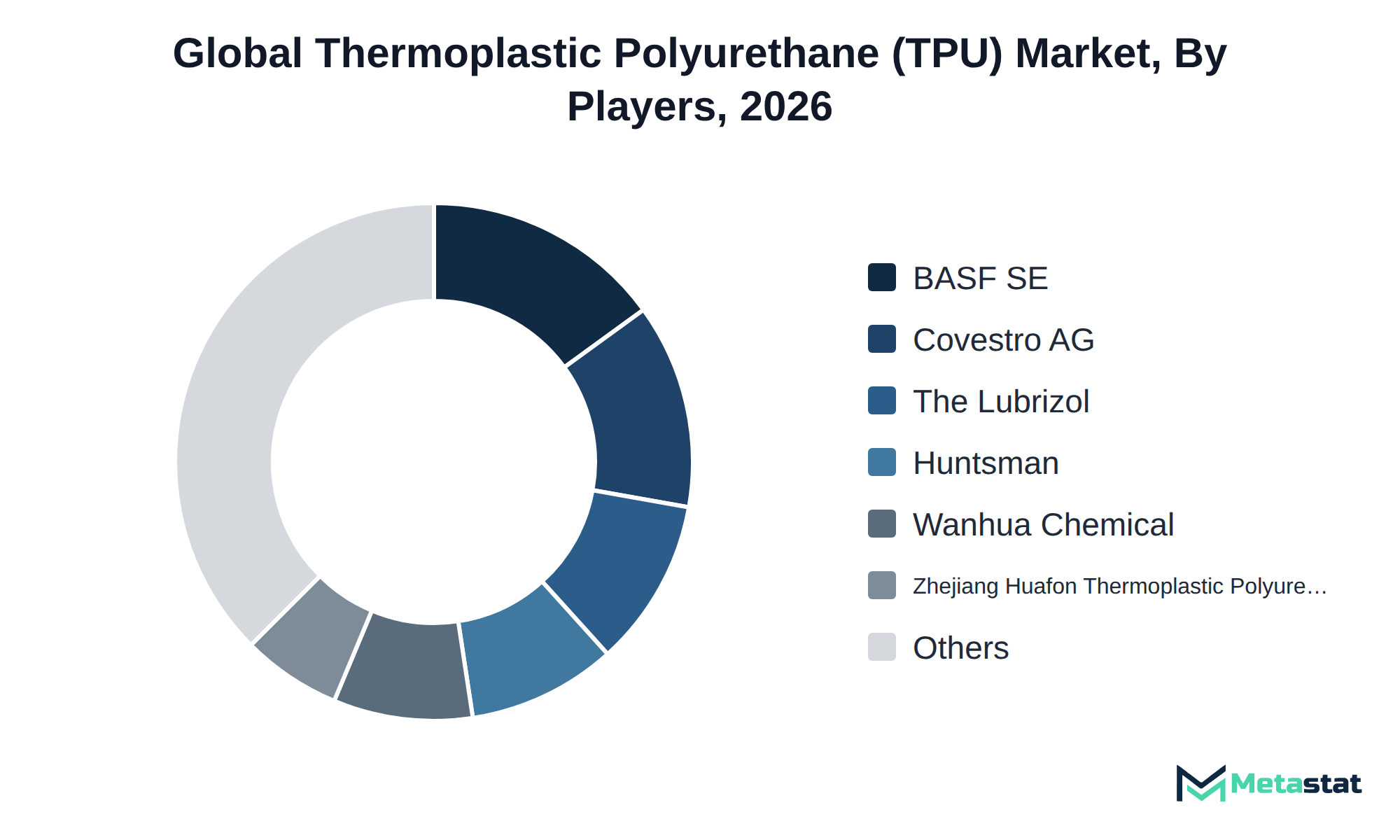
Companies in the Thermoplastic Polyurethane (TPU) market adopt various strategies to capture market share. Major players differentiate themselves through product quality, pricing, customization options, and customer service. Buyers prioritize factors including certification, pricing, and the ability to meet specific application requirements.
The Lubrizol Corporation emphasizes its extensive portfolio of TPU solutions tailored for diverse applications, ensuring that products meet specific performance standards. BASF SE focuses on sustainable and innovative TPU formulations, catering to environmentally conscious buyers. Covestro AG prioritizes advancements in production technology, enhancing efficiency while maintaining product quality.
TPU market growth relies on three key developments. First, increased adoption of polyether-based TPU will drive demand, particularly in the automotive and transportation sectors. Second, advancements in additive manufacturing will enhance production capabilities, enabling the market to cater to emerging applications. Third, the expansion of TPU pellets will support various industries, including footwear and industrial machinery.
Several risks could hinder this growth trajectory. Economic fluctuations in the Asia Pacific region, which holds the largest share of the market at 58.8%, represent a significant concern. Supply chain disruptions or rising raw material costs could impede production and affect pricing strategies. The combination of these developments and risks will shape the future of the Thermoplastic Polyurethane (TPU) market, impacting its overall outlook through 2033.
By Product Type: Polyester-Based TPU, Polyether-Based TPU, Polycaprolactone-Based TPU, Polycarbonate-Based TPU, Others (Hybrid Polyol-Based TPU)
By Form: TPU Pellets, TPU Powder, TPU Films and Sheets, TPU Adhesive Films, Others (TPU Compounding Grades)
By Processing Method: Injection Molding, Extrusion, Calendering, Additive Manufacturing, Others (Compression Molding, Solution Processing)
By End-Use Industry: Footwear, Industrial Machinery and Equipment, Automotive and Transportation, Electrical and Electronics, Textiles and Apparel, Healthcare and Medical Devices, Consumer Goods, Building and Construction, Packaging, Others (Agriculture, Animal Identification)
The report strategically identifies and profiles the key market players and analyses their core competencies in each sub-segment of the Thermoplastic Polyurethane (TPU) market.
Report Attributes | Details |
Study Period | 2021-2033 |
Base Year | 2025 |
Estimated Year | 2026 |
Forecast Period | 2026-2033 |
Historical Period | 2021-2025 |
Growth Rate | CAGR 8.9% from 2026 to 2033 |
Revenue Unit | USD million |
Segmentation | By Product Type, Form, Processing Method, End-Use Industry, and Region |
By Region | North America (By Product Type, Form, Processing Method, End-Use Industry, and Country)
|
Europe (By Product Type, Form, Processing Method, End-Use Industry, and Country)
| |
Asia Pacific (By Product Type, Form, Processing Method, End-Use Industry, and Country)
| |
South America (By Product Type, Form, Processing Method, End-Use Industry, and Country)
| |
Middle East and Africa (By Product Type, Form, Processing Method, End-Use Industry, and Country)
|
Find answers to common questions about this report
The Thermoplastic Polyurethane (TPU) market size was valued at USD 3,153.6 million in 2025.
The market is projected to grow at a CAGR of 8.9% during the forecast period from 2026 to 2033.
The North America Thermoplastic Polyurethane (TPU) market size is estimated to reach USD 801.2 million by 2033.
Polyester-Based TPU leads the market with a value of USD 1,850.2 million in 2026. This segment outpaces others in terms of revenue generation.
Increased production of footwear, particularly in athletic and casual segments, drives demand for TPU due to consumer preferences for lightweight and durable materials. Technological advancements in processing methods enhance production efficiency and material versatility, attracting investments and supporting market expansion.
Increasing pricing pressures restrain Thermoplastic Polyurethane (TPU) market growth. Rising input costs for raw materials, particularly polyols and isocyanates, hinder profitability and pressure margins for suppliers.
Factors favoring adoption in the Thermoplastic Polyurethane (TPU) industry include the rising demand for lightweight and durable materials in footwear, driven by consumer preferences for high-quality products. technological advancements in processing methods enhance production efficiency, attracting investments and expanding market opportunities.
The Thermoplastic Polyurethane (TPU) market is estimated to reach a valuation of USD 6,239.7 million by 2033.
Key players operating in the Thermoplastic Polyurethane (TPU) market include The Lubrizol Corporation, BASF SE, Covestro AG, Huntsman Corporation, Wanhua Chemical Group Co., Ltd., and DingZing Advanced Materials Inc.
The polycaprolactone-based TPU segment is projected to reach USD 506.7 million by 2033, reflecting significant growth potential driven by rising interest in biodegradable and sustainable materials.
The analysts below cover Chemicals and Materials research at Metastat Insights.
LEAD ANALYST
Utkarsh Khirodkar is a Lead Market Research Analyst at MetaStat Insight, specializing in market intelligence, technology sector assessments, and competitive strategy.

INDUSTRY CONSULTANT - CHEMICALS & ADVANCED MATERIALS
Chemicals and Materials · Machinery & Equipment · Packaging
Amit Gadhekar Consultant for Chemicals and Materials at MetaStat Insight, directing sector-specific intelligence, research, and strategic consulting across global chemical and processing markets.
Replacing petrochemical surfactants with bio-based alternatives requires realistic timelines on industrial precision fermentation scaling. The market research broke down commercialization timelines, feedstock sugar price sensitivities, and regional cosmetic ingredient regulatory approvals in Europe and East Asia. That supplier readiness mapping gave our formulations team reliable context when comparing renewable chemical sourcing roadmaps.
Tracking ceramic matrix composite adoption in high-bypass aero engines requires strict attention to material qualification cycles and FAA airworthiness testing milestones. The MetaStat Insight team provided a detailed timeline of silicon carbide fiber manufacturing capacity and commercial foundry lead times. Having clear visibility into upstream thermal barrier coating supply helped us stress-test our long-term component procurement strategy.
Transitioning ultra-class mining haul trucks to alternative power requires concrete data on remote hydrogen refueling infrastructure economics. The report evaluated megawatt-scale electrolyzer installation expenses, onsite storage safety mandates, and heavy-duty fuel cell stack degradation under continuous duty cycles. That technical rigor helped our engineers benchmark realistic total operating cost horizons for off-highway fleet decarbonization.
Explore related market intelligence reports worth reading alongside this one.
Starting from
$2950
Starting from
$2950