
LEAD ANALYST
Utkarsh Khirodkar is a Lead Market Research Analyst at MetaStat Insight, specializing in market intelligence, technology sector assessments, and competitive strategy.

Medical Thermoplastic Polyurethane Elastomer Market Size, Share, By Type (Polyester-based TPU, Polyether-based TPU, and Hybrid TPU), By Application (Medical Devices, Coatings, Adhesives, Films, and Other Applications), By End User (Hospitals, Clinics, Research Laboratories, Home Care, and Other End Users), Industry Analysis, Growth, Trends, and Forecast, 2026-2033
Report ID
MSI-4548
Published
February, 2026
Pages
312 Pages
Format
Report Details
Choose Your License
Medical Thermoplastic Polyurethane Elastomer Market
The global Medical Thermoplastic Polyurethane Elastomer market size is valued at USD 1,346.4 million in 2025. The market is projected to grow from USD 1,455.4 million in 2026 to USD 2,648.3 million by 2033, exhibiting a CAGR of 8.9% during the forecast period.
Global Medical Thermoplastic Polyurethane Elastomer market valued at USD 1,346.4 million in 2025, growing at a CAGR of around 8.9% through 2033, with potential to exceed USD 2,648.3 million.
North America accounts for 29.3% share in 2025, with United States remaining the largest country market in 2026.
Polyester-based TPU segment accounts for a market share of 45.0% in 2025, supported by ongoing medical device formulation and validation programs.
Key trends driving growth: Rising minimally invasive procedures drive demand for kink-resistant, flexible, biocompatible tubing and catheter materials.
Opportunity includes growth of medical wearables and soft electronics such as skin-contact devices and patches, creating need for soft, breathable, transparent TPU grades with antimicrobial or radiopaque options.
Key insight: The global medical thermoplastic polyurethane elastomer market is witnessing sustained momentum as healthcare manufacturers increasingly prefer adaptable and performance-driven polymer solutions for medical applications.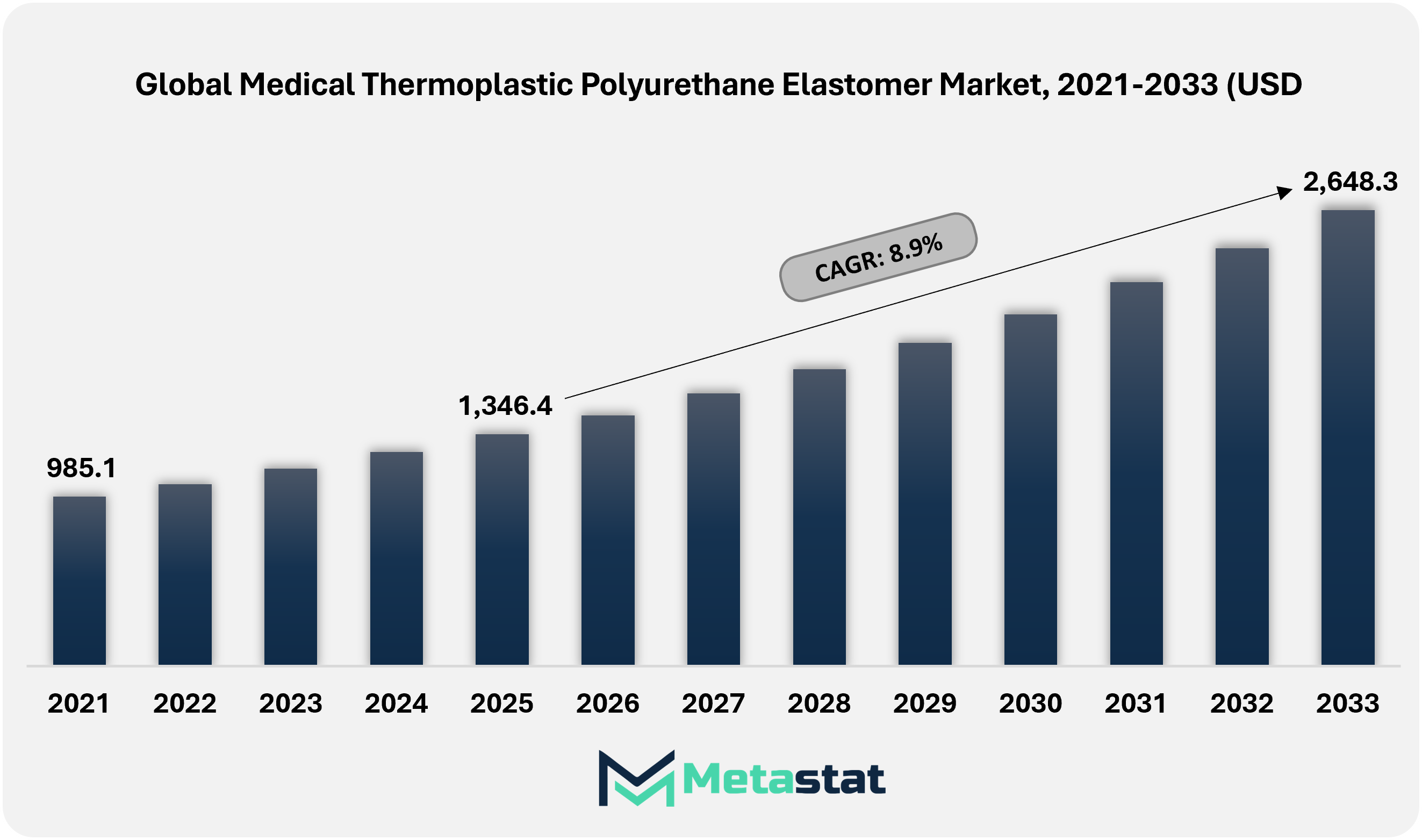
The global medical thermoplastic polyurethane elastomer market within the medical materials industry will expand its influence beyond traditional product supply, shaping how future healthcare systems will design, validate, and deploy advanced polymer solutions.
In the coming years, the market will serve as a technological foundation for highly customized medical components, where formulation accuracy aligns with patient-specific needs and procedural requirements. Materials engineering will support increasingly modular device architectures, allowing hospitals and device developers to customize designs without having to redesign the entire system. The change will encourage closer collaboration between polymer scientists, biomedical engineers and compliance experts from early-stage development.
Increasing use of minimally invasive procedures will strengthen requirements for materials that support tight bend radii, stable stress distribution, and patient safety. Medical-grade TPU will gain traction, supported by flexibility, elasticity, and compatibility with blood-contact and implant-adjacent applications, strengthening next-generation catheter systems and fluid transport devices.
Healthcare systems and regulatory bodies will continue restricting plasticizers linked to long-term exposure risks. The change will reinforce interest in DEHP-loose TPU solutions that meet sustainability goals, help recycling programs, and align with evolving compliance standards even as preserving performance in disposable and reusable clinical additives.
Medical TPU adoption faces limitations linked to higher resin pricing and processing sensitivity. Controlled drying, moisture management, and hydrolysis prevention increase operational effort, particularly for converters accustomed to legacy polymers, leading to phased adoption in cost-sensitive healthcare manufacturing environments.
Material replacement within regulated medical supply chains requires extensive biocompatibility testing, extractables analysis, and validation cycles. Original equipment manufacturers will face higher transition costs, longer approval timelines, and tooling adjustments, resulting in phased rather than immediate material changeovers.
The expansion of skin-contact devices, diagnostic patches, and connected health monitoring systems will create opportunities for advanced TPU formulations. Soft-touch surfaces, airflow support, optical clarity, antimicrobial properties and radiopaque functionality will establish TPU as the material of choice for future-ready wearable medical technologies.
The global Medical Thermoplastic Polyurethane Elastomer market is mainly classified by Type, Application, and End User.
Polyester-based TPU segment was valued at USD 655 Million in 2026 and is projected to reach USD 1,138.5 Million by 2033, at a CAGR of 8.2% during the forecast period.
Polyester-based TPU will attract attention due to its strong mechanical strength and wear resistance. Medical product manufacturers will increasingly prefer this type for applications requiring durability and structural stability. Future trends will focus on enhancing compatibility with sterilization strategies at the same time as retaining constant satisfactory standards in massive-scale scientific production.
Polyether-based TPU segment was valued at USD 644.1 Million in 2026 and is projected to reach USD 1,191.2 Million by 2033, at a CAGR of 9.2% during the forecast period.
Polyether-based TPU will remain essential for medical applications requiring flexibility and hydrolysis resistance. The material kind will support long-term use in environments uncovered to moisture. Advances will emphasize improved biocompatibility and improved surface performance, which will meet future health care demands for lightweight and reliable medical components.
Hybrid TPU segment was valued at USD 156.4 Million in 2026 and is projected to reach USD 318.6 Million by 2033, at a CAGR of 10.7% during the forecast period.
Hybrid TPU will bridge the performance gap by combining the features of polyester and polyether variants. The outlook suggests that adoption will increase where balanced flexibility and robustness are required across medical device components. Materials engineering efforts will refine hybrid structures to support complex medical designs, offering adaptable solutions to multiple medical use cases.
Medical Devices segment is projected to reach USD 1,580 Million by 2033, at a CAGR of 9% during the forecast period.
Medical Devices will remain the core application, supported by higher penetration of minimally invasive devices and wearable healthcare products. The global medical thermoplastic polyurethane elastomer market will benefit from continued innovation in device design, focusing on comfort, durability, and long-term performance in regulated clinical environments.
Coatings segment is projected to reach USD 147.2 Million by 2033, at a CAGR of 7.5% during the forecast period.
Coatings will play an increasing role as health care facilities prioritize safety and surface integrity. TPU-based coatings will support resistance to chemicals and repeated cleaning cycles. Future adoption will focus on smooth finish and superior adhesion, in line with evolving hygiene standards in medical and clinical infrastructure.
Adhesives segment is projected to reach USD 119.3 Million by 2033, at a CAGR of 7.7% during the forecast period.
Adhesives developed from TPU materials will gain relevance in assembling advanced medical products. Strong bonding performance and flexibility will support use in sensitive medical components. Future development will focus on clean processing and consistent bonding strength while ensuring reliability in complex medical manufacturing processes.
Films segment is projected to reach USD 699.1 Million by 2033, at a CAGR of 9.5% during the forecast period.
Films manufactured using TPU will support applications requiring transparency, flexibility, and barrier protection. Medical packaging and protective layers will drive demand. Future developments will aim to increase tear resistance and compatibility with sterilization technologies, supporting the safe storage and transportation of medical devices.
Other Applications segment is projected to reach USD 102.7 Million by 2033, at a CAGR of 8.5% during the forecast period.
Other applications will expand as TPU materials find a role in emerging health care solutions. Innovation will encourage use in assistive devices and protective medical components. Growth will depend on adaptability, cost efficiency and compliance with future medical safety standards.
Hospitals segment is projected to reach USD 1,338 Million by 2033 with a share of 50.7% in 2025.
Hospitals will remain the major end users as large-scale purchasing supports stable material demand. Uses will expand to areas of medical devices, protective solutions and infrastructure improvements. The Global Medical Thermoplastic Polyurethane Elastomer Market will closely align with hospital modernization initiatives and long-term healthcare investment plans.
Clinics segment is projected to reach USD 718.8 Million by 2033 with a share of 27% in 2025.
Clinics will contribute to stable volumes supported by growth in outpatient services. Lightweight and durable TPU-based materials will support compact medical devices and disposable products. Future adoption will focus on affordability and performance while matching the evolving operational requirements of modern clinical environments.
Research Laboratories segment is projected to reach USD 177.8 Million by 2033 with a share of 6.9% in 2025.
Research laboratories will support innovation-driven demand through experimentation and product testing. The TPU material will aid in prototype development and experimental medical applications. Future growth will be driven by research funding and the need for adaptable materials to support advanced medical studies.
Home Care segment is projected to reach USD 295.5 Million by 2033 with a share of 10.7% in 2025.
With health care shifting toward a patient-centered treatment model, use of home care settings will increase. The TPU-based material will support comfort-focused medical aids and wearable solutions. Future trends will prioritize ease of use, durability, and safety for long-term home medical care.
Other End Users segment is projected to reach USD 118.3 Million by 2033 with a share of 4.7% in 2025.
With healthcare services diversifying, other end users will gradually adopt TPU materials. Rehabilitation centres and specialized facilities will contribute to the expansion of the market. Future demand will depend on adaptation capabilities and the ability to support emerging healthcare delivery models.
Based on geography, the global Medical Thermoplastic Polyurethane Elastomer market is divided into North America, Europe, Asia-Pacific, South America, Middle East, and Africa.
North America Medical Thermoplastic Polyurethane Elastomer Market is set to expand at a CAGR of 8.9% within the forecast period, reaching a market size (TAM) of USD 756.4 million by the end of 2033.
North America will progress, supported by continued research spending on high-performance medical devices where stringent material requirements remain non-negotiable.
Industry momentum will be supported by closer integration between materials innovators and medical device manufacturers, hastening adoption of advanced medical-grade TPU solutions.
Asia Pacific will provide opportunities via expansion of domestic medical manufacturing centres seeking cost-efficient, high-quality medical-grade TPU materials.
In the Middle East, Africa, and South America, the medical thermoplastic polyurethane emulsion market is expected to progress at a relatively accelerated pace, supported by healthcare infrastructure investment, manufacturing capacity expansion, and continued reliance on global supplier partnerships, gradually transitioning toward steadier demand within medical device production.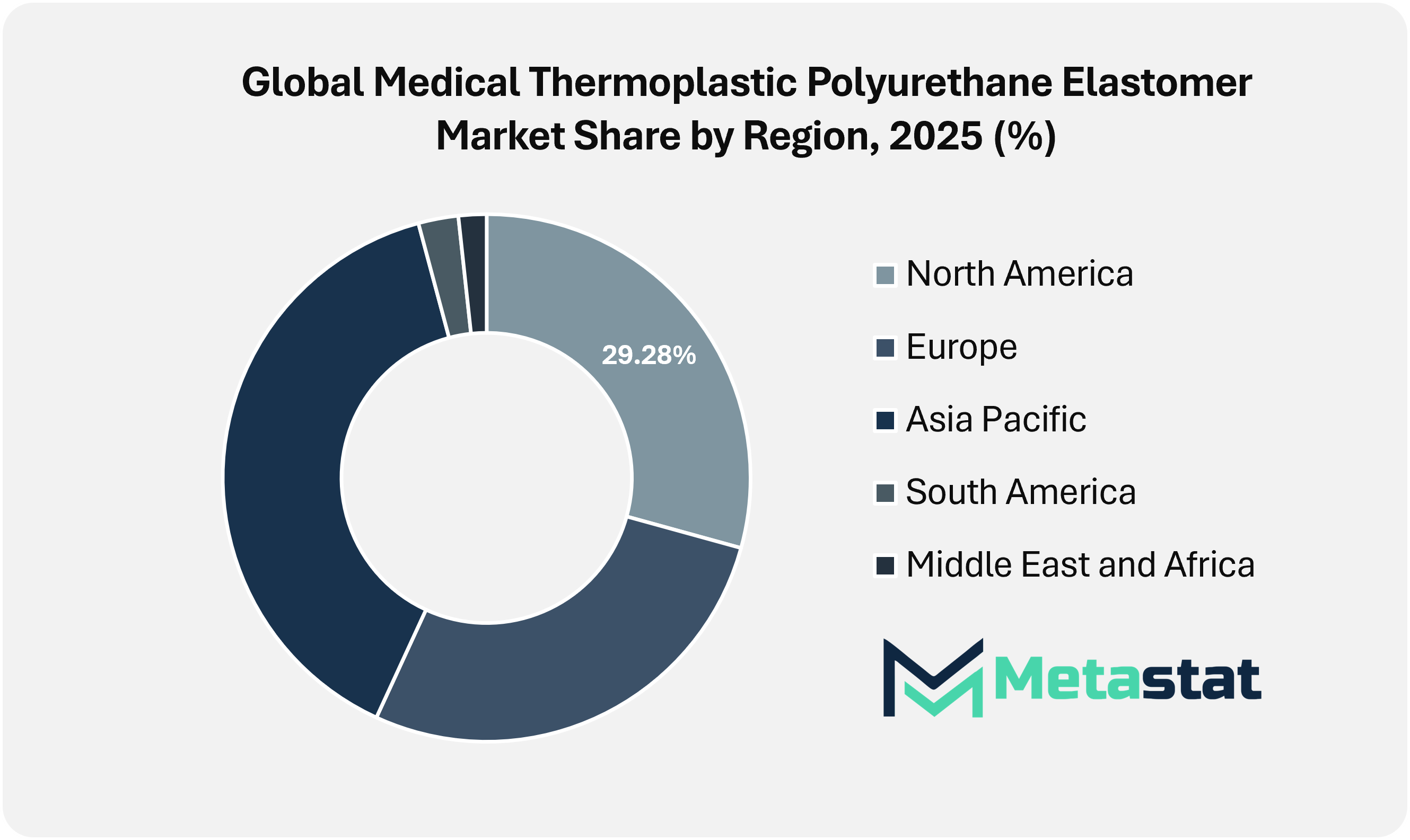
The global medical thermoplastic polyurethane elastomer market will continue to draw intense focus as manufacturers of the medical industry search for materials that exhibit qualities of flexibility, strength, and safety. The market is directly associated with the increasing demand to produce high-quality medical products that are trustworthy, comfortable for the patient, and suited for long-term usages. There is extensive demand to produce high-quality thermoplastic elastomers for the medial industry owing to alignment with consistent performance expectations and regulatory requirements.
There are some well-established firms whose major role in influencing the Medical Thermoplastic Polyurethane Elastomer market is to keep developing new materials. BASF SE and Covestro AG are leaders in developing highly advanced polymers along with a strong emphasis on research, which will eventually benefit medical-use applications. Lubrizol Corporation and DuPont de Nemours Inc. have been in the industry for a long time with a strong emphasis on specialty materials, developing elastomers for appropriate application in terms of functionality and medical specifications. Mitsui Chemicals Inc. and Saint-Gobain S.A. plays a significant role with a strong emphasis on developing robust and flexible materials for complex medical application use.
RTP Company and Avient Corporation are recognized for their customized elastomer compound developments that will satisfy the required needs for designs and processing. American Polyfilm, Inc. and UFP Technologies, Inc. are market key players in the domain, which utilizes engineered materials and processed components for the required applications in the healthcare industry. Wanhua Chemical Group Co., Ltd. further develops itself to cater to the market with economical solutions, along with Kent Elastomer Products, Inc. (KEP) for superior elastomers required for the stringent environments of the healthcare industry.
Collectively, all these players in the medical field will help determine the development and responses to the demands in the Global Medical thermoplastic polyurethane elastomer market. Through their endeavors in research and development, quality, and regulation, these participants will help ensure that the medical devices manufactured are safe and effective because of the elastomeric development that has been undertaken. With advancing medical technology and the ever-advancing expectations for medical attention, these participants are fundamental in this process.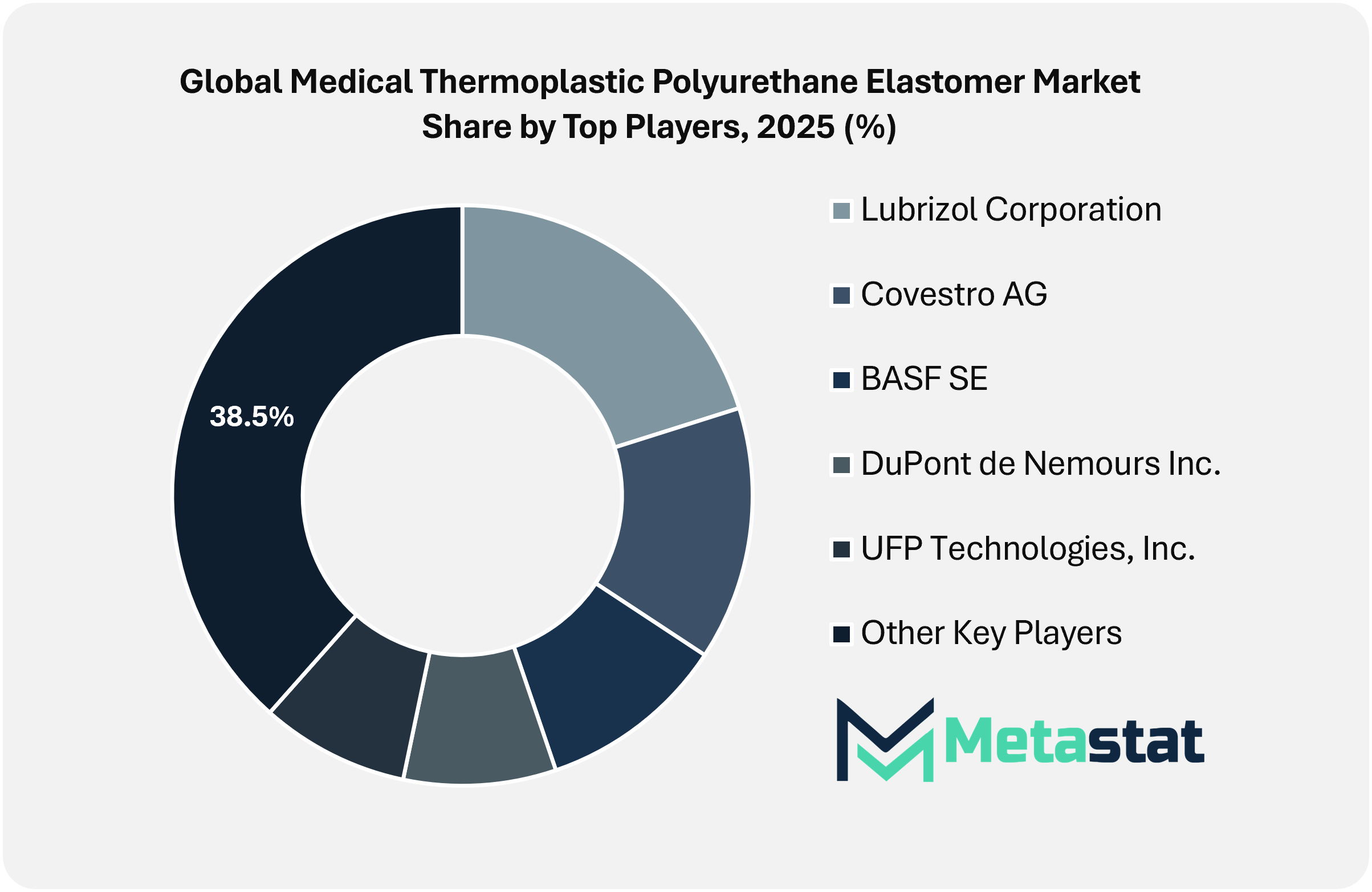
Market size is forecast to rise from USD 1,346.4 million in 2025 to over USD 2,648.3 million by 2033.
Environmental responsibility will also become built into strategic planning rather than an external consideration. Medical-grade TPU elastomers will be rapidly evaluated for end-of-life management, recycling, and controlled disposal pathways without compromising patient safety. It will redefine procurement standards within health care systems and encourage innovation at the intersection of materials science and sustainability. With healthcare delivery models advancing, the Global Medical Thermoplastic Polyurethane Elastomer Market will not only support medical devices; it will actively shape future standards of material intelligence, responsiveness, and adaptive design across the broader medical ecosystem.
This research report categorizes the Medical thermoplastic polyurethane elastomer market based on key segments and regions, forecasts revenue growth, and analyses trends in each submarket. The report analyzes the key growth drivers, opportunities, and challenges influencing the Medical Thermoplastic Polyurethane Elastomer market. Recent market developments and competitive strategies such as expansion, type launch, development, partnership, merger, and acquisition have been included to draw the competitive landscape in the market.
The report strategically identifies and profiles the key market players and analyzes their core competencies in each sub-segment of the Medical Thermoplastic Polyurethane Elastomer market.
|
Report Attributes |
Details |
|
Study Period |
2021-2033 |
|
Base Year |
2025 |
|
Estimated Year |
2026 |
|
Forecast Period |
2026-2033 |
|
Historical Period |
2021-2025 |
|
Growth Rate |
CAGR 8.9% from 2026 to 2033 |
|
Revenue Unit |
USD Million |
|
Sales Volume Unit |
Kilotons |
|
Segmentation |
By Type, Application, End User, and Region |
|
By Region |
North America (By Type, Application, End User, and Country)
|
|
Europe (By Type, Application, End User, and Country)
|
|
|
Asia Pacific (By Type, Application, End User, and Country)
|
|
|
South America (By Type, Application, End User, and Country)
|
|
|
Middle East and Africa (By Type, Application, End User, and Country)
|
Find answers to common questions about this report
The Metastat Insights study shows that the global Medical Thermoplastic Polyurethane Elastomer market size was USD 1346.4 million in 2025.
The global Medical Thermoplastic Polyurethane Elastomer market is likely to grow at a CAGR of 8.9% over the forecast period (2026-2033).
The Metastat Insights analysis shows that the North America Medical Thermoplastic Polyurethane Elastomer market size is estimated to be USD 756.4 million by 2033.
The Polyester-based TPU is the leading type segment in the global market.
Rising minimally invasive procedures drive demand for kink-resistant, flexible, biocompatible tubing, catheter materials, hospital and regulatory shift away from PVC/DEHP boosts adoption of DEHP-free, recyclable thermoplastic alternatives like medical-grade TPU are key driving factors, boosting the market.
Asia Pacific region holds the largest market share.
Higher material cost vs. PVC/SBCs and moisture-sensitive processing (drying, hydrolysis control) raise conversion complexity will hamper the market growth within the forecast period.
Global Medical Thermoplastic Polyurethane Elastomer market is estimated to reach USD 2,648.3 million by 2033.
Top players operating in the Medical Thermoplastic Polyurethane Elastomer industry includes BASF SE, Covestro AG, Lubrizol Corporation, DuPont de Nemours Inc., Mitsui Chemicals Inc., Saint-Gobain S.A., and RTP Company.
The analysts below cover Chemicals and Materials research at Metastat Insights.
LEAD ANALYST
Utkarsh Khirodkar is a Lead Market Research Analyst at MetaStat Insight, specializing in market intelligence, technology sector assessments, and competitive strategy.

INDUSTRY CONSULTANT - CHEMICALS & ADVANCED MATERIALS
Chemicals and Materials · Machinery & Equipment · Packaging
Amit Gadhekar Consultant for Chemicals and Materials at MetaStat Insight, directing sector-specific intelligence, research, and strategic consulting across global chemical and processing markets.
Evaluating secondary resin quality across post-consumer packaging streams requires reliable technical segmentation. MetaStat Insight delivered an objective assessment that distinguished between extrusion-grade flake pricing and optical sorting throughput limitations across Western Europe. The competitive positioning breakdown for licensed depolymerization technology providers answered several questions during our feedstock feasibility audit. Their team clarified regional trade restrictions on mixed plastic scrap quickly when our team submitted follow-up requests.
Evaluating sovereign cloud deployments for core banking platforms demands a clear view of data residency regulations and migration exit strategies. MetaStat Insight delivered an exhaustive review of regional latency tolerances, mainframe decommission milestones, and third-party vendor concentration risk. The regulatory compliance mapping across European and Asian financial jurisdictions gave our team a dependable baseline for multi-cloud infrastructure discussions.
Replacing petrochemical surfactants with bio-based alternatives requires realistic timelines on industrial precision fermentation scaling. The market research broke down commercialization timelines, feedstock sugar price sensitivities, and regional cosmetic ingredient regulatory approvals in Europe and East Asia. That supplier readiness mapping gave our formulations team reliable context when comparing renewable chemical sourcing roadmaps.
Explore related market intelligence reports worth reading alongside this one.