
LEAD ANALYST
Utkarsh Khirodkar is a Lead Market Research Analyst at MetaStat Insight, specializing in market intelligence, technology sector assessments, and competitive strategy.

Sports Flooring Market Size, Share, By Material Type (Rubber Flooring, PVC Flooring, Wood Flooring, Artificial Turf Flooring, Polyurethane Flooring, and Others), By Product Type (Indoor Sports Flooring and Outdoor Sports Flooring), By Sports (Basketball, Badminton, Tennis, Football, Volleyball, and Others), By End User (Professional Sports Venues, Amateur Users, Community Users, Commercial Fitness Chains, and Others), Industry Analysis, Growth, Trends, and Forecast, 2026-2033
Report ID
MSI-4719
Published
May, 2026
Pages
313 Pages
Format
Report Details
Choose Your License
Sports Flooring Market
Global Sports Flooring market size is valued at USD 15.3 billion in 2025 and projected to grow at a CAGR of 4.9% during the forecast period, reaching USD 22.4 billion by 2033.
North America holds 28.9% in 2025 with US leading the market share in 2025.
Rubber Flooring segment account for a market share of 25.3% in 2025.
Key trends driving growth include rising investment in multi-purpose sports halls, gyms, and community recreation infrastructure, along with a stronger focus on injury prevention, player comfort, and consistent playing characteristics across professional and institutional facilities.
Opportunities include sustainable and smart sports flooring using recycled content, low-VOC systems, and embedded monitoring for facility operators.
Key insight: AI-led enterprise transformation accelerating demand across the Global Intelligent Automation market.
The Global Sports Flooring market within the construction and sports infrastructure industry will extend far beyond conventional stadiums and gymnasiums, influencing how performance-oriented spaces are planned, built, and upgraded across institutional and commercial settings. Over the coming years, demand will align closely with urban redevelopment programs, educational campus expansion, and community recreation investments that require adaptable flooring systems balancing athletic functionality with architectural value. Facility planners will increasingly specify surfaces that support sporting activities during peak hours while remaining suitable for events, training programs, and public gatherings, encouraging manufacturers to engineer flooring systems with high resilience, surface stability, and long-term wear performance under varied usage conditions.
Sustainability priorities will continue to shape material innovation across the Global Sports Flooring market. Recycled rubber compounds, bio-based binders, and low-emission coating systems will gain stronger preference in public procurement and green building frameworks. Sports flooring will be assessed not only for shock absorption, slip resistance, and ball response, but also for acoustic control, thermal stability, maintenance efficiency, and end-of-life recyclability. Advanced digital monitoring solutions integrated beneath tracks and courts will also gain relevance, allowing operators to track surface wear, moisture variation, and usage intensity while improving predictive maintenance planning and facility lifecycle management.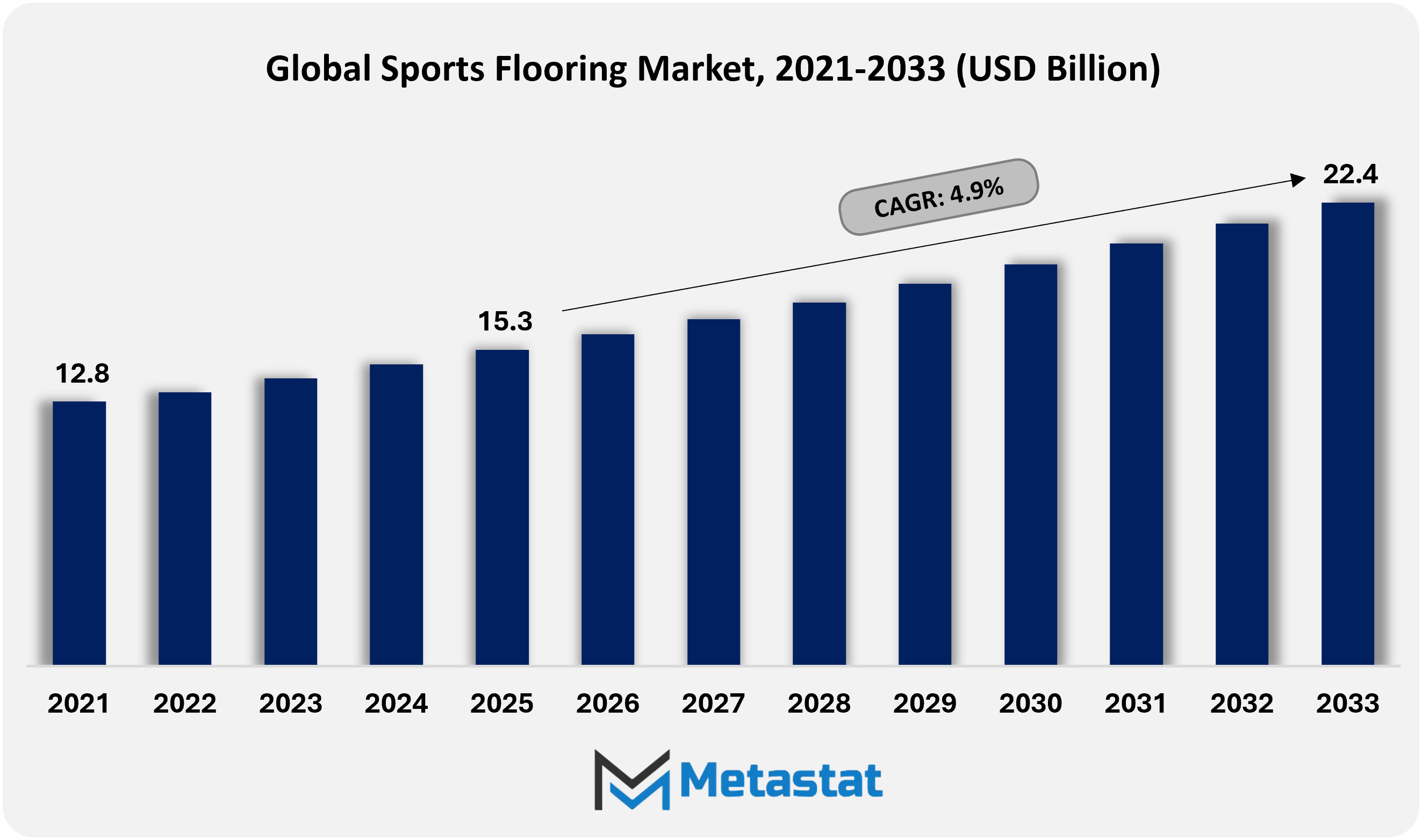
Rising investment in multi-purpose sports halls, gyms, and community recreation infrastructure.
Rising investment in multi-purpose sports halls, gyms, and community recreation infrastructure will remain a core force supporting the Global Sports Flooring market. Governments, educational institutions, and private operators are expanding sports infrastructure to serve school athletics, public wellness programs, and organized recreational activities. Multi-use venues designed for basketball, volleyball, futsal, badminton, and fitness training require flooring systems that deliver durability, ease of maintenance, and reliable performance under frequent and varied usage. Stronger emphasis on long-service-life surfaces across modern sports facilities will continue to strengthen procurement of advanced indoor and outdoor flooring solutions.
Higher focus on injury prevention, player comfort, and consistent playing characteristics in professional and institutional facilities
Higher attention toward injury prevention, player comfort, and consistent playing characteristics in professional and institutional facilities will reinforce quality-driven adoption across the Global Sports Flooring market. Sports academies, universities, leagues, and training centers are increasingly prioritizing surfaces engineered for force reduction, controlled traction, uniform rebound, and surface stability. Procurement standards are becoming more performance-focused, with decision-makers evaluating cushioning efficiency, player safety metrics, and fatigue reduction properties before installation. Increased emphasis on athlete protection and standardized surface quality will continue to support premium flooring upgrades across competitive and training environments.
High installation and refurbishment cost, including downtime during floor replacement cycles
High installation and refurbishment costs, along with operational downtime during replacement cycles, will remain a major challenge for the Global Sports Flooring market. Surface preparation, subfloor correction, material selection, and installation labor often require meaningful capital outlay, particularly for premium wood, polyurethane, and synthetic systems. Facility closures during renovation periods can also disrupt revenue generation for commercial venues and restrict utilization in schools, colleges, and public sports complexes. Budget constraints across institutional buyers will continue to slow procurement decisions, especially in projects requiring large-area resurfacing or complete flooring replacement.
Strict performance compliance and liability requirements raising qualification and testing burden for suppliers
Strict performance compliance and liability requirements will raise the qualification and testing burden for suppliers operating in the Global Sports Flooring market. Products used in organized sports environments are increasingly required to meet performance benchmarks related to impact absorption, friction behavior, surface deformation, and durability. Certification processes, third-party testing, and documentation obligations add time and cost to product commercialization. Legal and insurance concerns linked with athlete injuries will further intensify scrutiny over flooring specifications, making compliance capability a key competitive requirement for manufacturers serving professional and institutional end users.
Sustainable and smart sports flooring using recycled content, low-VOC systems, and embedded monitoring for facility operators
Sustainable and smart sports flooring systems will open attractive opportunities across the Global Sports Flooring market. Facility owners and procurement agencies are showing stronger interest in recycled content, low-VOC formulations, and environmentally responsible material platforms that align with long-term sustainability targets. At the same time, embedded monitoring capabilities will create new value by helping operators track wear conditions, moisture levels, and usage patterns in real time. Flooring solutions that combine environmental compliance with data-enabled maintenance support will gain stronger positioning across modern sports venues, educational campuses, and commercial fitness facilities.
The Global Sports Flooring market is classified based on Material Type, Product Type, Sports, and End User.
Rubber Flooring segment is valued at USD 4.1 billion in 2026 and is projected to reach USD 5.8 billion by 2033, at a CAGR of 5.2% during the forecast period.
Rubber Flooring will retain a strong position in the Sports Flooring market, supported by its durability, shock absorption, and low-maintenance characteristics. Broad suitability across gyms, training centers, and multi-purpose indoor halls will continue to support steady installation volumes. Increased preference for recycled rubber formulations and safety-oriented surfaces will further strengthen adoption in facilities seeking long-term performance with environmental alignment.
PVC Flooring segment is valued at USD 3.4 billion in 2026 and is projected to reach USD 4.5 billion by 2033, at a CAGR of 3.9% during the forecast period.
PVC Flooring will maintain stable demand in the Sports Flooring market owing to its lightweight structure, design flexibility, and resilient surface performance. Educational institutions, indoor sports halls, and community recreation centers will continue to adopt PVC systems for ease of installation and consistent functionality. Advancements in texture engineering, cushioning layers, and surface finish quality will improve player comfort and support wider use across modern indoor facilities.
Wood Flooring segment is valued at USD 2.7 billion in 2026 and is projected to reach USD 3.3 billion by 2033, at a CAGR of 2.5% during the forecast period.
Wood Flooring will preserve its premium position across the Sports Flooring market, particularly in basketball courts, gymnasiums, and professional indoor arenas. Strong visual appeal, controlled ball response, and established acceptance in competitive sports environments will continue to support relevance. Improvements in finishing systems, moisture resistance, and structural stability will help extend service life and reduce maintenance intensity in high-traffic venues.
Artificial Turf Flooring segment is valued at USD 2.6 billion in 2026 and is projected to reach USD 4 billion by 2033, at a CAGR of 6.2% during the forecast period.
Artificial Turf Flooring will record notable expansion across the Global Sports Flooring market, particularly in outdoor applications requiring consistent playability and lower upkeep. Improvements in fiber technology, infill systems, and drainage performance will strengthen durability across diverse climatic conditions. Reduced water consumption and simpler maintenance requirements will continue to support adoption in stadiums, training grounds, schools, and public sports fields.
Polyurethane Flooring segment is valued at USD 2.3 billion in 2026 and is projected to reach USD 3.5 billion by 2033, at a CAGR of 6.6% during the forecast period.
Polyurethane Flooring will advance steadily in the Sports Flooring market through its seamless finish, cushioning performance, and surface elasticity. Strong suitability for indoor courts and institutional sports facilities will support wider installation across training environments and educational campuses. Preference for hygienic, durable, and visually uniform surfaces will further strengthen product appeal in projects focused on long-term operational efficiency.
Others segment is valued at USD 0.9 billion in 2026 and is projected to reach USD 1.4 billion by 2033, at a CAGR of 5.4% during the forecast period.
Other material categories will include hybrid composites and emerging bio-based surface systems developed for specialized performance requirements. Innovation in material science will support improved shock absorption, comfort, and environmental compliance. Niche sports facilities and customized project requirements will continue to create opportunities for differentiated flooring formats beyond mainstream product categories.
Indoor Sports Flooring segment is projected to reach USD 13.4 billion by 2033, at a CAGR of 3.8% during the forecast period.
Indoor Sports Flooring will remain the larger product category in the Sports Flooring market, supported by continuous investment in gymnasiums, schools, universities, and multi-purpose indoor arenas. Controlled environments require surfaces delivering dependable traction, rebound consistency, comfort, and structural reliability. Integration of maintenance-friendly coatings and performance monitoring features will further strengthen long-term adoption across professional and institutional venues.
Outdoor Sports Flooring segment is projected to reach USD 9 billion by 2033, at a CAGR of 6.7% during the forecast period.
Outdoor Sports Flooring will witness faster advancement across the Global Sports Flooring market owing to rising investment in public sports infrastructure, recreation parks, and open-air training facilities. Demand will remain strong for weather-resistant systems capable of maintaining durability under sunlight exposure, temperature variation, and repeated usage. Surfaces designed with drainage efficiency, UV resistance, and impact stability will gain broader relevance across community and commercial outdoor installations.
Basketball segment is projected to reach USD 3.8 billion by 2033.
Basketball flooring will remain a major application area within the Sports Flooring market, supported by strong demand for surfaces that deliver uniform ball bounce, player grip, and force absorption. Professional arenas, school courts, and training academies will continue to prioritize certified flooring systems aligned with competitive play standards. Product innovation will remain centered on surface consistency, athlete protection, and long-term durability under intense movement patterns.
Badminton segment is projected to reach USD 3.4 billion by 2033.
Badminton flooring will hold an important position in the Sports Flooring market through rising installation across indoor clubs, schools, and regional tournament venues. Courts used for badminton require slip resistance, rapid footwork support, and dependable surface responsiveness. Lightweight modular and resilient flooring systems will gain stronger preference across facilities looking for efficient installation and stable playing performance.
Tennis segment is projected to reach USD 2.4 billion by 2033.
Tennis applications will continue to diversify across synthetic, cushioned, and hard-surface systems tailored to different levels of competition and usage intensity. Court operators will prioritize durability, play consistency, and climate suitability when selecting flooring materials. Continued investment in recreational and training infrastructure will support steady demand for surfaces built to perform across varied environmental conditions.
Football segment is projected to reach USD 5 billion by 2033.
Football-related applications will contribute strongly to the Sports Flooring market through widespread use of artificial turf and hybrid field systems. Stadium upgrades, training ground development, and community sports initiatives will sustain installation demand across developed and emerging regions. Flooring and surface systems engineered for shock management, drainage efficiency, and durability will remain central to adoption across football environments.
Volleyball segment is projected to reach USD 2.3 billion by 2033.
Volleyball flooring will maintain meaningful demand in the Sports Flooring market through indoor leagues, institutional tournaments, and training facilities requiring surfaces with grip, rebound control, and comfort. Frequent jumping and directional movement make cushioning and stability especially important across volleyball courts. Standardized indoor sports infrastructure development will continue to support adoption of high-performance volleyball flooring systems.
Others segment is projected to reach USD 5.5 billion by 2033.
Other sports categories will add breadth to the Sports Flooring market by creating demand for adaptable surfaces used in recreational formats, multi-sport centers, and specialized training environments. Facilities serving mixed sporting activities increasingly prefer flooring systems capable of balancing durability with sport-specific functionality. Product customization and modularity will remain important in addressing evolving performance requirements across diverse sports applications.
Professional Sports Venues segment is projected to grow at a CAGR of 3.7% during the forecast period.
Professional Sports Venues will remain a premium end-user category in the Sports Flooring market, driven by demand for certified, high-performance surfaces that comply with international competition standards. Stadium modernization, broadcast-ready infrastructure, and athlete safety priorities will continue to support investment in advanced flooring materials. Operators will increasingly favor solutions that combine surface performance with maintenance efficiency and long operational lifespan.
Amateur and Community Users segment is projected to grow at a CAGR of 5.6% during the forecast period.
Amateur and Community Users will represent a broad demand base in the Sports Flooring market through schools, recreation centers, and public sports facilities seeking cost-effective and durable surfaces. Safety, ease of upkeep, and suitability for varied activities will remain central to procurement decisions. Public participation in sports and local-level infrastructure development will continue to support installation growth across this category.
Commercial Fitness Chains segment is projected to grow at a CAGR of 5.9% during the forecast period.
Commercial Fitness Chains will contribute steadily to the Sports Flooring market through ongoing expansion of urban gyms, training studios, and wellness centers. Operators require resilient flooring systems capable of handling diverse exercise formats, repeated foot traffic, and equipment load. Preference for surfaces offering hygiene benefits, visual appeal, and easy maintenance will strengthen installation demand across branded fitness environments.
Others segment is projected to grow at a CAGR of 3.1% during the forecast period.
Other end users will include private academies, institutional campuses, and specialized sports training facilities seeking reliable, long-life flooring systems. Modernization of sports infrastructure across these settings will encourage adoption of technologically improved surfaces. Procurement will remain influenced by lifecycle cost, environmental compliance, and the ability of flooring materials to serve multiple training or recreational purposes.
Based on geography, the Global Sports Flooring market is divided into North America, Europe, Asia-Pacific, South America, Middle East, and Africa.
North America Sports Flooring Market is set to expand at a CAGR of 4.9% within the forecast period, reaching a market size (TAM) of USD 5.5 billion by the end of 2033.
North America will maintain a leading position in the Sports Flooring market, supported by established sports infrastructure, high renovation activity, and strong institutional spending across the United States and Canada.
Europe will represent a mature yet opportunity-rich market for sports flooring, supported by renovation of legacy sports halls, expansion of school and club-level athletic infrastructure, and strong adherence to safety and environmental standards.
Asia Pacific will present strong opportunities in the Sports Flooring market, driven by rapid development of stadiums, fitness facilities, educational campuses, and public recreation infrastructure across China, India, Japan, Southeast Asia, and Australia.
South America and the Middle East and Africa will continue to gain momentum in the Sports Flooring market through urban infrastructure projects, expansion of organized sports programs, and rising interest in durable surfaces for indoor and outdoor facilities.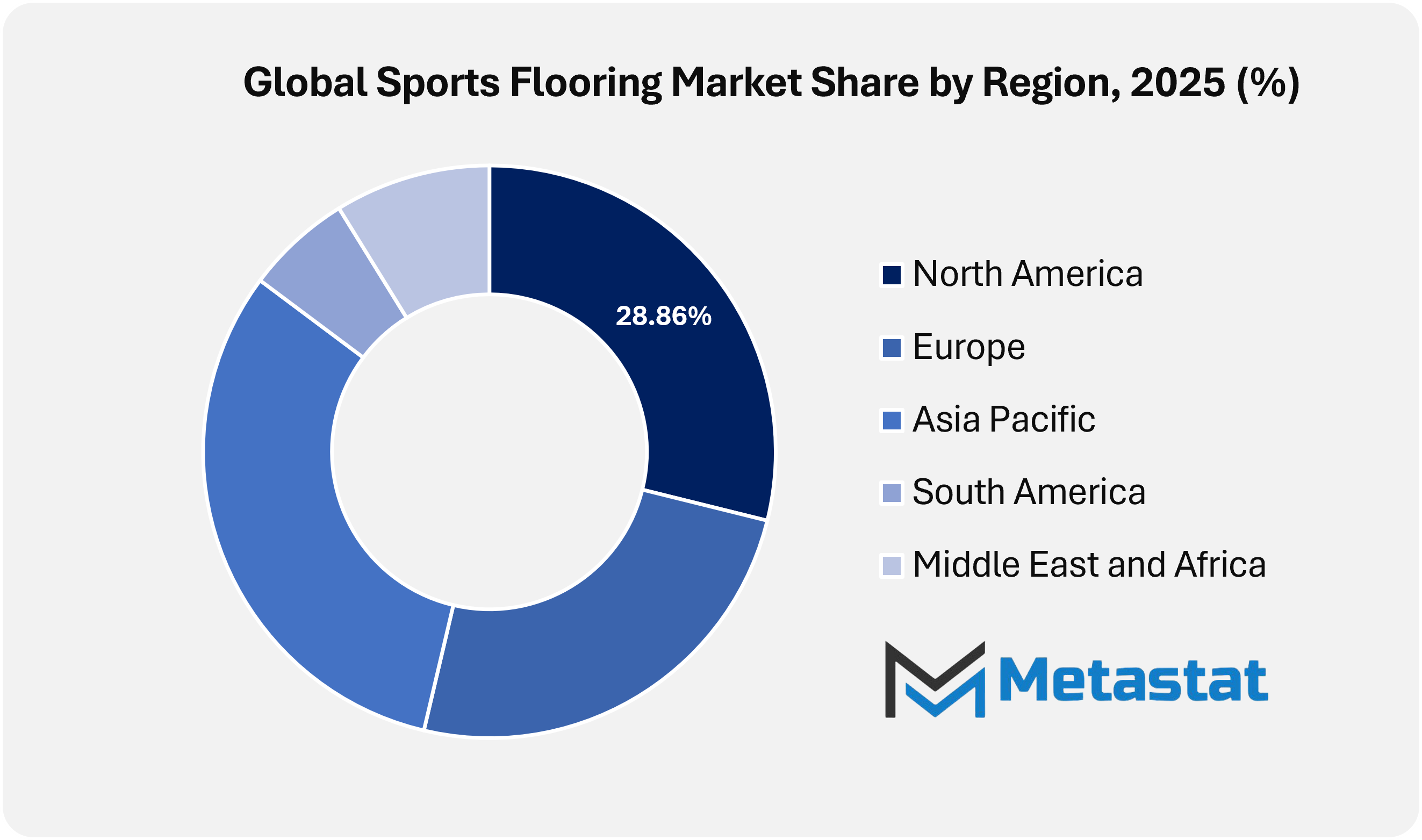
The competitive landscape of the Global Sports Flooring market is shaped by rising demand for performance-oriented, durable, and regulation-compliant flooring systems across professional, institutional, and recreational facilities. Buyers are placing greater attention on shock absorption, slip resistance, ball response, lifecycle cost, and environmental performance when selecting materials. Market participants are responding through broader product portfolios, surface specialization, and stronger alignment with the evolving requirements of schools, stadium operators, sports clubs, and fitness facility owners.
Leading companies continue to shape the competitive landscape through product innovation, distribution expansion, and surface specialization. Major participants include Gerflor SAS, FieldTurf Tarkett, Inc., Forbo Holding AG, Mondo S.p.A., and Sika AG. These companies focus on artificial surfaces, vinyl systems, polyurethane coatings, and hybrid flooring solutions that improve impact resistance, durability, and player comfort. Companies such as LX Hausys and KLIKFLEX Flooring support the indoor modular category, while SnapSports Athletic Surfaces and Robbins Sports Surfaces remain active across professional basketball and indoor court applications.
Wood-based sports flooring remains important across gymnasiums and indoor courts, where manufacturers such as Connor Sports, Action Floor Systems, Junckers, Horner Sports Flooring, and BOEN provide engineered hardwood systems. Resilient flooring specialists including Polyflor and Conica AG focus on synthetic track and field surfaces built for durability under heavy athletic use. Modular tile suppliers such as Mateflex, Sport Court, and VersaCourt continue to serve backyard courts and community sports facilities, reflecting rising demand for recreational installations.
Outdoor turf and performance surface systems form another important category within the Global Sports Flooring market. Companies such as Ecore Athletic, REGUPOL Germany GmbH & Co. KG, Dinoflex, and Herculan BV focus on rubber-based and polyurethane surfaces for tracks and multipurpose grounds. Artificial turf specialists including Shaw Sports Turf, AstroTurf, Polytan, Limonta Sport, and Beynon Sports supply surfaces for football, hockey, and athletic field applications. Supporting companies such as SIS Pitches, Kiefer USA, ACT Sports, and Rephouse Ltd contribute through installation capabilities and specialty surface solutions.
Market size is forecast to rise from USD 15.3 billion in 2025 to over USD 22.4 billion by 2033.
The Global Sports Flooring market will increasingly intersect with advances in athlete analytics and smart facility management. Training centers are likely to adopt subfloor technologies that capture force distribution and movement patterns, supporting performance analysis for coaches and physiotherapists. In educational institutions, flooring systems will also be selected to meet inclusive design requirements, support adaptive sports programs, and reduce injury exposure across varied age groups.
This research report categorizes the Sports Flooring market based on key segments and regions, forecasts revenue growth, and analyses trends in each submarket. The report analyses the key growth drivers, opportunities, and challenges influencing the Sports Flooring market. Recent market developments and competitive strategies such as expansion, product launch, partnership, merger, and acquisition have been included to draw the competitive landscape in the market.
The report strategically identifies and profiles the key market players and analyses their core competencies in each sub-segment of the Sports Flooring market.
|
Report Attributes |
Details |
|
Study Period |
2021-2033 |
|
Base Year |
2025 |
|
Estimated Year |
2026 |
|
Forecast Period |
2026-2033 |
|
Historical Period |
2021-2025 |
|
Growth Rate |
CAGR 4.9% from 2026 to 2033 |
|
Revenue Unit |
USD billion |
|
Segmentation |
By Material Type, Product Type, Sports, End User, and Region |
|
By Region |
North America (By Material Type, Product Type, Sports, End User, and Country)
|
|
Europe (By Material Type, Product Type, Sports, End User, and Country)
|
|
|
Asia Pacific (By Material Type, Product Type, Sports, End User, and Country)
|
|
|
South America (By Material Type, Product Type, Sports, End User, and Country)
|
|
|
Middle East and Africa (By Material Type, Product Type, Sports, End User, and Country)
|
Find answers to common questions about this report
Top players operating in the Sports Flooring industry include Gerflor SAS, Fieldturf Tarkett, Inc., Forbo Holding AG, Mondo S.p.A., Sika AG, KLIKFLEX Flooring, LX Hausys, and SnapSports Athletic Surfaces.
High installation and refurbishment cost, including downtime during floor replacement cycles will hamper the market growth within the forecast period.
North America region dominates the market.
Rising investment in multi-purpose sports halls, gyms, and community recreation infrastructure and Higher focus on injury prevention, player comfort, and consistent playing characteristics in professional and institutional facilities are key driving factors, boosting the market.
The Rubber Flooring is the leading type segment in the Global market.
The Metastat Insights analysis shows that the North America Sports Flooring market size is estimated to be USD 5.5 billion by 2033.
The Metastat Insights study shows that the Global Sports Flooring market size was USD 15.3 billion in 2025.
The Global Sports Flooring market is expected to grow at a CAGR of 4.9% over the forecast period (2026-2033).
The analysts below cover Chemicals and Materials research at Metastat Insights.
LEAD ANALYST
Utkarsh Khirodkar is a Lead Market Research Analyst at MetaStat Insight, specializing in market intelligence, technology sector assessments, and competitive strategy.

INDUSTRY CONSULTANT - CHEMICALS & ADVANCED MATERIALS
Chemicals and Materials · Machinery & Equipment · Packaging
Amit Gadhekar Consultant for Chemicals and Materials at MetaStat Insight, directing sector-specific intelligence, research, and strategic consulting across global chemical and processing markets.
Integrating zero-trust access controls across legacy electronic health record systems involves complex compliance overhead. Team produced an analysis that clearly separated identity governance and administration tools from privileged access management platforms. Their evaluation of HIPAA and GDPR compliance features across cloud native solutions gave our architecture group clear baseline criteria. The custom data request regarding biometric authentication adoption in hospital networks was returned promptly with clear documentation.
Evaluating calorific value requirements and air permit compliance across municipal waste facilities requires localized data. Metastat Insight structured their analysis around operational throughput capacity and feedstock composition variations in Latin America and Eastern Europe. Their competitive mapping of sorting equipment vendors helped clarify technology differences between optical separators and heavy media systems. The study provided an objective baseline during our capital expenditure reviews.
Decarbonizing industrial thermal processes hinges on refrigerant regulations and compressor efficiency limits. Metastat Insights delivered a thorough market analysis that evaluated natural refrigerants like CO2 and hydrocarbons against synthetic low-GWP alternatives. The breakdown of utility incentives and grid capacity constraints across key European manufacturing hubs offered valuable perspective. The follow-up conversation with their sector analysts addressed our specific questions on mechanical vapor recompression systems efficiently.
Explore related market intelligence reports worth reading alongside this one.
Starting from
$2950