
LEAD ANALYST
Utkarsh Khirodkar is a Lead Market Research Analyst at MetaStat Insight, specializing in market intelligence, technology sector assessments, and competitive strategy.

UK Hospitality Market Size, Share, By Service Type (Restaurants and Cafés, Hotels and Similar Accommodation, Pubs and Bars, Contract Catering and Other Food Services, Takeaway and Mobile Food Services, Event Catering, Holiday Parks and Camping, Holiday and Other Short-Stay Accommodation), By Operating Model (Independent Operators, Company-Operated Chains, Franchised Operators, Leased and Tenanted Operators), By Customer Type (Domestic Consumers, International Visitors, Private-Sector Organisations, Public-Sector Organisations), By Sales Channel (Direct Offline and Direct Online, Third-Party Booking and Ordering Platforms, Contract and Offline Intermediary Sales), Industry Analysis, Growth, Trends, and Forecast, 2026-2033
Report ID
MSI-5819
Published
November, 2026
Pages
291 Pages
Format
Historical
Base year
Forecast
Forecast period
Report Details
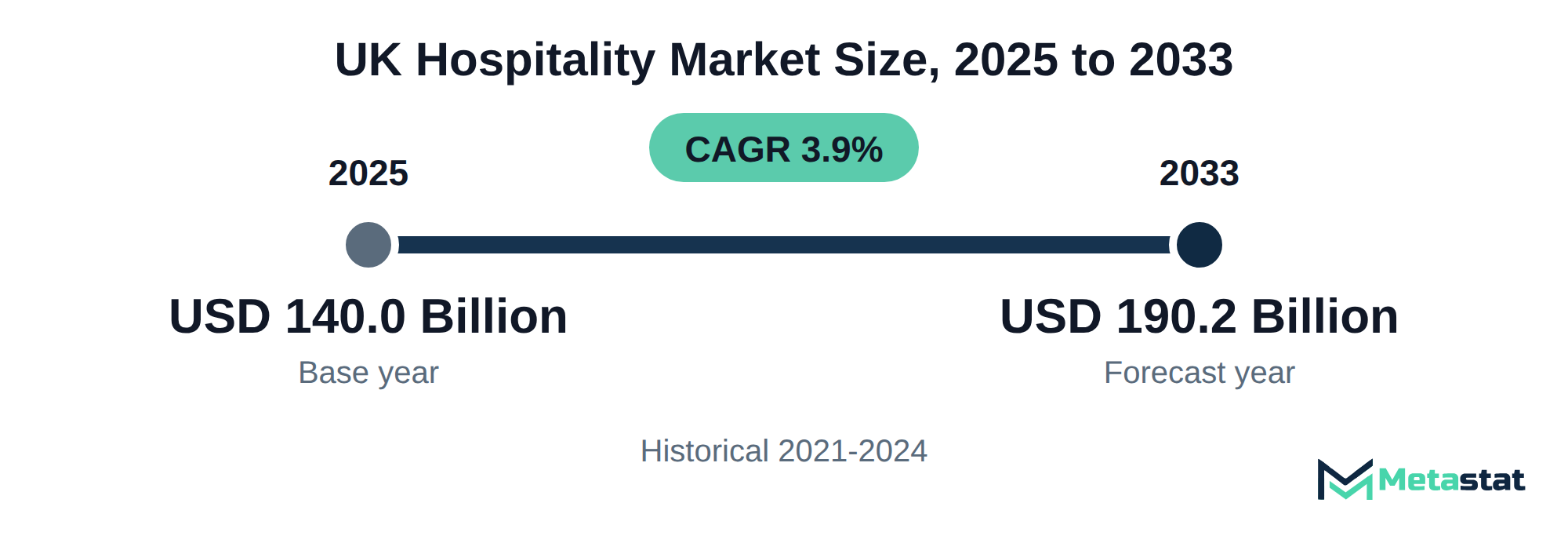
Market Valuation: Valued at $140 Billion in 2025, projected to reach $190.2 Billion by 2033 at a 3.9% CAGR.
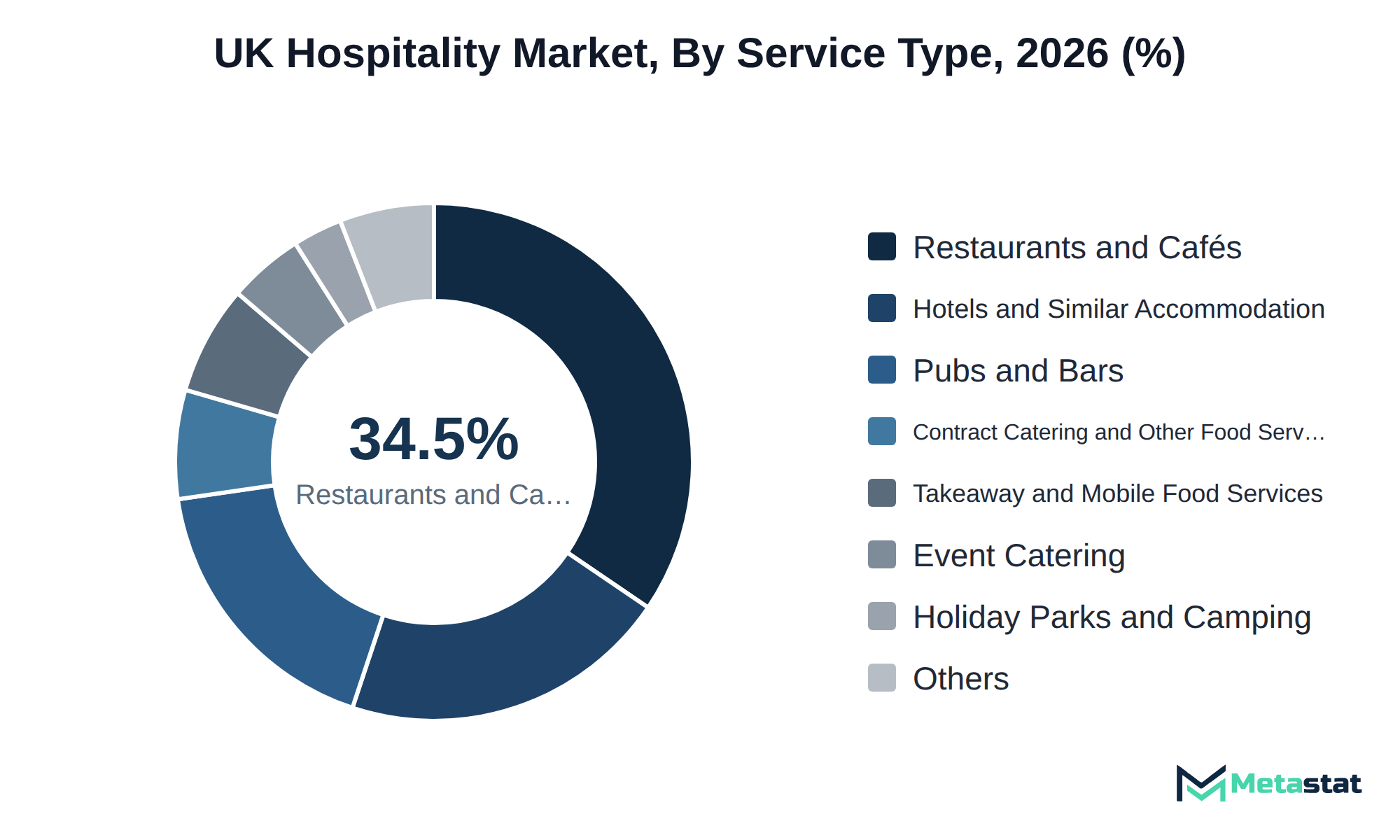
Dominant Segment: The restaurant and café segment leads the UK Hospitality market, driven by increasing consumer demand for dining experiences and social interaction.
Geographic Lead: The UK market is experiencing robust growth, primarily fueled by rising disposable income among domestic consumers and an influx of international visitors.
What's Inside: This report provides a comprehensive analysis of the UK Hospitality market, covering competitive landscapes, market dynamics, and forecasts from 2026 to 2033.
Staffing Pressures: Staffing challenges are significant, particularly for independent operators, who are expected to grow from USD 71.2 billion to USD 89 billion, highlighting the need for effective staffing solutions.
Consumer Behaviour: Shifts in consumer preferences towards dining out and social gatherings are driving increased spending in the hospitality sector, particularly in restaurants and cafés.
Choose Your License
UK Hospitality Market
The UK Hospitality market was valued at USD 140 billion in 2025 and is projected to reach USD 190.2 billion by 2033, growing at a CAGR of 3.9% over the forecast period.
The UK Hospitality market encompasses a variety of service sectors, including restaurants, hotels, and catering services. Buyers invest in this market primarily due to increasing demand for dining experiences, accommodation, and social interaction. Consumers seeking convenience and quality drive spending in the hospitality sector, reflecting broader lifestyle changes and economic conditions.
Growth in the market is fueled by several factors, with the restaurant and café segment representing the highest value within the sector. An increase in disposable income among domestic consumers contributes significantly to this growth. The market benefits from a rising number of international visitors, who enhance overall demand for various hospitality services.
In regional terms, growth is supported by strong consumer spending, particularly in the domestic market. This region outpaces others, highlighting the importance of local consumers in driving revenue. The growth trajectory reflects a combination of increased spending and an expanding consumer base, positioning the market for sustained development.
The UK Hospitality market serves diverse consumer needs through various segments, including dining establishments, lodging facilities, and catering services. Buyers spend on these experiences to fulfill personal, social, and business requirements, seeking quality, convenience, and value. The desire for unique and memorable experiences drives spending, particularly among domestic consumers and international visitors who contribute significantly to market growth.
Growth in the market is propelled by an increase in domestic tourism and a strong recovery in international travel. Restaurants and cafés represent the segment with the most value, reflecting consumer preferences for dining out and socializing. The market expands particularly among independent operators, who adapt their offerings to meet evolving consumer tastes and preferences.
Demand in the UK Hospitality market is strong, driven by factors including changing consumer lifestyles that emphasize dining and leisure activities. The sector benefits from the ongoing trend of personalization in service delivery, enhancing customer satisfaction. Increased investment in smart hospitality technology and infrastructure supports operators in meeting these evolving demands, positioning the market for sustained growth.
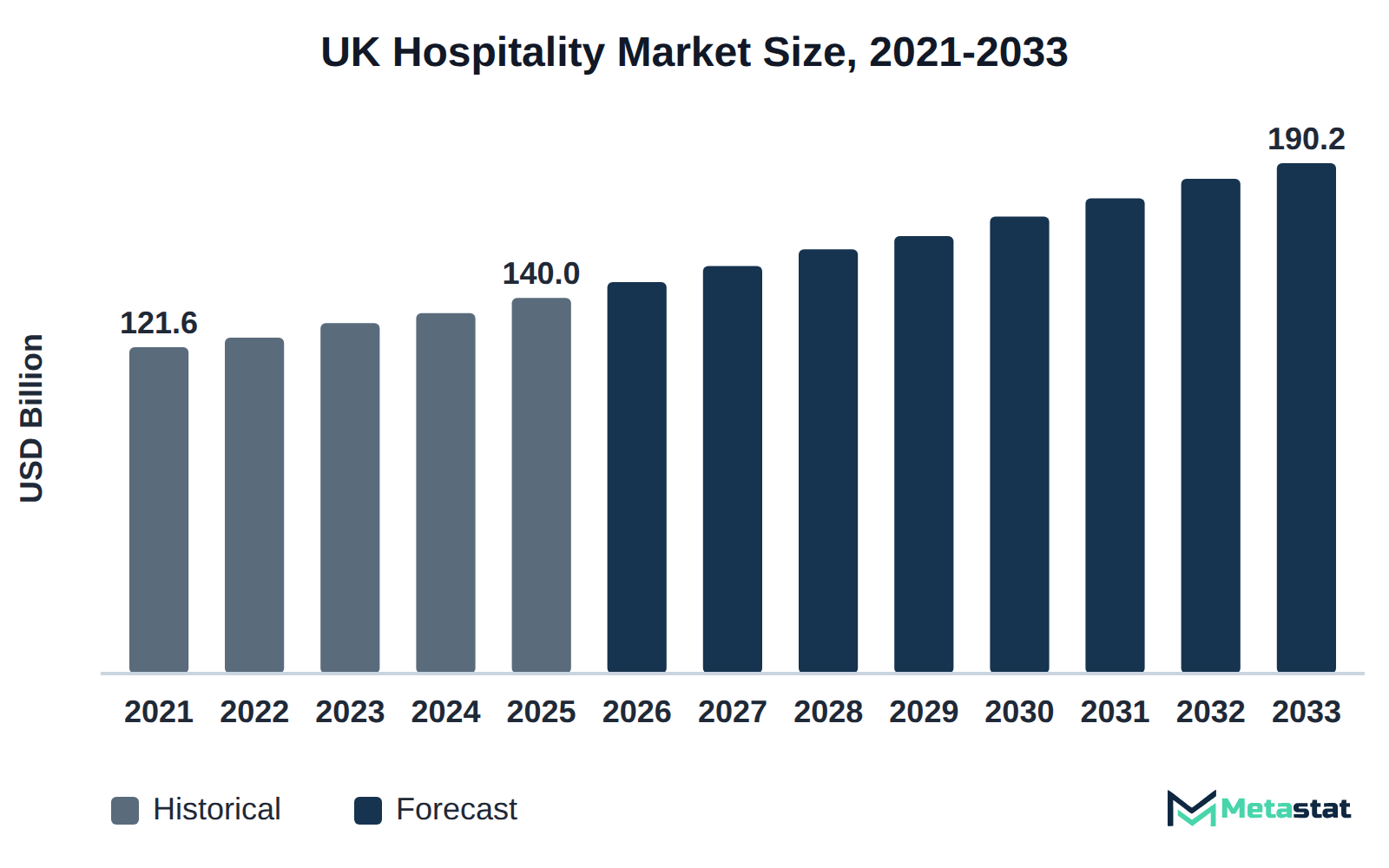
Staffing pressures significantly impact the UK Hospitality market, driven by a combination of factors including increased demand for services and a shrinking workforce. The rise in operational costs alongside a competitive labor market challenges operators to attract and retain qualified staff. Data indicates that from 2026 to 2033, independent operators within the hospitality sector are expected to grow from USD 71.2 billion to USD 89 billion, highlighting the urgency for efficient staffing solutions.
Technology adoption is essential in alleviating these staffing constraints. Automation tools and workforce management systems are increasingly implemented to enhance operational efficiency. These technologies streamline scheduling, improve communication, and optimize labor allocation. Such improvements reduce the burden on existing staff while addressing labor shortages by enhancing the overall employee experience. Venues that implement these technologies well can adapt to changing customer demands while maintaining service quality.
The commercial consequences of these shifts are significant. A well-staffed and efficiently managed venue enhances customer satisfaction, leading to higher revenue and loyalty. In the UK Hospitality market, using technology to manage staffing challenges directly affects profitability and competitive positioning. This proactive approach supports growth and aligns operational capabilities with market demands.
Direct bookings for hotel rooms in the UK Hospitality market are gaining traction, driven by evolving consumer preferences and competitive pricing strategies. Many hotels emphasize their direct booking channels, highlighting benefits including lower rates or exclusive offers that attract potential guests. The focus on direct bookings aligns with a broader trend where hotel operators increasingly aim to reduce reliance on third-party booking platforms, such as online travel agencies, which often charge substantial commissions.
Hotels and similar accommodations in the UK Hospitality market are projected to generate USD 38.8 billion by 2033, reflecting the growing importance of this revenue stream. This shift enables hotels to capture a larger share of revenue and enhance profit margins, allowing for reinvestment in services and facilities to improve guest experiences. Direct bookings facilitate better customer relationships, provide valuable data insights, and enhance loyalty through tailored marketing campaigns.
The commitment to enhancing direct booking strategies strengthens brand loyalty and improves pricing and revenue management, enabling hotels to respond dynamically to market conditions. Hotels focusing on optimizing their direct booking channels will evolve the overall commercial landscape in the UK Hospitality market, creating a more competitive environment where customer engagement and satisfaction play important roles.
Pub and restaurant operators in the UK Hospitality market face significant challenges in maintaining profit margins amid rising food and energy costs. The forecast for Contract Catering and Other Food Services indicates a compound annual growth rate (CAGR) of 5.2%, highlighting market potential but not alleviating the pressures on profitability. Operators in this space confront increasing supply chain costs driven by inflation and global market fluctuations.
In the UK Hospitality market, the price of basic ingredients has surged, with food costs presenting one of the most pressing concerns for restaurants and pubs. Higher energy prices further exacerbate the situation, forcing operators to balance menu pricing with customer retention strategies. Maintaining competitive pricing while ensuring quality and service standards becomes a delicate act.
To manage these challenges, establishments are exploring strategies such as menu optimization, portion control, and sourcing local ingredients to reduce transportation costs. The necessity for operational efficiency intensifies, with those who adapt effectively standing to enhance their market position. Strategic cost management therefore remains vital for sustaining profitability in the UK Hospitality market.
The demand for chefs in the UK hospitality market experiences significant growth due to a shift in dining preferences and increased consumer spending on food experiences. A growing preference for dining out contributes to the increased need for skilled culinary professionals. In 2023, the market value for restaurants and cafés reached USD 130.6 billion, reflecting strong consumer appetite for diverse dining options.
The rising trend of food innovation and the incorporation of unique culinary experiences lead to higher staffing requirements across various establishments. With the forecasted growth of the restaurant and café segment from USD 50.5 billion in 2026 to USD 67.1 billion by 2033, the need for qualified chefs is expected to intensify.
Enhanced food safety standards and the increasing popularity of special dietary options further drive the demand for chefs, with businesses seeking to comply with regulations and cater to diverse clientele. These conditions create a competitive environment that pushes hospitality operators to invest in talent to differentiate their offerings and improve customer satisfaction.
Shifts in consumer behaviour significantly influence spending patterns in the UK Hospitality market. Increased interest in dining experiences and social gatherings has prompted domestic consumers to seek out restaurants and cafés more frequently. This trend results in growing demand for diverse culinary offerings, prompting operators to improve their service quality and menu options. For instance, the segment of restaurants and cafés is projected to grow from USD 50.5 billion in 2026 to USD 67.1 billion by 2033, reflecting a compound annual growth rate (CAGR) of 4.1%. Such growth illustrates how changing preferences drive higher spending, leading to increased competition among operators. The market experiences pressure to innovate in service delivery and culinary offerings, influencing both pricing strategies and overall service quality in the hospitality sector.
Increasing adoption of sustainable practices enhances operational efficiency within the UK Hospitality market. A growing emphasis on environmental responsibility compels suppliers to invest in energy-efficient technologies and waste reduction strategies. Implementing these practices not only lowers operational costs but attracts a consumer base that prioritizes sustainability, particularly among younger demographics. This shift influences various segments, including restaurants and hotels, which seek to differentiate themselves through eco-friendly initiatives. Enhanced efficiency in energy use and resource management contributes directly to improved profit margins, benefiting operators in a competitive landscape. The incorporation of sustainable practices across the UK Hospitality market reflects a broader trend toward corporate social responsibility, which increasingly impacts consumer choices and loyalty. Sustainability becomes central to operational strategies, promoting long-term growth and resilience. The focus on environmental stewardship alongside economic viability strengthens the overall outlook for the hospitality industry.
Pricing fluctuations significantly impact demand within the UK Hospitality market, particularly for independent operators and smaller establishments. Increased operational costs, including supplies and staffing, have resulted in higher menu prices that deter price-sensitive consumers. This situation leads to slower uptake of services, especially in segments catering to domestic consumers who prioritize affordability. Consequently, establishments experience smaller order volumes and delayed investment in upgrades or renovations, further stalling growth. Greater reliance on budget-conscious pricing strategies places additional strain on profitability, making it difficult for operators to offer competitive services while maintaining quality. Price sensitivity among international visitors affects spending patterns, with many opting for more economical lodging or dining options. The cumulative effect of these pricing challenges highlights the need for operators to balance quality and affordability, ultimately impacting overall market growth.
Suppliers in the hospitality sector face significant challenges due to rising operational costs. Escalating prices for essential inputs, including food, energy, and staff, create pressure on profit margins. The UK Hospitality market experiences intensified competition, compelling players to find effective ways to manage these costs without sacrificing quality or customer satisfaction. Many suppliers implement cost-control measures through bulk purchasing agreements and renegotiating contracts with suppliers to mitigate these pressures. Investments in technology, including automated systems for inventory and workforce management, help streamline operations and reduce waste. These responses show how suppliers protect profitability in a complex market.
The growing trend towards local sourcing aims to minimize transport costs and support local economies. This shift addresses rising costs and aligns with consumer preferences for sustainable practices. Suppliers embedding such strategies enhance their brand reputation and attract more customers, ultimately driving growth within the market.
The growth of contract catering within the UK Hospitality market presents a significant opportunity. This segment exhibits a compound annual growth rate (CAGR) of 5.2%, driven by increasing demand for catering services in corporate and institutional settings. Private-sector organisations and public-sector organisations increasingly rely on external catering solutions to enhance service quality while managing costs effectively. This trend towards outsourcing creates opportunities for operators specialising in tailored catering solutions.
Increased focus on health and sustainability further supports this growing segment, with clients seeking providers capable of delivering high-quality, nutritious meals. Evolving consumer expectations regarding food quality and service create opportunities for growth. The market is expected to benefit from increasing investments in innovative catering models that address these consumer trends. Expanding contract catering services will intensify competition and drive further adoption across sectors.
The UK Hospitality market is segmented based on Service Type, Operating Model, Customer Type, and Sales Channel.
This segment caters primarily to domestic consumers, offering a wide range of dining experiences and takeaway options. The rising preference for convenience and quality dining experiences drives growth in this segment. Compared to other segments, the Restaurants and Cafés segment experiences faster growth, supported by the increased trend of casual dining and a shift towards food delivery services. While Contract Catering and Other Food Services show a CAGR of 5.2%, the Restaurants and Cafés segment’s emphasis on dining experiences appeals to consumers seeking social interactions and culinary diversity. In contrast to Hotels and Similar Accommodation, which has a CAGR of 3.8%, the Restaurants and Cafés segment growth reflects changing consumer behaviors and an evolving culinary landscape in the UK Hospitality market.
Hotels and Similar Accommodation segment is estimated to reach USD 38.8 billion by 2033, at a CAGR of 3.8% during the forecast period. This segment includes hotels, motels, and other lodging facilities catering to both domestic and international travelers. Demand for this segment stems primarily from tourism, business travel, and events. Factors influencing growth include increasing international visitor numbers, projected to grow at a CAGR of 4.6% and contribute to overall accommodation demand. Compared to other segments including Restaurants and Cafés, which is expected to grow at a CAGR of 4.1%, Hotels and Similar Accommodation experiences a slower growth rate. An enhanced focus on guest experience and technology integration within hotels drives competitive differentiation, while varying price points across different types of accommodations appeal to diverse consumer needs.
Pubs and Bars segment is projected to reach USD 30.8 billion by 2033. This segment provides social and recreational spaces for consumers, primarily serving domestic patrons seeking casual dining and drinking experiences. Increased consumer interest in craft beverages, including craft beer, and unique dining environments drives demand for Pubs and Bars, distinguishing them from other segments like Restaurants and Cafés that focus on full-service meals. While the overall market experiences a CAGR of 3.9%, the Pubs and Bars segment features steady growth driven by changing consumer preferences towards socializing in relaxed settings. Competitive pricing strategies and promotions play a crucial role in attracting patrons, particularly in urban areas where competition is intense. With the market shifting towards experiential offerings, innovation in beverage selections and themed events has become essential for providers in this segment to maintain relevance and appeal to diverse consumer tastes.
Contract Catering and Other Food Services segment is projected to grow at a CAGR of 5.2% during the forecast period. This segment caters to diverse clientele, including businesses, schools, hospitals, and events, offering tailored food solutions that prioritize convenience and quality. The increasing focus on health and wellness drives demand for nutritious meal options, influencing the growth trajectory of this segment. Compared to other service types, this segment experiences faster growth, attributed to rising corporate investment in outsourced catering services and changing consumer preferences. With a projected CAGR outpacing that of Hotels and Similar Accommodation at 3.8% and Pubs and Bars, Contract Catering and Other Food Services presents unique opportunities for operators to expand their reach and enhance service offerings. Adaptation to dietary trends and regulatory requirements enhances competitive positioning, creating a dynamic environment for growth in the UK hospitality market.
Takeaway and Mobile Food Services encompass a segment within the market focused on providing food and beverage options for customers on the go. This segment caters to individuals seeking convenience and quick meal solutions, particularly busy professionals and families. Increasing consumer preference for fast and accessible dining options drives demand, along with technological advancements in delivery apps and services. Compared to other segments, including Restaurants and Cafés, which rely on dine-in experiences, this segment offers a different pricing structure and operational model, characterized by lower overhead costs and quicker service. The demand for mobile food services is expected to grow at a faster pace due to evolving consumer habits and the convenience factor. This adaptability to market trends positions this segment strategically within the competitive landscape of the UK Hospitality market.
Event Catering focuses on providing food services for various occasions, including corporate events, weddings, and parties. Organisations and individuals commonly utilise this service to ensure high-quality dining experiences at gatherings. Demand for event catering often rises during festive seasons and peak wedding periods, significantly influencing the segment's performance. A growing emphasis on personalised and thematic catering experiences has propelled the trend towards customised menus and unique presentation styles. Event Catering typically operates at higher price points compared to other segments, reflecting its specialised nature and the necessity for quality ingredients and skilled staff. This segment exhibits a robust response to emerging trends in dietary preferences and sustainable sourcing, which continue to shape offerings and client expectations. In comparison to other service types, the event catering segment shows potential for faster growth driven by an increasing consumer focus on experiential dining and memorable events.
Holiday Parks and Camping offer a unique accommodation option for individuals and families seeking leisure experiences in natural settings. This segment caters to domestic consumers and international visitors, providing a blend of outdoor activities and comfortable lodging. Factors driving growth include rising demand for outdoor recreational activities and increasing consumer interest in staycations, where families opt for local getaways over international travel. Compared to other segments, including Hotels and Similar Accommodation, this category typically provides a different pricing structure, appealing to budget-conscious travelers. While other segments focus on urban experiences, Holiday Parks and Camping prioritizes nature-based tourism, creating distinct appeal. This focus on outdoor leisure contributes to its growing popularity in the UK Hospitality market.
Holiday and Other Short-Stay Accommodation includes various lodging options catering to short-term stays, including vacation rentals and serviced apartments. Domestic consumers and international visitors increasingly rely on this segment for leisure and travel needs. Demand for short-stay accommodation is driven by convenience and the growing trend toward experiential travel, where unique lodging experiences enhance the overall trip. This segment differentiates itself from others by offering flexible booking options and often lower pricing compared to traditional hotels, appealing to a broad audience seeking affordability and local experiences. Increased competition from online platforms influences pricing strategies, impacting growth dynamics in the market. Enhanced online visibility and marketing strategies play a critical role in attracting consumers, supporting continued interest in short-stay options.
Others (Licensed Clubs and Other Lodging) encompass a diverse category within the UK Hospitality market, serving various customer needs for socializing and accommodation. This segment attracts domestic consumers and international visitors seeking unique experiences. Demand for licensed clubs and alternative lodging options stems from a growing inclination toward experiential activities and diverse tourism offerings. Compared to more traditional segments, this category differentiates itself by offering unique environments and social experiences, appealing to a younger demographic. Pricing strategies within this segment differ from those in hotels and restaurants, focusing on creating memorable experiences rather than standard accommodation services. Evolving consumer preferences and cultural trends drive this segment's growth trajectory.
Independent Operators segment is valued at USD 71.2 billion in 2026 and is projected to reach USD 89 billion by 2033, at a CAGR of 3.2% during the forecast period. This segment primarily serves domestic consumers who prefer unique dining and hospitality experiences. Local establishments, often managed by individual entrepreneurs, cater to community preferences and build customer loyalty through personalized service. Demand for these operators is influenced by a growing trend toward local sourcing and authentic experiences, which distinguishes them from larger chains. While larger firms in the Company-Operated Chains segment benefit from economies of scale, Independent Operators thrive on curated offerings and local connections. The projected growth rate of 3.2% highlights the resilience of this segment within the UK Hospitality market, despite rising operational costs impacting profit margins.
Company-Operated Chains segment is estimated to reach USD 65.8 billion by 2033, at a CAGR of 4.4% during the forecast period. This segment includes establishments that operate under a single brand, maintaining control over service quality and customer experience. Primarily used by domestic consumers and international visitors seeking reliable dining and lodging experiences, these chains thrive on brand loyalty and standardized service. A notable driver of growth within this segment stems from increasing demand for consistent quality and value among consumers, reflected in the anticipated growth rate. Compared to Independent Operators, which have a CAGR of 3.2%, Company-Operated Chains exhibit faster growth due to their ability to implement efficient operational strategies and marketing initiatives. The rise of digital platforms for direct online bookings enhances accessibility, further contributing to the expansion of this segment within the UK Hospitality market.
Franchised Operators segment is expected to reach USD 24.2 billion by 2033. This segment primarily serves customers seeking brand-recognized dining and accommodation experiences, often characterized by consistency and quality assurance across locations. A notable demand driver is the increasing preference for well-established brands among consumers, which aligns with the trend of franchising providing lower entry barriers for potential operators. Compared to other operating models, franchised operators benefit from brand strength, enabling them to maintain competitive pricing. Growth for this segment is anticipated at a CAGR of 4.4%, reflecting stronger expansion compared to independent operators, which are projected at a CAGR of 3.2%. The balance between franchise fees and operational performance influences profitability, making this segment a unique player in the UK hospitality market.
Leased and Tenanted Operators segment is projected to grow at a CAGR of 3.7% during the forecast period. This segment comprises businesses renting or leasing premises to operate hospitality services, appealing to various customers, including domestic consumers and institutions. The shift towards leased arrangements allows operators to reduce initial capital expenditures, facilitating market entry for new players. Increased demand arises from consumers seeking unique experiences, resulting in a competitive landscape. Compared to other operating models, this segment exhibits slower growth relative to Company-Operated Chains, which are expected to achieve a CAGR of 4.4%. Leased and Tenanted Operators cater to a diverse clientele while appealing to price-sensitive consumers, differentiating them from independent or franchised operators. The UK Hospitality market shows a trend towards flexible operational structures, positioning leased operators competitively in an evolving environment.
Domestic Consumers segment is valued at USD 109.6 billion in 2026 and is projected to reach USD 141 billion by 2033, at a CAGR of 3.7% during the forecast period. This segment primarily includes local patrons who engage with various hospitality services for dining, accommodation, and leisure activities. An increasing preference for dining out and social gatherings drives growth, particularly among younger demographics seeking unique experiences. In comparison to other segments, this group exhibits steady growth and a consistent demand for quality and variety in service offerings. The impact of international tourism influences spending patterns among local consumers, allowing them to explore diverse culinary options. This dynamic contributes to the evolving nature of the UK Hospitality market, where consumer preferences shape service innovation and operational strategies.
International Visitors segment is estimated to reach USD 23.8 billion by 2033, at a CAGR of 4.6% during the forecast period. This segment encompasses travelers from outside the UK who seek accommodation, dining, and entertainment options while visiting. Growth in this area primarily stems from increasing global travel and a rising interest in experiencing diverse cultures, which drives international tourists to the UK. This segment differs from Domestic Consumers, who contribute USD 141 billion by 2033 at a CAGR of 3.7%, highlighting a faster growth trajectory for International Visitors. The willingness of visitors to spend more on unique experiences positions this segment favorably against others in the Customer Type category. Enhanced marketing efforts and improved travel infrastructure further support this upward trend, increasing the segment's relative attractiveness and importance in the UK Hospitality market.
Private-Sector Organisations segment is expected to reach USD 19.4 billion by 2033. This segment includes businesses that require hospitality services for various purposes, including employee events, meetings, and client entertainment. The segment experiences growth driven by increasing corporate spending on employee engagement and the need for businesses to create memorable experiences for clients. Compared to other segments, its growth trajectory is slower, evidenced by a CAGR of 4.0% during the forecast period. Demand from private-sector organisations tends to be less price-sensitive, reflecting the higher budgets allocated for corporate hospitality compared to leisure consumers. A strong emphasis on quality service and unique experiences distinguishes this segment from others, underpinning its significance within the UK Hospitality market.
Public-Sector Organisations segment is projected to grow at a CAGR of 4% during the forecast period. This segment serves various government bodies and institutions that require hospitality services for events, accommodation, and catering. Significant demand arises from the need for public events, training sessions, and social functions. Public-sector entities prioritize cost efficiency while ensuring quality service, distinguishing this segment from others, including Domestic Consumers, which experiences a higher growth rate of 3.7%. Emphasis on budget adherence influences purchasing decisions and service selection, leading to different operational dynamics compared to more commercially driven sectors. Focus on regulatory compliance and public accountability adds a layer of complexity to service provision, impacting pricing structures and service expectations. In this context, the UK Hospitality market presents opportunities for providers that align services with the unique requirements of public-sector clients.
Direct Offline segment is valued at USD 89.9 billion in 2026 and is projected to reach USD 104.6 billion by 2033, at a CAGR of 2.2% during the forecast period. This segment primarily serves consumers looking to book accommodations or dining experiences directly, without intermediary platforms. Domestic consumers significantly drive demand, reflecting a preference for personalized service and in-person interactions. The relatively slow growth of this segment contrasts with the Direct Online segment, which experiences a CAGR of 7%. Direct Offline relies heavily on traditional booking methods, including face-to-face interactions and telephone reservations, appealing to a demographic that values personal touch over convenience. This aspect differentiates it further from online models, which attract a younger audience seeking instant access and user-friendly technology, highlighting diverse consumer preferences in the UK Hospitality market.
Direct Online segment is estimated to reach USD 46.4 billion by 2033, at a CAGR of 7% during the forecast period. This segment facilitates bookings and transactions directly through online platforms, appealing to both domestic consumers and international visitors seeking convenience and immediacy in their hospitality experiences. A primary driver of growth stems from increasing consumer preference for digital channels, particularly among younger demographics. This segment differs from Direct Offline by offering a more agile and responsive service model, encouraging higher engagement and transaction volumes. The forecasted CAGR of 7% highlights its faster growth compared to the Direct Offline segment, which has a projected CAGR of 2.2%. This trend reflects the significant shift towards online interactions across the UK Hospitality market, reshaping how services are delivered and experienced.
Third-Party Booking and Ordering Platforms segment is expected to reach USD 23.2 billion by 2033. This segment facilitates the booking and ordering of hospitality services through various digital platforms, primarily catering to consumers seeking convenience and flexibility. Domestic consumers and international visitors frequently access these platforms for easy access to restaurants, accommodations, and other services. Rapid technological advancements drive increased engagement with these platforms, leading to an expected CAGR of 7% during the forecast period. Compared to traditional sales channels, the Third-Party Booking and Ordering Platforms segment exhibits higher growth potential, driven by rising consumer preferences for online booking options. The market benefits from the growing integration of mobile technology and online payment solutions, enhancing user experience and encouraging more frequent usage.
Contract and Offline Intermediary Sales segment is projected to grow at a CAGR of 4.2% during the forecast period. This sales channel primarily supports businesses seeking to access hospitality services through intermediaries, catering to various customer bases, including corporate clients and event organizers. A significant driver for this segment involves the increasing reliance on third-party platforms for bookings and orders, enhancing accessibility for customers. The growth of digital technologies in the market facilitates streamlined booking processes, contributing to overall market expansion. Compared to other sales channels, this segment experiences slower growth, primarily due to competitive pricing strategies observed in direct sales channels, which attract more price-sensitive consumers. With ongoing developments in digital booking solutions, this segment is expected to capture a larger share of the overall market.
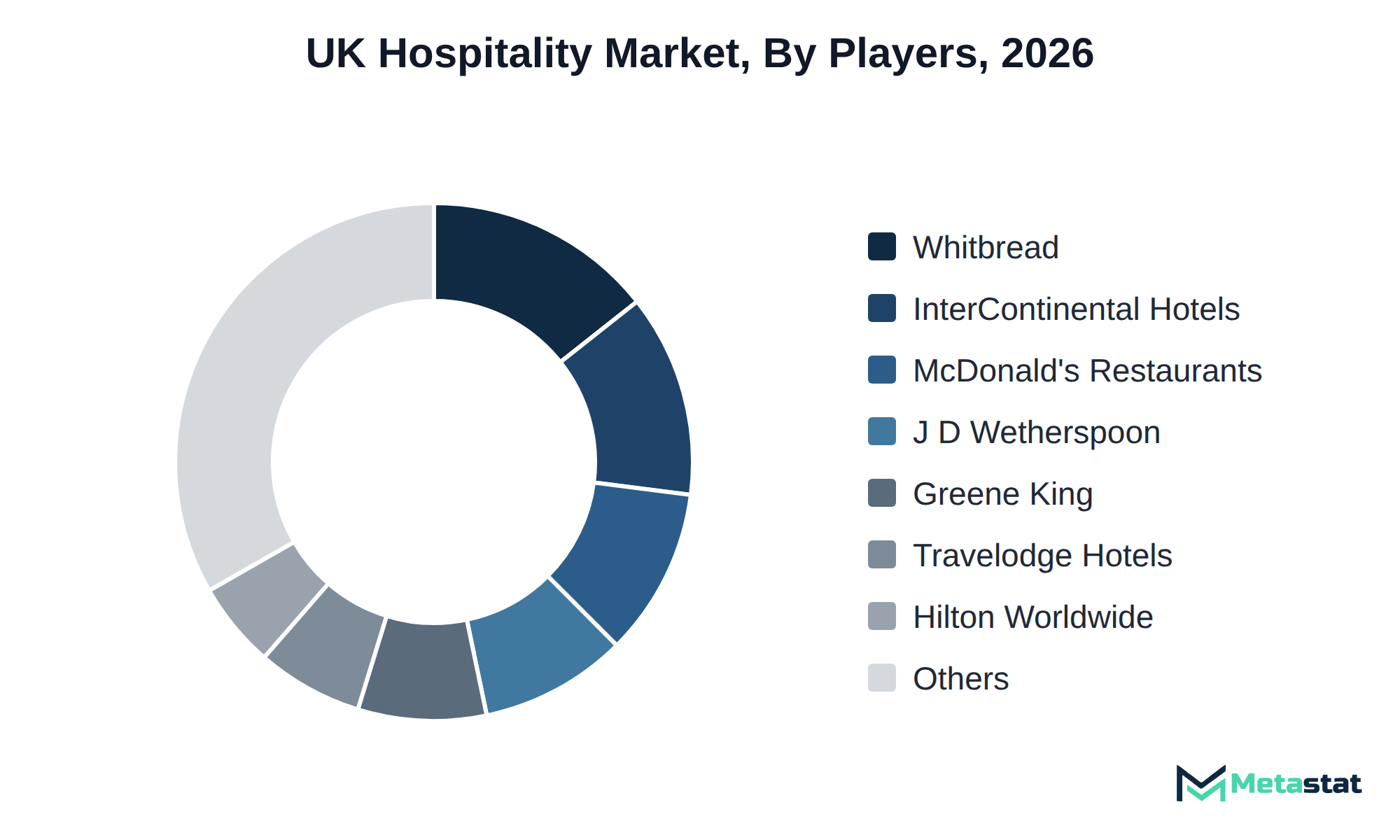
Companies in the UK Hospitality market compete through various service types and operating models. Independent operators, like Whitbread PLC and J D Wetherspoon plc, focus on unique customer experiences, while company-operated chains, including InterContinental Hotels Group PLC and Hilton Worldwide Holdings Inc., leverage brand recognition and standardized service quality. Franchised operators, including McDonald's Restaurants Limited and Domino's Pizza Group plc, enhance market penetration through widespread accessibility in the quick service restaurant space.
Price, service quality, and customization drive buyer choices in the market. For instance, Greene King Limited and Mitchells & Butlers plc emphasize value for money and diverse offerings to attract domestic consumers. In contrast, luxury hotel brands including Accor S.A. and Marriott International, Inc. prioritize high-end service and amenities to cater to international visitors.
Achieving this target requires several key developments within the UK Hospitality market. First, the growth of Restaurants and Cafés will significantly contribute, with a projected expansion from USD 50.5 billion in 2026 to USD 67.1 billion by 2033, driven by increasing consumer preferences for dining experiences. Second, the rise in international visitors will enhance demand for Hotels and Similar Accommodation, which is expected to reach USD 38.8 billion by 2033. This segment's growth relies heavily on improvements in travel accessibility and marketing strategies targeting overseas tourists. The market faces potential risks that could hinder progress. Economic downturns, fluctuations in disposable income, or shifts in consumer behavior present challenges that could limit growth potential. Maintaining consistent demand among Domestic Consumers is crucial, as they represent a substantial portion of the market. The combination of these developments and risks will shape the trajectory of the UK Hospitality market through 2033.
By Service Type: Restaurants and Cafés, Hotels and Similar Accommodation, Pubs and Bars, Contract Catering and Other Food Services, Takeaway and Mobile Food Services, Event Catering, Holiday Parks and Camping, Holiday and Other Short-Stay Accommodation, Others (Licensed Clubs and Other Lodging)
By Operating Model: Independent Operators, Company-Operated Chains, Franchised Operators, Leased and Tenanted Operators
By Customer Type: Domestic Consumers, International Visitors, Private-Sector Organisations, Public-Sector Organisations
By Sales Channel: Direct Offline, Direct Online, Third-Party Booking and Ordering Platforms, Contract and Offline Intermediary Sales
The report strategically identifies and profiles the key market players and analyses their core competencies in each sub-segment of the Hospitality market.
Report Attributes | Details |
Study Period | 2021-2033 |
Base Year | 2025 |
Estimated Year | 2026 |
Forecast Period | 2026-2033 |
Historical Period | 2021-2025 |
Growth Rate | CAGR 3.9% from 2026 to 2033 |
Revenue Unit | USD billion |
Segmentation | By Service Type, Operating Model, Customer Type, Sales Channel, and Region |
Find answers to common questions about this report
The Hospitality market size was valued at USD 140 billion in 2025.
The market is projected to grow at a CAGR of 3.9% during the forecast period from 2026 to 2033.
Restaurants and Cafés lead the Hospitality market with a projected value of USD 67.1 billion by 2033, reflecting the highest growth among service types.
Key drivers for the UK Hospitality market include shifts in consumer behaviour towards dining experiences and social gatherings, which increase demand for restaurants and cafés. The trend towards sustainability compels operators to adopt eco-friendly practices, enhancing operational efficiency and attracting environmentally conscious consumers.
Rising operational costs, including supplies and staffing, create significant pressure on profit margins, resulting in higher menu prices that deter price-sensitive consumers. This situation leads to slower uptake of services and smaller order volumes, ultimately restraining growth in the UK Hospitality market.
Factors favoring adoption in the UK Hospitality market include increasing demand for tailored catering solutions in corporate and institutional settings. Clients prioritize health and sustainability in their food offerings, driving operators to innovate and expand their services. This trend supports the growth of contract catering, which exhibits a compound annual growth rate (CAGR) of 5.2%.
The Hospitality market is estimated to reach a valuation of USD 190.2 billion by 2033.
Key players operating in the Hospitality market include Whitbread PLC, Greene King Limited, Mitchells & Butlers plc, Compass Group PLC, InterContinental Hotels Group PLC, and Hilton Worldwide Holdings Inc.
The segment of restaurants and cafés is projected to grow from USD 50.5 billion in 2026 to USD 67.1 billion by 2033, reflecting a compound annual growth rate (CAGR) of 4.1%.
Domestic consumers represent the largest customer type, with their spending expected to increase from USD 109.6 billion in 2026 to USD 141 billion by 2033, demonstrating a CAGR of 3.7%.
The analysts below cover Food and Beverages research at Metastat Insights.
LEAD ANALYST
Utkarsh Khirodkar is a Lead Market Research Analyst at MetaStat Insight, specializing in market intelligence, technology sector assessments, and competitive strategy.

LEAD PRINCIPAL ANALYST, PHARMA AND HEALTHCARE
Food and Beverages · Healthcare · Healthcare IT · Medical Devices
Ajay Devgire is the Lead Healthcare Analyst at MetaStat Insight, leading strategic research and market intelligence initiatives across the global healthcare domain.

SENIOR RESEARCH ANALYST
Biotechnology · Food and Beverages · Medical Devices · Packaging
Snehal Pasalkar is a Research Analyst at MetaStat Insight, operating at the intersection of life sciences research, competitive strategy, and market intelligence.
In the biological seed treatment space, registration timelines vary drastically between the European Union, Brazil, and North America. The MetaStat Insight research handled these cross-border regulatory barriers with genuine nuance, mapping commercialization pathways alongside historical field adoption rates. The segmentation between microbial strains and biochemical active ingredients was particularly well structured.
Our team was tracking whether regional recycling infrastructure could realistically absorb the growing volume of lithium iron phosphate batteries over the next decade. The report did a solid job separating announced hydrometallurgical plant capacity from active, permitted operational throughput. That distinction made the feedstock availability projections and regional recovery rate models far more credible than standard commercial overviews.
Tracking capacity expansion in single-use bioprocessing requires dependable data on raw material availability and cleanroom-grade polymer supply chains. The competitive landscape chapter gave a grounded evaluation of secondary component suppliers across North America and Asia-Pacific rather than simply reprinting press releases. Having that level of supplier benchmarking helped clarify dual-sourcing considerations for our clinical pipeline planning.
Explore related market intelligence reports worth reading alongside this one.