
LEAD ANALYST
Utkarsh Khirodkar is a Lead Market Research Analyst at MetaStat Insight, specializing in market intelligence, technology sector assessments, and competitive strategy.

Global Plant Extracts Market Size, Share, By Source (Seaweed and Algae Extracts, Herbal and Botanical Extracts, Fruit Extracts, Vegetable Extracts, Seed and Grain Extracts), By Extract Type (Liquid Extracts, Powder Extracts, Concentrated Extracts, Oleoresins, Essential Oils), By Extraction Method (Solvent Extraction, Water-Based Extraction, Supercritical Fluid Extraction, Steam Distillation, Cold Pressing and Mechanical Extraction, Ultrasound-Assisted Extraction), By Application (Agricultural Biostimulants and Fertilizers, Food and Beverages, Nutraceuticals and Dietary Supplements, Pharmaceuticals, Cosmetics and Personal Care, Animal Nutrition), Industry Analysis, Growth, Trends, and Forecast, 2026-2033
MSI-5460
October, 2026
292 Pages
Historical
Base year
Forecast
Forecast period
Report Details
Comprehensive Market Analysis And Insights
Market Valuation: Valued at $42.5 Billion in 2025, projected to reach $82.9 Billion by 2033 at a 8.7% CAGR.
Dominant Segment: Herbal and botanical extracts lead the Plant Extracts market, driven by rising consumer awareness of their health benefits and a growing preference for natural ingredients.
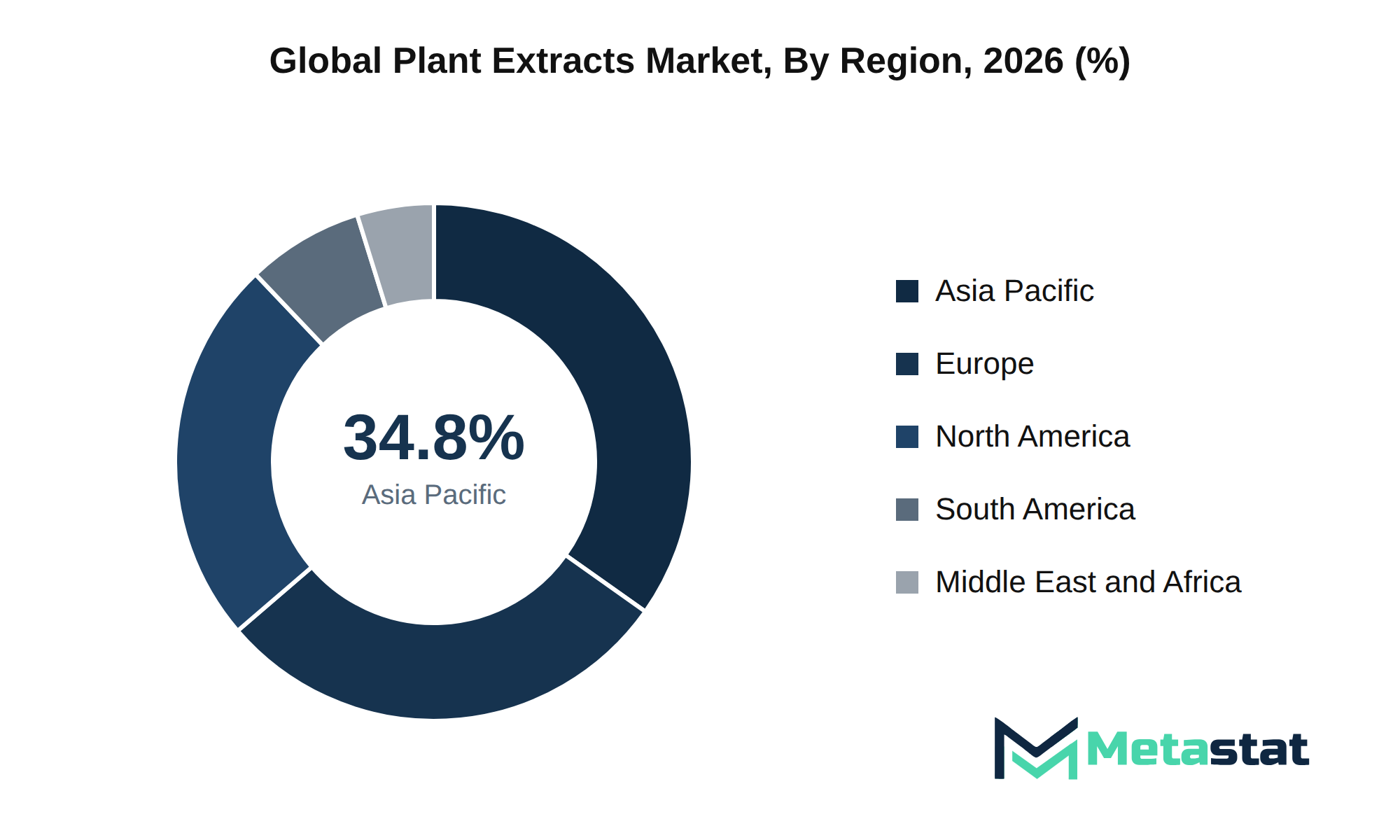
Geographic Lead: Asia Pacific holds the largest market share at 34.8% in 2025, propelled by extensive agricultural practices and a robust food processing industry.
What's Inside: The report provides a comprehensive analysis of market dynamics, competitive landscape, and forecasts from 2026 to 2033, covering various extract types, sources, and applications.
Rising Demand for Seaweed and Algae Extr: The market for seaweed and algae extracts is projected to grow significantly, with a CAGR of 11.1%, driven by their effectiveness in sustainable agricultural practices.
Technological Advancements in Extraction: Innovative extraction techniques, such as supercritical CO2 and ultrasound extraction, are reshaping the market by enhancing efficiency and product quality.
The global Plant Extracts market was valued at USD 42.5 billion in 2025 and is projected to reach USD 82.9 billion by 2033, growing at a CAGR of 8.7% over the forecast period.
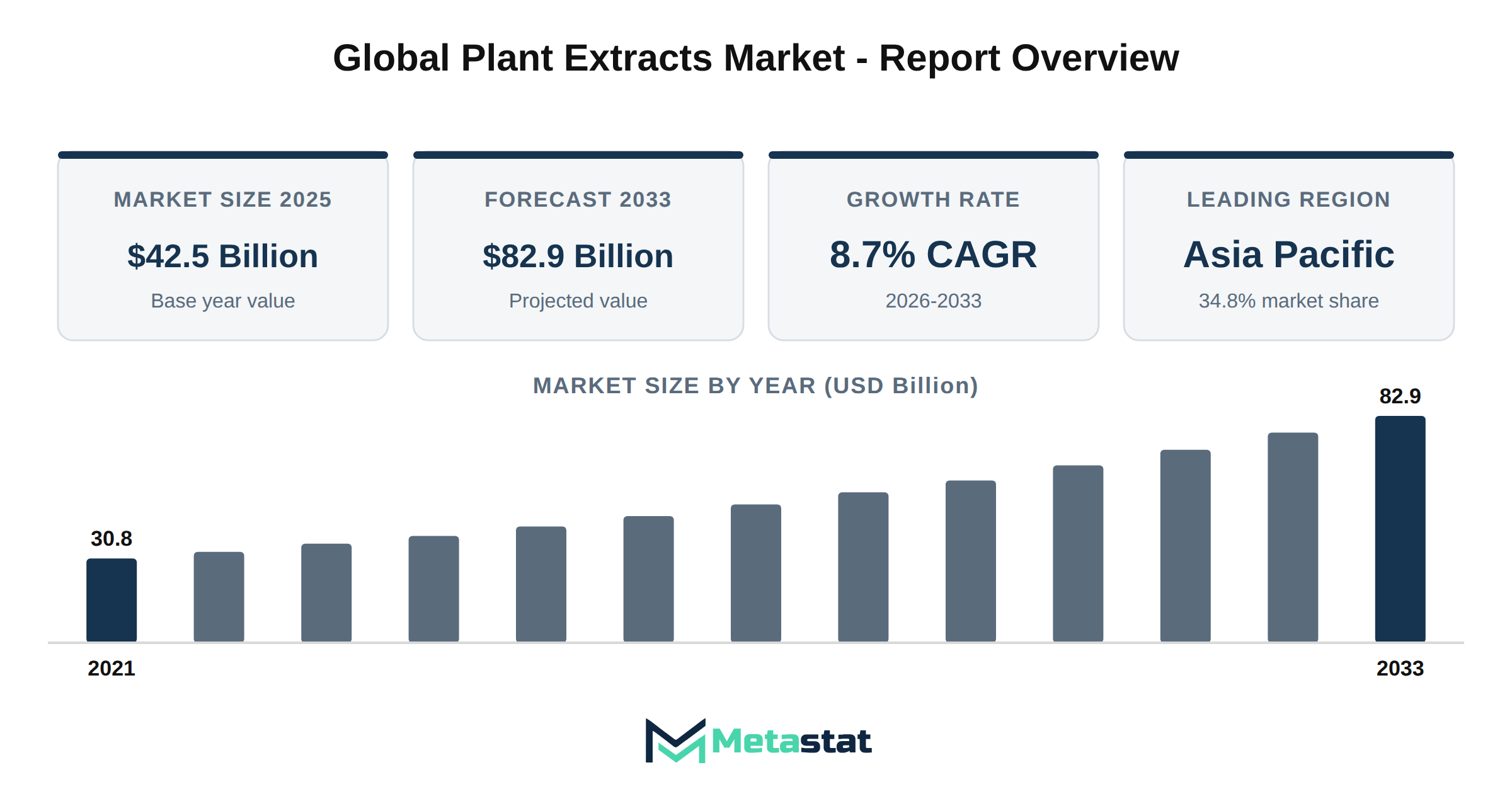
The Plant Extracts market encompasses a wide range of natural products derived from various sources, including plants, fruits, vegetables, and algae. Buyers invest in these extracts primarily for their applications in food and beverages, liquid dietary supplements, and pharmaceuticals. The growing interest in natural and organic ingredients drives spending, reflecting a shift toward health-conscious consumer preferences and sustainability across various industries.
Growth in the market is propelled by increasing demand for herbal and botanical extracts, which represent the largest segment in terms of value. This trend is supported by rising awareness of the benefits of plant-based ingredients. Among the regions, Asia Pacific stands out with a significant market share of 34.8%, driven by extensive agricultural practices and a robust food processing industry. This regional processing capacity also supports the commercial growth of specialized fruit extracts such as mango flavour across food and beverage lines. North America holds 24.2% of the market in 2025, with the US leading in 2026.
Investment in innovation, particularly in extraction methods and product development, enhances market potential. The focus on sustainable sourcing and organic certifications further aligns with consumer expectations. Parallel clean-label sweetening initiatives frequently combine plant extracts with organic erythritol to meet organic certification criteria. This evolving landscape positions the market for continued expansion, reflecting broader trends in health and wellness.
The market includes various plant-derived extracts across numerous industries, primarily in food, pharmaceuticals, and agricultural applications. Buyers invest in these extracts to enhance product quality, improve health benefits, and meet consumer demand for natural ingredients. The increasing consumer preference for organic and natural products drives demand across categories like non-dairy toppings, resulting in higher spending on plant extracts.
Herbal and botanical extracts represent the most valuable segment within the market, reflecting significant consumer interest in natural remedies and health supplements. Asia Pacific holds the largest share of the market, accounting for 34.8% in 2025, with strong demand-driven growth. North America accounts for 24.2% of the market in 2025, with the US projected to lead in 2026. The rapid expansion of the nutraceuticals sector acts as a primary growth driver, highlighting the increasing reliance on plant-based solutions for health and wellness. In functional foods, these botanical solutions are frequently paired with structured lipids like salatrim to produce reduced-calorie wellness formulations.
Investment in research and development enhances the extraction methods and applications of plant extracts, ensuring that products meet evolving consumer preferences. Companies focus on innovative extraction techniques to improve yield and purity. Similar processing refinements have benefited citrus and essential oil extraction, including cold-pressed grapefruit oil production. This trend drives increased adoption across various applications, further propelling the growth of the market.
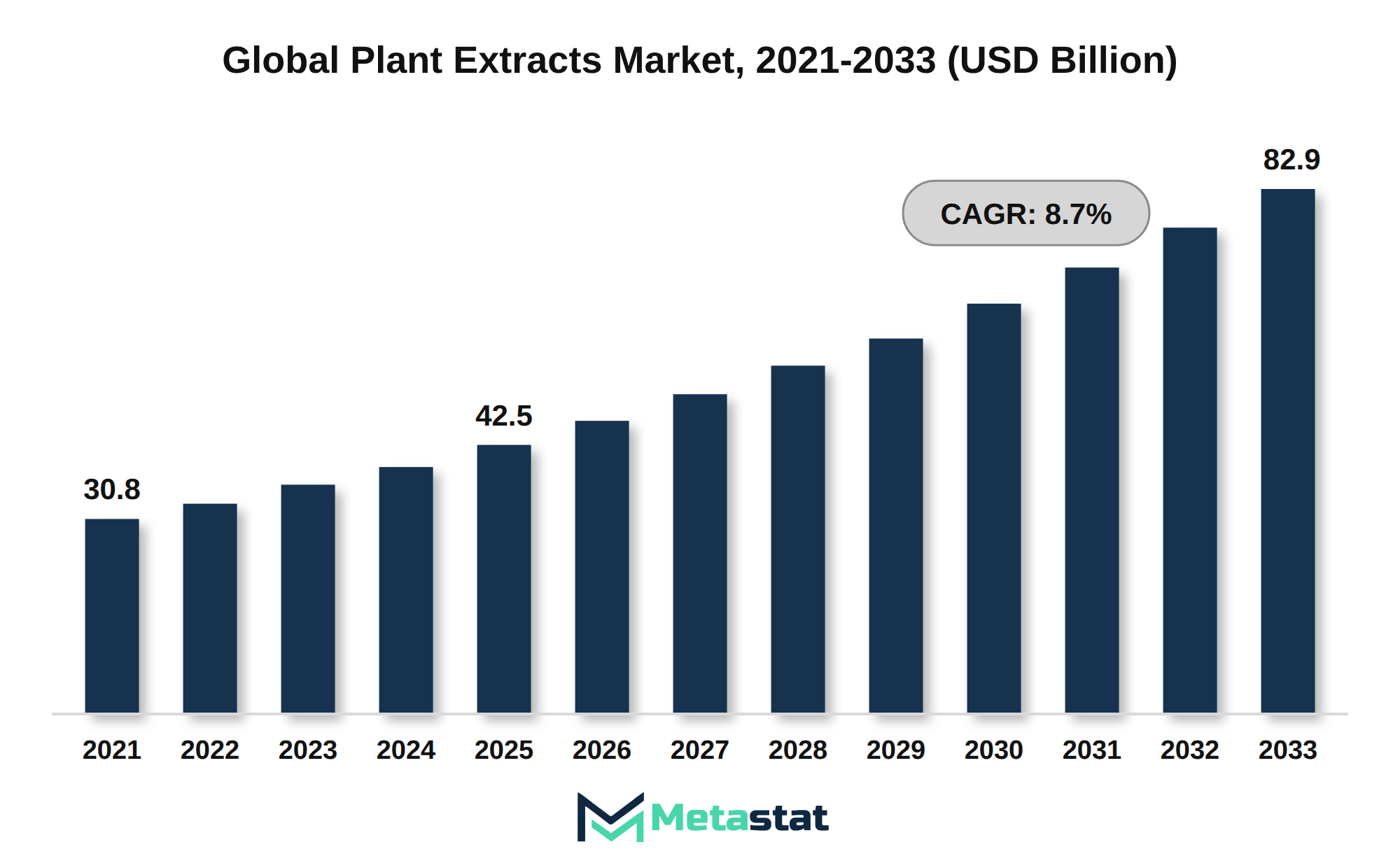
The demand for seaweed and algae extracts in agricultural biostimulants is experiencing significant growth, driven by increasing interest in sustainable and eco-friendly farming practices. The market for seaweed and algae extracts is projected to expand from USD 6.6 billion in 2026 to USD 13.7 billion by 2033, reflecting a compound annual growth rate (CAGR) of 11.1%. This trend highlights the rising preference for natural alternatives to synthetic fertilizers, with these extracts enhancing soil health, promoting nutrient absorption, and improving crop yields. While biostimulants improve nutrient uptake efficiency, specialty crop programs often combine them with soluble fertilizers such as industrial calcium nitrate for balanced plant nutrition.
Farmers and agricultural producers increasingly recognize the benefits of incorporating seaweed and algae extracts into their cultivation practices. These extracts act as natural stimulants that improve plant resilience against environmental stressors, ensuring better agricultural productivity. Precision application of these biological inputs is increasingly managed through smart agriculture platforms that monitor field-level plant stress and soil conditions. The integration of these extracts aligns with global efforts towards sustainable agriculture, which further strengthens their position within the plant extracts market.
Investments in research and development to enhance extraction and application techniques will likely support this trend. Companies focusing on innovative extraction methods capture a larger share of the market, driving competitive advantages. The anticipated growth in the demand for seaweed and algae extracts is set to transform agricultural practices and establish a stronger market presence in the coming years.
The emergence of advanced extraction technologies, specifically supercritical CO2 and ultrasound extraction, significantly influences pricing strategies in the Plant Extracts market. These technologies enhance extraction efficiency and yield, thereby affecting the overall cost structure for producers. For instance, the solvent extraction segment is projected to increase from USD 14.3 billion in 2026 to USD 22.5 billion by 2033, reflecting a compound annual growth rate (CAGR) of 6.7%. This growth highlights the increasing adoption of more efficient extraction methods.
Buyers of plant extracts engage in long-term contracts to secure stable pricing, mitigating the volatility associated with traditional extraction methods. These contracts frequently stipulate fixed prices for specific durations, providing both suppliers and buyers with predictability in budgeting and financial planning. Rising operational costs related to traditional extraction processes drive this trend, encouraging buyers to prioritize suppliers who leverage innovative extraction technologies.
Producers integrating supercritical CO2 and ultrasound extraction technologies gain a competitive edge by offering higher-quality products at reduced costs. This shift impacts pricing models and enhances the overall value proposition for buyers. With the market expected to undergo significant transformation, companies adopting these advanced methods are likely to attract more buyers, ensuring sustained demand in the evolving landscape of the Plant Extracts market.
The growing emphasis on health and wellness significantly influences the demand for clean-label food formulations among health-conscious consumers. These consumers prioritize transparency in ingredient sourcing, favoring products made from natural and recognizable components. For instance, the market's accelerated adoption of standardized herbal extracts is evident, particularly within nutraceutical applications. By 2033, the market for nutraceuticals and dietary supplements is projected to reach USD 19.5 billion, reflecting increasing consumer preference for supplements containing clean-label ingredients.
This trend toward clean-label formulations benefits both manufacturers and consumers. Manufacturers incorporating herbal extracts into their products enhance their appeal to discerning buyers, creating opportunities for growth in a competitive market. The demand for high-quality, standardized herbal extracts drives innovation within the supply chain, resulting in advancements in extraction methods and quality assurance processes. Consequently, companies prioritizing clean-label principles and standardized extracts capitalize on the expanding consumer base seeking health-oriented solutions in the Plant Extracts market.
Sustainable sourcing practices and regulatory standards significantly impact the commercialization of the Plant Extracts market. Increasing consumer awareness regarding environmental issues drives the demand for sustainably sourced ingredients. Companies that prioritize sustainable practices gain a competitive edge, appealing to eco-conscious consumers. For instance, the sector of Agricultural Biostimulants and Fertilizers is projected to expand from USD 4.4 billion in 2026 to USD 9.6 billion by 2033, reflecting a compound annual growth rate (CAGR) of 12%. This growth signals robust demand for sustainable agricultural practices that incorporate plant extracts.
Stringent regulatory standards play a crucial role in shaping market dynamics. Compliance with regulations ensures product safety, quality, and environmental sustainability, building consumer trust. Companies that embrace these standards mitigate risks and enhance their brand reputation, facilitating market entry and expansion. The combination of sustainable sourcing and adherence to regulatory frameworks positions businesses to capitalize on the growing market for plant extracts, ultimately driving revenue growth and increasing market share.
Increasing awareness of health and wellness among consumers significantly influences spending on plant extracts. Health-conscious individuals prioritize natural ingredients in food and dietary supplements, resulting in heightened demand for herbal and botanical extracts. Retailers and manufacturers respond by expanding product lines to include these extracts, capitalizing on this trend. The Food and Beverages application segment is projected to reach USD 24.2 billion by 2033, reflecting substantial growth potential driven by this consumer shift. This heightened focus on health not only boosts sales volume but allows suppliers to adopt premium pricing strategies in the market. Consumer preferences evolve toward natural and health-promoting products, and the demand for plant extracts is expected to strengthen further, enhancing market dynamics.
The introduction of innovative extraction methods significantly influences the efficiency and quality of plant extracts. Techniques including solvent extraction, water-based extraction, and supercritical fluid extraction enhance yield and purity, appealing to various industries. Suppliers increasingly adopt these technologies to meet the growing demand for high-quality botanical ingredients, driven by consumer preferences for natural and clean-label products. The ability to produce concentrated and potent extracts supports the market's expansion, particularly in nutraceuticals and food sectors. Enhanced extraction efficiency leads to lower production costs, benefiting suppliers and ultimately influencing pricing strategies within the market.
These advancements facilitate the extraction of specific beneficial compounds, allowing producers to cater to niche markets. The demand for targeted formulations in pharmaceuticals and dietary supplements increases, leading to further growth opportunities. Suppliers embracing these technologies position themselves competitively in the Plant Extracts market.
Price volatility significantly impacts purchasing decisions in the Plant Extracts market, particularly affecting smaller manufacturers and businesses operating within tight margins. Fluctuating raw material costs, driven by environmental conditions and supply chain disruptions, result in unpredictable pricing for plant extracts. These circumstances lead to delayed orders and smaller purchase quantities, with buyers exercising caution when facing uncertain expenses. The financial strain from high-priced extracts restricts the ability of smaller companies to compete effectively against larger firms with more stable supply chains and greater purchasing power. Consequently, hesitance to invest in higher-priced extracts limits overall market growth, leading to a slower adoption rate among various industries relying on these natural products. The ripple effect of price volatility not only influences immediate purchasing behavior but creates long-term challenges for integrating plant extracts into diverse applications, ultimately impacting market dynamics.
Input cost fluctuations impact profitability for suppliers in the Plant Extracts market. Raw material costs, particularly for sourced ingredients like herbs and fruits, experience significant variability, driven by factors including climate change and supply chain disruptions. Suppliers face challenges in maintaining stable profit margins amid rising costs, which affects pricing strategies and overall competitiveness. In response, several suppliers implement efficiency measures and optimize sourcing strategies to mitigate rising input costs. Investments in local supply chains and partnerships with farmers to ensure consistent quality and pricing have emerged as effective strategies. Emphasizing sustainable practices not only enhances brand reputation but addresses cost pressures from volatile markets. The focus on efficiency and sustainability positions suppliers to navigate challenges while fostering growth in the market.
The market for seaweed and algae extracts is expected to experience significant growth, reflecting a compound annual growth rate (CAGR) of 11.1% from 2026 to 2033. Rising interest in sustainable agricultural practices and biostimulants drives demand for these extracts, primarily due to their eco-friendly properties and effectiveness in enhancing crop yield and health. Agricultural producers increasingly adopt these natural solutions, which align with consumer preferences for organic and environmentally responsible products.
The integration of seaweed and algae extracts into various applications, including fertilizers, food additives, and nutraceuticals, strengthens market opportunities. Innovations in extraction methods enhance the quality and availability of these products, making them more accessible to a broader range of buyers. The potential for growth within this segment contributes significantly to the overall expansion of the Plant Extracts market, reflecting evolving consumer trends and increasing regulatory support for sustainable products.
The Global Plant Extracts market is segmented based on Source, Extract Type, Extraction Method, and Application.
These extracts find usage in a variety of applications, including agricultural biostimulants, fertilizers, food products, and dietary supplements. Demand is driven by growing interest in sustainable agriculture and the increasing popularity of plant-based foods among consumers. Compared to other segments, including Herbal and Botanical Extracts with a CAGR of 7.8%, Seaweed and Algae Extracts show a significantly higher growth rate. This segment attracts a diverse buyer group, including agricultural producers and food manufacturers, all seeking natural and sustainable ingredients. Innovations in extraction technologies further enhance the appeal of seaweed and algae extracts, positioning them favorably within the market.
Herbal and Botanical Extracts segment is estimated to reach USD 33.4 billion by 2033, at a CAGR of 7.8% during the forecast period. This segment serves multiple applications, including food and beverages, nutraceuticals, and pharmaceuticals, catering to health-conscious consumers seeking natural alternatives. Primary drivers include the growing preference for clean-label products and increasing awareness of the health benefits associated with herbal ingredients. Compared to other segments, including Fruit Extracts, which exhibit slower growth rates, this segment demonstrates a robust trajectory due to its widespread acceptance and diverse applications. The pricing of herbal extracts remains competitive, reflecting lower cost volatility compared to more specialized extracts like Seaweed and Algae Extracts, which experience significant fluctuations in market prices. The ongoing evolution of consumer preferences and the expanding range of applications create a favorable environment for growth in the market.
The Fruit Extracts segment is expected to reach USD 16.4 billion by 2033. Primarily used in food and beverage applications, fruit extracts function as flavor enhancers and natural colorants, appealing to manufacturers seeking natural ingredients. Factors driving demand include growing consumer preference for natural and organic products, which influences food formulation strategies. This segment exhibits a moderate growth trajectory compared to others, with a compound annual growth rate (CAGR) of 7.8%, reflecting stable yet robust demand. Unlike herbal and botanical extracts, which are anticipated to achieve a CAGR of 7.8%, fruit extracts differentiate through their use in predominantly sweetened products. Competition from alternative flavors and synthetic additives presents a challenge; however, the push for cleaner labels enhances the market's potential. The Fruit Extracts segment remains integral for manufacturers focusing on health and wellness trends while navigating evolving consumer preferences.
Vegetable Extracts segment is projected to grow at a CAGR of 7.7% during the forecast period. These extracts find applications in various industries, including food, pharmaceuticals, and nutraceuticals, catering to health-conscious consumers looking for natural ingredients. The rising demand for plant-based products fuels growth, driven by companies prioritizing clean-label formulations to meet consumer preferences. Pricing stability influences strategic decisions, with manufacturers focusing on cost-effective sourcing methods to maintain competitiveness. Compared to other segments, including Herbal and Botanical Extracts, which is anticipated to achieve a CAGR of 7.8%, the Vegetable Extracts segment offers distinct advantages in applications requiring natural flavoring and coloring. This growth trajectory highlights a strong market response to evolving consumer trends emphasizing health and wellness, steering the market toward sustainable options.
Seed and grain extracts consist of various plant materials derived from seeds and grains, valued for their nutritional and functional properties. These extracts find applications in food and beverage formulation, nutraceuticals, and dietary supplements, catering to health-conscious consumers and food manufacturers seeking natural ingredients. Demand for seed and grain extracts is influenced by rising health awareness and the shift toward clean-label products, prompting manufacturers to seek natural alternatives to synthetic additives. Unlike other segments, including herbal and botanical extracts, seed and grain extracts attract a different buyer demographic, including food manufacturers focused on improving nutritional profiles. The segment experiences steady growth, although not equal in pace to seaweed and algae extracts, which have a higher CAGR. This slower growth reflects the established nature of the products in traditional markets compared to emerging trends in plant extracts.
Others (Bark, Root and Floral Extracts) encompasses various plant extracts sourced from diverse parts of plants, including bark, roots, and flowers. These extracts find extensive use in the food and beverage, nutraceutical, and cosmetic industries. The growing trend towards natural and organic products drives demand for these extracts, particularly among health-conscious consumers. This segment benefits from the increasing preference for plant-based ingredients, distinguishing itself from others by catering to a niche market focused on specialty applications. Unlike more common extracts, this segment typically commands higher prices due to unique sourcing and processing requirements. Stringent regulations affecting the quality and safety of natural ingredients impact this segment, ensuring producers adhere to high standards to meet consumer expectations.
Liquid Extracts segment is valued at USD 12.6 billion in 2026 and is projected to reach USD 21.7 billion by 2033, at a CAGR of 8.1% during the forecast period. These extracts find extensive application in the food and beverage, nutraceuticals, and pharmaceuticals industries, serving health-conscious consumers looking for natural ingredients. Growing demand for clean-label products fuels this segment, reflecting a broader trend toward transparency and sustainability in food and health. Liquid Extracts differ from powder extracts, which hold a projected value of USD 22.7 billion by 2033, showing a higher growth rate. This segment's unique texture and formulation flexibility often appeal to manufacturers seeking to enhance product performance and consumer experience. Regulatory support for natural ingredients drives market expansion, positioning Liquid Extracts as a preferred choice for product developers across various industries.
The Powder Extracts segment is estimated to reach USD 22.7 billion by 2033, at a CAGR of 10% during the forecast period. This segment finds application in various industries, particularly in food and beverages, nutraceuticals, and pharmaceuticals. The demand for Powder Extracts is driven by increasing focus on natural ingredients and health benefits associated with plant-based products. Compared to liquid extracts, Powder Extracts typically offer higher concentration levels and longer shelf life, appealing to manufacturers seeking cost-effective solutions. The segment's growth outpaces that of other extraction types, highlighting its importance to buyers prioritizing efficiency and product quality. Regulatory support for natural ingredients enhances market potential, positioning Powder Extracts as a competitive choice among Extract Types in the market.
Concentrated Extracts segment is expected to reach USD 15.5 billion by 2033. This category finds utility in various applications including nutraceuticals, pharmaceuticals, and food products, serving manufacturers seeking effective and concentrated forms of plant-based ingredients. The growth of this segment is propelled by rising consumer demand for potent formulations that deliver health benefits and by the expanding scope of applications across industries. Concentrated Extracts exhibit a CAGR that reflects increased adoption across a diverse range of buyers including food and beverage companies, health product manufacturers, and pharmaceutical firms. This segment's growth rate aligns with a trend toward higher-value products compared to other extract types, enhancing pricing strategies in the market. The focus on quality and efficacy sets Concentrated Extracts apart from alternatives including Liquid or Powder Extracts, which experience comparatively slower growth rates.
Oleoresins segment is projected to grow at a CAGR of 7.2% during the forecast period. These extracts serve multiple applications, particularly in food and beverage products, flavoring agents, and pharmaceuticals, catering to manufacturers focused on natural ingredients. The demand for oleoresins is driven by a shift toward natural flavoring alternatives and clean-label products, prompting food companies to seek natural solutions. Compared to other extract types, oleoresins differ due to their unique ability to retain both flavor and aroma in a concentrated form, making them particularly appealing to food manufacturers. Investment in oleoresin production processes enhances its market position, while the adoption of innovative extraction methods supports a more efficient production approach. The segment's growth trajectory reflects rising consumer preference for natural products, positioning it favorably against other extract types in the Plant Extracts market.
Essential oils consist of concentrated plant extracts obtained through various extraction methods, known for their aromatic properties and potential therapeutic benefits. Widely used in personal care products, fragrances, and aromatherapy, essential oils attract consumers seeking natural alternatives to synthetic compounds. The growing trend towards wellness and natural remedies significantly drives demand for these products, particularly among health-conscious consumers and those in the beauty and wellness industries. In comparison to other extract types, essential oils often command higher prices due to their complex extraction processes and the quantity of raw material required to produce small volumes. This contributes to varying growth dynamics across the segments, influencing purchasing decisions for both manufacturers and end-users in the market.
Others (Pastes and Granules) encompasses various products derived from plant extracts, suitable for diverse applications in multiple industries. These products serve vital functions in the food and beverage sector, pharmaceutical development, and personal care formulations. The increasing demand for natural ingredients in consumer products drives significant interest in this segment. A key factor influencing this sub-segment is the growing consumer preference for clean-label products that emphasize natural sourcing and minimal processing. This shift contrasts with other extract types, which benefit from different market dynamics. The unique positioning of pastes and granules often caters to specific formulation needs, setting it apart from liquid and powder extracts. The combination of these factors creates opportunities for market participants to innovate and expand their product offerings, enhancing competitiveness in the evolving Plant Extracts market.
This extraction method serves various applications, particularly in pharmaceuticals and nutraceuticals, where purity and concentration of extracts are crucial. The segment is driven by increasing consumer demand for natural and organic products, enhancing its relevance in dietary supplements and health products. Compared to other extraction methods, including Water-Based Extraction, Solvent Extraction has a lower growth rate; however, it remains a preferred choice for high-value extracts due to its efficiency and cost-effectiveness. The market benefits from technological advancements that improve the extraction process, reduce waste and enhance yield, attracting investment from industry players focused on sustainable practices.
Water-Based Extraction segment is estimated to reach USD 19.4 billion by 2033, at a CAGR of 8.3% during the forecast period. This extraction method focuses on using water as a solvent to extract bioactive compounds from various plant materials, primarily serving industries including food and beverages, pharmaceuticals, and nutraceuticals. The increasing emphasis on natural and organic products drives demand for water-based extracts, particularly among health-conscious consumers and manufacturers seeking plant-derived ingredients. Compared to other extraction methods, including solvent extraction, which has a projected CAGR of 6.7%, water-based extraction demonstrates faster growth due to its perceived safety and eco-friendliness. This segment appeals to manufacturers prioritizing clean-label products and sustainable practices, aligning with market trends favoring environmentally friendly sourcing and production processes.
Supercritical Fluid Extraction segment is expected to reach USD 11.9 billion by 2033. This extraction method employs supercritical fluids, typically carbon dioxide, to separate desired compounds from plant materials. Industries including nutraceuticals, pharmaceuticals, and food and beverages extensively use this method due to its efficiency and ability to produce high-quality extracts without harmful solvents. The segment experiences growth driven by increasing consumer demand for natural and organic products, reflecting a trend across the market. Supercritical fluid extraction offers advantages over conventional methods, including lower operational costs and enhanced extraction efficiency. This segment differs from others due to its relatively higher price point and greater emphasis on high-quality extracts, positioning it uniquely within the overall Plant Extracts market. With a CAGR of 11.9%, this extraction method is anticipated to attract significant attention from manufacturers seeking innovative solutions.
Steam Distillation segment is projected to grow at a CAGR of 7.4% during the forecast period. This extraction method is widely used in the production of essential oils, fragrances, and various plant-based compounds. Industries including cosmetics, food and beverages, and pharmaceuticals frequently employ steam-distilled products due to their purity and aromatic qualities. Demand for natural and organic ingredients drives growth in this segment, with consumers increasingly seeking products that align with health and wellness trends. Compared to other extraction methods, steam distillation offers unique benefits, including higher product quality and fewer chemical residues. However, the steam distillation process generally entails higher costs and specialized equipment, which limits accessibility for smaller producers. The segment's growth trajectory reflects broader trends observed in the Plant Extracts market, with increasing consumer awareness and preference for sustainable products shaping overall demand dynamics.
Cold pressing and mechanical extraction involves extracting oils from plant materials without the use of heat or chemicals, preserving the natural properties and flavors of the source. This method finds extensive application in the food and beverage industry, particularly for producing high-quality oils and flavorings. A primary driver for this segment stems from rising consumer demand for natural and organic products, prompting food manufacturers to seek alternatives that maintain the integrity of plant extracts. This segment typically experiences slower growth compared to others, including liquid extracts, which see a higher rate of penetration due to their versatile applications. Users of cold-pressed extracts value the purity and flavor profile, influencing pricing strategies that position these products at a premium in the market.
Ultrasound-Assisted Extraction leverages ultrasonic waves to enhance the extraction process, leading to efficient separation of active compounds from plant materials. This technique finds application in various industries, including pharmaceuticals and nutraceuticals, where high-quality extracts are essential for product formulation. The segment experiences growth driven by increasing demand for natural ingredients and a shift towards more sustainable extraction methods. Compared to other extraction methods, Ultrasound-Assisted Extraction stands out due to its ability to use lower temperatures and shorter extraction times, which help preserve the integrity of sensitive compounds. This extraction method typically appeals to buyers focused on maximizing yield while minimizing energy consumption. In the competitive landscape, users of this technique value the quality of extracts produced, positioning it favorably against traditional extraction methods in the market.
Others (Microwave-Assisted and Enzyme-Assisted Extraction) involves innovative extraction techniques that use microwave energy or enzymes to enhance the extraction process. Industries that use this method include food and beverages, nutraceuticals, and pharmaceuticals, benefiting from efficiency and higher yields. Demand for these extraction methods is growing due to an increasing focus on natural and organic products, driving manufacturers to adopt more efficient processes. Compared to traditional methods, these techniques often yield higher-quality extracts with enhanced bioactive properties, satisfying consumer preferences for natural ingredients. Different from other extraction methods, this segment focuses on using energy or enzymatic reactions, appealing to manufacturers seeking competitive advantages through superior product offerings. The adoption of these advanced technologies aligns with broader market trends toward sustainability and efficiency, influencing strategic investments across the sector. The Plant Extracts market increasingly recognizes the potential of these methods in meeting evolving consumer demands.
This segment serves to enhance crop growth, improve resilience against environmental stressors, and optimize nutrient uptake, primarily by farmers and agricultural producers. Increasing awareness of sustainable farming practices drives demand, reflecting a significant shift towards organic and environmentally friendly solutions in agriculture. Compared to other segments, including Food and Beverages which grows at a CAGR of 7.8%, Agricultural Biostimulants and Fertilizers experiences a faster growth rate, indicating strong market potential. The rising preference for natural inputs over synthetic alternatives contributes to this segment's expansion, reinforcing its position in the broader Plant Extracts market.
Food and Beverages segment is estimated to reach USD 24.2 billion by 2033, at a CAGR of 7.8% during the forecast period. This segment serves a wide range of applications, including flavoring, coloring, and preservation, appealing to manufacturers in food processing and beverage industries. Growing consumer demand for natural and organic products drives significant interest, with companies seeking plant extracts for their perceived health benefits and clean label appeal. Compared to other segments, this area experiences moderate growth, supported by continuous innovation in product formulations. Food and beverage manufacturers increasingly integrate plant extracts to enhance flavor profiles while meeting rising health-conscious consumer preferences. This integration reflects broader market trends favoring natural ingredients over synthetic alternatives, ultimately influencing purchasing decisions and product development strategies within the segment.
The Nutraceuticals and Dietary Supplements segment is expected to reach USD 19.5 billion by 2033. This segment includes products designed to support health and wellness, appealing to health-conscious consumers and the growing emphasis on preventive healthcare. A significant driving force is the increasing demand for natural and plant-based ingredients, driven by rising consumer awareness of health benefits associated with plant extracts. Unlike other segments, this sub-segment is characterized by a strong growth rate, projected at a CAGR of 7.5%, reflecting a strong interest in health solutions. In comparison to the Food and Beverages segment, which is anticipated to grow at a CAGR of 7.8%, the Nutraceuticals and Dietary Supplements segment offers unique formulations targeting specific health issues, catering to a diverse customer base that prioritizes functional products. The market continues to evolve, opening opportunities for innovative product development in response to changing consumer preferences.
Pharmaceuticals segment is projected to grow at a CAGR of 7.5% during the forecast period. This segment includes plant extracts used in various medicinal applications, catering to pharmaceutical companies focused on developing herbal therapies and supplements for health management. The increased consumer shift towards natural remedies and organic products drives growth in this segment, reflecting a broader trend in the market towards plant-based solutions. Unlike other segments, the Pharmaceuticals segment experiences robust demand due to the rising inclination for natural health treatments among consumers, often resulting in higher price points. Regulatory compliance in pharmaceuticals significantly influences product development timelines, differentiating it from segments with less stringent requirements, including Food and Beverages. Such dynamics contribute to the segment's unique position amid the evolving landscape of the Plant Extracts market.
Cosmetics and Personal Care use plant extracts for their beneficial properties, enhancing product efficacy and appeal. This segment caters to manufacturers and brands focused on skin care, hair care, and personal hygiene products. Consumers increasingly prefer natural ingredients, driving demand for plant-based formulations that offer perceived safety and environmental benefits. Regulatory trends favor clean-label products, pushing brands to adopt botanicals as effective alternatives to synthetic compounds. Unlike other segments, this application often experiences slower growth, influenced by higher formulation costs and consumers’ price sensitivity. The market expands due to escalating health and wellness trends, with brands seeking to differentiate through innovative plant-based offerings. The Plant Extracts market thrives on the consumer shift toward products emphasizing natural origins and sustainability.
Animal Nutrition focuses on enhancing the health and growth of livestock through the inclusion of plant-derived ingredients. This segment serves farmers and producers seeking natural solutions to improve animal feed quality and nutritional value. Increasing consumer awareness regarding animal welfare and the benefits of natural feed ingredients drives demand for plant extracts. With a greater emphasis on sustainable and organic farming practices, the segment attracts interest from producers looking to differentiate their products in a competitive market. Compared to other applications, Animal Nutrition experiences slower growth due to regulatory hurdles and the need for extensive research to validate efficacy. The Plant Extracts market is expected to continue evolving in this segment, influenced by shifting consumer preferences towards healthier livestock management practices.
Natural colorants and industrial applications involve products derived from plant extracts that serve diverse purposes, including coloring agents and additives in various industries including textiles, food, and cosmetics. These extracts appeal to manufacturers focused on sustainable and natural options, aligning with the growing consumer preference for eco-friendly products. The surge in demand for plant-based alternatives among consumers drives this segment, with industries striving to replace synthetic ingredients with natural options. Compared to other segments, this sub-segment often experiences slower growth due to stringent regulatory requirements and higher costs associated with sourcing and processing natural materials. However, the increasing focus on sustainability and health benefits positions this segment favorably within the larger Plant Extracts market, catering to both emerging and established businesses seeking to innovate their product offerings.
Based on geography, the Global Plant Extracts market is divided into North America, Europe, Asia-Pacific, South America, Middle East, and Africa.
In North America, demand for plant extracts is driven largely by the food and beverages industry, where the growing consumer preference for natural ingredients influences purchasing decisions. The region's market is projected to reach USD 18.6 billion by the end of 2033, reflecting an increasing focus on health and wellness products. Canada and the United States have seen significant growth in nutraceuticals and dietary supplements, aligning with the region's emphasis on preventive healthcare. Regulatory frameworks promoting organic and natural products support the expansion of the market, while the presence of advanced extraction technologies enhances product offerings. Market growth is supported by investments in research and development, ensuring innovation in extraction methods and applications.
Strong demand for nutritional products significantly influences the Plant Extracts market in Europe. Countries like Germany, France, and the UK reflect a growing trend in adopting herbal and botanical extracts in nutraceuticals and dietary supplements. The regulatory environment in the European Union emphasizes sustainable practices and safety standards, which drives innovation and quality in product offerings. Market players in Europe focus on developing organic and responsibly sourced extracts, meeting consumer preferences for natural ingredients. With a 28.9% share of the global market in 2025, the region demonstrates a strong growth trajectory, supported by an increasing focus on health and wellness. The market is projected to expand further, driven by advancements in extraction technologies and rising consumer awareness regarding the benefits of plant extracts.
Significant growth in the Plant Extracts market is driven by increasing demand from the nutraceuticals and food and beverages industries in Asia-Pacific. Countries like China and India lead in herbal and botanical extracts, supported by a rich history of traditional medicine and culinary use. Rising health consciousness among consumers fuels interest in natural ingredients, resulting in a shift towards plant-based solutions. Innovative extraction methods, including solvent extraction, enhance the efficiency and quality of these products. Southeast Asia stands out with its diverse biodiversity, allowing for a wide range of plant sources. Regulatory support for organic farming further boosts the market, encouraging sustainable practices. By 2025, the region is expected to capture 34.8% of the global market, reflecting strong growth potential through 2033.
Demand for plant extracts in South America is driven by the agricultural and food sectors, with Brazil and Argentina leading consumption patterns. The region's market share in 2025 stands at 7.3%, reflecting a growing interest in organic and natural products. Regulatory frameworks focusing on sustainable agriculture enhance the appeal of plant extracts, promoting their use in biostimulants and fertilizers. Infrastructure improvements, particularly in supply chains, support the efficient distribution of these extracts. The Plant Extracts market is projected to see continuous growth through the forecast period, driven by increasing investments in research and development to enhance extraction technologies and product formulations.
The market in the Middle East and Africa faces unique dynamics that shape its development. Demand from the agricultural sector significantly drives interest in plant extracts, particularly in Saudi Arabia and the UAE, where agricultural biostimulants gain traction. Regulatory initiatives promoting sustainable agricultural practices further encourage the integration of plant-based solutions in farming. South Africa's growing focus on natural products contributes to market expansion. With a share of 4.8% of the global market in 2025, this region presents an opportunity for growth, particularly in applications related to food and beverages, where consumer preferences shift towards natural ingredients. The Plant Extracts market in this region reflects increasing awareness of health and wellness among consumers, influencing product formulations and driving innovation.
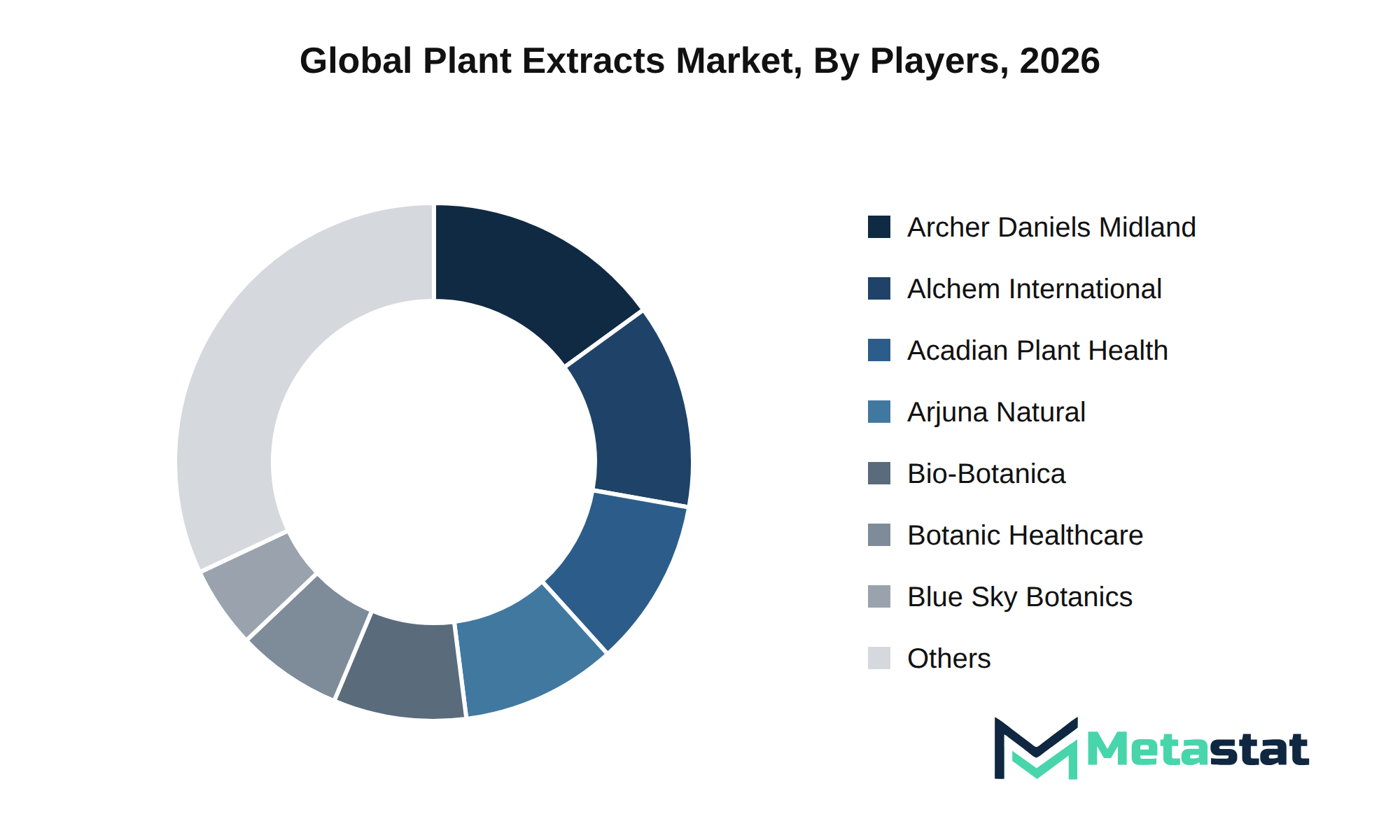
Companies in the Plant Extracts market adopt various strategies to differentiate themselves. Key players include Acadian Plant Health, Archer Daniels Midland Company, and Givaudan S.A., each focusing on specific segments including herbal extracts and natural solutions. These companies leverage their expertise in extraction methods, product customization, and certification to attract diverse buyer groups.
Buyers in the market prioritize factors including price, product quality, and service level when making purchasing decisions. For instance, Kemin Industries Inc. emphasizes high-quality botanical extracts, while dsm-firmenich offers tailored solutions to meet specific customer needs. The competitive dynamic in the market highlights the importance of ecosystem partnerships and product innovation to drive growth.
This growth depends on several key developments within the Plant Extracts market. The increasing adoption of seaweed and algae extracts, projected to expand at a CAGR of 11.1%, will significantly contribute to market growth. The demand for liquid extracts is expected to rise, with a forecasted growth at a CAGR of 8.1%, impacting both the food and beverages and nutraceuticals sectors. Potential risks could hinder this trajectory. Supply chain disruptions, particularly in regions including North America and Europe, could impact the availability and pricing of essential raw materials. Such disruptions limit the capacity of producers to meet the growing demand across various applications. Consequently, the market's ability to reach USD 82.9 billion hinges on these developments and the mitigation of associated risks.
By Source: Seaweed and Algae Extracts, Herbal and Botanical Extracts, Fruit Extracts, Vegetable Extracts, Seed and Grain Extracts, Others (Bark, Root and Floral Extracts)
By Extract Type: Liquid Extracts, Powder Extracts, Concentrated Extracts, Oleoresins, Essential Oils, Others (Pastes and Granules)
By Extraction Method: Solvent Extraction, Water-Based Extraction, Supercritical Fluid Extraction, Steam Distillation, Cold Pressing and Mechanical Extraction, Ultrasound-Assisted Extraction, Others (Microwave-Assisted and Enzyme-Assisted Extraction)
By Application: Agricultural Biostimulants and Fertilizers, Food and Beverages, Nutraceuticals and Dietary Supplements, Pharmaceuticals, Cosmetics and Personal Care, Animal Nutrition, Others (Natural Colorants and Industrial Applications)
The report strategically identifies and profiles the key market players and analyses their core competencies in each sub-segment of the Plant Extracts market.
|
Report Attributes |
Details |
|
Study Period |
2021-2033 |
|
Base Year |
2025 |
|
Estimated Year |
2026 |
|
Forecast Period |
2026-2033 |
|
Historical Period |
2021-2025 |
|
Growth Rate |
CAGR 8.7% from 2026 to 2033 |
|
Revenue Unit |
USD billion |
|
Segmentation |
By Source, Extract Type, Extraction Method, Application, and Region |
|
By Region |
North America (By Source, Extract Type, Extraction Method, Application, and Country)
|
|
Europe (By Source, Extract Type, Extraction Method, Application, and Country)
|
|
|
Asia Pacific (By Source, Extract Type, Extraction Method, Application, and Country)
|
|
|
South America (By Source, Extract Type, Extraction Method, Application, and Country)
|
|
|
Middle East and Africa (By Source, Extract Type, Extraction Method, Application, and Country)
|
Find answers to common questions about this report
The Plant Extracts market size was valued at USD 42.5 billion in 2025.
The market is projected to grow at a CAGR of 8.7% during the forecast period from 2026 to 2033.
The North America Plant Extracts market size is estimated to reach USD 18.6 billion by 2033.
Herbal and Botanical Extracts lead the Plant Extracts market with a projected value of USD 33.4 billion by 2033, surpassing other segments in size.
Increasing awareness of health and wellness among consumers significantly drives demand for plant extracts, particularly in the Food and Beverages application segment. Price volatility impacts purchasing decisions, especially for smaller manufacturers, leading to cautious buying behavior and limiting overall market growth.
Asia Pacific holds the dominant share of the Plant Extracts market, accounting for 34.8% in 2025. This region's significant share reflects its extensive production capabilities and demand across various applications.
Price volatility restrains growth in the Plant Extracts market by impacting purchasing decisions. Fluctuating raw material costs lead to unpredictable pricing, resulting in delayed orders and smaller purchase quantities, which limits overall market expansion.
The introduction of innovative extraction methods enhances the efficiency and quality of plant extracts, appealing to various industries. This technological advancement supports the production of concentrated and potent extracts, catering to niche markets and driving adoption in pharmaceuticals and dietary supplements.
The Plant Extracts market is estimated to reach a valuation of USD 82.9 billion by 2033.
Key players operating in the Plant Extracts market include Acadian Plant Health, Alchem International Pvt. Ltd., Archer Daniels Midland Company, Arjuna Natural Pvt. Ltd., Bio-Botanica Inc., Givaudan S.A., Kemin Industries Inc., and Native Extracts Pty Ltd.
Choose Your License
Global Plant Extracts Market
The analysts below cover Chemicals and Materials research at Metastat Insights.
LEAD ANALYST
Utkarsh Khirodkar is a Lead Market Research Analyst at MetaStat Insight, specializing in market intelligence, technology sector assessments, and competitive strategy.

INDUSTRY CONSULTANT - CHEMICALS & ADVANCED MATERIALS
Chemicals and Materials · Machinery & Equipment · Packaging
Amit Gadhekar Consultant for Chemicals and Materials at MetaStat Insight, directing sector-specific intelligence, research, and strategic consulting across global chemical and processing markets.
Assessing commercial microgrid software adoption requires looking past top-level installation numbers and examining utility interconnection queues. The research provided verifiable data on average permitting timelines, tariff structures, and battery storage integration costs across regional utility territories. That grounded perspective was valuable for our team when building five-year demand projections for industrial microgrid controllers.
Ambulatory surgical centers have very different purchasing cycles for robotic-assisted surgery platforms than major hospital networks. The MetaStat Insight study focused squarely on capital expenditure depreciation, procedural reimbursement pathways, and surgeon training overhead. That operational clarity made it much simpler to validate multi-year procedure growth forecasts against actual ambulatory center adoption patterns.
When planning edge sensor rollouts across refinery environments, generic IoT reports typically miss the harsh-environment certification bottlenecks. MetaStat Insight gave an objective evaluation of ATEX and Class 1 Division 2 hardware availability, along with realistic five-year maintenance cycle cost projections. The comparison of wireless mesh versus private cellular backhaul helped our team pressure-test network reliability models for remote processing facilities.
Explore related market intelligence reports worth reading alongside this one.