
LEAD ANALYST
Utkarsh Khirodkar is a Lead Market Research Analyst at MetaStat Insight, specializing in market intelligence, technology sector assessments, and competitive strategy.

Mango Flavour Market Size, Share, By Nature (Natural Mango Flavour, Artificial & Synthetic Mango Flavour, and Nature-Identical Mango Flavour), By Form (Liquid Form Powder Form), By Application (Food & Beverages, Confectionery, Dairy Products, and Others), By Distribution Channel (Supermarkets/Hypermarkets, Specialty Stores, Online Retail, and Others), Industry Analysis, Growth, Trends, and Forecast, 2026-2033
Report ID
MSI-4621
Published
April, 2026
Pages
320 Pages
Format
Report Details
Choose Your License
Mango Flavour Market
The Global Mango Flavour market size was valued at USD 1,319.9 million in 2025 and projected to grow at a CAGR of 9.2% during the forecast period, reaching USD 2,667.4 million by 2033.
North America held 24.3% of the global market in 2025, with the U.S. leading regional revenue generation.
Natural Mango Flavour segment accounted for a market share of 46.5% in 2026.
Key trends driving growth: Premiumization of tropical fruit profiles across beverages, dairy, and confectionery, increased clean-label product launches using natural and fruit-derived flavour systems
Opportunities include natural, traceable mango flavour systems aligned with plant-based, low-sugar, and functional positioning
Key insight: Strong consumer preference for tropical taste profiles, combined with clean-label formulation trends, is supporting steady expansion of the global mango flavour market across food and beverage applications.
The Global Mango Flavour Market is expanding within the broader flavour ingredients industry, supported by rising demand for tropical taste profiles, clean-label formulations, and product premiumization across food and beverage applications. Future growth will be shaped by sensory innovation, regional flavour customization, and broader use of mango profiles across beverages, confectionery, dairy, and adjacent applications.
Product developers are increasingly differentiating mango flavour profiles by ripeness, varietal character, and regional taste cues. This trend is encouraging investment in flavour modulation, fermentation-based production, encapsulation, and precision blending to deliver authentic aroma, stable performance, and formulation flexibility across multiple end uses.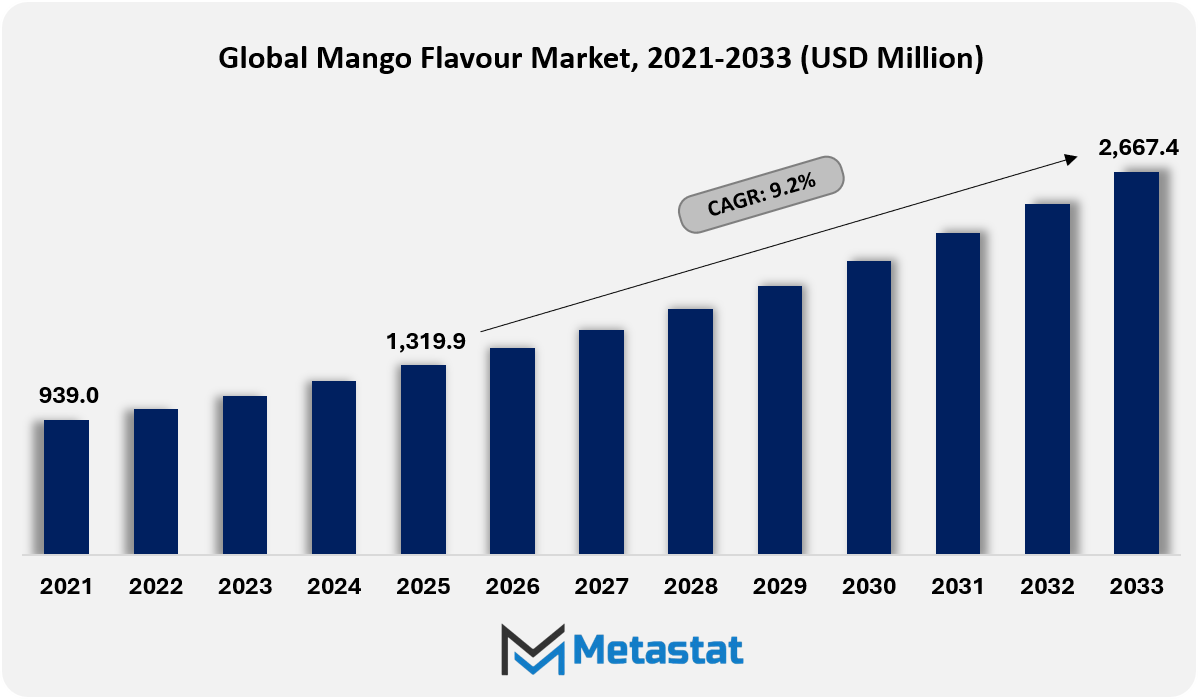
Premiumization of tropical fruit profiles across beverages, dairy, and confectionery.
Premium positioning across beverages, dairy products, and confectionery is expected to support demand for mango-inspired flavour solutions. Brands are increasingly using layered tropical taste profiles to strengthen sensory appeal, product differentiation, and premium shelf positioning across multiple consumption occasions.
Increased clean-label product launches using natural and fruit-derived flavour systems
Clean-label momentum is accelerating adoption of fruit-derived mango flavour solutions across global product pipelines. Manufacturers are prioritizing recognizable ingredient origins, minimal-processing claims, and transparent sourcing, which is strengthening formulation strategies and supporting sustained market growth.
Volatility in mango raw material availability impacting natural flavour consistency
Supply instability linked to weather variability, harvest cycles, and regional sourcing dependence will affect consistency in natural mango flavour production. Fluctuating raw material availability can pressure pricing and batch uniformity, making diversified sourcing strategies and stronger agricultural planning increasingly important.
Stricter labelling and regulatory scrutiny around artificial flavour declarations
Regulatory oversight surrounding flavour disclosures will increase across major intake markets. Artificial flavour declarations face heightened scrutiny from authorities and informed consumers. Compliance-driven reformulation pressure may increase operational costs, requiring stronger documentation, factor validation, and alignment with evolving labelling expectations.
Natural, traceable mango flavour systems aligned with plant-based, low-sugar, and functional positioning
Future-forward innovation within the Global Mango Flavour Market will gain from traceable, clearly derived structures supporting plant-based nutrients, decreased sugar profiles, and functional advantages. Strategic alignment with wellbeing-pushed intake styles will liberate differentiated product fee, encouraging funding in transparent sourcing and advanced flavour encapsulation technologies.
The Global Mango Flavour market is classified based on Nature, Form, Application, and Distribution Channel.
Natural Mango Flavour segment is estimated at USD 669.7 million in 2026 and is projected to reach USD 1,358.5 million by 2033, at a CAGR of 10.6% during the forecast period.
Natural mango flavour will take advantage of the strong desire due to the growing demand for clean-label meals merchandise and plant-derived components. Food producers will emphasize transparency, traceable sourcing, and actual flavor profiles. Long-term boom could be supported via premium positioning, regulatory encouragement for natural components, and increasing patron focus throughout international food processing industries.
Artificial/Synthetic Mango Flavour segment is estimated at USD 273.9 million in 2026 and is projected to reach USD 422.5 million by 2033, at a CAGR of 6.4% during the forecast period.
Artificial/Synthetic mango flavour will keep relevance because of cost performance, shelf stability, and consistency in large-scale production. Industrial meals processors will preserve adoption for mass-marketplace offerings, especially within packaged snacks and beverages. Future demand will stay strong in which rate sensitivity impacts method choices, and standardized flavour intensity remains a concern.
Nature-Identical Mango Flavour segment is estimated at USD 496.4 million in 2026 and is projected to reach USD 886.4 million by 2033, at a CAGR of 8.6% during the forecast period.
Nature-identical mango flavour will bridge overall performance and authenticity via offering sensory similarity with managed composition. Manufacturers will prefer such solutions to balance regulatory compliance and system flexibility. Future adoption will beef up within rising economies, in which scalability, uniform flavor, and extended shelf life will support growth throughout processed meals categories.
Liquid Form segment is projected to reach USD 1,731.1 million by 2033, at a CAGR of 8.7% during the forecast period.
Liquid form mango flavour will experience rising usage due to clean mixing, speedy dispersion, and unique dosage manipulation. Beverage manufacturers will depend heavily on liquid editions for ready-to-drink formats. Future advancements will raise awareness on stability improvement and compatibility with automatic processing structures throughout high-volume production facilities.
Powder Form segment is projected to reach USD 936.3 million by 2033, at a CAGR of 10.2% during the forecast period.
Powder form mango flavour will entice demand through prolonged storage lifestyles, decreased transportation expenses, and convenience. Bakery, snack, and dry mix segments will inspire adoption. Future trends will support encapsulation technology to enhance flavour retention, permitting progressed performance beneath warmth-intensive processing situations.
Food & Beverages segment is projected to reach USD 1,442.3 million by 2033.
Food and Beverages will remain the dominant software area pushed with the aid of flavour innovation and product diversification. Manufacturers will combine mango profiles into functional drinks and fortified ingredients. Future boom will reflect converting intake habits and rising experimentation within mainstream and premium product launches globally.
Confectionery segment is projected to reach USD 435.3 million by 2033.
Confectionery applications will support demand via constant interest in tropical taste studies. Candy, chewing gum, and sugar-primarily based treats will make use of mango flavour for differentiation. Future traits will prefer reduced-sugar formulations where strong flavour perception will beautify purchaser popularity without reliance on excessive sweetener content.
Dairy Products segment is projected to reach USD 556.4 million by 2033.
Dairy products will show slow growth through flavored yogurts, cakes, and milk-based liquids. Mango flavour will supplement fermentation profiles and beautify visual enchantment. Future opportunities will get up from plant-based dairy alternatives, seeking familiar fruit-based taste notes to broaden customer reach.
Others segment is projected to reach USD 233.4 million by 2033.
Other packages will encompass prescription drugs, nutraceuticals, and personal care items where sensory enhancement supports product acceptance. Functional syrups and oral dietary supplements will integrate mango flavour for palatability. Future adoption will increase along with well-being-focused product improvement across a couple of non-food industries.
Supermarkets/Hypermarkets segment is projected to grow at a CAGR of 7.6% during the forecast period.
Supermarkets and hypermarkets will preserve significance through bulk procurement and long-term dealer relationships. Large-scale meal brands will rely on such channels for component sourcing efficiency. Future enlargement will replicate prepared retail growth within developing regions, assisting standardised distribution frameworks.
Specialty Stores segment is projected to grow at a CAGR of 9.5% during the forecast period.
Speciality Stores will serve niche manufacturers looking for tailored flavour answers and technical support. Artisanal food manufacturers will decide on curated services and expert guidance. Future relevance will boom with demand for customised formulations and small-batch production necessities across premium meals segments.
Online Retail segment is projected to grow at a CAGR of 12.8% during the forecast period.
Online retail will transform procurement through wider access, transparent pricing, and speedy dealer assessment. Small and mid-sized firms will benefit from virtual sourcing systems. Future adoption will rise with stepped forward logistics, secure transactions, and growing reliance on remote buying models.
Others segment is projected to grow at a CAGR of 6.5% during the forecast period.
Other distribution channels will consist of direct manufacturer partnerships and regional distributors. Contract-based sourcing will aid regular delivery for lengthy-time period initiatives. Future boom will rely upon strategic alliances, permitting green customisation and dependable fulfilment throughout geographically dispersed manufacturing units.
Based on geography, the Global Mango Flavour market is divided into North America, Europe, Asia-Pacific, South America, Middle East, and Africa.
North America Mango Flavour Market is set to expand at a CAGR of 9.2% within the forecast period, reaching a market size (TAM) of USD 604.7 million by the end of 2033.
North America statistics robust call for mango flavour owing to rising intake of fruit-based beverages, dairy blends, and useful meals throughout retail and foodservice channels.
North America benefits from advanced food processing abilities and a high choice for smooth-label flavour solutions using herbal fruit profiles.
Asia Pacific presents a fundamental opportunity through increasing packaged food intake, supported by urbanization and growing middle-income populations with a familiarity closer to mango taste.
Asia Pacific gains possibilities from accelerated innovation in confectionery, bakery, and geared-up-to-drink merchandise, the usage of tropical flavour variations.
Middle East, Africa, and South America shows a steady increase for mango flavour driven by warm weather beverage calls for, nearby fruit affinity, and slow expansion of processed meals production.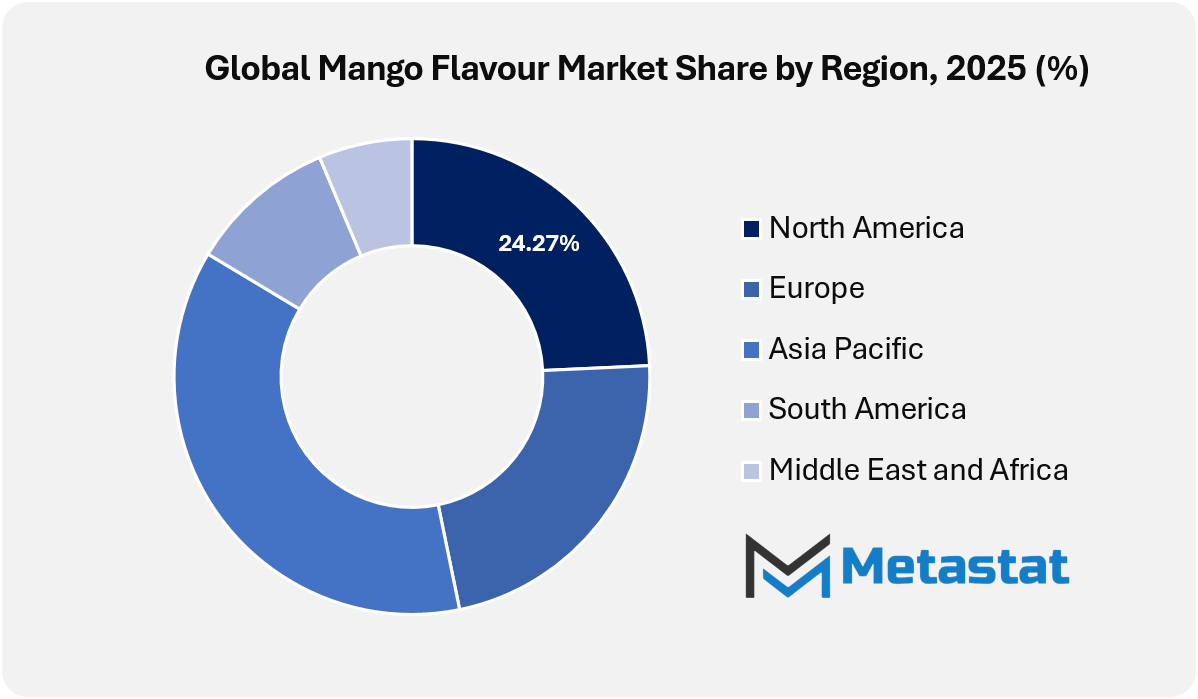
The global mango flavour market continues to develop steadily, driven by strong client demand for fruity and tropical taste profiles throughout meals, beverages, and personal care applications. Mango remains a favored flavour due to its herbal sweetness and familiarity across cultures, on the way to help its wide acceptance in both mature and emerging markets. Manufacturers that specialize in creating balanced flavour notes that capture the freshness of ripe mango whilst preserving consistency at some point of processing. Rising interest in smooth-label products and natural flavor experiences will, in addition, shape product improvement and sourcing decisions within the coming years.
Innovation performs a key role in how corporations deliver their mango-flavour services. Players, which include International Flavors and Fragrances (IFF), Kerry Group, McCormick & Company, Inc., and Bell Flavors and Fragrances, are making an investment in superior flavour introduction techniques to fulfill changing consumer expectations. These organizations work closely with meals and beverage brands to tailor mango flavours for applications ranging from dairy and bakery to drinks and confectionery. Their worldwide presence and strong study competencies permit them to respond fast to nearby flavor options while maintaining nice requirements.
Mid-sized and regional agencies are also strengthening the competitive landscape by imparting bendy answers and custom-designed blends. Firms, including Mother Murphy’s Flavors, Flavorchem Corporation, Blue Pacific Flavors, Gold Coast Ingredients Inc., Metarom, and Prinov, offer recognition on client-specific formulations with a view to suit niche packages. Indian and Asian producers, which include Gogia Chemical Industries Private Limited, Kelkar Foods and Fragrances, Maruti Aromatics & Flavours, Konark Herbals and Healthcare Private Limited, and L. Liladhar And Co. Retain to gain traction through cost-effective manufacturing and robust local distribution networks.
Smaller and specialised competitors upload similar depth to the marketplace with the aid of addressing demand for natural, herbal, and naturally derived mango flavours. Companies together with Nature’s Flavors, Leela Organic Herbal, Sugam Products, Magical Flavour Co., Ltd., Sonarome, Nicohit, and Fab Flavour are an increasing number of focusing on authenticity and transparency. As competition intensifies, collaboration among flavour houses and stop-use industries turns into more not unusual. This collective attempt will assist innovation, amplify application areas, and maintain mango flavour applicable across worldwide consumer segments.
Market size is forecast to rise from USD 1,319.9 million in 2025 to over USD 2,667.4 million by 2033.
The Global Mango Flavour Market can even intersect with virtual product design and fast prototyping. Virtual sensory mapping and AI-assisted flavour prediction will shorten development cycles and enable quicker customization for local launches. As personal labels and direct-to-consumer brands advantage impact, mango flavour becomes a bendy base for constrained variations, seasonal storytelling, and experiential branding. Over time, its position will shift from a simple flavour additive to a strategic sensory asset embedded inside logo identification and innovation pipelines.
By Nature:
By Form:
By Application:
By Distribution Channel:
This research report categorizes the Mango Flavour market based on key segments and regions, forecasts revenue growth, and analyses trends in each submarket. The report analyses the key growth drivers, opportunities, and challenges influencing the Mango Flavour market. Recent market developments and competitive strategies such as expansion, product launch, partnership, merger, and acquisition have been included to draw the competitive landscape in the market.
The report strategically identifies and profiles the key market players and analyses their core competencies in each sub-segment of the Mango Flavour market.
|
Report Attributes |
Details |
|
Study Period |
2021-2033 |
|
Base Year |
2025 |
|
Estimated Year |
2026 |
|
Forecast Period |
2026-2033 |
|
Historical Period |
2021-2025 |
|
Growth Rate |
CAGR 9.2% from 2026 to 2033 |
|
Revenue Unit |
USD million |
|
Sales Volume Unit |
Kilotons |
|
Segmentation |
By Nature, Form, Application, Distribution Channel, and Region |
|
By Region |
North America (By Nature, Form, Application, Distribution Channel, and Country)
|
|
Europe (By Nature, Form, Application, Distribution Channel, and Country)
|
|
|
Asia Pacific (By Nature, Form, Application, Distribution Channel, and Country)
|
|
|
South America (By Nature, Form, Application, Distribution Channel, and Country)
|
|
|
Middle East and Africa (By Nature, Form, Application, Distribution Channel, and Country)
|
Find answers to common questions about this report
The Global Mango Flavour market is estimated to reach USD 2,667.4 million by 2033.
Premiumization of tropical fruit profiles across beverages, dairy, and confectionery and increased clean-label product launches using natural and fruit-derived flavour systems are key driving factors, boosting the market.
The Liquid Form is the leading type segment in the Global market.
Volatility in mango raw material availability impacting natural flavour consistency will hamper market growth within the forecast period.
Top players operating in the Mango Flavour industry include International Flavors and Fragrances (IFF), Mother Murphy’s Flavors, Custom Flavors, Jns Commodities & Specialities, and Sonarome.
Asia Pacific region dominates the market.
The Metastat Insights analysis shows that the North America Mango Flavour market size is estimated to be USD 604.7 million by 2033.
The Metastat Insights study shows that the Global Mango Flavour market size was USD 1,319.9 million in 2025.
The Global Mango Flavour market is likely to grow at a CAGR of 9.2% over the forecast period (2026-2033).
The analysts below cover Food and Beverages research at Metastat Insights.
LEAD ANALYST
Utkarsh Khirodkar is a Lead Market Research Analyst at MetaStat Insight, specializing in market intelligence, technology sector assessments, and competitive strategy.

LEAD PRINCIPAL ANALYST, PHARMA AND HEALTHCARE
Food and Beverages · Healthcare · Healthcare IT · Medical Devices
Ajay Devgire is the Lead Healthcare Analyst at MetaStat Insight, leading strategic research and market intelligence initiatives across the global healthcare domain.

SENIOR RESEARCH ANALYST
Biotechnology · Food and Beverages · Medical Devices · Packaging
Snehal Pasalkar is a Research Analyst at MetaStat Insight, operating at the intersection of life sciences research, competitive strategy, and market intelligence.
In the biological seed treatment space, registration timelines vary drastically between the European Union, Brazil, and North America. The MetaStat Insight research handled these cross-border regulatory barriers with genuine nuance, mapping commercialization pathways alongside historical field adoption rates. The segmentation between microbial strains and biochemical active ingredients was particularly well structured.
Our team was tracking whether regional recycling infrastructure could realistically absorb the growing volume of lithium iron phosphate batteries over the next decade. The report did a solid job separating announced hydrometallurgical plant capacity from active, permitted operational throughput. That distinction made the feedstock availability projections and regional recovery rate models far more credible than standard commercial overviews.
Tracking capacity expansion in single-use bioprocessing requires dependable data on raw material availability and cleanroom-grade polymer supply chains. The competitive landscape chapter gave a grounded evaluation of secondary component suppliers across North America and Asia-Pacific rather than simply reprinting press releases. Having that level of supplier benchmarking helped clarify dual-sourcing considerations for our clinical pipeline planning.
Explore related market intelligence reports worth reading alongside this one.