
LEAD ANALYST
Utkarsh Khirodkar is a Lead Market Research Analyst at MetaStat Insight, specializing in market intelligence, technology sector assessments, and competitive strategy.

Global Pie Shells Market Size, Share, By Product Type (Unbaked Pie Shells, Par-Baked and Pre-Baked Pie Shells, Rolled Pie Dough and Sheets, Graham Cracker and Cookie Crusts, Tartlets and Mini Shells), By Ingredient Type (Wheat Flour, Whole Grain and Whole Wheat, Gluten-Free, Organic, Plant-Based and Vegan), By End-Use Industry (Household Consumption, Foodservice Restaurants and Caterers, Bakeries and Patisseries, Institutional Foodservice, Food Manufacturers and Private Label), By Distribution Channel (Retail Grocery, Foodservice Distribution, Bakery and Patisserie Supply, E-Commerce and Direct-to-Consumer), Industry Analysis, Growth, Trends, and Forecast, 2026-2033
Report ID
MSI-5742
Published
November, 2026
Pages
305 Pages
Format
Historical
Base year
Forecast
Forecast period
Report Details
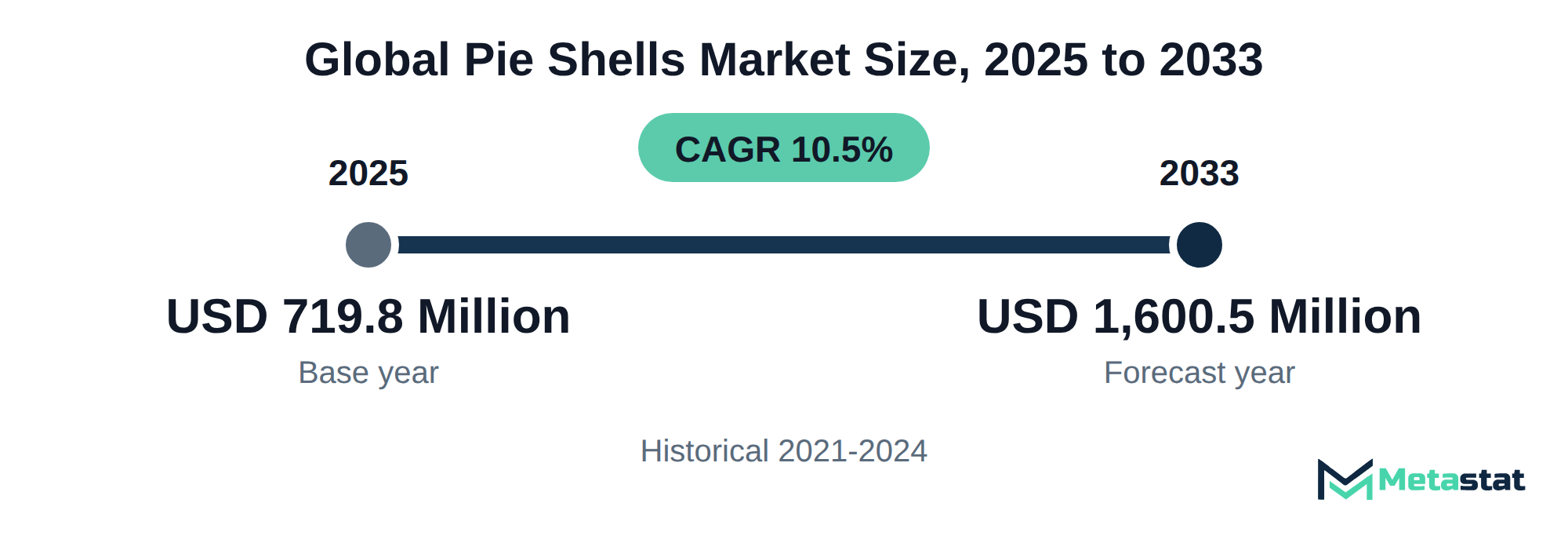
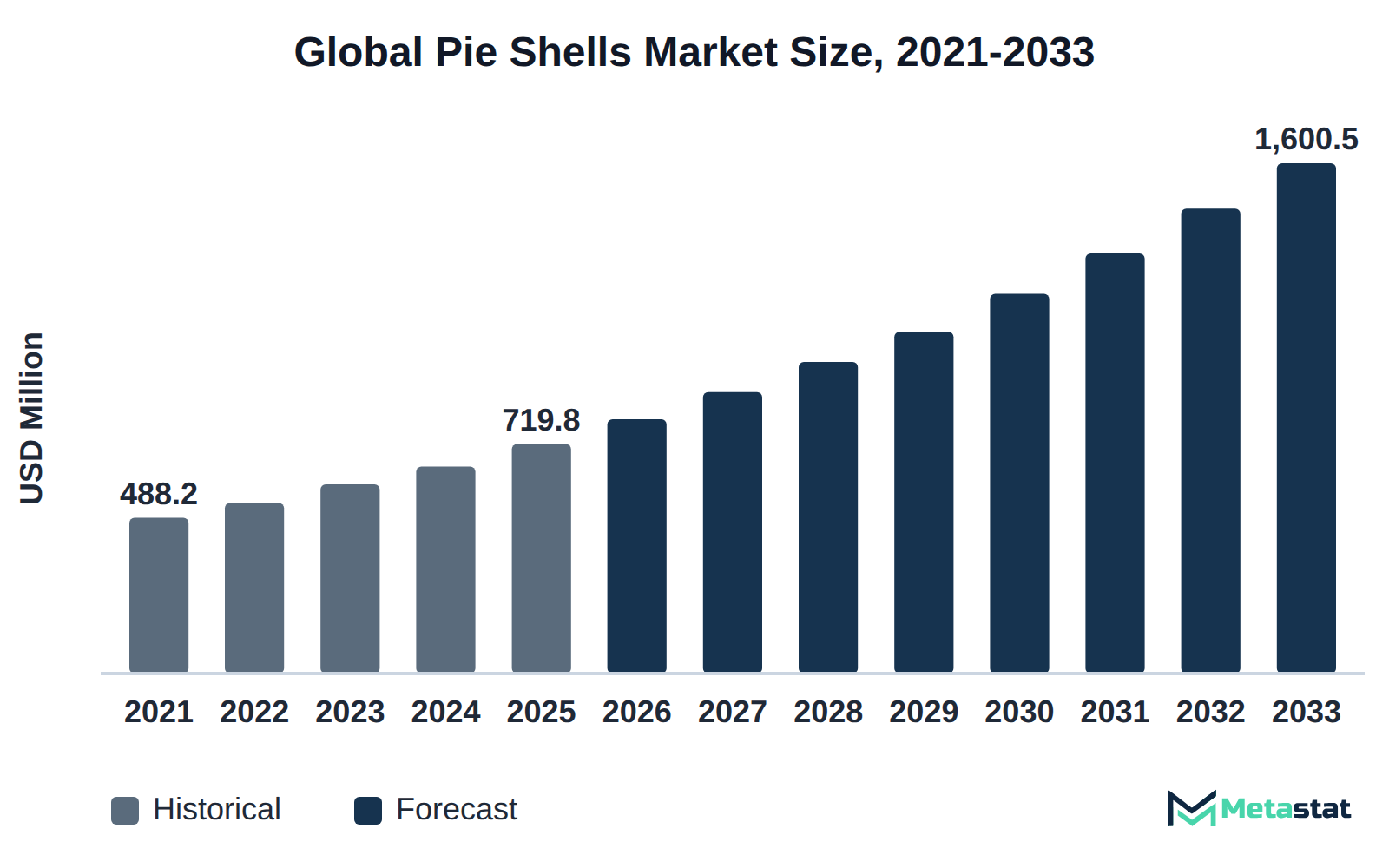
Market Valuation: Valued at $719.8 Million in 2025, projected to reach $1,600.5 Million by 2033 at a 10.5% CAGR.
Dominant Segment: Unbaked pie shells lead the market, driven by their appeal to both home bakers and commercial kitchens seeking convenience and quality.
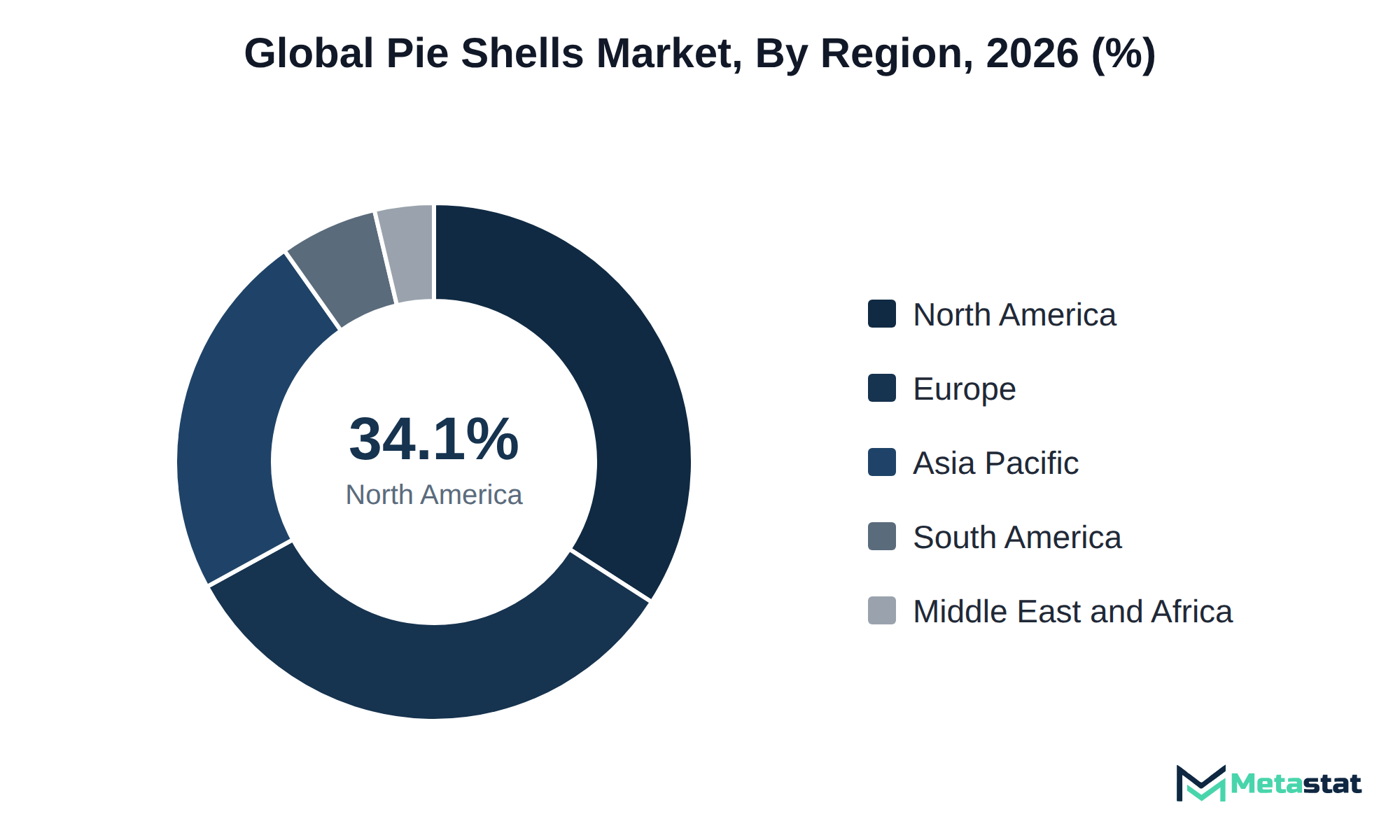
Geographic Lead: North America is the leading region, holding 34.1% of the market in 2025, with the US expected to maintain this dominance due to strong foodservice demand.
What's Inside: The report provides a comprehensive analysis of market dynamics, competitive landscape, and detailed forecasts from 2026 to 2033, covering various product and ingredient types.
High Growth in Par-Baked Segment: Par-baked and pre-baked pie shells are projected to grow significantly, with a CAGR of 11.4%, reflecting the foodservice industry's preference for convenience and consistency.
Innovation in Gluten-Free Options: The gluten-free segment is expected to grow at a CAGR of 10.8%, driven by rising consumer awareness of dietary restrictions and health-conscious eating.
Choose Your License
Global Pie Shells Market
The global Pie Shells market was valued at USD 719.8 million in 2025 and is projected to reach USD 1,600.5 million by 2033, growing at a CAGR of 10.5% over the forecast period.
The Pie Shells market encompasses a variety of products designed for baking and culinary applications, including unbaked, par-baked, and pre-baked pie shells. Buyers invest in these products primarily for household consumption, foodservice operations, and bakery needs. Demand for ready-to-use pie shells stems from the growing interest in convenience foods and the desire for high-quality baked goods without extensive preparation. This market sees significant purchases from households looking for quick meal solutions and foodservice establishments aiming to provide diverse dessert options.
Growth in the market is driven by increasing consumer preferences for convenience and quality, particularly in the foodservice industry. Among the various segments, unbaked pie shells represent the largest value, catering to both home bakers and commercial kitchens. North America holds 34.1% of the market in 2025, with the US leading in 2026. The region's share reflects strong demand for varied pie offerings and the expansion of foodservice establishments.
Consumers seek diverse and innovative dessert options, and the market anticipates continued expansion. The increasing popularity of gluten-free and organic pie shell varieties presents further opportunities for manufacturers to cater to evolving consumer preferences. Growth in the Pie Shells market leaves room for investment and product development.
The Pie Shells market includes a diverse range of products made for baking, appealing to various consumer preferences and culinary needs. Buyers invest in this market due to the increasing popularity of homemade desserts and the convenience offered by pre-prepared pie shells. The shift towards healthier eating habits further drives demand, with consumers seeking organic and gluten-free options that align with their dietary preferences.
Growth in the market is primarily fueled by the rising trend of baking at home, driven by social media and culinary content such as cooking shows that inspire consumers. Unbaked pie shells represent the segment with the highest value, with an anticipated CAGR of 9.5% through 2033. This regional dominance reflects strong consumer preferences for convenience and quality in food products.
Consumer lifestyles evolve, and the demand for innovative pie shell options continues to expand, resulting in new product launches and variations. The increasing prevalence of foodservice establishments contributes to market growth, with restaurants and caterers looking for quality pie shells that enhance their dessert offerings. These trends point to continued expansion in the Pie Shells market.
The shift towards frozen and ready-to-bake pie shell formats transforms procurement strategies within the Pie Shells market. This transition reflects a growing consumer preference for convenience, driving demand for products that require minimal preparation time. In the current market, unbaked pie shells are projected to reach USD 493.1 million by 2033, with a compound annual growth rate (CAGR) of 9.5% from 2026 onwards. Frozen formats also depend on cold chain logistics to keep products at the required temperature during distribution.
Retailers and foodservice operators increasingly prioritize these convenient formats to enhance customer satisfaction and streamline operations. The flexibility these products offer allows them to cater to a broader range of consumer needs while minimizing kitchen labor costs. Businesses that adapt to this trend strengthen their competitiveness as market conditions change.
With the estimated market value of frozen formats contributing significantly to overall growth, suppliers focusing on innovation in this area enhance their market positions. This trend reshapes procurement practices and drives more investment in product development and marketing strategies that emphasize convenience and quality.
Foodservice buyers increasingly prefer consistent pre-formed crusts due to the operational efficiencies and cost control these products provide. The adoption of pre-formed crusts simplifies kitchen processes, allowing staff to focus on filling and baking rather than crust preparation. This trend is evident in the Pie Shells market, where the segment of Par-Baked and Pre-Baked Pie Shells is projected to reach USD 357.9 million by 2033, reflecting a compound annual growth rate (CAGR) of 11.4%.
Pricing structures for pre-formed crusts attract foodservice operators looking for predictable budgeting. Typically, suppliers offer pricing models based on volume contracts, providing discounts for bulk purchases. This financial predictability allows restaurants and catering services to manage food costs effectively while ensuring consistent product quality. The growing preference for these pricing arrangements highlights a shift toward more stable supply chain relationships, supporting operational efficiency and customer satisfaction.
This preference for pre-formed crusts enhances competitive positioning among foodservice buyers by improving menu consistency and reducing labor costs. Because efficiency directly affects profitability, these crusts help foodservice businesses streamline operations and improve customer experience.
Innovation in organic, gluten-free, and plant-based pie shells significantly influences consumer preferences in the Pie Shells market. The increasing demand for healthier and dietary-specific options drives this trend, particularly among health-conscious consumers and individuals with dietary restrictions. Organic pie shells are projected to grow at a compound annual growth rate of 12.1% due to strong consumer interest in natural ingredients.
The rise in awareness about food healthiness and sustainability encourages buyers to seek products that align with their values, leading to greater competition among manufacturers. Firms are compelled to invest in developing diverse product lines that cater to these preferences, including gluten-free and organic options. This competition enhances product variety and improves pricing strategies throughout the market.
This focus on innovation supports businesses in capturing a larger market share while addressing the distinct needs of health-oriented consumers. Manufacturers prioritizing these segments position themselves favorably in a changing environment, ultimately contributing to overall growth within the market. The successful introduction of innovative pie shell products strengthens brand loyalty while attracting new customers seeking healthier alternatives.
Suppliers in the Pie Shells market are actively addressing the growing demand for convenience and consistent bake performance by innovating product offerings. This segment appeals to consumers seeking quick and easy preparation methods without compromising quality.
The rise in popularity of pre-baked and par-baked pie shells further highlights this shift toward convenience, with these products designed for minimal preparation. Such innovations cater to busy households and foodservice establishments that prioritize speed in their offerings while ensuring consistent bake performance.
The growing consumer preference for gluten-free and organic options influences the development of new pie shell products. By diversifying ingredient types, suppliers attract health-conscious buyers and expand their market reach. This strategic focus enhances competitiveness and drives growth within the market, positioning suppliers to capitalize on evolving consumer preferences.
Household consumption drives notable growth in the Pie Shells market. Increasing numbers of consumers prioritize convenience and time efficiency in meal preparation, leading to higher demand for ready-to-bake and pre-baked options. This shift aligns with trends in busy lifestyles, where quick meal solutions become essential. Retail grocery channels experience significant sales growth, reflecting changing consumer behavior that favors pre-made products. By 2033, retail grocery is expected to reach USD 572.7 million, highlighting the impact of convenience on purchasing decisions. This preference for easy-to-use products raises volume and revenue for suppliers and pushes them to innovate.
Foodservice restaurants and caterers are expanding their offerings of ready-made pie shells, driven by streamlined operations and enhanced menu variety. This trend further supports market growth, reflecting the increasing reliance on pre-formed crusts in diverse culinary applications. The demand environment remains favorable, encouraging competitive strategies among suppliers to meet evolving consumer needs.
Growing consumer interest in gluten-free products significantly impacts the Pie Shells market. The rise in celiac disease diagnoses and gluten sensitivity has led to increased demand for gluten-free alternatives. Suppliers focus on developing gluten-free pie shells made from alternative flours, catering to a health-conscious demographic. This innovation enables manufacturers to differentiate their offerings while addressing dietary requirements. The shift toward gluten-free options attracts health-oriented consumers, expanding market reach and increasing sales potential. Manufacturers investing in research and development of gluten-free formulations enhance competitiveness in a saturated market. Enhanced product diversity supports current demand and strengthens brand loyalty among consumers seeking reliable gluten-free options. Gluten-free food products are becoming more mainstream, and suppliers benefit from an expanding consumer base that prioritizes dietary inclusivity. This trend positions the market for sustained growth, driven by continuous innovation and evolving consumer preferences.
Rising prices for pie shells exert pressure on household consumption, impacting purchasing decisions among budget-conscious consumers. Significant price increases observed in recent years have led several buyers to express hesitation in investing in premium or specialty products. This hesitation results in smaller order quantities and delayed purchases, particularly in regions with lower disposable income. Financial constraints highlight the importance of affordability in the Pie Shells market, particularly for households seeking value without compromising quality. Higher prices lead to consideration of substitutes, including homemade options or alternative dessert choices, further constraining market growth. In the foodservice segment, restaurants and caterers face similar challenges, with budget constraints influencing their procurement strategies. Overall, price sensitivity affects the dynamism of the market, suggesting a need for strategies addressing affordability and consumer perception to facilitate adoption. Consumer purchasing power and market performance move together, which makes growth harder to sustain when costs fluctuate.
Increasing input costs challenge suppliers in the Pie Shells market, impacting their ability to maintain profit margins. Raw materials, including wheat flour and specialized ingredients, have experienced significant price fluctuations, driven by supply chain disruptions and changing agricultural conditions. Suppliers face the challenge of balancing quality with cost efficiency, leading to heightened competition for favorable sourcing agreements. In response, many suppliers are exploring alternative sourcing strategies, including establishing direct relationships with farmers and investing in local ingredient production to mitigate price volatility. This shift not only aims to stabilize costs but enhances the market's sustainability profile, appealing to environmentally conscious consumers. By enhancing procurement strategies, suppliers strive to maintain competitiveness while addressing the financial pressures impacting their operations. The challenge of input costs remains a critical factor for future growth and profitability in the market.
Rapid expansion in the par-baked and pre-baked pie shells segment presents significant growth opportunities within the market, driven by increasing consumer preference for convenience and ready-to-use products. The demand primarily stems from foodservice restaurants and caterers, who prioritize consistency and time efficiency in food preparation. Adoption of par-baked options reduces preparation time and labor costs, allowing establishments to focus on menu creativity and customer service. The market for par-baked pie shells enhances overall profitability for suppliers by streamlining production processes and optimizing inventory management. Expanding product offerings in this segment captures the attention of both foodservice operators and retail buyers, further strengthening the position of suppliers in the competitive landscape.
The Global Pie Shells market is segmented based on Product Type, Ingredient Type, End-Use Industry, and Distribution Channel.
Unbaked pie shells serve the home baking segment, appealing to consumers who want convenience and quality in their baking. The increasing trend toward homemade desserts drives demand among households. A preference for fresh and customizable baking options influences this segment's growth. Compared to other pie shell segments, unbaked pie shells experience slightly slower growth relative to par-baked and pre-baked varieties, which enjoy a CAGR of 11.4%. This distinction highlights the unique consumer needs that drive the market, with unbaked options catering to those valuing the baking experience while maintaining control over ingredients and flavors.
Par-baked and pre-baked pie shells serve foodservice restaurants and caterers, where consistency and convenience drive adoption. The increasing demand for ready-to-use pie shells reflects a shift in consumer preferences toward time-saving solutions. This segment expands at a faster rate compared to unbaked pie shells, which grow at a CAGR of 9.5%. The preference for par-baked and pre-baked options allows restaurants to minimize preparation time while maintaining quality. Growth in this segment is supported by a trend among consumers seeking convenience in meal preparation, impacting the overall dynamics of the market.
Rolled Pie Dough and Sheets segment is expected to reach USD 269.5 million by 2033. This product type serves various culinary applications, including home baking and commercial foodservice. Households and foodservice establishments employ rolled pie dough for its versatility and ease of use in creating a variety of baked goods. Demand for this segment is driven by increasing consumer interest in homemade and artisanal foods, reflected in a shift toward fresh and high-quality ingredients. The segment exhibits a distinct growth pattern compared to other pie shell types, leveraging a higher CAGR of 11.2%, surpassing the growth rates of unbaked pie shells and graham cracker crusts. Factors including rising preferences for convenience and innovative recipes contribute to its appeal, enhancing its position within the market.
Graham Cracker and Cookie Crusts segment is projected to grow at a CAGR of 11.8% during the forecast period. This segment acts as a key ingredient for various dessert applications, appealing to both home bakers and commercial foodservice operators. The rise in demand for ready-to-use crusts contributes to its expansion, driven by convenience-focused consumers seeking quick baking solutions. Compared to other product types, this segment benefits from a unique offering in flavor and texture, positioning it favorably against more traditional pie shell options. Growth in the foodservice industry particularly influences this segment's trajectory, with restaurants increasingly incorporating these crusts into their dessert menus. The projected increase in value highlights the potential for suppliers to enhance their market presence and cater to evolving consumer preferences.
Tartlets and Mini Shells are small pastry shells designed for creating bite-sized desserts or appetizers. These products cater to both household consumers and foodservice establishments, offering convenience and variety for individual portions. The increasing trend toward smaller, shareable desserts drives demand for this sub-segment, influencing bakeries and caterers to adopt these products into their offerings. Unlike other pie shell segments, Tartlets and Mini Shells attract a distinct customer base that prioritizes presentation and portion control. This focus on aesthetics and portion sizes differentiates them from larger pie shells, which serve traditional, family-style meals. While the market evolves, innovation in flavors and fillings is expected to play a significant role in enhancing the appeal of Tartlets and Mini Shells, ensuring they remain a popular choice among consumers seeking unique culinary experiences.
Specialty and savory shells include unique offerings that cater to diverse culinary preferences and innovative recipes. These products are used by home bakers and professional chefs seeking to create distinctive dishes, ranging from quiches to gourmet desserts. Growth in this segment is propelled by increasing consumer interest in artisanal and gourmet food options, driving demand for specialty items. Unlike more conventional pie shells, this sub-segment targets niche markets, focusing on higher-quality ingredients and distinctive flavors, which command premium pricing. The emphasis on gourmet experiences influences purchasing decisions, allowing for differentiation from mainstream products. The market for these products continues to expand, reflecting broader trends towards personalization and culinary exploration, particularly among food enthusiasts.
Wheat Flour segment is valued at USD 380.4 million in 2026 and is projected to reach USD 723.1 million by 2033, at a CAGR of 9.6% during the forecast period. This ingredient acts as a fundamental component in various pie shells, appealing to both household consumers and foodservice providers who seek quality and consistency. Increased demand for healthier options drives interest in whole grain and gluten-free variants, influencing purchasing decisions across demographics. The segment's growth rate remains competitive compared to other ingredient types, positioning it as a solid choice for both traditional and innovative recipes. With an expanding focus on health-conscious ingredients, Wheat Flour stands apart from alternative components by balancing cost and functionality. This reflects its central role in the Pie Shells market.
Whole Grain and Whole Wheat segment is estimated to reach USD 275.9 million by 2033, at a CAGR of 10.8% during the forecast period. This segment caters to health-conscious consumers seeking alternatives to traditional pie crusts. Bakeries, foodservice restaurants, and caterers increasingly incorporate these ingredients to create products that align with rising demand for nutritious offerings. The preference for whole grain options reflects a broader trend prioritizing healthier eating habits, driven by increased awareness of dietary choices. The growth rate of this segment is expected to outpace that of other ingredient types, highlighting its appeal among buyers focused on nutritional value. While suppliers face challenges related to sourcing high-quality whole grains, the growing trend toward healthier ingredients supports expansion in the Pie Shells market, leading to increased investment and innovation.
Gluten-Free segment is expected to reach USD 236.2 million by 2033. This segment caters to consumers seeking alternatives due to dietary restrictions or preferences, driving growth in both retail and foodservice channels. Increasing awareness of gluten intolerance, along with a broader trend toward healthier eating, fuels demand for gluten-free options. Competitive pricing and innovative formulations contribute to market appeal. Compared to other ingredient types, gluten-free options are experiencing a notable growth rate, supported by a CAGR of 10.8% during the forecast period. This growth contrasts with other segments that do not match the same level of consumer engagement or urgency for dietary inclusivity. The market sees a shift in buyer dynamics, with health-conscious consumers driving sales and influencing product offerings, pushing suppliers to adapt to evolving preferences.
Organic segment is projected to grow at a CAGR of 12.1% during the forecast period. This segment attracts health-conscious consumers and those seeking environmentally friendly options. Its primary use includes the creation of pie shells that align with organic dietary preferences, appealing to households and restaurants focusing on clean ingredients. Increased awareness of health benefits, coupled with a shift towards organic foods among consumers, drives demand for organic pie shells. This segment differentiates itself from others through higher price points, reflecting the premium nature of organic ingredients. Compared to the gluten-free segment, which is expected to reach USD 236.2 million by 2033, the organic segment's anticipated growth rate highlights its increasing popularity within the market. A growing emphasis on sustainability and the need for transparency in food sourcing further enhances its appeal.
Plant-Based and Vegan offerings appeal to consumers seeking healthier and sustainable alternatives to traditional ingredients. This segment primarily serves households and foodservice establishments prioritizing dietary preferences aligned with plant-based diets. Demand for these vegan food products increases due to rising awareness of health benefits associated with plant-based eating. While growth in this segment aligns with broader trends in health consciousness, it experiences slower adoption compared to gluten-free products, which attract a more extensive customer base. The plant-based and vegan segment often faces higher production costs, impacting pricing strategies compared to other ingredient types, including wheat flour. This dynamic challenges suppliers in terms of competitive pricing while catering to a discerning consumer demographic focused on ethical and health-driven food choices. The market is expected to evolve, reflecting changing consumer preferences and the expanding demand for inclusive dietary options.
Nut-based and alternative grain ingredients cater to consumers seeking healthier and gluten-free options. These offerings appeal to health-conscious individuals and those with dietary restrictions, increasing adoption among households and foodservice establishments. Growing awareness of the nutritional benefits of nuts and alternative grains drives demand for these products, distinguishing this segment from traditional wheat-based ingredients. The segment's pricing structure varies, often commanding higher prices due to sourcing and processing costs. While gluten-free products capture significant attention, nut-based and alternative grain options offer a unique appeal to niche markets, supporting their growth within the broader ingredient landscape. The increasing trend of health-oriented diets positions this segment favorably, enhancing its relevance in the market.
Household consumption segment is valued at USD 282.4 million in 2026 and is projected to reach USD 514.9 million by 2033, at a CAGR of 9% during the forecast period. This segment primarily caters to individual consumers preparing meals and desserts at home, using pie shells for a variety of recipes. A significant demand driver stems from the increasing preference for convenience foods, prompting households to purchase ready-made pie shells instead of making them from scratch. This segment exhibits slower growth compared to the foodservice restaurants and caterers segment, which is expected to achieve a CAGR of 11.9%. The focus on home cooking and baking has strengthened the position of household consumption in the market, with consumers seeking quality and convenient baking solutions.
Foodservice Restaurants and Caterers segment is estimated to reach USD 459 million by 2033, at a CAGR of 11.9% during the forecast period. This segment serves restaurants and catering services that require pie shells for various culinary applications, including appetizers, main courses, and desserts. Demand in this segment is driven by the growing preference for convenient food options and ready-to-use products. Compared to other segments, including Household Consumption, this segment displays a higher growth rate, benefiting from increased spending on dining out and catered events. Innovative recipes and menu diversification encourage foodservice operators to seek quality pie shell products, enhancing their offerings to customers. The market reflects a shift toward premium ingredients, raising the overall price point and creating opportunities for suppliers focusing on high-quality pie shell products.
Bakeries and Patisseries segment is expected to reach USD 303 million by 2033. This segment serves the needs of professional bakers and pastry chefs who rely on high-quality pie shells for their creations. Rising consumer demand for artisanal and gourmet baked goods drives this segment's growth, with a particular emphasis on premium offerings. The increasing popularity of specialty desserts contributes to the segment's expansion, differentiating it from other categories in the market. The growth rate for Bakeries and Patisseries is notable, reflecting a strong CAGR of 11.9% during this period, which surpasses other segments. This segment stands out due to its higher price point, aligning with the quality expectations of discerning customers. Bakeries and patisseries increasingly seek innovative solutions to meet changing tastes and stay competitive.
Institutional Foodservice segment is projected to grow at a CAGR of 9.7% during the forecast period. This segment caters to larger-scale operations including hospitals, schools, and corporate cafeterias, which require convenient and efficient meal solutions. Demand in this segment is driven by the growing trend of meal outsourcing, owing to institutions seeking to provide diverse menu options without the complexity of in-house preparation. In comparison to other segments, this category experiences more stable demand patterns due to long-term contracts and consistent usage. The price sensitivity differs from retail consumer segments, with institutional buyers focusing on cost-effectiveness while maintaining quality. The market continues to adapt to changing consumer preferences, with a stronger emphasis on healthy and sustainable options in institutional offerings.
Food Manufacturers and Private Label involve entities that use pie shells for various culinary applications, often producing prepared meals or baked goods for retail. This segment serves food service and grocery sectors that seek efficiency and convenience in their offerings. Demand for these products grows due to increasing consumer preference for convenient meal solutions and ready-to-bake items, reflecting a shift in eating habits. Unlike other segments, this sub-segment typically features a focus on bulk purchasing and supply contracts, differentiating it from retail-oriented buyers. The ability of manufacturers to innovate with health-oriented options drives further expansion. Growth within this segment aligns with trends in the Pie Shells market favoring quality and convenience, while competitive pricing structures challenge other segments focused on specialty products.
Others (Meal Kits and Specialty Retail) includes unique product offerings designed for specific culinary needs, appealing to households and specialty retailers seeking innovative solutions. This segment serves consumers focused on convenience and quality, featuring meal kits that include pie shells as essential components for easy preparation. The growth of meal kit services directly influences demand, driven by changing consumer preferences for convenience and ready-to-cook options. Compared to other segments, this one experiences different pricing dynamics, reflecting its specialized nature and target audience. Unlike traditional retail channels, which cater to broader markets, specialty retail emphasizes curated selections, often attracting higher price points due to perceived value. The Pie Shells market benefits from this diversity, illustrating how niche segments contribute to overall trends.
Retail Grocery segment is valued at USD 309 million in 2026 and is projected to reach USD 572.7 million by 2033, at a CAGR of 9.2% during the forecast period. This segment primarily serves consumers seeking convenient meal solutions and quick snack options. The increasing trend of home cooking and baking contributes to the growing demand in this segment. The shift towards healthier eating habits drives consumer interest in ready-to-use pie shells. Compared to other distribution channels, retail grocery experiences moderate growth, reflecting a stable consumer base. The growth rate aligns closely with the overall market, indicating robust demand among households. Retail grocery emphasizes accessibility and convenience, catering to a wide range of consumers and differing from foodservice distribution, which is projected to grow at a higher CAGR of 11.5% during the same period.
Foodservice Distribution segment is estimated to reach USD 474.4 million by 2033, at a CAGR of 11.5% during the forecast period. This segment serves restaurants, catering companies, and institutional food providers, supplying them with pie shells for various culinary applications. The increasing demand for convenience foods drives growth, with foodservice operators seeking ready-to-use solutions that enhance operational efficiency. Compared to other distribution channels, Foodservice Distribution exhibits faster growth, with a CAGR of 11.5% that outpaces Retail Grocery at 9.2%. Evolving consumer preferences toward quick dining options and meal solutions further fuel this segment's demand. The Foodservice Distribution segment serves foodservice operators and shapes the Pie Shells market.
Bakery and Patisserie Supply segment is expected to reach USD 274.2 million by 2033. This segment serves bakeries, patisseries, and other food production entities that require pie shells for various pastry applications. The segment experiences growth driven by increasing demand for high-quality baked goods. Rising consumer interest in gourmet and artisanal products influences bakery and patisserie offerings, benefiting suppliers in this segment. Compared to other distribution channels, this segment exhibits a higher growth rate, reflecting an anticipated CAGR of 11.5% during the forecast period. The market experiences comparatively lower price sensitivity among buyers focused on premium quality, enabling suppliers to maintain robust margins while enhancing product offerings.
E-Commerce and Direct-to-Consumer segment is projected to grow at a CAGR of 11.2% during the forecast period. This segment caters to consumers seeking convenient purchasing options for pie shells, allowing them to access products directly from manufacturers or online platforms. The rise of digital shopping trends and the increasing preference for home baking drive demand in this segment. Compared to other distribution channels, E-Commerce and Direct-to-Consumer offers a unique advantage by reaching consumers in remote areas and providing a wider range of specialty products. The combination of rising online shopping habits and the need for quick access to ingredients positions this segment for significant growth. With a growing emphasis on convenience, the market sees a shift toward direct purchasing experiences, contributing to its overall expansion.
Others (Club Stores and Specialty Stores) focuses on niche retail environments specializing in unique product offerings. These venues cater to consumers seeking diverse and specialty pie shell options, often not available in standard supermarkets. The segment thrives on trends toward gourmet and artisanal food products, driven by consumer demand for premium quality baked goods. Club stores and specialty retailers provide a wider variety of flavors and ingredients, appealing to discerning buyers seeking novel culinary experiences. This segment differs from others in the distribution channel by targeting a specific consumer demographic willing to invest in unique products, leading to higher price points compared to mainstream retail grocery offerings. The market benefits from increasing consumer interest in specialty foods, influencing purchasing decisions and creating opportunities for growth in this unique retail space.
Based on geography, the Global Pie Shells market is divided into North America, Europe, Asia-Pacific, South America, Middle East, and Africa.
Demand for pie shells in North America is significant, driven by a strong preference for convenience foods among consumers in the United States, Canada, and Mexico. The retail grocery sector is essential, with spending increasing on ready-to-bake and frozen products. North America holds a 34.1% share of the global market in 2025. The market is projected to reach USD 519.4 million by the end of 2033, reflecting the evolving culinary preferences and a focus on convenience. Major players in the region focus on innovation in product offerings, catering to both health-conscious consumers and traditional tastes. This evolving landscape enhances growth opportunities for the pie shells market, aligning with the increasing demand for diverse and high-quality pie products.
Europe represents 32.9% of the Pie Shells market in 2025. The demand in this region is primarily driven by the growing preference for ready-to-bake and convenience foods, particularly among households and foodservice operators. Countries like Germany and France demonstrate a notable inclination towards unique pie products, enhancing market growth. Increased health awareness influences demand, with consumers opting for organic and gluten-free pie shells. The diverse culinary culture across Europe encourages innovation among manufacturers, focusing on specialized offerings that cater to local tastes. Investment in retail grocery infrastructure supports the distribution of pie shells, ensuring widespread availability. This regional focus on convenience and quality positions the market for continued expansion throughout the forecast period.
Growth in the Pie Shells market in Asia-Pacific reflects increasing consumer interest in convenience foods and ready-to-eat meals. Nations like China and India drive significant demand, fueled by expanding urban populations and changing dietary preferences. Retail infrastructure improvements enhance distribution efficiency, contributing to market accessibility for consumers. The rising influence of e-commerce facilitates greater product variety and availability, aligning with consumer trends towards online shopping. Investments in local production capabilities aim to meet the growing appetite for innovative pie shell products, addressing both traditional and modern culinary needs.
In South America, the Pie Shells market shows strong potential, particularly in Brazil and Argentina, where consumer demand for ready-to-bake and ready-to-eat products rises. Increasing urbanization and a growing middle class drive the preference for convenient meal solutions, resulting in higher consumption of pie shells. Investment in local food production facilities enhances supply chain efficiency, ensuring product availability across various distribution channels. South America holds a 6.10% share of the global market, reflecting a developing consumer base interested in diverse culinary applications. Key players focus on adapting offerings to local tastes and preferences, emphasizing ingredients including gluten-free and organic options to capture a broader audience. The market is expected to expand as manufacturers explore new product lines catering to evolving consumer demands.
The Pie Shells market in the Middle East and Africa demonstrates significant potential for growth, driven by increasing demand from foodservice restaurants and catering businesses. A growing middle class, particularly in countries like Saudi Arabia and the UAE, contributes to higher spending on quality food products, including pie shells. South Africa's diverse culinary preferences further enhance the market's appeal, leading to increased adoption of various pie shell types. The region's share of the global market stands at 3.7% in 2025. However, limited local production capabilities and reliance on imports create challenges for suppliers. Strategies aimed at improving supply chain efficiency and enhancing local production will enhance competitiveness in the market.
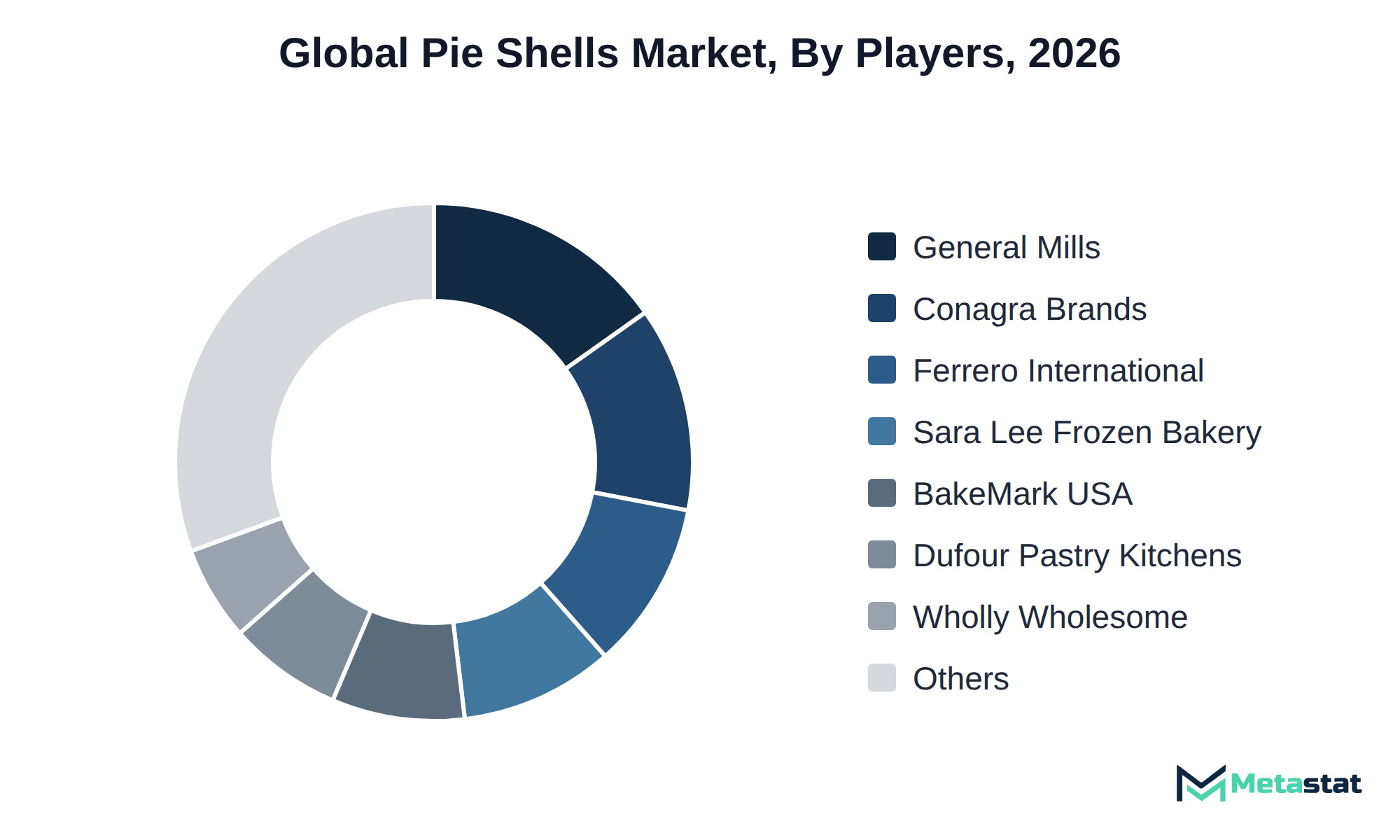
Companies in the Pie Shells market adopt various strategies to differentiate their offerings. General Mills, Inc. and Conagra Brands, Inc. focus on a broad product range that includes both frozen and fresh pie shells, aiming to capture diverse consumer preferences. Ferrero International S.A. and Wholly Wholesome, LLC emphasize organic and health-conscious formulations, targeting the growing segment of health-focused buyers.
Pricing and product quality significantly influence buyer decisions in this market. Retailers and foodservice providers select suppliers based on factors including taste, certification, and customization capabilities. Dufour Pastry Kitchens, Inc. and BakeMark USA LLC cater to gourmet segments by offering premium products designed for culinary professionals. Companies like Sara Lee Frozen Bakery, LLC leverage brand recognition to attract household consumers seeking convenience and reliability.
Achieving this growth depends on several key developments within the Pie Shells market. First, a significant increase in consumer demand for diverse baking options, particularly within the Household Consumption segment, will drive market expansion. Second, the Foodservice Restaurants and Caterers segment is anticipated to see strong growth, reaching USD 459 million by 2033, fueled by rising consumer preferences for convenient and high-quality food options.
Potential supply chain disruptions, particularly in the sourcing of key ingredients like wheat flour, present a considerable risk to achieving the forecast figures. A stable supply chain will be critical for maintaining growth momentum, because fluctuations in ingredient availability could hinder production and sales.
By Product Type: Unbaked Pie Shells, Par-Baked and Pre-Baked Pie Shells, Rolled Pie Dough and Sheets, Graham Cracker and Cookie Crusts, Tartlets and Mini Shells, Others (Specialty and Savory Shells)
By Ingredient Type: Wheat Flour, Whole Grain and Whole Wheat, Gluten-Free, Organic, Plant-Based and Vegan, Others (Nut-Based and Alternative Grain)
By End-Use Industry: Household Consumption, Foodservice Restaurants and Caterers, Bakeries and Patisseries, Institutional Foodservice, Food Manufacturers and Private Label, Others (Meal Kits and Specialty Retail)
By Distribution Channel: Retail Grocery, Foodservice Distribution, Bakery and Patisserie Supply, E-Commerce and Direct-to-Consumer, Others (Club Stores and Specialty Stores)
The report strategically identifies and profiles the key market players and analyses their core competencies in each sub-segment of the Pie Shells market.
Report Attributes | Details |
Study Period | 2021-2033 |
Base Year | 2025 |
Estimated Year | 2026 |
Forecast Period | 2026-2033 |
Historical Period | 2021-2025 |
Growth Rate | CAGR 10.5% from 2026 to 2033 |
Revenue Unit | USD million |
Segmentation | By Product Type, Ingredient Type, End-Use Industry, Distribution Channel, and Region |
By Region | North America (By Product Type, Ingredient Type, End-Use Industry, Distribution Channel, and Country)
|
Europe (By Product Type, Ingredient Type, End-Use Industry, Distribution Channel, and Country)
| |
Asia Pacific (By Product Type, Ingredient Type, End-Use Industry, Distribution Channel, and Country)
| |
South America (By Product Type, Ingredient Type, End-Use Industry, Distribution Channel, and Country)
| |
Middle East and Africa (By Product Type, Ingredient Type, End-Use Industry, Distribution Channel, and Country)
|
Find answers to common questions about this report
The Pie Shells market size was valued at USD 719.8 million in 2025.
The market is projected to grow at a CAGR of 10.5% during the forecast period from 2026 to 2033.
The North America Pie Shells market size is estimated to reach USD 519.4 million by 2033.
Unbaked Pie Shells lead the Pie Shells market with a projected value of USD 493.1 million by 2033, based on the highest growth rate among the product segments.
Key drivers for the Pie Shells market include household consumption, which experiences growth due to increasing consumer preference for convenience and time efficiency in meal preparation. Rising interest in gluten-free products significantly impacts the market, with suppliers developing alternatives to cater to health-conscious consumers.
North America holds the dominant share of the Pie Shells market, with a projected value of USD 519.4 million in 2033, representing 34.1 percent of the total market. This figure surpasses the shares of other regions, including Europe at 32.9 percent and Asia Pacific at 23.2 percent.
Rising prices for pie shells exert pressure on household consumption, impacting purchasing decisions among budget-conscious consumers. Increasing input costs challenge suppliers, affecting their ability to maintain profit margins.
Factors favoring adoption in the Pie Shells market include the rapid expansion of the par-baked and pre-baked pie shells segment, driven by growing consumer preference for convenience and ready-to-use products. Foodservice restaurants and caterers prioritize efficiency and consistency in food preparation, further supporting this trend.
The Pie Shells market is estimated to reach a valuation of USD 1,600.5 million by 2033.
Key players operating in the Pie Shells market include General Mills, Inc., Conagra Brands, Inc., Ferrero International S.A., Wholly Wholesome, LLC, Dufour Pastry Kitchens, Inc., and BakeMark USA LLC.
The analysts below cover Food and Beverages research at Metastat Insights.
LEAD ANALYST
Utkarsh Khirodkar is a Lead Market Research Analyst at MetaStat Insight, specializing in market intelligence, technology sector assessments, and competitive strategy.

LEAD PRINCIPAL ANALYST, PHARMA AND HEALTHCARE
Food and Beverages · Healthcare · Healthcare IT · Medical Devices
Ajay Devgire is the Lead Healthcare Analyst at MetaStat Insight, leading strategic research and market intelligence initiatives across the global healthcare domain.

SENIOR RESEARCH ANALYST
Biotechnology · Food and Beverages · Medical Devices · Packaging
Snehal Pasalkar is a Research Analyst at MetaStat Insight, operating at the intersection of life sciences research, competitive strategy, and market intelligence.
Assessing commercial microgrid software adoption requires looking past top-level installation numbers and examining utility interconnection queues. The research provided verifiable data on average permitting timelines, tariff structures, and battery storage integration costs across regional utility territories. That grounded perspective was valuable for our team when building five-year demand projections for industrial microgrid controllers.
Ambulatory surgical centers have very different purchasing cycles for robotic-assisted surgery platforms than major hospital networks. The MetaStat Insight study focused squarely on capital expenditure depreciation, procedural reimbursement pathways, and surgeon training overhead. That operational clarity made it much simpler to validate multi-year procedure growth forecasts against actual ambulatory center adoption patterns.
When planning edge sensor rollouts across refinery environments, generic IoT reports typically miss the harsh-environment certification bottlenecks. MetaStat Insight gave an objective evaluation of ATEX and Class 1 Division 2 hardware availability, along with realistic five-year maintenance cycle cost projections. The comparison of wireless mesh versus private cellular backhaul helped our team pressure-test network reliability models for remote processing facilities.
Explore related market intelligence reports worth reading alongside this one.
Starting from
$2950