
LEAD ANALYST
Utkarsh Khirodkar is a Lead Market Research Analyst at MetaStat Insight, specializing in market intelligence, technology sector assessments, and competitive strategy.

GCC Halal Food, Beverages and Agricultural Products Market Size, Share, By Product Type (Halal Meat, Poultry and Seafood, Halal Dairy and Eggs, Halal Packaged and Prepared Foods, Halal Beverages, Halal Fruits, Vegetables, Grains and Other Agricultural Products), By Distribution Channel (Supermarkets and Hypermarkets, Traditional Retail, Foodservice, Online Retail, Specialty Stores), By End User (Households, Foodservice, Institutional Buyers, Food Manufacturers, Export and Re-Export Trade), By Region (Saudi Arabia, United Arab Emirates, Qatar, Kuwait, Oman, Bahrain), Industry Analysis, Growth, Trends, and Forecast, 2026-2033
Report ID
MSI-5734
Published
November, 2026
Pages
282 Pages
Format
Historical
Base year
Forecast
Forecast period
Report Details
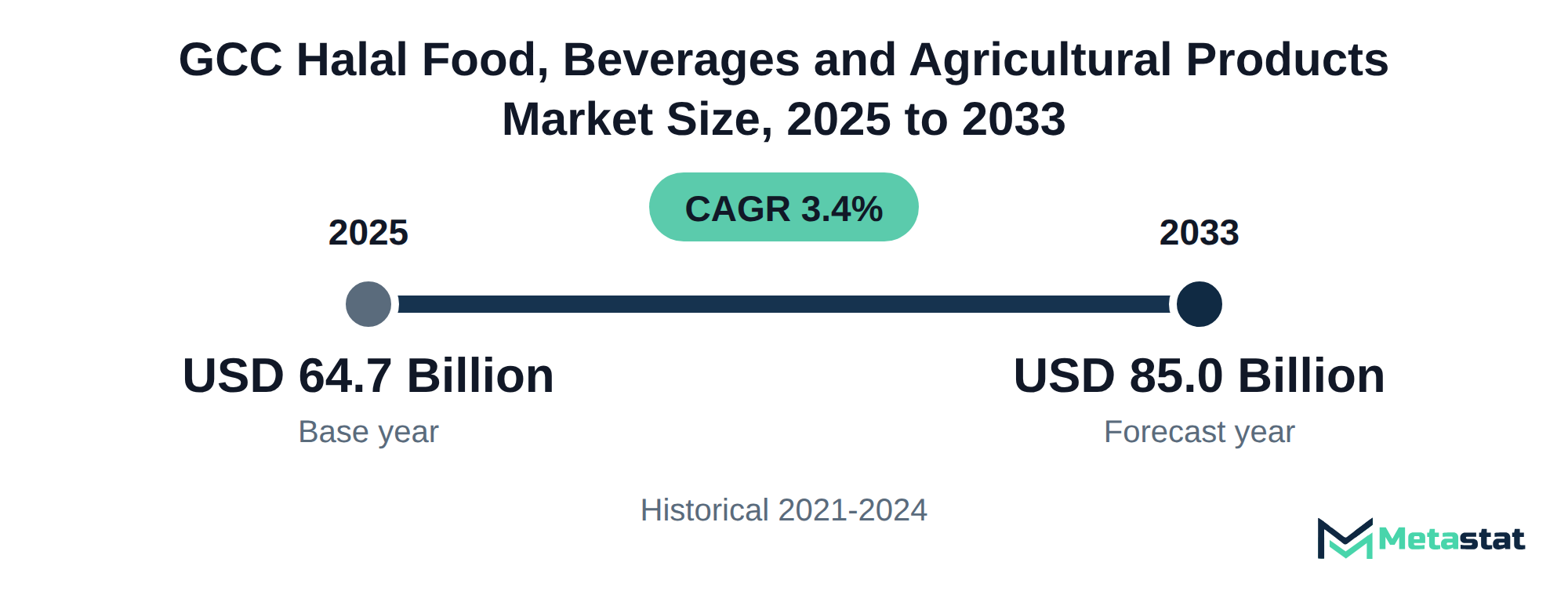
Market Valuation: Valued at $64.7 Billion in 2025, projected to reach $85 Billion by 2033 at a 3.4% CAGR.
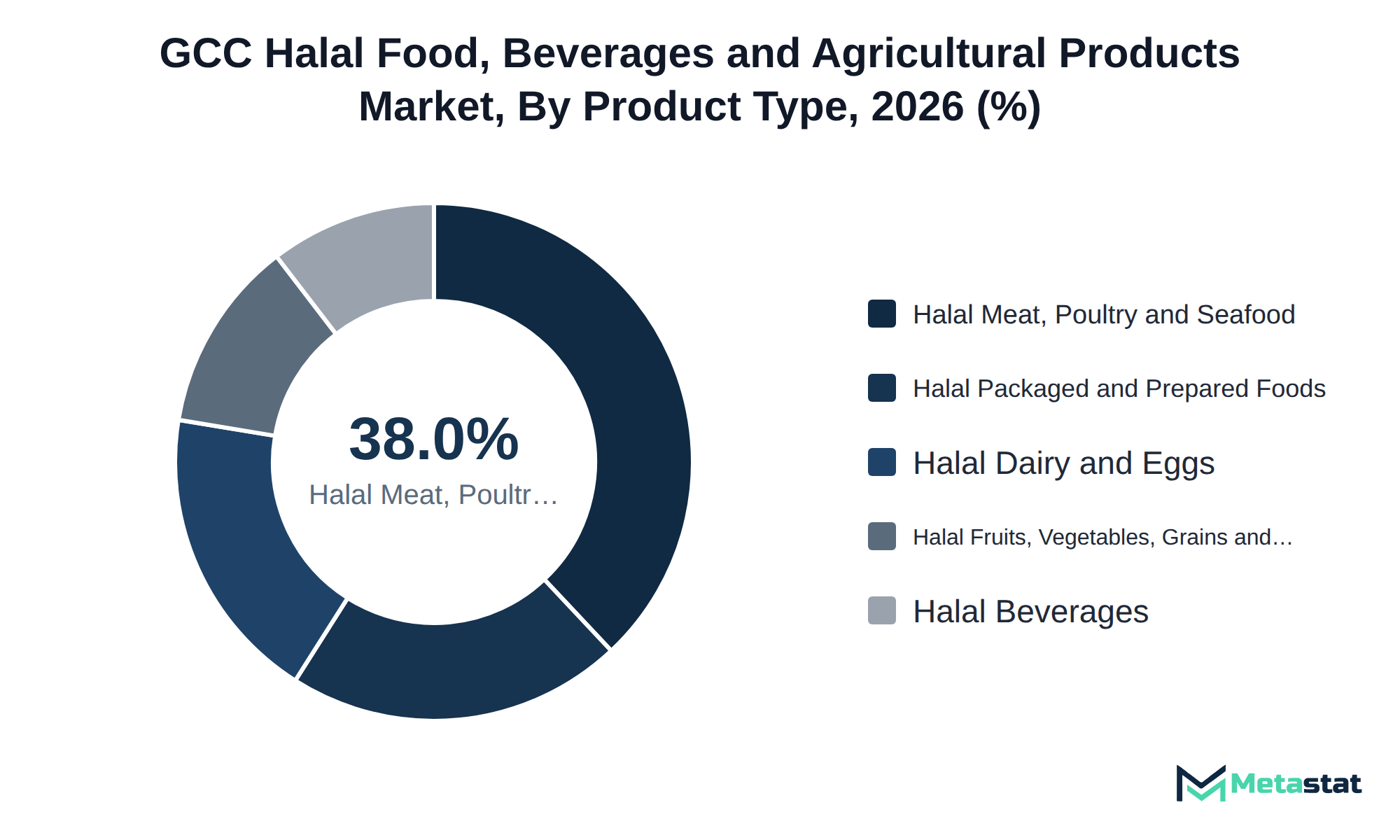
Dominant Segment: Halal meat, poultry, and seafood lead the market, driven by a significant consumer shift towards these protein sources due to health and quality awareness.
Geographic Lead: Saudi Arabia holds the largest market share, supported by cultural preferences for halal consumption and strong domestic production capabilities.
What's Inside: The report provides a comprehensive analysis of market dynamics, competitive landscape, and detailed forecasts from 2026 to 2033 across various segments and distribution channels.
Emerging Trends: The rise of online retail is reshaping consumer purchasing behaviors, with a projected CAGR of 8.5%, highlighting the demand for convenience and diverse halal options.
Consumer Behavior: Households exhibit price sensitivity, prioritizing affordability, which influences purchasing decisions and shapes market dynamics.
Choose Your License
GCC Halal Food, Beverages and Agricultural Products Market
The GCC Halal Food, Beverages and Agricultural Products market was valued at USD 64.7 billion in 2025 and is projected to reach USD 85 billion by 2033, growing at a CAGR of 3.4% over the forecast period.
The GCC Halal Food, Beverages and Agricultural Products market encompasses a range of products that adhere to Islamic dietary laws, including meat, dairy, beverages, and packaged foods. Buyers invest in this market due to increasing awareness of health benefits associated with Halal products and rising demand for ethically sourced foods. The market caters to a diverse consumer base, particularly within the growing Muslim population in the region.
Growth in this market is driven by factors including changing consumer preferences and the expansion of retail channels. Halal meat, poultry, and seafood represent the segment with the highest value, reflecting a significant shift towards these products among consumers. Saudi Arabia holds the largest market share, with a strong cultural inclination towards Halal consumption, positioning it as a key player in regional growth trends.
Innovations in distribution, particularly through online channels, enhance accessibility for consumers, contributing to market expansion. The demand for Halal beverages is rising, indicating a shift in consumer habits. This shift points to continued growth for the market, driven by demographic trends and changing consumer behaviors.
Products within the GCC Halal Food, Beverages and Agricultural Products market cater to consumers seeking compliance with Islamic dietary laws. Buyers invest in these products due to rising health consciousness and an increasing preference for ethically sourced food options. The growing Muslim population, combined with heightened awareness of halal standards, drives spending in this sector.
Saudi Arabia holds the largest share, benefiting from strong domestic production and a significant consumer base prioritizing halal options. The market experiences growth driven by increasing demand for halal-certified products among diverse consumer groups, particularly in foodservice and retail channels.
As the market evolves, the expansion of online retail channels improves accessibility to halal products. This shift supports the overall growth of the GCC Halal Food, Beverages and Agricultural Products market, offering consumers greater convenience and variety. Continued investment in product development and marketing strategies strengthens market presence.
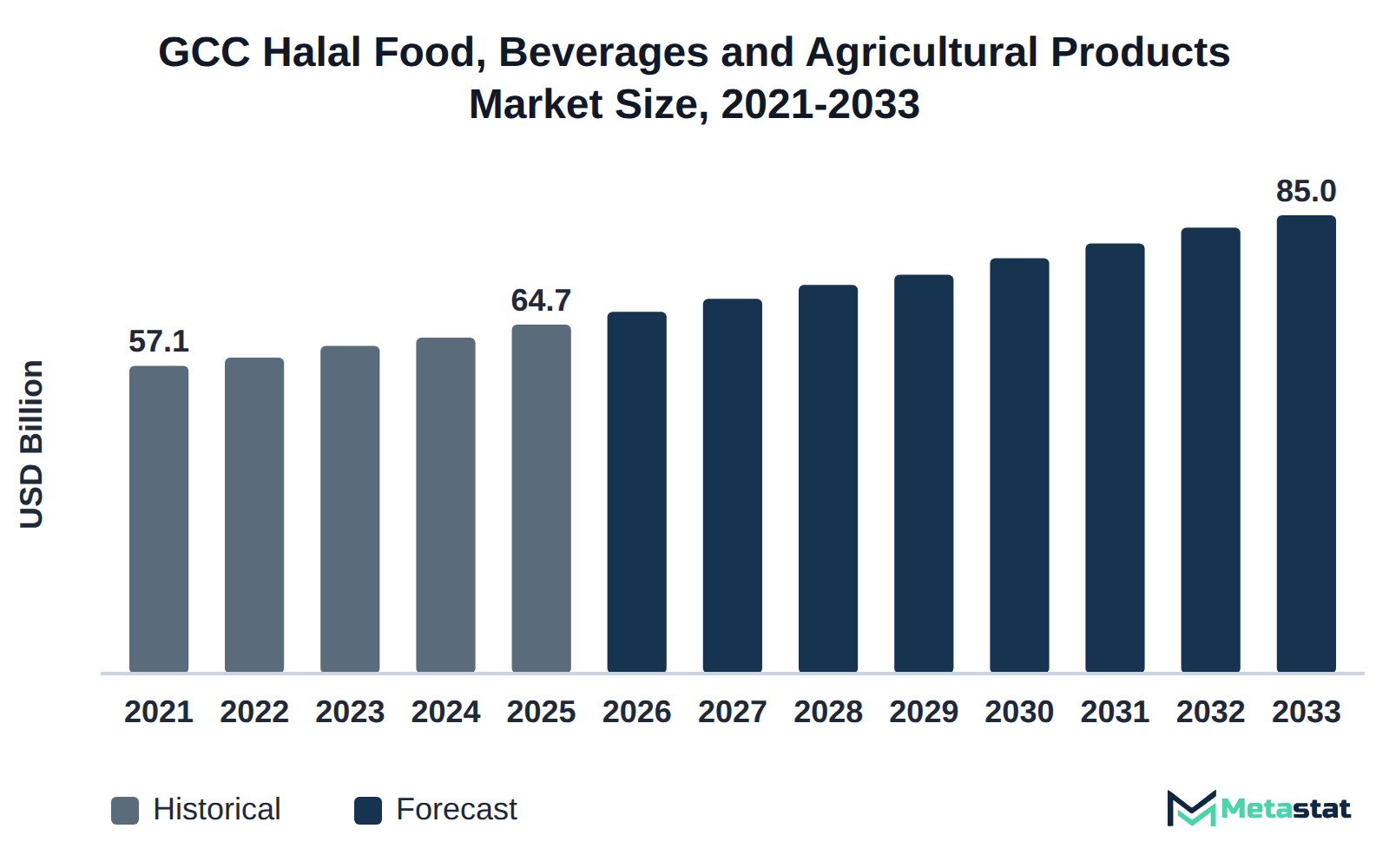
Recent trends show a significant shift towards certified protein sources within the GCC Halal Food, Beverages and Agricultural Products market. Consumer preferences increasingly favor locally sourced halal meat, poultry, and seafood, driven by growing awareness of food quality and sustainability. In 2026, the market anticipates a valuation of USD 25.4 billion for halal meat, poultry, and seafood, projected to expand to USD 30.7 billion by 2033, reflecting a compound annual growth rate of 2.8%.
This shift towards local food production supports the regional economy, creating opportunities for domestic suppliers and producers to meet rising consumer demand. Enhanced supply chain efficiency and reduced transportation costs further reinforce the attractiveness of locally sourced products. In particular, households and foodservice establishments prioritize freshness and local flavor, aligning with broader trends towards health and transparency in food sourcing.
Consequently, establishments focusing on certified local proteins enhance their competitive position within the market. By responding to consumer preferences for high-quality and ethically produced foods, these businesses contribute to the overall growth of the GCC Halal Food, Beverages and Agricultural Products market. This promotes a health-conscious culture that benefits both consumers and producers.
Recent developments in the GCC Halal Food, Beverages and Agricultural Products market highlight a significant transformation in purchasing practices driven by modern grocery, foodservice, and e-commerce platforms. The shift towards online retail has emerged as a dominant force, with an expected compound annual growth rate of 8.5 percent in this segment, reflecting consumer preferences for convenience and accessibility. The influence of this trend shapes how buyers engage with halal products, prompting suppliers to adapt their pricing strategies and contract models to cater to diverse purchasing behaviors.
The significance of supermarkets and hypermarkets in the distribution of halal products continues to be prominent, with revenues projected to rise from USD 25.3 billion in 2026 to USD 30.1 billion by 2033. This growth presents opportunities for suppliers to negotiate long-term contracts with these retail giants, ensuring consistent supply and potentially better pricing models that benefit both parties. The competitive landscape requires suppliers to focus on strategic partnerships, enhancing their capabilities to meet the evolving demands of the market.
Foodservice establishments have further contributed to the dynamics of the purchasing process within the GCC Halal Food, Beverages and Agricultural Products market. With a projected revenue of USD 16.4 billion by 2033, foodservice buyers seek competitive pricing, quality assurance, and reliable supply chains. This environment compels suppliers to refine their payment terms and contract structures, positioning themselves favorably to capture a larger share of the growing market.
Households in the GCC Halal Food, Beverages and Agricultural Products market increasingly prioritize access to fresh produce, dairy, and frozen foods. This trend results from a growing awareness of health and nutrition, prompting consumers to seek higher-quality food options. The demand for Halal Dairy and Eggs is projected to reach USD 15.5 billion by 2033, reflecting a significant growth trajectory driven by local and expatriate populations who prioritize Halal compliance in their diets.
The expansion of dairy offerings, along with an increase in the availability of frozen foods, fortifies food security in the region. Households rely on convenience and longer shelf life provided by frozen products, which cater to busy lifestyles while ensuring nutritional integrity. Keeping fresh and frozen products at safe temperatures also depends on cold chain logistics across the supply route. The Halal Packaged and Prepared Foods segment contributes to this dynamic, with a broad selection of items meeting Halal standards for quality and safety.
This shift reinforces the competitive position of suppliers who align their product lines with evolving consumer preferences. Households seek diverse, nutritious options, and suppliers that expand their offerings of fresh produce and dairy products are likely to capture greater market share. Thus, an emphasis on food security through these product categories presents significant commercial opportunities within the market.
Consumers in the GCC Halal Food, Beverages and Agricultural Products market prioritize product authenticity and certification when selecting halal food items. A significant factor influencing their purchasing decisions includes the credibility of halal certifications, which assures compliance with Islamic dietary laws. In 2023, halal meat, poultry, and seafood segments are projected to experience significant growth, with an expected rise from USD 25.4 billion in 2026 to USD 30.7 billion by 2033, reflecting rising consumer confidence in certified products.
Transparency in sourcing and production processes generates trust among consumers, leading to increased demand for products from recognized suppliers. Buyers actively seek detailed information regarding the origin of ingredients and the methodologies applied in production. With the halal dairy and eggs segment anticipated to reach USD 15.5 billion by 2033, producers focusing on clear communication and strong certification processes stand to capture significant market share. This demand emphasizes a shift towards sourcing practices that align with halal guidelines and consumer expectations for quality and ethical production.
Households increasingly adopt online shopping for halal products, driven by convenience and greater access to diverse options. The rise of e-commerce platforms facilitates easier access to a wider selection of halal foods, beverages, and agricultural products. Consumers prioritize the speed and convenience of online purchasing, leading to a notable increase in expenditures in this area. Online retail within the GCC Halal Food, Beverages and Agricultural Products market is expected to experience a compound annual growth rate of 8.5%. This transformation in consumer purchasing behavior enhances overall market growth and drives competition among suppliers aiming to capture this expanding segment.
Institutional buyers embrace online purchasing options, further enhancing market dynamics. The trend reflects a significant move toward digitalization within the food and beverage sector, influencing inventory management and supplier relationships. Enhanced online platforms streamline purchasing processes, allowing institutional buyers to source products efficiently. This shift towards online retail contributes to a stronger market, increasing competition and innovation across segments.
Advancements in food processing technologies are reshaping the production landscape within the GCC Halal Food, Beverages and Agricultural Products market. Innovations including high-pressure processing and advanced packaging solutions enhance product safety and extend shelf life, aligning with consumer demands for quality and convenience. These technologies facilitate companies in achieving compliance with halal standards, ensuring the integrity of halal certification throughout the supply chain. Food manufacturers, particularly those focused on meat and dairy products, experience significant benefits, including reduced spoilage and increased operational efficiency. Enhanced safety measures in processing align with rising consumer awareness regarding health and quality, driving demand for halal-certified products. This trend significantly influences purchasing decisions among households and foodservice operators, leading to an anticipated increase in market size and revenue. The integration of these advanced technologies positions firms to better meet the evolving expectations of consumers and contributes to the overall growth trajectory of the market.
Price sensitivity among household buyers significantly impacts the adoption of products in this market. Rising food prices and inflation lead many consumers to prioritize affordability over premium options, slowing the uptake of premium halal items. The result includes smaller order sizes and a preference for budget-friendly alternatives, affecting overall market growth. Households increasingly exhibit caution in their purchasing decisions, reflecting a broader trend within the GCC Halal Food, Beverages and Agricultural Products market. This trend poses challenges for suppliers aiming to introduce higher-priced products, with consumer demand gravitating toward more economical offerings. Such dynamics restrict revenue potential for brands focused on premium segments, compelling them to adjust pricing strategies or enhance value propositions to sustain market presence.
Rising material costs pose significant challenges for suppliers in the GCC Halal Food, Beverages and Agricultural Products market. Key inputs including livestock, grains, and dairy products have experienced price increases, impacting profit margins for producers. In response, suppliers focus on strategic sourcing and long-term contracts with farmers and producers, aiming to stabilize prices and mitigate fluctuations. Many companies invest in local sourcing initiatives to reduce reliance on imported goods, thereby decreasing exposure to global market volatility.
Suppliers implement cost-reduction strategies, including operational efficiencies and investments in technology to enhance productivity. Such measures are essential for maintaining competitive pricing while ensuring adherence to quality standards. Suppliers that handle these challenges well position themselves for sustained growth in the market and contribute to a more resilient supply chain aligned with consumer demand for halal-certified products.
The expansion of the online retail segment presents a significant opportunity within the GCC Halal Food, Beverages and Agricultural Products market. With a CAGR of 8.5%, online retail is rapidly gaining traction among consumers seeking convenience and a wider selection of halal products. This growth is driven by increasing smartphone penetration and improved digital payment systems, facilitating efficient purchasing experiences. The rising demand for halal beverages, including ready-to-drink options and functional drinks, caters to health-conscious consumers and younger demographics who prioritize convenience. Retailers focusing on enhancing their online platforms and expanding their halal beverage offerings stand to benefit from this shift. The market is expected to reflect an enhanced emphasis on e-commerce strategies, aligning with evolving consumer preferences. This trend indicates a transformation in how consumers engage with halal products, particularly beverages, further driving the market's growth trajectory in the coming years.
The GCC Halal Food, Beverages and Agricultural Products market is segmented based on Product Type, Distribution Channel, End User, and Region.
This segment serves a diverse consumer base, including households and foodservice providers, seeking compliant protein sources in their diets. An increasing preference for high-quality protein drives growth within this segment, particularly among health-conscious consumers. Compared to other product types, including Halal Dairy and Eggs, which is projected to grow at a CAGR of 3.2%, the Halal Meat, Poultry and Seafood segment experiences a slower growth trajectory. Regulatory factors regarding sourcing and processing further shape this segment, influencing supplier operations and consumer choices. Overall, the segment benefits from rising consumer awareness about halal dietary requirements while facing challenges associated with maintaining affordability and quality.
Halal Dairy and Eggs segment is estimated to reach USD 15.5 billion by 2033, at a CAGR of 3.2% during the forecast period. This segment includes a variety of dairy products, including milk, cheese, and yogurt, alongside eggs, which serve essential sources of nutrition for households and foodservice providers. Rising health consciousness among consumers drives demand for Halal dairy products, highlighting a preference for nutritious and ethically sourced options. Compared to other segments, this sector exhibits a moderate growth rate, supported by the increasing acceptance of Halal dietary practices in diverse culinary offerings. The segment maintains a competitive price point, attracting households and foodservice clients seeking reliable and compliant food options. The GCC Halal Food, Beverages and Agricultural Products market reflects growing awareness of dietary needs, enhancing the appeal of Halal Dairy and Eggs products among various consumer groups.
Halal Packaged and Prepared Foods segment is expected to reach USD 18.6 billion by 2033. This segment includes a variety of ready-to-eat meals, snacks, and packaged foods that comply with halal standards, catering primarily to households and foodservice operations. The increasing demand for convenient meal options among consumers fuels growth in this segment. The adoption of packaged and prepared halal foods aligns with the busy lifestyles of consumers seeking quick and compliant meal solutions. Compared to other segments, Halal Packaged and Prepared Foods experiences a moderate growth rate, with a CAGR of 3.2%. This growth trajectory positions it uniquely, appealing to a broad base of buyers, including food manufacturers and institutional buyers, who require ready-to-use halal products. The GCC Halal Food, Beverages and Agricultural Products market reflects changing consumer preferences toward convenience and compliance with dietary laws within this segment.
Halal Beverages segment is projected to grow at a CAGR of 4% during the forecast period. This segment typically includes drinks that adhere to halal standards, consumed by households and foodservice establishments across the GCC. Rising health consciousness among consumers drives demand for halal beverages, particularly those that are organic or fortified with nutritional benefits. This segment distinguishes itself from others due to its unique focus on beverage offerings, which include juices, non-alcoholic drinks, and functional beverages. Compared to Halal Meat, Poultry and Seafood, which has a CAGR of 2.8%, Halal Beverages displays a stronger growth trajectory. The increasing preference for diverse beverage options has led to a notable expansion of product lines, enhancing market competitiveness and appealing to a broader demographic seeking halal-compliant refreshment options.
Halal Fruits, Vegetables, Grains and Other Agricultural Products encompass a diverse range of food items that adhere to Islamic dietary laws. These products serve various end users, including households and foodservice operators, who seek compliant and high-quality options for their meals. Growing consumer awareness regarding health and nutrition drives demand for fresh and organic produce, positioning this segment as a vital component of dietary preferences within the region. The increasing focus on sustainable agricultural practices enhances the appeal of these products among environmentally conscious consumers. This segment distinguishes itself from others by catering to a wider audience, including institutional buyers who prioritize bulk purchases. The growth trajectory for Halal Fruits, Vegetables, Grains and Other Agricultural Products is projected to align closely with trends across the market, reflecting shifts in consumer preferences toward healthier eating habits.
This distribution channel primarily serves households seeking convenient access to halal products, enabling compliance with Islamic dietary laws. The growth of this segment is driven by consumer preferences for one-stop shopping experiences and the availability of diverse halal options. Compared to other segments, Supermarkets and Hypermarkets experience slower growth, largely due to competitive pricing strategies employed by Traditional Retail, which is expected to reach USD 16 billion by 2033. The online retail segment, with a CAGR of 8.5%, attracts consumers seeking convenience and variety, further influencing the dynamics within the market.
Traditional Retail segment is estimated to reach USD 16 billion by 2033, at a CAGR of 1.9% during the forecast period. This segment is a key channel for distributing halal food, beverages, and agricultural products to households and individual consumers who prefer shopping in brick-and-mortar stores. The growth of this segment is driven by the preference for in-person shopping experiences, where consumers examine products before purchase. Compared to other distribution channels, Traditional Retail experiences slower growth, attributed to increasing competition from online retail, which achieves a CAGR of 8.5%. While Traditional Retail remains a vital sales channel, the dynamic shift towards e-commerce affects its market share, influencing overall revenue within the GCC halal food, beverages, and agricultural products market.
Foodservice segment is expected to reach USD 16.4 billion by 2033. This segment caters to restaurants, cafés, and catering services, focusing on providing convenient and diverse food options to consumers. Demand for halal food in foodservice establishments increases due to a growing population of health-conscious and diverse eaters seeking halal-certified meals. The segment exhibits a higher growth rate compared to traditional retail channels, with a CAGR of 4.4% through 2033, reflecting its rising popularity. The increasing consumer inclination towards dining out and seeking ready-to-eat meals supports this growth. In contrast to other distribution channels, foodservice offers unique pricing dynamics, often reflecting premium pricing due to the value-added services provided. This differentiation enhances the competitiveness of foodservice within the GCC halal food, beverages and agricultural products market.
Online Retail segment is projected to grow at a CAGR of 8.5% during the forecast period. This segment serves households seeking convenience and variety in their halal food choices. Increased internet penetration and mobile accessibility drive growth in this area, enabling consumers to purchase products from a wider range of suppliers. Unlike traditional retail channels, the online retail segment lets consumers compare prices and access products that may not be available locally, enhancing overall purchasing power. This segment's faster growth contrasts with traditional retail's slower expansion, which is projected to reach USD 16 billion by 2033. The growing demand for halal products in the GCC Halal Food, Beverages and Agricultural Products market highlights the significant potential of online shopping platforms in reshaping consumer habits and preferences.
Specialty Stores serve a niche market for halal products, providing consumers with tailored options that cater to specific dietary needs. This segment attracts health-conscious buyers who prioritize quality and variety in halal food, beverages, and agricultural products. The increasing demand for specialty items drives growth, particularly among urban populations seeking authentic and diverse products. Differentiating factors include higher prices relative to conventional retail channels, reflecting the curated nature of offerings. Specialty Stores allow customers to discover unique products, enhancing the overall shopping experience. The GCC Halal Food, Beverages and Agricultural Products market is characterized by a growing trend toward personalized shopping experiences, particularly within this segment, which stands out for its unique product selection.
Convenience Stores and Direct-to-Consumer channels form part of the distribution landscape for halal products, serving consumers who want immediate access to food and beverage options. This segment primarily serves households and individual buyers who prioritize convenience and quick purchasing experiences. The growing urban population and changing consumer preferences significantly influence the demand for convenience stores, enabling faster shopping experiences. This segment differentiates itself from traditional retail by offering more accessible purchasing options, aligning with consumers' busy lifestyles. While other distribution channels, including supermarkets and hypermarkets, focus on bulk purchasing, convenience stores emphasize flexibility and immediate availability, appealing to a unique market segment. Shifts in consumer behavior towards direct-to-consumer purchases further enhance this segment's relevance, driven by the desire for personalized shopping experiences and improved access to specialty halal products.
Valued at USD 31.5 billion in 2026, this segment is projected to reach USD 38.3 billion by 2033, reflecting a CAGR of 2.8% during the forecast period. Households primarily purchase halal food products for daily consumption, necessitating compliance with Islamic dietary laws. Demand for these products is driven by increasing awareness of health and wellness, prompting households to seek nutritious options. This segment exhibits slower growth compared to others, including Foodservice, which has a CAGR of 4.4%. The pricing dynamics differ; households prioritize affordability, affecting purchasing decisions. Consequently, suppliers focusing on cost-effective solutions and value-added products position themselves competitively. The GCC Halal Food, Beverages and Agricultural Products market evolves, shaped by consumer preferences and dietary trends influencing household purchasing behavior.
Foodservice segment is estimated to reach USD 23.6 billion by 2033, at a CAGR of 4.4% during the forecast period. This segment caters to restaurants, cafes, and catering services, providing halal-certified food and beverages to meet the dietary requirements of Muslim consumers. The increasing dining out trend and growing number of halal food establishments significantly drive demand within this segment. Unlike other end-user segments, foodservice experiences faster growth due to the rise in consumer preference for dining experiences that adhere to Islamic dietary laws. The market faces competition from traditional retail channels, which offer different pricing strategies; however, the foodservice sector benefits from higher consumer spending, resulting in a unique positioning within the market.
Institutional Buyers segment is expected to reach USD 9.1 billion by 2033. This segment primarily includes large-scale purchasers including hotels, restaurants, caterers, and institutional food service providers that require consistent and reliable supplies of halal food and beverages. Demand from this segment is driven by the increasing focus on food safety and quality standards, which compel these buyers to ensure compliance with halal requirements. Growth in this segment occurs at a CAGR of 4.4%, indicating a stronger pace compared to others within the market. Institutional Buyers typically prioritize bulk purchasing, leading to lower per-unit costs compared to retail-focused segments. With more institutional buyers adopting halal practices, the GCC Halal Food, Beverages and Agricultural Products market is expected to experience sustained growth, driven by rising awareness of halal dietary guidelines across various sectors.
Food Manufacturers segment is projected to grow at a CAGR of 4.1% during the forecast period. This segment encompasses organizations that process, package, and distribute halal food products for consumption, serving both retail and foodservice sectors. Rising consumer awareness regarding dietary preferences and health concerns drives demand for halal-certified food products, thus fueling growth. Increasing investments in food technology enhance product offerings, particularly in terms of quality and shelf life. Unlike households that show a CAGR of 2.8%, the Food Manufacturers segment exhibits a faster expansion rate, indicating higher demand from foodservice operators and retailers seeking to diversify their halal product lines. The GCC Halal Food, Beverages and Agricultural Products market benefits significantly from this dynamic, with food manufacturers adapting to evolving consumer trends, leading to an enriched product portfolio and competitive positioning.
Export and Re-Export Trade involves the movement of halal products across international borders, serving various markets that adhere to Islamic dietary laws. This segment connects global producers with consumers and distributors, including wholesalers and retailers that seek halal-certified products. Moving halal goods across borders also relies on freight forwarding. Demand for halal products in overseas markets drives this segment, particularly with increasing awareness of halal standards among diverse consumer bases. The segment relies on regulatory compliance and market access, which influence pricing strategies. Unlike other end-user categories, Export and Re-Export Trade experiences unique challenges due to varying halal certification requirements in different countries, distinguishing it from local household and foodservice segments. In the GCC Halal Food, Beverages and Agricultural Products market, this segment contributes significantly to expanding the market’s reach and scalability beyond regional boundaries.
Valued at USD 30.6 billion in 2026, this segment is projected to reach USD 39.2 billion by 2033, at a CAGR of 3.6% during the forecast period. Saudi Arabia's halal food, beverages and agricultural products play a significant role in satisfying the dietary requirements of the population, particularly among Muslim households and foodservice establishments. The growing awareness of halal dietary practices and increasing consumer preference for halal-certified products drive demand within this segment. Compared to other regions, Saudi Arabia experiences stronger growth due to its large population and cultural emphasis on halal consumption. This segment's growth outpaces that of other product types, influenced by rising disposable incomes and a shift towards premium products among consumers seeking quality and compliance with Islamic laws. The dynamics in Saudi Arabia enhance overall market performance in the GCC Halal Food, Beverages and Agricultural Products market.
United Arab Emirates segment is estimated to reach USD 21.2 billion by 2033, at a CAGR of 3.7% during the forecast period. This segment primarily serves households and foodservice operations, providing essential halal food and beverage options that comply with Islamic dietary laws. Growing consumer awareness regarding health and nutrition drives demand for halal-certified products. The robust foodservice sector in the United Arab Emirates further supports this growth, particularly in hospitality and dining establishments that cater to a diverse clientele. Compared to other segments, including Halal Dairy and Eggs, which achieves a CAGR of 3.2%, the United Arab Emirates segment displays a slightly faster growth rate. This dynamic sector thrives on a combination of rising disposable incomes and increased consumer preference for halal options, ultimately influencing the market significantly.
Qatar segment is expected to reach USD 8.4 billion by 2033. This segment serves households and foodservice establishments, meeting the demand for halal products in the region. A growing awareness of dietary practices among consumers drives this segment, alongside an increasing population contributing to higher consumption rates. Compared to neighboring segments, Qatar's growth remains moderate, with a distinct focus on quality and authenticity in halal offerings. This emphasis on product integrity differentiates Qatar from other regions where rapid expansions in distribution channels and price competitiveness dominate market dynamics. The GCC Halal Food, Beverages and Agricultural Products market reflects strong potential in Qatar, driven by local consumer preferences and the cultural significance surrounding halal consumption.
Kuwait is projected to grow at a CAGR of 2.6% during the forecast period. This segment caters primarily to households and foodservice providers, addressing the demand for halal-certified food and beverage products. Increasing awareness of dietary regulations and cultural preferences significantly influences purchasing decisions. Local consumers seek high-quality halal products, with national identity and religious observance driving market expansion. Compared to other segments, the Kuwait segment exhibits slower growth relative to neighboring regions including Saudi Arabia and the United Arab Emirates, where CAGRs are higher. The market is characterized by a strong focus on local production, which helps maintain price competitiveness. The market continues to flourish, supported by evolving consumer preferences and regulatory frameworks that emphasize halal compliance.
Oman represents a growing market for Halal Food, Beverages and Agricultural Products, with significant consumption patterns among households and foodservice providers. This segment primarily serves local consumers seeking halal-certified food products that comply with Islamic dietary laws. Increasing awareness of health and wellness drives demand, resulting in a shift towards halal food products among various buyer groups. Distinct cultural and religious factors in Oman influence purchasing decisions, differentiating this segment from others in the region. The market faces challenges including competition from non-halal products and pricing pressures. Nevertheless, the GCC Halal Food, Beverages and Agricultural Products market is expected to evolve, adapting to the preferences of Omani consumers and the broader regional trends.
Bahrain's segment contributes to the GCC Halal Food, Beverages and Agricultural Products market. It caters primarily to households and foodservice providers, meeting the growing demand for halal-certified products. One driving force behind this segment involves the increasing awareness and adherence to halal dietary laws among consumers. This growing consciousness results in a consistent demand for halal food options that comply with Islamic principles. Compared to other segments, Bahrain's market exhibits slower growth rates. The focus on traditional retail channels presents unique opportunities for local suppliers to connect directly with consumers, differentiating this segment from more rapidly expanding online retail options that dominate in larger markets. Cultural factors and purchasing habits significantly shape the market dynamics in Bahrain.
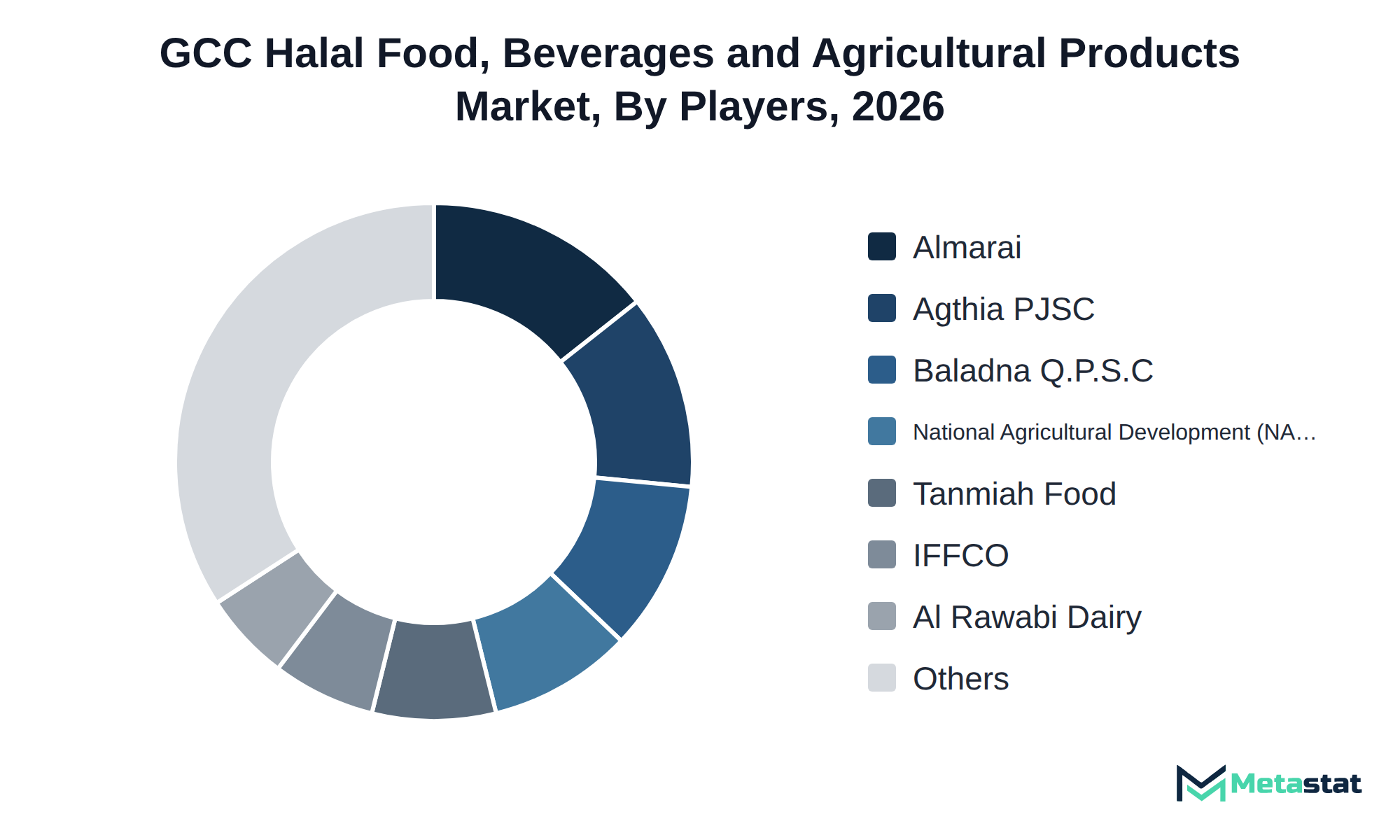
Companies within the GCC Halal Food, Beverages and Agricultural Products market employ various strategies to differentiate themselves. Key players focus on product offerings, distribution channels, and target audiences to capture market share. For instance, Almarai Company emphasizes its extensive dairy product line, while Tanmiah Food Company highlights its poultry and meat offerings. Companies like Agthia Group PJSC and IFFCO Group use their presence in supermarkets and online retail to improve accessibility for consumers.
Buyers prioritize several factors when choosing products, including price, certification, and customization. Quality certification, particularly halal compliance, influences consumer decision-making. Al Rawabi Dairy Company and Al Islami Foods focus on maintaining high standards in certification to attract health-conscious consumers. Meanwhile, National Food Products Company (NFPC) and Bahrain Flour Mills Company B.S.C. focus on competitive pricing and broadening their product range to meet diverse customer needs within the market.
Achieving this growth relies on several key developments within the GCC Halal Food, Beverages and Agricultural Products market. First, increasing consumer demand for Halal meat, poultry, and seafood will drive market expansion in the region, particularly in Saudi Arabia, where demand growth is anticipated at a CAGR of 3.6%. Second, the expansion of online retail channels will enhance accessibility and convenience for consumers, significantly impacting purchasing behaviors across various demographics. Third, the rise in health-conscious consumers is expected to boost the Halal dairy and eggs segment, targeting USD 15.5 billion by 2033.
Conversely, potential risks, including fluctuations in raw material prices and supply chain disruptions, pose significant challenges to achieving the market's growth targets. Instability in agricultural production or geopolitical factors could hinder the consistent supply of Halal products, affecting overall market stability. Continuous monitoring of these trends and potential risks remains vital for stakeholders engaging with the GCC Halal Food, Beverages and Agricultural Products market.
By Product Type: Halal Meat, Poultry and Seafood, Halal Dairy and Eggs, Halal Packaged and Prepared Foods, Halal Beverages, Halal Fruits, Vegetables, Grains and Other Agricultural Products
By Distribution Channel: Supermarkets and Hypermarkets, Traditional Retail, Foodservice, Online Retail, Specialty Stores, Others (Convenience Stores and Direct-to-Consumer)
By End User: Households, Foodservice, Institutional Buyers, Food Manufacturers, Export and Re-Export Trade
By Region: Saudi Arabia, United Arab Emirates, Qatar, Kuwait, Oman, Bahrain
The report strategically identifies and profiles the key market players and analyses their core competencies in each sub-segment of the Halal Food, Beverages and Agricultural Products market.
Report Attributes | Details |
Study Period | 2021-2033 |
Base Year | 2025 |
Estimated Year | 2026 |
Forecast Period | 2026-2033 |
Historical Period | 2021-2025 |
Growth Rate | CAGR 3.4% from 2026 to 2033 |
Revenue Unit | USD billion |
Segmentation | By Product Type, Distribution Channel, End User, Region, and Region |
Find answers to common questions about this report
The Halal Food, Beverages and Agricultural Products market size was valued at USD 64.7 billion in 2025.
The market is projected to grow at a CAGR of 3.4% during the forecast period from 2026 to 2033.
Halal Meat, Poultry and Seafood leads the market with a projected value of USD 30.7 billion by 2033. This segment surpasses others in terms of revenue generation within the overall market.
Rising online shopping adoption for halal products drives market growth, fueled by convenience and access to diverse options. advancements in food processing technologies enhance product safety and quality, aligning with consumer demands for halal-certified products.
Price sensitivity among household buyers impacts product adoption, as rising food prices lead consumers to prioritize affordability over premium options. rising material costs challenge suppliers, affecting profit margins and compelling them to implement cost-reduction strategies.
The expansion of online retail within the GCC Halal Food, Beverages and Agricultural Products market is driven by a compound annual growth rate of 8.5%, reflecting consumer demand for convenience and diverse product selections. Increasing smartphone penetration and improved digital payment systems enhance purchasing experiences, promoting market adoption.
The Halal Food, Beverages and Agricultural Products market is estimated to reach a valuation of USD 85 billion by 2033.
Key players operating in the Halal Food, Beverages and Agricultural Products market include Almarai Company, Agthia Group PJSC, Baladna Q.P.S.C., National Agricultural Development Company (NADEC), Tanmiah Food Company, IFFCO Group, and Al Rawabi Dairy Company.
The Halal Beverages segment is projected to experience a compound annual growth rate of 4% during the forecast period.
Online Retail exhibits the highest growth in the Halal market, with a compound annual growth rate of 8.5%.
The analysts below cover Food and Beverages research at Metastat Insights.
LEAD ANALYST
Utkarsh Khirodkar is a Lead Market Research Analyst at MetaStat Insight, specializing in market intelligence, technology sector assessments, and competitive strategy.

LEAD PRINCIPAL ANALYST, PHARMA AND HEALTHCARE
Food and Beverages · Healthcare · Healthcare IT · Medical Devices
Ajay Devgire is the Lead Healthcare Analyst at MetaStat Insight, leading strategic research and market intelligence initiatives across the global healthcare domain.

SENIOR RESEARCH ANALYST
Biotechnology · Food and Beverages · Medical Devices · Packaging
Snehal Pasalkar is a Research Analyst at MetaStat Insight, operating at the intersection of life sciences research, competitive strategy, and market intelligence.
Tracking maintenance cycle demand for secondary flight display units and terrain collision avoidance systems across regional jet fleets involves complex aftermarket dynamics. MetaStat Insight provided practical analysis separating airline retrofit programs from OEM forward-fit production schedules in North America and Southeast Asia. The supplier matrix highlighted component obsolescence timelines without resorting to vague generalizations. The dataset served as a dependable reference during our annual program review meetings.
Evaluating secondary resin quality across post-consumer packaging streams requires reliable technical segmentation. MetaStat Insight delivered an objective assessment that distinguished between extrusion-grade flake pricing and optical sorting throughput limitations across Western Europe. The competitive positioning breakdown for licensed depolymerization technology providers answered several questions during our feedstock feasibility audit. Their team clarified regional trade restrictions on mixed plastic scrap quickly when our team submitted follow-up requests.
Evaluating sovereign cloud deployments for core banking platforms demands a clear view of data residency regulations and migration exit strategies. MetaStat Insight delivered an exhaustive review of regional latency tolerances, mainframe decommission milestones, and third-party vendor concentration risk. The regulatory compliance mapping across European and Asian financial jurisdictions gave our team a dependable baseline for multi-cloud infrastructure discussions.
Explore related market intelligence reports worth reading alongside this one.