
LEAD ANALYST
Utkarsh Khirodkar is a Lead Market Research Analyst at MetaStat Insight, specializing in market intelligence, technology sector assessments, and competitive strategy.

Ready to Drink (RTD) Sports Nutrition Market Size, Share, By Product Type (RTD Protein Shakes, RTD Sports Hydration Drinks, RTD Electrolyte Drinks, RTD Energy, Pre-Workout Drinks, RTD Meal Replacement Drinks, RTD Recovery Drinks, and Others), By Protein Base (Dairy-Based, Plant-Based, and Mixed Protein Systems), By Functional Positioning (Muscle Building, Strength Support, Endurance Fueling, Hydration, Replenishment, Energy, Focus, Recovery, Muscle Repair, General Fitness, Wellness, and Others), By Distribution Channel (Supermarkets, Hypermarkets, Convenience Stores, Online Retail, E‑Commerce, Specialty Health, Fitness Stores, Pharmacies, and Drugstores), Industry Analysis, Growth, Trends, and Forecast, 2026-2033
Report ID
MSI-4588
Published
April, 2026
Pages
320 Pages
Format
Report Details
Choose Your License
RTD (Ready to Drink) Sports Nutrition Market
The Global RTD (Ready to Drink) Sports Nutrition market size is valued at USD 39.1 billion in 2025 and projected to grow at a CAGR of 6.6% during the forecast period, reaching USD 65.1 billion by 2033.
Global RTD (Ready to Drink) Sports Nutrition market valued at USD 39.1 billion in 2025, growing at a CAGR of 6.6% through 2033, with potential to exceed USD 65.1 billion.
North America holds 40.4% in 2025 with US leading the market share.
RTD Protein Shakes segment accounted for a 12.6% market share in 2025.
Key trends propelling growth include convenience-first consumption across gyms, workplaces, travel, and on-the-go routines, alongside expanded functional beverage innovation across protein, hydration, energy, and recovery positioning.
Opportunities include Premium RTD innovation in high-protein, low-sugar, clean-label, and plant-forward formulations across mainstream retail and fitness channels
Key insight: Convenience-driven nutrition consumption and lifestyle fitness trends position RTD sports nutrition drinks for steady global expansion despite pricing and formulation challenges.
The Global RTD Ready-to-Drink Sports Nutrition market is evolving beyond convenience and performance positioning into a category shaped by cultural relevance, behavioral science, and format-led innovation. Over the forecast period, RTD formulations are increasingly integrated into daily routines linked to mental focus, hydration habits, recovery windows, and lifestyle identity. Brands are tailoring products to distinct use moments such as early-morning training, long workdays, travel recovery, and evening wind-down, shifting the category from functional intake to contextual usage.
Formulation strategy is trending toward cleaner sensory profiles and ingredient transparency, with product roadmaps prioritizing digestibility and balanced flavor structure over aggressive nutrient stacking. Category innovation is increasingly intersecting with food science, balancing protein, electrolytes, adaptogens, and natural stimulants to support sustained use rather than short-duration intensity. Packaging is also undergoing refinement through lightweight, recyclable formats and clearer labeling that supports purchase decisions across retail and on-the-go channels.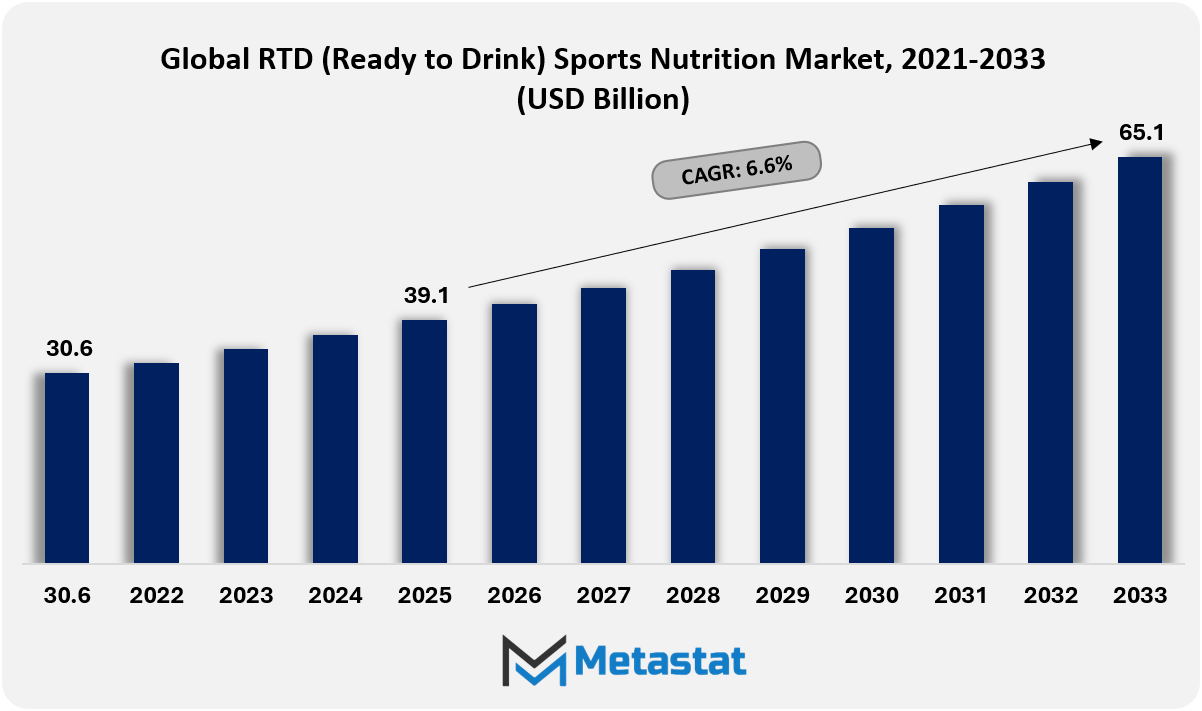
Convenience-first consumption across gyms, workplaces, travel, and on-the-go routines
Convenience-first consumption will strengthen long-term purchase frequency in the Global RTD Ready-to-Drink Sports Nutrition market. Availability across gyms, workplaces, airports, and transit hubs supports disciplined nutrition habits. Time-constrained lifestyles favor single-serve formats, supporting portion control and immediate nutrient access without preparation or cleanup.
Expansion of functional beverage innovation across protein, hydration, energy, and recovery positioning
Functional beverage innovation will expand across protein delivery, hydration balance, sustained energy, and post-workout recovery. Product development is prioritizing targeted outcomes supported by science-backed ingredients. Future portfolios will emphasize condition-specific benefits, enabling clearer consumer choice and strengthening brand differentiation across competitive performance nutrition ecosystems.
Higher unit economics versus powders and concentrates, impacting routine daily adoption
Higher unit economics compared with powders and concentrates will constrain repeat daily adoption for price-sensitive consumers. Cost structures tied to packaging, logistics, and cold-chain requirements pressure margins. Long-term expansion relies on operational efficiency gains, scale-driven cost moderation, and value-led pack strategies that support repeat consumption.
Shelf-stability, taste, and ingredient compatibility constraints for high-protein and multi-functional formulations
Shelf-stability, taste control, and ingredient compatibility constraints complicate formulation for high-protein and multi-functional beverages. Protein degradation, flavor fatigue, and texture instability require ongoing R&D investment. Advances in processing and preservation remain central for maintaining product integrity across extended distribution cycles.
Premium RTD innovation in high-protein, low-sugar, clean-label, and plant-forward formulations across mainstream retail and fitness channels
Premium innovation will accelerate across high-protein, low-sugar, clean-label, and plant-forward formulations within the Global RTD Ready-to-Drink Sports Nutrition market. Retail expansion paired with gym and studio partnerships will raise accessibility. Forward-looking buyers reward transparency, ingredient simplicity, and performance credibility aligned with wellness-oriented purchase behavior.
The Global RTD Ready-to-Drink Sports Nutrition market is segmented by Product Type, Protein Base, Functional Positioning, and Distribution Channel.
RTD Protein Shakes segment is estimated at USD 5.3 billion in 2026 and is projected to reach USD 8.7 billion by 2033, at a CAGR of 7.5% during the forecast period.
RTD protein shakes will gain momentum through increased strength training participation and a structured fitness routine. The formulations will focus on a balanced amino acid profile, stepped forward digestibility, and managed sugar stages. Future services will emphasize constant nutrients, easy element sourcing, and texture refinement while assisting muscle growth expectations without compromising convenience or shelf balance.
RTD Sports Hydration Drinks segment is estimated at USD 18.3 billion in 2026 and is projected to reach USD 27.3 billion by 2033, at a CAGR of 5.8% during the forecast period.
RTD sports hydration drinks will see broader adoption supported by rising awareness of fluid balance during physical activity. Product development will prioritize mineral balance, fewer artificial additives, and moderate flavor profiles. Forward outlook reflects recreational sports participation, workplace wellness programs, and climate-linked hydration awareness among urban consumers.
RTD Electrolyte Drinks segment is estimated at USD 6.4 billion in 2026 and is projected to reach USD 10.5 billion by 2033, at a CAGR of 7.4% during the forecast period.
RTD electrolyte liquids will expand through performance-targeted hydration wishes associated with endurance sports. Sodium, potassium, and magnesium optimization will remain crucial. Forward-looking manufacturers will refine absorption performance, natural taste sourcing, and coffee-calorie positioning, helping hydration desires at some point of extended bodily exertion and excessive-temperature environments.
RTD Energy and Pre-Workout Drinks segment is estimated at USD 7.4 billion in 2026 and is projected to reach USD 11.8 billion by 2033, at a CAGR of 6.9% during the forecast period.
RTD energy and pre-workout drinks will expand to meet needs for immediate stimulation and mental readiness. Formulation will emphasize controlled caffeine delivery, botanical extracts, and functional synergy. Product positioning will align with clean-energy narratives, reducing artificial stimulants while retaining performance-activation appeal.
Others (RTD Meal Replacement Drinks, RTD Recovery Drinks) segment is estimated at USD 4.3 billion in 2026 and is projected to reach USD 6.9 billion by 2033, at a CAGR of 6.9% during the forecast period.
Other RTD formats, including meal replacement and recovery beverages, will expand supported by time-constrained routines and post-activity recovery focus. Balanced macronutrient profiles and micronutrient fortification support nutritional completeness. Market evolution favors products addressing satiety, muscle repair, and metabolic balance within portable consumption formats.
Dairy-Based segment is projected to reach USD 37.2 billion by 2033, at a CAGR of 5.7% during the forecast period.
Dairy-based protein drinks will maintain relevance through mounted purchaser agreement and complete protein composition. Advances in lactose management, taste refinement, and texture optimization will support broader popularity. Future innovation will align dairy vitamins with digestive comfort expectations and premium quality positioning.
Plant-Based segment is projected to reach USD 19.2 billion by 2033, at a CAGR of 8.5% during the forecast period.
Plant-based protein beverages will register increased uptake supported by dietary shifts and sustainability priorities. Blended plant sources improve amino acid balance and mouthfeel. Product pipelines will emphasize allergen-friendly formulations, natural sweetness management, and responsible sourcing narratives.
Mixed Protein Systems segment is projected to reach USD 8.7 billion by 2033, at a CAGR of 6.7% during the forecast period.
Mixed protein systems will gain traction supported by complementary digestion rates and nutritional balance. Combining dairy and plant proteins enhances functional versatility. Product strategies will emphasize performance consistency, texture stability, and broader nutrition coverage aligned with varied training intensities.
Muscle Building and Strength Support segment is projected to reach USD 15.6 billion by 2033.
Muscle building and power aid positioning will stay critical via the resistance training boom. Products will highlight protein density, leucine content, and anabolic help. Future verbal exchange will focus on measurable performance effects and structured nutrient planning compatibility.
Endurance Fueling segment is projected to reach USD 11.9 billion by 2033.
Endurance fueling beverages will expand via long-duration sports participation. Carbohydrate performance, electrolyte balance, and power sustainability will shape system selections. Future demand will replicate the marathon tradition boom, cycling adoption, and dependent patience education packages.
Hydration and Replenishment segment is projected to reach USD 17.9 billion by 2033.
Hydration and replenishment positioning will benefit from daily wellness integration. Functional hydration answers will address fluid loss recovery and mineral balance. Market progression will aid ordinary consumption events past in-depth athletic use.
Energy and Focus segment is projected to reach USD 12.9 billion by 2033.
Energy and consciousness drinks will evolve through cognitive performance awareness. Ingredients assisting alertness and attention will gain significance. Future innovation will stabilize stimulation with nutritional duty, aligning with productivity-driven lifestyles.
Others (Recovery and Muscle Repair, General Fitness and Wellness) segment is projected to reach USD 6.9 billion by 2033.
Other purposeful categories addressing recuperation, muscle restoration, and well-being will expand progressively. Anti-inflammatory additives, protein blends, and micronutrient support will outline offerings. Market maturity will inspire holistic health alignment, past performance peaks.
Supermarkets/Hypermarkets segment is projected to grow at a CAGR of 5.6% during the forecast period.
Supermarkets and hypermarkets will maintain significance via volume accessibility and product visibility. Shelf placement techniques and private-label expansion will shape competition. Future growth will depend upon category education and top-class segmentation inside mass retail environments.
Convenience Stores segment is projected to grow at a CAGR of 6.3% during the forecast period.
Convenience stores will help impulse-pushed consumption connected with mobility and time efficiency. Compact packaging and on-the-spot use positioning will fortify relevance. Expansion will comply with urban commuting styles and prolonged working hours.
Online Retail / E‑Commerce segment is projected to grow at a CAGR of 8.7% during the forecast period.
Online retail channels will accelerate growth through subscription fashions and product personalization. Digital systems will enable ingredient transparency, customer training, and direct brand engagement. Future dominance will replicate shopping convenience and wider assortment availability.
Specialty Health & Fitness Stores segment is projected to grow at a CAGR of 6.5% during the forecast period.
Specialty health and fitness stores will serve informed buyers seeking performance-specific solutions. Staff guidance and curated assortments support premium positioning. Market evolution will favor experiential retail and expert-led recommendations.
Pharmacies and Drugstores segment is projected to grow at a CAGR of 6.2% during the forecast period.
Pharmacies and drugstores will gain stronger credibility through health-oriented placement. Functional validation and controlled presentation will appeal to well-being-targeted shoppers. Future contributions will grow through preventive health recognition and everyday vitamins integration.
Based on geography, the Global RTD (Ready to Drink) Sports Nutrition market is divided into North America, Europe, Asia-Pacific, South America, Middle East, and Africa.
North America RTD (Ready to Drink) Sports Nutrition Market is set to expand at a CAGR of 6.6% within the forecast period, reaching a market size (TAM) of USD 24.7 billion by the end of 2033.
In North America, rising gym participation and endurance sports culture are supporting steady uptake of convenient RTD sports nutrition products.
In North America, strong retail penetration across supermarkets, convenience stores, and online channels is improving visibility and repeat purchase behavior in RTD sports nutrition.
In Asia Pacific, expanding urban populations and rising fitness awareness are opening strong growth potential for RTD sports nutrition.
In Asia Pacific, rapid expansion of e-commerce platforms and digital fitness influencers is strengthening discovery and adoption of RTD sports nutrition across younger buyer cohorts.
Across the Middle East, Africa, and South America, the RTD sports Nutrition Market market is gaining gradual traction supported by enhancing fitness awareness, growing kids' demographics, and growing access to fashionable retail formats.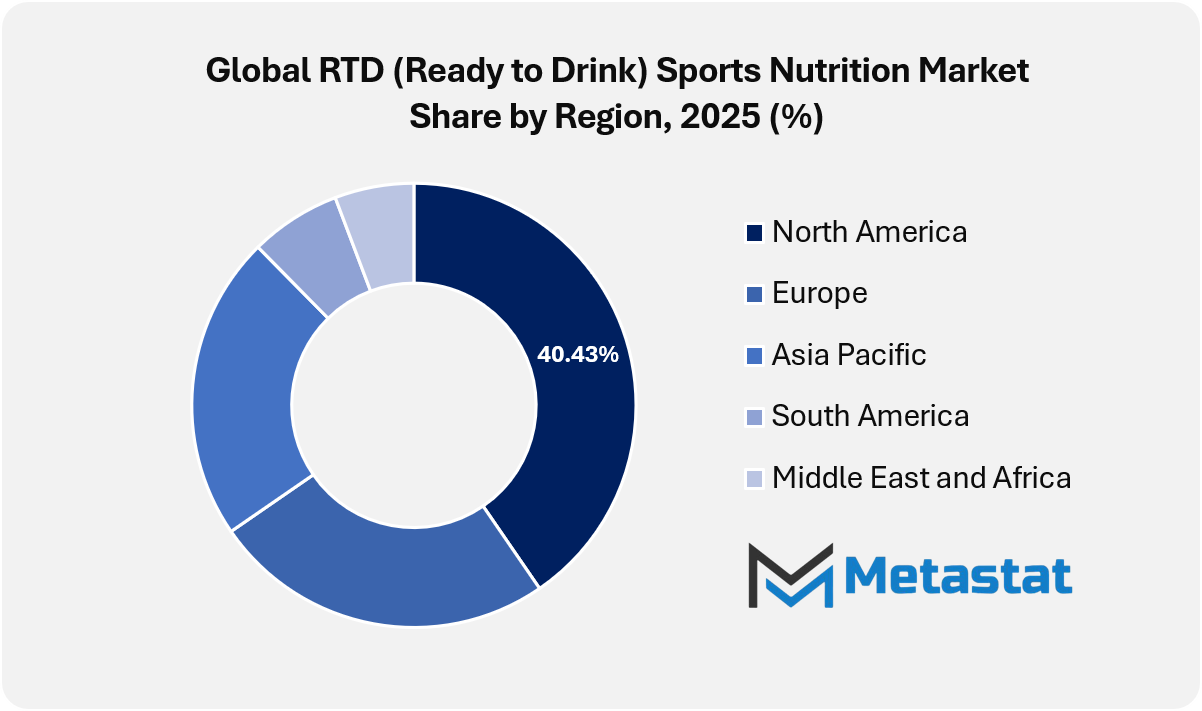
The Global RTD Ready-to-Drink Sports Nutrition market continues to gain steady interest as consumers seek convenient options aligned with fitness goals, active lifestyles, and everyday energy needs. Category adoption now extends beyond professional athletes, with broad uptake among gym-goers, busy professionals, and wellness-focused consumers. RTD formats reduce preparation time and integrate into daily routines, supporting steady volume across urban and semi-urban demand centers. The market displays a shift toward practical liquids that integrate hydration, protein, electrolytes, and performance guide in a single serving.
Major brands have played a key position in shaping customer trust and visibility within the RTD sports nutrition space. PepsiCo, via Gatorade, and The Coca-Cola Company, via Powerade and BODYARMOR, leverage scaled distribution to drive visibility, trial, and repeat consumption in RTD sports nutrition. Otsuka Pharmaceutical Co., Ltd. Has additionally constructed credibility through technology-subsidized formulations, at the same time as Lucozade Ribena Suntory Limited keeps a sturdy presence in performance and power beverages. BODYARMOR Sports Nutrition and Biosteel Sports Inc. Retain to draw clients by promoting easy labels and athlete-advocated positioning.
Medical nutrition and overall performance-driven manufacturers similarly beef up the aggressive structure of the marketplace. Abbott Laboratories brings clinical nutrition credibility to sports and active nutrition, while Electrolit and Monster Beverage Corporation, including Reign Total Body Fuel, focus on hydration and energy-oriented positioning. Optimum Nutrition, Isopure, GymBeam, Dymatize, and Muscle Milk stay popular amongst health fans because of their protein-rich RTD offerings. Nestlé, through BOOST, blends mainstream nutrition with sports recovery desires, expanding reach among older and wellness-targeted purchasers.
Plant-based and way of life-oriented brands are also gaining momentum as nutritional choices diversify. Quest Nutrition, Atkins Nutritionals, Orgain, OWYN, Soylent, Protein2o, Vega, and Pure Protein appeal to purchasers in search of low sugar, vegan, or meal-replacement alternatives. MusclePharm Corporation, Saputo Inc., Weider Global Nutrition, Nutrabolt, Celsius, and Monster Beverage Corporation continue to spend money on product variety and marketing to stay relevant in a crowded area. Collectively, these players will propel innovation, pricing strategies, and global expansion, shaping the competitive trajectory of the RTD sports nutrition market.
Market size is forecast to rise from USD 39.1 billion in 2025 to over USD 65.1 billion by 2033.
The global RTD (Ready to Drink) Sports Nutrition Market will increasingly intersect with virtual ecosystems, wherein customized nutrition statistics, wearable integration, and AI-led pointers will guide product choice and intake timing. RTD sports nutrients manufacturers will function themselves as a part of overall performance ecosystems in place of standalone drinks, partnering with health structures, health apps, and sports communities to stay relevant. Regional flavor preferences, moral sourcing narratives, and sustainability commitments will convey extra weight in logo differentiation.
By Product Type:
By Protein Base:
By Functional Positioning:
By Distribution Channel:
This research report categorizes the RTD (Ready to Drink) Sports Nutrition market based on key segments and regions, forecasts revenue growth, and analyses trends in each submarket. The report analyses the key growth drivers, opportunities, and challenges influencing the RTD (Ready to Drink) Sports Nutrition market. Recent market developments and competitive strategies such as expansion, product launch, partnership, merger, and acquisition have been included to draw the competitive landscape in the market.
The report strategically identifies and profiles the key market players and analyses their core competencies in each sub-segment of the RTD (Ready to Drink) Sports Nutrition market.
|
Report Attributes |
Details |
|
Study Period |
2021-2033 |
|
Base Year |
2025 |
|
Estimated Year |
2026 |
|
Forecast Period |
2026-2033 |
|
Historical Period |
2021-2025 |
|
Growth Rate |
CAGR 6.6% from 2026 to 2033 |
|
Revenue Unit |
USD billion |
|
Sales Volume Unit |
Kilotons |
|
Segmentation |
By Product Type, Protein Base, Functional Positioning, Distribution Channel, and Region |
|
By Region |
North America (By Product Type, Protein Base, Functional Positioning, Distribution Channel, and Country)
|
|
Europe (By Product Type, Protein Base, Functional Positioning, Distribution Channel, and Country)
|
|
|
Asia Pacific (By Product Type, Protein Base, Functional Positioning, Distribution Channel, and Country)
|
|
|
South America (By Product Type, Protein Base, Functional Positioning, Distribution Channel, and Country)
|
|
|
Middle East and Africa (By Product Type, Protein Base, Functional Positioning, Distribution Channel, and Country)
|
Find answers to common questions about this report
Top players operating in the RTD (Ready to Drink) Sports Nutrition industry include PepsiCo Inc., Gatorade, Otsuka Pharmaceutical Co., Ltd., The Coca-Cola Company, and Lucozade Ribena Suntory Limited.
Global RTD (Ready to Drink) Sports Nutrition market is estimated to reach USD 65.1 billion by 2033.
The Global RTD (Ready to Drink) Sports Nutrition market is likely to grow at a CAGR of 6.6% over the forecast period (2026-2033).
Higher unit economics versus powders and concentrates, impacting routine daily adoption will hamper the market growth within the forecast period.
North America region dominates the market.
The Metastat Insights analysis shows that the North America RTD (Ready to Drink) Sports Nutrition market size is estimated to be USD 24.7 billion by 2033.
RTD Sports Hydration Drinks is the leading product type segment in the global market.
The Metastat Insights study shows that the Global RTD (Ready to Drink) Sports Nutrition market size was USD 39.1 billion in 2025.
Convenience-first consumption across gyms, workplaces, travel, and on-the-go routines and Expansion of functional beverage innovation across protein, hydration, energy, and recovery positioning are key driving factors, boosting the market.
The analysts below cover Food and Beverages research at Metastat Insights.
LEAD ANALYST
Utkarsh Khirodkar is a Lead Market Research Analyst at MetaStat Insight, specializing in market intelligence, technology sector assessments, and competitive strategy.

LEAD PRINCIPAL ANALYST, PHARMA AND HEALTHCARE
Food and Beverages · Healthcare · Healthcare IT · Medical Devices
Ajay Devgire is the Lead Healthcare Analyst at MetaStat Insight, leading strategic research and market intelligence initiatives across the global healthcare domain.

SENIOR RESEARCH ANALYST
Biotechnology · Food and Beverages · Medical Devices · Packaging
Snehal Pasalkar is a Research Analyst at MetaStat Insight, operating at the intersection of life sciences research, competitive strategy, and market intelligence.
Evaluating secondary resin quality across post-consumer packaging streams requires reliable technical segmentation. MetaStat Insight delivered an objective assessment that distinguished between extrusion-grade flake pricing and optical sorting throughput limitations across Western Europe. The competitive positioning breakdown for licensed depolymerization technology providers answered several questions during our feedstock feasibility audit. Their team clarified regional trade restrictions on mixed plastic scrap quickly when our team submitted follow-up requests.
Evaluating sovereign cloud deployments for core banking platforms demands a clear view of data residency regulations and migration exit strategies. MetaStat Insight delivered an exhaustive review of regional latency tolerances, mainframe decommission milestones, and third-party vendor concentration risk. The regulatory compliance mapping across European and Asian financial jurisdictions gave our team a dependable baseline for multi-cloud infrastructure discussions.
Replacing petrochemical surfactants with bio-based alternatives requires realistic timelines on industrial precision fermentation scaling. The market research broke down commercialization timelines, feedstock sugar price sensitivities, and regional cosmetic ingredient regulatory approvals in Europe and East Asia. That supplier readiness mapping gave our formulations team reliable context when comparing renewable chemical sourcing roadmaps.
Explore related market intelligence reports worth reading alongside this one.