
LEAD ANALYST
Utkarsh Khirodkar is a Lead Market Research Analyst at MetaStat Insight, specializing in market intelligence, technology sector assessments, and competitive strategy.

Africa Seasoning and Spices Market Size, Share, By Product Type (Spices, Seasoning Mixes, Salt and Salt Substitutes, Herbs), By Form (Ground and Powder, Whole and Others), By Category (Conventional and Organic), By End Use (Food Processing, Foodservice and HoReCa, Retail), Industry Analysis, Growth, Trends, and Forecast, 2026-2033
Report ID
MSI-5733
Published
November, 2026
Pages
290 Pages
Format
Historical
Base year
Forecast
Forecast period
Report Details
Market Valuation: Valued at $5,029.4 Million in 2025, projected to reach $9,486.3 Million by 2033 at a 8.2% CAGR.
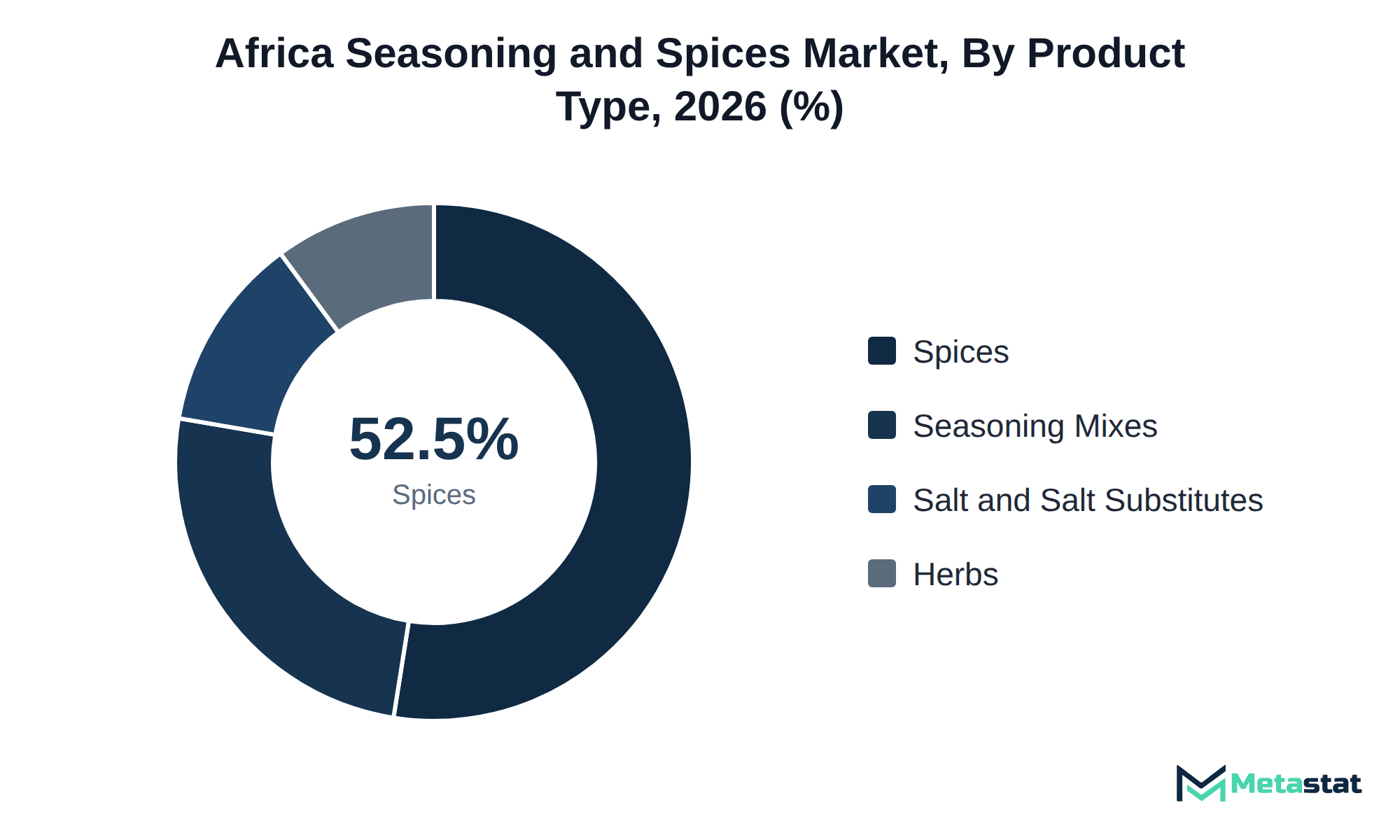
Dominant Segment: The seasoning mixes segment leads the market, driven by increasing consumer demand for convenient meal solutions and diverse flavor profiles.
Geographic Lead: Nigeria holds the largest market share in the Africa Seasoning and Spices market, significantly influencing regional trends and consumer preferences.
What's Inside: The report provides comprehensive competitive coverage, detailed analyses of market dynamics, and forecasts spanning from 2026 to 2033.
Growing Demand for Organic Seasonings: The organic segment is projected to grow at a CAGR of 11.3%, reflecting a shift towards healthier, chemical-free alternatives among consumers.
Technological Advancements: Emerging technologies in seasoning production enhance efficiency and flavor retention, catering to the rising consumer preference for fresh and appealing products.
Choose Your License
Africa Seasoning and Spices Market
The Africa Seasoning and Spices market was valued at USD 5,029.4 million in 2025 and is projected to reach USD 9,486.3 million by 2033, growing at a CAGR of 8.2% over the forecast period.
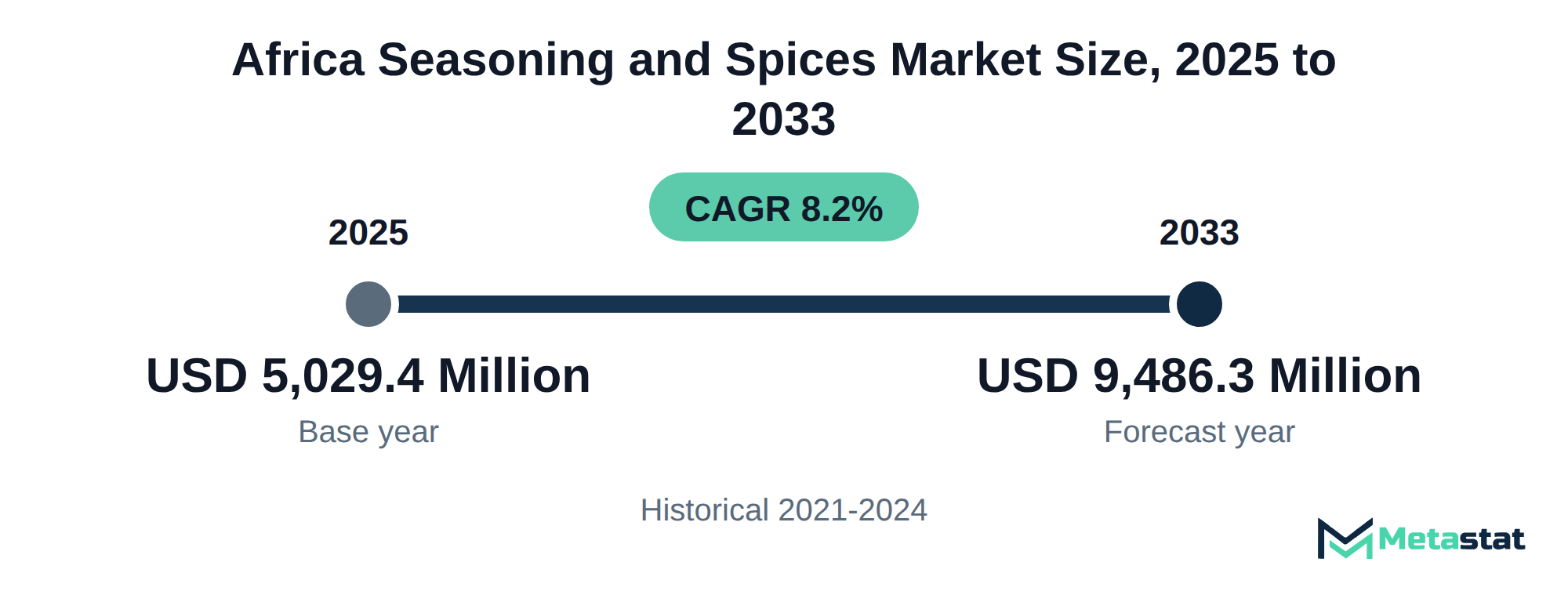
The Africa Seasoning and Spices market encompasses a diverse range of products including spices, seasoning mixes, salt and salt substitutes, and herbs. Buyers invest in this market driven by the increasing demand for flavor enhancement in food products, particularly in food processing, foodservice, and retail sectors. The growing awareness of health benefits associated with spices and seasonings further motivates consumer spending, reflecting a shift toward flavorful yet healthy food options.
Growth in the market is supported by several factors, including an expanding population and rising disposable incomes, which contribute to higher expenditure on food products. The seasoning mixes segment represents the largest share of the market, driven by its versatility in various culinary applications. Nigeria stands out as the region with the largest market share, highlighting its significant influence on global trends and consumer preferences.
The increasing trend toward organic products is a key driver for market expansion. Consumers prioritize organic options, leading to a rise in demand for organic seasonings and spices. This shift toward health-conscious consumption patterns presents opportunities for producers to innovate and cater to evolving consumer preferences within the Africa Seasoning and Spices market.
The Africa Seasoning and Spices market consists of various products that enhance flavor and aroma in culinary applications. Buyers invest in this market due to the increasing consumer preference for diverse flavors and the growing trend of home cooking. The market serves both consumer and commercial sectors, with notable demand from food processing and foodservice industries. This dynamic reflects changing cooking habits and a preference for high-quality ingredients.
Driving factors behind market expansion include the rising demand for organic products, which caters to health-conscious consumers. Among the product categories, spices represent the segment with the highest market value, accounting for USD 1,004.1 million of total revenue. The organic segment is projected to grow at a CAGR of 11.3%. Certain regions exhibit stronger growth trajectories, with the lowest share concentrated in North America compared to other areas.
The anticipated growth in the Africa Seasoning and Spices market signals a shift towards premium products that meet evolving consumer preferences. Higher-value spices such as saffron are one example of this premium category. Increased awareness regarding the health benefits of specific spices and herbs influences purchasing decisions. This development presents opportunities for suppliers to innovate and expand their offerings, ultimately driving revenue across the sector.
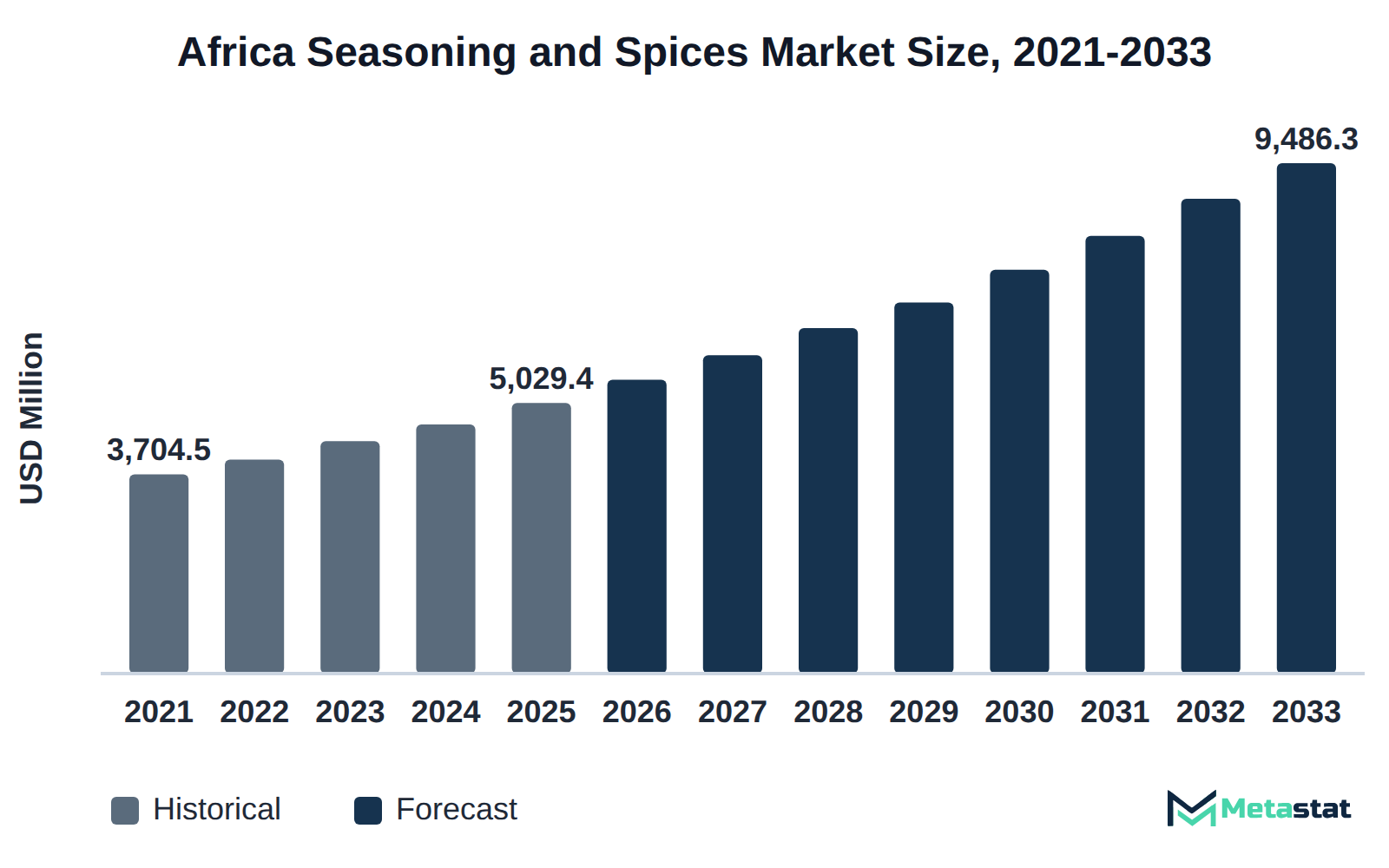
The demand for processed food significantly influences seasoning purchases within the Africa Seasoning and Spices market. The food processing segment is projected to reach USD 5,817.9 million by 2033, reflecting a compound annual growth rate (CAGR) of 7.5% during the forecast period. This growth reflects a shift in consumer preferences toward convenience and ready-to-eat meals, leading food processors to seek innovative seasoning solutions that enhance flavor and meet evolving taste profiles.
Food processors increasingly integrate advanced flavoring technologies and seasoning mixes to differentiate their products. Rising awareness of health benefits associated with natural ingredients drives this trend, resulting in heightened demand for organic spices and seasoning blends. Such shifts compel suppliers to adapt their offerings, focusing on quality and unique flavor profiles that cater to local tastes and culinary traditions.
This transformation in food processing impacts the types of seasonings purchased and influences procurement strategies among manufacturers. By investing in superior seasoning products, food processors enhance product appeal, which drives sales and market share. Ultimately, the growing emphasis on flavor innovation shapes competitive dynamics within the Africa Seasoning and Spices market, creating opportunities for suppliers that align with these industry demands.
Ground spices dominate purchasing patterns within the Africa Seasoning and Spices market due to their versatility and ease of use in both retail and industrial applications. Retail shoppers frequently select ground spices for their practicality, since they mix easily into many dishes. In the industrial sector, manufacturers prefer ground spices for their consistency and efficiency in blending, enhancing product uniformity.
In 2026, the market value for ground and powder spices is projected to reach USD 3,381.1 million, reflecting significant demand from food processing and foodservice industries. The growing trend toward convenience foods drives the preference for ground spices, with consumers seeking quicker meal preparation options. Retailers recognize this trend and adjust their inventories accordingly, ensuring that ground spices remain prominent on their shelves.
The pricing structure for ground spices often involves contracts that favor bulk purchasing. This model allows both suppliers and buyers to establish stable pricing, mitigating fluctuations and ensuring reliability in delivery. Such arrangements enhance operational efficiency for manufacturers, resulting in improved margins that support ongoing investment in product development. Established demand for ground spices reinforces their position as a leading category within the Africa Seasoning and Spices market.
Organic and clean-label seasonings are gaining traction in the African retail sector, reflecting a shift in consumer preferences toward healthier and more transparent food options. The growing awareness of health issues associated with synthetic additives and preservatives drives demand for these products. In the Africa Seasoning and Spices market, the organic category is projected to reach USD 2,678.9 million by 2033, demonstrating a compound annual growth rate of 11.3%. This growth shows rising consumer acceptance and adoption of organic offerings.
Retailers are responding to this trend by expanding their organic and clean-label product lines, catering to health-conscious consumers seeking natural ingredients. This shift influences purchasing decisions, with retailers emphasizing product transparency and sourcing practices. Organic fresh produce is a related category in the region, with its own South Africa organic vegetables market. Establishing trust through clean-label offerings builds brand loyalty and encourages repeat purchases. Ultimately, the rise of organic and clean-label seasonings supports growth in overall sales and profitability within the market, with these products commanding higher price points compared to conventional options.
The food processing segment significantly drives demand within the Africa Seasoning and Spices market. This segment, projected to reach USD 5,817.9 million by 2033, represents a substantial portion of the market's overall growth. Growth in food processing stems from increasing consumer preferences for processed foods and ready-to-eat meals, which rely heavily on seasoning and spices for flavor enhancement. The expanding urban population and busy lifestyles contribute to the rising demand for convenient food options, directly impacting the food processing industry.
While companies invest in expanding their production capabilities to meet this demand, they often seek innovative seasoning solutions that provide unique flavors while adhering to health regulations. Operational emphasis on quality and authenticity in product offerings enhances market competitiveness. Thus, increased investment in the food processing segment supports growth for suppliers of seasoning and spices, leading to more specialized products. This segment is expected to remain a key driver within the market.
The demand for organic seasonings in the Africa Seasoning and Spices market reflects a significant shift in consumer preferences towards healthier food options. Health-conscious consumers increasingly seek products that are free from artificial additives and preservatives, driving a change in purchasing patterns. The organic segment is projected to grow at a compound annual growth rate (CAGR) of 11.3% through 2033, indicating strong consumer interest and willingness to pay a premium for these products. Retailers and food service establishments respond to this trend by expanding their offerings of organic seasonings, which enhances customer loyalty and boosts sales. This transition promotes healthier eating habits and leads to higher revenue for suppliers who cater to this growing demand. The focus on organic options marks a change in consumer behavior that shapes market dynamics and future growth opportunities.
The foodservice sector within the Africa Seasoning and Spices market experiences heightened demand for seasoning mixes, driven by evolving culinary trends and the need for convenience. Chefs and restaurant operators increasingly prefer ready-to-use seasoning blends that save time and enhance flavor consistency across dishes. This trend reflects a broader shift towards efficiency and innovation in food preparation processes. The seasoning mixes segment is projected to reach USD 2,438 million by 2033, demonstrating significant market potential. This growing preference benefits foodservice establishments by streamlining their offerings and encourages suppliers to innovate and develop new blends tailored to regional tastes. The emphasis on quality and convenience within foodservice represents a substantial opportunity for suppliers to strengthen their market position.
Emerging technologies significantly enhance production efficiencies within the Africa Seasoning and Spices market. Innovations in processing methods, including high-pressure processing and advanced extraction techniques, improve flavor retention and product quality. Extraction methods are also used to produce spice derivatives such as ginger extract. These advancements cater to evolving consumer demands for fresher and more appealing seasonings, driving interest among food manufacturers and retailers. Increased automation in manufacturing reduces operational costs, allowing suppliers to maintain competitive pricing while boosting output. These technologies facilitate the development of new product lines that appeal to health-conscious consumers seeking organic and clean-label options. The integration of modern supply chain solutions supports rapid distribution, ensuring that products reach consumers efficiently. Overall, these technological advances support growth in the market and help suppliers respond quickly to shifts in consumer preferences and market trends.
Price sensitivity among buyers significantly limits engagement in the Africa Seasoning and Spices market. Increased prices for raw materials and production lead to higher retail prices, which discourage purchases among price-conscious consumers. Retail buyers, particularly in the foodservice and HoReCa segment, exhibit caution in ordering larger quantities, opting instead for smaller, more affordable orders. This cautious purchasing behavior results in slower sales growth and delayed restocking of inventory, impacting overall market momentum. The presence of lower-cost substitutes, including unbranded or locally produced seasonings, exacerbates this situation. Consequently, the demand for premium products faces challenges in gaining traction, limiting growth opportunities for suppliers focused on higher quality offerings. Such price constraints negatively affect operational planning and overall market dynamics, resulting in a cautious environment for investment and expansion. Addressing these price-related barriers is necessary for market growth and stronger buyer confidence in the long term.
Rising input costs significantly challenge suppliers within the Africa Seasoning and Spices market. Factors contributing to this trend include increased prices for raw materials including spices and herbs, influenced by fluctuating agricultural yields and supply chain disruptions. These pressures affect profitability margins and pricing strategies, compelling suppliers to reassess their sourcing and production processes.
In response, suppliers are adopting strategies focused on cost efficiency and operational optimization. This includes forging partnerships directly with farmers to secure raw materials at stable rates, thereby reducing dependency on volatile market prices. Investment in improved processing technologies enhances yield and minimizes waste, supporting competitive pricing without sacrificing quality. Suppliers implementing these measures improve their ability to handle rising costs, which is essential for maintaining market position and driving future growth.
The seasoning mixes segment exhibits significant growth potential within the Africa Seasoning and Spices market, with a projected compound annual growth rate (CAGR) of 8.5% through 2033. This growth results from increasing consumer preferences for convenient meal solutions and heightened interest in diverse flavor profiles. These trends particularly appeal to urban populations and younger consumers seeking variety in their culinary experiences. Seasoning mixes offer a simplified approach to enhancing flavors, appealing to busy households and foodservice operators alike. The rise of global cuisine influences local markets, encouraging the adoption of innovative seasoning blends. The market's focus on developing unique and culturally relevant mixes aligns well with evolving consumer tastes, presenting opportunities for suppliers to expand their product offerings and capture greater market share. Growth in seasoning mixes points to shifting dynamics in the market and creates openings for investment and strategic positioning.
The Africa Seasoning and Spices market is segmented based on Product Type, Form, Category, and End Use.
Spices segment is valued at USD 2,859.4 million in 2026 and is projected to reach USD 4,835.2 million by 2033, at a CAGR of 7.8% during the forecast period. Spices enhance flavor profiles across various culinary applications, primarily by food processors and restaurants. The rising popularity of diverse cuisines in Africa drives demand for spices, reflecting changing consumer preferences. Individual spices such as cinnamon also have distinct demand profiles within this category. This segment outpaces others in terms of growth, with a CAGR of 7.8%, compared to seasoning mixes at 8.5%. While seasoning mixes cater primarily to convenience-focused consumers, spices attract a broader audience seeking authentic flavors. Increased global trade contributes to a more competitive pricing structure, promoting wider adoption among foodservice buyers. This dynamic positions the spices segment as a key player in the Africa Seasoning and Spices market, with significant potential for growth in the coming years.
Seasoning Mixes is estimated to reach USD 2,438 million by 2033, at a CAGR of 8.5% during the forecast period. These blends are typically used in various culinary applications, including food processing and foodservice, to enhance flavors and simplify meal preparation. The increasing preference for convenience and ready-to-use meal solutions drives demand, particularly among restaurants and food manufacturers. Compared to other segments, including Spices, which show a CAGR of 7.8%, the seasoning mixes segment exhibits a faster growth rate. This growth occurs due to its versatility and appeal to consumers seeking flavorful and easy-to-prepare options. The market for seasoning mixes continues to evolve, catering to diverse tastes and preferences while competing with conventional spices and herbs.
The Salt and Salt Substitutes segment is expected to reach USD 1,019.8 million by 2033. This segment finds extensive application in food processing, foodservice, and retail, catering to consumers seeking flavor enhancement. Growing health consciousness among consumers drives demand for salt substitutes, contributing to this segment's growth. The segment experiences a competitive environment, primarily due to the rising preference for healthier options that contrasts with the traditional salt market. Compared to other segments, Salt and Salt Substitutes exhibit a slower growth rate, reflecting a compound annual growth rate (CAGR) of 8.5%, which is lower than the 8.2% CAGR projected for the overall market. This differentiation arises from evolving consumer preferences prioritizing reduced sodium intake while maintaining flavor, thus influencing product innovation and market offerings.
The herbs segment is projected to grow at a CAGR of 11.2% during the forecast period. This segment finds applications across various culinary areas, with consumers increasingly seeking fresh and natural flavors. Restaurants, food manufacturers, and home cooks frequently use herbs to enhance the taste and nutritional value of dishes. The rising trend toward healthier eating habits drives growth in this segment, with consumers gravitating toward organic and natural ingredients. Compared to other product types, herbs experience faster growth, reflecting a growing preference for clean-label products. This segment's focus on high-quality, flavorful offerings differentiates it from seasoning mixes and traditional spices, which typically experience lower growth rates. The increasing acceptance of herbs in diverse cuisines emphasizes their importance within the market.
Ground and Powder segment is valued at USD 3,381.1 million in 2026 and is projected to reach USD 5,542.8 million by 2033, at a CAGR of 7.3% during the forecast period. This segment serves essential roles in food processing, foodservice, and retail environments, supplying manufacturers, restaurants, and consumers with convenience in meal preparation. Demand for this segment is driven by an increasing preference for ready-to-use products that simplify cooking processes. Compared to other segments, including Whole and Others (Crushed, Flakes, Pastes), Ground and Powder experiences moderate growth rates, positioned between the higher growth of Whole at a CAGR of 10.4% and the slower growth of Others, which lacks a specific CAGR figure. This dynamic presents unique opportunities for suppliers aiming to innovate within the market.
Whole segment is estimated to reach USD 2,433.2 million by 2033, at a CAGR of 10.4% during the forecast period. Whole spices serve as key ingredients in various culinary applications, particularly in food processing and foodservice sectors. Cardamom is one example of a spice that is commonly traded in whole form. This segment attracts professional chefs and home cooks seeking to enhance the flavor profile of dishes. Demand for whole spices increases due to a growing preference for natural and minimally processed food options, aligning with trends in health-conscious consumer behavior. Compared to other forms, including ground spices, whole spices exhibit a higher growth rate, supported by their perceived freshness and flavor potency. The distinctive characteristics and applications of whole spices contribute to their unique position in the broader market, influencing purchasing decisions among consumers and industry players alike.
Others (Crushed, Flakes, Pastes) segment is expected to reach USD 1,510.2 million by 2033. This segment primarily serves food processing and foodservice sectors, where convenience and versatility are crucial. The versatility of crushed, flaked, and paste formats caters to a wide range of culinary applications, appealing to chefs and home cooks alike. The segment is projected to grow at a compound annual growth rate (CAGR) of 8.0% during the forecast period. Demand for these forms is driven by increasing consumer preference for ready-to-use products that simplify meal preparation. The pricing strategy for this segment remains competitive, influencing buyer decisions more than other segments, including whole or ground spices. Compared to the ground and powder form, which has a CAGR of 7.3%, the Others segment shows relatively stronger growth, reflecting unique consumer trends driven by innovation in culinary experiences.
Conventional segment is valued at USD 4,194.1 million in 2026 and is projected to reach USD 6,807.4 million by 2033, at a CAGR of 7.2% during the forecast period. This segment supplies a wide range of applications in food processing, retail, and foodservice, catering to diverse consumer preferences across the Africa Seasoning and Spices market. Growing urbanization and changing dietary habits drive demand for conventional seasonings, particularly among consumers seeking affordable flavor enhancement options. Compared to organic alternatives, which exhibit a CAGR of 11.3%, conventional seasonings experience slower growth, reflecting a price-sensitive market. The difference in growth rates indicates a clear market segmentation, with buyers prioritizing cost-effectiveness in conventional products while organic ingredients attract those focused on health and sustainability. Such dynamics shape the competitive landscape and influence product offerings within the market.
This segment appeals to health-conscious consumers seeking natural and chemical-free alternatives, driving adoption in various food applications. The increasing demand for organic products stems from growing awareness of health benefits associated with organic ingredients, particularly among millennials and affluent consumers. Unlike conventional options, organic offerings often command higher prices, reflecting their premium status. This differentiation attracts a specific demographic willing to pay more for perceived quality and sustainability. The faster growth of the organic segment, compared to conventional counterparts, highlights its significance in shaping the future dynamics of the market.
This segment focuses on supplying essential ingredients to various food manufacturers, including those involved in the production of packaged foods, snacks, and convenience meals. A growing consumer preference for flavorful and convenient food options drives demand in this segment, leading to increased adoption among food processors. Compared to other segments, including Seasoning Mixes, which exhibits a higher growth rate of 8.5%, the Food Processing segment shows steady growth. The consistent need for flavor enhancement in processed foods establishes a stable demand foundation, while fluctuations in raw material prices affect profitability. Thus, the Food Processing segment maintains a crucial role in shaping trends within the Africa Seasoning and Spices market.
The Foodservice and HoReCa segment is estimated to reach USD 1,919.1 million by 2033, at a CAGR of 9.4% during the forecast period. This segment caters primarily to restaurants, catering services, and hotels, which frequently require high-quality seasonings and spices to enhance their menu offerings. The growing trend of dining out and increased consumer spending on food services drives demand for diverse flavor profiles. Unlike other segments, the Foodservice and HoReCa segment experiences a faster growth rate, influenced by consumer preferences for bold and varied tastes. The segment's growth is further supported by the rising popularity of international cuisines and the need for convenience among busy consumers. Businesses focus on delivering quality culinary experiences, reflecting a commitment to quality and innovation in flavoring solutions.
The retail segment is expected to reach USD 1,749.3 million by 2033. This segment caters to individual consumers, providing access to various seasoning and spice options for home cooking and meal preparation. Increasing interest in home cooking and culinary experimentation drives demand within this segment. Compared to the food processing segment, which reflects a more stable growth pattern, the retail segment experiences a faster growth trajectory due to changing consumer preferences and the rise of e-commerce channels. The retail segment experiences a compound annual growth rate (CAGR) of 9.4%, outpacing other segments like food processing, which is projected to grow at a CAGR of 7.5%. Factors including convenience and the availability of diverse product offerings fuel this rapid expansion. The Africa Seasoning and Spices market reflects a dynamic shift in retail, shaped by evolving consumer trends and preferences.
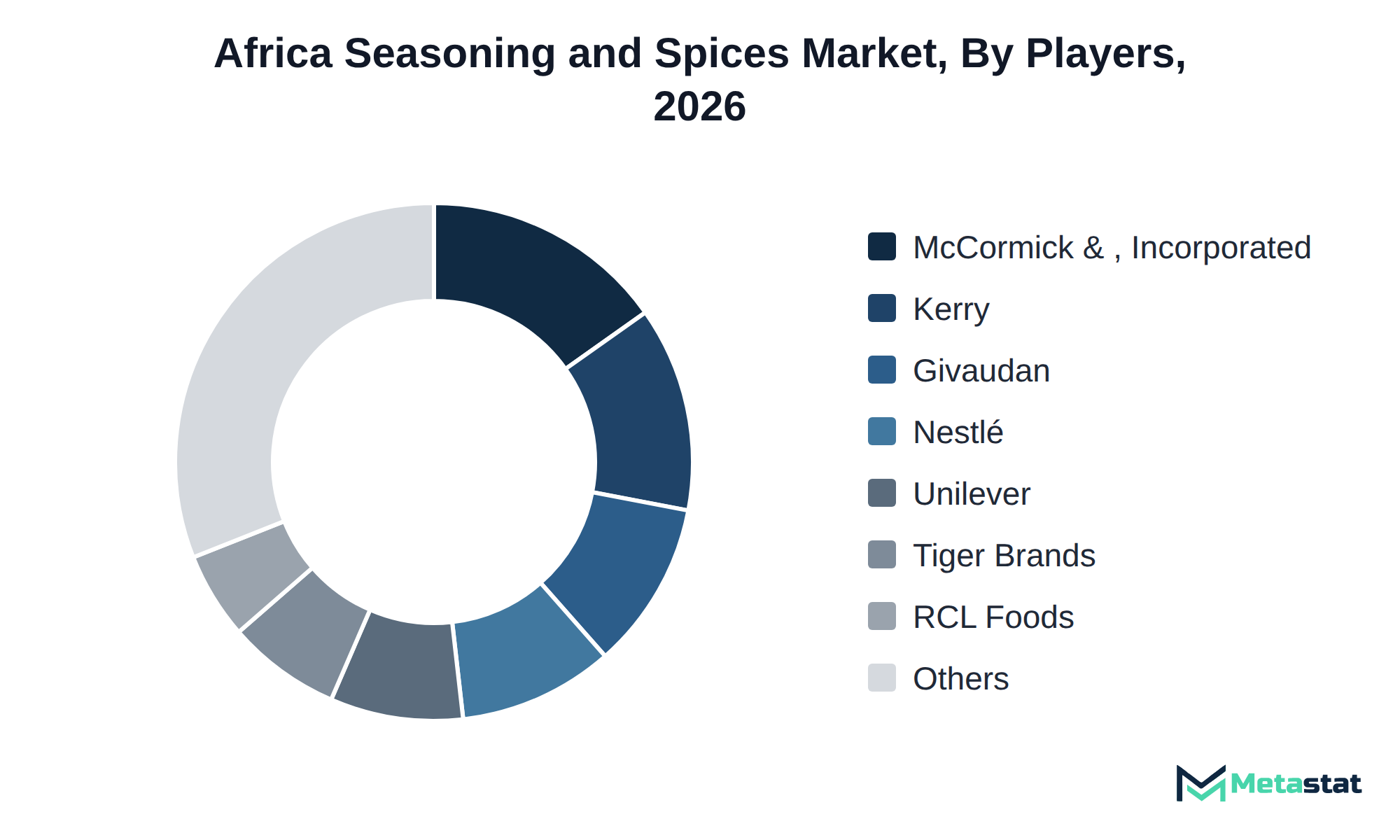
Companies in the Africa Seasoning and Spices market employ various strategies to capture market share. The segmentation of offerings by product type, form, and category allows companies to address diverse consumer preferences. For instance, McCormick & Company, Incorporated focuses on a broad portfolio of spices and seasoning mixes, appealing to both commercial and retail buyers seeking quality and variety. In contrast, Kerry Group plc emphasizes its organic product lines, targeting health-conscious consumers who prioritize clean-label products.
Pricing, certification, and customization significantly influence buyer choices in the market. Buyers select suppliers based on the perceived value of their products, particularly in categories like organic spices, which command higher prices. Givaudan SA leverages its certification in food safety and quality to attract food processing clients, while Unilever PLC invests in innovative packaging solutions to enhance customer experience in retail settings. These strategies demonstrate the competitive dynamics shaping the Africa Seasoning and Spices market.
Achieving this growth requires several developments within the Africa Seasoning and Spices market. Increased consumer preference for organic products will drive demand, particularly in the herbs segment, which is expected to see a CAGR of 11.2%. Expansion in food processing and foodservice sectors significantly influences market dynamics. The food processing segment is projected to grow from USD 3,516.5 million in 2026 to USD 5,817.9 million by 2033, supported by rising utilization of seasonings and spices in various cuisines.
Investment in innovative seasoning mixes is another growth driver, with a projected CAGR of 8.5% leading to a total value of USD 2,438 million by 2033. However, a primary risk that could impede progress involves fluctuations in raw material prices, which affect profit margins for suppliers. Rising costs limit the affordability and accessibility of spices and seasonings, thus impacting overall market growth.
By Product Type: Spices, Seasoning Mixes, Salt and Salt Substitutes, Herbs
By Category: Conventional, Organic
By End Use: Food Processing, Foodservice and HoReCa, Retail
The report strategically identifies and profiles the key market players and analyses their core competencies in each sub-segment of the Seasoning and Spices market.
Report Attributes | Details |
Study Period | 2021-2033 |
Base Year | 2025 |
Estimated Year | 2026 |
Forecast Period | 2026-2033 |
Historical Period | 2021-2025 |
Growth Rate | CAGR 8.2% from 2026 to 2033 |
Revenue Unit | USD million |
Segmentation | By Product Type, Form, Category, End Use, and Region |
Find answers to common questions about this report
The Seasoning and Spices market size was valued at USD 5,029.4 million in 2025.
The market is projected to grow at a CAGR of 8.2% during the forecast period from 2026 to 2033.
The leading segment in the Seasoning and Spices market is Spices, with a projected value of USD 4,835.2 million by 2033. This segment surpasses others in terms of revenue growth and market share.
The demand for organic seasonings reflects a significant shift in consumer preferences towards healthier food options, driving strong growth in this segment. The foodservice sector experiences heightened demand for seasoning mixes, influenced by evolving culinary trends and the need for convenience.
Price sensitivity among buyers restrains growth in the Seasoning and Spices market. Increased prices for raw materials and production result in higher retail prices, discouraging purchases. Rising input costs challenge suppliers, impacting profitability margins and pricing strategies.
Rising consumer interest in organic seasonings reflects a shift towards healthier food options, driving demand for products free from artificial additives. the foodservice sector's preference for convenient seasoning mixes enhances market adoption, as these products streamline food preparation and cater to evolving culinary trends.
The Seasoning and Spices market is estimated to reach a valuation of USD 9,486.3 million by 2033.
Key players operating in the Seasoning and Spices market include McCormick & Company, Incorporated, Kerry Group plc, Givaudan SA, Nestlé S.A., Unilever PLC, and International Flavors & Fragrances Inc.
The organic segment is projected to grow at a compound annual growth rate (CAGR) of 11.3% through 2033, reflecting strong consumer interest in healthier food options.
The seasoning mixes segment experiences heightened demand in the foodservice sector, projected to reach USD 2,438 million by 2033 due to evolving culinary trends.
The analysts below cover Food and Beverages research at Metastat Insights.
LEAD ANALYST
Utkarsh Khirodkar is a Lead Market Research Analyst at MetaStat Insight, specializing in market intelligence, technology sector assessments, and competitive strategy.

LEAD PRINCIPAL ANALYST, PHARMA AND HEALTHCARE
Food and Beverages · Healthcare · Healthcare IT · Medical Devices
Ajay Devgire is the Lead Healthcare Analyst at MetaStat Insight, leading strategic research and market intelligence initiatives across the global healthcare domain.

SENIOR RESEARCH ANALYST
Biotechnology · Food and Beverages · Medical Devices · Packaging
Snehal Pasalkar is a Research Analyst at MetaStat Insight, operating at the intersection of life sciences research, competitive strategy, and market intelligence.
Assessing 200mm wafer transition schedules and substrate supply bottlenecks requires precise technical intelligence. MetaStat Insight supplied an actionable breakdown comparing planar and trench MOSFET architectures across automotive and industrial drive markets. The regional capacity estimates for Asia-Pacific foundries helped clarify lead-time uncertainties during our strategic planning session. When we needed additional clarification on high-purity raw material sourcing, their analyst team responded with helpful context within twenty-four hours.
Tracking maintenance cycle demand for secondary flight display units and terrain collision avoidance systems across regional jet fleets involves complex aftermarket dynamics. MetaStat Insight provided practical analysis separating airline retrofit programs from OEM forward-fit production schedules in North America and Southeast Asia. The supplier matrix highlighted component obsolescence timelines without resorting to vague generalizations. The dataset served as a dependable reference during our annual program review meetings.
Evaluating secondary resin quality across post-consumer packaging streams requires reliable technical segmentation. MetaStat Insight delivered an objective assessment that distinguished between extrusion-grade flake pricing and optical sorting throughput limitations across Western Europe. The competitive positioning breakdown for licensed depolymerization technology providers answered several questions during our feedstock feasibility audit. Their team clarified regional trade restrictions on mixed plastic scrap quickly when our team submitted follow-up requests.
Explore related market intelligence reports worth reading alongside this one.