
LEAD ANALYST
Utkarsh Khirodkar is a Lead Market Research Analyst at MetaStat Insight, specializing in market intelligence, technology sector assessments, and competitive strategy.

Global Saffron Products Market Size, Share, By Type (Saffron Threads, Saffron Powder, Saffron Extracts, Saffron Capsules, Saffron Tea, Saffron Oil, Saffron-Based Cosmetics and Skincare Products, Saffron Flavored Products), By Nature (Conventional and Organic), By Application (Food and Beverages, Dietary Supplements and Nutraceuticals, Pharmaceuticals and Herbal Medicinal Products, Cosmetics and Personal Care), By Distribution Channel (Direct B2B Sales, Supermarkets and Hypermarkets, Specialty and Gourmet Stores, Pharmacies and Health Stores, Online Retail), Industry Analysis, Growth, Trends, and Forecast, 2026-2033
Report ID
MSI-3140
Published
September, 2026
Pages
278 Pages
Format
Historical
Base year
Forecast
Forecast period
Report Details
Market Valuation: Valued at $487.4 Million in 2025, projected to reach $895.7 Million by 2033 at a 7.9% CAGR.
Dominant Segment: The Saffron Threads segment leads the market, driven by increasing demand for high-quality and authentic saffron products, particularly in food and beverage applications.
Geographic Lead: The Asia Pacific region exhibits the fastest growth, fueled by rising health consciousness and a growing appetite for premium saffron.
What's Inside: The report provides a comprehensive analysis of market dynamics, competitive strategies, and detailed forecasts from 2026 to 2033, covering various product types and applications.
Emerging Trends: Consumer preferences are shifting towards organic and traceable saffron products, reflecting a broader trend towards sustainability and health-conscious choices.
Market Challenges: Rising operational costs and geopolitical fragmentation present significant challenges, impacting saffron availability and pricing.
Choose Your License
Global Saffron Products Market
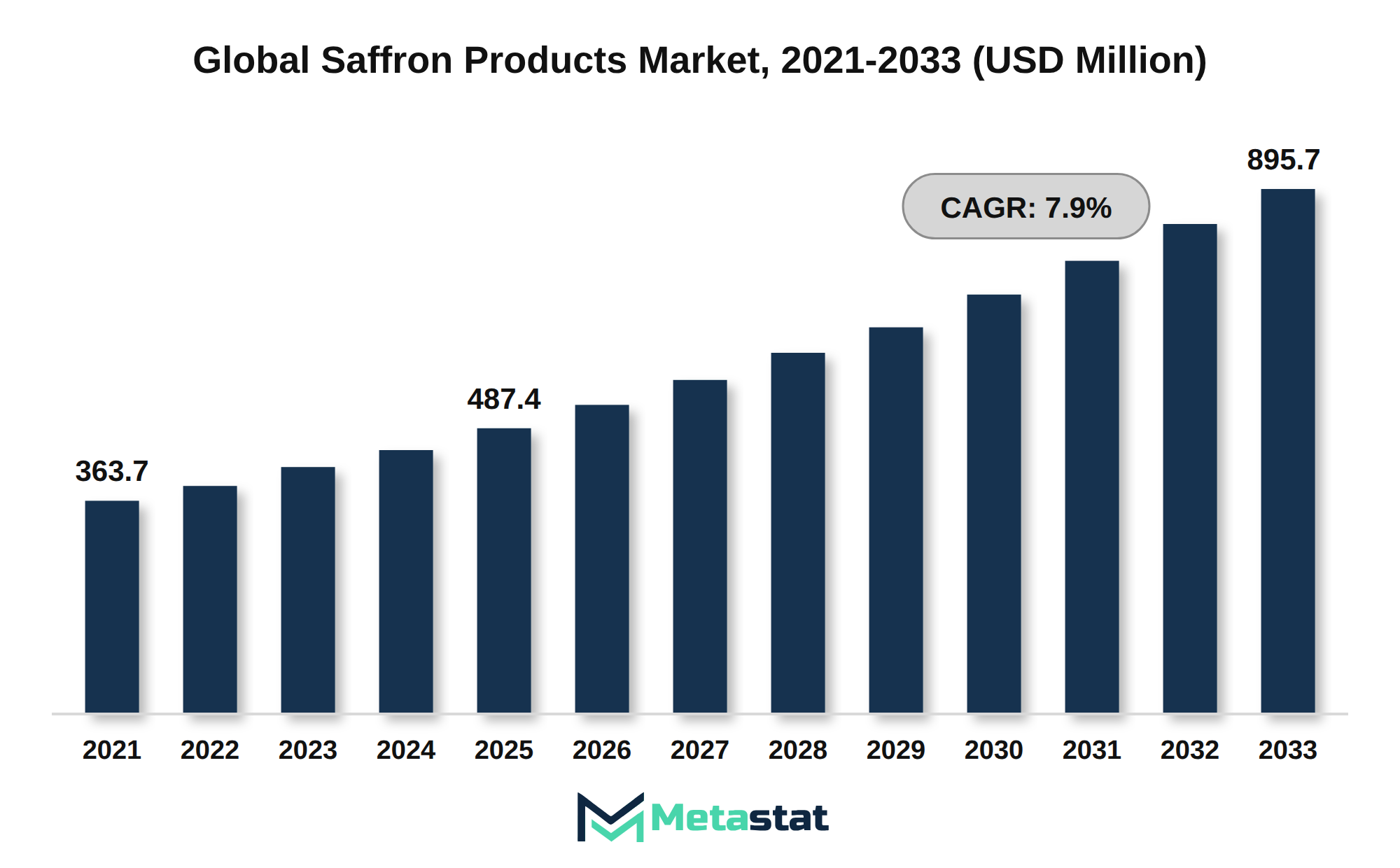
The global Saffron Products market was valued at USD 487.4 million in 2025 and is projected to reach USD 895.7 million by 2033, growing at a CAGR of 7.9% over the forecast period.
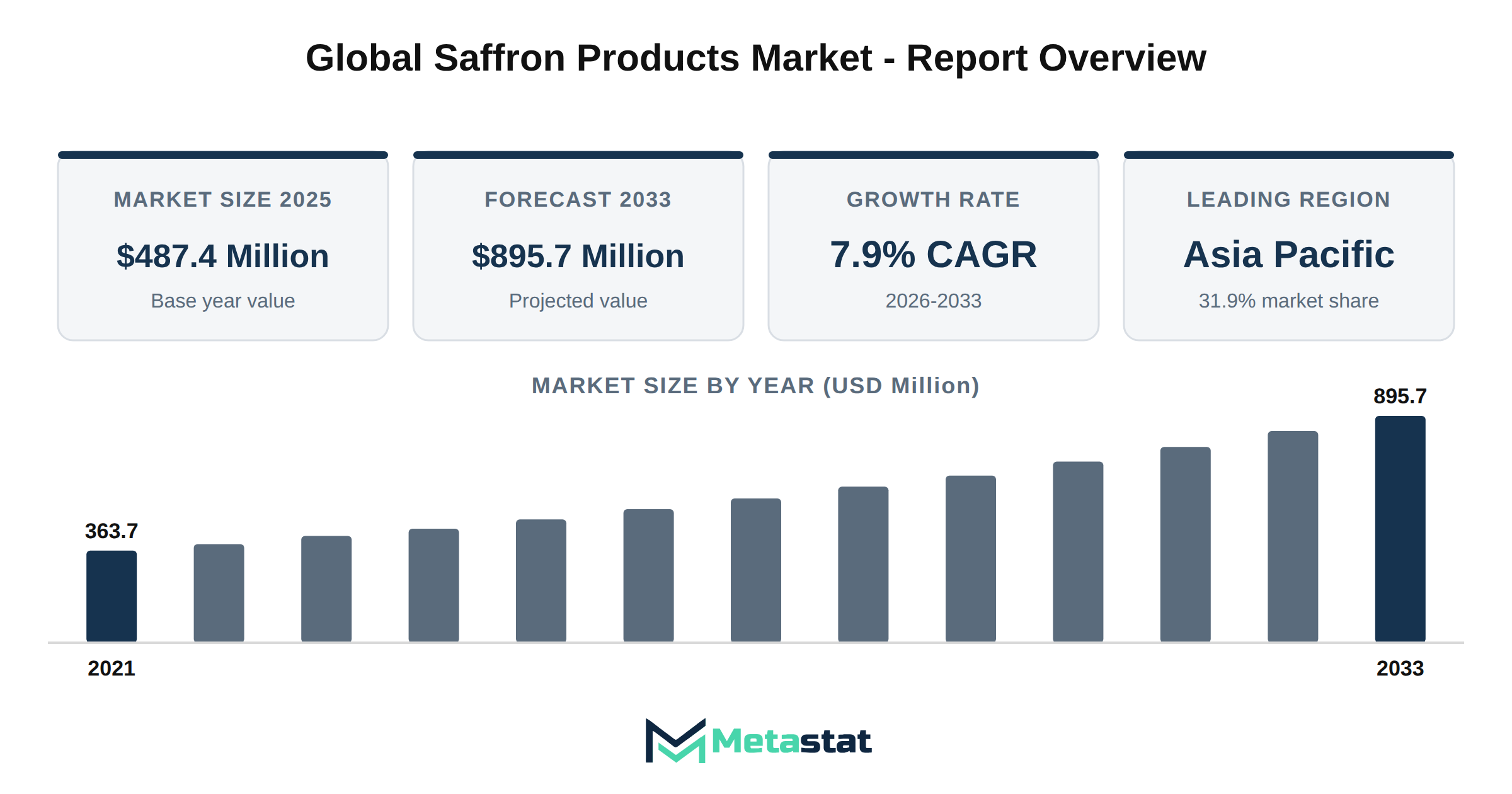
The Saffron Products market reached a valuation of USD 487.4 million in 2025, with a projected increase to USD 895.7 million by 2033. This growth reflects a compound annual growth rate (CAGR) of 7.9% over the forecast period from 2026 to 2033. The market exhibited a steady increase in historical years, starting from USD 363.7 million in 2021 and progressing through USD 421.4 million in 2023.
Demand for premium food and beverage products significantly drives market expansion. Increasing consumer awareness regarding food quality and flavor leads to a heightened preference for saffron in culinary applications. This trend aligns with the rising interest in gourmet and artisanal food products, resulting in a strong growth trajectory for saffron.
Rising consumer preference for organic and traceable saffron products enhances market dynamics. Consumers prioritize high-quality, sustainably sourced ingredients, impacting purchasing decisions. The demand for organic saffron is projected to grow substantially, supported by the increasing availability of certification and traceability standards.
Saffron extracts gain traction in nutraceutical and supplement applications, driven by their health benefits. The integration of saffron into dietary supplements aligns with consumer trends toward natural and wellness solutions. This trend creates new opportunities for market players focused on product innovation.
The expanding use of saffron in cosmetics and premium skincare formulations leads to new market avenues. Brands incorporate saffron for its antioxidant properties and skin-enhancing benefits, appealing to consumers seeking natural beauty solutions. This segment is expected to experience significant growth, driven by increasing demand for high-quality personal care products.
Saffron-based functional foods and beverages create new growth opportunities. Innovative product offerings, including saffron-infused teas and health drinks, capture consumer interest in functional ingredients. This trend opens pathways for market participants to diversify their product lines and enhance consumer engagement.
Premiumization trends reshape global saffron product demand. Consumers seek high-quality, luxury food experiences, prompting brands to focus on premium offerings. This shift influences pricing strategies and product positioning, impacting overall market dynamics.
The Saffron Products market experiences significant momentum due to the increasing demand for premium food and beverage offerings. Consumers increasingly seek high-quality ingredients that enhance flavor and offer potential health benefits. This trend influences producers to focus on premium saffron varieties, aligning product offerings with consumer preferences and expectations.
The market experiences a notable shift towards organic and traceable saffron products. Consumers prioritize transparency in sourcing and the health advantages associated with organic options. This demand leads producers to adopt organic farming practices and establish traceability mechanisms, enhancing brand credibility and consumer trust.
Saffron extracts are gaining popularity in nutraceutical and supplement applications due to their potential health benefits, including mood enhancement and antioxidant properties. This growing interest expands market opportunities for producers to innovate and develop saffron-based supplements, thereby capturing a larger share of the health and wellness segment.
The incorporation of saffron in cosmetics and premium skincare formulations is on the rise. Saffron's natural properties offer beneficial effects on skin health, including brightening and anti-aging effects. This trend encourages cosmetic companies to explore saffron-infused products, driving growth in the beauty and personal care segment.
Functional foods and beverages containing saffron present new growth opportunities within the market. These products cater to health-conscious consumers seeking functional benefits, including stress relief and improved digestion. The innovation in saffron-infused offerings positions producers to capitalize on the rising demand for health-oriented consumables.
Premiumization trends significantly influence global saffron product demand. Consumers increasingly favor high-quality, artisanal products, prompting producers to enhance product differentiation through unique offerings. This shift toward premium products contributes to higher average selling prices and increased market revenue.
The expansion of online retail channels enhances consumer access to branded saffron products. E-commerce platforms provide convenience and a broader range of options for consumers, facilitating market growth. This trend encourages saffron producers to invest in digital marketing strategies and optimize online distribution channels.
Quality authentication and adulteration control remain critical issues within the saffron products market. Producers and regulators focus on implementing stringent quality control measures to ensure product authenticity. This emphasis on quality helps build consumer confidence and supports market integrity.
Developments in the saffron supply chain across key regions, including Iran, India, Afghanistan, and Europe, shape market dynamics. Improvements in cultivation, processing, and distribution enhance overall efficiency. These developments contribute to better product availability and pricing stability, creating a more competitive market environment.
Climate risks and yield volatility significantly influence saffron availability and pricing. Changes in weather patterns and environmental conditions affect cultivation, posing challenges for producers. This situation necessitates adaptive strategies to mitigate risks and ensure consistent supply, impacting pricing strategies across the market.
Organic certification and traceability standards play a crucial role in shaping saffron trade. Regulatory frameworks push producers to comply with certification requirements, enhancing market credibility. These standards protect consumer interests while promoting the growth of organic saffron segments.
Innovation in saffron extracts, capsules, oils, and value-added products drives market evolution. Producers increasingly focus on developing diverse product forms that cater to varying consumer preferences. This innovation enhances market competitiveness and opens new revenue streams for saffron suppliers.
The application of saffron in pharmaceuticals and herbal medicine expands, fueled by research into its medicinal properties. This trend positions saffron because a valuable ingredient in therapeutic products, encouraging investment in research and development within the market.
Competitive strategies among saffron producers, processors, and branded suppliers shape market dynamics. Companies focus on differentiation through quality, branding, and strategic partnerships to enhance market position. This competition drives innovation and ultimately benefits consumers through improved product offerings.
Private label and premium packaging trends influence consumer perceptions within the market. Retailers increasingly offer saffron products under private labels, enhancing affordability without compromising quality. Premium packaging enhances product appeal, catering to discerning consumers seeking authenticity and luxury.
Regional demand growth across Asia Pacific, Europe, North America, and the Middle East reflects diverse consumer preferences. Each region exhibits unique trends influencing saffron consumption, necessitating tailored marketing strategies. This regional segmentation allows producers to maximize opportunities and increase market penetration.
E-commerce and direct-to-consumer strategies transform saffron distribution channels. Producers leverage online platforms to reach consumers directly, enhancing brand visibility and customer engagement. This shift promotes growth by simplifying the purchasing process and expanding market reach.
Saffron pricing dynamics and raw material cost trends significantly impact market profitability. Fluctuations in raw material costs due to supply chain factors influence pricing strategies. Producers navigate these dynamics to maintain profitability while delivering value to consumers.
Investment in processing, extraction, and quality standardization technologies enhances market efficiency. Companies prioritize technological advancements to improve product quality and streamline operations. These investments contribute to overall market growth and competitiveness by enabling producers to deliver higher-quality saffron products.
Future growth opportunities in high-value saffron-derived products emerge due to rising consumer interest in health and wellness. Innovative product development targeting specific health benefits allows producers to capitalize on emerging trends. This focus on high-value offerings positions the market for sustained growth.
Changes in consumer behaviors significantly influence the growth of the Saffron Products market. Increasing health consciousness and interest in premium ingredients among consumers contribute to heightened demand for saffron in food and beverages, dietary supplements, and cosmetics. The shift towards organic and natural products, driven by a growing awareness of the benefits of clean label ingredients, increases the adoption of saffron, particularly in the organic segment, which is projected to reach USD 249.2 million by 2033. This trend reflects a broader movement towards sustainable and ethically sourced products, encouraging brands to incorporate saffron into their offerings to align with consumer preferences.
The aging population, coupled with lifestyle changes, prompts a demand for saffron-based dietary supplements and nutraceuticals. While consumers prioritize wellness, the market sees increased interest in saffron's potential health benefits, including its antioxidant and mood-enhancing properties. This demand shift positions saffron because a key ingredient in health-focused product formulations, creating a competitive landscape where suppliers innovate to meet evolving consumer needs.
The Saffron Products market benefits from urbanization trends, which lead to changing purchasing behaviors. Urban consumers tend to seek convenience and premium offerings, driving sales through various distribution channels, including supermarkets, specialty stores, and online retail. This diversified approach enhances market access, allowing producers to reach a broader consumer base and capitalize on the growing demand for saffron across multiple applications.
Consumer spending patterns significantly influence the Saffron Products market. Economic recovery following global downturns results in higher disposable incomes, prompting consumers to invest in premium products. Rising demand for saffron, a luxury ingredient, reflects this shift toward quality and unique culinary experiences.
The growing trend of health consciousness among consumers supports market expansion. Increased awareness of saffron's health benefits fuels its adoption in dietary supplements and nutraceuticals, enhancing its appeal across diverse demographic segments. This trend attracts a broader audience seeking natural and organic options, driving growth in both conventional and organic saffron segments.
Market growth is further supported by the proliferation of online retail platforms, which enhance product accessibility. Consumers increasingly prefer the convenience of purchasing saffron products online, thereby expanding market reach and introducing new buyers to premium offerings. This transformation in consumer purchasing behavior supports sustained growth through enhanced market access and visibility.
Rising operational costs present a significant restraint for the Saffron Products market. Producers face escalating expenses related to cultivation, processing, and distribution, which directly impact profitability. High capital investment requirements further complicate the landscape, deterring new entrants and limiting expansion opportunities for existing players.
Macroeconomic headwinds contribute to market challenges by affecting disposable income levels among consumers. Inflationary pressures have led to increased prices for saffron, reducing affordability and tempering demand. Fluctuations in currency exchange rates disrupt pricing strategies in international markets, complicating import and export dynamics.
Supply chain disruptions remain prevalent and impact saffron availability, which restricts market growth. Geopolitical instability in key saffron-producing regions creates uncertainty in supply, affecting sourcing strategies for buyers and leading to potential product shortages. The fragmented nature of the market, characterized by numerous small producers, complicates the establishment of reliable supply chains.
Technological obsolescence poses another challenge, resulting from producers struggling to adopt modern agricultural practices and processing technologies. Without access to advanced tools, efficiency declines, resulting in increased costs and reduced competitiveness. Talent gaps in skilled labor hinder productivity, complicating operational capabilities.
Finally, cultural barriers in various regions impede market penetration for saffron products. Different consumer preferences and varying levels of awareness regarding saffron's benefits create obstacles to widespread adoption. Addressing these cultural nuances becomes essential for companies striving to enhance their presence in the market and capture growing demand opportunities.
Geopolitical fragmentation poses significant challenges for the Saffron Products market, impacting trade relationships and creating uncertainties in supply chains. This fragmentation results in trade deficits and tariff friction, increasing costs for producers and disrupting access to key markets.
Technological disruptions further complicate the landscape. Advancements in production and processing techniques necessitate complex research and development integrations. The need for interoperability among various systems introduces friction that hampers efficiency and increases costs for manufacturers.
Logistics disruptions stemming from geopolitical tensions add another layer of complexity, leading to supply chain instability. These disruptions exert pressure on pricing and complicate the operational environment for companies involved in the Saffron Products market.
Tightening global regulatory standards and evolving legal liabilities create compliance overhead that overwhelms smaller players in the market. The resulting focus on regulatory adherence diverts resources from innovation and growth initiatives, complicating strategic planning and market positioning.
Rising input cost structures, labor skill gaps, and challenges related to talent retention create further pressures. Environmental lifecycle footprints and decarbonization mandates impose additional responsibilities on producers, necessitating investments in sustainable practices. The cumulative impact of these challenges restricts market growth and limits opportunities for expansion in the Saffron Products market.
The Saffron Products market experiences significant opportunities owing to emerging regional demands fueled by evolving consumer preferences. Regions including Asia Pacific and North America exhibit increasing interest in premium saffron due to rising health consciousness and demand for natural ingredients. This trend drives suppliers to innovate and diversify their product offerings, aligning with the growing appetite for organic and sustainably sourced saffron.
Infrastructure modernization enhances market accessibility. Improved logistics and distribution channels expand reach to untapped markets, enabling suppliers to capitalize on new consumer bases. Geographical expansion into regions with nascent saffron markets presents lucrative opportunities for growth, increasing competition and innovation among producers.
Technological disruptions improve production efficiency and product quality, creating opportunities for companies to differentiate themselves in the market. Digital transformation, through e-commerce and online retail platforms, enhances customer engagement and streamlines procurement processes. This shift in buying behavior enables consumers to access saffron products conveniently, further stimulating demand.
Sustainability imperatives increasingly influence purchasing decisions, with consumers favoring brands committed to eco-friendly practices. This trend encourages suppliers to adopt sustainable sourcing methods, enhancing their market positioning while complying with growing environmental regulations. The Saffron Products market is poised for growth driven by consumers aligning their choices with sustainability values.
Product integration, particularly in food and beverages, dietary supplements, and cosmetics, opens new avenues for market penetration. Companies focusing on niche application growth leverage unique product traits to attract specific consumer segments. Strategic consolidation through mergers and acquisitions enables firms to enhance their operational capabilities and expand product portfolios, creating a more competitive landscape.
The Global Saffron Products market is segmented based on Type, Nature, Application, and Distribution Channel.
Saffron Threads segment is valued at USD 198.2 million in 2026 and is projected to reach USD 312.7 million by 2033, at a CAGR of 6.7% during the forecast period. Increasing demand for high-quality and authentic saffron products drives interest in this segment. Significant applications in the food, beverage, and dietary supplement industries contribute to its growth. Rising health consciousness among consumers enhances the adoption of saffron in nutraceuticals and herbal medicines.
Technological advancements in saffron cultivation and processing enhance product quality and supply chain efficiency. Innovations in extraction techniques lead to more concentrated forms of saffron, catering to health-conscious consumers seeking potent natural ingredients. Growing awareness of saffron's health benefits, including antioxidant and anti-inflammatory properties, accelerates consumption shifts, particularly in dietary supplements. Regulatory compliance with food safety standards and certifications ensures product authenticity and quality, strengthening consumer trust.
Cost structures associated with saffron production influence market dynamics. Fluctuating prices of raw materials challenge producers, necessitating strategic sourcing and efficient supply chain management. Resilience in the saffron supply chain remains critical in mitigating risks related to climate change and geopolitical factors. These challenges compel players to explore strategic opportunity windows for investment in sustainable practices and innovative cultivation techniques, ensuring long-term viability in the market.
Saffron Powder represents a significant segment within the Saffron Products market, projected to reach USD 182.4 million by 2033, at a CAGR of 7.3% during the forecast period. Increasing demand for natural ingredients in food and beverages drives the popularity of saffron powder due to its flavoring and health benefits. Growing consumer interest in organic and clean-label products enhances the segment's appeal, resulting in higher adoption rates among health-conscious consumers.
Applications in dietary supplements and nutraceuticals further support the segment's growth. Rising awareness regarding the health benefits of saffron powder, including antioxidant properties and potential mood-enhancing effects, attracts investments and innovations aimed at product development. Regulatory compliance with food safety standards and certifications promotes confidence among consumers and industry players, facilitating market expansion.
Segment growth aligns with broader trends in the Saffron Products market, where increasing disposable income and changing consumption patterns contribute to heightened demand for premium products. Strategic focus on product evolution and next-gen upgrades in processing techniques enhances the quality of saffron powder, ensuring it meets the evolving preferences of consumers.
Saffron Extracts represent a notable segment within the Saffron Products market, with a projected value of USD 123.1 million by 2033. The increasing adoption of saffron extracts in various applications, driven by their health benefits and culinary appeal, positions this segment for significant growth. Rising demand for natural and organic products fuels the expansion of saffron extracts, aligning with consumer preferences for healthier dietary options and overall wellness.
Technological advancements in extraction methods enhance the quality and potency of saffron extracts, making them more appealing to manufacturers and consumers alike. This evolution supports the segment's market position, enabling a variety of uses across dietary supplements, pharmaceuticals, and cosmetics. The growing emphasis on clean label products further drives adoption, influenced by consumer preference for ingredients with recognized health benefits, reinforcing the segment's relevance in the market.
Regulatory compliance and certification standards play a critical role in the development of saffron extracts, ensuring product safety and efficacy. This compliance contributes to consumer trust and brand loyalty, influencing purchasing decisions in the Saffron Products market. The overall market dynamics indicate a positive environment for saffron extracts, driven by strategic opportunities and a clear demand trajectory.
Growth in the Saffron Capsules segment stems from increasing consumer awareness regarding health benefits associated with saffron, particularly its potential to improve mood and alleviate symptoms of anxiety and depression. This heightened awareness drives demand among health-conscious consumers and wellness advocates. The segment is projected to grow at a CAGR of 9.8% during the forecast period. Advances in formulation technologies enhance product efficacy and bioavailability, attracting investment and encouraging product innovation, which supports market expansion.
Several factors contribute to the growth trajectory of the Saffron Products market. The rising popularity of dietary supplements and nutraceuticals, where saffron capsules find substantial application, promotes expansion. This rise aligns with a broader trend toward natural health products, reflecting changing consumer preferences. Increasing demand for convenient and easy-to-consume supplement formats enhances the appeal of saffron capsules, leading to greater penetration in retail channels.
The segment benefits from a strong supply chain, ensuring consistent availability of high-quality raw materials. Sourcing strategies focus on regions renowned for saffron cultivation, enhancing product reliability and quality. Regulatory compliance regarding safety and health claims enhances consumer trust, further fueling demand. While the market evolves, opportunities for strategic partnerships and collaborations emerge, enabling players to strengthen their market position and expand their product offerings effectively.
Consumer interest in Saffron Tea is driven by its perceived health benefits and culinary applications. The growing trend of wellness and natural products contributes to the rising popularity of Saffron Tea among health-conscious consumers. This segment benefits from the broader shift towards organic and herbal beverages, aligning with changing preferences for natural ingredients. The expansion of specialty tea shops and online platforms facilitates greater accessibility to Saffron Tea, encouraging its adoption. Product evolution within the market includes innovative packaging and blends that enhance consumer experience and cater to diverse taste preferences. The segment has seen an increase in offerings that combine saffron with other herbal ingredients, appealing to a wider audience. Technological maturation in production methods ensures consistent quality and flavor, promoting customer loyalty. Downstream applications for Saffron Tea extend beyond traditional consumption, reflecting its integration into culinary applications, desserts, and wellness products. This versatility positions the segment favorably within the Saffron Products market. An increased focus on sustainability and ethical sourcing further enhances the appeal of Saffron Tea, with consumers increasingly gravitating towards brands that emphasize transparency and responsible practices. Investment in marketing strategies highlighting the unique qualities of Saffron Tea captures emerging market opportunities, particularly among younger demographics. The segment is poised for growth within the overall Saffron Products market due to these dynamics, which highlight the importance of continuous innovation and consumer engagement.
Increasing interest in natural and organic products drives demand for Saffron Oil within the Saffron Products market. Consumers gravitate toward Saffron Oil due to its reputed health benefits and applications in culinary, cosmetic, and therapeutic fields. This segment benefits from heightened awareness of wellness trends, prompting manufacturers to innovate and expand product offerings.
Technological advancements in extraction techniques enhance product quality and purity, building consumer trust and loyalty. The growing popularity of aromatherapy and natural remedies strengthens Saffron Oil's market position. Expansion catalysts include partnerships between producers and retailers, enabling wider distribution and improved market access.
Regulatory compliance standards regarding food and cosmetic safety play an important role in shaping market dynamics. Certifications for organic and natural products enhance consumer confidence, allowing brands to differentiate themselves in a competitive landscape. Margin pressures arise from fluctuations in raw material pricing, necessitating strategic sourcing to maintain profitability.
Supply chain resilience is crucial, with producers focusing on stable sourcing of saffron to mitigate risks associated with climate change and geopolitical factors. Substitution risks from alternative oils highlight the necessity for continuous product evolution, ensuring that Saffron Oil retains its appeal amid a diverse market. Investment in marketing and consumer education presents strategic opportunity windows, enhancing brand visibility and promoting growth within the evolving market.
Consumer preferences shift towards natural health and well-being, driving demand for Saffron-Based Cosmetics and Skincare Products. The focus on natural ingredients and sustainability increases the appeal of saffron-infused products, reflecting a broader trend in the cosmetics industry. Regulatory compliance standards regarding natural sourcing and labeling requirements play a significant role in shaping product formulations and marketing strategies within the segment.
Technological advancements enhance product quality and efficacy, enabling manufacturers to develop innovative saffron-based formulations. These next-gen upgrades respond to consumer demand for multifunctional products that merge beauty and wellness, expanding the potential applications of saffron in skincare. The Saffron Products market benefits from this trend, driven by brands increasingly integrating saffron’s antioxidant properties into their offerings.
Pricing volatility associated with raw saffron sourcing impacts the cost structures of manufacturers within the cosmetics segment. Fluctuations in saffron prices directly influence production costs, which affect retail pricing strategies. Brands strive to maintain competitive pricing while ensuring product quality, with margin pressures becoming a critical consideration in the segment's growth strategy.
Strategic opportunity windows emerge for companies willing to invest in research and development for saffron-based products. Capital investment in this area drives innovation, positioning brands to capture emerging market segments focused on high-quality, botanical-based cosmetics. This trend indicates a strong future for saffron-based products in the beauty industry, aligning with consumer values surrounding sustainability and efficacy.
Innovation in Saffron Flavored Products enhances their appeal within the Saffron Products market, catering to evolving consumer preferences for unique flavors in food and beverages. Increased health awareness fuels demand for products that deliver both taste and natural benefits. Consumers seek alternatives to artificial flavors, and the popularity of saffron-flavored offerings gains momentum.
Strategic partnerships and collaborations among producers promote the development of Saffron Flavored Products, expanding market reach. Efforts to incorporate saffron into diverse applications, from culinary uses to beverages, highlight the adaptability of saffron because a flavoring agent. This diversification strengthens the market's positioning amid rising competition.
Regulatory compliance plays a critical role in shaping product quality and safety standards within the market. Companies invest in certifications that assure consumers of the authenticity and safety of saffron-flavored products, increasing marketability. Such initiatives enhance brand reputation and consumer trust.
Technological advancements in extraction and processing methods contribute to product evolution, enabling the creation of high-quality saffron-flavored offerings. Enhanced production techniques facilitate better flavor retention and consistency, meeting consumer expectations for premium products. This evolution aligns with growing demand for gourmet experiences in food consumption.
Valued at USD 408.1 million in 2026, the Conventional segment is projected to reach USD 646.5 million by 2033, representing a CAGR of 6.8% during the forecast period. Demand for conventional saffron products gains momentum from their established presence in the food and beverage industry, where traditional culinary practices embrace saffron for flavor and color. Increasing global awareness of saffron's health benefits enhances its appeal across various applications, including dietary supplements and pharmaceuticals.
Adoption of conventional saffron products thrives due to lower production costs compared to organic alternatives, making them more accessible to a broader consumer base. The market experiences a steady influx of conventional saffron, driven by consistent supply from major producing regions. Traditional saffron production methods continue to evolve through technological advancements, enhancing yield and quality.
End-use dynamics shift towards conventional saffron products in response to rising consumer interest in authentic culinary experiences. Regulatory compliance and certifications establish trust in product quality, influencing purchasing decisions. The market anticipates sustained growth attributed to manufacturers focusing on product innovation, targeting specific dietary and health trends to capture consumer interest effectively.
Growing consumer awareness regarding the benefits of organic products drives the development of the Organic segment within the Saffron Products market. This segment focuses on sustainably sourced saffron, appealing to health-conscious consumers seeking natural ingredients. Increasing regulations supporting organic farming and product certification enhance market credibility, leading to higher adoption rates among producers and retailers.
The organic segment is projected to reach USD 249.2 million by 2033, at a CAGR of 11.1% during the forecast period. Demand for organic saffron is expected to rise, driven by significant interest in dietary supplements and nutraceuticals, where organic offerings align with consumer preferences for clean-label products. Growing health trends emphasizing natural remedies further contribute to segment growth.
Investment in organic saffron production technologies and farming practices strengthens supply chain resilience, enabling producers to meet increasing demand without compromising quality. These advancements create a favorable environment for market expansion, enhancing organic saffron's visibility across various distribution channels, including specialty stores and online retail.
Strategic partnerships between producers and retailers facilitate effective marketing and distribution, ensuring that organic saffron products reach a broader audience. With consumers actively seeking organic options, the Saffron Products market experiences a notable shift toward these premium offerings, resulting in higher profit margins for suppliers who successfully differentiate their products.
Valued at USD 229 million in 2026, the Food and Beverages segment is projected to reach USD 356.7 million by 2033, at a CAGR of 6.5% during the forecast period. Increased consumer demand for premium and exotic flavoring agents significantly influences this segment. Culinary trends emphasizing authenticity and unique taste profiles drive restaurants, chefs, and home cooks to incorporate saffron into a variety of dishes and beverages.
The growing awareness of saffron's health benefits contributes to its rising acceptance within the food and beverage sector. Consumers increasingly seek natural ingredients that enhance both flavor and nutritional value. This trend aligns with a broader shift towards healthier, ingredient-conscious eating patterns, encouraging manufacturers to develop innovative saffron-infused products.
Regulatory compliance surrounding food safety and quality assurance encourages producers to establish rigorous standards in saffron sourcing and processing. Certifications and adherence to regulations enhance consumer trust and facilitate market entry for new products. While the Saffron Products market expands, maintaining compliance remains critical for both established players and new entrants aiming to capture market share.
Rising competition among food and beverage manufacturers fuels innovation in saffron-based products. Companies invest in research and development to explore new applications of saffron, including novel beverages and gourmet food items. This focus on product evolution enhances the overall market, attracting interest from health-conscious consumers and gourmet enthusiasts.
Cost structures associated with saffron production influence pricing dynamics within the market. Fluctuations in raw material sourcing and supply chain vulnerabilities impact pricing strategies for food and beverage manufacturers. Effective management of these challenges is essential for sustaining profitability while meeting the growing consumer demand for saffron-infused offerings.
Growth in the Dietary Supplements and Nutraceuticals segment results from the increasing consumer awareness of health benefits associated with saffron. This segment is estimated to reach USD 214.2 million by 2033, at a CAGR of 9.5% during the forecast period. Demand for these products aligns with broader trends in health and wellness, driving manufacturers to explore innovative formulations that incorporate saffron's potential therapeutic properties.
Product evolution within the segment reflects a shift towards natural ingredients, supporting the growing preference for organic and natural health solutions. Regulatory compliance standards supporting the efficacy and safety of nutraceuticals encourage manufacturers to invest in quality certifications, enhancing consumer trust. This dynamic environment drives competition among suppliers, prompting them to adopt advanced technologies and develop next-generation products that cater to diverse consumer needs.
End-use dynamics indicate a significant uptake in dietary supplements infused with saffron, aligning with shifts in consumption patterns favoring preventive healthcare. While consumers prioritize wellness, the market for saffron products expands, driven by an increase in demand for supplements that promise improved mood and cognitive function. These consumer trends position saffron because a valuable ingredient, creating strategic opportunity windows for players in the Saffron Products market.
Growth within the Pharmaceuticals and Herbal Medicinal Products segment results from increasing consumer awareness of the therapeutic benefits associated with saffron. Rising emphasis on natural remedies and herbal treatments promotes demand among health-conscious consumers and industry professionals. The integration of saffron in various medicinal formulations enhances its appeal in the pharmaceutical sector, supporting ongoing market evolution.
Regulatory compliance and certification requirements significantly impact this segment, ensuring product safety and efficacy. Firms focusing on quality standards and obtaining relevant certifications are positioned to capture a larger market share. By 2033, the Pharmaceuticals and Herbal Medicinal Products segment is projected to reach USD 135.1 million, reflecting strong growth trends and sustained consumer interest.
In the Saffron Products market, the demand for cosmetics and personal care products continues to rise, driven by consumer preferences for natural and organic ingredients. This segment is projected to grow at a CAGR of 9.4% during the forecast period. Increased awareness regarding the benefits of saffron in skincare and personal care formulations enhances its appeal. Products infused with saffron extract offer antioxidants and anti-inflammatory properties, which attract health-conscious consumers seeking effective beauty solutions.
Growing interest in sustainability and ethical sourcing influences purchasing decisions. Consumers increasingly favor brands that emphasize transparency in ingredient sourcing and production processes. The cosmetics and personal care segment benefits from these trends, because manufacturers adapt their offerings to align with evolving consumer values.
Innovative product developments, including saffron-infused creams, serums, and masks, stimulate growth within the segment. Brands are expanding their product lines by incorporating saffron into various formulations, enhancing the overall market presence. The ability to leverage saffron's unique properties positions companies favorably in a competitive landscape.
Market dynamics indicate a solid growth trajectory for the cosmetics and personal care segment, reflecting the increasing demand for high-quality, natural ingredients in beauty products. The expansion of this segment contributes significantly to the overall growth of the Saffron Products market, reinforcing the importance of saffron because a key ingredient in personal care formulations.
Applications in fragrances, aromatherapy, textiles, and specialty uses highlight unique market dynamics within the Saffron Products market. Increasing consumer interest in natural and organic ingredients drives demand across these applications. Fragrance manufacturers seek high-quality saffron extracts for their aromatic properties, resulting in enhanced product offerings and greater consumer attraction.
The trend towards wellness and health further influences the market, with aromatherapy products incorporating saffron to enhance therapeutic experiences. This shift reveals the potential for growth within these specialized applications, driven by manufacturers aligning with consumer preferences for natural alternatives.
Regulatory compliance and certifications play important roles in shaping market dynamics. Suppliers pursuing certifications that validate the purity and quality of saffron strengthen their positions in the marketplace. Maintaining rigorous standards builds trust and appeal among consumers, ultimately supporting market expansion.
Strategic opportunity windows emerge because businesses adapt to the evolving landscape. Stakeholders in the Saffron Products market explore innovative formulations that incorporate saffron, using its distinct attributes to differentiate their offerings. This approach enhances competitiveness and yields favorable market positioning.
Increasing reliance on direct business-to-business (B2B) sales channels significantly influences the Saffron Products market. This inclination arises from the need for manufacturers to establish robust relationships with distributors and retailers, enabling efficient supply chain management and enhanced product visibility. Consequently, businesses benefit from improved sales strategies and dynamic customer engagement, particularly in sectors where direct interaction enhances trust and reliability in sourcing saffron products.
Valued at USD 153.3 million in 2026, the Direct B2B Sales segment is projected to reach USD 243.5 million by 2033, at a CAGR of 6.8% during the forecast period. The growth trajectory reflects a broader trend towards strategic partnerships within the market, optimizing procurement processes while addressing evolving consumer preferences for quality and authenticity. This shift towards direct sales channels facilitates tailored solutions that align with specific buyer needs, ultimately enhancing competitive positioning in the market.
Technological advancements enable streamlined operations and drive innovation in product offerings. Increasing awareness about saffron's health benefits, particularly in the food and beverage industry, stimulates demand within the Direct B2B Sales channel. Companies recognize opportunities to introduce premium saffron products that cater to health-conscious consumers, thereby driving growth and expanding their market share.
Supermarkets and hypermarkets in the Saffron Products market are projected to reach USD 178.4 million by 2033, at a CAGR of 7% during the forecast period. The increasing availability of saffron products in retail environments drives consumer access and demand, enhancing overall market reach. This segment benefits from the growing trend of health-conscious consumers seeking natural ingredients, positioning saffron because a premium offering within supermarkets and hypermarkets.
Competitive pricing strategies within this distribution channel create an environment for effective promotions and cross-selling opportunities, further improving visibility. Enhanced shelf space dedicated to saffron products facilitates better consumer engagement and purchasing decisions, contributing to segment growth. Partnerships with suppliers ensure a steady flow of quality saffron, reinforcing the segment's market position.
Regulatory compliance and quality certifications play a crucial role in consumer trust and brand loyalty within supermarket and hypermarket offerings. Consumer awareness regarding food quality and safety standards continues to rise, making compliance essential for market players. The evolving landscape of consumer preferences indicates a shift towards organic and sustainably sourced saffron, prompting retailers to adapt their product assortments accordingly, ensuring alignment with market demand.
Consumer preferences for unique and high-quality food products drive growth within the Specialty and Gourmet Stores segment of the Saffron Products market. This retail channel caters to discerning customers who seek premium offerings, including authentic saffron threads and specialty saffron blends. Increasing awareness regarding the culinary and health benefits of saffron enhances demand for these products.
Valued at USD 128.2 million by 2033, the segment reflects a strong growth trajectory fueled by rising consumer interest in gourmet cooking and premium food experiences. The trend toward home cooking and artisanal products further supports this segment, aligning with consumers' desire for authentic flavors and natural ingredients.
Retailers within this segment focus on providing a curated selection of high-quality saffron products, ensuring that they meet evolving tastes and preferences. This emphasis on quality and authenticity positions the Specialty and Gourmet Stores segment favorably for sustained growth, contributing positively to the overall expansion of the market.
Increasing consumer demand for health-focused products significantly influences the Pharmacies and Health Stores segment within the Saffron Products market. This growth reflects rising awareness of the therapeutic benefits of saffron, including its potential anti-inflammatory and antioxidant properties. Customers increasingly seek natural remedies and dietary supplements, propelling pharmacies and health stores to expand their saffron offerings.
Valued at USD 153.3 million in 2026, this segment is projected to grow at a CAGR of 8.6% during the forecast period. The strategic positioning of pharmacies and health stores because trusted sources for health-related products enhances their appeal to consumers. The expansion of online retailing complements traditional sales, allowing for broader accessibility to saffron products.
While consumers become more health-conscious, demand shifts towards high-quality dietary supplements and nutraceuticals, particularly those containing saffron. This trend encourages pharmacies and health stores to enhance their product ranges, catering to specific consumer preferences. Collaboration with saffron suppliers ensures a steady supply of quality products, further enhancing the segment's growth potential within the market.
Increasing penetration of e-commerce platforms drives growth in the Online Retail channel within the Saffron Products market. Consumers appreciate the convenience and accessibility that online shopping provides, facilitating the discovery of various saffron products. Enhanced digital marketing strategies and targeted advertising significantly influence consumer purchasing decisions, further encouraging adoption of online retailing. Rising health consciousness among consumers boosts demand for saffron-based products, particularly in dietary supplements and wellness categories. This shift leads to a broader range of available options and competitive pricing, allowing consumers to make informed purchasing choices.
Technological advancements in online retailing streamline the shopping experience, providing detailed product information and customer reviews that enhance consumer confidence. The integration of data analytics allows retailers to understand consumer behavior better, enabling personalized shopping experiences. This trend aligns with the overall evolution of the Saffron Products market, where consumer preferences increasingly lean towards convenience and quality. Regulatory compliance standards within the online retailing sector ensure product authenticity and safety, building trust among consumers.
Potential for strategic partnerships between saffron producers and e-commerce platforms enhances distribution efficiency. Such collaborations open avenues for reaching untapped markets while ensuring the freshness and quality of saffron products. While competition intensifies, retailers prioritize innovative marketing tactics and promotional strategies to differentiate their offerings. Capital investment in technology and infrastructure remains vital for maintaining competitiveness in the evolving retail environment.
Department stores and traditional retail channels provide unique access to consumers seeking premium Saffron Products. Growth in this sub-segment correlates with rising interest in gourmet cooking and the health benefits associated with saffron. Increasing appreciation for high-quality ingredients drives demand for saffron in various culinary applications. Retailers adapt their product lines and marketing strategies to highlight saffron's versatility and health properties, improving consumer engagement.
In this competitive landscape, brands focus on strategic partnerships with department stores to ensure visibility and availability of saffron products. This collaboration drives market penetration and builds brand loyalty among consumers. Retailers emphasizing the quality and origin of their saffron offerings differentiate themselves in a crowded market, appealing to health-conscious and gourmet consumers.
Shifts in consumer purchasing behavior toward online shopping affect traditional retail outlets. Retailers navigate these changes by integrating online sales platforms and enhancing in-store experiences to attract foot traffic. Emphasizing consumer education regarding saffron's benefits and uses promotes informed purchasing decisions, further strengthening market dynamics.
Regulatory compliance related to food safety and quality standards remains critical in this sub-segment. Retailers actively ensure that saffron products adhere to stringent guidelines, building consumer trust. Adherence enhances the reputation of brands and supports sustained growth within the Saffron Products market.
Based on geography, the Global Saffron Products market is divided into North America, Europe, Asia-Pacific, South America, Middle East, and Africa.
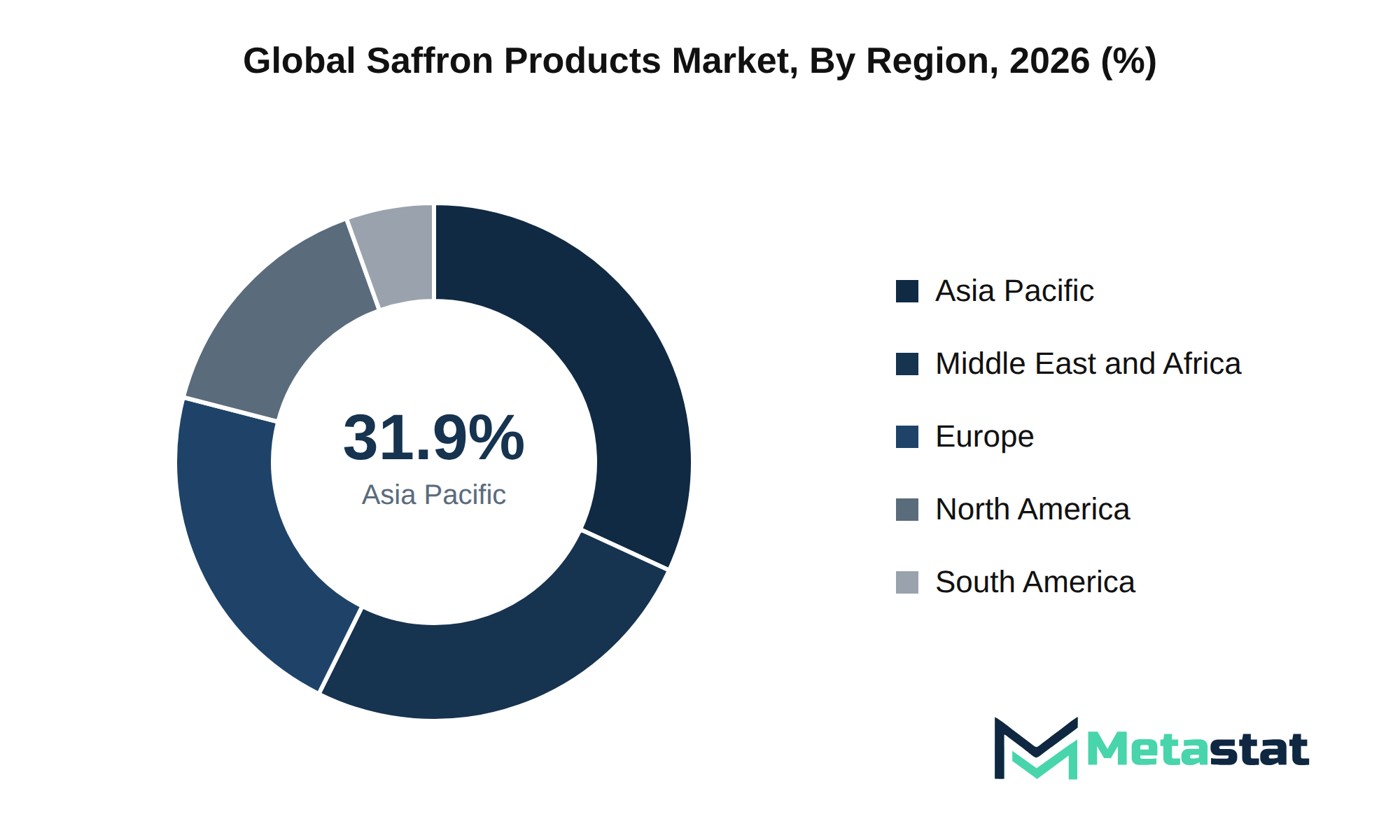
North America Saffron Products market is set to expand at a CAGR of 7.9% within the forecast period, reaching a market size (TAM) of USD 145.3 million by the end of 2033. The share of the global market in 2025 stands at 15.5%. Key demand drivers include increasing awareness of the health benefits associated with saffron and the growing trend of using natural ingredients in food and beverages. The market exhibits significant growth potential in the United States, Canada, and Mexico, fueled by rising consumption of saffron in dietary supplements and personal care products.
Regional supply chains benefit from localized manufacturing densities and enhanced infrastructure readiness, which support timely distribution and product availability. Domestic market participants actively invest in expanding their production capabilities and competitive positioning, thereby shaping the market dynamics. The presence of various distribution channels, including supermarkets, specialty stores, and online retail platforms, further enhances consumer access to saffron products.
Overall, the North America Saffron Products market exhibits significant growth potential driven by evolving consumer preferences, increasing health consciousness, and a shift towards natural ingredients in various applications. These factors position the region favorably within the global saffron landscape, contributing to anticipated market expansion.
Europe's share of the Saffron Products market stands at 21.7% in 2025, indicating a robust presence within the global landscape. The rising demand for high-quality food products, particularly in culinary applications, drives growth across Germany, France, Italy, Spain, and the UK. Increasing consumer interest in organic options propels the market towards sustainable sourcing practices, with consumers seeking products that align with health-conscious lifestyles.
The regional emphasis on innovation in product offerings encourages segment expansion, particularly in food and beverages and dietary supplements. Germany and France emerge because frontrunners, showing significant growth potential attributed to their strong culinary traditions and consumer bases that prioritize premium ingredients. Adoption of saffron in pharmaceuticals and herbal medicinal products enhances the market’s appeal among health-focused consumers, with increasing regulatory support promoting local production.
Competitive dynamics reflect a landscape where domestic players strengthen their positions through strategic partnerships and localized manufacturing. Supply chain regionalization efforts, including nearshoring initiatives, enhance the reliability of saffron supply, ensuring consistent availability for European markets. The market benefits from cultural nuances favoring saffron in traditional dishes, which supports sustained demand across various applications.
Investment in infrastructure modernization improves distribution channels, facilitating efficient access to consumers. Growth in online retail channels complements traditional sales avenues, further enhancing market reach. The potential for increased foreign direct investment (FDI) into the region reflects confidence in long-term market viability, supporting future growth in the Saffron Products market.
Asia-Pacific emerges because a significant region in the Saffron Products market, accounting for 31.9% of the global market share in 2025. The growth trajectory in this region is driven by increasing consumer interest in health and wellness products, which directly influences demand for saffron-derived dietary supplements and nutraceuticals.
China, Japan, India, and South Korea lead the region due to their robust consumer markets and cultural affinity for saffron in cuisine and traditional medicine. Australia and Southeast Asia are expanding their adoption of saffron products, offering opportunities for suppliers to penetrate these underexplored territories.
Infrastructure modernization further supports market growth. Advancements in distribution networks enhance product availability. Local manufacturing initiatives improve cost efficiency and supply chain resilience, allowing vendors to respond effectively to regional demand fluctuations.
Investment in foreign direct investment (FDI) facilitates market entry for international players, encouraging competition and innovation. Local market participants are consolidating their positions, contributing to a dynamic competitive landscape that promotes product diversification and improved service delivery in the market.
The presence of cultural nuances influences regional buying behaviors, with consumers showing a preference for authentic and premium saffron products. This trend encourages suppliers to adapt marketing strategies that align with local values and preferences, ultimately enhancing brand loyalty and customer engagement.
The Saffron Products market in South America captures a share of 5.5% of the global market in 2025. Key countries driving this market include Brazil and Argentina, alongside the Rest of South America. Rising consumer awareness regarding health benefits and the increasing popularity of organic products support market growth. Local demand for premium food and beverage offerings enhances the market potential.
Investment in local cultivation and production facilities optimizes the supply chain, while cultural preferences for traditional and authentic flavors influence purchasing decisions. Regional players focus on establishing strong distribution networks to improve market access. These dynamics create opportunities for significant growth within the Saffron Products market.
The Middle East and Africa region holds a substantial 25.5% share of the global Saffron Products market in 2025. Key drivers of market growth include rising consumer awareness regarding the health benefits of saffron, influencing demand across various applications, particularly in dietary supplements and pharmaceuticals. Countries including Saudi Arabia and the UAE exhibit increasing investments in the agricultural sector, enhancing local saffron cultivation and production capabilities. South Africa shows a growing interest in natural and organic products, contributing to the demand for saffron-based offerings.
The market experiences notable expansion in segments like organic saffron, driven by changing consumer preferences towards sustainable and high-quality products. Local procurement dynamics vary significantly, reflecting cultural nuances in purchasing decisions, especially in the specialty and gourmet sectors. Enhanced distribution channels, including supermarkets and hypermarkets, facilitate broader access to saffron products, appealing to a diverse consumer base throughout the region.
Geopolitical factors and regional trade policies impact supply chain dynamics, influencing market accessibility. Domestic players and local vendors play crucial roles, often leading to consolidation trends aimed at increasing market share. Foreign Direct Investment (FDI) flows support modernization efforts in saffron production, creating growth opportunities within underpenetrated territories. Overall, the regional landscape presents unique challenges and opportunities that shape the trajectory of the Saffron Products market.
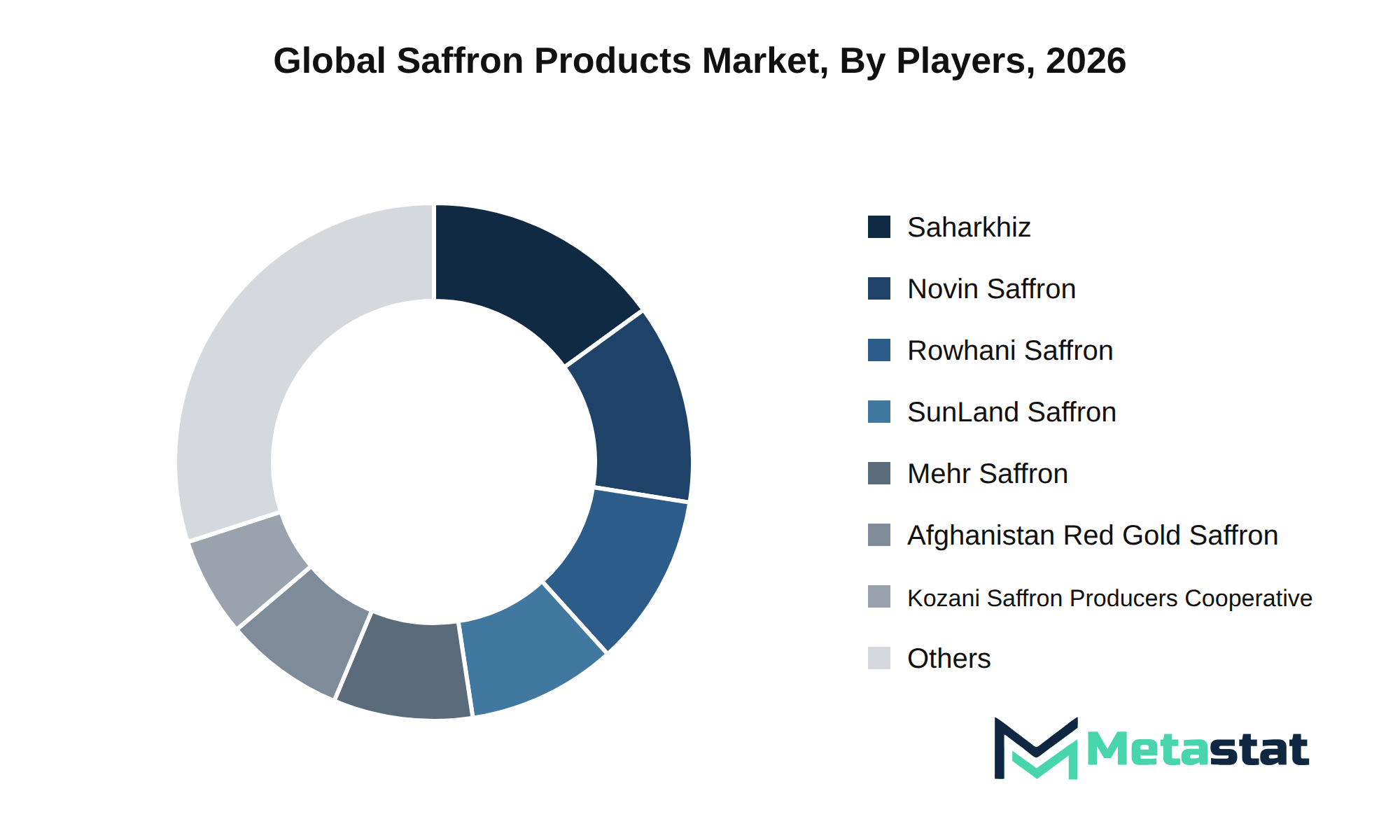
The Saffron Products market experiences a competitive environment shaped by the strategic behaviors of key players. Major companies focus on product differentiation through the introduction of organic and specialty saffron varieties, appealing to health-conscious consumers. Firms including Saharkhiz Group and Novin Saffron Company invest in organic certification, enhancing their market positioning.
Strategic alliances and joint ventures between players facilitate supply chain integration, improving procurement leverage across regions. Companies like Rayan Herat Saffron Producing, Processing and Packing Company collaborate with local farmers, ensuring consistent quality and supply chain dominance. This integration enhances brand equity, resulting from consumers increasingly associating quality with reputable sourcing practices.
The threat of new entrants in the Saffron Products market remains moderate, influenced by established brands with strong intellectual property portfolios. Firms including Mehr Saffron and Afghanistan Red Gold Saffron Company leverage their proprietary technologies to maintain competitive advantage, making market entry challenging for newcomers. High switching costs for customers reinforce the strong position of existing players.
Future competitive outlooks indicate a focus on expanding R&D pipelines to innovate product offerings. Companies like Pharmactive Biotech Products, S.L. actively explore new applications of saffron in pharmaceuticals and nutraceuticals, catering to diverse consumer needs. This ongoing investment in product development reflects a commitment to sustaining growth in an evolving market.
The saffron products market relies on rigorous standardized metrics to establish trade values, verify authenticity, and grade finished product lots. Because saffron is commercially valued by its sensory attributes, international transactions depend heavily on standardized laboratory grading rather than visual appearance alone.
The ISO 3632 saffron quality standard establishes objective testing protocols through spectrophotometric analysis. This standard quantifies three core bioactive metabolites that dictate the commercial value of the spice.
Crocin (primary color compound) represents the water-soluble carotenoid responsible for yellow-orange pigmentation. Laboratory grading measures crocin absorbance at a wavelength of approximately 440 nanometers. A higher crocin score directly correlates with stronger coloring power in food and beverage manufacturing.
Picrocrocin (flavor compound) provides the characteristic bitter taste profile of the spice. Evaluated at 257 nanometers, picrocrocin levels reflect proper post-harvest handling. When picrocrocin degrades naturally or through controlled dehydration, it hydrolyzes to produce safranal.
Safranal (aroma compound) governs the volatile fragrance of dried stigmas. Measured at roughly 330 nanometers, safranal content increases during the curing phase. Precise equilibrium between crocin retention and safranal development determines the overall sensory quality of the batch.
ISO 3632-1 establishes quality categories based on spectrophotometric absorbance thresholds. These numerical classifications dictate wholesale pricing across international trade hubs.
Category I, commonly designated as Grade I, requires a minimum crocin coloring strength reading of 190 to 200 depending on laboratory test revisions. Grade I commands the highest price premium in commercial retail, dietary supplement, and pharmaceutical markets.
Category II and Category III reflect lower crocin concentration thresholds, ranging between 120 and 189. These tiers frequently incorporate portions of the floral style alongside the red stigmas. Food processors use these lower grades for ground spice blends, institutional catering, and ready-meal applications where visual aesthetics matter less than cost control.
Saffron failing to reach Category III thresholds is classified as Category IV or rejected as substandard. B2B buyers routinely demand ISO 3632 certificates of analysis before finalizing purchase agreements to prevent margin losses from inferior shipments.
Post-harvest handling determines the shelf stability, chemical integrity, and market tier of commercial saffron. Processing steps separate valuable bioactive materials from non-functional plant debris.
Commercial saffron originates exclusively from the dried trifid stigmas of Crocus sativus (botanical name). The distinction of saffron threads vs stigma cuts defines raw material grading across wholesale origins.
A complete saffron thread consists of three crimson stigmas attached to a slender yellow or white style. The style contains negligible quantities of crocin or safranal. Consequently, market value increases as processors trim away the style to concentrate the pure red tissue.
Negin grade saffron represents the most prized Iranian cut. Negin features long, thick, all-red stigmas with no style material attached. Its threads remain straight, intact, and visually striking, yielding superior crocin concentrations.
Sargol grade saffron consists of pure red stigma tips separated from the style. While Sargol matches Negin in chemical potency, the threads are shorter and contain more broken fragments. This form is common in luxury consumer packaging and extracts.
Pushal grade saffron contains the red stigmas attached to one to three millimeters of the pale yellow style. Pushal sells at a lower price point than Sargol. Many retail buyers prefer Pushal because the attached style provides physical proof against synthetic thread substitution.
Industrial demand shapes product development across multiple physical presentations, each targeting specific processing requirements.
Whole dried threads represent the traditional form factor for retail and gourmet culinary channels. Threads preserve volatile safranal longer than ground forms. However, culinary applications require manual steeping before use, creating preparation friction in high-throughput food service.
Saffron powders deliver immediate dispersion in industrial dry mixes, baked goods, and confectioneries. Despite operational convenience, saffron powder faces severe skepticism regarding adulteration. Milling also accelerates aromatic degradation unless processors use oxygen-barrier packaging.
Liquid saffron extracts and standardized oleoresins are expanding rapidly across beverage, cosmetics, and nutraceutical formulations. Liquid formats allow accurate dosing, uniform color matching, and seamless blending into water-based or emulsion matrices without physical residue.
The global saffron trade remains highly concentrated within the Middle East, with Iran serving as the primary anchor of worldwide output.
Iranian saffron (Khorasan region) accounts for roughly 85% to 90% of total global saffron production. The provinces of Razavi Khorasan and South Khorasan provide optimal ecological conditions, characterized by arid terrain, dry autumns, and low rainfall.
Generational farming infrastructure enables Khorasan to mobilize massive seasonal labor forces during the short autumn harvest window. The sheer volume of Iranian production stabilizes base inventory for global supply chains, supplying international food processors with bulk raw materials.
Despite commanding global production volumes, Iranian producers capture only a fraction of downstream retail value. International banking restrictions and commercial sanctions restrict direct access to major Western consumer markets.
Consequently, large volumes of Iranian saffron export in bulk to intermediaries in the United Arab Emirates, Spain, and Turkey. These trading hubs recondition, package, and brand the product under European or regional labels for global distribution. Iranian trade organizations are investing in domestic packaging technologies to retain export margins within the origin market.
Importers actively diversify sourcing channels to mitigate geopolitical bottlenecks and severe weather risks in primary production centers.
Afghanistan Herat saffron production has expanded into a major commercial alternative over the past two decades. Supported by agricultural development programs, Herat provides a climate and soil profile closely mirroring neighboring Khorasan.
Afghan saffron frequently secures Grade I laboratory scores due to high sunshine hours and strict hand-processing standards. Global buyers view Herat as an important supply channel for high-crocin threads, supporting rural agricultural economies in the region.
Kashmiri Mongra saffron represents one of the most distinctive geographic varieties in the market. Grown in the high-altitude lacustrine plateaus, known locally as karewas, of the Pampore region in Jammu and Kashmir, it commands premium market pricing.
Mongra saffron consists of deep crimson, broad stigmas detached from the style. The local microclimate, marked by cold winters and nutrient-dense soils, fosters elevated natural crocin and picrocrocin levels. Kashmiri saffron holds a registered Geographical Indication (GI) tag, protecting its premium status against unauthorized blending.
European producers emphasize strict origin validation through Protected Designation of Origin (PDO) regulatory frameworks.
Spanish La Mancha saffron (Azafrán de La Mancha PDO) is distinguished by its unique toasting process. Producers gently dry harvested stigmas over low heat rather than air-drying them. This thermal curing yields a firm texture, deep color, and concentrated smoky-floral aroma.
Greek Kozani PDO saffron (Krokos Kozanis PDO), cultivated in Northern Greece, operates under a single centralized agricultural cooperative. The Kozani cooperative enforces strict moisture and chemical benchmarks, delivering consistent Grade I shipments tailored to pharmaceutical and health-food clients.
Saffron ranks among the most price-volatile agricultural commodities worldwide. Its market value reflects intense labor requirements, climatic sensitivity, and financial speculation.
Crocus sativus blooms during a brief two-to-three-week window in autumn. Unseasonal frost, prolonged droughts, or heavy precipitation during flowering severely damage delicate petals and stigmas.
Extreme temperature fluctuations across primary production basins cause sudden yield drops. Because it requires roughly 150,000 flowers and significant manual field labor to yield one kilogram of dried spice, even minor harvest reductions trigger sharp wholesale price increases.
Macroeconomic shifts in origin countries heavily influence pricing. Currency depreciations in major exporting nations cause volatile local pricing swings. Foreign buyers frequently experience price turbulence as local currencies shift against the US Dollar and the Euro.
Intermediaries occasionally hoard bulk dried inventory during strong harvest years to artificially restrict export availability. This speculative buffering amplifies year-over-year pricing cycles across major import hubs.
High monetary value makes saffron a persistent target for economic adulteration. Fraudulent practices distort genuine pricing mechanisms and compromise food safety.
Common saffron adulteration methods (turmeric, safflower) involve diluting pure threads with cheaper botanical lookalikes. Unscrupulous suppliers blend shredded safflower petals (Carthamus tinctorius), marigold florets, corn silk, or coconut fibers into authentic batches.
Other fraudulent techniques involve coating genuine stigmas with heavy mineral salts, sugar syrup, or vegetable oils to increase bulk weight. In severe cases, spent saffron threads that have already been extracted are redyed using industrial colorants such as tartrazine, sunset yellow, or erythrosine.
Basic spectrophotometric screening can occasionally miss sophisticated adulteration using artificial dyes. Consequently, modern analytical laboratories deploy multi-layered diagnostic testing.
High-Performance Liquid Chromatography coupled with Diode Array Detection (HPLC-DAD) separates and identifies individual pigments, distinguishing natural crocin isomers from synthetic additives. Mass spectrometry (LC-MS) reveals foreign botanical markers, while DNA barcoding accurately detects the presence of safflower, turmeric, or non-crocus plant DNA in powdered consignments.
International market access requires strict compliance with food safety thresholds, pesticide residues, and labeling standards established by regional authorities.
The European Union maintains stringent Maximum Residue Limits (MRLs) for synthetic pesticides, heavy metals, and mycotoxins in imported spices. Shipments undergo rigorous border testing for banned chemical colorants.
When saffron components serve as concentrated dietary supplements, manufacturers must navigate EU Novel Food frameworks. Standardized health claims regarding mood support or sleep improvement require substantial clinical substantiation under European Food Safety Authority (EFSA) guidance.
The United States Food and Drug Administration (FDA) regulates saffron through botanical purity, sanitation, and labeling enforcement. Imports must comply with the Foreign Supplier Verification Program (FSVP) under the Food Safety Modernization Act.
The FDA monitors shipments for filth, microbial pathogens like Salmonella, and economic adulteration. Products containing foreign dyes or undeclared botanical fillers face immediate import alerts and detention without physical examination.
The Gulf Cooperation Council Standardization Organization (GSO) enforces unified standards across key Middle Eastern distribution hubs. Regulatory bodies mandate strict moisture limits and ISO 3632 grade declarations on commercial packaging.
Halal compliance remains mandatory across the Middle East. Suppliers must verify that processing facilities, extraction solvents, and secondary ingredients used in encapsulated or liquid saffron formulations meet verified Halal standards.
The saffron supply chain represents a complex, multi-tiered network bridging rural smallholder farming communities with sophisticated multinational consumer brands.
Harvesting constitutes the most critical operational bottleneck in the entire value chain. Farmers must pluck flowers by hand at dawn before direct sunlight wilts the petals and degrades delicate carotenoids.
Workers immediately strip the red stigmas from the surrounding flower. Stigmas must undergo drying within hours to halt enzymatic decay. Modern operations replace traditional room-temperature drying with controlled dehydrators, preserving bright red coloration and preventing mold contamination.
Rural smallholders typically sell modest quantities of dried saffron to local village collectors. These aggregators consolidate lots and supply regional wholesale bazaars.
Exporters purchase bulk lots, homogenize batches, verify laboratory grades, and package the spice for international buyers. Because initial producers rarely possess direct international logistics or branding capabilities, downstream packaging companies and consumer brands capture the vast majority of retail profit margins.
Technological modernization is gradually transforming traditional saffron cultivation, addressing chronic labor dependencies and weather-induced yield variability.
Controlled-environment agriculture (CEA) represents an emerging frontier for saffron production. AgTech startups deploy indoor vertical farming setups using aeroponic and hydroponic systems.
In aeroponic facilities, corms develop without soil inside climate-controlled rooms. Automated sensors regulate temperature, humidity, and lighting cycles to mimic optimal autumn conditions. This technology accelerates flowering, protects crops from external weather shocks, and yields clean, contaminant-free stigmas with high crocin concentrations.
Post-harvest automation aims to resolve severe labor constraints. Engineers are developing optical sorting machines equipped with computer vision to separate flowers and cut stigmas mechanically.
Precision electric dehydrators are widely replacing open-air sun drying. Programmable heating profiles control moisture reduction curves, preventing scorching while maximizing the chemical conversion of picrocrocin into aromatic safranal.
Consumer preferences for sustainable, ethically sourced agricultural goods are reshaping production priorities in traditional saffron regions.
Intensive mono-cropping often degrades arid agricultural soils and exposes Crocus sativus corms to fungal pathogens like Fusarium oxysporum. In response, forward-looking growers adopt regenerative soil management techniques.
Farms integrate crop rotation, beneficial mycorrhizal fungi, and organic compost to enhance soil microbial diversity. Eliminating synthetic fungicides prevents toxic chemical accumulation in dried stigmas and protects sensitive pollinator populations during the flowering cycle.
Certified organic saffron commands substantial price premiums across European, North American, and East Asian health-food markets. Organic certification guarantees the absence of artificial growth enhancers and toxic chemical residues.
Fair-trade certifications are also gaining traction among conscious consumers. These certifications ensure ethical wage structures for seasonal female harvest workers, promoting equitable revenue distribution across rural farming communities.
Market size is forecast to rise from USD 487.4 million in 2025 to over USD 895.7 million by 2033. The base case anticipates growth driven by increasing consumer awareness of the health benefits of saffron, influencing demand across various applications including dietary supplements and cosmetics. Such shifts result from broader macroeconomic patterns, with greater disposable incomes enabling higher spending on premium products.
The bull case considers accelerated adoption of saffron products due to innovations in extraction and processing technology, leading to enhanced product offerings. Conversely, the bear case highlights potential disruptions from geopolitical tensions and supply chain challenges that impede growth rates, affecting availability and pricing structures.
Investments in research and development are projected to drive new product introductions and support market expansion. Compliance with evolving regulations will require strategic capital allocation, ensuring companies remain competitive in the market. Future growth recommendations focus on identifying emerging opportunities in organic and specialty segments, targeting health-conscious consumers seeking authentic and high-quality saffron products.
The report strategically identifies and profiles the key market players and analyses their core competencies in each sub-segment of the Saffron Products market.
|
Report Attributes |
Details |
|
Study Period |
2021-2033 |
|
Base Year |
2025 |
|
Estimated Year |
2026 |
|
Forecast Period |
2026-2033 |
|
Historical Period |
2021-2025 |
|
Growth Rate |
CAGR 7.9% from 2026 to 2033 |
|
Revenue Unit |
USD million |
|
Segmentation |
By Type, Nature, Application, Distribution Channel, and Region |
|
By Region |
North America (By Type, Nature, Application, Distribution Channel, and Country)
|
|
Europe (By Type, Nature, Application, Distribution Channel, and Country)
|
|
|
Asia Pacific (By Type, Nature, Application, Distribution Channel, and Country)
|
|
|
South America (By Type, Nature, Application, Distribution Channel, and Country)
|
|
|
Middle East and Africa (By Type, Nature, Application, Distribution Channel, and Country)
|
Find answers to common questions about this report
The Saffron Products market size was valued at USD 487.4 million in 2025, according to the Metastat Insights study.
The Saffron Products market is projected to grow at a CAGR of 7.9% during the forecast period from 2026 to 2033.
The North America Saffron Products market size is estimated to reach USD 145.3 million by 2033.
Saffron Threads leads the Saffron Products market with a projected value of USD 312.7 million by 2033, based on its growth trajectory compared to other segments.
Key drivers for the Saffron Products market include increasing health consciousness and demand for premium ingredients, which enhance saffron's appeal in food, beverages, and dietary supplements. Urbanization trends and rising disposable incomes further support market growth by encouraging consumers to seek convenience and quality in their purchases.
Rising operational costs significantly restrain the Saffron Products market growth, impacting profitability for producers. Escalating expenses related to cultivation, processing, and distribution, along with high capital investment requirements, deter new entrants and limit expansion opportunities for existing players. Supply chain disruptions and geopolitical instability further complicate market dynamics, affecting availability and pricing.
Increasing health consciousness and interest in premium ingredients among consumers favor product adoption in the Saffron Products market. The shift towards organic and natural products, coupled with rising disposable incomes, drives demand for saffron in food, beverages, and dietary supplements. This trend aligns with consumer preferences for clean label ingredients and health-focused formulations.
The Saffron Products market is estimated to reach a valuation of USD 895.7 million by 2033.
Key players in the Saffron Products market include Saharkhiz Group, Novin Saffron Company, Rowhani Saffron, SunLand Saffron, Mehr Saffron, Afghanistan Red Gold Saffron Company, and McCormick & Company, Inc.
The organic segment is projected to reach USD 249.2 million by 2033, with a compound annual growth rate of 11.1%.
Food supplements and nutraceuticals represent the fastest-growing end-user sector for saffron. While culinary applications continue to dominate overall consumption volume, clinical research validating saffron's mood-enhancing, sleep-improving, and antioxidant properties is accelerating commercial adoption in functional health and wellness products.
Organic certification verifies that saffron is cultivated without synthetic pesticides, chemical fertilizers, or artificial dyes. In premium nutraceutical, cosmetics, and clean-label food segments, organic certification reinforces consumer trust, ensures compliance with strict international residue standards, and unlocks higher wholesale and retail profit margins.
Iran accounts for approximately 85% to 90% of global saffron production volume, centered primarily in the Khorasan region. The remaining 10% to 15% is produced across Afghanistan, India, Greece, Spain, Morocco, and smaller emerging agricultural zones.
Liquid saffron extracts offer standardized crocin potency, immediate dispersion, and streamlined manufacturing compared to whole threads. While traditional threads remain favored for luxury presentation and visual authenticity, liquid extracts eliminate brewing steps and deliver consistent, batch-to-batch flavor and color across industrial food processing.
Laboratories detect saffron adulteration using ISO 3632 spectrophotometry, HPLC chemical profiling, mass spectrometry, and DNA testing. Fraud involving dyed fillers or botanical substitutes erodes buyer trust, depresses fair wholesale pricing for authentic growers, and forces international importers to mandate strict third-party lab verification.
Severe weather events, manual harvest labor availability, currency exchange volatility, and speculative trading drive year-over-year price fluctuations. Because the crop blooms for only a few weeks and requires intensive hand-picking, sudden droughts, unexpected frosts, or regional labor shortages quickly disrupt international wholesale inventory.
Iran, India, Spain, and Greece produce the highest quality saffron. Terroir matters because elevation, soil drainage, sunny autumns, and dry flowering climates directly shape crocin, picrocrocin, and safranal concentrations. Kashmir's high-altitude plateaus and La Mancha's arid plains create distinct, prized chemical profiles.
Grade differences reflect chemical purity and coloring strength under ISO 3632 testing. Grade I requires the highest crocin absorbance reading of 190 or above, containing pure red stigmas that command top prices. Lower grades contain more yellow styles or degraded compounds, reducing coloring power and market value.
The analysts below cover Food and Beverages research at Metastat Insights.
LEAD ANALYST
Utkarsh Khirodkar is a Lead Market Research Analyst at MetaStat Insight, specializing in market intelligence, technology sector assessments, and competitive strategy.

LEAD PRINCIPAL ANALYST, PHARMA AND HEALTHCARE
Food and Beverages · Healthcare · Healthcare IT · Medical Devices
Ajay Devgire is the Lead Healthcare Analyst at MetaStat Insight, leading strategic research and market intelligence initiatives across the global healthcare domain.

SENIOR RESEARCH ANALYST
Biotechnology · Food and Beverages · Medical Devices · Packaging
Snehal Pasalkar is a Research Analyst at MetaStat Insight, operating at the intersection of life sciences research, competitive strategy, and market intelligence.
Evaluating secondary resin quality across post-consumer packaging streams requires reliable technical segmentation. MetaStat Insight delivered an objective assessment that distinguished between extrusion-grade flake pricing and optical sorting throughput limitations across Western Europe. The competitive positioning breakdown for licensed depolymerization technology providers answered several questions during our feedstock feasibility audit. Their team clarified regional trade restrictions on mixed plastic scrap quickly when our team submitted follow-up requests.
Evaluating sovereign cloud deployments for core banking platforms demands a clear view of data residency regulations and migration exit strategies. MetaStat Insight delivered an exhaustive review of regional latency tolerances, mainframe decommission milestones, and third-party vendor concentration risk. The regulatory compliance mapping across European and Asian financial jurisdictions gave our team a dependable baseline for multi-cloud infrastructure discussions.
Replacing petrochemical surfactants with bio-based alternatives requires realistic timelines on industrial precision fermentation scaling. The market research broke down commercialization timelines, feedstock sugar price sensitivities, and regional cosmetic ingredient regulatory approvals in Europe and East Asia. That supplier readiness mapping gave our formulations team reliable context when comparing renewable chemical sourcing roadmaps.
Explore related market intelligence reports worth reading alongside this one.