
LEAD ANALYST
Utkarsh Khirodkar is a Lead Market Research Analyst at MetaStat Insight, specializing in market intelligence, technology sector assessments, and competitive strategy.

B2B Sports Nutrition Market Size, Share, By Application (Endurance, Strength Training, Muscle Growth, Recovery, Energy, Weight Management, Immunity Enhancement, and Cognitive Repairment), By Distribution Channel (Gym, Fitness Studio, and Sports Academies), Industry Analysis, Growth, Trends, and Forecast, 2026-2033
Report ID
MSI-4587
Published
April, 2026
Pages
320 Pages
Format
Report Details
Choose Your License
B2B Sports Nutrition Market
The Global B2B Sports Nutrition market size was valued at USD 4,729.3 million in 2025 and projected to grow at a CAGR of 7.2% during the forecast period, reaching USD 8,249.4 million by 2033.
Global B2B Sports Nutrition market valued at USD 4,729.3 million in 2025, growing at a CAGR of 7.2% through 2033, with potential to exceed USD 8,249.4 million.
North America accounted for 35.2% share in 2025, led by the U.S.
Endurance segment accounts for an 11.0% share in 2025.
Key trends driving growth include rising gym penetration and organized sports participation, propelling institutional and channel demand for protein, hydration, and performance formats. Increased product innovation in high-protein, ready-to-mix, and functional ingredient blends is accelerating B2B sourcing and private-label expansion.
Opportunities include personalized and condition-specific sports nutrition is opening higher-value B2B contracts for bespoke formulations and rapid SKU customization.
Key insight: Performance-focused workforce wellness programs and data-driven nutrition partnerships are reshaping procurement priorities across the Global B2B Sports Nutrition Market.
Global B2B Sports Nutrition Market is moving from commodity bulk supply and finished-product transactions toward an integrated performance-solutions model serving professional sports teams, gym chains, sports academies, rehabilitation centers, and corporate wellness programs. Procurement decisions are shifting toward consistency, traceability, and claim-compliant formulations aligned with institutional protocols, driving longer-term contracts, private-label programs, and contract manufacturing partnerships.
Over the forecast period, competition will center on data-enabled nutrition programs where formulations are co-developed with performance analytics and biometric monitoring platforms. Partnerships with sports scientists, physiologists, and digital health providers will support personalization at scale across macronutrient timing, micronutrient delivery, and hydration strategies tailored to training loads and occupational needs, strengthening outcome-linked agreements and rapid SKU customization.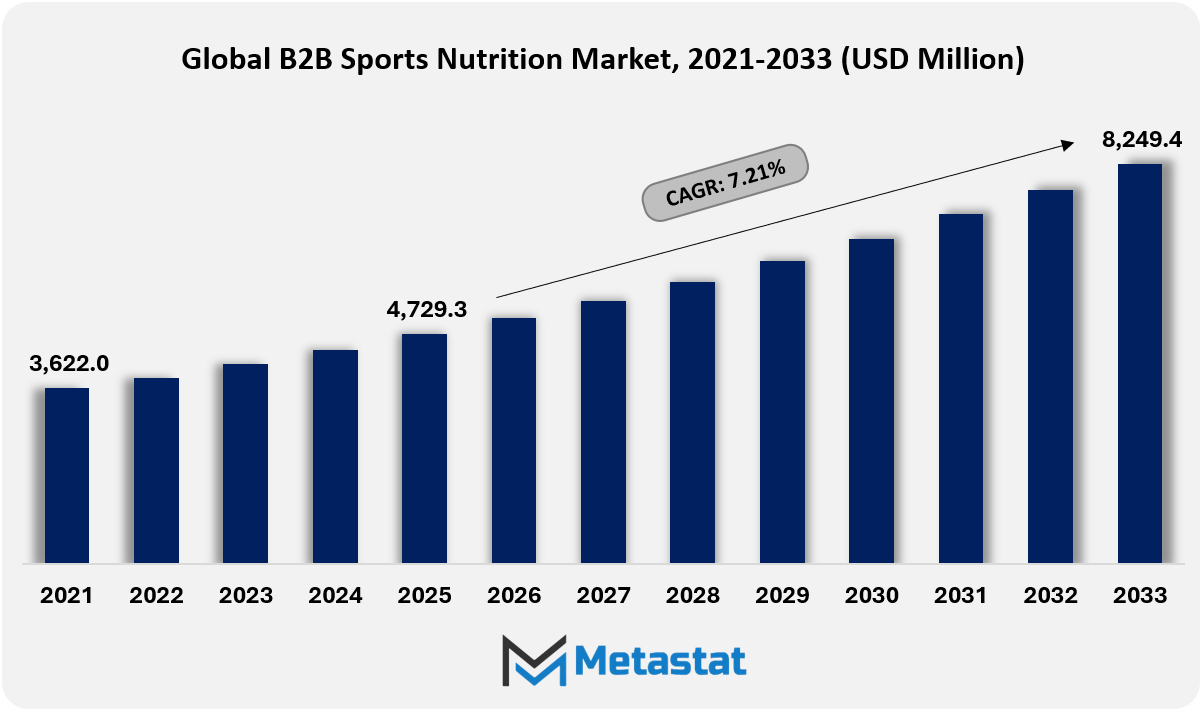
Rising gym penetration and organized sports participation are propelling institutional and channel demand for protein, hydration, and performance formats.
Fitness chains, sports academies, and training centers will continue scaling procurement volumes. Forward-looking buying models emphasize consistent nutrition supply to support athlete performance programs and long-term wellness strategies across professional environments.
Increased product innovation in high-protein, ready-to-mix, and functional ingredient blends is accelerating B2B sourcing and private-label expansion.
Manufacturers will prioritize differentiated formulations supporting endurance, recovery, and strength outcomes. Advanced blending techniques and clean label positioning improve buyer confidence, encouraging deeper supplier partnerships and expanded product portfolios.
Ingredient price volatility and supply variability for proteins, sweeteners, and functional actives constrain margin stability for B2B buyers.
Future procurement planning faces uncertainty connected to agricultural output, global trade shifts, and input shortages. Cost forecasting complexity affects contract negotiations and encourages diversified sourcing strategies.
Stricter quality, labeling, and claim substantiation requirements increase compliance cost and lengthen onboarding cycles for suppliers.
Regulatory oversight will intensify across regions, requiring robust documentation and testing protocols. Extended approval timelines impact launch schedules, requiring increased investment in quality assurance infrastructure and regulatory expertise.
Growth in Personalized and condition-specific sports nutrition is opening higher-value B2B contracts for bespoke formulations and rapid SKU customization.
Emerging demand centers on targeted nutrition supporting endurance, recovery, immunity, and metabolic balance. Flexible manufacturing capabilities will support future-ready partnerships built around precision nutrition solutions.
The Global B2B Sports Nutrition market is classified based on Application and Distribution Channel.
Endurance segment is estimated at USD 556.1 million in 2026 and is projected to reach USD 730.9 million by 2033, at a CAGR of 4% during the forecast period.
Endurance applications will gain importance across long-duration training programs and competitive sport formats. Formulations emphasizing sustained energy release, hydration balance, electrolyte delivery, and reduced gastrointestinal load will see higher institutional preference. Procurement teams will prioritize consistency of performance response, batch-to-batch quality, and label-compliant claims aligned with sanctioned sport requirements.
Strength Training segment is estimated at USD 866.8 million in 2026 and is projected to reach USD 1,313.3 million by 2033, at a CAGR of 6.1% during the forecast period.
Strength Training applications will expand across gyms and training facilities seeking performance-oriented nutrition programs. Formulations supporting strength output, power development, and recovery between high-intensity sessions will remain central. Buyers will prefer standardized dosing formats, evidence-backed actives, and compatibility with structured training regimens.
Muscle Growth segment is estimated at USD 1,358.2 million in 2026 and is projected to reach USD 2,342 million by 2033, at a CAGR of 8.1% during the forecast period.
Muscle Growth applications will progress with increased focus on lean mass development across organized fitness environments. Advanced protein blends, amino acid profiles, and nutrient timing solutions will remain procurement priorities. Buyers will favor products demonstrating high digestibility, absorption performance, and alignment with long-cycle physique conditioning programs.
Recovery segment is estimated at USD 766.9 million in 2026 and is projected to reach USD 1,470.9 million by 2033, at a CAGR of 9.7% during the forecast period.
Recovery applications will strengthen as training intensity rises and injury-risk management becomes a procurement priority. Solutions supporting muscle repair, inflammation management, and metabolic balance will see broader adoption. Institutional buyers will target shorter recovery windows between sessions and sustained readiness across seasons.
Energy segment is estimated at USD 496.8 million in 2026 and is projected to reach USD 668.2 million by 2033, at a CAGR of 4.3% during the forecast period.
Energy applications will stay relevant for facilities requiring reliable pre-workout support and consistent training intensity. Clean energy formats delivering stable output without sharp crashes will gain preference, supported by stimulant transparency and claim substantiation. Institutional usage will emphasize cardiovascular support, focus, and metabolic stability aligned with training protocols.
Weight Management segment is estimated at USD 422 million in 2026 and is projected to reach USD 682.2 million by 2033, at a CAGR of 7.1% during the forecast period.
Weight Management applications will increase within structured fitness and sports programs targeting monitored body-composition outcomes. Formulations supporting satiety, metabolic activity, and calorie-control protocols will see rising institutional use. Buyers will prioritize compliance-friendly ingredient systems and measurable composition outcomes within coaching-led environments.
Immunity Enhancement segment is estimated at USD 345.5 million in 2026 and is projected to reach USD 612.1 million by 2033, at a CAGR of 8.5% during the forecast period.
Immunity Enhancement applications will gain strategic relevance amid higher training loads and exposure risk in group settings. Micronutrient, probiotic, and functional ingredient blends positioned around immune resilience will expand in institutional portfolios. Facilities will prioritize reduced downtime, faster recovery cycles, and consistent athlete availability.
Cognitive Repairment segment is estimated at USD 252.8 million in 2026 and is projected to reach USD 429.8 million by 2033, at a CAGR of 7.9% during the forecast period.
Cognitive Enhancement applications will grow with rising emphasis on focus, reaction time, and decision quality in competitive settings. Formulations targeting alertness, stress modulation, and neural recovery will attract higher B2B interest, supported by clear dosing and safety documentation. Professional institutions will seek products aligned with high-pressure performance requirements and compliance standards.
Gym segment is projected to reach USD 4,431.6 million by 2033, at a CAGR of 6.6% during the forecast period.
Gyms will represent a major distribution channel supported by consistent demand and structured consumption patterns. Global B2B Sports Nutrition Market will benefit from long-term supply contracts, standardized product usage, and institution-level compliance requirements. Future development will depend on integrated nutrition programs aligned with training protocols and measurable performance outcomes.
Fitness Studio segment is projected to reach USD 2,552.4 million by 2033, at a CAGR of 8.7% during the forecast period.
Fitness Studios will contribute to market expansion through personal training models and group-based programs. Global B2B Sports Nutrition Market will see increased studio-level procurement for specialized nutrition support. Product demand will center on compact portfolios suited to varied class formats, member goals, and subscription-driven replenishment cycles.
Sports Academies segment is projected to reach USD 1,265.5 million by 2033, at a CAGR of 6.7% during the forecast period.
Sports Academies will strengthen market demand through athlete development initiatives and performance benchmarking. Global B2B Sports Nutrition Market will support academy-led nutrition frameworks focused on long-term conditioning and progression tracking. Institutional adoption will prioritize scientifically supported formulations aligned with competitive training standards and safeguarding requirements.
Based on geography, the Global B2B Sports Nutrition market is divided into North America, Europe, Asia-Pacific, South America, Middle East, and Africa.
North America B2B Sports Nutrition Market is set to expand at a CAGR of 7.2% within the forecast period, reaching a market size (TAM) of USD 2,631.6 million by the end of 2033.
North America drives the Global B2B Sports Nutrition Market through strong demand from professional sports companies and large-scale health chains searching for performance-centered bulk nutrition solutions.
North America supports market growth due to superior distribution networks and high adoption of technology-backed nutritional formulations across commercial shoppers.
Asia Pacific offers strong growth opportunities within Global B2B Sports Nutrition Market, supported by expanding fitness center franchises and increased sports participation across urban centers.
Asia Pacific shows higher growth potential through expanding corporate wellness programs and rising awareness of sports nutrition among institutional buyers.
Across the Middle East, Africa, and South America, the Global B2B Sports Nutrition Market indicates slow progress supported through enhancing health infrastructure, increasing distributor partnerships, and rising interest from emerging sports and wellness organizations.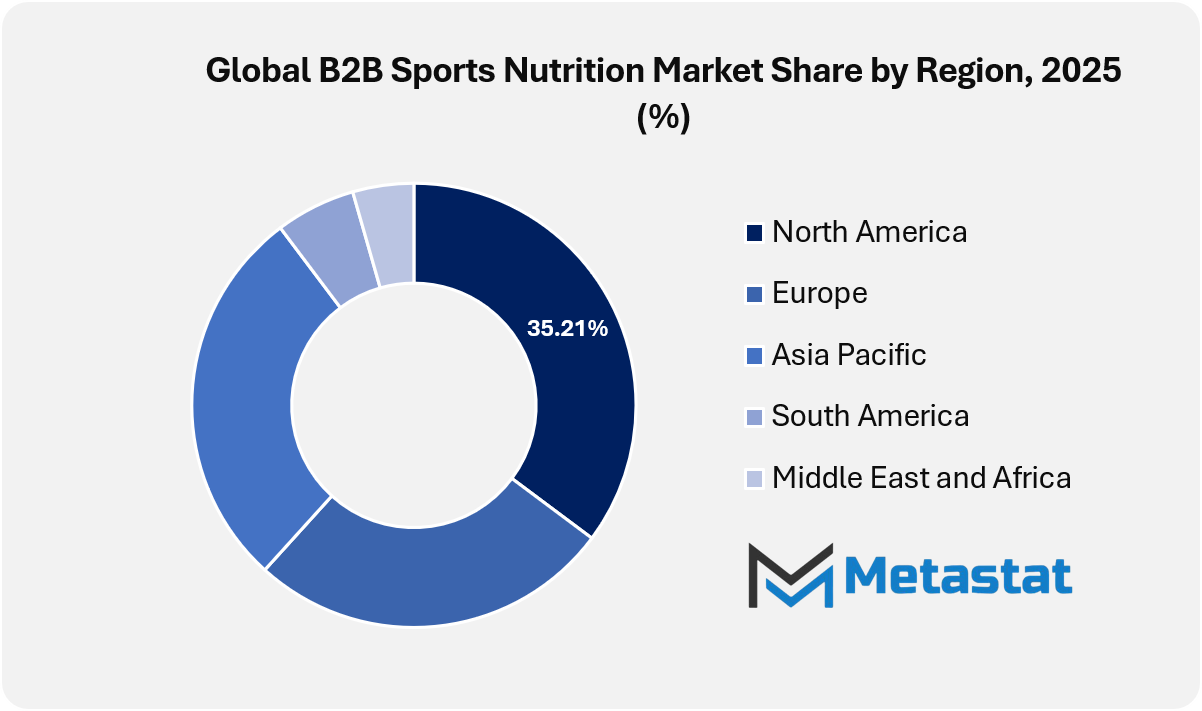
The Global B2B Sports Nutrition Market has grown into an established and performance-driven area where brands, ingredient suppliers, and manufacturing partners work closely to meet rising demand from Gym, sports teams, fitness chains, and health-targeted establishments. Unlike direct-to-consumer sales, the B2B model focuses on bulk supply, private labeling, contract manufacturing, and long-term partnerships. Category expansion is supported by increased focus on strength training, endurance sports, and active lifestyles across professional and semi-professional segments. Buyers in this market prioritize consistency, easy-to-formulate products, regulatory compliance, and the ability to scale manufacturing without affecting quality.
Established sports nutrition manufacturers play a strong role in shaping product requirements and category developments. Companies including Herbalife Nutrition with Herbalife24, Glanbia Performance Nutrition with Optimum Nutrition, Iovate Health Sciences International Inc. with MuscleTech, Nutrabolt with C4, Dymatize, Science in Sport, Applied Nutrition, USN, BioTechUSA, Nutrend, Olimp Laboratories, QNT, Grenade, THG Nutrition, Bulk.com, Ghost LLC, MusclePharm, and Evlution Nutrition support B2B channels through bulk supply, institutional delivery contracts, and custom product solutions. Their experience in method and branding allows commercial enterprise customers to access trusted products while maintaining their personal market positioning.
Behind completed merchandise, settlement manufacturers and private-label experts form the spine of delivery. Firms together with Vitaquest International, Capstone Nutrition, Makers Nutrition, Nutracap Labs, SMP Nutra, Robinson Pharma, and EuroCaps enable manufacturers to scale quickly, shorten improvement timelines, and respond to converting call for. These partners will remain essential as buyers seek flexibility across powders, ready-to-mix blends, capsules, tablets, and functional snacks. Their function is going beyond manufacturing, frequently covering sourcing, checking out, packaging, and compliance aid.
Ingredient providers carry balance and innovation to the market by ensuring reliable access to proteins, amino acids, dairy-based inputs, and useful additives. Major participants include Arla Foods Ingredients Group, FrieslandCampina Ingredients, Fonterra Co-operative Group Limited, Lactalis Ingredients, Hilmar Ingredients, Leprino Foods Company, Agropur Cooperative, Carbery Group, Ingredia SA, Armor Protéines, Milk Specialties Global, Kerry Group plc, International Flavors & Fragrances Inc., and Archer Daniels Midland Company. These suppliers will shape future product improvement through focusing on digestibility, sustainability, and performance advantages, making them primary to lengthy-time period boom throughout the Global B2B Sports Nutrition Market.
Market size is forecast to rise from USD 4,729.3 million in 2025 to over USD 8,249.4 million by 2033.
Beyond physical overall performance, cognitive patience and stress modulation will enter formal B2B nutrition portfolios, mainly for sectors demanding sustained alertness and restoration under pressure. As institutional demand matures, the Global B2B Sports Nutrition Market will position itself not merely as a provider network, but as an embedded overall performance infrastructure assisting education, recuperation, and long-term human optimization at scale.
By Application:
By Distribution Channel:
This research report categorizes the B2B Sports Nutrition market based on key segments and regions, forecasts revenue growth, and analyses trends in each submarket. The report analyses the key growth drivers, opportunities, and challenges influencing the B2B Sports Nutrition market. Recent market developments and competitive strategies such as expansions, product launches, partnerships, mergers, and acquisitions are included to draw the competitive landscape in the market.
The report strategically identifies and profiles the key market players and analyses their core competencies in each sub-segment of the B2B Sports Nutrition market.
|
Report Attributes |
Details |
|
Study Period |
2021-2033 |
|
Base Year |
2025 |
|
Estimated Year |
2026 |
|
Forecast Period |
2026-2033 |
|
Historical Period |
2021-2025 |
|
Growth Rate |
CAGR 7.2% from 2026 to 2033 |
|
Revenue Unit |
USD million |
|
Sales Volume Unit |
Kilotons |
|
Segmentation |
By Application, Distribution Channel and Region |
|
By Region |
North America (By Application, Distribution Channel, and Country)
|
|
Europe (By Application, Distribution Channel, and Country)
|
|
|
Asia Pacific (By Application, Distribution Channel, and Country)
|
|
|
South America (By Application, Distribution Channel, and Country)
|
|
|
Middle East and Africa (By Application, Distribution Channel, and Country)
|
Find answers to common questions about this report
Global B2B Sports Nutrition market is estimated to reach USD 8,249.4 million by 2033.
Top players operating in the B2B Sports Nutrition industry include Herbalife Nutrition (Herbalife24), Glanbia Performance Nutrition (Optimum Nutrition), Iovate Health Sciences International Inc. (MuscleTech), Nutrabolt (C4), Dymatize, and Science in Sport (SiS).
The Metastat Insights analysis shows that the North America B2B Sports Nutrition market size is estimated to be USD 2,631.6 million by 2033.
Ingredient price volatility and supply variability for proteins, sweeteners, and functional actives constrain margin stability for B2B buyers, limiting procurement flexibility during 2026-2033.
Rising gym penetration and organized sports participation are propelling institutional and channel demand for protein, hydration, and performance formats. Increased product innovation in high-protein, ready-to-mix, and functional ingredient blends is accelerating B2B sourcing and private-label expansion.
North America region dominates the market.
The Global B2B Sports Nutrition market is likely to grow at a CAGR of 7.2% over the forecast period (2026-2033).
Muscle Growth is the leading application segment in the Global market.
The Metastat Insights study shows that the Global B2B Sports Nutrition market size was USD 4,729.3 million in 2025.
The analysts below cover Food and Beverages research at Metastat Insights.
LEAD ANALYST
Utkarsh Khirodkar is a Lead Market Research Analyst at MetaStat Insight, specializing in market intelligence, technology sector assessments, and competitive strategy.

LEAD PRINCIPAL ANALYST, PHARMA AND HEALTHCARE
Food and Beverages · Healthcare · Healthcare IT · Medical Devices
Ajay Devgire is the Lead Healthcare Analyst at MetaStat Insight, leading strategic research and market intelligence initiatives across the global healthcare domain.

SENIOR RESEARCH ANALYST
Biotechnology · Food and Beverages · Medical Devices · Packaging
Snehal Pasalkar is a Research Analyst at MetaStat Insight, operating at the intersection of life sciences research, competitive strategy, and market intelligence.
Tracking maintenance cycle demand for secondary flight display units and terrain collision avoidance systems across regional jet fleets involves complex aftermarket dynamics. MetaStat Insight provided practical analysis separating airline retrofit programs from OEM forward-fit production schedules in North America and Southeast Asia. The supplier matrix highlighted component obsolescence timelines without resorting to vague generalizations. The dataset served as a dependable reference during our annual program review meetings.
Evaluating secondary resin quality across post-consumer packaging streams requires reliable technical segmentation. MetaStat Insight delivered an objective assessment that distinguished between extrusion-grade flake pricing and optical sorting throughput limitations across Western Europe. The competitive positioning breakdown for licensed depolymerization technology providers answered several questions during our feedstock feasibility audit. Their team clarified regional trade restrictions on mixed plastic scrap quickly when our team submitted follow-up requests.
Evaluating sovereign cloud deployments for core banking platforms demands a clear view of data residency regulations and migration exit strategies. MetaStat Insight delivered an exhaustive review of regional latency tolerances, mainframe decommission milestones, and third-party vendor concentration risk. The regulatory compliance mapping across European and Asian financial jurisdictions gave our team a dependable baseline for multi-cloud infrastructure discussions.
Explore related market intelligence reports worth reading alongside this one.