
LEAD ANALYST
Utkarsh Khirodkar is a Lead Market Research Analyst at MetaStat Insight, specializing in market intelligence, technology sector assessments, and competitive strategy.

Global Flexible Packaging Market Size, Share, By Product Type (Pouches, Bags and Sacks, Films and Rollstock, Sachets and Stick Packs, Flexible Tubes), By Material (Plastic, Paper, Aluminum Foil), By End-Use Industry (Food, Beverages, Pharmaceuticals and Healthcare, Personal Care and Cosmetics, Household Care, Pet Food, Industrial), By Printing Technology (Flexographic Printing, Rotogravure Printing, Digital Printing, Unprinted), Industry Analysis, Growth, Trends, and Forecast, 2026-2033
Report ID
MSI-5664
Published
November, 2026
Pages
276 Pages
Format
Historical
Base year
Forecast
Forecast period
Report Details
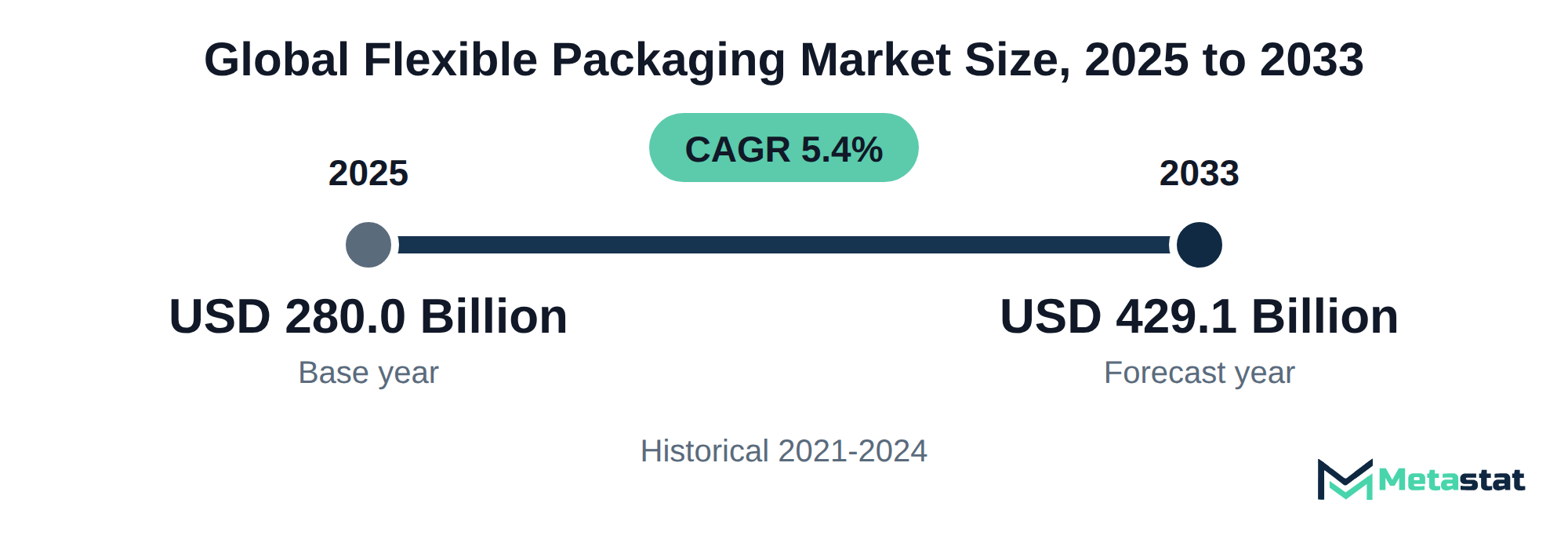
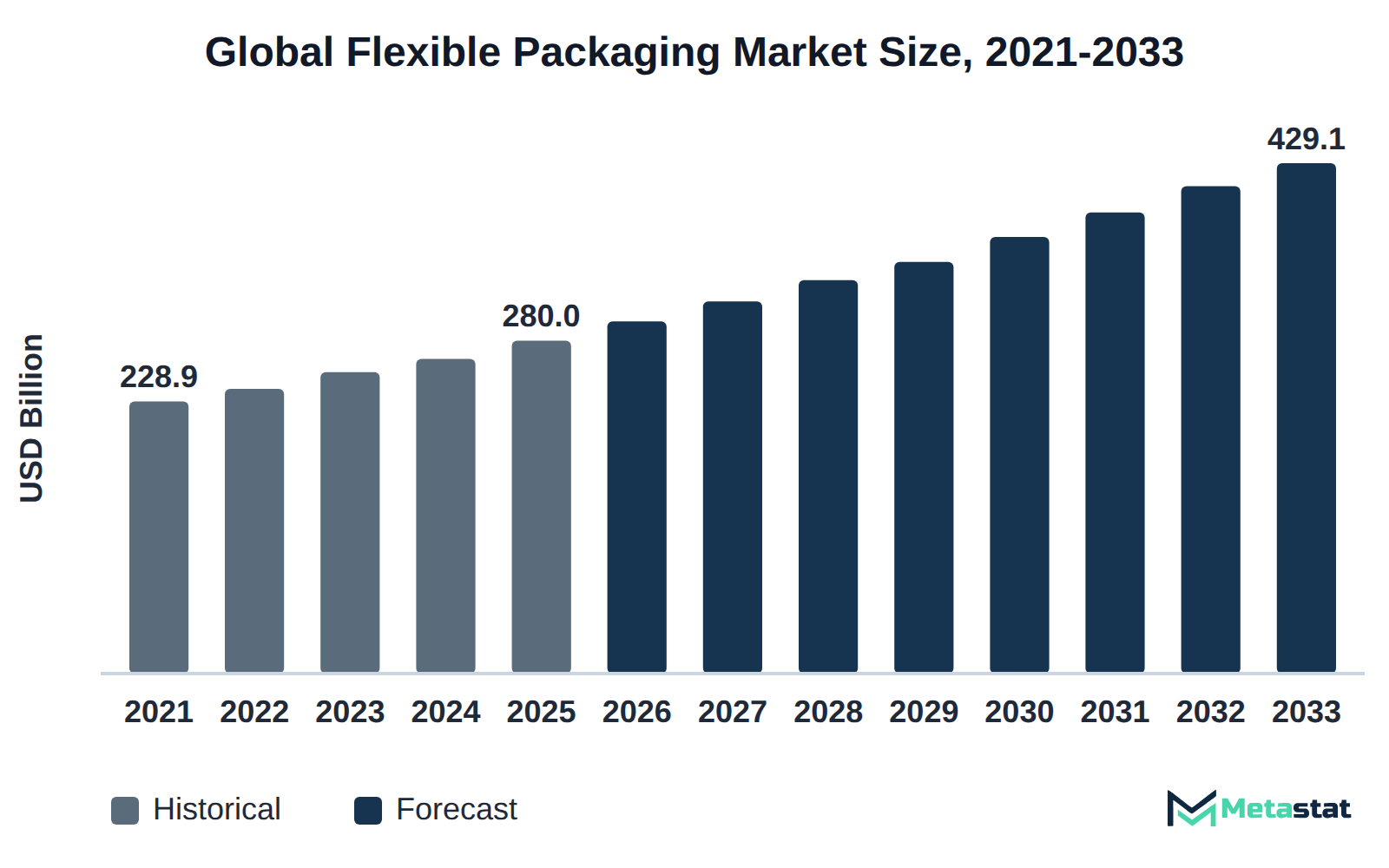
Market Valuation: Valued at $280 Billion in 2025, projected to reach $429.1 Billion by 2033 at a 5.4% CAGR.
Dominant Segment: The food segment leads the Flexible Packaging market, projected to generate USD 136.7 billion in 2026, driven by the increasing demand for convenient and ready-to-eat food products.
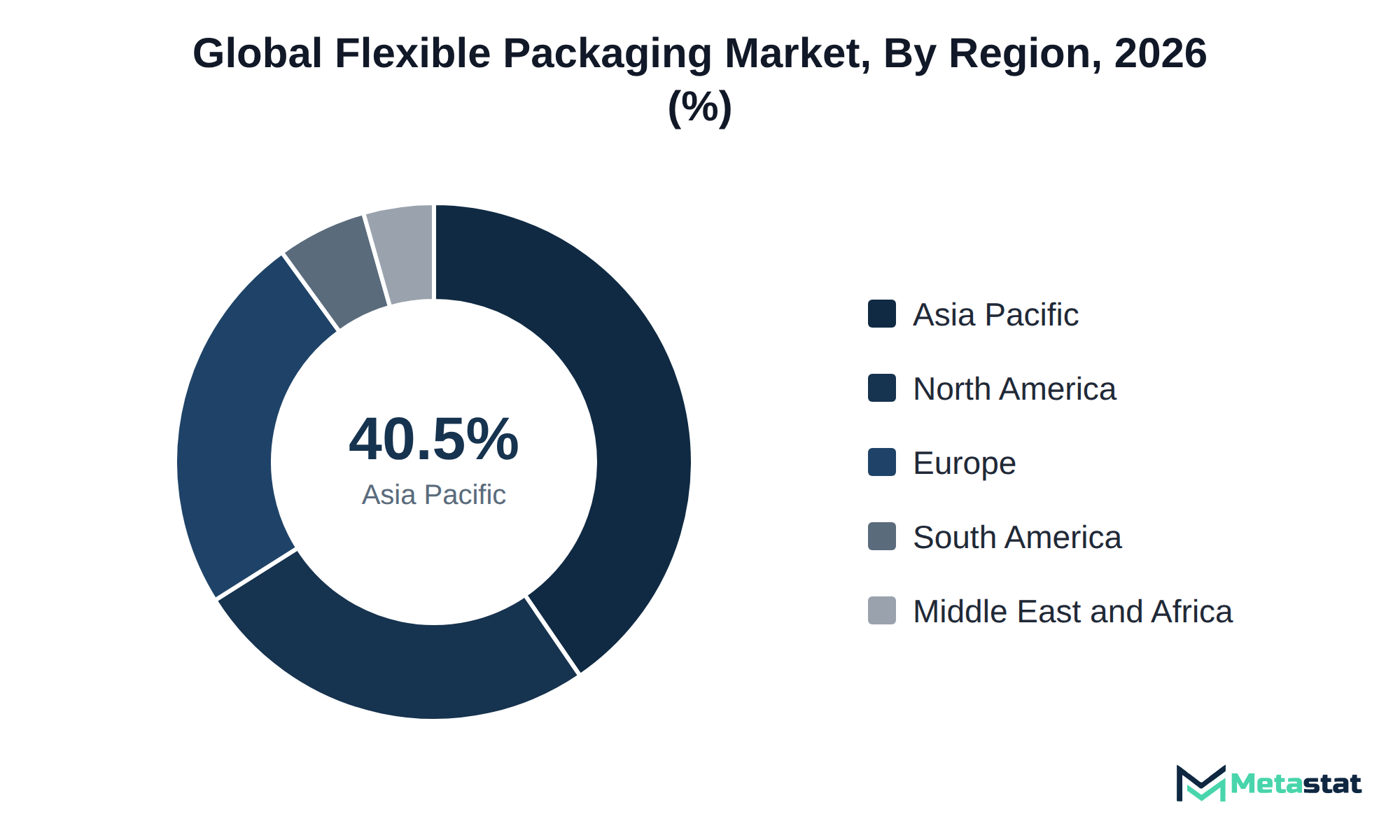
Geographic Lead: Asia Pacific is the leading region in the Flexible Packaging market, holding 40.5% of the market in 2025, fueled by rapid industrialization and urbanization in countries like China and India.
What's Inside: The report provides a comprehensive analysis of the Flexible Packaging market, covering product types, materials, end-use industries, and printing technologies, along with competitive insights and growth forecasts through 2033.
Rising demand for sustainable packaging: There is a significant shift towards sustainable packaging, particularly in the food industry, where revenue is expected to reach USD 194.2 billion by 2033, reflecting consumer preferences for eco-friendly options.
Adoption of advanced printing technologi: The market is witnessing increased adoption of advanced printing technologies, with digital printing projected to reach USD 31.6 billion by 2033, catering to brands seeking customization and quick turnaround times.
Choose Your License
Global Flexible Packaging Market
The global Flexible Packaging market was valued at USD 280 billion in 2025 and is projected to reach USD 429.1 billion by 2033, growing at a CAGR of 5.4% over the forecast period.
The Flexible Packaging market covers pouches, bags, films, sachets, tubes, and liners that combine flexibility, durability, and cost-effectiveness. Buyers invest in this market due to increasing demand for sustainable packaging options, the need for enhanced shelf life, and the ability to customize packaging to meet specific product requirements. Key industries including food and beverages, pharmaceuticals, and personal care rely on flexible packaging to protect their products while appealing to consumers.
Growth in the market is driven by rising demand for convenience and the shift towards lightweight packaging solutions. The food segment holds the highest value, representing a significant portion of overall market revenue. In terms of regional share, Asia Pacific leads with 40.5% of the market in 2025, driven by rapid industrialization and urbanization in countries like China and India. North America holds 25.6% of the market in 2025, with the US leading in 2026.
The increasing focus on sustainability and eco-friendly materials significantly influences the market's expansion. Companies prioritize the development of biodegradable and recyclable packaging options to meet consumer preferences and regulatory demands. This shift towards sustainable practices enhances brand image and opens new avenues for growth within the Flexible Packaging market.
The market includes various solutions tailored to meet the diverse packaging requirements across multiple industries. Buyers invest in flexible packaging primarily for its ability to enhance product shelf life, reduce material waste, and lower transportation costs. Key sectors driving demand include food and beverages, where the need for efficient, sustainable packaging solutions is critical. The versatility of these products ensures they cater to different consumer preferences and regulatory demands.
Growth in the market derives from increasing consumer preferences for convenience and sustainability in packaging materials. Among the segments, plastic products represent the highest value, reflecting their widespread use and demand in various applications. In this competitive landscape, the rising focus on eco-friendly packaging solutions significantly influences purchasing decisions.
Technological advancements in printing and production processes further support market expansion. Innovations allow for improved customization and efficiency, meeting the evolving needs of end-users. The trend towards lighter and recyclable materials continues to gain traction, driving further investment in flexible packaging. Brands increasingly prioritize sustainability, which supports future growth in this sector.
Mono-material barrier films represent a significant advancement in the Flexible Packaging market, offering improved recyclability compared to traditional multi-layer films. This technology simplifies recycling because different materials no longer need separating, which makes the whole process more efficient. The increasing focus on sustainability among consumers drives demand for green packaging solutions that align with environmentally responsible practices.
In 2026, the market for pouches is projected to reach USD 110.7 billion, reflecting a Compound Annual Growth Rate (CAGR) of 6.1% through 2033, with a total value reaching USD 167.9 billion. The transition to mono-material structures allows manufacturers to capitalize on this growth by producing recyclable pouches that appeal to eco-conscious consumers. The economic advantages of reduced waste management costs and improved recycling rates enhance the attractiveness of mono-material barrier films for both producers and end-users.
Companies that invest in this technology can differentiate themselves from competitors. Recyclable pouch options help firms respond to tighter regulation and consumer demand for sustainable products, leading to higher market share and profitability.
Food and pharmaceutical packaging requires specific barrier and sealing solutions to ensure product safety and integrity. The flexible packaging market experiences increasing demand for materials that provide protection from moisture, light, and oxygen, which are critical for preserving the quality of food and pharmaceutical products. In 2026, the food packaging segment is projected to generate USD 136.7 billion, reflecting the importance of meeting these stringent requirements.
Buyers typically engage in long-term contracts with suppliers to secure stable pricing and ensure consistent supply. The pricing models often involve tiered structures based on order volumes, with larger orders yielding lower per-unit costs. This arrangement benefits both buyers and suppliers by providing predictable revenue streams and reducing market volatility. For instance, suppliers including Amcor plc and Mondi plc compete strongly, which encourages them to price competitively for clients seeking high-quality packaging.
Innovation in materials and production technologies often influences pricing strategies. Suppliers continually invest in research and development to enhance material properties, leading to fluctuations in costs. Buyers prioritizing high-performance packaging solutions evaluate the long-term benefits of investing in superior materials against potential short-term savings. This dynamic influences purchasing decisions and overall market growth.
Digital printing significantly transforms short-run packaging requirements, catering to brands that require speed and flexibility in their packaging solutions. This technology allows companies to produce packaging in smaller quantities without incurring high setup costs typical of traditional printing methods. The Flexible Packaging market highlights that digital printing is projected to reach USD 31.6 billion by 2033, reflecting growing acceptance and reliance on this technology among various industries.
Brands launching new products increasingly favor digital printing due to its ability to create customized designs with short lead times. This capability addresses the specific needs of businesses aiming to respond rapidly to market trends while minimizing inventory risks. The unique demands of the food and beverage sectors, which frequently introduce limited-edition products or seasonal offerings, exemplify the advantages of digital printing in the market. Better customization options and shorter time-to-market give these brands a clear competitive advantage.
Building digital printing into packaging strategies improves operational efficiency and brand visibility. This shift enables companies to maintain relevancy in a dynamic market and optimize their marketing efforts through tailored packaging solutions. Businesses see improved margins because of reduced waste and lower production costs, which raises profitability.
Polyethylene (PE), biaxially oriented polypropylene (BOPP), cast polypropylene (CPP), and biaxially oriented polyethylene terephthalate (BOPET) films each serve unique functions in the flexible packaging market. These materials provide varying degrees of strength, barrier protection, and flexibility, influencing their applications across different industries. For example, BOPP films, with a projected growth rate of 4.6%, cater to packaging needs that require clarity and moisture resistance, particularly in food and personal care products.
In contrast, PE films offer superior sealing properties and resistance to water, making them ideal for perishable items. The demand for PE films is driven by their applications in food packaging, contributing significantly to the market's expansion. The focus on sustainability further enhances the attractiveness of PE films, owing to their recyclability compared to other options.
Commercially, the choice of film impacts operational costs and product shelf life, leading to profitability for companies that select the right material. Evolving consumer preferences toward sustainable packaging solutions increase the need for brands to consider the specific benefits of PE, BOPP, CPP, and BOPET films in their packaging strategies.
Increasing consumer awareness regarding environmental impacts drives a significant shift toward sustainable packaging in various industries, including food and personal care. This trend results from a growing emphasis on eco-friendly products that align with consumer values. Brands respond by investing in Flexible Packaging solutions that use renewable materials, enhancing their market appeal. The food industry, in particular, experiences a notable rise in demand, with revenue projected to reach USD 194.2 billion by 2033, growing from USD 136.7 billion in 2026. Such growth reflects wider consumer behavior changes and expectations for environmentally responsible practices. Consequently, manufacturers adapt their offerings, contributing to higher market volumes and potentially increasing price points for innovative, sustainable products.
Technological advancements in materials, including bio-based plastics and recyclable options, support this demand, enabling companies to meet consumer expectations while improving operational efficiencies. These developments position firms favorably within the competitive environment, reinforcing their commitment to sustainability and enhancing brand loyalty in an increasingly eco-conscious market.
Growing adoption of advanced printing technologies drives innovation within the Flexible Packaging market. Flexographic and digital printing techniques enhance customization and efficiency, attracting brands seeking to improve packaging aesthetics and functionality. Flexographic printing, with its high-speed capabilities and cost-effectiveness for long runs, gains traction among manufacturers focused on scalability and productivity. Digital printing offers shorter turnaround times and flexibility for short runs, catering to brands that frequently change designs or launch new products.
These technological advancements appeal particularly to industries including food, personal care, and pharmaceuticals, where packaging differentiation holds significant value. Enhanced product visibility and engagement translate into higher consumer appeal, aligning with the market's trajectory toward more personalized packaging solutions. Continued advances in printing technology prompt suppliers to invest in newer equipment and processes to stay relevant. The market is expected to grow significantly as demand rises for innovative packaging that connects with consumers.
Escalating prices of raw materials significantly impact the Flexible Packaging market, particularly affecting buyers in industries including food and pharmaceuticals. Increased costs create pressure on profit margins, leading to cautious purchasing behavior. Consequently, companies delay orders or reduce order sizes, resulting in slower market uptake. Volatility in raw material pricing creates uncertainty, prompting businesses to reconsider their packaging strategies. This trend is evident in the food and beverage sectors, where manufacturers prioritize cost control while striving to maintain quality and sustainability standards. Challenges associated with rising raw material costs hinder revenue growth for suppliers and restrict innovation within the market. These financial constraints shape purchasing decisions and limit overall growth potential.
Inflation affecting input costs presents a notable challenge for suppliers. Increasing costs of raw materials place significant pressure on profit margins across the flexible packaging market. The ongoing rise in key materials, including resins and substrates, limits the ability of suppliers to maintain competitive pricing without sacrificing quality. This situation particularly impacts companies heavily reliant on traditional plastic materials, leading to a reevaluation of sourcing strategies.
To address these cost challenges, suppliers are investing in more efficient production processes and exploring alternative materials that offer lower long-term costs. Collaborations with raw material providers have emerged to secure better pricing structures and ensure a steady supply. By enhancing operational efficiency and pursuing innovative material solutions, suppliers strive to mitigate input cost inflation while maintaining market share and profitability within the competitive landscape.
Paper-based solutions show significant growth potential within the Flexible Packaging market, driven by heightened environmental concerns and consumer preferences for sustainable materials. The paper segment is projected to reach USD 101.1 billion by 2033, presenting a compound annual growth rate of 6.5%. This increasing demand primarily stems from industries including food and personal care, where biodegradable and recyclable options align with consumer expectations. Manufacturers focusing on paper-based packaging benefit from this trend by developing innovative, eco-friendly products for these buyer groups. By investing in advanced processing technologies and sustainable sourcing practices, companies enhance their competitive positions while addressing the growing demand for environmentally responsible packaging solutions. The market's robust shift towards paper-based offerings reflects a significant opportunity for stakeholders aiming to differentiate themselves in a crowded environment.
The Global Flexible Packaging market is segmented based on Product Type, Material, End-Use Industry, and Printing Technology.
These flexible packages serve various applications, primarily in the food and beverage industries, where they provide convenience and extend shelf life. Key demand drivers include the increasing preference for lightweight packaging solutions and the need for enhanced product protection. Compared to other product types, the pouches segment exhibits faster growth, driven by its versatility and adaptability in meeting consumer trends. While bags and sacks and films and rollstock cater to broader applications, pouches stand out due to their specialized designs and functionality, making them a preferred choice among manufacturers targeting modern consumer needs. Many of these pouches are filled and sealed on stand-up pouch packaging machines.
Bags and Sacks segment is estimated to reach USD 98.4 billion by 2033, at a CAGR of 4.6% during the forecast period. This segment finds extensive application across various industries, including food, agriculture, and consumer goods. Manufacturers use bags and sacks for packaging products ranging from grains and flour to pet food and household items. The rising demand for sustainable packaging solutions drives growth in this segment, with consumers increasingly preferring eco-friendly options. Compared to other product types, including Pouches which experience a higher CAGR of 6.1%, the Bags and Sacks segment displays slower growth. This trend reflects varying consumer preferences for product packaging, influencing pricing strategies and market dynamics. Sustainability and functionality shape how this segment grows within the broader flexible packaging market.
Films and Rollstock segment is expected to reach USD 104.4 billion by 2033. This segment caters to various applications, primarily in the food and beverage industries, where barrier properties and flexibility are essential. Key drivers include growing demand for convenience packaging and the need for extended shelf life, influenced by consumer trends toward ready-to-eat meals and snacks. Compared to other segments, Films and Rollstock demonstrates a strong growth trajectory, with a CAGR of 5.6% anticipated to continue, outpacing several alternatives. This preference for films arises from their cost-effectiveness and versatility, allowing for diverse customization options that appeal to manufacturers seeking efficient packaging solutions. The Films and Rollstock segment’s unique characteristics position it favorably against other product types, driving heightened interest from both buyers and suppliers in the packaging sector.
Sachets and Stick Packs segment is projected to grow at a CAGR of 6% during the forecast period. This segment finds prominent usage in the food and beverage industries, catering to consumers seeking convenient and portable packaging options. The rising trend of on-the-go consumption drives demand for this segment, increasing its popularity among manufacturers targeting younger demographics. Differentiating itself from other sub-segments, sachets and stick packs typically have a higher price point due to their specialized design and ease of use. In contrast, the Pouches segment, while experiencing significant growth, holds a lower CAGR of 6.1%. This unique position allows sachets and stick packs to capitalize on consumer preferences for single-serve options, further enhancing their appeal in the market.
Flexible Tubes offer unique packaging solutions primarily in the personal care, cosmetics, and food industries. These tubes preserve product integrity, ensuring safe storage and convenient dispensing. Demand for flexible tubes is influenced by shifting consumer preferences toward sustainable and easily dispensable packaging options. The emphasis on product freshness and hygiene drives brands to adopt these solutions, particularly in the personal care sector. Compared to other segments like pouches or bags, flexible tubes typically experience slightly slower growth, focusing on niche applications rather than bulk packaging. This sub-segment appeals to brands requiring specialized packaging features, distinguishing it from broader categories. The growing trend toward eco-friendly materials further shapes the flexible packaging landscape, encouraging manufacturers to innovate within this space while meeting consumer expectations.
Flexible liners and sleeves serve various packaging needs across multiple industries. Common applications include food packaging, personal care items, and healthcare products. The adoption of flexible liners and sleeves reflects ongoing shifts in consumer preferences for convenience and sustainability. Consumer demand drives innovation in materials and designs, pushing manufacturers toward more eco-friendly solutions. While this segment operates within competitive price ranges, the unique requirements of specific end-use industries influence pricing and growth trajectories in ways that differ from other segments including pouches and bags. The flexible packaging market evolves, responding to regulatory pressures and consumer expectations regarding sustainability and product safety, making flexibility a key focus for manufacturers.
The plastic segment is valued at USD 204.6 billion in 2026 and is projected to reach USD 291 billion by 2033, at a CAGR of 5.2% during the forecast period. This segment serves various packaging needs in industries including food, beverages, pharmaceuticals, and personal care. The increasing demand for lightweight and versatile packaging solutions drives growth in this segment. The shift towards sustainable options influences the adoption of alternative materials, creating competition within the material segment. Compared to other materials, the plastic segment exhibits moderate growth, with a slightly lower CAGR than paper materials, which achieve a CAGR of 6.5%. This dynamic environment reflects changing consumer preferences and the industry's response to environmental concerns, ensuring that the market adapts to emerging trends.
This segment finds extensive use in food packaging, personal care, and medical applications, where recyclability and sustainability hold significant importance for buyers. Growing consumer demand for environmentally friendly options drives the increasing preference for paper-based packaging solutions. Compared to other materials, paper has a distinct advantage in eco-friendliness and aligns with changing consumer preferences, positioning it as a strong contender in the flexible packaging market. The segment's growth rate exceeds that of plastic alternatives, highlighting a shift toward sustainable practices. The increasing focus on waste reduction and recyclable materials creates a favorable outlook for the paper segment, setting it apart from its counterparts. Flexible packaging barrier paper is a closely related area for buyers weighing paper against plastic.
Aluminum Foil segment is expected to reach USD 33.2 billion by 2033. This material finds extensive use in food packaging, pharmaceuticals, and healthcare, providing excellent barrier properties against moisture, light, and oxygen. The growing focus on health and safety, along with the demand for sustainable packaging solutions, drives increased adoption of aluminum foil. Compared to other materials in the market, aluminum foil benefits from relatively higher prices due to its superior protective qualities and recyclability. With a projected CAGR of 4.4% during the forecast period, this segment demonstrates growth that aligns with broader trends toward environmentally friendly packaging solutions, distinguishing it from segments including paper, which exhibits a higher CAGR of 6.5%. The market reflects a shift toward materials that both preserve product integrity and cater to consumer sustainability preferences.
Projected to grow at a CAGR of 11.4% during the forecast period, the Others (Regenerated Cellulose) segment presents substantial potential. This material primarily serves eco-conscious consumers, emphasizing sustainable packaging options. Industries including food and personal care increasingly gravitate towards regenerated cellulose due to its biodegradable properties, aligning with rising demand for environmentally friendly packaging solutions. Competitive pressure from alternative materials, including plastic, drives innovation in regenerated cellulose, further enhancing its market appeal. Compared to other materials, this segment offers a faster growth trajectory, reflecting growing consumer preference for sustainability. Increased investment in research and development focuses on improving the performance of regenerated cellulose, enabling manufacturers to better meet changing demands in the market.
This segment is crucial for preserving the freshness and safety of food products, serving manufacturers, retailers, and consumers alike. Flexible formats are one option within the broader food and beverage consumer packaging category. Increasing demand for convenient and ready-to-eat food products fuels growth in this segment, with consumers seeking efficient packaging solutions that enhance product shelf life. The food segment distinguishes itself from other end-use industries through its strong focus on compliance with food safety regulations, ensuring that packaging materials meet stringent safety standards. This segment experiences higher growth potential compared to others, driven by evolving consumer preferences and a growing emphasis on sustainable packaging solutions. The market adapts by integrating innovative materials and technologies to meet these changing demands.
The Beverages segment is estimated to reach USD 37.1 billion by 2033, at a CAGR of 5.7% during the forecast period. This segment primarily focuses on packaging liquid products, including soft drinks, juices, and alcoholic beverages, catering to manufacturers in the food and beverage industry. The growing demand for ready-to-drink beverages drives market growth, owing to evolving consumer preferences for convenience and portability. This segment exhibits a stronger growth trajectory compared to others in its category, with a notable emphasis on sustainability in packaging materials. Several industry players focus on innovations that enhance shelf life and preserve flavor, which sets the Beverages segment apart from other sub-segments in the market. Environmental considerations further shape packaging choices, influencing consumer purchasing decisions and encouraging the development of recyclable and biodegradable options.
The Pharmaceuticals and Healthcare segment is expected to reach USD 61.2 billion by 2033. This segment focuses on packaging solutions specifically designed for medical products, pharmaceuticals, and healthcare items. It caters to a variety of buyers, including pharmaceutical companies, healthcare providers, and medical device manufacturers. The growing emphasis on safety and compliance in the healthcare industry drives demand for advanced packaging solutions that ensure product integrity and enhance patient safety. Regulatory requirements and the need for innovative packaging formats contribute to the segment's growth trajectory. Compared to other segments, the Pharmaceuticals and Healthcare segment features a moderate growth rate, driven by a CAGR of 5.7%. This growth reflects ongoing demand for high-quality packaging that meets stringent industry standards, distinguishing it from other flexible packaging applications in the market.
Personal Care and Cosmetics segment is projected to grow at a CAGR of 5.8% during the forecast period. This segment serves the needs of manufacturers producing a variety of beauty and hygiene products, including skincare and haircare items. Increasing consumer awareness regarding personal grooming and hygiene drives demand for innovative packaging solutions that enhance product appeal and extend shelf life. Unlike other segments, including Food or Beverages, the Personal Care and Cosmetics segment focuses on aesthetic and functional packaging aspects, which lead to higher price points. Brands in this space choose among several formats within the wider personal care packaging category. The demand for sustainable and eco-friendly packaging options in this segment intensifies competition among suppliers, prompting them to invest in new technologies to meet consumer expectations. With expected growth from USD 61.2 billion in 2026 to over USD 2033 by 2033, the segment shows strong market potential in the coming years, contributing to the overall dynamics of the Flexible Packaging market.
Household care covers household cleaning products and other essential items that maintain hygiene and comfort in domestic settings. Key consumers include households, cleaning services, and institutional buyers, all seeking effective and convenient packaging solutions. Adoption of flexible packaging in this segment is driven by increasing consumer demand for convenience and sustainability. The trend toward eco-friendly materials significantly influences purchasing decisions, with buyers favoring products that minimize environmental impact. Compared to other segments, household care packaging often features higher price points due to specialized materials and functionalities catering to specific uses. This segment benefits from technological advancements in packaging design and functionality, enhancing user experience through improved dispensing mechanisms and extended shelf life. Growth in the household care segment is expected to contribute positively to the overall flexible packaging market, reflecting changing consumer preferences and market dynamics.
Pet Food packaging serves the specific needs of pet owners and manufacturers by providing convenient, safe, and durable options for storing and transporting pet food products. This segment is primarily used by pet food brands aiming to enhance product shelf life and maintain freshness. Demand for pet food packaging is significantly driven by increasing pet ownership rates and the growing trend of premium pet food offerings. These factors create a strong need for high-quality packaging solutions that effectively protect and preserve the nutritional value of pet food. Compared to other segments, Pet Food packaging maintains a unique position due to distinct preferences of pet owners and premium pricing strategies employed by leading brands. This segment exhibits different buyer dynamics, influenced by brand loyalty and consumer trends focused on sustainability and product quality, which shape purchasing decisions in the market.
Industrial packaging serves critical functions in various manufacturing and logistical processes. This segment is primarily used by manufacturers, distributors, and suppliers to ensure the secure transport and storage of products across different sectors. Key drivers for growth in this area include increasing demand for efficient packaging solutions that enhance product protection and minimize waste. Compared to other segments, this sub-segment typically experiences slower growth due to higher costs associated with specialized materials and design. Manufacturers focus on sustainability, prompting many businesses to adopt eco-friendly packaging materials, which influence purchasing decisions. The Flexible Packaging market continues to evolve, reflecting these changing dynamics and the growing emphasis on innovation and efficiency.
Primarily used in the agriculture and tobacco sectors, this segment encompasses a diverse array of flexible packaging solutions tailored for products including seeds, fertilizers, and tobacco products. The demand for sustainable and efficient packaging solutions drives growth in this segment, with firms prioritizing environmentally friendly materials and practices to attract eco-conscious consumers. Regulatory changes regarding packaging waste and the need for compliance with environmental standards influence the strategies of companies operating in agriculture and tobacco. Compared to other segments, this segment often experiences slower growth due to the specialized nature of its applications and the challenges in transitioning to alternative materials. However, the ongoing trend toward sustainable packaging presents significant opportunities for innovation and market expansion within the Flexible Packaging market.
Flexographic Printing segment is valued at USD 123.3 billion in 2026 and is projected to reach USD 181 billion by 2033, at a CAGR of 5.6% during the forecast period. This printing technology finds extensive application in creating packaging for various consumer goods, prominently in the food and beverage sectors. Demand for Flexographic Printing is driven by the need for high-quality, flexible packaging solutions that enhance shelf appeal and promote brand recognition. Compared to other printing technologies, including Rotogravure, Flexographic Printing offers faster production speeds and lower costs for short to medium runs. This segment is positioned to experience steady growth, influenced by ongoing innovations in ink formulations and substrate materials that improve the efficiency and effectiveness of the printing process. The market benefits from adoption among manufacturers focused on sustainability and cost-effectiveness, aiming to capture the growing consumer preference for eco-friendly packaging options.
Rotogravure Printing segment is estimated to reach USD 140.5 billion by 2033, at a CAGR of 4.4% during the forecast period. This printing technology finds extensive application in high-quality packaging solutions for various products. Industries including food and beverages apply Rotogravure Printing due to its ability to deliver intricate designs and rich colors, enhancing product appeal. A significant demand driver for this segment stems from rising consumer preferences for visually appealing packaging. Compared to other printing technologies, Rotogravure Printing offers superior quality, though it typically involves higher initial costs. This segment’s growth is slower than Flexographic Printing, which is anticipated to grow at a CAGR of 5.6%. Overall, the Rotogravure Printing segment contributes significantly to the flexible packaging market, catering to the evolving needs of brand owners and consumers.
Digital Printing segment is expected to reach USD 31.6 billion by 2033. This technology primarily supports the customization of packaging, allowing brands to differentiate their products in competitive markets. Digital printing finds extensive application in sectors including food and beverages, where rapid prototyping and short production runs are valued. The segment benefits from growing consumer demand for personalized packaging solutions, driven by trends favoring unique branding and sustainable practices. Compared to other printing technologies, Digital Printing is characterized by its flexibility in design and shorter lead times, resulting in faster product launches. Unlike traditional methods, which require larger print runs to remain cost-effective, digital printing caters to smaller batches more economically, appealing to niche markets. This aspect positions the Digital Printing segment for growth within the overall flexible packaging market.
The unprinted segment is projected to grow at a CAGR of 5.4% during the forecast period. This category involves flexible packaging solutions that do not feature any printed graphics or branding. Industries including food, pharmaceuticals, and household products often employ unprinted packaging for various applications, including bulk items and temporary storage. Demand for unprinted packaging is influenced by factors including cost efficiency and the need for quick production cycles. Although it experiences slower growth compared to printed alternatives, unprinted solutions appeal to customers seeking economical and straightforward packaging options. The unprinted segment offers flexibility in design and customization, providing an essential option for businesses aiming to balance functionality and budget constraints. With the market expanding, companies are increasingly investing in technologies that enhance the performance and durability of unprinted packaging solutions.
This sub-segment encompasses printing technologies including offset and screen printing, which provide high-quality graphics and fine details on flexible packaging products. Industries including food, cosmetics, and pharmaceuticals rely on these printing methods to enhance product visibility and branding. One factor influencing this segment is the demand for sustainable packaging solutions, prompting companies to explore innovative printing methods that align with environmental standards. Unlike other printing technologies, offset and screen printing often cater to niche markets, reflecting different buyer preferences and potentially higher price points due to specialized requirements. The emphasis on aesthetics and customization in packaging design drives adoption, positioning this sub-segment as significant within the flexible packaging market.
Based on geography, the Global Flexible Packaging market is divided into North America, Europe, Asia-Pacific, South America, Middle East, and Africa.
North America represents a significant portion of the global Flexible Packaging market, holding a share of 25.6% in 2025. The region's demand primarily stems from the food and beverage industries, driven by increasing consumer preference for convenient and sustainable packaging solutions. Regulatory measures focusing on reducing plastic waste influence manufacturers to adopt eco-friendly packaging alternatives, thereby shaping market dynamics. In this context, the flexible packaging segment for food is projected to reach USD 194.2 billion by 2033, reflecting strong growth. Innovations in production technologies enhance efficiency and reduce costs, further supporting market expansion. North America is projected to reach USD 104.1 billion by the end of 2033, reinforcing its position as a key player in the flexible packaging sector.
Europe holds a significant position in the Flexible Packaging market, accounting for 24.0% of the global share in 2025. The region's growth is propelled by increasing demand from key sectors, particularly food and pharmaceuticals. Countries like Germany and France show strong interest in sustainable packaging solutions, driving innovation in materials and technologies. Regulatory measures emphasizing environmental sustainability further influence packaging choices across Europe. Businesses adapt to consumer preferences and legislative pressures, resulting in a pronounced shift towards eco-friendly materials. This transition supports growth opportunities for both established firms and emerging players within the market.
Asia-Pacific represents the largest share of the global market, accounting for 40.5% in 2025. The demand for flexible packaging in this region primarily stems from the food and beverage industries, which emphasize convenience and product freshness. Countries like China and India experience significant growth in these sectors, driven by rising consumer preferences for packaged goods and increased urbanization. Japan's advanced packaging technology enhances the market, with innovation leading to improved product shelf life. Regulatory frameworks favor sustainable packaging solutions, prompting manufacturers to adopt environmentally friendly materials. The strong growth trajectory in Asia-Pacific continues to attract investments, fueling further advancements in the flexible packaging market.
In South America, the Flexible Packaging market benefits from a growing demand primarily driven by the food and beverage sectors, with Brazil and Argentina leading consumption. The region's unique economic challenges, including fluctuating currency values and inflation, influence packaging preferences and pricing strategies among producers. Consumers increasingly prioritize convenience and sustainability; flexible packaging solutions that offer durability and reduced environmental impact gain traction. The market reflects steady growth potential driven by rising urbanization and lifestyle changes. Investments in modern manufacturing techniques and efficient supply chain management enhance the market's competitive landscape, positioning it for continued expansion through 2033.
Demand for flexible packaging in the Middle East and Africa derives from a growing food and beverage industry, which increasingly prioritizes innovative packaging solutions. Countries like Saudi Arabia and the UAE invest heavily in modernizing their food distribution infrastructure, enhancing the need for effective packaging. South Africa's emphasis on sustainable practices drives interest in eco-friendly flexible packaging materials. Local regulations promoting recycling and waste reduction further influence packaging choices, pushing manufacturers to adapt to environmental standards. By 2033, the market's growth will reflect the rising consumer preference for convenience and sustainability in packaging solutions.
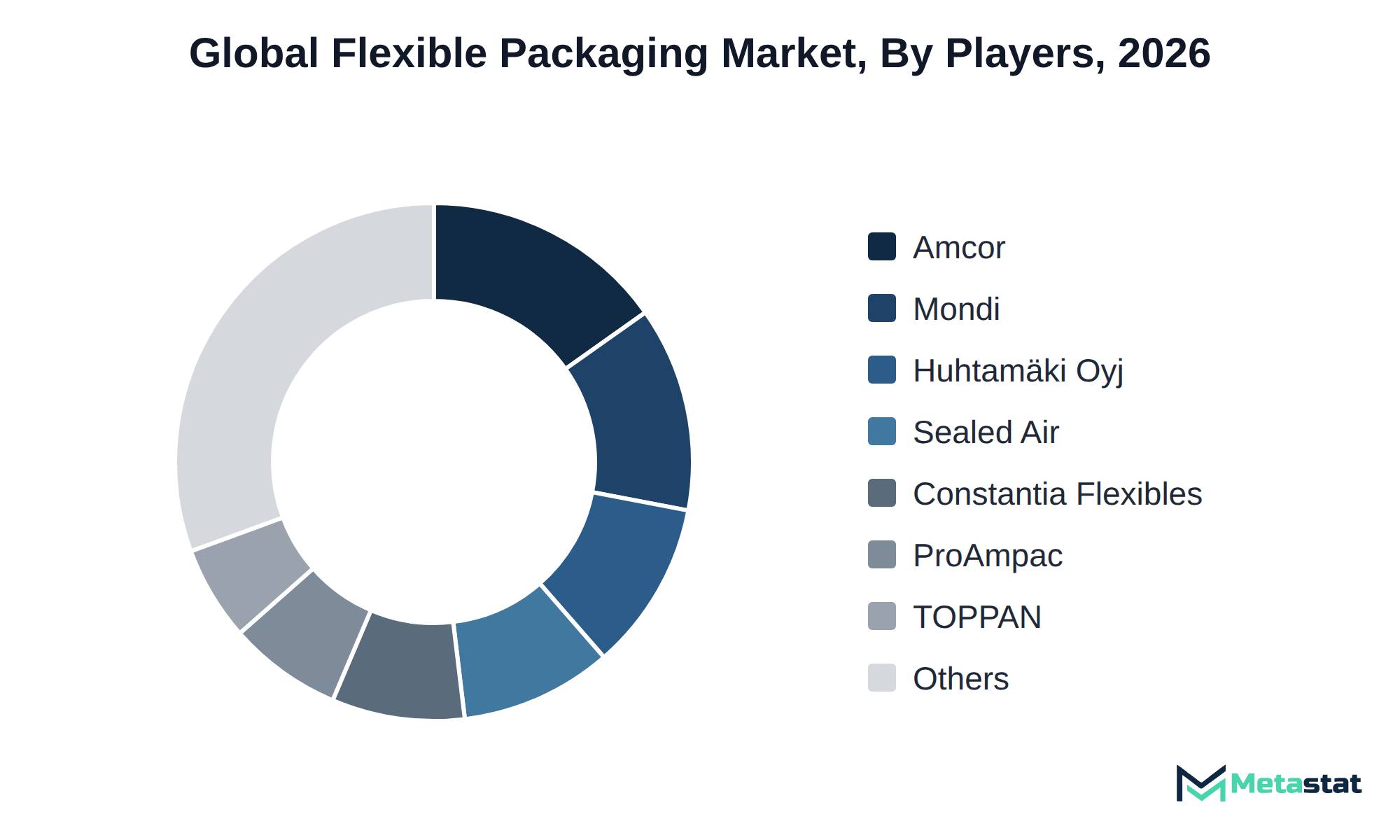
The Flexible Packaging market features a diverse range of companies competing on various fronts, including product offerings, pricing, and service quality. Companies including Amcor plc and Mondi plc focus on a broad portfolio of flexible packaging products, emphasizing innovation and sustainability to attract environmentally conscious buyers.
Pricing remains a critical factor for buyers in the market. Competitors including Sealed Air Corporation and Huhtamäki Oyj leverage cost-effective solutions without compromising quality. Customization of packaging solutions becomes increasingly important, allowing companies to cater to specific buyer needs and enhance their competitive edge.
Companies including ProAmpac Holdings Inc. and Constantia Flexibles Group GmbH concentrate on specialized products for niche markets, expanding their reach through tailored offerings. This strategic focus supports their positioning within the flexible packaging value chain, allowing them to compete effectively in a dynamic environment.
This growth relies on several key developments within the Flexible Packaging market. First, the increasing demand for pouches, projected to expand from USD 110.7 billion in 2026 to USD 167.9 billion by 2033, indicates a shift toward convenient packaging solutions, particularly in the food and beverage sectors. Second, the rise in paper-based materials, with an anticipated growth to USD 101.1 billion by 2033, reflects consumer preferences for sustainable options. This trend is particularly strong in Europe, where environmental regulations promote eco-friendly packaging alternatives. A significant risk to achieving the forecasted market size stems from fluctuations in raw material prices, particularly plastic and aluminum foil, which could hinder production capabilities and push costs higher. This challenges manufacturers, particularly in regions including Asia Pacific, where competitive pricing is crucial. Overall, the trajectory of the market hinges on evolving consumer preferences, regulatory support for sustainability, and stability in raw material costs.
By Product Type: Pouches, Bags and Sacks, Films and Rollstock, Sachets and Stick Packs, Flexible Tubes, Others (Flexible Liners and Sleeves)
By Material: Plastic, Paper, Aluminum Foil, Others (Regenerated Cellulose)
By End-Use Industry: Food, Beverages, Pharmaceuticals and Healthcare, Personal Care and Cosmetics, Household Care, Pet Food, Industrial, Others (Agriculture and Tobacco)
By Printing Technology: Flexographic Printing, Rotogravure Printing, Digital Printing, Unprinted, Others (Offset and Screen Printing)
The report strategically identifies and profiles the key market players and analyses their core competencies in each sub-segment of the Flexible Packaging market.
Report Attributes | Details |
Study Period | 2021-2033 |
Base Year | 2025 |
Estimated Year | 2026 |
Forecast Period | 2026-2033 |
Historical Period | 2021-2025 |
Growth Rate | CAGR 5.4% from 2026 to 2033 |
Revenue Unit | USD billion |
Segmentation | By Product Type, Material, End-Use Industry, Printing Technology, and Region |
By Region | North America (By Product Type, Material, End-Use Industry, Printing Technology, and Country)
|
Europe (By Product Type, Material, End-Use Industry, Printing Technology, and Country)
| |
Asia Pacific (By Product Type, Material, End-Use Industry, Printing Technology, and Country)
| |
South America (By Product Type, Material, End-Use Industry, Printing Technology, and Country)
| |
Middle East and Africa (By Product Type, Material, End-Use Industry, Printing Technology, and Country)
|
Find answers to common questions about this report
The Flexible Packaging market size was valued at USD 280 billion in 2025.
The market is projected to grow at a CAGR of 5.4% during the forecast period from 2026 to 2033.
The North America Flexible Packaging market size is estimated to reach USD 104.1 billion by 2033.
Pouches lead the Flexible Packaging market with a projected value of USD 167.9 billion by 2033, reflecting the highest growth among product types.
Increasing consumer awareness regarding environmental impacts drives a significant shift toward sustainable packaging, particularly in the food and personal care industries. Technological advancements in printing techniques enhance customization and efficiency, appealing to brands seeking to improve packaging aesthetics and functionality.
Escalating prices of raw materials restrain growth in the Flexible Packaging market, creating pressure on profit margins and leading to cautious purchasing behavior. Inflation affecting input costs limits suppliers' ability to maintain competitive pricing without sacrificing quality.
Increasing consumer awareness regarding environmental impacts drives a shift toward sustainable packaging in the food and personal care industries. The demand for paper-based solutions reflects consumer preferences for biodegradable and recyclable materials, favoring adoption within the market.
The Flexible Packaging market is estimated to reach a valuation of USD 429.1 billion by 2033.
Key players operating in the Flexible Packaging market include Amcor plc, Mondi plc, Huhtamäki Oyj, Sealed Air Corporation, Constantia Flexibles Group GmbH, ProAmpac Holdings Inc., and UFlex Limited.
The Food segment is projected to grow from USD 136.7 billion in 2026 to USD 194.2 billion by 2033, reflecting a compound annual growth rate of 5.1 percent.
The analysts below cover Packaging research at Metastat Insights.
LEAD ANALYST
Utkarsh Khirodkar is a Lead Market Research Analyst at MetaStat Insight, specializing in market intelligence, technology sector assessments, and competitive strategy.

SENIOR RESEARCH ANALYST
Biotechnology · Food and Beverages · Medical Devices · Packaging
Snehal Pasalkar is a Research Analyst at MetaStat Insight, operating at the intersection of life sciences research, competitive strategy, and market intelligence.

INDUSTRY CONSULTANT - CHEMICALS & ADVANCED MATERIALS
Chemicals and Materials · Machinery & Equipment · Packaging
Amit Gadhekar Consultant for Chemicals and Materials at MetaStat Insight, directing sector-specific intelligence, research, and strategic consulting across global chemical and processing markets.
When planning edge sensor rollouts across refinery environments, generic IoT reports typically miss the harsh-environment certification bottlenecks. MetaStat Insight gave an objective evaluation of ATEX and Class 1 Division 2 hardware availability, along with realistic five-year maintenance cycle cost projections. The comparison of wireless mesh versus private cellular backhaul helped our team pressure-test network reliability models for remote processing facilities.
In the biological seed treatment space, registration timelines vary drastically between the European Union, Brazil, and North America. The MetaStat Insight research handled these cross-border regulatory barriers with genuine nuance, mapping commercialization pathways alongside historical field adoption rates. The segmentation between microbial strains and biochemical active ingredients was particularly well structured.
Our team was tracking whether regional recycling infrastructure could realistically absorb the growing volume of lithium iron phosphate batteries over the next decade. The report did a solid job separating announced hydrometallurgical plant capacity from active, permitted operational throughput. That distinction made the feedstock availability projections and regional recovery rate models far more credible than standard commercial overviews.
Explore related market intelligence reports worth reading alongside this one.