
LEAD ANALYST
Utkarsh Khirodkar is a Lead Market Research Analyst at MetaStat Insight, specializing in market intelligence, technology sector assessments, and competitive strategy.

Global Old World Wine Market Size, Share, By Wine Category (Still Red Wine, Still White Wine, Still Rosé Wine, Sparkling Wine, Fortified Wine), By Origin (France, Italy, Spain, Portugal, Germany, Austria, Greece, Hungary, United Kingdom, Others), By Distribution Channel (On-Trade (Restaurants, Hotels and Bars), Specialty Wine & Liquor Retailers, Supermarkets & Hypermarkets, Online Wine Retailers & E-commerce, Winery Direct-to-Consumer, Travel Retail & Duty-Free), By Price Point (Value, Standard, Premium, Super-Premium, Luxury/Fine Wine), Industry Analysis, Growth, Trends, and Forecast, 2026-2033
Report ID
MSI-5385
Published
September, 2026
Pages
257 Pages
Format
Historical
Base year
Forecast
Forecast period
Report Details
Market Valuation: Valued at $356.4 Billion in 2025, projected to reach $731.4 Billion by 2033 at a 9.4% CAGR.
Dominant Segment: The Still White Wine segment leads the Old World Wine market, projected to reach USD 204.1 billion by 2033, driven by consumer preferences for sustainable and organic products.
Geographic Lead: Europe dominates the Old World Wine market, with France expected to grow to USD 176.4 billion by 2033, supported by a strong tradition of winemaking and consumer demand for premium wines.
What's Inside: The report provides a comprehensive analysis of market dynamics, competitive landscape, and detailed segmentation across wine categories, origins, distribution channels, and price points.
Emerging Regional Demands: The Asia Pacific region, particularly China and India, shows significant growth potential as consumer interest in diverse wine offerings continues to rise.
Shifting Demographic Patterns: An aging population in Europe is increasing demand for refined wine experiences, while urbanization is driving younger generations toward premium wine selections.
Choose Your License
Global Old World Wine Market
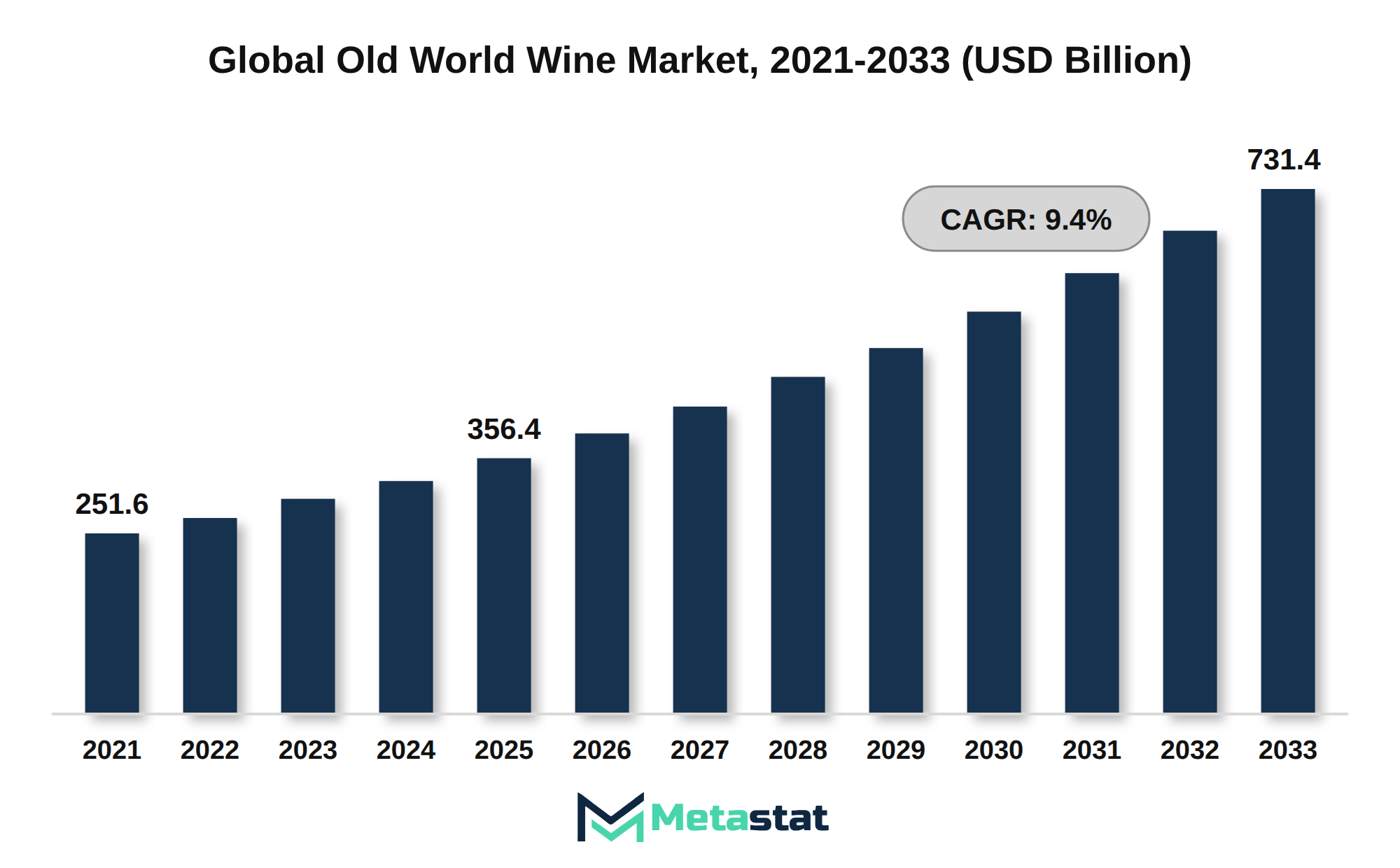
The global Old World Wine market was valued at USD 356.4 billion in 2025 and is projected to reach USD 731.4 billion by 2033, growing at a CAGR of 9.4% over the forecast period.
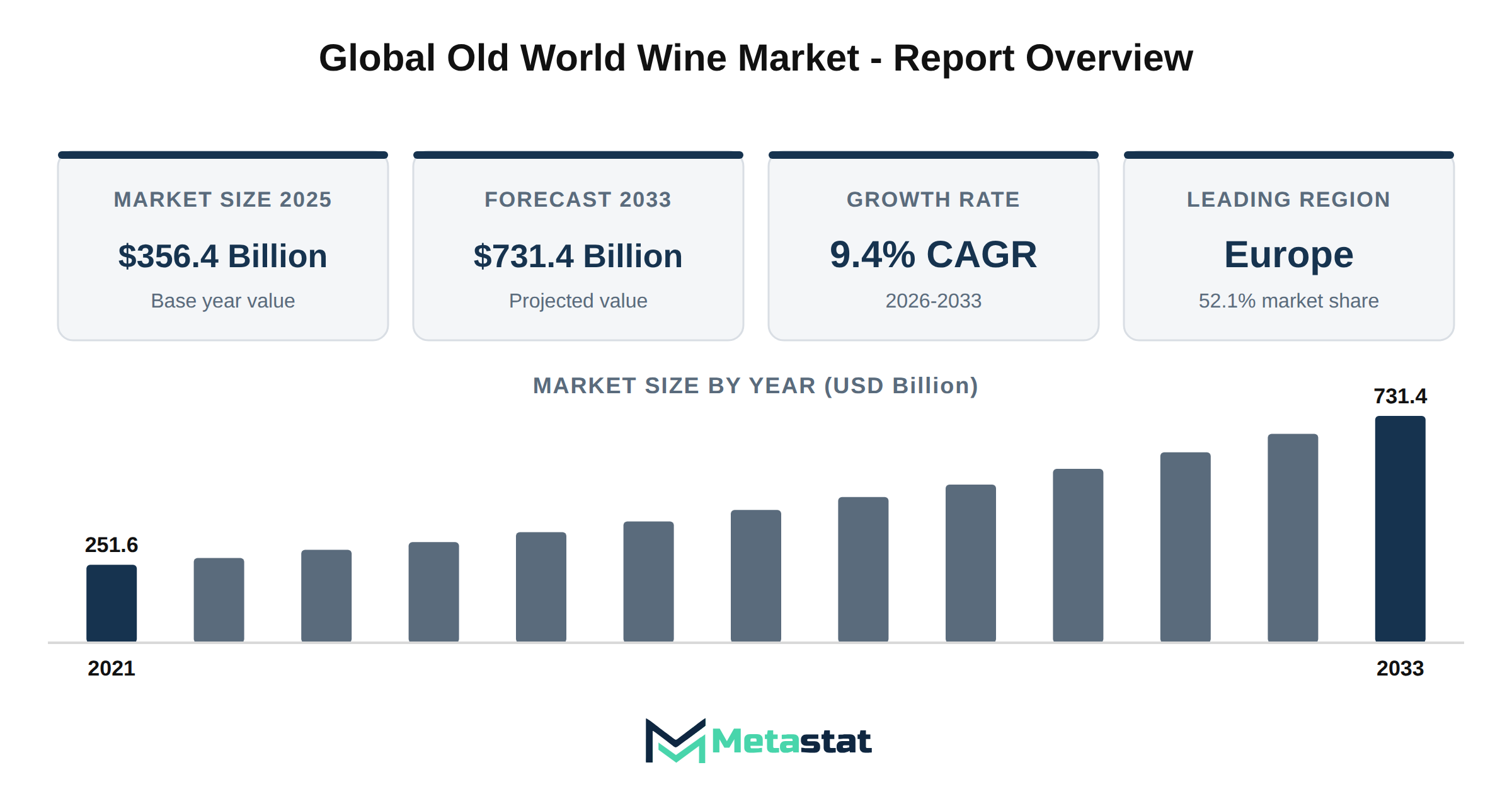
The Old World Wine market reached a value of USD 356.4 billion in 2025, with growth projected to USD 731.4 billion by 2033, reflecting a compound annual growth rate (CAGR) of 9.4 percent. Historical data shows the market value starting from USD 251.6 billion in 2021, climbing steadily to USD 299.7 billion in 2023 and USD 324.6 billion in 2024.
European appellation frameworks and protected designation of origin regulations shape the market landscape, ensuring that traditional viticulture and terroir influence production practices. These regulations enhance the authenticity of wines from regions including France, Italy, and Spain, driving consumer preference towards heritage brands.
Demand dynamics in the market reflect a growing interest in sustainable viticulture and organic certification trends. Consumers increasingly seek products that align with environmentally responsible practices, influencing vineyard management and production methods across the continent.
Climate adaptation strategies across heritage European vineyards are crucial for maintaining quality and yield. Producers implement innovative practices to address changing weather patterns, ensuring the resilience of their operations while preserving the unique characteristics of their wines.
Export competitiveness remains strong for French, Italian, and Spanish wine producers, supported by cross-border trade agreements and tariff impacts on European wine exports. This competitive edge enhances market penetration in diverse regions while promoting economic growth within the sector.
The direct-to-consumer digital transformation in traditional European wineries represents a significant shift in distribution strategies. Wineries leverage e-commerce platforms to reach consumers, facilitating a more direct relationship and expanding market access.
Supply chain resilience is critical for bulk logistics in European wine distribution. Efficient logistics networks support timely delivery and ensure product availability, contributing to overall market stability.
The European Appellation Frameworks and Protected Designation of Origin regulations significantly influence the Old World Wine market, ensuring that wines produced in specific regions maintain their unique characteristics and heritage. These regulations enhance the value perception of wines, driving consumer interest in authentic products and contributing to the overall growth of the market.
Traditional viticulture and terroir-driven demand dynamics play a crucial role in shaping the market. Consumers increasingly seek wines that reflect the unique environmental conditions and historical practices of their regions, emphasizing the importance of heritage in purchasing decisions.
Climate adaptation strategies across heritage European vineyards emerge because a key focus for producers aiming to sustain quality and yield in changing climate conditions. Implementing innovative practices allows vineyards to maintain competitive advantages while preserving their traditional identities.
The export competitiveness of French, Italian, and Spanish wine producers remains robust, supported by established global reputations and strong brand identities. These countries leverage their rich winemaking histories to capture significant market shares in international markets, driving revenue growth.
Direct-to-consumer digital transformation in traditional European wineries enhances customer engagement and broadens market reach. Wineries adopt e-commerce platforms, facilitating access to consumers and boosting sales through direct interactions, which strengthens brand loyalty.
Supply chain resilience and bulk logistics for European wine distribution have become essential amid global disruptions. Effective logistics strategies ensure timely delivery and availability of products, reinforcing the market's stability and responsiveness to consumer demand.
Consolidation and investment activity in legacy vineyard estates continue to reshape the competitive landscape. Increased investment in historic vineyards signals confidence in the long-term viability of the sector, leading to enhanced production capabilities and market positioning.
Sustainable viticulture and organic certification trends in European winemaking reflect a shift towards environmentally friendly practices. These trends cater to the growing consumer demand for sustainable products, enhancing the market's appeal among environmentally conscious buyers.
Evolving consumer demographics and premiumization in heritage wine segments contribute to shifting purchasing patterns. Younger consumers increasingly prioritize quality over quantity, driving demand for premium offerings and influencing market growth.
Cross-border trade agreements and tariff impacts on European wine exports directly affect market dynamics. Favorable trade conditions facilitate smoother access to international markets, enhancing the competitiveness of European wine producers globally.
Precision viticulture and smart vineyard technology adoption in Europe provide producers with innovative tools for improving efficiency and yield. Embracing technological advancements supports the market's growth while ensuring the sustainability of traditional winemaking practices.
On-trade and off-trade consumption shifts across core European markets indicate changing consumer preferences. Increased interest in premium wines in both segments drives growth, indicating a significant evolution in consumer behavior within the Old World Wine market.
The Old World Wine market experiences significant growth driven by evolving consumer preferences toward premium wine options. This trend correlates with rising disposable incomes and an increasing appreciation for high-quality and unique wine varieties. Consumers increasingly seek wines with distinct origins and craftsmanship, influencing their purchasing decisions. These preferences extend to the choice of wine categories, with still red and white wines gaining popularity among enthusiasts. The market benefits from consumers valuing experiences and authenticity, resulting in increased demand for wines that reflect tradition and craftsmanship.
Investment in marketing and branding by producers enhances visibility and appeal, addressing the growing consumer focus on premium and sustainable options. Producers emphasize storytelling and heritage, which connect with consumers who prioritize authenticity. This strategy cultivates brand loyalty and strengthens market presence, particularly among younger demographics. The competitive landscape shifts, rewarding producers who adapt to these changing preferences, resulting in sustained market expansion within the Old World Wine market.
Changing demographic patterns significantly influence the Old World Wine market. An aging population, particularly in Europe, leads to increasing demand for wines that cater to mature consumers' preferences. This demographic shift encourages producers to focus on quality and varietal diversity, aligning offerings with the tastes of older consumers seeking refined experiences.
Urbanization contributes to evolving consumer behaviors, with younger generations increasingly embracing wine culture. This trend fuels growth due to urban dwellers seeking premium and unique wine selections, often influenced by social experiences and lifestyle changes. The market adapts by expanding its offerings to meet the desires of these consumers.
The growing popularity of wine tourism across regions strengthens market demand. Consumers are more engaged with the wine-making process, leading to a preference for locally produced wines. This trend encourages brands to promote their heritage and storytelling, further enhancing their market position. Investment in promotional strategies tied to tourism serves to enhance brand visibility and market share.
Overall, these demographic and behavioral shifts drive growth, compelling producers to innovate and diversify their offerings within the Old World Wine market, ultimately creating a more dynamic competitive landscape.
Regulatory challenges significantly affect the Old World Wine market. Compliance hurdles associated with stringent regulations on alcohol production and distribution impose additional costs on producers. These requirements limit operational flexibility and hinder market entry for smaller wineries, ultimately reducing competition. Macroeconomic headwinds, including inflationary pressures, create an environment where operational costs escalate, further straining profit margins across the industry.
Geopolitical instability contributes to market uncertainty, affecting both supply chains and consumer confidence. Disruption in sourcing and logistics results from international trade tensions and resource scarcity, making it challenging for producers to maintain consistent supply levels. Rising costs of raw materials add another layer of complexity, which diminishes the ability of wineries to price competitively in the Old World Wine market.
Talent gaps and skilled labor deficiencies pose significant barriers to operational efficiency. The industry requires skilled workers for production, distribution, and marketing sectors, yet shortages in skilled labor lead to slower growth and reduced innovation. Data security vulnerabilities and privacy concerns present challenges in managing consumer relationships, driven by the market's increasing shift toward e-commerce and online sales channels.
Geopolitical fragmentation presents multifaceted challenges within the Old World Wine market, influencing trade dynamics and supply chain stability. Ongoing trade deficits and tariff friction disrupt established pathways for exporting and importing wine, particularly affecting regions like Europe and North America, which rely heavily on cross-border transactions. These barriers complicate access to international markets, ultimately constraining growth potential for producers aiming to expand their global footprint.
Technological disruptions introduce an additional layer of complexity, particularly with the integration of new production methods and digital platforms. The rapid evolution of technology overwhelms traditional processes, leading to interoperability friction among various systems and supply chains. This friction hinders the exchange of information and materials, resulting in delays and inefficiencies.
Rising input costs driven by inflation and fluctuating feedstock prices contribute to pricing compression across the market. Increased operational expenses exert pressure on profit margins, compelling producers to navigate a delicate balance between maintaining product quality and managing costs. The impact of this financial strain reverberates throughout the supply chain, affecting stakeholders from growers to distributors.
Workforce skill gaps further challenge the market, with talent retention pressures complicating recruitment in key roles. The ongoing demand for skilled labor in winemaking and distribution exacerbates operational difficulties, limiting the ability of businesses to scale effectively. This situation necessitates investment in training and development to attract and retain a capable workforce.
Environmental sustainability demands and decarbonization mandates shape industry practices, forcing producers to adapt to tighter global regulatory standards. The need for compliance adds to the operational burden, with significant costs associated with retrofitting facilities and implementing environmentally friendly practices. Addressing these sustainability challenges is essential for long-term viability within the Old World Wine market, particularly driven by consumers' increasing favor for eco-conscious brands.
The Old World Wine market benefits from emerging regional demands that stimulate growth. Increasing interest in wine consumption within Asia Pacific, particularly in countries including China and India, creates substantial opportunities for producers. This surge reflects evolving consumer preferences for diverse wine offerings, prompting suppliers to enhance distribution channels and marketing strategies to capture the growing customer base.
Infrastructure modernization supports this market expansion. Investments in distribution networks and e-commerce platforms facilitate access to a broader array of wine selections, catering to changing consumer expectations. These developments enable efficient supply chains, improve service delivery, and enhance overall customer experiences.
Geographical expansion further contributes to market dynamics. Wine producers extend their reach into regions with previously untapped potential, diversifying their customer base. This strategic move mitigates risks associated with reliance on traditional markets, enhancing resilience amid fluctuating global conditions.
Technological disruptions and digital transformation reshape the market landscape. Advancements in production techniques and marketing approaches leverage data analytics to better understand consumer preferences. This data-driven strategy supports targeted marketing campaigns and product innovations, ensuring that offerings align with market trends.
Sustainability imperatives drive shifts within the Old World Wine market. Increased consumer awareness regarding environmental impacts influences purchasing decisions, prompting producers to adopt eco-friendly practices. Aligning with sustainability objectives enhances brand reputation and meets the demands of environmentally conscious consumers.
Downstream market diversification presents additional avenues for growth. Wine producers increasingly explore niche applications and product integration, expanding their portfolios to include complementary offerings including food pairings and accessories. This diversification strategy enhances revenue streams and reinforces market presence.
The Global Old World Wine market is segmented based on Wine Category, Origin, Distribution Channel, and Price Point.
Valued at USD 174.7 billion in 2026, the Still Red Wine segment is projected to reach USD 311.8 billion by 2033, at a CAGR of 8.6% during the forecast period. Demand for Still Red Wine is driven by evolving consumer preferences toward premium and artisanal products. Increasing interest in wine tasting experiences and food pairings enhances the segment's appeal, particularly among younger demographics seeking distinct flavors and quality. The rise of online retail platforms facilitates broader access to a variety of Still Red Wine options, supporting the segment's growth trajectory.
Technological advancements in winemaking improve quality and consistency, catering to discerning consumers. Innovations in sustainable production practices connect with environmentally conscious buyers, influencing purchasing decisions. The segment benefits from effective marketing strategies that emphasize heritage and authenticity, particularly from renowned wine-producing regions. These strategies create a robust connection between consumers and producers, building brand loyalty and repeat purchases.
The Old World Wine market recognizes ongoing shifts in consumption patterns. Increased health awareness and a growing appreciation for moderate consumption of alcohol contribute to the rise in Still Red Wine sales. Regulatory compliance, particularly regarding labeling and production methods, supports consumer trust and drives demand for high-quality offerings. This segment's ability to adapt to market dynamics positions it favorably for sustained growth in the coming years.
Continued interest in sustainability and organic products significantly impacts the demand for Still White Wine within the Old World Wine market. Consumers increasingly seek wines produced with environmentally friendly practices, driving wineries to adapt their production methods. This shift aligns with the growing preference for products perceived because healthier and more authentic.
Market expansion is supported by an increase in wine tourism across Europe, enhancing visibility for various brands. Enthusiasts visit vineyards, creating a deeper appreciation for regional offerings. This trend exemplifies the connection between local heritage and global consumption patterns, influencing purchasing decisions.
Still White Wine segment is estimated to reach USD 204.1 billion by 2033, at a CAGR of 10.1% during the forecast period. The development of innovative winemaking techniques further increases the appeal of this segment. Advances in fermentation and aging processes allow producers to craft unique flavors and aromas, catering to diverse consumer palates.
Changes in food pairing trends contribute to the segment’s growth, with consumers increasingly experimenting with wine selections that complement various cuisines. This evolving culinary landscape encourages more people to explore Still White Wine options, boosting overall market demand. Increased penetration in online retail channels facilitates greater accessibility, enabling consumers to discover and purchase a broader range of products.
Competitive pricing strategies play a crucial role in market dynamics. Producers strive to balance quality with affordability, ensuring that Still White Wine remains attractive to a broad audience. Promotional campaigns highlighting the versatility and quality of these wines further enhance consumer interest, reinforcing their position in the market.
Demand for Still Rosé Wine reflects evolving consumer preferences toward lighter, fruitier options in wine consumption. This shift aligns with increasing health consciousness and the desire for versatile pairings with various cuisines. Popularity among younger demographics, especially millennials and Gen Z, drives this trend, leading to a notable rise in experimentation with wine varieties. A strong emphasis on quality and authenticity enhances consumer interest, pushing producers to innovate in flavors and production techniques.
In the Old World Wine market, Still Rosé Wine is expected to reach USD 73.3 billion by 2033. This growth results from effective branding and marketing strategies promoting rosé because a refreshing choice for various occasions. The segment benefits from expanding distribution channels, particularly online platforms, which facilitate access to diverse options for consumers. Enhanced visibility through social media and influencer partnerships further strengthens market engagement.
Pricing dynamics within the segment play a crucial role in shaping consumer choices. The range of price points from value to super-premium wines allows for broader market appeal, attracting diverse consumer segments. Strategic positioning and premium offerings create opportunities for higher margins for producers, consolidating their market presence. The growth trajectory highlights the significant role of Still Rosé Wine within the larger framework of the Old World Wine market.
Growth in the Sparkling Wine segment stems from increasing consumer interest in premium and luxury offerings, coupled with a rise in celebratory occasions and social events. This segment is projected to grow at a CAGR of 9.5% during the forecast period. The expansion is further supported by the ongoing evolution of product varieties, including innovations in flavor profiles and packaging, which align with contemporary trends in consumer preferences.
Shifts in consumption patterns reflect a growing inclination toward sparkling wines during festive occasions and gatherings, enhancing demand across various demographic groups. The market experiences heightened awareness regarding the origin and quality of wines, prompting consumers to explore traditional regions known for sparkling wine production, including Champagne and Prosecco. These trends contribute to the increased status of sparkling wines within the broader Old World Wine market.
Robust marketing strategies and collaborations with renowned chefs and influencers enhance the appeal of sparkling wines, driving consumer engagement and loyalty. Distribution channels focusing on e-commerce and specialty retailers facilitate access to a diverse range of products, catering to an expanding audience. Such strategic initiatives create a favorable environment for growth, positioning the segment to capture significant market share in the coming years.
In terms of pricing, the segment adapts to fluctuations in raw material costs, ensuring competitive pricing while maintaining quality standards. This balance is crucial in managing profit margins and sustaining growth momentum. Overall, the Sparkling Wine segment reflects dynamic trends that align with both consumer desires and market potential, contributing to the overall vitality of the Old World Wine market.
Consumer interest in fortified wines has surged, particularly owing to their rich flavors and versatility in pairing with various cuisines. This growing demand stems from an increasing appreciation for unique taste profiles and the traditional craftsmanship associated with fortified wine production. In the Old World Wine market, fortified wines appeal to both casual drinkers and connoisseurs seeking distinctive offerings.
With a focus on quality over quantity, producers invest in premium ingredients and innovative production methods to enhance the appeal of fortified wines. This approach aligns with broader trends in the market where consumers show a preference for products that emphasize authenticity and origin. The evolving consumer palate has led to a shift in purchasing behavior, with fortified wines increasingly featured in high-end restaurants and specialty retailers.
Regulatory frameworks play a critical role in maintaining the integrity of fortified wines. Protected Designation of Origin status for certain fortified wines ensures quality and authenticity, enhancing their marketability. Compliance with these standards strengthens consumer trust, which is essential for growth in the segment. Global awareness of these regulations increases, and fortified wines from the Old World capture more attention from discerning consumers, further driving segment expansion.
Fluctuations in pricing and cost structures within the fortified wine market influence purchasing decisions. Producers face challenges including rising raw material costs and shifting consumer expectations, which pressure profit margins. Strategic pricing models that reflect the true value of fortified offerings are critical for maintaining competitiveness within the market.
The Old World Wine market continues to evolve, and fortified wines represent a distinctive segment that reflects heritage and innovation. Opportunities for growth within this category lie in the development of new products that cater to shifting consumer preferences while maintaining the traditional aspects that define fortified wines. The segment remains poised for continued interest owing to both new consumers and loyal enthusiasts exploring these unique beverages.
Valued at USD 98 billion in 2026, the France segment is projected to reach USD 176.4 billion by 2033, at a CAGR of 8.8% during the forecast period. This growth is driven by robust demand for high-quality wines, with consumers increasingly favoring premium products that highlight regional characteristics and traditional production methods. The deep-rooted wine culture in France sustains domestic consumption and supports strong export markets, increasing the segment's overall value within the Old World Wine market.
Technological advancements in winemaking processes enhance product quality and operational efficiency, further contributing to the segment's expansion. Consumer trends toward organic and sustainably produced wines influence purchasing decisions, aligning with broader global movements toward environmental consciousness. Strategic marketing initiatives aimed at younger demographics cultivate new consumer segments, ensuring ongoing interest in French wines.
Pricing strategies reflect the evolving landscape, with premium offerings commanding higher price points amid rising production costs. While competition intensifies, producers focus on branding and quality to differentiate their products in a saturated market. Regulatory compliance with stringent quality standards ensures that French wines maintain their prestigious reputation, reinforcing consumer trust and loyalty.
Investment in vineyard expansion and technological innovation positions the France segment for continued success. The anticipated growth aligns with an increasing global appetite for Old World wines, presenting opportunities for producers to capture additional market share. Overall, the combination of cultural heritage, modern techniques, and strategic marketing strengthens France's role in the Old World Wine market.
Italy holds a prominent position in the Old World Wine market, with the segment estimated to reach USD 157.5 billion by 2033, at a CAGR of 8.8% during the forecast period. Factors driving this growth include a strong heritage of winemaking, rich varietal offerings, and a reputation for quality. Italy's diverse wine regions, including Tuscany, Piedmont, and Veneto, contribute to a broad range of offerings, appealing to varying consumer tastes and preferences.
Increasing interest in premium quality wines strengthens demand for Italian offerings, aligning with a global trend toward premiumization. The market benefits from robust export initiatives, enhancing the presence of Italian wines in international markets. Innovative marketing strategies and the rise of e-commerce platforms facilitate access to a broader audience, enabling producers to reach consumers directly.
Shifts in consumer preferences toward organic and sustainable products positively impact the segment, with many Italian wineries adopting eco-friendly practices. Regulatory frameworks supporting organic certification further support this trend. The combination of these forces positions Italy because a competitive player within the Old World Wine market, with opportunities for continued growth through strategic investments and product innovations.
Growing consumer interest in wines from Spain drives demand within the Old World Wine market. The country's rich history of winemaking, coupled with diverse wine offerings, enhances its appeal to both domestic and international consumers. Spain's segment is projected to reach USD 112 billion by 2033, fueled by a surge in popularity for Spanish varietals including Tempranillo and Garnacha. The ongoing trend toward premiumization supports the growth of higher-priced wines, reflecting consumers' willingness to invest in quality. Regional wine tourism further contributes to market expansion, attracting visitors eager to experience Spain's famed vineyards and wine regions. An increased focus on sustainability in viticulture and winemaking practices positions Spanish wines favorably in the evolving market landscape.
Growth in the Portugal segment remains significant, projected to increase at a CAGR of 10% during the forecast period. Factors driving this growth include the increasing recognition of Portuguese wines globally, particularly in markets favoring unique and high-quality products. The country's rich viticultural heritage, combined with innovative winemaking techniques, enhances the appeal of its offerings among consumers.
Demand for wines originating from Portugal reflects a broader trend towards premiumization in the Old World Wine market. Consumers gravitate towards distinctive flavor profiles and regional varieties, positioning Portuguese wines because an attractive choice. The segment's growth is further supported by effective marketing strategies that highlight the unique characteristics of wines from regions including Douro Valley and Alentejo.
The market benefits from favorable export conditions and a strengthening international brand presence. Regulatory support for wine exports and initiatives aimed at promoting Portuguese wines in foreign markets contribute to expanding opportunities for local producers. While the segment evolves, investment in quality production and sustainable practices enhances competitiveness and market share.
Germany's positioning within the Old World Wine market highlights a unique set of characteristics that drive consumer engagement and product offerings. A robust tradition of winemaking underpins demand, with a strong cultural connection to both domestic and international consumers. The country’s reputation for producing high-quality wines influences purchasing decisions, particularly among connoisseurs and casual drinkers.
Product evolution influences the German segment, particularly in the area of Riesling, which has received international acclaim. Technological maturation within vineyards enhances wine quality, enabling producers to meet rising consumer expectations. This transition creates an environment where innovation thrives, allowing for the production of unique varietals that appeal to diverse palates.
Adoption of sustainable practices has become a strong influence on consumer preferences, with many buyers actively seeking organic and biodynamic wines. The market's response to these trends encourages producers to adapt cultivation methods, meeting the growing demand for environmentally friendly options. Such practices not only appeal to eco-conscious consumers but enhance brand loyalty.
Consumption shifts toward premium offerings indicate a broader trend within the market, with consumers willing to invest in higher-priced wines that promise quality and distinctiveness. The focus on enhancing the overall wine experience contributes to a surge in demand for specialty wines, increasing revenue potential for producers. This trend aligns with the overall growth trajectory of the Old World Wine market, where premium segments continue to expand.
Strategic opportunities emerge through capital investment in marketing initiatives that target younger demographics. Engaging this audience involves using social media and digital platforms to create compelling narratives around German wines. By focusing on storytelling and the unique heritage of German winemaking, brands attract a new generation of wine enthusiasts.
Austrian wines contribute significantly to the Old World Wine market, driven by a strong tradition of winemaking and the country's unique terroir. Demand for Austrian wines has expanded due to increasing global recognition of quality brands and varietals, particularly Grüner Veltliner and Riesling. These varietals have received acclaim for their distinct characteristics, prompting a shift in consumer preferences toward wines with unique flavor profiles. The market experiences robust adoption of sustainable viticulture practices, which appeal to environmentally conscious consumers, enhancing brand appeal and loyalty.
Technological advancements in winemaking processes contribute to product evolution in the Austrian segment. Innovations in fermentation and aging techniques improve wine quality, positioning Austrian wines favorably against competitors. Downstream applications of these wines include pairing with local cuisines, which further drive consumption. Regulatory compliance standards focused on quality assurance strengthen the reputation of the segment, enabling it to capture a premium market share. Cost structures associated with high-quality production methods establish a market where pricing reflects quality, allowing for profitable margins despite potential volatility.
Logistics vulnerabilities in the Austrian wine supply chain present challenges in distribution, particularly in accessing global markets. Strategic opportunities exist for expanding export channels, which enhance market penetration. The capital investment outlook remains favorable, driven by increasing interest from investors in unique wine offerings. This environment creates a competitive landscape where Austrian wines are positioned to capitalize on growing global demand within the Old World Wine market.
Interest in Greek wines has increased owing to the country's rich viticultural history and unique indigenous grape varieties. The Old World Wine market gains from consumers seeking authentic and diverse flavor profiles, positioning Greece because an attractive option within the segment. Rising tourism has contributed to greater exposure and appreciation of Greek wines, promoting consumer adoption. Investment in technological advancements and production improvements enhances the quality of Greek wines, further driving growth. Regulatory compliance and certifications related to quality standards support market credibility, building consumer trust. Strategic opportunities arise from increasing global interest in Mediterranean diets and lifestyle choices, encouraging further expansion of Greek wines in international markets.
Interest in Hungary's wine production stems from its rich history and diverse wine styles. The country is renowned for its unique grape varieties, particularly the indigenous Furmint and Hárslevelű, which thrive in the volcanic soils of the Tokaj region. While global consumers increasingly seek distinctive flavors and regional authenticity, Hungary emerges because an attractive destination for wine enthusiasts looking for unique offerings.
Expanding recognition of Hungarian wines enhances their appeal in the Old World Wine market. International accolades and awards have placed Hungarian wines on the global stage, attracting attention and driving growth in export markets. Increased marketing efforts and participation in international wine competitions further increase the visibility of Hungarian brands, contributing to market expansion.
Shifts in consumer behavior toward premium and unique wine experiences significantly influence Hungary's wine sector. The emergence of boutique wineries and organic wine production aligns with trends favoring sustainability and craftsmanship. These factors create opportunities for the market to attract discerning consumers interested in quality over quantity.
Investment in technology and modern winemaking techniques strengthens Hungary's competitiveness. Innovations in vineyard management and production processes enhance the quality of wines, appealing to a broader consumer base. Such advancements support the segment's maturation in the market, positioning Hungary favorably against traditional wine-producing countries.
Increased focus on tourism, particularly wine tourism, benefits Hungary's wine industry. Scenic wine regions, coupled with cultural heritage and gastronomy, draw visitors seeking immersive experiences. This trend not only boosts local economies but enhances the visibility and demand for Hungarian wines in the global marketplace.
Interest in wines from the United Kingdom continues to grow within the Old World Wine market. The increasing emphasis on local production and unique varietals contributes to this trend. Consumers seek high-quality, locally sourced options, leading to a shift in preferences towards UK wines. While the market evolves, producers invest in sustainable practices and innovative techniques to enhance product offerings.
UK wines have gained recognition for their quality and diversity, attracting attention from both domestic and international consumers. This interest drives adoption among younger demographics, who prioritize unique experiences and flavors. The rise in wine tourism in the UK increases exposure to local brands, boosting demand within the market.
Regulatory compliance and quality certifications play a crucial role in the United Kingdom's wine production landscape. Adherence to standards strengthens consumer confidence and supports market expansion. Efforts to promote UK wines through various channels highlight the commitment to quality and local heritage, enhancing market presence.
Pricing strategies within the UK wine sector reflect the growing premiumization trend. Consumers favor high-quality wines, leading producers to focus on value-driven pricing. This strategy aligns with the broader market's shift towards premium products, ensuring that UK wines remain competitive and appealing to discerning consumers. The focus on quality and local heritage enhances overall market presence.
Wines from the region encompassing Georgia, Romania, Moldova, Slovenia, and Croatia exhibit a unique appeal, driven by a blend of traditional winemaking practices and evolving consumer tastes. Regional producers emphasize quality and authenticity, gaining traction in niche markets where enthusiasts seek distinctive, lesser-known varietals. The Old World Wine market experiences rising interest in these wines, fueled by consumers' desire for diverse flavor profiles and local heritage.
Investment in modern viticulture techniques enhances the quality and sustainability of production, creating opportunities for growth and expansion. Increased participation in international wine competitions raises the visibility of these regions, attracting attention from global importers and distributors. The market for wines from this geographical area benefits from a proactive approach to marketing and branding, highlighting the unique characteristics of each region's offerings.
Consumption shifts toward premium and artisanal products favor the distinctive wines from these countries, aligning with broader trends in the Old World Wine market. Consumers' increasing preference for authentic experiences drives demand, prompting producers to innovate while preserving traditional methods. Strategic opportunity windows for wineries in Georgia, Romania, Moldova, Slovenia, and Croatia continue to expand, supported by a growing base of wine aficionados keen on exploring new tastes.
On-Trade (Restaurants, Hotels and Bars) segment is valued at USD 121.4 billion in 2026 and is projected to reach USD 218.3 billion by 2033, at a CAGR of 8.7% during the forecast period. Primary demand drivers within this segment include an increase in dining out, enhanced consumer experiences, and the growing trend of wine pairing with meals. Establishments including restaurants and hotels prioritize quality and variety, aligning wine selections with culinary offerings to improve customer satisfaction.
Segment expansion catalysts reflect the rising popularity of wine tourism, where consumers seek unique experiences that enhance local wine offerings. This trend fuels demand for Old World wines, particularly those from renowned regions like France and Italy. Technological maturation in the sector, including advancements in wine preservation and serving techniques, supports the delivery of optimal wine experiences in on-trade settings.
Consumption shifts towards premium and super-premium wines contribute significantly to the growth of this segment. Customers increasingly opt for higher-quality offerings, driven by an expanding inclination to explore distinctive flavors and regions. Regulatory compliance standards regarding the sale of alcoholic beverages further impact the market, with establishments adapting to legal requirements while maximizing their wine offerings.
Pricing volatility and margin pressures challenge on-trade operators. Fluctuations in supply chain costs, particularly in raw material sourcing, influence pricing strategies. Establishments proactively manage these challenges by establishing strong relationships with suppliers and diversifying their offerings. Strategic opportunity windows arise from growing consumer interest in sustainable and organic wines, encouraging establishments to enhance their selections.
Investment in on-trade establishments continues to evolve, with substantial allocations dedicated to staff training and customer engagement initiatives. These investments aim to improve the customer experience and build loyalty, ultimately driving revenue growth within the Old World Wine market.
Strong demand for premium and unique wine selections promotes growth in the Specialty Wine & Liquor Retailers segment. Increasing consumer sophistication drives the preference for specialty retailers that offer a curated selection of Old World wines, ensuring customers access to top-quality products. This segment is estimated to reach USD 133.2 billion by 2033, at a CAGR of 9.9% during the forecast period. Shifts in consumer behavior, emphasizing experiences and high-quality products, reinforce the importance of specialty retailers because trusted sources for discerning customers.
Technological advancements within retail environments enhance the shopping experience for consumers. Innovations including personalized recommendations and e-commerce solutions improve purchasing processes, further driving traffic to specialty outlets. Retailers that provide integrated online and offline experiences see increased customer engagement and loyalty, contributing positively to sales growth in the market.
Regulatory compliance continues to shape the operational landscape for specialty wine retailers. Adherence to local laws regarding alcohol sales, distribution, and labeling remains crucial for maintaining market presence. Consequently, retailers invest in compliance measures and staff training, ensuring that operations align with legal expectations while delivering high-quality service. This investment supports overall market expansion and strengthens the competitive positioning of players focused on providing high-quality Old World wines.
Pricing strategies within this segment reflect the unique value propositions offered to consumers. The focus on premium products allows specialty retailers to implement pricing structures that capture consumer willingness to pay for quality. This dynamic enhances margin potential, benefiting retailers while attracting customers seeking quality wine experiences. Overall, the Specialty Wine & Liquor Retailers segment represents a vital component of the Old World Wine market, characterized by evolving consumer preferences and an emphasis on quality and exclusivity.
Supermarkets & Hypermarkets segment experiences significant growth, driven by the increasing convenience and accessibility that these retail formats offer to consumers. Shoppers prefer the one-stop shopping experience, where various brands and price points are available, leading to heightened demand for Old World Wine products. By 2033, this segment is projected to reach USD 187.8 billion.
Consumer behavior shows a shift towards purchasing wine through retail chains, encouraged by promotional activities and strategic partnerships with wine producers. Enhanced marketing campaigns targeting millennials and younger generations further stimulate interest in Old World Wine, integrating traditional wines with modern consumption preferences. This shift in consumer behavior reflects confidence in the segment's growth trajectory.
Price sensitivity remains a critical consideration within this segment, with competitive pricing strategies playing a significant role in attracting consumers. Retailers strategize on offering a diverse selection, balancing budget-friendly options alongside premium choices. This approach contributes to an expanded customer base and supports revenue growth within the market.
The ongoing evolution of online retailing significantly impacts the Supermarkets & Hypermarkets segment. E-commerce platforms facilitate the expansion of wine offerings, providing consumers with the ability to explore and purchase various Old World Wine products from the comfort of their homes. This digital transformation aligns with contemporary shopping habits, enhancing overall market penetration and consumer engagement.
Investment in supply chain efficiency and logistics optimization remains crucial for maintaining competitive advantage. Retailers focus on sourcing quality wines directly from producers to ensure freshness and authenticity, which appeals to consumers seeking unique offerings. Such strategies enhance brand loyalty and improve overall margins within the Old World Wine market.
Changing consumer preferences toward online shopping for wine significantly influence the Online Wine Retailers & E-commerce segment. The convenience of purchasing wine through digital platforms eliminates geographical barriers, catering to a wider audience. Enhanced user experiences through personalized recommendations and streamlined payment processes attract a broad consumer base, driving growth in the Old World Wine market.
The Online Wine Retailers & E-commerce segment is projected to grow at a CAGR of 11.8% during the forecast period. This growth reflects evolving purchasing behaviors, where consumers increasingly opt for online channels over traditional retail. Continuous expansion of e-commerce logistics and delivery networks improves the operational capacity of online retailers, further enhancing the availability of Old World wines.
Technological advancements enable retailers to provide comprehensive product information, including tasting notes and food pairings, which enrich consumers' purchasing experiences. Integration of augmented reality features allows customers to visualize products before purchasing, leading to more informed decision-making. Such innovations contribute positively to revenue growth within the segment.
Increased interest in organic and sustainably produced wines creates opportunities for niche brands to thrive online. Platforms dedicated to these specific categories attract environmentally conscious consumers, driving demand within the Old World Wine market. This segment's dynamic nature provides strategic opportunities for retailers to diversify their offerings and improve profit margins.
Increasing consumer preference for personalized experiences enhances the Winery Direct-to-Consumer segment within the Old World Wine market. This trend aligns with the broader movement towards direct engagement between producers and consumers, facilitating stronger brand loyalty and higher margins. Adoption of digital platforms further streamlines the purchasing process, allowing wineries to reach niche audiences while offering unique selections. The segment thrives on trends emphasizing transparency in production and sourcing, positioning wineries to highlight their heritage and production methods effectively.
Shifts in consumption patterns indicate a growing interest in sustainability and organic offerings, influencing product evolution within the segment. The emergence of innovative marketing strategies and direct engagement initiatives increases visibility and demand, establishing a competitive edge in the market. Regulatory compliance surrounding labeling and organic certifications plays a critical role in shaping consumer trust while driving quality expectations. These factors create strategic opportunity windows for wineries to differentiate their products and enhance market presence.
Cost structures within this segment reflect the emphasis on quality ingredients and sustainable practices, which often lead to higher pricing strategies. Increasing consumer willingness to invest in premium selections supports profit margins. Disruptive alternatives, including online wine clubs and subscription services, introduce competition, compelling traditional wineries to refine their direct-to-consumer approaches. Overall, the Winery Direct-to-Consumer segment is projected to experience significant growth, driven by evolving consumer expectations and strategic adaptations within the Old World Wine market.
Growth in the Travel Retail & Duty-Free segment reflects increasing consumer travel and tourism activities. While international travel rebounds, this segment benefits from heightened demand for wines from various Old World regions. Travelers seek premium wine selections, influencing purchase behavior in duty-free stores and travel retail outlets.
Changing consumer preferences towards unique and high-quality wines drive expansion in this segment. Shifts in consumption patterns, particularly among younger demographics, emphasize the desire for exclusive wine experiences. This trend highlights the importance of offering a diverse range of Old World wines in travel retail settings.
Pricing volatility in the overall wine market affects purchasing decisions in the Travel Retail & Duty-Free segment. Fluctuations in currency exchange rates and import duties significantly impact wine pricing and margins. Retailers operating in this segment navigate these challenges while maintaining attractive offerings for travelers.
Strategic opportunity windows in the Travel Retail & Duty-Free segment arise from partnerships with airlines and retailers. Collaborative marketing initiatives enhance brand visibility and introduce consumers to a wider selection of Old World wines. Such alliances drive revenue growth and strengthen market positioning.
Investment in enhancing the consumer experience within travel retail environments supports segment growth. Innovative approaches to merchandising and product presentation engage travelers and encourage impulse purchases. Emphasizing the heritage and craftsmanship of Old World wines connects with consumers seeking authenticity and quality.
Growth in the Others (Convenience Stores, Warehouse Clubs) sub-segment reflects evolving consumer shopping habits and preferences for accessibility. Shoppers increasingly seek convenience and variety, prompting these retail formats to broaden their wine selections. The Old World Wine market benefits from this trend, reflecting customer appreciation for the availability of diverse wine offerings in a familiar shopping environment.
Strategic partnerships between wine producers and convenience stores enhance product accessibility, further driving sales. These collaborations often focus on value propositions, appealing to price-sensitive consumers while maintaining quality. Segment expansion relies on effective promotional strategies that highlight unique offerings and value, catering to a diverse consumer base.
Technological advancements in inventory management and logistics improve the supply chain for convenience stores, ensuring that popular Old World wine varieties remain in stock. This operational efficiency supports better product availability and customer satisfaction, ultimately influencing purchase decisions. While consumer preferences shift toward convenience, these retail formats are expected to increasingly adopt next-generation upgrades to optimize performance.
Regulatory compliance continues to shape the landscape of the Others segment. Adherence to local laws regarding alcohol sales impacts product selection and pricing strategies. Wine retailers often navigate complex regulations to ensure compliance while providing a satisfactory shopping experience for customers.
Price volatility in raw material sourcing affects the market, with fluctuations in agricultural conditions directly impacting wine production costs. Producers strategically manage these risks through diversified sourcing and hedging strategies. Ultimately, effective cost management enhances margins and positions products competitively within the segment.
The Others (Convenience Stores, Warehouse Clubs) sub-segment within the Old World Wine market experiences growth driven by changing consumer preferences, strategic partnerships, technological advancements, and regulatory compliance. While the market evolves, continuous adaptation to consumer demands and operational resilience will remain crucial for success in this dynamic segment.
Valued at USD 69 billion in 2026, the Value segment is projected to reach USD 109.1 billion by 2033, at a CAGR of 6.8% during the forecast period. Increasing demand for affordable wine options drives growth within this segment, appealing to budget-conscious consumers seeking quality without premium pricing. The shift in consumption patterns toward value wines reflects a broader trend of prioritizing cost-effectiveness and accessibility in the Old World Wine market.
Heightened interest in sustainable and organic viticulture influences consumer choices, with many valuing eco-friendly production methods at all price points. The market responds to these preferences by offering a wider range of value wines that align with sustainability initiatives. Retailers benefit from enhanced sales opportunities by catering to conscious consumers while optimizing their offerings to include diverse value wine selections.
Increased competition among producers incentivizes innovation and product evolution within the Value segment. Enhanced marketing strategies and promotional efforts by suppliers attract consumers, driving market penetration and revenue growth. Consequently, the financial landscape for producers strengthens, driven by their ability to capitalize on emerging trends within the Old World Wine market.
Strong consumer interest in quality wine and taste experiences drives demand for Standard wines within the Old World Wine market. This segment is projected to reach USD 228.7 billion by 2033, at a CAGR of 8.1% during the forecast period. Increased awareness of wine origins and production methods contributes to consumer preferences, resulting in a growing appetite for wines that demonstrate quality without reaching premium price points. Value-oriented consumers seek products that balance quality and affordability, which increases competition among producers.
Technological advancements in production and distribution processes enhance the availability and variety of Standard wines. This segment benefits from improved supply chain resilience and strategic investments aimed at reducing costs and increasing efficiency in logistics. Retailers expand their offerings, enabling consumers to access a wide range of options, further strengthening the segment's position in the market.
Consumption shifts toward more sustainable and organic wine options influence preferences within the Standard category, prompting producers to adapt their offerings. Regulatory compliance and certifications related to sustainability and quality assurance establish trust with consumers, encouraging them to choose Standard wines. Continued growth in this segment reflects the evolving dynamics of the Old World Wine market, where demand for quality products remains a priority.
Consumer interest in the Premium segment grows due to wine enthusiasts increasingly seeking high-quality options. This segment is characterized by distinctive flavor profiles and unique production methods that appeal to discerning buyers. Premium wines often come from renowned regions, enhancing their perceived value and desirability among consumers.
Regulatory compliance standards regarding labeling and quality assurance play a significant role in shaping the Premium segment. These regulations assure consumers of the authenticity and origin of the wines they purchase, reinforcing trust and loyalty. Effective marketing strategies focused on storytelling and brand heritage contribute to consumer attraction, further enhancing the segment's appeal.
Investment in vineyard modernization and advanced winemaking techniques enhances production efficiency while maintaining the quality expected in the Premium segment. While the Old World Wine market expands, emerging technologies for grape cultivation and fermentation processes drive innovation, leading to unique offerings that appeal to a broader audience.
The Premium segment is expected to reach USD 232.9 billion by 2033. Price volatility impacts consumer purchasing decisions, with economic factors influencing spending on luxury items like premium wines. The ongoing trend towards premiumization suggests that consumers increasingly choose quality over quantity, further driving growth in this segment.
Market trends indicate a significant shift toward the consumption of premium and high-quality wines, particularly within the Super-Premium segment of the Old World Wine market. This shift stems from rising disposable incomes, evolving consumer preferences for luxury products, and increased awareness of wine quality. The consumer base for Super-Premium wines includes affluent individuals and wine enthusiasts with a strong interest in unique and high-quality offerings, driving demand and promoting market growth.
Super-Premium segment is projected to grow at a CAGR of 11.9% during the forecast period. This growth reflects not only consumer enthusiasm but a broader trend of wine producers focusing on quality, craftsmanship, and sustainable practices. Innovative marketing strategies, including limited editions and collaborative offerings, further enhance appeal and draw new customers seeking distinctive wine experiences.
Increased distribution through specialty retailers and online channels facilitates access to these premium wines, expanding consumer reach. While the market continues to evolve, producers investing in enhanced supply chain resilience and strategic marketing efforts position themselves to capture a larger share of this lucrative segment. The combination of unique flavors, high-quality production methods, and effective marketing strategies strengthens the Super-Premium segment's role, attributed to a key driver in the overall growth of the Old World Wine market.
Growing awareness of luxury and fine wines drives interest among affluent consumers, highlighting the evolving taste preferences that value quality and exclusivity. Shifts in demographic trends, particularly among millennials and Generation X, result in increased consumption of premium wine. These consumers prioritize unique experiences and high-quality products, creating a fertile ground for luxury segments within the Old World Wine market.
Increased focus on wine tourism and exclusive tasting events enhances engagement with luxury wines. Producers leverage these experiences to present their offerings, effectively connecting with discerning buyers. Emphasizing product quality, heritage, and authenticity allows brands to differentiate themselves, securing a competitive edge in the market.
Technological advancements in wine production and marketing contribute to segment expansion. Innovations in viticulture techniques and precision agriculture enhance the quality of grapes, leading to superior wine products. Enhanced online platforms facilitate direct-to-consumer sales, allowing producers to reach a broader audience while maintaining control over brand messaging and customer engagement.
Consumption shifts toward premium wines align with rising disposable incomes and changing consumer preferences. The penetration of luxury wines in emerging markets presents strategic opportunity windows for producers aiming to capitalize on the growing middle class. This trend demonstrates the importance of adapting marketing strategies to appeal to diverse consumer bases within the Old World Wine market.
Regulatory compliance and certification standards play a critical role in establishing brand credibility and consumer trust. Adherence to quality benchmarks builds a positive reputation, enabling luxury wine producers to navigate market challenges effectively. Pricing volatility remains a consideration, with raw material sourcing and production costs influencing overall margins within the segment.
The Luxury/Fine Wine segment reflects shifting consumer preferences toward premium products, driven by a combination of socio-economic factors, technological advancements, and evolving market dynamics. The Old World Wine market stands poised for growth owing to producers strategically adapting to these changing conditions.
Based on geography, the Global Old World Wine market is divided into North America, Europe, Asia-Pacific, South America, Middle East, and Africa.
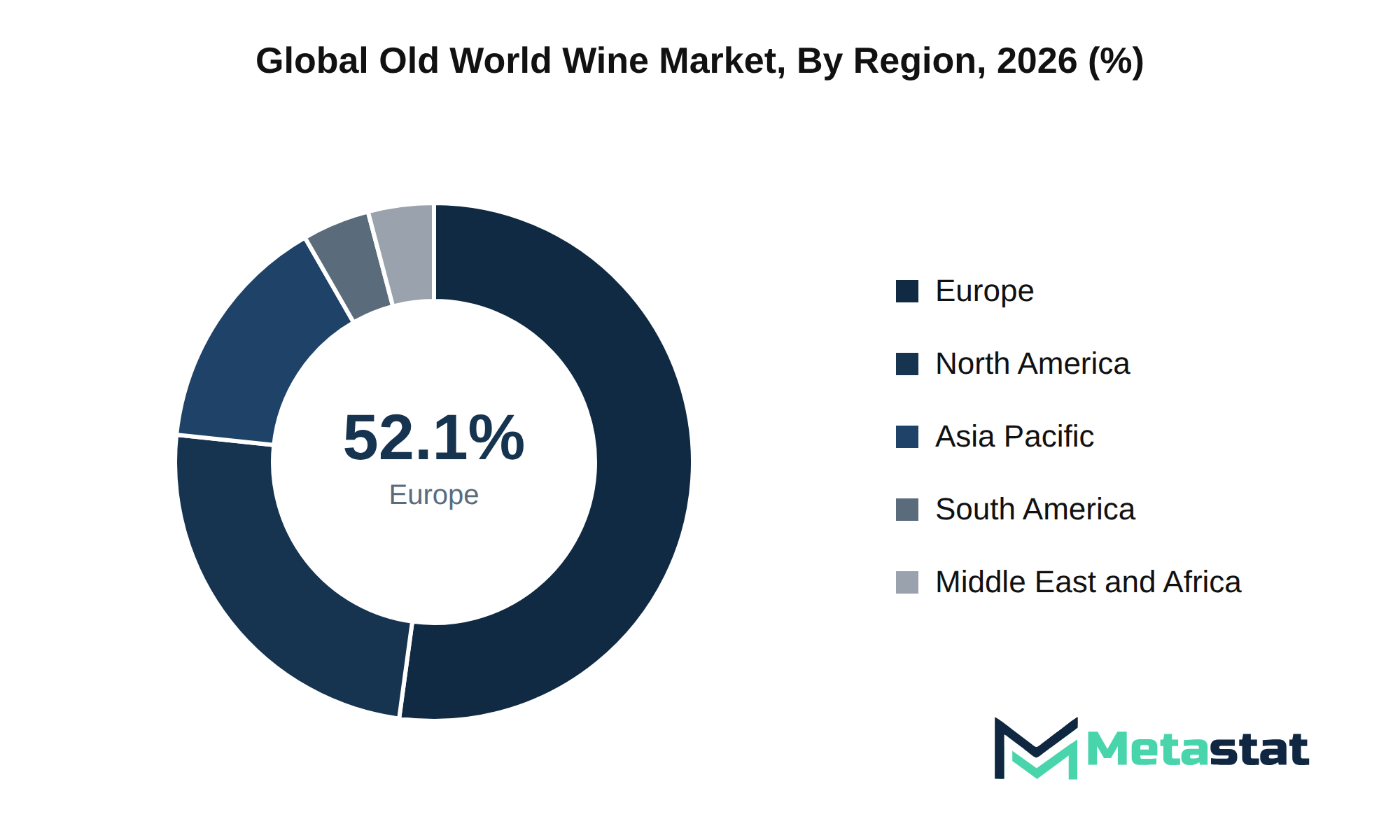
North America Old World Wine market is set to expand at a CAGR of 9.4% within the forecast period, reaching a market size (TAM) of USD 188.8 billion by the end of 2033. The region accounts for 24.5% of the global market share, driven by a growing appreciation for premium wines among consumers in the United States, Canada, and Mexico. A shift towards more sophisticated wine selections reflects evolving consumer tastes and preferences, further stimulating demand.
High-value replacement cycles in the Old World Wine market will continue to drive growth throughout the region. Increasing interest in unique wine offerings leads to a rise in sales across various distribution channels. The On-Trade segment, encompassing restaurants, hotels, and bars, serves because a significant contributor to market expansion, capitalizing on the trend of premiumization.
Emerging market front-runners benefit from cultural nuances related to wine consumption, heightening regional interest in diverse wine selections. Localized procurement dynamics allow suppliers to cater to preferences that vary across states and provinces, enhancing customer engagement and satisfaction.
Geopolitical factors and regulatory frameworks impact the operational landscape. Local compliance mandates shape the market by influencing pricing strategies and supply chain decisions. Companies operating in the North America Old World Wine market navigate these complexities to maintain competitiveness and capture growth opportunities.
Europe dominates the Old World Wine market, contributing 52.1% of the global share in 2025. This strong position arises from the region's rich heritage in wine production, with countries like France, Italy, and Spain leading in both quality and variety. Established wine culture and consumer loyalty in these countries create a favorable environment for growth.
In France, the market is driven by a combination of historical prestige and evolving consumer preferences for premium wines. Italy exhibits a diverse range of wine offerings, appealing to both local and international markets. Spain benefits from an expanding export market, which enhances visibility for its unique varieties. The UK, while historically a significant market, faces challenges from changing trade regulations but remains a key player in wine imports.
Regional dynamics shape the market significantly. Factors including localized production and cultural nuances influence buying behaviors, impacting consumer choices across different countries. Investments in modernizing winery facilities and adhering to local compliance mandates enhance operational efficiency. The presence of domestic market participants strengthens competitive positioning, creating an environment where innovation and product development thrive.
Emerging market trends indicate a shift towards sustainability and organic wines, with consumers increasingly seeking environmentally friendly options. This trend aligns with broader global movements emphasizing responsible consumption and production practices. The Old World Wine market is expected to evolve, with regional players adapting to these preferences to maintain their market positions and capture new opportunities.
The Asia-Pacific region holds a share of 15.0% in the global Old World Wine market in 2025. Rapid economic growth in countries including China and India enhances disposable income, resulting in increased wine consumption. The expanding middle class contributes significantly to higher demand for premium and luxury wines, particularly among younger consumers. Cultural shifts and increasing interest in wine education in markets like South Korea and Japan promote the introduction of diverse wine categories, including sparkling and fortified wines.
Online wine retailing experiences significant growth, driven by the shift to e-commerce in Australia and Southeast Asia. Increasing internet penetration and the convenience of home delivery services facilitate access to a wider variety of Old World Wine products. Retailers adopt digital platforms to enhance customer engagement and improve purchasing processes, aligning with local consumer preferences for convenient shopping experiences.
Geographically, the region faces unique challenges related to logistics and supply chain management, which influence pricing and availability. Localized manufacturing densities and strategic partnerships enable companies to optimize operations and cater to regional demand efficiently. The competitive landscape in Asia-Pacific features domestic market participants who utilize local insights to tailor offerings, enhancing their market presence amid growing competition from international brands.
The Old World Wine market in South America experiences a unique blend of cultural influences and consumer preferences, particularly evident in countries like Brazil and Argentina. These nations display an increasing affinity for wine, propelled by a growing middle class with rising disposable incomes. The demand for quality wines is on the rise, influenced by emerging wine tourism and local production initiatives. Brazil and Argentina are recognized because the region's front-runners, demonstrating a strong inclination towards varietals that align with local tastes and preferences.
Geographic regulatory frameworks in these countries affect the distribution channels for the market, with a focus on compliance with local standards. The segment sees increased activity through specialized retail channels, which cater to the evolving preferences of consumers seeking both traditional and innovative wine experiences. Despite maintaining a 4.2% share of the global market in 2025, the potential for growth remains significant, driven by expanding wine production and consumption patterns.
Localized procurement dynamics play a crucial role in shaping the market landscape, with domestic producers adapting to meet the preferences of local consumers. The emergence of e-commerce has introduced new buying behaviors, facilitating access to a wider array of products. Investments in infrastructure modernization enhance distribution capabilities, ensuring that consumers across South America have access to the Old World Wine market. Regional competitive landscapes continue to evolve, with domestic market participants strengthening their positions while attracting foreign investment to stimulate growth.
The Middle East and Africa region represents 4.1% of the global Old World Wine market in 2025. The consumer base in Saudi Arabia, UAE, and South Africa increasingly shows interest in premium and luxury wine products. Wine consumption patterns are evolving, driven by a growing middle class and rising disposable income levels, particularly in urban areas. The region experiences steady growth in the On-Trade segment, including restaurants and hotels, reflecting a shift towards wine because a preferred beverage in social settings.
Significant cultural factors influence wine consumption, particularly in the UAE, where international events and tourism enhance visibility for various wine brands. Emerging market front-runners in the region include upscale retailers that cater to diverse consumer preferences. Demand for localized products strengthens, driven by consumer interest in wines with regional origins, contributing to segment expansion. Infrastructure modernization and investment in the hospitality sector facilitate improved distribution channels and enhance consumer experiences.
The competitive landscape features domestic market leaders alongside prominent international players. Vendor consolidation trends focus on enhancing supply chain efficiencies and addressing regional compliance mandates. Foreign direct investment flows contribute to local market dynamics, supporting the growth of the Old World Wine market throughout the region. Strategic entry barriers exist, but opportunities for localized manufacturing and procurement present avenues for market expansion.
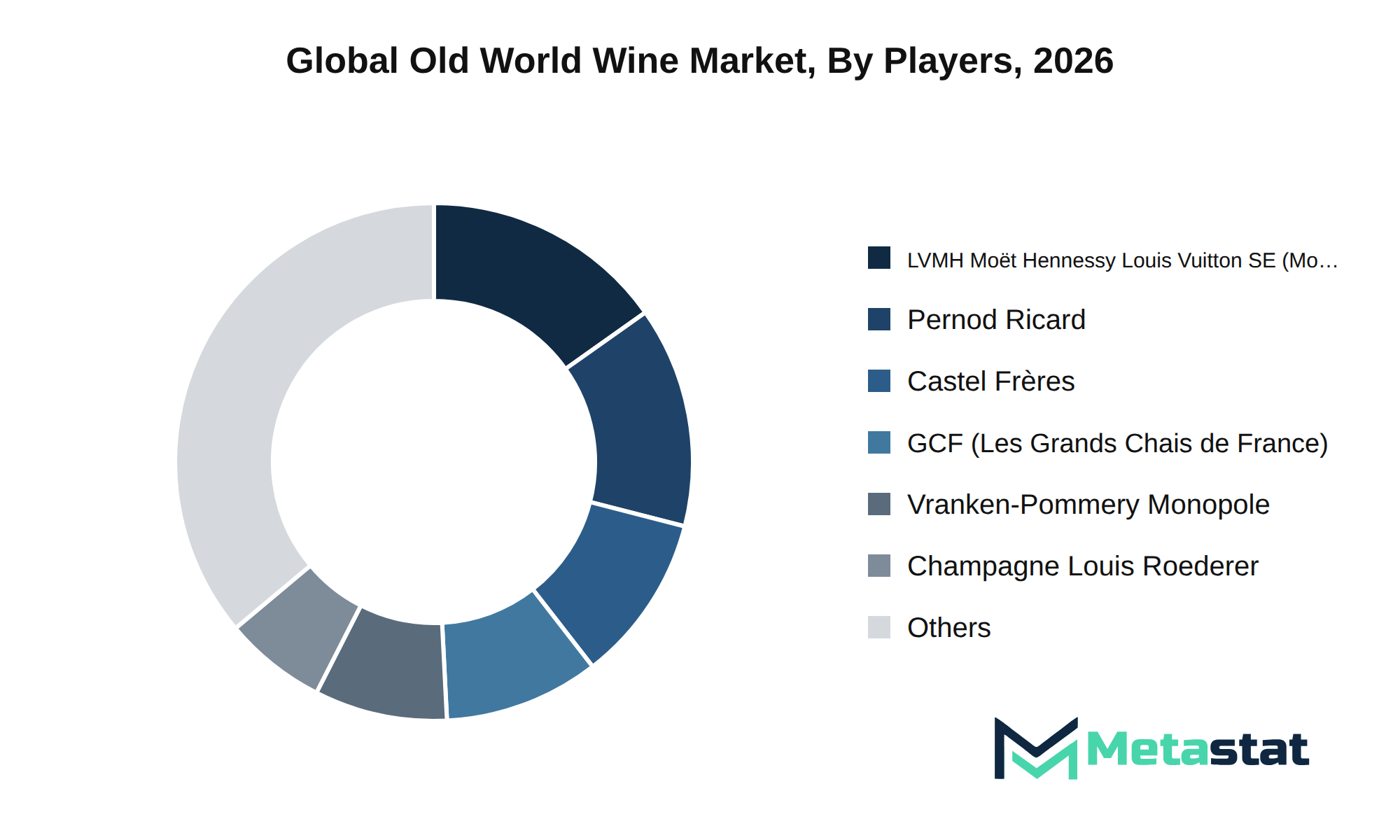
The Old World Wine market experiences a competitive environment shaped by strategic consolidation and partnerships among key players. Companies including LVMH Moët Hennessy Louis Vuitton SE, Pernod Ricard S.A., and Castel Frères engage in joint ventures to enhance market reach and capitalize on emerging consumer trends. These collaborations enable firms to leverage their strengths, streamline distribution channels, and improve brand visibility, resulting in increased market penetration.
Pricing architectures in the market reflect a diverse range of offerings, from value to premium wines. Companies like GCF Group (Les Grands Chais de France) and Vranken-Pommery Monopole adopt differentiated pricing strategies, targeting various consumer segments. This approach, combined with effective customer retention strategies, boosts brand equity and facilitates entry into new markets, enhancing overall competitiveness.
Research and development pipelines play a crucial role in the competitive dynamics of the Old World Wine market. Firms including Laurent-Perrier and Champagne Louis Roederer invest significantly in innovation, enhancing product differentiation through unique flavor profiles and production techniques. These efforts ensure sustained engagement with consumers and strengthen technological defensibility, positioning companies favorably against competitors.
The market demonstrates considerable barriers to entry, particularly in the premium and super-premium segments. Established brands like Famille Perrin and Gérard Bertrand possess strong market presence and customer loyalty, creating challenges for new entrants. Strategic alliances and cross-industry partnerships enhance the resilience of existing players, enabling them to navigate the evolving market effectively and maintain their competitive edge.
Overall, the Old World Wine market shows growth potential driven by strategic behaviors, innovation, and effective market positioning. Companies continue to explore new avenues for growth, ensuring a dynamic and competitive environment that supports long-term demand and investment.
Market size is forecast to rise from USD 356.4 billion in 2025 to over USD 731.4 billion by 2033. The base case anticipates a growth trajectory reflecting a 9.4% compound annual growth rate (CAGR). In a bullish scenario, heightened consumer interest and increased disposable income could lead to accelerated market expansion. Adverse economic conditions in a bearish case could inhibit growth.
The Old World Wine market will navigate several macroeconomic factors, including evolving consumer preferences and structural shifts in consumption patterns. While the market matures, integration of next-generation technology will enhance production efficiencies and product offerings. Ongoing research and development will drive innovation and influence commercialization timelines, impacting product life cycles.
Regulatory frameworks will evolve, with imminent compliance milestones set to reshape operational practices across the sector. Geopolitical realignments and shifting trade corridors will impact global supply chains. Strategic capital allocation and infrastructure commitments will adapt to new market realities.
Emerging white-space opportunities present avenues for growth, particularly in regions underserved by traditional distribution channels. Executive-level strategic imperatives will focus on identifying unmet enterprise needs and high-growth pockets within the market. Aligning operational strategies with future growth recommendations positions companies operating in the Old World Wine market for sustained success.
The report strategically identifies and profiles the key market players and analyses their core competencies in each sub-segment of the Old World Wine market.
Report Attributes | Details |
Study Period | 2021-2033 |
Base Year | 2025 |
Estimated Year | 2026 |
Forecast Period | 2026-2033 |
Historical Period | 2021-2025 |
Growth Rate | CAGR 9.4% from 2026 to 2033 |
Revenue Unit | USD billion |
Segmentation | By Wine Category, Origin, Distribution Channel, Price Point, and Region |
By Region | North America (By Wine Category, Origin, Distribution Channel, Price Point, and Country)
|
Europe (By Wine Category, Origin, Distribution Channel, Price Point, and Country)
| |
Asia Pacific (By Wine Category, Origin, Distribution Channel, Price Point, and Country)
| |
South America (By Wine Category, Origin, Distribution Channel, Price Point, and Country)
| |
Middle East and Africa (By Wine Category, Origin, Distribution Channel, Price Point, and Country)
|
Find answers to common questions about this report
The Old World Wine market size was valued at USD 356.4 billion in 2025, according to the Metastat Insights study.
The Old World Wine market is projected to grow at a CAGR of 9.4% during the forecast period from 2026 to 2033.
The North America Old World Wine market size is estimated to reach USD 188.8 billion by 2033.
Still Red Wine leads the Old World Wine market with a value of USD 174.7 billion in 2026. This segment represents the largest share compared to other wine categories.
Significant growth in the Old World Wine market is driven by evolving consumer preferences for premium wine options, rising disposable incomes, and an appreciation for unique wine varieties. Demographic shifts, including an aging population and urbanization, influence purchasing decisions, increasing demand for wines that reflect tradition and craftsmanship.
Europe holds the dominant share of the Old World Wine market, accounting for 52.1% in 2025. This significant share reflects Europe's historical prominence in wine production and consumption.
Regulatory challenges impose additional costs on producers, limiting operational flexibility and hindering market entry for smaller wineries. Macroeconomic headwinds, including inflation and rising raw material costs, strain profit margins, while geopolitical instability disrupts supply chains and consumer confidence, further constraining growth potential in the Old World Wine market.
Evolving consumer preferences toward premium wine options significantly favor product adoption in the Old World Wine market. Rising disposable incomes and an increasing appreciation for unique wine varieties drive demand, while younger demographics prioritize authenticity and brand storytelling, enhancing market appeal.
The Old World Wine market is estimated to reach a valuation of USD 731.4 billion by 2033.
Key players operating in the Old World Wine market include LVMH Moët Hennessy Louis Vuitton SE (Moët Hennessy), Pernod Ricard S.A., Castel Frères, GCF Group (Les Grands Chais de France), Vranken-Pommery Monopole, Laurent-Perrier, and Champagne Louis Roederer.
The analysts below cover Food and Beverages research at Metastat Insights.
LEAD ANALYST
Utkarsh Khirodkar is a Lead Market Research Analyst at MetaStat Insight, specializing in market intelligence, technology sector assessments, and competitive strategy.

LEAD PRINCIPAL ANALYST, PHARMA AND HEALTHCARE
Food and Beverages · Healthcare · Healthcare IT · Medical Devices
Ajay Devgire is the Lead Healthcare Analyst at MetaStat Insight, leading strategic research and market intelligence initiatives across the global healthcare domain.

SENIOR RESEARCH ANALYST
Biotechnology · Food and Beverages · Medical Devices · Packaging
Snehal Pasalkar is a Research Analyst at MetaStat Insight, operating at the intersection of life sciences research, competitive strategy, and market intelligence.
Scaling antibody-drug conjugate manufacturing hinges on contract manufacturing availability for high-potency active ingredients. The MetaStat Insight analysis looked closely at global cleanroom slot constraints, bioconjugation batch failure rates, and supply chain redundancies between the US, Europe, and India. The supplier capability matrix proved genuinely useful for our team when mapping secondary source options across our clinical pipeline.
Floating offshore wind feasibility relies heavily on specialized installation vessel availability and port crane limits, which most broad renewable energy forecasts ignore. The report delivered a thorough analysis of dry dock capacity, mooring chain supply constraints, and raw material pricing trends for deepwater anchor installations. It served as a solid independent sanity check for our offshore project capital expenditure assumptions.
Assessing commercial microgrid software adoption requires looking past top-level installation numbers and examining utility interconnection queues. The research provided verifiable data on average permitting timelines, tariff structures, and battery storage integration costs across regional utility territories. That grounded perspective was valuable for our team when building five-year demand projections for industrial microgrid controllers.
Explore related market intelligence reports worth reading alongside this one.