
LEAD ANALYST
Utkarsh Khirodkar is a Lead Market Research Analyst at MetaStat Insight, specializing in market intelligence, technology sector assessments, and competitive strategy.

Global Bars and Nightclubs Market Size, Share, By Venue (Nightclubs and Dance Clubs, Cocktail Bars and Speakeasies, Themed and Immersive Bars, Competitive Socializing and Gaming Bars, Live Music and Entertainment Bars, Lounges and Social Bars, Sports Bars, Wine and Specialty Beverage Bars, Others (Karaoke Bars, Dive Bars, Seasonal and Pop-Up Bars)), By Venue Setting (Standalone Urban and High-Street Venues, Hotel and Resort-Integrated Venues, Rooftop and Sky Bars, Beach and Pool Clubs, Casino and Gaming Resort Venues, Private Members' Clubs, Mixed-Use Entertainment Complex Venues, Others (Cruise, Transport Hub and Seasonal Venues)), By Positioning (Economy and Value, Mid-Market, Premium, Luxury and Ultra-Luxury), Industry Analysis, Growth, Trends, and Forecast, 2026-2033
Report ID
MSI-5360
Published
September, 2026
Pages
274 Pages
Format
Historical
Base year
Forecast
Forecast period
Report Details
Market Valuation: Valued at $92.1 Billion in 2025, projected to reach $136.2 Billion by 2033 at a 5.0% CAGR.
Dominant Segment: Nightclubs & Dance Clubs lead the market, projected to grow from USD 18.4 billion in 2026 to USD 23.7 billion by 2033, driven by the increasing popularity of immersive entertainment and social interaction.
Geographic Lead: North America and Europe are the fastest-growing regions, fueled by urbanization and rising disposable incomes among younger demographics seeking unique nightlife experiences.
What's Inside: The report provides comprehensive coverage of market dynamics, competitive landscape, and detailed segmentation by venue, venue setting, and positioning, along with forecasts through 2033.
Emerging Regional Demands: Urban areas with growing populations and disposable incomes are driving the establishment of new venues, catering to diverse consumer preferences and enhancing market competitiveness.
Choose Your License
Global Bars and Nightclubs Market
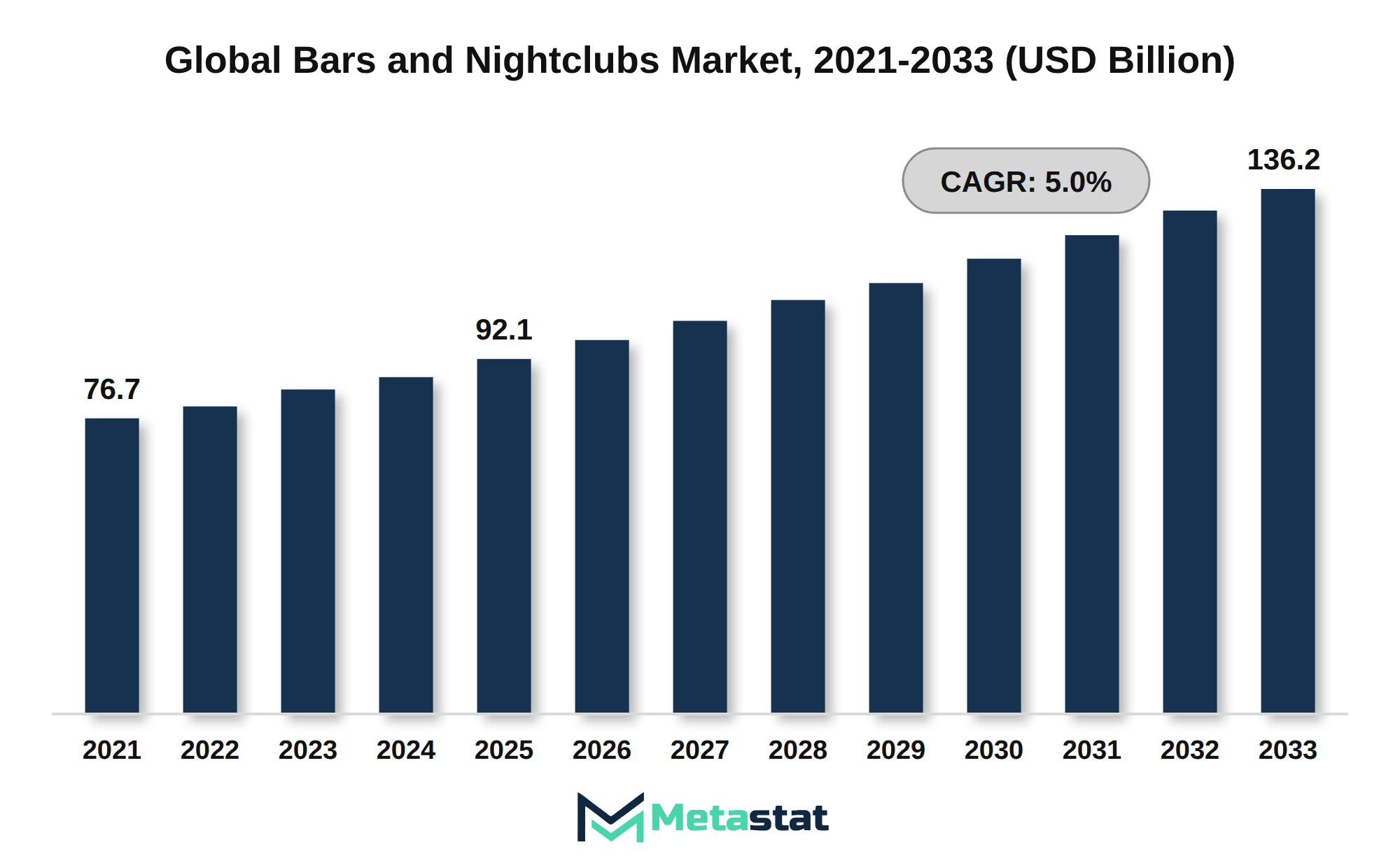
The global Bars and Nightclubs market was valued at USD 92.1 billion in 2025 and is projected to reach USD 136.2 billion by 2033, growing at a CAGR of 5.0% over the forecast period.
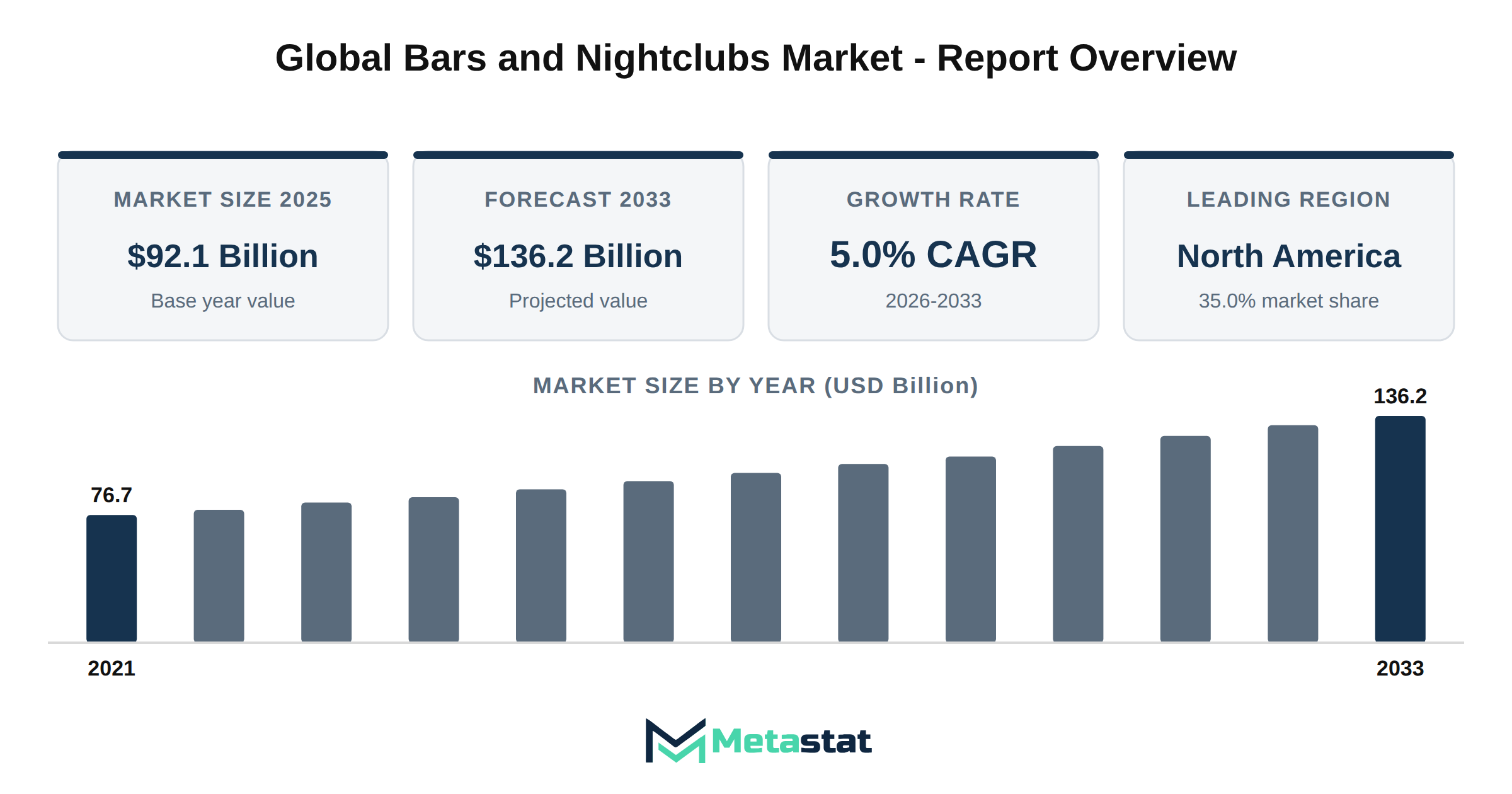
The global Bars and Nightclubs market reached a valuation of USD 92.1 billion in 2025, reflecting a steady increase from USD 76.7 billion in 2021. This growth trajectory continues, with the market projected to reach USD 136.2 billion by 2033, representing a compound annual growth rate (CAGR) of 5%. The increasing demand for nightlife experiences, particularly among younger demographics, drives this expansion.
Changing consumer preferences play a significant role in shaping the market. Gen Z and Millennial consumers prioritize unique and immersive experiences, leading to a surge in popularity for themed and immersive bars. Luxury and ultra-luxury nightlife concepts are expanding across major cities, attracting high-spending clientele. This segment of the market enjoys a premiumization trend, where consumers express a willingness to spend more on exclusive experiences.
The emergence of digital reservations and cashless payment systems transforms nightlife operations, enhancing convenience and accessibility for patrons. Experiential nightlife, characterized by live entertainment and DJ-led experiences, strengthens venue engagement, ensuring repeat visits. Premium beverage innovation drives revenue growth, with establishments increasingly focusing on offering unique and high-quality drink options.
In Europe and the Asia Pacific region, urban hotspots emerge owing to key opportunities for market growth, with cities attracting both local and international visitors. Competitive benchmarking among experiential operators shows a shift toward collaborative strategies, including strategic partnerships and brand collaborations that enhance market presence. Investment activity in premium and experiential nightlife concepts continues to rise, indicating strong confidence in the sector's future.
Global nightlife demand experiences significant growth driven by evolving consumer preferences and lifestyle changes. The Bars and Nightclubs market reflects a trend towards more immersive and experiential offerings, appealing to younger demographics. This shift highlights the importance of creating unique experiences that attract consumers seeking memorable nights out.
Consumer demographics increasingly show a preference for luxury and premium experiences, particularly among Gen Z and millennials. These groups favor venues that provide distinctive atmospheres and high-quality service, reshaping the overall spending patterns within the market. Occasion profiles reveal that celebrations, social gatherings, and nightlife adventures remain central to consumer engagement, influencing operators to adapt their offerings accordingly.
Luxury fashion-to-bar expansion models are gaining traction, with high-end brands entering the nightlife sector to enhance their market presence. This trend not only increases brand visibility but attracts affluent customers looking for exclusive experiences. The integration of fashion and nightlife enhances the overall appeal of venues, positioning them because desirable social destinations.
Speakeasy and immersive concept trends contribute to the market's evolution, with venues focusing on unique themes and hidden experiences. These concepts attract consumers seeking novelty and exclusivity, driving foot traffic to establishments that prioritize creative design and interactive environments. The immersive experience encourages repeat visits, building brand loyalty among patrons.
Premium nightlife pricing and spending patterns reflect a growing willingness among consumers to invest in high-quality experiences. This trend supports the expansion of luxury and ultra-luxury nightlife concepts across major cities, catering to affluent clientele seeking high-quality service and atmosphere. Operators focusing on premium offerings report increased revenue, driven by consumer demand for top-tier experiences.
Europe and Asia Pacific present significant opportunities within the Bars and Nightclubs market, with cities emerging because nightlife hotspots. Urban areas in these regions display a blend of cultural influences, attracting diverse patrons. Competitive benchmarking of experiential operators highlights the need for continuous innovation and adaptation to local preferences, ensuring sustained growth in these dynamic markets.
Investment activity within the market centers on premium and experiential nightlife concepts, with stakeholders recognizing the potential for high returns. Strategic partnerships and brand collaborations enhance operational capabilities and expand market reach. Licensing and alcohol regulations impact venue expansion efforts, requiring operators to navigate complex legal landscapes while pursuing growth opportunities.
Rising operating costs and labor challenges present obstacles for nightlife venues, necessitating effective management strategies to maintain profitability. Sustainability trends influence bar operations, with an increasing emphasis on eco-friendly practices and responsible sourcing. Urban tourism and night-time economies support market growth, facilitating the development of lively nightlife scenes that attract visitors and locals alike.
Future growth opportunities in the global Bars and Nightclubs market will likely arise from the continued demand for unique experiences, innovative concepts, and enhanced customer engagement strategies. The focus on experiential nightlife remains a key driver, shaping the evolution of venues and influencing consumer behavior in the years to come.
Changing consumer behaviors significantly influence the Bars and Nightclubs market. A dynamic social landscape characterized by urbanization, lifestyle changes, and evolving buying preferences drives increased demand for nightlife experiences. Younger generations exhibit a strong preference for social interaction in unique settings, prompting venues to innovate and adapt to these preferences.
The ongoing trend toward experiential consumption replaces traditional consumer habits with a focus on immersive experiences. Venues increasingly integrate elements including themed events, live entertainment, and interactive experiences to attract patrons. This focus on creating memorable experiences translates to enhanced customer loyalty and repeat visitation, driving revenue growth across the market.
The growing inclination toward sustainability shapes consumer choices. Patrons increasingly seek venues that align with environmentally friendly practices, compelling bars and nightclubs to adopt sustainable operations. This shift satisfies consumer demand and enhances brand reputation and market positioning.
The Bars and Nightclubs market benefits from significant shifts in demographic trends, particularly among younger generations who drive nightlife culture. Urbanization leads to a growing population in metropolitan areas, which increases demand for nightlife experiences. This trend attracts investment into various venue types, enhancing competitiveness and driving revenue growth.
Increasing disposable income among younger consumers supports spending on leisure and entertainment, contributing to the expansion of bars and nightclubs. The trend toward socializing in urban venues highlights a preference for diverse experiences, from themed bars to immersive environments. This focus on unique experiences encourages innovation in service offerings, promoting further growth in the market.
The aging population influences demand, driven by older consumers seeking more sophisticated nightlife options. This demographic shift encourages bars to adapt their offerings to accommodate evolving preferences, including premium and luxury experiences. While venues cater to diverse age groups, they improve their appeal, resulting in increased patronage and revenue.
Overall, demographic shifts create a dynamic environment that fuels the Bars and Nightclubs market, encouraging innovation, investment, and a broader range of consumer experiences.
The Bars and Nightclubs market faces significant regulatory hurdles that limit participation and operational flexibility. Various compliance requirements impose additional costs and complexities on venue owners and operators, creating barriers to entry for new establishments. These compliance hurdles deter investment and restrict the market's growth potential.
Legal mandates regarding licensing, health and safety standards, and operational restrictions further complicate market dynamics. Failure to navigate these requirements leads to fines, temporary closures, or even permanent shutdowns, impacting revenue generation for operators. Consequently, existing players experience heightened operational costs while maintaining compliance.
Macroeconomic headwinds, including inflationary pressures, exacerbate these challenges by increasing expenses related to labor, utilities, and supplies. Higher operational costs erode profit margins, compelling venue operators to adjust pricing strategies, which influence customer demand and reduce overall market growth. Economic uncertainty stalls capital investment and limits the Bars and Nightclubs market's expansion capabilities.
Supply chain disruptions and geopolitical instability contribute additional risk factors, affecting the availability and cost of goods necessary for daily operations. These external factors create unpredictability, forcing operators to make rapid adjustments that compromise service quality and customer experience.
Market fragmentation and cultural barriers impede the strategic alignment of venues across different regions. Diverse consumer preferences and expectations across various demographics introduce complexity for operators seeking to standardize offerings. This fragmentation slows down market growth and hinders the Bars and Nightclubs market's overall potential, leading to missed opportunities for expansion and increased consumer engagement.
Geopolitical fragmentation significantly disrupts the Bars and Nightclubs market, affecting global trade dynamics and leading to increased operational challenges. Trade deficits arise from fluctuations in international relations, impacting import and export capabilities of venue supplies. Tariff friction adds complexity, raising costs for businesses relying on imported materials and components essential for operations.
Technological disruptions further complicate market stability, with rapid advancements demanding constant adaptation from industry players. Complex research and development integrations strain resources, driven by businesses innovating to meet evolving consumer expectations. This situation creates interoperability friction, where new technologies struggle to integrate into existing systems, hindering efficiency.
Supply chain instability becomes pronounced due to logistics disruptions, affecting the timely delivery of products and services. Rising input costs, driven by inflation and resource scarcity, place additional pressures on profit margins. Talent retention pressures emerge, resulting from businesses competing for skilled workers in a tight labor market, complicating workforce management and impacting service quality. These challenges constrain growth prospects for the Bars and Nightclubs market.
Environmental sustainability demands complicate market operations. Businesses face increasing pressure to implement sustainable practices, requiring substantial investments in retrofitting existing venues and adopting new technologies. Compliance overhead related to evolving legal liabilities creates operational burdens, diverting resources away from core business activities. The combination of these factors complicates operations for businesses in the Bars and Nightclubs market, necessitating strategic planning and agile responses to navigate an increasingly volatile environment.
The Bars and Nightclubs market benefits from emerging regional demands, particularly driven by urban areas experiencing population growth and an increase in disposable income. This trend influences the establishment of new venues, catering to diverse consumer preferences. Increased interest in nightlife experiences across various demographics leads to heightened competition and innovation within the market. In regions including North America and Europe, the growth of socializing trends among younger generations drives demand for unique and immersive experiences, resulting in the flourishing of themed bars and nightclubs.
Infrastructure modernization significantly impacts the market by enhancing accessibility and creating lively nightlife districts. Improved public transport and urban development initiatives facilitate easy access to bars and nightclubs, encouraging patronage and increasing foot traffic. Geographical expansion of nightlife venues into previously underserved areas opens new market opportunities, boosting local economies and attracting tourists. This development aligns with the growing consumer preference for local experiences, promoting regional diversity in nightlife offerings.
Technological disruptions, including the rise of digital platforms, transform consumer engagement and service delivery within the Bars and Nightclubs market. Adoption of mobile applications for reservations, payments, and promotions streamlines operations while enhancing customer convenience. Digital transformation initiatives support targeted marketing strategies that connect with specific consumer segments. By leveraging data analytics, establishments gain insights into customer preferences, enabling tailored experiences that attract repeat business.
Sustainability imperatives drive green transformations within the market, because consumers increasingly favor eco-friendly establishments. Bars and nightclubs adopting sustainable practices, including sourcing local ingredients and reducing waste, appeal to environmentally conscious patrons. This shift not only promotes brand loyalty but taps into the growing demand for socially responsible businesses. Implementing environmental, social, and governance (ESG)-driven alignments becomes crucial for long-term success in the Bars and Nightclubs market.
Product integration and niche application growth further enhance market opportunities. The ability to blend traditional nightlife experiences with innovative concepts, including competitive socializing venues, attracts a wider audience. Strategic consolidation within the market allows for resource sharing and operational efficiencies, promoting growth and stability. Evolving buying behaviors, influenced by digital procurement shifts, necessitate adaptation by businesses to remain competitive and relevant. This adaptability is essential for capturing emerging trends and maximizing potential revenue streams.
The Global Bars and Nightclubs market is segmented based on Venue, Venue Setting, and Positioning.
Valued at USD 18.4 billion in 2026, the Nightclubs & Dance Clubs segment is projected to reach USD 23.7 billion by 2033, at a CAGR of 3.7% during the forecast period. The segment thrives on the growing interest in nightlife experiences, with consumers seeking venues that offer immersive entertainment and social interaction. Demand drivers include the increasing popularity of music events, DJ performances, and themed parties, which attract diverse crowds and create opportunities for revenue growth.
Technological advancements play a crucial role in segment expansion. The integration of advanced sound and lighting systems enhances the overall experience, encouraging repeat visits. Social media serves because a powerful tool for marketing, allowing venues to engage with potential patrons and promote events. Consumption shifts towards experiential offerings, including live performances and interactive events, contribute significantly to the segment's revenue growth.
Regulatory compliance remains a challenge, particularly regarding licensing and safety standards. Venues face pressure to adhere to local regulations, which affect operational costs and profitability. However, strategic investments in compliance lead to enhanced brand reputation and customer loyalty. The evolving landscape of nightlife continues to present opportunities for innovation, with new concepts and experiences emerging to cater to changing consumer preferences in the Bars and Nightclubs market.
Cocktail Bars & Speakeasies experience significant growth, attracting consumers seeking unique and immersive drinking experiences. This segment benefits from an increasing trend toward craft cocktails and premium spirits, driven by consumer preferences for sophistication and quality. Establishments within this segment often prioritize innovative mixology and a curated atmosphere, establishing themselves because destinations for social gatherings.
The segment is estimated to reach USD 22.2 billion by 2033, at a CAGR of 5.4% during the forecast period. This anticipated growth reflects the ongoing evolution in consumer tastes, because bars adapt to deliver a memorable experience that combines atmosphere and high-quality offerings. Collaboration among suppliers, bar owners, and mixologists creates a creative environment that enhances product evolution and encourages the development of exciting drink menus.
Increased competition within the Bars and Nightclubs market drives innovation, prompting establishments to explore themes and concepts that appeal to target audiences. Investment in technology, including mobile ordering systems and digital marketing strategies, supports customer engagement and streamlines operations, further enhancing profitability. Sustainable practices, including eco-friendly packaging and local sourcing of ingredients, contribute to consumer appeal, aligning cocktail bars with broader trends in sustainability.
Understanding the dynamics of consumer preferences and the influence of social media on brand visibility are crucial for success in this segment. Strategic opportunities arise because bars leverage social platforms for promotion and customer engagement, enhancing their reach and driving foot traffic. The growing popularity of experiential dining and nightlife experiences strengthens the position of cocktail bars and speakeasies because integral players within the Bars and Nightclubs market.
Themed and immersive bars represent a lively segment within the Bars and Nightclubs market, projected to reach USD 14.1 billion by 2033. The growth trajectory stems from evolving consumer preferences for unique, experiential outings that go beyond traditional nightlife. Increased interest in themed environments, including those inspired by pop culture or immersive storytelling, drives demand from younger demographics seeking novelty and social engagement.
Technological advancements, including augmented reality and innovative sound and lighting systems, contribute to the appeal of these venues, enhancing the overall experience. Competitive pressures encourage operators to innovate and differentiate their offerings, resulting in a dynamic environment that prioritizes customer experience. The market experiences significant adoption of next-generation amenities that create memorable interactions, leading consumers to prefer themed experiences over conventional bar settings.
Lifestyle shifts towards experiential consumption increase the demand for themed and immersive bars. Younger consumers prioritize experiences that facilitate social interaction and community engagement, influencing venue design and programming. This evolution aligns with broader trends in nightlife, where the emphasis on unique, themed atmospheres positions these bars favorably within the market.
Regulatory factors, including health and safety standards, impact operational practices, compelling venues to adapt their environments to comply with new guidelines. The segment's growth outlook remains robust, supported by strategic investments in enhancing customer experiences through innovative concepts. Evolving entertainment offerings cater to diverse consumer preferences.
Consumer interest in entertainment options that promote social interaction drives demand for Competitive Socializing & Gaming Bars. These venues cater to growing preferences for engaging experiences that combine traditional bar elements with interactive activities including gaming and social competitions. The segment is projected to grow at a CAGR of 7.4% during the forecast period. This growth results from the increasing popularity of social gaming events and the rise of competitive entertainment formats, appealing to a broad demographic.
Technological advancements contribute to the evolution of offerings within this segment. Enhanced gaming technology and innovative venue designs attract patrons seeking immersive experiences. Operators invest in state-of-the-art gaming systems and create environments that encourage community interaction, leading to increased customer retention and loyalty. These factors position Competitive Socializing & Gaming Bars because a dynamic part of the Bars and Nightclubs market, reflecting shifting consumer preferences toward interactive leisure activities.
While competition intensifies, operators face pressures related to pricing volatility and margin management. Efficient cost structures become vital for maintaining profitability while delivering high-quality experiences. Strategic partnerships with gaming developers and technology providers enable venues to offer unique gaming options and promotions, enhancing their competitive edge. This segment remains a focal point for investment and innovation within the broader Bars and Nightclubs market.
Demand for live music and entertainment bars stems from consumers' desire for immersive social experiences. This segment thrives on the popularity of live performances, which creates an engaging atmosphere that attracts a diverse audience. Events featuring local artists and well-known performers enhance the attractiveness of these venues, driving foot traffic and increasing patronage. The Bars and Nightclubs market continues to expand due to consumers seeking venues that offer unique entertainment options in addition to standard beverage offerings.
Segment expansion occurs through strategic partnerships with artists, event organizers, and music festivals. Establishments frequently host themed nights and special events, further enhancing their appeal. Such initiatives not only diversify revenue sources but help maintain customer interest, leading to repeat visits. The integration of advanced sound and lighting systems represents an essential aspect of product evolution within this segment, improving the overall experience and catering to high expectations regarding audio-visual quality.
Changes in consumer preferences toward experiential dining and entertainment significantly influence the dynamics within this segment. Establishments are increasingly adopting digital platforms for ticket sales and event promotions, streamlining operations and enhancing customer engagement. Maintaining a strong online presence becomes critical for successful marketing and reaching target demographics. Regulatory compliance surrounding live entertainment, including licensing and safety standards, contributes additional complexity for operators but simultaneously ensures high-quality experiences for patrons.
Pricing volatility results from fluctuations in operational costs, including talent fees, venue maintenance, and equipment investment. Establishments exhibit varying pricing strategies to accommodate different consumer segments, from budget-friendly options to premium experiences. This variability affects profitability, prompting businesses to seek innovative ways to optimize cost structures while maintaining high-quality offerings. The Bars and Nightclubs market reflects a growing emphasis on sustainability, influencing supply chain practices and raw material sourcing.
Strategic opportunities exist for live music and entertainment bars to capitalize on emerging trends, including community engagement initiatives and the incorporation of local culture. Engaging with local artists and promoting regional talent builds brand loyalty and strengthens community ties. Capital investment in advanced technology and infrastructure, along with innovative programming, positions establishments to attract new customers and retain existing ones, ensuring sustained growth within this segment.
Consumer preferences increasingly gravitate towards relaxation and social engagement, fueling demand for lounges and social bars within the Bars and Nightclubs market. This shift encourages establishments to enhance their atmospheres, emphasizing comfort and ambiance. By offering diverse beverage selections and curated environments, venues create a welcoming space for social interactions.
Innovative concepts and experiential offerings remain crucial for growth. Establishments integrating live music, art displays, or unique themes attract a more extensive customer base. Such strategies enhance customer retention and encourage repeat visits, driving revenue growth across the market.
Consumption trends shift towards premium and handcrafted beverages, influencing pricing structures within the market. Consumers increasingly favor quality over quantity, leading lounges and social bars to prioritize upscale offerings. This trend presents strategic opportunities for operators to differentiate themselves through unique product selections and tailored experiences.
Operational cost structures continue to evolve, with emphasis placed on sustainable sourcing and efficient supply chain management. Establishments focusing on local ingredients and eco-friendly practices appeal to environmentally conscious consumers and reduce logistics vulnerabilities. This approach supports long-term profitability while enhancing brand reputation within the market.
Regulatory compliance remains a priority for operators. Adhering to health and safety standards and local laws builds consumer trust and loyalty. Establishments prioritizing compliance avoid potential penalties and reinforce their commitment to customer safety, further strengthening their position within the Bars and Nightclubs market.
Consumer engagement with sports bars reflects a growing interest in immersive viewing experiences for live sports. This interaction is driven by the demand for environments that combine socializing with entertainment, particularly during major sporting events. The market benefits from this trend due to establishments creating unique atmospheres tailored to sports fans, enhancing their overall experience.
Technological advancements support the expansion of sports bars, allowing venues to offer high-definition screens, enhanced sound systems, and innovative viewing technologies. These upgrades attract patrons seeking superior viewing experiences, contributing to the market's growth by meeting consumer expectations for modern sports entertainment.
Changing consumption patterns indicate a shift towards venues that offer diverse food and beverage options alongside live sports. This trend encourages sports bars to innovate their menus, targeting a broader audience that seeks quality dining experiences in addition to traditional bar offerings. The market adapts, creating opportunities for establishments to differentiate themselves through unique culinary experiences.
Investment in the sports bar segment proves essential for enhancing customer experience and attracting new clientele. Capital investment focuses on venue renovations, technology upgrades, and strategic marketing efforts tailored to sports events. This financial commitment generates growth within the market, because venues position themselves because go-to destinations for sports fans.
Regulatory compliance plays a critical role in shaping the operations of sports bars, particularly regarding alcohol licensing and health regulations. Meeting these standards ensures a safe and enjoyable environment for patrons, contributing to the segment's overall reputation and customer loyalty. Compliance with regulations ultimately supports sustained growth within the market.
While the market evolves, competition intensifies among sports bars, compelling establishments to innovate and enhance their offerings. This competitive environment drives creativity and strategic differentiation, ensuring that sports bars remain appealing to a diverse customer base and successfully navigate changing market dynamics.
Consumer enthusiasm for unique and specialized offerings drives demand within the Wine & Specialty Beverage Bars segment. This sub-segment appeals to individuals seeking curated experiences, particularly in urban settings where craft cocktails and artisanal beverages are increasingly popular. The market experiences growth fueled by a shift towards premiumization, with consumers showing a preference for high-quality ingredients and innovative drink options. Attention to detail in presentation and flavor profiles contributes significantly to customer satisfaction and loyalty.
Technological advancements enhance operational efficiency in Wine & Specialty Beverage Bars, allowing establishments to streamline inventory management and improve customer service. Digital platforms facilitate engagement and marketing efforts, particularly through social media, attracting a younger demographic. This segment benefits from collaborations with local wineries and beverage artisans, promoting community engagement and unique offerings that set these bars apart from traditional venues.
Regulatory compliance standards impact product offerings, ensuring that establishments meet safety and quality requirements while navigating local alcohol laws. The trend towards sustainability influences sourcing practices, with bars increasingly prioritizing locally produced and organic ingredients. Such shifts connect with eco-conscious consumers, reinforcing brand loyalty and enhancing the overall experience in the Bars and Nightclubs market.
Operational cost structures reflect the demand for high-quality service, with establishments investing in trained staff who are knowledgeable about wine and specialty beverages. This investment yields higher margins attributed to consumer willingness to pay increases for personalized service. The segment's resilience lies in its adaptability, successfully responding to changing consumer preferences and market dynamics, positioning it for continued growth within the Bars and Nightclubs market.
Consumer interest in diverse social experiences drives demand for the "Others" sub-segment, which includes Karaoke Bars, Dive Bars, Seasonal, and Pop-Up Bars. The evolving nightlife culture promotes unique and themed experiences that attract various demographics, enhancing the appeal of these venues. Seasonal and pop-up establishments attract consumers seeking novelty and exclusive experiences, aligning with trends in social engagement and entertainment.
This segment's ability to adapt quickly to consumer preferences benefits the Bars and Nightclubs market, particularly among younger demographics who value unique and immersive experiences. Technological advancements, including mobile applications and social media marketing, enhance the visibility and accessibility of these venues, driving foot traffic and engagement.
Regulatory compliance remains a critical factor, especially for bars that operate in temporary or seasonal settings. Understanding local regulations ensures successful operation while maintaining customer safety and satisfaction. The dynamic nature of this sub-segment presents strategic opportunities for investors and operators looking to capitalize on emerging trends in the Bars and Nightclubs market.
The competitive environment pushes operators to innovate continuously, leading to enhanced offerings and experiences that meet shifting consumer demands. This drive for innovation supports the viability of the segment, contributing to overall market growth.
Standalone Urban & High-Street Venues represent a significant segment within the Bars and Nightclubs market, valued at USD 30 billion in 2026 and projected to reach USD 39.4 billion by 2033, at a CAGR of 4% during the forecast period. Demand for this segment arises from urbanization trends and an increasing number of consumers seeking engaging nightlife experiences. The rise of social media influences consumer behaviour, driving higher foot traffic to venues located in urban and high-street areas.
Technological maturation plays a crucial role in enhancing customer experiences through the integration of advanced sound and lighting systems, creating immersive environments that attract patrons. The focus on next-gen upgrades supports the development of venues offering unique themes and experiences, appealing to diverse customer preferences. Environmental considerations around sustainability in venue design and operation influence consumer choices, aligning with a growing trend toward eco-conscious consumption.
While competition intensifies, bars and nightclubs explore differentiation strategies, including exclusive events, partnership collaborations, and themed nights that cater to evolving consumer demands. Regulatory compliance standards regarding safety, health, and licensing impact operational practices and cost structures, shaping profitability within this segment. Fluctuating costs of raw materials and labour create pricing volatility, prompting venues to adjust pricing strategies to maintain margins while remaining attractive to consumers.
Standalone Urban & High-Street Venues reflect a dynamic segment within the Bars and Nightclubs market, characterised by increasing consumer demand for unique social experiences and technological innovations that enhance the overall nightlife experience.
Consumer expectations for upscale experiences drive growth in the Hotel & Resort-Integrated Venues segment of the Bars and Nightclubs market. These venues, which offer convenience and comfort to guests, attract patrons seeking quality service within an integrated environment. Enhanced guest experiences, combined with a growing trend of experiential dining and entertainment, further fuel demand. Hotels and resorts increasingly leverage innovative design and unique themes to create immersive environments that appeal to visitors seeking memorable outings.
The segment is projected to reach USD 25.5 billion by 2033, at a CAGR of 5.5% during the forecast period. Investments in technology, including mobile ordering and contactless payment systems, improve operational efficiency and customer satisfaction. Collaboration with local artists and vendors enriches the overall guest experience, allowing venues to differentiate themselves in a competitive market.
Changing consumer behaviors indicate a preference for venues that offer multifaceted experiences. The integration of entertainment options within hotel and resort settings supports this trend, enhancing foot traffic and overall profitability. While the market evolves, operators adapt to shifting consumer expectations and preferences, ensuring alignment with contemporary hospitality trends.
Growing popularity of rooftop and sky bars is transforming the social landscape. Unique offerings, scenic views, and an upscale ambience attract consumers seeking premium experiences, driving demand within the Bars and Nightclubs market. Rising disposable incomes and a shift towards experiential spending drive consumers towards these venues, enhancing their appeal.
Rooftop and sky bars benefit from innovative design and strategic location choices, allowing venues to capture a wider audience. The integration of technology, including mobile ordering and reservation systems, enhances customer convenience and engagement. These advancements support the segment's expansion, appealing to tech-savvy consumers and building loyalty.
Rooftop and sky bars are expected to reach USD 17.3 billion by 2033, reflecting a strong growth trajectory. This growth stems from increased consumer interest in outdoor and scenic environments, particularly in urban settings. The segment's ability to adapt to seasonal demands and market shifts positions it because a key player in the Bars and Nightclubs market.
Regulatory compliance regarding health and safety, particularly in outdoor settings, influences operational strategies within the segment. Adhering to these standards ensures consumer safety and builds trust, essential for sustaining growth in competitive environments. Strategic investments in ambiance and unique offerings will continue to enhance the segment's profile in the market.
Demand for Beach & Pool Clubs stems from consumer desire for outdoor leisure experiences, particularly in warmer climates. This segment benefits from rising tourism and increased disposable incomes, driving foot traffic and participation in leisure activities. Consumers seek lively social atmospheres, prompting venues to enhance their offerings with unique concepts, curated events, and improved service levels.
Investment in aesthetics, ambiance, and amenities within Beach & Pool Clubs is essential for attracting clientele. Establishments often feature enticing designs, luxurious seating, and premium beverage offerings. Regulatory compliance regarding health and safety standards influences operational practices, shaping the overall customer experience.
Beach & Pool Clubs segment is projected to grow at a CAGR of 5.8% during the forecast period. This growth aligns with trends emphasizing wellness and leisure, driven by consumer preference for venues that provide relaxation and entertainment. Competitive pressures encourage establishments to innovate, ensuring they remain appealing destinations within the Bars and Nightclubs market.
While venue operators adapt to evolving consumer preferences, success hinges on strategic marketing and targeted promotions. Collaborations with influencers and event organizers enhance visibility and attract diverse demographics, ensuring sustained demand and profitability within the market.
Consumer demand for Casino & Gaming Resort Venues within the Bars and Nightclubs market arises from a desire for integrated entertainment experiences that combine gaming with nightlife. This segment attracts patrons seeking a comprehensive leisure experience where gaming, dining, and socializing converge. The growth of this segment aligns with broader trends in entertainment, driven by consumers increasingly valuing multifaceted venues that support diverse activities, catering to varying interests.
Technological advancements play a critical role in enhancing the experience at Casino & Gaming Resort Venues. Innovations including advanced gaming technology, interactive entertainment options, and sophisticated ambiance management systems attract tech-savvy consumers. The integration of next-generation upgrades facilitates a more immersive environment, encouraging longer visits and increased spending.
Regulatory compliance is essential within this segment, influencing operational protocols and customer engagement strategies. Adherence to local gaming laws and hospitality regulations affects venue design and operational flexibility. Compliance ensures a secure environment for patrons, building trust and encouraging repeat visits, which is vital for revenue generation.
Strategic opportunity windows exist in the form of partnerships with entertainment providers, creating unique events that draw in crowds. Such collaborations enhance venue visibility and diversify revenue streams, mitigating risks associated with market fluctuations. The ongoing evolution of consumer preferences towards experiential offerings positions Casino & Gaming Resort Venues favorably within the Bars and Nightclubs market.
Price sensitivity impacts the operational strategies of Casino & Gaming Resort Venues. Competitive pricing structures that reflect consumer expectations and economic conditions are crucial for maintaining customer loyalty and attracting new patrons. Margin pressures exist due to the costs associated with high-end amenities and entertainment offerings, necessitating strategic pricing and cost management approaches.
Supply chain resilience remains vital for Casino & Gaming Resort Venues, particularly regarding raw material sourcing for culinary offerings and beverage selection. Reliable supply chains ensure operational continuity and enhance the overall customer experience by providing quality products consistently. Effective logistics management supports the timely availability of supplies, which is critical in maintaining service standards.
Rapid growth in private members' clubs reflects changing consumer preferences for exclusive, high-end social experiences. These venues cater to discerning clientele seeking privacy and personalized services, impacting consumption patterns significantly. Increased interest in lifestyle-oriented offerings drives demand in the Bars and Nightclubs market, positioning private members' clubs because a preferred option for social gatherings and networking events.
Segment expansion hinges on adaptability to evolving market dynamics, including shifting consumer expectations and preferences. Innovation in service delivery and atmosphere enhances the appeal of these establishments, leading to higher customer retention and loyalty. Strategic positioning within urban centers further increases the visibility and attractiveness of private members' clubs, contributing to their sustained growth trajectory.
Technological advancements, including integrated reservation systems and enhanced member management platforms, improve operational efficiency while enriching customer experiences. Adoption of high-quality materials and design elements enhances the ambiance, reinforcing the luxury positioning of these venues. The Bars and Nightclubs market experiences significant shifts toward experiential offerings, with clubs continually evolving to meet the sophisticated demands of their clientele.
Increased competition within the segment encourages innovation and differentiation strategies, allowing private members' clubs to carve out distinct identities. Regulatory compliance standards, particularly concerning health and safety, influence operational practices and cost structures, with establishments investing in upgrades to meet these crucial requirements. Overall, the environment for private members' clubs remains dynamic, reflecting broader trends in consumer behavior and market expectations.
Consumer engagement with mixed-use entertainment complex venues reflects an evolving landscape where diverse offerings converge. The integration of various leisure activities within a single space supports social interaction and improves consumer experiences. Enhanced design and innovative concepts contribute to the appeal of these venues, attracting a broad demographic seeking multifaceted entertainment options. Increasing investments in technology and immersive experiences further increase the allure of mixed-use venues, positioning them favorably within the Bars and Nightclubs market.
The shift towards experiential consumption influences consumer behavior, driving a preference for venues that offer integrated dining, nightlife, and entertainment options. This trend leads to increased foot traffic and extended visitation times, driven by patrons seeking to enjoy multiple experiences in one outing. The market benefits from this trend, with operators investing in unique themes, activities, and events that cater to diverse interests and preferences.
While competition intensifies, mixed-use entertainment complexes focus on innovation and adaptability to meet changing consumer expectations. Collaborations between various service providers within these venues enhance operational efficiency and create an efficient experience for patrons. Such strategic partnerships enable venues to offer a broader range of services, encouraging loyalty and repeat visits within the Bars and Nightclubs market.
Shifts in consumer travel habits and preferences for unique experiences influence the demand for cruise, transport hub, and seasonal venues within the Bars and Nightclubs market. These venues offer diverse options that cater to transient populations, including tourists and business travelers, creating opportunities for specialized services and offerings.
Seasonal factors significantly shape venue operations, affecting everything from design and marketing strategies to product offerings. For instance, cruise venues often feature themed events that attract a broad audience, while venues located in transport hubs capitalize on high foot traffic, driving sales through quick-service offerings.
Regulatory compliance standards regarding health and safety present challenges for operators in this segment. Adherence to evolving regulations influences operational costs, impacting pricing strategies and affecting profit margins. Seasonal venues adapt their supply chains to accommodate fluctuations in demand, ensuring that product availability aligns with peak and off-peak periods.
Technological advancements play a crucial role in enhancing customer experiences. Operators integrate modern payment solutions and digital marketing tactics. Innovations in entertainment options and venue design contribute to increasing consumer expectations for immersive experiences within the Bars and Nightclubs market.
Strategic investments in these venues yield significant returns, particularly in regions with high tourist traffic. Capitalizing on strategic opportunity windows presents avenues for growth, allowing operators to refine their offerings and tailor experiences to meet diverse consumer preferences.
Valued at USD 27.1 billion in 2026, the Economy & Value segment in the Bars and Nightclubs market is projected to reach USD 33.8 billion by 2033, achieving a CAGR of 3.2% during the forecast period. Demand for this segment results from consumers seeking affordable yet enjoyable entertainment options that promote social interaction. Economic factors, including disposable income levels and changing consumer preferences, significantly influence the growth of this segment.
Adoption of value-oriented venues benefits from the ongoing trend toward casual dining and entertainment experiences. Operators focus on creating inviting atmospheres while maintaining competitive pricing. This strategy attracts budget-conscious consumers seeking memorable experiences without overextending financially.
Expansion catalysts include the rise of themed events and promotions, which enhance customer engagement and repeat visits. These initiatives contribute to customer loyalty, thereby increasing overall revenue. Regulatory compliance surrounding health and safety standards shapes venue offerings and experiences.
Cost structures for Economy & Value venues emphasize operational efficiency. Streamlined processes enable operators to manage margin pressures while providing quality service. Pricing volatility linked to fluctuating raw material costs impacts profitability, necessitating strategic sourcing and supply chain resilience.
Disruptive alternatives, including the rise of home entertainment options, challenge the market. Nevertheless, the unique social experience offered by bars and nightclubs remains irreplaceable, supporting continuous demand. Strategic opportunity windows exist for operators who innovate and adapt to changing consumer preferences, strengthening their presence within the Bars and Nightclubs market.
Investments in the Mid-Market segment will drive expansion within the Bars and Nightclubs market, with a projected value of USD 45.2 billion by 2033, at a CAGR of 4.1% during the forecast period. Demand for accessible yet stylish venues attracts diverse demographics, particularly millennials and Generation Z, who prioritize unique experiences and social engagement. These factors contribute to the segment's resilience amid economic fluctuations and changing consumer preferences.
Adoption of innovative concepts within the Mid-Market, including themed bars and immersive experiences, enhances customer engagement and loyalty. The expansion of online reservation systems and targeted marketing strategies supports this growth, allowing venues to cater to evolving consumer expectations. Competitive pricing strategies increase market penetration, enabling establishments to attract patrons seeking both value and quality.
Mobile and digital payment solutions streamline transactions, enhancing convenience for customers and increasing operational efficiency. Partnerships with local entertainment and culinary offerings create cross-promotional opportunities, increasing foot traffic and revenue streams. The Mid-Market segment's growth aligns with broader trends in the Bars and Nightclubs market, where versatility and adaptability remain critical to success.
Market dynamics within the Premium segment of the Bars and Nightclubs market highlight a significant shift in consumer preferences towards high-end experiences. This transformation stems from an increasing willingness of consumers to invest in premium offerings that provide exclusive and unique atmospheres. With a projected value reaching USD 37.1 billion by 2033, this segment reflects strong growth driven by affluent consumers seeking distinctive social settings.
The appeal of luxury and ultra-luxury venues plays an important role in influencing consumer choices. Establishments that enhance the nightlife experience through bespoke cocktails, upscale decor, and personalized services attract a clientele that prioritizes quality over cost. This trend increases competition among businesses striving to improve their offerings to capture the attention of discerning patrons.
Technological advancements, including innovative point-of-sale systems and immersive entertainment options, further enhance the consumer experience. Venues adopting next-generation upgrades stand out by integrating digital elements that connect with tech-savvy customers. This strategic positioning allows establishments to differentiate themselves in a crowded market, ultimately driving adoption and expanding the Premium segment.
While the market continues to evolve, consumer expectations shift towards enhanced experiences that go beyond traditional nightlife offerings. Establishments that recognize and adapt to these changes are likely to thrive in the competitive environment of the Bars and Nightclubs market. The Premium segment's continued growth signifies a strategic opportunity for investors and operators aiming to capitalize on the ongoing demand for high-end entertainment experiences.
Consumer preferences for exclusive and high-end experiences drive demand for the Luxury & Ultra-Luxury segment in the Bars and Nightclubs market. The growing affluent population seeks immersive environments that offer high-quality service, curated atmospheres, and premium beverage selections, creating a significant market opportunity. This segment is projected to grow at a CAGR of 8% during the forecast period, reflecting an increasing willingness to spend on luxury social experiences.
Strategic investments in venue design and customer experience play a crucial role in the expansion of this segment. Establishments focusing on luxury positioning enhance their offerings by incorporating bespoke services, high-quality entertainment, and unique theme concepts, further attracting high-net-worth individuals and discerning clientele. The trend towards personalization and exclusivity strengthens loyalty among patrons, resulting in higher average spend per visit.
Technological advancements contribute to the evolution of the Luxury & Ultra-Luxury segment. Innovations in reservation systems, payment methods, and customer engagement tools facilitate interactions, enhancing the overall experience. The use of data analytics allows operators to tailor services to individual preferences, creating deeper connections with customers and promoting repeat visits.
Regulatory compliance and health standards significantly impact operational strategies in luxury venues. Establishments prioritize adherence to safety protocols while delivering a high-quality experience, ensuring that customer satisfaction remains high. Cost structures within this segment reflect the premium pricing strategy aimed at maintaining exclusivity, which supports overall growth in profitability.
Competition among luxury establishments drives continuous improvement and differentiation, encouraging operators to explore unique themes and exclusive events. The emphasis on high-quality offerings enables venues to maintain a competitive edge, while strategic partnerships with luxury brands for co-promotions enhance visibility and attract affluent customers. Overall, the growth trajectory of the Luxury & Ultra-Luxury segment signals strong demand for upscale experiences within the Bars and Nightclubs market.
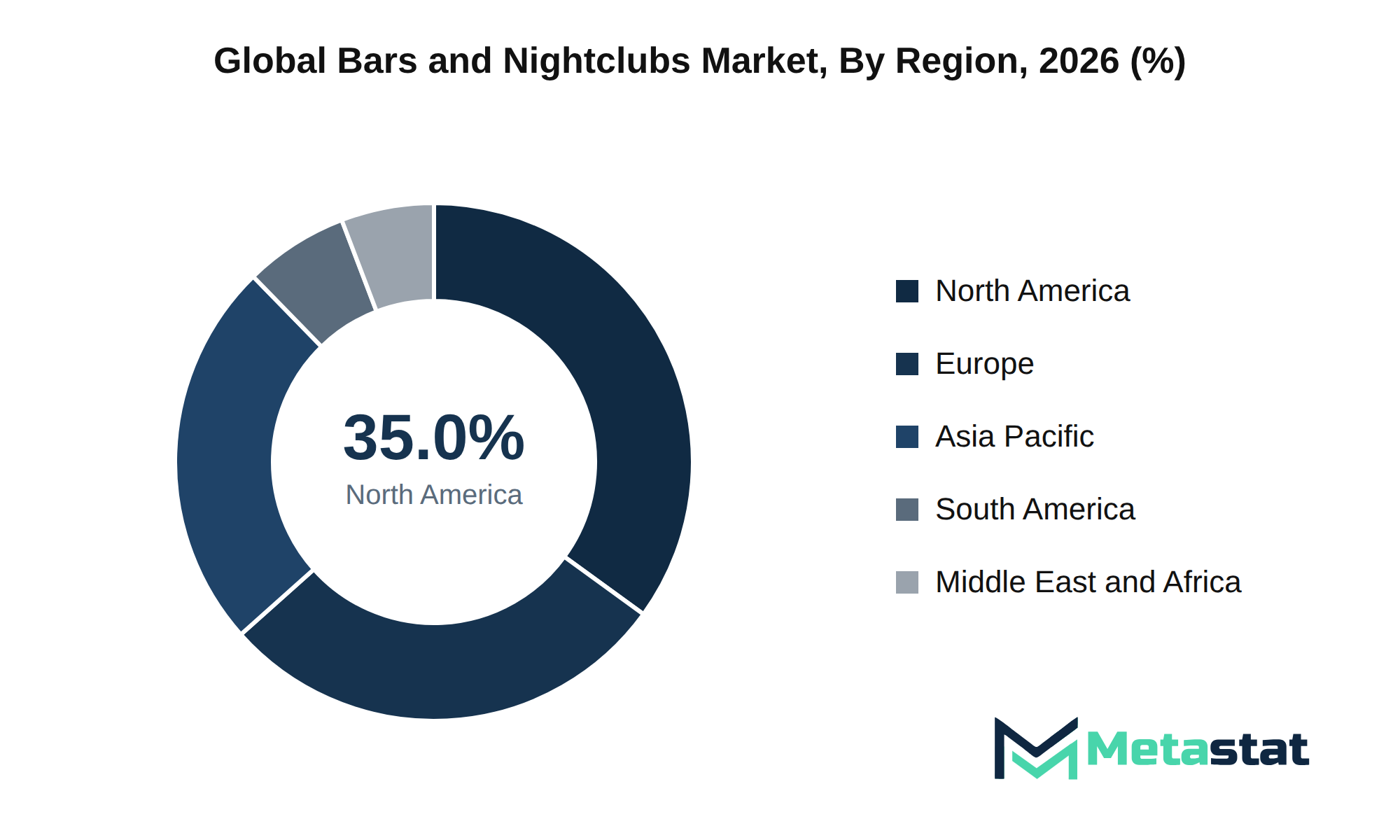
Based on geography, the Global Bars and Nightclubs market is divided into North America, Europe, Asia-Pacific, South America, Middle East, and Africa.
North America Bars and Nightclubs market presents substantial growth potential, driven by a diverse range of consumer preferences and evolving lifestyle choices. This region includes key markets including the United States, Canada, and Mexico, which together contribute significantly to the overall market dynamics. Consumer engagement in experiential venues generates heightened interest in various segments, with nightclubs and dance clubs experiencing increased patronage.
Strong economic performance in North America fuels demand for premium entertainment experiences, leading to investments in high-value replacement cycles and infrastructure modernization. The focus on premium and luxury venues reflects changing consumer demographics and preferences for upscale environments. Localized procurement dynamics and cultural nuances influence consumer behavior within the market.
North America Bars and Nightclubs market is projected to expand at a CAGR of 5.0% within the forecast period, reaching a market size (TAM) of USD 45.5 billion by the end of 2033. The market's growth is evident in segments including cocktail bars and speakeasies, which are increasingly popular among consumers seeking unique experiences. Competitive socializing and gaming bars contribute to the evolving landscape of entertainment options available in this region.
With 35.00% of the global market share expected in 2025, North America exhibits strong growth potential driven by increasing investments in nightlife experiences and a growing emphasis on premium offerings. The regional competitive landscape features several market participants committed to delivering high-quality experiences, further enhancing the vibrancy of the Bars and Nightclubs market.
The Bars and Nightclubs market in Europe presents a varied environment characterized by diverse consumer preferences and distinct regional trends. Countries including Germany, France, the UK, Italy, Spain, and Russia contribute significantly to market growth, with a share of 28.4% in 2025. Evolving social habits and an increasing appetite for nightlife experiences drive demand across various segments.
Investment in themed and immersive bars serves because a primary driver, attracting a growing customer base seeking unique experiences. Standalone urban venues, reflecting a trend towards local socializing, continue to expand alongside cocktail bars and speakeasies, which appeal to a diverse demographic.
Increased focus on health and safety regulations influences venue operations, with establishments adjusting to meet compliance standards. The market benefits from a strong network of suppliers and service providers, enhancing operational efficiencies and improving customer experiences.
Cross-border travel patterns support the Bars and Nightclubs market through tourism, especially in major cities known for nightlife. Cultural nuances contribute to local preferences, with establishments tailoring offerings to meet specific demands.
Regional players compete vigorously, with established brands dominating while new entrants carve out niches. This competition encourages innovation and service diversification, ensuring sustained interest from consumers seeking novel experiences.
The Asia-Pacific region presents significant opportunities within the Bars and Nightclubs market, driven by a combination of cultural trends and urbanization. Rapidly growing urban centers in countries like China, Japan, India, and South Korea create a lively nightlife culture that attracts both domestic and international tourists. Rising disposable incomes and changing consumer behaviors result in increased spending on leisure activities, enhancing demand for diverse venue types.
Market dynamics in this region display strong segment expansion, particularly within Cocktail Bars & Speakeasies and Competitive Socializing & Gaming Bars. The market shows a notable shift towards themed and immersive experiences, aligning with the preferences of younger consumers seeking unique nightlife options. Australia and Southeast Asia are emerging front-runners, with urban landscapes supporting innovative bar concepts and entertainment venues.
Infrastructure modernization contributes to the growth of the market, with improved transportation networks facilitating access to nightlife venues. Emerging technologies enhance customer experiences through digital solutions including mobile reservations and contactless payments, aligning with global trends in consumer convenience. The underpenetrated territories within the region present additional growth vectors, where investment in local nightlife infrastructure meets increasing demand.
Competitive landscapes in Asia-Pacific involve a mix of established players and new entrants, each vying for market share in a dynamic environment. Local compliance mandates and regulatory frameworks shape operational strategies, influencing venue designs and service offerings. Domestic market participants leverage their understanding of local consumer preferences to position themselves effectively within the evolving Bars and Nightclubs market.
The Bars and Nightclubs market in South America experiences distinct dynamics driven by cultural preferences and evolving consumer behaviors. Brazil and Argentina serve because key markets, with an increasing interest in diverse nightlife experiences and venues that cater to local tastes. The market's share of the global landscape is significant in the broader industry context.
Infrastructure modernization efforts across South America play a crucial role in supporting the growth of the market. Investments in urban development and public transportation enhance accessibility to bars and nightclubs, encouraging higher patronage rates. The emergence of themed and immersive bars, alongside competitive socializing venues, represents a shift towards more engaging nightlife options that appeal to younger demographics.
Regional market participants including prominent local establishments leverage cultural nuances to create unique offerings that attract both local and international audiences. This focus on localized experiences strengthens consumer loyalty and encourages repeat visits. Foreign direct investment (FDI) flows into the region indicate a growing confidence in the bars and nightclubs sector, facilitating the expansion of existing venues and the introduction of new concepts.
Overall, the Bars and Nightclubs market in South America is poised for steady growth, driven by changing consumer expectations and the ongoing development of nightlife ecosystems. Continued investments and strategic initiatives will further enhance the market's appeal, positioning it for future success.
The Bars and Nightclubs market in the Middle East and Africa is influenced by several factors, including cultural diversity and increasing tourism. Significant investment in hospitality infrastructure across Saudi Arabia and the UAE enhances the appeal of nightlife venues. The emergence of high-end cocktail bars and themed venues caters to affluent consumers seeking unique experiences, driving segment expansion. South Africa's lively nightlife attracts both local and international visitors, contributing to overall market growth.
Regional dynamics highlight the potential of underpenetrated markets. Countries within the region, particularly Saudi Arabia and the UAE, demonstrate growing interest in nightlife experiences, encouraging new business establishments. Increased foreign direct investment strengthens competition among domestic and international players, enhancing the market's competitive landscape. Local compliance mandates and regulatory frameworks adapt to support market growth while addressing cultural considerations.
Tourism growth throughout the region, particularly in the UAE, positively impacts the Bars and Nightclubs market, resulting in an influx of visitors seeking social experiences. This trend enhances the sector's revenue generation, particularly within high-value segments like luxury and ultra-luxury venues. The market is positioned for continued development, driven by evolving consumer preferences and a focus on innovative nightlife offerings.
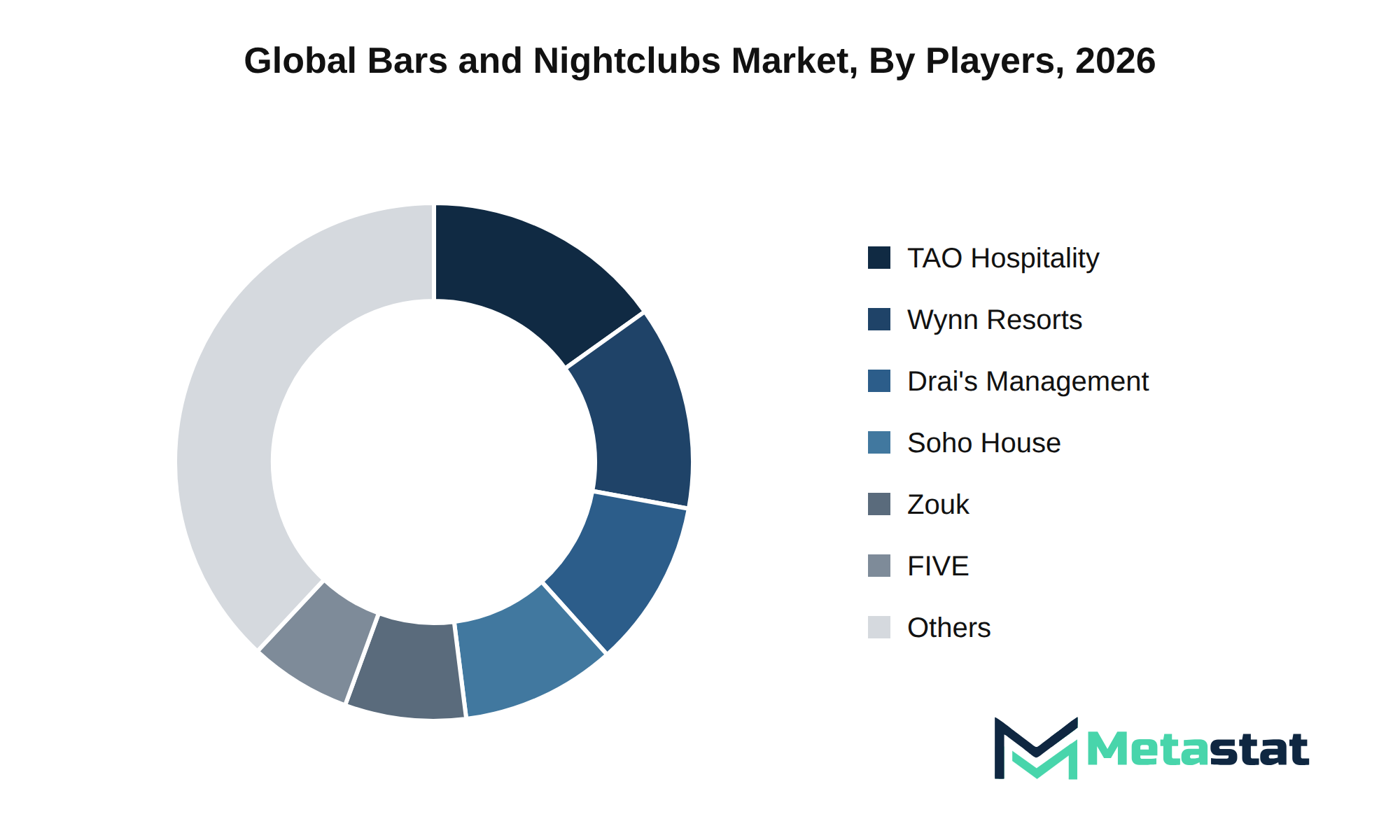
The Bars and Nightclubs market features a diverse array of operators, each engaging in strategic behaviors to enhance their market presence. Key players including TAO Group Hospitality, FIVE Holdings, and Zouk Group leverage unique positioning strategies to capture various segments, including economy, mid-market, and luxury venues. The competitive dynamics hinge on product differentiation and customer retention strategies, with firms focusing on enhancing brand equity through immersive experiences and innovative offerings.
Strategic alliances and joint ventures have emerged because vital components in the market, with organizations forming partnerships to strengthen supply chain dominance and streamline procurement processes. Notable collaborations among entities like Wynn Resorts, Limited and E11EVEN Miami facilitate resource sharing and enhance operational efficiencies. Barriers to entry remain pronounced, with established players employing their intellectual property portfolios and technological advancements to create formidable entry obstacles against new entrants.
The competitive outlook for the Bars and Nightclubs market indicates sustained growth driven by evolving consumer preferences toward unique and engaging social experiences. Players including Nikki Beach Hospitality Group and Ministry of Sound Group have positioned themselves to capitalize on this trend by continuously adapting their business models to meet changing demands. Future growth vectors will likely focus on leveraging data analytics for targeted marketing and enhancing customer loyalty through personalized offerings, ensuring sustained engagement in this active market.
Market size is forecast to rise from USD 92.1 billion in 2025 to over USD 136.2 billion by 2033. The base case reflects a growth trajectory at a 5.0% CAGR. In a bull case scenario, accelerated consumer spending driven by economic recovery could push growth rates higher, benefiting venues that capitalize on emerging trends in nightlife and socializing. Conversely, a bear case scenario presents challenges stemming from economic downturns or regulatory pressures that inhibit growth, particularly in regions heavily reliant on tourism.
Macroeconomic factors play a critical role in shaping the Bars and Nightclubs market. Economic cycles influence consumer confidence and discretionary spending, affecting foot traffic and revenue generation for venues. While the market matures, operators adapt to changing consumer preferences, including shifts towards themed experiences and immersive environments. The integration of next-generation technologies, including digital payment systems and advanced analytics, enhances operational efficiency and customer engagement. Research and development efforts focused on innovative concepts remain essential in maintaining competitiveness.
Regulatory landscapes evolve continuously, impacting compliance and operational costs within the market. Strategic capital allocation directed towards infrastructure improvements and marketing initiatives facilitates growth. Investment in emerging opportunities, particularly in underserved demographics and high-growth locales, presents a favorable outlook for operators. Geopolitical shifts and changes in trade corridors influence supply chain dynamics, requiring venues to be agile in their sourcing and logistics strategies.
The Bars and Nightclubs market is poised for significant growth driven by various factors, including economic resilience, technological advancements, and strategic positioning within the evolving consumer landscape. Adaptation to macroeconomic shifts and proactive investment in emerging opportunities is vital for sustained success.
The report strategically identifies and profiles the key market players and analyses their core competencies in each sub-segment of the Bars and Nightclubs market.
Report Attributes | Details |
Study Period | 2021-2033 |
Base Year | 2025 |
Estimated Year | 2026 |
Forecast Period | 2026-2033 |
Historical Period | 2021-2025 |
Growth Rate | CAGR 5.0% from 2026 to 2033 |
Revenue Unit | USD billion |
Segmentation | By Venue, Venue Setting, Positioning, and Region |
By Region | North America (By Venue, Venue Setting, Positioning, and Country)
|
Europe (By Venue, Venue Setting, Positioning, and Country)
| |
Asia Pacific (By Venue, Venue Setting, Positioning, and Country)
| |
South America (By Venue, Venue Setting, Positioning, and Country)
| |
Middle East and Africa (By Venue, Venue Setting, Positioning, and Country)
|
Find answers to common questions about this report
The Bars and Nightclubs market size was valued at USD 92.1 billion in 2025.
The Bars and Nightclubs market is projected to grow at a CAGR of 5.0% during the forecast period from 2026 to 2033.
The North America Bars and Nightclubs market size is estimated to reach USD 45.5 billion by 2033.
The segment "Cocktail Bars & Speakeasies" leads the Bars and Nightclubs market with a projected value of USD 22.2 billion by 2033. This segment demonstrates significant growth potential compared to others in the market.
Changing consumer behaviors, urbanization, and the growing demand for unique nightlife experiences drive the Bars and Nightclubs market. Younger generations prioritize social interaction in innovative settings, while increasing disposable income supports spending on leisure and entertainment. Sustainability trends further influence consumer choices, prompting venues to adopt eco-friendly practices.
North America holds the dominant share of the Bars and Nightclubs market, with a value of USD 45.5 billion in 2033, representing 35 percent of the total market.
Regulatory hurdles limit participation and operational flexibility in the Bars and Nightclubs market. Compliance requirements increase costs and complexities for venue owners, creating barriers to entry and deterring investment. Macroeconomic challenges, including inflation and supply chain disruptions, further constrain growth prospects by raising operational expenses and complicating service delivery.
Changing consumer behaviors favor product adoption in the Bars and Nightclubs market, driven by a strong preference for unique nightlife experiences among younger generations. Urbanization and increasing disposable income further support demand for diverse and immersive offerings, while sustainability practices enhance brand reputation and attract environmentally conscious patrons.
The Bars and Nightclubs market is estimated to reach a valuation of USD 136.2 billion by 2033.
Key players operating in the Bars and Nightclubs market include TAO Group Hospitality, Zouk Group, Drai's Management Group, E11EVEN Miami, Wynn Resorts, Limited, Hard Rock International, and Barcade.
The analysts below cover Consumer Goods research at Metastat Insights.
LEAD ANALYST
Utkarsh Khirodkar is a Lead Market Research Analyst at MetaStat Insight, specializing in market intelligence, technology sector assessments, and competitive strategy.
Replacing petrochemical surfactants with bio-based alternatives requires realistic timelines on industrial precision fermentation scaling. The market research broke down commercialization timelines, feedstock sugar price sensitivities, and regional cosmetic ingredient regulatory approvals in Europe and East Asia. That supplier readiness mapping gave our formulations team reliable context when comparing renewable chemical sourcing roadmaps.
Tracking ceramic matrix composite adoption in high-bypass aero engines requires strict attention to material qualification cycles and FAA airworthiness testing milestones. The MetaStat Insight team provided a detailed timeline of silicon carbide fiber manufacturing capacity and commercial foundry lead times. Having clear visibility into upstream thermal barrier coating supply helped us stress-test our long-term component procurement strategy.
Transitioning ultra-class mining haul trucks to alternative power requires concrete data on remote hydrogen refueling infrastructure economics. The report evaluated megawatt-scale electrolyzer installation expenses, onsite storage safety mandates, and heavy-duty fuel cell stack degradation under continuous duty cycles. That technical rigor helped our engineers benchmark realistic total operating cost horizons for off-highway fleet decarbonization.
Explore related market intelligence reports worth reading alongside this one.