
LEAD ANALYST
Utkarsh Khirodkar is a Lead Market Research Analyst at MetaStat Insight, specializing in market intelligence, technology sector assessments, and competitive strategy.

India Distillery Alcohol and Liquor Bottling Market Size, Share, By Product Type (Extra Neutral Alcohol (ENA), Rectified Spirit (RS), Pharmaceutical / Pharmacopoeia-Grade Alcohol, Fuel-Grade Anhydrous Ethanol, Special Denatured Spirit (SDS) / Industrial Alcohol, Malt Spirit and Others (Grape, Cane & Specialty Potable Spirit Bases)), By Feedstock (Maize / Corn, Broken & Damaged Rice and Other Grains (Wheat, Barley & Sorghum)), By Bottling Segment (Whisky, Brandy, Rum, Vodka, Gin and Country Liquor / IMIL), By Region (North India, West India, South India, East India, Central India and Northeast India), Industry Analysis, Growth, Trends, and Forecast, 2026-2033
Report ID
MSI-5128
Published
September, 2026
Pages
271 Pages
Format
Historical
Base year
Forecast
Forecast period
Report Details
Choose Your License
India Distillery Alcohol and Liquor Bottling Market
The India Distillery Alcohol and Liquor Bottling market was valued at USD 15.2 billion in 2025 and is projected to reach USD 23.9 billion by 2033, growing at a CAGR of 5.8% over the forecast period.
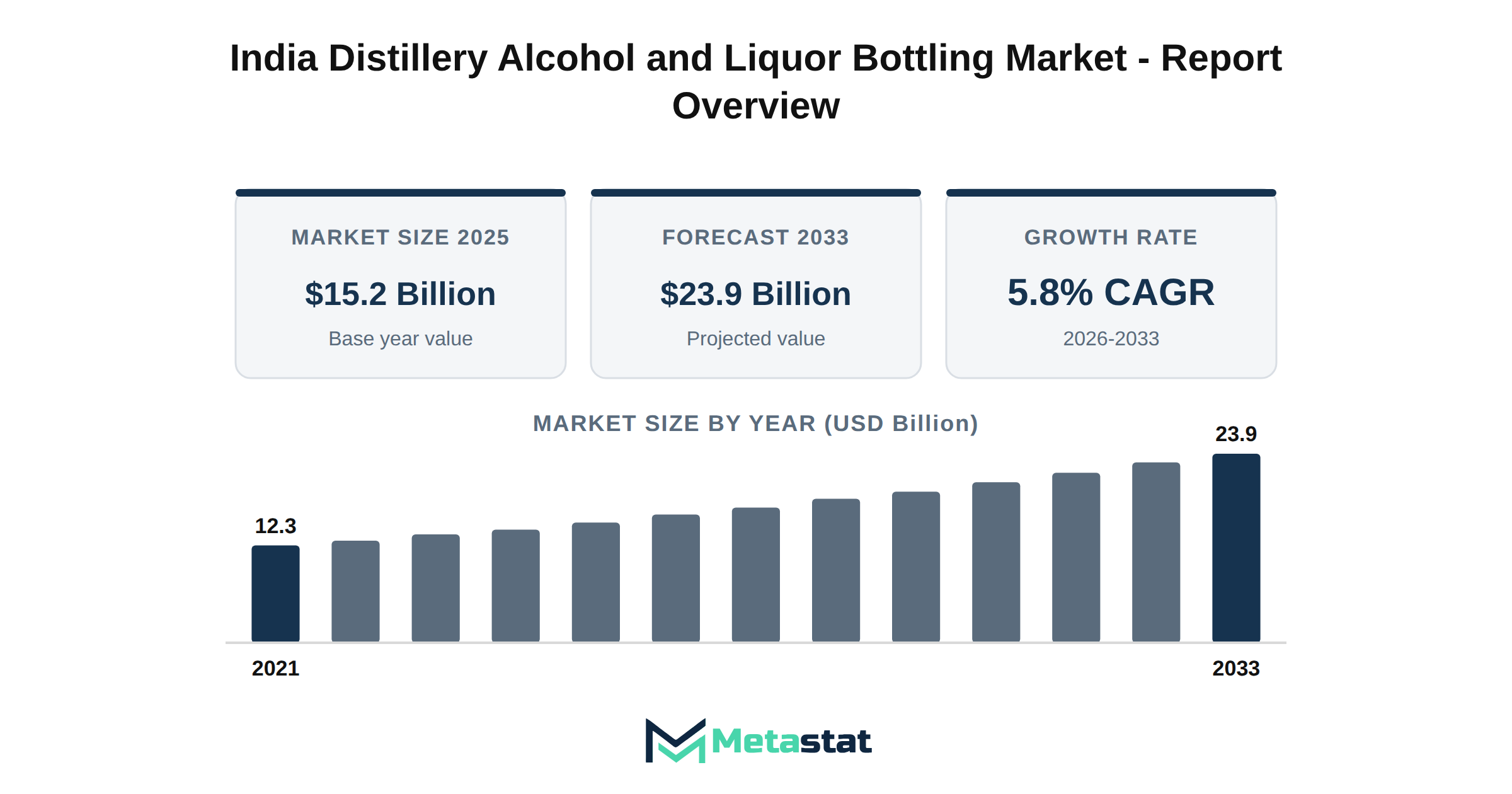
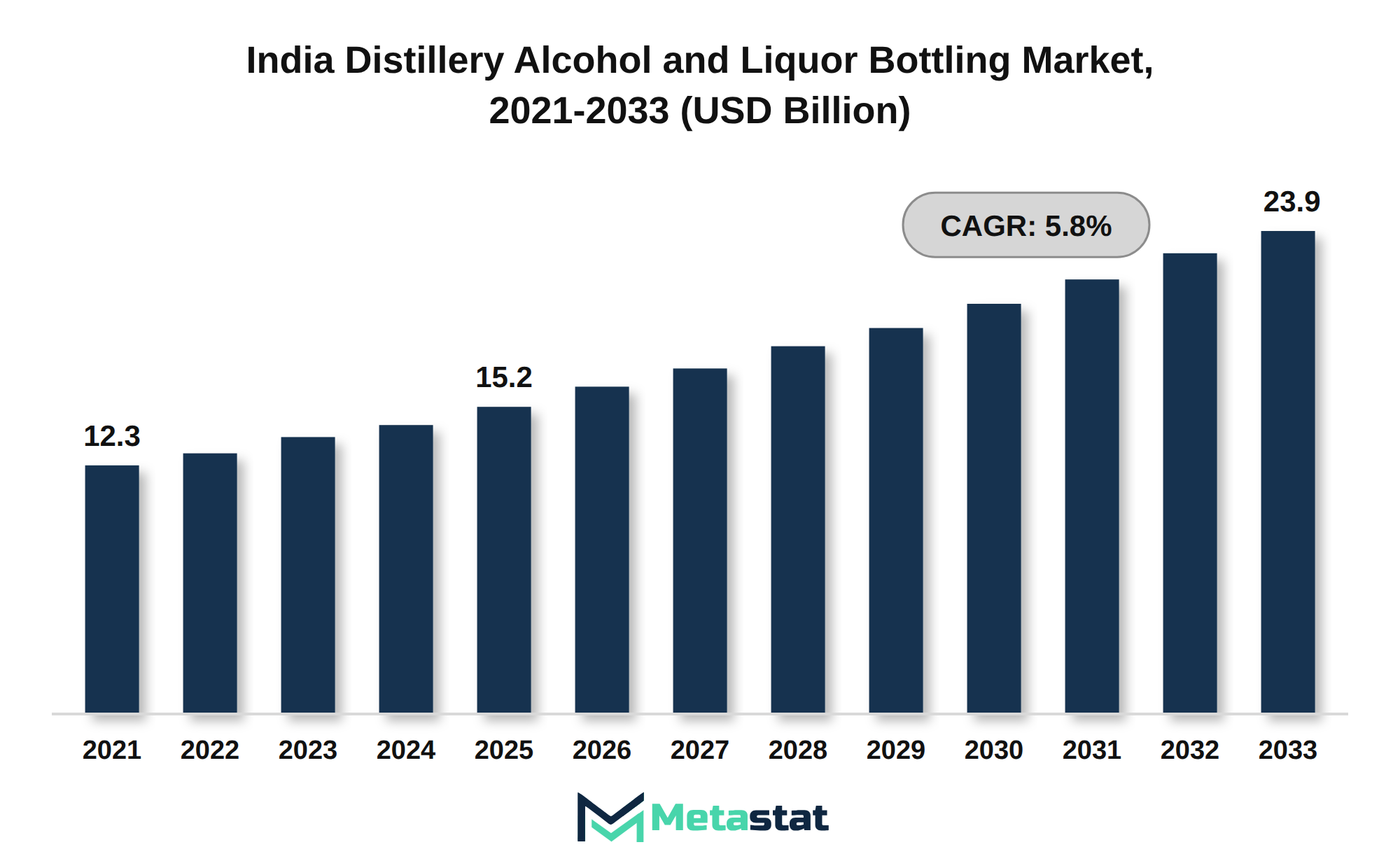
The India Distillery Alcohol and Liquor Bottling market reached a value of USD 15.2 billion in 2025, marking a notable increase from USD 12.3 billion in 2021. Projections indicate that the market expands to USD 23.9 billion by 2033, reflecting a compound annual growth rate (CAGR) of 5.8%. Historical growth demonstrates steady progression, with values increasing year-on-year from USD 12.3 billion in 2021 to USD 15.2 billion in 2025.
Key product segments within the market include Extra Neutral Alcohol (ENA), Rectified Spirit (RS), and Fuel-Grade Anhydrous Ethanol, each contributing significantly to overall market dynamics. The ENA segment holds a market share of 30.3% and is projected to grow from USD 4.8 billion in 2026 to USD 6.7 billion by 2033, achieving a CAGR of 4.6%. The Fuel-Grade Anhydrous Ethanol segment demonstrates strong potential with a projected CAGR of 7.2%. These segments reflect diverse applications, ranging from industrial uses to pharmaceuticals, underpinning the market's versatility.
Market dynamics are influenced by regulatory compliance and quality benchmarking, particularly in the context of pharmacopoeia-grade alcohol. Compliance with stringent quality standards plays a critical role in shaping production practices and ensuring market competitiveness. The evolution of state excise and bottling license developments impacts operational frameworks within the market, guiding strategic investments and growth trajectories.
Contract bottling and tolling economics emerge from significant trends, providing opportunities for cost-effective production strategies. The integration of distillery and bottling operations enhances efficiency and responsiveness to market demands. Pricing dynamics for bulk ENA and feedstock are essential, affecting profitability margins across the supply chain. Fluctuations in feedstock prices and their implications on production costs represent critical considerations for stakeholders within the market.
The India Distillery Alcohol and Liquor Bottling market experiences significant dynamics influenced by various factors. Distillery capacity and utilization benchmarking highlight the operational efficiencies among players, ensuring optimal production levels to meet demand. The economic viability of Extra Neutral Alcohol (ENA) and fuel ethanol products directs resources towards the most profitable segments.
Pharmacopoeia compliance and quality benchmarking play critical roles in maintaining product integrity, impacting market competitiveness. Developments in state excise and bottling licenses contribute to regulatory landscapes, affecting operational frameworks for distillers. Contract bottling and tolling economics offer flexibility to manufacturers, allowing them to optimize production strategies based on demand fluctuations.
Bulk ENA and feedstock pricing dynamics significantly influence cost structures, directly impacting profit margins in the market. Integrated distillery-bottling competitive benchmarking emerges because a key strategy for players, enhancing their positioning within the industry. Regulatory compliance and standards create a framework for operational consistency, while geopolitical risks necessitate contingency planning and risk management strategies.
Market fragmentation and merger and acquisition (M&A) dynamics shape competitive landscapes, compelling companies to reassess strategies for growth and consolidation. The value chain reflects diverse procurement processes, influencing customer journey dynamics. Capital allocation decisions and infrastructure investments drive long-term growth, while inflationary pressures and currency volatility create challenges that require addressing.
Future strategic outlooks suggest a focus on corporate imperatives, emphasizing sustainability, decarbonization, and circular economy dynamics. These factors influence innovation trajectories, positioning companies for next-generation advancements. The India Distillery Alcohol and Liquor Bottling market stands poised for continued evolution, reflecting shifts in consumer preferences and regulatory frameworks.
Growing consumer preferences for premium alcoholic beverages significantly influence the India Distillery Alcohol and Liquor Bottling market. An increasing focus on quality and unique flavors drives consumers to seek higher-end products, resulting in greater demand for craft spirits and artisanal offerings. This trend reflects a broader shift toward premiumization within the Indian market, marked by a willingness to pay more for perceived quality and authenticity.
Millennial and Gen Z consumers contribute to this change, demonstrating a strong inclination toward experimenting with diverse beverages. These demographics prioritize unique purchasing experiences, prompting distilleries to innovate their product lines and enhance brand storytelling. The expansion of premium products correlates with changing attitudes toward alcohol consumption, emphasizing quality over quantity.
Consequently, distilleries experience pressure to adapt their production strategies and marketing approaches, focusing on artisanal processes and distinctive branding. This transition boosts revenue potential and enhances brand loyalty among consumers seeking exclusive products. The market is projected to experience sustained growth driven by evolving consumer preferences for premium offerings in the coming years.
The India Distillery Alcohol and Liquor Bottling market experiences growth driven by rising urbanization and shifting lifestyle choices among consumers. Urban areas exhibit an increasing population density, leading to heightened demand for alcoholic beverages, particularly in metropolitan regions. These urban centers attract younger demographics who seek diverse and premium product offerings.
Changing lifestyles significantly impact consumer preferences, with individuals leaning towards convenience and experiential consumption. Increased disposable income enables consumers to explore a wider range of alcoholic beverages, creating opportunities for innovative and premium products within the market. This trend highlights a growing appetite for ready-to-drink options, craft spirits, and artisanal offerings that cater to evolving tastes.
The influx of digital technology into daily life further transforms buying behaviors. E-commerce platforms provide easy access to various alcoholic beverages, enhancing the accessibility of the India Distillery Alcohol and Liquor Bottling market. Consumers increasingly prefer purchasing online, contributing to market expansion and encouraging businesses to invest in digital strategies and marketing efforts.
The convergence of urbanization, changing lifestyles, and digital transformation creates a dynamic environment for the India Distillery Alcohol and Liquor Bottling market, driving growth and shaping future consumption patterns.
Increasing regulatory compliance requirements in the India Distillery Alcohol and Liquor Bottling market present substantial challenges. Stringent legal mandates surrounding production processes and product safety necessitate significant investment in compliance infrastructure. Rising operational costs to meet these mandates limit distilleries' ability to invest in growth or innovation.
High capital investment requirements restrict the entry of new players into the market, resulting in reduced competition. Smaller distilleries struggle to secure necessary funding for modernization and compliance. This situation leads to market fragmentation, where larger players dominate while smaller ones either exit or remain constrained.
Macroeconomic headwinds, including inflationary pressures, exacerbate these challenges. Rising costs of raw materials and labor limit profit margins and deter expansion plans. Consequently, the market experiences slower growth, with established players focusing on maintaining operational efficiency rather than pursuing aggressive market strategies.
Technological obsolescence represents another restraint for the India Distillery Alcohol and Liquor Bottling market. While industry standards evolve, distilleries adopt new technologies to remain competitive. Failure to modernize results in decreased product quality and market share, further complicating the competitive landscape.
Infrastructure gaps, particularly in rural areas, hinder distribution and supply chain efficiencies. Inadequate connectivity affects logistical operations, leading to delays and increased costs. These challenges place additional strain on distilleries, ultimately impacting their ability to meet consumer demand effectively.
The India Distillery Alcohol and Liquor Bottling market faces challenges related to geopolitical fragmentation, which disrupts established supply chains and increases operational risks. Conflicts or trade tensions between countries create uncertainties that affect ingredient availability and pricing. Tariff friction complicates import-export dynamics, leading to increased costs for raw materials and finished products. This situation enhances the volatility of feedstock and component prices, which directly impacts production costs and profit margins.
Technological disruptions present additional hurdles, driven by companies striving to integrate advanced systems that improve efficiency. Complexity in research and development processes increases when firms attempt to keep pace with evolving technological standards. Interoperability friction between different technological platforms hinders operational continuity, necessitating additional investment in training and development.
The market experiences pricing compression due to intensified competition, resulting in tighter margins for producers. Rising input costs, influenced by external geopolitical factors, further exacerbate this pressure, compelling manufacturers to adapt their pricing strategies. Workforce skill gaps hinder the adoption of innovative production practices, while talent retention pressures challenge companies in maintaining operational efficiency.
Environmental lifecycle footprints and sustainability demands push distillery operators to reconsider their production methodologies. Compliance with regional regulatory standards and evolving legal liabilities adds to the operational burden, creating a need for continual adjustments to business strategies.
Infrastructure gaps and retrofitting barriers impede the implementation of new technologies across various segments of the market. The necessity for robust logistics solutions highlights the importance of maintaining a resilient supply chain, where disruptions significantly affect product availability and market competitiveness.
Shifts in consumer preferences toward locally produced alcoholic beverages fuel growth opportunities within the India Distillery Alcohol and Liquor Bottling market. The increasing inclination toward regional flavors and traditional spirits emphasizes the need for distilleries to adapt their offerings to meet local tastes. This trend aligns with rising disposable incomes and greater access to diverse products, enhancing market attractiveness.
Infrastructure modernization supports market expansion. Upgraded production facilities improve efficiency and production capacity, allowing distilleries to scale operations and respond effectively to increasing demand. Investments in modern equipment and technologies facilitate higher quality and consistency, leading to enhanced product appeal.
Geographical expansion provides significant opportunities for market participants. The growth of distribution networks enables distilleries to reach underserved regions, tapping into new consumer bases. This geographical diversification aids in mitigating risks associated with market fluctuations in specific areas, ensuring a more stable revenue stream.
Technological disruptions, including automation and digital transformations, reshape operations across the industry. Implementing advanced manufacturing processes streamlines production and reduces operational costs. Distilleries leveraging digital platforms for marketing and sales enhance customer engagement, build brand loyalty, and expand market reach.
Sustainability imperatives increasingly influence market dynamics, with eco-friendly practices becoming essential for competitive advantage. Distilleries adopting green transformations not only comply with evolving consumer expectations but align with broader environmental, social, and governance (ESG) goals. This alignment enhances corporate reputation and attracts environmentally conscious consumers.
Strategic consolidation through mergers and acquisitions allows companies to enhance their market presence and diversify product offerings. By combining resources and expertise, distilleries leverage synergies to optimize production and innovate new products, thereby increasing market competitiveness.
Evolving buying behaviors, driven by the digitization of procurement processes, transform how consumers interact with distilleries. Enhanced digital interfaces facilitate transactions and improve purchasing experiences, influencing consumer preferences toward brands that provide engaging online platforms.
Overall, the convergence of these factors creates a favorable growth environment for the India Distillery Alcohol and Liquor Bottling market, positioning it for sustained expansion in the coming years.
The India Distillery Alcohol and Liquor Bottling market is segmented based on Product Type, Feedstock, Bottling Segment, and Region.
In 2026, the Extra Neutral Alcohol (ENA) segment is valued at USD 4.8 billion and is projected to reach USD 6.7 billion by 2033, at a CAGR of 4.6% during the forecast period. This segment is essential in the India Distillery Alcohol and Liquor Bottling market, driven by rising demand for high-purity alcoholic beverages across various applications, including food and beverage production, pharmaceuticals, and industrial use. The expansion of the segment aligns with increasing consumer preferences for quality and purity in alcoholic products, positioning ENA because a key ingredient in numerous industries.
Technological advancements enhance production efficiencies and reduce costs, contributing to the segment's growth. Innovations in fermentation and distillation processes enable manufacturers to achieve higher yields and lower operational expenses. Regulatory compliance standards regarding food safety and quality further increase the demand for ENA, because businesses seek to meet stringent requirements. This dynamic environment creates opportunities for producers to expand their operations and explore new markets.
Shifts in consumption patterns toward premium products significantly impact the market landscape. The trend toward artisanal and craft beverages creates a favorable environment for the growth of the ENA segment. While distillers focus on producing high-quality spirits, the demand for Extra Neutral Alcohol continues to rise, reinforcing its importance within the India Distillery Alcohol and Liquor Bottling market. Strategic investments in production capacity and distribution networks position manufacturers to capitalize on emerging market opportunities and evolving consumer preferences.
Growing interest in Rectified Spirit (RS) among consumers drives the segment's performance in the India Distillery Alcohol and Liquor Bottling market. This segment is estimated to reach USD 3.3 billion by 2033, at a CAGR of 3.7% during the forecast period. Increased production capacity and advancements in distillation technologies contribute to segment growth, enabling manufacturers to meet rising consumer demand effectively. Regulatory frameworks promoting quality standards in alcoholic beverages enhance consumer confidence, further supporting demand for RS. The shift toward premiumization among consumers influences preferences for high-quality spirits, leading to increased adoption of Rectified Spirit in various applications, including beverages and pharmaceuticals. Competitive pricing strategies implemented by major players help maintain segment attractiveness, promoting market expansion.
Demand for Pharmaceutical / Pharmacopoeia-Grade Alcohol continues to rise within the India Distillery Alcohol and Liquor Bottling market, driven by its essential role in the pharmaceutical industry. Growth in healthcare expenditures and increasing production of medicines necessitate a reliable supply of high-quality alcohol for use in formulations and extraction processes. Regulatory compliance standards for purity and safety influence demand, ensuring that only the most reliable suppliers meet the stringent requirements set by governing bodies.
Pharmaceutical-grade alcohol has experienced increased adoption among manufacturers, facilitating the development of innovative products. The segment is projected to reach USD 2.3 billion by 2033, reflecting a strong commitment to quality and regulatory adherence. Technological advancements in production methods enhance the efficiency and scalability of alcohol production, enabling businesses to respond effectively to growing market demands.
End-use dynamics indicate a steady increase in consumption within sectors including hospitals, laboratories, and research institutions. The evolving landscape of the healthcare sector, alongside a focus on improved patient outcomes, drives the need for reliable and high-quality alcohol in various applications. Stakeholders in the market remain well-positioned to capitalize on the opportunities presented by this segment.
Fuel-Grade Anhydrous Ethanol represents a growing segment within the India Distillery Alcohol and Liquor Bottling market, projected to grow at a CAGR of 7.2% during the forecast period. Increasing demand for renewable energy sources drives the need for ethanol, particularly in transportation fuels. The Indian government's initiatives to promote ethanol blending in petrol further support this segment's expansion. Fuel-Grade Anhydrous Ethanol benefits from favorable policies and regulatory frameworks that support its production and utilization in various applications.
Technological advancements enhance production efficiency, enabling manufacturers to optimize yield and reduce costs. Consumer preferences for sustainable and eco-friendly fuel alternatives contribute to the shift towards ethanol-based products. Adoption rates in the automotive and industrial sectors continue to rise, leading to increased penetration of Fuel-Grade Anhydrous Ethanol in the market. Strategic investments in infrastructure and production capabilities enhance competitiveness and support the segment's growth trajectory.
Cost structures in this segment reflect raw material prices and production methodologies, influencing profitability and pricing volatility. Fluctuations in feedstock availability and pricing pose challenges, yet diversification in raw material sourcing mitigates risks associated with supply chain vulnerabilities. The market faces competition from alternative fuel sources, emphasizing the need for continuous innovation and adaptation to evolving consumer demands.
Overall, Fuel-Grade Anhydrous Ethanol stands to gain substantial traction within the India Distillery Alcohol and Liquor Bottling market, driven by regulatory support, consumer trends toward sustainability, and technological enhancements that improve production efficiency.
Regulatory compliance remains an important factor in the Special Denatured Spirit (SDS) / Industrial Alcohol segment within the India Distillery Alcohol and Liquor Bottling market. Stringent standards surrounding the production and distribution of industrial alcohol necessitate adherence to safety and quality requirements. This regulatory framework influences manufacturers, guiding their operational processes and impacting product formulations. Compliance with certifications enhances product credibility and builds consumer trust, essential for sectors using SDS in various applications.
The evolution of downstream applications drives demand for SDS, particularly in industries including pharmaceuticals, cosmetics, and food processing. Increased usage of SDS in these sectors stems from its versatile properties, establishing it because a critical component in numerous formulations. Consumption shifts toward products that prioritize quality and safety further increase this demand. The market is positioned for sustained growth, driven by technological advancements that enhance production efficiency and product quality.
Pricing volatility in raw materials affects the profitability of manufacturers within the segment. Fluctuations in supply chain dynamics lead to increased operational costs, pressuring margins. Companies actively seek to mitigate these impacts through strategic sourcing and long-term contracts with suppliers to ensure stability in pricing and availability. Strategic opportunity windows emerge because firms innovate to enhance product offerings, applying advancements in production technology to meet evolving market needs.
Interest in malt spirit reflects a blend of cultural appreciation and evolving consumer tastes in the India Distillery Alcohol and Liquor Bottling market. The segment attracts attention due to its unique flavor profiles and artisanal appeal, appealing to both traditionalists and modern consumers seeking distinct drinking experiences. Investment in production techniques and quality assurance enhances the product's market positioning.
Consumer trends indicate a shift toward premium products, driving demand for high-quality malt spirits. This shift highlights an opportunity for producers to differentiate their offerings through unique branding and marketing strategies. While the market expands, strategic partnerships with local distributors enhance reach and facilitate entry into new regions.
Regulatory compliance shapes the landscape for malt spirit production, influencing both production methods and marketing approaches. Adherence to quality standards ensures consumer safety and encourages brand loyalty. Increased focus on certifications enhances product credibility and contributes to market growth.
Price sensitivity influences purchasing decisions within the market. Producers face pressure to balance high-quality inputs with competitive pricing strategies. Effective cost management in sourcing and production processes is essential for maintaining profitability, especially in a diverse market landscape.
Innovation plays a critical role in the evolution of malt spirit offerings. Continued exploration of flavors, aging techniques, and packaging solutions enhances product appeal. Producers achieving technological advancements in production processes position themselves favorably within the competitive environment.
Interest in the Others (Grape, Cane & Specialty Potable Spirit Bases) segment reflects a diverse range of consumer tastes and preferences, contributing to the evolving dynamics of the India Distillery Alcohol and Liquor Bottling market. These products cater to niche markets, appealing to consumers seeking unique flavors and experiences. Innovations in product development enhance the appeal of these spirits, driving demand among both domestic and international consumers.
Consumer interest in craft and artisanal spirits influences growth within this sub-segment. Increased awareness and appreciation for locally sourced ingredients support the development of unique product offerings, further enhancing market competitiveness. Regulatory compliance standards significantly shape production practices, ensuring safety and quality across the board.
Shifts in consumer behavior towards premium products promote the exploration of new flavors and varieties within this sub-segment. The market experiences a notable trend towards sustainability, with manufacturers focusing on environmentally friendly practices and sourcing methods. This trend aligns with the growing emphasis on corporate social responsibility among consumers.
Investment in marketing and branding strategies highlights the significance of storytelling in appealing to modern consumers. By emphasizing the origins and craftsmanship of these spirits, producers create a stronger connection with their target audiences. Overall, the Others (Grape, Cane & Specialty Potable Spirit Bases) segment enhances product diversity and choice for consumers within the India Distillery Alcohol and Liquor Bottling market.
Valued at USD 4.4 billion in 2026, the Maize / Corn segment is projected to reach USD 7.4 billion by 2033, reflecting a CAGR of 7.7% during the forecast period. This growth is driven by increasing demand for bio-based production processes and environmentally sustainable practices among distilleries. Consumer preferences shift toward products that leverage renewable resources, emphasizing the role of maize and corn because significant feedstocks in the production of alcoholic beverages.
Technological advancements in fermentation and distillation processes support the efficient conversion of maize and corn into high-quality alcohol. Enhanced processing methods increase yield and reduce waste, aligning with operational efficiency goals within the India Distillery Alcohol and Liquor Bottling market. This evolution positions maize and corn because competitive feedstocks, minimizing dependency on traditional sugarcane sources.
Downstream applications highlight the versatility of maize and corn in producing various alcoholic beverages, including whiskies and vodkas. This adaptability caters to evolving market trends and aligns with changing consumer preferences, further reinforcing the segment's role in the larger alcoholic beverages market.
Regulatory frameworks increasingly favor the use of renewable resources, incentivizing producers to adopt maize and corn feedstocks. These favorable conditions enhance market accessibility and drive long-term investments in the sector, supporting growth and expansion opportunities. The estimated growth trajectory emphasizes the critical importance of maize and corn within the broader context of the India Distillery Alcohol and Liquor Bottling market.
In the India Distillery Alcohol and Liquor Bottling market, the Broken & Damaged Rice segment is estimated to reach USD 4.8 billion by 2033, at a CAGR of 7% during the forecast period. This growth arises from increased utilization of broken and damaged rice because a cost-effective feedstock for alcohol production, particularly in regions with abundant rice cultivation. The segment benefits from evolving consumer preferences for affordable alcoholic beverages, reinforcing demand from distilleries aiming to optimize production costs while maintaining quality. The focus on sustainable sourcing and wastage reduction enhances the segment's relevance in the industry, aligning with regulatory trends that encourage the use of less conventional feedstocks. Distilleries that adopt this feedstock strategy experience improved margins, driving competitive advantage in the market. The anticipated growth in the Broken & Damaged Rice segment highlights its strategic importance within the broader context of the India Distillery Alcohol and Liquor Bottling market.
Demand for Other Grains (Wheat, Barley & Sorghum) reflects a significant shift within the India Distillery Alcohol and Liquor Bottling market. This segment is expected to reach USD 2 billion by 2033, driven by increasing consumer interest in diverse alcoholic products. Higher production capacities and technological advancements in distillation processes support the expansion of this segment, facilitating the efficient utilization of these grains. Regulatory standards regarding raw material sourcing and quality assurance enhance competitiveness, allowing producers to meet evolving consumer preferences.
Growing awareness of health-conscious consumption patterns influences the adoption of products derived from other grains, reflecting consumer demand for alternatives to traditional spirits. Innovations in product formulations aimed at enhancing flavor profiles and sustainability significantly contribute to market growth. The strategic focus on optimizing supply chains ensures resilience against disruptions, enabling producers to meet rising demand effectively. With a favorable investment climate, opportunities for capital investments in this segment are expected to increase, further strengthening its position in the market.
Increasing attention toward sustainable raw materials enhances the appeal of B-Heavy Molasses within the India Distillery Alcohol and Liquor Bottling market. This feedstock derives its value from the rising demand for cost-effective alternatives in alcohol production, particularly in regions where sugarcane processing remains prevalent. The B-Heavy Molasses segment is projected to grow at a CAGR of 3.9% during the forecast period. The competitive landscape reflects a shift toward incorporating more sustainable feedstock sources, leading distillers to explore innovative production methods that emphasize efficiency and environmental responsibility.
Despite facing competition from other feedstocks, B-Heavy Molasses maintains a strong foothold due to its affordability and ease of availability. The segment benefits from ongoing investments in production technology, which aim to enhance yield while minimizing waste. Price volatility in raw materials impacts profit margins, necessitating strategic planning among producers to mitigate risks associated with fluctuating costs. The focus on sustainability intensifies, and the market for B-Heavy Molasses aligns with broader trends favoring eco-friendly production practices.
Increased consumer awareness regarding the sourcing of ingredients in alcoholic beverages influences purchasing decisions, leading to a demand for transparency in production processes. This trend creates opportunities for producers who prioritize sustainability in their operations. Strategic partnerships among stakeholders in the India Distillery Alcohol and Liquor Bottling market strengthen supply chain resilience, facilitating better sourcing and distribution of B-Heavy Molasses to meet market needs effectively.
Interest in C-Heavy Molasses because a feedstock for alcohol production reflects its potential to address the rising demand for sustainable and cost-effective raw materials. This segment benefits from growing adoption in various distillation processes, driven by the need for more efficient production methods and the reduction of waste. Technological advancements enhance the conversion rates of C-Heavy Molasses into alcohol, promoting its use in the India Distillery Alcohol and Liquor Bottling market.
Shifts in consumption patterns toward eco-friendly products increase the importance of C-Heavy Molasses in the market. Distillers leverage this feedstock due to its availability and competitive pricing compared to traditional sources. Regulatory compliance related to sustainability initiatives further supports its integration into production processes, providing distillers with a strategic advantage. The focus on reducing carbon footprints enhances the relevance of C-Heavy Molasses in meeting consumer expectations for environmentally friendly practices.
Market dynamics indicate a continuous search for innovative production methods and alternative feedstocks. C-Heavy Molasses aligns with these trends, presenting opportunities for distillers to diversify their raw material sourcing. The segment faces challenges related to supply chain resilience and potential vulnerabilities in sourcing, but strategic partnerships and investments in local supply chains mitigate these risks. The outlook for C-Heavy Molasses remains promising, contributing to the overall growth trajectory of the India Distillery Alcohol and Liquor Bottling market.
Interest in Sugarcane Juice / Sugar Syrup because a feedstock for alcohol production stems from its availability and versatility. The growing consumer preference for natural and organic products influences producers to explore alternative raw materials, enhancing the appeal of this segment within the India Distillery Alcohol and Liquor Bottling market. Regulatory compliance concerning sustainability and environmental impact drives producers to incorporate more eco-friendly feedstock options.
Technological advancements in fermentation and distillation processes improve the efficiency of Sugarcane Juice / Sugar Syrup, enabling producers to optimize yield and reduce waste. This evolution promotes market expansion opportunities by attracting various stakeholders interested in innovative production methods. The market experiences a shift towards this feedstock in response to changing consumer preferences that prioritize sustainability and quality.
Pricing volatility poses challenges for producers relying on Sugarcane Juice / Sugar Syrup. Fluctuations in sugar prices and agricultural conditions directly impact the cost structures associated with this feedstock, influencing profit margins. Strategic opportunity windows exist for producers who aim to mitigate these risks through long-term sourcing contracts or investments in innovative agricultural practices.
Maintaining supply chain resilience becomes critical for producers in the market. Establishing strong relationships with local farmers and investing in community development enhances the stability of raw material sourcing. By securing reliable supply chains, producers navigate potential disruptions and strengthen their competitive position in the India Distillery Alcohol and Liquor Bottling market.
Shifts in consumer preferences towards diverse feedstocks influence the Others (Other Starch & Sugar Feedstocks) segment within the India Distillery Alcohol and Liquor Bottling market. This segment reflects a growing interest in alternative feedstocks for alcohol production. Factors driving growth include the need for sustainable sourcing and innovation in production techniques.
Technological advancements enable the development of efficient processes that enhance the viability of using other starch and sugar feedstocks. While producers explore innovative methods, the segment's profile expands, aligning closely with industry trends towards sustainability and resource efficiency. Regulatory compliance related to production processes and sustainability standards influences segment dynamics.
Investment in research and development supports product evolution, ensuring that the segment remains competitive within the broader market landscape. Downstream applications across various industries create opportunities for increased adoption of alternative feedstocks. This diversification addresses consumer demand for products that emphasize ecological responsibility.
Valued at USD 8.6 billion in 2026, the Whisky segment is projected to reach USD 12 billion by 2033, reflecting a CAGR of 4.8% during the forecast period. This growth reflects a rising trend in consumer preference for premium and aged whiskies, driven by increasing disposable income and evolving lifestyle choices. Heightened demand arises from a shift towards premiumization, with consumers seeking unique flavors and high-quality products.
The expansion of the Whisky segment is further enhanced by innovations in production techniques and the introduction of new flavor profiles that cater to diverse palates. Distillers focus on enhancing product offerings, which encourages consumer exploration of various whisky brands and styles. Strategic marketing initiatives, including whisky tasting events and experiential marketing, significantly influence consumer engagement and brand loyalty.
Increased exports play a vital role in driving market growth, with Indian whiskies gaining recognition in international markets. With the India Distillery Alcohol and Liquor Bottling market expanding globally, producers prioritize quality and brand positioning to capture market share beyond domestic borders. This trend highlights the potential for growth in exports, supported by rising global demand for premium spirits.
Regulatory considerations, including labeling and quality standards, influence production processes within the Whisky segment. Compliance with these regulations ensures product integrity and builds consumer trust, positively impacting purchasing decisions. The Whisky segment of the market is expected to thrive, driven by evolving consumer preferences, innovative product offerings, and strategic marketing efforts.
Brandy segment is estimated to reach USD 2.2 billion by 2033, at a CAGR of 4.5% during the forecast period. Demand for brandy arises from its established position in social and celebratory contexts, driving consumer interest across both urban and rural demographics. Trends toward premiumization influence brand choices, leading consumers to favor high-quality offerings that enhance the overall drinking experience. Investment in production techniques and aging processes enhances the flavor profile, attracting discerning customers. This evolution in product quality aligns with the broader shifts toward craft and artisanal beverages in the India Distillery Alcohol and Liquor Bottling market. The segment benefits from evolving consumer preferences for innovative flavors, further expanding brandy’s appeal.
Pricing strategies reflect the balance between premium positioning and accessibility, ensuring brandy remains competitive within the broader spirits category. Cost structures influenced by raw material sourcing, particularly fruit and fermentation processes, impact pricing and margins. The segment adapts to market trends, supporting its growth trajectory and positioning it favorably within the competitive environment.
Anticipation surrounding the Rum segment reflects a robust outlook, with a projected value of USD 2.6 billion by 2033. This growth is predominantly driven by rising consumer demand for premium and craft spirits, alongside an increase in social acceptance of rum in cocktails and mixed beverages. Cultural shifts toward exploring diverse alcoholic options enhance market prospects, attracting interest from a wider demographic.
Technological advancements in distillation and production methods contribute to the segment's expansion. Innovations focus on flavor enhancement and product differentiation, appealing to both traditional and modern consumers. This evolution influences the supply chain, with distilleries adopting more efficient practices to improve quality while managing costs.
Pricing volatility remains a key consideration, influenced by raw material costs, particularly sugarcane and molasses, which are vital for rum production. The segment grapples with margin pressures stemming from fluctuating input prices and competition from alternative spirits. Regulatory compliance standards impose further challenges, necessitating strict adherence to safety and quality measures.
Strategic opportunity windows arise from the increasing integration of rum into lifestyle branding and events. The market experiences significant consumption shifts, with younger consumers seeking unique flavor profiles and authentic experiences. Overall, the Rum segment's growth trajectory within the India Distillery Alcohol and Liquor Bottling market hinges on these dynamics, creating a competitive landscape poised for continued evolution.
Growing interest in premium spirits drives the demand for vodka within the India Distillery Alcohol and Liquor Bottling market. Increasing consumer preference for high-quality and flavored vodka products supports this trend. The vodka segment is projected to grow at a CAGR of 8.4% during the forecast period, reflecting strong upward momentum for this category.
Product innovation is essential for this segment's expansion. Distillers focus on unique flavor profiles and experimental blends, attracting a diverse consumer base. This evolution aligns with shifting consumption patterns, where consumers seek variety and novel experiences in their spirits. Marketing strategies targeting younger demographics enhance brand awareness and encourage trial purchases.
Cost structures and pricing strategies impact the vodka segment's profitability. Producers face pressures from raw material sourcing and production costs, influencing pricing volatility. However, the premium positioning of vodka products allows for higher margins, making this segment attractive for investment. Capital investment in advanced distillation technologies further enhances product quality and consistency, reinforcing vodka's market presence.
Overall, the vodka segment's growth potential within the India Distillery Alcohol and Liquor Bottling market positions it favorably against other spirits. Strategic opportunities arise from the increasing demand for premium offerings, technological advancements, and the evolving tastes of consumers, ensuring a dynamic and competitive environment.
Consumer preferences increasingly favor gin, particularly among younger demographics seeking innovative and unique flavors. The growing cocktail culture and evolving drinking habits significantly contribute to demand within the India Distillery Alcohol and Liquor Bottling market. Expanded offerings of flavored and premium gin options enhance market attractiveness, capturing the interest of discerning consumers. Investment in marketing strategies that emphasize quality and lifestyle alignment drives brand recognition and loyalty.
Regulatory compliance influences the gin segment, shaping production standards and labeling requirements. Adherence to these standards enhances product credibility and consumer trust, facilitating market expansion. Efficient raw material sourcing, particularly botanicals and grains, contributes to cost management and product consistency, vital for maintaining competitive pricing and quality. The segment experiences evolving consumer dynamics, reflecting trends toward health-conscious choices and sustainable production practices.
Strategic partnerships within the supply chain strengthen resilience, addressing potential vulnerabilities in logistics and material shortages. Innovations in production techniques, including distillation and infusion methods, promote product evolution, appealing to the growing demand for artisanal spirits. Continuous exploration of disruptive alternatives within the broader spirits category influences market strategies, encouraging brands to differentiate their offerings. Overall, the gin segment within the market presents significant potential for growth and investment, driven by shifting consumer preferences and an expanding range of products.
Growing popularity of Country Liquor, called Indian Made Foreign Liquor (IMIL), reflects changing consumer preferences within the India Distillery Alcohol and Liquor Bottling market. The segment thrives on the foundation of regional tastes and cultural preferences, which influence demand patterns. Increased accessibility to local distilleries has enhanced consumer options, contributing directly to segment growth. In addition, the affordability of Country Liquor appeals to price-sensitive consumers, positioning the segment favorably in a competitive market environment.
Emerging trends indicate a shift toward variety within the segment, with producers introducing innovative flavors and blends. This evolution aligns with consumer inclination toward unique drinking experiences and local craftsmanship. Regulatory compliance in production processes plays a critical role, impacting the quality and safety standards of Country Liquor. Adhering to these regulations builds trust among consumers, enhancing brand loyalty and driving repeat purchases.
Strategic marketing initiatives focusing on storytelling and heritage connect with consumers. This connection to local traditions strengthens the appeal of Country Liquor. The market faces challenges, including pricing volatility influenced by raw material sourcing and production costs. However, the segment's adaptability provides ample strategic opportunity windows for manufacturers looking to capitalize on emerging consumption patterns. Overall, the Country Liquor segment embodies a dynamic component of the India Distillery Alcohol and Liquor Bottling market, characterized by evolving consumer preferences and competitive strategies.
Consumer interest in innovative flavor profiles and ready-to-drink (RTD) options drives growth within the Others (Liqueurs, RTDs & Other Bottled Spirits) sub-segment. The rise of social gatherings and events encourages consumers to explore diverse beverage choices, enhancing the market's appeal. An increasing preference for convenience fuels RTD products, while the demand for traditional liqueurs experiences a revival among cocktail enthusiasts.
Product evolution entails a shift toward lower alcohol content and creative formulations, catering to health-conscious consumers seeking moderation. Regulatory compliance standards impact production processes, ensuring quality and safety for end-users. Market players strategically position their offerings to align with consumer preferences, using certification processes to enhance product credibility and value.
Capital investment outlook remains positive, with new entrants exploring niche markets and established players expanding their portfolios. Strategic opportunity windows arise from rising consumer trends, including craft and artisanal products, which enhance differentiation in the competitive environment. The India Distillery Alcohol and Liquor Bottling market benefits from these dynamic shifts, driving innovation and sustained growth within the Others sub-segment.
Valued at USD 4.4 billion in 2026, the North India segment is projected to reach USD 6.7 billion by 2033, at a CAGR of 6.2% during the forecast period. Increasing consumption of alcoholic beverages in North India drives demand, particularly in urban centers where social gatherings and celebrations contribute to higher sales. Changes in consumer preferences toward premium and craft spirits enhance market dynamics, encouraging distillers to innovate and adapt their offerings. Significant investments in production capacity and distribution networks strengthen supply chain resilience, enabling producers to meet growing consumer expectations efficiently.
Regulatory compliance and adherence to safety standards influence operational strategies among manufacturers, impacting product formulations and marketing approaches. The region's diverse cultural landscape supports a wide range of alcoholic products, including whisky, rum, and local spirits, responding to various consumer preferences. A continued focus on product evolution aligns with trends toward unique flavor profiles and premiumization, enhancing the overall appeal of the India Distillery Alcohol and Liquor Bottling market.
Growing consumption of spirits in West India contributes to a positive outlook for the market. Rising disposable incomes and changing consumer lifestyles drive demand for premium and innovative alcoholic beverages. Increased focus on product quality and authenticity enhances the appeal of locally produced spirits, aligning with regional preferences. Regulatory compliance and certifications become significant factors, ensuring product safety and quality, which builds consumer trust. The West India segment is projected to reach USD 5.5 billion by 2033, at a CAGR of 5.3% during the forecast period. Investments in marketing strategies and distribution channels further support segment growth, enhancing brand visibility and availability within the competitive landscape. The market adapts to evolving consumer preferences, prompting producers to diversify product offerings and explore new flavor profiles tailored for local tastes.
Growing interest in the South India region significantly contributes to the expansion of the India Distillery Alcohol and Liquor Bottling market. With the segment expected to reach USD 4.8 billion by 2033, various factors influence this growth trajectory. Increased disposable income among consumers enhances the demand for premium alcoholic beverages, leading to higher consumption rates in South India. Evolving consumer preferences toward flavored spirits and craft options drive innovation within the market, pushing producers to diversify their product offerings.
Regulatory compliance standards support the segment's growth by promoting responsible drinking and enhancing product quality. This regulatory framework encourages manufacturers to adopt best practices in production and marketing, ultimately benefiting consumers. Strategic investments in local distilleries and production facilities strengthen supply chain resilience, reducing dependency on imports. While producers increasingly focus on sustainability and sourcing local ingredients, the region's agricultural output reinforces its position within the market.
Technological maturation in production processes leads to improved efficiency and cost-effectiveness, enabling manufacturers to leverage advanced techniques for higher yields. Consequently, overall profitability is expected to increase, attracting further capital investment in the sector. The combination of these factors positions the South India segment favorably within the broader context of the India Distillery Alcohol and Liquor Bottling market.
Consumer behavior increasingly reflects a shift towards premium liquor offerings in East India, driving growth in the India Distillery Alcohol and Liquor Bottling market. This region is projected to grow at a CAGR of 5.2% during the forecast period. Rising disposable incomes and changing lifestyles contribute to heightened demand for diverse alcoholic beverages, particularly among younger consumers seeking unique experiences.
The increasing popularity of craft and artisanal spirits influences local production trends, encouraging distillers to innovate and expand their product lines. Traditional beverages including whisky and rum see strong interest, while flavored spirits attract consumers looking for variety. Manufacturers in East India actively adapt to these consumption shifts, focusing on quality and unique flavor profiles to enhance their market positions.
Regulatory compliance remains critical, with producers ensuring adherence to evolving standards that govern production and distribution. This focus on quality and safety reassures consumers, building brand loyalty. Cost pressures arising from raw material sourcing and production methods challenge manufacturers, but strategic investments in technology and supply chain efficiencies improve overall resilience.
While the market evolves, opportunities for capital investment increase. This trend encourages players to explore new technologies, enhancing production capabilities and expanding distribution networks. The India Distillery Alcohol and Liquor Bottling market presents a dynamic environment for stakeholders, characterized by ongoing growth potential and product diversification.
In Central India, evolving consumer preferences and regional cultural influences shape the market of the India Distillery Alcohol and Liquor Bottling sector. A rising demand for local spirits and traditional beverages drives production, with local distilleries adapting to meet expectations for quality and authenticity. Innovation in flavor profiles and product offerings enhances the appeal of beverages within this segment, capturing the interest of a diverse consumer base.
Strategic collaborations between local producers and distributors strengthen market presence, facilitating broader access to various alcoholic products. Regulatory compliance is essential, with producers adhering to local and national standards that govern production and distribution. This compliance ensures product safety and quality, reinforcing consumer trust and, consequently, market growth.
Raw material sourcing remains critical, with local agricultural practices influencing the availability of essential feedstocks. These practices contribute to the economic stability of the region, driven by distilleries that support local farmers, thereby building community relationships. The demand for sustainability drives several distilleries to explore innovative sourcing options, ensuring a resilient supply chain while addressing environmental concerns.
While market players navigate pricing volatility, consumer willingness to pay for premium products enhances profit margins. This dynamic encourages distilleries to invest in modernization and technology upgrades, streamlining production processes and improving operational efficiency. The combination of these factors positions Central India because a significant contributor to the overall growth of the India Distillery Alcohol and Liquor Bottling market.
Trends in the Northeast India region indicate a growing interest in local spirits and unique flavor profiles. This region features distinct consumption patterns, influenced by cultural factors and an appreciation for traditional beverages. The rising demand for craft and artisanal products reflects a shift in consumer preferences towards authenticity and quality, positioning local distilleries to capture a more significant market share within the India Distillery Alcohol and Liquor Bottling market.
Investment in production capabilities and innovative product offerings serves because a catalyst for growth in this segment. Local producers emphasize the use of indigenous ingredients, attracting both regional consumers and tourists seeking authentic experiences. Increased competition among distilleries drives product evolution, enhancing the variety of spirits available and driving brand loyalty among consumers.
Regulatory frameworks in Northeast India impact operational strategies, resulting in increased focus on compliance and quality standards. This attention to regulatory requirements not only ensures product safety but builds consumer trust, benefiting long-term growth in the market. Enhanced transparency within the supply chain supports raw material sourcing and strengthens relationships between producers and local farmers.
Technological advancements in distillation processes and bottling techniques contribute to improved efficiency and product integrity. Strategic collaborations with local farms and suppliers enhance resilience in the supply chain, reducing vulnerabilities in sourcing and logistics. These developments position Northeast India because an attractive opportunity within the broader India Distillery Alcohol and Liquor Bottling market.
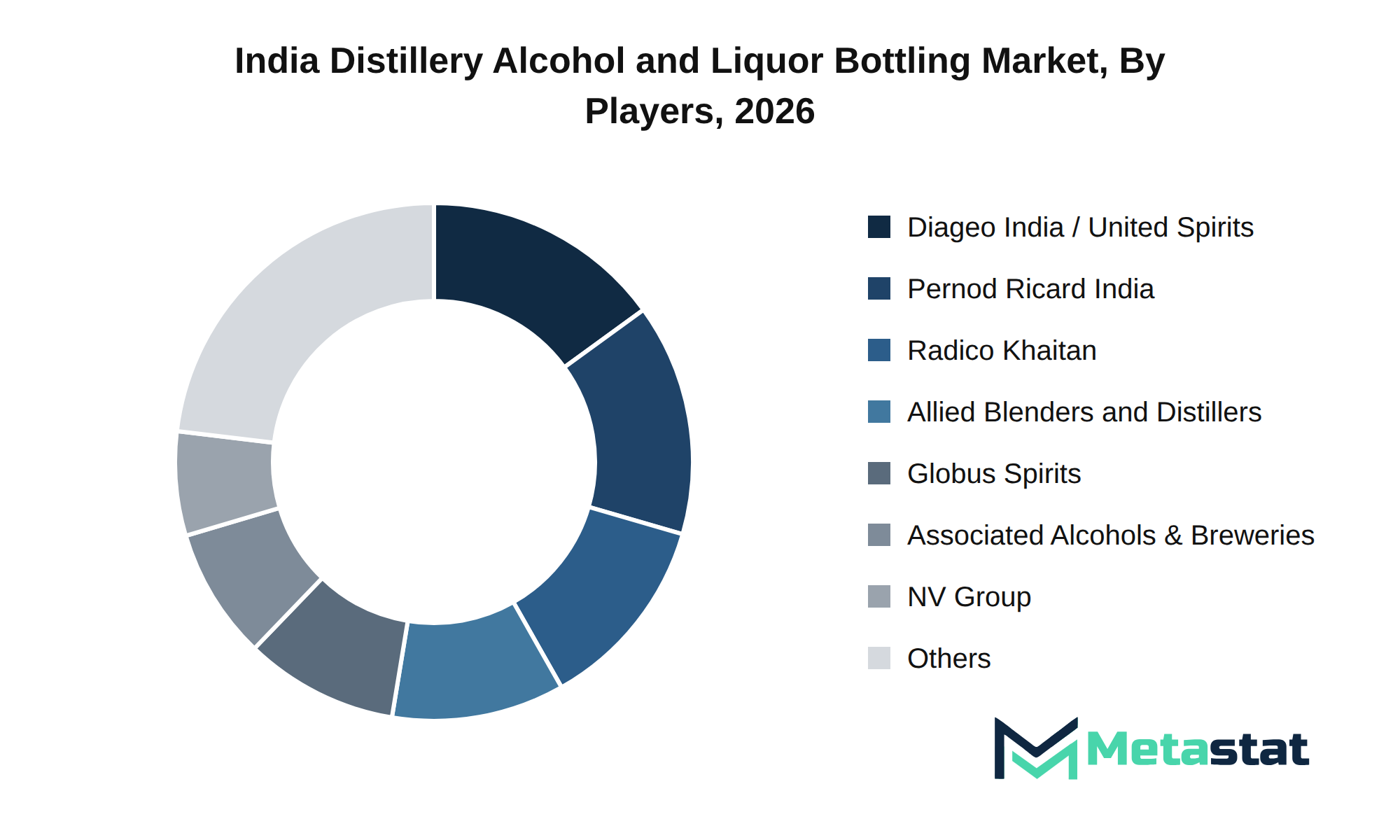
The competitive landscape of the India Distillery Alcohol and Liquor Bottling market reflects a dynamic environment shaped by various strategic behaviors. Key players, including Radico Khaitan Limited, Diageo India / United Spirits Limited, and Pernod Ricard India Private Limited, engage in strategic alliances and joint ventures to enhance their market presence. These collaborative efforts provide access to innovative technologies and broaden distribution networks, ultimately strengthening competitive positioning.
Market participants adopt product differentiation strategies to cater to diverse consumer preferences. Companies including Allied Blenders and Distillers Limited and Globus Spirits Limited emphasize unique formulations and packaging to attract a wider customer base. Ongoing research and development initiatives drive innovation within the sector, ensuring that players maintain relevance in a changing market.
Pricing architectures in the market demonstrate a focus on competitive pricing strategies to retain customer loyalty and enhance brand equity. Firms, including India Glycols Limited and Triveni Engineering & Industries Limited, apply value chain integration and procurement leverage to optimize operational efficiency and control costs. This strategic approach to pricing supports profitability while mitigating the threat of new entrants in the market.
The future competitive outlook for the India Distillery Alcohol and Liquor Bottling market indicates sustained growth, supported by favorable demographic trends and increasing consumer spending on alcoholic beverages. Key players continue to explore strategic growth vectors, reinforcing their market share while adapting to changing consumer demands and preferences.
Market size is forecast to rise from USD 15.2 billion in 2025 to over USD 23.9 billion by 2033. This growth trajectory reflects a compound annual growth rate (CAGR) of 5.8%. Various macroeconomic factors contribute to the expansion of the India Distillery Alcohol and Liquor Bottling market. Ongoing shifts in consumer preferences toward premium and craft spirits create new opportunities for market participants. Increasing disposable incomes and urbanization drive demand for alcoholic beverages across different segments.
The bull case for the market includes accelerated growth fueled by innovation in product offerings and enhanced distribution channels. Rapid technological advancements in production processes and packaging techniques improve efficiency and reduce costs for manufacturers. Conversely, the bear case highlights potential challenges from regulatory changes and shifts in consumer behavior, which could create volatility in demand for specific products.
Long-term, the India Distillery Alcohol and Liquor Bottling market will benefit from strategic capital allocation and investments in infrastructure development. Companies focusing on expanding their production capacities and enhancing supply chain efficiencies position themselves favorably. Continuous research and development efforts contribute to the commercialization of next-generation products that meet evolving consumer expectations.
Regulatory evolution will play a critical role in shaping market dynamics. Compliance with new standards and policies increases operational costs for manufacturers but is expected to create a more sustainable industry. Geopolitical realignments and changing trade corridors could influence sourcing strategies, impacting regional supply chains and market accessibility.
Identifying and addressing unmet consumer needs presents significant growth opportunities. High-growth pockets characterized by changing demographics and preferences require targeted strategies. Overall, a focus on strategic imperatives, defensibility roadmaps, and future growth recommendations will guide market participants in navigating the complexities of the evolving market.
The report strategically identifies and profiles the key market players and analyses their core competencies in each sub-segment of the Distillery Alcohol and Liquor Bottling market.
Report Attributes | Details |
Study Period | 2021-2033 |
Base Year | 2025 |
Estimated Year | 2026 |
Forecast Period | 2026-2033 |
Historical Period | 2021-2025 |
Growth Rate | CAGR 5.8% from 2026 to 2033 |
Revenue Unit | USD billion |
Segmentation | By Product Type, Feedstock, Bottling Segment, Region, and Region |
Find answers to common questions about this report
The India Distillery Alcohol and Liquor Bottling market size was valued at USD 15.2 billion in 2025, according to the Metastat Insights study.
The Distillery Alcohol and Liquor Bottling market is projected to grow at a CAGR of 5.8% during the forecast period from 2026 to 2033.
The leading type segment in the India Distillery Alcohol and Liquor Bottling market is Extra Neutral Alcohol (ENA), with a projected value of USD 6.7 billion by 2033. This segment holds the largest share compared to others in the market.
Key drivers for the India Distillery Alcohol and Liquor Bottling market include growing consumer preferences for premium alcoholic beverages, rising urbanization, and shifting lifestyle choices. Increased disposable income and access to e-commerce platforms enhance demand for diverse and innovative products, creating a dynamic market environment.
Increasing regulatory compliance requirements and rising operational costs significantly restrain growth in the India Distillery Alcohol and Liquor Bottling market. technological obsolescence and infrastructure gaps hinder efficiency, while geopolitical fragmentation disrupts supply chains, further complicating operational risks and limiting profit margins.
Growing consumer preferences for premium alcoholic beverages and increasing urbanization significantly favor product adoption in the India Distillery Alcohol and Liquor Bottling market. The desire for unique flavors and quality, coupled with the accessibility of e-commerce platforms, enhances market expansion and encourages innovation among distilleries.
The Distillery Alcohol and Liquor Bottling market is estimated to reach a valuation of USD 23.9 billion by 2033.
Key players operating in the India Distillery Alcohol and Liquor Bottling market include Radico Khaitan Limited, Globus Spirits Limited, India Glycols Limited, Associated Alcohols & Breweries Limited, Diageo India / United Spirits Limited, and Pernod Ricard India Private Limited.
North India leads the India Distillery Alcohol and Liquor Bottling market, with a projected value of USD 6.7 billion by 2033.
The Extra Neutral Alcohol (ENA) segment is expected to grow from USD 4.8 billion in 2026 to USD 6.7 billion by 2033, reflecting a CAGR of 4.6%.
The analysts below cover Food and Beverages research at Metastat Insights.
LEAD ANALYST
Utkarsh Khirodkar is a Lead Market Research Analyst at MetaStat Insight, specializing in market intelligence, technology sector assessments, and competitive strategy.

LEAD PRINCIPAL ANALYST, PHARMA AND HEALTHCARE
Food and Beverages · Healthcare · Healthcare IT · Medical Devices
Ajay Devgire is the Lead Healthcare Analyst at MetaStat Insight, leading strategic research and market intelligence initiatives across the global healthcare domain.

SENIOR RESEARCH ANALYST
Biotechnology · Food and Beverages · Medical Devices · Packaging
Snehal Pasalkar is a Research Analyst at MetaStat Insight, operating at the intersection of life sciences research, competitive strategy, and market intelligence.
Enterprise zero-trust network rollouts are often slowed down by multi-cloud transit latency and proprietary hardware retirement schedules. This study provided realistic total cost of ownership models comparing cloud-delivered security edge solutions against traditional hardware refreshes. The analysis of contract renewal lengths and software maintenance fees gave us clear visibility into enterprise replacement cycles over the next three to five years.
Scaling antibody-drug conjugate manufacturing hinges on contract manufacturing availability for high-potency active ingredients. The MetaStat Insight analysis looked closely at global cleanroom slot constraints, bioconjugation batch failure rates, and supply chain redundancies between the US, Europe, and India. The supplier capability matrix proved genuinely useful for our team when mapping secondary source options across our clinical pipeline.
Floating offshore wind feasibility relies heavily on specialized installation vessel availability and port crane limits, which most broad renewable energy forecasts ignore. The report delivered a thorough analysis of dry dock capacity, mooring chain supply constraints, and raw material pricing trends for deepwater anchor installations. It served as a solid independent sanity check for our offshore project capital expenditure assumptions.
Explore related market intelligence reports worth reading alongside this one.