
LEAD ANALYST
Utkarsh Khirodkar is a Lead Market Research Analyst at MetaStat Insight, specializing in market intelligence, technology sector assessments, and competitive strategy.

Global Bottled RTD Cocktails Market Size, Share, By Type (Malt-based, Spirit-based, and Wine-based), By Flavor (Fruit Flavors, Herbal Flavors, Spiced Flavors, and Others), By Distribution Channel (Hypermarkets, Supermarkets, Online, and Liquor Stores), Industry Analysis, Growth, Trends, and Forecast, 2026-2033
Report ID
MSI-4713
Published
May, 2026
Pages
315 Pages
Format
Report Details
Choose Your License
Bottled RTD Cocktails Market
Global Bottled RTD Cocktails market size is valued at USD 861.6 million in 2025 and projected to grow at a CAGR of 15.9% during the forecast period, reaching USD 2,803.7 million by 2033.
North America accounted for 36.3% of the global market share in 2025, with the U.S. leading regional demand.
Malt-based segment account for a market share of 35.4% in 2025.
Key trends driving growth: Increasing consumer preference for convenience and on-the-go alcoholic beverage options, along with premiumization trend driving demand for craft-style and high-quality pre-mixed cocktails.
Opportunities include expansion of low-alcohol, organic, and innovative flavor variants targeting health-conscious and younger consumers.
Key insight: The Global Bottled RTD Cocktails market is gaining momentum owing to convenience-led consumption, flavor innovation, premiumization, and wider retail availability.
The Global Bottled RTD Cocktails Market within the alcoholic beverages industry will expand beyond traditional bar-led consumption patterns. The category is evolving into a lifestyle-oriented beverage segment where convenience, portability, flavor variety, and brand identity influence purchase decisions. Bottled ready-to-drink formats are increasingly positioned for home gatherings, travel retail, outdoor events, convenience stores, supermarkets, and premium retail shelves.
Over the coming years, product development will shift toward balanced formulations, premium ingredients, clean-label positioning, and occasion-based branding. The Global Bottled RTD Cocktails Market will support products tailored to evolving taste preferences, calorie-conscious consumption, and rising interest in mixology-style drinks without preparation effort. Packaging innovation, chilled distribution networks, and premium shelf placement will strengthen category visibility and repeat purchases.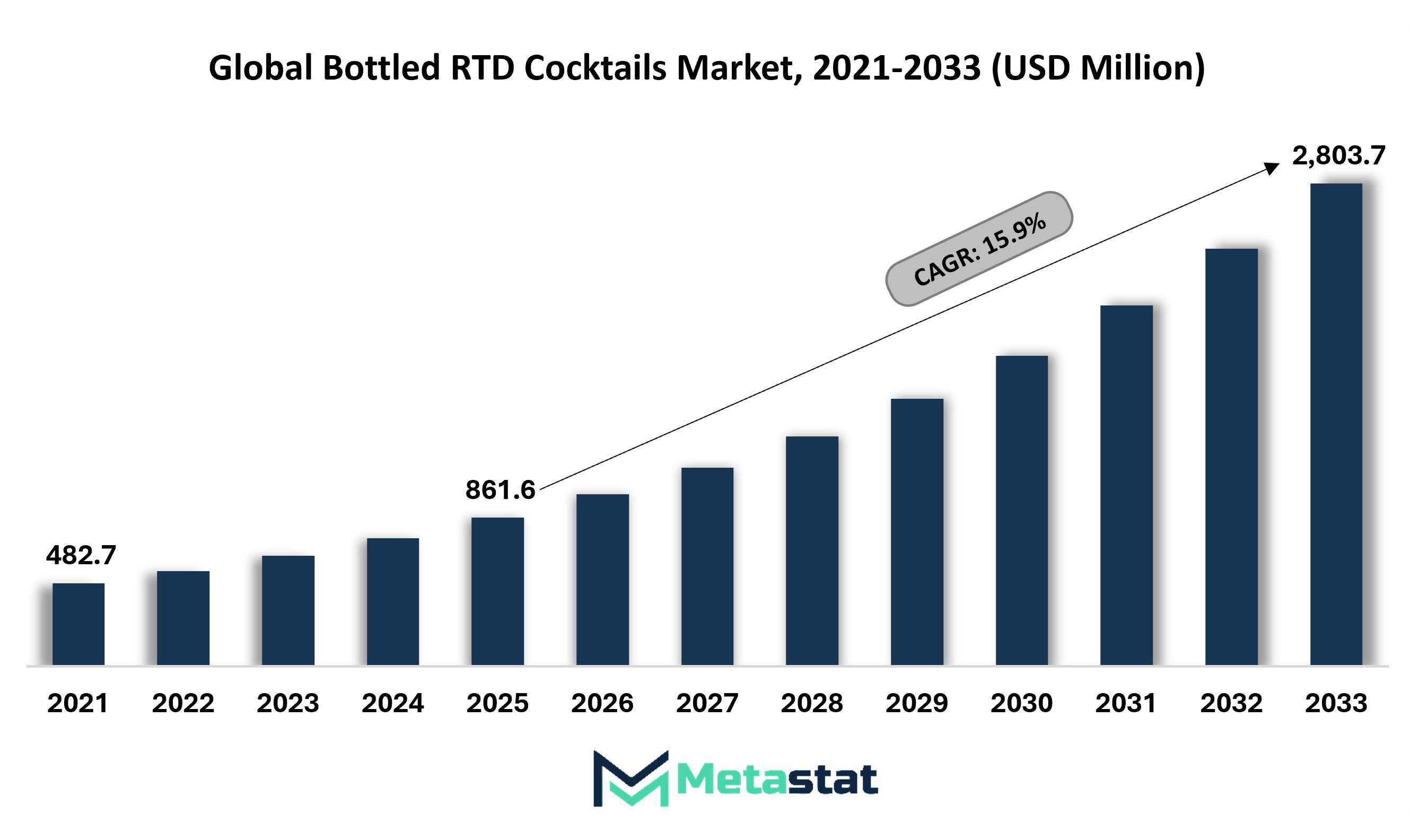
Increasing consumer preference for convenience and on-the-go alcoholic beverage options.
Urban schedules, travel routines, social mobility, and compact retail formats continue to shape beverage consumption patterns. Ready-to-drink bottled cocktails offer quick serving, portion control, consistent taste, and easy storage. Hospitality channels, airlines, events, and modern retail outlets support wider product placement, creating strong revenue momentum for the Global Bottled RTD Cocktails Market.
Premiumization trend driving demand for craft-style and high-quality pre-mixed cocktails
Consumer spending patterns increasingly favor refined taste, curated ingredients, and premium presentation. Botanical infusions, aged spirit blends, natural fruit extracts, and stylish packaging enhance category appeal. Limited editions, bartender-inspired recipes, and upscale branding create higher value perception, supporting stronger margins and long-term category expansion globally.
Stringent regulations and taxation policies governing alcoholic beverages across regions
Licensing norms, marketing limits, labeling mandates, distribution controls, and varying excise duties create operational pressure for manufacturers. Market entry timelines often extend through approval procedures and state-level alcohol regulations. Price sensitivity will rise when tax burdens increase, reducing competitiveness in selected territories and slowing expansion plans for manufacturers.
Limited shelf stability and flavor degradation concerns compared to freshly prepared cocktails
Product quality remains closely linked with storage temperature, packaging integrity, ingredient interaction, and transportation duration. Citrus notes, carbonation balance, and aroma freshness will weaken during extended shelf periods. Strong investment in preservation techniques, cold-chain systems, and packaging technologies remains vital for sustained consumer confidence.
Expansion of low-alcohol, organic, and innovative flavor variants targeting health-conscious and younger consumers
Wellness-driven buying behavior creates fresh space for lighter formulations and cleaner ingredient profiles. Organic bases, botanical blends, tropical fruits, spice fusions, and reduced-sugar recipes attract younger buyers seeking novelty. Functional positioning, stylish packaging, and seasonal launches can unlock premium demand across future retail channels.
The Global Bottled RTD Cocktails Market is segmented based on Type, Flavor, Distribution Channel, and Region.
Malt-based segment is valued at USD 352.8 million in 2026 and is projected to reach USD 842.8 million by 2033, at a CAGR of 13.2% during the forecast period.
Malt-based bottled RTD cocktails will register steady expansion owing to affordable pricing, balanced taste, and strong retail acceptance. Urban consumption supports repeat purchases during informal gatherings, seasonal events, and convenience-led drinking occasions. Product manufacturers will focus on low-sugar blends, premium packaging, and regional flavor additions to improve shelf movement and widen consumer reach.
Spirit-based segment is valued at USD 483.7 million in 2026 and is projected to reach USD 1,534.2 million by 2033, at a CAGR of 17.9% during the forecast period.
Spirit-based bottled RTD cocktails hold premium value owing to stronger flavor profiles, refined branding, and growing interest in bar-style experiences at home. Future growth will come from craft recipes, limited editions, and cleaner ingredient labels. Premium retail chains and digital platforms will support better visibility, stronger margins, and wider consumer conversion.
Wine-based segment is valued at USD 161.2 million in 2026 and is projected to reach USD 426.7 million by 2033, at a CAGR of 14.9% during the forecast period.
Wine-based bottled RTD cocktails attract consumers seeking lighter taste, stylish presentation, and moderate alcohol levels. Growth will be supported by social occasions, gifting demand, and brunch-oriented consumption. Future launches will include sparkling variants, botanical blends, and fruit-led combinations designed for premium hospitality channels and lifestyle retail spaces.
Fruit Flavors segment is projected to reach USD 1,328.1 million by 2033, at a CAGR of 15% during the forecast period.
Fruit flavors lead consumer preference owing to freshness, familiarity, and broad age-group appeal. Citrus, berry, mango, and tropical combinations will remain high-performing choices. Future demand will favor natural extracts, reduced sweetness, and seasonal variants. Attractive bottle design will further improve trial purchases across retail outlets.
Herbal Flavors segment is projected to reach USD 544.8 million by 2033, at a CAGR of 16.4% during the forecast period.
Herbal flavors are gaining momentum through wellness-linked perception and sophisticated flavor appeal. Mint, basil, rosemary, and ginger profiles create premium identity within modern beverage shelves. Future innovation will include botanical infusions and sugar-conscious recipes. Upscale retail outlets and curated online stores will support category acceptance.
Spiced Flavors segment is projected to reach USD 460.7 million by 2033, at a CAGR of 17.8% during the forecast period.
Spiced flavors offer bold profiles suited to festive demand and cooler-weather consumption. Cinnamon, clove, pepper, and blended spice profiles create memorable drinking experiences. Future growth will come from holiday launches, regional spice inspiration, and premium glass packaging targeted toward gifting and celebration demand.
Others segment is projected to reach USD 470.2 million by 2033, at a CAGR of 16.2% during the forecast period.
Other flavors include dessert-inspired, floral, fusion, and experimental combinations serving niche demand pockets. Innovation-oriented consumers often seek novelty and limited releases. Future development will depend on fast trend response, small-batch production, and influencer-led visibility across e-commerce platforms and premium retail counters.
Hypermarkets/Supermarkets segment is projected to reach USD 984.4 million by 2033.
Hypermarkets and supermarkets remain key sales channels owing to strong product visibility, wide assortment, and promotional pricing. High footfall supports impulse purchases during weekends and festive periods. Future growth will involve chilled display zones, bundled offers, and premium shelf placement that improve conversion rates across urban locations.
Online segment is projected to reach USD 828.2 million by 2033.
Online channel is expanding rapidly through convenience, doorstep delivery, and access to premium labels. Search filters, ratings, and curated bundles influence purchase decisions. Future momentum will rise with subscription models, faster logistics, age-verification systems, and festival campaigns designed for mobile-first consumers.
Liquor Stores segment is projected to reach USD 991.1 million by 2033.
Liquor stores retain strong relevance through expert guidance, immediate availability, and trusted local presence. Premium bottled selections often gain traction through informed staff recommendations. Future sales growth will stem from cold storage upgrades, tasting promotions, and local demand for convenient access to premium beverages.
Based on geography, the Global Bottled RTD Cocktails market is divided into North America, Europe, Asia-Pacific, South America, Middle East, and Africa.
In North America, Bottled RTD Cocktails market growth gains momentum from celebrity-backed brands, convenience-driven consumers, and broad flavor innovation across supermarkets, liquor stores, and online channels.
Europe Bottled RTD Cocktails Market will grow steadily owing to premiumization in alcoholic beverages, rising demand for convenient cocktail formats, and wider availability across supermarkets, liquor stores, online platforms, and travel retail channels.
Asia-Pacific provides significant opportunities for the Bottled RTD Cocktails Market through urban nightlife growth, rising disposable incomes, and premium beverage experimentation.
Across the Middle East, Africa, and South America, the Bottled RTD Cocktails Market is progressing through tourism growth, premium retail development, and changing social consumption patterns in urban centers.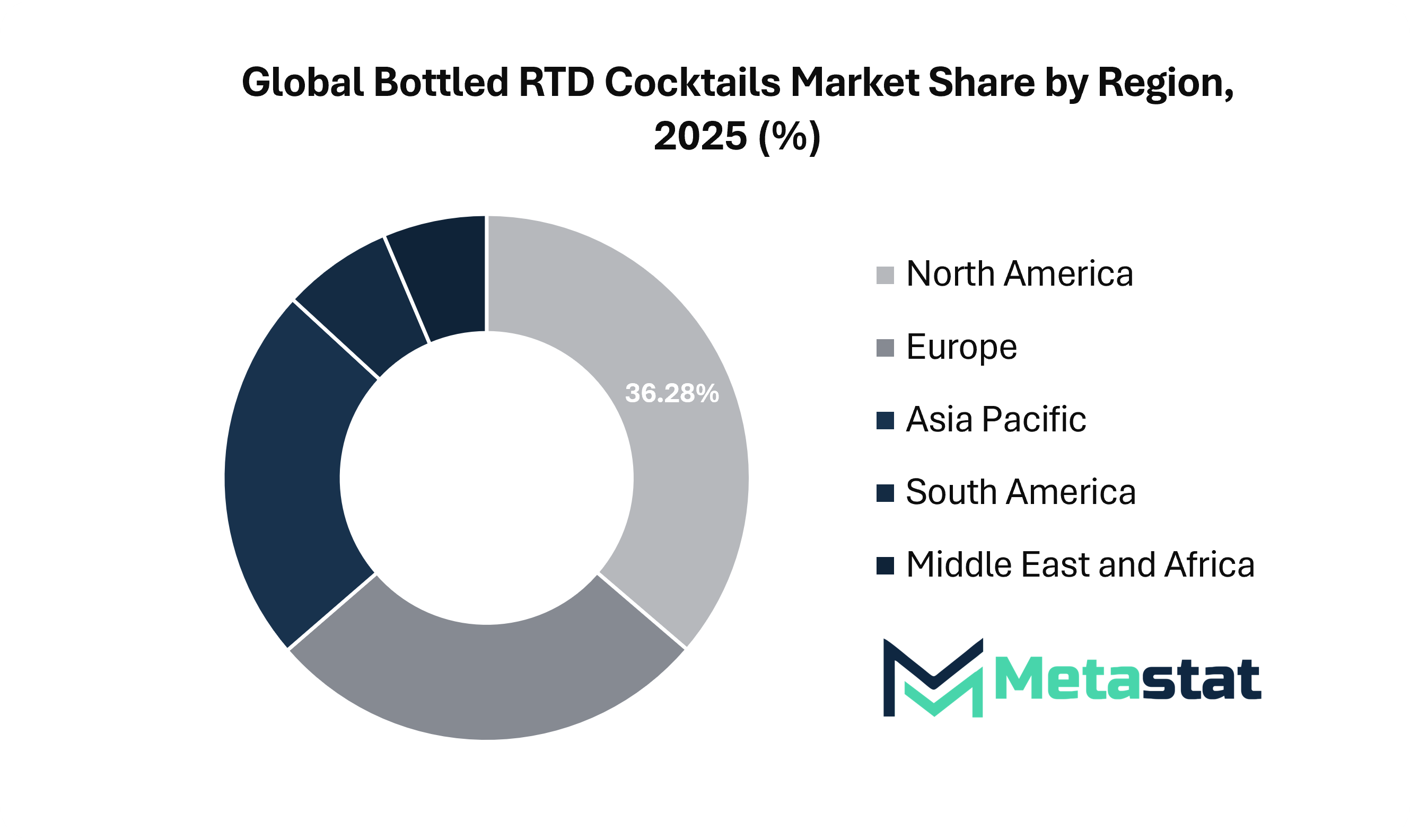
The Global Bottled RTD Cocktails Market is gaining consistent attention as consumers seek convenient alcoholic beverages with reliable taste, simple serving, and premium positioning. Busy lifestyles, home gatherings, social occasions, and interest in craft-style flavors are increasing category adoption across modern retail and liquor channels. Retailers are allocating greater shelf space to chilled bottled cocktails, supporting stronger visibility and repeat purchases. Packaging improvements, flavor stability, lower-sugar recipes, and seasonal blends will remain central to future demand, while growth will depend on pricing, brand trust, regulatory compliance, and the ability of companies to align with changing consumption behavior across income groups and age cohorts.
Leading companies are shaping competition through brand equity, distribution strength, pricing strategy, and product innovation. Diageo plc, Suntory Global Spirits Inc., Brown-Forman Corporation, Pernod Ricard SA, and Davide Campari-Milano N.V. use established spirit portfolios and premium labels to strengthen shelf presence. Anheuser-Busch InBev SA/NV and Mark Anthony Group of Companies benefit from wide retail and beverage distribution networks, while E. & J. Gallo Winery, Proximo Spirits, William Grant & Sons Ltd, Geloso Beverage Group, and Casa Komos Beverage Group continue to expand flavored and premium bottled cocktail offerings. Their scale supports faster launches across supermarkets, liquor stores, bars, online platforms, and travel retail channels.
Emerging and niche brands are also important as they introduce fresh concepts, distinctive flavors, and lifestyle-oriented positioning. Margaritaville Spirits, On The Rocks Premium Cocktails, The Long Drink Company, Via Carota Craft Cocktails, Bacardi Breezer, Jose Cuervo Authentic Margarita, Funkin Cocktails, Slow & Low Rock and Rye, Bols Cocktails, Smirnoff Ice, LIQS, Coppa Cocktails, Weekend Drinks, Thomas Ashbourne Craft Spirits, Miami Cocktail Company, and Pimentae Drinks appeal to consumers seeking novelty, convenience, premium presentation, and gifting-oriented formats. Online visibility, influencer-led campaigns, trial packs, and seasonal launches will support brand discovery in urban markets.
Looking ahead, success will depend on balanced pricing, clean labels, consistent supply chains, and strong product quality. Consumers evaluate sugar levels, alcohol strength, ingredient quality, flavor authenticity, and packaging before repeat purchase. Brands that adapt to local flavor preferences will build loyalty faster than companies using uniform formulations across markets. Glass bottles often signal premium quality, while lightweight packaging will support logistics efficiency. Promotional campaigns around festivals, sports events, and social occasions will support short-term demand. The category will continue to face taxation and regulatory constraints in several countries, although disciplined innovation and cautious expansion will sustain long-term growth momentum.
Market size is forecast to rise from USD 861.6 million in 2025 to over USD 2,803.7 million by 2033.
The Global Bottled RTD Cocktails Market is expected to increasingly integrate with premium spirits branding, low-calorie product lines, sustainable packaging, and digitally led consumer engagement. Regulatory adaptation, flavor stability, chilled distribution, and premium shelf positioning will shape long-term competitiveness in the category.
This research report categorizes the Bottled RTD Cocktails market based on key segments and regions, forecasts revenue growth, and analyses trends in each submarket. The report analyses the key growth drivers, opportunities, and challenges influencing the Bottled RTD Cocktails market. Recent market developments and competitive strategies such as expansion, product launch, partnership, merger, and acquisition have been included to draw the competitive landscape in the market.
The report strategically identifies and profiles the key market players and analyses their core competencies in each sub-segment of the Bottled RTD Cocktails market.
|
Report Attributes |
Details |
|
Study Period |
2021-2033 |
|
Base Year |
2025 |
|
Estimated Year |
2026 |
|
Forecast Period |
2026-2033 |
|
Historical Period |
2021-2025 |
|
Growth Rate |
CAGR 15.9% from 2026 to 2033 |
|
Revenue Unit |
USD million |
|
Sales Volume Unit |
Thousand Liters |
|
Segmentation |
By Type, Flavor, Distribution Channel and Region |
|
By Region |
North America (By Type, Flavor, Distribution Channel, and Country)
|
|
Europe (By Type, Flavor, Distribution Channel, and Country)
|
|
|
Asia Pacific (By Type, Flavor, Distribution Channel, and Country)
|
|
|
South America (By Type, Flavor, Distribution Channel, and Country)
|
|
|
Middle East and Africa (By Type, Flavor, Distribution Channel, and Country)
|
Find answers to common questions about this report
Top players operating in the Bottled RTD Cocktails industry include Diageo plc, Suntory Global Spirits Inc., Brown-Forman Corporation, Pernod Ricard SA, and Davide Campari-Milano N.V.
The Spirit-based is the leading type segment in the Global market.
Global Bottled RTD Cocktails market is estimated to reach USD 2,803.7 million by 2033.
Stringent regulations and taxation policies governing alcoholic beverages across regions will hamper the market growth within the forecast period.
North America region dominates the market.
Increasing consumer preference for convenience and on-the-go alcoholic beverage options and Premiumization trend driving demand for craft-style and high-quality pre-mixed cocktails are key driving factors, boosting the market.
The Metastat Insights analysis shows that the North America Bottled RTD Cocktails market size is estimated to be USD 888.3 million by 2033.
The Global Bottled RTD Cocktails market is expected to grow at a CAGR of 15.9% over the forecast period (2026-2033).
The Metastat Insights study shows that the Global Bottled RTD Cocktails market size was USD 861.6 million in 2025.
The analysts below cover Food and Beverages research at Metastat Insights.
LEAD ANALYST
Utkarsh Khirodkar is a Lead Market Research Analyst at MetaStat Insight, specializing in market intelligence, technology sector assessments, and competitive strategy.

LEAD PRINCIPAL ANALYST, PHARMA AND HEALTHCARE
Food and Beverages · Healthcare · Healthcare IT · Medical Devices
Ajay Devgire is the Lead Healthcare Analyst at MetaStat Insight, leading strategic research and market intelligence initiatives across the global healthcare domain.

SENIOR RESEARCH ANALYST
Biotechnology · Food and Beverages · Medical Devices · Packaging
Snehal Pasalkar is a Research Analyst at MetaStat Insight, operating at the intersection of life sciences research, competitive strategy, and market intelligence.
Most industry reports on warehouse automation bundle autonomous mobile robots and fixed conveyor installations into the same top-level numbers, which complicates advisory work. This study split the market cleanly by payload tiers, navigation technology, and fleet management software layers. The regional forecast for Western Europe gave our team defensible adoption benchmarks when evaluating capital allocation for logistics clients, saving us days of secondary data scrubbing.
Analyzing the transition from natural gas to green hydrogen in iron ore reduction requires realistic infrastructure timelines. Meta stat insight supplied a detailed regional assessment of DRI plant conversion costs and scrap metal availability in North America and Western Europe. Their report carefully examined pellet quality specs and electrical grid access constraints without making oversimplified market assumptions. The research material served as a practical reference during internal technology roadmap discussions.
Integrating zero-trust access controls across legacy electronic health record systems involves complex compliance overhead. Team produced an analysis that clearly separated identity governance and administration tools from privileged access management platforms. Their evaluation of HIPAA and GDPR compliance features across cloud native solutions gave our architecture group clear baseline criteria. The custom data request regarding biometric authentication adoption in hospital networks was returned promptly with clear documentation.
Explore related market intelligence reports worth reading alongside this one.