
LEAD ANALYST
Utkarsh Khirodkar is a Lead Market Research Analyst at MetaStat Insight, specializing in market intelligence, technology sector assessments, and competitive strategy.

Global Alcohol Interlock Systems Market Size, Share, By Type (Breath-Based Interlock Systems, Camera-Integrated Interlock Systems, Wireless Interlock Systems, and OEM-Integrated Interlock Systems), By Technology (Fuel Cell Technology, Semiconductor Technology, and Infrared Technology), By Application (Alcohol Monitoring in Vehicles, Workplace Safety Programs, Rehabilitation, and Medical Treatment ), By End-User (Individual Users, Government, Law Enforcement, Fleet Operators, and Commercial Vehicle Owners), Industry Analysis, Growth, Trends, and Forecast, 2026-2033
Report ID
MSI-4781
Published
May, 2026
Pages
312 Pages
Format
Report Details
Choose Your License
Alcohol Interlock Systems Market
Global Alcohol Interlock Systems market size is valued at USD 1,405.7 million in 2025 and projected to grow at a CAGR of 9.2% during the forecast period, reaching USD 2,840.7 million by 2033.
North America holds 47.4% market share in 2025, with the U.S. leading the regional market.
Breath-Based Interlock Systems segment accounts for a market share of 70.9% in 2025.
Key trends driving growth: Stricter court-mandated offender interlock requirements across major jurisdictions, along with expanding fleet safety deployment in trucks, buses, school transport, and employer-managed vehicle programs.
Opportunities include telematics-connected and data-reporting interlocks for commercial fleets, insurers, and real-time compliance monitoring.
Key insight: The Global Alcohol Interlock Systems market is gaining momentum owing to regulatory enforcement, road safety priorities, sensor innovation, and digital compliance ecosystems.
The Global Alcohol Interlock Systems Market is developing into an important component of road safety infrastructure. Governments, insurers, transport operators, and fleet managers are increasingly adopting preventive technologies to reduce impaired driving risks. Alcohol interlock systems now integrate breath analysis, tamper alerts, GPS tracking, and data reporting to strengthen driver accountability and compliance monitoring.
Over the coming years, product development will move toward compact hardware, faster calibration cycles, mobile app connectivity, and cloud-based monitoring. Adoption will expand beyond offender programs into corporate fleets, school transport, logistics vehicles, and voluntary consumer safety installations.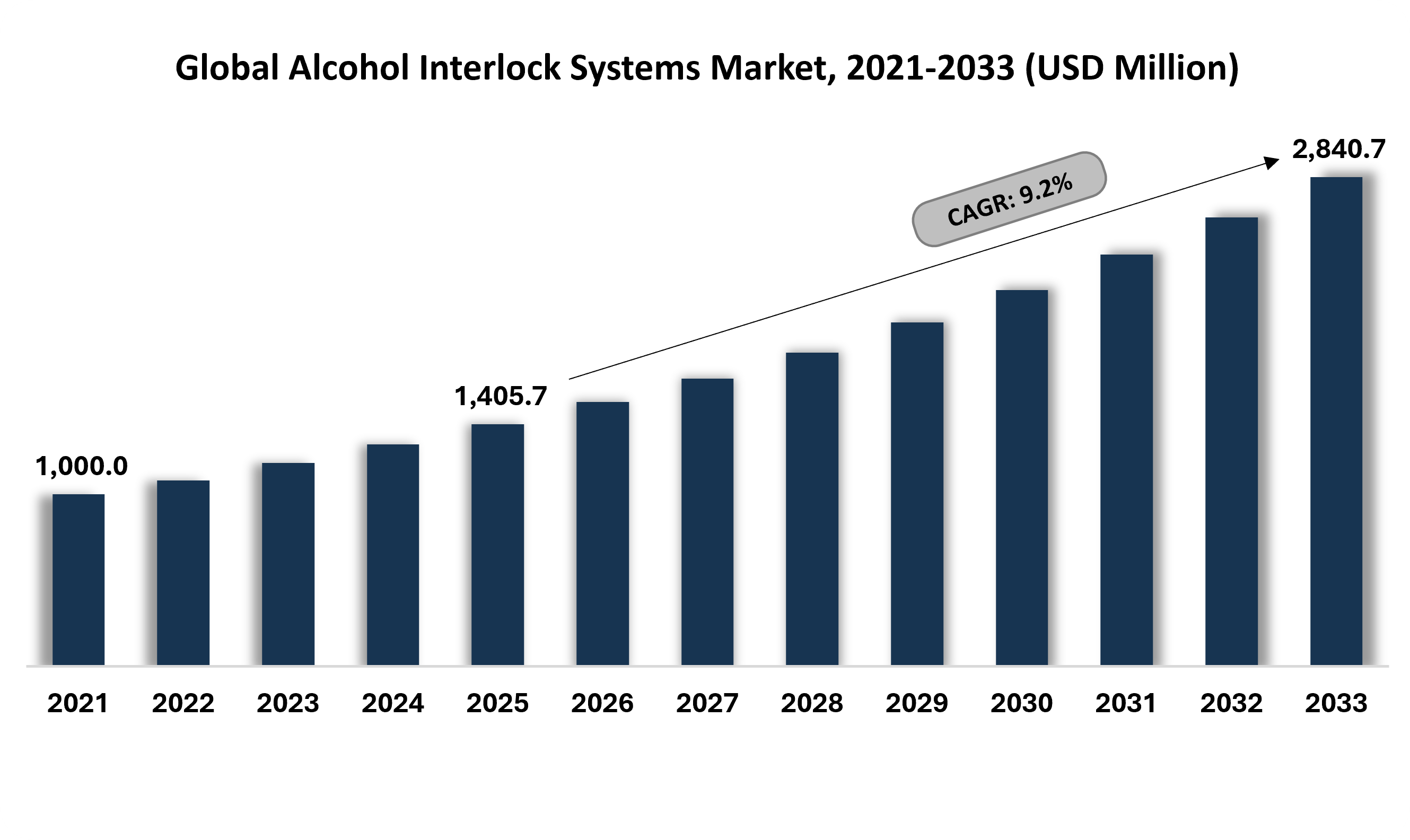
Stricter court-mandated offender interlock requirements across major jurisdictions are strengthening alcohol interlock system adoption.
Broader sentencing mandates across national and local legal systems will increase demand for certified alcohol interlock devices. Higher enforcement intensity, faster case processing, and stronger road safety campaigns will support wider program enrollment. Vendor revenue gains will arise from monitoring contracts, scheduled servicing, software upgrades, and long-term compliance administration.
Expanding fleet safety deployment in trucks, buses, school transport, and employer-managed vehicle programs.
Commercial transport operators will adopt preventive safety tools to reduce collision exposure, legal penalties, and insurance pressure. School transport networks, logistics companies, and managed vehicle fleets will integrate ignition control devices within safety policy frameworks. Procurement growth will support hardware sales, maintenance plans, and analytics subscriptions.
High recurring installation, calibration, servicing, and program participation costs.
Repeated service fees, recalibration charges, inspection visits, and program enrollment costs will slow adoption among cost-sensitive customers. Budget pressure will reduce renewal rates across small fleets and individual users. Limited affordability will lead to delayed installations, lower retention, and weaker expansion across cost-conscious developing markets.
Program-management complexity, tamper prevention requirements, and uneven compliance rules across states and countries.
Administrative burdens related to certification requirements, reporting deadlines, and varied legal procedures will create operational friction. Tamper detection improvements require continued investment in sensors and software. Different national regulations will slow cross-border scaling, complicate training requirements, and increase documentation costs for suppliers.
Telematics-connected and data-reporting interlocks for commercial fleets, insurers, and real-time compliance monitoring.
Connected systems will create strong value through live alerts, route-linked safety data, and automated compliance logs. Fleet managers will use dashboards for risk management, driver screening, and maintenance planning. Insurers will reward proven safe driving behavior through pricing advantages, supporting premium partnerships and recurring data revenue.
The Global Alcohol Interlock Systems market is classified based on Type, Technology, Application, and End-User.
Breath-Based Interlock Systems segment is valued at USD 1,087.7 million in 2026 and is projected to reach USD 1,816.0 million by 2033, at a CAGR of 7.6% during the forecast period.
Breath-based interlock systems will remain central to the market owing to direct alcohol detection before engine start. Fast response time, compact design, and regulatory acceptance will support wider adoption. Vehicle safety programs, repeat-offense prevention plans, and smart calibration services will create strong demand across passenger and commercial transport segments.
Camera-Integrated Interlock Systems segment is valued at USD 227.7 million in 2026 and is projected to reach USD 504.2 million by 2033, at a CAGR of 12% during the forecast period.
Camera-integrated interlock systems will gain momentum through identity verification during breath testing. Facial capture data, tamper-prevention features, and audit-ready information logs will strengthen compliance value. Courts, fleet managers, and insurers will favour systems offering stronger accountability through digital evidence storage and remote review options.
Wireless Interlock Systems segment is valued at USD 136.1 million in 2026 and is projected to reach USD 356.8 million by 2033, at a CAGR of 14.8% during the forecast period.
Wireless interlock systems will expand through mobile connectivity and cloud supervision. Real-time alerts, remote lockout commands, maintenance scheduling, and immediate violation reporting will enhance operational control. Large fleets and rehabilitation programs will prefer connected systems owing to lower manual oversight requirements and faster administrative handling.
OEM-Integrated Interlock Systems segment is valued at USD 81.9 million in 2026 and is projected to reach USD 163.6 million by 2033, at a CAGR of 10.4% during the forecast period.
OEM-integrated interlock systems will rise with increased focus on factory-fitted vehicle safety technology. Seamless dashboard integration, cleaner wiring architecture, and enhanced reliability will appeal to automakers. Premium models, public transport vehicles, and safety-led commercial vehicles will support long-term growth through standardized manufacturing partnerships.
Fuel Cell Technology segment is projected to reach USD 2,107.5 million by 2033, at a CAGR of 9.9% during the forecast period.
Fuel cell technology will lead premium demand owing to strong accuracy in alcohol sensing. Stable performance, low false readings, and dependable long-cycle operation will support regulatory trust. Courts, transport agencies, and fleet operators will continue selecting fuel cell units for critical compliance programs.
Semiconductor Technology segment is projected to reach USD 501.1 million by 2033, at a CAGR of 6.5% during the forecast period.
Semiconductor technology will hold value in cost-sensitive segments seeking affordable protection systems. Compact hardware, easy installation, and budget-friendly pricing will encourage use in entry-level vehicles and small fleets. Performance upgrades and sensor refinement will improve acceptance across emerging economies with rising road safety focus.
Infrared Technology segment is projected to reach USD 232.1 million by 2033, at a CAGR of 9.4% during the forecast period.
Infrared technology will attract specialized demand where contact-free detection and advanced measurement quality carry importance. Scientific precision, rapid scanning, and lower contamination risk will benefit institutional programs. Medical centers, rehabilitation facilities, and controlled transport hubs will create selective yet stable future opportunities.
Alcohol Monitoring in Vehicles segment is projected to reach USD 2,218.3 million by 2033.
Alcohol monitoring in vehicles will remain the largest application owing to road safety enforcement and accident reduction goals. Pre-drive screening, repeat testing during travel, and data logging will support policy execution. Public transport, school buses, taxis, and logistics vehicles will sustain strong installations.
Workplace Safety Programs segment is projected to reach USD 336.9 million by 2033.
Workplace safety programs will adopt interlock systems in mining, construction, warehousing, and heavy equipment operations. Employer focus on incident prevention, insurance savings, and productivity continuity will raise demand. Shift-start screening systems linked with access control platforms will become common across high-risk worksites.
Rehabilitation & Medical Treatment segment is projected to reach USD 285.5 million by 2033.
Rehabilitation and medical treatment programs will use interlock systems for behaviourr monitoring and recovery discipline. Verified sobriety records, progress tracking, and scheduled reporting will support counselors and courts. Treatment centers will value measurable compliance tools during structured recovery periods and supervised mobility access.
Individual Users segment is projected to grow at a CAGR of 7.9% during the forecast period.
Individual users will represent demand driven by license reinstatement rules and personal safety goals. Easy financing plans, compact devices, and service center availability will influence purchasing decisions. Smartphone-linked reminders, maintenance alerts, and simple reporting dashboards will improve user experience across private vehicle ownership.
Government & Law Enforcement segment is projected to grow at a CAGR of 9.8% during the forecast period.
Government & Law Enforcement bodies will remain major buyers through court mandates and impaired-driving control programs. Evidence records, tamper alerts, and centralized monitoring portals will support enforcement efficiency. National safety campaigns and stricter penalties will expand procurement budgets across multiple regions.
Fleet Operators segment is projected to grow at a CAGR of 11.8% during the forecast period.
Fleet operators will invest in interlock systems to reduce accident exposure, cargo delays, and liability costs. Connected dashboards, route-linked alerts, and driver compliance records will improve management control. Logistics, passenger mobility, and industrial transport fleets will prioritize dependable safety technology integration.
Commercial Vehicle Owners segment is projected to grow at a CAGR of 11.3% during the forecast period.
Commercial vehicle owners will adopt interlock systems to protect licenses, contracts, and brand reputation. Preventive safety measures often improve tender eligibility and insurance negotiations. Bus owners, truck owners, and rental vehicle businesses will seek durable units with low downtime and quick servicing support.
Based on geography, the Global Alcohol Interlock Systems market is divided into North America, Europe, Asia-Pacific, South America, Middle East, and Africa.
North America leads the Alcohol Interlock Systems Market through mature enforcement programs, broad state-level mandates, and established service networks.
In North America, market growth gains momentum from insurance partnerships, fleet safety improvements, and stronger road safety compliance standards.
Europe will remain an important market for Alcohol Interlock Systems owing to stronger road safety regulation, drink-driving prevention programs, and growing integration of alcohol interlock installation readiness in vehicles.
Asia-Pacific offers significant opportunities for the Alcohol Interlock Systems Market through rising traffic safety awareness and growing commercial vehicle demand across emerging economies.
Within Asia-Pacific, adoption is supported through pilot programs, urban mobility safety initiatives, and regulatory modernization.
Across the Middle East, Africa, and South America, the Alcohol Interlock Systems Market is progressing through gradual policy development, commercial fleet modernization, and increased focus on accident prevention.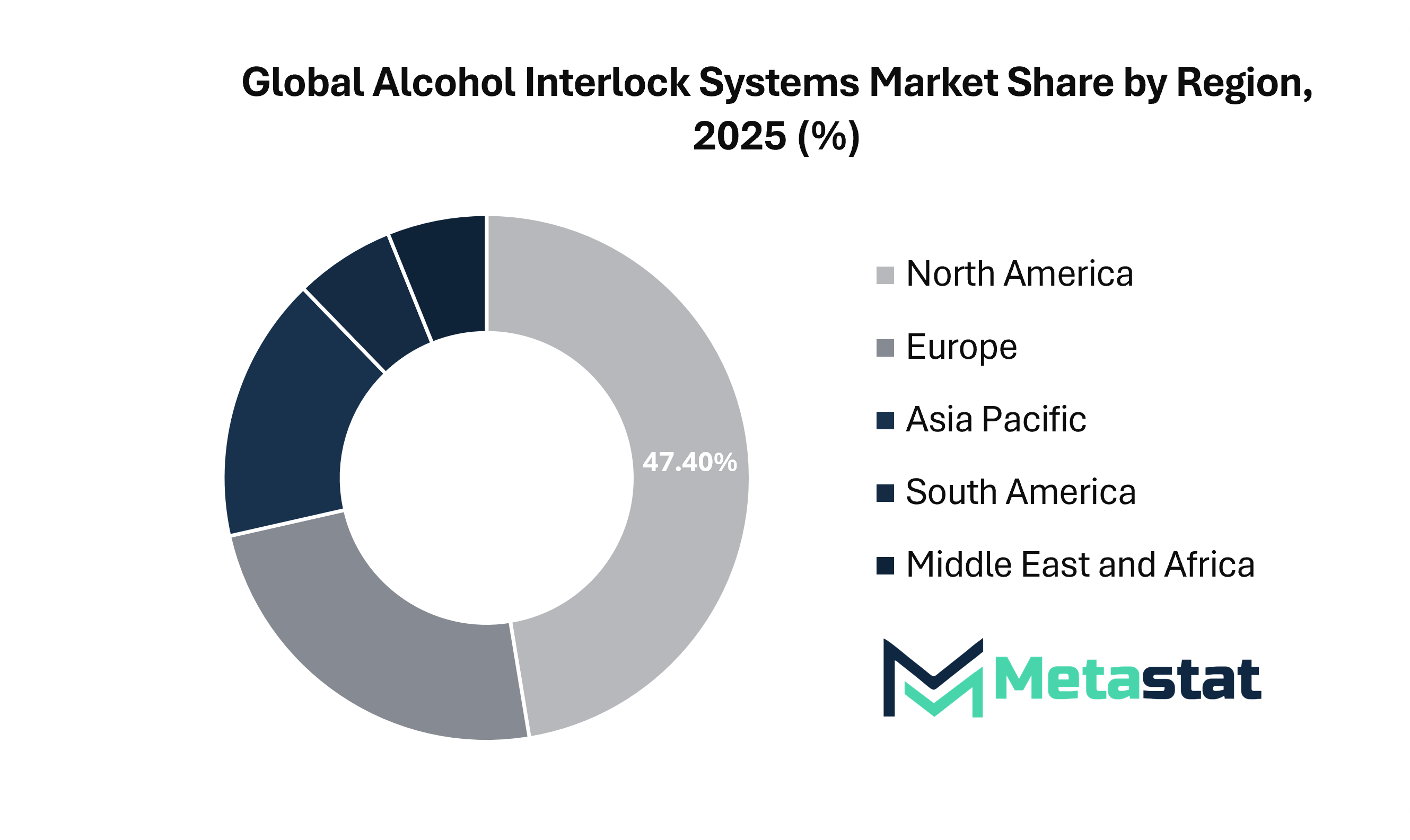
The Global Alcohol Interlock Systems Market continues to gain attention as road safety regulations strengthen across many countries. These devices require drivers to provide a breath sample before vehicle ignition, helping reduce repeat drunk-driving incidents. Adoption will rise where courts, transport companies, and households seek safer mobility options. Buyers also prioritize easy servicing, quick calibration, and clear data reporting. Growth is supported by awareness campaigns and stronger checks on unsafe driving behavior. Public trust will increase when systems work quickly, remain accurate, and fit different vehicle types without major modifications or added downtime.
Key providers include Intoxalock, Consumer Safety Technology, LLC, Smart Start, Inc., A LifeSafer, Inc., and Guardian Interlock Systems. Their service networks remain important as installation reach and service speed strongly influence customer preference. Monitech Ignition Interlock Systems, QuickStart Ignition Interlock, Alcohol Countermeasure Systems Corp., and ALCOLOCK USA also hold visible positions in the market. Many consumers compare monthly costs, service quality, and reporting tools before signing agreements. Some companies focus on court-mandated programs, while others target fleet safety requirements. Strong partnerships with dealers and technicians help brands keep devices active, maintained, compliant, and trusted by users nationwide.
Technology upgrades will shape future market adoption. Modern devices can store test results, send alerts, and support remote scheduling for service visits. Better sensors reduce false readings and improve user confidence. Drägerwerk AG & Co. KGaA, Lion Laboratories, and Autosense International Inc. are known for measurement expertise that can support wider technology progress. Software updates also help agencies review data faster and manage cases with less delay. Producers that keep interfaces simple, documentation clear, and service support responsive will likely earn repeat orders from partners that value smooth daily operations and reliable long-term data.
Other companies active in the market include CST Holding (Mindr), ADS Interlock, RoadGuard Interlock, LLC, A&A Interlock, LLC, Alcobrake, Sens-O-Lock of America, LLC, Shark Unlock Interlock Inc., SkyFine USA, LLC, Budget IID, and Wisconsin Ignition Interlock. Competition will remain strong as buyers seek transparent pricing and dependable post-installation support. Firms that train staff effectively and resolve issues quickly can build lasting trust. Over the next few years, adoption will expand where laws tighten and prevention programs receive consistent support from public authorities and insurers.
Market size is forecast to rise from USD 1,405.7 million in 2025 to over USD 2,840.7 million by 2033.
The Global Alcohol Interlock Systems Market is expected to expand into broader preventive mobility use cases beyond court mandates. Corporate transport policies connected fleet ecosystems, and insurer-backed incentive programs will create new demand channels.
By End-User:
Key Global Alcohol Interlock Systems Industry Players
This research report categorizes the Alcohol Interlock Systems market based on key segments and regions, forecasts revenue growth, and analyses trends in each submarket. The report analyses the key growth drivers, opportunities, and challenges influencing the Alcohol Interlock Systems market. Recent market developments and competitive strategies such as expansion, product launch, partnership, merger, and acquisition have been included to draw the competitive landscape in the market.
The report strategically identifies and profiles the key market players and analyses their core competencies in each sub-segment of the Alcohol Interlock Systems market.
|
Report Attributes |
Details |
|
Study Period |
2021-2033 |
|
Base Year |
2025 |
|
Estimated Year |
2026 |
|
Forecast Period |
2026-2033 |
|
Historical Period |
2021-2025 |
|
Growth Rate |
CAGR 9.2% from 2026 to 2033 |
|
Revenue Unit |
USD million |
|
Sales Volume Unit |
Thousand Units |
|
Segmentation |
By Type, Technology, Application, End-User, and Region |
|
By Region |
North America (By Type, Technology, Application, End-User, and Country)
|
|
Europe (By Type, Technology, Application, End-User, and Country)
|
|
|
Asia Pacific (By Type, Technology, Application, End-User, and Country)
|
|
|
South America (By Type, Technology, Application, End-User, and Country)
|
|
|
Middle East and Africa (By Type, Technology, Application, End-User, and Country)
|
Find answers to common questions about this report
Top players operating in the Alcohol Interlock Systems industry includes Intoxalock, Consumer Safety Technology, LLC, CST Holding (Mindr), Smart Start, Inc., and A LifeSafer, Inc.
Global Alcohol Interlock Systems market is estimated to reach USD 2,840.7 million by 2033.
High recurring installation, calibration, servicing, and program participation costs. will hamper the market growth within the forecast period.
North America region dominates the market.
Stricter court-mandated offender interlock requirements across major jurisdictions and expanding fleet safety deployment in trucks, buses, school transport, and employer-managed vehicle programs. are key driving factors, boosting the market.
The Breath-Based Interlock Systems is the leading type of segment in the Global market.
The Global Alcohol Interlock Systems market is expected to grow at a CAGR of 9.2% over the forecast period (2026-2033).
The Metastat Insights analysis shows that the North America Alcohol Interlock Systems market size is estimated to be USD 1,290.8 million by 2033.
The Metastat Insights study shows that the Global Alcohol Interlock Systems market size was USD 1,405.7 million in 2025.
The analysts below cover Automotive and Transportation research at Metastat Insights.
LEAD ANALYST
Utkarsh Khirodkar is a Lead Market Research Analyst at MetaStat Insight, specializing in market intelligence, technology sector assessments, and competitive strategy.

ENERGY & INFRASTRUCTURE INDUSTRY CONSULTANT
Automotive and Transportation · Electronics and Semiconductor · Energy and Power · Machinery & Equipment
Saurabh Vasant Ganvir consults for Energy & Infrastructure Industry at MetaStat Insight, specializing in renewable energy, solar EPC, and electric vehicle (EV) infrastructure markets.
Integrating zero-trust access controls across legacy electronic health record systems involves complex compliance overhead. Team produced an analysis that clearly separated identity governance and administration tools from privileged access management platforms. Their evaluation of HIPAA and GDPR compliance features across cloud native solutions gave our architecture group clear baseline criteria. The custom data request regarding biometric authentication adoption in hospital networks was returned promptly with clear documentation.
Evaluating calorific value requirements and air permit compliance across municipal waste facilities requires localized data. Metastat Insight structured their analysis around operational throughput capacity and feedstock composition variations in Latin America and Eastern Europe. Their competitive mapping of sorting equipment vendors helped clarify technology differences between optical separators and heavy media systems. The study provided an objective baseline during our capital expenditure reviews.
Decarbonizing industrial thermal processes hinges on refrigerant regulations and compressor efficiency limits. Metastat Insights delivered a thorough market analysis that evaluated natural refrigerants like CO2 and hydrocarbons against synthetic low-GWP alternatives. The breakdown of utility incentives and grid capacity constraints across key European manufacturing hubs offered valuable perspective. The follow-up conversation with their sector analysts addressed our specific questions on mechanical vapor recompression systems efficiently.
Explore related market intelligence reports worth reading alongside this one.
Starting from
$2950