
LEAD ANALYST
Utkarsh Khirodkar is a Lead Market Research Analyst at MetaStat Insight, specializing in market intelligence, technology sector assessments, and competitive strategy.

Semiconductor Gas Delivery Cabinet Market Size, Share, By Type (Fully automatic, Semi-automatic, and Manual), By Application (Deposition, Etching, Photolithography, Ion Implantation, Doping, and Others), Industry Analysis, Growth, Trends, and Forecast, 2026-2033
Report ID
MSI-4775
Published
May, 2026
Pages
314 Pages
Format
Report Details
Choose Your License
Semiconductor Gas Delivery Cabinet Market
Global Semiconductor Gas Delivery Cabinet market size is valued at USD 1,308.2 million in 2025 and projected to grow at a CAGR of 8.1% during the forecast period, reaching USD 2,446.2 million by 2033.
North America holds 28.2% in 2025 with US leading the market share in 2025.
Fully-automatic segment account for a market share of 63.65% in 2025.
Key trends driving growth: Rising global semiconductor fab investments are accelerating demand for precision gas handling equipment and increasing adoption of AI, EVs, and 5G technologies is driving semiconductor production capacity expansion.
Opportunities include emerging semiconductor manufacturing hubs in India and Southeast Asia are creating new equipment demand and smart gas cabinets integrated with AI monitoring and predictive maintenance offer strong future growth potential.
Key insight: Advanced-node semiconductor manufaturing is increasing demand for automated gas delivery cabinets with ultra-high purity control and enhanced safety systems.
The Global Semiconductor Gas Delivery Cabinet Market is witnessing strong momentum, supported by rapid expansion of semiconductor fabrication facilities across developed and emerging economies. Gas delivery cabinets play a critical role in semiconductor manufacturing by controlling, storing, and distributing high-purity specialty gases used across etching, deposition, lithography, and wafer processing operations. The transition toward advanced semiconductor nodes, including 5nm, 3nm, and sub-3nm technologies, has increased the need for ultra-clean and contamination-free gas handling systems. Semiconductor manufacturers are investing heavily in automated gas cabinets equipped with leak detection systems, real-time monitoring, emergency shutoff mechanisms, and IoT-enabled controls to improve operational safety and production efficiency.
The market is also benefiting from stringent environmental and workplace safety regulations surrounding hazardous gas handling within semiconductor fabrication plants. Governments and industry bodies are enforcing stronger compliance requirements related to toxic gas containment, emission control, and cleanroom safety, encouraging semiconductor companies to replace legacy systems with technologically advanced automated cabinets. Asia Pacific remains the leading regional market owing to aggressive semiconductor investments in China, Taiwan, South Korea, and Japan, while North America and Europe are strengthening domestic semiconductor manufacturing capabilities through large-scale policy support and localization initiatives.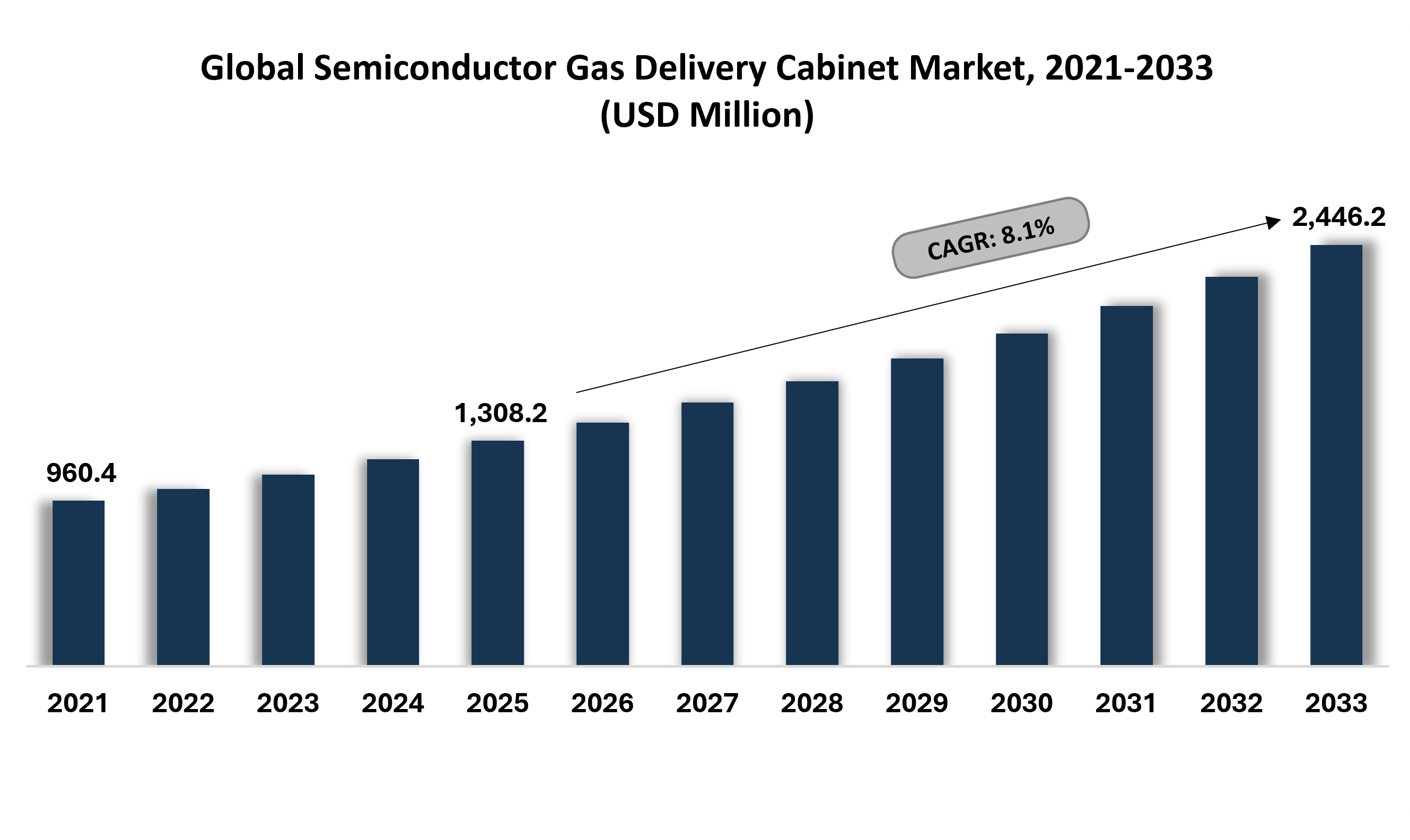
Rising global semiconductor fab investments are accelerating demand for precision gas handling equipment.
Large-scale semiconductor fabrication investments across North America, Asia Pacific, and Europe are strengthening demand for advanced gas handling infrastructure in the semiconductor gas delivery cabinet market. Expansion projects focused on next-generation chip production require controlled gas distribution systems to maintain stable production performance. Future fabrication facilities will prioritize automated gas delivery cabinets with advanced monitoring capabilities, leak prevention systems, and contamination control features. Continuous investment in advanced wafer manufacturing plants is supporting long-term equipment procurement across integrated semiconductor manufacturing environments.
Increasing adoption of AI, EVs, and 5G technologies is driving semiconductor production capacity expansion.
Rapid deployment of artificial intelligence applications, electric vehicle electronics, and 5G communication networks is increasing semiconductor production output across multiple regions. Increasing chip complexity is creating stronger demand for reliable gas delivery systems capable of supporting precision fabrication processes. Future semiconductor production lines will adopt highly efficient cabinet systems designed for safe handling of specialty gases under demanding operating conditions. Strong consumption trends linked with data centers, autonomous mobility, and connected infrastructure are encouraging wider expansion within the semiconductor gas delivery cabinet market.
High installation and certification costs create adoption barriers for small and mid-sized fabs.
Significant installation costs associated with advanced gas delivery cabinets are limiting adoption among small and medium-sized semiconductor fabrication facilities. Regulatory certification requirements, safety compliance procedures, and specialized infrastructure development increase overall investment burden for emerging manufacturers. Budget limitations often delay modernization plans across developing production units. Future market penetration will face slower progress among cost-sensitive semiconductor companies seeking operational upgrades without substantial capital allocation. Financial pressure linked with maintenance and technical validation continues to restrict purchasing flexibility across smaller fabrication environments.
Complex integration with older semiconductor facilities increases operational challenges.
Aging semiconductor manufacturing facilities often face difficulties during integration of advanced gas delivery cabinet systems owing to outdated plant configurations and limited automation compatibility. Retrofitting projects require substantial engineering modifications, system interruptions, and safety assessments, increasing operational complexity for facility operators. Future modernization efforts will require stronger technical consultation to ensure smooth deployment within legacy fabrication units. Compatibility issues linked with older gas distribution infrastructure are creating additional challenges for production continuity, equipment calibration, and system synchronization across established semiconductor plants.
Emerging semiconductor manufacturing hubs in India and Southeast Asia are creating new equipment demand.
Expanding semiconductor manufacturing activities across India, Vietnam, Malaysia, Singapore, and Thailand are creating strong opportunities in the semiconductor gas delivery cabinet market. Government-backed incentives, foreign direct investment programs, and regional supply chain diversification are encouraging the development of new fabrication facilities across emerging economies. Future business expansion will increase procurement of advanced gas handling solutions designed for high-volume semiconductor manufacturing. Growing regional focus on domestic chip production capabilities is supporting long-term demand for reliable, safety-focused gas delivery cabinet technologies across Southeast Asian semiconductor ecosystems.
The Global Semiconductor Gas Delivery Cabinet Market is classified based on Type, Application, and Region.
Fully-automatic segment is valued at USD 903.5 million in 2026 and is projected to reach USD 1,591.9 million by 2033, at a CAGR of 8.4% during the forecast period.
Fully Automatic systems continue gaining strong preference across advanced semiconductor facilities owing to precision control, reduced contamination risks, and stable gas flow management. Growing adoption of smart manufacturing practices supports higher installation rates. Future production environments will rely heavily on automated monitoring capabilities, predictive maintenance systems, and integrated safety mechanisms for uninterrupted semiconductor fabrication operations.
Semi-automatic segment is valued at USD 413.9 million in 2026 and is projected to reach USD 700.1 million by 2033, at a CAGR of 7.8% during the forecast period.
Semi-Automatic solutions remain important among mid-sized manufacturing facilities seeking balanced operational efficiency with moderate investment requirements. Flexible handling capabilities support multiple manufacturing environments without extensive infrastructure upgrades. Future market demand will rise from expanding semiconductor production activities in developing economies where gradual automation adoption continues influencing industrial purchasing decisions across fabrication units.
Manual segment is valued at USD 98.0 million in 2026 and is projected to reach USD 154.2 million by 2033, at a CAGR of 6.7% during the forecast period.
Manual gas delivery cabinets maintain demand across smaller production facilities, research laboratories, and limited-scale semiconductor processing environments. Lower installation costs support continued usage among budget-conscious operators managing controlled production volumes. Future applications will remain concentrated across training facilities, pilot production setups, and specialized semiconductor projects requiring simplified operational control systems for safe gas handling.
Deposition segment is projected to reach USD 997.1 million by 2033, at a CAGR of 8.4% during the forecast period.
Deposition processes generate significant demand for advanced gas delivery cabinet systems owing to increasing semiconductor complexity and thinner material layer requirements. Reliable gas distribution supports improved wafer quality and stable manufacturing output. Future semiconductor innovations involving smaller chip architectures will encourage stronger investment in highly controlled gas handling infrastructure across deposition facilities worldwide.
Etching segment is projected to reach USD 348.7 million by 2033, at a CAGR of 7.9% during the forecast period.
Etching applications require accurate gas management to maintain circuit precision and limit production defects during semiconductor fabrication processes. Expanding demand for compact electronic devices strengthens operational requirements across etching environments. Future semiconductor manufacturing trends involving advanced node technologies will increase dependency on sophisticated gas delivery cabinet solutions that support cleaner and safer processing conditions globally.
Photolithography segment is projected to reach USD 535.3 million by 2033, at a CAGR of 8.6% during the forecast period.
Photolithography operations rely on stable gas flow systems to maintain manufacturing consistency during complex semiconductor patterning processes. Rising investments in high-performance computing, artificial intelligence hardware, and memory chip manufacturing contribute to growing installation requirements. Future advancements in semiconductor miniaturization will create stronger demand for highly reliable gas delivery cabinet systems supporting precision manufacturing standards.
Ion Implantation segment is projected to reach USD 293.9 million by 2033, at a CAGR of 7.8% during the forecast period.
Ion implantation applications rely heavily on controlled gas environments to maintain semiconductor material performance and electrical functionality. Increasing production of advanced processors and automotive semiconductor components supports broader deployment across fabrication facilities. Future industrial expansion involving electric vehicles, automation systems, and connected devices will strengthen long-term demand for efficient gas delivery cabinet technologies worldwide.
Doping segment is projected to reach USD 190.3 million by 2033, at a CAGR of 7.4% during the forecast period.
Doping processes require consistent gas handling performance to achieve accurate semiconductor conductivity levels across production stages. Growing development of next-generation chips and advanced electronic products contributes to rising operational requirements. Future semiconductor fabrication techniques focused on improved processing performance and enhanced component reliability will support wider adoption of technologically upgraded gas delivery cabinet systems across production environments.
Others segment is projected to reach USD 80.9 million by 2033, at a CAGR of 6.5% during the forecast period.
Additional semiconductor production applications continue creating opportunities for gas delivery cabinet adoption across testing, packaging, and specialized fabrication processes. Expanding industrial research activities support increasing usage across experimental semiconductor development initiatives. Future technological diversification involving quantum computing, advanced sensors, and high-frequency communication devices will contribute to broader application scope across global semiconductor manufacturing industries.
Based on geography, the Global Semiconductor Gas Delivery Cabinet market is divided into North America, Europe, Asia-Pacific, South America, Middle East, and Africa.
Government-supported semiconductor localization programs, including the CHIPS Act, are boosting fab construction activities in North America.
In North America, growing investments in AI chips, defense electronics, and data center infrastructure are supporting advanced gas cabinet adoption.
Europe is focusing on highly automated semiconductor fabs and energy-efficient chip production, supported by EU Chips Act initiatives and strong automotive semiconductor demand.
In the Asia Pacific region, China, Taiwan, South Korea, and Japan continue expanding semiconductor fabrication capacity at a rapid pace.
Southeast Asian countries are emerging as attractive semiconductor production locations owing to supportive government incentives and supply chain diversification strategies.
The Middle East, Africa, and South America are steadily gaining attention through developing electronics manufacturing investments, semiconductor research projects, industrial diversification programs, and partnerships with global semiconductor equipment suppliers, particularly in countries including Israel and the UAE.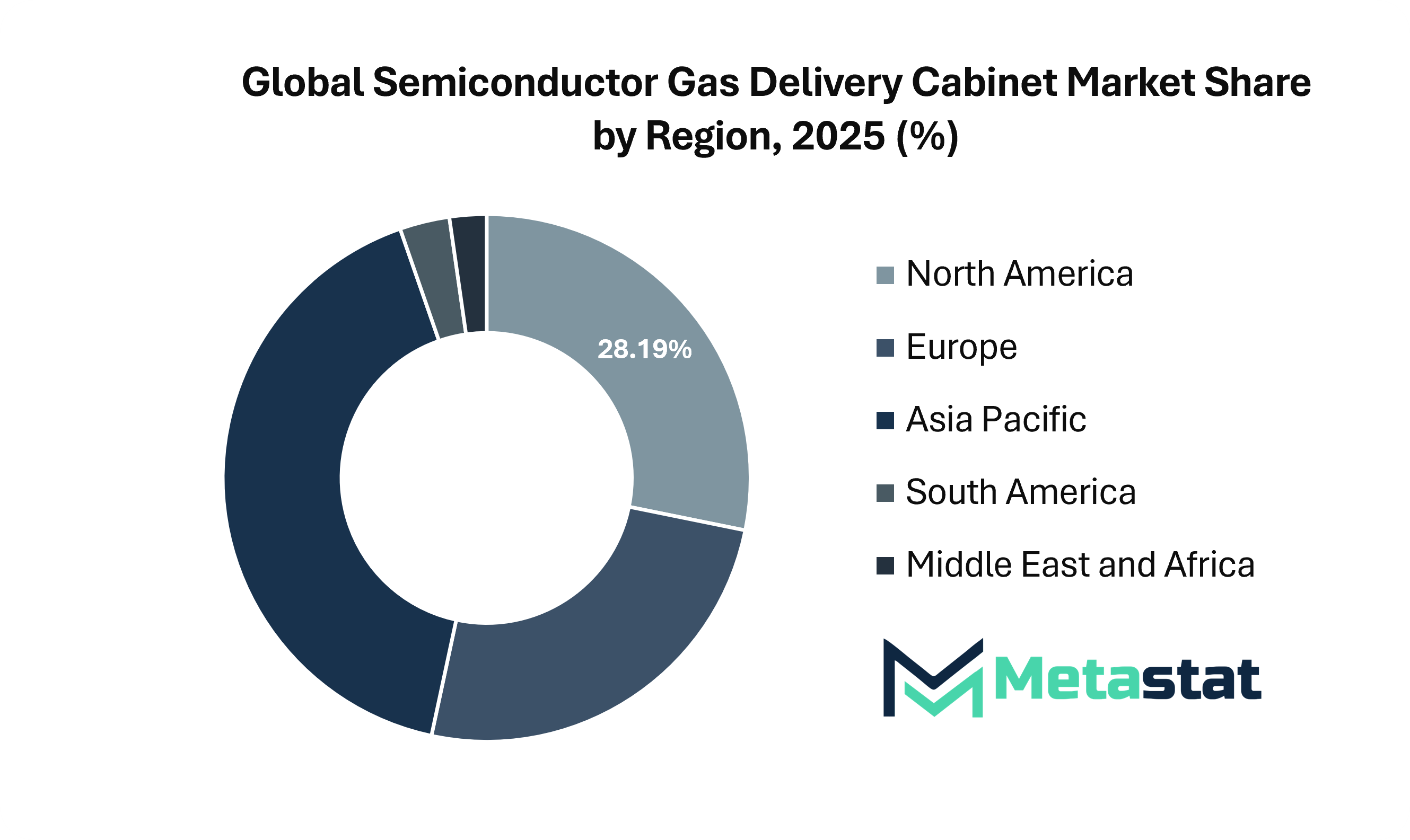
The Global Semiconductor Gas Delivery Cabinet Market continues to gain traction owing to rising chip manufacturing activity. Demand for advanced electronics, electric vehicles, smart devices, and data centers has encouraged manufacturers to improve safety and precision in gas handling processes. Gas delivery cabinets play a major role inside semiconductor facilities, as they help control hazardous gases used during wafer fabrication. Companies are focusing on cleaner manufacturing processes, stronger monitoring systems, and automated controls that reduce operational risks. Growing investment in fabrication plants across Asia Pacific, North America, and Europe will support steady demand. Many manufacturers are also enhancing cabinet designs to meet strict environmental and workplace safety standards followed by modern semiconductor plants.
Large technology companies and chip manufacturers are increasing manufacturing capacity to meet rising customer demand. Consequently, suppliers of gas control equipment are receiving increased orders from fabrication units. The market also benefits from research activity related to artificial intelligence, cloud computing, and high-performance processors. Modern manufacturing sites require reliable systems that maintain stable gas flow without interruption. Compact cabinet designs, remote monitoring tools, and leak detection systems are becoming standard features across installed units. Manufacturers are paying closer attention to durability and maintenance, as unplanned shutdowns can affect production timelines. Better integration between gas management systems and factory automation platforms will create new business opportunities for system vendors.
Several companies maintain important positions in the industry through product development, engineering support, and partnerships with semiconductor manufacturers. Entegris, Applied Energy Systems, Inc., SVCS Process Innovation s.r.o., SilPac, Exyte Group, Linde plc, SEMPA Systems GmbH, CVD Equipment Corporation, Fäth GmbH, Matheson Tri-Gas, Inc., and Air Liquide Electronics Systems are expanding their technical capabilities to meet changing customer requirements. Many of these companies are investing in improved gas handling technologies that support safer plant operations. Some organizations are also entering strategic collaborations with chip manufacturers to strengthen supply networks and improve service performance across regions.
Future growth in the market will depend on semiconductor expansion projects, government investment, and rising demand for smaller and faster electronic devices. Production facilities are becoming highly advanced, increasing the need for reliable gas delivery systems that support continuous operations. Suppliers will focus on energy efficiency, digital monitoring, and reduced contamination risks while developing new products. The Global Semiconductor Gas Delivery Cabinet Market will benefit from stronger investments related to artificial intelligence infrastructure and next-generation communication technologies.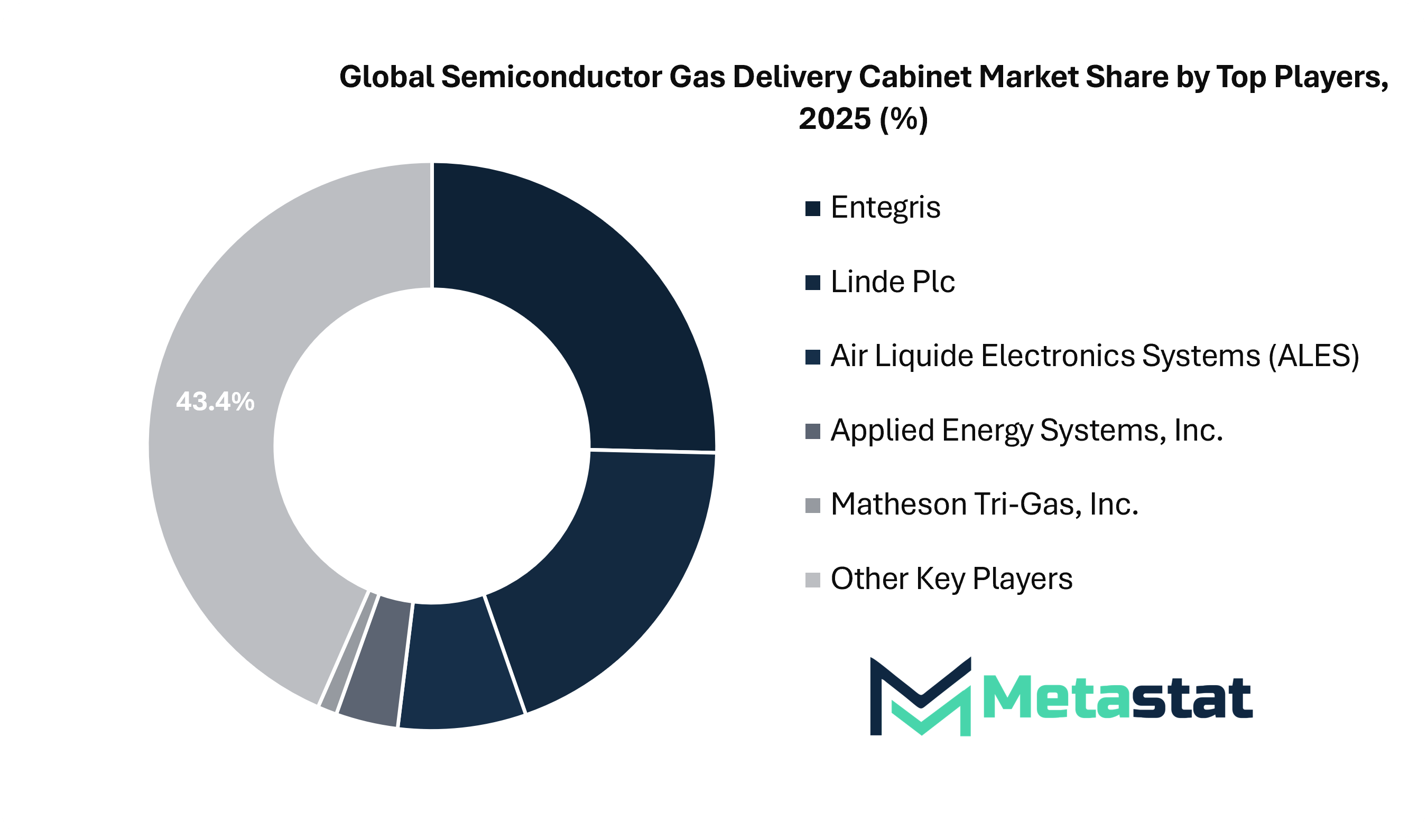
Market size is forecast to rise from USD 1,308.2 million in 2025 to over USD 2,446.2 million by 2033.
Future market expansion is expected to remain positive owing to continuous semiconductor capacity expansion, rising adoption of AI-driven data centers, and growing investments in domestic chip manufacturing programs worldwide.
This research report categorizes the Semiconductor Gas Delivery Cabinet market based on key segments and regions, forecasts revenue growth, and analyses trends in each submarket. The report analyses the key growth drivers, opportunities, and challenges influencing the Semiconductor Gas Delivery Cabinet market. Recent market developments and competitive strategies such as expansion, product launch, partnership, merger, and acquisition have been included to draw the competitive landscape in the market.
The report strategically identifies and profiles the key market players and analyses their core competencies in each sub-segment of the Semiconductor Gas Delivery Cabinet market.
|
Report Attributes |
Details |
|
Study Period |
2021-2033 |
|
Base Year |
2025 |
|
Estimated Year |
2026 |
|
Forecast Period |
2026-2033 |
|
Historical Period |
2021-2025 |
|
Growth Rate |
CAGR 8.1% from 2026 to 2033 |
|
Revenue Unit |
USD million |
|
Sales Volume Unit |
Thousand Units |
|
Segmentation |
By Type, Application, and Region |
|
By Region |
North America (By Type, Application, and Country)
|
|
Europe (By Type, Application, and Country)
|
|
|
Asia Pacific (By Type, Application, and Country)
|
|
|
South America (By Type, Application, and Country)
|
|
|
Middle East and Africa (By Type, Application, and Country)
|
Find answers to common questions about this report
Top players operating in the Semiconductor Gas Delivery Cabinet industry includes Entegris, Applied Energy Systems, Inc., SVCS Process Innovation s.r.o., SilPac, Exyte Group, Linde Plc, and SEMPA Systems GmbH
High installation and certification costs create adoption barriers for small and mid-sized fabs will hamper the market growth within the forecast period.
Global Semiconductor Gas Delivery Cabinet market is estimated to reach USD 2,446.2 million by 2033.
Asia Pacific region dominates the market.
The Fully-automatic is the leading type of segment in the Global market.
Rising global semiconductor fab investments are accelerating demand for precision gas handling equipment and Increasing adoption of AI, EVs, and 5G technologies is driving semiconductor production capacity expansion are key driving factors, boosting the market.
The Metastat Insights analysis shows that the North America Semiconductor Gas Delivery Cabinet market size is estimated to be USD 685.2 million by 2033.
The Metastat Insights study shows that the Global Semiconductor Gas Delivery Cabinet market size was USD 1,308.2 million in 2025.
The Global Semiconductor Gas Delivery Cabinet market is expected to grow at a CAGR of 8.1% over the forecast period (2026-2033).
The analysts below cover Electronics and Semiconductor research at Metastat Insights.
LEAD ANALYST
Utkarsh Khirodkar is a Lead Market Research Analyst at MetaStat Insight, specializing in market intelligence, technology sector assessments, and competitive strategy.

PRINCIPAL CONSULTANT - ENTERPRISE AI & EMERGING TECHNOLOGIES
Banking & Finance · Electronics and Semiconductor · Energy and Power · Healthcare IT · Information & Technology · Professional Services
Vijay Gunti is a Principal Consultant at MetaStat Insight, bringing over two decades of experience across enterprise digital transformation, technology strategy, and intelligent systems.

PRINCIPAL CONSULTANT - QUALITY SYSTEMS & COMPLIANCE
Electronics and Semiconductor · Machinery & Equipment · Professional Services
Omkar Phadtare is an Industry Consultant at MetaStat Insight, specializing in quality systems, regulatory compliance, and standards benchmarking to drive data-driven market intelligence and strategic industry research.

ENERGY & INFRASTRUCTURE INDUSTRY CONSULTANT
Automotive and Transportation · Electronics and Semiconductor · Energy and Power · Machinery & Equipment
Saurabh Vasant Ganvir consults for Energy & Infrastructure Industry at MetaStat Insight, specializing in renewable energy, solar EPC, and electric vehicle (EV) infrastructure markets.

LEAD CONSULTANT - COMMUNICATION, TELECOM, AND IT
Electronics and Semiconductor · Information & Technology · Machinery & Equipment · Professional Services
Ravindra Sathe Consultants for Communication, Telecom, and IT at MetaStat Insight. He leads the firm's industry research initiatives across telecommunications infrastructure, digital connectivity, enterprise networking, and emerging information technology domains.
In the biological seed treatment space, registration timelines vary drastically between the European Union, Brazil, and North America. The MetaStat Insight research handled these cross-border regulatory barriers with genuine nuance, mapping commercialization pathways alongside historical field adoption rates. The segmentation between microbial strains and biochemical active ingredients was particularly well structured.
Our team was tracking whether regional recycling infrastructure could realistically absorb the growing volume of lithium iron phosphate batteries over the next decade. The report did a solid job separating announced hydrometallurgical plant capacity from active, permitted operational throughput. That distinction made the feedstock availability projections and regional recovery rate models far more credible than standard commercial overviews.
Tracking capacity expansion in single-use bioprocessing requires dependable data on raw material availability and cleanroom-grade polymer supply chains. The competitive landscape chapter gave a grounded evaluation of secondary component suppliers across North America and Asia-Pacific rather than simply reprinting press releases. Having that level of supplier benchmarking helped clarify dual-sourcing considerations for our clinical pipeline planning.
Explore related market intelligence reports worth reading alongside this one.
Starting from
$2950