
LEAD ANALYST
Utkarsh Khirodkar is a Lead Market Research Analyst at MetaStat Insight, specializing in market intelligence, technology sector assessments, and competitive strategy.

Global Digital Piano for Beginners Market Size, Share, By Product Type (Portable Slab Digital Pianos, Upright Digital Pianos, Grand Digital Pianos), By Key Action (Graded Hammer Action, Balanced Hammer Action, Semi-Weighted Action), By End User (Individuals and Households, Music Schools and Academies, General Education Institutions, Independent Music Teachers), By Distribution Channel (Online Retail and Offline Retail), Industry Analysis, Growth, Trends, and Forecast, 2026-2033
Report ID
MSI-5659
Published
November, 2026
Pages
285 Pages
Format
Historical
Base year
Forecast
Forecast period
Report Details
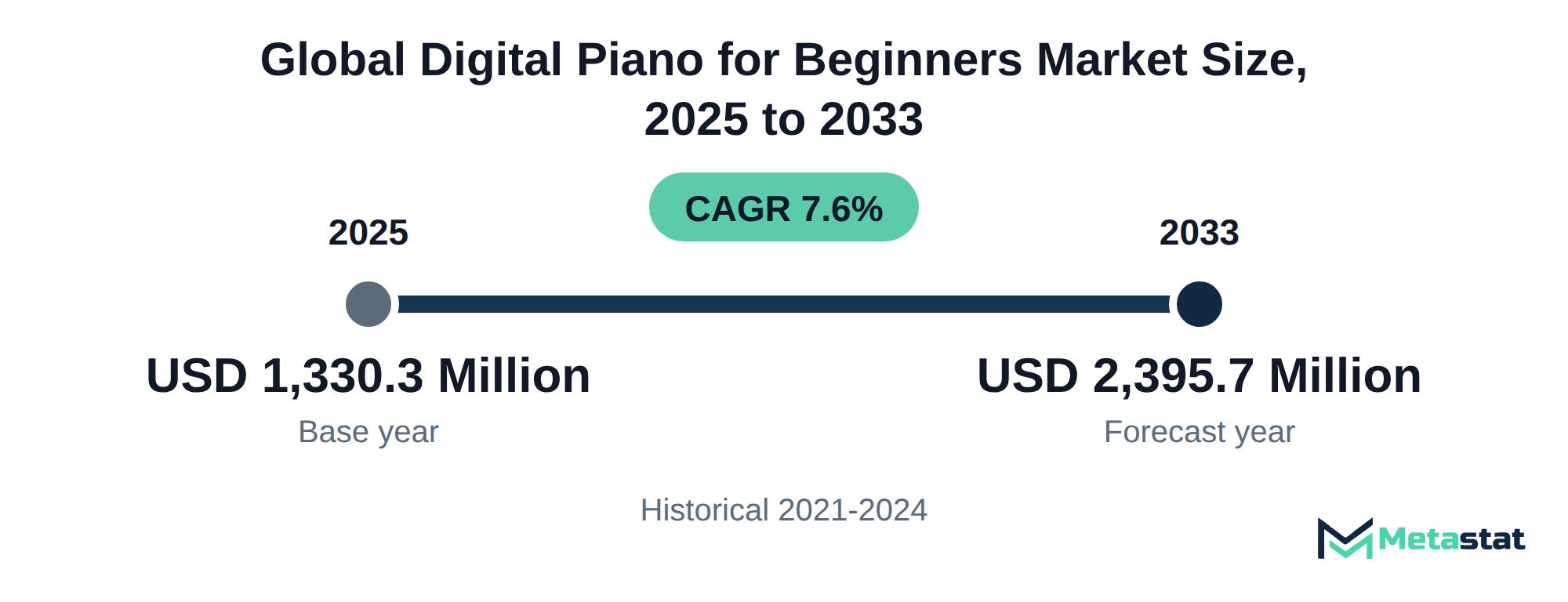
Market Valuation: Valued at $1,330.3 Million in 2025, projected to reach $2,395.7 Million by 2033 at a 7.6% CAGR.
Dominant Segment: The Portable Slab Digital Pianos segment leads the market, driven by consumer demand for versatile and space-efficient instruments that cater to beginner musicians.
Geographic Lead: North America holds the largest market share at 32.0% in 2025, with the US projected to lead in 2026 due to strong consumer spending and the popularity of home-based music learning.
What's Inside: The report provides a comprehensive analysis of market dynamics, competitive landscape, and detailed segmentation across product types, key actions, end users, and distribution channels, covering the forecast period from 2026 to 2033.
Market Trends: Technological advancements in digital pianos, such as graded hammer action and app connectivity, are enhancing user engagement and driving growth, particularly among music schools and individual learners.
Consumer Insights: Increased interest in music education is shaping consumer behavior, leading to higher demand for beginner-friendly digital pianos as parents prioritize musical skills for their children.
Choose Your License
Global Digital Piano for Beginners Market
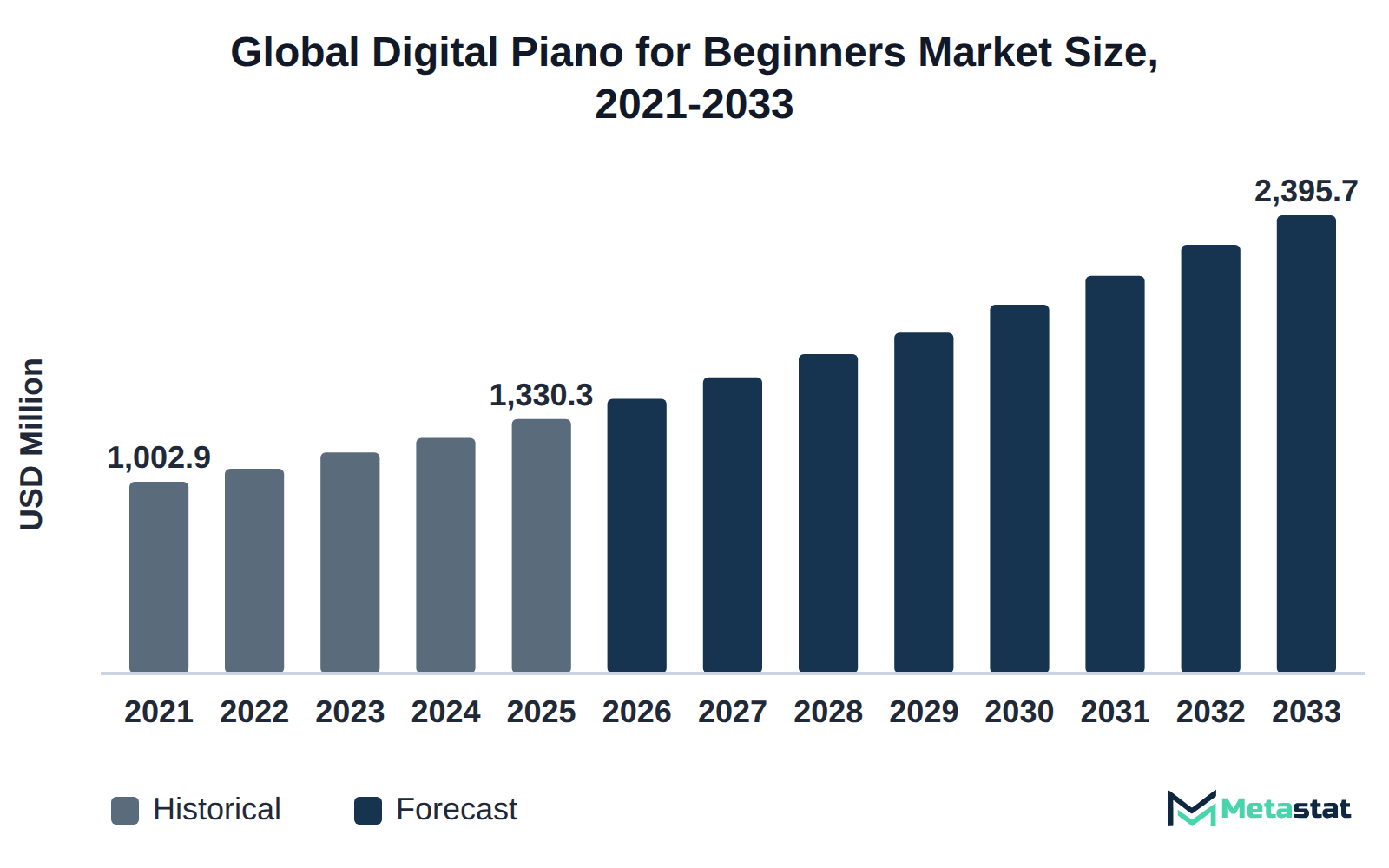
The global Digital Piano for Beginners market was valued at USD 1,330.3 million in 2025 and is projected to reach USD 2,395.7 million by 2033, growing at a CAGR of 7.6% over the forecast period.
The Digital Piano for Beginners market covers digital pianos designed specifically for novice musicians. Buyers invest in these instruments due to the need for accessible and user-friendly options that facilitate the learning process. This market includes various product types, key actions, end users, and distribution channels, catering to individuals, music schools, and educational institutions seeking quality instruments that enhance musical education.
Growth in the market is driven by increasing interest in music education and the rise of online music learning platforms. The segment of Portable Digital Pianos holds the most value, reflecting the demand for versatile and space-efficient instruments. North America holds 32.0% of the market in 2025, with the US leading in 2026. The region's strong consumer spending on musical instruments and the growing popularity of home-based music learning contribute significantly to this market expansion.
Manufacturers focus on delivering innovative features that enhance playability and sound quality. Key players actively introduce new models and technologies that cater to the preferences of beginner musicians, further boosting market growth. Digital pianos are increasingly accessible through online retail channels, which supports the market's upward trajectory and gives consumers a convenient purchasing experience.
The Digital Piano for Beginners market addresses the growing interest in music education among individuals and households, music schools, and educational institutions. Buyers invest in these instruments to facilitate learning and provide a more engaging experience for novice musicians. The shift towards digital pianos supports various learning styles, enhancing educational outcomes and promoting creativity in music production. For learners who progress further, digital audio workstation software is a related category.
A surge in online retail channels drives market growth by giving buyers easy access to many products. Among the segments, Portable Slab Digital Pianos generate the most value, reflecting a preference for versatile and space-saving designs. This regional dominance highlights the strong consumer base and the increasing popularity of digital pianos for beginners.
Technological advancements in digital piano features and functionalities contribute to market expansion. Innovations including user-friendly interfaces and integrated learning tools enhance accessibility, attracting more customers. Investments in product development by key players focus on enhancing user experience, driving further adoption of digital pianos among beginners.
Weighted keys help beginner musicians progress by giving them a more authentic piano playing experience. With advancements in technology, many manufacturers are incorporating graded hammer action, which mimics the feel of an acoustic piano. This feature enhances the learning process, allowing beginners to develop proper finger strength and technique. In the Digital Piano for Beginners market, graded hammer action is projected to grow from USD 955.2 million in 2026 to USD 1,683.2 million by 2033, reflecting a compound annual growth rate of 8.4%.
The emphasis on weighted keys becomes important during students' transition from introductory lessons to more advanced stages of piano playing. This transition often leads to a demand for more sophisticated digital pianos with features that cater to growing skills and preferences. By investing in instruments equipped with weighted keys, educators and learners secure a foundation that supports their musical journey. The market focus on enhancing these features aligns with the broader trend of improving user experiences, ultimately influencing purchasing decisions and driving growth.
App-connected digital pianos enhance user engagement by integrating technology with traditional learning methods. This innovative feature provides an interactive learning experience, enabling users to connect their devices to applications that assist in learning piano techniques and music theory. The Digital Piano for Beginners market reflects a growing trend where buyers, including individuals and music schools, prioritize these app-connected models for their ability to track progress and provide instant feedback, driving motivation and consistency in practice. Gamification software addresses a similar goal of sustaining learner motivation in other digital learning products.
The segment of portable slab digital pianos exemplifies this trend, projected to grow from USD 775.2 million in 2026 to USD 1,351.4 million by 2033, with a compound annual growth rate of 8.3%. This significant growth highlights the increasing acceptance and demand for digital pianos that promote interactive learning. Buyers invest in technologies that offer enhanced functionality, enabling informed learning decisions.
With the integration of app functionality, the purchasing patterns of consumers evolve, emphasizing features that support ongoing learner engagement. As more buyers recognize the benefits of app-connected digital pianos, manufacturers improve their offerings and change how the market competes.
The increasing preference for portable piano bundles significantly influences buying decisions in the Digital Piano for Beginners market. Portable slab digital pianos, projected to reach USD 1,351.4 million by 2033, appeal to individuals and households seeking convenience and flexibility. These buyers prioritize lightweight, easily transportable instruments that provide quality sound without the constraints of traditional pianos.
Online retail channels are central to this purchasing trend. With anticipated growth from USD 692.7 million in 2026 to USD 1,298 million by 2033, online platforms offer extensive product selections and competitive pricing. Buyers benefit from the convenience of shopping from home, accessing reviews, and comparing various models effortlessly. This accessibility strengthens consumer confidence in purchasing portable pianos online. Online orders of these instruments depend on courier, express, and parcel services for delivery to buyers' homes.
Ultimately, the demand for portable piano bundles creates opportunities for suppliers to enhance product offerings and concentrate on online retail strategies. Adapting to these preferences leads to increased sales and greater market penetration within the Digital Piano for Beginners market.
Digital pianos designed for beginners feature specific attributes that enhance the learning experience. One essential aspect is the key action type, which significantly influences playability. Graded hammer action, for example, mimics the feel of an acoustic piano, providing a more authentic experience. This feature attracts individuals seeking a realistic touch while learning to play.
Another critical feature is portability. Portable slab digital pianos deliver convenience for learners needing to practice in various locations. The combination of portability and key action contributes to a user-friendly experience that encourages consistent practice, which is crucial for skill development.
Beginners buying a digital piano should prioritize key action and portability to support an optimal learning environment. Understanding the dynamics of the Digital Piano for Beginners market allows prospective buyers to make informed decisions tailored to their unique needs.
The growing interest in music education significantly influences spending on digital pianos among individuals and households. This demographic shift reflects a heightened focus on learning musical instruments at a young age. Parents increasingly view music education as a valuable skill, leading to increased demand for beginner-friendly instruments. The influx of music schools and the integration of digital learning tools further support this trend, enhancing the appeal of digital pianos. The Digital Piano for Beginners market is projected to reach USD 1,435.7 million in 2026, indicating a notable increase in volume driven by these changing consumer behaviors. This growth opens opportunities for manufacturers to tailor products that meet the evolving preferences of young learners.
Technological improvements in digital pianos enhance the learning experience for beginners. Features including improved sound sampling and more realistic action mimic traditional acoustic pianos, attracting novice musicians. The integration of advanced electronics allows for better sound quality and playability, appealing to individuals and households investing in their musical education. Music synthesizers are a related category of electronic instruments built around sound technology. Enhanced connectivity options, including Bluetooth and USB interfaces, facilitate interaction with apps and online tutorials, further encouraging engagement with the instrument. These advancements cater to the demand from music schools and academies, driving their adoption in educational settings. The Digital Piano for Beginners market benefits from these technological shifts, promoting growth as more consumers seek high-quality instruments that support effective learning. Digital pianos are becoming more sophisticated, serving as both instruments and tools for musical development, which reinforces market expansion during the forecast period.
Price sensitivity represents a significant restraint in the Digital Piano for Beginners market, particularly among individuals and households. High upfront costs associated with quality digital pianos lead to slower adoption rates, especially for first-time buyers. Buy now pay later plans are one financing route that can spread the purchase cost over time. Many potential customers view these instruments as investments, resulting in cautious purchasing behavior due to budget constraints. This hesitancy delays replacement decisions and reduces order sizes, impacting overall market growth.
Music schools and academies face similar challenges, with institutions often limited by funding and budgetary restrictions. This situation results in a preference for lower-cost alternatives, which do not offer the same features or quality, further inhibiting the broader adoption of premium digital pianos. Price sensitivity continues to shape buying decisions, prompting manufacturers to explore different pricing strategies to broaden their reach and increase market penetration.
Suppliers in the Digital Piano for Beginners market face significant input cost pressures stemming from rising material costs. Increased prices for essential components, including electronic circuits and key mechanisms, affect profit margins, especially for manufacturers focused on entry-level products. Fluctuations in supply chain stability create challenges in sourcing necessary materials, leading to potential delays in production and distribution.
In response to these pressures, suppliers implement several strategies to mitigate costs. Several manufacturers explore alternative sourcing options for materials to ensure competitive pricing while maintaining quality. Others invest in production efficiency through technological upgrades and automation, improving yield rates and reducing waste. Together, these strategies improve operational resilience and help suppliers adapt to changing market conditions while staying competitive in the Digital Piano for Beginners market.
The segment of music schools and academies presents a substantial opportunity within the Digital Piano for Beginners market. This group is projected to achieve a compound annual growth rate (CAGR) of 8.6% and is expected to reach a value of USD 452.5 million by 2033. The growing emphasis on structured music education fuels demand for digital pianos, particularly those that offer features tailored to instructional settings. Music schools increasingly seek instruments that facilitate effective learning experiences for students, creating a strong preference for graded hammer action and other advanced key actions. Successful suppliers focus on developing products that align with the specific needs of educational institutions, enhancing curriculum delivery and student engagement. Addressing this demand represents a strategic advantage for manufacturers aiming to penetrate this underserved segment, ultimately contributing to overall market growth.
The Global Digital Piano for Beginners market is segmented based on Product Type, Key Action, End User, and Distribution Channel.
This segment primarily serves individuals and households seeking an accessible introduction to digital music making, characterized by its portability and ease of use. Demand is driven by increasing interest in music education and home-based learning opportunities. The segment exhibits a faster growth rate compared to others, including Upright Digital Pianos, which is projected to grow at a CAGR of 6.5%. This difference stems from the rising consumer preference for compact and versatile instruments that fit modern living spaces. The appealing price point attracts budget-conscious buyers looking for quality instruments without excessive investment, reinforcing the segment's strong market position.
Upright Digital Pianos segment is estimated to reach USD 922.1 million by 2033, at a CAGR of 6.5% during the forecast period. These pianos suit beginners seeking a traditional playing experience and are often used by individuals, households, and educational institutions. The growing recognition of music education's importance drives demand for upright digital pianos, particularly in music schools and academies, which represent a key customer segment. This segment differs from Portable Slab Digital Pianos, which are expected to grow at a faster rate of 8.3% during the same period. Higher price points associated with upright models attract buyers looking for quality and realism in their musical instruments. The balance of affordability and performance remains crucial, especially for institutions prioritizing investment in educational resources. In contrast, the market for upright digital pianos continues to expand steadily as users seek products that combine traditional aesthetics with modern technology.
Grand Digital Pianos segment is expected to reach USD 62.8 million by 2033. This segment caters primarily to individuals and families seeking sophisticated instruments that simulate the feel and sound of traditional grand pianos, often appealing to more serious learners. Demand growth is driven by an increasing interest in piano lessons and performance opportunities among aspiring musicians. Compared to other segments, including Portable Slab Digital Pianos, which are projected to grow at a CAGR of 8.3%, Grand Digital Pianos exhibit slower growth with a stable demand trajectory influenced by their higher price point and specialized features. The segment's focus on quality sound and playability differentiates it from entry-level options, attracting buyers willing to invest in a more authentic playing experience.
USD 1,330.3 million in 2025 reflects the current valuation of Others (Folding Digital Pianos), which is projected to grow at a CAGR of 12% during the forecast period. This segment appeals to individuals and households seeking portable and space-efficient options for music learning and practice. The lightweight and compact design facilitates easy transportation, catering particularly to students and hobbyists. Demand for folding digital pianos is driven by the growing emphasis on flexible learning environments, whereby users practice in various locations. Compared to other product types, including Portable Slab Digital Pianos, this segment offers a unique advantage due to its affordability and portability, making it an attractive option for beginner musicians. The anticipated growth in this segment highlights a shift toward innovative solutions that meet the evolving demands of users within the Digital Piano for Beginners market.
This segment primarily appeals to individuals and households seeking a realistic piano playing experience. The demand for high-quality touch sensitivity in beginner pianos drives interest in Graded Hammer Action, which closely mimics the feel of an acoustic piano. This segment distinguishes itself from others by offering a higher level of authenticity, attracting more serious learners compared to Balanced Hammer and Semi-Weighted Action segments. Growth in this segment is supported by increasing investments in music education and a rising preference among learners for products that enhance their practice experience. The market benefits from technological advancements that improve tactile feedback, further enhancing the appeal of Graded Hammer Action.
Balanced Hammer Action segment is estimated to reach USD 307.4 million by 2033, at a CAGR of 6% during the forecast period. This key action type appeals to learners seeking a realistic piano experience without the premium price of fully weighted keys. Individuals and households represent the primary buyers, with schools and academies increasingly adopting this technology to facilitate music education. Demand for balanced hammer action reflects a desire for quality without the associated costs of other segments. The segment exhibits slower growth compared to Graded Hammer Action, which has a projected CAGR of 8.4%. This differentiation highlights a distinct buyer base seeking affordability while valuing quality features, influencing overall adoption rates across the Digital Piano for Beginners market.
Semi-Weighted Action segment is expected to reach USD 321.5 million by 2033. This segment caters primarily to individuals and households seeking accessible digital piano options. A bridge between weighted and unweighted key actions, Semi-Weighted Action provides a unique playing experience that appeals to beginner musicians. The segment benefits from the trend toward affordable yet versatile instruments, driven by increasing interest in music education and recreational playing. Compared to other key actions, it typically offers lower pricing, making it attractive to budget-conscious consumers. Growth in this segment is expected to track the overall Digital Piano for Beginners market and support new players as they learn.
Others (Unweighted Action) segment is projected to grow at a CAGR of 5.2% during the forecast period. This segment typically attracts beginners seeking a more accessible and cost-effective option without compromising essential features. Demand in this segment arises from individuals and households primarily focused on affordability and ease of use. While other segments, including Graded Hammer Action, experience faster growth rates, the Others (Unweighted Action) segment offers a lower entry price point, catering to budget-conscious consumers. The segment's steady development reflects a balance between maintaining quality and lowering costs, appealing to first-time buyers and educational institutions prioritizing basic functionality over advanced features. This strategic positioning differentiates it from segments with more specialized actions, contributing to a diverse offering in the Digital Piano for Beginners market.
Valued at USD 1,005.8 million in 2026, the segment is projected to reach USD 1,646.8 million by 2033, at a CAGR of 7.3% during the forecast period. Individuals and households engage with digital pianos primarily for personal learning and recreational purposes, reflecting a growing interest in music education. The increasing accessibility of online tutorials and digital learning resources drives demand in this segment, making it a vital contributor to the overall market. This segment differs from others, including music schools and academies, which typically experience faster growth due to institutional purchases that target a broader audience. Individuals and households experience a separate set of influences, particularly the emphasis on affordability, which impacts purchasing decisions. With a focus on budget-friendly options, this segment adapts to evolving consumer preferences and technological advancements in the market.
Music Schools and Academies segment is estimated to reach USD 452.5 million by 2033, at a CAGR of 8.6% during the forecast period. This segment primarily serves institutions focused on music education, including both formal and informal settings. Increasing enrollment in music programs drives demand for digital pianos, which give students accessible learning tools. Technological advancements in digital pianos enhance the teaching experience, contributing to growth in this segment. Compared to the Individuals and Households segment, which is projected to grow at a CAGR of 7.3%, Music Schools and Academies exhibit a stronger growth trajectory. This difference stems from institutional demand for multiple units, leading to higher overall spending on digital pianos in this category. The growing emphasis on music education in schools further supports market expansion.
The General Education Institutions segment is expected to reach USD 156.2 million by 2033. This segment serves schools and educational facilities that incorporate digital pianos into their curricula, offering students the opportunity to learn music in a structured environment. The growing focus on enhancing music education drives demand for these instruments, especially in regions prioritizing music within their educational programs. This segment experiences higher growth rates compared to others, with a projected CAGR of 8.6%. In contrast to the Individuals and Households segment, which emphasizes personal use, general education institutions benefit from institutional budgets allowing for greater expenditure on quality instruments that enhance the learning experience. The need for effective educational tools fuels the adoption of digital pianos, contributing to the overall expansion of the market.
Independent Music Teachers segment is projected to grow at a CAGR of 7.2% during the forecast period. This segment primarily includes independent educators who teach music to students of various ages and skill levels, using digital pianos to facilitate learning. The increasing demand for personalized music instruction drives growth in this segment, with students seeking tailored lessons that align with their specific goals. Independent music teachers often invest in high-quality digital pianos to provide an engaging and realistic learning experience. Compared to other segments, including music schools and academies, this segment experiences a more flexible pricing structure, allowing for a range of affordability options. The market continues to expand due to rising interest in music education among consumers, creating opportunities for independent educators to thrive.
Community centers and charitable music programs use digital pianos to promote music education and engagement within their communities. These facilities serve diverse groups, providing access to music lessons and performance opportunities for individuals of varying ages and backgrounds. Demand for instruments in this segment is driven by a strong emphasis on music education and the desire to encourage creativity and expression among participants. This segment differs from others in the market by focusing on community enrichment rather than individual ownership, which influences purchasing decisions and funding sources. Digital pianos in this context support group activities and inclusive learning environments, contrasting with segments targeting private households or music schools. Growth within this segment benefits the Digital Piano for Beginners market. Increased funding for arts programs and community initiatives encourages the acquisition of these instruments.
Online Retail segment is valued at USD 692.7 million in 2026 and is projected to reach USD 1,298 million by 2033, at a CAGR of 9.4% during the forecast period. This segment targets individuals and households looking for convenient purchasing options, along with educational institutions seeking to provide digital pianos to students. The growing trend of online shopping, driven by increasing internet penetration and a shift in consumer behavior towards e-commerce, increases the demand for online retail options. This segment distinguishes itself from offline retail, which is expected to reach only USD 945.8 million by 2033, growing at a slower CAGR of 5.3%. Competitive pricing and extensive product selection available through online channels attract a more diverse range of buyers, thereby enhancing the segment's growth potential within the Digital Piano for Beginners market.
This segment primarily serves individual consumers who prefer the tactile experience of testing musical instruments before purchase. Retail locations provide the opportunity for customers to engage directly with the products, enhancing purchasing confidence. The slower growth rate compared to online retail, which sees a CAGR of 9.4%, reflects the increasing shift toward e-commerce platforms that offer convenience and often lower prices. Costs associated with maintaining physical stores limit the ability of offline retailers to compete on pricing. While the market sees a trend toward digital sales channels, offline retail remains a vital avenue for beginners who value direct interaction with products, ensuring a continued, albeit more gradual, growth trajectory in the coming years.
USD 151.9 million by 2033 reflects the anticipated value of the Others (Direct Institutional Supply) segment. This segment is used primarily by educational institutions and organizations that require digital pianos for instructional purposes. Demand growth is driven by a rising focus on music education in schools and the increasing inclusion of music programs in curricula. Compared to the Online and Offline Retail segments, which cater to individual consumers, the Others segment relies on bulk purchases, leading to different pricing dynamics. With a projected growth rate of 5.2% during the forecast period, this segment remains less dynamic than others, including Online Retail, which is expected to grow at 9.4%. The Digital Piano for Beginners market continues to evolve, driven by the expanding role of music education in society.
Based on geography, the Global Digital Piano for Beginners market is divided into North America, Europe, Asia-Pacific, South America, Middle East, and Africa.
With a projected market value of USD 728.8 million by the end of 2033, the North American region stands out for its high demand for digital pianos. The United States, Canada, and Mexico drive significant interest in these instruments, particularly from individuals and households. The growing trend of music education, supported by initiatives in schools and academies, enhances demand for digital pianos. Online retail channels have become increasingly important, with anticipated growth driven by convenient purchasing options. The Digital Piano for Beginners market benefits from a technological infrastructure that encourages innovation and accessibility, creating a competitive environment among suppliers. This region represents 32.00% of the global market share in 2025.
Demand for digital pianos in Europe is driven by a strong emphasis on music education and the increasing popularity of home music-making. Countries including Germany, France, and the UK have a strong presence of music schools and academies, resulting in significant purchases by educational institutions. The growing trend of online learning influences individual buyers, expanding the market for digital pianos tailored for beginners. With a market share of 25.4% expected in 2025, the region reflects a solid commitment to integrating music technology into educational frameworks. Innovative financing options and promotional campaigns enhance accessibility, encouraging broader participation in music education initiatives. The Digital Piano for Beginners market in Europe is projected to benefit from these trends, increasing interest in learning and playing digital pianos.
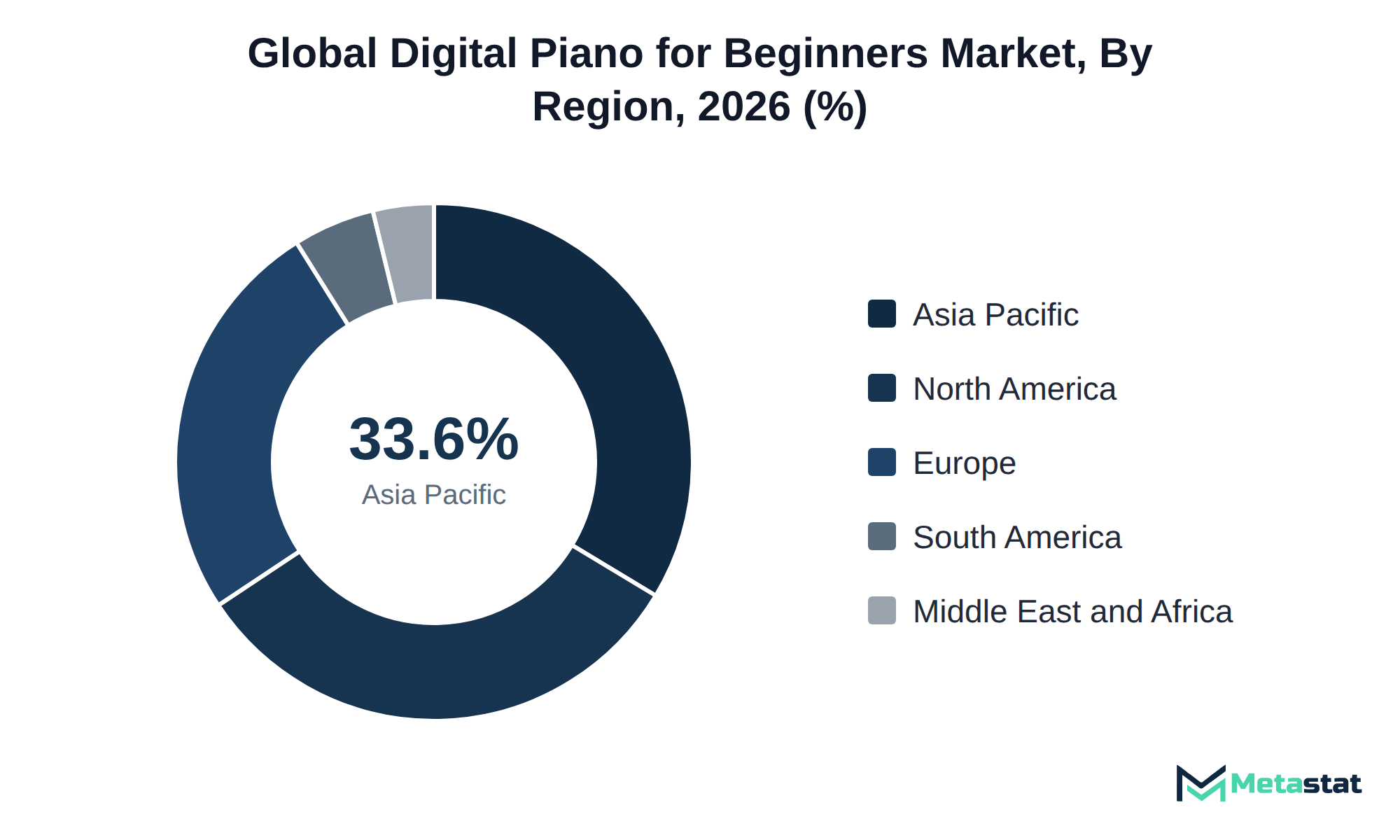
Asia-Pacific holds a 33.6% share of the global Digital Piano for Beginners market in 2025. The demand in this region stems from a growing interest in music education, particularly among individuals and households, and music schools and academies. Countries including China and India feature an expanding base of beginner musicians, driven by a cultural emphasis on music and arts. Increasing internet penetration supports online retail channels, facilitating access to digital pianos. In addition, lower manufacturing costs in Southeast Asia provide a competitive advantage for local producers. The market's growth is anticipated to be influenced by the rising popularity of portable digital pianos and advancements in digital technology, contributing to innovative features that attract new learners.
In South America, the Digital Piano for Beginners market reflects significant growth potential, particularly due to increasing interest in music education and the rise of home music-making among consumers. Brazil and Argentina serve as the primary markets, where music schools and independent music teachers play a crucial role in driving demand. Infrastructure supporting music education continues to develop, enhancing accessibility for learners. The region represents 5.1% of the global market share in 2025, highlighting emerging opportunities for manufacturers and distributors. Increased online retail activity, coupled with a focus on promoting musical skills, supports market expansion. By 2033, market values are expected to align with growing adoption of digital pianos in educational settings and households alike, contributing to the overall advancement of the Digital Piano for Beginners market.
The Middle East and Africa region represents a smaller share of the Digital Piano for Beginners market. Demand in this region stems primarily from individuals and households, alongside music schools. Countries including Saudi Arabia and the UAE exhibit a growing interest in music education, driving purchases of digital pianos. South Africa experiences a rising trend in music programs, further supporting market growth. The increasing availability of online retail channels enhances accessibility for consumers, contributing to market expansion. Investments in educational infrastructure across these countries promote music learning, influencing demand for digital pianos within the region. The market is set to evolve, supported by the ongoing emphasis on enhancing music education opportunities.
The Digital Piano for Beginners market experiences intense competition primarily driven by product differentiation and pricing strategies. Companies focus on features including key action types, portability, and sound quality to attract buyers. Price sensitivity among consumers influences decision-making, encouraging companies to offer a range of products at various price points.
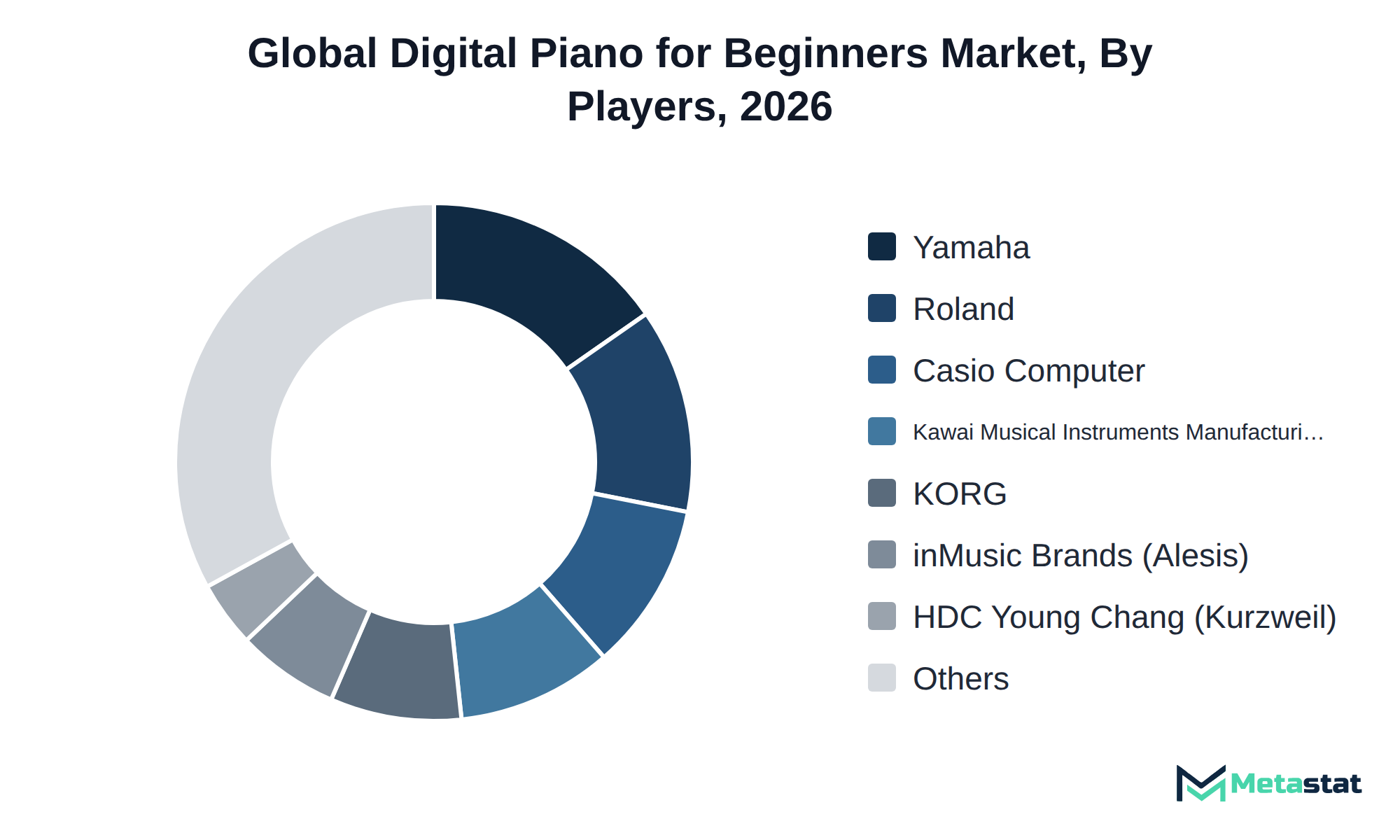
Yamaha Corporation and Roland Corporation excel in providing high-quality digital pianos with advanced features, targeting serious musicians and institutions. In contrast, Casio Computer Co., Ltd. and KORG Inc. emphasize affordability and accessibility, appealing to beginners and casual users. Companies like inMusic Brands (Alesis) focus on integrating technology, including connectivity options, which enhance user experience and expand their market reach.
Buyers prioritize aspects including product certification, customization options, and customer service when selecting digital pianos. The Digital Piano for Beginners market includes a variety of players, including Kawai Musical Instruments Manufacturing Co., Ltd., which focuses on high-quality acoustic sound replication, and Guangzhou Pearl River Piano Group Co., Ltd., which offers cost-effective alternatives for entry-level users.
This growth relies on several key developments within the Digital Piano for Beginners market. First, increasing demand for portable slab digital pianos, projected to reach USD 1,351.4 million by 2033 at an 8.3% CAGR, will drive significant revenue. Second, expanding online retail channels, with a forecast value of USD 1,298 million by 2033 and a 9.4% CAGR, supports broader market access and customer engagement. Lastly, growth in music schools and academies, expected to reach USD 452.5 million by 2033 at an 8.6% CAGR, represents an essential end-user segment that boosts overall demand.
However, potential risks exist that hinder growth. Economic fluctuations impacting consumer spending could restrict purchases, affecting the overall market trajectory. For instance, regions like Asia Pacific, which holds a share of 33.6%, experience slower growth if economic conditions worsen. Addressing these developments and managing risks will be crucial for the Digital Piano for Beginners market to achieve its projected growth through 2033.
By Product Type: Portable Slab Digital Pianos, Upright Digital Pianos, Grand Digital Pianos, Others (Folding Digital Pianos)
By Key Action: Graded Hammer Action, Balanced Hammer Action, Semi-Weighted Action, Others (Unweighted Action)
By End User: Individuals and Households, Music Schools and Academies, General Education Institutions, Independent Music Teachers, Others (Community Centers, Charitable Music Programs)
By Distribution Channel: Online Retail, Offline Retail, Others (Direct Institutional Supply)
The report strategically identifies and profiles the key market players and analyses their core competencies in each sub-segment of the Digital Piano for Beginners market.
Report Attributes | Details |
Study Period | 2021-2033 |
Base Year | 2025 |
Estimated Year | 2026 |
Forecast Period | 2026-2033 |
Historical Period | 2021-2025 |
Growth Rate | CAGR 7.6% from 2026 to 2033 |
Revenue Unit | USD million |
Segmentation | By Product Type, Key Action, End User, Distribution Channel, and Region |
By Region | North America (By Product Type, Key Action, End User, Distribution Channel, and Country)
|
Europe (By Product Type, Key Action, End User, Distribution Channel, and Country)
| |
Asia Pacific (By Product Type, Key Action, End User, Distribution Channel, and Country)
| |
South America (By Product Type, Key Action, End User, Distribution Channel, and Country)
| |
Middle East and Africa (By Product Type, Key Action, End User, Distribution Channel, and Country)
|
Find answers to common questions about this report
The Digital Piano for Beginners market size was valued at USD 1,330.3 million in 2025.
The market is projected to grow at a CAGR of 7.6% during the forecast period from 2026 to 2033.
The North America Digital Piano for Beginners market size is estimated to reach USD 728.8 million by 2033.
Portable Slab Digital Pianos lead the market with a projected value of USD 1,351.4 million by 2033, reflecting the highest growth rate among the product segments.
Growing interest in music education significantly influences spending on digital pianos among individuals and households. Technological improvements enhance the learning experience for beginners, attracting novice musicians and driving demand.
Price sensitivity represents a significant restraint, as high upfront costs associated with quality digital pianos lead to slower adoption rates among individuals and households. Music schools and academies face similar challenges, often limited by funding and budgetary restrictions, which results in a preference for lower-cost alternatives that do not offer the same features or quality.
Several factors favor adoption in the Digital Piano for Beginners market. The increasing focus on music education drives demand for beginner-friendly instruments, particularly among individuals and households. technological advancements enhance the learning experience, making digital pianos more appealing for educational settings.
The Digital Piano for Beginners market is estimated to reach a valuation of USD 2,395.7 million by 2033.
Key players operating in the Digital Piano for Beginners market include Yamaha Corporation, Roland Corporation, Casio Computer Co., Ltd., Kawai Musical Instruments Manufacturing Co., Ltd., KORG Inc., and inMusic Brands (Alesis).
Asia Pacific leads the Digital Piano for Beginners market, accounting for 33.6 percent of the share. This region benefits from a strong demand for affordable musical instruments among a growing middle class.
The analysts below cover Electronics and Semiconductor research at Metastat Insights.
LEAD ANALYST
Utkarsh Khirodkar is a Lead Market Research Analyst at MetaStat Insight, specializing in market intelligence, technology sector assessments, and competitive strategy.

PRINCIPAL CONSULTANT - ENTERPRISE AI & EMERGING TECHNOLOGIES
Banking & Finance · Electronics and Semiconductor · Energy and Power · Healthcare IT · Information & Technology · Professional Services
Vijay Gunti is a Principal Consultant at MetaStat Insight, bringing over two decades of experience across enterprise digital transformation, technology strategy, and intelligent systems.

PRINCIPAL CONSULTANT - QUALITY SYSTEMS & COMPLIANCE
Electronics and Semiconductor · Machinery & Equipment · Professional Services
Omkar Phadtare is an Industry Consultant at MetaStat Insight, specializing in quality systems, regulatory compliance, and standards benchmarking to drive data-driven market intelligence and strategic industry research.

ENERGY & INFRASTRUCTURE INDUSTRY CONSULTANT
Automotive and Transportation · Electronics and Semiconductor · Energy and Power · Machinery & Equipment
Saurabh Vasant Ganvir consults for Energy & Infrastructure Industry at MetaStat Insight, specializing in renewable energy, solar EPC, and electric vehicle (EV) infrastructure markets.

LEAD CONSULTANT - COMMUNICATION, TELECOM, AND IT
Electronics and Semiconductor · Information & Technology · Machinery & Equipment · Professional Services
Ravindra Sathe Consultants for Communication, Telecom, and IT at MetaStat Insight. He leads the firm's industry research initiatives across telecommunications infrastructure, digital connectivity, enterprise networking, and emerging information technology domains.
Transitioning ultra-class mining haul trucks to alternative power requires concrete data on remote hydrogen refueling infrastructure economics. The report evaluated megawatt-scale electrolyzer installation expenses, onsite storage safety mandates, and heavy-duty fuel cell stack degradation under continuous duty cycles. That technical rigor helped our engineers benchmark realistic total operating cost horizons for off-highway fleet decarbonization.
Enterprise zero-trust network rollouts are often slowed down by multi-cloud transit latency and proprietary hardware retirement schedules. This study provided realistic total cost of ownership models comparing cloud-delivered security edge solutions against traditional hardware refreshes. The analysis of contract renewal lengths and software maintenance fees gave us clear visibility into enterprise replacement cycles over the next three to five years.
Scaling antibody-drug conjugate manufacturing hinges on contract manufacturing availability for high-potency active ingredients. The MetaStat Insight analysis looked closely at global cleanroom slot constraints, bioconjugation batch failure rates, and supply chain redundancies between the US, Europe, and India. The supplier capability matrix proved genuinely useful for our team when mapping secondary source options across our clinical pipeline.
Explore related market intelligence reports worth reading alongside this one.