
LEAD ANALYST
Utkarsh Khirodkar is a Lead Market Research Analyst at MetaStat Insight, specializing in market intelligence, technology sector assessments, and competitive strategy.

Global Printed Circuit Board Market Size, Share, By Board Type (Rigid PCBs, Flexible PCBs, Rigid-Flex PCBs), By Layer Count (Single-Sided, Double-Sided, 3-8 Layers, 9-16 Layers, More than 16 Layers), By Base Material (Glass Epoxy (FR-4), Polyimide, ABF and BT Resin, PTFE, Hydrocarbon and PPE), By End-Use Industry (Consumer Electronics, Computing and Data Centers, Telecommunications, Automotive, Industrial Electronics, Medical Devices, Aerospace and Defense), Industry Analysis, Growth, Trends, and Forecast, 2026-2033
Report ID
MSI-2282
Published
November, 2026
Pages
293 Pages
Format
Historical
Base year
Forecast
Forecast period
Report Details
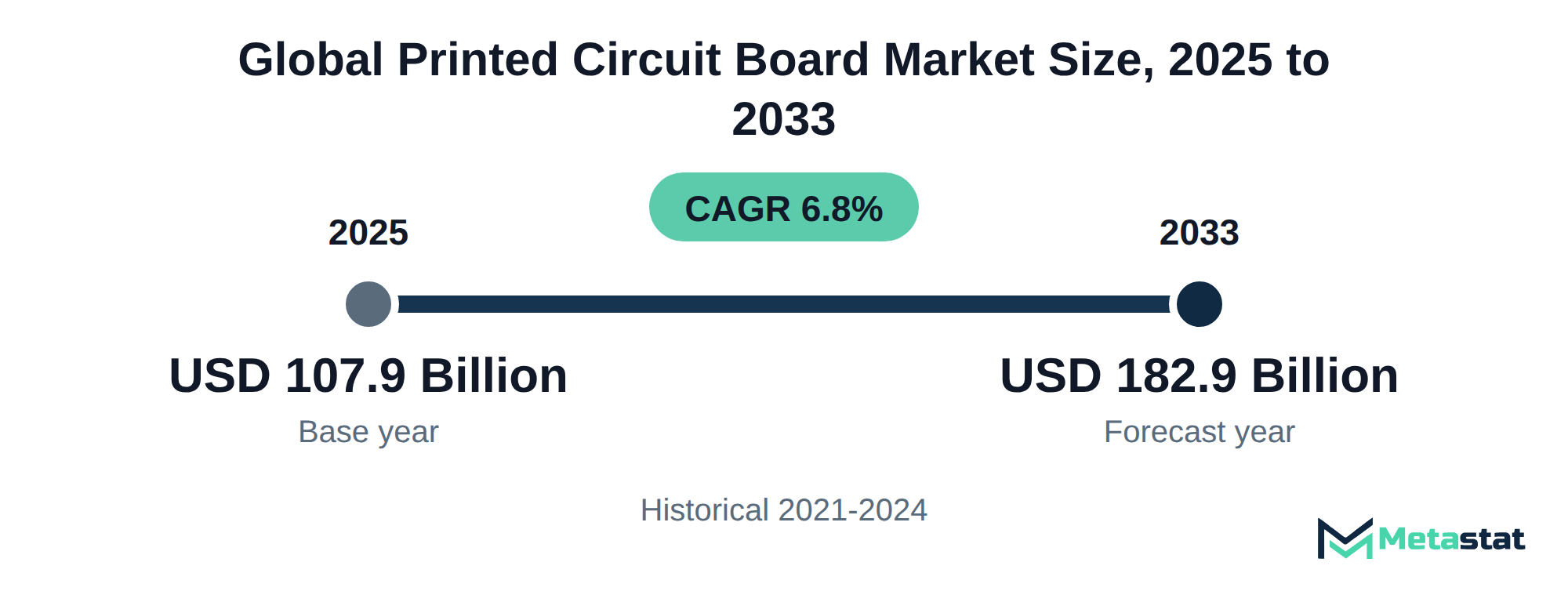
Market Valuation: Valued at $107.9 Billion in 2025, projected to reach $182.9 Billion by 2033 at a 6.8% CAGR.
Dominant Segment: The consumer electronics segment leads the market, driven by the rising demand for advanced electronic devices such as smartphones and wearables. This sector is projected to reach a value of USD 57.1 billion by 2033, reflecting a CAGR of 5.3%.
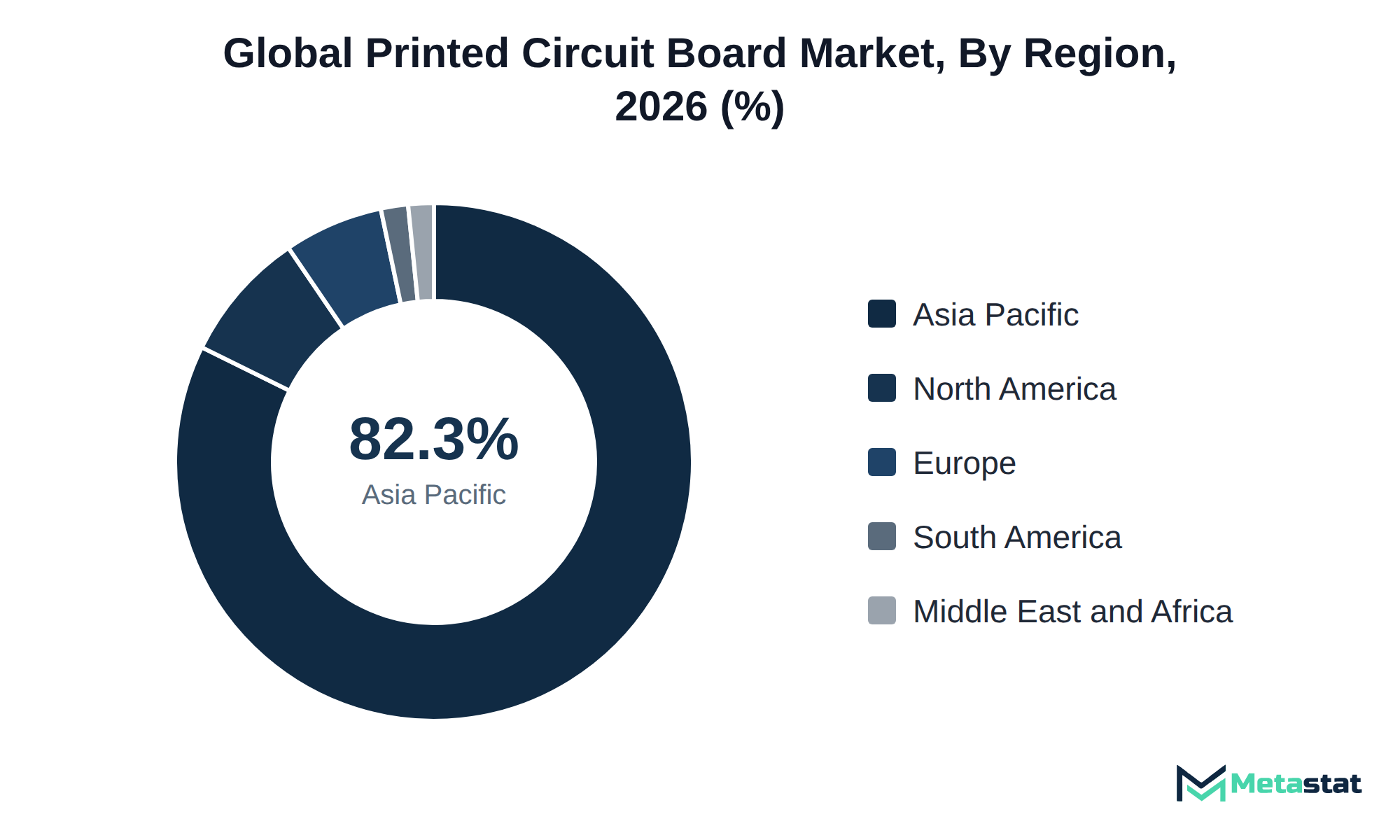
Geographic Lead: Asia Pacific dominates the Printed Circuit Board market with an impressive 82.3% share, bolstered by robust manufacturing capabilities and technological advancements. The region's growth is significantly influenced by the increasing demand for smart devices and IoT applications.
What's Inside: The report provides a comprehensive analysis of market dynamics, competitive coverage, and detailed forecasts from 2026 to 2033. It includes insights into various segments, including board types, layer counts, and base materials.
Flexible PCB Growth: The flexible printed circuit board segment is expected to reach USD 41.9 billion by 2033, growing at a CAGR of 7.6%. This growth is driven by the increasing need for lightweight and adaptable solutions in consumer electronics.
High-Layer-Count Demand: The high-layer-count segment is projected to grow significantly, reaching USD 61.4 billion by 2033, fueled by the rise of AI servers requiring advanced circuit designs for complex computing applications.
Choose Your License
Global Printed Circuit Board Market
The global Printed Circuit Board market was valued at USD 107.9 billion in 2025 and is projected to reach USD 182.9 billion by 2033, growing at a CAGR of 6.8% over the forecast period.
The Printed Circuit Board market encompasses the manufacturing and supply of various types of printed circuit boards, which are essential components in electronic devices. Buyers invest in these products to ensure the functionality and efficiency of their electronic applications, ranging from consumer electronics to automotive systems. The ongoing demand for sophisticated electronics drives spending, reflecting an increasing reliance on technology across multiple sectors.
Rising demand for consumer electronics, the highest-value segment, propels growth in the Printed Circuit Board market. Asia Pacific dominates geographically, holding an 82.3% share of the market. This region's robust manufacturing capabilities and technological advancements create a competitive environment that attracts investments and supports expansion.
North America holds 8.2% of the market in 2025, with the US leading in 2026. The transition toward more advanced technologies, including 5G and IoT, significantly influences the market's trajectory. Companies are adapting to these changes by enhancing their production capabilities and expanding product offerings. This positions them favorably within the evolving market.
The Printed Circuit Board market includes a diverse array of products essential for the functionality of electronic devices, catering to various industries including consumer electronics, telecommunications, and automotive. Buyers invest in these boards to enhance the performance and reliability of their products, driven by increasing demand for advanced technology and miniaturization in electronic components. As electronic applications evolve, manufacturers across different sectors depend on printed circuit boards as critical components.
The growth of the market is supported by the expansion of consumer electronics, with the rigid PCBs segment representing the highest value within the industry. The Asia Pacific region dominates the market with an 82.3% share, significantly outpacing other regions. North America holds 8.2% of the market in 2025, with the US leading in 2026. The surge in demand for smart devices and IoT applications fuels this growth, as manufacturers seek to enhance their product offerings with high-performance circuit boards.
Technological advancements, including the development of flexible and rigid-flex PCBs, drive market growth. These innovations allow for greater design flexibility and efficiency, meeting the needs of modern electronic devices. Increased investment in research and development further advances the Printed Circuit Board market, enabling suppliers and manufacturers to remain competitive in a changing environment.
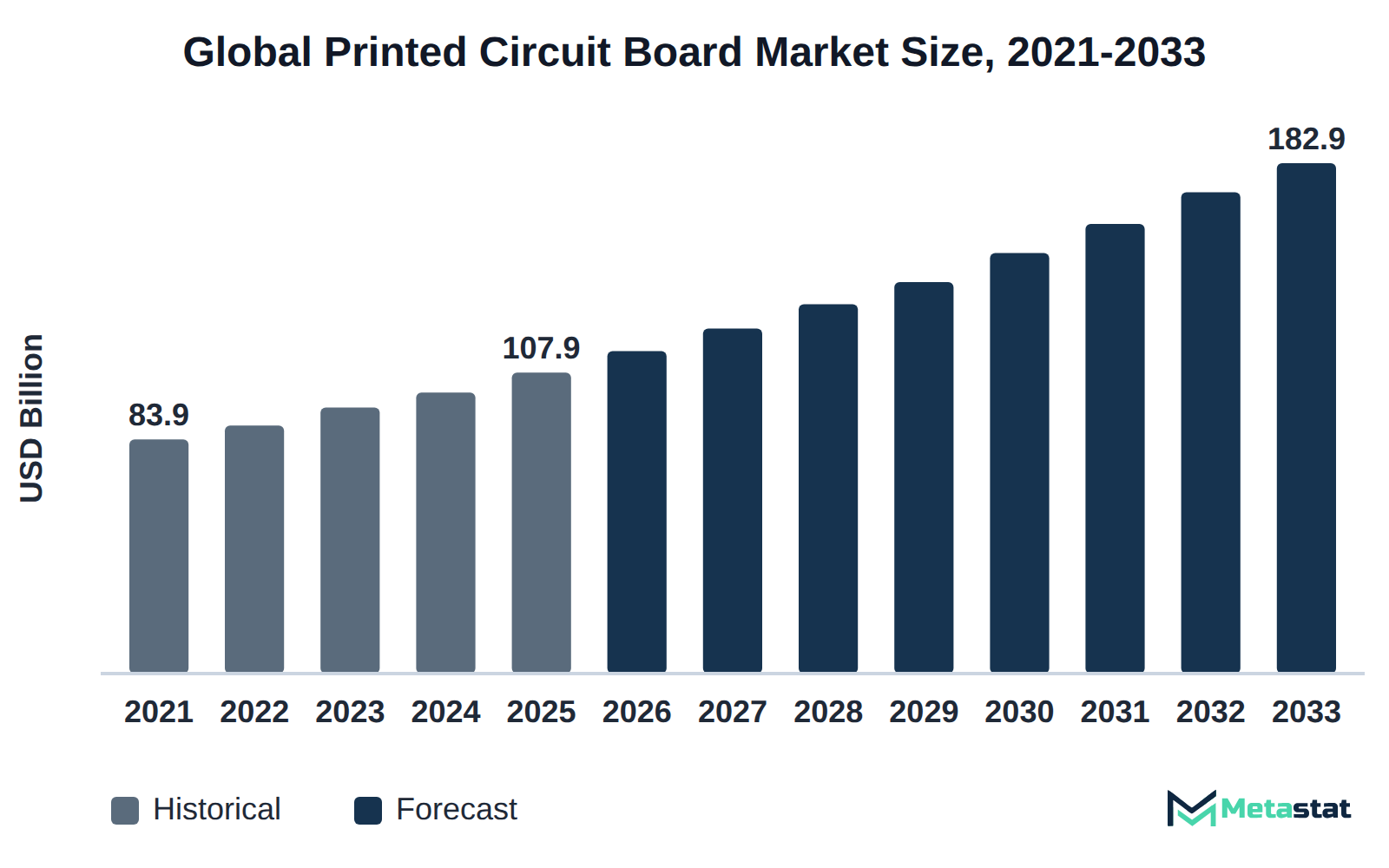
The rise of AI servers significantly increases the demand for high-layer-count and low-loss printed circuit boards (PCBs). These PCBs provide the necessary performance and reliability for advanced computing applications that AI servers require. The increasing complexity of AI workloads necessitates more sophisticated circuit designs, resulting in a growing preference for multi-layer PCBs. By 2033, the high-layer-count segment is projected to grow notably, reaching a value of USD 61.4 billion.
Low-loss PCBs, particularly those made from materials including polyimide and PTFE, enhance signal integrity and reduce power consumption, which is critical for efficient AI processing. The anticipated growth in AI applications across various industries, including consumer electronics and computing data centers, positions these PCBs as essential components within the printed circuit board market. Manufacturers that develop advanced low-loss materials and designs align their strategies with changing technology requirements.
This focus on high-layer-count and low-loss PCBs drives innovation within the industry and encourages suppliers to invest in research and development. By meeting the stringent requirements of AI applications, manufacturers improve their competitive positioning within the market. Consequently, firms that enhance their capabilities in high-performance PCB production are likely to capture a larger share of the expanding demand driven by AI server technologies.
The adoption of High-Density Interconnect (HDI) and rigid-flex designs in the Printed Circuit Board market influences purchasing decisions significantly. Buyers increasingly favor these advanced technologies due to their capacity to facilitate smaller, lighter, and more efficient electronic devices. In 2025, the market value reached USD 107.9 billion, with a projected growth to USD 182.9 billion by 2033, reflecting escalating demand for innovative interconnect solutions.
Pricing structures for HDI and rigid-flex boards typically involve a combination of unit pricing and contract models that cater to varying customer needs. Several manufacturers offer tiered pricing based on order volume, allowing buyers to negotiate better rates for larger purchases. This pricing strategy appeals to industries including consumer electronics and computing, where economies of scale significantly reduce costs. Long-term contracts with key suppliers ensure stability in pricing and supply, which strengthens relationships between manufacturers and buyers within the market.
While the market expands its focus on compact electronic applications, demand for HDI and rigid-flex designs will continue to reshape procurement strategies. Buyers prioritizing these interconnect technologies expect enhanced performance in their electronic products, translating into competitive advantages in their respective sectors.
Automotive manufacturers prioritize thermal reliability when selecting suppliers for Printed Circuit Boards (PCBs). This factor matters because automotive applications place increasing demands on performance and durability. The automotive industry relies heavily on PCBs to ensure the functionality of advanced electronic systems. These systems often operate under extreme conditions, making thermal management critical for reliability and safety.
The market reflects this emphasis, with a projected compound annual growth rate (CAGR) of 8.1% for automotive applications through 2033. This growth highlights the industry's focus on high-performance PCBs that withstand challenging environments while maintaining operational integrity. Suppliers demonstrating expertise in electronics thermal management and robust PCB designs become more attractive to automotive manufacturers.
This trend leads to increased collaboration between automotive companies and PCB suppliers to develop tailored solutions that meet stringent thermal requirements. Firms that align their offerings with automotive PCB needs gain a stronger market presence and revenue potential in an increasingly competitive environment.
The layer count of a printed circuit board (PCB) directly influences its ability to maintain high-speed signal integrity. A higher layer count typically accommodates more complex routing, which reduces signal degradation over longer distances. For instance, PCBs with 3-8 layers are projected to reach a value of USD 61.4 billion by 2033. This increase signifies growing demand for more complex designs that improve performance in applications such as telecommunications and computing.
The choice of laminate material plays a critical role in signal integrity. High-frequency applications benefit significantly from materials with low dielectric constants and loss tangents, including polyimide. By 2033, the market for polyimide laminates is expected to reach USD 37.4 billion. This growth demonstrates the industry's shift toward materials that enhance performance, particularly for high-speed digital circuits. Copper clad laminates form the base layer on which these high-speed circuits are built. Buyers focusing on improving signal integrity in their designs prioritize PCBs with an optimal layer count and advanced laminate materials, impacting the overall competitiveness of their products in the printed circuit board market.
Consumer electronics manufacturers drive heightened spending on printed circuit boards due to rising demand for advanced electronic devices. The proliferation of smart devices, including smartphones, tablets, and wearables, necessitates more sophisticated circuit board designs. This shift results in increased volume requirements and higher prices for high-quality printed circuit boards. By 2033, demand from the consumer electronics sector is projected to reach USD 57.1 billion, reflecting a compound annual growth rate of 5.3%. The market benefits from this increase in spending, leading to opportunities for suppliers to improve their product offerings and production capabilities.
Shifts in consumer preferences toward innovative technologies and features further support this trend. Manufacturers prioritize reliability, performance, and miniaturization, compelling suppliers to invest in advanced production processes. This transition drives competition among suppliers, pushing them to develop more efficient manufacturing techniques. Consumer electronics therefore remain a key driver of growth and innovation in the printed circuit board market.
Advancements in manufacturing technologies significantly enhance the competitiveness of the Printed Circuit Board market. Innovative processes, including automation and improved material efficiency, reduce production costs while maintaining high-quality standards. Suppliers increasingly adopt techniques including additive manufacturing and advanced surface mount technology to streamline operations and optimize resource utilization. These strategies directly impact pricing structures, allowing manufacturers to offer competitive pricing to buyers across various industries.
Low-cost production capabilities attract new entrants into the market, intensifying competition and driving innovation. Emerging companies use these manufacturing advancements to challenge established players, particularly in the automotive and telecommunications sectors. The market experiences heightened investment in research and development, fueling the creation of specialized boards tailored to specific applications, including high-frequency or high-density interconnects. This dynamic environment enhances product diversity and drives growth, expanding market opportunities for several participants.
Increasing prices for raw materials, including copper and resin, restrict adoption among manufacturers in the Printed Circuit Board market. These heightened costs affect profit margins, leading buyers to delay investment in new technologies. The consumer electronics sector, known for its price sensitivity, experiences slower uptake of advanced printed circuit boards due to budgetary constraints. Consequently, manufacturers opt for smaller orders or extended product lifecycles, which hampers overall market growth.
Technological advancements require significant capital, and rising material costs contribute to hesitance among businesses to upgrade their manufacturing processes. Suppliers face challenges in maintaining competitive pricing for their products, ultimately impacting the ability to meet emerging demands in the market. Financial pressure complicates the decision-making process for companies, particularly in industries with narrower profit margins. A cautious approach toward expansion and innovation characterizes the market.
Increasing regulatory compliance costs present a significant challenge for suppliers operating in the Printed Circuit Board market. The need for investment in sustainable practices and adherence to environmental standards drives expenses upward. Suppliers face pressure to enhance production methods, resulting in a substantial financial burden. This situation particularly impacts smaller manufacturers, limiting their competitiveness in the market.
To address these challenges, suppliers prioritize investments in automation and advanced manufacturing technologies. By adopting more efficient processes, they aim to reduce long-term operational costs and improve compliance with regulatory requirements. Collaborations and partnerships within the supply chain emerge to share compliance-related costs and enhance resource utilization. Such initiatives are expected to support market growth while managing the financial pressures stemming from compliance obligations.
The flexible printed circuit board segment presents a significant opportunity within the market, driven by its increasing adoption in consumer electronics. Manufacturers seek enhanced design flexibility and lightweight solutions, particularly in mobile devices and wearables. The flexible PCBs are projected to reach USD 41.9 billion by 2033, reflecting a compound annual growth rate of 7.6%. This growth stems from rising demand for advanced technology, where space constraints necessitate compact and adaptable circuit solutions. Companies specializing in flexible designs capture this demand, positioning themselves strategically within the evolving market. These advances improve functionality and give market players a competitive edge.
Consumer electronics firms actively invest in flexible PCBs to meet the needs of modern, portable devices. This shift aligns with broader industry trends emphasizing efficiency and innovation. The anticipated growth in flexible PCBs highlights the importance of adapting to consumer preferences while addressing technical challenges. Establishing partnerships with suppliers capable of providing high-quality flexible solutions further enhances a company's market position, ensuring readiness to fulfill increasing consumer expectations. The flexible PCB segment stands out as a critical area for growth, driving both technological advancements and market expansion.
The Global Printed Circuit Board market is segmented based on Board Type, Layer Count, Base Material, and End-Use Industry.
Rigid PCBs segment is valued at USD 84.3 billion in 2026 and is projected to reach USD 130.3 billion by 2033, at a CAGR of 6.4% during the forecast period. Rigid printed circuit boards serve critical functions in various applications, primarily used in consumer electronics, computing devices, and telecommunications equipment. Growing demand from these industries fuels the expansion of this segment, driven by the need for enhanced performance and reliability in electronic devices. Compared to flexible PCBs, rigid boards typically offer lower costs and simpler designs, positioning them as the preferred choice for many manufacturers. The emphasis on cost efficiency and the ability to support higher layer counts contribute to the attractiveness of rigid PCBs, distinguishing them from other board types in the market.
This segment offers significant advantages in applications including wearable devices, smartphones, and automotive electronics, where their lightweight and adaptable nature is beneficial. Demand for flexible PCBs is driven by the increasing need for compact and lightweight electronic devices across several industries. This segment's growth outpaces that of rigid PCBs, which have a CAGR of 6.4%. The ability of flexible PCBs to conform to various shapes allows manufacturers greater design flexibility, catering to evolving consumer demands. With advancements in manufacturing techniques, lower production costs associated with flexible PCBs enhance their appeal, particularly to companies focusing on innovative consumer electronics. Such factors position the segment favorably for sustained growth in the market.
The Rigid-Flex PCBs segment is expected to reach USD 10.7 billion by 2033. This segment provides a combination of rigid and flexible attributes, making it suitable for applications requiring space efficiency and weight reduction. Industries including telecommunications and consumer electronics increasingly adopt Rigid-Flex PCBs for their advanced circuit design capabilities. A significant driver for demand lies in the growing trend toward miniaturization of electronic devices, which necessitates compact yet reliable circuit solutions. In comparison to other board types, Rigid-Flex PCBs exhibit a higher price point and a faster growth trajectory, with a CAGR of 7.6%, reflecting their specialized nature and the added value they bring to high-performance applications. Investment in Rigid-Flex technology highlights improved product functionality and reduced assembly errors, distinguishing this segment from standard rigid and flexible boards.
Single-Sided segment is valued at USD 8.1 billion in 2026 and is projected to reach USD 9.7 billion by 2033, at a CAGR of 2.7% during the forecast period. This layer count is commonly used in various electronic devices, including basic consumer electronics and simple circuit applications. Demand for single-sided PCBs stems primarily from cost efficiency and simplicity in manufacturing processes, making them attractive for budget-conscious producers. Compared to other segments, including double-sided and multilayer boards, single-sided PCBs experience slower growth due to their limited functionalities and applications. The increasing complexity of electronic devices drives manufacturers toward higher-layer-count boards, which offer enhanced performance and capabilities, resulting in a distinct competitive environment within the market.
Double-Sided PCBs are estimated to reach USD 18.7 billion by 2033, at a CAGR of 4.2% during the forecast period. These boards find extensive use in various electronic applications, supporting functionalities in consumer electronics and industrial devices. The demand for Double-Sided PCBs is driven by increasing complexity in electronic designs that require more components to be placed on both sides of the board, optimizing space utilization. Compared to Single-Sided PCBs, Double-Sided variants facilitate more complex circuitry and interconnections, appealing to manufacturers focused on advanced technology. This segment, while experiencing steady growth, does not match the faster expansion of Flexible PCBs, projected to grow at a CAGR of 7.6%. The shift toward more integrated and compact electronic devices continues to influence demand dynamics in this segment.
This segment finds extensive application in various electronic devices, particularly in consumer electronics and computing sectors, where high density and compact designs are essential. Demand for this segment is driven by increasing functionality requirements of devices, necessitating more complex circuit designs. Compared to other layer count segments, the growth rate for 3-8 Layers stands out with a moderate CAGR, reflecting steady demand in traditional electronic applications. The focus on miniaturization and performance in technology significantly influences the preference for this segment over single-sided options, which grow at a slower rate. Innovations in manufacturing techniques further enhance the segment's appeal, facilitating development of more sophisticated circuitry tailored to modern electronic needs.
9-16 Layers segment is projected to grow at a CAGR of 7.5% during the forecast period. This segment finds application primarily in high-performance electronics, including telecommunications and computing devices, where increased complexity and functionality drive demand. Industries leveraging this segment prioritize high-density designs and enhanced signal integrity. Significant growth stems from the rising need for advanced manufacturing processes that accommodate intricate circuit designs. Compared to other layer count categories, the 9-16 Layers segment offers superior capabilities for complex applications, attracting buyers willing to invest in higher-priced solutions for enhanced performance. The focus on miniaturization in electronics further increases demand for this segment, differentiating it from single-sided and double-sided boards that cater to less complex needs. Overall, the segment's trajectory aligns with broader trends seen in the Printed Circuit Board market.
More than 16 Layers involves high-density interconnect technology, facilitating increased circuit density within a compact footprint. This segment finds application primarily in advanced computing and telecommunications, where performance and reliability are critical. Demand for high-layer-count PCBs arises from the continuous evolution of electronic devices, driving manufacturers to seek innovative solutions capable of supporting complex functionalities. The increasing reliance on multi-layer designs contrasts with lower-layer options, which serve less demanding applications. This segment encounters challenges related to production costs and intricate manufacturing processes, influencing pricing in the market. Such complexity often leads to higher prices compared to simpler configurations, attracting specific buyers focused on high-end technology. Companies engaged in this segment emphasize precision and advanced techniques to meet the stringent requirements of industries relying on these sophisticated circuit boards.
Glass Epoxy (FR-4) segment is valued at USD 55.9 billion in 2026 and is projected to reach USD 81 billion by 2033, at a CAGR of 5.4% during the forecast period. This base material plays a critical role in various electronic devices in consumer electronics, computing, and telecommunications. Demand for this material remains strong due to its excellent electrical insulation properties and mechanical strength, which align with the rigorous performance standards in these industries. The Glass Epoxy (FR-4) segment exhibits a consistent growth trajectory, though it experiences slower growth compared to Flexible PCBs, which are projected to achieve a CAGR of 7.6%. Price stability and material availability influence the competitive dynamics within the market, compelling manufacturers to optimize their sourcing strategies to maintain profit margins while keeping pace with increasing demand for high-performance PCBs.
Polyimide segment is estimated to reach USD 37.4 billion by 2033, at a CAGR of 7.5% during the forecast period. This material finds extensive use in high-performance applications including aerospace, automotive, and telecommunications, where thermal stability and chemical resistance are critical. Demand from industries requiring lightweight and flexible materials drives this growth, differentiating it from other segments, including Glass Epoxy (FR-4), which experiences a slower growth rate of 5.4% CAGR. The versatility of polyimide in various applications positions it favorably in the Printed Circuit Board market. Innovations in manufacturing processes further enhance its competitive edge, attracting manufacturers focused on producing advanced electronic components with improved reliability and performance.
ABF and BT Resin segment is expected to reach USD 35.8 billion by 2033. This material is crucial in the production of high-performance printed circuit boards, particularly in sectors including computing and telecommunications, where reliability and thermal stability are essential. The same resins are also used in IC substrate production. The increasing demand for devices with enhanced functionality drives growth in this segment. Technological advancements in manufacturing processes enhance efficiency and reduce costs, allowing wider adoption among various industries. Compared to other base materials, ABF and BT Resin exhibits higher growth potential due to its specialized applications and performance characteristics, making it a preferred choice for high-density interconnect designs. The market is positioned for robust development throughout the forecast period, further emphasizing its significance in the global market.
PTFE is projected to grow at a CAGR of 7.6% during the forecast period. This base material finds application in high-frequency and high-speed electronic devices, primarily serving industries including telecommunications and aerospace. The segment's growth is driven by increasing demand for advanced electronics requiring superior thermal and chemical resistance, which PTFE uniquely offers. Compared to other base materials, PTFE maintains a higher price point due to its specialized properties and manufacturing complexity. Its adoption particularly benefits sectors demanding stringent performance standards, setting it apart from lower-priced alternatives. Overall, the PTFE segment's growth reflects an ongoing shift within the market toward more intricate and high-performance electronic solutions.
Hydrocarbon and polyphenylene ether (PPE) represent unique materials employed in specific applications within the Printed Circuit Board market. These materials serve primarily in industries where high thermal and chemical resistance is essential, including automotive and industrial electronics. Demand for Hydrocarbon and PPE products stems from the increasing need for lightweight and durable components in sophisticated electronic devices. The growth trajectory for this segment differs from others in the market due to its specialized applications, which often command higher prices. This segment does not experience the same rapid growth rates seen in more general-purpose materials, reflecting its niche positioning. Factors influencing this segment include advancements in material technologies that enhance performance characteristics and regulatory pressures emphasizing environmental considerations.
Others (Paper Phenolic, LCP, PET) encompass a diverse range of materials used in printed circuit boards, catering to specific applications requiring unique properties. This sub-segment finds utility in several industries, including telecommunications and automotive, where high-performance and lightweight boards are critical. Demand for these materials is driven by the growing need for lightweight and durable solutions in electronics. The segment distinguishes itself from others, including Glass Epoxy (FR-4), which typically serves more conventional applications, by appealing to niche markets with specialized requirements. The increasing focus on miniaturization in electronic devices further drives interest in these materials, encouraging innovation and development in the Printed Circuit Board market.
This segment primarily serves manufacturers of devices including smartphones, tablets, and wearable technology, where printed circuit boards play a crucial role in functionality. Rapid advancements in technology drive demand, particularly for high-performance electronics, necessitating the integration of sophisticated PCBs. Compared to other segments, including Computing and Data Centers, which are projected to grow at a faster CAGR of 8.1%, Consumer Electronics experiences moderate growth due to market saturation and competition. Continuous innovations in component miniaturization and efficiency improvements generate a dynamic environment, influencing pricing strategies and product offerings. Overall, this segment's growth reflects ongoing trends in digitalization and consumer demand for advanced electronic devices.
Computing and Data Centers segment is estimated to reach USD 41.5 billion by 2033, at a CAGR of 8.1% during the forecast period. This segment primarily serves companies in cloud computing, data management, and IT services, requiring high-performance circuit boards to ensure efficient operation of servers and data centers. The surge in data consumption and the ongoing digital transformation drive demand for advanced computing solutions. Rising adoption of artificial intelligence and machine learning technologies further enhances this segment, highlighting the critical role of printed circuit boards in supporting complex computational tasks. Unlike Consumer Electronics, which grows at a CAGR of 5.3%, the Computing and Data Centers segment experiences faster growth, reflecting increased investment in infrastructure and technology upgrades. The demand for reliable and efficient electronic components in data centers underlines its significance within the market.
Telecommunications segment is expected to reach USD 26.6 billion by 2033. This segment serves critical functions in network infrastructure, serving service providers and telecommunications equipment manufacturers to ensure stable communication networks. Demand growth is driven by the expansion of 5G technology and increasing data traffic, leading to investments in high-performance printed circuit boards. Compared to other segments, telecommunications exhibits a higher CAGR due to rapid advancements in communication technology, which require sophisticated PCB designs. The need for reliability and performance in this segment differentiates it from others, including consumer electronics, which have lower performance requirements. This focus on advanced technology and performance drives both pricing and adoption rates, contributing to a robust outlook for this segment in the Printed Circuit Board market.
The automotive segment is projected to grow at a CAGR of 8.1% during the forecast period. This segment is crucial for the automotive industry, focusing on applications including electric vehicles, advanced driver-assistance systems, and infotainment technologies. Increasing demand for connected vehicles and advancements in automotive electronics drive growth in this segment. Unlike other segments, automotive PCB applications often require higher reliability and performance, resulting in different material specifications and manufacturing standards. The market for automotive PCBs is characterized by a shift towards lightweight and compact designs, highlighting the need for innovation in materials and processes. This segment's growth reflects a broader trend towards electrification and automation in the automotive sector, enhancing overall value in the market.
Industrial Electronics involve various applications across sectors including industrial automation, control systems, and robotics. Key players in this segment include manufacturers of industrial machinery and automation systems, which use printed circuit boards for their electronic components. The demand for advanced automation solutions drives this segment, reflecting a shift toward increased efficiency and productivity in industrial environments. Factors including technological advancements in process control and electronics miniaturization encourage the adoption of more sophisticated PCBs. Compared to other segments, including Consumer Electronics, this segment experiences slower growth, driven by the higher investment required for industrial applications. Industrial Electronics emphasize durability and reliability, setting unique performance standards that distinguish them from consumer-focused PCB applications. The growth trajectory of this segment remains integral to the overall Printed Circuit Board market, aligning with the increasing emphasis on smart manufacturing and Industry 4.0 solutions.
Medical devices employ advanced technology to enhance various healthcare applications, including diagnostics, monitoring, and treatment. Key buyers in this segment include manufacturers of medical imaging equipment, diagnostic apparatus, and therapeutic devices. Rapid technological advancements and an increasing emphasis on health monitoring drive demand for printed circuit boards in this segment. This sector faces distinct regulatory challenges compared to others, necessitating compliance with stringent medical standards, which influences product development timelines and costs. Unlike consumer electronics, which see faster growth rates, the medical devices segment experiences steady expansion, supported by the growing need for sophisticated medical solutions globally. The focus on precision and reliability highlights the unique requirements of this segment, differentiating it from others in the broader market.
Aerospace and Defense represent a crucial segment focused on the development and production of components for military and aerospace applications, emphasizing reliability and performance. This segment serves various stakeholders, including government agencies and private defense contractors, who rely on high-quality printed circuit boards for avionic systems, missile technology, and communication equipment. Demand in this sector is driven by increased defense spending and technological advancements, with a growing emphasis on modernizing military capabilities. Regulatory standards play a significant role, necessitating compliance with strict quality and performance criteria. Compared to other segments, Aerospace and Defense often involves higher pricing due to the specialized materials and manufacturing processes required, resulting in a distinct buyer profile that prioritizes durability and precision over cost. This segment stands out in the market, reflecting the unique demands of critical applications.
Others (Lighting and Energy Infrastructure) cater to applications requiring specialized printed circuit boards used in lighting systems and energy sector infrastructure. Industries including renewable energy and commercial lighting systems employ these boards for their reliability and efficiency. Demand for energy-efficient solutions drives adoption in the segment, highlighting a growing interest in sustainable technologies. Unlike other segments, this area experiences varied demand patterns; it often relies on specific regulatory incentives that encourage energy-efficient installations. The segment's focus on specific materials and designs distinguishes it from broader consumer electronics and automotive applications, where higher volumes and different performance metrics dominate. Industries actively seeking advanced solutions for lighting and energy efficiency exhibit strong interest in these specialized products, enhancing the potential for growth in the market.
Based on geography, the Global Printed Circuit Board market is divided into North America, Europe, Asia-Pacific, South America, Middle East, and Africa.
Demand in North America correlates with advancements in consumer electronics, computing, and telecommunications industries. The region's technological infrastructure supports innovation, fueling robust demand for printed circuit boards. By 2033, North America is projected to reach USD 15.5 billion, driven by the increasing adoption of flexible and rigid-flex printed circuit boards. This sector emphasizes high-quality manufacturing standards, enhancing collaboration among manufacturers in the United States, Canada, and Mexico. The market benefits from regional investments in advanced technology, further propelling growth. The anticipated regulatory environment aims to support sustainable practices, creating a favorable landscape for market participants. North America reflects its significance in the printed circuit board market.
The Printed Circuit Board market in Europe is influenced by growing demand from various industries, particularly consumer electronics and telecommunications. Countries including Germany, France, and the UK represent significant markets due to their advanced technological infrastructure and high purchasing power. The automotive sector in Europe is expanding, driving the need for advanced PCBs that support electric vehicles and smart technologies. While the region transitions toward more sustainable practices, increasing regulatory requirements affect manufacturing processes and material choices. Investment in R&D within these countries drives innovation in PCB designs, enhancing performance and reliability in varied applications.
Asia-Pacific represents a significant hub for the Printed Circuit Board market, capturing 82.3% of the global market share in 2025. The region's growth is driven by increasing demand from industries including consumer electronics, computing, and telecommunications. Countries like China and India play a crucial role in this expansion, supported by rapid technological advancements and a growing manufacturing base. Infrastructure improvements and investments in research and development enhance the competitive landscape. Cost conditions specific to the region, including favorable labor rates and material availability, also support the ongoing expansion of the market. The emphasis on flexible and high-performance materials aligns with the evolving needs of various sectors, ensuring sustained demand for printed circuit boards.
In South America, the Printed Circuit Board market experiences growth driven primarily by demand in consumer electronics and automotive sectors. Brazil and Argentina emerge as significant contributors, focusing on local manufacturing capabilities and increased consumption of electronic devices. Infrastructure improvements, particularly in telecommunications, support the expansion of the market by enabling better connectivity and service delivery. The region's share of the global market stands at 1.7% in 2025, highlighting its developing role in the global market. The market's growth reflects an increase in electronic manufacturing and assembly activities, creating a competitive landscape for local and international players.
The Printed Circuit Board market in the Middle East and Africa encounters unique dynamics driven by the growing demand in sectors including telecommunications and automotive. Saudi Arabia and the UAE exhibit significant investment in technology infrastructure, contributing to market development. South Africa's expanding electronics manufacturing sector further enhances regional demand. The market's share of the global total reached 1.6% in 2025. Increased consumer interest in advanced technology products leads to higher purchases, particularly in consumer electronics and automotive applications. Investment in digital transformation initiatives across countries supports the growth of the market. Competition among key players fosters innovation and enhances product offerings in the region.
Competition within the Printed Circuit Board market divides primarily into pricing strategies, product customization, and technological innovation. Buyers prioritize factors including price, certification, and manufacturer reputation, which significantly influence their purchasing decisions. Suppliers focus on delivering tailored solutions that meet specific application requirements, creating a competitive edge.
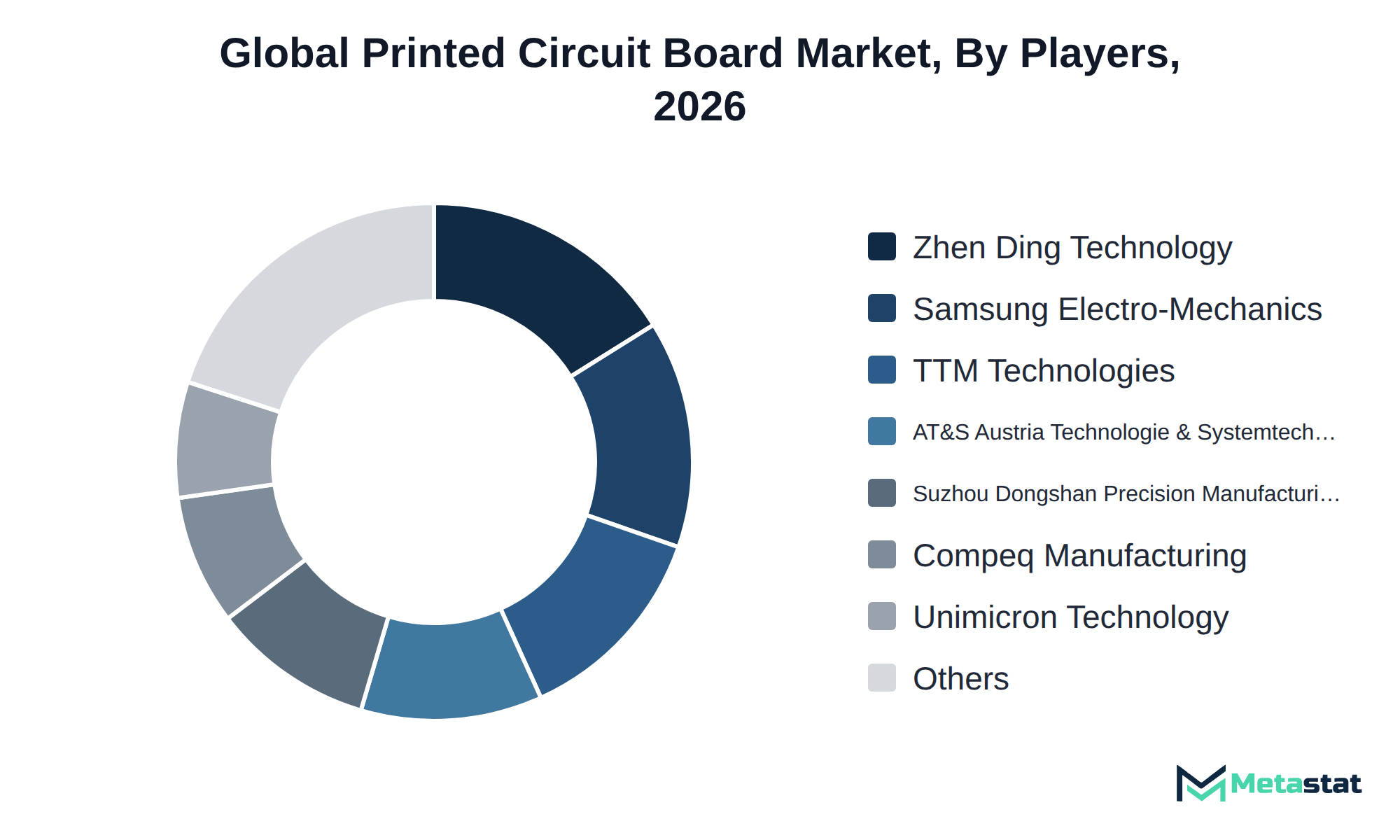
Zhen Ding Technology Holding Limited emphasizes advanced manufacturing techniques and a diverse product range, catering to various end-use industries. Unimicron Technology Corporation stands out with its commitment to high-quality standards and certifications, attracting clients in sectors that demand reliability. TTM Technologies, Inc. prioritizes technological advancements, investing in research and development to enhance product performance and service delivery.
Reaching USD 182.9 billion by 2033 in the Printed Circuit Board market relies on several key developments. First, the expansion of flexible printed circuit boards (PCBs) is projected to contribute significantly, driven by increasing applications in consumer electronics, where demand for lightweight and compact designs is strong. Second, advancements in base materials, particularly polyimide and glass epoxy (FR-4), are essential for improving performance and reliability across various end-use industries, including automotive and telecommunications. These developments enhance the market's overall value.
However, the market faces risks that could hinder growth, including supply chain disruptions and rising raw material costs. Any significant increase in manufacturing costs could adversely impact pricing strategies, particularly in price-sensitive regions including South America. The relationship between these developments and risks will shape the trajectory of the Printed Circuit Board market in the coming years.
By Board Type: Rigid PCBs, Flexible PCBs, Rigid-Flex PCBs
By Layer Count: Single-Sided, Double-Sided, 3-8 Layers, 9-16 Layers, More than 16 Layers
By Base Material: Glass Epoxy (FR-4), Polyimide, ABF and BT Resin, PTFE, Hydrocarbon and PPE, Others (Paper Phenolic, LCP, PET)
By End-Use Industry: Consumer Electronics, Computing and Data Centers, Telecommunications, Automotive, Industrial Electronics, Medical Devices, Aerospace and Defense, Others (Lighting and Energy Infrastructure)
The report strategically identifies and profiles the key market players and analyses their core competencies in each sub-segment of the Printed Circuit Board market.
|
Report Attributes |
Details |
|
Study Period |
2021-2033 |
|
Base Year |
2025 |
|
Estimated Year |
2026 |
|
Forecast Period |
2026-2033 |
|
Historical Period |
2021-2025 |
|
Growth Rate |
CAGR 6.8% from 2026 to 2033 |
|
Revenue Unit |
USD billion |
|
Segmentation |
By Board Type, Layer Count, Base Material, End-Use Industry, and Region |
|
By Region |
North America (By Board Type, Layer Count, Base Material, End-Use Industry, and Country)
|
|
Europe (By Board Type, Layer Count, Base Material, End-Use Industry, and Country)
|
|
|
Asia Pacific (By Board Type, Layer Count, Base Material, End-Use Industry, and Country)
|
|
|
South America (By Board Type, Layer Count, Base Material, End-Use Industry, and Country)
|
|
|
Middle East and Africa (By Board Type, Layer Count, Base Material, End-Use Industry, and Country)
|
Find answers to common questions about this report
The Printed Circuit Board market size was valued at USD 107.9 billion in 2025.
The market is projected to grow at a CAGR of 6.8% during the forecast period from 2026 to 2033.
The North America Printed Circuit Board market size is estimated to reach USD 15.5 billion by 2033.
Rigid PCBs lead the Printed Circuit Board market with a projected value of USD 130.3 billion by 2033, reflecting significant demand compared to other board types.
Rising demand for advanced electronic devices, particularly in consumer electronics, drives increased spending on printed circuit boards. The flexible printed circuit board segment presents significant growth opportunities due to its adoption in mobile devices and wearables, reflecting a trend toward design flexibility and lightweight solutions.
Increasing prices for raw materials, including copper and resin, restrict adoption among manufacturers in the Printed Circuit Board market. Regulatory compliance costs present a significant challenge, driving expenses upward and impacting smaller manufacturers.
The increasing adoption of flexible printed circuit boards (PCBs) in consumer electronics favors market growth due to their design flexibility and lightweight solutions. This segment is projected to reach USD 41.9 billion by 2033, driven by the demand for advanced technology in compact and adaptable circuit solutions.
The Printed Circuit Board market is estimated to reach a valuation of USD 182.9 billion by 2033.
Key players operating in the Printed Circuit Board market include Zhen Ding Technology Holding Limited, Unimicron Technology Corporation, TTM Technologies, Inc., AT&S Austria Technologie & Systemtechnik Aktiengesellschaft, Samsung Electro-Mechanics Co., Ltd., and LG Innotek Co., Ltd.
The flexible printed circuit board segment is projected to reach USD 41.9 billion by 2033, reflecting a compound annual growth rate of 7.6%.
The analysts below cover Electronics and Semiconductor research at Metastat Insights.
LEAD ANALYST
Utkarsh Khirodkar is a Lead Market Research Analyst at MetaStat Insight, specializing in market intelligence, technology sector assessments, and competitive strategy.

PRINCIPAL CONSULTANT - ENTERPRISE AI & EMERGING TECHNOLOGIES
Banking & Finance · Electronics and Semiconductor · Energy and Power · Healthcare IT · Information & Technology · Professional Services
Vijay Gunti is a Principal Consultant at MetaStat Insight, bringing over two decades of experience across enterprise digital transformation, technology strategy, and intelligent systems.

PRINCIPAL CONSULTANT - QUALITY SYSTEMS & COMPLIANCE
Electronics and Semiconductor · Machinery & Equipment · Professional Services
Omkar Phadtare is an Industry Consultant at MetaStat Insight, specializing in quality systems, regulatory compliance, and standards benchmarking to drive data-driven market intelligence and strategic industry research.

ENERGY & INFRASTRUCTURE INDUSTRY CONSULTANT
Automotive and Transportation · Electronics and Semiconductor · Energy and Power · Machinery & Equipment
Saurabh Vasant Ganvir consults for Energy & Infrastructure Industry at MetaStat Insight, specializing in renewable energy, solar EPC, and electric vehicle (EV) infrastructure markets.

LEAD CONSULTANT - COMMUNICATION, TELECOM, AND IT
Electronics and Semiconductor · Information & Technology · Machinery & Equipment · Professional Services
Ravindra Sathe Consultants for Communication, Telecom, and IT at MetaStat Insight. He leads the firm's industry research initiatives across telecommunications infrastructure, digital connectivity, enterprise networking, and emerging information technology domains.
Ambulatory surgical centers have very different purchasing cycles for robotic-assisted surgery platforms than major hospital networks. The MetaStat Insight study focused squarely on capital expenditure depreciation, procedural reimbursement pathways, and surgeon training overhead. That operational clarity made it much simpler to validate multi-year procedure growth forecasts against actual ambulatory center adoption patterns.
When planning edge sensor rollouts across refinery environments, generic IoT reports typically miss the harsh-environment certification bottlenecks. MetaStat Insight gave an objective evaluation of ATEX and Class 1 Division 2 hardware availability, along with realistic five-year maintenance cycle cost projections. The comparison of wireless mesh versus private cellular backhaul helped our team pressure-test network reliability models for remote processing facilities.
In the biological seed treatment space, registration timelines vary drastically between the European Union, Brazil, and North America. The MetaStat Insight research handled these cross-border regulatory barriers with genuine nuance, mapping commercialization pathways alongside historical field adoption rates. The segmentation between microbial strains and biochemical active ingredients was particularly well structured.
Explore related market intelligence reports worth reading alongside this one.