
LEAD ANALYST
Utkarsh Khirodkar is a Lead Market Research Analyst at MetaStat Insight, specializing in market intelligence, technology sector assessments, and competitive strategy.

Global Video Production Monitor Market Size, Share, By Product Type (On-Camera Monitors, Field and Director Monitors, Studio and Rackmount Monitors, Reference and Grading Monitors), By Display Technology (Conventional LED-Backlit LCD, Mini-LED-Backlit LCD, OLED), By Screen Size (Below 10 Inches, 10 to 20 Inches, Above 20 Inches), By Application (Studio Production, Field Production, and Post-Production), Industry Analysis, Growth, Trends, and Forecast, 2026-2033
Report ID
MSI-2686
Published
November, 2026
Pages
260 Pages
Format
Historical
Base year
Forecast
Forecast period
Report Details
Market Valuation: Valued at $1,652.3 Million in 2025, projected to reach $2,874 Million by 2033 at a 7.1% CAGR.
Dominant Segment: On-Camera Monitors lead the market, driven by the increasing preference for portable and high-quality monitoring solutions among filmmakers and videographers.
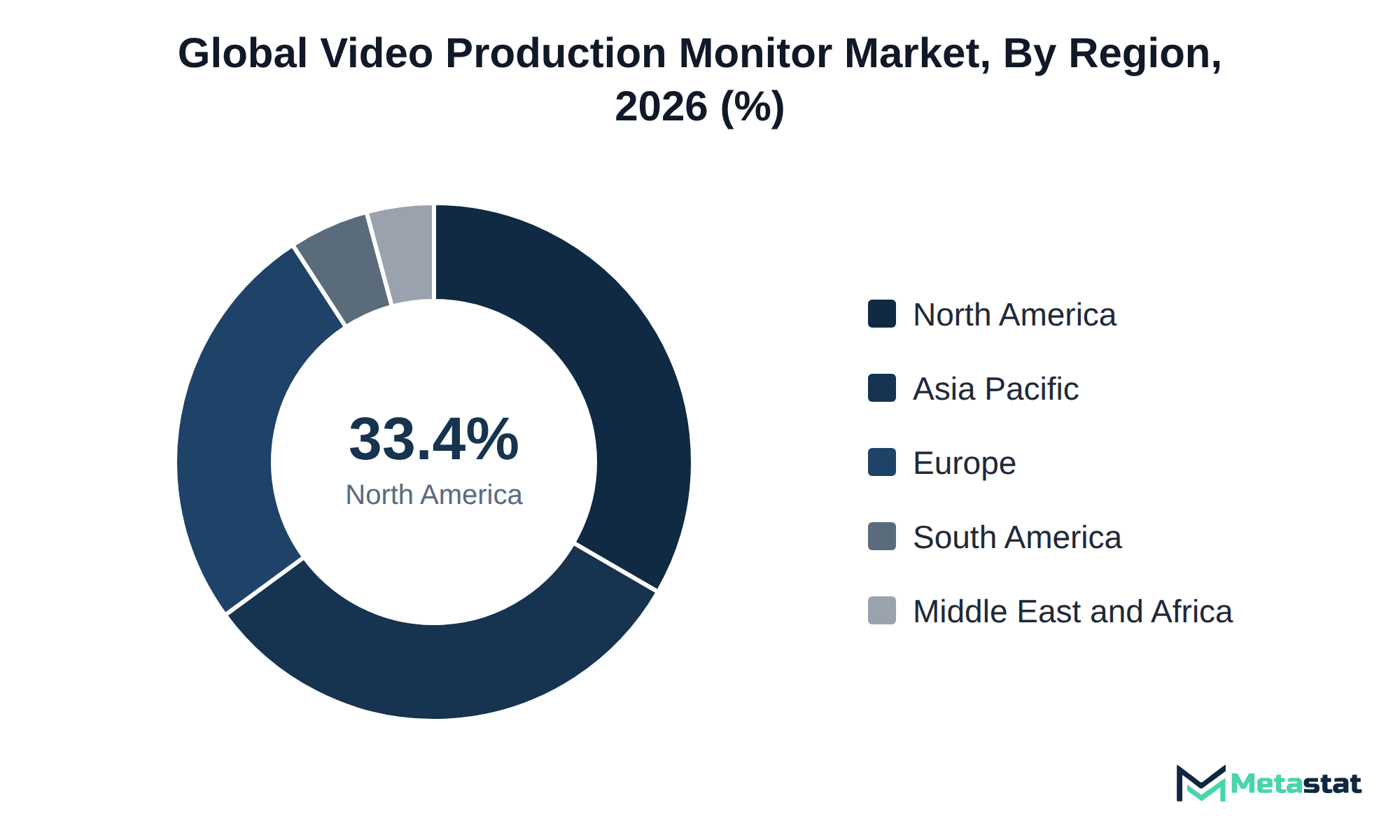
Geographic Lead: North America is the leading region, holding 33.4% of the market in 2025, primarily due to significant investments in media and entertainment.
What's Inside: The report provides a comprehensive analysis of the competitive landscape, forecasts for 2026-2033, and detailed segmentations by product type, display technology, screen size, and application.
Growing Demand for Mini-LED Technology: The Mini-LED segment is projected to reach USD 558.1 million by 2033, reflecting a CAGR of 11.8%, as professionals seek enhanced brightness and contrast for high-quality visuals.
High-Brightness on-Camera Monitors: This segment is expected to grow from USD 487.3 million in 2026 to USD 816.5 million by 2033, driven by the needs of mobile and independent filmmakers for adaptable equipment.
Choose Your License
Global Video Production Monitor Market
The global Video Production Monitor market was valued at USD 1,652.3 million in 2025 and is projected to reach USD 2,874 million by 2033, growing at a CAGR of 7.1% over the forecast period.
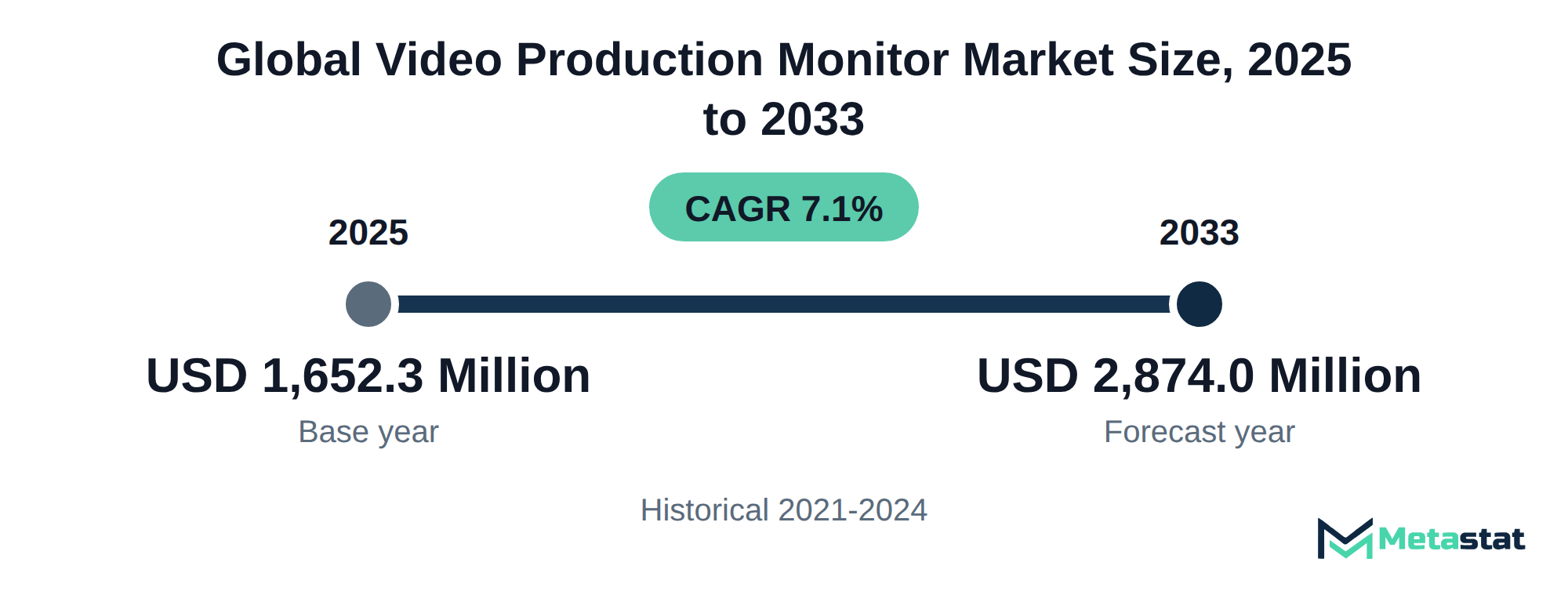
The Video Production Monitor market encompasses a range of display solutions designed for video production, including on-camera monitors, field monitors, studio monitors, and reference displays. Buyers invest in these products to enhance visual accuracy and ensure quality during production processes, enabling professionals to produce high-quality video content. Rising demand for video content across various platforms drives spending in this sector, as businesses and content creators seek advanced technology to improve production capabilities.
Rising adoption of high-definition and 4K video production fuels growth in the Video Production Monitor market. The segment for on-camera monitors represents the largest share, reflecting the increasing preference for portable and high-quality monitoring solutions among filmmakers and videographers. North America holds 33.4% of the market in 2025, with the US leading in 2026. North America is characterized by significant investments in media and entertainment, which enhance demand for advanced video production technologies.
Technological advancements, particularly in display technologies including Mini-LED and OLED, contribute to market expansion. These innovations improve color accuracy and brightness, catering to the evolving needs of video professionals. The growing emphasis on live streaming and content creation across platforms further drives demand for high-performance monitors, positioning the market for substantial growth in the coming years.
The Video Production Monitor market caters to various applications, including studio production, field production, and post-production. Buyers invest in this market to enhance the quality and efficiency of their video production processes, ensuring that visual content meets industry standards. The variety of product types and display technologies lets users select solutions tailored to specific production needs, which drives demand for these monitors across multiple sectors.
Growth in the market is influenced by the increasing adoption of high-definition and 4K video standards, prompting producers to seek advanced monitoring solutions. Among the segments, On-Camera Monitors represent the highest value, reflecting a trend toward portable and versatile display solutions. This region's strong presence is attributed to a flourishing entertainment industry and a high demand for professional video production equipment.
The continuous evolution in display technologies, including Mini-LED and OLED, enhances the visual experience for users, further stimulating market growth. The rising popularity of content creation across platforms, including social media and streaming services, contributes to this demand. Producers prioritize quality, and investments in high-performance video production monitors are expected to rise as industry dynamics shift.
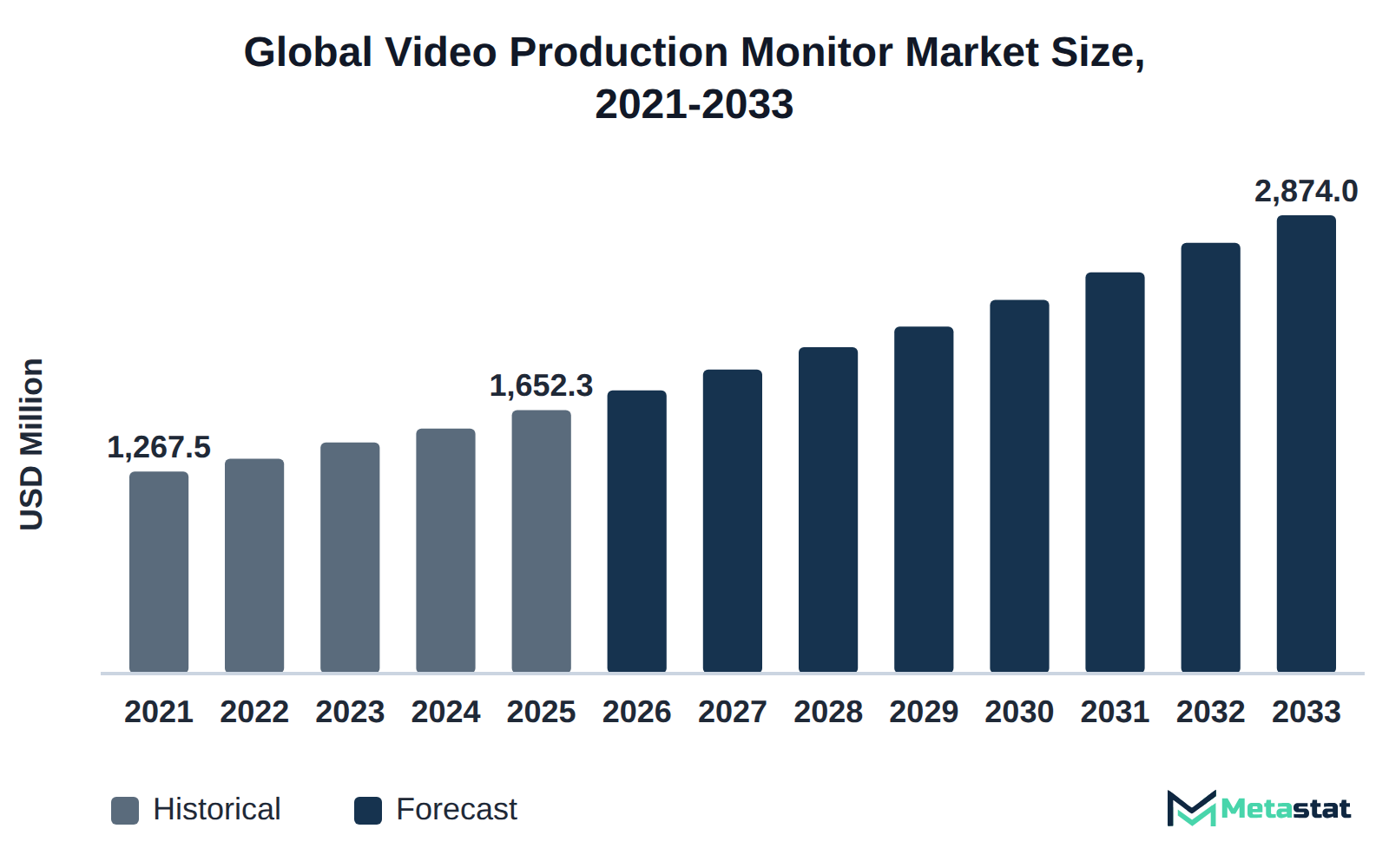
The transition towards OLED and Mini-LED displays in the Video Production Monitor market significantly influences HDR reference monitoring standards. This shift enhances visual quality, providing superior contrast ratios and color accuracy, essential for high dynamic range content creation. Mini-LED technology, in particular, offers improved brightness control and local dimming capabilities that raise the performance of HDR reference displays.
In 2023, OLED displays are projected to achieve a value of USD 888.4 million by 2033. This growth reflects rising adoption rates among filmmakers and content creators who prioritize display fidelity in their productions. Increased market demand for displays capable of accurately reproducing HDR content illustrates the industry's evolution towards more advanced technology standards.
The shift to OLED and Mini-LED displays positions producers to deliver content that meets the high expectations of audiences and platforms, driving further investment in advanced monitoring solutions. This technology adoption has a significant commercial impact, creating competitive advantages for producers who integrate these display technologies into their workflows.
Pricing strategies significantly influence the acquisition of high-brightness on-camera monitors within the Video Production Monitor market. The segment shows a projected growth from USD 487.3 million in 2026 to USD 816.5 million by 2033, reflecting a compound annual growth rate (CAGR) of 7.7%. This growth correlates with rising demand from mobile and independent filmmakers who prioritize adaptability and portability in their equipment choices.
Buyers employ various purchasing models, including outright purchases and leasing options. Leasing agreements attract filmmakers seeking to minimize upfront costs while accessing advanced technology. Vendors structure lease agreements to include maintenance services, ensuring that equipment remains in optimal condition throughout the lease term. This bundled approach resembles a hardware-as-a-service model. This approach allows filmmakers to allocate budgets more efficiently, focusing resources on content creation rather than equipment management.
Volume discounts frequently apply for bulk purchases, appealing to production companies needing multiple monitors for larger projects. This strategy enhances accessibility and promotes brand loyalty among filmmakers. Evolving pricing models support increased adoption and drive innovation in high-brightness on-camera monitors, helping filmmakers keep a competitive edge in their productions.
The integration of 12G-SDI and IP connectivity is central to live production monitoring. These technologies enable high-definition video transmission and enhance flexibility in video production workflows. The Video Production Monitor market benefits significantly from this advancement, as 12G-SDI supports resolutions up to 4K at high frame rates without signal degradation. This capability is essential for production environments requiring real-time monitoring and precise color representation.
For instance, the segment focusing on Field Production, projected to reach USD 1,096.7 million by 2033, illustrates the growing demand for advanced connectivity options. The shift from traditional SDI to 12G-SDI and IP standards allows for simplified setups, reduced cabling, and improved scalability for production teams. This development attracts buyers seeking efficient, high-quality monitoring solutions that streamline operations and enhance content quality.
Embracing 12G-SDI and IP connectivity contributes to competitive advantages in the market. Producers investing in these technologies position themselves to meet the increasing demands of high-resolution content creation while maintaining operational efficiency. Deploying these standards in live production typically involves AV system integration work. The need for reliable, high-performance video production monitors remains critical as the industry evolves.
Choosing the right video production monitor for color-critical work involves several factors, with display technology being a crucial consideration. The market features a range of display technologies, including OLED, which offers superior color accuracy and contrast ratios. OLED monitors enhance the viewing experience by providing deeper blacks and more accurate colors, making them ideal for color grading and production environments where precision is essential.
For instance, the market is projected to reach a value of USD 888.4 million by 2033 for OLED monitors, reflecting their growing importance among professionals who prioritize color fidelity. This growth indicates a shift towards displays that meet the rigorous demands of film and video production, where accurate color representation is essential.
Investing in an OLED monitor significantly impacts workflow efficiency and post-production quality. Teams prioritizing color accuracy enhance their ability to deliver visually compelling content, thereby improving their competitive edge in the market. Selecting a high-quality monitor fits broader industry trends toward superior visual standards in video production.
Independent filmmakers exhibit growing demand for high-quality video production monitors, driven by the rise of mobile and flexible shooting environments. This demographic shift reflects a broader trend toward lightweight equipment that delivers superior image quality and portability. The surge in content creation across platforms accelerates the need for reliable monitoring solutions, resulting in increased purchase volumes. In 2026, the market for studio production monitors is projected to reach USD 732.8 million, demonstrating strong growth potential. Competition among suppliers intensifies as they adapt to the evolving preferences of this buyer group, enhancing features and performance to attract customers. Such changes reinforce the trajectory of the market, driving innovation while pushing prices and volume higher.
The market evolves rapidly, with independent filmmakers driving significant shifts. They embrace new technologies and workflows, and demand for advanced video production monitors continues to expand.
The transition to advanced display technologies significantly influences buyer preferences in the market. High-resolution displays with improved color accuracy and brightness capabilities attract production companies aiming for superior visual quality. The growing prevalence of Mini-LED and OLED technologies enhances the viewing experience, appealing to segments focused on high-quality video output. These innovations facilitate more precise color grading, which is essential for professional post-production and studio environments.
The integration of conventional LED-backlit LCD monitors continues to provide a cost-effective solution for budget-conscious buyers. This segment remains relevant among users prioritizing reliability over advanced features. Competition among suppliers to offer high-performance monitors at varying price points drives market growth and encourages technological advancements. Enhanced display technology adoption supports market expansion, positioning it for continued growth through 2033.
Pricing pressures within the Video Production Monitor market hinder adoption among budget-conscious buyers, particularly independent filmmakers and small production companies. High-quality monitors often come with significant costs, resulting in slower uptake and smaller orders for these buyers. The inability to justify substantial investments in advanced display technologies contributes to delayed replacement cycles, limiting overall market growth. Competition from lower-priced substitutes further exacerbates the issue, pushing buyers toward more affordable options that lack the capabilities necessary for professional production. This trend restricts the potential for market expansion and diminishes revenue opportunities for manufacturers focusing on premium products.
Rising input costs present a significant challenge for suppliers in the Video Production Monitor market. Increased prices for essential components, including display technologies and processing units, lead to tighter margins. This situation affects profitability, driving several suppliers to seek alternative sourcing strategies and cost-efficient manufacturing processes. Enhancing operational efficiency through automation and adopting just-in-time inventory practices represent common responses to these financial pressures. Suppliers aim to forge long-term relationships with component manufacturers to secure pricing stability and favorable terms. While these strategies help mitigate immediate cost impacts, they require investment and affect responsiveness to market changes. Suppliers must balance cost management with product quality to stay competitive in the Video Production Monitor market.
Mini-LED technology in video production monitors experiences significant growth due to enhanced brightness and contrast capabilities, appealing to professionals requiring high-quality visuals. This technological advancement is projected to reach a market value of USD 558.1 million by 2033, indicating a compound annual growth rate of 11.8%. Industries including film and television production increasingly seek these monitors for color accuracy and HDR support, which optimize production quality in various settings. The integration of Mini-LED displays aligns with higher performance expectations, particularly in field production where lighting conditions vary drastically. Buyers prioritizing portability and image fidelity represent a key segment driving this growth, with the market expanding its offerings to meet these needs effectively. The rising popularity of Mini-LED monitors contributes to a competitive landscape that encourages innovation and investment across the video production monitor market.
The Global Video Production Monitor market is segmented based on Product Type, Display Technology, Screen Size, and Application.
This segment finds extensive use among videographers and filmmakers, serving critical applications in both on-location shoots and studio environments. Filmmakers who shoot with cinematographic cameras are a natural user group for these on-camera displays. Demand for on-camera monitors is driven by the need for high-quality, real-time video playback and accurate color representation. The segment differentiates itself through its higher growth rate compared to other product types, including Studio and Rackmount Monitors, which exhibit slower growth patterns. Technology advances, such as the introduction of enhanced display features like HDR support and portability, strengthen the appeal of on-camera monitors, particularly among independent creators and small production teams. Ongoing demand for lightweight, versatile solutions drives this segment's expansion in the market.
Field and Director Monitors segment is estimated to reach USD 728.8 million by 2033, at a CAGR of 7.3% during the forecast period. These monitors are essential for professionals overseeing video production, providing critical viewing capabilities in various settings. Demand for this segment stems from filmmakers and production teams prioritizing accurate color representation and monitoring capabilities in dynamic environments. The increasing adoption of advanced display technologies enhances the attractiveness of Field and Director Monitors, distinguishing them from other segments. Compared to Studio and Rackmount Monitors, which cater mainly to stationary setups, Field and Director Monitors serve mobile applications, enhancing their appeal. Price sensitivity remains a consideration, influencing purchasing decisions among several budget-conscious buyers in competitive markets. This segment continues to attract investment due to its anticipated growth trajectory, benefiting from ongoing technological advancements.
Studio and Rackmount Monitors segment is expected to reach USD 680.6 million by 2033. These monitors serve critical functions in professional environments, particularly in broadcast and studio settings where accurate and high-quality visual feedback is essential. These settings sit within the broader professional audio-visual industry. Usage occurs primarily among content creators, broadcast engineers, and production teams, who rely on these monitors for real-time monitoring during production and post-production processes. The segment benefits from increasing demand for high-resolution displays and the integration of advanced calibration technologies. This segment is growing strongly, driven by the industry's shift toward high-definition and 4K content production. Studio and Rackmount Monitors grow slightly slower than On-Camera Monitors and Field Monitors. They offer stable and reliable performance for a niche but dedicated audience focused on precision and detail in video production. This distinction supports steady investment in technology upgrades and improvements across the segment.
Reference and Grading Monitors segment is projected to grow at a CAGR of 7.8% during the forecast period. These monitors serve critical functions in ensuring color accuracy and consistency during video production and post-production processes. Typically used by professionals in filmmaking, broadcasting, and video editing, their importance stems from the need for precise color representation. The increasing demand for high-quality visual content drives this segment's growth, with advancements in display technologies playing a significant role. Compared to other product types, Reference and Grading Monitors tend to command higher price points, reflecting their specialized applications and the advanced features they offer. This segment differentiates itself through its focus on ensuring color fidelity, appealing to users who prioritize visual precision over general-purpose functionality. By 2033, the segment is expected to contribute significantly to the overall market, highlighting its vital role in professional video production.
Conventional LED-Backlit LCD segment is valued at USD 1,035.1 million in 2026 and is projected to reach USD 1,427.5 million by 2033, at a CAGR of 4.7% during the forecast period. This display technology is widely used in studio production and broadcasting environments, where reliable color accuracy and brightness are essential. A significant driver of demand stems from advancements in LED technology, which enhance the visual performance of monitors while maintaining cost-effectiveness. Compared to other display technologies, including Mini-LED and OLED, Conventional LED-Backlit LCD monitors exhibit slower growth due to increasing competition and the appeal of more advanced options. While their price point remains favorable for many users, the market for these monitors is expected to adapt to shifting preferences, emphasizing the ongoing need for high-quality visuals in professional settings.
Mini-LED-Backlit LCD segment is estimated to reach USD 558.1 million by 2033, at a CAGR of 11.8% during the forecast period. This display technology finds applications in high-end video production, catering to professionals who prioritize enhanced image quality and color accuracy. The growing demand for superior visual performance drives the adoption of Mini-LED-Backlit LCD in the market, particularly among content creators seeking to improve their productions. Compared to other display technologies, Mini-LED offers higher brightness and better contrast ratios, appealing to users in various environments. Rapid advancements in manufacturing processes and a decrease in production costs contribute to the segment's competitiveness, positioning it for significant growth. In contrast, conventional LED-Backlit LCD displays experience slower growth due to market saturation and established pricing structures.
OLED technology is expected to reach USD 888.4 million by 2033. This display technology finds its primary use in high-end video production settings, appealing to professionals who prioritize color accuracy and contrast. The incorporation of OLED displays in video production monitors offers significant advantages, including deeper blacks and wider viewing angles, essential for post-production and color grading applications. A driving force behind the growth of this segment stems from increasing demand for superior visual quality, particularly from studios and production companies focusing on high-definition content. Compared to other display technologies in the market, OLED exhibits a distinct advantage due to its premium pricing and enhanced performance features, leading to a higher average selling price relative to segments like conventional LED-backlit LCD. This differentiation positions OLED as a preferred option for specialized applications, promoting its adoption among professionals requiring high display quality.
Segment valued at USD 696.9 million in 2026 is projected to reach USD 1,155.6 million by 2033, at a CAGR of 7.5% during the forecast period. This segment is often used by camera operators and videographers who require portable and lightweight monitoring solutions during production. Demand arises from the increasing trend toward mobile and independent filmmaking, where compact and efficient equipment is essential. In comparison to larger screen sizes, this segment experiences moderate growth, supported by the rising adoption of portable monitors for field use. Advancements in display technology enhance the appeal of smaller monitors, giving professionals access to high-quality visuals without the bulk of larger alternatives. The market exhibits a unique dynamic, where price sensitivity and performance capabilities directly influence purchasing decisions.
Segment 10 to 20 Inches is estimated to reach USD 752.4 million by 2033, at a CAGR of 6.5% during the forecast period. This segment serves mid-sized studio productions and mobile setups, catering primarily to production teams requiring a balance between portability and screen real estate. Demand arises from a growing preference for monitors that facilitate high-quality video assessments during shoots, driven by advancements in display technologies. Compared to larger monitors, this segment offers a more accessible price point while addressing specific needs of content creators who prioritize both functionality and cost. It experiences moderate growth relative to other segments, distinguishing itself from the Below 10 Inches segment, which shares similar price points but targets different applications in smaller setups. The market continues to embrace innovations that enhance visual performance, making the 10 to 20 Inches segment a relevant choice among professionals in the industry.
Segment valued at USD 966 million by 2033 reflects a growing preference for larger displays among industry professionals including filmmakers and video editors. These monitors are essential for detailed viewing during studio production and post-production processes. The increasing demand for high-resolution content drives this segment's growth, particularly among users requiring enhanced visual accuracy. A transition to larger screen sizes provides improved viewing experiences, distinguishing this segment from smaller counterparts. The Above 20 Inches segment is projected to grow at a CAGR of 7.5% during the forecast period, positioning it as a more lucrative choice for professionals compared to smaller sizes. The market's focus on delivering high-quality visuals aligns with the needs of buyers seeking superior performance, contributing to the upward trajectory of this segment.
Studio Production segment is valued at USD 732.8 million in 2026 and is projected to reach USD 1,127.5 million by 2033, at a CAGR of 6.3% during the forecast period. This segment centers on the requirements of film and television production environments, where high-quality visuals are essential for delivering professional-grade content. Demand for these monitors arises from production houses and independent filmmakers seeking reliable solutions for real-time monitoring of video quality during shoots. The growing emphasis on visual storytelling drives investment in high-performance equipment. Differentiating this segment, the Studio Production segment experiences steadier growth compared to the Field Production segment, which is projected to expand at a higher CAGR of 7.5%. This segment's focus on high-quality output positions it as a staple for studio environments, reinforcing its importance within the broader Video Production Monitor market.
Field Production segment is estimated to reach USD 1,096.7 million by 2033, at a CAGR of 7.5% during the forecast period. This segment serves professionals engaged in location-based video shoots, including filmmakers, television crews, and content creators requiring high-quality visuals in dynamic environments. Increasing demand for high-definition video content influences growth in this segment, with professionals prioritizing durable and portable monitors for outdoor usage. The segment aligns closely with the evolving needs of production teams, differentiating itself from Studio Production monitors, which focus on controlled environments. Field Production typically experiences faster growth compared to Studio Production, emphasizing adaptability in various lighting conditions and enhancing visual accuracy in real-time settings. This adaptability and the need for streamlined production workflows contribute significantly to the segment's expansion within the market.
The Post-Production and Color Grading segment is expected to reach USD 649.8 million by 2033. This segment serves professionals involved in the final phases of video production, where precision in color correction and visual quality is critical. The increasing demand for high-definition content drives growth in this segment, particularly among studios and independent filmmakers. Advancements in display technology enhance the capabilities of monitors used for color grading, enabling better accuracy in visual representation. The Post-Production and Color Grading segment exhibits a slower growth rate compared to other segments, reflecting a more specialized market focus. Demand for high-quality output remains strong; however, the segment operates at a higher price point, appealing primarily to professionals with specific requirements. This divergence contributes to a market landscape where segments tailored for broader applications experience faster adoption rates.
Based on geography, the Global Video Production Monitor market is divided into North America, Europe, Asia-Pacific, South America, Middle East, and Africa.
Demand in North America is driven by the entertainment and broadcasting industries, which rely heavily on high-quality production standards. The region features a robust infrastructure supporting advanced technology adoption, enhancing the capabilities of production teams. The Video Production Monitor market is projected to reach USD 897 million by the end of 2033, reflecting strong growth during the forecast period. Key buyers include film studios, broadcast networks, and independent production companies, all seeking innovative solutions for their projects. The significant market share of 33.4% in 2025 illustrates the importance of North America in the global landscape, positioning it as a leading region for video production monitor advancements.
Europe ranks as a significant player in the Video Production Monitor market, holding a share of 25.9% in 2025. Countries including Germany, France, and the UK contribute substantially to demand, particularly within the film and broadcasting sectors. The region's advanced technological infrastructure supports the adoption of high-performance monitors, enhancing production quality. Increasing investments in content creation and streaming services drive market growth. The preference for high-resolution displays among professionals in the media industry reflects a trend toward visual excellence. Consequently, the market is expected to experience steady growth, with manufacturers focusing on innovative features to address evolving consumer needs.
Rapid technological advancements in Asia-Pacific drive significant growth in the Video Production Monitor market. Countries including China and Japan lead in production and consumption, with increasing demand from the film and television industries. South Korea's technological expertise in electronic display manufacturing enhances market competitiveness. Infrastructure improvements in Australia support the adoption of advanced video production equipment, while the rising popularity of content creation in Southeast Asia contributes to market expansion. Market share in the region reached 31.6% in 2025, with expectations for continued growth driven by innovation and consumer preferences. By 2033, the Asia-Pacific market is projected to remain a critical player, aligning with global trends in video production.
Brazil and Argentina serve key markets in the Video Production Monitor market, with increasing demand driven by the expanding media and entertainment sectors. The prevalence of digital content creation significantly enhances the need for high-quality production equipment. Infrastructure improvements in broadcasting services contribute to market growth, particularly in urban areas. The adoption of advanced technologies by local production houses supports a shift toward sophisticated monitoring solutions, reflecting a trend toward higher production values. The market holds a 5.0% share of global revenue in 2025, indicating promising prospects for growth in this region through 2033. The continued evolution of consumer preferences toward immersive content experiences will further fuel demand for high-performance video production monitors.
The Video Production Monitor market in the Middle East and Africa experiences unique dynamics due to varying production needs across the region. Saudi Arabia and the UAE exemplify a growing focus on media and entertainment, prompting investments in high-quality video production equipment. South Africa stands out for its expanding film industry, necessitating advanced monitoring solutions. The region's share of the global market is 4.2% in 2025, reflecting gradual but steady adoption of innovative technologies. Infrastructure improvements and increasing demand for video content drive this growth, compelling industry participants to enhance their offerings. A diverse landscape of players continues to evolve, catering to distinct regional requirements within the competitive framework.
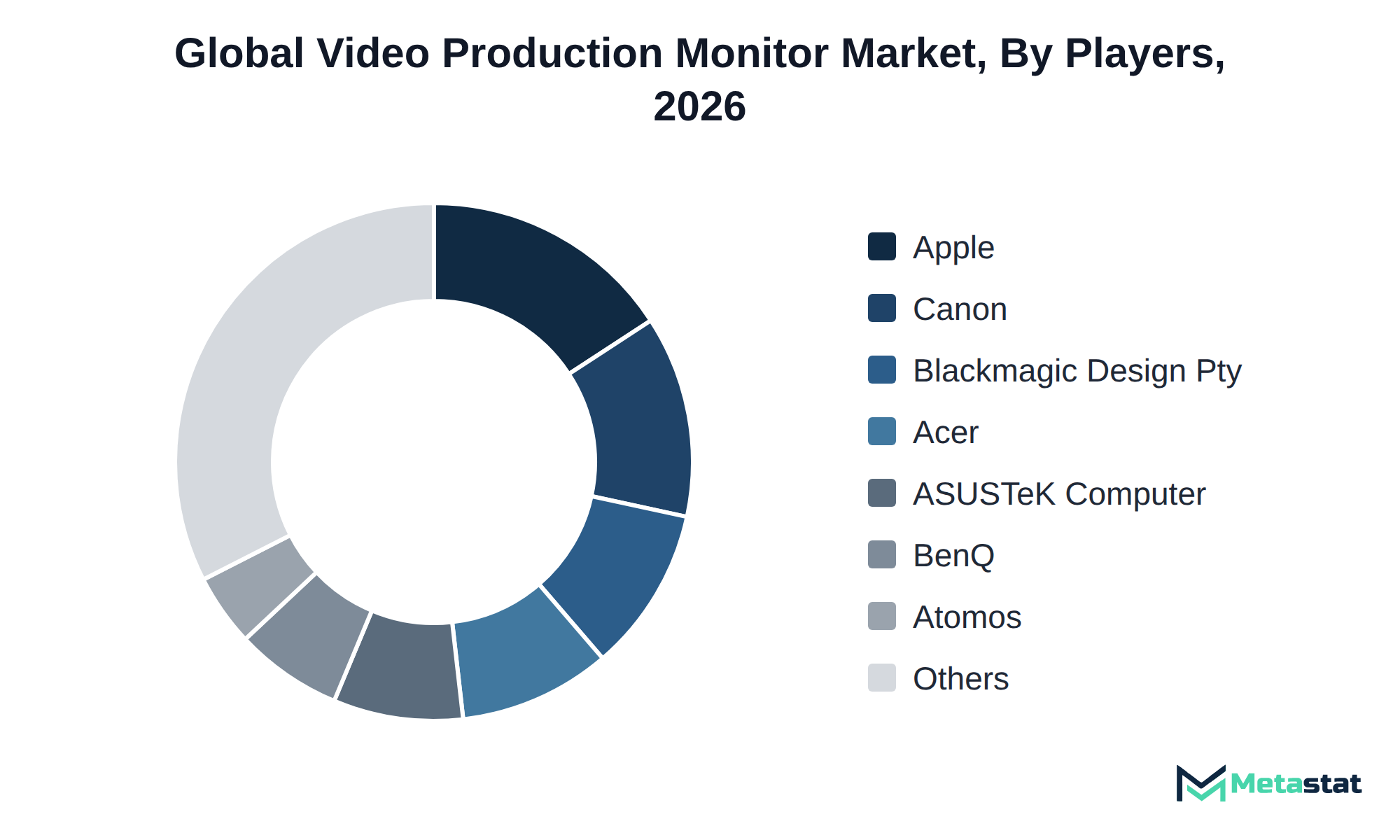
The Video Production Monitor market exhibits a diverse competitive environment, with companies focusing on various product types, including on-camera monitors, field and director monitors, studio and rackmount monitors, and reference and grading monitors. Buyers select products based on factors including price, customization, and service quality, reflecting their specific operational requirements.
Acer Inc. and Apple Inc. emphasize innovation and quality in their offerings, catering to professionals seeking high-performance monitors. In contrast, manufacturers like BenQ Corporation and EIZO Corporation focus on delivering cost-effective solutions without compromising performance, appealing to a broader range of users. Blackmagic Design Pty Ltd. stands out by integrating advanced features tailored to meet the needs of filmmakers and content creators, reinforcing its position within the market.
This growth relies on several developments, including advancements in display technology, particularly Mini-LED-Backlit LCD and OLED. These technologies enhance image quality and resolution, appealing to sectors including studio production and post-production, which require high fidelity in visual output. Increasing adoption of video production monitors in the Asia Pacific region, driven by rising content creation and media consumption, will support market expansion.
However, potential supply chain disruptions present a significant risk that could hinder growth. Delays in obtaining critical components for video production monitors could impact manufacturers' ability to meet rising demand, especially within North America, which accounts for a significant share of the market. Overall, while the market is poised for growth, achieving the forecast of USD 2,874 million by 2033 necessitates overcoming these challenges and capitalizing on technological advancements.
By Application: Studio Production, Field Production, Post-Production and Color Grading
The report strategically identifies and profiles the key market players and analyses their core competencies in each sub-segment of the Video Production Monitor market.
|
Report Attributes |
Details |
|
Study Period |
2021-2033 |
|
Base Year |
2025 |
|
Estimated Year |
2026 |
|
Forecast Period |
2026-2033 |
|
Historical Period |
2021-2025 |
|
Growth Rate |
CAGR 7.1% from 2026 to 2033 |
|
Revenue Unit |
USD million |
|
Segmentation |
By Product Type, Display Technology, Screen Size, Application, and Region |
|
By Region |
North America (By Product Type, Display Technology, Screen Size, Application, and Country)
|
|
Europe (By Product Type, Display Technology, Screen Size, Application, and Country)
|
|
|
Asia Pacific (By Product Type, Display Technology, Screen Size, Application, and Country)
|
|
|
South America (By Product Type, Display Technology, Screen Size, Application, and Country)
|
|
|
Middle East and Africa (By Product Type, Display Technology, Screen Size, Application, and Country)
|
Find answers to common questions about this report
The Video Production Monitor market size was valued at USD 1,652.3 million in 2025.
The market is projected to grow at a CAGR of 7.1% during the forecast period from 2026 to 2033.
The North America Video Production Monitor market size is estimated to reach USD 897 million by 2033.
On-Camera Monitors lead the Video Production Monitor market with a projected value of USD 816.5 million by 2033, based on the highest forecast figure among the product type segments.
Independent filmmakers exhibit growing demand for high-quality video production monitors, driven by the rise of mobile and flexible shooting environments. The transition to advanced display technologies significantly influences buyer preferences, with high-resolution displays attracting production companies aiming for superior visual quality.
North America holds the dominant share of the Video Production Monitor market, with a projected value of USD 897 million in 2033, representing 33.4 percent of the total market. This figure surpasses the shares of other regions, including Europe and Asia Pacific.
Pricing pressures hinder adoption among budget-conscious buyers, particularly independent filmmakers and small production companies. Rising input costs present a significant challenge for suppliers, leading to tighter margins and affecting profitability.
The integration of advanced display technologies, including Mini-LED and OLED, enhances visual quality, attracting production companies focused on superior output. The competitive landscape encourages innovation and investment, supporting the adoption of high-performance video production monitors.
The Video Production Monitor market is estimated to reach a valuation of USD 2,874 million by 2033.
Key players operating in the Video Production Monitor market include Acer Inc., Apple Inc., Atomos Limited, BenQ Corporation, Blackmagic Design Pty Ltd., Canon Inc., Dell Technologies Inc., and Samsung Electronics.
The analysts below cover Electronics and Semiconductor research at Metastat Insights.
LEAD ANALYST
Utkarsh Khirodkar is a Lead Market Research Analyst at MetaStat Insight, specializing in market intelligence, technology sector assessments, and competitive strategy.

PRINCIPAL CONSULTANT - ENTERPRISE AI & EMERGING TECHNOLOGIES
Banking & Finance · Electronics and Semiconductor · Energy and Power · Healthcare IT · Information & Technology · Professional Services
Vijay Gunti is a Principal Consultant at MetaStat Insight, bringing over two decades of experience across enterprise digital transformation, technology strategy, and intelligent systems.

PRINCIPAL CONSULTANT - QUALITY SYSTEMS & COMPLIANCE
Electronics and Semiconductor · Machinery & Equipment · Professional Services
Omkar Phadtare is an Industry Consultant at MetaStat Insight, specializing in quality systems, regulatory compliance, and standards benchmarking to drive data-driven market intelligence and strategic industry research.

ENERGY & INFRASTRUCTURE INDUSTRY CONSULTANT
Automotive and Transportation · Electronics and Semiconductor · Energy and Power · Machinery & Equipment
Saurabh Vasant Ganvir consults for Energy & Infrastructure Industry at MetaStat Insight, specializing in renewable energy, solar EPC, and electric vehicle (EV) infrastructure markets.

LEAD CONSULTANT - COMMUNICATION, TELECOM, AND IT
Electronics and Semiconductor · Information & Technology · Machinery & Equipment · Professional Services
Ravindra Sathe Consultants for Communication, Telecom, and IT at MetaStat Insight. He leads the firm's industry research initiatives across telecommunications infrastructure, digital connectivity, enterprise networking, and emerging information technology domains.
Enterprise zero-trust network rollouts are often slowed down by multi-cloud transit latency and proprietary hardware retirement schedules. This study provided realistic total cost of ownership models comparing cloud-delivered security edge solutions against traditional hardware refreshes. The analysis of contract renewal lengths and software maintenance fees gave us clear visibility into enterprise replacement cycles over the next three to five years.
Scaling antibody-drug conjugate manufacturing hinges on contract manufacturing availability for high-potency active ingredients. The MetaStat Insight analysis looked closely at global cleanroom slot constraints, bioconjugation batch failure rates, and supply chain redundancies between the US, Europe, and India. The supplier capability matrix proved genuinely useful for our team when mapping secondary source options across our clinical pipeline.
Floating offshore wind feasibility relies heavily on specialized installation vessel availability and port crane limits, which most broad renewable energy forecasts ignore. The report delivered a thorough analysis of dry dock capacity, mooring chain supply constraints, and raw material pricing trends for deepwater anchor installations. It served as a solid independent sanity check for our offshore project capital expenditure assumptions.
Explore related market intelligence reports worth reading alongside this one.