
LEAD ANALYST
Utkarsh Khirodkar is a Lead Market Research Analyst at MetaStat Insight, specializing in market intelligence, technology sector assessments, and competitive strategy.

Global Smart Windows Market Size, Share, By Technology (Electrochromic, Polymer Dispersed Liquid Crystal (PDLC), Suspended Particle Device (SPD), Thermochromic and Others), By Product Format (Insulating Glass Units (IGUs) and Non-Insulating Glazing Panels), By End-Use Industry (Commercial and Institutional Buildings, Residential Buildings, Automotive, Aviation and Others), By Control Mode (Manual Electrical Control and Automated Electrical Control), Industry Analysis, Growth, Trends, and Forecast, 2026-2033
Report ID
MSI-5797
Published
November, 2026
Pages
254 Pages
Format
Historical
Base year
Forecast
Forecast period
Report Details
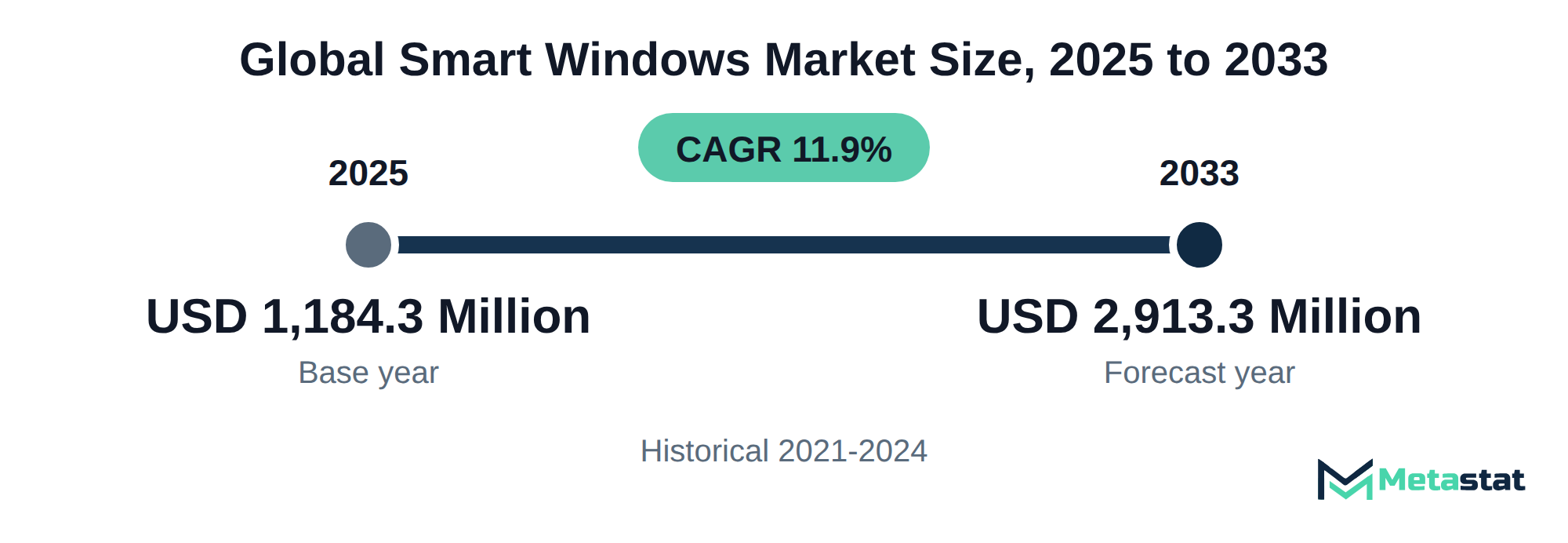
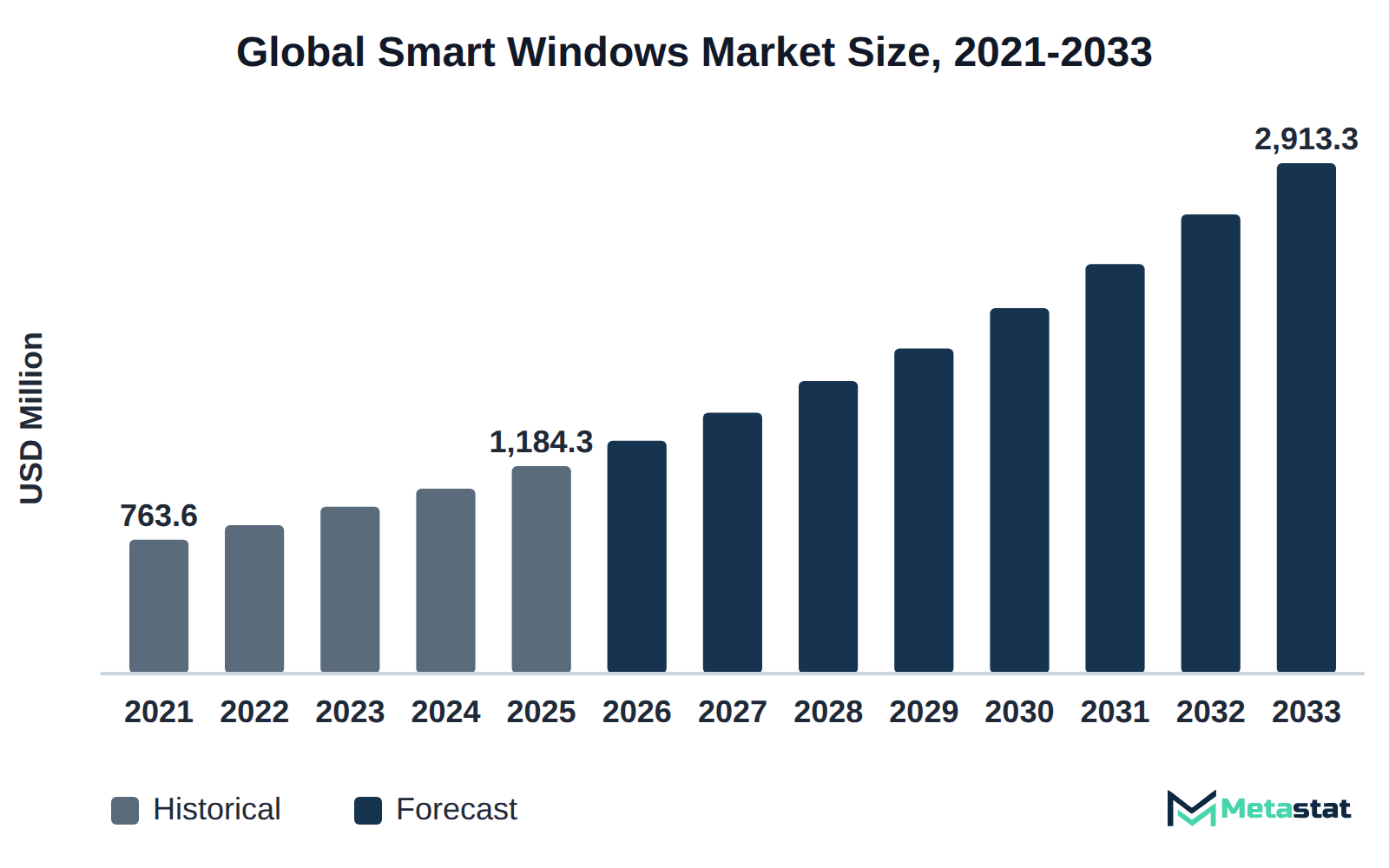
Market Valuation: Valued at $1,184.3 Million in 2025, projected to reach $2,913.3 Million by 2033 at a 11.9% CAGR.
Dominant Segment: The Electrochromic segment leads the Smart Windows market, driven by its ability to enhance energy efficiency and user comfort in commercial and institutional buildings.
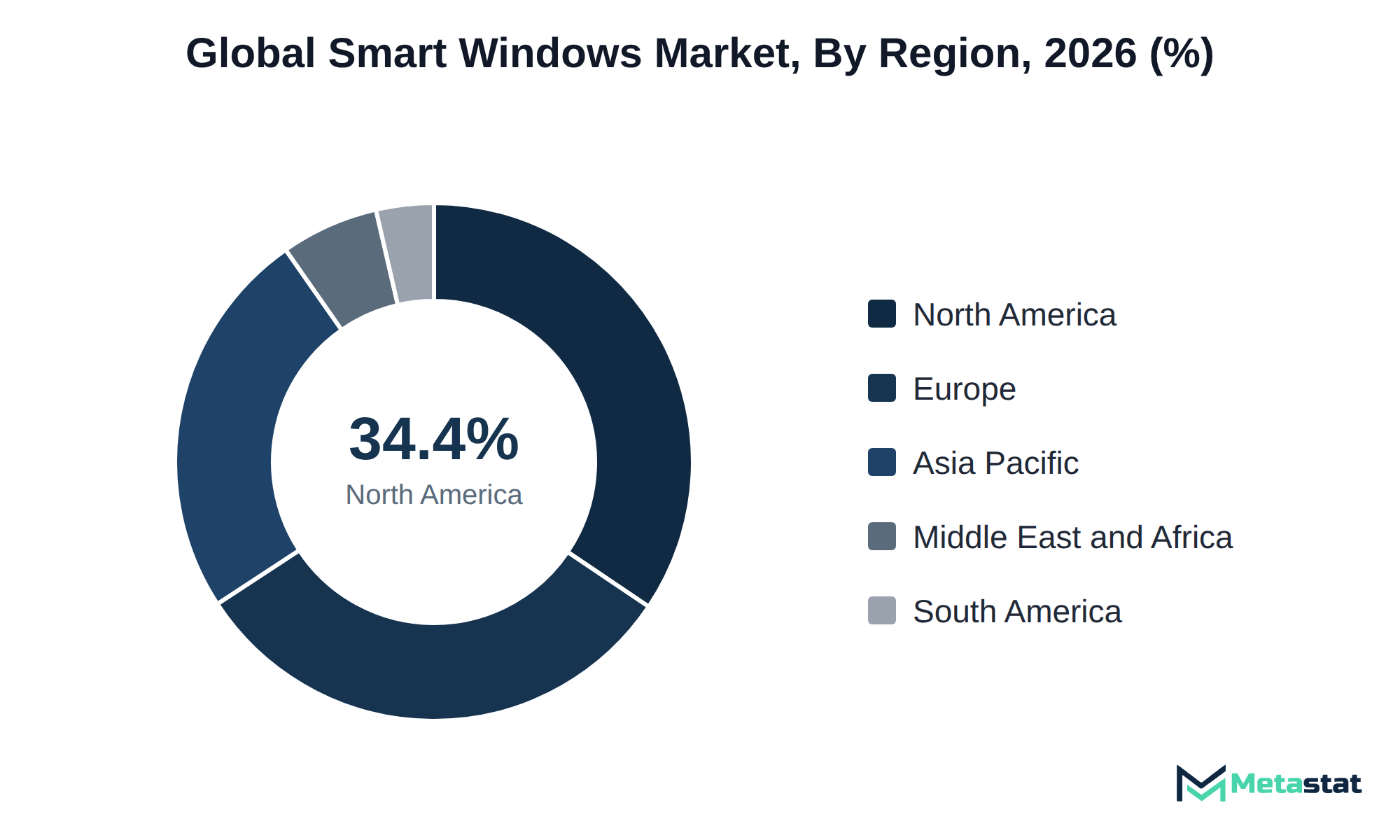
Geographic Lead: North America is the leading region in the Smart Windows market, holding 34.4% of the market in 2025, with robust demand driven by infrastructure investments and a focus on modern building solutions.
What's Inside: This report provides a comprehensive analysis of the Smart Windows market, including detailed segmentation by technology, product format, end-use industry, and control mode, along with competitive coverage and forecasts through 2033.
Emerging Trends: The market is witnessing significant growth in automated electrical control systems, projected to reach USD 1,399 million by 2033, reflecting a rising demand for smart technologies in building management.
Market Dynamics: Key drivers of market growth include an increased focus on energy efficiency, advancements in manufacturing technologies, and a growing preference for sustainable building practices.
Choose Your License
Global Smart Windows Market
The global Smart Windows market was valued at USD 1,184.3 million in 2025 and is projected to reach USD 2,913.3 million by 2033, growing at a CAGR of 11.9% over the forecast period.
The Smart Windows market encompasses advanced glazing technologies that offer dynamic adjustment of light and heat transmission. These products provide energy efficiency and aesthetic appeal, prompting buyers to invest in them for commercial and residential applications. The growing emphasis on sustainable building practices drives demand, with consumers recognizing the value of energy-saving solutions in reducing operational costs.
Growth in the market is propelled by increased awareness of energy efficiency and advancements in smart technologies. The Electrochromic segment represents the largest share of value, with significant contributions from innovations that enhance performance and usability. North America holds 34.4% of the market in 2025, with the US leading in 2026. This region's strong infrastructure and investment in modern building solutions support its position in the market.
Ongoing developments in automated control systems create opportunities for enhanced user experience and operational efficiency. The integration of smart technology into existing structures drives a transition towards intelligent buildings, further supporting market expansion. Rising demand for eco-friendly solutions in the construction industry supports continued growth and investment in the Smart Windows market.
The Smart Windows market includes various advanced glazing technologies that enhance energy efficiency and occupant comfort in buildings. Buyers invest in these solutions primarily to improve building performance, reduce energy costs, and comply with increasingly stringent energy regulations. The market serves applications ranging from residential homes to commercial and institutional buildings.
Growth in this market is primarily driven by the increasing focus on sustainability and energy efficiency across multiple sectors. Among the segments, Electrochromic technology holds the highest value, contributing significantly to market expansion. This region benefits from strong demand in commercial and institutional buildings, where energy savings and aesthetic appeal shape purchasing decisions.
Investment in smart window technologies is expected to accelerate due to technological advancements and growing awareness of the benefits of energy-efficient solutions. Regions including Europe and Asia Pacific are anticipated to experience substantial growth, driven by rising urbanization and an increasing number of green building projects. These factors position the market for strong expansion throughout the forecast period.
Electrochromic technologies represent a significant advancement in the Smart Windows market, specifically tailored for daylight and glare control in commercial and institutional buildings. By dynamically adjusting their tint in response to light levels, these facades enhance visual comfort while contributing to energy efficiency. The market anticipates this technology will grow from USD 602 million in 2026 to USD 1,407.4 million by 2033, reflecting a compound annual growth rate (CAGR) of 12.9%.
The increasing adoption of electrochromic facades stems from rising awareness of sustainable architecture and energy conservation. Building designers and owners prioritize these technologies for their ability to reduce reliance on artificial lighting and minimize heating or cooling demands. Daylight levels also shape lighting control system design, because tinted glazing changes how much artificial light a space requires. Consequently, the incorporation of electrochromic facades enhances occupant comfort and offers substantial long-term cost savings. This shift aligns with broader trends within the Smart Windows market, where innovative solutions drive competitive advantages in energy-efficient construction.
The increasing integration of dimmable panoramic roofs in premium vehicles significantly enhances user experience while optimizing energy efficiency. By 2033, the automotive segment of the Smart Windows market is projected to reach USD 797.7 million, reflecting strong demand for advanced glazing solutions in high-end vehicles. This growth stems from rising consumer preference for features that offer both aesthetic appeal and functionality, including improved climate control and UV protection.
Pricing models for these advanced products often follow a tiered structure, where consumers select features based on personal preferences and vehicle specifications. Premium automakers collaborate with suppliers to create bespoke solutions that align with their brand positioning, leading to unique contract arrangements. A typical agreement includes specifications for performance metrics along with service and maintenance terms, ensuring that both parties align on quality expectations. Such contractual dynamics encourage innovation, with suppliers investing in developing enhanced technologies to meet automaker requirements.
This evolving purchase landscape positions suppliers to expand their market reach and revenue potential. Buyers increasingly seek solutions that integrate with vehicle systems, creating opportunities for suppliers focused on research and development in the Smart Windows market. The growing emphasis on customized features and sustainable solutions strengthens the competitive edge for participants, driving growth in the automotive sector.
Switchable privacy film for window retrofits represents a growing niche within the Smart Windows market, particularly appealing to residential and commercial property owners seeking enhanced privacy and light control. This film allows users to switch between transparent and opaque states, offering versatility and convenience. The market anticipates retrofit window films reaching USD 396.5 million in 2033, indicating significant potential for growth.
Increasing demand for adaptable living and working environments drives interest in this technology. Property owners and managers value the ability to modify natural light levels while maintaining privacy, particularly in urban settings where space is limited. The ability to retrofit existing windows reduces installation costs compared to full replacements, further appealing to budget-conscious buyers.
Expanding adoption of switchable privacy films within the Smart Windows market supports enhanced property aesthetics and functionality. This trend reflects a shift toward intelligent building solutions that prioritize occupant comfort and energy efficiency.
Smart windows offer a distinct cost structure compared to conventional glazing. The price of insulating glass units, a prominent type of smart window, is projected to rise from USD 666.7 million in 2026 to USD 1,550.2 million by 2033, reflecting a compound annual growth rate (CAGR) of 12.8%. In contrast, conventional glazing materials typically exhibit lower upfront costs but lack the energy efficiency and adaptability that smart windows provide.
For buyers in the commercial and institutional buildings sector, the potential benefits of smart windows outweigh the initial investment. This segment is expected to grow from USD 716.6 million in 2026 to USD 1,507 million by 2033, with a CAGR of 11.2%. Smart windows enhance energy savings through adaptive light and heat control, resulting in lower utility bills and greater comfort for occupants.
Investing in smart windows represents a forward-thinking approach. Over time, the energy savings achieved through their installation contribute to a lower total cost of ownership. While the smart windows market continues to expand, buyers increasingly recognize the long-term value of these advanced glazing solutions.
Growing awareness of climate change and the need for energy-efficient solutions drive investments in advanced glazing technologies. Commercial and institutional buildings increasingly adopt smart windows to enhance energy efficiency while reducing operational costs. This shift reflects a broader trend towards sustainable construction practices, with buyers seeking solutions that lower energy consumption and minimize greenhouse gas emissions. The emphasis on energy efficiency aligns with global sustainability goals, compelling organizations to invest in technologies that enhance their environmental performance. Similar goals apply to smart energy solutions, which help organizations reduce consumption and emissions. In the forecast period, commercial and institutional buildings represent a significant segment in the market. Projected growth from USD 716.6 million in 2026 to USD 1,507 million by 2033 demonstrates strong demand for smart windows.
Innovations in manufacturing processes for smart windows enhance production efficiency, significantly reducing costs for suppliers. Advancements in materials and processes, including enhanced electrochromic technologies and simpler assembly methods, streamline the manufacturing workflow. These improvements let suppliers deliver higher-quality products while maintaining competitive pricing. The commercial and institutional building sectors increasingly prioritize cost-effective solutions, intensifying demand for these advanced products. Suppliers who adopt these technologies improve their profit margins and expand their market reach. Efficient production methods drive growth and influence supplier strategies as the smart windows market evolves.
Automation in manufacturing processes further supports efficiency gains, enabling faster production cycles. Investment in automated systems allows for consistent quality control, minimizing waste and increasing output volume. This reliance on automated production reflects wider smart manufacturing practices. Suppliers benefit from streamlined operations, which strengthen their market presence and raise customer satisfaction. These technological advancements contribute to a competitive landscape that drives innovation and demand for smart windows across various applications.
High costs associated with the installation and maintenance of smart windows deter buyers in both commercial and residential segments. These high expenses create barriers for project budgets, resulting in slower adoption rates and smaller orders. Buyers prioritize cost-effective solutions, leading to a preference for traditional glazing products over advanced options. The significant upfront investment required for modern technologies restricts widespread acceptance, particularly in regions with limited financial resources. Consequently, the smart windows market experiences delayed replacement cycles, with existing building infrastructures continuing to rely on conventional solutions. Addressing cost challenges remains essential for improving the market growth prospects.
Input costs present a significant challenge for suppliers. Rising prices of raw materials, including specialty glass and polymers, drive expenses higher in the production process. Conditions in the advanced glass industry therefore influence supplier costs. This situation impacts profit margins and creates pressure to maintain competitive pricing in the market. Suppliers respond by optimizing sourcing strategies, seeking more cost-effective materials, and streamlining production methods. Collaboration with raw material producers enhances bargaining power, allowing companies to negotiate better terms. Innovation in manufacturing techniques contributes to cost reduction, enabling suppliers to manage input costs effectively while maintaining product quality. This adaptability supports firms in navigating the financial pressures inherent in the smart windows sector. Enhanced efficiency in production processes aligns with increasing demand for energy-efficient solutions in the market. By focusing on cost management and efficiency, suppliers position themselves to capitalize on growth opportunities that arise within this evolving landscape.
Automated electrical control systems represent a growing opportunity within the Smart Windows market, particularly focusing on enhancing user convenience and energy efficiency. This segment is projected to achieve a compound annual growth rate (CAGR) of 14% and reach USD 1,399 million by 2033. The demand for these advanced control mechanisms aligns with increasing interest in smart technologies across various sectors, including residential and commercial buildings. Automation allows for integration with building management systems, providing users with the ability to adjust window settings based on real-time environmental conditions. This interest parallels wider adoption of smart devices in residential and commercial buildings. Enhanced comfort, energy savings, and improved aesthetics drive adoption among buyers, supporting overall market expansion. The rising trend toward smart homes and workplaces increases the appeal of automated electrical control systems, positioning them as a vital component of future smart building designs.
The Global Smart Windows market is segmented based on Technology, Product Format, End-Use Industry, and Control Mode.
This technology is widely used in architectural applications, particularly in commercial and institutional buildings, where it regulates solar heat gain and optimizes natural light. The increasing focus on energy efficiency strongly influences demand for this segment. High-performance electrochromic windows allow for dynamic control of light and heat transmission, offering superior advantages over traditional glazing options. Compared to other technologies within the group, including Polymer Dispersed Liquid Crystal (PDLC) and Suspended Particle Device (SPD), electrochromic windows exhibit faster growth, with a CAGR of 12.9%, indicating strong market interest. This growth reflects the ongoing shift toward sustainable building practices and smart technology integration, driving investments in this innovative segment of the Smart Windows market.
Polymer Dispersed Liquid Crystal (PDLC) segment is estimated to reach USD 828 million by 2033, at a CAGR of 10.2% during the forecast period. This technology enables variable light transmission and privacy control, making it suitable for applications in residential and commercial buildings. The increasing demand for energy-efficient and adaptive window solutions drives growth in this segment. Unlike other technologies including electrochromic systems, which project a higher growth rate of 12.9%, PDLC features a more moderate expansion due to its distinct operational characteristics and price point. The segment attracts several buyers who prioritize affordability and ease of integration, particularly in retrofitting scenarios. Ongoing advancements in film technology contribute to improving performance and reducing costs, supporting further adoption. Market stakeholders focus on enhancing the functionalities and aesthetic appeal of PDLC solutions, aligning them with broader trends in smart building technologies.
Suspended Particle Device (SPD) segment is expected to reach USD 518.3 million by 2033. This technology enables dynamic light control by altering the opacity of the window based on an electrical signal. SPD technology finds application in various settings, including commercial buildings, automotive, and aviation sectors, where managing light and heat is essential for comfort and energy efficiency. The segment faces growth driven by increasing demand for energy-efficient solutions, especially in commercial and institutional buildings, which are projected to experience a Compound Annual Growth Rate (CAGR) of 11.2% through 2033. Unlike other technologies including Electrochromic, which grows at a CAGR of 12.9%, SPD offers distinct advantages in terms of rapid response time for light control, appealing to buyers who prioritize immediate adjustments in lighting without waiting for the glass to change. The evolving regulatory landscape further supports the adoption of SPD technologies, promoting more energy-efficient building practices.
Thermochromic technologies are projected to grow at a CAGR of 11.3% during the forecast period. This segment modifies its light and heat transmission properties in response to temperature changes, making it suitable for applications in buildings and automotive industries. The ability to enhance energy efficiency and comfort appeals to architects and builders seeking sustainable solutions. Increased demand for energy-efficient systems drives growth in this segment, with users prioritizing materials that reduce reliance on heating and cooling systems. Compared to other segments, thermochromic technologies exhibit steadier growth rates, aligning closely with rising environmental regulations and consumer preferences for energy-efficient products. The market anticipates an evolving landscape where the adoption of thermochromic windows continues to rise, illustrating a shift toward advanced building materials that facilitate energy management.
Photochromic and electrokinetic technologies involve advanced materials that react to changes in light or environmental conditions, providing dynamic control over light transmission. These technologies find applications in various settings, including residential, commercial, and automotive industries. Demand for these solutions is driven by a growing emphasis on energy efficiency and enhanced comfort in living and working environments. The unique characteristics of photochromic and electrokinetic products differentiate them from other technologies, offering distinct benefits and functionalities. While these solutions present opportunities for innovative designs, they have not yet reached the same level of market penetration or recognition compared to electrochromic and polymer dispersed liquid crystal options. The market observes a gradual adoption pattern, influenced by performance expectations and cost considerations associated with these advanced glazing solutions.
IGUs are essential components in both residential and commercial buildings, providing enhanced thermal insulation and noise reduction. Demand for IGUs drives growth, particularly within the commercial and institutional buildings sector, which is expected to reach USD 1,507 million by 2033, fueled by a commitment to energy efficiency. This segment differentiates itself from others, including Non-Insulating Glazing Panels and Retrofit Window Films, through its higher growth rate and performance benefits associated with insulation properties. Adoption of IGUs aligns with increasing regulations aimed at reducing energy consumption, further supporting their market position. Components such as the warm edge spacer also influence how well these units insulate.
The Non-Insulating Glazing Panels segment is estimated to reach USD 966.6 million by 2033, at a CAGR of 11% during the forecast period. These panels serve primarily in residential and commercial applications, providing a cost-effective solution for daylighting and aesthetics. Panels of this type sit alongside laminated glass as a related glazing option for buildings. Demand for this segment increases due to growing investments in building renovations and energy-efficient solutions. Compared to other formats, including Insulating Glass Units (IGUs), which are projected to achieve a CAGR of 12.8%, Non-Insulating Glazing Panels exhibit slower growth. This segment’s appeal lies in its lower installation costs and suitability for budget-conscious projects. The integration of architectural designs that prioritize natural light and visual appeal drives demand for Non-Insulating Glazing Panels. The Smart Windows market continues to evolve, with various innovations enhancing the performance and functionality of these products.
Retrofit Window Films segment is expected to reach USD 396.5 million by 2033. This product format serves residential and commercial properties, allowing for easy installation on existing windows, enhancing energy efficiency and comfort. The growing demand for energy-efficient solutions drives this segment, aligning with increasing environmental awareness among property owners. Wider energy retrofit activity in existing buildings reflects the same preference for upgrading performance without full replacement. Unlike Insulating Glass Units, which require new installations and significant alterations, retrofit window films offer a less invasive and more cost-effective option. The growth rate for this segment is slower compared to others in the product format group, reflecting a more established market presence and customer familiarity. While Retrofit Window Films appeal to budget-conscious consumers, the market for Insulating Glass Units is projected to grow at a higher CAGR, indicating differing buyer profiles and preferences within the Smart Windows market.
This segment caters to various types of commercial properties, including offices, educational institutions, and healthcare facilities. Enhanced energy efficiency and sustainability drive demand among building developers and owners seeking to reduce operational costs. The growing emphasis on compliance with energy regulations and green building standards fuels investments in smart window technologies. Compared to other segments, this segment exhibits a relatively higher growth rate, indicating robust demand for advanced glazing solutions that optimize energy usage without compromising aesthetics. The shift toward automated systems further distinguishes this segment, reflecting a broader trend toward modernization in building management systems.
Residential Buildings segment is estimated to reach USD 441.1 million by 2033, at a CAGR of 12.7% during the forecast period. This segment involves the use of smart windows in private homes and multi-family housing units, catering to homeowners and property developers seeking to improve energy efficiency and comfort. The rising emphasis on energy-efficient solutions drives adoption in this segment, influenced by state and local regulations promoting sustainability. Compared to other segments, including Commercial and Institutional Buildings, this segment exhibits a faster growth rate due to heightened consumer interest in sustainable living and home automation technologies. Demand for advanced glazing technologies enhances property appeal and reduces energy consumption, further stimulating market expansion.
This segment focuses on smart window solutions for vehicles, enhancing energy efficiency, comfort, and aesthetics. Key buyers include automotive manufacturers and aftermarket suppliers who emphasize innovative features in vehicle design. Demand for advanced window technologies in this segment arises from increasing consumer preference for energy-efficient and high-performance vehicles. Growth in the electric vehicle market significantly drives demand, reflecting broader trends toward sustainability. Compared to other segments, automotive exhibits a unique pace of growth, influenced by rapid technological advancements and consumer expectations, positioning it for significant expansion within the Smart Windows market.
Aviation applications are projected to grow at a CAGR of 8.8% during the forecast period. This segment finds use in aircraft manufacturing and retrofitting, where weight reduction and energy efficiency affect design and operational costs. The rising focus on sustainability drives demand for advanced glazing solutions that enhance fuel efficiency and reduce energy consumption in aviation. Glazing that adjusts light transmission has a direct application in aircraft cabin windows. Unlike other segments, including Commercial and Institutional Buildings which have a CAGR of 11.2%, the Aviation segment focuses primarily on strict safety regulations and performance requirements, influencing purchasing decisions. Suppliers face unique challenges, including the need for compliance with stringent aerospace standards, which affect the speed and cost of innovations in this market. The Smart Windows market benefits from these advancements by providing solutions that meet the evolving needs of the aviation industry while ensuring performance and safety are prioritized.
Applications in the rail transportation and marine industries employ advanced glazing technologies that enhance visibility and energy efficiency in various vehicles, including trains and ships. Demand in this segment is driven by the growing emphasis on passenger comfort and energy savings in transportation systems. This segment differs from others due to its specific focus on unique regulatory standards and safety requirements associated with transportation. Unlike the residential or commercial segments, the rail and marine applications require specialized features that cater to rigorous environmental conditions and operational demands. Continued innovation in glazing technology further influences growth potential, aligning with increasing environmental regulations and the pursuit of sustainable solutions in the transportation sector. The Smart Windows market encompasses these developments, reflecting a broader trend toward integrating smart technologies across all sectors, including transportation.
Manual Electrical Control segment is valued at USD 697.3 million in 2026 and is projected to reach USD 1,363.4 million by 2033, at a CAGR of 10.1% during the forecast period. This control mode allows users to manually adjust window settings based on their preferences, primarily used in both residential and commercial buildings. Factors influencing this segment include growing demand for customizable energy-efficient solutions and advancements in manual control technologies. Compared to Automated Electrical Control, which targets higher growth with a projected CAGR of 14%, the Manual Electrical Control segment maintains steady growth, attracting budget-conscious buyers due to lower upfront costs. The shift toward energy efficiency and user empowerment in building design drives the need for such solutions, positioning this control mode as a viable option in the Smart Windows market.
This control mode involves systems that automatically adjust window tinting based on external light conditions, providing enhanced energy efficiency and comfort for end-users. Primarily applied in commercial spaces and high-end residential buildings, this technology addresses growing demands for smart building solutions while sustainability becomes a priority. The segment distinguishes itself from Manual Electrical Control, which is projected to grow at a CAGR of 10.1%, by offering greater convenience and operational efficiency. Such advancements reflect an ongoing trend toward integrating smart technologies into construction practices. This shift is supported by increasing investment in energy-efficient building technologies, further fueling the growth of the segment within the Smart Windows market.
Passive Self-Adjusting Control segment is expected to reach USD 150.9 million by 2033. This technology adjusts window transparency automatically in response to environmental conditions, benefiting applications in various sectors, including residential and commercial buildings. Demand for this segment is driven by the growing emphasis on energy efficiency and occupant comfort, prompting building owners and developers to adopt smart window technologies. Compared to other control modes, including Automated Electrical Control, which is projected to grow at a CAGR of 14%, Passive Self-Adjusting Control demonstrates a unique position focused on minimizing energy consumption through automated adjustments. While it offers a lower initial investment compared to fully automated solutions, its slower growth trajectory reflects a niche appeal among specific buyers prioritizing cost-efficiency alongside energy management in the Smart Windows market.
Based on geography, the Global Smart Windows market is divided into North America, Europe, Asia-Pacific, South America, Middle East, and Africa.
North America holds a share of the Smart Windows market, projected to reach USD 953.8 million by the end of 2033. The demand for smart windows in the region is driven primarily by the growth of commercial and institutional buildings, which prioritize energy efficiency and aesthetic value. The automotive sector in the United States increasingly adopts advanced glazing technologies for enhanced performance and comfort. Regulatory measures emphasizing energy conservation and sustainability further encourage the adoption of smart windows across various applications. The market benefits from a robust infrastructure supporting technological advancements and innovation, which strengthens the competitive landscape. With a market share of 34.4% in 2025, North America positions itself as a vital player in the global smart windows industry.
The Smart Windows market in Europe demonstrates significant potential, driven by growing demand from commercial and institutional buildings. Countries like Germany and France prioritize energy efficiency and sustainability, influencing purchasing decisions among builders and architects. Regulatory frameworks supporting green building initiatives enhance market opportunities, aligning with the region's focus on reducing carbon footprints. The market is positioned to capture a share of 31.3% in 2025, reflecting robust engagement of industry players in developing energy-efficient solutions. Spain and the UK continue to explore innovative glazing technologies, propelling advancements in product offerings. The Smart Windows market in this region is anticipated to thrive due to increasing investments in modernized infrastructure and smart technologies.
Rapid urbanization and economic growth in China, Japan, and India significantly influence the Smart Windows market within the Asia-Pacific region. The construction and automotive industries drive substantial demand, with rising investments in energy-efficient buildings and smart technologies. Government initiatives promoting sustainability and energy conservation enhance market opportunities. In South Korea and Australia, a focus on advanced energy solutions supports adoption across various sectors. The market is projected to capture 24.5% of the global share in 2025, driven by increasing awareness of energy-efficient practices among consumers and businesses. The region's unique infrastructure and regulatory conditions create a favorable environment for innovation and competition, propelling the market's growth in the coming years.
Demand for the Smart Windows market in South America predominantly stems from the commercial and residential sectors. Brazil and Argentina have made substantial investments in energy-efficient building solutions, driven by increasing energy costs and stringent regulatory frameworks promoting sustainability. The market experiences support from government initiatives aimed at enhancing energy efficiency in urban environments, which encourages the adoption of smart technologies in construction. By 2025, South America accounts for 3.6% of the global market, a figure expected to grow due to rising awareness of environmental sustainability. The commercial sector, particularly in urban areas, actively seeks advanced glazing technologies to improve energy management and occupant comfort. This trend aligns with broader efforts to modernize infrastructure across major cities in the region, positioning the market for significant growth in the coming years.
The regional smart windows market is primarily driven by growing investments in commercial infrastructures and innovative building designs in Saudi Arabia and the UAE. These countries emphasize energy efficiency and sustainability, aligning with global trends in construction. Increasing adoption of smart technologies enhances building performance and occupant comfort, fueling demand within the market. South Africa presents opportunities within the automotive sector, where advanced window solutions significantly enhance vehicle aesthetics and functionality. The market share for the Middle East and Africa stands at 6.1% in 2025, indicating a developing interest in smart windows within broader architectural and automotive advancements. Ongoing developments in infrastructure across the region enhance access to these innovative solutions.
The Smart Windows market features a diverse range of competitors employing various strategies to capture market share. Companies segment into categories based on technology, product format, end-use industries, and control modes. This segmentation allows buyers to select products that align with specific needs including price, certification, customization, service, and ecosystem integration.
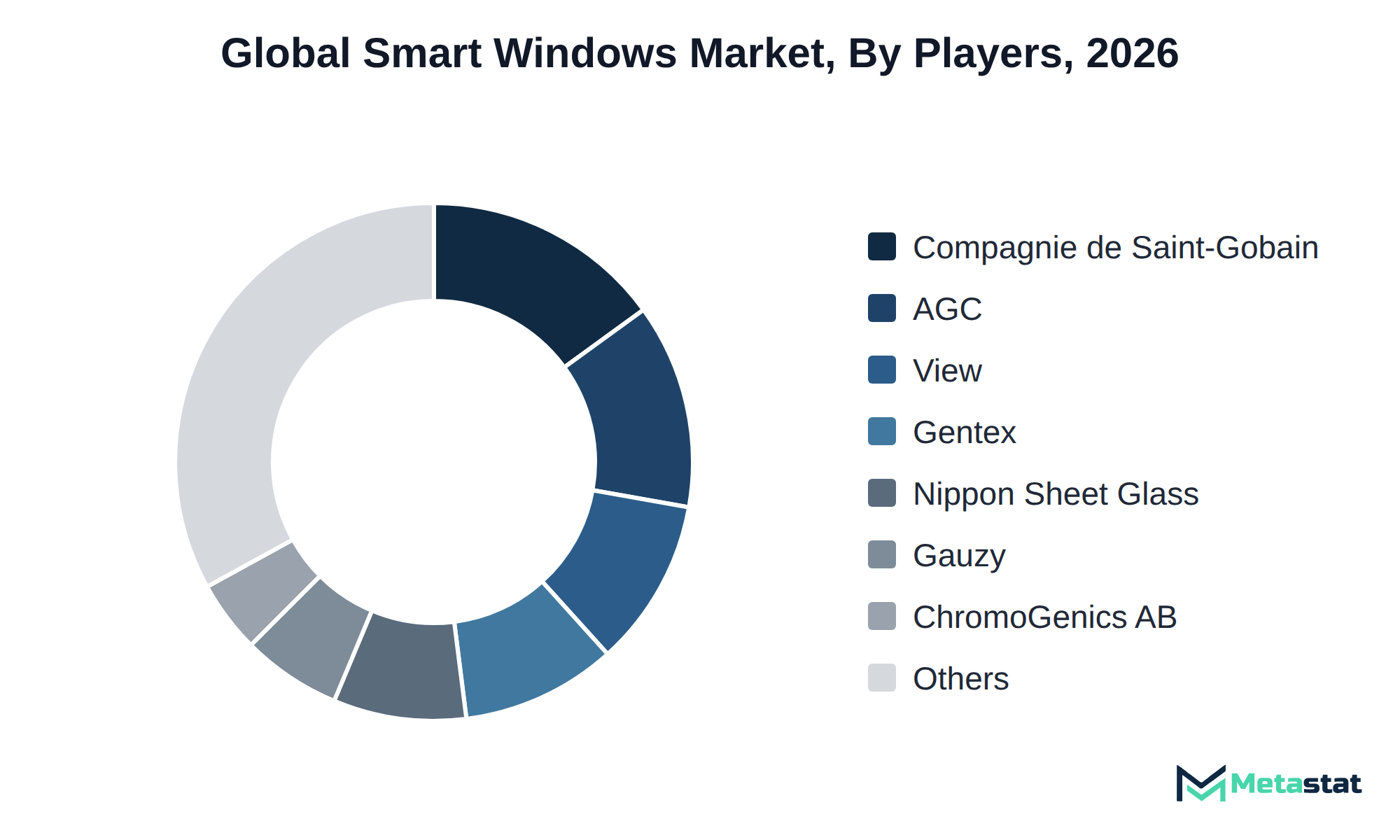
Compagnie de Saint-Gobain S.A. focuses on advanced electrochromic technologies, aiming to enhance the efficiency and aesthetic appeal of smart windows. Gauzy Ltd. emphasizes its expertise in Polymer Dispersed Liquid Crystal (PDLC) technology, providing customizable solutions for different applications. View, Inc. is known for its innovative automated electrical control systems, prioritizing integration into smart building architectures.
Companies like AGC Inc. and Nippon Sheet Glass Co., Ltd. leverage their manufacturing capabilities to offer competitive pricing while ensuring quality certifications that appeal to buyers in commercial and residential sectors. Market pressures suppliers to differentiate through product features and customer service, driving companies to invest in technology advancements to retain competitiveness.
Achieving this growth depends on several key developments within the Smart Windows market. The expansion of the Electrochromic technology segment is critical, projected to grow at a CAGR of 12.9%, reflecting increasing adoption in commercial and institutional buildings. The shift toward automated electrical control systems, anticipated to exhibit a 14% CAGR, supports the trend toward smart building technologies, enhancing energy efficiency and user comfort. Adoption in the automotive sector presents potential for growth, driven by demand for advanced glazing solutions that provide both aesthetic and functional benefits.
Challenges exist that could hinder this trajectory. Economic fluctuations and supply chain disruptions could impact manufacturing capabilities, particularly in regions including Asia Pacific, where competition is fierce and raw material costs fluctuate. If these risks materialize, growth in the market could slow, affecting overall revenue generation and adoption rates across segments.
By Technology: Electrochromic, Polymer Dispersed Liquid Crystal (PDLC), Suspended Particle Device (SPD), Thermochromic, Others (Photochromic, Electrokinetic)
By Product Format: Insulating Glass Units (IGUs), Non-Insulating Glazing Panels, Retrofit Window Films
By End-Use Industry: Commercial and Institutional Buildings, Residential Buildings, Automotive, Aviation, Others (Rail, Marine)
By Control Mode: Manual Electrical Control, Automated Electrical Control, Passive Self-Adjusting Control
The report strategically identifies and profiles the key market players and analyses their core competencies in each sub-segment of the Smart Windows market.
Report Attributes | Details |
Study Period | 2021-2033 |
Base Year | 2025 |
Estimated Year | 2026 |
Forecast Period | 2026-2033 |
Historical Period | 2021-2025 |
Growth Rate | CAGR 11.9% from 2026 to 2033 |
Revenue Unit | USD million |
Segmentation | By Technology, Product Format, End-Use Industry, Control Mode, and Region |
By Region | North America (By Technology, Product Format, End-Use Industry, Control Mode, and Country)
|
Europe (By Technology, Product Format, End-Use Industry, Control Mode, and Country)
| |
Asia Pacific (By Technology, Product Format, End-Use Industry, Control Mode, and Country)
| |
South America (By Technology, Product Format, End-Use Industry, Control Mode, and Country)
| |
Middle East and Africa (By Technology, Product Format, End-Use Industry, Control Mode, and Country)
|
Find answers to common questions about this report
The Smart Windows market size was valued at USD 1,184.3 million in 2025.
The market is projected to grow at a CAGR of 11.9% during the forecast period from 2026 to 2033.
The North America Smart Windows market size is estimated to reach USD 953.8 million by 2033.
The leading segment in the Smart Windows market is Electrochromic technology, projected to reach USD 1,407.4 million by 2033, reflecting the highest growth rate among the technology segments.
Key drivers for the Smart Windows market include growing awareness of climate change and the demand for energy-efficient solutions. Investments in advanced glazing technologies are increasing, particularly in commercial and institutional buildings, which are projected to grow from USD 716.6 million in 2026 to USD 1,507 million by 2033.
North America holds the dominant share of the Smart Windows market, with a projected value of USD 953.8 million in 2033, representing 34.4 percent of the total market. This figure surpasses the shares of other regions, including Europe and Asia Pacific.
High costs associated with the installation and maintenance of smart windows deter buyers, particularly in commercial and residential segments. Input costs, driven by rising prices of raw materials, further challenge suppliers in maintaining competitive pricing while managing profit margins.
Growing awareness of climate change and the emphasis on energy efficiency drive investments in advanced glazing technologies. The increasing demand for automated electrical control systems enhances user convenience and aligns with the trend toward smart homes and workplaces, further supporting market adoption.
The Smart Windows market is estimated to reach a valuation of USD 2,913.3 million by 2033.
Key players operating in the Smart Windows market include Compagnie de Saint-Gobain S.A., Gauzy Ltd., AGC Inc., View, Inc., Gentex Corporation, and Nippon Sheet Glass Co., Ltd.
The analysts below cover Electronics and Semiconductor research at Metastat Insights.
LEAD ANALYST
Utkarsh Khirodkar is a Lead Market Research Analyst at MetaStat Insight, specializing in market intelligence, technology sector assessments, and competitive strategy.

PRINCIPAL CONSULTANT - ENTERPRISE AI & EMERGING TECHNOLOGIES
Banking & Finance · Electronics and Semiconductor · Energy and Power · Healthcare IT · Information & Technology · Professional Services
Vijay Gunti is a Principal Consultant at MetaStat Insight, bringing over two decades of experience across enterprise digital transformation, technology strategy, and intelligent systems.

PRINCIPAL CONSULTANT - QUALITY SYSTEMS & COMPLIANCE
Electronics and Semiconductor · Machinery & Equipment · Professional Services
Omkar Phadtare is an Industry Consultant at MetaStat Insight, specializing in quality systems, regulatory compliance, and standards benchmarking to drive data-driven market intelligence and strategic industry research.

ENERGY & INFRASTRUCTURE INDUSTRY CONSULTANT
Automotive and Transportation · Electronics and Semiconductor · Energy and Power · Machinery & Equipment
Saurabh Vasant Ganvir consults for Energy & Infrastructure Industry at MetaStat Insight, specializing in renewable energy, solar EPC, and electric vehicle (EV) infrastructure markets.

LEAD CONSULTANT - COMMUNICATION, TELECOM, AND IT
Electronics and Semiconductor · Information & Technology · Machinery & Equipment · Professional Services
Ravindra Sathe Consultants for Communication, Telecom, and IT at MetaStat Insight. He leads the firm's industry research initiatives across telecommunications infrastructure, digital connectivity, enterprise networking, and emerging information technology domains.
When evaluating distributed energy resource management systems, standard research summaries tend to gloss over the operational differences between front-of-the-meter utility deployments and behind-the-meter industrial sites. The MetaStat Insight report addressed those distinctions directly, especially regarding software interoperability standards and grid interconnection backlogs. The five-year market sizing across regional transmission organizations provided actionable context for our grid modernization strategy.
Most industry reports on warehouse automation bundle autonomous mobile robots and fixed conveyor installations into the same top-level numbers, which complicates advisory work. This study split the market cleanly by payload tiers, navigation technology, and fleet management software layers. The regional forecast for Western Europe gave our team defensible adoption benchmarks when evaluating capital allocation for logistics clients, saving us days of secondary data scrubbing.
Standard industry briefs frequently blur the operational distinctions between isobaric pressure exchangers and centrifugal turbines. In this study, MetaStat Insight categorized mega-scale desalination tenders across the GCC and Mediterranean basins by membrane replacement frequencies and salinity tolerances. Their primary research helped us evaluate local content requirements in Saudi Arabia and the UAE without relying on marketing literature. We found the segment-level equipment replacement estimates grounded and well-reasoned throughout.
Explore related market intelligence reports worth reading alongside this one.
Starting from
$2950