
LEAD ANALYST
Utkarsh Khirodkar is a Lead Market Research Analyst at MetaStat Insight, specializing in market intelligence, technology sector assessments, and competitive strategy.

Global Sparkling Wine Market Size, Share, By Product (Prosecco, Cava, Crémant, Champagne, Lambrusco, Franciacorta, Sekt and Others (English Sparkling Wine, New World Sparkling Wine)), By Price (Luxury and Mass/Affordable), By Type (Red, White and Rose), By Distribution Channel (Supermarkets/Hypermarkets, Specialty Stores and Online Retail), Industry Analysis, Growth, Trends, and Forecast, 2026-2033
Report ID
MSI-4877
Published
August, 2026
Pages
266 Pages
Format
Historical
Current Forecast
Forecast
Forecast Period
Report Details
Choose Your License
Global Sparkling Wine Market
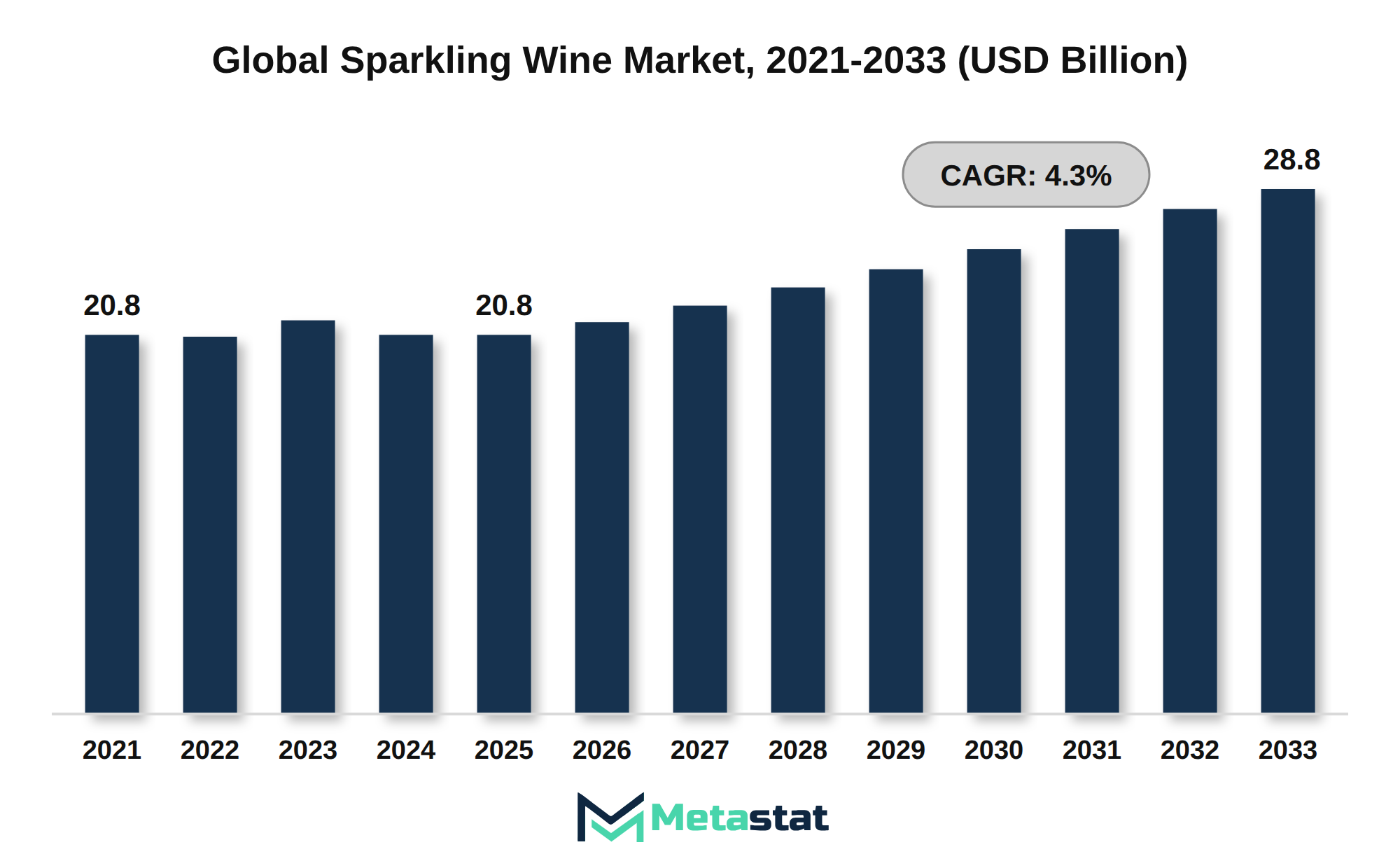
The global Sparkling Wine market was valued at USD 20.8 billion in 2025 and is projected to reach USD 28.8 billion by 2033, growing at a CAGR of 4.3% over the forecast period.
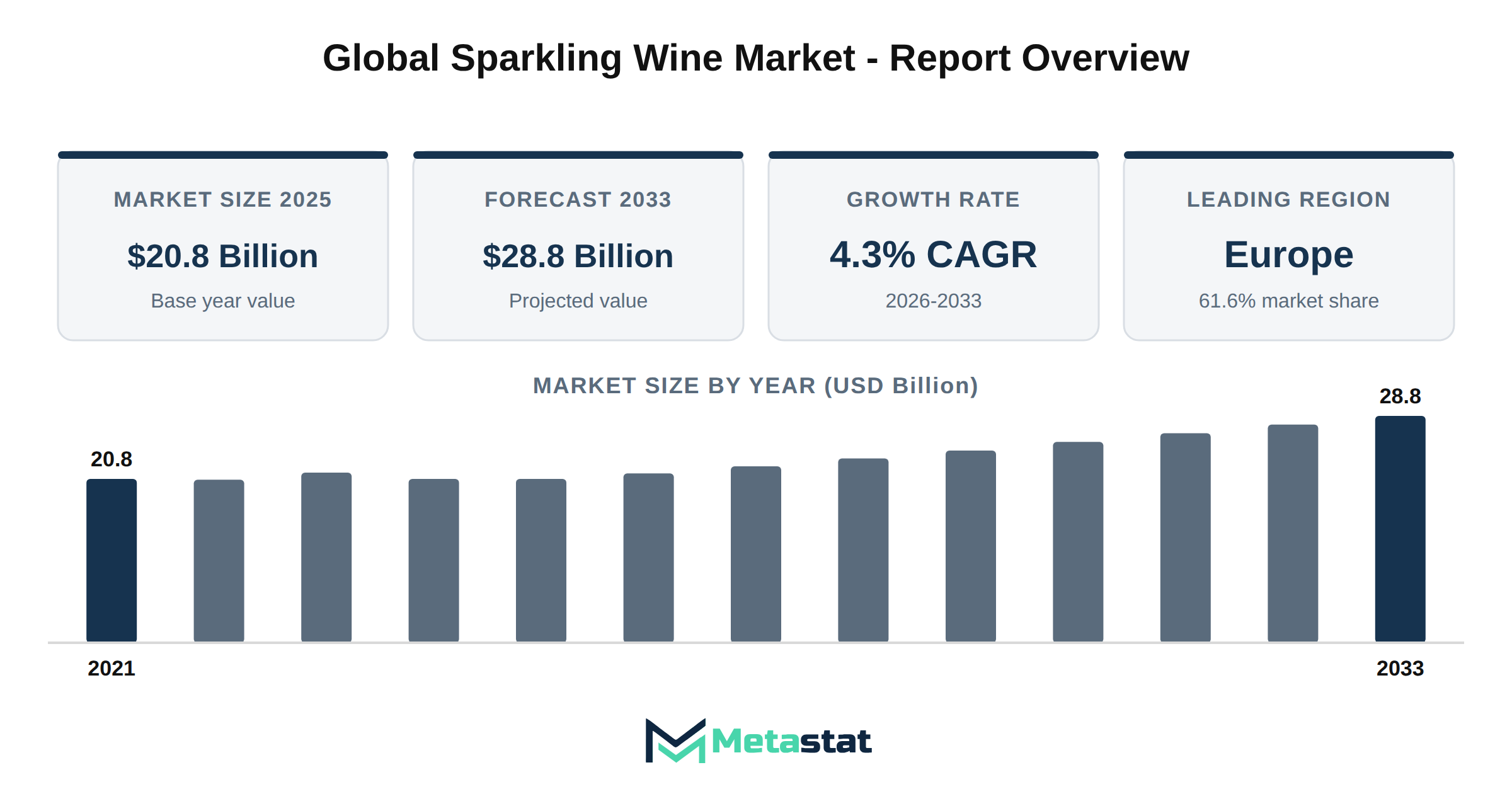
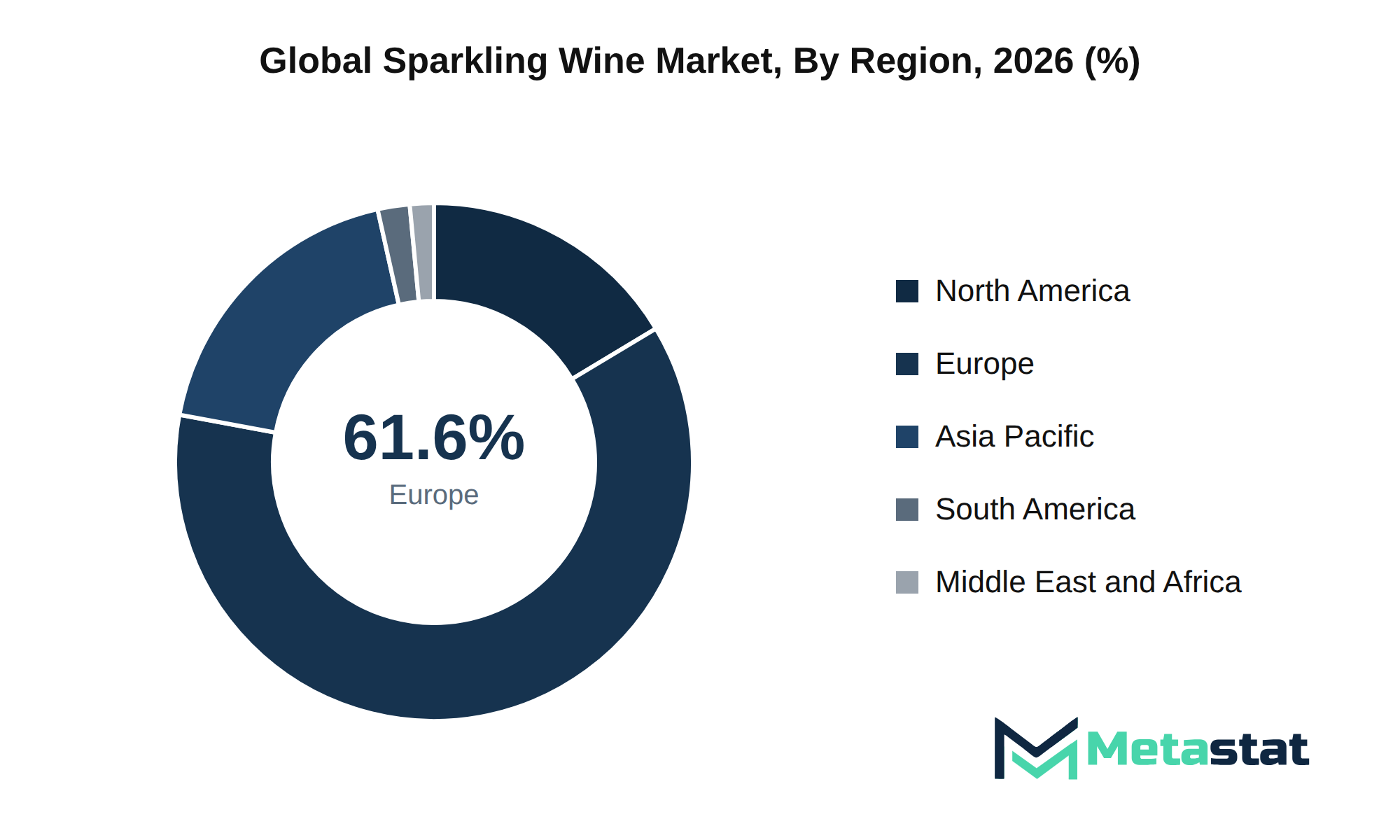
The global Sparkling Wine market reached a value of USD 20.8 billion in 2025, with an anticipated growth trajectory projected to drive the market to USD 28.8 billion by 2033. This growth corresponds to a compound annual growth rate (CAGR) of 4.3 percent during the forecast period from 2026 to 2033. Regional dynamics indicate that Europe dominates the market with a share of 61.6 percent, followed by North America at 16.4 percent and the Asia Pacific region at 18.6 percent.
Product segmentation within the market highlights Prosecco, projected to grow from USD 5.5 billion in 2026 to USD 7.6 billion by 2033, marking a CAGR of 4.8 percent. Cava is expected to reach USD 2.8 billion by 2033, with a CAGR of 4.9 percent. Crémant will contribute significantly to the market growth, while the Champagne segment maintains a steady growth rate of 4.4 percent. In terms of pricing, the luxury segment is anticipated to increase from USD 11.4 billion in 2026 to USD 15.1 billion by 2033, reflecting a CAGR of 4.1 percent.
Inflationary pressures and currency volatility impact operational costs across the supply chain landscape. Rising production costs influence pricing strategies, compelling producers to adapt their approaches to maintain profit margins. Infrastructure investments play a critical role in enhancing distribution channels, with supermarket/hypermarket sales leading the market. The importance of logistics architecture cannot be overstated, owing to its direct effect on the overall customer journey dynamics within the Sparkling Wine market.
The Sparkling Wine market faces a complex environment influenced by various factors, including regulatory compliance and geopolitical risks. Governments enforce regulations that impact production practices and labeling standards. Compliance with these regulations ensures product safety and quality, affecting operational costs for producers. Tightening regulations in key markets, especially in Europe and North America, require producers to adapt their practices, influencing pricing strategies and market entry for new players.
Disruption in the market arises from global economic conditions and shifting consumer preferences. The rise in demand for premium products drives innovation in production methods, leading to the development of new wine categories. R&D trajectories focus on enhancing product quality and developing sustainable practices. This trend emphasizes the importance of sustainable transformation, with producers investing in eco-friendly manufacturing processes and packaging solutions.
The supply chain landscape remains dynamic, shaped by logistics architecture and sourcing strategies. Global supply chain disruptions have prompted producers to reassess sourcing practices and inventory management. Efficient logistics systems play a critical role in ensuring timely delivery and maintaining product quality. The market's fragmentation creates opportunities for smaller producers to capture niche segments, while larger firms pursue M&A dynamics to consolidate market share and expand their portfolios.
Capital allocation strategies reflect the evolving priorities of producers, with increased investment directed toward innovation and sustainability initiatives. Infrastructure investments are vital for enhancing production capabilities and expanding distribution networks. Market participants adapt their capital expenditure and operational expenditure realities to align with changing consumer demands and economic conditions, ensuring competitiveness and market relevance. This adaptation is crucial for maintaining operational efficiency.
Macroeconomic headwinds, including inflationary pressures and currency volatility, challenge the Sparkling Wine market. Rising costs of raw materials and transportation affect pricing strategies and profit margins. Understanding these factors is essential for producers to navigate the market effectively and maintain growth momentum.
The future strategic outlook for the Sparkling Wine market anticipates sustained growth driven by evolving consumer preferences and increased demand for premium products. Corporate imperatives will focus on innovation, sustainability, and brand differentiation to enhance market positioning. High-value recommendations for market participants emphasize investing in R&D and sustainable practices to meet the expectations of environmentally conscious consumers.
The Sparkling Wine market experiences growth fueled by macro-economic elements, including GDP expansion and capital investment trends. Rising disposable incomes lead consumers to show increased willingness to spend on premium products, thus enhancing market demand. The ongoing trend of urbanization drives lifestyle changes, prompting consumers to seek out sparkling wines for various occasions.
Improvements in distribution channels, including online retail and specialty stores, facilitate easier access to a diverse range of sparkling wines. This accessibility supports increased consumption across different demographics, particularly among younger consumers who prioritize unique experiences and quality products.
Technological advancements in production and marketing strategies influence market dynamics. Adoption of automation and digital tools enhances operational efficiency, enabling producers to respond quickly to consumer preferences. This responsiveness helps capture a broader audience and expand market share, ultimately contributing to the projected growth of the Sparkling Wine market, which is anticipated to reach USD 28.8 billion by 2033.
The Sparkling Wine market benefits from advancements in digital transformation, driving efficiencies across production and distribution processes. The integration of automation, artificial intelligence, and software solutions optimizes production, reduces labor costs, and minimizes errors. This technological shift supports manufacturers in meeting rising demand for high-quality products while managing operational expenses effectively.
Adapting to digital tools enables producers to gather data on consumer preferences and market trends more effectively, enhancing decision-making capabilities. This data-driven approach allows for customized offerings that align with evolving consumer tastes, particularly among millennials and younger demographics who favor unique and personalized experiences. Stronger engagement and brand loyalty contribute to revenue growth.
The increased focus on sustainability aligns with digital transformation efforts. Companies apply technology to track and improve their environmental impact. By implementing resource management software, producers achieve more efficient use of materials and energy, thereby reducing waste and operating costs. Such practices comply with environmental standards and appeal to conscious consumers, further stimulating market growth.
The Sparkling Wine market encounters significant constraints due to regulatory challenges and compliance costs. Stringent regulations imposed across various regions necessitate adherence to specific production standards, labeling requirements, and safety protocols. These factors lead to increased operational costs for producers, which affects pricing strategies and profit margins, particularly for smaller wineries lacking the resources to manage compliance effectively.
Macroeconomic headwinds, including inflationary pressures, exacerbate these challenges, resulting in rising costs for raw materials and labor. Producers face a dual burden of complying with regulations while managing increased operational expenses, which deters investment in market expansion or innovation. Geopolitical instability disrupts supply chains, further increasing costs and complicating the procurement of necessary ingredients for sparkling wine production.
Market fragmentation adds another layer of complexity, with numerous players operating at different scales, which influences compliance efforts. Smaller wineries often struggle to align with regulatory requirements due to limited expertise and resources, creating a divide between larger producers and emerging brands. This disparity hinders market growth, limiting the overall potential of the Sparkling Wine market.
Infrastructure gaps and connectivity deficits impede efficient distribution and market access. Many regions lack adequate facilities for storage and transportation, complicating the logistics for producers. Addressing these infrastructure issues requires substantial investment, which nots be feasible for all market participants given the current economic climate.
The Sparkling Wine market faces multiple restraints stemming from regulatory challenges, compliance costs, macroeconomic pressures, infrastructure shortcomings, and market fragmentation. These factors collectively influence market dynamics and growth potential, requiring strategic navigation by industry players to sustain competitiveness.
The Sparkling Wine market encounters challenges driven by geopolitical fragmentation and tariffs that disrupt trade relations. Such disruptions create uncertainty in supply chains, affecting import and export activities, particularly in regions with significant market share like Europe and North America. Companies experience increased costs attributed to tariffs aimed at imported goods, impacting pricing strategies and profit margins.
Technological disruptions further complicate the landscape, with rapid advancements demanding continuous adaptation from producers. Investment in research and development to keep up with innovations requires significant resources, diverting attention from core production processes. This situation results in increased operational costs and potential delays in product launches, which influence competitive positioning in the market.
Rising input costs driven by inflation and supply chain instability impose additional pressures on profitability. Fluctuations in feedstock prices for raw materials used in sparkling wine production challenge producers to maintain competitive pricing while ensuring quality. These factors lead to a tightening financial environment for many companies, influencing their ability to invest in growth initiatives.
Workforce skill gaps and talent retention pressures hinder operational efficiency within the industry. The demand for skilled labor in production and marketing exceeds supply, resulting in higher wages and training costs. This challenge complicates efforts to streamline operations and improve profitability, particularly for smaller producers lacking the resources of larger market participants.
Environmental sustainability demands impose another set of challenges on the Sparkling Wine market. Increasing pressure to adopt sustainable practices influences production methods and packaging choices. Compliance with evolving environmental regulations requires investment in greener technologies, straining financial resources. The balance between sustainability and profitability remains a critical concern for industry stakeholders navigating the complexities of modern production.
The Sparkling Wine market experiences significant opportunities driven by evolving consumer preferences and an increasing appetite for premium products across various regions. Emerging markets, particularly in Asia Pacific, reflect a rising demand for sparkling wine, highlighting changing cultural norms and social celebrations that incorporate these beverages. While buyers seek unique flavors and experiences, domestic producers in these regions enhance their offerings, promoting local varieties of sparkling wine, contributing to market diversification and growth.
Infrastructure modernization plays a critical role in enhancing distribution capabilities and availability of sparkling wine. Investments in logistics and supply chain improvements enable producers to reach consumers more effectively, allowing for greater penetration into underserved markets. Strategic buffering against supply chain disruptions through localized production and distribution networks strengthens resilience and supports continual growth.
Technological disruptions enhance production processes, leading to innovations in sparkling wine creation and packaging. The adoption of automation and advanced methodologies improves operational yield, reduces costs, and increases product quality. Sustainability imperatives push producers to adopt eco-friendly practices, which align with consumers increasingly focused on environmental responsibility. This shift promotes investments in green technologies, aligning with the growing demand for sustainable products.
Product integration and niche application growth gain traction, with luxury segments of the market expanding through cross-industry collaborations that introduce sparkling wine into new culinary experiences. Brands explore partnerships with food producers, chefs, and event planners, creating unique offerings that cater to specific consumer preferences and occasions. These initiatives enhance the overall value proposition of the sparkling wine market.
The Sparkling Wine market is projected to grow driven by evolving buying behaviors and digital procurement shifts. Increased online retailing provides consumers with direct access to a diverse range of products, encouraging greater engagement and sales. While commercial model transitions occur, market participants adapt to leverage digital platforms that enhance customer interaction and brand loyalty.
The Global Sparkling Wine market is segmented based on Product, Price, Type, and Distribution Channel.
Valued at USD 5.5 billion in 2026, the Prosecco segment is projected to reach USD 7.6 billion by 2033, reflecting a CAGR of 4.8% during the forecast period. Growth in this segment results from shifts in consumer preferences towards lighter, fruitier sparkling wines, particularly among millennials and younger generations. Increased awareness of the versatility of Prosecco in various culinary applications contributes significantly to rising demand.
Adoption of Prosecco in social gatherings and celebrations further enhances its appeal, driven by the segment's affordability compared to traditional Champagne. The segment benefits from robust marketing campaigns and promotional activities by key players, which strengthen its position within the broader Sparkling Wine market. Innovations in product offerings, including flavored and low-calorie variants, cater to evolving tastes of consumers.
Supply chain resilience is essential in maintaining consistent quality and availability, allowing producers to meet growing demand. Strategic opportunity windows arising from emerging markets, particularly in Asia Pacific, present avenues for expansion. Enhanced investment in production facilities and distribution networks strengthens the overall market presence of Prosecco, improving its competitive edge in the global Sparkling Wine market.
The Prosecco segment remains a powerhouse within the global Sparkling Wine Market, driven by sustained consumer demand for versatile, approachable, and premium sparkling options. This comprehensive report delivers a granular market analysis by categorizing the industry into critical sub-segments to provide actionable, data-driven intelligence. The study deeply explores the volume-driving Prosecco DOC, which continues to dominate global exports and on-trade consumption, alongside the rapid premiumization trends fueled by terroir-driven Prosecco DOCG Superiore. Additionally, the report captures the latest shifts in consumer behavior by analyzing high-growth categories like the lifestyle-oriented Prosecco Rosé and the rising artisanal demand for zero-dosage, unfiltered Col Fondo Prosecco. By also evaluating Others (including traditional Tranquillo and Frizzante variations), this report provides stakeholders with a holistic view of market shares, revenue forecasts, and competitive strategies shaping the future of the Prosecco industry.
Growth in the Cava segment stems from rising consumer interest in premium sparkling wine options, particularly in regions with established wine cultures. This segment benefits from a strong association with celebrations and special occasions, driving demand among consumers seeking high-quality alternatives to traditional offerings. Increasing global exposure of Cava through marketing efforts and international distribution channels fuels adoption.
Pricing strategies in the segment reflect a balance of quality and affordability, appealing to both luxury and mass-market consumers. The Cava segment is projected to reach USD 2.8 billion by 2033, at a CAGR of 4.9% during the forecast period. This growth signals robust acceptance of Cava among diverse consumer demographics, particularly in North America and Europe, where traditional wine consumption patterns evolve.
Technological advancements in vineyards and production methods contribute to enhanced product quality, ensuring that Cava meets the expectations of discerning buyers. Regulatory compliance and certification standards play a significant role in maintaining quality assurance, enhancing consumer trust and brand loyalty within the segment. Awareness of the unique characteristics of Cava, including its traditional production methods and flavor profiles, enables it to stand out in the competitive sparkling wine market.
Consumer preferences shift toward products perceived because authentic and artisanal, positioning Cava favorably because a product that encapsulates regional traditions. Innovation continues within the segment, creating opportunities for introducing next-generation Cava products, including organic and low-sugar options, aligning with health-conscious trends. This focus on sustainability and quality drives further investment and interest in the Cava segment, reinforcing its growth potential within the broader sparkling wine market.
The Cava segment remains a cornerstone of the global Sparkling Wine Market, offering a highly competitive, traditional-method alternative to Champagne. To provide actionable intelligence, this report segments the Cava industry by sweetness profiles (dosage), reflecting shifting global consumer preferences. The study extensively analyzes the surging demand for zero-dosage Brut Nature (0-3 g/L) and bone-dry Extra Brut (0-6 g/L) categories, which are capturing significant market share driven by health-conscious demographics and a growing preference for pure, low-sugar profiles. Additionally, the report evaluates traditional sweeter classifications, forecasting the steady regional demand for off-dry Semi Seco and the niche, dessert-oriented Dulce (over 50 g/L) segments. By also assessing Others (covering standard Brut, Extra Seco, and Seco categories alongside premium aging tiers), this report equips stakeholders with comprehensive revenue forecasts, volume trends, and strategic insights needed to capitalize on the evolving Cava landscape.
The Crémant segment stands out in the Sparkling Wine market, with a projected value of USD 4.9 billion by 2033. This growth stems from increasing consumer interest in high-quality sparkling wines produced outside the traditional Champagne region. The segment benefits from a diverse range of flavor profiles and styles, appealing to both connoisseurs and casual drinkers. Preferences shifting towards more affordable yet premium alternatives drive demand for Crémant, driven by consumers seeking quality at a lower price point compared to traditional Champagne.
Expansion catalysts for the Crémant segment include heightened marketing efforts by producers and improved distribution networks. The segment's growth aligns with broader trends in the wine industry, which sees consumers exploring different regions and varietals. Regulatory compliance and certifications that ensure quality and authenticity enhance consumer confidence, further improving market presence. Innovations in production techniques and aging methods contribute to the evolution of Crémant, reinforcing its reputation for quality.
Economic factors, including disposable income and changing social dynamics, play a critical role in consumption shifts within the segment. Occasions for celebration and gifting drive demand, making Crémant a popular choice for a variety of events. Overall margin pressures caused by rising raw material costs require producers to strategically balance quality and price. The market landscape creates opportunities for investment in brand development and consumer education, supporting sustained growth.
The Crémant segment represents one of the most dynamic growth areas within the global Sparkling Wine Market, capitalizing on the rising consumer demand for premium, traditional-method French sparkling wines at accessible price points. This critical report provides a detailed regional analysis, breaking down the market into its distinct AOC (Appellation d'Origine Contrôlée) sub-segments to highlight unique production trends and export opportunities. The study deeply analyzes the dominant market shares of high-volume Crémant d'Alsace and the Champagne-adjacent Crémant de Bourgogne, alongside the strong international growth of the Chenin Blanc-driven Crémant de Loire and the rising global prominence of Crémant de Bordeaux. Furthermore, the report explores specialized, terroir-driven categories, evaluating the historic significance of Crémant de Limoux and the boutique appeal of Crémant du Jura. By rounding out the analysis with Others (encompassing emerging appellations like Savoie and Die), this report equips industry stakeholders with the revenue forecasts, consumer purchasing trends, and strategic insights necessary to navigate the expanding global footprint of French Crémant.
Strong consumer preference for Champagne drives demand in the Sparkling Wine market. Rising disposable incomes worldwide contribute to increased purchasing power, enabling consumers to opt for premium beverages. This trend aligns with a growing interest in luxury experiences and products, particularly among millennials and affluent consumers, who prioritize quality and brand heritage.
The Champagne segment is projected to grow at a CAGR of 4.4% during the forecast period. This growth stems from the expanding global market for upscale beverages, where Champagne is often associated with celebrations, luxury events, and high-profile occasions. The increasing popularity of Champagne-based cocktails further enhances its appeal among younger demographics, thereby expanding its market reach.
Regulatory compliance and adherence to strict production methods play a significant role in shaping the Champagne market. The requirement for authenticity and quality control ensures that only wines produced in the Champagne region of France are labeled, resulting from such. This exclusivity adds to its allure, reinforcing a premium pricing strategy that increases profitability for producers.
Competition within the market pushes players to innovate and diversify their offerings. Brands invest in marketing strategies that emphasize heritage and craftsmanship while exploring new flavor profiles and packaging designs. Such strategic opportunities cater to evolving consumer preferences, enhancing brand loyalty and driving repeat purchases.
The Champagne segment stands out in the Sparkling Wine market due to its growth prospects, driven by changing consumption patterns and strategic marketing initiatives. Continued investment in quality and brand differentiation will further enhance its position among luxury consumers.
The Champagne segment stands as the luxury pinnacle and ultra-premium benchmark of the global Sparkling Wine Market, driven by sustained high-end consumer demand, celebratory drinking culture, and strong brand equity. This market research report provides a granular evaluation of the Champagne industry by segmenting it across core sweetness profiles, aging tiers, and grape-specific variations to deliver actionable commercial intelligence. The study deeply analyzes Brut Champagne, the dominant dry style that accounts for the majority of global volume sales, alongside the high-margin Millésimé Champagne (Vintage) market, which commands steep price premiums among collectors and fine wine investors. Additionally, the report examines the steady growth of sweeter Demi-Sec Champagne and the continued expansion of the lifestyle-oriented Champagne Rosé segment. To capture evolving consumer tastes for niche and terroir-driven offerings, the report offers detailed forecasts for single-varietal and red-grape categories, including 100% Chardonnay Blanc De Blancs and robust Blanc De Noirs. Concluding with an assessment of Others (encompassing Extra Brut, Doux, and ultra-luxury prestige cuvées), this report equips beverage executives, distributors, and investors with critical market share metrics, revenue forecasts, and competitive insights.
Consumer interest in Lambrusco has surged owing to its unique flavor profile and versatility in food pairings. This interest drives demand, particularly among younger demographics who favor approachable, fruit-forward wines. Lambrusco's position because a sparkling wine that often comes at a lower price point enhances its appeal during economic fluctuations, allowing a broad consumer base to explore premium options without significant financial risk. The growing trend for casual dining and informal gatherings supports increased consumption of Lambrusco, positioning it well within the market.
Innovation in production techniques contributes to the segment's growth. Advances in viticulture and winemaking practices enhance wine quality, attracting connoisseurs and casual drinkers alike. Producers focus on highlighting the distinct characteristics of Lambrusco through improved labeling and branding strategies, effectively communicating its heritage and diversity. This strategic positioning raises Lambrusco's status in the market, contributing to an expanding consumer base and increased sales.
Retail and distribution strategies affect the segment's performance, with emphasis on accessibility through supermarkets and specialty stores. The rise of online retail platforms facilitates wider reach, enabling consumers to purchase Lambrusco conveniently. This shift toward e-commerce opens new avenues for growth, particularly among younger consumers who prefer online shopping. While trends evolve, Lambrusco's adaptability in marketing and distribution channels will influence its competitive position within the sparkling wine market.
Regulatory frameworks governing wine production and marketing play a critical role in shaping the landscape for Lambrusco. Compliance with quality standards and labeling regulations ensures a consistent experience for consumers, building trust and loyalty. Producers actively engage in efforts to maintain certifications that emphasize quality and authenticity, reinforcing Lambrusco’s reputation in both domestic and international markets.
The Lambrusco segment of the sparkling wine market thrives through consumer interest, production innovation, strategic distribution, and adherence to regulatory standards. This dynamic environment positions Lambrusco for sustained growth and increased market share in the coming years.
The Lambrusco segment represents an increasingly dynamic sector within the global Sparkling Wine Market, undergoing a major premiumization shift as global consumer preferences move toward dry, artisanal, and culinary-friendly sparkling red wines. This market research report delivers an in-depth strategic analysis of the category by segmenting the industry across its primary DOC appellations and grape varietals. The study evaluates the volume-driving Lambrusco Salamino, widely recognized for its balanced profile, fruity aromatics, and strong global distribution, alongside the robust, deep-hued Lambrusco Grasparossa, which leads the market in full-bodied, tannin-rich sparkling red offerings. Furthermore, the report examines the high-growth, sommelier-favored Lambrusco di Sorbara, prized for its pale, rosé-like color, intense acidity, and floral aromatics that cater to modern fine-wine demographics, as well as the dark, structurally rich Lambrusco Maestri, which plays a key role in both regional production and expanding international vineyards. By also incorporating Others (encompassing varieties like Lambrusco Marani, Montericco, and diverse IGP blends), this report equips beverage industry stakeholders with accurate market size estimations, regional growth drivers, and actionable commercial insights.
Growth in the Franciacorta segment stems from a strong consumer preference for high-quality sparkling wines, particularly in Italy and other European markets. This preference is driven by rising awareness of the unique production methods and characteristics of Franciacorta, which include its traditional method of fermentation and aging on the lees. The segment benefits from an expanding base of wine enthusiasts who seek premium wine experiences, contributing to increased adoption among discerning consumers.
Factors including evolving consumer tastes toward sophisticated flavor profiles and increased interest in Italian wines enhance the segment's appeal. Enhanced marketing efforts by producers help inform potential buyers about the distinctiveness of Franciacorta, positioning it because a premium alternative to other sparkling wines. This focus on education aids in cultivating a loyal customer base, which supports continued market penetration.
Regulatory compliance is essential in maintaining the quality and authenticity of Franciacorta. This strict adherence to production standards enhances consumer trust and reinforces the segment's reputation. The segment benefits from certifications that highlight its unique geographical origin and production methods, further strengthening its standing in the competitive landscape of the sparkling wine market.
Challenges related to pricing volatility in raw materials create pressures on profitability within the segment. Fluctuations in production costs affect pricing strategies, compelling producers to navigate these economic conditions carefully. Nevertheless, established brand loyalty provides a buffer against price sensitivity, allowing for strategic pricing that aligns with market expectations.
Opportunities for growth exist through the exploration of international markets. With an increasing global interest in Italian cuisine and culture, Franciacorta producers tap into emerging markets where demand for premium sparkling wines is growing. Expanding distribution channels, including online retail, enhances accessibility, enabling consumers worldwide to experience this unique product.
The Franciacorta segment represents the luxury benchmark for Italian traditional-method (metodo classico) sparkling wine, positioning itself as a top-tier global competitor to Champagne. This market research report provides a granular economic evaluation of the Franciacorta category by segmenting it across its most prestigious production styles and extended aging tiers. The analysis deeply examines the unique Satèn category-a trademarked, silky style made exclusively from white grapes at lower bottle pressure-alongside the expanding Rosé market, which continues to capture premium consumer interest through its Pinot Nero-driven structure. Furthermore, the report offers detailed forecasts for high-margin, age-worthy tiers, including Vintage (Millesimato) wines requiring at least 30 months of lees contact, and the ultra-exclusive Riserva segment, which commands peak price premiums due to its rigorous 67-month aging minimum. By also evaluating Others (including non-vintage styles and ultra-dry dosage variations like Dosaggio Zero), this report arms industry stakeholders with accurate market share metrics, growth trajectories, and strategic investment insights.
Interest in Sekt has shown a notable increase driven by a growing preference for sparkling wines among consumers in Germany and surrounding regions. The rich cultural heritage associated with Sekt contributes to its appeal, particularly during festive occasions and celebrations. This segment benefits from the tradition of producing Sekt using local grape varieties, which enhances its unique flavor profile and strengthens consumer loyalty.
Demand for Sekt experiences support from rising disposable incomes and changing consumer preferences toward premium and quality beverages. The expanding market for Sekt is fueled by an increasing variety of product offerings, including innovative flavors and packaging designs. Such diversification attracts younger consumers seeking unique experiences in their beverage choices, positively influencing sales and market growth.
Technological advancements in production methods enhance the quality and consistency of Sekt, catering to evolving consumer expectations. Investments in modern equipment and practices improve efficiency and flavor preservation, which helps producers maintain competitiveness in the broader sparkling wine market. Improving production quality strengthens brand reputations, assisting in further market penetration.
Regulatory compliance and certification standards for Sekt play a crucial role in establishing market credibility. Stringent quality controls and adherence to local production methods enhance consumer trust and encourage purchases. Regulatory support creates a stable environment for producers, allowing for strategic investments in marketing and distribution channels.
Price sensitivity among consumers influences Sekt pricing strategies, with producers balancing affordability and quality. The competitive environment in the sparkling wine market compels producers to offer value-oriented options without compromising quality. This approach ensures sustained consumer interest and builds brand loyalty, which is essential for long-term growth.
Logistical challenges, including raw material sourcing and distribution, impact Sekt production dynamics. The reliance on local grape varieties necessitates effective supply chain management to mitigate risks associated with weather conditions and climate variations. Nonetheless, a well-established supply chain network enhances resilience, enabling producers to maintain consistent product availability in the market.
The Sekt segment represents a foundational and rapidly evolving sector within the global Sparkling Wine Market, driven by exceptionally high domestic consumption in Central Europe and an expanding international footprint for premium, terroir-driven expressions. This market research report provides a granular analysis of the category by evaluating its core geographical sub-segments and quality tiers. The study deeply analyzes German Sekt wine, which holds the dominant volume share of the market-tracing the strategic pivot from mass-market tank-method offerings toward high-value, estate-bottled Winzersekt crafted primarily from Riesling and Pinot Noir. In parallel, the report offers detailed growth trajectories for Austrian Sekt wine, highlighting the success of the Sekt Austria g.U. quality pyramid (Klassik, Reserve, and Große Reserve) in capturing ultra-premium market share and competing directly with traditional-method wines globally. By also incorporating Others (encompassing regional Central and Eastern European variations and emerging organic/biodynamic producers), this report arms beverage executives, importers, and market analysts with critical revenue metrics, export-import dynamics, and strategic growth drivers.
Consumer interest in English Sparkling Wine and New World Sparkling Wine contributes significantly to the segment's dynamics within the Sparkling Wine market. These products benefit from unique regional characteristics and evolving preferences among consumers. English Sparkling Wine, produced primarily in southern England, attracts attention for its high-quality offerings, leveraging a favorable climate and innovative winemaking practices. New World Sparkling Wine, originating from regions including Australia, New Zealand, and South Africa, attracts consumers seeking diverse flavor profiles and unique production methods.
Shifting consumption patterns reflect a growing appreciation for premium and artisanal products, driving demand in this segment. Younger consumers increasingly seek authentic experiences and craft beverages, favoring English and New World Sparkling Wines. This trend enhances market opportunities, driven by producers cultivating innovative blends and styles to cater to discerning palates.
Technological advancements in production techniques enhance the quality and appeal of products within this segment. Investments in vineyard management, fermentation processes, and aging methods lead to improved flavor profiles and overall product quality. These innovations support the segment's expansion, allowing producers to differentiate their offerings in a competitive market.
Regulatory compliance and certifications play a crucial role in maintaining product quality and safety standards. Adherence to established guidelines ensures consumer confidence, particularly for premium offerings from English and New World producers. This focus on quality helps reinforce brand loyalty and market share in an increasingly discerning consumer landscape.
Pricing dynamics reflect both production costs and consumer willingness to pay for quality. Producers in this segment face challenges related to cost structures and pricing volatility, impacting profit margins. Strategic pricing approaches are essential for balancing profitability with market competitiveness, particularly for premium products.
Overall, the Others segment within the Sparkling Wine market presents significant growth opportunities. Increasing consumer interest in diverse sparkling wine options, combined with technological advancements and strategic pricing, positions this segment for continued expansion in the coming years.
Valued at USD 11.4 billion in 2026, the luxury segment experiences significant growth, projected to reach USD 15.1 billion by 2033, at a CAGR of 4.1% during the forecast period. This growth is attributed to an increasing demand for premium products among affluent consumers, who prioritize quality and brand reputation. The luxury segment appeals to high-net-worth individuals seeking unique experiences and exclusivity in their wine selections.
Consumption shifts toward luxury sparkling wines reflect broader trends in the market, with consumers more willing to invest in premium beverages for special occasions and celebrations. Innovative marketing strategies from prominent brands enhance product visibility, capturing consumer interest and expanding market reach. Competition intensifies, with brands innovating to differentiate their offerings and engage discerning customers.
Technological maturation plays a role in product evolution, with wineries employing advanced methods for production and sustainability, appealing to environmentally conscious consumers. Regulatory compliance standards, including certifications for organic or biodynamic wines, contribute to market growth by attracting eco-aware buyers. Luxury sparkling wine producers capitalize on these trends, positioning themselves because leaders in quality, innovation, and sustainability.
With a focus on strategic opportunity windows, brands explore new channels for distribution, including online retail, to reach a broader audience. Enhanced logistics resilience strengthens supply chains, ensuring availability and timely delivery of products. This adaptability supports investment in premium segments, with producers aiming to capture emerging markets while maintaining their prestigious image within the broader sparkling wine market.
Valued at USD 13.8 billion by 2033, the Mass/Affordable segment experiences growth driven by increased consumer accessibility to sparkling wine. Rising disposable incomes across various demographics enhance purchasing power, particularly among younger consumers who favor affordable options. The expansion of online retail channels facilitates wider distribution, enabling consumers to access a broader range of affordable sparkling wines.
Prices within this segment remain competitive, creating opportunities for brands to capture market share while balancing cost structures. Strategic marketing efforts focusing on lifestyle-oriented promotions contribute to heightened brand visibility and engagement, increasing consumer loyalty. The segment's growth trajectory reflects ongoing shifts in consumption patterns where consumers seek value without compromising on quality in the sparkling wine market.
Adoption of sustainable practices in production enhances brand reputation and aligns with consumer preferences for environmentally conscious products. This trend supports higher sales volumes, driven by brands that prioritize sustainability connecting with eco-aware consumers. The segment is projected to grow at a CAGR of 4.5% during the forecast period, reflecting strong demand dynamics and strategic opportunities for suppliers to innovate and expand their offerings.
Strong demand for red sparkling wine emerges from its unique flavor profiles and versatility in pairing with various cuisines. Consumers increasingly appreciate red sparkling varieties for their ability to enhance dining experiences and celebrate special occasions. The rising popularity of these wines drives producers to expand their offerings, reflecting a strategic response to changing consumer preferences.
Technological advancements in winemaking continue to improve production methods, resulting in higher quality and more consistent products. Innovations in fermentation and aging techniques enhance the attributes of red sparkling wines, leading to greater market acceptance. This evolution positions producers favorably in a competitive environment, enabling them to capture new consumer segments.
Changing consumption patterns further influence demand, with younger demographics showing increased interest in diverse wine styles, including red sparkling options. This shift arises from a broader trend toward experiential dining and a desire for unique beverage choices that complement various dishes. Producers focus on developing marketing strategies that connect with this audience, driving growth within the segment.
Regulatory standards and certifications play a crucial role in ensuring product quality and safety within the market. Compliance with these standards enhances consumer trust, encouraging repeat purchases and brand loyalty. Companies investing in quality assurance measures tend to gain a competitive edge, resulting in improved margins and expanded market presence.
Logistics and supply chain considerations impact the red sparkling wine segment, with raw material sourcing and distribution networks playing critical roles. Efficient supply chains reduce costs and enhance responsiveness to market demands. Continued investments in supply chain resilience are essential for producers to navigate potential disruptions and maintain consistent product availability.
Strategic opportunities exist for brands to capitalize on growing interest in red sparkling wines through collaborations and partnerships. Engaging with culinary experts and influencers expands reach and visibility, particularly in markets with emerging consumer bases. Capital investment in marketing and product innovation is vital for tapping into these opportunities and sustaining long-term growth in the segment.
Demand for white sparkling wine continues to rise owing to shifting consumer preferences towards lighter, refreshing options. This segment benefits from a notable increase among health-conscious consumers opting for lower-calorie and lower-alcohol alternatives. Popularity stems from the versatility of white sparkling wine, which pairs well with a variety of cuisines, enhancing its appeal during social gatherings and celebrations.
Adoption of white sparkling wine experiences a boost from ongoing product innovations and enhancements in production techniques. Winemakers implement technological advancements to improve flavor profiles and extend shelf life, generating greater consumer interest. The introduction of organic and biodynamic varieties caters to environmentally-conscious buyers, contributing to market expansion.
Consumption shifts reflect a growing preference for premium and artisanal products within the white sparkling wine segment. Consumers increasingly seek authentic experiences, driving demand for small-batch and locally produced varieties. This trend encourages producers to focus on quality and craftsmanship, which often translates to higher price points.
Regulatory compliance standards play a significant role in shaping the white sparkling wine market. Adherence to quality and safety regulations ensures product integrity, building consumer trust. Producers invest in certifications that validate their commitment to quality, further enhancing brand reputation and customer loyalty.
Strategic opportunity windows emerge owing to more consumers exploring international varieties of white sparkling wine. Expansion into emerging markets presents new avenues for growth, particularly in regions where traditional wine consumption is on the rise. Establishing distribution partnerships and accessing local retail channels strengthens market presence and boosts broader brand recognition.
Raw material sourcing remains critical for maintaining quality in white sparkling wine production. Regional climatic conditions directly impact grape quality, necessitating strategic planning for sourcing and sustainability practices. Effective management of supply chain vulnerabilities ensures consistent access to quality grapes, ultimately influencing production costs and pricing strategies.
Pricing volatility continues to challenge producers within the white sparkling wine segment. Fluctuations in raw material costs, driven by climate factors and regional grape availability, impact pricing structures. Strategic pricing adjustments help maintain competitiveness while preserving profit margins in a dynamic market environment.
Investment in marketing and brand promotion enhances visibility for white sparkling wine. Engaging storytelling and targeted campaigns connect with consumers, highlighting the unique attributes of specific products. This increased focus on brand differentiation supports revenue growth and encourages broader market engagement within the sparkling wine market.
Consumer interest in rosé sparkling wine continues to rise, driven by its appealing flavor profile and versatility in food pairings. Increased social gatherings and celebrations contribute significantly to the demand for this segment, with consumers seeking unique beverage options for events. Innovation in production methods enhances the quality of rosé sparkling wine, attracting a broader range of consumers and increasing its presence in premium markets.
Lifestyle changes influence consumption patterns, while rosé sparkling wine captures attention through its visual appeal and association with upscale experiences. The ongoing trend towards lighter, refreshing beverages among health-conscious consumers supports the growth of this segment. Marketing efforts targeting younger demographics emphasize this trend, facilitating wider adoption of rosé sparkling wine in various social settings.
Challenges including pricing volatility and supply chain vulnerabilities impact operational decisions within the segment. Producers face pressures from raw material costs and competition, necessitating strategic pricing and promotional campaigns to maintain market presence. Despite these challenges, the rosé segment within the Sparkling Wine market shows potential for growth, driven by changing consumer preferences and effective marketing strategies.
Positioned because a vital channel for distribution, supermarkets and hypermarkets play a crucial role in the Sparkling Wine market. Their extensive reach and ability to offer a wide variety of products cater to diverse consumer preferences, significantly influencing purchasing behaviors. Rising consumer demand for convenience drives shoppers towards these retail formats, which provide accessible locations and competitive pricing.
Strategic marketing initiatives and promotional activities within supermarkets and hypermarkets enhance brand visibility and consumer engagement. This approach increases impulse purchases, which is particularly beneficial for sparkling wines. Display placements, in-store tastings, and seasonal promotions contribute to heightened consumption levels and encourage trial among new customers.
Technological advancements in inventory management and supply chain logistics support the effectiveness of supermarkets and hypermarkets because distribution channels. Efficient stock control and data analytics enable retailers to optimize product offerings based on consumer demand trends, ensuring availability and variety for shoppers. This responsiveness to market dynamics positively impacts overall sales performance.
Regulatory compliance standards governing labeling and marketing practices further shape the operational landscape for supermarkets and hypermarkets. Adhering to these regulations ensures that consumers receive accurate information regarding the products they purchase, building trust and loyalty. Consequently, this adherence enhances the overall brand reputation for the wines available within these retail environments.
With evolving consumer preferences, supermarkets and hypermarkets continue to adapt their strategies to capture a larger market share. A focus on sustainability and health-conscious offerings is becoming increasingly important, with retailers seeking to align their selections with these consumer values. The segment remains well-positioned to drive growth within the broader Sparkling Wine market.
Specialty stores play a critical role in the distribution of sparkling wine, providing consumers with a curated selection and knowledgeable staff. This channel attracts consumers seeking premium products and unique offerings that are not available in larger retail formats. Specialty stores emphasize local and artisanal brands, appealing to the growing consumer interest in authentic and regional wines.
Increased consumer awareness and education regarding sparkling wine enhance demand within specialty stores. These retail environments create a personalized shopping experience, allowing for tastings and direct engagement with wine experts, which significantly influences purchasing decisions. The market benefits from this increased emphasis on customer experience, driving higher sales volumes in specialty retail.
The evolving landscape of consumer preferences shapes the offerings in specialty stores. With a rise in health-conscious choices and interest in lower-alcohol and organic options, this distribution channel adapts its inventory to meet these demands. While preferences shift towards premium and niche products, specialty stores maintain their competitive advantage by stocking exclusive and high-quality selections.
Strategic partnerships with local producers and distributors strengthen the supply chain for specialty stores. These collaborations create better pricing structures and exclusive offerings, enhancing consumer loyalty and market positioning. The ongoing trend toward supporting local businesses aligns with consumer values, driving robust demand for specialty stores in the sparkling wine market.
Challenges including pricing volatility and margin pressures exist within this segment. Fluctuations in raw material costs impact profitability, compelling specialty stores to innovate in pricing strategies and promotional activities. Adapting to these market conditions ensures that specialty stores remain competitive and appealing to discerning consumers.
Consumer preference for convenient shopping methods drives growth in the online retail segment of the Sparkling Wine market. The rise in e-commerce platforms enables consumers to explore diverse options without geographical constraints. Online retailers often provide exclusive deals and promotions, attracting price-sensitive customers. This segment encourages a shift in purchasing behavior, with younger demographics favoring online purchases over traditional methods. The increasing integration of technology in shopping experiences facilitates efficient transactions, enhancing consumer confidence in purchasing sparkling wine online.
Technological advancements streamline the online buying process, offering consumers user-friendly interfaces and detailed product information. Enhanced logistics systems ensure efficient delivery, further establishing online retail because a viable distribution channel. The growing trend of online wine subscriptions caters to niche markets, offering curated selections that appeal to specific consumer tastes. These evolving dynamics indicate a strong growth trajectory for the online retail segment within the broader context of the market.
Regulatory compliance remains a critical consideration in online retail, with various regions imposing standards on alcohol sales through digital channels. Adherence to these regulations influences operational strategies for online wine retailers. While the segment expands, companies are expected to continue adapting to evolving consumer preferences and regulatory landscapes, positioning themselves to capitalize on emerging opportunities in the Sparkling Wine market.
Growth in the "Others" segment of the Sparkling Wine market stems from an increasing consumer preference for unique and lesser-known sparkling wine varieties, including English Sparkling Wine and New World Sparkling Wine. This interest reflects a broader trend toward exploring diverse wine options, driven by evolving consumer tastes and a desire for novel tasting experiences. The segment experiences expansion through increased visibility in specialty retail channels and online platforms, which offer a wider selection and cater to niche markets.
Technological advancements in wine production techniques enable producers in this segment to enhance product quality and innovate with new flavors, further attracting consumer interest. The segment benefits from a shift in consumption patterns, where consumers favor premium and artisanal products, leading to greater spending on niche sparkling wines. Regulatory compliance and certifications play a significant role in establishing credibility for these lesser-known brands, enhancing consumer trust and market penetration.
Strategic opportunity windows exist for investment in marketing initiatives that highlight the unique characteristics of sparkling wines within the "Others" segment. Emphasizing quality and craftsmanship through storytelling enables brands to differentiate themselves in a competitive environment. Overall, the segment's dynamics contribute positively to the overall growth of the Sparkling Wine market, aligning with emerging trends and consumer demands.
Based on geography, the Global Sparkling Wine market is divided into North America, Europe, Asia-Pacific, South America, Middle East, and Africa.
North America Sparkling Wine market is expected to expand at a CAGR of 4.3% within the forecast period, reaching a market size (TAM) of USD 4.4 billion by the end of 2033. This region holds a considerable share of the global market. The market benefits from robust consumer interest in diverse sparkling wine varieties, particularly Prosecco, Champagne, and Cava, which are favored by both casual consumers and connoisseurs.
The United States serves because the primary driver for growth, with demand stemming from a rising preference for premium and luxury sparkling wines. Events including weddings and celebrations significantly contribute to sales, alongside increasing trends in gifting. Canada and Mexico present opportunities for growth, with evolving consumer tastes leading to higher consumption rates of sparkling wines.
Distribution channels play a vital role in shaping the market dynamics. Supermarkets and hypermarkets dominate sales, while online retail and specialty stores are gaining traction, offering a wider range of options and convenience for consumers. The market reflects a blend of traditional purchasing behaviors and modern shopping preferences.
Regional economic stability and an increasing number of wineries create a conducive environment for market expansion. Local compliance mandates and trade policies further influence the market dynamics, often facilitating growth through supportive regulations. The presence of established domestic players including LVMH Moët Hennessy Louis Vuitton SE, Pernod Ricard S.A., and Bacardi Limited, combined with new entrants, enhances competition and innovation within the market.
Europe dominates the global Sparkling Wine market, accounting for a significant share. The robust demand for Sparkling Wine in countries like Germany, France, the UK, Italy, and Spain drives market performance. Cultural preferences and established consumption habits significantly influence buyer behaviors, with France and Italy recognized for producing the finest sparkling wines globally, including Champagne and Prosecco.
Several factors contribute to this strong market presence. A growing population interested in premium beverages increases demand for high-quality sparkling wines, particularly in luxury segments. Countries including Germany and Spain continue to see a rise in production capabilities, enhancing regional supply dynamics. Enhanced distribution channels like supermarkets and specialty stores provide better access for consumers, supporting incremental market growth.
Investment in local vineyards and wineries accelerates the development of unique offerings tailored to consumer preferences. Innovations in production techniques and an increased focus on sustainability heighten competitive advantages for regional players. Leading companies including LVMH Moët Hennessy Louis Vuitton SE, Henkell Freixenet, and Pernod Ricard S.A. strengthen their market positions through strategic initiatives and product diversification.
The Sparkling Wine market in Europe is expected to continue its trajectory of growth, with the market projected to reach USD 28.8 billion by 2033. A combination of cultural appreciation for sparkling wines, coupled with ongoing innovations and enhanced distribution, ensures that Europe remains a critical player in the global landscape.
The Asia-Pacific region represents a significant opportunity within the Sparkling Wine market, with a notable share of the global market in 2025. Countries including China, Japan, India, South Korea, and Australia drive growth through increasing consumer interest and expanding middle-class demographics. Rising demand in the region results from changing cultural preferences and a growing inclination towards premium products.
China leads in consumption, with a notable shift towards luxury options among affluent consumers. Japan's established wine culture complements growth, with increasing recognition of imported sparkling varieties. In India, market expansion is supported by a younger population embracing international trends, while South Korea has a dynamic cocktail culture that fuels interest in sparkling wines. Australia benefits from strong domestic production of sparkling varieties, enhancing its global competitiveness.
Infrastructure modernization plays a critical role in regional development, facilitating improved distribution networks and access to quality products. Emerging markets within Southeast Asia present significant underpenetrated territories, allowing for increased market share potential. The competitive landscape features both domestic producers and international brands striving for a foothold in these evolving markets.
Local compliance mandates and evolving consumer preferences influence procurement dynamics, contributing to the growth of localized manufacturing initiatives. Geopolitical factors and trade policies affect market strategies, compelling companies to adapt to changing regulations. Investment in marketing and consumer education remains essential for expanding market reach and driving further adoption of sparkling wines across the region.
South America represents a small share of the global Sparkling Wine market, accounting for 2.00% in 2025. Brazil and Argentina serve because the primary markets within the region, characterized by distinct consumer preferences and emerging trends. Growing interest in sparkling wines, particularly Prosecco and Cava, influences market dynamics. The region benefits from a combination of cultural appreciation for wine and increasing urbanization, which leads to greater accessibility and consumption. Challenges persist, including limited production capacities and competition from more established wine regions, impacting local producers and pricing strategies.
The rising middle-class demographic in Brazil and Argentina contributes to expanding purchasing power, driving demand for premium products in the sparkling wine segment. Ongoing efforts to modernize distribution channels and enhance local manufacturing capabilities support market growth. Brazil's significant production infrastructure positions the country because a potential hub for sparkling wine, while Argentina's unique terroir offers opportunities for niche product development. Strategic partnerships and investments in marketing strengthen brand presence and attract new consumers, ultimately benefiting the Sparkling Wine market's trajectory in South America.
The Middle East and Africa region accounts for a small share of the global Sparkling Wine market in 2025. This market segment exhibits potential for growth driven by rising disposable incomes and increasing consumer interest in premium beverages. Countries including Saudi Arabia and the UAE experience growing adoption of sparkling wine, supported by expanding hospitality sectors and an influx of tourism.
South Africa represents a key player within the region, characterized by a well-established wine culture and a growing domestic demand for sparkling wine varieties. The Rest of Middle East and Africa contains underpenetrated territories, highlighting opportunities for market players looking to expand their presence. Local producers face challenges related to supply chain regionalization, which influences sourcing and distribution strategies.
Regulatory frameworks and local compliance mandates further impact market dynamics, influencing both production and import processes. Ongoing investments in local manufacturing facilities enhance production capabilities, aiming to meet rising demands for sparkling wine across the region. The competitive landscape includes notable players including LVMH Moët Hennessy Louis Vuitton SE and Pernod Ricard S.A., influencing market trends and consumer preferences.
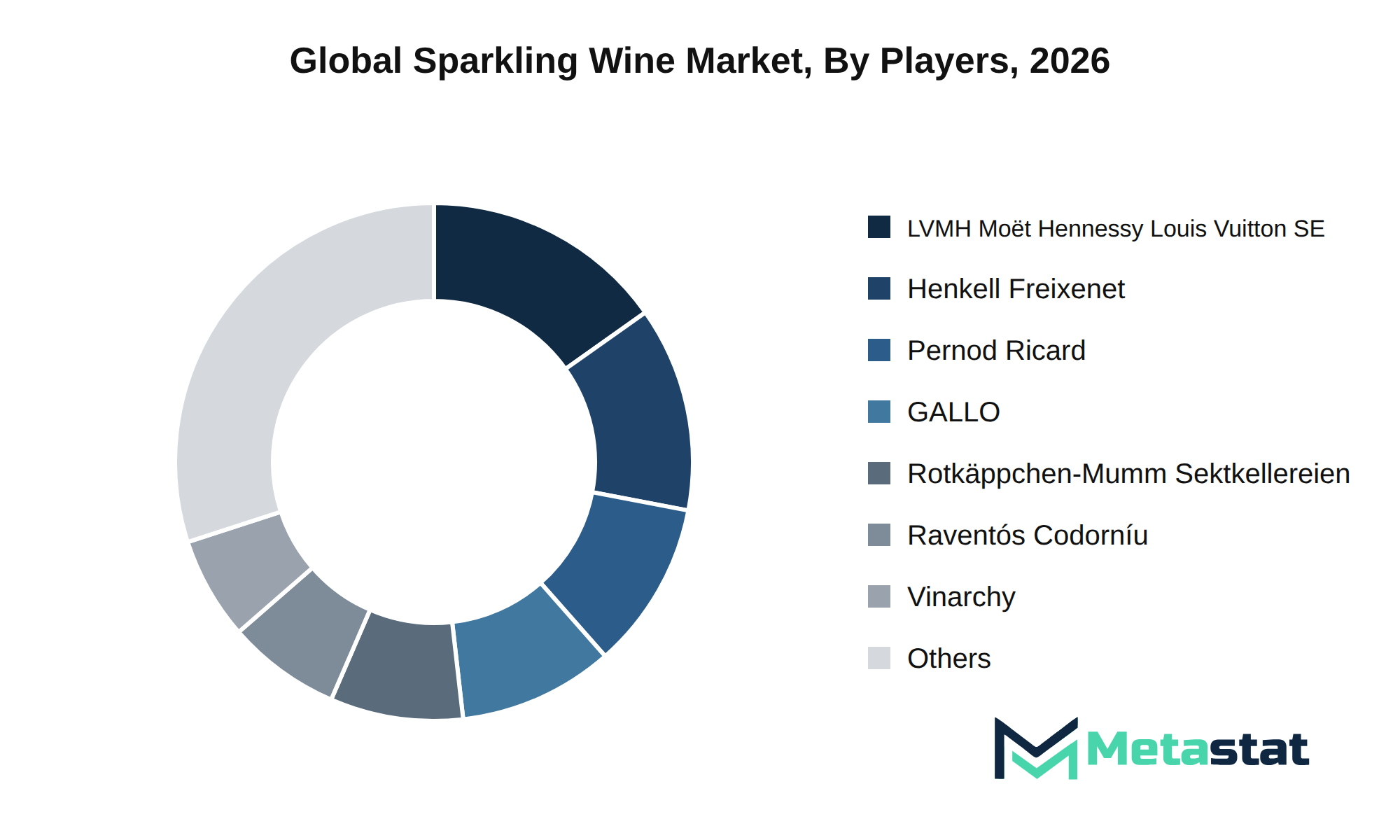
The Sparkling Wine market experiences significant competition, driven by strategic consolidation and mergers among key players. Companies including LVMH Moët Hennessy Louis Vuitton SE and Pernod Ricard S.A. actively pursue acquisitions to enhance their market presence and diversify product offerings. Mergers among regional players like Henkell Freixenet and Rotkäppchen-Mumm Sektkellereien GmbH strengthen market positions and improve supply chain efficiencies, leading to enhanced customer retention strategies and brand equity dynamics.
Product differentiation is essential for maintaining competitive advantage. Major players invest heavily in R&D pipelines to innovate and introduce unique offerings within the product segments of Prosecco and Champagne. Luxury brands, including Champagne Louis Roederer and Lanson-BCC, target premium consumers with high-value products while mass brands like GALLO and Constellation Brands, Inc. focus on affordability to capture broader market segments. This strategic alignment influences pricing architectures and enhances market accessibility.
Barriers to entry remain significant, with established brands benefiting from strong distribution channels and customer loyalty. New entrants face challenges in overcoming brand recognition and establishing supply chain networks. Existing players leverage procurement strategies to secure favorable pricing and maintain operational efficiency. The competitive outlook indicates ongoing shifts, with companies adapting to evolving consumer preferences and market dynamics in the Sparkling Wine market.
Market size is forecast to rise from USD 20.8 billion in 2025 to over USD 28.8 billion by 2033, at a 4.3% CAGR. The base case reflects steady growth driven by increasing consumer preferences for premium and high-quality sparkling wines.
The bull case suggests accelerated growth driven by innovation in production techniques and shifts in consumer trends towards unique and sustainable offerings. This scenario could significantly increase demand, particularly in emerging markets where interest in sparkling wine continues to expand rapidly.
The bear case indicates potential challenges stemming from economic downturns or shifts in consumer spending habits, which could restrict growth. Regulatory changes, tariffs, or geopolitical tensions influence market dynamics, resulting in subdued demand in certain regions.
Overall, the Sparkling Wine market exhibits promising growth prospects, influenced by evolving consumer preferences, product innovation, and strategic capital investments across the supply chain.
By Prosecco:
By Cava:
By Crémant:
By Champagne:
By Lambrusco:
By Satèn:
By Sekt:
Others (English Sparkling Wine, New World Sparkling Wine)
The report strategically identifies and profiles the key market players and analyses their core competencies in each sub-segment of the Sparkling Wine market.
|
Report Attributes |
Details |
|
Study Period |
2021-2033 |
|
Base Year |
2025 |
|
Estimated Year |
2026 |
|
Forecast Period |
2026-2033 |
|
Historical Period |
2021-2025 |
|
Growth Rate |
CAGR 4.3% from 2026 to 2033 |
|
Revenue Unit |
USD billion |
|
Segmentation |
By Product, Price, Type, Distribution Channel, and Region |
|
By Region |
North America (By Product, Price, Type, Distribution Channel, and Country)
|
|
Europe (By Product, Price, Type, Distribution Channel, and Country)
|
|
|
Asia Pacific (By Product, Price, Type, Distribution Channel, and Country)
|
|
|
South America (By Product, Price, Type, Distribution Channel, and Country)
|
|
|
Middle East and Africa (By Product, Price, Type, Distribution Channel, and Country)
|
Find answers to common questions about this report
The Sparkling Wine market size was valued at USD 20.8 billion in 2025, according to the Metastat Insights study.
The Sparkling Wine market is projected to grow at a CAGR of 4.3% during the forecast period from 2026 to 2033.
The North America Sparkling Wine market size is estimated to reach USD 4.4 billion by 2033.
Prosecco leads the Sparkling Wine market with a projected value of USD 7.6 billion by 2033. This figure reflects its growth from USD 5.5 billion in 2026, demonstrating a compound annual growth rate of 4.8 percent.
The Sparkling Wine market experiences growth driven by rising disposable incomes, urbanization, and advancements in distribution channels. Increased consumer demand for premium products and unique experiences, particularly among younger demographics, supports market expansion, projected to reach USD 28.8 billion by 2033.
Europe holds the dominant share of the Sparkling Wine market, accounting for 61.6% of the total market in 2025. This significant share reflects Europe's established production and consumption patterns in the sparkling wine sector.
The Sparkling Wine market faces restraints from regulatory challenges and compliance costs, which increase operational expenses and affect pricing strategies. Macroeconomic pressures, infrastructure shortcomings, and geopolitical instability further complicate market dynamics, limiting growth potential and investment opportunities for producers.
Factors favoring product adoption in the Sparkling Wine market include rising disposable incomes, urbanization trends, and improved distribution channels. Technological advancements enhance operational efficiency and responsiveness to consumer preferences, while a focus on sustainability aligns with evolving consumer values, particularly among younger demographics.
The Sparkling Wine market is estimated to reach a valuation of USD 28.8 billion by 2033.
Key players in the Sparkling Wine market include LVMH Moët Hennessy Louis Vuitton SE, Henkell Freixenet, Pernod Ricard S.A., Bacardi Limited, Constellation Brands, Inc., Treasury Wine Estates Limited, Champagne Louis Roederer, and Rotkäppchen-Mumm Sektkellereien GmbH.
The analysts below cover Food and Beverages research at Metastat Insights.
LEAD ANALYST
Utkarsh Khirodkar is a Lead Market Research Analyst at MetaStat Insight, specializing in market intelligence, technology sector assessments, and competitive strategy.

LEAD PRINCIPAL ANALYST, PHARMA AND HEALTHCARE
Food and Beverages · Healthcare · Healthcare IT · Medical Devices
Ajay Devgire is the Lead Healthcare Analyst at MetaStat Insight, leading strategic research and market intelligence initiatives across the global healthcare domain.

SENIOR RESEARCH ANALYST
Biotechnology · Food and Beverages · Medical Devices · Packaging
Snehal Pasalkar is a Research Analyst at MetaStat Insight, operating at the intersection of life sciences research, competitive strategy, and market intelligence.
Floating offshore wind feasibility relies heavily on specialized installation vessel availability and port crane limits, which most broad renewable energy forecasts ignore. The report delivered a thorough analysis of dry dock capacity, mooring chain supply constraints, and raw material pricing trends for deepwater anchor installations. It served as a solid independent sanity check for our offshore project capital expenditure assumptions.
Assessing commercial microgrid software adoption requires looking past top-level installation numbers and examining utility interconnection queues. The research provided verifiable data on average permitting timelines, tariff structures, and battery storage integration costs across regional utility territories. That grounded perspective was valuable for our team when building five-year demand projections for industrial microgrid controllers.
Ambulatory surgical centers have very different purchasing cycles for robotic-assisted surgery platforms than major hospital networks. The MetaStat Insight study focused squarely on capital expenditure depreciation, procedural reimbursement pathways, and surgeon training overhead. That operational clarity made it much simpler to validate multi-year procedure growth forecasts against actual ambulatory center adoption patterns.
Explore related market intelligence reports worth reading alongside this one.