
LEAD ANALYST
Utkarsh Khirodkar is a Lead Market Research Analyst at MetaStat Insight, specializing in market intelligence, technology sector assessments, and competitive strategy.

Global Electric Guitar Market Size, Share, By Body Type (Solid-Body, Semi-Hollow Body, Hollow Body), By Price Range (Entry-Level, Mid-Range, Premium), By Pickup Configuration (Dual Humbucker, Three Single-Coil, Humbucker-Single-Single, Two Single-Coil, P-90 Configurations), By Distribution Channel (Online, Musical Instrument Stores, Brand-Owned Stores), Industry Analysis, Growth, Trends, and Forecast, 2026-2033
Report ID
MSI-5676
Published
November, 2026
Pages
294 Pages
Format
Historical
Base year
Forecast
Forecast period
Report Details
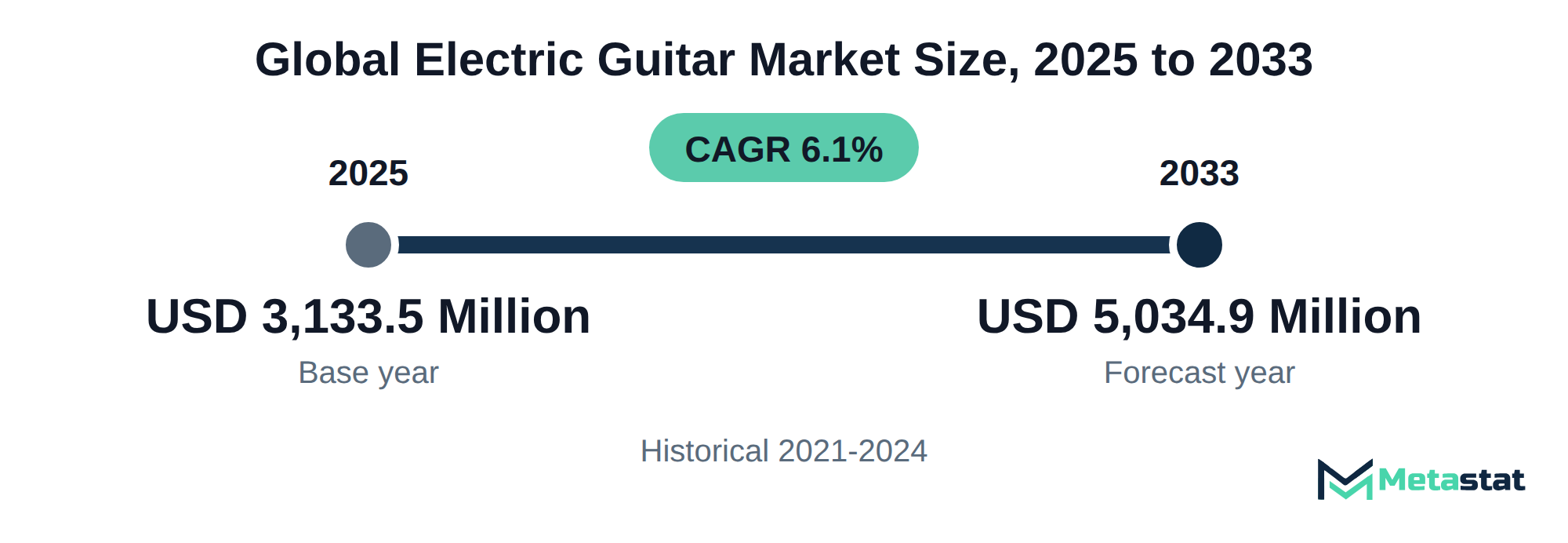
Market Valuation: Valued at $3,133.5 Million in 2025, projected to reach $5,034.9 Million by 2033 at a 6.1% CAGR.
Dominant Segment: The solid-body electric guitar segment leads the market, generating USD 2,355.5 million in revenue in 2026 and projected to grow to USD 3,480.1 million by 2033. Its popularity is driven by versatility and sound quality, making it a preferred choice among musicians.
Geographic Lead: North America holds a significant share of the market, with the US leading in 2026. The region's strong music culture and high concentration of guitar manufacturers contribute to its dominance.
What's Inside: The report provides a comprehensive analysis of the Electric Guitar market, including competitive coverage, market dynamics, and forecasts from 2026 to 2033. It examines various segments, including body type, price range, and pickup configuration.
Emerging Trends: The semi-hollow body segment is projected to grow at a CAGR of 7.1% through 2033, appealing to musicians seeking unique tonal qualities and aesthetic appeal. This trend highlights the evolving preferences within the market.
Technological Innovations: Advancements in pickup technology, particularly the Dual Humbucker configuration, are shaping demand, with a projected value increase from USD 1,214.3 million in 2026 to USD 1,854.9 million by 2033.
Choose Your License
Global Electric Guitar Market
The global Electric Guitar market was valued at USD 3,133.5 million in 2025 and is projected to reach USD 5,034.9 million by 2033, growing at a CAGR of 6.1% over the forecast period.
The Electric Guitar market encompasses a wide variety of electric guitars, catering to different preferences and skill levels. Buyers invest in electric guitars for personal enjoyment, professional use, or collectibles. The demand arises from professional musicians, hobbyists, and educational institutions, each seeking quality instruments for performance or learning. Trends in music genres and cultural influences significantly impact purchasing decisions, with consumers gravitating toward brands that align with their musical tastes.
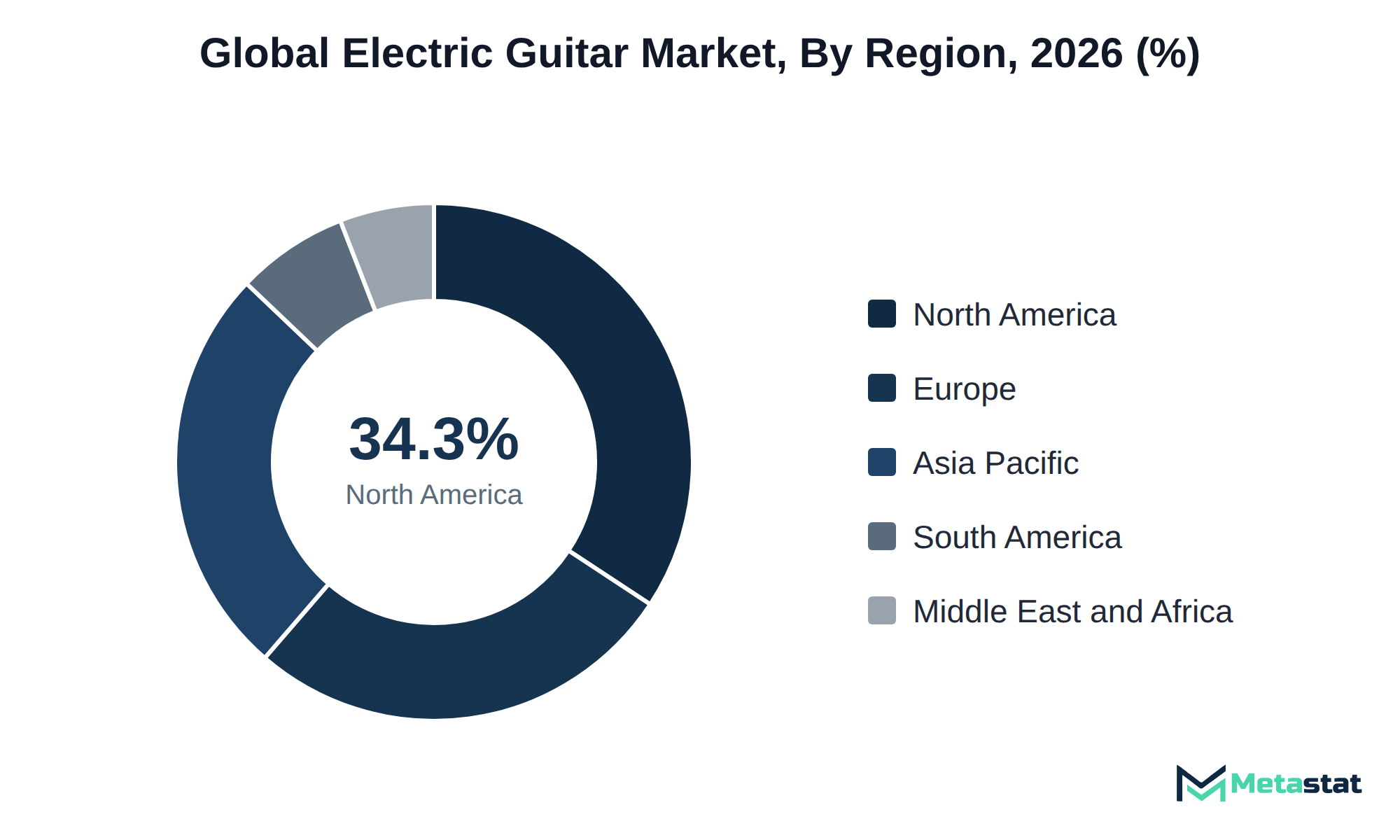
Growth in the market is driven by innovations in guitar technology and expanding consumer interest in music education. The solid-body electric guitar segment represents the largest share, reflecting a strong preference among musicians for its versatility and sound quality. North America holds 34.3% of the market in 2025, with the US leading in 2026. This region benefits from a strong music culture and a high concentration of guitar manufacturers, which improves the availability of quality instruments.
Increased participation in music-related activities, including lessons and performances, fuels demand. Online music education supports this participation by giving new players flexible access to lessons. The online distribution channel is growing significantly and gives buyers easier access to more products. Buyers prefer purchasing instruments online, leading to enhanced convenience and competitive pricing. The combination of technological advancements and consumer engagement in music is expected to promote further expansion in the Electric Guitar market.
Buyers choose electric guitars for several reasons, including personal expression, musical versatility, and evolving trends within music genres. The market addresses the preferences of hobbyists, professional musicians, and collectors, each seeking specific features and quality levels in their instruments. The diverse range of electric guitars available allows for customization, catering to individual playing styles and aesthetic preferences.
The solid-body segment holds the most significant value within the market, driven by its popularity among various player demographics. This region's strong demand results from a rich musical culture, the presence of numerous music festivals, and a high concentration of music education institutions, which supports a growing interest in guitar playing.
Technological advancements shape consumer preferences as the market evolves. Innovations in pickup configurations, materials, and manufacturing processes enable manufacturers to enhance product performance and appeal. This focus on quality and innovation positions the Electric Guitar market for continued growth, attracting new buyers and retaining existing enthusiasts.
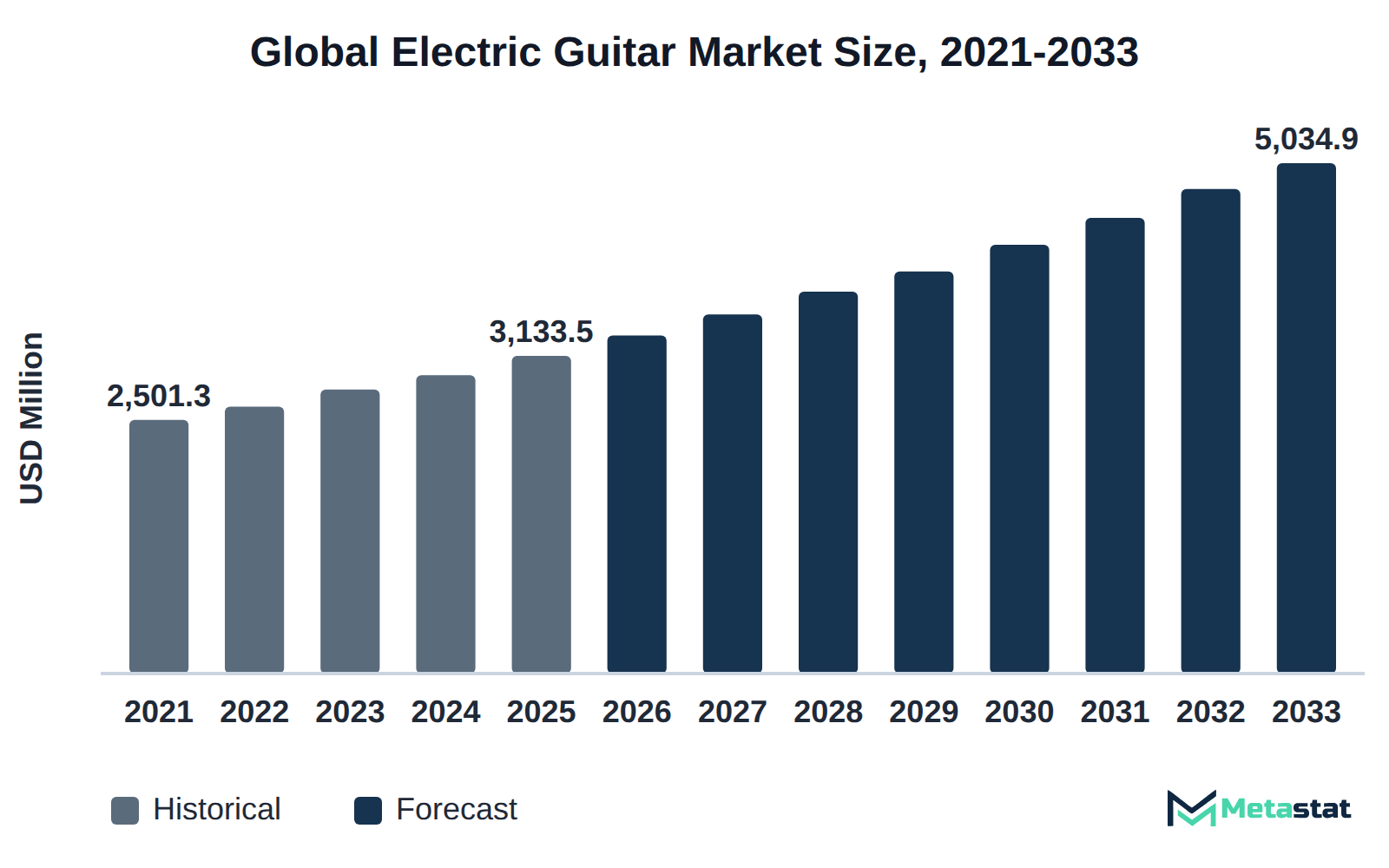
Solid-body electric guitars dominate the market, representing a substantial portion of total sales. This segment generated USD 2,355.5 million in revenue in 2026, with projections indicating growth to USD 3,480.1 million by 2033, reflecting a compound annual growth rate of 5.7%. Buyers favor solid-body designs for their versatility and their ability to produce many sounds suited to various music genres.
Buyers prioritize solid-body guitars for their durability and performance capabilities, making them a staple for both amateur musicians and professional artists. This consistent demand for solid-body instruments drives manufacturers to innovate and improve their product offerings, leading to advancements in materials and technology that enhance sound quality and playability. The prevalence of solid-body designs across all price tiers further reinforces their leadership position within the electric guitar market.
Solid-body electric guitars continue to capture significant market share, prompting companies to focus on enhancing features that appeal to diverse consumer preferences. This focus on innovation strengthens competitive positioning and lets brands serve a growing customer base as trends change.
Online retail transforms purchasing experiences for mid-range and premium instruments in the Electric Guitar market. A significant portion of guitar sales now occurs through digital channels, enabling consumers to access a wider variety of products. In 2026, revenue from online sales is projected to reach USD 2,170.2 million, with growth expected to USD 3,486.2 million by 2033, reflecting a compound annual growth rate of 7%.
Shoppers increasingly prefer the convenience of online platforms, where they compare prices, read product reviews, and browse extensive catalogs. This shift in purchasing behavior allows buyers to secure better deals and explore custom options that local brick-and-mortar stores do not offer. The accessibility of online retail encourages competitive pricing among retailers, driving down costs for consumers while enhancing their purchasing power.
This preference for online shopping directly impacts how manufacturers and retailers approach sales strategies. Companies increasingly invest in robust e-commerce platforms and digital advertising to attract customers, understanding that a strong online presence is essential for capturing market share. This trend enhances market dynamics, ultimately supporting revenue growth and expanding the overall customer base in the Electric Guitar market.
Headless and extended-range guitars increasingly appeal to modern musicians seeking versatility in performance. With the rising popularity of genres that demand unique tonal qualities and extended range, these instruments serve a specific niche in the Electric Guitar market. This growth indicates a clear demand for guitars that offer different performance capabilities.
Musicians often select headless and extended-range models for their lightweight design and enhanced playability, addressing the needs of players who perform for extended periods without fatigue. The market has observed a steady influx of new designs focusing on these features, appealing to both professional and amateur musicians. This trend generates opportunities for manufacturers to innovate, and those who invest in developing specialized instruments are likely to capture a growing segment of the market. Demand for headless and extended-range guitars is expected to strengthen, influencing buyer preferences and shaping future product development.
Innovations in pickup technology and customization significantly influence demand in the Electric Guitar market. Specifically, the Dual Humbucker pickup configuration, which is gaining traction, demonstrates a projected value increase from USD 1,214.3 million in 2026 to USD 1,854.9 million by 2033, reflecting a compound annual growth rate (CAGR) of 6.2%. This growth indicates a strong preference among musicians for versatile sound options that enhance performance capabilities.
Customization options further drive demand. Guitarists seek instruments tailored to their unique playing styles and preferences. The ability to modify pickups allows players to achieve a personalized sound, which matters more in a competitive music scene. This trend highlights the shift toward individualized instruments, resulting in increased sales in the premium and custom segments of the market.
Consequently, manufacturers focusing on advanced pickup designs and customization services gain a competitive edge. Investments in innovative technologies and personalized offerings position these companies to capture a larger share of the market, ultimately contributing to overall expansion.
Increased participation in music among younger demographics drives demand for electric guitars. Millennial and Gen Z musicians seek instruments that cater to their evolving musical tastes and styles, resulting in a surge in purchases from this group. The shift reflects a growing interest in music education and performance, encouraging new players to invest in quality instruments. This demographic transition contributes to rising sales volume within the market. Younger consumers prioritize versatile and customizable options, prompting manufacturers to respond with innovative designs and features. In 2025, the market achieved a valuation of USD 3,133.5 million, reflecting the impact of this demographic shift on overall demand.
Digital platforms enhance accessibility for aspiring musicians, further supporting this trend. By engaging with social media and streaming services, these consumers connect with an active online music community. This dynamic creates a culture of sharing and collaboration, reinforcing the commitment to musical expression. The result is an expanded customer base that significantly influences revenue growth in the electric guitar market.
Advancements in manufacturing techniques and materials significantly influence the Electric Guitar market. Improvements in lightweight composite materials enhance playability and durability, appealing to a broader range of musicians. Innovations in neck and body construction allow for unique shapes and designs, attracting players seeking distinct aesthetics alongside performance enhancements.
The integration of advanced electronics creates opportunities for enhanced sound modulation and effects. Related electronics also underpin music synthesizers, which generate and modulate sound. This trend particularly appeals to electric guitarists who prioritize versatility in their musical expression. Customization options, including personalized finishes and hardware, contribute to a richer experience for artists and hobbyists alike, creating a competitive atmosphere among suppliers.
These supplier-driven trends meet varied consumer demands and support sustained growth. By focusing on innovative designs and technological enhancements, manufacturers develop unique offerings that capture market share and appeal to both seasoned professionals and emerging talent.
The Electric Guitar market experiences limitations due to price sensitivity among entry-level buyers. Many individuals seeking to purchase electric guitars face financial constraints that result in slower uptake of new models. This demographic often prioritizes affordability, leading to smaller orders and delayed replacements for aging instruments. High prices for premium and mid-range options deter potential customers, particularly those who are just beginning to explore their musical interests. Consequently, brands targeting this segment balance product quality with competitive pricing to engage these buyers effectively. The pressure on pricing restricts overall growth potential in the market, making it challenging to capture a broader audience.
Suppliers face significant pressure from rising input costs, impacting the overall profitability of the Electric Guitar market. Increased prices for raw materials, including wood, metals, and electronic components, strain margins and compel manufacturers to evaluate their sourcing strategies. This scenario leads to adjustments in production processes and the exploration of alternative materials that offer cost benefits without sacrificing quality. Manufacturers implement more efficient production methodologies and invest in technology that enhances manufacturing yield, thereby reducing waste and operational costs.
Several suppliers diversify their supplier networks to mitigate risks associated with price fluctuations and ensure reliable access to essential materials. This approach strengthens their competitive position while supporting sustainability initiatives across the market. By adopting these strategies, manufacturers aim to maintain competitive pricing, which is essential for attracting various customer segments. Fluctuating costs of inputs necessitate ongoing adaptations, influencing overall market dynamics and supplier profitability.
The semi-hollow body segment presents a significant opportunity within the Electric Guitar market, with a projected compound annual growth rate (CAGR) of 7.1% through 2033. This growth is driven by rising consumer interest in versatile tonal qualities and aesthetic appeal, catering to musicians across various genres. The appeal of semi-hollow guitars particularly attracts buyers seeking unique sounds and styles, resulting in increased adoption among professional and amateur players alike. The market forecasts a value of USD 952.1 million for this segment by 2033, emphasizing its potential for expansion. Addressing this opportunity requires manufacturers to focus on innovative designs and enhanced features that distinguish semi-hollow guitars from solid-body counterparts, thus capturing a larger share of the market. Emphasizing craftsmanship and quality materials attracts more discerning customers, further driving revenue growth in this segment.
The Global Electric Guitar market is segmented based on Body Type, Price Range, Pickup Configuration, and Distribution Channel.
Characterized by its versatility and durability, solid-body guitars appeal to musicians at every level, from beginners to professionals. The growing popularity of genres including rock and metal drives demand, primarily from performers seeking reliable instruments for live performances. Live performances also depend on pro audio equipment alongside the instruments themselves. Unlike the semi-hollow and hollow body segments, which offer distinct tonal characteristics, solid-body guitars deliver a more sustained sound ideal for various playing styles. The solid-body segment shows steadier growth compared to the semi-hollow body segment, which is projected to grow at a CAGR of 7.1%. Solid-body guitars maintain a strong presence in both entry-level and premium price ranges, catering to diverse consumer needs while contributing significantly to the overall electric guitar market.
Semi-Hollow Body segment is estimated to reach USD 952.1 million by 2033, at a CAGR of 7.1% during the forecast period. This design type appeals to musicians seeking a blend of acoustic and electric tonal qualities, making it popular among jazz, blues, and rock artists. Increased interest from hobbyists and music enthusiasts significantly influences this segment. The growth reflects a shift toward more versatile instruments capable of producing rich, warm sounds. Differentiating from solid-body guitars, semi-hollow bodies offer a unique resonance that attracts buyers seeking specific tonal characteristics. While solid-body designs dominate the market due to larger sales volumes, the semi-hollow body segment grows at a faster rate, driven by its distinctive sound profile appealing to a niche audience.
Hollow Body guitars are projected to reach USD 445.1 million by 2033. These instruments appeal to musicians seeking a warmer tone with a distinct character, often used in jazz, blues, and rock genres. This segment experiences growth driven by rising interest in vintage styles and specialized sound characteristics, attracting buyers focused on authenticity and unique tonal qualities. Compared to solid-body designs, Hollow Body guitars often command higher prices due to specialized craftsmanship and materials. The segment's growth is slower than that of Solid-Body guitars, which have a projected CAGR of 5.7% from 2026 to 2033. The market benefits from increasing popularity of hybrid playing styles that integrate both acoustic and electric elements in performance.
Segment "Others (Chambered and Hybrid Bodies)" is projected to grow at a CAGR of 6.8% during the forecast period. This segment comprises guitars designed with unique structural characteristics that enhance tonal appeal and playability. Musicians seeking distinct sound profiles and aesthetics often gravitate towards these instruments. Demand in this segment is driven by innovation in guitar design, attracting both amateur and professional players. With a focus on performance and style, this segment competes with solid-body and semi-hollow designs, yet offers a differentiated value proposition. The price point for chambered and hybrid body guitars typically sits between mid-range and premium categories, appealing to customers seeking quality without the highest investment. This positioning allows it to capture a diverse buyer demographic, distinguishing itself from other body types that experience varying growth trajectories in the market.
Entry-Level segment is valued at USD 1,123.6 million in 2026 and is projected to reach USD 1,594.1 million by 2033, at a CAGR of 5.1% during the forecast period. This segment appeals to beginners and budget-conscious musicians seeking affordable instruments to start their musical journey. Digital pianos for beginners serve a similar first-time learner audience in the keyboard category. Demand is driven by increased interest in music education and affordable pricing strategies from manufacturers. Compared to premium segments, this category features lower pricing, attracting a wider audience. While the overall market benefits from rising disposable incomes, the Entry-Level segment remains sensitive to price fluctuations, influencing purchasing decisions. The anticipated growth in this segment highlights its importance in developing new talent and expanding the customer base for the market.
Mid-Range segment is estimated to reach USD 2,050.2 million by 2033, at a CAGR of 6.5% during the forecast period. This segment appeals to intermediate players and hobbyists seeking a balance between quality and affordability. Features at this price point often include better materials and construction compared to entry-level options, making it a popular choice for those wanting reliable performance without investing in premium models. Demand within this segment experiences upward pressure from rising interest in music education, particularly in younger demographics. Growth in the market reflects a shift toward mid-range models while buyers prioritize quality and features, distinguishing it from the entry-level segment, which faces price sensitivity. The growth rate of the Mid-Range segment surpasses that of the entry-level category, driven by continued innovation in design and technology.
Premium guitars are projected to reach USD 1,105.7 million by 2033. These instruments appeal to professional musicians and serious hobbyists seeking high-quality sound and craftsmanship. The segment benefits from growing consumer interest in premium music experiences, driven by an increasing number of performances and recordings in various genres. Recording sessions often rely on digital audio workstation software for capture and editing. Higher production costs associated with premium materials and craftsmanship differentiate this segment from entry-level and mid-range options, which typically are more accessible in price. The CAGR for this segment is expected to be 6.5%, reflecting strong demand compared to lower-priced options. While entry-level guitars target beginners, the premium segment attracts discerning buyers prioritizing performance and aesthetics, supporting growth in the overall Electric Guitar market.
Others (Custom and Limited-Edition) segment is projected to grow at a CAGR of 7.2% during the forecast period. This segment appeals to collectors and musicians seeking unique, high-quality instruments that stand out in both craftsmanship and design. Customization options continue to drive demand, with buyers prioritizing individuality in their purchases. The segment differentiates itself with a higher price point compared to mainstream offerings, attracting a niche audience willing to invest in premium quality. Limited-edition releases often create urgency among buyers, further supporting growth. The market experiences a shift toward personalized products, highlighting the increasing value placed on uniqueness and artistry in electric guitar production.
This configuration is popular among rock and metal guitarists who seek powerful, rich tones with enhanced sustain. Demand for dual humbucker guitars stems from the genre's performance requirements, driving manufacturers to focus on this segment. Dual Humbucker guitars typically command higher prices compared to other pickup configurations, positioning this segment as a premium offering. Three Single-Coil pickups cater to players who want brighter tones. Dual Humbucker guitars are favored for their versatility and ability to handle high gain, which gives them a distinct market advantage as players increasingly prioritize sound quality and adaptability.
Three Single-Coil segment is estimated to reach USD 1,207.4 million by 2033, at a CAGR of 5.5% during the forecast period. This configuration is commonly used in various music genres, particularly rock and blues, appealing to both amateur and professional guitarists. The segment experiences increased demand due to its versatility and distinctive tonal quality, which attracts buyers ranging from entry-level musicians to seasoned players. Compared to other pickup configurations, Three Single-Coil guitars typically have a lower price point, making them more accessible. In contrast, the Dual Humbucker segment shows a higher growth rate, with a CAGR of 6.2%, suggesting a shift toward different tonal preferences among guitarists. This preference highlights the evolving dynamics within the Electric Guitar market, driven by changing musical trends and consumer tastes.
Humbucker-Single-Single segment is expected to reach USD 988.4 million by 2033. This configuration is popular among musicians seeking a versatile tone, allowing for a blend of humbucker warmth and single-coil brightness. Professional guitarists and serious hobbyists favor this style due to its tonal flexibility, suitable for various genres. Demand for this segment is driven by the rising popularity of hybrid guitar styles that combine elements of different pickups. Compared to other configurations, including Dual Humbucker (projected to reach USD 1,854.9 million by 2033), the Humbucker-Single-Single segment is positioned for steady growth. It appeals to those seeking a mix of sound qualities rather than a sole focus on high-output performance. The targeted appeal of this segment supports its unique market positioning, catering specifically to discerning players requiring nuanced sound options.
The Two Single-Coil segment is projected to grow at a CAGR of 5% during the forecast period. This configuration primarily appeals to guitarists seeking versatility in tone, particularly in genres including rock, blues, and country. Demand stems largely from amateur and professional musicians who require a balance of clarity and warmth in their sound. The segment's growth is influenced by the increasing popularity of vintage-style guitars, which frequently feature two single-coil pickups. Compared to other configurations, including Dual Humbucker, this segment experiences slower growth due to a narrower target demographic and a preference for humbucker pickups in heavier music genres. However, its unique tonal qualities maintain its appeal among niche buyers in the Electric Guitar market.
P-90 configurations represent a distinctive type of pickup, characterized by a single coil design that delivers a unique tone often favored by rock and jazz musicians. This segment appeals primarily to professional guitarists and enthusiasts seeking a warm, vintage sound. Demand for P-90 configurations is driven by their unique tonal qualities, standing out from other pickup types due to their capability to produce a punchy mid-range sound. Unlike dual humbucker pickups, which typically offer higher output, P-90s provide a clearer, more articulate tone. While the overall market experiences a CAGR of 6.1%, P-90 configurations attract a specific buyer group valuing tonal characteristics over price, resulting in slower growth compared to higher-demand configurations like dual humbuckers. The unique sound profile of P-90 pickups ensures continued relevance in the Electric Guitar market, appealing to niche segments of the guitar-playing community.
Others (Active, Piezo and Mixed Pickups) include unique configurations that cater to diverse musical styles and preferences. Musicians seeking versatility often choose these pickups for their distinct tonal capabilities, which enhance the overall sound quality of electric guitars. This sub-segment appeals to a range of buyers, including professional musicians and enthusiasts, who value innovative sound production. Growth in this segment is driven by increasing interest in unique tonal characteristics among performers. With a distinct focus on customization, this sub-segment generally commands higher prices compared to standard configurations, attracting buyers looking for specialized features. The segment's growth trajectory reflects a focus on niche markets and specific performance needs, shaping its demand dynamics within the market.
This distribution channel caters to a diverse range of customers, including beginner and professional musicians, since it offers convenience and competitive pricing. Growth in this segment is driven by the increasing adoption of e-commerce platforms and a shift towards digital purchasing behavior among consumers. Compared to other segments, online distribution channels exhibit faster growth due to lower overhead costs and the ability to reach a wider audience. Traditional musical instrument stores tend to grow at a slower pace, reflecting a shift in consumer preference towards online shopping.
Musical Instrument Stores segment is estimated to reach USD 975.3 million by 2033, at a CAGR of 3.8% during the forecast period. This segment primarily serves musicians, hobbyists, and collectors seeking a hands-on experience with electric guitars. The stores offer expert advice, personalized service, and a variety of instruments that cater to different playing styles and preferences. Growth in this segment faces challenges from the increasing popularity of online sales, which provide convenience and often better pricing. The overall market is expanding strongly. The slower growth of the Musical Instrument Stores segment points to a shift in consumer behavior toward e-commerce platforms, which are expected to reach USD 3,486.2 million by 2033. This shift reflects changing purchasing habits, with many buyers opting for online research and purchases rather than traditional retail experiences. Such trends impact the competitive landscape and investment strategies of retailers in the electric guitar market.
Brand-Owned Stores segment is expected to reach USD 323.2 million by 2033. This segment serves various consumers, including professional musicians and enthusiasts seeking high-quality instruments directly from brands. Growth in this segment is driven by brand loyalty and the increasing demand for unique and premium products. This segment experiences slower growth compared to the Online segment, which is expected to grow at a CAGR of 7% during the forecast period. Brand-Owned Stores face challenges related to inventory costs and maintaining customer engagement. The market sees a shift toward online purchasing, affecting foot traffic in physical stores. Enhanced brand visibility and direct interactions with consumers contribute to the segment's distinct position in the electric guitar market.
Segment valued at USD 323.2 million in 2033, focusing on sales through independent dealers and direct sales channels, caters to niche buyers seeking personalized experiences. Independent dealers provide customized services and unique products that appeal to specialized customer segments, including professional musicians and collectors. This segment is projected to grow at a CAGR of 4.8% during the forecast period. Demand shifts are driven by increased consumer preference for tailored purchases and direct interactions with sales representatives. Compared to other distribution channels, this segment experiences slower growth, with online sales dominating the market and a CAGR of 7.0% expected. Independent dealers maintain a loyal customer base that values personal service and specific product offerings not always available through larger retailers. Consequently, this segment highlights the diverse purchasing preferences of customers in the Electric Guitar market.
Based on geography, the Global Electric Guitar market is divided into North America, Europe, Asia-Pacific, South America, Middle East, and Africa.
In North America, demand for electric guitars is driven by a dynamic music culture and strong participation in various musical genres. The United States, Canada, and Mexico exhibit significant consumer spending on musical instruments, focusing on both amateur and professional musicians. The region is anticipated to reach USD 1,654 million by the end of 2033, reflecting increasing interest in high-quality instruments. The solid-body guitar segment, particularly favored by rock and pop musicians, is projected to experience significant growth, contributing to overall market expansion. Online sales channels have gained popularity, providing convenient access for consumers. The strong distribution network further supports the electric guitar market, facilitating consumer access to diverse product offerings.
Demand for the Electric Guitar market in Europe experiences strong momentum, driven by a dynamic music culture and several local musicians and bands. Countries including Germany and the UK stand out due to their rich musical heritage and numerous festivals, which consistently promote guitar-centric performances. The market benefits from a well-established network of musical instrument stores, providing easy access to a diverse range of products. Online sales channels have gained traction, allowing consumers to explore various options without geographical limitations. With a share of 27.1% of the global market in 2025, Europe continues to be a key player, presenting opportunities for growth in both traditional and innovative guitar designs.
Significant growth in the Electric Guitar market in Asia-Pacific stems from a strong music culture and increasing interest in music education. Countries including China, Japan, and India exhibit a rising number of music enthusiasts and aspiring musicians, driving demand for electric guitars. The prevalence of online sales channels enhances accessibility, allowing consumers to purchase a diverse range of products conveniently. Regional manufacturers focus on producing affordable options, catering to the entry-level segment, while premium products attract professional musicians. The market share for this region reflects strong regional dynamics. Infrastructure improvements in music education and retail contribute positively, enabling a sustainable growth trajectory for the electric guitar market through 2033.
In South America, growth within the Electric Guitar market is driven primarily by increasing consumer interest in music and rising participation in various musical activities. Brazil and Argentina represent key countries in this region, contributing significantly to overall market demand. The relatively low cost of entry-level guitars encourages new musicians to explore their interests, supporting growth in the entry-level segment. Online retail platforms facilitate access to a wider range of products, enhancing the market's expansion potential. The market accounts for 7.0% of the global share in 2025, reflecting a growing appreciation for electric guitars among local musicians and music enthusiasts.
In the Middle East and Africa, electric guitar demand is influenced by a growing interest in music education and cultural events promoting musical expression. Countries like Saudi Arabia and the UAE feature active music scenes, contributing to market expansion. South Africa represents another key player, with a rich history of music and increased local manufacturing capabilities. Infrastructure supporting music festivals and educational initiatives creates a conducive environment for growth. Increased engagement of youth in music-related activities drives sales, enhancing appeal among the younger demographic. The market shows potential for innovative distribution channels, leveraging online platforms to reach a broader audience.
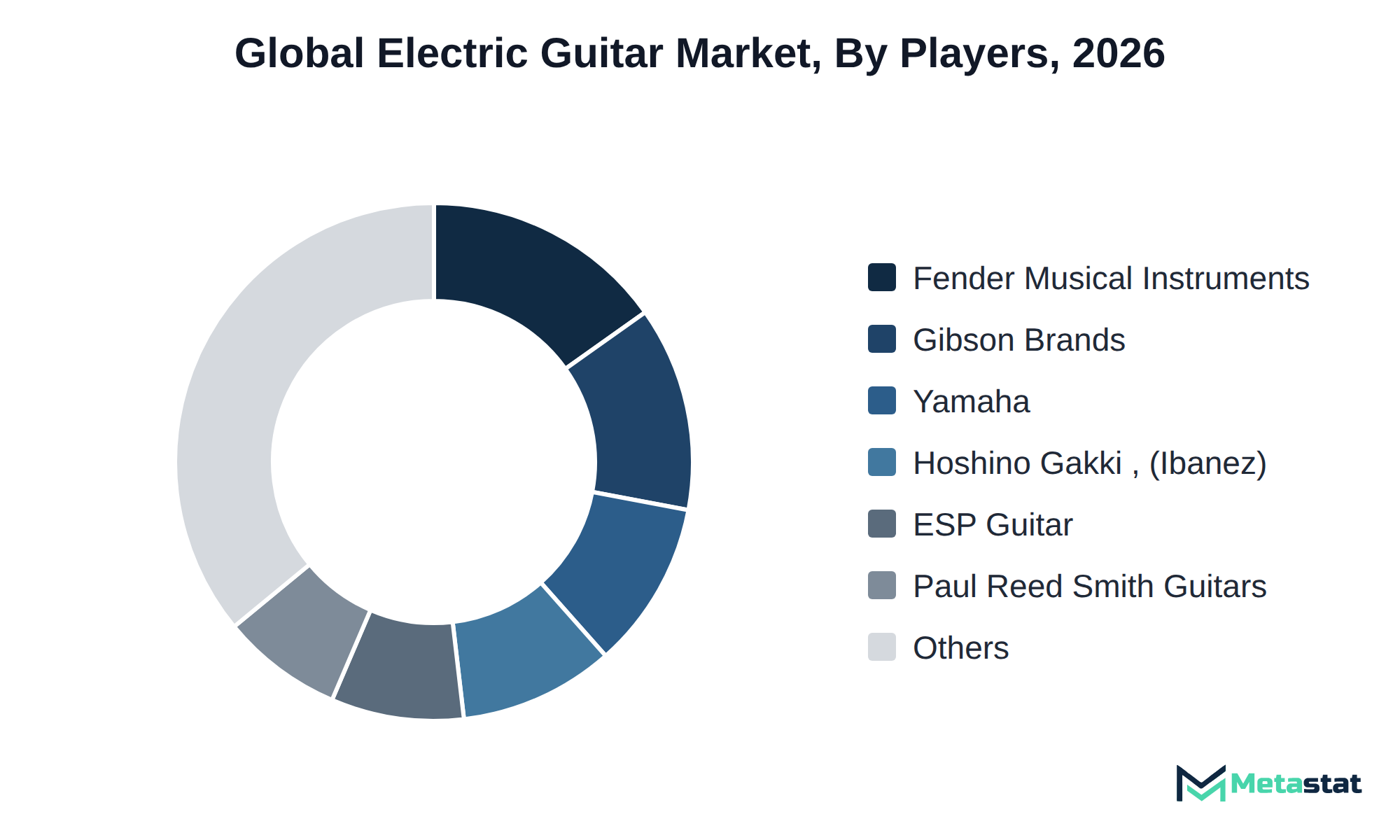
Competition within the Electric Guitar market reflects diverse strategies based on product offerings, pricing, and customer preferences. Companies differentiate themselves through body type, pickup configuration, and pricing segments, catering to specific consumer demands. Buyers select instruments based on attributes including sound quality, craftsmanship, and brand reputation, which significantly influence purchasing decisions.
Fender Musical Instruments Corporation and Gibson Brands, Inc. focus on traditional solid-body electric guitars, emphasizing craftsmanship and sound. Yamaha Corporation offers a broad range of models, appealing to various price segments, while Hoshino Gakki Co., Ltd. (Ibanez) targets performance-oriented musicians with innovative designs and a diverse product line. Companies like Schecter Guitar Research and Paul Reed Smith Guitars emphasize customization and high-quality materials, capturing niche markets that seek personalized options.
Other players, including Ernie Ball Music Man and Cort Guitars, highlight the importance of brand heritage and performance in their offerings. This competitive environment encourages innovation, with brands increasing their unique characteristics to attract discerning buyers in the Electric Guitar market.
Achieving this growth requires several developments in the Electric Guitar market. Firstly, an increase in consumer interest in electric guitars, especially solid-body models, will drive significant sales. The demand for entry-level guitars is expected to expand, reflecting the interest of beginner guitarists. Conversely, one risk that could hinder progress involves potential economic downturns affecting disposable income. This factor could impact consumer spending habits, particularly in regions including Europe, where economic fluctuations directly influence the market. Economic conditions fluctuate, leading to slower growth in certain segments. However, if consumer interest remains strong and sales channels continue to expand, the market is expected to achieve its forecast targets.
By Body Type: Solid-Body, Semi-Hollow Body, Hollow Body, Others (Chambered and Hybrid Bodies)
By Price Range: Entry-Level, Mid-Range, Premium, Others (Custom and Limited-Edition)
By Pickup Configuration: Dual Humbucker, Three Single-Coil, Humbucker-Single-Single, Two Single-Coil, P-90 Configurations, Others (Active, Piezo and Mixed Pickups)
By Distribution Channel: Online, Musical Instrument Stores, Brand-Owned Stores, Others (Independent Dealers and Direct Sales)
The report strategically identifies and profiles the key market players and analyses their core competencies in each sub-segment of the Electric Guitar market.
Report Attributes | Details |
Study Period | 2021-2033 |
Base Year | 2025 |
Estimated Year | 2026 |
Forecast Period | 2026-2033 |
Historical Period | 2021-2025 |
Growth Rate | CAGR 6.1% from 2026 to 2033 |
Revenue Unit | USD million |
Segmentation | By Body Type, Price Range, Pickup Configuration, Distribution Channel, and Region |
By Region | North America (By Body Type, Price Range, Pickup Configuration, Distribution Channel, and Country)
|
Europe (By Body Type, Price Range, Pickup Configuration, Distribution Channel, and Country)
| |
Asia Pacific (By Body Type, Price Range, Pickup Configuration, Distribution Channel, and Country)
| |
South America (By Body Type, Price Range, Pickup Configuration, Distribution Channel, and Country)
| |
Middle East and Africa (By Body Type, Price Range, Pickup Configuration, Distribution Channel, and Country)
|
Find answers to common questions about this report
The Electric Guitar market size was valued at USD 3,133.5 million in 2025.
The market is projected to grow at a CAGR of 6.1% during the forecast period from 2026 to 2033.
The North America Electric Guitar market size is estimated to reach USD 1,654 million by 2033.
The Solid-Body segment leads the Electric Guitar market with a projected value of USD 3,480.1 million by 2033. This segment significantly surpasses others in terms of market share and growth potential.
Key drivers for the Electric Guitar market include increased participation in music among younger demographics, with Millennial and Gen Z musicians seeking instruments that cater to evolving musical tastes. Advancements in manufacturing techniques and materials enhance playability and durability, appealing to a broader range of musicians.
North America holds the dominant share of the Electric Guitar market, with a projected value of USD 1,654 million in 2033, representing 34.3 percent of the total market. This figure surpasses the shares of other regions, highlighting North America's leading position.
Price sensitivity among entry-level buyers restrains Electric Guitar market growth, with financial constraints leading to smaller orders and delayed replacements for aging instruments. Rising input costs strain margins, compelling manufacturers to adjust sourcing strategies and production processes, impacting overall profitability.
The semi-hollow body segment experiences significant growth potential, with a projected compound annual growth rate (CAGR) of 7.1% through 2033. This trend is driven by increasing consumer interest in versatile tonal qualities and aesthetic appeal, leading to wider adoption among musicians across various genres.
The Electric Guitar market is estimated to reach a valuation of USD 5,034.9 million by 2033.
Key players operating in the Electric Guitar market include Fender Musical Instruments Corporation, Gibson Brands, Inc., Yamaha Corporation, Hoshino Gakki Co., Ltd. (Ibanez), ESP Guitar Company, Schecter Guitar Research, and Paul Reed Smith Guitars.
The analysts below cover Consumer Goods research at Metastat Insights.
LEAD ANALYST
Utkarsh Khirodkar is a Lead Market Research Analyst at MetaStat Insight, specializing in market intelligence, technology sector assessments, and competitive strategy.
Replacing petrochemical surfactants with bio-based alternatives requires realistic timelines on industrial precision fermentation scaling. The market research broke down commercialization timelines, feedstock sugar price sensitivities, and regional cosmetic ingredient regulatory approvals in Europe and East Asia. That supplier readiness mapping gave our formulations team reliable context when comparing renewable chemical sourcing roadmaps.
Tracking ceramic matrix composite adoption in high-bypass aero engines requires strict attention to material qualification cycles and FAA airworthiness testing milestones. The MetaStat Insight team provided a detailed timeline of silicon carbide fiber manufacturing capacity and commercial foundry lead times. Having clear visibility into upstream thermal barrier coating supply helped us stress-test our long-term component procurement strategy.
Transitioning ultra-class mining haul trucks to alternative power requires concrete data on remote hydrogen refueling infrastructure economics. The report evaluated megawatt-scale electrolyzer installation expenses, onsite storage safety mandates, and heavy-duty fuel cell stack degradation under continuous duty cycles. That technical rigor helped our engineers benchmark realistic total operating cost horizons for off-highway fleet decarbonization.
Explore related market intelligence reports worth reading alongside this one.