
LEAD ANALYST
Utkarsh Khirodkar is a Lead Market Research Analyst at MetaStat Insight, specializing in market intelligence, technology sector assessments, and competitive strategy.

Global Wood Manufacturing Market Size, Share, By Product Type (Sawn Timber and Dimension Lumber, Plywood, Oriented Strand Board, Particleboard, Medium- and High-Density Fiberboard, Engineered Wood Products, Wood Flooring and Parquet, Decking, Siding and Cladding, Others), By Wood Processing Method (Sawmilling and Mechanical Machining, Veneer-Based Processing, Strand-Based Processing, Particle-Based Processing, Fiber-Based Processing, Laminated and Engineered Wood Processing, Secondary Profiling and Value-Added Machining, Wood Treatment and Modification, Others), By Wood Species (Softwood, Temperate Hardwood, Tropical Hardwood, Others), By Application (Residential Construction, Commercial and Institutional Construction, Furniture and Cabinetry Manufacturing, Industrial and Manufacturing, Packaging and Logistics, Transportation and Marine, Infrastructure and Public Works, Others), Industry Analysis, Growth, Trends, and Forecast, 2026-2033
Report ID
MSI-5205
Published
September, 2026
Pages
283 Pages
Format
Historical
Base year
Forecast
Forecast period
Report Details
Choose Your License
Global Wood Manufacturing Market
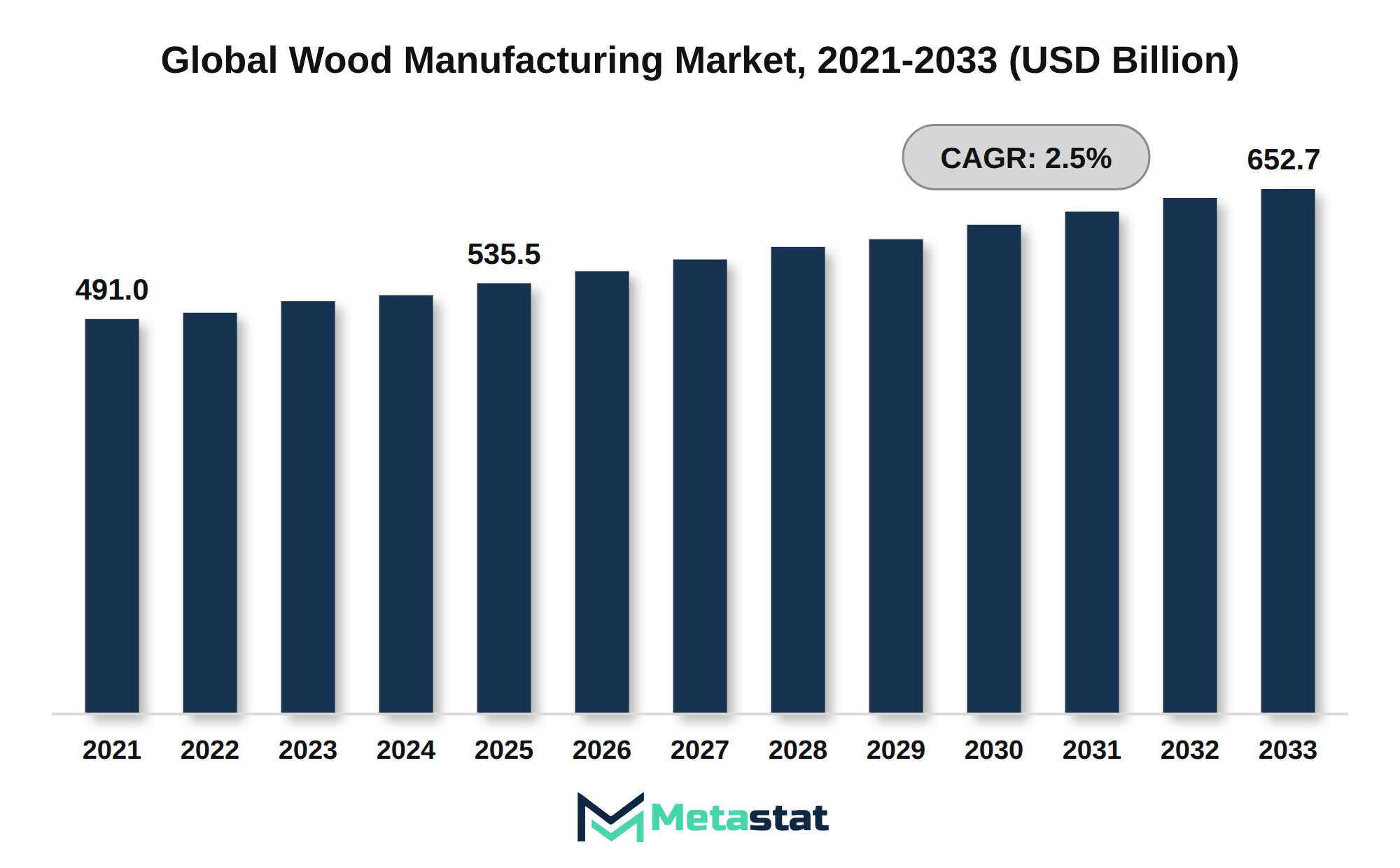
The global Wood Manufacturing market was valued at USD 535.5 billion in 2025 and is projected to reach USD 652.7 billion by 2033, growing at a CAGR of 2.5% over the forecast period.
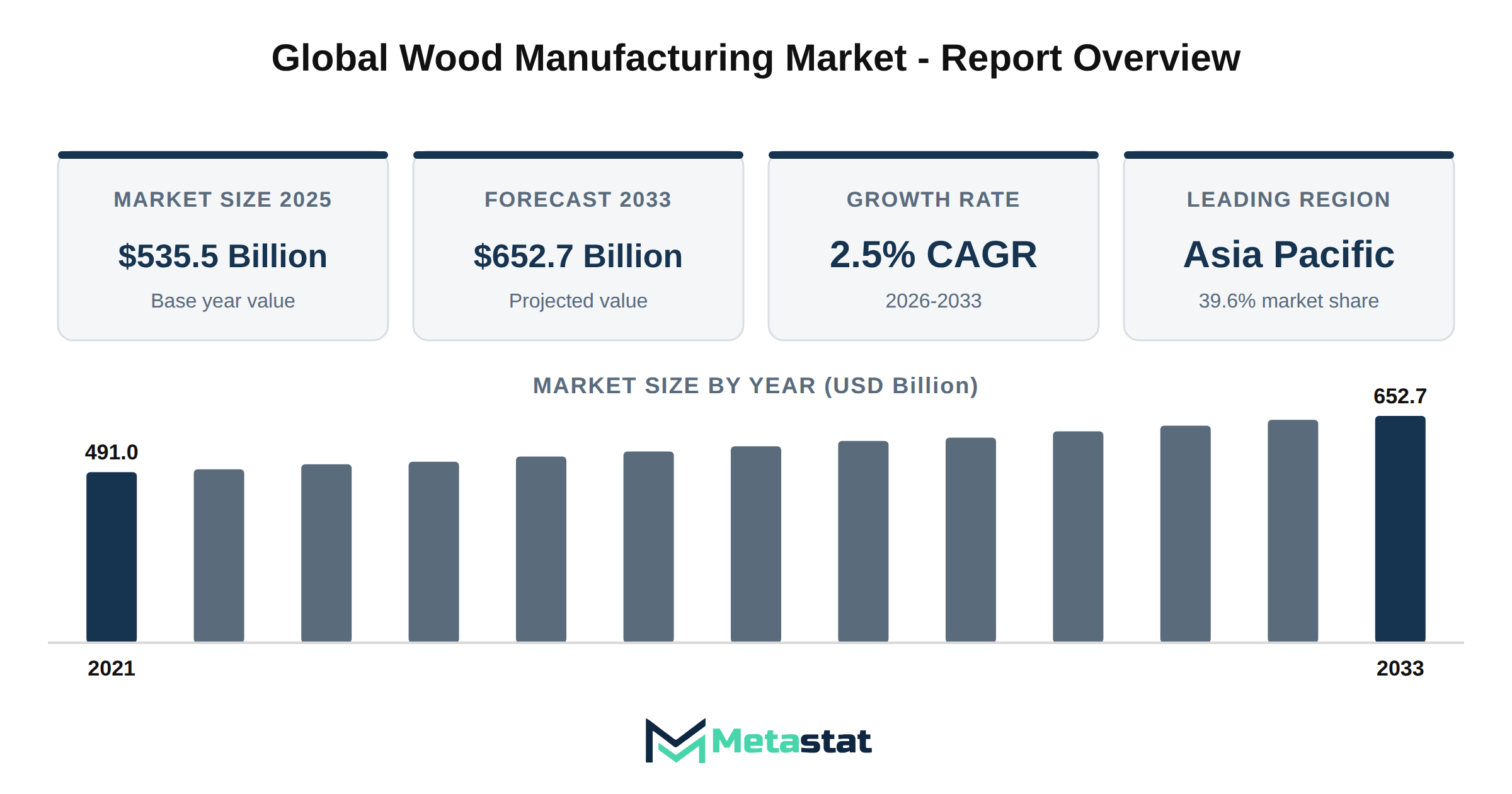
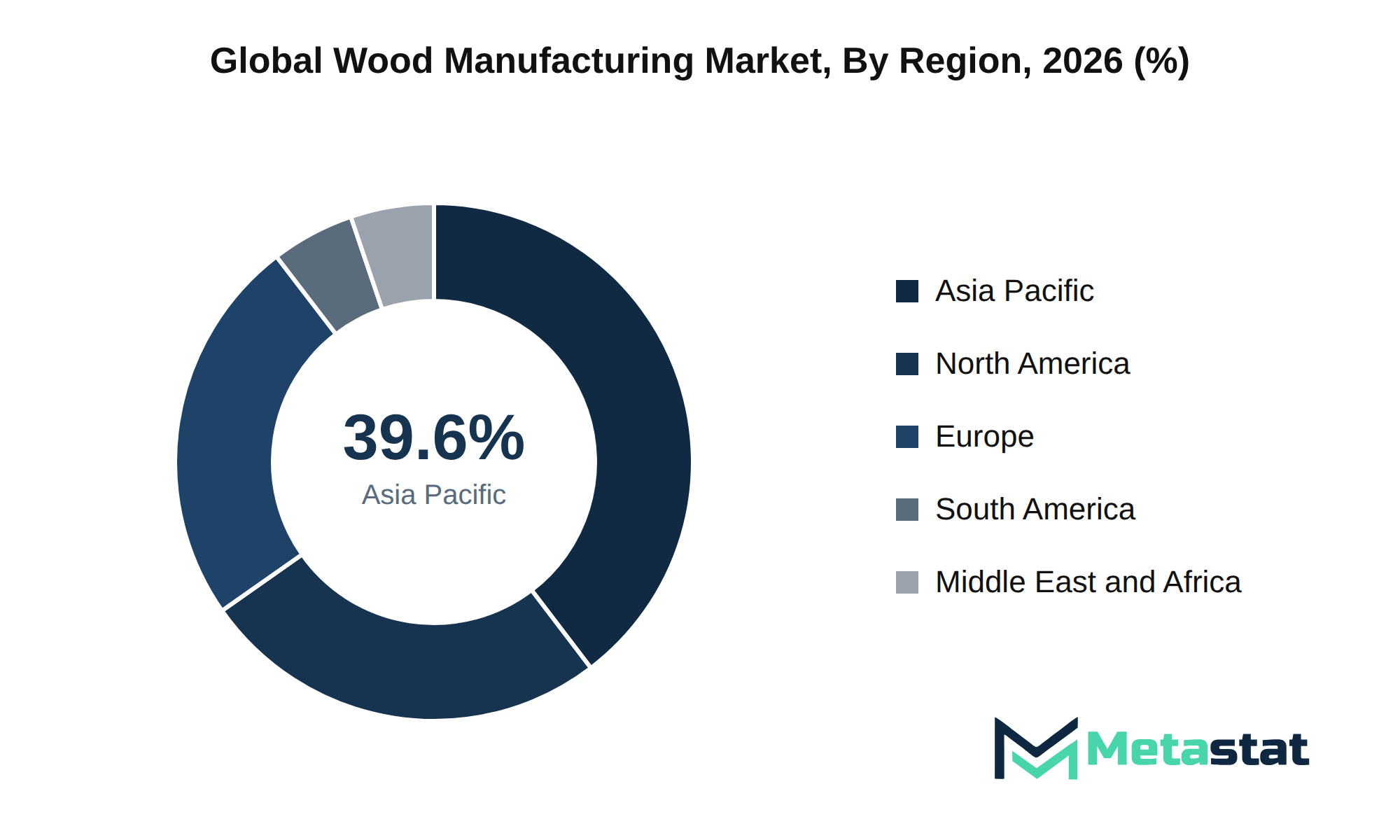
The Wood Manufacturing market reached a value of USD 535.5 billion in 2025, demonstrating steady growth from USD 491 billion in 2021. The market is expected to grow to USD 652.7 billion by 2033, reflecting a compound annual growth rate (CAGR) of 2.5% during the forecast period from 2026 to 2033. Key regions contributing to this growth include Asia Pacific, which holds the largest market share at 39.6%, followed by North America at 25.6% and Europe at 24.3%.
Significant factors influencing growth in the Wood Manufacturing market stem from advancements in production techniques and rising demand for sustainable building materials. The construction sector, particularly residential and commercial applications, drives demand for wood products. Increasing emphasis on sustainability and eco-friendly materials reshapes procurement strategies across various industries. Companies focus on enhancing operational efficiency while adhering to environmental regulations and standards.
Future strategic outlook indicates that investment in research and development will play a crucial role in enabling next-generation innovations, particularly in engineered wood products and sustainable processing methods. The drive towards decarbonization and the circular economy emphasizes the importance of recycled and repurposed materials, further influencing market dynamics.
Logistics architecture and supply chain landscape for the market require careful navigation due to complex interdependencies among suppliers, manufacturers, and retailers. Increased capital allocation towards infrastructure investments strengthens the supply chain, enhancing responsiveness to market shifts. Fragmentation within the market presents both challenges and opportunities for consolidation, prompting mergers and acquisitions among key players seeking to expand their market presence.
The Wood Manufacturing market experiences significant influences from regulatory compliance and standards that shape operational practices. Industry players prioritize adherence to environmental regulations, which drive investments in sustainable practices and technologies. This focus on compliance enhances brand reputation and strengthens market positioning.
Disruption in the market arises from advancements in technology and changing consumer preferences. The rise of digitalization and automation transforms production processes, enabling companies to optimize efficiency and reduce waste. R&D trajectories emphasize innovation, with firms investing in next-generation materials and manufacturing techniques to maintain competitiveness.
Sustainable transformation remains a central focus for many stakeholders within the market. Strategies incorporating decarbonization and circular economy principles align with global sustainability goals. Companies increasingly adopt practices that minimize environmental impact, including using reclaimed materials and implementing energy-efficient processes.
The supply chain undergoes continuous evolution, influenced by global trade dynamics and regional sourcing strategies. Companies face challenges related to logistics architecture, focusing on enhancing distribution networks to ensure timely delivery and reduce operational costs. Effective sourcing management contributes to overall market efficiency.
Market fragmentation presents opportunities and challenges for participants. The presence of numerous small and medium enterprises alongside large players cultivates a competitive environment. M&A dynamics emerge owing to companies seeking strategic partnerships to enhance capabilities and expand market reach.
The value chain in the market is characterized by tight integration among suppliers, manufacturers, and distributors. Effective procurement strategies are essential for maintaining supply chain stability and optimizing costs. Understanding customer journey dynamics further facilitates alignment with market demands and enhances customer satisfaction.
Capital allocation trends indicate a growing focus on technology adoption and infrastructure investments. Firms allocate resources toward upgrading facilities and integrating advanced manufacturing technologies. Future strategic outlooks highlight the importance of innovation and adaptability in responding to evolving market conditions.
Corporate imperatives emphasize the need for agility and responsiveness to market trends. High-value recommendations for industry participants involve prioritizing sustainability initiatives, investing in R&D, and enhancing operational efficiencies to meet consumer demands effectively. These strategies position companies for long-term growth within the evolving environment of the Wood Manufacturing market.
Rising economic growth stimulates construction activities across various sectors, significantly impacting the Wood Manufacturing market. Increased infrastructure spending and residential development projects contribute to heightened wood consumption. While nations invest in supporting economic activities, construction firms experience a surge in demand for wood products, particularly in residential and commercial construction applications.
Investment in construction projects typically correlates with gross domestic product (GDP) growth. Expansion in GDP encourages businesses to undertake new projects, which, in turn, creates higher demand for essential materials like wood. The market benefits from this dynamic, driven by the construction sector's reliance on wood for framing, flooring, and cabinetry.
Shifts in consumer behavior towards sustainable and eco-friendly building materials enhance the market's growth prospects. Modern consumers increasingly prefer natural materials, driving demand for wood products over synthetic alternatives. This trend influences the market, generating renewed interest in sustainable forestry practices and local sourcing.
Overall, strong economic growth and shifting consumer preferences collectively contribute to increased demand for wood products, positioning the Wood Manufacturing market for steady expansion during the forecast period.
The Wood Manufacturing market benefits from the integration of digital transformation and technological advancements. Automation, artificial intelligence, and software adoption streamline operations, boosting productivity and efficiency. Investments in these technologies enable manufacturers to optimize production processes, reduce waste, and improve product quality. Enhanced operational productivity results in competitive advantages, allowing firms to respond swiftly to market demands and shifts in consumer behavior.
Investment in research and development facilitates innovation-led product diversification, further expanding revenue streams in the market. Companies increasingly focus on developing proprietary technologies that cater to evolving consumer preferences, including sustainability and resource stewardship. This shift aligns with growing consumer awareness regarding environmental impact, prompting firms to adopt eco-friendly practices while simultaneously meeting market demands.
The overall impact of these technological advancements positions the Wood Manufacturing market for sustained growth, ensuring companies remain agile during changes in market dynamics. Emphasizing innovation and integration of advanced technologies supports firms in navigating challenges and seizing new opportunities within the evolving landscape.
The Wood Manufacturing market faces challenges owing to stringent regulatory pressures affecting operational practices and compliance expenditures. Increased focus on sustainability and environmental impact leads to higher costs associated with meeting legal mandates and complying with evolving standards. These expenses affect profit margins for producers, limiting investment in innovation and expansion.
Macroeconomic headwinds further complicate market dynamics. Inflationary pressures create uncertainty in raw material prices, affecting overall cost structures. Resource scarcity, particularly in relation to specific wood species, adds strain on supply chains, leading to potential shortages and higher operational costs. Competition for limited resources impacts pricing strategies, influencing demand across various sectors.
Skill gaps and labor shortages hinder productivity within the market. A lack of qualified personnel in key manufacturing processes delays operational efficiency and innovation. Difficulty in sourcing skilled labor leads to increased overhead costs, directly impacting profitability for companies operating within the Wood Manufacturing market.
Market fragmentation presents additional obstacles, because small and medium-sized enterprises struggle to compete with larger players who benefit from economies of scale. This fragmentation leads to inconsistent product quality and service levels, making it challenging for consumers to make informed purchasing decisions. The increasing complexity of managing diverse supply networks complicates market operations.
Overall, the combination of regulatory pressures, economic factors, and labor challenges creates a complex environment that influences growth and stability within the Wood Manufacturing market. Addressing these issues remains crucial for ensuring a robust future for all market participants.
Geopolitical fragmentation presents a significant challenge for the Wood Manufacturing market by creating uncertainty in trade relationships and leading to trade deficits. Tariff friction between nations complicates international transactions, increasing costs for materials and components. This situation pressures suppliers and manufacturers to navigate a complex set of regulations and tariffs that vary from one region to another. Such challenges lead to pricing compression, where manufacturers face difficulties maintaining profit margins while adjusting to fluctuating input costs.
Technological disruptions contribute to the challenges faced by the market, particularly around interoperability issues and the integration of advanced research and development (R&D). Manufacturers invest substantially in R&D to keep pace with evolving technologies, straining financial resources and diverting attention from core operations. The need for skilled labor in these advanced processes creates workforce skill gaps, resulting in talent retention pressures that hinder growth and operational efficiency.
The Wood Manufacturing market confronts environmental demands related to decarbonization mandates and sustainability requirements. Manufacturers increasingly face pressure to demonstrate the environmental lifecycle impacts of their products. Failure to comply with tightening global regulatory standards leads to significant compliance overhead, increasing operational costs and complicating market entry for new players. Such dynamics create an environment where established companies struggle to maintain competitive advantages against newer entrants with innovative, sustainable solutions.
Logistics disruptions and supply chain instability exacerbate challenges within the market. The ongoing volatility of feedstock and component availability affects production schedules, leading to implementation bottlenecks. Manufacturers develop robust strategies to address these issues while remaining responsive to changing downstream demands. Overall, the combination of these factors shapes the future trajectory of the Wood Manufacturing market, influencing investment and growth prospects in the coming years.
Increasing urbanization and population growth in emerging markets create significant opportunities for the Wood Manufacturing market. The demand for housing and infrastructure projects in regions including Asia Pacific and South America drives investments in wood products, particularly in residential construction. Government initiatives promoting sustainable building practices and the use of renewable materials support this trend.
Technological disruptions, particularly in wood processing methods, enhance efficiency and reduce waste. Advances in machinery and digital tools optimize production processes, enabling suppliers to respond rapidly to changing consumer preferences. The shift toward automation and precision aligns with the market's movement toward higher-quality and sustainable wood products.
Sustainability imperatives influence purchasing decisions across various industries. Consumers increasingly prefer eco-friendly products, prompting manufacturers to adopt green transformations in their operations. The Wood Manufacturing market benefits from this trend by integrating sustainable practices and promoting environmentally responsible sourcing.
Strategic consolidation strengthens competitive positioning among key players in the market. Mergers and acquisitions enable companies to expand their product portfolios and enhance operational efficiencies. This trend supports market growth by allowing firms to diversify offerings and enter new geographical regions.
Shifts in buying behaviors and commercial model transitions reflect the evolving landscape of the market. Digital procurement shifts streamline purchasing processes and enhance supplier-buyer interactions. These changes facilitate access to a broader range of products, catering to niche applications and emerging consumer demands within the wood industry.
Value-chain optimization remains a priority for manufacturers aiming to enhance profitability. By focusing on process automation and operational yield maximization, companies reduce costs and improve overall performance. This focus on efficiency contributes to the long-term viability and growth potential of the Wood Manufacturing market.
The Global Wood Manufacturing market is segmented based on Product Type, Wood Processing Method, Wood Species, and Application.
Sawn Timber & Dimension Lumber segment is valued at USD 165.2 billion in 2026 and is projected to reach USD 182.5 billion by 2033, at a CAGR of 1.4% during the forecast period. Demand drivers for this segment stem from the ongoing expansion of residential and commercial construction activities. The construction industry employs sawn timber for its strength and versatility, enhancing its appeal among builders and contractors. Technological advancements in processing methods contribute to improved efficiency and product consistency, facilitating the segment's growth.
End-use dynamics reflect a strong preference for sustainable and renewable materials, aligning with consumer trends towards environmentally friendly construction practices. Regulatory compliance standards promote the use of certified wood products, further enhancing the segment’s adoption. Governments enforcing stricter building codes make products derived from sustainably managed resources more desirable, reinforcing the segment's market position.
Cost structures within this segment remain sensitive to fluctuations in raw material prices, impacting overall profitability. Price volatility results from supply chain dynamics and sourcing challenges, particularly regarding softwood species. Effective management of raw material sourcing proves essential to minimize disruptions, ensuring a steady supply flow to meet market demands. Strategic investment in technology and processing capabilities enables firms to navigate these challenges effectively, supporting long-term growth.
Sawn Timber & Dimension Lumber contributes significantly to the overall Wood Manufacturing market, driven by robust construction demand and a focus on sustainability. The segment's future outlook remains positive, with anticipated growth reinforced by advancements in technology and regulatory trends favoring environmentally responsible practices.
Plywood remains a crucial component in the Wood Manufacturing market, driven by its diverse applications across residential, commercial, and industrial sectors. Demand for plywood experiences growth owing to the increasing use of this material in construction and furniture manufacturing. The shift toward sustainable building practices further increases the preference for plywood products, given their natural materials and recyclability.
Technological advancements in production processes enhance the quality and performance of plywood, leading to increased adoption among manufacturers. Enhanced durability and resistance to moisture contribute to the product's appeal, particularly in regions susceptible to varying environmental conditions. The segment is expected to reach USD 92.7 billion by 2033, at a CAGR of 1.8% during the forecast period.
Investments in new manufacturing technologies and techniques facilitate the development of innovative plywood products, catering to evolving consumer preferences. These next-generation upgrades play a significant role in addressing market demands, ensuring competitiveness among manufacturers. Regulatory compliance remains an important factor, driven by stringent standards that influence production practices and material sourcing in the plywood segment.
Pricing volatility in raw materials impacts profit margins, necessitating strategic responses from industry players. The balance between cost structures and product quality influences purchasing decisions among end-users, prompting manufacturers to streamline operations and enhance supply chain resilience. Overall, the plywood segment within the Wood Manufacturing market presents opportunities for growth driven by demand dynamics, technological maturation, and evolving end-use applications.
In the Wood Manufacturing market, demand for Oriented Strand Board (OSB) continues to gain traction due to its versatility and performance characteristics, which suit various applications. Key drivers include increasing investments in residential and commercial construction, emphasizing sustainable materials. The segment is expected to reach USD 75.8 billion by 2033, reflecting a strong growth trajectory driven by ongoing technological advancements and product innovations.
Shifts toward environmentally-friendly building practices encourage the adoption of OSB, particularly in construction projects prioritizing sustainable sourcing. Certifications and regulatory standards promoting the use of renewable materials further stimulate market expansion. End-users increasingly prefer OSB over traditional wood products due to its cost-effectiveness and structural benefits.
Technological maturation in the production processes enhances the quality and performance of OSB, enabling manufacturers to meet diverse consumer needs. Continuous product evolution introduces next-generation OSB variants that offer improved durability and moisture resistance, attracting newer applications beyond traditional uses.
Producers face pressures from fluctuations in raw material prices and supply chain vulnerabilities. Strategic opportunities for OSB manufacturers to innovate and differentiate their offerings remain robust. The segment's outlook remains positive, with anticipated growth supported by favorable market conditions and evolving consumer preferences in the Wood Manufacturing market.
Growth in the Particleboard segment is driven by increasing demand from the furniture and cabinetry manufacturing sectors. The ongoing trend toward sustainable and cost-effective building materials enhances adoption rates for particleboard, appealing to environmentally conscious consumers and manufacturers seeking to minimize costs. Significant technological maturation has led to improvements in product quality and performance, which encourages its use in diverse applications.
The Particleboard segment is projected to grow at a CAGR of 1.6% during the forecast period. This growth aligns with a broader shift in end-use dynamics, where manufacturers prioritize efficiency and sustainability in production processes. Regulatory compliance standards promoting the use of eco-friendly materials drive investment in particleboard, influencing consumption shifts toward this segment.
The segment faces cost structures influenced by raw material sourcing challenges, particularly in regions that rely heavily on imported feedstock. Pricing volatility due to fluctuating raw material costs presents margin pressures for producers. Strategic opportunity windows created by advancements in manufacturing technology open avenues for enhanced production capabilities and product evolution.
Overall, the Particleboard segment remains integral to the Wood Manufacturing market, providing manufacturers with a versatile and economically viable option for various applications. Continued capital investment and focus on innovation are expected to support the segment's growth trajectory through 2033.
Demand for Medium- & High-Density Fiberboard (MDF/HDF) is driven by its versatility and wide range of applications across furniture, flooring, and cabinetry sectors. Producing this material from both recycled and new wood fibers enhances its appeal, addressing sustainability concerns among consumers and manufacturers. Lightweight and high-performance materials in construction and furniture manufacturing propel the adoption of MDF/HDF products.
Technological advancements in production processes contribute to improved quality and cost-efficiency, enabling manufacturers to meet stringent performance standards. Innovations in coating and finishing technologies enhance the aesthetic appeal and durability of MDF/HDF, supporting growth in premium applications. The wood manufacturing market experiences a shift toward eco-friendly and sustainable alternatives, fueling interest in this segment.
End-use dynamics reflect a growing preference for MDF/HDF in residential and commercial applications. The segment benefits from trends in home renovation and the increasing importance of design flexibility. Compliance with environmental standards encourages investment in MDF/HDF, positioning the segment for strategic growth opportunities. This sub-segment aligns with broader trends in the wood manufacturing market, emphasizing sustainability and performance.
Market dynamics increasingly favor engineered wood products including CLT, Glulam, LVL, and I-Joists, driven by their sustainability attributes and versatility in construction applications. These products contribute to reducing carbon footprints, aligning with global efforts towards eco-friendly building practices. Adoption stems from growing awareness among architects and builders about the benefits of using engineered wood in both residential and commercial projects.
Technological maturation enhances the performance characteristics of engineered wood products, leading to advancements in structural integrity and design flexibility. Continuous innovation in manufacturing processes supports the development of next-generation products, addressing specific needs in various construction sectors. The potential for customization further attracts designers and contractors looking for tailored solutions, boosting overall demand.
End-use dynamics in the Wood Manufacturing market reflect a shift towards sustainable materials, with engineered wood products positioned because attractive alternatives to traditional materials. This trend aligns with the increasing emphasis on green building certifications, encouraging investments in sustainable construction practices. Regulatory compliance standards increasingly favor the use of engineered wood, driving further integration into mainstream construction projects.
Cost structures associated with engineered wood products benefit from economies of scale, which improve pricing stability and competitiveness. However, fluctuations in raw material availability introduce volatility in pricing, necessitating strategic sourcing and supply chain management to mitigate risks. The segment continues to capitalize on strategic opportunity windows, focusing on expanding applications in innovative design and construction techniques.
Raw material sourcing for engineered wood products emphasizes sustainable forestry practices, aligning with environmental standards and consumer expectations. This commitment helps enhance supply chain resilience, while logistics planning addresses potential vulnerabilities associated with distribution. Overall, the engineered wood products segment plays an essential role in the evolving landscape of the Wood Manufacturing market.
Consumer preferences increasingly favor sustainable and aesthetically pleasing flooring options, driving demand for Wood Flooring & Parquet products. This segment benefits from the growing emphasis on eco-friendly materials and designs that enhance interior spaces. Technological advancements in manufacturing processes contribute to improved product quality and durability, appealing to both residential and commercial buyers.
The expansion of this segment aligns with trends in residential construction, particularly among homeowners seeking premium flooring solutions. Regulatory measures promoting sustainable sourcing of timber influence product availability, affecting pricing dynamics within the market. Manufacturers adapt by incorporating innovative designs and eco-conscious practices, enhancing their competitive position.
Shifts in consumption patterns towards natural materials affect the pricing strategies of producers. Fluctuations in raw material costs impact profit margins, necessitating agile supply chain management to mitigate risks. Strategic opportunities arise from collaborations with designers and architects, catering to evolving preferences of consumers and commercial clients.
In recent years, the Wood Manufacturing market has experienced a notable shift towards sustainable building materials, with growing demand for Decking, Siding, and Cladding products. This shift is attributed to heightened consumer awareness regarding environmental impacts, driving preference for responsibly sourced materials. Advancements in wood treatment technologies and protective coatings enhance the durability and aesthetic appeal of these products, further fueling market interest.
Market expansion is supported by the strong residential construction sector, where demand for high-quality decking and cladding solutions aligns with modern architectural trends. Increasing investments in outdoor living spaces serve because a catalyst for growth, driven by consumers prioritizing functional and visually appealing exteriors. Regulatory compliance regarding sustainability and energy efficiency encourages manufacturers to innovate and adapt their offerings.
Cost structures within this segment reflect the need for high-quality raw materials, which often leads to pricing volatility. Manufacturers face margin pressures that stem from fluctuating material costs and the necessity of meeting stringent quality standards. Addressing these challenges requires a focus on strategic sourcing and supply chain resilience to mitigate risks associated with raw material availability.
Technological maturation shapes the market, driven by advancements in production processes that enable manufacturers to optimize efficiency and reduce waste. The embrace of next-generation upgrades, including automated manufacturing systems, allows for greater precision and responsiveness to market demands. These developments enhance competitiveness and position players favorably to capitalize on emerging opportunities.
Overall, the Wood Manufacturing market's Decking, Siding, and Cladding segment stands poised for growth because it navigates evolving consumer preferences, regulatory landscapes, and technological advancements. Strategic investments and a commitment to innovation are essential for stakeholders aiming to thrive within this dynamic market environment.
Significant demand for pallets, packaging, fencing, and specialty wood products stems from the growing need for sustainable materials in various industries. Increased focus on environmentally friendly practices drives manufacturers to seek wood-based solutions that align with sustainability goals. The segment experiences expansion through rising awareness of the benefits of using renewable materials in packaging and construction applications. Innovations in wood treatment and processing techniques enhance product durability and performance, supporting overall segment development.
End-use dynamics indicate a trend toward customization and versatility in applications, catering to the unique requirements of industries ranging from retail to construction. Regulatory compliance standards increasingly emphasize the use of sustainable and responsibly sourced materials, further promoting wood products in these applications. Consumption shifts toward eco-conscious choices motivate industries to prioritize wood-based products, aligning with consumer preferences for environmentally friendly options.
Cost structures within this segment remain under pressure due to fluctuating raw material prices and increased operational costs. Strategic opportunity windows arise from the demand for innovative wood solutions that address niche markets, presenting avenues for growth and increasing market share. While the Wood Manufacturing market evolves, addressing these dynamics is essential for sustained competitiveness and profitability.
Sawmilling & Mechanical Machining plays a significant role in the Wood Manufacturing market, valued at USD 167.1 billion in 2026 and projected to reach USD 180.6 billion by 2033, at a CAGR of 1.1% during the forecast period. Primary demand drivers include the ongoing growth of the residential and commercial construction sectors, which require high-quality wood products. The expansion of construction activities in developing economies significantly boosts demand for sawn timber and related products.
Technological maturation within the segment enhances production efficiency and product quality. Advanced machinery and processing techniques enable manufacturers to optimize operations, reduce waste, and improve sustainability practices. Innovations including automation and digitalization streamline processes, leading to cost reductions and increased competitiveness.
Shifts in consumption patterns reflect a growing preference for sustainable and eco-friendly materials, influencing end-use dynamics. Increased awareness of environmental impacts drives demand for wood products sourced from responsibly managed forests. Regulatory compliance standards and certifications related to sustainable sourcing further support this trend, pushing manufacturers to adopt greener practices.
The complex supply chain for raw materials in the segment outlines vulnerabilities that producers navigate. Fluctuations in timber availability and pricing volatility challenge profit margins, necessitating strategic sourcing and inventory management. Adaptations to these market conditions present strategic opportunity windows for companies that efficiently manage supply chains.
Overall, the outlook for the Sawmilling & Mechanical Machining segment remains positive, fueled by ongoing investments and innovations. The segment's resilience in the face of market pressures positions it for steady growth in the evolving environment of the Wood Manufacturing market.
Veneer-Based Processing segment is estimated to reach USD 91.8 billion by 2033, at a CAGR of 1.7% during the forecast period. This segment benefits from increasing adoption in applications requiring high-quality finishes, including furniture and cabinetry manufacturing. The trend toward sustainable and environmentally friendly materials drives demand, supported by the fact that veneer products often require less wood than solid lumber, promoting resource efficiency. Technological advancements in processing techniques enhance product quality and reduce waste, further supporting growth in this segment. The market's focus on aesthetic appeal and durability aligns with consumer preferences, particularly in residential and commercial applications. While regulations regarding sustainable forestry practices tighten, manufacturers in this segment adopt certified sourcing and production methods to comply with new standards. Pricing dynamics reflect fluctuations in raw material costs, which directly impact margins and overall profitability. Ongoing strategic investments by key players in innovation and capacity expansion contribute to the segment's resilience and adaptability in a competitive landscape.
Strand-Based Processing represents a growing area within the Wood Manufacturing market, projected to reach USD 68.6 billion by 2033. This segment reflects a shift towards efficient raw material utilization, leveraging wood strands to create composite materials that meet diverse application needs. The adoption of strand-based products aligns with increasing demand for sustainable building materials, driven by a shift in consumer preferences towards eco-friendly options.
Technological maturation in strand-based processing enhances product quality and consistency, enabling manufacturers to produce high-performing materials suitable for various applications. Innovations in production techniques support the competitive positioning of this segment, offering advantages in cost efficiency and product versatility. This positions strand-based products favorably in residential and commercial construction markets.
Price volatility in raw materials influences margin pressures within the segment, necessitating strategic sourcing and operational efficiencies to maintain competitiveness. Regulatory compliance standards pertaining to sustainability and environmental impact drive further innovation and investment in this processing method, ensuring alignment with evolving market expectations.
Downstream applications for strand-based products span construction, furniture manufacturing, and packaging, highlighting their integral role in the broader wood manufacturing ecosystem. The dynamic relationship between supply chain resilience and raw material sourcing continues to shape the market, presenting strategic opportunity windows for industry players seeking to leverage these trends.
Increasing interest in sustainable building materials drives demand for Particle-Based Processing within the Wood Manufacturing market. This segment is projected to grow at a CAGR of 1.4% during the forecast period. The evolution of production methods enhances the quality and versatility of particle-based products, catering to a diverse range of applications. Innovations in technology facilitate the development of higher-performing materials that meet varying consumer needs, promoting adoption across residential and commercial sectors.
Investment in research and development leads to advancements in particleboard characteristics, including improved durability and moisture resistance. These properties align with industry trends toward sustainable construction practices and environmentally friendly materials. Major players within the market focus on optimizing production efficiency while adhering to regulatory compliance standards, ensuring that new products meet stringent environmental guidelines.
The expanding application of particle-based materials in furniture and cabinetry manufacturing highlights the segment's growth potential. Consumers demand aesthetically pleasing and functional designs, while manufacturers increasingly integrate particle-based solutions into their offerings. This shift contributes to heightened competition among suppliers, who seek to enhance product offerings while managing cost structures and pricing volatility.
Investment in supply chain resilience remains vital, with stakeholders prioritizing reliable raw material sourcing to mitigate risks associated with fluctuating market conditions. The Particle-Based Processing segment stands to benefit from strategic opportunity windows created by evolving consumer preferences and regulatory frameworks, positioning it favorably within the broader Wood Manufacturing market.
Fiber-Based Processing within the Wood Manufacturing market contributes significantly to the evolution of wood products. This sub-segment demonstrates a strong demand driven by the increasing need for sustainable materials in construction and manufacturing. Technological maturation supports the adoption of advanced processing techniques that enhance product quality and performance. The industry focuses on next-gen upgrades, emphasizing innovations that improve efficiency and reduce environmental impact.
Downstream applications of Fiber-Based Processing align with trends in residential and commercial construction, where the demand for eco-friendly materials continues to rise. Consumption shifts reflect consumer preferences toward products that offer better durability and sustainability, aligning with regulatory compliance standards and certifications aimed at reducing carbon footprints.
Cost structures within this sub-segment remain dynamic, influenced by fluctuations in raw material prices and the ongoing quest for cost-effective production methods. Pricing volatility poses challenges that affect margins, prompting manufacturers to explore strategic opportunities for investment in technology and innovation.
Supply chain resilience proves crucial, with an emphasis on securing reliable sources of raw materials. Logistics vulnerabilities arise from dependency on specific suppliers, highlighting the importance of diversification in sourcing strategies. Disruptive alternatives in the market continuously challenge traditional methods, pushing manufacturers to adapt and innovate.
Strategic opportunities present themselves through investments in fiber-based technologies, promoting product evolution that meets the demands of modern applications. Companies operating within this sub-segment actively seek to enhance their market position by embracing advancements that support sustainability and product quality.
Growing interest in sustainable building materials enhances the relevance of Laminated & Engineered Wood Processing within the Wood Manufacturing market. Increased awareness of environmental concerns drives demand for products that use renewable resources and minimize waste. Improvements in technology enable advancements in production methods, leading to enhanced durability, aesthetics, and performance of engineered wood products.
Next-generation upgrades, including innovative bonding techniques and advanced manufacturing processes, support the evolution of products in this segment. These advancements allow for greater versatility in applications, from residential constructions to high-performance commercial spaces. The segment's influence extends across various downstream applications, demonstrating its adaptability and alignment with market trends.
End-use dynamics reflect a shift in consumer preferences toward engineered wood, particularly in construction and furniture manufacturing. These changes prompt manufacturers to innovate and align products with contemporary design and sustainability standards. Regulatory compliance standards reinforce this shift, pressuring producers to adopt eco-friendly practices and materials.
The segment faces challenges, including pricing volatility and margin pressures stemming from fluctuating raw material costs. Supply chain resilience becomes crucial, with manufacturers exploring alternative sourcing strategies to mitigate risks associated with material availability. Substitution risks remain a concern, driven by other materials competing for market share in various applications.
Strategic opportunity windows arise from increasing construction activities and the push for sustainable building practices. Expansion in emerging markets presents avenues for growth, particularly with rising urbanization and infrastructure development. Capital investment outlook remains positive, with stakeholders recognizing the potential of Laminated & Engineered Wood Processing to meet evolving demands in the Wood Manufacturing market.
Advancements in Secondary Profiling & Value-Added Machining reflect growing demands for precision and customization in wood products. Industries including furniture manufacturing and residential construction increasingly seek tailored solutions, driving interest in specialized machining techniques. The market reflects a shift towards high-quality finishes and intricate designs, necessitating innovative processing methods that enhance product value and functionality.
Technological maturation within this sub-segment supports the integration of advanced machinery and automation, which improves efficiency and reduces waste. Next-gen upgrades in equipment enable manufacturers to achieve higher precision levels while minimizing operational costs. This evolution aligns well with rising consumer expectations for personalized products and sustainable practices.
Downstream applications, including cabinetry and decorative woodwork, benefit from the enhanced capabilities offered by this segment. Consumer trends prioritize aesthetic appeal and functional design, prompting manufacturers to invest in value-added services. These dynamics improve margins while enhancing competitiveness in the broader Wood Manufacturing market.
Regulatory compliance and sustainability standards increasingly influence production methodologies. Manufacturers align processes with environmentally responsible practices, enhancing their market appeal. This strategic alignment builds trust and loyalty among consumers, encouraging greater adoption of value-added machining techniques.
Capital investment in this sub-segment remains robust, driven by a competitive landscape that emphasizes innovation and efficiency. Strategic opportunity windows emerge for firms that embrace technological advancements and adapt to shifting consumer preferences. While the market evolves, Secondary Profiling & Value-Added Machining positions itself because a critical component in delivering high-quality and sustainable wood products.
Increasing awareness of sustainable building practices intensifies the focus on wood treatment and modification technologies. Demand for enhanced durability and resistance against environmental factors among wood products drives innovation in this sub-segment. Technological maturation presents opportunities for manufacturers to introduce next-generation treatments that offer superior performance while maintaining eco-friendly characteristics. This evolving landscape aligns with shifts in consumer preferences for responsibly sourced materials.
Regulatory compliance standards regarding environmental sustainability and safety influence product specifications within the wood treatment and modification sector. Manufacturers invest in certifications that demonstrate adherence to these guidelines, enhancing market competitiveness. Successful integration of advanced technologies in production processes supports product evolution, allowing for customized solutions that cater to diverse application needs.
Downstream applications in residential and commercial construction drive significant consumption of treated wood products, enhancing their market presence. The wood manufacturing market experiences shifts in consumption patterns driven by end-users increasingly prioritizing durability and aesthetic appeal. Capital investment in research and development enhances the capabilities of manufacturers, allowing for continuous improvement in treatment techniques and product offerings.
Pricing volatility in raw materials influences the cost structures associated with wood treatment and modification. Strategic opportunities arise from market demand for sustainable alternatives, prompting manufacturers to explore innovative sourcing methods and materials. This proactive approach minimizes the impact of market fluctuations, ensuring a resilient supply chain while addressing potential substitution risks from alternative materials.
In the Wood Manufacturing market, the Others (Composite & Specialty Wood Processing) sub-segment reflects a distinct trend towards enhanced product diversification. Increasingly sophisticated consumer preferences drive demand for innovative and customized wood products, leading manufacturers to explore composite materials that offer unique benefits including improved durability and design flexibility.
Technological maturation advances processing techniques, with many companies investing in next-generation equipment to enhance production efficiency and product quality. This segment benefits from significant investments in research and development efforts aimed at creating sustainable materials that align with growing environmental standards.
End-use dynamics indicate a shift towards applications in sectors including furniture manufacturing and specialized construction projects, where innovative wood solutions are highly valued. Regulatory compliance standards increasingly emphasize sustainable sourcing and production practices, compelling manufacturers to adapt their operations to meet these evolving requirements.
Cost structures are influenced by fluctuations in raw material prices and the necessity for sustainable sourcing practices. Pricing volatility in the market affects margins, requiring companies to implement effective risk management strategies to safeguard profitability.
Supply chain resilience remains a vital consideration, with manufacturers focusing on securing reliable sources of raw materials to mitigate potential disruptions. Strategic opportunity windows arise from the growing demand for composite materials in various applications, prompting companies to enhance their product offerings and explore new market segments.
Investment in technological advancements continues to shape the landscape, enabling producers to introduce innovative solutions that cater to specific customer needs. This combination of factors positions the Others (Composite & Specialty Wood Processing) sub-segment because a dynamic component of the overall Wood Manufacturing market, reflecting ongoing evolution and adaptation to market demands.
Increasing adoption of softwood products across various sectors contributes to the growth of the Wood Manufacturing market. Softwood, valued at USD 300.3 billion in 2026, is projected to reach USD 345.7 billion by 2033, with a CAGR of 2% during the forecast period. The focus on environmentally friendly construction materials, coupled with the versatility of softwood in structural applications, supports this trend. Strengthening construction activities globally, particularly in residential and commercial segments, drive demand for softwood products.
Technological advancements in harvesting and processing methods enhance the efficiency of softwood production, making it a preferred choice among manufacturers. The market's emphasis on sustainable sourcing and certifications aligns with growing consumer preferences for responsibly sourced materials. These factors position the softwood segment favorably within the broader context of the Wood Manufacturing market, promoting growth opportunities.
Consumption shifts towards engineered wood products, which incorporate softwood, reflect changing preferences in construction and furniture manufacturing. This transformation in end-use dynamics leads to increased demand for softwood across various applications, including framing, flooring, cabinetry, and furnishings. The strategic focus on developing innovative softwood-based products further enhances market potential.
Significant growth in the Temperate Hardwood segment reflects a rising preference for durable and aesthetically appealing products across various applications. Factors driving this demand include the increasing popularity of eco-friendly materials and ongoing trends toward sustainable construction practices. Key end-use dynamics, particularly in residential and commercial sectors, enhance the segment's attractiveness, driven by builders and manufacturers prioritizing environmentally responsible sourcing.
Market expansion benefits from technological advancements in production processes that enhance quality and efficiency. Innovations in wood treatment and processing techniques support the evolution of product offerings, enabling manufacturers to meet diverse consumer preferences. The market adapts to evolving regulatory standards and certifications aimed at promoting sustainable practices, with compliance integral to maintaining competitiveness.
The Temperate Hardwood segment is projected to reach USD 182.9 billion by 2033, at a CAGR of 2.9% during the forecast period. Pricing volatility, influenced by raw material availability and market demand, presents challenges that impact profit margins. Strategic opportunities arise from the segment's ability to leverage sourcing resilience, ensuring a consistent supply of high-quality timber while mitigating risks associated with disruptions in logistics and alternative materials.
Overall, the market's focus on sustainability and innovation positions the Temperate Hardwood segment for continued growth, driven by shifting consumption patterns and an emphasis on eco-friendly products. Capital investment trends indicate a proactive approach to enhancing production capabilities, supporting the segment's long-term prospects within the broader Wood Manufacturing market.
Interest in tropical hardwood arises from its applications in high-end furniture, cabinetry, and flooring. This segment benefits from a growing demand for sustainable and durable construction materials, particularly in emerging markets where urbanization drives new residential and commercial projects. Increasing consumer preference for eco-friendly products further supports market growth.
Market dynamics reflect a commitment to sustainable sourcing practices, enhancing the attractiveness of tropical hardwood. Regulatory compliance surrounding logging and sustainability certifications influences production methods, ensuring responsible harvesting. Investments in technology that improve yield and minimize waste have advanced the processing of tropical hardwood, aligning with market expectations for higher quality and efficiency.
Competitive pressures prompt manufacturers to explore new product innovations and applications. Diversification into engineered wood products enhances market opportunities, allowing producers to cater to varying consumer demands. The tropical hardwood segment is expected to reach USD 88.2 billion by 2033, highlighting its significance within the broader wood manufacturing market.
Shifting consumption patterns indicate a transition towards premium products that offer both aesthetic appeal and sustainability. The strategic focus on value-added offerings positions tropical hardwood because a key player in downstream applications, ensuring profitability amid fluctuating market conditions. This sub-segment presents potential for expansion, driven by ongoing trends in construction and design that favor natural materials.
Interest in the Others (Mixed-Species & Specialty Timber) segment stems from diverse applications in construction, furniture, and specialty products. The segment demonstrates potential through unique offerings that cater to niche markets, where customization and adaptability require specific wood types. Regulatory compliance standards and certifications increasingly influence buyers' preferences, leading to a shift in consumption patterns toward sustainable and responsibly sourced timber.
The Others (Mixed-Species & Specialty Timber) segment is projected to grow at a CAGR of 3.6% during the forecast period. This growth reflects rising demand for specialized timber solutions in residential and commercial applications. Technological advancements in processing methods and improved supply chain resilience enhance overall market competitiveness, allowing for better sourcing and quality control. The demand dynamics observed suggest a strategic opportunity window for manufacturers providing tailored solutions within the Wood Manufacturing market.
Capital investment in innovation and new product development plays a critical role in expanding the segment's market presence. Continued emphasis on environmental sustainability drives manufacturers to adapt and adjust their product offerings, aligning with end-user expectations. Through strategic marketing and partnerships, players in the Others (Mixed-Species & Specialty Timber) segment are positioned to capitalize on emerging trends and secure a stronger foothold in the evolving Wood Manufacturing market.
Strong demand from the Residential Construction sector drives growth within the Wood Manufacturing market. The segment is valued at USD 184.6 billion in 2026 and is projected to reach USD 208 billion by 2033, at a CAGR of 1.7% during the forecast period. Factors contributing to this growth include increasing urbanization, rising disposable income, and a growing preference for environmentally friendly building materials. These considerations lead to an uptick in new housing projects and renovations, further boosting demand for wood products.
Technological advancements in wood processing enhance efficiency and product quality, supporting segment expansion. Innovations in engineered wood products, including cross-laminated timber and glue-laminated beams, offer structural benefits and improved aesthetics, appealing to architects and builders. With sustainability prioritized, builders increasingly use certified timber species, reinforcing the market's growth potential.
Economic fluctuations influence pricing volatility and margins within the segment. Raw material sourcing challenges and supply chain vulnerabilities pose risks to consistent production levels. Strategic partnerships and investment in sustainable forestry practices mitigate these risks, ensuring a stable supply of quality materials for residential construction projects. The convergence of these elements supports a favorable outlook for the Residential Construction segment within the broader Wood Manufacturing market.
Growth in the commercial and institutional construction sector significantly impacts the demand for wood products within the Wood Manufacturing market. Factors driving this demand include rising urbanization, population growth, and increasing economic activities in emerging markets, which create a need for new commercial spaces and institutions. This segment is estimated to reach USD 117.1 billion by 2033, at a CAGR of 2.4% during the forecast period.
Technological advancements in construction practices enhance efficiency and reduce costs, further driving the adoption of wood products. A shift towards sustainable building materials aligns with regulatory standards and consumer preferences, encouraging the use of wood in various applications. The focus on energy-efficient buildings and sustainable construction practices creates additional opportunities for growth in this segment, driven by wood products offering advantages including lower carbon footprints compared to traditional materials.
Increased investments in infrastructure projects contribute to the expanding demand for wood in commercial and institutional applications. These projects often require high-quality wood products, leading to heightened competition among suppliers to meet evolving standards and expectations. Challenges arising from fluctuating raw material costs and supply chain vulnerabilities impact pricing and profitability, necessitating strategic sourcing and operational efficiency to maintain competitive edge.
Overall, the commercial and institutional construction segment of the Wood Manufacturing market exhibits significant growth potential, driven by a combination of economic factors, technological advancements, and changing consumer preferences towards sustainable building solutions.
Demand for furniture and cabinetry continues to increase, driven by trends in residential and commercial construction. Growing consumer preferences for customized furniture solutions contribute to this trend, prompting manufacturers to innovate and upgrade product offerings. This evolution intensifies competitive dynamics within the market, focusing on high-quality materials and design versatility.
Furniture & Cabinetry Manufacturing segment is expected to reach USD 120.9 billion by 2033. The rising popularity of eco-friendly materials significantly influences purchasing decisions, with consumers prioritizing sustainable options. This shift enhances competition among manufacturers, compelling them to adopt sustainable practices and explore alternative materials, which impacts supply chain strategies and raw material sourcing.
Technological advancements within manufacturing processes enhance efficiency and product quality, driving improvements across the value chain. Automation and smart technology integration streamline production workflows, enabling quicker response times to market demands. These innovations position companies favorably for growth by adapting to evolving consumer preferences.
Regulatory compliance regarding sustainability standards influences manufacturers' operational strategies, affecting cost structures and pricing. Companies that align with these regulations position themselves advantageously in the market, attracting environmentally conscious consumers. This development leads to increased capital investment in sustainable practices, reinforcing the long-term growth potential of the furniture and cabinetry sector.
Competition within the Furniture & Cabinetry Manufacturing sub-segment intensifies owing to new entrants emerging and established players enhancing their market presence. This competitive landscape encourages continuous innovation and differentiation, ultimately benefiting consumers through a wider variety of choices and improved product quality. The market is expected to experience significant growth because these dynamics unfold.
Growth within the Industrial & Manufacturing segment reflects rising demand for engineered wood products used in various applications, including furniture, cabinetry, and industrial components. The surge in industrial activities, particularly in developing economies, contributes to increased consumption of wood products. The trend toward lightweight and sustainable materials in manufacturing enhances the appeal of wood-based solutions. This segment is projected to grow at a CAGR of 2.5% during the forecast period.
Technological advancements in wood processing methods facilitate efficiency and quality improvements, driving adoption across the sector. Innovations including enhanced production techniques and improved product designs enable manufacturers to meet evolving consumer preferences. Stricter regulations regarding environmental sustainability push producers to adopt more eco-friendly practices, favoring wood manufacturing over alternative materials. These dynamics support the expansion of the Industrial & Manufacturing segment within the Wood Manufacturing market.
Pricing volatility in raw materials impacts production costs, creating pressures on profit margins for suppliers within the segment. The ability to source sustainable raw materials effectively becomes crucial for maintaining competitive pricing. Strategic investments in research and development address emerging trends and consumer demands, presenting opportunities for growth. While the market evolves, manufacturers seek to optimize supply chains and explore innovative product applications to capture market share.
Demand for packaging and logistics in the Wood Manufacturing market connects closely with broader trends in sustainability and efficiency. The increasing emphasis on environmentally friendly packaging materials drives producers to explore wood-based solutions, which offer biodegradable and renewable options compared to traditional plastics. This growing preference for sustainable materials influences numerous end-use sectors, including food and beverage, e-commerce, and consumer goods.
Technological advancements in production processes enhance the capabilities of wood-based packaging solutions. Innovative designs and improved manufacturing techniques support the development of lightweight, durable, and customizable packaging options. These advancements attract businesses aiming to optimize supply chain efficiency while maintaining eco-conscious practices. Investments in technology play a crucial role in expanding the market's potential.
Regulatory compliance standards regarding environmental impact shape market dynamics. Stricter regulations on packaging waste management encourage companies to transition towards sustainable materials, further increasing the demand for wood products in this segment. Compliance with these standards not only drives demand but enhances brand reputation among environmentally conscious consumers.
Shifts in consumption patterns indicate a preference for sustainable packaging solutions among consumers. Many consumers favor products with minimal environmental impact, prompting businesses to adapt their packaging strategies. This consumer-driven demand creates a strategic opportunity for wood-based packaging products, which are perceived because more sustainable compared to alternatives.
Price volatility in raw materials reflects challenges and opportunities within the packaging segment. Fluctuations in wood prices impact the cost structure of producers, influencing profitability. However, effective supply chain management and strategic sourcing of raw materials mitigate potential disruptions, allowing companies to maintain competitive pricing.
Overall, the packaging and logistics segment of the Wood Manufacturing market presents significant opportunities for growth. With increasing regulatory pressure, evolving consumer preferences, and advancements in technology, market participants are well-positioned to capitalize on the transition towards sustainable packaging solutions.
Growing emphasis on sustainable practices within the transportation and marine sectors drives demand for environmentally friendly wood products. Enhanced regulations regarding emissions and sustainability standards compel manufacturers to adopt sustainable materials in vehicle and marine applications. This dynamic creates a shift towards lightweight wood alternatives, optimizing fuel efficiency and performance.
Technological advancements in wood processing methods contribute to the evolution of products used in transportation and marine applications. Innovations in engineered wood products, including laminated veneer lumber and cross-laminated timber, enable the production of lightweight, strong, and durable components. These advancements cater to various uses, including boat construction, interior fittings, and vehicle components.
End-use dynamics in the transportation and marine sectors indicate a growing preference for custom solutions tailored to specific applications. The integration of wood in these industries reflects a trend towards aesthetic appeal and improved functionality. Increased customization opportunities enhance competitive positioning within the market.
Regulatory compliance standards, including certifications for sustainable sourcing, significantly influence the strategic approaches of manufacturers in the market. Meeting these standards creates market entry barriers for non-compliant products, ensuring that companies prioritize sustainability in their supply chains. This compliance cultivates a culture of responsibility and reliability among producers, enhancing their market appeal.
Supply chain resilience becomes critical within the transportation and marine sectors, especially driven by manufacturers seeking reliable raw material sources. Sourcing from sustainable forests and establishing partnerships with certified suppliers fortifies supply chains against disruptions. Strategic collaborations and investments in logistics infrastructure further mitigate risks associated with sourcing and distribution.
In the face of rising costs for raw materials and production, pricing volatility presents challenges for manufacturers in the transportation and marine sectors. Adapting to fluctuating raw material prices while maintaining competitive pricing structures is essential for sustaining market share. Developing innovative cost management strategies aids manufacturers in navigating these pressures while enhancing profitability.
Investment in infrastructure and public works drives transformation within the Wood Manufacturing market. This sector requires a steady supply of wood products for various applications, including bridges, roads, and public facilities. Sustainable construction practices promote the use of wood, recognized for its low carbon footprint and aesthetic appeal. An enhanced focus on energy efficiency in public buildings contributes to the demand for engineered wood products, which provide structural integrity while reducing energy consumption.
Regulatory compliance surrounding environmental standards influences the adoption of wood materials in infrastructure projects. Governments prioritize eco-friendly initiatives, encouraging the integration of renewable materials like wood into public works. This trend aligns with global sustainability goals, propelling investments in wood-based solutions that meet these regulatory requirements. Manufacturers adapt their product lines to align with changing regulations, facilitating increased market penetration.
Recent advancements in wood processing technologies enable the production of higher-quality, more durable products that cater to the specific needs of infrastructure applications. Enhanced machining and treatment processes improve wood's performance in demanding environments, supporting its use in construction applications that require longevity and structural stability. This evolution in product offerings presents strategic opportunities for suppliers, allowing them to capitalize on the growing emphasis on infrastructure development.
Consumer preferences shift toward sustainable materials, pushing manufacturers to innovate and evolve product offerings. This segment experiences increasing scrutiny regarding sourcing practices, compelling companies to establish resilient supply chains that prioritize sustainable forestry. The market's dynamics highlight the significance of raw material sourcing, with suppliers striving to meet increasing demand without compromising environmental standards.
Demand within the Others (Agriculture & Specialty Fabrication) segment reflects a growing interest in niche applications that apply wood products in unconventional ways. Rising preference for sustainable materials among agricultural and fabrication sectors influences purchasing decisions. Innovations in wood processing methods facilitate the creation of specialized products tailored to the unique requirements of these industries. Increasing investments in research and development promote advancements in product offerings, enhancing the segment’s competitiveness within the broader Wood Manufacturing market.
Shifts in consumption patterns toward eco-friendly and sustainable solutions encourage manufacturers to explore new avenues in agricultural applications, promoting the development of wood-based alternatives. Regulatory compliance standards emphasizing sustainability and environmental impact further push companies to adapt their practices, aligning with consumer expectations. Market dynamics illustrate fertile ground for innovation, providing strategic opportunity windows for companies willing to explore the agricultural and specialty fabrication sectors.
Technological maturation in wood processing techniques creates potential for next-gen upgrades, enabling manufacturers to improve product quality and performance. This evolution aligns with growing end-use dynamics, where customers increasingly seek performance and sustainability from wood products. Cost structures and pricing volatility impact margins, requiring firms to optimize production methods while meeting quality demands. Overall, the Others (Agriculture & Specialty Fabrication) segment presents a unique area within the Wood Manufacturing market, characterized by evolving consumer preferences and technological advancements.
Based on geography, the Global Wood Manufacturing market is divided into North America, Europe, Asia-Pacific, South America, Middle East, and Africa.
North America exhibits a robust outlook within the Wood Manufacturing market, characterized by a projected expansion at a CAGR of 2.5% throughout the forecast period, reaching a market size of USD 155.5 billion by the end of 2033. The region accounts for a substantial share of the global market, reflecting strong consumer demand across various applications including residential and commercial construction.
The presence of established players, coupled with localized manufacturing densities in countries like the United States, Canada, and Mexico, strengthens competitive dynamics. Investment in infrastructure modernization enhances production capabilities and improves supply chain efficiencies. Regional resource availability, particularly in softwood and temperate hardwood species, supports the growth of the market.
Emerging market front-runners focus on high-value replacement cycles, particularly in the residential construction sector. The adaptation of sustainable practices continues to influence procurement dynamics, leading vendors to explore innovative solutions while responding to local compliance mandates. Increased consumer awareness regarding sustainable wood products drives demand, positioning the region to capture a larger share of the market.
The localized procurement dynamics reflect cultural nuances and regional B2B buying behaviors, influencing the competitive landscape. Strategic entry barriers and foreign direct investment (FDI) flows into the region facilitate market expansion opportunities for new entrants. Overall, North America's Wood Manufacturing market demonstrates a combination of mature market dynamics and incremental growth vectors that promote sustainable development and profitability.
The Wood Manufacturing market in Europe, holding a 24.3% share of the global market in 2025, reflects a diverse landscape influenced by multiple factors. Key demand drivers include a strong emphasis on sustainability, which increases preference for engineered wood products, particularly in the construction sector. Regional leaders including Germany and France lead innovation in wood processing methods, contributing to segment expansion in plywood and oriented strand board (OSB).
Infrastructure modernization initiatives enhance operational efficiencies, while localized manufacturing densities create opportunities for regional players to cater to customer needs effectively. Cross-border trade corridors facilitate the movement of goods, while geopolitical considerations necessitate adaptability within supply chains. The competitive landscape exhibits consolidation trends, with established players improving their market positions through strategic partnerships and acquisitions.
Resource availability in key countries supports the growth of the market, with energy grid resiliency playing a crucial role in maintaining production stability. Local compliance mandates drive adherence to environmental standards, influencing procurement dynamics among businesses. The combination of these factors positions the European market because a critical component in the global Wood Manufacturing market, with ongoing investment expected to support growth in the coming years.
The Asia-Pacific region represents a significant portion of the global Wood Manufacturing market, holding a share of 39.6% in 2025. Demand for wood products in this region stems primarily from growth in residential construction, driven by urbanization and population growth across countries including China, India, and Southeast Asia. The rise of the middle class in these nations increases spending on housing, leading to increased consumption of sawn timber and engineered wood products.
Japan and South Korea exhibit mature market dynamics with established wood processing industries. Both countries invest in advanced technologies and sustainable practices, enhancing the efficiency of production methods including sawmilling and mechanical machining. This focus on innovation supports growth within segments including plywood and Oriented Strand Board (OSB). Australia, with its vast forest resources, presents opportunities for export-driven growth, particularly in high-quality softwood products.
Infrastructure modernization remains a catalyst for growth, with governments prioritizing construction and renovation projects. This trend drives demand for various wood products, contributing to the expansion of the market. Emerging market front-runners across the Asia-Pacific, particularly in Southeast Asia, experience increases in foreign direct investment, leading to opportunities for localized manufacturing and procurement strategies.
Supply chain regionalization gains importance due to companies seeking to mitigate risks associated with global trade dynamics. Localized procurement practices enhance competitiveness, allowing manufacturers to respond swiftly to market changes. Geopolitical fragmentation influences trade policies, and the region's players actively adapt to evolving regulatory frameworks, ensuring compliance with local mandates.
The competitive landscape features domestic market participants including West Fraser Timber Co. Ltd. and Canfor Corporation, which maintain their positions through strategic acquisitions and partnerships. Vendor consolidation trends emerge, enabling companies to enhance their product offerings and streamline operations. Regional players benefit from the growing emphasis on sustainability and innovation, positioning themselves favorably within the Wood Manufacturing market.
South America represents a smaller segment of the global Wood Manufacturing market. Brazil and Argentina serve because the primary contributors to market activity, supported by a growing interest in sustainable wood products and local sourcing.
Investment in housing and infrastructure development continues to spur demand for wood products, especially in residential construction. Regional players focus on enhancing production capacities to meet increasing consumer preferences for engineered wood solutions.
Challenges include fluctuating raw material costs and competition from alternative materials, which hinder growth. Localized manufacturing initiatives and strategic partnerships within the sector provide opportunities for increased market penetration and innovation.
Geopolitical factors influence trade dynamics, with domestic players adapting to changing regulations and compliance standards. Overall, the Wood Manufacturing market in South America is projected to benefit from infrastructure modernization and residential projects.
The Middle East and Africa region represents a small but noteworthy segment of the Wood Manufacturing market, accounting for a 5.2% share in 2025. Growth in this region arises from expanding urbanization and infrastructure development, particularly in Saudi Arabia and the UAE, where government investments promote construction and manufacturing initiatives. South Africa's established timber industry benefits from local resource availability and a skilled workforce, enhancing its competitive position within the market.
Emerging market dynamics, particularly in the Rest of the Middle East and Africa, present opportunities for localized manufacturing and increased domestic procurement. Countries in this region, while diverse, exhibit unique cultural nuances influencing B2B purchasing behaviors, shaping demand patterns across various applications. The increasing focus on sustainability and environmental compliance drives the adoption of innovative wood processing methods and materials, positioning the market for incremental growth.
Investment in regional supply chain optimization enhances manufacturing efficiencies, supports nearshoring initiatives, and reduces reliance on imports. This trend, alongside evolving regulatory frameworks and compliance mandates, introduces both challenges and opportunities for market participants aiming to establish a foothold in this developing landscape. The Wood Manufacturing market in this region is projected to evolve through strategic entry barriers and foreign direct investment, further contributing to growth trajectories.
The competitive landscape in the Wood Manufacturing market reflects a diverse group of players employing various strategic initiatives to enhance market positioning. Mergers and acquisitions continue to reshape the industry, enabling companies to consolidate resources and expand product offerings. Firms including West Fraser Timber Co. Ltd. and Canfor Corporation engage in strategic alliances and joint ventures to strengthen their market presence and improve competitive positioning.
Product differentiation drives innovation within the market, with companies like Georgia-Pacific LLC and Stora Enso Oyj focusing on research and development to create unique offerings. These efforts establish proprietary technology moats that enhance competitive advantages. Barriers to entry persist, influenced by established brand equity and customer retention strategies that increase switching costs, thereby limiting the threat of new entrants.
Value chain integration remains a crucial aspect, driven by companies seeking procurement leverage and supply chain dominance. Strategic growth vectors include exploring new markets, expanding product lines, and enhancing operational efficiencies. The future competitive outlook hinges on the ability of players including Weyerhaeuser Company and Kronospan to adapt to evolving market dynamics while leveraging their intellectual property portfolios to maintain technological defensibility in this expanding market.
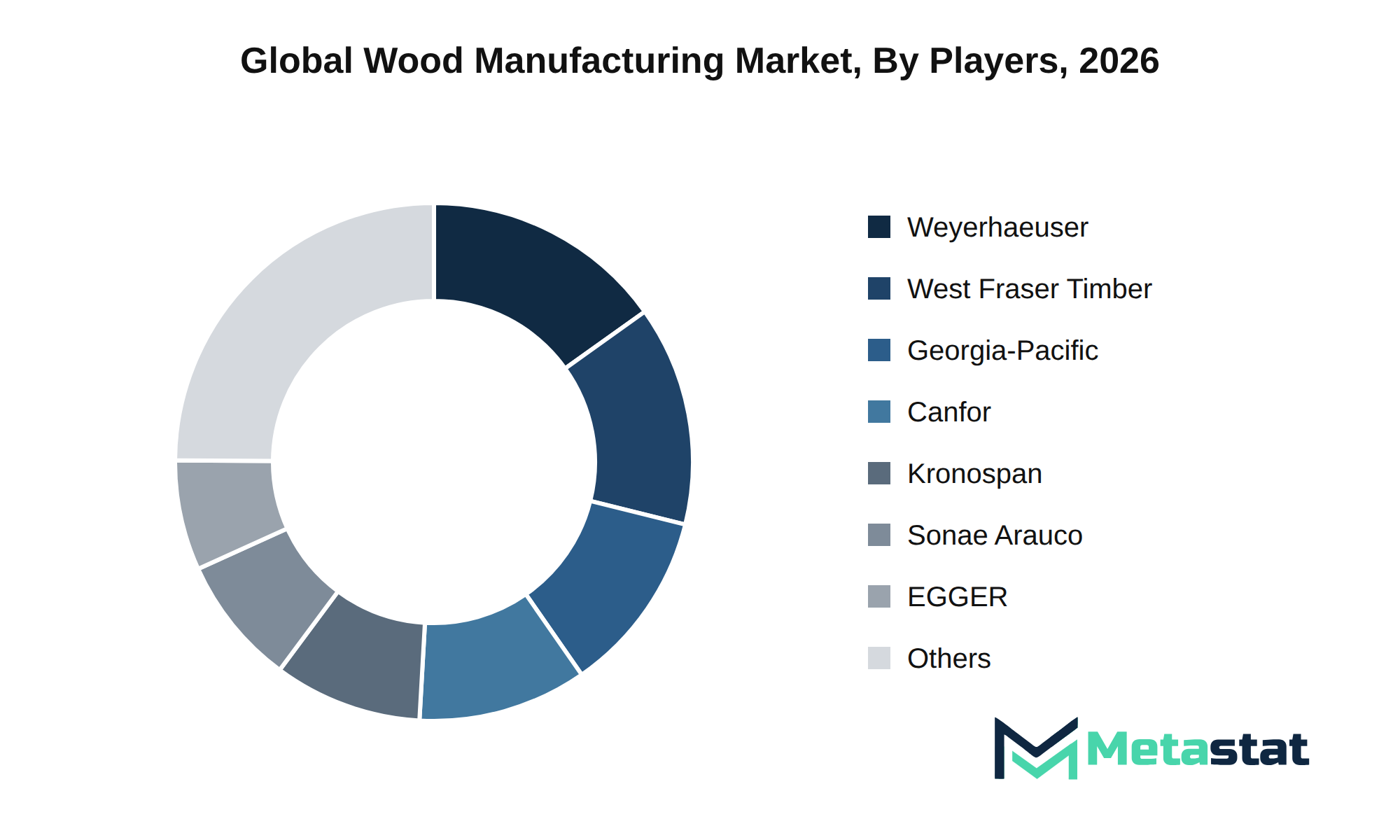
Market size is forecast to rise from USD 535.5 billion in 2025 to over USD 652.7 billion by 2033. The base case indicates growth driven by a steady 2.5% CAGR throughout the forecast period. Factors influencing this trajectory include macroeconomic conditions, consumption patterns, and technological advancements.
In a bullish scenario, enhanced investment in next-generation technologies and infrastructure could lead to accelerated growth, presenting opportunities for emerging players and established firms to capture high-growth pockets. A bearish outlook stems from economic downturns that could dampen downstream demand across core segments, resulting in slower adoption rates and market maturation challenges. Flexibility in strategic capital allocation is essential to navigate these potential fluctuations.
The evolving landscape of regulation and compliance will demand proactive measures from industry players. Adapting to regulatory changes, coupled with evolving geopolitical dynamics, will significantly influence global trade corridors and supply chain strategies. Companies prioritizing compliance and adaptability will position themselves favorably within the Wood Manufacturing market.
The forecast period presents a spectrum of opportunities shaped by structural shifts in consumption, strategic investments in innovation, and a close alignment with emerging enterprise needs. Continuous exploration of unmet demands will drive future growth, ensuring relevance in a competitive marketplace.
The report strategically identifies and profiles the key market players and analyses their core competencies in each sub-segment of the Wood Manufacturing market.
Report Attributes | Details |
Study Period | 2021-2033 |
Base Year | 2025 |
Estimated Year | 2026 |
Forecast Period | 2026-2033 |
Historical Period | 2021-2025 |
Growth Rate | CAGR 2.5% from 2026 to 2033 |
Revenue Unit | USD billion |
Segmentation | By Product Type, Wood Processing Method, Wood Species, Application, and Region |
By Region | North America (By Product Type, Wood Processing Method, Wood Species, Application, and Country)
|
Europe (By Product Type, Wood Processing Method, Wood Species, Application, and Country)
| |
Asia Pacific (By Product Type, Wood Processing Method, Wood Species, Application, and Country)
| |
South America (By Product Type, Wood Processing Method, Wood Species, Application, and Country)
| |
Middle East and Africa (By Product Type, Wood Processing Method, Wood Species, Application, and Country)
|
Find answers to common questions about this report
The Metastat Insights study indicates that the Wood Manufacturing market size was valued at USD 535.5 billion in 2025.
The Wood Manufacturing market is projected to grow at a CAGR of 2.5% during the forecast period from 2026 to 2033.
The North America Wood Manufacturing market size is estimated to reach USD 155.5 billion by 2033.
Sawn Timber & Dimension Lumber leads the Wood Manufacturing market with a projected value of USD 182.5 billion in 2033. This segment surpasses others based on its significant market share and growth potential.
Rising economic growth stimulates construction activities, leading to increased demand for wood products. shifts in consumer behavior towards sustainable materials enhance market growth prospects. Technological advancements further optimize production processes, resulting in improved efficiency and product quality, positioning the Wood Manufacturing market for steady expansion.
The Wood Manufacturing market faces challenges from stringent regulatory pressures, increasing operational costs, and economic factors including inflation and resource scarcity. Labor shortages and market fragmentation further complicate growth, impacting productivity and profitability for manufacturers. These factors collectively create a complex environment that influences market stability.
Rising economic growth stimulates construction activities, significantly impacting wood consumption. Increased preference for sustainable and eco-friendly building materials further drives demand for wood products, positioning the Wood Manufacturing market for steady expansion. The integration of digital transformation and technological advancements enhances operational efficiency, allowing manufacturers to respond effectively to evolving consumer preferences.
The Wood Manufacturing market is estimated to reach a valuation of USD 652.7 billion by 2033.
Key players in the Wood Manufacturing market include West Fraser Timber Co. Ltd., Weyerhaeuser Company, Canfor Corporation, Georgia-Pacific LLC, Stora Enso Oyj, Kronospan, and UFP Industries, Inc.
The Wood Manufacturing market is projected to grow at a compound annual growth rate (CAGR) of 2.5% from 2026 to 2033.
The analysts below cover Chemicals and Materials research at Metastat Insights.
LEAD ANALYST
Utkarsh Khirodkar is a Lead Market Research Analyst at MetaStat Insight, specializing in market intelligence, technology sector assessments, and competitive strategy.

INDUSTRY CONSULTANT - CHEMICALS & ADVANCED MATERIALS
Chemicals and Materials · Machinery & Equipment · Packaging
Amit Gadhekar Consultant for Chemicals and Materials at MetaStat Insight, directing sector-specific intelligence, research, and strategic consulting across global chemical and processing markets.
Decarbonizing industrial thermal processes hinges on refrigerant regulations and compressor efficiency limits. Metastat Insights delivered a thorough market analysis that evaluated natural refrigerants like CO2 and hydrocarbons against synthetic low-GWP alternatives. The breakdown of utility incentives and grid capacity constraints across key European manufacturing hubs offered valuable perspective. The follow-up conversation with their sector analysts addressed our specific questions on mechanical vapor recompression systems efficiently.
Assessing 200mm wafer transition schedules and substrate supply bottlenecks requires precise technical intelligence. MetaStat Insight supplied an actionable breakdown comparing planar and trench MOSFET architectures across automotive and industrial drive markets. The regional capacity estimates for Asia-Pacific foundries helped clarify lead-time uncertainties during our strategic planning session. When we needed additional clarification on high-purity raw material sourcing, their analyst team responded with helpful context within twenty-four hours.
Tracking maintenance cycle demand for secondary flight display units and terrain collision avoidance systems across regional jet fleets involves complex aftermarket dynamics. MetaStat Insight provided practical analysis separating airline retrofit programs from OEM forward-fit production schedules in North America and Southeast Asia. The supplier matrix highlighted component obsolescence timelines without resorting to vague generalizations. The dataset served as a dependable reference during our annual program review meetings.
Explore related market intelligence reports worth reading alongside this one.