
LEAD ANALYST
Utkarsh Khirodkar is a Lead Market Research Analyst at MetaStat Insight, specializing in market intelligence, technology sector assessments, and competitive strategy.

India Biochar Market Size, Share, By Feedstock (Agricultural Residues, Woody Biomass, Forestry Residues, Animal Manure and Industrial Organic Residues), By Technology (Pyrolysis, Gasification and Hydrothermal Carbonization), By Product Form (Granular Biochar, Powdered Biochar and Pelletized Biochar), By Application (Agriculture, Water Filtration and Animal Feed Additive), Industry Analysis, Growth, Trends, and Forecast, 2026-2033
Report ID
MSI-5125
Published
September, 2026
Pages
287 Pages
Format
Historical
Base year
Forecast
Forecast period
Report Details
Choose Your License
India Biochar Market
The India Biochar market was valued at USD 80.1 million in 2025 and is projected to reach USD 179.3 million by 2033, growing at a CAGR of 10.6% over the forecast period.
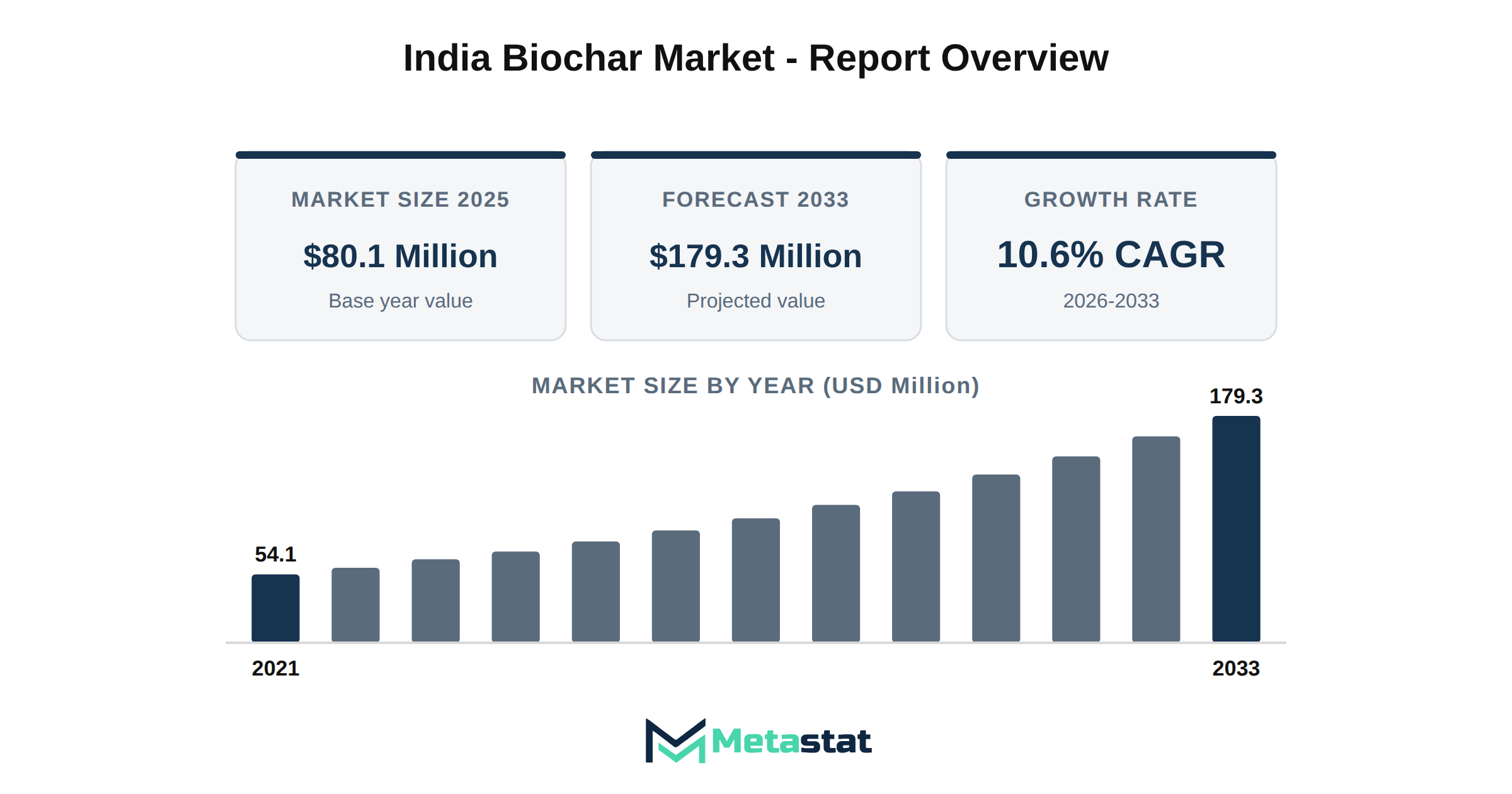
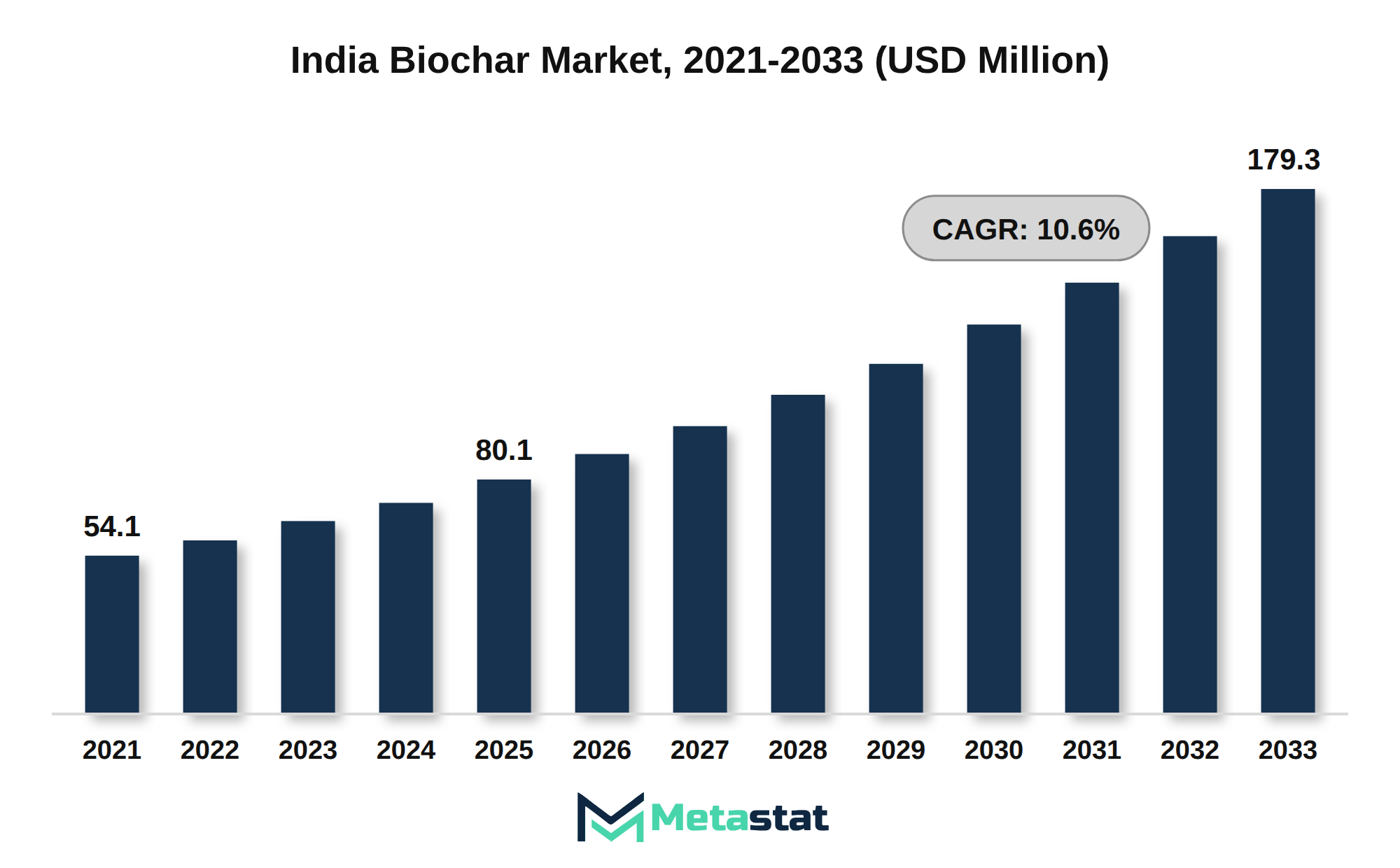
The India Biochar market reached a valuation of USD 80.1 million in 2025, with an anticipated growth trajectory leading to USD 179.3 million by 2033. This growth corresponds to a compound annual growth rate (CAGR) of 10.6%. The market has demonstrated consistent expansion from a historical value of USD 54.1 million in 2021, USD 59.3 million in 2022, USD 65.9 million in 2023, and USD 72.1 million in 2024.
Key drivers of this market include increased awareness regarding sustainable agricultural practices and the role of biochar in enhancing soil health, which contributes to the circular economy dynamics. The agricultural residues segment dominates the market, contributing 60.1% of the total share. Growth in agricultural productivity and the demand for organic farming solutions significantly influence this trend.
Technological advancements in production processes, particularly pyrolysis and gasification, support the market's expansion. By 2033, the pyrolysis technology segment is projected to reach USD 126.7 million, with a CAGR of 10.2%. These innovations facilitate the efficient conversion of biomass into biochar, enhancing the market's appeal to environmentally conscious consumers.
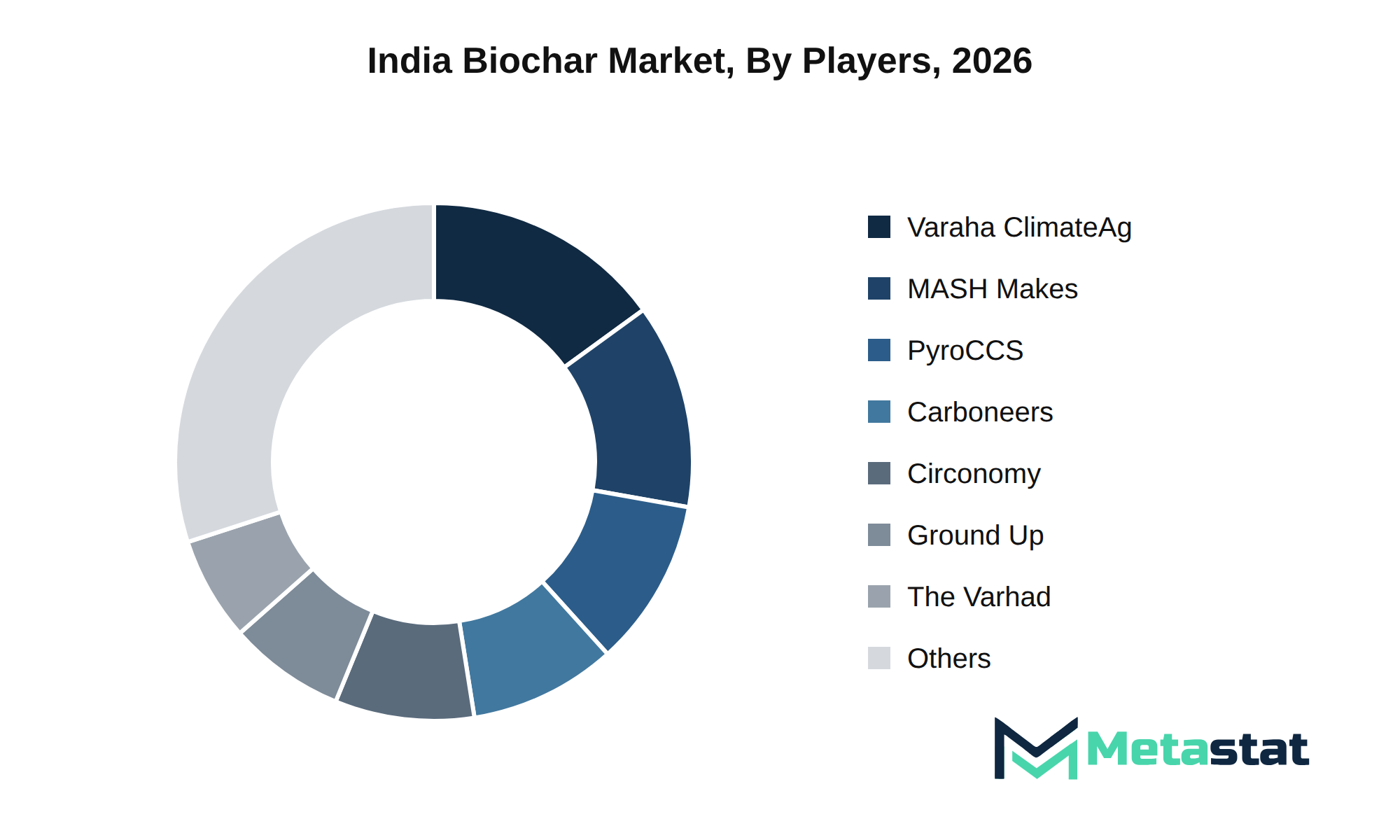
Investment in infrastructure and the development of logistics architecture underpin the supply chain. Companies invest in modern production facilities to streamline operations and enhance product availability, thereby improving customer journey dynamics. The competitive landscape reflects a diverse set of players actively engaged in the market, including Varaha ClimateAg Private Limited, MASH Makes, and PyroCCS, among others.
The India Biochar market is experiencing a notable shift towards sustainability, driven by increasing environmental awareness and the urgent need for decarbonization. This transformation aligns with global efforts to combat climate change and promotes circular economy dynamics, which integrate waste management and resource efficiency into various industries. Companies are investing in research and development to innovate new biochar applications, enhancing its value proposition in agriculture, water filtration, and because an animal feed additive.
Regulatory compliance influences market dynamics, with stringent environmental regulations encouraging the adoption of biochar technologies. The focus on sustainable practices affects procurement strategies and customer journey dynamics, because businesses seek environmentally friendly solutions to align with regulatory requirements and consumer preferences.
The supply chain landscape for the India Biochar market requires careful navigation, with logistics architecture needing to adapt to optimize sourcing and distribution. Market fragmentation presents challenges, because numerous players operate across various segments, from feedstock sourcing to end-product applications. Strategic mergers and acquisitions emerge because companies seek to consolidate resources and enhance their competitive edge.
Capital allocation towards infrastructure investments will support the expansion of biochar production facilities, increasing overall capacity and efficiency. Inflationary pressures and currency volatility impact operational costs, necessitating strategic financial management to ensure profitability. The future strategic outlook for the market focuses on innovation, enabling companies to remain competitive while meeting evolving consumer demands.
The growing focus on sustainability significantly influences the India Biochar market. Increasing concerns over climate change and environmental degradation prompt various sectors to seek sustainable solutions. This trend encourages the adoption of biochar because a means to sequester carbon and improve soil health. Agricultural producers and companies involved in waste management actively pursue biochar to enhance their sustainability profiles while contributing to carbon footprint reduction.
Investment in sustainable technologies aligns with macro-economic factors, including GDP growth and venture funding, which facilitate biochar production and application. Enhanced public-private collaboration focuses on financing initiatives that promote the circular economy, reinforcing the importance of resource stewardship. The commitment to ethical governance and environmental, social, and governance (ESG) mandates expands the market’s scope, enabling companies to differentiate themselves through sustainable practices.
Innovation in production techniques and applications drives further interest in the India Biochar market. Technological advancements, including automation and digital transformation, streamline production processes and enhance biochar's usability across various applications, including agriculture and water filtration. The integration of these technologies enhances operational productivity, positioning biochar because a viable solution for current environmental challenges.
Overall, the emphasis on sustainability creates significant growth opportunities within the market. Stakeholders and investors recognize the potential of biochar in addressing ecological concerns while generating economic benefits, ensuring sustained interest in its adoption and usage over the forecast period.
Technological integration within the India Biochar market enhances operational efficiency and improves competitiveness. Automation, artificial intelligence, and software adoption streamline processes, improving productivity and reducing costs for producers. These advancements create an environment that supports innovation, enabling companies to adapt rapidly to market demands.
Investment in automation technologies reduces labor costs and minimizes human error, encouraging producers to achieve higher yields with less resource consumption. This shift aligns with the increasing focus on cost-efficiency initiatives among stakeholders, allowing for better allocation of financial resources towards research and development. Consequently, firms offer a diverse range of biochar products tailored to emerging consumer preferences.
The integration of technology supports data-driven decision-making and enhances supply chain resilience. Producers leverage digital tools to optimize inventory management and improve customer engagement, thus enhancing overall market accessibility. Enhanced access to market insights allows stakeholders to anticipate trends in the India Biochar market and adjust strategies accordingly.
While technological capabilities expand, the market is expected to experience an uptick in competition, with firms focusing on innovative biochar applications and product forms. This dynamic environment positions the India Biochar market for sustained growth, driven by a combination of operational efficiency and technological advancements.
Regulatory constraints significantly affect the India Biochar market, complicating compliance with environmental standards. The pressure to adhere to these regulations often results in increased operational costs for suppliers, which limits their ability to scale production effectively. Legal mandates surrounding emissions and waste management deter new entrants, hampering overall market growth.
Macroeconomic headwinds, including inflationary pressures and capital stagnation, present additional challenges. Rising costs associated with raw materials and production negatively impact profitability, making it difficult for existing firms to invest in advanced technologies or expand operations. This situation creates a barrier to entry for potential players looking to enter the India Biochar market.
Supply chain disruptions contribute to unpredictability in material availability and pricing, complicating production schedules and leading to inconsistent supply. Geopolitical instability exacerbates these issues, resulting in fluctuating costs and availability of resources critical to biochar production.
The need for significant capital investment in infrastructure and technology restricts market access for smaller firms. High capital requirements coupled with escalating operating costs discourage potential investors, stunting growth opportunities. Such financial barriers result in market fragmentation, where few players dominate the market.
The combination of these factors creates a challenging environment for growth within the India Biochar market. Sustained efforts to overcome these restraints are essential for enhancing market viability and increasing adoption of biochar products across various applications.
The India Biochar market faces significant challenges stemming from geopolitical fragmentation, which contributes to trade deficits and tariff friction. These factors restrict the flow of raw materials and components essential for biochar production, adversely impacting supply chain stability. Increased costs associated with tariffs and trade barriers lead to pricing compression, which affects margins for producers and suppliers in the market.
Technological disruptions introduce additional complexities in research and development integrations, complicating the path for companies to innovate rapidly. Feedstock and component volatility further complicate market dynamics, making it challenging to maintain consistent production levels. Logistics disruptions arise, including transportation inefficiencies, which hinder the market's ability to deliver products on time, leading to potential losses in customer satisfaction.
Tightening regional regulatory standards and compliance overhead create additional burdens for market participants. Companies face evolving legal liabilities tied to environmental impacts, necessitating increased investment in compliance measures. The rising input costs associated with sustainability mandates heighten financial pressures on businesses, demanding strategic adjustments to ensure profitability.
Workforce skill gaps and talent retention pressures emerge due to vital concerns for companies operating within the India Biochar market. Automation displacements further complicate labor dynamics, necessitating investments in training and development programs. Companies navigate these challenges effectively to enhance operational capacity and maintain market competitiveness.
Infrastructure gaps and retrofitting barriers hinder the adoption of advanced technologies, creating implementation bottlenecks that slow overall market growth. Intellectual property protection deficits and cybersecurity risks pose threats to innovation and data security, impacting long-term strategic planning.
Changing downstream demands and market saturation pressurize biochar producers to identify and implement effective differentiation strategies. The combination of these challenges illustrates the complexities that stakeholders in the India Biochar market manage to thrive in the evolving environment.
The India Biochar market benefits from increasing demand for sustainable agricultural practices and effective waste management. Agricultural residues, which account for 60.1% of the market, represent a significant feedstock opportunity attributed to farmers adopting biochar to improve soil health and crop yields while reducing waste. Growth in this sector aligns with heightened consumer awareness of environmental issues and a shift towards organic farming practices.
Technological advancements in biochar production methods enhance efficiency and reduce costs. The pyrolysis technology offers producers a scalable solution that captures carbon emissions effectively. This aligns with global efforts to combat climate change, impacting the India Biochar market by increasing the appeal of biochar among environmentally conscious consumers and businesses.
Geographical expansion into untapped markets enhances growth prospects. Emerging regions show significant potential for biochar adoption, driven by urbanization and the need for enhanced agricultural productivity. These developments create new avenues for investment and collaboration across various sectors, contributing to the market's projected compound annual growth rate of 10.6% from 2026 to 2033.
Growing interest in green transformations leads to innovation in biochar applications, including water filtration and animal feed additives. The evolution of these niche applications expands the market’s reach and attractiveness, allowing companies to diversify their product offerings and meet varied consumer demands. Demand for eco-friendly solutions rises, positioning the India Biochar market to gain substantially through innovative product integration and strategic collaborations.
The India Biochar market is segmented based on Feedstock, Technology, Product Form, and Application.
Agricultural residues represent a significant component in the India Biochar market, valued at USD 53.5 million in 2026 and projected to reach USD 109.3 million by 2033, exhibiting a CAGR of 10.8% during the forecast period. The rising emphasis on sustainable agricultural practices drives demand for biochar derived from agricultural residues, enhancing soil quality and promoting carbon sequestration. This segment's growth is supported by increased awareness among farmers regarding the benefits of biochar for soil health and crop productivity.
Technological advancements in the production of biochar from agricultural residues enhance adoption across various agricultural sectors. Farmers increasingly leverage these technologies to convert waste into valuable products, aligning with sustainability goals and generating potential revenue streams. The segment's expansion is further supported by favorable regulations that incentivize the utilization of waste materials to produce biochar, contributing to waste reduction and environmental conservation.
Cost structures associated with agricultural residues result from competitive feedstock prices, making biochar production economically viable. The market experiences pricing stability, which allows for predictable financial planning for producers. This stability, combined with the segment's adaptability to various crops and agricultural practices, positions agricultural residues favorably within the broader context of the India Biochar market.
Anticipated growth in the Woody Biomass segment of the India Biochar market reflects a strong trajectory driven by several factors, including an increased focus on renewable energy sources and sustainable agricultural practices. Environmental regulations and policies that promote sustainable waste management contribute to the expanding adoption of biochar derived from woody biomass. This segment is projected to reach USD 24.9 million by 2033, with a compound annual growth rate of 9.6% during the forecast period.
End-users in agriculture and energy sectors increasingly recognize the benefits of woody biomass biochar, including improved soil health and enhanced carbon sequestration. Strategic investments in technology and infrastructure strengthen the competitive landscape, supporting innovation and efficiency in production processes. The segment's growth aligns with a global shift towards sustainable practices, positioning the market favorably for long-term expansion.
Increasing utilization of forestry residues in biochar production highlights a significant trend within the India Biochar market. This segment is expected to reach USD 15.3 million by 2033, driven by a growing emphasis on sustainable agricultural practices and soil enhancement. Adoption of biochar derived from forestry residues provides environmental benefits by sequestering carbon and improving soil health. Technological advancements enhance efficiency in the conversion processes, including pyrolysis and gasification, which support this segment's growth.
The market experiences substantial interest from agriculture and horticulture sectors, where biochar application boosts crop yields and enhances soil fertility. Compliance with regulatory standards promoting sustainable farming practices further fuels demand. Economic viability remains critical, with cost structures influenced by raw material sourcing and processing efficiencies. Innovations in product forms, including granular and powdered biochar, cater to diverse application requirements, enhancing market penetration and driving revenue growth.
Strategic investment in research and development, alongside expanding partnerships within the supply chain, fortifies the segment's position within the broader context of the India Biochar market. Continuous evaluation of consumption patterns indicates a shift towards environmentally friendly practices, presenting opportunities for market players to capitalize on emerging trends. The demand dynamics, regulatory support, and technological improvements position the forestry residues segment because a key driver of growth in the biochar sector.
Animal manure serves because a valuable feedstock in the India Biochar market, projected to grow at a CAGR of 11.7% during the forecast period. Increasing awareness of sustainable agricultural practices drives demand for animal manure-based biochar owing to its potential to enhance soil fertility and sequester carbon. This segment benefits from the rising need for organic fertilizers and soil amendments among farmers seeking eco-friendly alternatives to synthetic products.
Adoption of this feedstock is supported by technological advancements that improve biochar production efficiency and quality. Innovations in pyrolysis techniques enable the effective conversion of animal manure into biochar, enhancing its commercial viability and application in various agricultural processes. The evolving regulatory landscape promoting organic farming practices creates opportunities for growth in the animal manure segment.
The market reflects a shift towards integrating biochar in various downstream applications, including agriculture and environmental remediation. This segment aligns with the broader trend of using waste materials for sustainable practices, contributing to reduced waste and enhanced resource efficiency. Fluctuations in feedstock availability and pricing pressure the supply chain, necessitating strategic sourcing and partnerships to ensure stability in biochar production.
Overall, the segment's expansion hinges on a confluence of factors, including rising consumer demand for organic products, regulatory incentives, and advancements in biochar technology. The animal manure segment's potential to transform waste into a valuable resource positions it because a critical component of the India Biochar market.
Interest in transforming industrial organic residues for biochar production emerges from various industries seeking sustainable waste management solutions. The drive towards circular economy principles strengthens the market by encouraging the transformation of waste into valuable products, reducing environmental footprints. Various sectors, including agriculture and energy, look to integrate biochar into their operations, capitalizing on its numerous benefits, including soil enhancement and carbon sequestration.
Growing awareness regarding the environmental impacts of waste disposal fuels the shift towards biochar derived from industrial organic residues. This shift enhances market attractiveness, drawing attention from businesses focused on sustainable practices. Companies actively pursue biochar solutions to fulfill corporate social responsibility goals, aligning with evolving consumer preferences for eco-friendly products.
Technological advancements support the maturation of biochar production processes, improving efficiency and product quality. Innovations in pyrolysis and gasification techniques increase the viability of using industrial organic residues, expanding opportunities for adoption across various sectors. These developments drive investment in research and development, allowing stakeholders to explore new applications and enhance overall market competitiveness.
Regulatory frameworks emphasizing waste reduction and carbon neutrality play a significant role in shaping the market landscape. Compliance with environmental standards promotes the adoption of biochar solutions, encouraging stakeholders to consider industrial organic residues because a viable feedstock. The relationship between regulations and consumer demand for sustainable products positions the market for significant growth.
Considering the impact of pricing volatility on raw material sourcing, businesses within the market assess the cost structures associated with industrial organic residues. Strategic partnerships and collaborations facilitate reliable supply chains, mitigating risks related to logistics and material availability. Through these efforts, companies enhance their resilience, establishing a robust market presence.
With an ongoing focus on sustainability and innovation, the India Biochar market is poised for expansion. Opportunities for growth within the industrial organic residues sub-segment arise from increasing demand for eco-friendly products, technological advancements, and a favorable regulatory environment. These factors collectively support the upward trajectory of the market.
Interest in converting municipal organic waste and bamboo for biochar production aligns with the increasing drive for sustainable waste management solutions. This segment addresses environmental concerns by converting organic waste, which often contributes to pollution, into valuable biochar. Producers targeting this sub-segment focus on capturing organic materials that would otherwise enter landfills.
The adoption of municipal organic waste and bamboo in biochar production aligns with the broader trend of reducing environmental impacts. Local municipalities and agricultural sectors recognize the potential of converting waste into biochar, enhancing soil quality while managing organic waste effectively. Such practices contribute positively to local economies by creating new channels for organic waste disposal and revenue generation.
Technological advancements play a crucial role in the segment's growth, with innovations in conversion processes enhancing efficiency and product quality. Continued investment in research and development leads to improved techniques for converting municipal organic waste and bamboo, supporting the production of high-quality biochar. These advancements ensure that the market remains competitive, appealing to environmentally-conscious buyers.
Regulatory frameworks increasingly support the conversion of organic waste for biochar production, driving compliance and incentivizing adoption. Governments at various levels implement policies aimed at promoting sustainable agricultural practices, reinforcing the benefits of biochar derived from municipal organic waste and bamboo. Such regulatory support strengthens the market, attracting investments and encouraging production scale-up.
This segment centered on municipal organic waste and bamboo for biochar production demonstrates significant potential within the India Biochar market. Enhanced environmental awareness, technological innovations, and supportive regulatory frameworks favor growth, positioning this sub-segment because a vital contributor to meeting sustainability goals while addressing organic waste challenges.
Valued at USD 64.4 million in 2026, the pyrolysis segment is projected to reach USD 126.7 million by 2033, reflecting a CAGR of 10.2% during the forecast period. Demand for pyrolysis technology arises from its ability to convert organic materials into biochar efficiently, enhancing soil quality and contributing to carbon sequestration efforts. Increasing awareness regarding soil health and sustainability drives adoption in agricultural applications, making it a critical component in the market.
Expansion catalysts include advancements in pyrolysis technology, which improve conversion efficiency and reduce energy consumption. Continuous research and development efforts contribute to the maturation of pyrolysis processes, resulting in enhanced product quality and greater market competitiveness. Innovations in feedstock versatility widen the application scope, capturing interest from diverse sectors, including agriculture and waste management.
End-use dynamics show a shift towards applications in agriculture, where biochar, produced through pyrolysis, serves because a soil amendment that improves nutrient retention and water absorption. Regulatory compliance standards focusing on reducing carbon footprints and promoting sustainable practices support market growth. Investment in pyrolysis technology is expected to accelerate, leading to increased production capacities and improved market presence for various players within the India Biochar market.
Growth in the Gasification segment within the India Biochar market reflects a shift towards cleaner energy generation methods and innovative waste management solutions. Stakeholders increasingly recognize the environmental benefits associated with biochar produced through gasification, driving demand across agricultural and industrial sectors. This segment is estimated to reach USD 29 million by 2033, at a CAGR of 11.5% during the forecast period. Enhanced focus on carbon sequestration and sustainable practices contributes to adoption rates, with numerous industries exploring biochar's potential to improve soil health and reduce greenhouse gas emissions.
Investment in research and development accelerates technological maturation within the market, leading to next-generation upgrades in gasification technologies. These advancements enhance efficiency and reduce operational costs, appealing to both producers and consumers. Regulatory compliance standards increasingly mandate sustainable practices, further supporting the growth of gasification because a viable solution for waste management and agricultural enhancement.
While environmental awareness rises, the market experiences shifts in consumption patterns, with end-users prioritizing sustainable solutions. Strategic opportunity windows emerge for companies specializing in gasification technologies, allowing them to capitalize on the increasing demand for innovative biochar applications in agriculture, water filtration, and carbon management. This segment's expansion reflects a broader trend in the India Biochar market, emphasizing the critical role of technology in addressing environmental challenges.
Innovation in Hydrothermal Carbonization technology drives growth within the India Biochar market. This technology allows for the conversion of organic material into biochar using high-pressure and high-temperature water, promoting efficient carbon capture. Environmental regulations increasingly emphasize carbon sequestering practices, and the technology aligns with compliance standards and consumer preferences for sustainable solutions.
The Hydrothermal Carbonization segment is expected to reach USD 15.4 million by 2033. This forecast illustrates a growing market share, reflecting the increasing adoption of this technology in various applications, particularly in agriculture and waste management. Strategic investments in research and development enhance product evolution and expand the application areas for biochar derived from this process.
Market dynamics are shifting towards a focus on downstream applications, where Hydrothermal Carbonization biochar contributes positively to soil health and crop yields. Growing awareness of biochar's benefits encourages widespread acceptance and supports adoption across agricultural sectors. This trend enhances demand for Hydrothermal Carbonization technologies and their products.
Cost structures remain a critical aspect, with pricing volatility affecting the overall market potential. Ongoing advancements in hydrothermal processes lead to improved efficiency and lower production costs, strengthening the segment's competitive position. Resilience in supply chains ensures consistent raw material sourcing, mitigating risks associated with logistics vulnerabilities and disruptive alternatives.
Growth in the Others (Torrefaction, Flash Carbonization) segment within the India Biochar market benefits from advancements in production technologies. These technologies optimize biochar yield and enhance carbon sequestration capabilities. The application of torrefaction and flash carbonization processes allows for a more efficient conversion of biomass into biochar, appealing to environmentally conscious consumers and industries. Increasing recognition of the environmental advantages associated with biochar utilization influences adoption rates across various sectors.
This segment is projected to grow at a CAGR of 9.3% during the forecast period. The evolving landscape of regulatory standards promoting sustainable agricultural practices drives demand for innovative biochar solutions. Strategic investments in research and development support the maturation of these technologies, creating an atmosphere conducive to segment expansion. Projected growth signifies substantial opportunities for stakeholders investing in next-generation upgrades and product evolution within the market.
Granular Biochar segment is valued at USD 35.7 million in 2026 and is projected to reach USD 73 million by 2033, at a CAGR of 10.7% during the forecast period. The increasing focus on sustainable agriculture drives demand for Granular Biochar, highlighting its benefits in enhancing soil fertility and carbon sequestration. Various agricultural practices leverage Granular Biochar to improve crop yields while reducing the need for chemical fertilizers. This segment's growth connects with the broader trends in the India Biochar market, emphasizing the transition toward eco-friendly farming solutions.
Technological maturity in biochar production processes supports the expansion of Granular Biochar. Advancements in pyrolysis technology enhance the efficiency and output quality of biochar, further encouraging adoption among farmers and agronomists. The segment thrives on evolving agricultural practices, which increasingly integrate biochar because a soil amendment. Regulatory compliance standards related to carbon emissions and soil health support the segment's growth, allowing Granular Biochar to gain traction in various applications.
Cost structures associated with Granular Biochar production remain competitive, providing opportunities for farmers seeking cost-effective soil enhancement solutions. Pricing volatility persists due to fluctuations in raw material availability, yet strategic sourcing and partnerships within the supply chain enhance resilience. This segment attracts capital investment, facilitating ongoing research and development efforts focused on optimizing production methods and product performance.
Growth in the Powdered Biochar segment contributes significantly to the India Biochar market. The segment is estimated to reach USD 50.1 million by 2033, at a CAGR of 9.7% during the forecast period. Increasing interest in sustainable agriculture and soil enhancement drives demand for powdered biochar, particularly among farmers looking to improve soil health and crop yields. The ability of powdered biochar to enhance nutrient retention and water absorption in soil presents a compelling case for its adoption in various agricultural practices.
Technological advancements in production processes further enhance the attractiveness of powdered biochar. Innovations focusing on efficiency and cost-effectiveness improve margins for producers, enabling competitive pricing in the market. The segment benefits from rising consumer awareness regarding environmental sustainability, pushing agricultural stakeholders toward biochar because a viable solution for soil issues.
Application diversification into areas including water filtration and animal feed additives presents new growth avenues. The growing need for effective water management solutions contributes to increased utilization of powdered biochar in filtration systems, while its incorporation into animal feed highlights its multifunctionality. These applications illustrate the segment's potential for expansion within the broader India Biochar market.
Regulatory frameworks promoting sustainable agricultural practices enhance the segment's growth prospects. Compliance with environmental standards encourages the adoption of biochar, positioning powdered biochar because a favorable option for stakeholders aiming to meet regulatory requirements. The ongoing developments in policies supporting organic farming further enhance the segment's appeal in the agricultural sector.
Pelletized Biochar, projected to reach USD 39.2 million by 2033, presents a growing opportunity within the India Biochar market. Factors driving demand include the increasing adoption of pelletized forms for agricultural applications, which enhance soil quality and promote sustainable farming practices. The segment benefits from technological maturation, particularly advancements in production processes that improve efficiency and product consistency.
Product evolution continues to influence preferences in end-use dynamics, where pelletized biochar stands out for its ease of handling and application. Regulatory compliance, emphasizing the environmental benefits of biochar, supports adoption within agriculture and other sectors. Rising awareness of biochar's role in carbon sequestration enhances its appeal among environmentally conscious consumers and businesses.
Investment in pelletized biochar aligns with strategic opportunities available within the market, where demand for eco-friendly solutions increases. Raw material sourcing remains critical, particularly concerning the availability of suitable biomass feedstock. Overall, the pelletized biochar segment indicates significant growth potential, reflecting broader trends in sustainability and environmental responsibility across various industries.
Demand for briquetted biochar in the India Biochar market experiences a notable increase, driven by rising awareness regarding sustainable agricultural practices and soil health. This product form serves because an effective carbon sequestration solution, providing multiple benefits to crop productivity and nutrient retention. The segment is projected to grow at a CAGR of 8.8% during the forecast period, reflecting a consistent trend toward environmentally friendly agricultural inputs.
Technological advancements in production methods enhance the quality and availability of briquetted biochar, which supports its adoption across various agricultural applications. The increasing emphasis on sustainable farming practices and regulatory compliance enhances market potential for this segment. Farmers benefit from improved soil conditions through the use of briquetted biochar, which creates a healthier agricultural ecosystem.
Regulations promoting organic farming and carbon credits incentivize the utilization of briquetted biochar, aligning with national sustainability goals. This segment aligns with trends toward eco-friendly products within the market, encouraging investment into advanced production technologies and distribution channels. The briquetted biochar segment exemplifies a strategic opportunity for capital investment and is expected to contribute significantly to the overall growth of the India Biochar market.
Growth in the Agriculture application segment within the India Biochar market reflects increasing recognition of biochar's benefits for soil health and crop yields. Valued at USD 59.7 million in 2026, this segment is projected to reach USD 115.2 million by 2033, achieving a CAGR of 9.8% during the forecast period. Demand arises from farmers and agricultural businesses seeking sustainable practices that enhance soil fertility while reducing chemical fertilizer dependency. Implementing biochar improves soil structure, water retention, and nutrient availability, driving its adoption among a diverse range of crops.
Technological advancements in biochar production processes contribute significantly to market growth. Innovations enhance the efficiency and scalability of production methods, making biochar more accessible to farmers. Environmental regulations promoting sustainable agricultural practices support this trend. The Agriculture segment's expansion aligns with a broader shift toward eco-friendly farming solutions, reinforcing the importance of the India Biochar market in the agricultural sector's evolution.
Rapid growth in the Water Filtration segment reflects heightened awareness of environmental sustainability and water purification needs within the India Biochar market. Increasing demand for effective filtration solutions drives innovation in biochar applications, paving pathways for enhanced water quality. The segment is estimated to reach USD 22.6 million by 2033, at a CAGR of 12.2% during the forecast period.
Technological advancements in biochar production techniques, coupled with growing investments in research and development, strengthen the segment's position in the market. Enhanced product characteristics, including higher adsorption capacity and improved filtration efficiency, increase biochar's appeal because a filtration medium. Regulatory compliance standards promoting sustainable waste management practices further endorse the adoption of biochar in water filtration applications.
Shifts in consumer preferences towards eco-friendly solutions contribute significantly to the segment's growth. Users increasingly recognize the benefits of using biochar in purifying drinking water and treating wastewater, propelling demand throughout the market. These dynamics underline the importance of the Water Filtration segment within the overall growth trajectory of the India Biochar market.
Utilization of biochar in animal feed additives represents a strategic shift in livestock nutrition within the India Biochar market. Enhanced feed efficiency and improved animal health drive primary demand, pushing livestock producers toward sustainable solutions. The segment is projected to reach USD 12.7 million by 2033, reflecting broader trends favoring environmentally friendly agricultural practices.
Technological maturation in production methods boosts adoption rates. Innovations in biochar applications specifically tailored for animal feed have yielded increased interest from dairy and poultry sectors, which prioritize natural additives for livestock. Growing awareness surrounding the health benefits of biochar, including its potential to improve gut health and nutrient absorption, supports expanding market penetration.
Regulatory compliance standards play a significant role in shaping the segment. Local and national regulations emphasizing sustainable feeding practices align with increasing scrutiny on livestock production's environmental impact. These factors stimulate investment, driving innovations in product formulations and encouraging producers to explore biochar because a viable alternative.
Cost structures present both challenges and opportunities. While production costs for biochar remain a consideration, the long-term benefits, including enhanced livestock productivity and reduced veterinary costs, present a compelling case for adoption. Producers increasingly recognize the potential for biochar to serve because a cost-effective solution amid rising ingredient prices.
The India Biochar market continues to evolve, with strategic opportunity windows emerging for businesses focusing on animal feed additives. Investments in research and development will likely yield next-generation biochar products, further enhancing their appeal within the livestock sector.
Growth of the Electricity Generation segment reflects increasing focus on renewable energy solutions within the India Biochar market. Biochar's potential to enhance energy production aligns with the global shift towards sustainable practices. This segment is projected to grow at a CAGR of 8.6% during the forecast period. Demand arises from several industries looking to optimize energy generation processes while reducing carbon footprints. Enhanced technological advancements in bioenergy conversion techniques drive the adoption of biochar in electricity generation. Investments in research and development support innovations in biochar applications, leading to more efficient energy production methods.
Regulatory frameworks promoting clean energy and carbon capture technologies significantly influence market dynamics. Increasing awareness about environmental sustainability and climate change mitigation strategies further drives the demand for biochar in electricity generation. While industries seek cleaner alternatives for energy, the market experiences a shift towards biochar driven by a renewable energy source. The resulting growth in this segment contributes to the overall expansion of the India Biochar market, providing new opportunities for stakeholders and investors alike.
Utilization of biochar in applications including concrete admixtures and insulation materials reveals significant potential within the India Biochar market. Key demand drivers include the growing emphasis on sustainable construction practices and the enhancement of material properties through the incorporation of biochar. While regulatory frameworks increasingly support eco-friendly and resource-efficient building solutions, adoption of biochar in these applications is expected to rise.
Technological maturation plays a critical role in this sector, with advancements in biochar production techniques improving the quality and consistency of the product. Enhanced processing methods facilitate the integration of biochar into construction materials, leading to improved performance characteristics including thermal insulation and durability. These developments contribute to the overall appeal of biochar in the construction industry.
End-use dynamics reflect a shift towards environmentally responsible construction, with consumers and businesses prioritizing sustainable materials. This shift influences manufacturers to explore biochar's potential because a substitute for traditional additives, further expanding the segment's application scope. The increasing emphasis on carbon footprint reduction aligns with the broader trends in the construction industry, generating interest in biochar-based solutions.
Regulatory compliance standards and certifications promoting sustainable building practices create a favorable environment for biochar adoption. These policies encourage stakeholders to invest in biochar solutions, recognizing their contributions to sustainability goals. Such initiatives are expected to enhance market penetration and drive innovation in the segment.
Overall, the combination of evolving consumer preferences, regulatory support, and advancements in technology positions the biochar segment within the India Biochar market for growth. Continued investment in research and development will facilitate product evolution, ensuring that biochar applications meet the evolving needs of the construction industry.
The India Biochar market is undergoing significant transformation through mergers, acquisitions, and strategic consolidation. Several companies, including Varaha ClimateAg Private Limited and Terra Climate Tech Private Limited, position themselves through strategic alliances and partnerships to enhance their market presence. The focus on product differentiation and proprietary technology moats helps firms like MASH Makes and PyroCCS maintain competitive advantages.
Joint ventures and cross-industry partnerships play a crucial role in expanding capabilities and resources. Companies including Ground Up and The Varhad Group leverage these relationships to improve their market offerings and operational efficiencies. Barriers to entry remain significant, with established players exerting procurement leverage to control supply chains, impacting new entrants' ability to disrupt the market.
Customer retention strategies and brand equity dynamics contribute to loyalty in the India Biochar market. Firms like Green Carbon, Inc. and Krushi Sarathi (Navshee Agrotech Pvt. Ltd.) invest in intellectual property portfolios to enhance their technological defensibility. This strategic focus enhances their competitive outlook and drives future growth vectors.
Market size is forecast to rise from USD 80.1 million in 2025 to over USD 179.3 million by 2033. This growth reflects a compound annual growth rate (CAGR) of 10.6%. The base case scenario indicates a steady increase in demand driven by advancements in next-generation technology integration, which enhances the efficiency of biochar production and application across various sectors.
In the bull case, accelerated adoption of biochar in agriculture and water filtration applications could result in even higher market valuations. Conversely, the bear case anticipates potential delays in regulatory evolution and compliance milestones, leading to slower growth in the biochar market. Changes in downstream demand, particularly due to economic cycles and structural consumption shifts, will significantly impact the landscape.
R&D commercialization timelines and product life-cycles will play critical roles in shaping competitive dynamics, influencing strategic capital allocation directives, and infrastructure commitments. The market landscape will experience shifts driven by evolving geopolitical alignments, affecting trade corridors and regional supply chains.
Emerging white-space opportunities present avenues for growth, particularly in addressing unmet enterprise needs. Identifying high-growth pockets within the market creates avenues for strategic imperatives and defensibility roadmaps that underpin future growth recommendations.
The report strategically identifies and profiles the key market players and analyses their core competencies in each sub-segment of the Biochar market.
Report Attributes | Details |
Study Period | 2021-2033 |
Base Year | 2025 |
Estimated Year | 2026 |
Forecast Period | 2026-2033 |
Historical Period | 2021-2025 |
Growth Rate | CAGR 10.6% from 2026 to 2033 |
Revenue Unit | USD million |
Segmentation | By Feedstock, Technology, Product Form, Application, and Region |
Find answers to common questions about this report
The India Biochar market size was valued at USD 80.1 million in 2025.
The Biochar market is projected to grow at a CAGR of 10.6% during the forecast period from 2026 to 2033.
The Agricultural Residues segment leads the India Biochar market, with a share of 60.1% in 2025. This segment significantly surpasses others, indicating its dominant position in the market.
The key drivers for the India Biochar market include the growing focus on sustainability, which prompts various sectors to adopt biochar for carbon sequestration and soil health improvement. Investment in sustainable technologies and public-private collaboration further enhances biochar production and application, presenting significant growth opportunities for stakeholders.
Regulatory constraints restrain the India Biochar market growth by complicating compliance with environmental standards, which increases operational costs for suppliers and limits production scalability. Macroeconomic challenges, including inflation and rising raw material costs, hinder profitability and discourage investment in advanced technologies. Supply chain disruptions and geopolitical instability create unpredictability in material availability, complicating production schedules.
The growing focus on sustainability and the demand for carbon sequestration favor product adoption in the India Biochar market. Agricultural producers and waste management companies pursue biochar to enhance sustainability profiles and reduce carbon footprints, aligning investments with macro-economic factors and creating growth opportunities.
The Biochar market is estimated to reach a valuation of USD 179.3 million by 2033.
Key players in the India Biochar market include Varaha ClimateAg Private Limited, MASH Makes, PyroCCS, Carboneers, Circonomy, and Ground Up.
The primary applications of biochar in India include agriculture, water filtration, and animal feed additives. These applications leverage biochar's benefits for soil health and environmental sustainability.
Agricultural residues dominate the India Biochar market, accounting for 60.1 percent of the total feedstock. Other significant feedstocks include woody biomass and forestry residues.
The analysts below cover Agriculture research at Metastat Insights.
LEAD ANALYST
Utkarsh Khirodkar is a Lead Market Research Analyst at MetaStat Insight, specializing in market intelligence, technology sector assessments, and competitive strategy.
Replacing petrochemical surfactants with bio-based alternatives requires realistic timelines on industrial precision fermentation scaling. The market research broke down commercialization timelines, feedstock sugar price sensitivities, and regional cosmetic ingredient regulatory approvals in Europe and East Asia. That supplier readiness mapping gave our formulations team reliable context when comparing renewable chemical sourcing roadmaps.
Tracking ceramic matrix composite adoption in high-bypass aero engines requires strict attention to material qualification cycles and FAA airworthiness testing milestones. The MetaStat Insight team provided a detailed timeline of silicon carbide fiber manufacturing capacity and commercial foundry lead times. Having clear visibility into upstream thermal barrier coating supply helped us stress-test our long-term component procurement strategy.
Transitioning ultra-class mining haul trucks to alternative power requires concrete data on remote hydrogen refueling infrastructure economics. The report evaluated megawatt-scale electrolyzer installation expenses, onsite storage safety mandates, and heavy-duty fuel cell stack degradation under continuous duty cycles. That technical rigor helped our engineers benchmark realistic total operating cost horizons for off-highway fleet decarbonization.
Explore related market intelligence reports worth reading alongside this one.