
LEAD ANALYST
Utkarsh Khirodkar is a Lead Market Research Analyst at MetaStat Insight, specializing in market intelligence, technology sector assessments, and competitive strategy.

Global Voluntary Carbon Market Size, Share, By Type (Avoidance Credits, Reduction Credits, Removal Credits, Renewable Energy Credits, Forestry Credits, Land Use Credits, Blue Carbon Credits, Methane Capture Credits, Energy Efficiency Credits, Direct Air Capture Credits, Biochar Carbon Removal Credits, and Others), By Certifications (Verified Carbon Standard, Gold Standard, Climate Action Reserve, American Carbon Registry, Plan Vivo, Puro.earth, Global Carbon Council, SocialCarbon, Clean Development Mechanism, and Others), By Buyer Type (Corporate Buyers, Institutional Buyers, Government Buyers, Non-Profit Organizations, Carbon Credit Traders, Project Developers, Retail Offset Buyers, and Others), Industry Analysis, Growth, Trends, and Forecast, 2026-2033
Report ID
MSI-4720
Published
May, 2026
Pages
316 Pages
Format
Report Details
Choose Your License
Voluntary Carbon Market
Global Voluntary Carbon market size is valued at USD 2.8 billion in 2025 and projected to grow at a CAGR of 36.5% during the forecast period, reaching USD 33.2 billion by 2033.
North America holds a 30.8% market share in 2025, with the U.S. leading regional revenue contribution.
The Avoidance / Reduction Credits segment accounts for 18.1% market share in 2025.
Key trends driving growth: Rising corporate net-zero commitments propel demand for voluntary carbon credits across global enterprises, along with increased ESG reporting and sustainability disclosure frameworks strengthen adoption of carbon offset mechanisms.
Opportunities include expansion of high-integrity carbon removal projects and digital carbon market unlocks scalable growth potential.
Key insight: The market shows a widening gap between strong corporate net-zero commitments and relatively weak actual carbon credit retirements, signaling execution lag.
The Global Voluntary Carbon Market represents a fast-evolving segment of the environmental sustainability ecosystem, enabling companies to offset greenhouse gas emissions by purchasing carbon credits generated through certified climate projects. These credits are traded outside mandatory compliance markets and support climate action initiatives across global markets.
Market participants include project developers, certification bodies, brokers, exchanges, rating agencies, technology platforms, and corporate buyers. Rising climate awareness, investor pressure, and regulatory signals are encouraging organizations to integrate carbon offsetting into broader sustainability strategies. Advances in monitoring, reporting, and verification (MRV) technologies are enhancing transparency, traceability, and credibility across the Global Voluntary Carbon Market.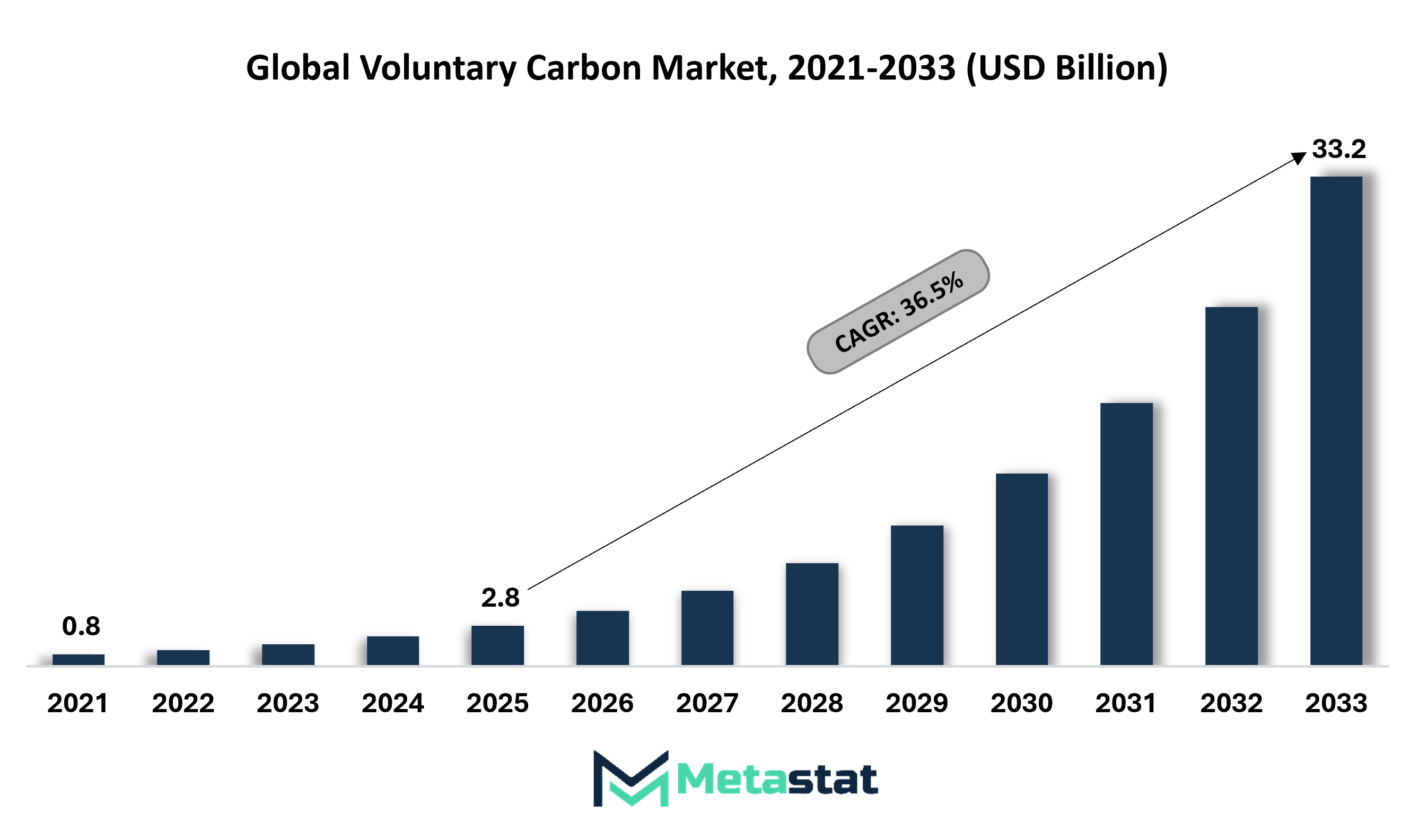
Rising corporate net-zero commitments propel demand for voluntary carbon credits across global enterprises.
Growing alignment between corporate climate objectives and carbon offset utilization continues to accelerate participation in the Voluntary Carbon Market. Long-term emission reduction goals are encouraging structured credit procurement strategies, while investor pressure strengthens corporate accountability. Expansion of corporate climate pledges across industries supports sustained demand momentum and wider market engagement.
Increased ESG reporting and sustainability disclosure frameworks strengthen adoption of carbon offset mechanisms
Stricter environmental reporting standards and disclosure frameworks are encouraging companies to integrate carbon offsets into sustainability strategies. Regulatory pressure and stakeholder scrutiny are driving measurable climate action, leading to increased participation in the Voluntary Carbon Market. Enhanced transparency requirements support structured reporting practices and improve credibility across carbon credit transactions.
Lack of standardization and transparency in credit quality creates trust and credibility concerns
The absence of uniform verification standards across carbon credit projects results in inconsistent quality benchmarks. Market participants face challenges in assessing authenticity, additionality, permanence, and environmental impact, which weakens buyer confidence. Limited transparency in certification processes further restricts growth potential in the Voluntary Carbon Market and slows institutional participation.
Price volatility and fragmented market limit consistent investment and long-term planning
Unstable pricing patterns create uncertainty for buyers and project developers, affecting financial planning and investment flows. The presence of multiple fragmented trading platforms creates market inefficiencies and limits liquidity. Such structural gaps restrict scalability and reduce confidence among stakeholders operating within the Global Voluntary Carbon Market.
Expansion of high-integrity carbon removal projects and digital carbon market unlocks scalable growth potential
Advancements in carbon removal technologies and verified nature-based solutions are strengthening high-quality credit supply in the Voluntary Carbon Market. Integration of digital platforms improves accessibility, traceability, and transaction efficiency across the market. Technological innovation, combined with high-integrity project development, creates strong potential for scalable expansion and increased investor participation.
The Global Voluntary Carbon market is classified based on Type, Certifications, and Buyer Type.
Avoidance / Reduction Credits segment is valued at USD 0.7 billion in 2026 and is projected to reach USD 4.7 billion by 2033, at a CAGR of 31.9% during the forecast period.
The Global Voluntary Carbon Market continues to rely on Avoidance / Reduction Credits supported by emission prevention initiatives across industries. Industrial upgrades, cleaner fuel transitions, and waste management projects will increase credit generation. Market expansion will reflect rising corporate responsibility goals and stricter environmental disclosures, encouraging steady adoption of validated emission reduction pathways.
Removal Credits segment is valued at USD 0.6 billion in 2026 and is projected to reach USD 6.6 billion by 2033, at a CAGR of 40.9% during the forecast period.
The Global Voluntary Carbon Market will witness strong momentum in Removal Credits owing to increasing focus on carbon permanence. Engineered technologies and nature-based solutions will support carbon dioxide removal from the atmosphere. Long-term storage credibility will influence premium pricing, with future adoption supported by net-zero commitments requiring measurable and durable carbon removal outcomes.
Renewable Energy Credits segment is valued at USD 0.6 billion in 2026 and is projected to reach USD 3.4 billion by 2033, at a CAGR of 29.7% during the forecast period.
Global Voluntary Carbon Market expansion will be shaped by Renewable Energy Credits linked to solar, wind, and hydropower projects. Energy transition strategies across emerging economies will increase credit supply. Corporate sustainability frameworks will integrate renewable energy procurement, strengthening demand for transparent credit systems backed by verified clean energy generation.
Forestry and Land Use Credits segment is valued at USD 0.7 billion in 2026 and is projected to reach USD 5.6 billion by 2033, at a CAGR of 34.8% during the forecast period.
Global Voluntary Carbon Market expansion will benefit from Forestry and Land Use Credits supported by afforestation, reforestation, and sustainable land management. Carbon sequestration through natural ecosystems will gain stronger policy attention. Biodiversity co-benefits and community engagement will enhance project value, leading to broader adoption among environmentally focused buyers.
Blue Carbon Credits segment is valued at USD 0.3 billion in 2026 and is projected to reach USD 2.8 billion by 2033, at a CAGR of 40.1% during the forecast period.
The Global Voluntary Carbon Market will progressively integrate Blue Carbon Credits linked to coastal ecosystems such as mangroves, salt marshes, and seagrasses. Marine conservation projects will attract investment owing to high carbon storage potential. Climate resilience benefits and ecosystem protection will strengthen long-term interest from organizations seeking diversified offset portfolios.
Methane Capture Credits segment is valued at USD 0.3 billion in 2026 and is projected to reach USD 2.4 billion by 2033, at a CAGR of 36.5% during the forecast period.
Global Voluntary Carbon Market adoption of Methane Capture Credits will rise owing to the high global warming impact of methane emissions. Waste treatment plants, landfills, and agricultural operations will adopt methane capture technologies. Rapid emission reduction potential will position methane projects among high-impact solutions, attracting buyers focused on immediate climate benefits.
Energy Efficiency Credits segment is valued at USD 0.2 billion in 2026 and is projected to reach USD 1.8 billion by 2033, at a CAGR of 33.3% during the forecast period.
The Global Voluntary Carbon Market will register steady expansion in Energy Efficiency Credits through advanced industrial processes and infrastructure optimization. Reduced energy consumption across manufacturing and industrial sectors will generate measurable credits. Cost savings combined with emission reduction outcomes will encourage adoption across developed and emerging economies.
Direct Air Capture Credits segment is valued at USD 0.2 billion in 2026 and is projected to reach USD 2.4 billion by 2033, at a CAGR of 47.7% during the forecast period.
The Global Voluntary Carbon Market will see rising interest in Direct Air Capture Credits supported by technological advancements. Large-scale carbon removal facilities will attract funding despite high operational costs. Long-term viability will depend on innovation, policy incentives, and corporate willingness to invest in premium carbon removal solutions.
Biochar Carbon Removal Credits segment is valued at USD 0.2 billion in 2026 and is projected to reach USD 2.3 billion by 2033, at a CAGR of 45.4% during the forecast period.
The Global Voluntary Carbon Market will expand Biochar Carbon Removal Credits supported by the conversion of agricultural waste into stable carbon-rich material. Soil enhancement benefits will create additional value streams. Sustainable farming practices and circular economy models will support adoption, strengthening rural participation in carbon offset projects.
Others segment is valued at USD 0.1 billion in 2026 and is projected to reach USD 1.2 billion by 2033, at a CAGR of 35.6% during the forecast period.
The Global Voluntary Carbon Market will include emerging credit categories shaped by innovation and niche environmental solutions. New methodologies will address sector-specific emissions, creating diversified opportunities. Continuous evolution of project types will support market adaptability and long-term scalability across global sustainability frameworks.
Verified Carbon Standard segment is projected to reach USD 9.2 billion by 2033, at a CAGR of 35.7% during the forecast period.
The Global Voluntary Carbon Market will rely strongly on Verified Carbon Standard owing to its credibility, global recognition, and established project methodologies. Standardized methodologies and rigorous verification processes will ensure transparency across credit issuance and validation. Market participants will prefer certified projects to meet sustainability expectations and preserve trust among environmentally conscious stakeholders.
Gold Standard segment is projected to reach USD 5.7 billion by 2033, at a CAGR of 35.7% during the forecast period.
Adoption of Gold Standard certification in the Voluntary Carbon Market will increase owing to its emphasis on sustainable development outcomes. Projects delivering social and environmental benefits will gain stronger buyer preference. Certification credibility will support premium pricing, attracting buyers focused on ethical and impact-driven carbon offset strategies.
Climate Action Reserve segment is projected to reach USD 2.5 billion by 2033, at a CAGR of 34.4% during the forecast period.
The Global Voluntary Carbon Market will utilize Climate Action Reserve certifications for North American projects focused on high-integrity standards. Clear protocols and consistent monitoring will enhance market confidence. Expansion into additional project categories will strengthen its presence across evolving carbon offset frameworks.
American Carbon Registry segment is projected to reach USD 2.1 billion by 2033, at a CAGR of 34.4% during the forecast period.
Global Voluntary Carbon Market expansion will include American Carbon Registry owing to established methodologies and regulatory alignment. Registry credibility will support project validation across multiple sectors. Increasing participation from industrial and energy sectors will drive certification demand in the coming years.
Plan Vivo segment is projected to reach USD 1.8 billion by 2033, at a CAGR of 35% during the forecast period.
The Global Voluntary Carbon Market will see growing relevance of Plan Vivo certifications linked to community-based environmental initiatives. Focus on local engagement and sustainable livelihoods will attract socially responsible buyers. The certification approach will strengthen grassroots participation in global carbon offset projects.
Puro.earth segment is projected to reach USD 1.9 billion by 2033, at a CAGR of 39.3% during the forecast period.
The Global Voluntary Carbon Market will integrate Puro.earth certifications focused on engineered carbon removal solutions. Innovative technologies will receive structured validation, enhancing investor confidence. Adoption will rise among corporations seeking high-quality removal credits with long-term storage assurance.
Global Carbon Council segment is projected to reach USD 1.6 billion by 2033, at a CAGR of 40% during the forecast period.
Voluntary Carbon Market expansion will include Global Carbon Council certifications, particularly across emerging regions. Regional representation and standardized verification will support market inclusivity. Expansion will reflect increasing participation from developing economies in global carbon trading systems.
SocialCarbon segment is projected to reach USD 1.2 billion by 2033, at a CAGR of 39.9% during the forecast period.
The Global Voluntary Carbon Market will incorporate SocialCarbon certifications emphasizing social impact alongside carbon reduction. Projects delivering measurable community benefits will attract responsible investment. The certification approach will strengthen alignment between environmental goals and social development priorities.
Clean Development Mechanism segment is projected to reach USD 2.3 billion by 2033, at a CAGR of 32.1% during the forecast period.
The Global Voluntary Carbon Market will continue to utilize eligible Clean Development Mechanism credits where relevant, leveraging established frameworks. Transition into voluntary market applications will sustain relevance for selected eligible projects. Legacy projects will provide supply continuity while new mechanisms evolve under updated international agreements.
Others segment is projected to reach USD 4.9 billion by 2033, at a CAGR of 42.1% during the forecast period.
The Global Voluntary Carbon Market will encompass additional certification bodies contributing to diversification and innovation. Emerging standards will address niche requirements and region-specific needs. Continuous improvement of certification frameworks will enhance transparency and market efficiency.
Corporate Buyers segment is projected to reach USD 12.1 billion by 2033.
The Global Voluntary Carbon Market will be led by corporate buyers supported by net-zero commitments and sustainability reporting requirements. Large organizations will integrate carbon credits into climate and environmental strategies. Brand positioning and regulatory pressure will support long-term participation across multiple industries.
Institutional Buyers segment is projected to reach USD 6.1 billion by 2033.
Global Voluntary Carbon Market participation from institutional buyers will expand owing to portfolio diversification and ESG investment strategies. Financial institutions will allocate capital toward verified carbon projects. Risk management and long-term value creation will support sustained engagement in carbon offset markets.
Government Buyers segment is projected to reach USD 4.2 billion by 2033.
The Global Voluntary Carbon Market will see increased involvement from government buyers supporting national climate goals. Public sector entities will procure carbon credits to offset emissions and meet policy objectives. Strategic investments will support domestic carbon project development and regulatory alignment.
Non-Profit Organizations segment is projected to reach USD 1.8 billion by 2033.
Global Voluntary Carbon Market engagement by non-profit organizations will focus on environmental conservation and community development. Funding support for high-impact projects will enhance credit supply. Mission-driven initiatives will align carbon offset strategies with broader sustainability targets.
Carbon Credit Traders segment is projected to reach USD 4.2 billion by 2033.
Global Voluntary Carbon Market liquidity will be supported by carbon credit traders facilitating transactions and price discovery. Market intermediaries will improve accessibility for buyers and sellers. Trading platforms and digital tools will enhance transparency and operational efficiency.
Project Developers segment is projected to reach USD 2.4 billion by 2033.
Global Voluntary Carbon Market expansion will rely on project developers creating and managing carbon offset projects. Technical expertise and regulatory compliance will drive project success. Innovation in project design will improve supply across diverse credit categories.
Retail Offset Buyers segment is projected to reach USD 1.2 billion by 2033.
The Global Voluntary Carbon Market will witness gradual adoption among retail offset buyers supported by individual climate awareness. Digital platforms will enable easier access to carbon credits. Personal sustainability efforts will contribute to broader market participation at a smaller scale.
Others segment is projected to reach USD 1.1 billion by 2033.
The Global Voluntary Carbon Market will encompass diverse buyer segments entering through evolving sustainability commitments. Emerging participants will contribute to demand expansion. Continuous market awareness and policy support will encourage wider adoption across different economic sectors.
Based on geography, the Voluntary Carbon market is divided into North America, Europe, Asia-Pacific, South America, Middle East, and Africa.
Strong corporate ESG commitments and early adoption of voluntary offsetting programs are driving market maturity in North America.
North America also benefits from strong carbon market infrastructure, established registries, active exchanges, and climate-tech firms that support innovation and liquidity.
Large-scale afforestation, renewable energy, and blue carbon projects provide significant credit generation potential in Asia-Pacific.
Rapid industrialization, combined with increasing climate regulations, is creating stronger adoption of voluntary offset mechanisms across Asia-Pacific.
South America, the Middle East, and Africa hold high potential owing to abundant natural resources for carbon sequestration, although expansion depends on stronger governance, verification standards, and access to climate finance.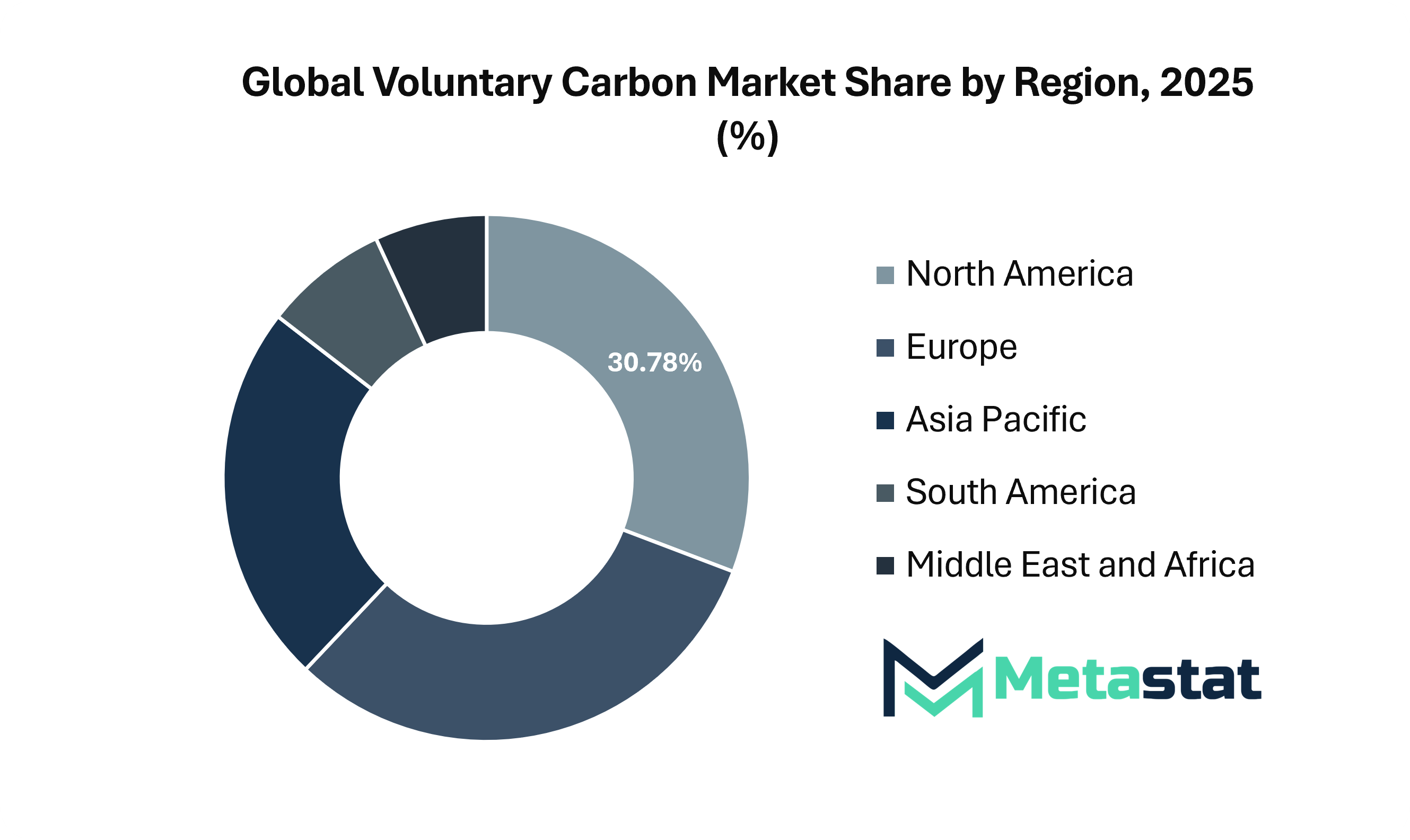
The Global Voluntary Carbon Market continues to develop as companies seek practical approaches to address residual emissions while transitioning toward cleaner operations. Companies are adopting carbon credits to manage environmental impact, particularly where immediate direct emission reduction remains difficult. Carbon credit adoption supports climate projects such as reforestation, renewable energy, methane capture, carbon removal, and community-based initiatives. The market will attract interest from private firms and investors seeking long-term value in sustainability-linked assets. Rising consumer awareness will also push brands to act responsibly, supporting structured market expansion.
A closer view of the industry shows a broad network of service providers, project developers, exchanges, rating agencies, and trading platforms working together. Key Global Voluntary Carbon industry players, including 3Degrees Group, Inc. and South Pole Carbon Asset Management AG, continue to build strong project pipelines. Climate Impact Partners Limited and ClimatePartner GmbH focus on helping companies measure, reduce, and offset emissions through structured carbon management solutions. Firms such as EcoAct SAS, ClimeCo LLC, and Anew Climate, LLC provide consulting and technical support that guides companies through carbon strategies. Native, a Public Benefit Corporation, and EKI Energy Services Limited also contribute by supporting verified projects that meet global standards.
Market activity will also be shaped by trading platforms and technology providers that enhance transparency and market access. Organizations such as ALLCOT AG, Rubicon Carbon, LLC, and Carbon Streaming Corporation support credit supply, financing, and project development. Carbonfuture GmbH and Carbon Direct, Inc. help track carbon removal activities through advanced data systems. Patch Technologies, Inc. and Cloverly, Inc. simplify the process for businesses to integrate offsets into their operations. Rating companies such as Sylvera Limited and BeZero Carbon Ltd. will play an important role in improving trust by assessing credit quality.
The role of exchanges and regional players will remain crucial in connecting buyers and sellers across borders. Xpansiv Limited, AirCarbon Exchange Pte. Ltd., and Climate Impact X Pte. Ltd. provide structured trading environments that improve market efficiency. Bursa Malaysia Berhad and Carbon Trade Exchange Limited increase market reach across different regions. STX Commodities B.V. and ACT Commodities B.V. support trading and advisory services, while Bullfrog Power Inc., CO2balance UK Ltd, and FORLIANCE GmbH focus on project development. Emerging players such as Invert Inc., Removall Carbon SAS, and Varaha ClimateAg Private Limited will add new solutions, supporting market development with stronger credibility and wider participation.
Market size is forecast to rise from USD 2.8 billion in 2025 to over USD 33.2 billion by 2033.
The Global Voluntary Carbon Market is projected to expand rapidly, supported by climate commitments, ESG integration, high-integrity credit demand, and global sustainability efforts. Future market expansion will be shaped by stricter quality standards, increased adoption of carbon removal technologies, digital markets, and stronger regulatory alignment across regions.
This research report categorizes the Voluntary Carbon market based on key segments and regions, forecasts revenue growth, and analyses trends in each submarket. The report analyses the key growth drivers, opportunities, and challenges influencing the Voluntary Carbon market. Recent market developments and competitive strategies such as expansion, product launch, partnership, merger, and acquisition have been included to draw the competitive landscape in the market.
The report strategically identifies and profiles the key market players and analyses their core competencies in each sub-segment of the Voluntary Carbon market.
|
Report Attributes |
Details |
|
Study Period |
2021-2033 |
|
Base Year |
2025 |
|
Estimated Year |
2026 |
|
Forecast Period |
2026-2033 |
|
Historical Period |
2021-2025 |
|
Growth Rate |
CAGR 36.5% from 2026 to 2033 |
|
Revenue Unit |
USD billion |
|
Segmentation |
By Type, Certifications, Buyer Type and Region |
|
By Region |
North America (By Type, Certifications, Buyer Type and Country)
|
|
Europe (By Type, Certifications, Buyer Type and Country)
|
|
|
Asia Pacific (By Type, Certifications, Buyer Type and Country)
|
|
|
South America (By Type, Certifications, Buyer Type and Country)
|
|
|
Middle East and Africa (By Type, Certifications, Buyer Type and Country)
|
Find answers to common questions about this report
Global Voluntary Carbon market is estimated to reach USD 33.2 billion by 2033.
Lack of standardization and transparency in credit quality creates trust and credibility concerns will hamper the market growth within the forecast period.
Rising corporate net-zero commitments propel demand for voluntary carbon credits across global enterprises and Increased ESG reporting and sustainability disclosure frameworks strengthen adoption of carbon offset mechanisms are key driving factors, boosting the market.
The Metastat Insights analysis shows that the North America Voluntary Carbon market size is estimated to be USD 8.9 billion by 2033.
Europe region dominates the market.
Top players operating in the Voluntary Carbon industry include 3Degrees Group, Inc., South Pole Carbon Asset Management AG, Climate Impact Partners Limited, ClimatePartner GmbH, EcoAct SAS, and ClimeCo LLC
The Forestry and Land Use Credits is the leading type of segment in the Global market.
The Global Voluntary Carbon market is expected to grow at a CAGR of 36.5% over the forecast period (2026-2033).
The Metastat Insights study shows that the Global Voluntary Carbon market size was USD 2.8 billion in 2025.
The analysts below cover Energy and Power research at Metastat Insights.
LEAD ANALYST
Utkarsh Khirodkar is a Lead Market Research Analyst at MetaStat Insight, specializing in market intelligence, technology sector assessments, and competitive strategy.

PRINCIPAL CONSULTANT - ENTERPRISE AI & EMERGING TECHNOLOGIES
Banking & Finance · Electronics and Semiconductor · Energy and Power · Healthcare IT · Information & Technology · Professional Services
Vijay Gunti is a Principal Consultant at MetaStat Insight, bringing over two decades of experience across enterprise digital transformation, technology strategy, and intelligent systems.

ENERGY & INFRASTRUCTURE INDUSTRY CONSULTANT
Automotive and Transportation · Electronics and Semiconductor · Energy and Power · Machinery & Equipment
Saurabh Vasant Ganvir consults for Energy & Infrastructure Industry at MetaStat Insight, specializing in renewable energy, solar EPC, and electric vehicle (EV) infrastructure markets.
Evaluating secondary resin quality across post-consumer packaging streams requires reliable technical segmentation. MetaStat Insight delivered an objective assessment that distinguished between extrusion-grade flake pricing and optical sorting throughput limitations across Western Europe. The competitive positioning breakdown for licensed depolymerization technology providers answered several questions during our feedstock feasibility audit. Their team clarified regional trade restrictions on mixed plastic scrap quickly when our team submitted follow-up requests.
Evaluating sovereign cloud deployments for core banking platforms demands a clear view of data residency regulations and migration exit strategies. MetaStat Insight delivered an exhaustive review of regional latency tolerances, mainframe decommission milestones, and third-party vendor concentration risk. The regulatory compliance mapping across European and Asian financial jurisdictions gave our team a dependable baseline for multi-cloud infrastructure discussions.
Replacing petrochemical surfactants with bio-based alternatives requires realistic timelines on industrial precision fermentation scaling. The market research broke down commercialization timelines, feedstock sugar price sensitivities, and regional cosmetic ingredient regulatory approvals in Europe and East Asia. That supplier readiness mapping gave our formulations team reliable context when comparing renewable chemical sourcing roadmaps.
Explore related market intelligence reports worth reading alongside this one.