
LEAD ANALYST
Utkarsh Khirodkar is a Lead Market Research Analyst at MetaStat Insight, specializing in market intelligence, technology sector assessments, and competitive strategy.

Sustainability Services and Strategies Market Size, Share, By Service Type (Consulting, Implementation and Managed Services), By Strategy Type (Corporate Sustainability, Environmental Sustainability, Social Sustainability, and Economic Sustainability), By End-User (Manufacturing, Energy, Utilities, Healthcare, Retail, IT, Telecommunications, Government, and Others), Industry Analysis, Growth, Trends, and Forecast, 2026-2033
Report ID
MSI-4659
Published
April, 2026
Pages
314 Pages
Format
Report Details
Choose Your License
Sustainability Services and Strategies Market
Global Sustainability Services and Strategies market size is valued at USD 22.8 billion in 2025 and projected to grow at a CAGR of 9.6% during the forecast period, reaching USD 47.4 billion by 2033.
North America holds the largest regional share of 33.8% in 2025, with the U.S. leading the market across the region.
The Consulting segment account for a market share of 39.7% in 2025.
Key trends driving growth: Escalating regulatory mandates on carbon disclosure and ESG compliance are compelling enterprises to formalize sustainability reporting and transition strategies along with increasing investor and stakeholder pressure for transparent ESG performance is accelerating corporate adoption of measurable sustainability frameworks.
Opportunities include integration of AI-driven carbon analytics and digital sustainability platforms presents scalable opportunities for real-time monitoring and performance optimization across industries.
Key insight: Rising regulatory pressure and corporate ESG commitments are accelerating structured adoption across the Global Sustainability Services and Strategies Market.
The Global Sustainability Services and Strategies Market within the professional services industry is projected to expand far beyond compliance advisory and carbon accounting, shaping how organizations redesign value creation in response to climate risk, capital allocation pressures, and stakeholder scrutiny. The market is moving beyond reporting frameworks and emissions audits toward structural transformation across procurement models, supply chain design, digital infrastructure, and corporate governance. Service providers are increasingly incorporating scenario modeling that connects climate volatility with enterprise risk management, enabling boards to recalibrate long-term investment decisions under evolving regulatory frameworks.
Over time, advisory mandates will expand into transition finance design, green bond structuring, and sustainability-linked performance metrics embedded directly into executive compensation systems. Consultants will work alongside technology providers to build real-time environmental data platforms that support predictive monitoring rather than retrospective disclosure. Advanced analytics will strengthen biodiversity impact mapping, water stress simulation, and product lifecycle redesign, embedding sustainability into research and development cycles instead of treating sustainability as an external audit function.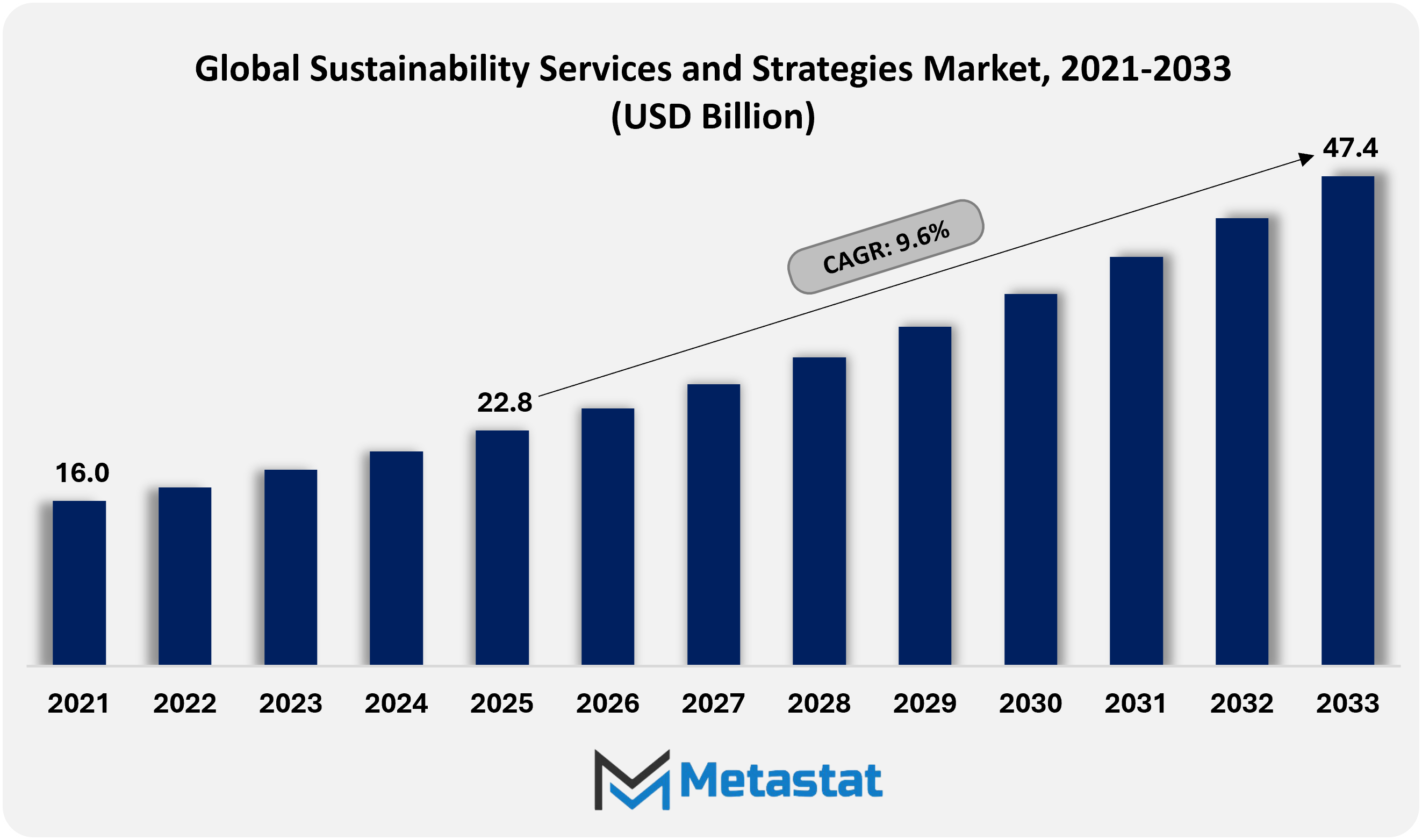
Escalating regulatory mandates on carbon disclosure and ESG compliance are compelling enterprises to formalize sustainability reporting and transition strategies.
Tightening environmental regulations across major economies are pushing enterprises toward structured reporting systems and measurable transition roadmaps. Mandatory carbon accounting, emissions caps, and governance disclosures are strengthening board-level oversight and directing capital allocation toward cleaner operations. Within the Global Sustainability Services and Strategies Market, advisory firms and technology providers will benefit from steady demand from organizations seeking compliance readiness, audit support, and decarbonization plans aligned with regulatory expectations.
Increasing investor and stakeholder pressure for transparent ESG performance is accelerating corporate adoption of measurable sustainability frameworks.
Capital markets are increasingly favoring companies that demonstrate measurable environmental and social outcomes. Institutional investors, lenders, and rating agencies are embedding ESG metrics into valuation models and risk assessment frameworks. These expectations are encouraging companies to adopt standardized performance indicators and verified disclosures. The Global Sustainability Services and Strategies Market is expanding through rising demand for third-party validation, impact measurement systems, and structured sustainability governance models.
High implementation costs and complex data integration across legacy systems limit rapid enterprise-wide sustainability transformation.
Enterprise sustainability programs require advanced data capture tools, cross-functional coordination, and system upgrades. Integrating environmental metrics into existing enterprise resource planning systems creates financial and operational pressure for organizations. Budget constraints and fragmented digital infrastructure will slow enterprise-wide deployment. The Global Sustainability Services and Strategies Market will face adoption delays where modernization costs outweigh short-term financial returns.
Lack of standardized global ESG reporting frameworks creates inconsistencies in benchmarking and compliance alignment.
Divergent reporting requirements across jurisdictions are creating uncertainty in comparative performance evaluation. The absence of unified metrics complicates multinational compliance and investor interpretation. Regulatory fragmentation requires organizations to maintain parallel reporting systems, increasing administrative burden. The Global Sustainability Services and Strategies Market continues to face complexity in service delivery owing to evolving disclosure norms and regional policy variation.
Integration of AI-driven carbon analytics and digital sustainability platforms presents scalable opportunities for real-time monitoring and performance optimization across industries.
Advanced analytics engines are enabling predictive emissions modeling, automated reporting, and scenario simulation for long-term climate planning. Digital dashboards support continuous monitoring of resource efficiency and supply chain emissions. Such innovation is strengthening enterprise agility in environmental management. The Global Sustainability Services and Strategies Market is set to benefit from scalable technology solutions capable of delivering measurable outcomes and strategic performance improvement across industries.
The Global Sustainability Services and Strategies market is classified based on Service Type, Strategy Type, and End-User.
Consulting segment is valued at USD 9.9 billion in 2026 and is projected to reach USD 16.5 billion by 2033, at a CAGR of 7.6% during the forecast period.
Consulting services are helping organizations build structured sustainability roadmaps based on measurable benchmarks and regulatory alignment. Advisory frameworks integrate carbon accounting, ESG disclosure planning, climate risk assessment, and supply chain audits. Strategic guidance supports long-term resilience through scenario modeling and transparent governance systems.
Implementation segment is valued at USD 8.5 billion in 2026 and is projected to reach USD 17.9 billion by 2033, at a CAGR of 11.2% during the forecast period.
Implementation services are converting sustainability strategies into operational execution through technology integration, renewable energy adoption, data management systems, and compliance frameworks. Execution support streamlines emissions monitoring, waste reduction programs, and resource optimization initiatives, ensuring measurable outcomes aligned with international standards and stakeholder expectations.
Managed Services segment is valued at USD 6.5 billion in 2026 and is projected to reach USD 13 billion by 2033, at a CAGR of 10.4% during the forecast period.
Managed services provide continuous monitoring, reporting automation, ESG analytics, and regulatory updates through centralized platforms. Long-term service contracts improve performance transparency, reduce operational risk, and support continuous adaptation to environmental goals, creating stable governance structures across global operations.
Corporate Sustainability segment is projected to reach USD 12.3 billion by 2033, at a CAGR of 8.5% during the forecast period.
Corporate sustainability strategies in the Sustainability Services and Strategies Market are strengthening governance, ethical sourcing, board oversight, and investor communication through integrated ESG policies. Forward-looking organizations are embedding sustainability metrics into executive compensation and enterprise risk management, supporting long-term value creation across supply chains and financial ecosystems.
Environmental Sustainability segment is projected to reach USD 20.1 billion by 2033, at a CAGR of 10.7% during the forecast period.
Environmental sustainability initiatives are prioritizing emissions reduction, renewable transition, circular operating models, and biodiversity protection. Data-driven carbon neutrality programs improve resource efficiency while strengthening compliance with global climate agreements and science-based targets.
Social Sustainability segment is projected to reach USD 8.7 billion by 2033, at a CAGR of 10.3% during the forecast period.
Social sustainability strategies emphasize workforce equity, community engagement, diversity policies, human rights audits, and responsible labor practices. Transparent reporting standards strengthen stakeholder confidence and align organizational culture with inclusive growth objectives across multinational operations.
Economic Sustainability segment is projected to reach USD 6.4 billion by 2033, at a CAGR of 7.7% during the forecast period.
Economic sustainability approaches focus on long-term profitability through responsible investment frameworks, sustainable procurement systems, and resilient financial planning. Capital allocation models increasingly integrate environmental risk valuation, ensuring balanced growth aligned with broader development priorities.
Manufacturing segment is projected to reach USD 9.2 billion by 2033.
Manufacturing adoption is accelerating energy efficiency improvements, smart factory integration, waste minimization programs, and lifecycle assessment tools. Predictive analytics is helping optimize raw material usage, reduce carbon intensity, and strengthen global competitiveness under tightening environmental regulations.
Energy and Utilities segment is projected to reach USD 10.1 billion by 2033.
Energy and utilities participation is increasing through grid modernization, renewable portfolio diversification, emissions forecasting systems, and regulatory compliance monitoring. Clean energy infrastructure planning is improving transition readiness and supporting large-scale decarbonization initiatives.
Healthcare segment is projected to reach USD 5.3 billion by 2033.
Healthcare sector engagement includes sustainable procurement, green facility design, medical waste reduction systems, and transparent ESG disclosure. Carbon-neutral hospital infrastructure planning supports public health objectives while maintaining operational efficiency.
Retail segment is projected to reach USD 6.5 billion by 2033.
Retail transformation is prioritizing sustainable sourcing, supply chain traceability, packaging innovation, and customer transparency systems. Data-backed sustainability labeling and responsible inventory management are strengthening brand reputation and supporting compliance with evolving regulatory requirements.
IT and Telecommunications segment is projected to reach USD 8.7 billion by 2033.
IT and telecommunications growth is promoting energy-efficient data centers, green cloud migration strategies, and digital carbon footprint analytics. Sustainable network infrastructure development is reducing environmental impact while maintaining high-speed connectivity performance.
Government segment is projected to reach USD 5 billion by 2033.
Government participation is driving policy implementation, public sector decarbonization programs, climate reporting systems, and green procurement mandates. Digital sustainability dashboards support transparent governance and national climate commitments.
Others segment is projected to reach USD 2.5 billion by 2033.
Other industries are adopting sector-specific sustainability metrics, resource optimization frameworks, and ESG compliance systems. Cross-industry collaboration platforms are accelerating knowledge exchange, strengthening environmental accountability, and supporting long-term economic stability.
Based on geography, the Global Sustainability Services and Strategies market is divided into North America, Europe, Asia-Pacific, South America, Middle East, and Africa.
North America Sustainability Services and Strategies Market is set to expand at a CAGR of 9.6% within the forecast period, reaching a market size (TAM) of USD 14.2 billion by the end of 2033.
North America is driving growth through strict environmental regulations and corporate carbon disclosure mandates that are pushing organizations toward structured sustainability consulting services.
Europe strengthens the market through stringent ESG disclosure regulations, decarbonization targets, and mature sustainable finance frameworks that are pushing enterprises toward structured sustainability planning and performance tracking.
Asia Pacific presents strong opportunities in the Sustainability Services and Strategies Market, driven by rapid industrial transition toward clean energy and national sustainability roadmaps across countries such as China and India.
Across South America and Middle East & Africa, the Sustainability Services and Strategies Market is gaining traction through renewable energy diversification, resource management reforms, and sustainability integration into public infrastructure planning.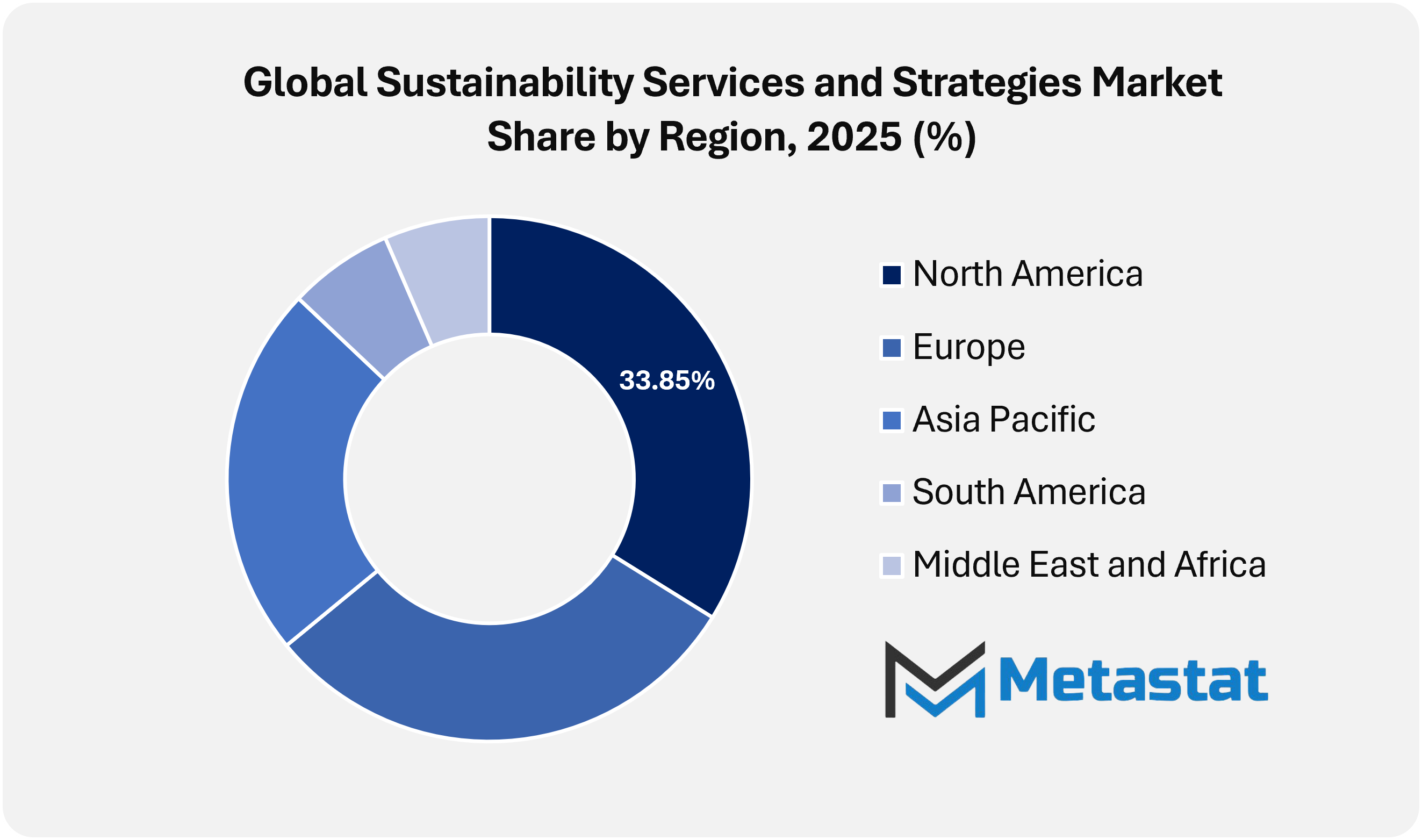
The Global Sustainability Services and Strategies Market is gaining steady momentum as organizations face rising pressure to operate responsibly and report their impact with greater clarity. Businesses across industries are rethinking how they manage energy use, carbon emissions, supply chains, and social commitments. Sustainability is no longer treated as a side initiative; it is becoming central to corporate planning, risk management, and long-term value creation. Regulatory expectations, investor scrutiny, and customer awareness are pushing companies to adopt sustainability programs supported by measurable targets and transparent reporting.
Large professional services firms play a major role in guiding this transition. Companies such as Deloitte Touche Tohmatsu Limited, PricewaterhouseCoopers International Limited, Ernst & Young Global Limited, and KPMG International Limited provide advisory support in climate risk assessment, ESG reporting, compliance, and governance frameworks. Strategy-focused firms such as McKinsey & Company, Boston Consulting Group, Inc., Bain & Company, Inc., and Kearney help organizations transform operations, establish net-zero roadmaps, and align sustainability goals with long-term business growth.
Technology providers are also shaping the market by offering digital tools that track emissions, manage energy data, and support sustainable supply chain practices. Firms such as Accenture plc, International Business Machines Corporation, Capgemini SE, Tata Consultancy Services Limited, Infosys Limited, Wipro Limited, Cognizant Technology Solutions Corporation, and HCL Technologies Limited are integrating analytics, cloud platforms, and automation into sustainability programs.
Engineering and environmental consultancies represent another important segment of the market. Organizations such as Schneider Electric SE, ENGIE Impact SAS, South Pole Holding AG, ERM Group, Inc., AECOM, WSP Global Inc., Jacobs Solutions Inc., Arcadis NV, Tetra Tech, Inc., Ramboll Group A/S, John Wood Group PLC, and GHD Group Pty Ltd support renewable energy projects, sustainable infrastructure design, water management, and environmental compliance. Their practical, project-based approach helps organizations translate sustainability commitments into measurable operational action.
As climate targets tighten and disclosure standards expand across regions, demand for structured sustainability services will rise further. Companies will increasingly seek partners capable of integrating strategy, technology, and implementation support under a single platform. The market will continue maturing, with service providers building specialized teams, industry-focused solutions, and measurable impact models. Over the coming years, sustainability services will be treated not as an optional investment but as a core business function tied directly to resilience, reputation, and financial performance.
Market size is forecast to rise from USD 22.8 billion in 2025 to over USD 47.4 billion by 2033.
Sustainability Services and Strategies are also expected to intersect with geopolitical strategy, particularly where cross-border carbon mechanisms and regional disclosure mandates influence trade flows. Strategic advisory firms will support multinational organizations in navigating fragmented policy regimes while safeguarding supply continuity. In emerging economies, service providers are likely to collaborate with public institutions to design urban resilience programs, circular economy pilots, and community-linked investment strategies that align commercial returns with social outcomes.
This research report categorizes the Sustainability Services and Strategies market based on key segments and regions, forecasts revenue growth, and analyses trends in each submarket. The report analyses the key growth drivers, opportunities, and challenges influencing the Sustainability Services and Strategies market. Recent market developments and competitive strategies such as expansion, product launch, partnership, merger, and acquisition have been included to draw the competitive landscape in the market.
The report strategically identifies and profiles the key market players and analyses their core competencies in each sub-segment of the Sustainability Services and Strategies market.
|
Report Attributes |
Details |
|
Study Period |
2021-2033 |
|
Base Year |
2025 |
|
Estimated Year |
2026 |
|
Forecast Period |
2026-2033 |
|
Historical Period |
2021-2025 |
|
Growth Rate |
CAGR 9.6% from 2026 to 2033 |
|
Revenue Unit |
USD billion |
|
Segmentation |
By Service Type, Strategy Type, End-User, and Region |
|
By Region |
North America (By Service Type, Strategy Type, End-User, and Country)
|
|
Europe (By Service Type, Strategy Type, End-User, and Country)
|
|
|
Asia Pacific (By Service Type, Strategy Type, End-User, and Country)
|
|
|
South America (By Service Type, Strategy Type, End-User, and Country)
|
|
|
Middle East and Africa (By Service Type, Strategy Type, End-User, and Country)
|
Find answers to common questions about this report
Top players operating in the Sustainability Services and Strategies industry include Deloitte Touche Tohmatsu Limited, PricewaterhouseCoopers International Limited, Ernst & Young Global Limited, KPMG International Limited, and Accenture plc.
Global Sustainability Services and Strategies market is estimated to reach USD 47.4 billion by 2033.
High implementation costs and complex data integration across legacy systems limit rapid enterprise-wide sustainability transformation. will hamper the market growth within the forecast period.
North America region dominates the market.
Escalating regulatory mandates on carbon disclosure and ESG compliance are compelling enterprises to formalize sustainability reporting and transition strategies. and Increasing investor and stakeholder pressure for transparent ESG performance is accelerating corporate adoption of measurable sustainability frameworks. are key driving factors, boosting the market.
The Consulting is the leading type segment in the Global market.
The Metastat Insights analysis shows that the North America Sustainability Services and Strategies market size is estimated to be USD 14.2 billion by 2033.
The Metastat Insights study shows that the Global Sustainability Services and Strategies market size was USD 22.8 billion in 2025.
The Global Sustainability Services and Strategies market is expected to grow at a CAGR of 9.6% over the forecast period (2026-2033).
The analysts below cover Professional Services research at Metastat Insights.
LEAD ANALYST
Utkarsh Khirodkar is a Lead Market Research Analyst at MetaStat Insight, specializing in market intelligence, technology sector assessments, and competitive strategy.

PRINCIPAL CONSULTANT - ENTERPRISE AI & EMERGING TECHNOLOGIES
Banking & Finance · Electronics and Semiconductor · Energy and Power · Healthcare IT · Information & Technology · Professional Services
Vijay Gunti is a Principal Consultant at MetaStat Insight, bringing over two decades of experience across enterprise digital transformation, technology strategy, and intelligent systems.

PRINCIPAL CONSULTANT - QUALITY SYSTEMS & COMPLIANCE
Electronics and Semiconductor · Machinery & Equipment · Professional Services
Omkar Phadtare is an Industry Consultant at MetaStat Insight, specializing in quality systems, regulatory compliance, and standards benchmarking to drive data-driven market intelligence and strategic industry research.

LEAD CONSULTANT - COMMUNICATION, TELECOM, AND IT
Electronics and Semiconductor · Information & Technology · Machinery & Equipment · Professional Services
Ravindra Sathe Consultants for Communication, Telecom, and IT at MetaStat Insight. He leads the firm's industry research initiatives across telecommunications infrastructure, digital connectivity, enterprise networking, and emerging information technology domains.
Enterprise zero-trust network rollouts are often slowed down by multi-cloud transit latency and proprietary hardware retirement schedules. This study provided realistic total cost of ownership models comparing cloud-delivered security edge solutions against traditional hardware refreshes. The analysis of contract renewal lengths and software maintenance fees gave us clear visibility into enterprise replacement cycles over the next three to five years.
Scaling antibody-drug conjugate manufacturing hinges on contract manufacturing availability for high-potency active ingredients. The MetaStat Insight analysis looked closely at global cleanroom slot constraints, bioconjugation batch failure rates, and supply chain redundancies between the US, Europe, and India. The supplier capability matrix proved genuinely useful for our team when mapping secondary source options across our clinical pipeline.
Floating offshore wind feasibility relies heavily on specialized installation vessel availability and port crane limits, which most broad renewable energy forecasts ignore. The report delivered a thorough analysis of dry dock capacity, mooring chain supply constraints, and raw material pricing trends for deepwater anchor installations. It served as a solid independent sanity check for our offshore project capital expenditure assumptions.
Explore related market intelligence reports worth reading alongside this one.
Starting from
$2950