
LEAD ANALYST
Utkarsh Khirodkar is a Lead Market Research Analyst at MetaStat Insight, specializing in market intelligence, technology sector assessments, and competitive strategy.

Global Courier Franchise Market Size, Share, By Type (International Transport and Domestic Transport), By Application (Enterprise and Individual), By Business Size (Small, Medium, and Large Corporations), By End-Users (Retail, Hospitality, Healthcare, Finance, Telecommunications, Education, and Others), Industry Analysis, Growth, Trends, and Forecast, 2026-2033
Report ID
MSI-4625
Published
April, 2026
Pages
320 Pages
Format
Report Details
Choose Your License
Courier Franchise Market
Global Courier Franchise market size is valued at USD 24.7 billion in 2025 and projected to grow at a CAGR of 8.1% during the forecast period, reaching USD 46.1 billion by 2033.
North America holds 21.5% of the global market in 2025, with the U.S. accounting for the largest share within the region.
International Transport segment account for a market share of 37.2% in 2025.
Key trends driving growth: E-commerce and omnichannel retail parcel volumes propel franchise expansion across last-mile and neighbourhood pickup networks, along with SME and D2C shipping adoption increases local delivery demand for affordable, reliable, and fast courier coverage.
Opportunities include tech-enabled delivery models unlock higher yields via route optimization, digital booking, locker and pickup-point networks, and value-added services such as COD and returns management.
Key insight: Rapid expansion of e-commerce and last-mile delivery demand is accelerating adoption of franchise-based courier models globally, supported by technology-driven logistics and scalable network expansion.
The Global Courier Franchise market is expanding through decentralized logistics networks built around franchise-led operations that strengthen last-mile connectivity and regional distribution efficiency. The model enables established courier brands to scale operations rapidly without significant capital deployment, while allowing local entrepreneurs to operate under standardized systems, service protocols, and brand identity. Rising penetration of e-commerce platforms, hyperlocal delivery ecosystems, and direct-to-consumer business models continues to reshape demand patterns across urban and semi-urban markets.
Growing cross-border trade and domestic parcel movement are reinforcing the importance of franchise-based courier networks, particularly in markets where fragmented infrastructure requires strong local execution. The Global Courier Franchise market is also becoming increasingly aligned with digital logistics tools, including route optimization systems, real-time tracking platforms, and automated parcel handling technologies, which improve operational consistency across franchise locations. With customer expectations shifting toward faster delivery cycles and greater service visibility, franchise operators are focusing on reliability, cost efficiency, and network density to remain competitive.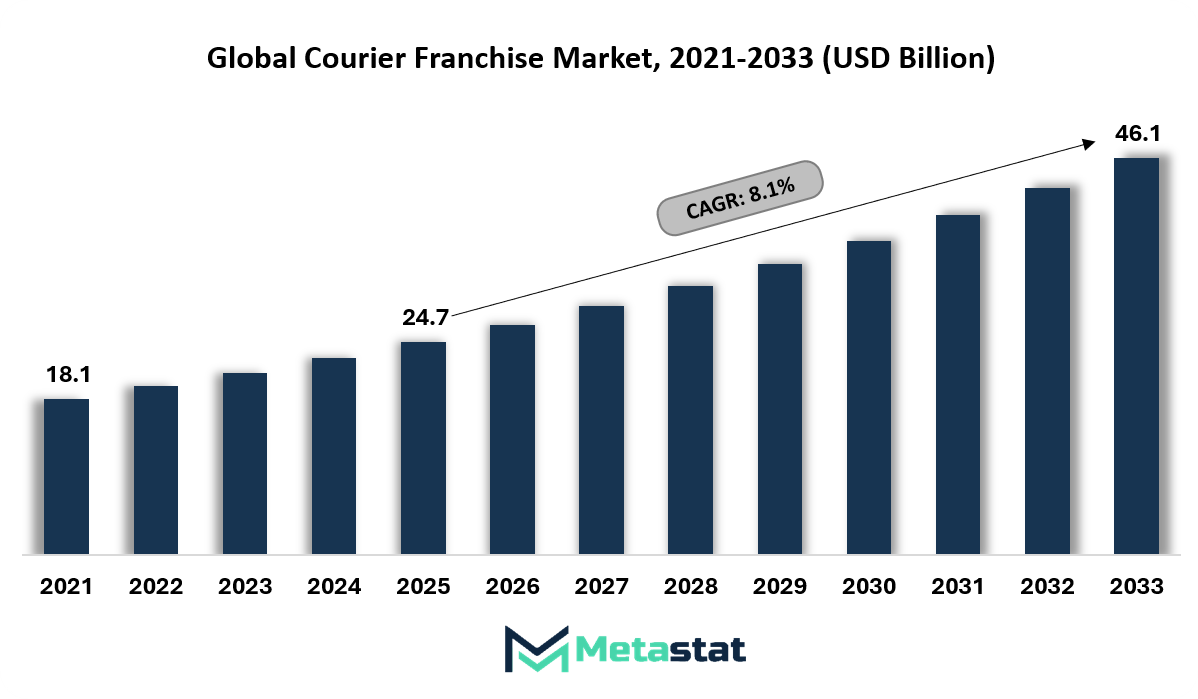
E-commerce and omnichannel retail parcel volumes propel franchise expansion across last-mile and neighborhood pickup networks.
Rising digital commerce penetration is increasing parcel movement across urban and semi-urban markets, encouraging franchise-based courier networks to expand operations. Demand for faster fulfillment is supporting investment in last-mile connectivity, micro hubs, and pickup points, strengthening operational reach in the Global Courier Franchise market while improving delivery turnaround expectations.
SME and D2C shipping adoption increases local delivery demand for affordable, reliable, and fast courier coverage.
Expanding participation of small enterprises and direct-to-consumer brands is increasing shipment frequency and volume across local markets. Affordable logistics solutions are gaining importance, leading franchise operators to improve service coverage and pricing efficiency. Growth in localized shipping needs will continue to support expansion of the Global Courier Franchise market footprint.
Service quality inconsistency across franchisees restrains brand trust with variable delivery performance and customer experience.
Operational variation across franchise partners can create inconsistency in service standards, affecting delivery timelines and customer satisfaction. Lack of uniform training and performance monitoring can weaken reliability perception and brand positioning. Addressing these gaps will remain critical for maintaining credibility in the Global Courier Franchise market.
High competition and margin pressure constrain franchise profitability owing to aggressive pricing and rising operating costs.
Intense market competition is increasing price pressure, reducing profit margins for franchise operators. Rising fuel costs, labor expenses, and technology investments are adding further pressure on economic sustainability. Franchise businesses will require stronger cost control and differentiated service offerings to preserve profitability within the Global Courier Franchise market.
Tech-enabled delivery models unlock higher yields via route optimization, digital booking, locker and pickup-point networks, and value-added services such as COD and returns management.
Adoption of advanced logistics technologies is improving operational efficiency and revenue potential across courier franchise networks. Route optimization tools, digital booking platforms, automated pickup systems, cash-on-delivery support, and structured returns management are enhancing delivery precision, reducing delays, and strengthening customer engagement in the Global Courier Franchise market.
The Global Courier Franchise market is classified based on Type, Application, Business Size, and End-Users.
International Transport segment is valued at USD 9.9 billion in 2026 and is projected to reach USD 16.3 billion by 2033, at a CAGR of 7.4% during the forecast period.
International Transport is expanding with rising cross-border trade, growing international e-commerce volumes, and stronger supply chain integration. Improvements in shipment tracking, customs coordination, and strategic partnerships are supporting more reliable parcel movement across countries and regions.
Domestic Transport segment is valued at USD 16.8 billion in 2026 and is projected to reach USD 29.7 billion by 2033, at a CAGR of 8.5% during the forecast period.
Domestic Transport is strengthening with rising intra-city and intercity deliveries linked to online retail expansion. Improved last-mile delivery solutions, route planning, and urban density are supporting faster and more cost-efficient services, helping meet growing expectations for same-day and next-day delivery.
Enterprise segment is projected to reach USD 31.6 billion by 2033, at a CAGR of 7.8% during the forecast period.
Enterprise application is growing with increasing reliance on courier support for bulk shipments, inventory movement, document handling, and customer deliveries. Businesses are adopting integrated courier solutions supported by automation, digital platforms, and service-level agreements to improve operational efficiency.
Individual segment is projected to reach USD 14.4 billion by 2033, at a CAGR of 8.8% during the forecast period.
Individual application is rising with greater consumer dependence on parcel services for personal shipments and market transactions. Increasing digital adoption, convenient booking platforms, and affordable pricing models are supporting more frequent usage while improving service accessibility for everyday shipping needs.
Small Enterprises segment is projected to reach USD 12.7 billion by 2033.
Small Enterprises get benefit from cost-effective logistics services designed to support limited-scale operations. Flexible pricing structures, localized delivery networks, and simplified service models help small businesses expand customer reach without heavy investment in independent logistics infrastructure.
Medium Enterprises segment is projected to reach USD 16.5 billion by 2033.
Medium Enterprises require scalable courier solutions to support growing operational requirements. Structured logistics frameworks, improved warehousing integration, and dependable transportation networks help manage higher cargo volumes while maintaining cost control and delivery efficiency across broader geographic areas.
Large Corporations segment is projected to reach USD 16.9 billion by 2033.
Large Corporations rely on advanced logistics systems for high-volume and complex distribution needs. Dedicated courier partnerships, technology-driven tracking, and international delivery capabilities support consistent service performance across large-scale operations and global supply chains.
Retail segment is projected to grow at a CAGR of 10.7% during the forecast period.
Retail segment is recording strong growth with expansion in e-commerce and rising customer expectations for fast delivery. Efficient order fulfillment systems, real-time tracking, and stronger last-mile connectivity are supporting seamless product distribution and improving customer satisfaction.
Hospitality segment is projected to grow at a CAGR of 6.9% during the forecast period.
Hospitality segment uses courier services for timely movement of documents, supplies, guest packages, and operational materials. Rising service standards and the need for dependable logistics coordination are supporting adoption of reliable courier partners across the sector.
Healthcare segment is projected to grow at a CAGR of 9.2% during the forecast period.
Healthcare depends on secure and time-sensitive delivery solutions for medical supplies, laboratory samples, and pharmaceuticals. Compliance standards, temperature-controlled logistics, and rapid transportation systems are critical for supporting accuracy, safety, and service reliability.
Finance segment is projected to grow at a CAGR of 5.8% during the forecast period.
Finance sector requires reliable courier services for secure document handling and delivery. Confidentiality, speed, accuracy, and tracking visibility remain essential for supporting the safe transfer of sensitive financial materials.
Telecommunications segment is projected to grow at a CAGR of 5.9% during the forecast period.
Telecommunication relies on logistics services for distribution of equipment, devices, and technical components. Efficient supply chain coordination, timely delivery schedules, and network expansion activities continue to support demand for reliable courier partnerships.
Education segment is projected to grow at a CAGR of 6.2% during the forecast period.
Education sector uses delivery services for distribution of study materials, certificates, examination documents, and administrative records. Expansion in distance learning and multi-location education networks is increasing reliance on courier systems for timely access to essential materials.
Others segment is projected to grow at a CAGR of 7.8% during the forecast period.
Other end users include a range of industries that require flexible and efficient delivery support. Customized logistics services, adaptable transport models, and broad service coverage help address diverse operational requirements across multiple business environments.
Based on geography, the Global Courier Franchise market is divided into North America, Europe, Asia-Pacific, South America, Middle East, and Africa.
Mature e-commerce activity and strong customer preference for fast delivery continue to support franchise network density across urban and suburban areas in North America.
Rapid urbanization and digital commerce growth are generating strong demand for localized courier franchise models across Asia Pacific.
Expanding trade corridors, improving logistics infrastructure, and rising SME activity are supporting growth of courier franchise models across Europe, South America, and Middle East & Africa, where demand for reliable last-mile delivery continues to increase.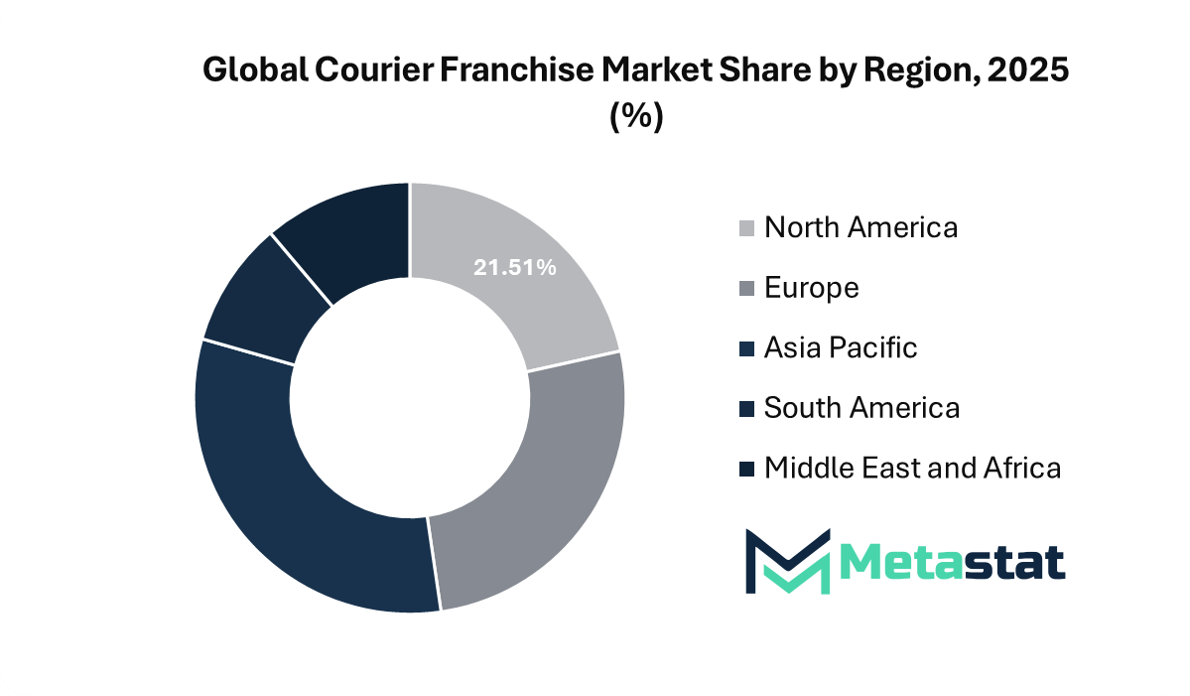
The Global Courier Franchise market is being shaped by rising dependence on fast, reliable, and digitally enabled delivery services across both business and consumer segments. Growth in e-commerce, SME shipping activity, and neighbourhood parcel demand continues to create strong opportunities for franchise-based expansion. The franchise model enables operators to scale under established brands and standardized operating systems, which supports service consistency and lowers execution risk.
Key industry participants such as United Parcel Service of America, Inc., Federal Express Corporation, and DHL Express (Netherlands) B.V. continue to shape the competitive landscape through network reach, delivery speed, and international service capabilities. At the same time, operators such as EVRi LIMITED, YODEL DELIVERY NETWORK LIMITED, and other regional parcel specialists are strengthening last-mile capabilities, which remain central to customer experience and franchise competitiveness.
Some Regional competitors including Delhivery Private Limited and Shadowfax Technologies Private Limited will continue to grow in rising markets, wherein e-commerce is growing at a fast pace. These groups will cognizance on flexible transport options and local partnerships to improve attain. Businesses consisting of Trackon Couriers Private Limited and Sky Ex Logistics Private Limited will also contribute by means of imparting low-cost solutions for domestic shipments, assisting smaller sellers compete in wider markets.
Technology will remain central to market development, with companies investing in tracking systems, route optimization tools, digital booking platforms, and automated sorting processes to improve efficiency. Customer expectations for real-time visibility and smoother service experiences will continue to push franchise networks toward stronger digital adoption, while cost control will remain critical in managing fuel, labor, and operating expenses.
Market size is forecast to rise from USD 24.7 billion in 2025 to over USD 46.1 billion by 2033.
The Global Courier Franchise market is expected to experience steady expansion driven by increasing parcel volumes, evolving consumer expectations, and the growing need for flexible logistics solutions. Advancements in automation, AI integration, and digital logistics platforms will play a crucial role in shaping operational models and improving service efficiency. Franchise networks are likely to become more technology-driven, enabling real-time visibility, predictive delivery planning, and enhanced customer engagement.
By Type:
By Application:
By Business Size:
By End-Users:
This research report categorizes the Courier Franchise market based on key segments and regions, forecasts revenue growth, and analyses trends in each submarket. The report analyses the key growth drivers, opportunities, and challenges influencing the Courier Franchise market. Recent market developments and competitive strategies such as expansion, product launch, partnership, merger, and acquisition have been included to draw the competitive landscape in the market.
The report strategically identifies and profiles the key market players and analyses their core competencies in each sub-segment of the Courier Franchise market.
|
Report Attributes |
Details |
|
Study Period |
2021-2033 |
|
Base Year |
2025 |
|
Estimated Year |
2026 |
|
Forecast Period |
2026-2033 |
|
Historical Period |
2021-2025 |
|
Growth Rate |
CAGR 8.1% from 2026 to 2033 |
|
Revenue Unit |
USD Billion |
|
Segmentation |
By Type, Application, Business Size, End-Users, and Region |
|
By Region |
North America (By Type, Application, Business Size, End-Users, and Country)
|
|
Europe (By Type, Application, Business Size, End-Users, and Country)
|
|
|
Asia Pacific (By Type, Application, Business Size, End-Users, and Country)
|
|
|
South America (By Type, Application, Business Size, End-Users, and Country)
|
|
|
Middle East and Africa (By Type, Application, Business Size, End-Users, and Country)
|
Find answers to common questions about this report
Top players operating in the Courier Franchise industry include United Parcel Service of America, Inc., Federal Express Corporation, DHL Express (Netherlands) B.V., Hermes Europe GmbH, EVRi LIMITED, and YODEL DELIVERY NETWORK LIMITED.
Global Courier Franchise market is estimated to reach USD 46.1 billion by 2033.
Service quality inconsistency across franchisees restrains brand trust with variable delivery performance and customer experience will hamper the market growth within the forecast period.
The Global Courier Franchise market is expected to grow at a CAGR of 8.1% over the forecast period (2026-2033).
The Domestic Transport is the leading type of segment in the Global market.
The Metastat Insights study shows that the Global Courier Franchise market size was USD 24.7 billion in 2025.
Asia Pacific region dominates the market.
The Metastat Insights analysis shows that the North America Courier Franchise market size is estimated to be USD 9.9 billion by 2033.
E-commerce and omnichannel retail parcel volumes propel franchise expansion across last-mile and neighborhood pickup networks and SME and D2C shipping adoption increases local delivery demand for affordable, reliable, and fast courier coverage are key driving factors, boosting the market.
The analysts below cover Professional Services research at Metastat Insights.
LEAD ANALYST
Utkarsh Khirodkar is a Lead Market Research Analyst at MetaStat Insight, specializing in market intelligence, technology sector assessments, and competitive strategy.

PRINCIPAL CONSULTANT - ENTERPRISE AI & EMERGING TECHNOLOGIES
Banking & Finance · Electronics and Semiconductor · Energy and Power · Healthcare IT · Information & Technology · Professional Services
Vijay Gunti is a Principal Consultant at MetaStat Insight, bringing over two decades of experience across enterprise digital transformation, technology strategy, and intelligent systems.

PRINCIPAL CONSULTANT - QUALITY SYSTEMS & COMPLIANCE
Electronics and Semiconductor · Machinery & Equipment · Professional Services
Omkar Phadtare is an Industry Consultant at MetaStat Insight, specializing in quality systems, regulatory compliance, and standards benchmarking to drive data-driven market intelligence and strategic industry research.

LEAD CONSULTANT - COMMUNICATION, TELECOM, AND IT
Electronics and Semiconductor · Information & Technology · Machinery & Equipment · Professional Services
Ravindra Sathe Consultants for Communication, Telecom, and IT at MetaStat Insight. He leads the firm's industry research initiatives across telecommunications infrastructure, digital connectivity, enterprise networking, and emerging information technology domains.
Most industry reports on warehouse automation bundle autonomous mobile robots and fixed conveyor installations into the same top-level numbers, which complicates advisory work. This study split the market cleanly by payload tiers, navigation technology, and fleet management software layers. The regional forecast for Western Europe gave our team defensible adoption benchmarks when evaluating capital allocation for logistics clients, saving us days of secondary data scrubbing.
Analyzing the transition from natural gas to green hydrogen in iron ore reduction requires realistic infrastructure timelines. Meta stat insight supplied a detailed regional assessment of DRI plant conversion costs and scrap metal availability in North America and Western Europe. Their report carefully examined pellet quality specs and electrical grid access constraints without making oversimplified market assumptions. The research material served as a practical reference during internal technology roadmap discussions.
Integrating zero-trust access controls across legacy electronic health record systems involves complex compliance overhead. Team produced an analysis that clearly separated identity governance and administration tools from privileged access management platforms. Their evaluation of HIPAA and GDPR compliance features across cloud native solutions gave our architecture group clear baseline criteria. The custom data request regarding biometric authentication adoption in hospital networks was returned promptly with clear documentation.
Explore related market intelligence reports worth reading alongside this one.
Starting from
$2950