
LEAD ANALYST
Utkarsh Khirodkar is a Lead Market Research Analyst at MetaStat Insight, specializing in market intelligence, technology sector assessments, and competitive strategy.

Global Infant Nutrition Market Size, Share, By Ingredient Type (Fats & Structured Lipids, Proteins & Amino Acids, Carbohydrates & Prebiotics, Human Milk Oligosaccharides, Vitamins & Minerals and Others (Probiotics, Nucleotides)), By Age Group (0-6 Months, 6-12 Months, 1-2 Years and 2-3 Years), By Product Type (Infant Formula, Follow-on Formula, Growing-up Milk and Others (Baby Food)), By Distribution Channel (Supermarkets & Hypermarkets, Pharmacies & Drugstores, Specialty Baby Stores, Online Retail and Others (Hospitals, Healthcare Facilities, Direct Sales)), Industry Analysis, Growth, Trends, and Forecast, 2026-2033
Report ID
MSI-5098
Published
August, 2026
Pages
268 Pages
Format
Historical
Base year
Forecast
Forecast period
Report Details
Choose Your License
Global Infant Nutrition Market
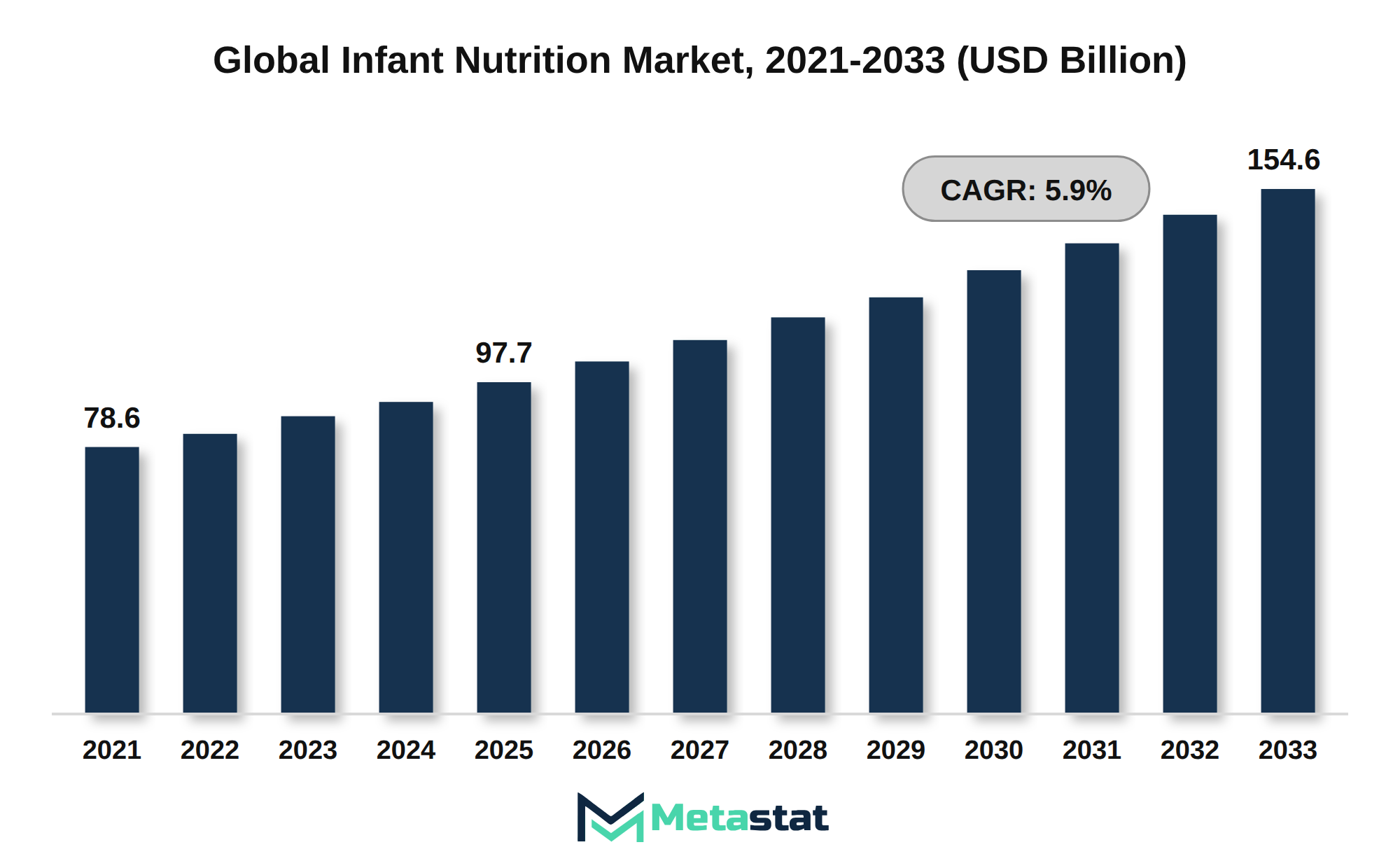
The global Infant Nutrition market was valued at USD 97.7 billion in 2025 and is projected to reach USD 154.6 billion by 2033, growing at a CAGR of 5.9% over the forecast period.
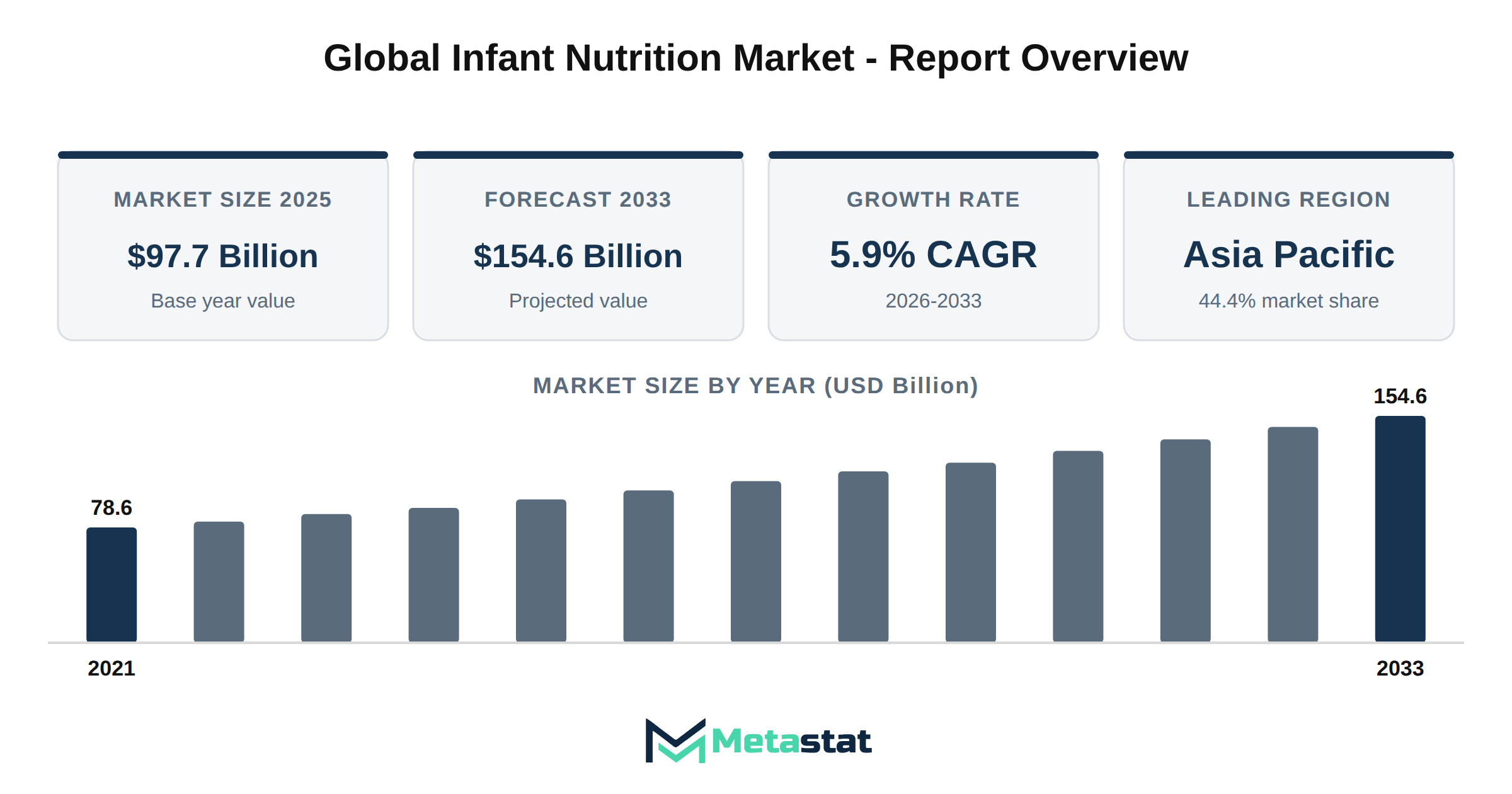
The global Infant Nutrition market was valued at USD 97.7 billion in 2025, reflecting a significant increase from USD 78.6 billion in 2021. This growth trajectory indicates a compound annual growth rate (CAGR) of 5.9% from 2026 to 2033, with the market expected to reach USD 154.6 billion by the end of the forecast period in 2033.
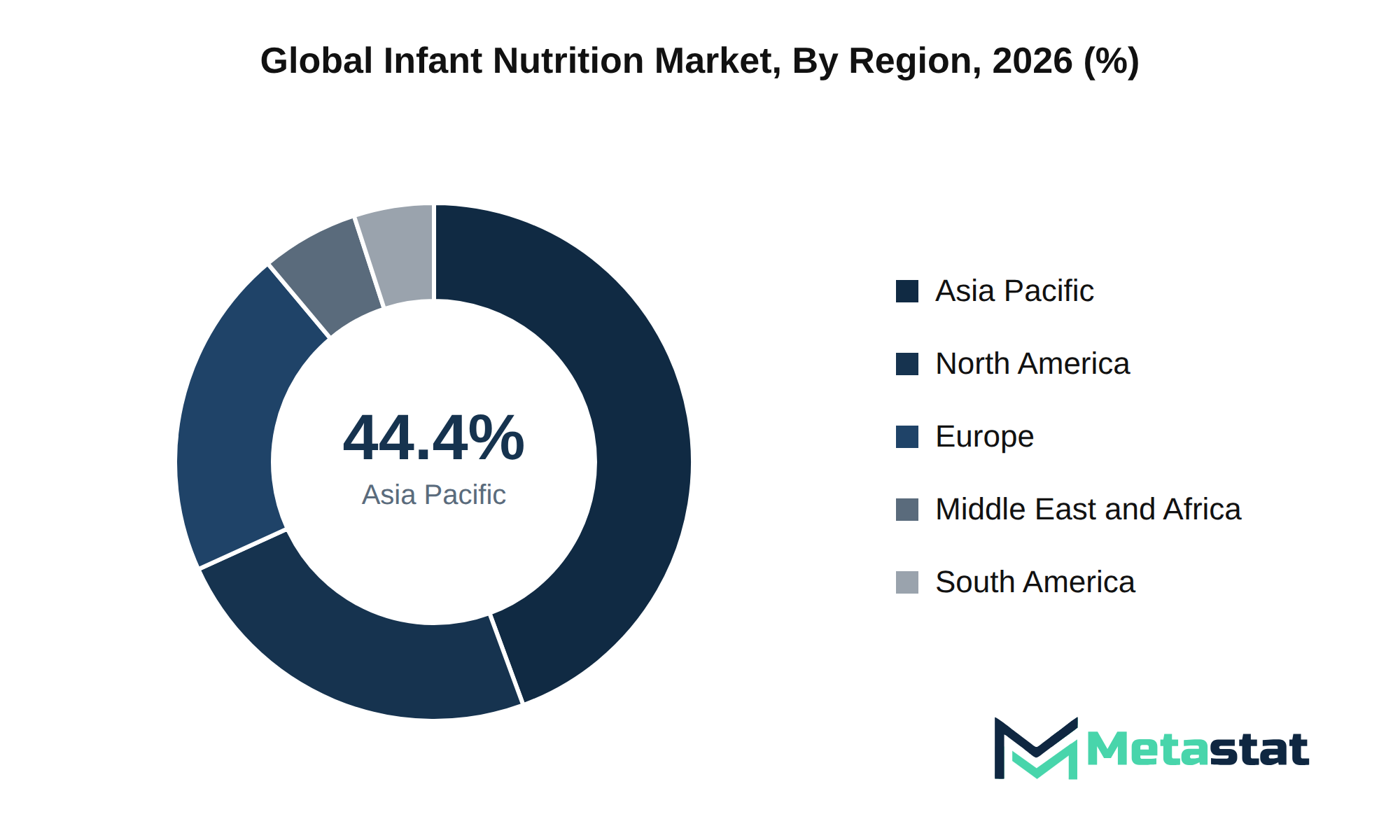
Regional dynamics play a crucial role in shaping the market. The Asia Pacific region holds the largest share at 44.4%, followed by North America at 23.8% and Europe at 20.7%. The Middle East and Africa account for 6.1%, while South America represents 5%. North America is projected to reach a market value of USD 33.5 billion by 2033, with a CAGR of 5.9% during the forecast period.
Segment analysis shows distinct growth patterns across different categories within the market. For ingredient types, fats and structured lipids, proteins and amino acids, and human milk oligosaccharides exhibit notable growth rates, with human milk oligosaccharides achieving a CAGR of 11.7%. In terms of age groups, the 0-6 months segment demonstrates strong growth potential, projected to increase from USD 37.9 billion in 2026 to USD 54.1 billion by 2033, reflecting a CAGR of 5.2%.
Product types further illustrate the market's diversity, with infant formula anticipated to grow from USD 46.1 billion in 2026 to USD 65.1 billion in 2033, marking a CAGR of 5.1%. Other segments, including follow-on formula and growing-up milk, show varying growth trajectories that contribute to the overall expansion of the Infant Nutrition market.
The Infant Nutrition market experiences a changing environment driven by evolving consumer preferences and increasing awareness of nutritional needs for infants. Rising disposable incomes and urbanization contribute to higher expenditure on quality nutrition products. The demand for organic and natural ingredients has surged, prompting manufacturers to focus on clean-label products that align with consumer values.
Regulatory compliance influences the market. Stringent guidelines imposed by regulatory bodies ensure product safety and quality, influencing manufacturers to enhance their R&D trajectories. This focus on research and development encourages innovation in product formulations, including the introduction of human milk oligosaccharides, which have gained traction owing to their health benefits.
Sustainability is becoming an essential consideration for stakeholders throughout the supply chain. Companies are increasingly adopting sustainable practices, from sourcing raw materials to packaging. The transition toward a circular economy emphasizes waste reduction and resource efficiency, aligning with consumer demand for environmentally friendly products.
The competitive environment within the market reflects fragmentation, with numerous players operating across various segments. This fragmentation encourages mergers and acquisitions because companies seek to enhance their market presence and expand their product offerings. Strategic partnerships and collaborations further support growth by leveraging shared resources and expertise.
In terms of logistics architecture, efficient distribution channels are crucial for meeting consumer demand. The rise of online retail has transformed the customer journey, enabling direct access to products and enhancing convenience for parents. This shift necessitates investment in digital infrastructure to support efficient transactions and consumer engagement.
Future strategic outlook indicates significant growth potential for the market, driven by increasing birth rates in developing regions and heightened awareness of infant nutrition. Companies that prioritize innovation, sustainability, and compliance with regulations are well-positioned to capitalize on emerging opportunities. High-value recommendations for stakeholders include investing in R&D for advanced formulations, enhancing supply chain efficiency, and adopting sustainable practices to meet evolving consumer expectations.
The rising awareness of health and wellness among parents significantly influences the demand for premium infant nutrition products. Increasing parental focus on nutrition quality drives consumers to seek products that offer superior health benefits for their infants. This trend ties closely to shifting demographic patterns, including urbanization and evolving buying preferences, where parents prioritize the nutritional value of food products. The increasing emphasis on health and wellness is expected to strengthen long-term demand for premium offerings.
The Infant Nutrition market benefits from a more significant capital investment environment, characterized by expanding venture funding aimed at developing innovative products. Investments in research and development enable companies to formulate advanced nutrition solutions, catering to the specific needs of infants in various age groups. Consequently, the market experiences growth, aligning with the increasing consumer demand for tailored nutritional offerings, which is anticipated to enhance competition among market participants.
Technological integration enhances product diversification within the Infant Nutrition market. Automation and software adoption facilitate the efficient development and production of specialized infant formulas. This efficiency benefits companies by reducing overhead costs while meeting rising consumer expectations for quality and safety, ultimately supporting market expansion.
Consumer behavior shifts towards organic and natural ingredients in infant nutrition products further encourage market growth. Parents increasingly prefer products free from artificial additives, driving manufacturers to innovate and offer cleaner label options. This demand for transparency influences companies to invest in sustainable sourcing and production practices, enhancing brand loyalty among health-conscious consumers and expanding the addressable base.
Investment in digital transformation initiatives drives growth in the Infant Nutrition market. Companies increasingly adopt advanced technologies including automation and artificial intelligence to enhance operational efficiency and streamline processes. This shift enables manufacturers to respond more swiftly to changing consumer demands, thus improving competitive positioning. The integration of digital tools facilitates better data management and customer engagement, allowing businesses to deliver tailored products and services. Enhanced product offerings contribute to increased sales and market penetration.
The growing focus on sustainability influences investment decisions. Companies strive to reduce their carbon footprint and promote ethical practices by incorporating sustainable technologies into their operations. This commitment connects with environmentally conscious consumers, driving demand for products that align with their values. Enhanced sustainability measures attract a broader customer base and build brand loyalty, ultimately supporting long-term revenue growth in the market.
Advancements in digital infrastructure enable better supply chain resilience and improved market access. By digitizing legacy processes and optimizing supply chain management, businesses enhance distribution capabilities and reduce operational risks associated with global trade. This adaptability positions firms to capitalize on emerging market opportunities, contributing to the overall expansion of the Infant Nutrition market.
The Infant Nutrition market faces significant constraints stemming from regulatory compliance and economic challenges. Regulatory tightening in various regions introduces complex compliance hurdles for manufacturers, which delay product launches and increase operational costs. Legal mandates concerning ingredient sourcing, labeling, and health claims necessitate extensive documentation and quality assurance measures, placing pressure on smaller firms that lack the resources to fully comply.
Macroeconomic headwinds, including inflationary pressures, contribute to rising costs of raw materials and production. These factors increase the overall cost of infant nutrition products, potentially pushing prices beyond what parents are willing to pay. Supply chain disruptions further exacerbate these challenges, leading to delays in product availability and complicating logistics for companies operating within the market.
Geopolitical instability in key sourcing regions introduces risks related to resource scarcity and unpredictable supply chains, compelling firms to seek alternative suppliers, often at higher costs. High capital investment requirements in advanced manufacturing technologies deter new entrants, creating a barrier to competition. These escalating operating costs, coupled with potential technological obsolescence, restrict growth opportunities for established brands and emerging players alike.
Market fragmentation and cultural barriers hinder widespread adoption of products across diverse regions. Regional adoption resistors, including varying consumer preferences and nutritional guidelines, complicate product positioning and marketing strategies. Slowing downstream demand, influenced by economic uncertainties, further constrains the market’s growth potential, resulting from parents prioritizing essential purchases during fluctuating economic conditions.
Overall, these intertwined challenges create a complex environment for the Infant Nutrition market, necessitating strategic adaptations from industry players to navigate regulatory landscapes and economic realities effectively.
Geopolitical fragmentation introduces significant challenges within the Infant Nutrition market, affecting trade relations and the flow of goods across borders. Complex trade deficits and tariff friction disrupt established supply chains, leading to delays and unpredictability in sourcing essential ingredients. These dynamics strain manufacturers, compelling them to seek alternative suppliers or adjust their operational strategies to mitigate risk. Volatility in feedstock and component availability raises costs, impacting the overall pricing structure and market competitiveness.
Technological disruptions further complicate the landscape by creating interoperability friction between new systems and existing processes. Manufacturers face hurdles in integrating advanced technologies into their operations, resulting in inefficiencies and increased compliance overhead. This challenge extends to research and development integrations, where complexities slow down innovation timelines. Talent retention pressures and workforce skill gaps exacerbate these issues, making it difficult for companies to adapt swiftly to market demands.
Logistics disruptions related to infrastructure gaps and retrofitting barriers contribute to ongoing instability in the supply chain. Rising input cost structures, coupled with the pressures of environmental sustainability mandates, compel firms to navigate a challenging economic environment. In this context, the Infant Nutrition market experiences intense competition, with companies striving to balance cost management and compliance with tightening global regulatory standards. The cumulative effect of these challenges shapes the market trajectory, necessitating strategic adaptations from industry players to maintain their positions in a volatile environment.
The Infant Nutrition market experiences robust opportunities driven by emerging regional demands, especially in Asia Pacific. Increasing birth rates and rising disposable incomes in countries like China and India contribute to heightened demand for infant nutrition products. Infrastructure modernization in these regions allows improved distribution channels, enabling manufacturers to reach consumers more effectively. Geographical expansion into underserved markets enhances brand presence and drives revenue growth.
Technological disruptions, including innovations in formulation and processing techniques, support the development of next-generation products. This transformation aligns with sustainability imperatives and green transformations, pushing companies to adopt eco-friendly practices while maintaining product integrity. The focus on ESG-driven alignments influences consumer preferences, prompting brands to adapt their offerings accordingly, thus enhancing competitiveness within the market.
Digital transformation reshapes buying behaviors. Parents increasingly rely on online platforms for purchasing infant nutrition products. This shift towards digital procurement highlights the necessity for brands to optimize their online presence, ensuring accessibility and convenience for consumers. Product integration strategies further facilitate the diversification of offerings, catering to niche segments, thereby expanding market share.
Strategic consolidation and cross-industry mergers create synergies that enhance operational efficiencies and broaden product portfolios. By leveraging these alliances, companies respond effectively to evolving market dynamics and consumer expectations. Supply chain localization emerges because a key strategy, minimizing reliance on imports and ensuring a steady supply of raw materials, ultimately enhancing resilience against global disruptions.
Asset life-cycle extensions and maintenance upgrades contribute to the overall optimization of production processes. Emphasizing value-chain optimization through process automation and operational yield maximization supports manufacturers in meeting rising demand while controlling costs. These factors collectively play a vital role in the growth trajectory of the Infant Nutrition market, positioning it favorably for continued expansion through the forecast period.
The Global Infant Nutrition market is segmented based on Ingredient Type, Age Group, Product Type, and Distribution Channel.
Valued at USD 24.8 billion in 2026, the Fats & Structured Lipids segment is projected to reach USD 34.8 billion by 2033, reflecting a CAGR of 5% during the forecast period. Increasing global awareness of nutrition and health among parents drives demand for high-quality fats and structured lipids in infant formulas. The segment benefits from advancements in formulation technologies that enhance the nutritional profile of products. Innovations support the development of tailored solutions that cater to the specific dietary needs of infants, leading to a shift toward premium products. Regulatory compliance standards require adherence to stringent safety and quality measures, influencing manufacturers to invest in better processes and materials.
Rising disposable incomes in emerging markets enable families to prioritize nutrition, expanding the consumer base for the market. The growing prevalence of lactose intolerance and allergies among infants stimulates demand for specialized products that incorporate fats and structured lipids. This segment faces cost pressures due to fluctuating raw material prices, impacting overall margins for manufacturers. Strategic investments in supply chain resilience and raw material sourcing mitigate these challenges, supporting sustained growth within this segment.
Growth in the Proteins & Amino Acids segment stems from increasing consumer preferences for high-quality nutrition sources in infant products. Parents prioritize protein-rich formulations that support healthy growth and development in infants. The rising trend of premiumization in the Infant Nutrition market influences product innovation, leading manufacturers to enhance formulations with protein and amino acid blends that cater to specific dietary needs. These innovations align with evolving consumer preferences and advancements in nutritional science, creating a favorable environment for segment expansion.
Technological maturation in manufacturing processes facilitates the development of advanced protein sources, allowing companies to deliver superior nutritional profiles. Enhanced processing techniques improve the digestibility and bioavailability of proteins, addressing parental concerns about infant nutrition. Regulatory compliance with safety standards reinforces consumer trust, driving the adoption of protein-rich products in the market.
The Proteins & Amino Acids segment is projected to reach USD 32 billion by 2033, registering a CAGR of 5.1% during the forecast period. This growth reflects the ongoing emphasis on nutritional quality and the increasing integration of proteins in various infant formulas. Strategic opportunities exist for companies to explore new ingredient sources and improve formulations, positioning themselves favorably against competitors.
Growth in the Carbohydrates & Prebiotics segment stems from increasing consumer preference for products that promote digestive health and nutritional benefits for infants. Rising awareness among parents regarding the importance of gut health for overall well-being drives demand for products rich in prebiotics and carbohydrates. This segment is projected to reach USD 30.9 billion by 2033, reflecting a strong adoption rate within the Infant Nutrition market.
Technological advancements in ingredient formulation enhance product efficacy and safety, enabling manufacturers to develop innovative solutions tailored to the nutritional needs of infants. The trend towards clean-label products influences market dynamics, encouraging companies to prioritize transparency in ingredient sourcing and production methods.
Regulatory compliance shapes product offerings, with stringent safety standards influencing ingredient selection and formulation processes. Manufacturers face pressure to ensure their products meet evolving regulatory frameworks, which impacts production costs and pricing strategies. Pricing volatility arises from fluctuating raw material costs, necessitating agile supply chain management to mitigate risks.
The strategic opportunity within the segment includes expanding product portfolios to cater to diverse dietary requirements and preferences among consumers. By investing in research and development, companies enhance their competitive positioning, addressing the growing demand for specialized infant nutrition products. The segment's growth trajectory reflects a broader trend within the Infant Nutrition market, where health-conscious consumers prioritize quality and functionality in their purchasing decisions.
High demand for Human Milk Oligosaccharides (HMOs) fuels growth in the Infant Nutrition market. Awareness of the health benefits associated with HMOs increasingly drives consumers towards products that enhance infant gut health and immune system support. The projected CAGR of 11.7% during the forecast period highlights the segment's potential for growth, catering to health-conscious parents seeking advanced nutritional solutions for their children.
Innovations in HMO production techniques enable inclusion in various infant nutrition products, enhancing product appeal and differentiation. Manufacturers focus on integrating HMOs into infant formula and baby foods, which aligns with evolving consumer preferences towards natural and functional ingredients. This product evolution contributes significantly to the segment's growth within the market.
Regulatory frameworks surrounding infant nutrition continue to evolve, with increasing scrutiny on ingredient safety and efficacy. Compliance with these regulations ensures market participants maintain consumer trust and manage risk effectively. The segment's growth trajectory remains supported by strategic investments in R&D, enabling firms to innovate and respond to shifting consumer preferences.
Competition within the segment intensifies due to established players and new entrants recognizing the potential of HMOs. This competitive environment encourages innovation and prompts firms to explore strategic partnerships aimed at enhancing product offerings. While the demand for HMOs escalates, manufacturers strive to capitalize on emerging opportunities, further strengthening the segment's role in the broader Infant Nutrition market.
Demand for Vitamins & Minerals within the Infant Nutrition market stems from increasing parental awareness regarding the nutritional needs of infants. This segment benefits from the growing emphasis on essential nutrients that support healthy growth and development during the early stages of life. Consumers increasingly seek products enriched with vitamins and minerals, driving manufacturers to innovate and enhance product formulations. Scientific research continues to highlight the importance of specific nutrients in infant development, prompting companies to enhance their offerings to meet evolving demands.
Regulatory compliance remains a critical factor influencing the market, driven by stringent standards that govern the formulation of infant nutrition products. Manufacturers invest in research and development to ensure adherence to safety and quality standards, which subsequently impacts pricing structures and profit margins. The market faces challenges related to raw material sourcing, with fluctuations in the supply chain affecting the availability and cost of essential ingredients.
Technological advancements in nutritional science play a significant role in product evolution, leading to the introduction of next-generation formulations rich in vitamins and minerals. This segment's growth is further propelled by strategic opportunities identified in consumer preferences for organic and natural ingredients. Companies that successfully align their products with these consumer trends position themselves favorably within the competitive environment of the Infant Nutrition market.
Growing interest in probiotics and nucleotides reflects a broader trend toward enhancing infant health and nutrition. Parents increasingly seek products that offer health benefits beyond basic nutrition, promoting gut health and immune system support. This shift in consumer preference drives product innovation and expansion within the Infant Nutrition market.
Technological advancements in food processing and formulation techniques enhance the development of probiotic and nucleotide-rich products. Continuous investment in research and development enables manufacturers to create formulations that align with evolving health trends and regulatory requirements. This focus on innovation helps companies differentiate their offerings and capture market share.
Regulatory compliance standards shape product offerings. Manufacturers face pressures to meet stringent safety and quality requirements while ensuring that health claims are substantiated. This regulatory landscape influences product development, pricing strategies, and marketing approaches within the market.
Competitive dynamics in the market stimulate brands to explore strategic partnerships and collaborations. Collaborations with technology providers and research institutions facilitate the introduction of next-generation infant formulas that utilize the benefits of probiotics and nucleotides. This strategic focus enhances product portfolios while driving consumer interest.
Consumer education on the benefits of probiotics and nucleotides increases demand for specialized infant nutrition products. Knowledge regarding the long-term health implications of gut health in early childhood influences parents to prioritize these ingredients in their purchasing decisions. This consumption shift encourages brands to invest in marketing campaigns that highlight the advantages of their products.
The Others (Probiotics, Nucleotides) segment contributes significantly to the Infant Nutrition market, driven by consumer demand for innovative and health-focused solutions. The relationship between technological advancements, regulatory compliance, and strategic partnerships will shape the future of this segment, presenting opportunities for growth and differentiation.
Growth in the 0-6 Months segment is driven by increasing parental concern regarding infant nutrition and health. This segment is valued at USD 37.9 billion in 2026 and is projected to reach USD 54.1 billion by 2033, at a CAGR of 5.2% during the forecast period. The demand for premium and specialized infant food products directly influences expansion, with parents seeking high-quality ingredients for their children. Regulatory compliance standards regarding safety and nutritional guidelines further shape the offerings within this segment. Technological maturation in product development enhances the availability of tailored solutions that cater to the unique needs of infants in this critical growth phase. Rising disposable incomes in various regions support consumer spending on infant nutrition, reflecting a growing prioritization of health and wellness. These factors collectively contribute to a favorable outlook for this segment within the broader Infant Nutrition market.
Significant growth in the 6-12 Months segment reflects increasing parental awareness regarding nutrition for infants transitioning into more diverse diets. This segment is estimated to reach USD 44.1 billion by 2033, at a CAGR of 5.7% during the forecast period. A shift towards organic and natural foods, combined with a focus on essential nutrients, drives expansion in this market. Regulatory compliance influencing product safety and quality enhances consumer trust, leading to higher adoption rates among parents. Innovative formulations that cater to specific dietary needs, including lactose intolerance or allergies, contribute to segment evolution and broaden product offerings. The ongoing trend towards online retail channels enables convenient access to a wider range of products, facilitating consumption shifts and enhancing market penetration.
Strong growth in the 1-2 Years segment aligns with increasing parental focus on nutrition and health during early childhood. This demographic emphasizes the importance of providing adequate dietary support for developing infants. Demand for high-quality infant nutrition products, particularly those tailored for toddlers aged 1 to 2 years, significantly influences market dynamics.
The segment is projected to reach USD 36.3 billion by 2033, driven by innovation in product offerings and an expanding range of formulations. Manufacturers invest in research and development to create specialized nutrition solutions that cater to the unique dietary needs of toddlers. This evolution in product formulation enhances the appeal of the segment within the broader Infant Nutrition market.
Rising disposable incomes enable families to prioritize premium nutrition options for their children. Increased awareness regarding the impact of early nutrition on long-term health outcomes supports market expansion. A strategic focus on health-oriented marketing enhances brand loyalty and consumer trust in this segment.
Regulatory agencies shape the parameters for product development, ensuring safety and quality standards are upheld. Compliance with these regulations influences product offerings and affects consumer perceptions of brand reliability. Manufacturers remain agile in adapting to regulatory changes while meeting consumer expectations.
Expansion in the 2-3 Years segment aligns with increasing awareness of nutrition's role in early childhood development. This demographic exhibits a heightened interest in products that support physical and cognitive growth, prompting manufacturers to enhance their offerings. The segment is projected to grow at a CAGR of 6.8% during the forecast period. Enhanced marketing strategies targeting parents further stimulate demand, creating strong competition among various brands in the Infant Nutrition market.
An increased focus on clean-label products drives innovation in formulations, leading to the introduction of organic and natural ingredients. Regulatory compliance surrounding labeling and health claims influences product development, ensuring safety and quality for consumers. The emphasis on transparency strengthens consumer trust and loyalty, contributing positively to the market's growth.
Growing online retail channels facilitate easier access to a broader range of products, allowing parents to compare and choose based on their preferences. This shift towards digital consumption patterns supports the market by providing convenience and variety, which align well with modern parenting styles. Capturing the attention of health-conscious consumers remains essential for driving future growth.
Strong growth in the Infant Formula segment aligns with rising parental awareness regarding nutrition's role in infant development. Increased disposable income among parents has led to higher spending on premium infant nutrition products, fueling demand. Regulatory compliance standards around safety and nutritional content drive manufacturers to innovate, ensuring products meet stringent guidelines. Technological maturation enhances the quality and variety of formulations, enabling companies to introduce advanced products that cater to specific dietary needs.
Product evolution in the market involves a shift towards organic and clean-label options, reflecting consumer preferences for healthier choices. This trend encourages companies to invest in research and development, resulting in next-generation upgrades that enhance nutritional profiles. Cost structures within the segment are influenced by raw material sourcing and pricing volatility, necessitating strategic supplier partnerships to maintain margins. The segment is valued at USD 46.1 billion in 2026 and is projected to reach USD 65.1 billion by 2033.
Consumption shifts towards convenience and online retail channels drive market expansion, with parents seeking accessible and efficient purchasing options. Specialized products for different age groups, including tailored formulas for infants aged 0-6 months, support this trend by addressing specific nutritional requirements and preferences. Strategic opportunity windows arise from growing markets in emerging economies, where increasing health awareness and urbanization contribute to rising demand for infant nutrition solutions.
In the evolving Infant Nutrition market, the Follow-on Formula segment stands out with a strong growth trajectory. This segment is expected to reach USD 36.3 billion by 2033, at a CAGR of 6.1% during the forecast period. Increasing awareness among parents regarding nutrition for older infants drives demand, because caregivers seek products that support developmental milestones. Enhanced formulations focusing on essential nutrients, including proteins and vitamins, contribute to consumer preference for this segment, reflecting a shift towards premium offerings.
Technological advancements in production processes facilitate the creation of innovative products that meet stringent safety and nutritional standards. This trend aligns with the growing emphasis on regulatory compliance and certifications, because manufacturers prioritize quality assurance to gain consumer trust. The segment benefits from expanding retail channels, with online retail platforms gaining traction, enabling better access for consumers.
Pricing strategies remain crucial, because competition intensifies within the market. Brands that successfully manage cost structures while maintaining product quality are positioned to capture significant market share. Margin pressures arise from sourcing high-quality ingredients, compelling suppliers to optimize their supply chains for resilience. Disruptive alternatives, including plant-based options, present challenges, yet create strategic opportunity windows for innovation and product evolution.
Overall, the Follow-on Formula segment is poised for dynamic growth, driven by robust consumer demand, technological maturation, and evolving market dynamics within the broader Infant Nutrition market.
Valued at USD 34.8 billion by 2033, the Growing-up Milk segment experiences significant growth driven by changing consumer preferences towards nutritional products tailored for toddlers. Increased awareness among parents regarding the importance of balanced nutrition for young children drives demand, prompting investment in innovative formulations and product enhancements. The market responds to rising health consciousness, resulting in manufacturers introducing products enriched with vitamins, minerals, and other essential nutrients, aligning with the evolving dietary needs of children.
A surge in online retail channels facilitates accessibility to Growing-up Milk products, enhancing consumer convenience and expanding market reach. The increasing penetration of e-commerce platforms allows parents to explore a broader range of options, driving competition among brands to meet changing consumer preferences. Companies invest in digital marketing strategies to engage consumers, building brand loyalty through targeted campaigns.
Regulatory compliance shapes the market landscape, with stringent guidelines ensuring product safety and quality. Manufacturers focus on adhering to these regulations, which enhances product credibility and consumer trust. Continuous improvements in supply chain resilience further support the segment's expansion, allowing producers to maintain consistent product availability while managing costs effectively.
Technological advancements contribute significantly to the development of innovative formulations, enhancing product appeal. Manufacturers invest in research and development to create tailored solutions that align with parents’ expectations for health and nutrition. This focus on innovation not only addresses market demands but establishes a foundation for long-term growth opportunities within the Infant Nutrition market.
In the context of the Infant Nutrition market, the Others (Baby Food) segment is projected to grow at a CAGR of 5.8% during the forecast period. This growth is influenced by rising consumer awareness regarding the nutritional needs of infants and toddlers. Parents increasingly seek convenient and nutritious food options, leading to a shift towards packaged baby food products. Product evolution within this segment continues to incorporate organic and natural ingredients, catering to health-conscious consumers. Regulatory compliance standards play a crucial role, ensuring safety and quality in baby food products, which enhances consumer trust and boosts market adoption.
Strategic opportunity windows emerge because manufacturers innovate to meet the diverse dietary preferences of families across different regions. With growing demand for healthy and functional baby food options, companies are investing in research and development to create products that align with evolving consumption shifts. Pricing volatility impacts profit margins, requiring brands to optimize their cost structures while maintaining quality standards. The landscape of the Infant Nutrition market reflects the dynamic nature of consumer preferences, positioning the Others (Baby Food) segment for sustained growth in the coming years.
Supermarkets & Hypermarkets segment is valued at USD 35.5 billion in 2026 and is projected to reach USD 45 billion by 2033, at a CAGR of 3.4% during the forecast period. Growth in this segment results from the increasing preference for one-stop shopping experiences among consumers, enabling easy access to a wide range of infant nutrition products. The segment benefits from the strong presence of established retail chains, which ensure product availability and competitive pricing. The rising trend of health and wellness among parents drives demand for high-quality infant nutrition products available in supermarkets and hypermarkets.
Shifts in consumer behavior toward convenience and product variety encourage retailers to expand their offerings in this segment. Increased marketing efforts by manufacturers aimed at highlighting the benefits of various infant nutrition products contribute to consumer awareness and influence purchasing decisions. Promotional activities within supermarkets and hypermarkets, including discounts and loyalty programs, enhance customer engagement and increase purchasing frequency.
In the Infant Nutrition market, regulatory compliance shapes product offerings. Retailers navigate stringent regulations surrounding the marketing and sale of infant nutrition products, ensuring adherence to safety standards and nutritional claims. Such compliance enhances consumer trust and builds brand loyalty, essential for sustained growth within the segment. Continuous investment in staff training and customer service within supermarkets and hypermarkets enriches the shopping experience, driving higher sales volumes.
Growth in the Pharmacies & Drugstores segment of the Infant Nutrition market reflects an increasing reliance on these distribution channels for providing essential nutrition products for infants. Rising consumer preference for convenient access to a variety of infant nutrition products drives this segment's expansion. Parents prioritize the reliability and quality assurance offered by pharmacies and drugstores, seeking trusted options for their children's health and development.
Pharmacies & Drugstores segment is projected to reach USD 34 billion by 2033, at a CAGR of 4.4% during the forecast period. This growth results from the continuous evolution of product offerings and adaptations to meet consumer preferences, including fortified formulas and organic options. The segment benefits from the integration of health and wellness trends within the infant nutrition landscape, emphasizing products that align with parents' nutritional standards for their children.
Strategic partnerships between manufacturers and pharmacies enhance product availability and visibility, positioning pharmacists because crucial advisors for parents. Increased marketing efforts focus on educating consumers about the benefits of various infant nutrition products available in pharmacies. This trend contributes to the segment's sustained growth, driven by parental demand and the industry's responsiveness to evolving consumer needs.
Specialty Baby Stores play a crucial role in the distribution of products within the Infant Nutrition market. The segment is driven by an increase in consumer preference for high-quality and specialized infant nutrition products. Parents increasingly seek personalized and organic options for their children, leading to higher foot traffic in specialty stores.
By 2033, this segment is projected to reach USD 21.6 billion. The notable growth reflects shifts in consumer behavior, where parents prioritize specialized nutrition tailored to specific age groups and dietary needs. Enhanced marketing strategies and product selections at these stores improve customer engagement, allowing them to capture a larger share of the market.
Competitive advantages stem from superior customer service and product knowledge provided by staff, which enhances the shopping experience. This focus on customer satisfaction positions Specialty Baby Stores favorably against larger retailers. The need for tailored recommendations and guidance in selecting infant nutrition products drives parents toward specialty outlets, further propelling growth within the market.
With a projected compound annual growth rate of 11.9%, the segment leads in innovative product offerings and consumer engagement strategies. This growth trajectory highlights strategic opportunities for players aiming to expand their footprint in the Infant Nutrition market.
Growth in the Online Retail segment benefits from changing consumer behavior and increased convenience in purchasing products. Parents increasingly prefer the convenience of online shopping, which leads to a significant rise in demand for infant nutrition products. The segment is projected to grow at a CAGR of 11.9% during the forecast period. Higher penetration of smartphones and internet access enhances the accessibility of online platforms, facilitating purchasing decisions. Proliferation of e-commerce platforms allows for wider product selection, attracting consumers seeking specialized or premium infant nutrition products. This shift towards online retail provides opportunities for brands to engage directly with consumers, strengthening brand loyalty and enhancing customer relationships.
Investment in targeted marketing and personalized shopping experiences supports higher conversion rates within the segment. Brands that leverage data analytics to understand consumer preferences effectively enhance their offerings, attracting a larger customer base. Competitive pricing strategies and exclusive online promotions further stimulate sales growth, positioning the Online Retail segment because a key driver in the Infant Nutrition market. This trend aligns with broader market dynamics, emphasizing the importance of online channels in driving revenue and expanding market reach.
Growing emphasis on health and wellness among parents influences the distribution dynamics of the Infant Nutrition market, particularly in the Others (Hospitals, Healthcare Facilities, Direct Sales) segment. Hospitals and healthcare facilities serve critical points for infant nutrition, providing access to specialized products tailored for newborns and infants. Direct sales channels further enhance availability, reaching parents and caregivers directly, facilitating tailored communication, and addressing specific nutritional needs.
Demand for high-quality and safe nutritional products drives the segment’s expansion. Regulatory compliance standards related to safety and nutrition shape product offerings, ensuring adherence to stringent health guidelines. With increasing awareness of the importance of early nutrition, hospitals increasingly adopt specialized infant nutrition products, influencing purchasing decisions of new parents.
Innovations in product formulations, including enhanced nutritional profiles and fortified options, attract interest within this segment. Technological maturation supports the development of next-generation products that meet evolving consumer preferences. Enhanced formulations of infant nutrition products ensure that hospitals and healthcare facilities align with best practices in early childhood nutrition, further strengthening the segment's footprint in the market.
Shifts in consumption patterns toward premium and organic products impact purchasing strategies within hospitals and healthcare facilities. These shifts prompt suppliers to adapt their offerings, enhancing the appeal of their products through certifications and quality assurances. Alignment with evolving consumer preferences positions the segment favorably within the broader context of the Infant Nutrition market.
Based on geography, the Global Infant Nutrition market is divided into North America, Europe, Asia-Pacific, South America, Middle East, and Africa.
North America represents a substantial share of the global Infant Nutrition market, reaching USD 33.5 billion by 2033, reflecting an expansion at a CAGR of 5.9% within the forecast period. The United States, Canada, and Mexico constitute the primary countries driving this growth, influenced by rising birth rates and a heightened focus on nutrition among parents.
Investment in infrastructure modernization enhances distribution capabilities across the region, facilitating access to a variety of products through supermarkets, pharmacies, and online platforms. Local compliance mandates and regulatory frameworks influence market dynamics, shaping the product offerings available to consumers.
Emerging market front-runners within North America include established companies committed to innovation in ingredients and product formulations. Domestic market participants leverage localized procurement dynamics and cultural nuances to cater to the unique preferences of consumers in each country. This strategic approach supports brand loyalty and drives sales growth.
Supply chain regionalization and nearshoring initiatives strengthen the operational landscape, offering opportunities for local manufacturing. This shift reduces dependency on international supply chains, promoting resilience and responsiveness to market demands. High-value replacement cycles for innovative products enhance the growth potential across the region.
In Europe, the Infant Nutrition market is characterized by a significant presence in various countries, including Germany, France, the UK, Italy, Spain, and Russia. With a market share of 20.7% in 2025, this region demonstrates robust demand driven by increasing health awareness among parents and a growing emphasis on nutrition for infants. The market benefits from a well-established distribution network, which includes supermarkets, pharmacies, and specialized baby stores.
Germany and France lead the region, supported by high purchasing power and advanced healthcare systems. The UK demonstrates strong growth potential due to evolving consumer preferences toward organic and specialized infant nutrition products. Italy and Spain experience gradual expansion, driven by cultural shifts toward quality and health-conscious baby food options.
Russia presents an emerging market opportunity, fueled by a younger population and increasing investments in local manufacturing. The region's competitive landscape features several key players, including established brands and local producers, which intensify market competition and encourage innovation. The focus on localized production enhances supply chain resilience and addresses consumer preferences for domestic products.
The European Infant Nutrition market presents a landscape ripe for growth, driven by demographic trends, health awareness, and evolving consumer behaviors. Ongoing expansion and innovation within the market signify a strong trajectory leading into the forecast period.
Asia-Pacific accounts for 44.4% of the global Infant Nutrition market in 2025. Growth in this region is fueled by rising birth rates and an increasing focus on child nutrition among parents. Countries including China, India, and Japan lead the demand for various infant nutrition products, including infant formula and growing-up milk. Increased consumer awareness regarding the importance of nutrition during early childhood drives investment in high-quality products.
Infrastructure modernization enhances the distribution channels across Asia-Pacific. Increased availability of supermarkets, pharmacies, and online retail platforms allows for better accessibility to infant nutrition products. The region experiences a shift towards online purchasing, with the online retail segment expected to grow significantly, reflecting changes in consumer buying behaviors.
Emerging markets within Southeast Asia exhibit high potential for growth, driven by a rising middle class and increasing disposable incomes. Expansion into these underpenetrated territories presents opportunities for domestic and international players seeking to capture market share. Local compliance mandates and cultural nuances further influence the procurement dynamics and product preferences across various countries.
Competitive landscapes within Asia-Pacific are characterized by numerous domestic market participants. Companies including Danone, Nestlé, and Abbott Laboratories actively engage in vendor consolidation trends to strengthen their market position. Strategic entry barriers and foreign direct investment flows support the growth of localized manufacturing densities, further enhancing supply chain efficiencies.
Overall, the Asia-Pacific region stands poised for significant growth in the Infant Nutrition market, driven by a combination of factors including demographic trends, evolving consumer preferences, and ongoing infrastructure development. The region's dynamics indicate a promising future for market participants looking to capitalize on emerging opportunities within this sector.
The Infant Nutrition market in South America exhibits significant potential for growth, driven by increasing awareness of infant health and nutrition among parents. Brazil and Argentina represent the primary markets, supported by rising disposable incomes and a growing population of young families. The demand for high-quality infant nutrition products continues to strengthen, underpinned by a shift towards premium and organic offerings.
Infrastructure modernization, including enhanced distribution networks and retail channels, facilitates better access to infant nutrition products across urban and rural areas. The market observes a notable expansion in the online retail segment, driven by changing consumer purchasing behaviors that favor convenience and accessibility. This trend enhances market penetration in underrepresented territories and supports a broader range of product offerings.
Local manufacturers increasingly focus on compliance with regional regulations and quality standards, ensuring product safety and meeting consumer expectations. The competitive landscape comprises a mix of domestic and international players, driving innovation and product differentiation. Leading companies strive to expand their market presence through strategic partnerships and localized sourcing, enhancing their competitive edge in the evolving market.
Cross-border trade corridors facilitate the import of premium infant nutrition products from other regions, enriching the market landscape. Foreign direct investment inflows contribute to the development of local manufacturing capabilities, allowing for tailored offerings that cater to regional preferences and dietary needs. These dynamics position South America because a promising region within the global Infant Nutrition market.
The Infant Nutrition market in the Middle East and Africa demonstrates growing potential driven by rising birth rates and increasing awareness of infant health and nutrition among parents. Countries including Saudi Arabia and the UAE exhibit substantial investment in healthcare infrastructure, enhancing the availability of quality infant nutrition products. South Africa and other regions within the Middle East and Africa reflect a diverse consumer base with varying preferences, creating opportunities for market players to introduce tailored products that meet local demands.
The region's share of the global market is projected at 6.1% in 2025, indicating a notable presence despite historical underinvestment in infant nutrition relative to other markets. Several local manufacturers aim to capitalize on this growth through strategic partnerships and localized production, allowing for better alignment with consumer expectations and regulatory requirements. Emerging market front-runners focus on innovative distribution channels, including online retail platforms, which are experiencing a surge in adoption, especially among tech-savvy parents.
Cultural factors strongly influence purchasing behavior, with parents emphasizing organic and natural ingredients in infant nutrition products. This trend encourages suppliers to adapt their offerings to cater to local tastes and preferences. Growing awareness of the benefits of human milk oligosaccharides and prebiotics further contributes to segment expansion, attracting investments aimed at research and development.
The Infant Nutrition market in this region benefits from increasing foreign direct investment (FDI) flows, particularly from multinational corporations seeking to establish a foothold in emerging markets. Ongoing education regarding infant nutrition aligns with regional compliance mandates to ensure product safety and efficacy. Overall, the market presents various growth vectors driven by evolving consumer preferences and expanding awareness of nutritional needs.
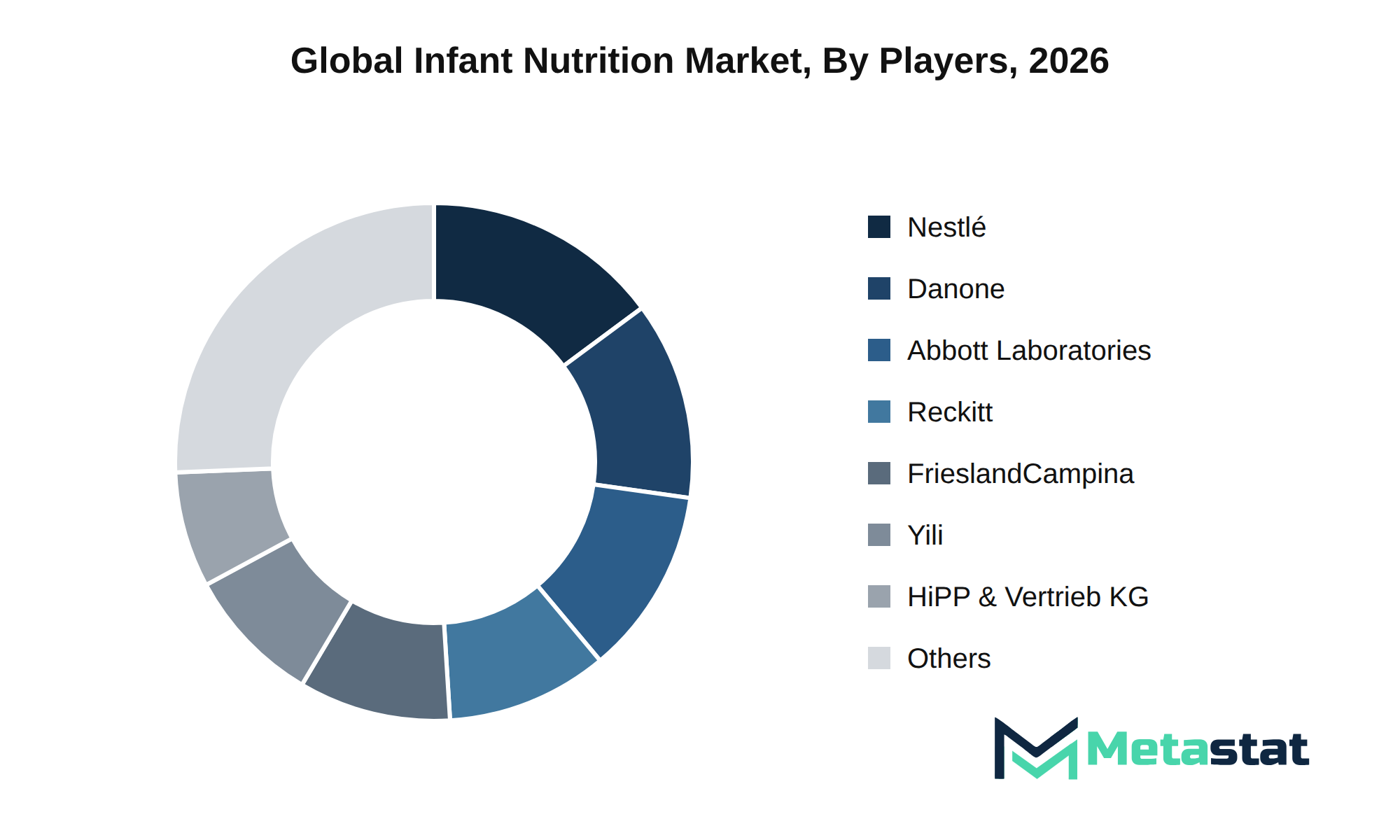
The Infant Nutrition market features significant competition among major companies focusing on strategic consolidation, product differentiation, and research and development. Key players, including Abbott Laboratories, Reckitt, Danone, and Nestlé, have established strong portfolios with diverse product offerings. These companies emphasize proprietary technologies and innovative formulations to maintain competitive advantages. Players including FrieslandCampina, HiPP GmbH & Co. Vertrieb KG, and Morinaga Milk Industry Co., Ltd. enhance their market presence through strategic alliances and joint ventures, enabling them to utilize complementary expertise and resources.
Barriers to entry remain high for new entrants in the market, driven by established brand equity and customer retention strategies employed by existing players. Companies like Yili Group, China Feihe Limited, and Bellamy's Organic invest in intellectual property portfolios to strengthen their market positions and defend against competitive threats. Ongoing dynamics of mergers and acquisitions lead to industry restructuring, influencing market growth and competitive outlook. Overall, the Infant Nutrition market continues to evolve, shaped by strategic growth vectors, demand for innovative products, and the relationship of established and emerging players.
Market size is forecast to rise from USD 97.7 billion in 2025 to over USD 154.6 billion by 2033. The base case reflects a growth trajectory at a 5.9% CAGR, representing a steady increase in demand for infant nutrition products driven by factors including rising birth rates, health-conscious consumer behavior, and increasing disposable income levels.
In bull cases, optimistic scenarios envision accelerated adoption of premium products and innovative formulations, which would enhance market growth further. Conversely, bear cases account for potential economic downturns, regulatory challenges, and shifts in consumer preferences that could restrain growth rates. Despite these fluctuations, the overall trajectory of the market remains positive.
Macroeconomic conditions, downstream demand changes, and evolving trade corridors significantly influence the infant nutrition market. Economic stability facilitates higher consumer spending, while geopolitical realignments and global supply chain shifts introduce uncertainties in sourcing and distribution. Strategic capital allocation directives directed towards research and development, alongside infrastructure commitments, enhance the sector's resilience and capacity to meet emerging enterprise needs.
Next-generation technology integration and R&D commercialization timelines drive innovation within the industry. Regulatory evolution and compliance milestones necessitate continuous adaptation by market players, ensuring product safety and efficacy. The dynamic interaction of these factors shapes strategic imperatives for companies vying for market share in the infant nutrition sector.
Emerging white-space opportunities, particularly in online retail avenues and niche product segments, offer considerable growth potential for forward-thinking enterprises. The demand for customized solutions and health-oriented offerings presents a robust landscape for innovation and investment. Ultimately, aligning business strategies with evolving consumer expectations and market trends drives sustained growth in the infant nutrition market.
The report strategically identifies and profiles the key market players and analyses their core competencies in each sub-segment of the Infant Nutrition market.
Report Attributes | Details |
Study Period | 2021-2033 |
Base Year | 2025 |
Estimated Year | 2026 |
Forecast Period | 2026-2033 |
Historical Period | 2021-2025 |
Growth Rate | CAGR 5.9% from 2026 to 2033 |
Revenue Unit | USD billion |
Segmentation | By Ingredient Type, Age Group, Product Type, Distribution Channel, and Region |
By Region | North America (By Ingredient Type, Age Group, Product Type, Distribution Channel, and Country)
|
Europe (By Ingredient Type, Age Group, Product Type, Distribution Channel, and Country)
| |
Asia Pacific (By Ingredient Type, Age Group, Product Type, Distribution Channel, and Country)
| |
South America (By Ingredient Type, Age Group, Product Type, Distribution Channel, and Country)
| |
Middle East and Africa (By Ingredient Type, Age Group, Product Type, Distribution Channel, and Country)
|
Find answers to common questions about this report
The Infant Nutrition market size was valued at USD 97.7 billion in 2025.
The Infant Nutrition market is projected to grow at a CAGR of 5.9% during the forecast period from 2026 to 2033.
The North America Infant Nutrition market size is estimated to reach USD 33.5 billion by 2033.
The Infant Formula segment leads the market, with a projected value of USD 65.1 billion by 2033. This figure represents the highest anticipated revenue among all product types in the Infant Nutrition market.
Key drivers for the Infant Nutrition market include rising parental awareness of health and wellness, increasing demand for premium products, and a shift towards organic and natural ingredients. Investment in research and development, along with advancements in digital transformation, further enhance product offerings and operational efficiency, supporting robust market growth.
Regulatory compliance and economic challenges significantly restrain growth in the Infant Nutrition market. Increasing regulatory requirements complicate product launches and raise operational costs, while inflationary pressures increase raw material prices. Supply chain disruptions and geopolitical instability further exacerbate these issues, leading to delays and higher costs for manufacturers.
Increasing awareness of health and wellness among parents drives demand for premium infant nutrition products, emphasizing nutrition quality and health benefits. Rising investment in research and development supports innovation, while a shift towards organic and natural ingredients enhances product appeal, aligning with consumer preferences for transparency and sustainability.
The Infant Nutrition market is estimated to reach a valuation of USD 154.6 billion by 2033.
Key players operating in the Infant Nutrition industry include Abbott Laboratories, Reckitt, Danone, Nestlé, FrieslandCampina, HiPP GmbH & Co. Vertrieb KG, and Morinaga Milk Industry Co., Ltd.
Asia Pacific leads the Infant Nutrition market, accounting for 44.4% of the global share.
The analysts below cover Food and Beverages research at Metastat Insights.
LEAD ANALYST
Utkarsh Khirodkar is a Lead Market Research Analyst at MetaStat Insight, specializing in market intelligence, technology sector assessments, and competitive strategy.

LEAD PRINCIPAL ANALYST, PHARMA AND HEALTHCARE
Food and Beverages · Healthcare · Healthcare IT · Medical Devices
Ajay Devgire is the Lead Healthcare Analyst at MetaStat Insight, leading strategic research and market intelligence initiatives across the global healthcare domain.

SENIOR RESEARCH ANALYST
Biotechnology · Food and Beverages · Medical Devices · Packaging
Snehal Pasalkar is a Research Analyst at MetaStat Insight, operating at the intersection of life sciences research, competitive strategy, and market intelligence.
Evaluating calorific value requirements and air permit compliance across municipal waste facilities requires localized data. Metastat Insight structured their analysis around operational throughput capacity and feedstock composition variations in Latin America and Eastern Europe. Their competitive mapping of sorting equipment vendors helped clarify technology differences between optical separators and heavy media systems. The study provided an objective baseline during our capital expenditure reviews.
Decarbonizing industrial thermal processes hinges on refrigerant regulations and compressor efficiency limits. Metastat Insights delivered a thorough market analysis that evaluated natural refrigerants like CO2 and hydrocarbons against synthetic low-GWP alternatives. The breakdown of utility incentives and grid capacity constraints across key European manufacturing hubs offered valuable perspective. The follow-up conversation with their sector analysts addressed our specific questions on mechanical vapor recompression systems efficiently.
Assessing 200mm wafer transition schedules and substrate supply bottlenecks requires precise technical intelligence. MetaStat Insight supplied an actionable breakdown comparing planar and trench MOSFET architectures across automotive and industrial drive markets. The regional capacity estimates for Asia-Pacific foundries helped clarify lead-time uncertainties during our strategic planning session. When we needed additional clarification on high-purity raw material sourcing, their analyst team responded with helpful context within twenty-four hours.
Explore related market intelligence reports worth reading alongside this one.