
LEAD ANALYST
Utkarsh Khirodkar is a Lead Market Research Analyst at MetaStat Insight, specializing in market intelligence, technology sector assessments, and competitive strategy.

North America Infant Formula Metal Packaging Market Size, Share, By Type (Aluminum Cans and Steel Cans), By Application (Infant Formula Powder, Follow-on Formula, Specialty Infant Nutrition, Ready-to-Feed Formula, and Others), Industry Analysis, Growth, Trends, and Forecast, 2026-2033
Report ID
MSI-4747
Published
May, 2026
Pages
311 Pages
Format
Report Details
Choose Your License
North America Infant Formula Metal Packaging Market
North America Infant Formula Metal Packaging market size is valued at USD 7,665.5 million in 2025 and projected to grow at a CAGR of 5.7% during the forecast period, reaching USD 12,123.8 million by 2033.
United States holds 82.5% of the North America Infant Formula Metal Packaging Market in 2025, leading regional demand across North America.
Aluminum Cans segment accounts for a market share of 64.6% in 2025.
Key trends driving growth: Rising birth-related nutrition spending across North America is increasing sales of packaged infant formula products and metal cans protect formula from moisture, oxygen, and contamination, making them a preferred packaging choice for premium brands.
Opportunities include expansion of organic and specialty infant formula brands creates fresh demand for premium printed metal cans and increased focus on recyclable packaging supports growth of metal formats owing to strong sustainability value.
Key insight: Demand for metal packaging in infant formula is rising owing to its strong barrier protection, long shelf life, and high trust among parents.
The North America Infant Formula Metal Packaging Market is an essential segment of the food packaging industry focused on safe and hygienic containers for powdered and ready-to-feed infant nutrition products. Metal packaging offers strong moisture resistance, oxygen barrier protection, product integrity, and consumer trust for sensitive infant nutrition formulations.
Packaging manufacturers, formula brands, and contract fillers are investing in lightweight can formats, BPA-free linings, resealable lids, high-speed filling systems, and recyclable materials. Rising infant nutrition spending, premiumization trends, and stricter food safety standards will support long-term growth of the North America Infant Formula Metal Packaging Market.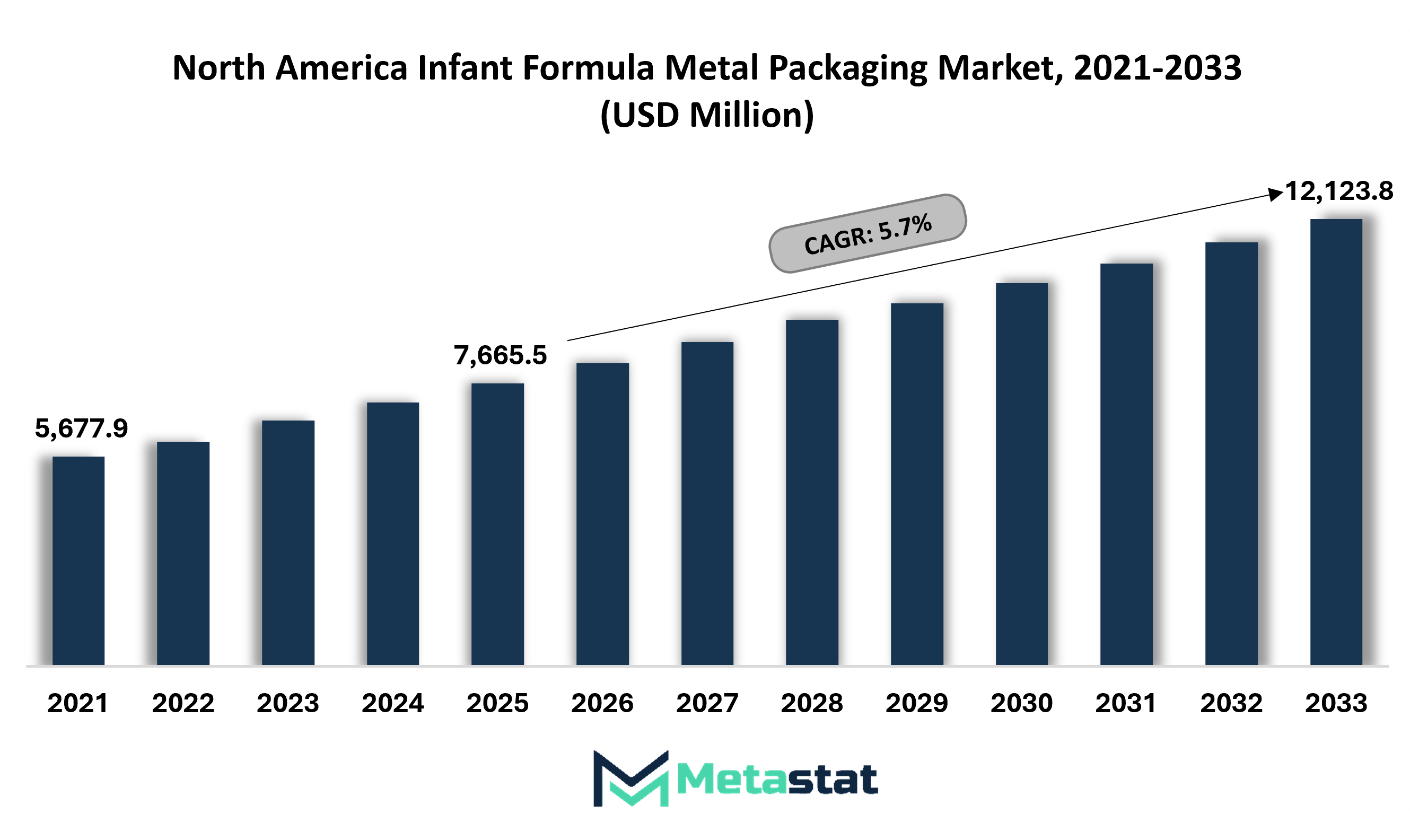
Rising birth-related nutrition spending across North America is increasing sales of packaged infant formula products.
Higher family spending on infant nutrition across North America is supporting stronger purchases of packaged formula products. Premium feeding preferences, urban family lifestyles, rising workforce participation, and growing focus on early nutrition are increasing retail demand. Future demand will strengthen through wider product availability and digital grocery expansion.
Metal cans protect formula from moisture, oxygen, and contamination, making them a preferred packaging choice for premium brands.
Metal cans provide strong barriers against moisture, oxygen, light exposure, and contamination risks, supporting product freshness during storage. Premium infant nutrition brands value safety, shelf stability, and polished presentation. Future packaging demand will rise through advanced coatings, smart seals, and stronger quality assurance standards.
Higher production and raw material costs for metal packaging can reduce profit margins for manufacturers.
Rising costs of aluminum, steel, energy, logistics, and industrial labour are increasing packaging conversion costs. Manufacturers face narrower margins during price-sensitive retail conditions. Future pressure will continue while commodity volatility remains elevated, pushing companies toward cost controls, lean sourcing models, and efficiency-focused production improvements.
Growing preference for flexible and lightweight packaging formats creates competitive pressure on metal containers.
Flexible pouches and lightweight packs appeal to brands through lower freight costs, easier handling, and reduced storage requirements. Convenience-focused consumers often compare portability benefits against rigid can formats. Future competition will intensify when recyclable films improve performance and branding options gain stronger shelf visibility.
Expansion of organic and specialty infant formula brands creates fresh demand for premium printed metal cans.
Organic, lactose-free, goat milk, hypoallergenic, and fortified infant formula categories are increasing shelf presence across North America. Premium printed metal cans support brand value through attractive graphics and secure storage. Future opportunities will expand through customized finishes, limited editions, and sustainable decorative inks.
The North America Infant Formula Metal Packaging Market is classified based on Type and Application.
Aluminum Cans segment is valued at USD 5,302.4 million in 2026 and is projected to reach USD 7,726.9 million by 2033, at a CAGR of 5.5% during the forecast period.
Aluminum cans provide strong barrier protection against moisture, oxygen, and light, helping infant nutrition products maintain quality for longer durations. Lightweight structure improves shipping efficiency and lowers handling costs across supply chains. Future demand will rise through recyclable formats, smart labeling integration, and premium designs suited for modern retail shelves.
Steel Cans segment is valued at USD 2,905.5 million in 2026 and is projected to reach USD 4,396.9 million by 2033, at a CAGR of 6.1% during the forecast period.
Steel cans offer high durability, strong stacking strength, and reliable protection during storage and transport. Resistance to physical damage supports bulk movement across warehouses and retail channels. Future growth will come from advanced coatings, lower material usage, and wider adoption in large-format nutrition products requiring extended shelf stability.
Infant Formula Powder segment is projected to reach USD 8,318.6 million by 2033, at a CAGR of 5.6% during the forecast period.
Infant Formula Powder remains a leading application owing to long shelf life, convenient storage, and wide consumer acceptance. Metal packaging helps maintain freshness while reducing contamination risks. Future growth will emerge from portion-control packs, resealable lids, and premium nutrition products designed for health-focused families seeking reliable packaging.
Follow-on Formula segment is projected to reach USD 1,699.6 million by 2033, at a CAGR of 5.4% during the forecast period.
Follow-on Formula packaging demand continues through growing focus on toddler nutrition and convenient feeding solutions. Metal containers help maintain nutrient quality through secure sealing and stable storage conditions. Future momentum will strengthen through travel-friendly packs, attractive branding formats, and expanded retail presence across supermarkets and digital channels.
Specialty Infant Nutrition segment is projected to reach USD 1,520.8 million by 2033, at a CAGR of 7.4% during the forecast period.
Specialty Infant Nutrition includes products created for sensitive digestion, allergy support, or medically guided feeding needs. Metal packaging offers reliable protection for high-value formulations requiring careful preservation. Future opportunities will expand through smaller sizes, traceability features, and premium packaging aligned with specialized healthcare recommendations.
Others (Ready-to-Feed Formula, etc.) segment is projected to reach USD 584.8 million by 2033, at a CAGR of 4.8% during the forecast period.
Other applications, including ready-to-feed formula, create demand for safe and hygienic packaging formats supporting convenience-led lifestyles. Metal packaging provides durability during transport and retail handling. Future potential will increase through single-serve packs, portable feeding solutions, and stronger demand from busy urban families seeking ease of use.
Based on geography, the North America Infant Formula Metal Packaging Market is divided into the United States, Canada, and Mexico.
The United States benefits from robust family spending on infant nutrition and the presence of major formula manufacturers using advanced can packaging systems.
The United States also benefits from strict product safety standards that favor durable, tamper-resistant metal packaging formats.
Canada presents opportunities through growing demand for premium imported formula and rising preference for recyclable packaging materials.
Canada also benefits from growth in organic infant nutrition categories and retail expansion of specialty formula products.
Mexico remains an emerging growth market supported by urbanization, expanding retail channels, and rising middle-income demand for packaged infant nutrition.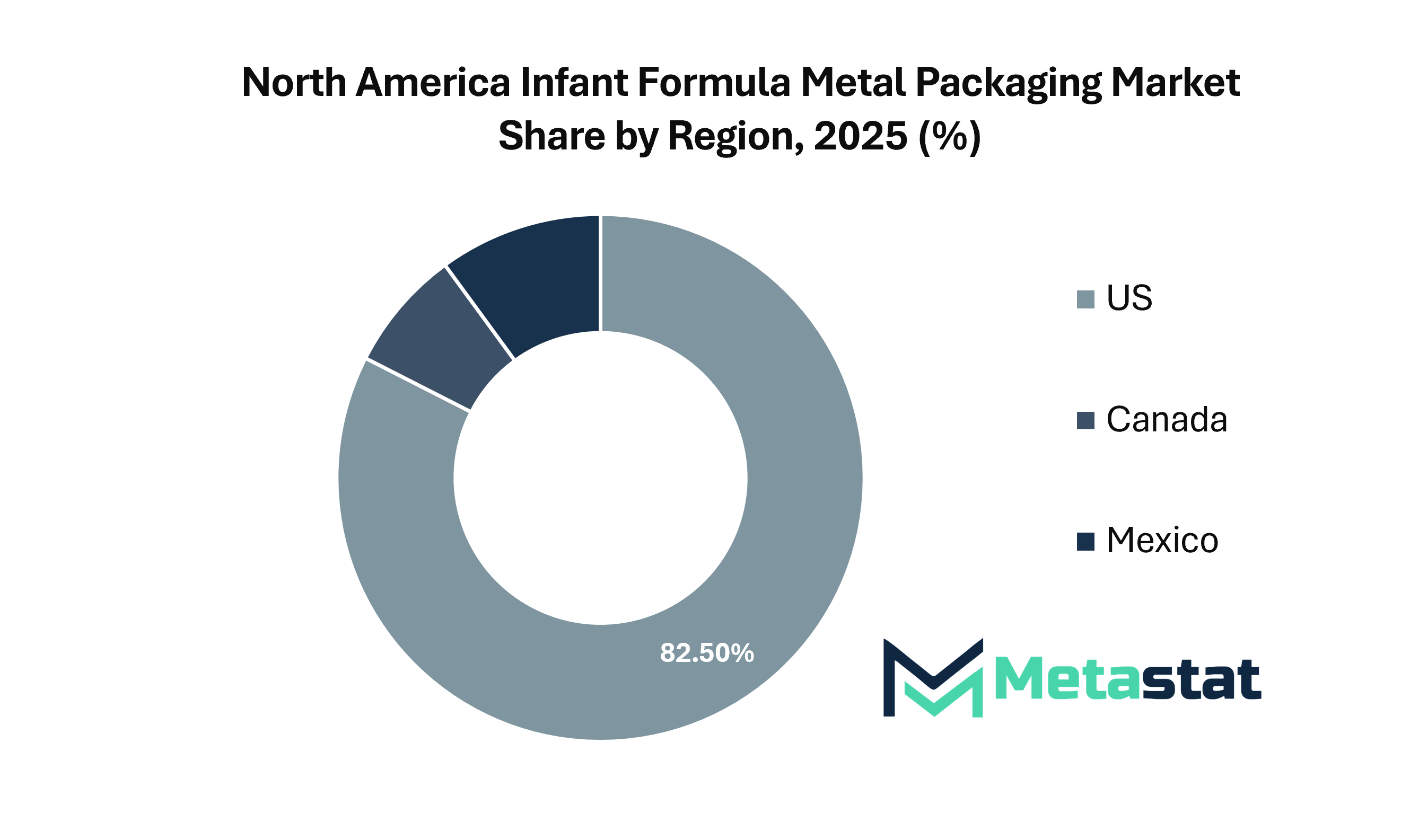
The North America Infant Formula Metal Packaging Market continues to gain attention owing to the growing need for safe, durable, and reliable packaging for infant nutrition products. Parents place high importance on product quality, hygiene, and freshness, making metal packaging a trusted option for manufacturers. Metal containers help protect infant formula from moisture, air, and light, all of which will affect product quality over time. Strong sealing properties also help extend shelf life, making storage and transportation more secure. Market demand from working households, growing awareness about infant health, and preference for reliable packaged nutrition products will support steady progress across the region.
Manufacturers in the industry are focusing on improved packaging designs that enhance convenience for everyday use. Easy-open lids, resealable closures, and lightweight cans are becoming more common as they help parents handle products with less effort. Companies are also investing in attractive labeling and clear product information to build consumer confidence. Sustainability has emerged as another important factor, with many manufacturers seeking recyclable packaging solutions that meet environmental expectations. Metal remains a preferred material as it can be recycled repeatedly while maintaining strength and quality. These factors will encourage further development and new opportunities within the market.
Competition remains active, with several well-known organizations playing a strong role in supply and innovation. Trivium Packaging is recognized for its packaging expertise and focus on sustainable metal solutions. Envases Group has built a strong presence through a wide range of packaging products designed for food and nutrition sectors. Crown Holdings, Inc. continues to strengthen its role through advanced manufacturing capabilities and broad industry reach. Independent Can Company is known for custom metal packaging solutions and reliable production standards. These companies will continue investing in technology, product safety, and efficiency to meet changing consumer needs.
The future outlook remains positive as manufacturers continue to value secure packaging that protects sensitive infant nutrition products. Growth in e-commerce sales will create additional demand for packaging that can handle shipping without damage. Rising standards associated with food safety and quality control will also push companies toward stronger packaging formats. Innovation in printing, sealing, and material efficiency will likely shape the next phase of development. With trusted industry participants and steady consumer demand, the North America Infant Formula Metal Packaging Market will remain a vital segment within the wider packaging industry for years ahead.
Market size is forecast to rise from USD 7,665.5 million in 2025 to over USD 12,123.8 million by 2033.
The North America Infant Formula Metal Packaging Market is expected to benefit from premium nutrition demand, higher focus on food safety, and sustainable packaging targets. Future demand is likely to favor lightweight cans, refill-ready formats, advanced closures, digitally printed containers, and low-carbon recycled metal supply chains.
This research report categorizes the North America Infant Formula Metal Packaging market based on key segments and regions, forecasts revenue growth, and analyses trends in each submarket. The report analyses the key growth drivers, opportunities, and challenges influencing the North America Infant Formula Metal Packaging market. Recent market developments and competitive strategies such as expansion, product launch, partnership, merger, and acquisition have been included to draw the competitive landscape in the market.
The report strategically identifies and profiles the key market players and analyses their core competencies in each sub-segment of the North America Infant Formula Metal Packaging market.
|
Report Attributes |
Details |
|
Study Period |
2021-2033 |
|
Base Year |
2025 |
|
Estimated Year |
2026 |
|
Forecast Period |
2026-2033 |
|
Historical Period |
2021-2025 |
|
Growth Rate |
CAGR 5.7% from 2026 to 2033 |
|
Revenue Unit |
USD million |
|
Sales Volume Unit |
Million Units |
|
Segmentation |
By Type, Application, and Region |
|
By Region |
North America (By Type, Application, and Country)
|
Find answers to common questions about this report
Top players operating in the North America Infant Formula Metal Packaging industry includes Trivium Packaging, Envases Group, Crown Holdings, Inc., and Independent Can Company.
North America Infant Formula Metal Packaging market is estimated to reach USD 12,123.8 million by 2033.
Higher production and raw material costs for metal packaging can reduce profit margins for manufacturers will hamper the market growth within the forecast period.
The Aluminum Cans is the leading type segment in the North America market.
The United States dominates the North America market.
Rising birth-related nutrition spending across North America is increasing sales of packaged infant formula products and metal cans protect formula from moisture, oxygen, and contamination, making them a preferred packaging choice for premium brands are key driving factors, boosting the market.
The Metastat Insights analysis shows that the North America Infant Formula Metal Packaging market size is estimated to be USD 9,725.8 million by 2033.
The North America Infant Formula Metal Packaging market is expected to grow at a CAGR of 5.7% over the forecast period (2026-2033).
The Metastat Insights study shows that the North America Infant Formula Metal Packaging market size was USD 7,665.5 million in 2025.
The analysts below cover Packaging research at Metastat Insights.
LEAD ANALYST
Utkarsh Khirodkar is a Lead Market Research Analyst at MetaStat Insight, specializing in market intelligence, technology sector assessments, and competitive strategy.

SENIOR RESEARCH ANALYST
Biotechnology · Food and Beverages · Medical Devices · Packaging
Snehal Pasalkar is a Research Analyst at MetaStat Insight, operating at the intersection of life sciences research, competitive strategy, and market intelligence.

INDUSTRY CONSULTANT - CHEMICALS & ADVANCED MATERIALS
Chemicals and Materials · Machinery & Equipment · Packaging
Amit Gadhekar Consultant for Chemicals and Materials at MetaStat Insight, directing sector-specific intelligence, research, and strategic consulting across global chemical and processing markets.
Enterprise zero-trust network rollouts are often slowed down by multi-cloud transit latency and proprietary hardware retirement schedules. This study provided realistic total cost of ownership models comparing cloud-delivered security edge solutions against traditional hardware refreshes. The analysis of contract renewal lengths and software maintenance fees gave us clear visibility into enterprise replacement cycles over the next three to five years.
Scaling antibody-drug conjugate manufacturing hinges on contract manufacturing availability for high-potency active ingredients. The MetaStat Insight analysis looked closely at global cleanroom slot constraints, bioconjugation batch failure rates, and supply chain redundancies between the US, Europe, and India. The supplier capability matrix proved genuinely useful for our team when mapping secondary source options across our clinical pipeline.
Floating offshore wind feasibility relies heavily on specialized installation vessel availability and port crane limits, which most broad renewable energy forecasts ignore. The report delivered a thorough analysis of dry dock capacity, mooring chain supply constraints, and raw material pricing trends for deepwater anchor installations. It served as a solid independent sanity check for our offshore project capital expenditure assumptions.
Explore related market intelligence reports worth reading alongside this one.