
LEAD ANALYST
Utkarsh Khirodkar is a Lead Market Research Analyst at MetaStat Insight, specializing in market intelligence, technology sector assessments, and competitive strategy.

Global RTD Packaging Systems Market Size, Share, By Packaging Format (RTD Cans, Plastic Bottles, Glass Bottles, Liquid Cartons, and Others), By Packaging Material (Glass, Plastic, Paper, Paperboard, Metal, and Others), By Packaging Technology (Hot Fill, Cold Fill, Aseptic Fill, Carbonated Filling, and Others), By Application (Bottled Water, RTD Tea, RTD Coffee, Juices, Fruit Drinks, Functional Drinks, Energy Drinks, Alcoholic RTD Beverages, and Others), Industry Analysis, Growth, Trends, and Forecast, 2026-2033
Report ID
MSI-4730
Published
May, 2026
Pages
314 Pages
Format
Report Details
Choose Your License
RTD Packaging Systems Market
Global RTD Packaging Systems market size is valued at USD 134.3 billion in 2025 and projected to grow at a CAGR of 6.4% during the forecast period, reaching USD 220.4 billion by 2033.
North America holds 29.6% in 2025 with US leading the market share in 2026.
RTD Cans segment account for a market share of 34.8% in 2025.
Key trends driving growth: Rising Consumption of On-the-Go Single-Serve Beverages, along with adoption of Aseptic, Shelf-Stable, and Multi-Format Packaging Platforms.
Opportunities include recyclable, Lightweight, and Mono-Material Packaging Innovation.
Key insight: The Global RTD Packaging Systems market is gaining momentum owing to beverage innovation, convenience-led consumption, sustainability targets, and rapid automation across packaging operations.
The Global RTD Packaging Systems market within the packaging and beverage supply chain is expanding beyond conventional container manufacturing. Packaging systems are evolving into integrated performance solutions that combine material science, filling precision, branding impact, logistics efficiency, and consumer usability. Manufacturers increasingly seek packaging lines that support faster changeovers, reduced waste, and broad compatibility across multiple beverage formats.
Over the coming years, product architecture will shift toward flexible and data-enabled systems where packaging assets are optimized for speed, traceability, and sustainability. The Global RTD Packaging Systems market will support manufacturers seeking scalable operations, stronger shelf presence, and lower lifecycle costs while adapting to changing consumer preferences.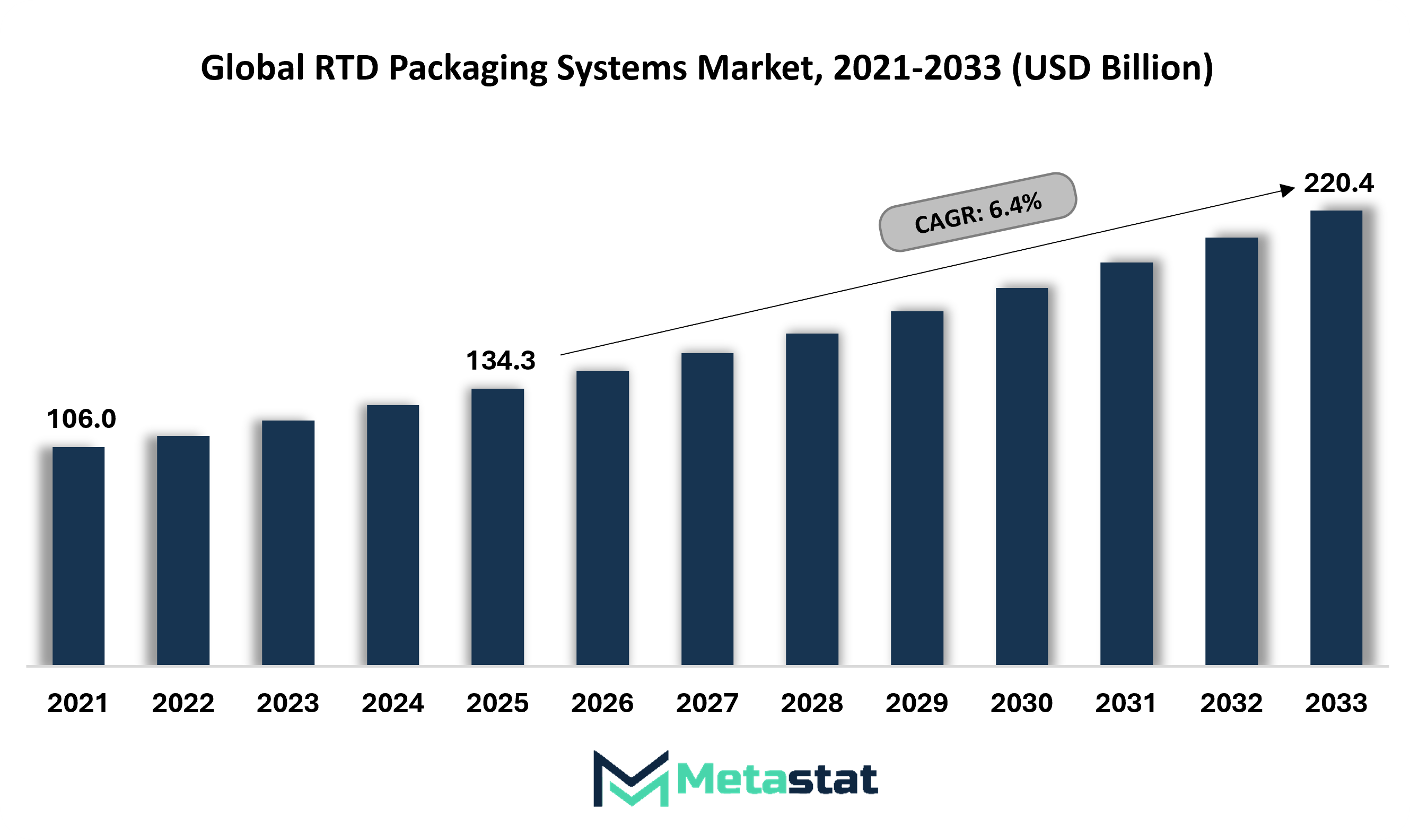
Rising Consumption of On-the-Go Single-Serve Beverages.
Urban work schedules, transit-led lifestyles, travel consumption, and convenience retail expansion are increasing demand for portable beverage formats. Compact cans, slim bottles, resealable packs, and easy-to-carry cartons support rapid consumption occasions. The Global RTD Packaging Systems Market gains momentum through rising preference for portion control, freshness retention, and spill-resistant packaging solutions.
Adoption of Aseptic, Shelf-Stable, and Multi-Format Packaging Platforms
Food safety priorities and wider distribution networks are encouraging aseptic filling lines, shelf-stable packs, and flexible format systems. Manufacturers are seeking longer shelf life, reduced cold-chain dependence, and broader channel reach. Advanced packaging systems support cartons, pouches, cans, and bottles through faster changeovers and stronger production efficiency.
High Capital Intensity and Line Integration Complexity
Automated filling equipment, sterilization modules, robotics, inspection systems, and conveyor synchronization require high capital investment. Small producers often face delayed expansion plans owing to investment pressure. Technical alignment across legacy machinery and modern digital controls can create commissioning delays, maintenance burdens, and slower return on invested capital.
Volatility in Aluminum, Resin, Glass, and Paperboard Input Mix
Frequent movement in raw material pricing impacts packaging budgets and contract planning. Aluminum, PET resin, glass, and paperboard price swings can narrow margins across beverage operations. Supply disruptions, freight cost changes, and energy-related production costs will create volatile procurement cycles and uncertain pricing strategies.
Recyclable, Lightweight, and Mono-Material Packaging Innovation
Sustainability targets are creating strong potential for lighter containers, mono-material packs, refill-ready formats, and higher recycled-content structures. Brand owners are seeking lower shipping weight and simpler waste-sorting systems. Material innovation can improve shelf appeal, reduce environmental burden, and strengthen premium positioning across global beverage categories.
The Global RTD Packaging Systems market is classified based on Packaging Format, Packaging Material, Packaging Technology, and Application.
RTD Cans segment is valued at USD 49.6 billion in 2026 and is projected to reach USD 77.8 billion by 2033, at a CAGR of 6.6% during the forecast period.
RTD cans indicate strong future demand owing to their lightweight structure, fast chilling performance, and high recycling value. Urban retail channels favor stacking efficiency and transport savings. Premium print quality supports stronger shelf impact. Smart Can codes and freshness indicators will strengthen consumer trust across modern beverage distribution networks.
PET/Plastic Bottles segment is valued at USD 43.8 billion in 2026 and is projected to reach USD 66.4 billion by 2033, at a CAGR of 6.1% during the forecast period.
PET and plastic bottles maintain strong relevance through low-cost production, break resistance, and design flexibility. Lightweight packs reduce freight burden across long routes. Future development will include recycled resin content, improved barrier layers, and refill models supporting sustainability goals across mass beverage operations.
Glass Bottles segment is valued at USD 17.7 billion in 2026 and is projected to reach USD 22.9 billion by 2033, at a CAGR of 3.7% during the forecast period.
Glass bottles retain premium appeal through clarity, purity perception, and strong flavor protection. Luxury beverage lines often choose glass for higher visual value. Returnable systems and lightweight engineering will improve future economics. Hospitality channels will maintain steady demand for stylish ready-to-drink beverage presentation.
Liquid Cartons segment is valued at USD 22.4 billion in 2026 and is projected to reach USD 38.5 billion by 2033, at a CAGR of 8% during the forecast period.
Liquid cartons offer efficient storage, space-efficient stacking, and strong suitability for shelf-stable drinks. Paper-based construction supports eco-focused branding. Future growth will come from plant-based layers, resealable caps, and digital traceability tools serving health beverage and family consumption segments.
Others segment is valued at USD 9.2 billion in 2026 and is projected to reach USD 14.9 billion by 2033, at a CAGR of 7.1% during the forecast period.
Other packaging formats include pouches, kegs, multi-serve dispensers, and hybrid packs. Innovation activity will rise where mobility, event service, or portion control creates demand. Material reduction and convenience-focused engineering will open new business paths across niche beverage categories and travel retail spaces.
Glass segment is projected to reach USD 32.4 billion by 2033, at a CAGR of 3.8% during the forecast period.
Glass remains critical owing to its inert contact surface, premium identity, and high recyclability. Beverage makers seeking an authentic brand image often prefer glass packaging. Future furnace efficiency, lighter bottle walls, and deposit-return systems will improve cost stability while supporting circular material goals in beverage supply chains.
Plastic segment is projected to reach USD 80.1 billion by 2033, at a CAGR of 5.9% during the forecast period.
Plastic materials maintain large-scale usage through molding flexibility, low logistics weight, and strong affordability. Future demand will shift toward recycled content, mono-material designs, and stronger collection systems. Enhanced barrier technology will support longer freshness periods for sensitive ready-to-drink beverage products.
Paper & Paperboard segment is projected to reach USD 33.5 billion by 2033, at a CAGR of 9.2% during the forecast period.
Paper and paperboard materials attract interest through renewable sourcing potential and print-friendly surfaces. Carton-based beverage packs often use these materials for shelf-stable products. Future coated-fiber advances will improve moisture resistance while supporting lower-carbon packaging targets across consumer goods sectors.
Metal segment is projected to reach USD 60.7 billion by 2033, at a CAGR of 7.2% during the forecast period.
Metal packaging supports strong barrier performance, rapid cooling response, and wide recycling acceptance. Aluminum and steel formats suit carbonated and energy drinks. Future lightweight alloys, advanced shaping techniques, and smart printed surfaces will widen premium opportunities across high-volume retail beverage channels.
Others segment is projected to reach USD 13.7 billion by 2033, at a CAGR of 6.6% during the forecast period.
Other materials include biopolymers, multilayer blends, compostable films, and specialty laminates. Emerging beverage manufacturers will explore such alternatives for differentiated positioning. Commercial success will depend on cost control, filling compatibility, waste recovery systems, and regulatory acceptance across multiple national markets.
Hot Fill segment is projected to reach USD 40.1 billion by 2033.
Hot-fill technology supports microbial control for juices, teas, and acidic beverages through elevated-temperature processing. Shelf-stability benefits reduce cold-chain dependence. Future energy-recovery systems, faster cooling stages, and lightweight container tolerance will improve profitability across expanding beverage production facilities.
Cold Fill segment is projected to reach USD 49.7 billion by 2033.
Cold-fill technology serves products requiring fresh taste retention and gentle handling. Chilled distribution often supports such systems. Future automation, hygiene monitoring sensors, and rapid line changeovers will enhance efficiency for premium beverages, dairy blends, and short-shelf-life nutritional beverages.
Aseptic Fill segment is projected to reach USD 67.8 billion by 2033.
Aseptic filling technology enables long shelf life without heavy preservatives through sterile processing and sterile packaging. Demand will rise for health-focused beverages. Robotic sanitation controls, digital validation data, and compact modular lines will shape future investment across global manufacturing hubs.
Carbonated Filling segment is projected to reach USD 47.3 billion by 2033.
Carbonated filling remains important for sparkling waters, mixers, and energy drinks. Pressure control and seam integrity determine pack quality. Future precision valves, lower gas-loss systems, and high-throughput equipment will support rising consumption across convenience retail and foodservice beverage channels.
Others segment is projected to reach USD 15.5 billion by 2033.
Other technologies include nitrogen dosing, vacuum filling, ultra-clean filling, and hybrid systems. Specialized beverage formulas will require tailored techniques. Future demand will increase where texture, foam control, or oxygen sensitivity influences final product quality and commercial shelf performance.
Bottled Water segment is projected to grow at a CAGR of 5% during the forecast period.
Bottled water drives significant packaging demand through daily consumption frequency and wide retail reach. Lightweight formats, tamper-evident closures, and recycling readiness remain priorities. Future premium mineral water lines and smart hydration branding will create new packaging investment opportunities across urban and travel markets.
RTD Tea & Coffee segment is projected to grow at a CAGR of 7.1% during the forecast period.
RTD tea and coffee categories benefit from busy lifestyle demand and café-inspired flavor trends. Packaging needs to maintain aroma and visual appeal. Future premium cold brew, natural blends, and functional caffeine variants will expand machinery and material requirements across retail shelves.
Juices & Fruit Drinks segment is projected to grow at a CAGR of 4.7% during the forecast period.
Juices and fruit drinks require packaging with strong light and oxygen protection for taste stability. Family packs and single-serve alternatives both remain significant. Future reduced-sugar launches and fruit blend innovation will stimulate demand for diverse formats across consumer sales channels.
Functional & Energy Drinks segment is projected to grow at a CAGR of 8.3% during the forecast period.
Functional and energy drinks continue strong momentum through wellness interest, performance goals, and active lifestyles. Bold graphics and portable packs support category identity. Future protein, vitamin, and nootropic variants will increase demand for advanced filling precision and barrier packaging systems.
Alcoholic RTD Beverages segment is projected to grow at a CAGR of 8.7% during the forecast period.
Alcoholic RTD beverages gain popularity through convenience, portion control, and flavor variety. Cans often support portability and event-based consumption. Future premium cocktail lines, low-sugar options, and stylish limited editions will improve packaging differentiation needs across nightlife and retail channels.
Others segment is projected to grow at a CAGR of 5.5% during the forecast period.
Other applications include dairy beverages, plant drinks, soups, mixers, and specialty nutrition liquids. Diverse formulas require flexible packaging solutions. Future category expansion will encourage modular lines, smaller production batches, and rapid customization capabilities within the Global RTD Packaging Systems Market.
Based on geography, the Global RTD Packaging Systems market is divided into North America, Europe, Asia-Pacific, South America, Middle East, and Africa.
North America benefits from advanced beverage manufacturing capacity and rapid adoption of automated packaging lines.
Europe holds a significant position in the RTD Packaging Systems Market owing to its advanced beverage processing base, strong packaging machinery manufacturing ecosystem, strict sustainability regulations, and high adoption of automated filling and packaging lines.
Asia-Pacific presents significant opportunities for the RTD Packaging Systems market through rising urban populations, growing disposable incomes, and expanding beverage consumption.
Within Asia-Pacific, the RTD Packaging Systems landscape benefits from strong contract manufacturing growth and increasing adoption of cost-efficient lightweight packaging.
Across the Middle East, Africa, and South America, the RTD Packaging Systems market is progressing through retail modernization, improving cold-chain networks, and rising consumer preference for convenient packaged beverages.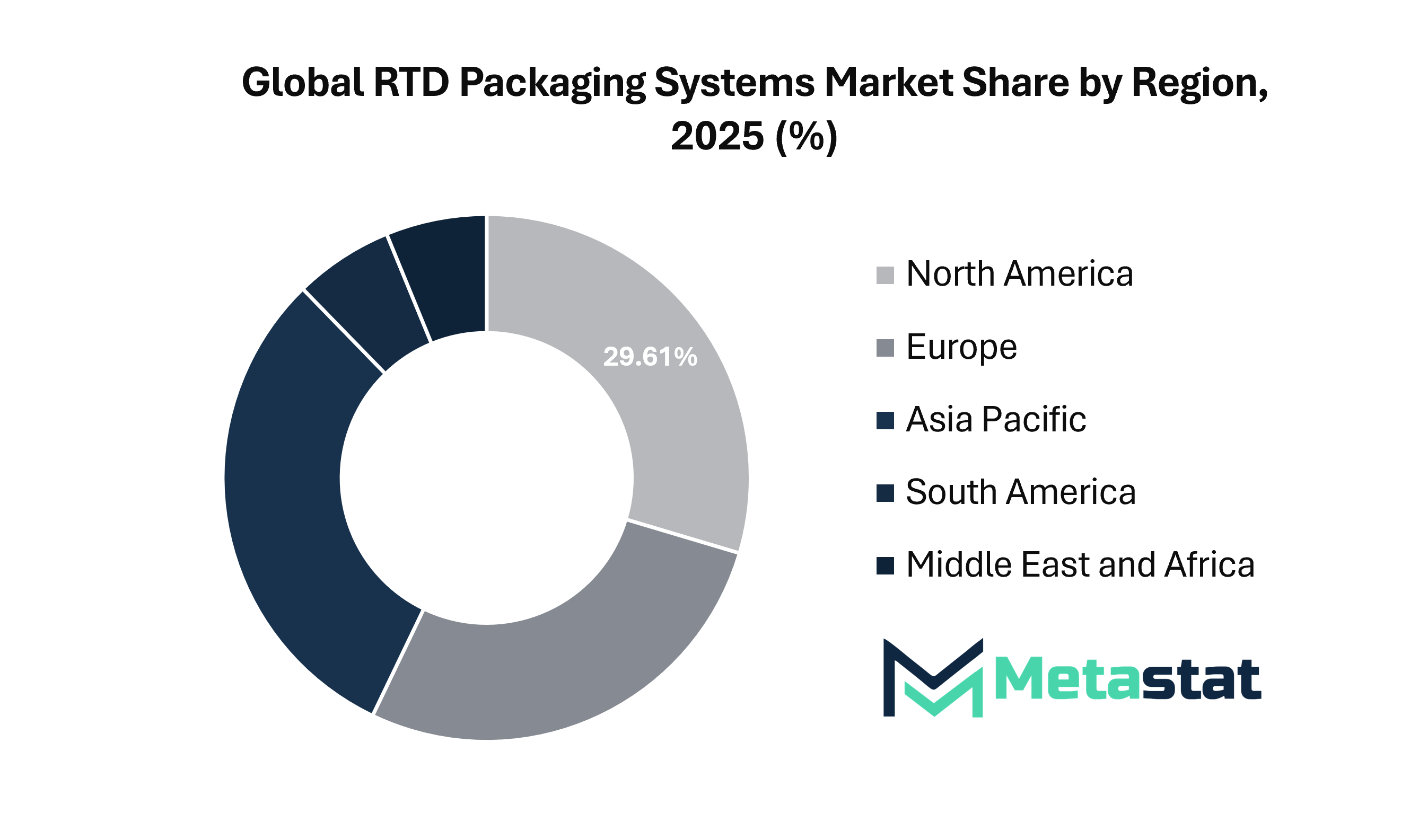
The Global RTD Packaging Systems Market supports producers seeking fast, hygienic, and reliable packaging lines for ready-to-drink products sold across global retail and foodservice channels. Demand rises as manufacturers prioritize longer shelf life, stronger sealing performance, attractive shelf presence, and reduced leakage risks. Buyers also prefer machines that reduce water, energy, and labor usage during daily production runs. Growth is linked to urban lifestyles, convenience purchasing, and expanding beverage portfolios. Companies entering new regions often upgrade plants first, as strong packaging control reduces waste, leakage, returns, and costly downtime across high-volume operations.
Among leading providers, Krones AG, Sidel Group, KHS GmbH, Tetra Pak International S.A., SIG Group AG, and GEA Group AG hold strong positions through broad portfolios. Serac Group, ProMach Inc., Ferrum Packaging AG, CFT S.p.A., SIPA S.p.A., and SMI S.p.A. / SMIGROUP also serve can, bottle, and carton packaging projects. Their value comes from engineering support, spare-parts access, operator training, and the ability to scale lines as order volumes rise. Strong service teams help customers maintain smooth output during seasonal peaks, product changeovers, and capacity expansion programs.
Smaller specialists add flexibility where custom requirements matter. IC Filling Systems, Wild Goose Filling, CODI Manufacturing, Cask Global Canning Solutions, ABE Equipment, and Palmer Beverage Systems often attract craft manufacturers seeking compact footprints. BW Filling & Closing / Pneumatic Scale Angelus, Federal Mfg. LLC, E-PAK Machinery Inc., and XpressFill Systems LLC supply varied filling speeds for startups and mid-sized operators. Many customers prefer providers that respond quickly and train staff effectively after installation. Clear manuals and remote checks help reduce delays during busy product launches across regional beverage plants.
Future competition will center on automation, data tracking, hygienic design, and simpler changeovers across flavors and pack sizes. JBT Marel Corporation, CIMEC S.r.l., Inline Filling Systems LLC, Accutek Packaging Equipment Companies Inc., APACKS, Ska Fabricating Inc., Filmatic Packaging & Filling Machines, and KULP Makine San. Tic. Ltd. Şti. can gain through practical upgrades at competitive prices. Firms that improve service speed and system uptime will build stronger trust with beverage makers over time, particularly among customers seeking reliable output during maintenance shutdowns, seasonal peaks, and expansion programs.
Market size is forecast to rise from USD 134.3 billion in 2025 to over USD 220.4 billion by 2033.
The Global RTD Packaging Systems market is expected to integrate AI-enabled quality inspection, digital twins for line optimization, and closed-loop recycling models. Producers will prioritize packaging systems that reduce waste, improve uptime, strengthen traceability, and enhance consumer convenience.
This research report categorizes the RTD Packaging Systems market based on key segments and regions, forecasts revenue growth, and analyses trends in each submarket. The report analyses the key growth drivers, opportunities, and challenges influencing the RTD Packaging Systems market. Recent market developments and competitive strategies such as expansion, product launch, partnership, merger, and acquisition have been included to draw the competitive landscape in the market.
The report strategically identifies and profiles the key market players and analyses their core competencies in each sub-segment of the RTD Packaging Systems market.
|
Report Attributes |
Details |
|
Study Period |
2021-2033 |
|
Base Year |
2025 |
|
Estimated Year |
2026 |
|
Forecast Period |
2026-2033 |
|
Historical Period |
2021-2025 |
|
Growth Rate |
CAGR 6.4% from 2026 to 2033 |
|
Revenue Unit |
USD billion |
|
Segmentation |
By Packaging Format, Packaging Material, Packaging Technology, Application, and Region |
|
By Region |
North America (By Packaging Format, Packaging Material, Packaging Technology, Application, and Country)
|
|
Europe (By Packaging Format, Packaging Material, Packaging Technology, Application, and Country)
|
|
|
Asia Pacific (By Packaging Format, Packaging Material, Packaging Technology, Application, and Country)
|
|
|
South America (By Packaging Format, Packaging Material, Packaging Technology, Application, and Country)
|
|
|
Middle East and Africa (By Packaging Format, Packaging Material, Packaging Technology, Application, and Country)
|
Find answers to common questions about this report
Top players operating in the RTD Packaging Systems industry include Krones AG, Sidel Group, KHS GmbH, Tetra Pak International S.A., and SIG Group AG.
Global RTD Packaging Systems market is estimated to reach USD 220.4 billion by 2033.
High Capital Intensity and Line Integration Complexity will hamper the market growth within the forecast period.
North America region dominates the market.
Rising Consumption of On-the-Go Single-Serve Beverages and Adoption of Aseptic, Shelf-Stable, and Multi-Format Packaging Platforms are key driving factors, boosting the market.
The Metastat Insights analysis shows that the North America RTD Packaging Systems market size is estimated to be USD 60.8 billion by 2033.
The Metastat Insights study shows that the Global RTD Packaging Systems market size was USD 134.3 billion in 2025.
The Global RTD Packaging Systems market is expected to grow at a CAGR of 6.4% over the forecast period (2026-2033).
The analysts below cover Packaging research at Metastat Insights.
LEAD ANALYST
Utkarsh Khirodkar is a Lead Market Research Analyst at MetaStat Insight, specializing in market intelligence, technology sector assessments, and competitive strategy.

SENIOR RESEARCH ANALYST
Biotechnology · Food and Beverages · Medical Devices · Packaging
Snehal Pasalkar is a Research Analyst at MetaStat Insight, operating at the intersection of life sciences research, competitive strategy, and market intelligence.

INDUSTRY CONSULTANT - CHEMICALS & ADVANCED MATERIALS
Chemicals and Materials · Machinery & Equipment · Packaging
Amit Gadhekar Consultant for Chemicals and Materials at MetaStat Insight, directing sector-specific intelligence, research, and strategic consulting across global chemical and processing markets.
When planning edge sensor rollouts across refinery environments, generic IoT reports typically miss the harsh-environment certification bottlenecks. MetaStat Insight gave an objective evaluation of ATEX and Class 1 Division 2 hardware availability, along with realistic five-year maintenance cycle cost projections. The comparison of wireless mesh versus private cellular backhaul helped our team pressure-test network reliability models for remote processing facilities.
In the biological seed treatment space, registration timelines vary drastically between the European Union, Brazil, and North America. The MetaStat Insight research handled these cross-border regulatory barriers with genuine nuance, mapping commercialization pathways alongside historical field adoption rates. The segmentation between microbial strains and biochemical active ingredients was particularly well structured.
Our team was tracking whether regional recycling infrastructure could realistically absorb the growing volume of lithium iron phosphate batteries over the next decade. The report did a solid job separating announced hydrometallurgical plant capacity from active, permitted operational throughput. That distinction made the feedstock availability projections and regional recovery rate models far more credible than standard commercial overviews.
Explore related market intelligence reports worth reading alongside this one.