
LEAD ANALYST
Utkarsh Khirodkar is a Lead Market Research Analyst at MetaStat Insight, specializing in market intelligence, technology sector assessments, and competitive strategy.

Australia Volumetric Modular Buildings Market Size, Share, By Construction Type (Permanent Modular Buildings and Relocatable Modular Buildings), By Building Type (Single Storey, Two Storeys, Three to Five Storeys, and Six Storeys and Above), By End-Use Sector (Housing (Private, Social and Affordable), Education, Resources and Energy, Healthcare and Aged Care, Commercial Offices and Retail, Hospitality and Tourism, Defence and Custodial, Student Accommodation, Community, Sport and Emergency Services), By Region (New South Wales, Victoria, Queensland, Western Australia, South Australia, Tasmania, Northern Territory, and Australian Capital Territory), Industry Analysis, Growth, Trends, and Forecast, 2026-2033
Report ID
MSI-5571
Published
October, 2026
Pages
295 Pages
Format
Historical
Base year
Forecast
Forecast period
Report Details
Market Valuation: Valued at $1,417.2 Million in 2025, projected to reach $2,768.4 Million by 2033 at a 8.7% CAGR.
Dominant Segment: Permanent Modular Buildings lead the market, driven by their widespread adoption across various sectors, particularly housing and education, reflecting a strong preference for efficient and sustainable construction solutions.
Geographic Lead: New South Wales holds the largest market share, supported by significant demand for volumetric modular solutions in urban development and infrastructure projects.
What's Inside: The report provides comprehensive competitive coverage, detailed analyses across construction types and end-use sectors, and forecasts through 2033, ensuring valuable insights for stakeholders.
Growth Opportunities: The housing sector is projected to experience the fastest growth, driven by urbanization and the urgent need for affordable housing solutions, while the healthcare segment also shows significant potential with a CAGR of 10.8%.
Choose Your License
Australia Volumetric Modular Buildings Market
The Australia Volumetric Modular Buildings market was valued at USD 1,417.2 million in 2025 and is projected to reach USD 2,768.4 million by 2033, growing at a CAGR of 8.7% over the forecast period.
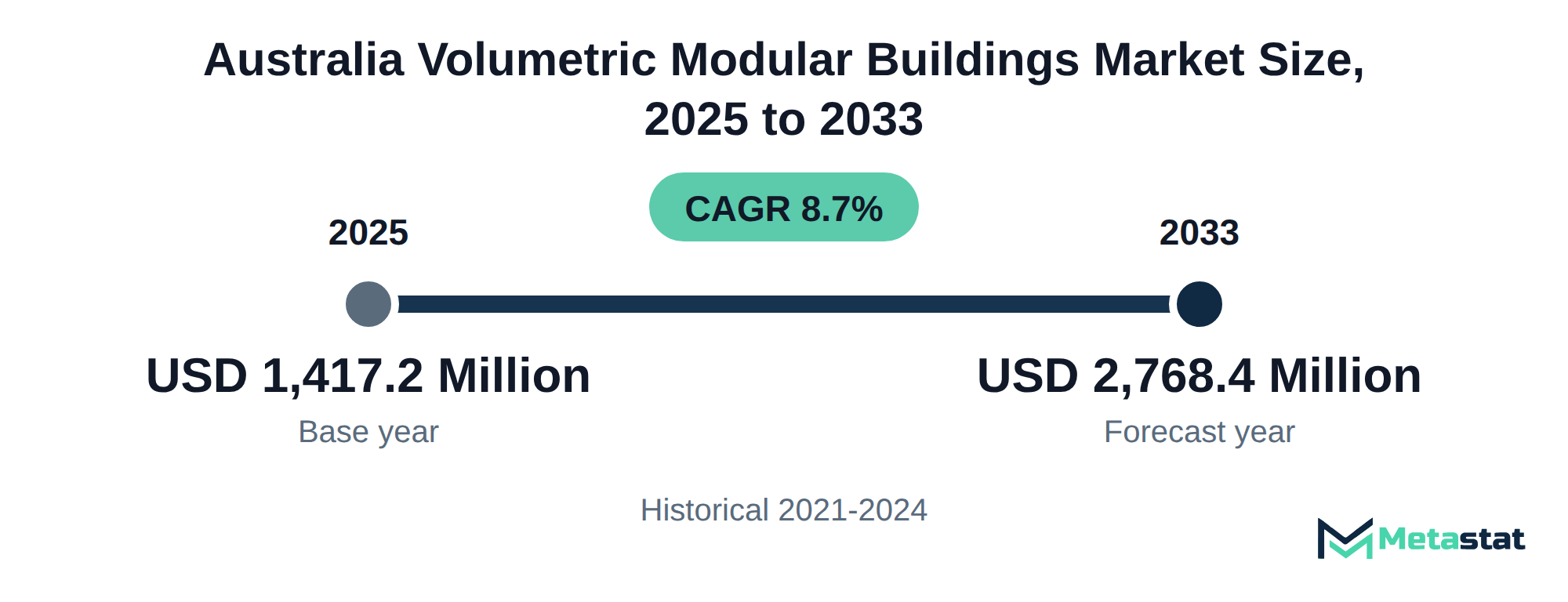
The Australia Volumetric Modular Buildings market encompasses various construction types, building types, and end-use sectors. This innovative approach to construction addresses the growing demand for efficient and sustainable building solutions. Buyers invest in volumetric modular buildings due to reduced construction time, flexibility, and potential for cost savings, particularly in sectors including housing and education.
Growth in the market is driven by increasing urbanization and a rising need for affordable housing solutions. Among the segments, Permanent Modular Buildings hold the highest value, reflecting widespread adoption across different industries. New South Wales stands out as the region with the largest market share, indicating significant demand for volumetric modular solutions in urban development and infrastructure projects.
One primary growth driver stems from heightened focus on sustainability and energy efficiency in construction practices. Governments and private entities prioritize eco-friendly building methods, and adoption of volumetric modular buildings is expected to accelerate. This trend aligns with broader efforts to reduce environmental impact while meeting the housing and commercial needs of a growing population.
The Australia Volumetric Modular Buildings market includes permanent and relocatable structures that cater to various end-use sectors, including housing, education, and healthcare. Buyers invest in these solutions due to their ability to reduce construction time and improve efficiency. The modular approach offers flexibility and adaptability, meeting diverse needs across residential and commercial applications.
Growth in the market is driven by increasing demand for affordable housing solutions, especially in urban areas. Among the segments, permanent modular buildings represent the largest share, reflecting a robust preference for these structures in long-term applications. New South Wales holds the most significant regional share, demonstrating a strong market presence supported by government initiatives and infrastructure investments.
Continued expansion of the market is expected, driven by heightened awareness of sustainability and environmental considerations. Building projects that prioritize energy efficiency and reduced waste appeal to buyers, promoting the adoption of volumetric modular solutions. The focus on sustainable practices aligns with broader trends in the construction industry, enhancing overall market prospects.
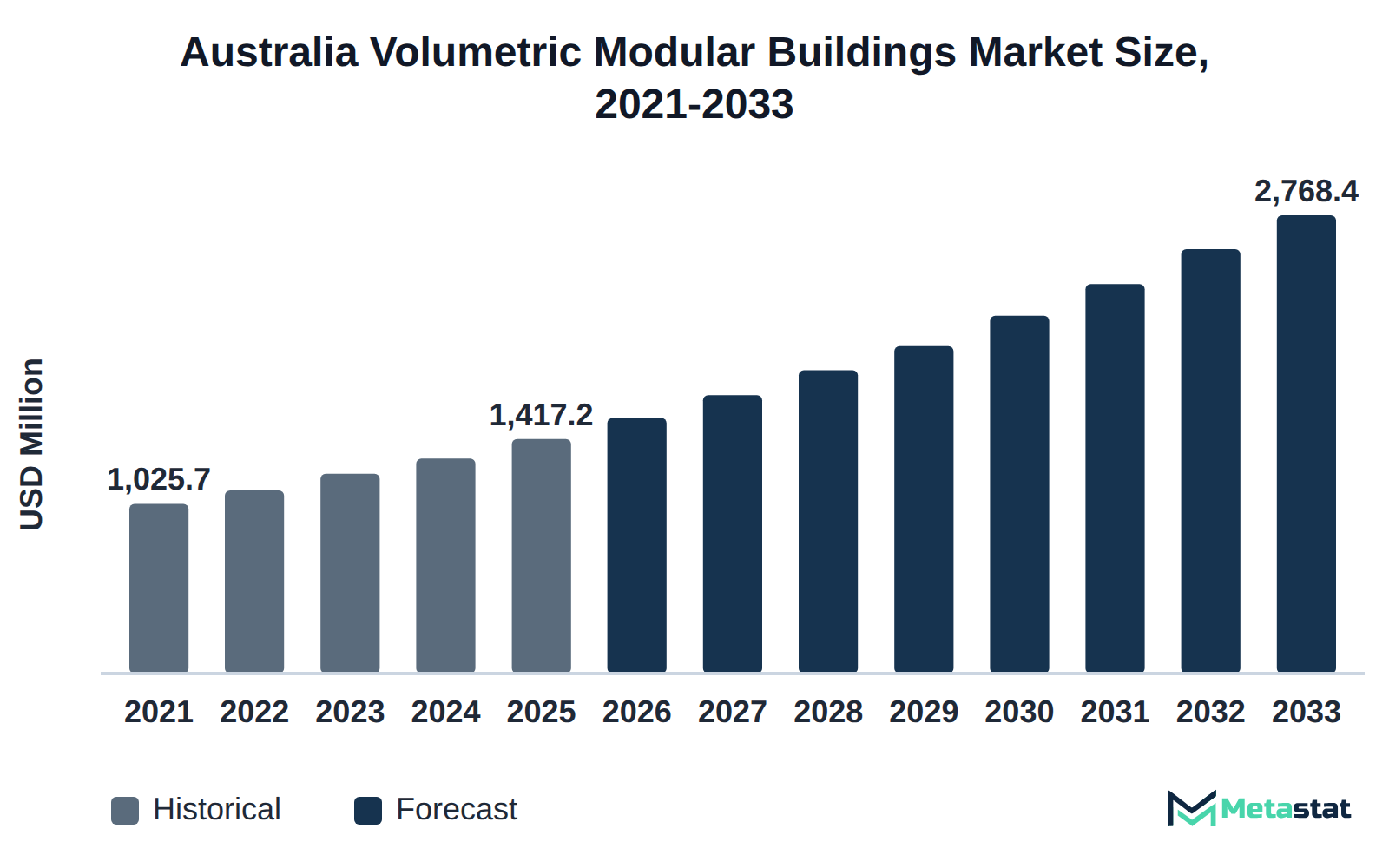
Factory capacity influences the growth of the Australia Volumetric Modular Buildings market, particularly in the context of social housing. The sector is experiencing an increasing demand for permanent modular buildings, which is expected to generate revenues of USD 2,099.2 million by 2033, reflecting a compound annual growth rate (CAGR) of 9.7% from 2026. This growth directly correlates with the rising focus on sustainable and efficient housing solutions.
Repeat procurement strategies help housing stakeholders streamline operations and ensure consistent supply. Procurement processes that emphasize long-term partnerships with manufacturers enhance production capabilities and decrease lead times, enabling quicker delivery of housing units. With the expected revenue growth in social housing, estimated to reach USD 833.8 million by 2033, organizations that effectively implement repeat procurement strategies experience competitive advantages.
The shift towards factory-built housing solutions highlights the need for smart manufacturing techniques and technologies that optimize production efficiency. By investing in innovative machinery and processes, stakeholders in the Australia Volumetric Modular Buildings market increase output while maintaining high-quality standards. Prioritizing factory capacity and repeat procurement meets growing social housing demand and positions companies favorably in this environment.
Volumetric healthcare facilities address the needs of regional and remote communities across Australia. The adoption of these modular structures in the healthcare sector is driven by their flexibility and efficiency, particularly in areas where traditional construction methods face challenges. Pricing models for volumetric healthcare facilities vary, with many buyers favoring fixed-price contracts that provide transparency and predictability. This pricing strategy aligns with the increasing demand for budget certainty in public healthcare projects.
In the Australia Volumetric Modular Buildings market, significant growth is expected in the healthcare sector, driven by an anticipated compound annual growth rate (CAGR) of 10.8% in healthcare and aged care facilities. This expansion reflects a strong focus on enhancing healthcare access in underserved areas. The financial implications of adopting volumetric models result from reduced construction times and lower labor costs, further appealing to buyers in the public sector.
Contract models frequently include provisions for maintenance and operational support, ensuring that facilities remain functional over time. This approach to service contracts allows healthcare providers to focus on delivering care rather than managing construction-related issues. Consequently, the integration of volumetric healthcare facilities improves service delivery and enhances operational efficiency for providers, contributing to better health outcomes in remote and regional communities.
Transport distances and installation costs represent crucial factors for buyers operating in the Australia Volumetric Modular Buildings market. These variables significantly influence project timelines and overall expenses, particularly for sectors including housing. The Housing (Private, Social and Affordable) segment is projected to experience growth from USD 404.5 million in 2026 to USD 833.8 million by 2033, indicating strong demand in this area.
Long transport distances raise logistical expenses and extend the schedules for modular building installations. Buyers prioritizing efficiency require clarity on pricing and timelines, integrating transport costs into their overall project budgets. With the expected rise in the housing sector, strategic planning around transport distances and installation becomes essential. Moving completed modules to site also draws on heavy lifting and haulage services. Investment in locally sourced materials and regional assembly facilities mitigates these costs, offering a substantial competitive advantage.
Installation costs vary across different Australian states, influenced by local regulations, infrastructure, and labor availability. Regions with established modular building frameworks tend to exhibit lower installation costs due to streamlined processes. Buyers assess these regional differences to optimize their project planning. Understanding the nuances of installation costs and transport distances is essential for maximizing financial performance in the growing Australia Volumetric Modular Buildings market.
The housing sector stands out as the leading opportunity for accelerating the adoption of volumetric modular buildings in Australia. In 2026, the segment will generate USD 404.5 million, growing to USD 833.8 million by 2033, reflecting a compound annual growth rate (CAGR) of 10.9%. This demand surge is driven by a combination of urbanization, a growing population, and a pressing need for affordable housing solutions. The increasing focus on sustainable building practices further enhances the appeal of volumetric modular solutions, which offer efficient construction timelines and reduced waste.
Education represents another key sector poised for significant growth in volumetric modular buildings. By 2033, spending in this area is expected to reach USD 507.7 million, supported by a CAGR of 7%. Educational institutions experience pressure to expand facilities rapidly, accommodating growing student populations while maintaining budgetary constraints. The modular approach allows schools and universities to procure high-quality buildings quickly while adhering to cost management strategies.
With the anticipated growth in these sectors, the Australia Volumetric Modular Buildings market is positioned for strong expansion. Industry players focusing on these specific segments will likely benefit from increased demand, generating new revenue streams and enhancing competitive advantages in a changing construction environment.
Recent shifts in the housing market highlight a strong demand for volumetric modular buildings, particularly within the affordable and social housing sectors. Buyers, including government agencies and private developers, seek efficient solutions to address housing shortages. Increased awareness of the benefits of volumetric construction, including reduced construction time and lower overall costs, contributes to this trend. Demographic changes and urbanization create a need for rapid housing solutions, which pushes buyers towards volumetric options. This growth significantly impacts the Australia Volumetric Modular Buildings market, facilitating a shift towards more sustainable and efficient housing development approaches.
Changes in consumer preferences emphasize the appeal of modular solutions. Increased focus on sustainability and energy efficiency influences buyer decisions, leading to greater adoption of volumetric modular buildings. By prioritizing environmentally friendly practices, both residential and commercial developers actively contribute to market expansion.
Innovative manufacturing techniques significantly influence the Australia Volumetric Modular Buildings market. Automation, robotics, and advanced materials streamline production processes, leading to lower construction costs and improved efficiency. These developments attract buyers from various sectors, including housing, education, and healthcare, seeking faster and more cost-effective construction solutions. Enhanced precision in fabrication reduces material waste, further lowering expenses for developers. Modular systems offer flexibility in design and rapid assembly, appealing to clients focused on minimizing project timelines. The growing emphasis on sustainability drives the adoption of eco-friendly materials, aligning with the increasing consumer preference for green building practices. Overall, these technological advancements contribute to the market's expansion, increasing competitive dynamics among suppliers and enhancing demand for volumetric modular buildings in Australia.
High costs represent a significant restraint in the Australia Volumetric Modular Buildings market, particularly affecting the housing sector. The substantial initial investment required for volumetric modular construction results in slower adoption rates among buyers, especially for small and medium-sized enterprises. These businesses often face challenges in securing financing and postpone or reduce their orders due to budget constraints. Access to affordable housing finance therefore shapes how readily buyers in the housing sector commit to volumetric projects. The perception of volumetric modular buildings as a premium solution contributes to hesitance among potential buyers, who prefer traditional construction methods viewed as more cost-effective. Reluctance to adopt volumetric solutions impacts overall market growth, delaying the realization of benefits including reduced construction times and enhanced efficiency, leading to smaller orders and extended project timelines.
Suppliers in the Australia Volumetric Modular Buildings market face significant challenges related to rising raw material costs. Fluctuations in material prices, particularly steel and timber, create pressure on profit margins and complicate pricing strategies. Timber frame construction is directly exposed to these timber price movements. This situation forces suppliers to evaluate their supply chain and sourcing practices to maintain profitability while remaining competitive. Increased operational efficiency and strategic partnerships with material providers have emerged as common responses among suppliers. By optimizing procurement processes and improving inventory management, companies effectively mitigate the impact of cost increases. Collaboration with local suppliers allows for more predictable pricing and reliable delivery timelines. The necessity to balance quality and cost remains critical, with companies striving to address customer demands for affordability alongside durability. These strategies strengthen the resilience and adaptability of market players and help them manage these cost challenges.
Relocatable modular buildings represent a significant opportunity within the Australia Volumetric Modular Buildings market, particularly within the education sector. Demand for flexible educational spaces has increased due to changing student populations and the need for quick construction solutions. This segment is projected to reach USD 507.7 million by 2033, highlighting a growing trend towards modular solutions in educational facilities. The ability to quickly deploy these buildings allows educational institutions to adapt to fluctuating enrollment numbers, ensuring that learning environments remain accessible and conducive to learning.
The market for relocatable modular buildings enhances operational efficiency for educational buyers by minimizing traditional construction timelines. Educational institutions benefit from reduced disruptions during construction, allowing students to continue their studies uninterrupted. Growth in this segment aligns with broader trends towards sustainable building practices, appealing to stakeholders focused on environmental impact. This opportunity provides a pathway for suppliers to innovate and expand their offerings within the modular building space.
The Australia Volumetric Modular Buildings market is segmented based on Construction Type, Building Type, End-Use Sector, and Region.
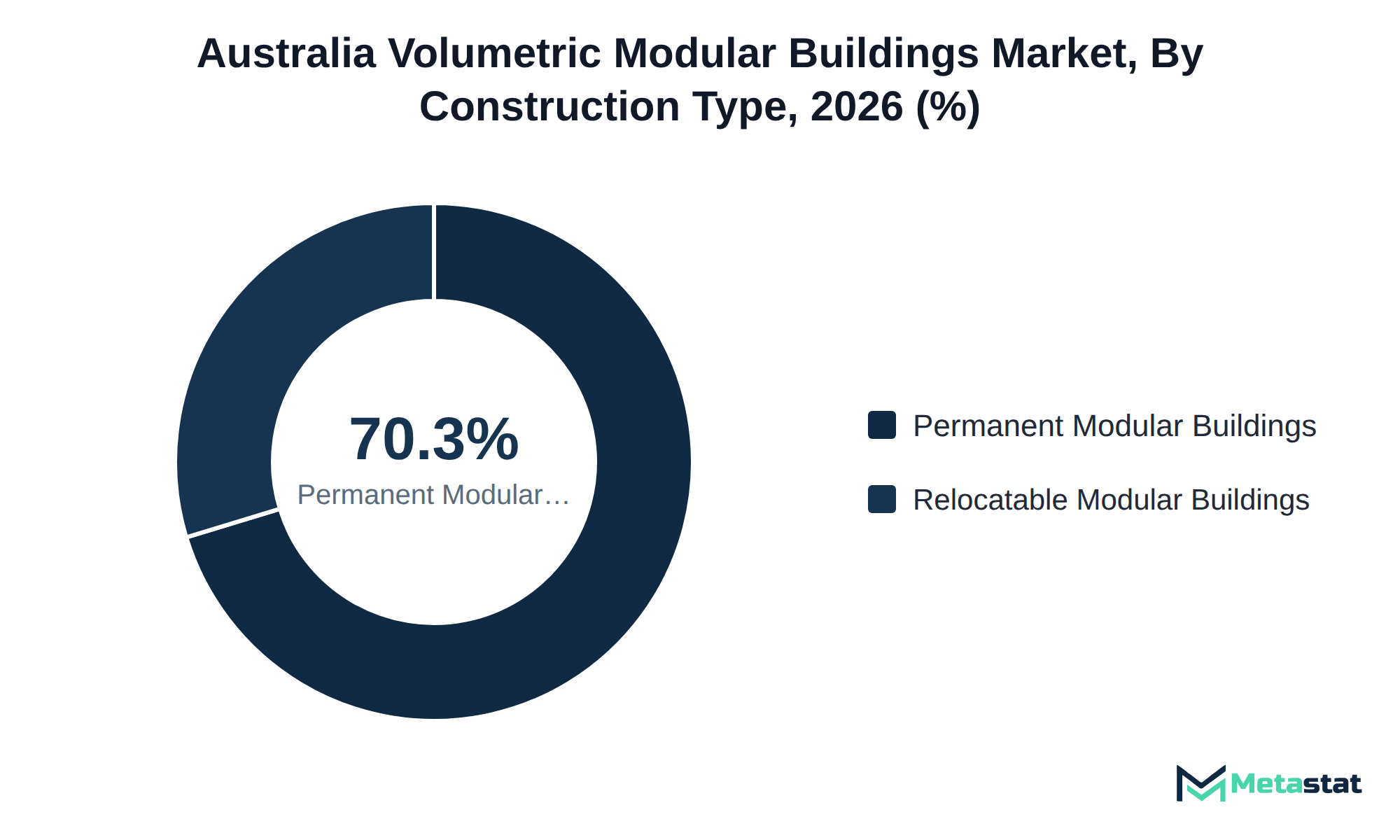
This segment serves various applications, including housing, education, and healthcare, appealing to developers focused on efficient construction methods. The rising demand for affordable housing, driven by population growth and urbanization, significantly influences this segment. With an anticipated CAGR of 9.7%, Permanent Modular Buildings demonstrates faster growth compared to Relocatable Modular Buildings, which is projected to grow at a CAGR of 5.9%. This distinction highlights the increasing preference for permanent solutions that offer long-term value, particularly in the housing sector. The market's expansion reflects a shift towards sustainable and efficient building practices, aligning with the evolving needs of various end users in Australia.
Relocatable Modular Buildings segment is estimated to reach USD 669.1 million by 2033, at a CAGR of 5.9% during the forecast period. This segment caters primarily to temporary housing and rapid deployment needs across various sectors, including education and healthcare. Demand for relocatable modular buildings arises largely from urgent requirements for adaptable spaces that are quickly assembled and disassembled. This flexibility attracts buyers in sectors requiring temporary facilities, distinguishing it from permanent modular solutions, which have a higher growth rate at 9.7%. The lower growth rate for relocatable modular buildings reflects their niche application rather than broad adoption across diverse sectors, making them a suitable choice for specific projects rather than permanent infrastructure investments. Demand for these structures is shaped by evolving needs in emergency response and project-based environments.
Single Storey segment is valued at USD 1,013.9 million in 2026 and is projected to reach USD 1,584.3 million by 2033, at a CAGR of 6.6% during the forecast period. This segment primarily serves the housing market, catering to various buyer groups including private developers and social housing authorities. A significant driver for this segment includes the increasing demand for affordable housing solutions, which aligns with governmental initiatives to enhance housing availability. In comparison to two storey buildings, which exhibit a CAGR of 9.8%, single storey structures demonstrate slower growth. The lower price point for single storey constructions makes them an appealing option for budget-conscious buyers, further differentiating them from other building types in the market.
The Two Storeys segment is estimated to reach USD 703.4 million by 2033, at a CAGR of 9.8% during the forecast period. This segment typically caters to residential and multi-family housing applications, attracting buyers from private developers and social housing projects. A strong push for affordable housing drives demand for two-storey structures, allowing developers to maximize land use while providing adequate living space. Compared to the Single Storey segment, which has a CAGR of 6.6%, the Two Storeys segment experiences faster growth. The growing focus on sustainable design and energy-efficient construction techniques enhances the appeal of two-storey modular buildings, positioning them as a favorable choice among buyers seeking innovative housing solutions. The market responds positively to these trends, reflecting a shift toward more complex building types that meet diverse consumer needs.
The Three to Five Storeys segment is expected to reach USD 379 million by 2033. These structures primarily serve the educational and commercial sectors, accommodating a range of needs from classrooms to office spaces. Demand in this segment is driven by the growing emphasis on urban density and the need for rapid construction solutions, particularly in metropolitan areas. The segment features a higher projected growth rate compared to others, highlighted by an anticipated CAGR of 23.2%. Unlike single-storey buildings, which focus primarily on residential applications, the Three to Five Storeys segment caters to a diverse array of applications, appealing to developers and municipalities seeking efficient building solutions. Overall, increasing urbanization trends influence this segment's development trajectory, contributing to the overall expansion within the Australia Volumetric Modular Buildings market.
Six Storeys and Above segment is projected to grow at a CAGR of 23.2% during the forecast period. This segment serves high-rise applications, primarily used for residential and commercial purposes, catering to urban environments with limited space. Developers seeking to maximize land use and address housing shortages frequently invest in this type of construction. The increasing demand for vertical living solutions in densely populated areas drives growth in this segment. Compared to other building types, including Single Storey, which grows at a CAGR of 6.6%, the Six Storeys and Above segment demonstrates significantly faster growth. The high-rise nature of this segment attracts a distinct buyer profile, characterized by larger developers and investment firms focused on urban development and increased density. Heightened interest is expected, driven by urbanization and the pressing need for innovative housing solutions in metropolitan regions.
This segment caters to individuals and families seeking affordable housing solutions, particularly in urban areas. Government initiatives and rising population pressures drive demand for affordable housing, fueling the growth of this segment. Compared to other segments, the Housing (Private, Social and Affordable) segment exhibits a higher growth rate, reflecting greater urgency among buyers to secure sustainable and cost-effective living spaces. In contrast, segments including Resources and Energy experience slower growth due to different market dynamics, including investment levels and project timelines. This segment's focus on affordability positions it uniquely within the Australia Volumetric Modular Buildings market, ensuring it attracts a diverse range of stakeholders from private developers to non-profit organizations.
The education segment is estimated to reach USD 507.7 million by 2033, at a CAGR of 7% during the forecast period. This segment targets educational institutions, including schools and universities, focusing on the construction of classrooms, laboratories, and administrative buildings. Increased enrollment in educational programs drives demand for additional infrastructure, necessitating rapid solutions. Many institutions look to volumetric modular buildings to meet their urgent space requirements efficiently. Compared to other segments, the education sector demonstrates moderate growth, with a CAGR of 7%, which is slower than the housing sector's 10.9% CAGR from 2026 to 2033. Ongoing investments in educational facilities reflect the importance placed on enhancing learning environments, supporting the overall growth of the market.
The Resources and Energy segment is expected to reach USD 417.2 million by 2033. This segment serves the energy production and extraction industries, including renewable energy providers and traditional energy companies. Demand for volumetric modular buildings arises from the need for rapid deployment of infrastructure in remote locations, where conventional construction faces logistical challenges. The segment displays a slower growth trajectory compared to others, reflecting a CAGR lower than that of Housing, which stands at 10.9%. This difference arises from the capital-intensive nature of energy projects, often leading to longer planning and execution times. The market faces pressures from fluctuating material costs, impacting overall project feasibility and timelines. The specific requirements of the energy sector, including compliance with rigorous safety and environmental regulations, further distinguish this segment from others within the market.
The Healthcare and Aged Care segment is projected to grow at a CAGR of 10.8% during the forecast period. This segment focuses on the construction of facilities designed to provide medical services and support for elderly populations. Healthcare providers and aged care facilities drive demand for these buildings, seeking solutions that enhance operational efficiency while meeting increasing service needs. A notable factor influencing this segment involves demographic shifts leading to a growing elderly population, which increases the demand for tailored healthcare solutions. Compared to other segments in the market, Healthcare and Aged Care demonstrates faster growth, driven by specific requirements for specialized medical environments and patient-centered care. The projected value for this segment reflects a significant opportunity for modular building solutions that address both immediate and long-term needs in the healthcare sector.
Commercial offices and retail spaces represent a significant application for volumetric modular buildings, providing flexible and efficient environments for businesses. Projects in this segment form part of the wider commercial real estate sector. This segment primarily serves corporations, retailers, and service providers seeking quick, adaptable solutions to meet evolving market demands. Growing urbanization and increasing demand for rapid construction timelines drive this segment's expansion. The need for sustainable and cost-effective building methods influences project decisions, generating interest in modular applications. Compared to other segments, the commercial offices and retail category exhibits a unique dynamic, characterized by higher price points and specific regulatory considerations regarding design and function. The market is expected to evolve, driven by technological advancements and shifting consumer preferences, positioning it for steady growth in the coming years.
Hospitality and Tourism significantly influences the Australia Volumetric Modular Buildings market, catering primarily to hotels, resorts, and other temporary accommodations. This segment appeals to developers focusing on rapid deployment and flexible design in response to changing consumer preferences and tourism trends. Demand for these modular solutions is driven by the hospitality sector's increasing need for quick construction timelines, which align with seasonal peaks in travel and tourism. Compared to other segments, this category exhibits unique characteristics, including a focus on aesthetic appeal and operational efficiency, making it distinct in its construction approach. Heightened competition in the hospitality industry drives the integration of modular buildings. These buildings meet aesthetic and functional expectations while keeping a focus on cost-effectiveness and sustainability.
Defence and Custodial applications serve critical functions, particularly in housing for military personnel and secure facilities. These structures meet specific requirements for security and durability, appealing to government agencies and private sector clients involved in defence and corrections. Growing investments in national security and infrastructure upgrade projects drive demand within this segment. Modular construction techniques enable rapid deployment and adaptability, crucial in meeting urgent facility needs. Compared to other segments, Defence and Custodial exhibits unique attributes, including higher customization levels and more stringent regulatory requirements, impacting its pricing and construction timelines. The focus on security features and compliance differentiates this segment from others, which prioritize cost efficiency and speed. The Australia Volumetric Modular Buildings market reflects strong interest in enhanced security solutions, indicating significant potential for growth in Defence and Custodial applications.
Student accommodation provides essential living spaces for students attending educational institutions. This segment serves universities, colleges, and private developers seeking efficient housing solutions for students. Demand for student accommodation is driven by increasing enrollment rates in higher education and a growing emphasis on campus life. Compared to other segments, this area experiences slower growth due to the specific nature of its clientele and funding structures, which differ from sectors focused on housing or commercial use. The market focuses on creating adaptable living environments that meet diverse student needs, reflecting a trend towards modular solutions that support rapid deployment and flexibility. Zoning and building codes shape the development of this segment and influence how quickly new projects reach completion.
Community, Sport and Emergency Services provide essential facilities for public gatherings, organized sports, and emergency response. Various organizations use these modular structures for community centers, sports complexes, and emergency shelters. Increased demand for quick and adaptable solutions following natural disasters significantly influences this segment. Stakeholders value the flexibility and speed of construction, which distinguishes it from other segments focusing on permanent housing or commercial applications. Compared to housing and educational sectors, growth in this segment has a different pace, driven by sporadic events including natural disasters or community initiatives, rather than ongoing urban housing needs. The Australia Volumetric Modular Buildings market recognizes the potential for these structures to address urgent requirements in various communities.
This sub-segment encompasses a range of buildings tailored for industrial purposes, data centres, and telecommunications. These structures serve various functions including manufacturing facilities, server farms, and communication hubs, catering primarily to businesses in the technology and industrial sectors. Demand for this segment is driven by the increasing reliance on digital infrastructure and the growing need for efficient manufacturing solutions. Compared to other segments, this sub-segment experiences unique dynamics, including a need for rapid deployment and scalability, which distinguishes it from traditional construction methods. The market exhibits distinct characteristics, with customers prioritizing speed and efficiency over cost, positioning it differently in terms of buyer expectations and project timelines. The Australia Volumetric Modular Buildings market covers many applications, and this sub-segment highlights the versatility and innovation of modular construction solutions.
New South Wales segment is valued at USD 393.2 million in 2026 and is projected to reach USD 732.8 million by 2033, at a CAGR of 9.3% during the forecast period. This segment focuses on various applications, particularly in housing, education, and healthcare, addressing the growing demand for efficient and sustainable building solutions. The higher growth rate compared to other regions stems from increased investment in infrastructure and the rising need for affordable housing solutions. Factors driving this segment include strong government support for modular construction initiatives and the urgent need to meet housing targets. With a CAGR of 9.3%, the New South Wales segment shows strong potential for expansion and innovation, positioning it as a key player in the Australia Volumetric Modular Buildings market.
Victoria is estimated to reach USD 641.2 million by 2033, at a CAGR of 7.6% during the forecast period. This region primarily focuses on applications in residential and educational buildings, catering to both private and public sectors. Demand in this segment is driven by increasing investments in social housing and educational infrastructure, reflecting a broader trend toward sustainable living spaces. Compared to other regions, Victoria exhibits a moderate growth rate relative to New South Wales, which expands at a CAGR of 9.3%. Price sensitivity is notable in this segment, influencing buyer decisions toward cost-effective modular solutions. The market continues to evolve, presenting opportunities for innovative solutions that meet the growing needs of urban development and sustainability.
Queensland segment is expected to reach USD 623.2 million by 2033. This segment primarily focuses on providing modular buildings for residential, educational, and commercial purposes. The demand for volumetric modular buildings in Queensland is driven by the increasing need for affordable housing solutions and rapid urbanization in the region. Compared to other segments, Queensland demonstrates a steady growth trajectory, aligning with a CAGR of 8.8%. The emphasis on sustainable construction practices and the push for efficient building solutions further enhance its market position. Shorter construction timelines appeal to developers and local governments seeking to address housing shortages efficiently. The market for volumetric modular buildings in Queensland continues to evolve, reflecting broader trends in construction and urban development.
Western Australia segment is projected to grow at a CAGR of 8.8% during the forecast period. This region significantly contributes to the housing and infrastructure development sector, catering to both residential and commercial needs. Increased government investment in public projects, along with rising demand for affordable housing, drives growth in this segment. Construction firms and property developers actively pursue volumetric modular solutions to meet the needs of diverse clientele. Compared to other regions, Western Australia benefits from favorable regulations supporting modular construction, enhancing its appeal to builders. The segment's anticipated revenue growth reflects broader trends observed within the Australia Volumetric Modular Buildings market, where innovative construction methods gain traction.
South Australia focuses on modular buildings that cater to various applications, including residential, educational, and commercial purposes. Buyers in this region include local governments, educational institutions, and private housing developers. Demand for modular solutions is driven by the urgency for affordable housing and the need for flexible construction options. South Australia distinguishes itself from other regions through its unique regulatory environment, which supports innovative building methods. This supportive approach encourages the adoption of volumetric modular buildings, aligning with sustainability goals and enhancing construction efficiency. The market benefits from ongoing infrastructure projects that stimulate local construction activity, increasing the appeal of modular buildings.
Tasmania focuses on a range of volumetric modular buildings tailored to meet the unique needs of the region. These structures have applications in various sectors, including education, healthcare, and housing. Demand in Tasmania reflects a growing interest in sustainable building practices and the efficiency offered by modular construction. The rising population and housing shortages in urban areas drive significant interest in private and affordable housing solutions. Unlike other regions, Tasmania's modular building growth presents different dynamics, influenced by geographical factors and local regulations. This position within the Australia Volumetric Modular Buildings market highlights a distinctive approach to meeting housing and infrastructure needs, emphasizing adaptability and sustainable practices.
This segment serves the Northern Territory, which plays a unique role in the Australia Volumetric Modular Buildings market. The primary applications include housing and facilities for various sectors, catering to local needs in a region characterized by remote communities and specific construction challenges. Demand is driven by the increasing requirement for affordable housing and infrastructure development, prompted by both population growth and government initiatives focused on regional development. Compared to other regions, this sub-segment experiences slower growth due to geographic constraints and lower population density. However, its emphasis on modular solutions allows for quick deployment in remote locations, highlighting a distinct advantage over traditional construction methods. The market continues to evolve, adapting to local demands while providing flexible solutions for various end-users.
The Australian Capital Territory features a distinct focus on modular buildings, catering to various needs within the region. This segment primarily serves government projects, educational institutions, and community facilities. Growing demand for rapid construction solutions influences this sector, driven by the need for timely and efficient delivery of public infrastructure. Compared to other regions, the Australian Capital Territory experiences slower growth due to its smaller population and market size, which limits extensive commercial developments. However, the emphasis on sustainable and cost-effective building solutions continues to create opportunities for expansion. The Australia Volumetric Modular Buildings market recognizes the unique conditions present in this region, supporting innovative construction approaches tailored to local demands.
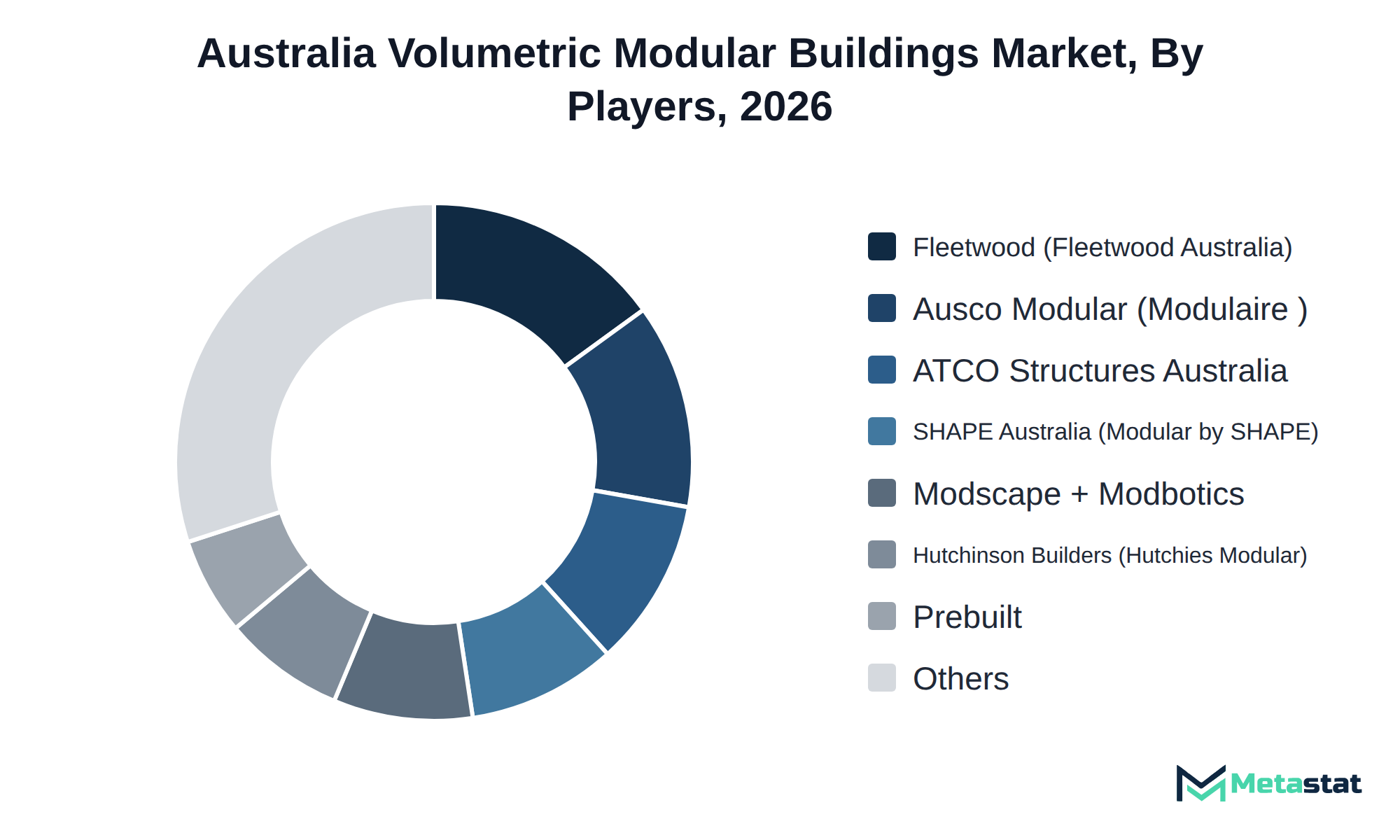
Competitive dynamics in the Australia Volumetric Modular Buildings market involve companies using various strategies to capture market share. The field divides mainly by construction type and end-use sectors, with companies focusing on different segments to meet buyer preferences. Buyers frequently prioritize factors including price, customization, certification, and overall service quality when selecting modular building solutions.
Fleetwood Limited (Fleetwood Australia) emphasizes permanent modular buildings, catering to the growing demand in sectors including housing and education. Companies like Ausco Modular (Modulaire Group) and ATCO Structures Australia focus on both permanent and relocatable modular solutions, appealing to clients seeking flexibility and adaptability in their projects. Meanwhile, SHAPE Australia Corporation Limited (Modular by SHAPE) targets commercial applications, leveraging design innovation to enhance customer experience.
In the housing sector, companies including Modscape + Modbotics and Hutchinson Builders (Hutchies Modular) stand out for their commitment to delivering sustainable and efficient living spaces. Players like Black Diamond Australia and Prebuilt specialize in customized solutions, catering to niche markets that prioritize unique designs and specialized services. This strategic diversity among companies shapes the competitive landscape, influencing buyer decisions and driving growth in the Australia Volumetric Modular Buildings market.
This growth relies on several critical developments within the Australia Volumetric Modular Buildings market. First, the expansion of permanent modular buildings, projected to reach USD 2,099.2 million by 2033, will drive overall market growth. This segment benefits from increasing demand for efficient construction solutions across various sectors, particularly housing, where private, social, and affordable projects are expected to rise from USD 404.5 million in 2026 to USD 833.8 million by 2033. The emergence of two storey buildings, with a CAGR of 9.8%, contributes to the projected market value, enhancing capacity in urban environments.
Conversely, potential risks exist that could impede growth. Economic fluctuations affecting construction investments slow progress, particularly in regions including Victoria and Queensland, where market dynamics vary. Such economic uncertainties challenge developers and stakeholders in the industry, potentially delaying project timelines and adoption rates. Overall, these developments and risks will shape the future trajectory of the market, influencing its path towards the anticipated growth by 2033.
By Construction Type: Permanent Modular Buildings, Relocatable Modular Buildings
By Building Type: Single Storey, Two Storeys, Three to Five Storeys, Six Storeys and Above
By End-Use Sector: Housing (Private, Social and Affordable), Education, Resources and Energy, Healthcare and Aged Care, Commercial Offices and Retail, Hospitality and Tourism, Defence and Custodial, Student Accommodation, Community, Sport and Emergency Services, Others (Industrial, Data Centre and Telecom Buildings)
By Region: New South Wales, Victoria, Queensland, Western Australia, South Australia, Tasmania, Northern Territory, Australian Capital Territory
The report strategically identifies and profiles the key market players and analyses their core competencies in each sub-segment of the Volumetric Modular Buildings market.
Report Attributes | Details |
Study Period | 2021-2033 |
Base Year | 2025 |
Estimated Year | 2026 |
Forecast Period | 2026-2033 |
Historical Period | 2021-2025 |
Growth Rate | CAGR 8.7% from 2026 to 2033 |
Revenue Unit | USD million |
Segmentation | By Construction Type, Building Type, End-Use Sector, Region, and Region |
Find answers to common questions about this report
The Volumetric Modular Buildings market size was valued at USD 1,417.2 million in 2025.
The market is projected to grow at a CAGR of 8.7% during the forecast period from 2026 to 2033.
Permanent Modular Buildings lead the Volumetric Modular Buildings market with a projected value of USD 2,099.2 million by 2033. This segment outpaces Relocatable Modular Buildings, which is expected to reach USD 669.1 million in the same year.
Increased demand for affordable and social housing drives the Volumetric Modular Buildings market, as buyers seek efficient solutions to address housing shortages. Technological advancements, including automation and innovative manufacturing techniques, enhance production efficiency and reduce costs, attracting buyers from various sectors.
High costs represent a significant restraint, particularly affecting the housing sector, as the substantial initial investment required for volumetric modular construction results in slower adoption rates among buyers. Rising raw material costs create pressure on profit margins and complicate pricing strategies for suppliers, forcing them to evaluate their supply chain and sourcing practices.
Several factors favor adoption in the Australia Volumetric Modular Buildings industry. Increased demand for efficient and sustainable construction solutions drives interest, particularly in the housing and education sectors. The appeal of reduced construction times and lower costs enhances the attractiveness of volumetric modular buildings for buyers seeking effective responses to housing shortages and flexible educational spaces.
The Volumetric Modular Buildings market is estimated to reach a valuation of USD 2,768.4 million by 2033.
Key players operating in the Volumetric Modular Buildings market include Fleetwood Limited (Fleetwood Australia), Ausco Modular (Modulaire Group), ATCO Structures Australia, SHAPE Australia Corporation Limited (Modular by SHAPE), Modscape + Modbotics, and Modulate (Atrada Group).
The relocatable modular buildings segment is projected to reach USD 669.1 million by 2033, reflecting a compound annual growth rate of 5.9 percent.
Suppliers encounter rising raw material costs, particularly for steel and timber, which pressure profit margins and complicate pricing strategies, necessitating improved supply chain management.
The analysts below cover Packaging research at Metastat Insights.
LEAD ANALYST
Utkarsh Khirodkar is a Lead Market Research Analyst at MetaStat Insight, specializing in market intelligence, technology sector assessments, and competitive strategy.

SENIOR RESEARCH ANALYST
Biotechnology · Food and Beverages · Medical Devices · Packaging
Snehal Pasalkar is a Research Analyst at MetaStat Insight, operating at the intersection of life sciences research, competitive strategy, and market intelligence.

INDUSTRY CONSULTANT - CHEMICALS & ADVANCED MATERIALS
Chemicals and Materials · Machinery & Equipment · Packaging
Amit Gadhekar Consultant for Chemicals and Materials at MetaStat Insight, directing sector-specific intelligence, research, and strategic consulting across global chemical and processing markets.
Assessing commercial microgrid software adoption requires looking past top-level installation numbers and examining utility interconnection queues. The research provided verifiable data on average permitting timelines, tariff structures, and battery storage integration costs across regional utility territories. That grounded perspective was valuable for our team when building five-year demand projections for industrial microgrid controllers.
Ambulatory surgical centers have very different purchasing cycles for robotic-assisted surgery platforms than major hospital networks. The MetaStat Insight study focused squarely on capital expenditure depreciation, procedural reimbursement pathways, and surgeon training overhead. That operational clarity made it much simpler to validate multi-year procedure growth forecasts against actual ambulatory center adoption patterns.
When planning edge sensor rollouts across refinery environments, generic IoT reports typically miss the harsh-environment certification bottlenecks. MetaStat Insight gave an objective evaluation of ATEX and Class 1 Division 2 hardware availability, along with realistic five-year maintenance cycle cost projections. The comparison of wireless mesh versus private cellular backhaul helped our team pressure-test network reliability models for remote processing facilities.
Explore related market intelligence reports worth reading alongside this one.