
LEAD ANALYST
Utkarsh Khirodkar is a Lead Market Research Analyst at MetaStat Insight, specializing in market intelligence, technology sector assessments, and competitive strategy.

Global Seafood Packaging Market Size, Share, By Material (Plastic, Paper & Paperboard, Metal), By Product Type (Trays, Bags & Pouches, Boxes & Cartons, Cans, Films & Wraps), By Packaging Technology (Modified Atmosphere Packaging, Conventional Vacuum Packaging, Vacuum Skin Packaging, Retort Packaging), By Seafood Type (Fish, Crustaceans, Molluscs), Industry Analysis, Growth, Trends, and Forecast, 2026-2033
Report ID
MSI-5554
Published
October, 2026
Pages
268 Pages
Format
Historical
Base year
Forecast
Forecast period
Report Details
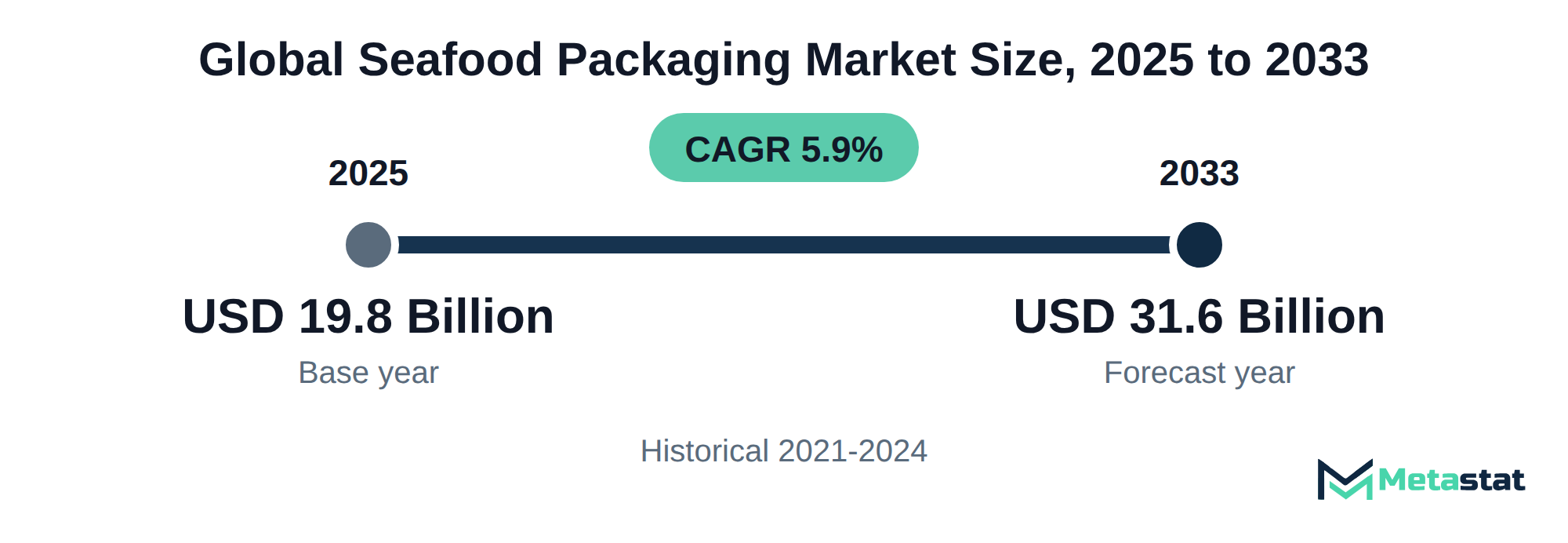
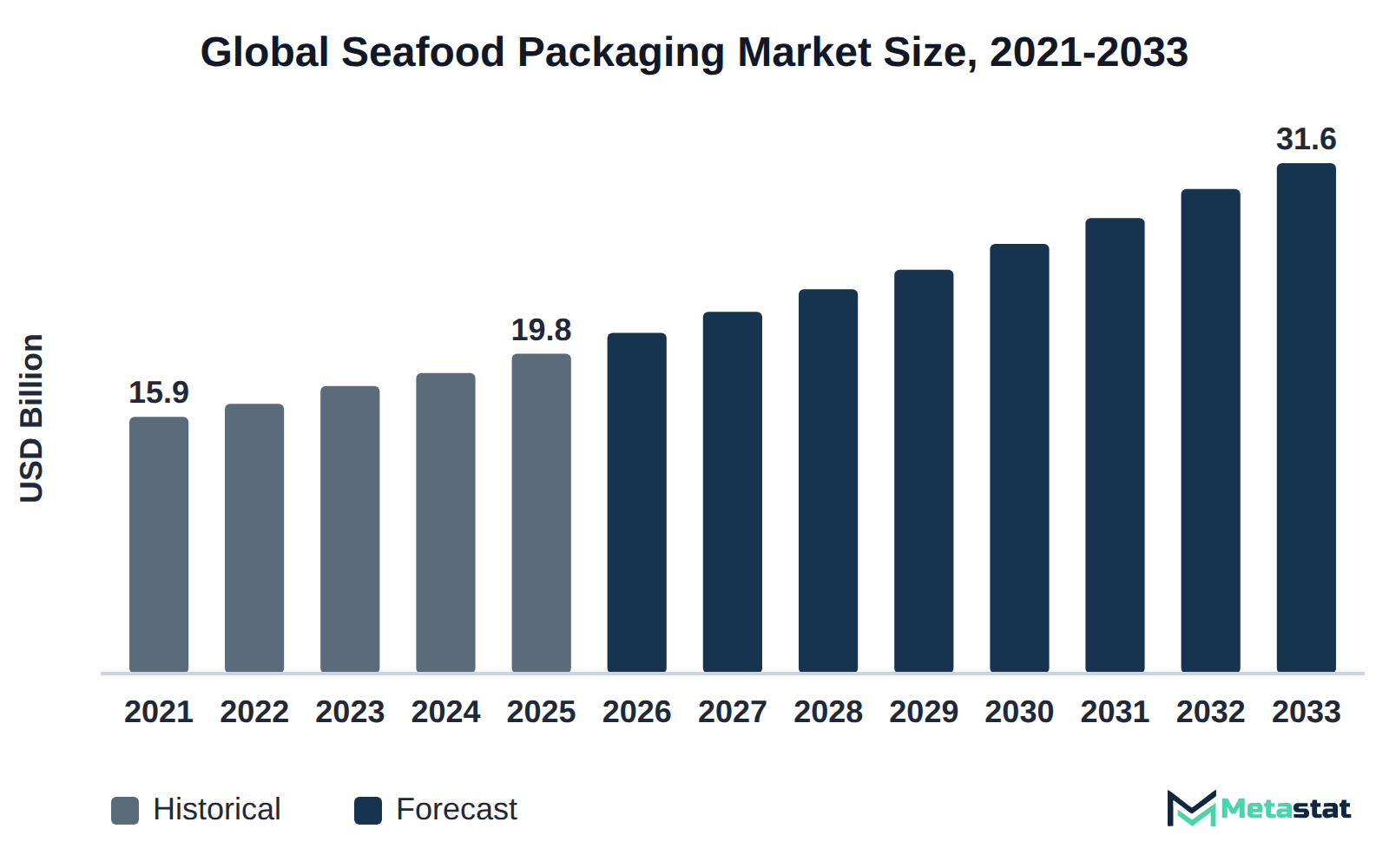
Market Valuation: Valued at $19.8 Billion in 2025, projected to reach $31.6 Billion by 2033 at a 5.9% CAGR.
Dominant Segment: Plastic packaging leads the Seafood Packaging market, driven by its versatility and cost-effectiveness in preserving seafood products. This segment is projected to reach USD 16.9 billion by 2033.
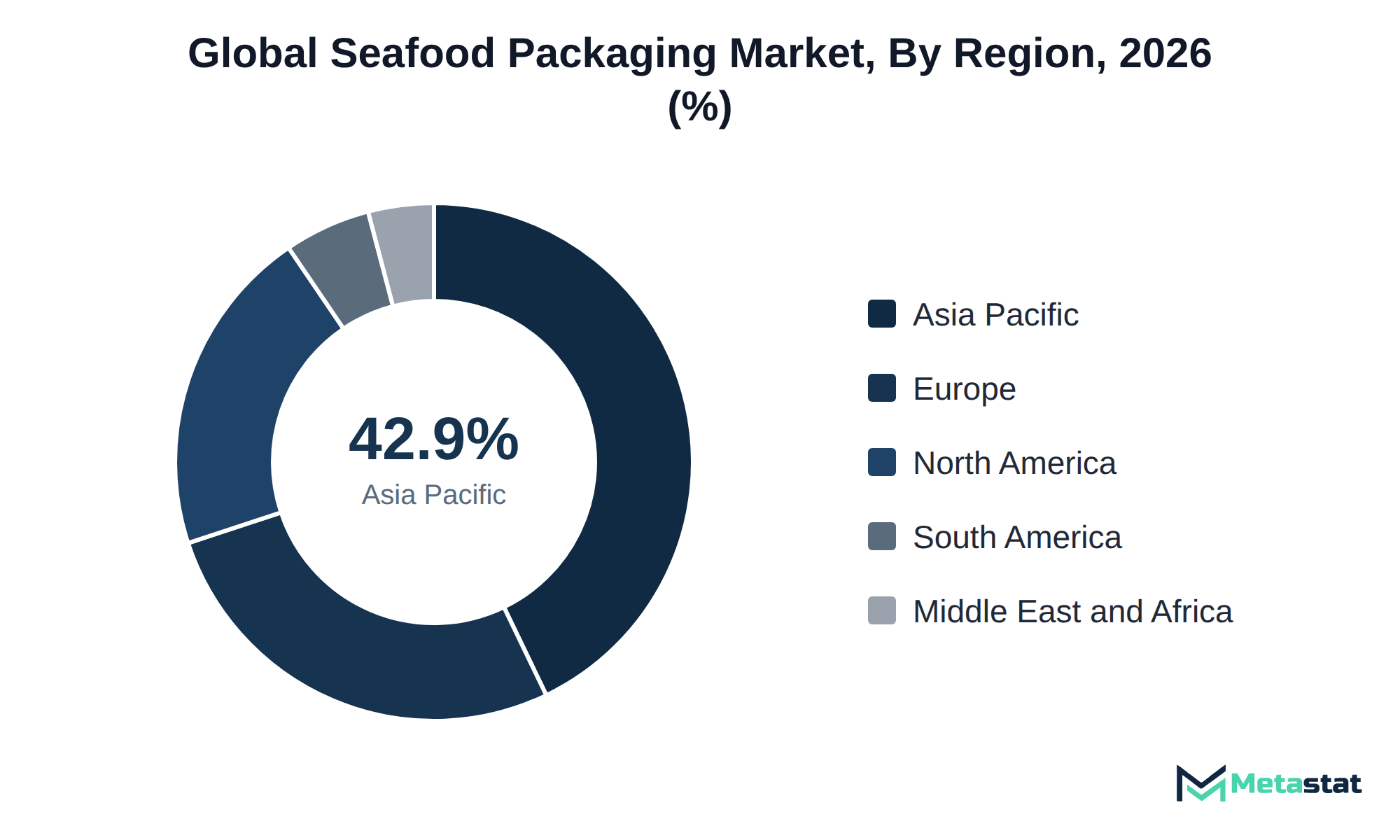
Geographic Lead: The Asia Pacific region holds the largest market share at 42.9% in 2025, fueled by increasing seafood consumption and a growing preference for sustainable packaging solutions.
What's Inside: The report provides a comprehensive analysis of the Seafood Packaging market, including detailed segments by material, product type, and packaging technology, along with competitive insights and market forecasts through 2033.
Investment Trends: There is a significant investment in advanced packaging technologies, particularly Modified Atmosphere Packaging, which is expected to grow to USD 14.1 billion by 2033, enhancing product quality and shelf life.
Sustainability Focus: The market is witnessing a shift towards sustainable packaging, with increasing consumer demand for recyclable and biodegradable options influencing purchasing behavior.
Choose Your License
Global Seafood Packaging Market
The global Seafood Packaging market was valued at USD 19.8 billion in 2025 and is projected to reach USD 31.6 billion by 2033, growing at a CAGR of 5.9% over the forecast period.
The Seafood Packaging market encompasses various materials and technologies used to package seafood products, ensuring freshness and safety during transportation and storage. Buyers invest in this market to enhance the shelf life of seafood, address consumer preferences for convenience, and comply with regulatory standards regarding food safety. The demand for sustainable packaging solutions drives spending, reflecting a growing awareness among consumers and manufacturers regarding environmental impact.
Growth in the market is propelled by the increasing consumption of seafood globally, particularly in the Asia Pacific region, which holds 42.9% of the market share in 2025. Among the various segments, plastic packaging represents the largest share, driven by its versatility and cost-effectiveness. North America holds 20.6% of the market in 2025, with the US leading in 2026. The rising trend of ready-to-eat seafood products significantly influences the demand for advanced packaging solutions.
Market expansion is supported by innovations in packaging technologies, including Modified Atmosphere Packaging, which enhances product longevity and quality. This technology allows for the preservation of seafood freshness and flavor, aligning with consumer expectations for high-quality food products. Rising seafood consumption and a stronger emphasis on sustainable practices position the market for significant growth in the coming years.
The Seafood Packaging market encompasses solutions designed to maintain the quality and safety of seafood products. Buyers invest in this market driven by the demand for sustainable and efficient packaging that extends shelf life and reduces food waste. The primary buyers include seafood processors, retailers, and food service operators seeking innovative packaging options that meet regulatory standards while attracting consumers.
Growth in the market is fueled by rising consumer preference for fresh and convenient seafood products. Plastic packaging, holding the largest value within the market, supports the preservation of seafood by providing effective moisture barriers and protection against contamination. Strong demand also reflects the increasing focus on sustainable seafood sourcing and packaging solutions.
Investments in advanced packaging technologies, including Modified Atmosphere Packaging, enhance product shelf life and reduce spoilage rates. This technology appeals to buyers seeking to optimize their supply chains while maintaining high product quality. Shifting consumer preferences and the ongoing need for innovative packaging solutions underpin this growth outlook.
The Seafood Packaging market has experienced a notable shift towards the adoption of advanced films for vacuum-sealed tuna and frozen fish. Modified Atmosphere Packaging (MAP) technology drives this shift by enhancing freshness and shelf life for seafood products. The demand for MAP, projected to reach USD 14.1 billion by 2033, reflects the growing emphasis on superior preservation techniques within the market.
These films create an optimal environment that extends the quality and safety of vacuum-sealed products, thus supporting the needs of processors and retailers aiming to reduce waste and improve customer satisfaction. The tuna and frozen fish segments benefit from the protective properties of these advanced films, which contribute to maintaining texture and flavor during storage and transportation.
Manufacturers investing in MAP technology enhance the appeal of their seafood products, thereby driving sales and market share. By emphasizing quality preservation through innovative packaging solutions, companies position themselves competitively within the Seafood Packaging market, catering to evolving preferences of health-conscious consumers.
Recyclable seafood packaging is essential to cold-chain transport and export and strongly influences buyer purchasing behavior. Buyers prioritize sustainable packaging solutions due to increasing environmental concerns and regulatory pressures. In 2025, the seafood packaging market value reached USD 19.8 billion, reflecting the growing demand for eco-friendly packaging options among consumers and businesses alike.
Pricing strategies in the market vary, with several suppliers adopting tiered pricing models based on volume and contract length. Long-term contracts provide stability for both buyers and suppliers, resulting in more favorable pricing conditions. For instance, suppliers offer discounts for bulk orders, promoting buyer loyalty while enhancing supply chain efficiency.
The market for recyclable seafood packaging in cold-chain transport offers various payment terms. Buyers frequently engage in negotiations that cover aspects including upfront payments, payment upon delivery, or extended credit terms. These flexible payment options facilitate transactions and enable buyers to maintain optimal cash flow while ensuring the efficient movement of products through the supply chain. Seafood moving through the cold chain typically travels in refrigerated transport units.
Ultimately, the adoption of recyclable packaging enhances brand reputation and meets consumer expectations for sustainability. Companies that invest in eco-conscious packaging solutions position themselves competitively in the seafood packaging market, driving revenue growth and long-term commercial success.
Adoption of Vacuum Skin Packaging (VSP) and Modified Atmosphere Packaging (MAP) in the retail seafood packaging market addresses growing consumer demand for fresh and high-quality seafood products. VSP enhances the shelf life of seafood while maintaining its aesthetic appeal, making it particularly attractive to retailers aiming to capture consumer attention.
The MAP segment is expected to reach USD 14.1 billion by 2033, driven by its ability to extend product freshness through controlled atmospheres, thus reducing spoilage and waste. Retailers, such as supermarkets, benefit from this technology by offering longer-lasting seafood products, which aligns with consumer preferences for convenience and sustainability. This trend reflects a significant shift in retail strategies, emphasizing quality and freshness, which in turn supports increased sales and consumer loyalty. Retailers competing in the seafood sector need to invest in innovative packaging solutions.
Choosing the right materials for seafood packaging significantly impacts shelf life and the occurrence of freezer burn. For instance, plastic packaging, which is anticipated to generate USD 16.9 billion by 2033, contributes to extending the freshness of seafood products. This is primarily due to its ability to create a barrier against moisture and oxygen, which are key factors in spoilage and freezer burn.
Modified atmosphere packaging (MAP), a notable technology in the seafood packaging market, helps preserve product quality. This method is expected to increase from USD 9.5 billion in 2026 to USD 14.1 billion by 2033, reflecting its growing adoption. MAP helps maintain optimal gas composition within the packaging, thereby slowing down the deterioration process. Consequently, seafood packaged using MAP tends to have a longer shelf life, reducing waste and enhancing consumer satisfaction.
Selecting suitable packaging materials and technologies improves product longevity and minimizes freezer burn, directly influencing competitive edge. Advances in material science continue to deliver better solutions across the seafood packaging market.
Growing consumer awareness regarding environmental issues drives a shift towards green packaging and other sustainable solutions. Retailers and food service companies prioritize eco-friendly options to align with changing consumer preferences. This heightened focus on sustainability influences purchasing behavior and increases demand for recyclable and biodegradable seafood packaging materials. The demand for plastic packaging, projected to reach USD 16.9 billion by 2033, accounts for a significant portion of this trend. Buyers increasingly seek solutions that enhance brand image while minimizing environmental impact. Consequently, the market experiences a notable rise in sustainable product offerings, supporting overall market expansion. The transition to sustainable seafood packaging drives innovation, compelling manufacturers to invest in new technologies that meet evolving consumer expectations and regulatory standards.
Technological advancements in production processes further enhance the quality and appeal of sustainable materials. Companies that adapt to these changes position themselves competitively within the market, capturing increased market share and driving growth. This shift towards sustainability represents a critical driver of growth in the seafood packaging market.
Investment in advanced packaging technologies significantly influences the Seafood Packaging market. Modified Atmosphere Packaging (MAP) and Vacuum Skin Packaging (VSP) technologies enhance the preservation of seafood products by extending shelf life and maintaining freshness. Increased adoption of these technologies results from rising consumer demand for high-quality products and the need for efficient distribution channels.
Producers of seafood packaging solutions prioritize technology upgrades to improve product performance and meet buyer expectations. The shift towards sustainable and efficient packaging solutions leads to an influx of investments in research and development, enabling companies to innovate and differentiate their offerings. Enhanced packaging solutions optimize product quality and reduce spoilage during transportation. This optimization supports market growth by satisfying consumer preferences for longer-lasting seafood products.
Adoption of advanced packaging technologies aligns with a broader trend of enhancing operational efficiency and minimizing waste. The growth of the Seafood Packaging market reflects these technological advancements driving improvements in freshness retention and overall market competitiveness.
Increasing prices of raw materials significantly impact the Seafood Packaging market, particularly among small to medium-sized enterprises. Higher material costs result in increased operational expenses, prompting buyers to reconsider packaging choices or delay procurement decisions. In the seafood processing sector, producers experience tighter margins, leading to reduced order sizes and slower uptake of innovative packaging solutions. This trend creates a barrier to adopting advanced packaging technologies that enhance product quality and shelf life. Consequently, competitive positioning within the market becomes challenging for businesses operating with constrained budgets. Balancing packaging quality and cost efficiency remains essential for stakeholders aiming to maintain profitability while meeting consumer expectations.
Suppliers face increasing challenges related to input costs, impacting profitability within the Seafood Packaging market. Rising prices of raw materials, including plastics and paperboard, directly affect packaging production costs, resulting in tighter margins for manufacturers. Suppliers respond by exploring innovative materials and alternative sources, aiming to balance performance and expense. For instance, investment in advanced recycling technologies allows companies to reduce dependency on virgin materials, thereby mitigating cost increases. Collaborative efforts with material suppliers enhance negotiation power, leading to more favorable pricing structures. These strategies help suppliers maintain competitiveness while addressing profitability challenges.
The Seafood Packaging market experiences significant growth opportunities within the paper and paperboard segment. Driven by increasing consumer preference for sustainable solutions, this segment is projected to achieve a compound annual growth rate of 6.8% and reach a value of USD 9.3 billion by 2033. Businesses focusing on this material effectively address the rising demand for eco-friendly packaging options, particularly in regions where consumers prioritize sustainability in their purchasing decisions. The shift towards renewable materials aligns with broader environmental trends, positioning companies to enhance their market share through innovative designs and production methods. Investment in paper and paperboard solutions offers a strategic advantage, enabling suppliers to cater to evolving consumer demands while maintaining competitive pricing. This growth trajectory reflects the market's adaptation to changing consumer expectations and presents a viable path for investment and development.
The Global Seafood Packaging market is segmented based on Material, Product Type, Packaging Technology, and Seafood Type.
Plastic packaging, valued at USD 11.5 billion in 2026, is projected to reach USD 16.9 billion by 2033, at a CAGR of 5.6% during the forecast period. This segment primarily serves the seafood industry by providing lightweight and cost-effective solutions for storing and transporting various seafood products, including fish and crustaceans. The increasing demand for convenient and ready-to-eat seafood products drives adoption, particularly among retailers and foodservice sectors seeking to enhance customer appeal. While this segment experiences steady growth, it faces competition from the paper and paperboard segment, which is anticipated to grow at a higher CAGR of 6.8%. Regulatory pressures regarding sustainability and environmental impact challenge the segment, stimulating innovation in recyclable plastics and biodegradable options. Continuous advancements in packaging technology help improve shelf life and food safety, reinforcing plastic's position as a key contender in the market.
Paper & Paperboard segment is estimated to reach USD 9.3 billion by 2033, at a CAGR of 6.8% during the forecast period. This segment primarily caters to seafood processors and retailers, focusing on sustainable packaging solutions that align with increased environmental consciousness among consumers. Demand for paper and paperboard packaging derives from the need for eco-friendly materials that maintain product integrity while reducing environmental impact. The segment distinguishes itself through rapid growth compared to other materials like metal and plastic, driven by the rising preference for sustainable packaging options. This preference reflects a shift towards renewable resources, enhancing the segment's appeal among environmentally conscious buyers. Ongoing development in design and functionality further supports adoption, ensuring that packaging maintains the freshness and safety of seafood products while aligning with market trends.
Metal packaging is expected to reach USD 4.7 billion by 2033. This segment primarily serves the seafood industry, offering durable and protective containers for various seafood products. The demand for metal packaging is driven by the need for enhanced preservation and extended shelf life, appealing to processors and retailers. Compared to other materials like plastic and paper, metal packaging often commands a premium price due to its superior barrier properties and recyclability. The market sees competition among suppliers, with several focusing on lightweight metal solutions to improve transportation efficiency. Upstream, tinplate is a common input for metal food containers. Trends toward sustainability further enhance the attractiveness of metal packaging, positioning it as a preferred choice among environmentally conscious consumers.
The Others (Glass, Wood) segment is projected to grow at a CAGR of 7.9% during the forecast period. This segment primarily includes packaging solutions made from sustainable materials, appealing to environmentally conscious consumers. These materials protect seafood products during transportation and storage. Demand in this segment stems from rising consumer preferences for eco-friendly packaging and regulatory pressures pushing for sustainability. Compared to other materials, including plastic or metal, packaging from glass and wood often commands a higher price due to production costs and sourcing challenges. However, the growing focus on sustainability aligns with trends in the Seafood Packaging market, driving interest and adoption among retailers and manufacturers seeking to enhance their environmental credentials.
Valued at USD 5.5 billion in 2026, the Trays segment is projected to reach USD 8.2 billion by 2033, at a CAGR of 5.9% during the forecast period. Trays serve a critical function in packaging various seafood products, providing structural support and ensuring product integrity during transportation and storage. This segment attracts businesses in the seafood industry, including processors, distributors, and retailers, who prioritize efficient packaging solutions that enhance shelf life and consumer appeal. Factors driving growth within this segment include the increasing preference for packaging that facilitates portion control and easy handling while maintaining freshness. Compared to other product types, trays exhibit moderate growth, influenced by competitive pricing and innovation in materials, distinguishing them from segments including Bags & Pouches, which are projected to grow at a faster CAGR of 6.6%. The focus on sustainable materials further shapes the evolution of this segment.
Bags & Pouches segment is estimated to reach USD 8.3 billion by 2033, at a CAGR of 6.6% during the forecast period. This segment serves diverse applications, particularly for packaging seafood items including fillets and pre-portioned products. The rising demand for convenience and ready-to-cook seafood options primarily drives growth in this segment, appealing to both retailers and consumers who prioritize quick meal solutions. Compared to other segments, Bags & Pouches exhibit a faster growth trajectory, reflecting an increase in consumer preference for flexible packaging solutions that provide extended shelf life and ease of use. This flexibility contrasts with more rigid formats like Boxes & Cartons, which exhibit slower growth rates. Advancements in packaging technology enhance the ability to maintain quality, supporting the overall expansion of the segment. The equipment value chain for these formats includes stand-up pouch packaging machines.
Boxes and Cartons segment is expected to reach USD 7.3 billion by 2033. These packaging solutions serve food retailers and distributors, facilitating the safe transport and presentation of seafood products. The growing preference for convenient and sustainable packaging drives demand in this segment. Consumer trends shift towards eco-friendly materials, increasing interest in Boxes and Cartons that provide an effective solution. This segment experiences a higher expected growth rate compared to traditional materials including metal due to a CAGR of 6.6%. Pricing dynamics play a critical role, with competitive pricing providing an advantage over substitutes. The adoption of advanced packaging technologies enhances the appeal of Boxes and Cartons, positioning them favorably among buyers seeking functionality and sustainability. The Seafood Packaging market reflects a significant trend toward innovative and environmentally friendly packaging solutions, making this segment particularly relevant as consumer preferences evolve.
Cans, projected to grow at a CAGR of 5.5% during the forecast period, serve a vital function in the packaging of seafood products, particularly for preservation and convenience. Canned seafood finds application in both retail and food service sectors, appealing to consumers seeking ready-to-eat options. Growth in this segment is driven by increasing consumer preference for shelf-stable products, which offer longer shelf life without compromising quality. The rising trend of convenient meal solutions influences demand for canned seafood. Compared to other product types, the Cans segment experiences moderate growth, reflecting a stable market presence, yet it operates at relatively lower price points compared to premium options like Modified Atmosphere Packaging. Overall, the Cans segment holds a stable position in the Seafood Packaging market as it responds to changing consumer needs and preferences.
Films and Wraps protect packaged seafood products against spoilage and contamination. These materials find application among various stakeholders, including processors and retailers, who use them for flexible packaging solutions. Demand for Films and Wraps stems from the growing consumer preference for convenience-oriented packaging formats. This segment exhibits growth potential, driven by innovations that enhance barrier properties and extend shelf life. Compared to other segments, including Trays and Bags & Pouches, Films and Wraps often present lower production costs, appealing to budget-conscious buyers. The emphasis on sustainability and the adoption of recyclable materials are additional factors shaping this segment's evolution. This focus aligns with broader trends in the Seafood Packaging market, where environmentally friendly materials gain traction among consumers and manufacturers alike.
Others (Tubs, Pads, Liners) play a significant role in the Seafood Packaging market by providing specialized packaging solutions that cater to unique seafood products. These packaging types suit various applications, including ready-to-eat prepared meals, which require additional features for freshness and safety. Demand for these products is driven by increasing consumer preferences for convenience and ready-to-eat options, prompting businesses to adopt innovative packaging solutions. Compared to other product types, this segment experiences slower growth due to competition from more established formats like trays and bags that offer broader functionality. The need for sustainable and effective packaging solutions influences the trajectory of this sub-segment, prioritizing materials that maintain food safety and extend shelf life. Overall, evolving consumer habits and the growing emphasis on sustainability shape the direction of the segment.
Modified Atmosphere Packaging segment is valued at USD 9.5 billion in 2026 and is projected to reach USD 14.1 billion by 2033, at a CAGR of 5.8% during the forecast period. This packaging technology involves modifying the composition of gases surrounding seafood products to extend shelf life and maintain quality. Food processors and retailers widely use this packaging to meet rising consumer demand for fresh and high-quality seafood. Growth in this segment stems from increasing awareness regarding food safety and quality, driving investments in advanced preservation technologies. Compared to other packaging technologies, Modified Atmosphere Packaging exhibits a moderate growth rate, distinguishing itself with specific applications in preserving the freshness of fish, crustaceans, and molluscs. The market reflects a shift towards more efficient solutions for maintaining product integrity, setting it apart from traditional packaging methods, which do not offer the same level of preservation efficacy.
Conventional Vacuum Packaging segment is estimated to reach USD 7.5 billion by 2033, at a CAGR of 6.6% during the forecast period. This technology extends the shelf life of seafood products by removing air from the packaging, significantly reducing spoilage. Widely used by producers and retailers of seafood, this segment benefits from increasing demand for fresh and frozen seafood products. The growing focus on food safety and preservation techniques drives this segment's growth. Compared to others in the group, Conventional Vacuum Packaging experiences a moderate growth rate, influenced by competitive alternatives including Modified Atmosphere Packaging, which holds a higher market share. The market observes a shift towards environmentally friendly practices, creating opportunities for innovation and adaptation in packaging solutions.
Vacuum Skin Packaging segment is expected to reach USD 4 billion by 2033. This packaging solution is primarily for seafood products, ensuring freshness and extending shelf life by creating a tight seal that prevents air from entering. The food industry, particularly seafood manufacturers and retailers, adopts this technology for its effectiveness in maintaining product quality. The segment experiences growth driven by increasing consumer demand for convenience and longer-lasting seafood options. In contrast to conventional vacuum packaging, Vacuum Skin Packaging offers superior visual appeal and product presentation. While the CAGR for this segment is projected at 5.8%, it still presents significant market potential, responding to evolving consumer preferences in the Seafood Packaging market.
Valued at USD 4 billion in 2026, the Retort Packaging segment is projected to grow at a CAGR of 5.2% during the forecast period. This packaging technology extends the shelf life of seafood products by providing a hermetically sealed environment that prevents spoilage. Manufacturers including seafood processors and distributors adopt retort packaging due to its ability to maintain product quality while minimizing the need for preservatives. Increasing consumer demand for ready-to-eat seafood meals drives growth in this segment. Compared to Modified Atmosphere Packaging, which is projected to reach USD 14.1 billion by 2033, retort packaging's growth rate is slower. This slower pace stems from higher production costs associated with retort technology, impacting pricing strategies in the market.
Air packing and overwrapping serve specialized functions in the Seafood Packaging market, providing methods to enhance the preservation of seafood products. These techniques find application among processors and packers looking to extend product shelf life and maintain freshness. Rising consumer preferences for convenience foods drive demand for effective packaging solutions. In contrast with other technologies like Modified Atmosphere Packaging, which has a projected value of USD 14.1 billion by 2033, air packing and overwrapping typically offer a more cost-effective alternative. This segment attracts buyers seeking budget-friendly options while balancing quality and shelf life. The focus on sustainability across packaging sectors influences the adoption of air packing and overwrapping methods, positioning them in a unique space within the broader context of the Seafood Packaging market.
Valued at USD 11.3 billion in 2026, this sub-segment is projected to reach USD 16.4 billion by 2033, at a CAGR of 5.4% during the forecast period. Fish packaging is essential for preserving freshness and safety, primarily used by seafood suppliers and retailers targeting consumers who prioritize quality and sustainability. Growing health consciousness among consumers drives demand for nutritious seafood, contributing significantly to the segment's expansion. Compared to other seafood types, fish packaging experiences steady demand due to widespread fish consumption and diverse culinary applications. This segment's growth rate is slightly lower than that of crustaceans, which are projected to grow at a CAGR of 6.6%. Packaging innovations tailored for fish lead to improved shelf life and reduced waste, further enhancing market competitiveness within the Seafood Packaging market.
The Crustaceans segment is estimated to reach USD 5.2 billion by 2033, at a CAGR of 6.6% during the forecast period. This segment finds application in various seafood products, catering primarily to restaurants, seafood distributors, and retail grocery chains. Increasing consumer demand for fresh and frozen crustaceans drives growth in this segment. Sustainable sourcing practices and advancements in packaging technology play a significant role in attracting environmentally conscious consumers. Compared to other seafood types, the Crustaceans segment experiences faster growth due to the rising popularity of seafood cuisine and premium pricing strategies. The market for crustaceans packaging continues to evolve, reflecting trends in culinary preferences and consumer awareness.
The Molluscs segment is expected to reach USD 9.2 billion by 2033. This segment typically involves packaging for various molluscan seafood products, serving markets including retail, food service, and processing industries. Rising popularity of molluscs, driven by health-conscious consumers seeking protein-rich diets, enhances demand in this segment. The segment experiences a CAGR of 7.1%, representing a higher growth rate compared to other seafood types, including fish, which has a CAGR of 5.4%. This growth reflects increasing consumer preference for diverse seafood options and innovative packaging solutions that enhance product appeal and shelf life. The market benefits from increasing adoption of sustainable packaging practices, aligning with consumer expectations for environmentally friendly solutions. Developments position the Molluscs segment as a significant contributor to the broader Seafood Packaging market.
Others (Echinoderms, Mixed Seafood) segment is projected to grow at a CAGR of 7.1% during the forecast period. This segment serves various seafood markets, providing specialized packaging solutions for products like sea cucumbers and other mixed seafood assortments. Demand for this segment is driven by increasing consumer interest in diverse seafood options and the growing popularity of unique culinary experiences. Compared to other segments, the Others (Echinoderms, Mixed Seafood) segment exhibits faster growth, reflecting the rising demand for novel seafood offerings. The market experiences pressure from cost-effective options available for more common seafood types, yet premium pricing for these unique products often attracts higher-end consumers. An increased focus on sustainability in packaging enhances the appeal of products in this segment, aligning with broader trends in the Seafood Packaging market.
Based on geography, the Global Seafood Packaging market is divided into North America, Europe, Asia-Pacific, South America, Middle East, and Africa.
Projected growth in North America reflects strong demand for packaging solutions driven by increasing seafood consumption, particularly in the United States, Canada, and Mexico. The region's seafood packaging market is expected to reach USD 6.4 billion by the end of 2033, representing a 20.6% share of the global market in 2025. Consumer preferences for sustainable and convenient packaging contribute to innovative product development. Growing investments in environmentally friendly packaging materials enhance market dynamics. The shift towards modified atmosphere and vacuum packaging technologies supports product freshness and extends shelf life, aligning with rising health consciousness among consumers. Regulatory measures promoting food safety standards further emphasize the importance of effective packaging solutions in the seafood packaging market.
In Europe, the Seafood Packaging market experiences strong demand driven by a diverse range of consumer preferences and regulations focused on sustainability. Countries including Germany and France emphasize eco-friendly packaging solutions, influencing manufacturers to adopt sustainable practices. The shift towards environmentally conscious materials, particularly in the Paper & Paperboard segment, contributes to an expected market growth rate of 6.8% through 2033. The region's notable share of 27.1% in the global market highlights its significance. The UK and Italy invest in advanced packaging technologies, enhancing product shelf life and reducing food waste. Spain and Russia continue to expand their seafood processing capacities, further stimulating the market. These regional dynamics create a competitive landscape that shapes the future of the Seafood Packaging market.
Asia Pacific represents a significant portion of the Seafood Packaging market, accounting for 42.9% of the global share in 2025. Rapid growth in the region stems from increasing demand for seafood products, driven by population growth and rising consumer awareness regarding food safety. Countries like China and Japan exhibit robust seafood consumption patterns, further fueling the need for advanced packaging solutions. Infrastructure improvements, particularly in cold chain logistics, enhance product quality and shelf life, which are crucial for perishable seafood items. The region's diverse seafood types, including fish and crustaceans, require tailored packaging technologies to maintain freshness and prevent spoilage. The market is expected to see substantial advancements in Modified Atmosphere Packaging and innovative designs in response to evolving consumer preferences.
In South America, the Seafood Packaging market accounts for 5.4% of the global share in 2025, with Brazil and Argentina serving as significant contributors. Growing demand stems from the rising preference for packaged seafood products among consumers in these countries. The regulatory environment influences the market, particularly through local initiatives promoting sustainable fishing practices and environmentally friendly packaging solutions. Investment in infrastructure to improve distribution and logistics networks further supports market expansion. The need for innovative packaging solutions that enhance product shelf life and maintain freshness drives competition among manufacturers, pushing them to adopt advanced technologies including Modified Atmosphere Packaging and vacuum sealing methods. These developments are expected to positively impact growth and adoption rates within the market during the forecast period.
The Seafood Packaging market in the Middle East and Africa experiences unique dynamics driven by rising seafood consumption and a growing preference for sustainable packaging solutions. Key countries including Saudi Arabia and the UAE demonstrate strong demand for innovative packaging technologies and materials, reflecting a push for quality and freshness in seafood products. South Africa's increasing focus on environmental regulations encourages the adoption of recyclable packaging options. The region's share of the global market reached 4.1% in 2025, indicating significant growth potential. Investments in local seafood processing facilities further enhance the market's prospects, creating opportunities for suppliers to expand their footprint. Suppliers in the region target specific buyer groups, including retailers and foodservice providers.
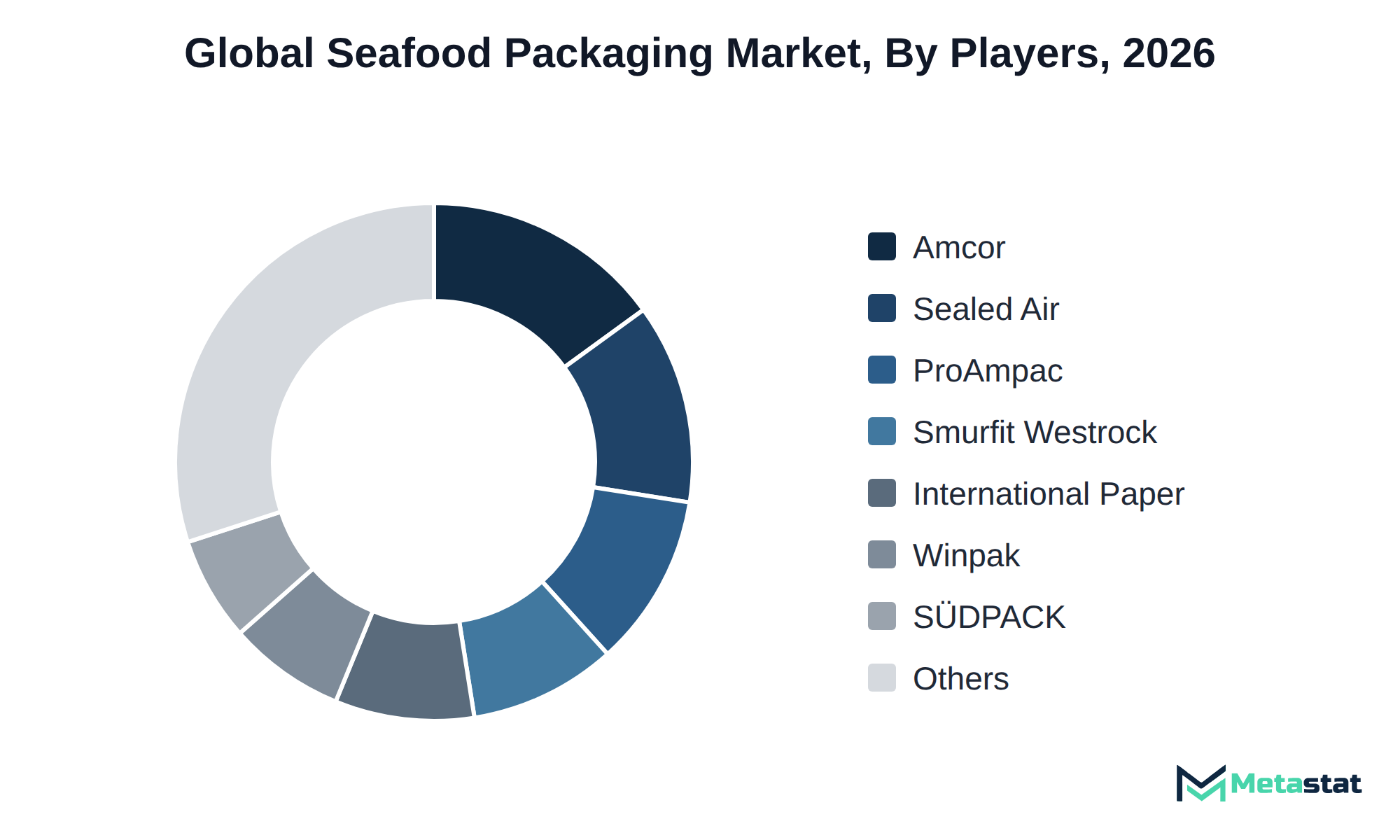
Companies in the seafood packaging market compete through various strategies, focusing on factors including price, certification, customization, and service. Key players emphasize their capabilities in delivering high-quality, environmentally friendly packaging solutions that align with evolving consumer preferences.
Amcor plc and Sealed Air Corporation focus on innovative packaging technologies, offering products that enhance freshness and extend shelf life. ProAmpac presents its diverse portfolio, catering to specific customer requirements through customization and sustainable materials.
Buyers prioritize suppliers that provide reliable packaging solutions, ensuring product quality and safety. Companies including International Paper Company and Winpak Ltd. use their extensive experience and established reputations to attract clients seeking trusted partners for packaging needs.
Coveris and Constantia Flexibles focus on specific market segments, developing tailored solutions to address unique packaging requirements. This targeted approach enables them to meet diverse customer demands while ensuring compliance with industry standards and regulations.
Several developments support the Seafood Packaging market in reaching its 2033 forecast. An increase in demand for plastic packaging, projected to grow from USD 11.5 billion in 2026 to USD 16.9 billion by 2033 at a 5.6% CAGR, will significantly contribute to overall market growth. The adoption of modified atmosphere packaging technology, anticipated to expand from USD 9.5 billion in 2026 to USD 14.1 billion by 2033 at a 5.8% CAGR, supports the preservation of seafood quality, driving demand among processors and retailers. Shifts in consumer preferences toward sustainable packaging solutions pose a notable opportunity for growth, particularly in regions like Europe, where eco-friendly practices are prioritized.
However, potential supply chain disruptions, driven by global events or environmental factors, present a risk that could impede market expansion. An inability to secure necessary materials, especially in regions heavily reliant on imports, could limit production capabilities and affect pricing strategies. Addressing these challenges will be crucial for maintaining the expected growth trajectory of the Seafood Packaging market.
By Material: Plastic, Paper & Paperboard, Metal, Others (Glass, Wood)
By Product Type: Trays, Bags & Pouches, Boxes & Cartons, Cans, Films & Wraps, Others (Tubs, Pads, Liners)
By Packaging Technology: Modified Atmosphere Packaging, Conventional Vacuum Packaging, Vacuum Skin Packaging, Retort Packaging, Others (Air Packing, Overwrapping)
By Seafood Type: Fish, Crustaceans, Molluscs, Others (Echinoderms, Mixed Seafood)
The report strategically identifies and profiles the key market players and analyses their core competencies in each sub-segment of the Seafood Packaging market.
Report Attributes | Details |
Study Period | 2021-2033 |
Base Year | 2025 |
Estimated Year | 2026 |
Forecast Period | 2026-2033 |
Historical Period | 2021-2025 |
Growth Rate | CAGR 5.9% from 2026 to 2033 |
Revenue Unit | USD billion |
Segmentation | By Material, Product Type, Packaging Technology, Seafood Type, and Region |
By Region | North America (By Material, Product Type, Packaging Technology, Seafood Type, and Country)
|
Europe (By Material, Product Type, Packaging Technology, Seafood Type, and Country)
| |
Asia Pacific (By Material, Product Type, Packaging Technology, Seafood Type, and Country)
| |
South America (By Material, Product Type, Packaging Technology, Seafood Type, and Country)
| |
Middle East and Africa (By Material, Product Type, Packaging Technology, Seafood Type, and Country)
|
Find answers to common questions about this report
The Seafood Packaging market size was valued at USD 19.8 billion in 2025.
The market is projected to grow at a CAGR of 5.9% during the forecast period from 2026 to 2033.
The North America Seafood Packaging market size is estimated to reach USD 6.4 billion by 2033.
The leading segment in the Seafood Packaging market is Plastic, with a projected value of USD 16.9 billion by 2033. This segment outpaces others in growth, driven by its significant share in the overall market.
Growing consumer awareness regarding environmental issues drives a shift towards sustainable packaging solutions. Investment in advanced packaging technologies significantly influences the market by enhancing product quality and freshness retention.
Increasing prices of raw materials significantly impact the market, particularly affecting small to medium-sized enterprises. Higher material costs lead to increased operational expenses, prompting buyers to reconsider packaging choices or delay procurement decisions.
Factors favoring adoption in the Seafood Packaging industry include increasing consumer awareness of environmental issues and a strong preference for sustainable packaging solutions. The projected growth of the paper and paperboard segment, reaching USD 9.3 billion by 2033, reflects this demand for eco-friendly options.
The Seafood Packaging market is estimated to reach a valuation of USD 31.6 billion by 2033.
Key players operating in the Seafood Packaging market include Amcor plc, Sealed Air Corporation, ProAmpac, Smurfit Westrock plc, International Paper Company, and Winpak Ltd.
The plastic packaging segment is projected to reach USD 16.9 billion by 2033, reflecting a compound annual growth rate of 5.6%.
The analysts below cover Packaging research at Metastat Insights.
LEAD ANALYST
Utkarsh Khirodkar is a Lead Market Research Analyst at MetaStat Insight, specializing in market intelligence, technology sector assessments, and competitive strategy.

SENIOR RESEARCH ANALYST
Biotechnology · Food and Beverages · Medical Devices · Packaging
Snehal Pasalkar is a Research Analyst at MetaStat Insight, operating at the intersection of life sciences research, competitive strategy, and market intelligence.

INDUSTRY CONSULTANT - CHEMICALS & ADVANCED MATERIALS
Chemicals and Materials · Machinery & Equipment · Packaging
Amit Gadhekar Consultant for Chemicals and Materials at MetaStat Insight, directing sector-specific intelligence, research, and strategic consulting across global chemical and processing markets.
In the biological seed treatment space, registration timelines vary drastically between the European Union, Brazil, and North America. The MetaStat Insight research handled these cross-border regulatory barriers with genuine nuance, mapping commercialization pathways alongside historical field adoption rates. The segmentation between microbial strains and biochemical active ingredients was particularly well structured.
Our team was tracking whether regional recycling infrastructure could realistically absorb the growing volume of lithium iron phosphate batteries over the next decade. The report did a solid job separating announced hydrometallurgical plant capacity from active, permitted operational throughput. That distinction made the feedstock availability projections and regional recovery rate models far more credible than standard commercial overviews.
Tracking capacity expansion in single-use bioprocessing requires dependable data on raw material availability and cleanroom-grade polymer supply chains. The competitive landscape chapter gave a grounded evaluation of secondary component suppliers across North America and Asia-Pacific rather than simply reprinting press releases. Having that level of supplier benchmarking helped clarify dual-sourcing considerations for our clinical pipeline planning.
Explore related market intelligence reports worth reading alongside this one.