
LEAD ANALYST
Utkarsh Khirodkar is a Lead Market Research Analyst at MetaStat Insight, specializing in market intelligence, technology sector assessments, and competitive strategy.

Global PET Bottle Market Size, Share, By Type (Clear and Colour), By Grade (Food Grade and Non-food Grade), By Application (Packaged Water, Carbonated Soft Drinks, Fruit Juice, Energy Drinks, Food, Personal Care, Household Care, Pharmaceuticals, and Others), By Resin Type (Virgin PET and Recycled PET (rPET)), Industry Analysis, Growth, Trends, and Forecast, 2026-2033
Report ID
MSI-4132
Published
September, 2025
Pages
255 Pages
Format
Report Details
Choose Your License
PET Bottle Market
The global PET bottle market will reach well beyond the packaging confines in a manner that will reshape the production, distribution, and consumption of products. Although associated with beverages and personal care products in the past, the industry will branch out to new fronts emphasizing flexibility and innovation. The development will not only be about meeting consumer needs but also about riding larger shifts in lifestyle and technology.
Global PET Bottle market valued at USD 47.6 billion in 2025, growing at a CAGR of 3.4% through 2033, with potential to exceed USD 62.1 billion.
North America holds 22.9% in 2025 with US leading the market share in 2026.
Key trends driving growth: High global demand for convenient, portable, and single-use beverage packaging., Cost-effectiveness and superior material properties (e.g., clarity, shatter-resistance).
Opportunities include Innovation in recycled content (rPET) and advanced recycling technologies.
Key insight: The market is set to grow exponentially in value over the next decade, highlighting significant growth opportunities.
Could the developing push for sustainability and recycling innovations reshape the future of the global PET bottle market, or will growing environmental worries challenge its growth trajectory? How might advancements in biodegradable alternatives and transferring consumer options disrupt traditional PET bottle manufacturing and create new possibilities for the industry?
Among the key characteristics of the future will be the capacity of the industry to embed high-design and functionality into PET bottles. They will not be designed as mere containers anymore but as smart packaging with the capability of enabling traceability, freshness, and even interaction with digital systems. This evolution will result in businesses utilizing PET bottles not only considering cost and convenience but also seeking ways in which packaging can be a means of consumer interaction.
In addition to functionality, the global PET bottle market will also showcase impact on supply chain practices. With growing demands for sustainable operation, business will consider how PET bottles can make transportation, recycling, and reuse methods more efficient. This growth will exceed conventional recycling systems to incorporate circularity where bottles can come back as raw material for industries beyond packaging.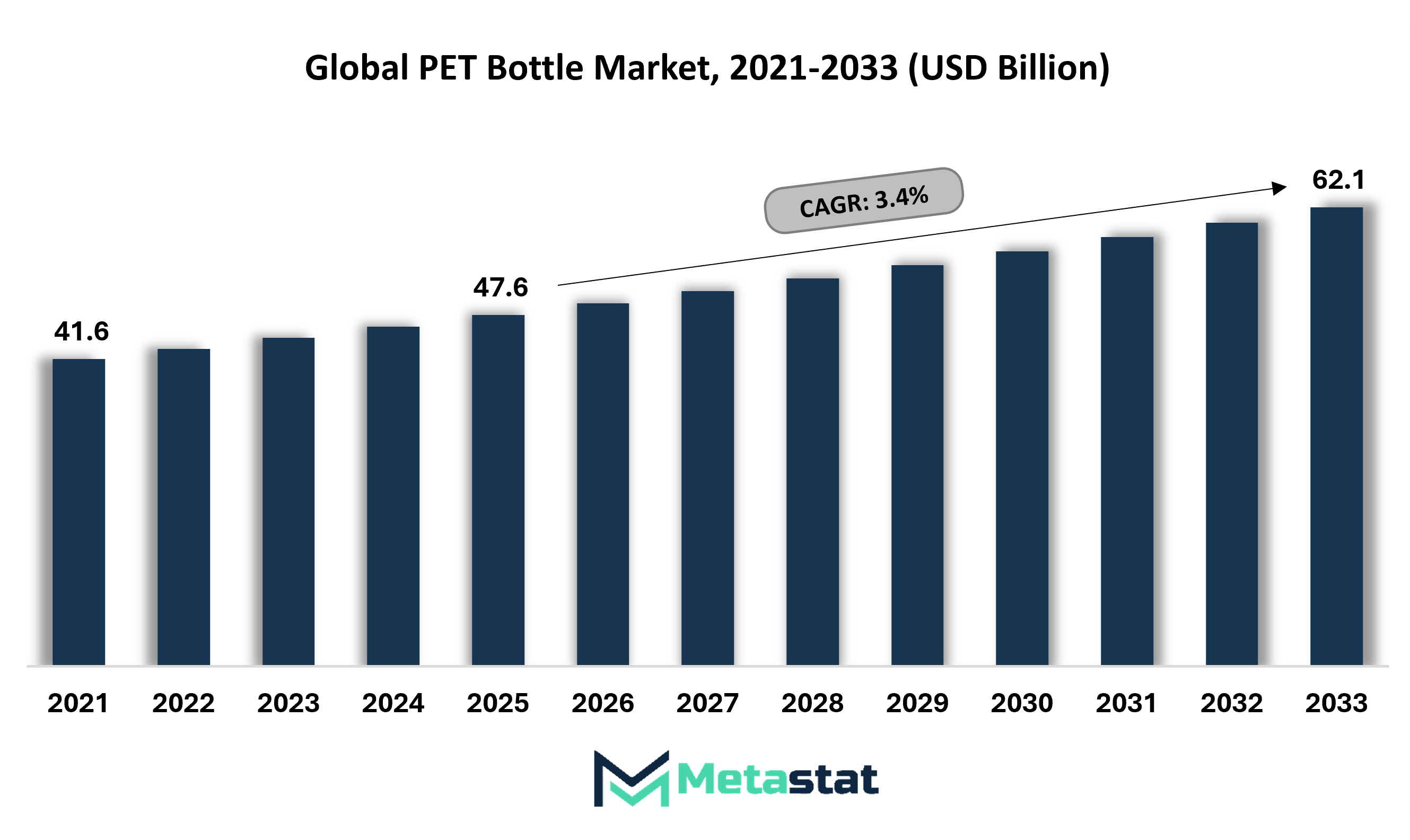
The competitive landscape of the global PET bottle market is increasingly shaped by a focus on sustainability, driven by both regulatory pressures and evolving consumer preferences. Major players are adopting competitive strategies that prioritize environmentally friendly practices. Companies like Amcor and Indorama Ventures are investing in innovative materials and processes that enhance the sustainability of their products. These advancements not only address regulatory demands but also align with consumer expectations for responsible packaging solutions. As the market shifts towards more sustainable practices, these companies are likely to gain a competitive edge by differentiating their offerings through eco-friendly initiatives.
Technological innovations play a crucial role in determining market share within the PET bottle sector. The introduction of advanced recycling technologies, such as chemical recycling, allows manufacturers to reclaim PET materials more efficiently, thereby increasing the availability of recycled content in new products. This shift toward incorporating recycled PET (rPET) is not just a trend; it is becoming a standard expectation among consumers and regulators alike. Players like Plastipak Holdings are at the forefront of these technological advancements, enhancing their capabilities to produce high-quality rPET while simultaneously reducing their environmental footprint.
Partnerships are emerging as a vital strategy for enhancing recycling capabilities in the PET bottle market. Collaborations between manufacturers, recycling facilities, and technology providers are essential for creating a more efficient recycling ecosystem. These partnerships facilitate the sharing of best practices and innovations, leading to improved recycling rates and the development of new recycling technologies. Such cooperative efforts are particularly important as the industry seeks to meet stringent regulatory standards and consumer demands for sustainable packaging solutions.
The competitive dynamics also reveal a distinction between global and regional players in their sustainability efforts. Global companies often have more resources to invest in advanced technologies and sustainable practices, allowing them to lead in market share. However, regional players are increasingly adopting innovative approaches tailored to local markets, which can enhance their competitiveness. As sustainability becomes a key differentiator, the ability of these companies to implement effective recycling initiatives and engage in environmentally responsible practices will significantly influence their positioning in the market.
Emerging players in the recycling technology space are also reshaping the competitive landscape. Startups and smaller firms are developing novel technologies that improve the efficiency of PET recycling processes. By focusing on innovative solutions, these emerging players are challenging established companies and driving the industry towards a more sustainable future. As the market evolves, the interplay between established firms and these newcomers will be critical in determining the overall trajectory of the PET bottle market, particularly in terms of sustainability and technological advancement.
The segmentation of the PET bottle market by manufacturing technology is a critical aspect that shapes product offerings and consumer preferences. The primary technologies employed in the production of PET bottles include stretch blow molding, injection molding, extrusion blow molding, and thermoforming. Each method presents unique advantages that cater to different market needs. For instance, stretch blow molding is widely utilized for creating lightweight bottles that maintain strength under pressure, making them ideal for carbonated beverages. In contrast, injection molding allows for precise control over bottle weight and thickness, which is crucial for producing preforms that later undergo blow molding.
Technological advancements significantly influence product differentiation within the PET bottle market. Manufacturers are increasingly integrating innovative features into bottle designs, such as ergonomic shapes, resealable caps, and tamper-evident seals, which enhance user convenience and appeal. These advancements not only improve functionality but also elevate brand visibility and consumer trust. As companies strive to stand out in a competitive landscape, the ability to produce uniquely designed bottles through advanced manufacturing technologies becomes a key differentiator.
Emerging technologies are poised to further refine market segmentation. Innovations in automation, artificial intelligence, and the Internet of Things (IoT) are transforming manufacturing processes by enhancing production efficiency and enabling real-time quality control. For example, the integration of AI-driven predictive maintenance tools can reduce downtime and improve operational efficiencies, allowing manufacturers to respond swiftly to market demands. These advancements not only lower operational costs but also expand customization capabilities, enabling producers to cater to niche markets with specific design requirements.
Consumer preferences are shifting towards innovative bottle designs that reflect sustainability and functionality. The growing emphasis on eco-friendly packaging has led to increased demand for bottles made from recycled PET (rPET) and other sustainable materials. Brands are investing in the development of bottles that not only meet consumer expectations for convenience but also align with environmental values. The introduction of fully recyclable and aesthetically pleasing bottle designs resonates with consumers, enhancing brand loyalty and driving market growth.
Technological advancements in recycling processes are also reshaping the PET bottle landscape. The implementation of closed-loop recycling systems and investments in advanced recycling infrastructure are critical in addressing sustainability concerns. Companies are increasingly focusing on producing high-quality rPET, which can be reintegrated into new bottle production, thereby promoting a circular economy. This shift not only satisfies consumer demand for sustainable packaging but also enhances the overall efficiency of the PET bottle supply chain.
In summary, the segmentation of the PET bottle market by manufacturing technology is essential for understanding the dynamics of product differentiation and consumer preferences. As the industry evolves, embracing innovative technologies and sustainable practices will be pivotal in shaping the future landscape of the PET bottle market.
The regulatory landscape for the PET bottle market is becoming increasingly complex, driven by stringent environmental policies and evolving consumer expectations. In the European Union, regulations mandating recycled content in plastic packaging are gaining momentum, particularly under the EU Green Deal, which aims to make Europe climate-neutral by 2050. These regulations require manufacturers to integrate a certain percentage of recycled material in their products, thereby promoting the use of recycled polyethylene terephthalate (rPET). Compliance with these standards is crucial as it not only aligns with sustainability goals but also influences market competitiveness.
Moreover, the impact of single-use plastic bans is significantly reshaping the PET bottle production landscape. Various jurisdictions are implementing restrictions on single-use plastics, pushing manufacturers to adapt their production processes and explore alternative materials. This shift not only affects the supply chain dynamics but also compels companies to innovate in the design and functionality of PET bottles, ensuring they meet both regulatory requirements and consumer preferences for sustainable products.
Manufacturers face numerous compliance challenges as they navigate the evolving regulatory framework. The need to invest in advanced recycling technologies and modify existing production lines can impose substantial financial burdens. Additionally, understanding and adhering to diverse regulations across different regions—such as the FDA guidelines in the United States and California SB 54, which focuses on reducing plastic waste—adds layers of complexity to compliance efforts. Companies must remain vigilant and proactive in their approach to regulatory changes to avoid potential penalties and ensure market access.
Looking ahead, the regulatory environment is expected to continue evolving, with a strong emphasis on sustainability and circular economy principles. Future regulations may further tighten requirements on recycled content and implement stricter penalties for non-compliance, compelling manufacturers to prioritize sustainable practices. The trend towards extended producer responsibility (EPR) is also likely to gain traction, shifting the onus of waste management onto producers and incentivizing them to develop more sustainable packaging solutions.
Government initiatives will play a pivotal role in promoting recycling and supporting the transition towards a more sustainable PET bottle market. Programs aimed at enhancing recycling infrastructure, providing financial incentives for recycling initiatives, and fostering public awareness campaigns are essential components of this transition. By aligning with government efforts, manufacturers can not only ensure compliance but also enhance their brand reputation and appeal to environmentally conscious consumers.
In summary, the regulatory landscape surrounding the PET bottle market is characterized by increasing scrutiny and demands for sustainability. Manufacturers must navigate these changes effectively to maintain compliance, drive innovation, and capitalize on the opportunities presented by a more sustainable future.
The global PET bottle market is increasingly influenced by innovations in recycling technologies, which are crucial for enhancing sustainability and meeting regulatory demands. Advanced recycling methods, particularly chemical recycling, have emerged as a significant innovation. This technology allows for the breakdown of PET into its original monomers, enabling the production of high-quality recycled PET (rPET) suitable for food-grade applications. Companies such as Eastman are leading the charge in developing these advanced recycling solutions, which can potentially transform waste into valuable resources, thus promoting a circular economy within the PET bottle sector.
However, achieving high-quality food-grade rPET remains a challenge. The stringent standards set by regulatory bodies necessitate that recycled materials meet specific safety and quality requirements. This has led to an increased focus on improving the recycling processes to ensure the purity and safety of rPET. For instance, Loop Industries is actively working on technologies that enhance the quality of recycled PET, addressing the concerns associated with contamination and degradation of material properties during recycling.
Another transformative aspect in the recycling landscape is the integration of artificial intelligence (AI) into sorting and recycling processes. AI-driven technologies are being deployed to enhance the efficiency and accuracy of material sorting, which is critical in ensuring that high-quality rPET is produced. Companies like Veolia are adopting AI solutions to automate and optimize the sorting of PET bottles, reducing human error and increasing throughput. This technological advancement not only streamlines the recycling process but also supports the broader goal of increasing recycling rates across the industry.
Regulatory pressures are also playing a pivotal role in driving innovations in recycling. Governments worldwide are enacting stricter regulations aimed at reducing plastic waste and promoting the use of recycled materials. These regulations are motivating companies to invest in new recycling technologies and develop more sustainable practices. The push for a circular economy is prompting significant shifts in how PET bottles are produced, consumed, and recycled, compelling manufacturers to rethink their supply chains and product designs.
Several successful case studies illustrate the potential of innovative recycling initiatives. For example, collaborative efforts among industry stakeholders have led to the establishment of closed-loop systems where post-consumer PET bottles are collected, recycled, and reintroduced into the production cycle. These initiatives not only demonstrate the feasibility of recycling at scale but also highlight the economic benefits of utilizing rPET in manufacturing processes. Such examples serve as models for other regions and sectors looking to enhance their recycling capabilities and sustainability efforts.
In summary, while the PET bottle market faces challenges in achieving high-quality rPET and navigating regulatory landscapes, the ongoing innovations in recycling technologies, coupled with the integration of AI and successful case studies, offer promising pathways to enhance the sustainability of PET packaging and contribute to a circular economy.
The integration of advanced technologies such as artificial intelligence (AI) and the Internet of Things (IoT) is significantly transforming the manufacturing landscape of the PET bottle market. These technologies enhance production lines by enabling real-time monitoring and predictive maintenance, which in turn reduces downtime and operational costs. Companies like Berry Global are at the forefront of this integration, utilizing AI-powered tools to streamline their production processes and improve efficiency. This technological advancement not only minimizes defects but also allows for greater customization of products, catering to the increasing demand for tailored packaging solutions.
Another key development is the advancement in lightweighting technologies, which focuses on reducing the weight of PET bottles without compromising their structural integrity. This shift is crucial as every gram saved translates to lower resin input, reduced freight emissions, and decreased extended producer responsibility fees. Such innovations in preform design enable the incorporation of recycled PET (rPET) while maintaining performance standards. This approach aligns with the growing emphasis on sustainability and cost-effectiveness, making lightweight bottles an attractive option for manufacturers.
Automation also plays a pivotal role in enhancing production efficiency within the PET bottle manufacturing sector. By automating various stages of the production process, manufacturers can achieve higher output rates and improved consistency in product quality. For instance, Krones AG has developed integrated systems that combine blow molding, labeling, and filling into single monobloc units, significantly reducing changeover downtime and optimizing factory space. This level of automation not only streamlines operations but also enhances the ability to respond swiftly to market demands.
Moreover, the development of new manufacturing processes, such as thermoforming and injection molding, is reshaping the capabilities of PET bottle production. Thermoforming, in particular, is gaining traction due to its ability to create wide-mouth jars with enhanced shelf appeal, catering to the personal care and food sectors. While traditionally slower than stretch blow molding, recent innovations have improved cycle times, making thermoforming a competitive option for manufacturers seeking to diversify their product offerings.
Lastly, the implementation of digital watermarking technology is revolutionizing the recycling landscape for PET bottles. This innovation allows for better sorting of recyclable materials, significantly improving the yield of food-grade rPET. By embedding digital codes on the bottle surface, manufacturers can enhance the accuracy of optical sorting systems, leading to a marked increase in the quality of recycled materials. This advancement not only supports sustainability initiatives but also helps companies like Sidel in meeting stringent regulatory requirements while promoting transparency in the supply chain.
In summary, the integration of these technological advancements in PET bottle manufacturing is crucial for driving efficiency and innovation within the industry. As the market evolves, the ability to adapt to these changes will be essential for manufacturers aiming to maintain a competitive edge while meeting the growing demands for sustainable and high-quality packaging solutions.
The global PET bottle market is mainly classified based on Type, Grade, Application, and Resin Type.
Clear - Transparent bottles in the Global PET Bottle industry will remain leading because of transparency that makes it easy for consumers to see what is contained. With increased demand for packaged drinks, the clear category will appeal to large industries. Future advances in technology will advance clarity, lightweight capabilities, and recyclability, and it will be a choice of preference.
Colour - Colour bottles in the Global PET Bottle industry will become increasingly acceptable where visual attractiveness and branding are critical. These bottles will facilitate innovative product differentiation strategies in food and cosmetic packaging. New colouring technologies will also enhance UV resistance and shelf-life extension, which will guarantee higher acceptance in industries.
Colour segment is valued at USD 12 billion in 2026 and is projected to reach USD 16.3 billion by 2033, at a CAGR of 4.5% during the forecast period.
Food - Food packaging bottles inside the global PET bottle market will continue to grow as international demand for secure meals and beverage packaging will increase. Improved production techniques will emphasize hygiene, long shelf life, and sustainability. The enterprise will simply be subject to more stringent regulations to move agencies toward superb, recyclable, and lightweight alternatives.
Food Grade segment is projected to reach USD 54.2 billion by 2033, at a CAGR of 3.6% during the forecast period.
Non-food - Non-meals grade bottles inside the global PET bottle market will benefit traction in household, chemical, and private care packaging. Increasing call for for long lasting but price-powerful packaging will aid growth. Future improvements will recognition on improving electricity, chemical resistance, and recyclability, permitting wider adoption in industries requiring secure however non-edible use.
The global PET bottles marketplace has come to be a substantial phase of the packaging area due to the need for lightweight, sturdy, and recyclable packaging. The bottles have observed widespread use in sectors like liquids, food, private care, and pharmaceuticals, and their use is step by step increasing due to their comfort and affordability. With companies focusing extra on sustainability, PET bottles also are within the highlight as a recyclable cloth that may be pleasant to circular economic system standards. All this has impacted production and consumption styles at the continent and globally, figuring out how the market will evolve inside the future.
The North American area is influential in the marketplace, with boom being driven by the U.S., Canada, and Mexico. The U.S. Contributes extensively due to the massive beverage and packaged food markets, as well as the developing emphasis on recycling applications selling the usage of PET bottles. Canada and Mexico contribute through growing purchaser demand for cost-effective packaging solutions, and government-sponsored programs which are seeking to reduce plastic waste. Collectively, those nations are probable to retain having a stable marketplace share as sustainability regulations and packaging technology improvements improve.
Within Europe, the market is encouraged through guidelines on unmarried-use plastics, that have promoted the use of recyclable PET bottles in the UK, Germany, France, Italy, and the Rest of Europe. Governments and industry in the location collaborate to develop recycling structures that provide better series and reuse efficiencies. The excessive emphasis on environment-pleasant packaging in countries inclusive of Germany and France turns Europe into one of the main areas for environmentally pleasant packaging solutions.
Asia-Pacific is the place that is growing the quickest, pushed with the aid of India, China, Japan, South Korea, and the Rest of Asia-Pacific. China and India lead because of the scale in their populations, urbanization, and growing food and beverage industries. Japan and South Korea add with excessive technologies making PET bottles higher in first-class and sustainability. As extra health-minded and busy existence become customary during this area, the recognition of bottled liquids and packaged items will boom further, reinforcing the PET bottles market.
South America, with Brazil and Argentina at the vanguard, is likewise gambling a part in market growth as packaged drinks grow in reputation with the purchaser. Domestic industries also are an increasing number of the use of PET bottles because they are reasonably-priced and convenient, with recycling efforts regularly gaining traction. In comparison, the Middle East & Africa vicinity, encompassing GCC nations, Egypt, South Africa, and the Rest of the United States, is experiencing modest growth. Growing population, urbanization, and extra reputation of smooth beverages and bottled water are fueling call for. With increasing investment in recycling facilities and transferring client tendencies, those markets will increasingly more make contributions to the worldwide PET bottles market.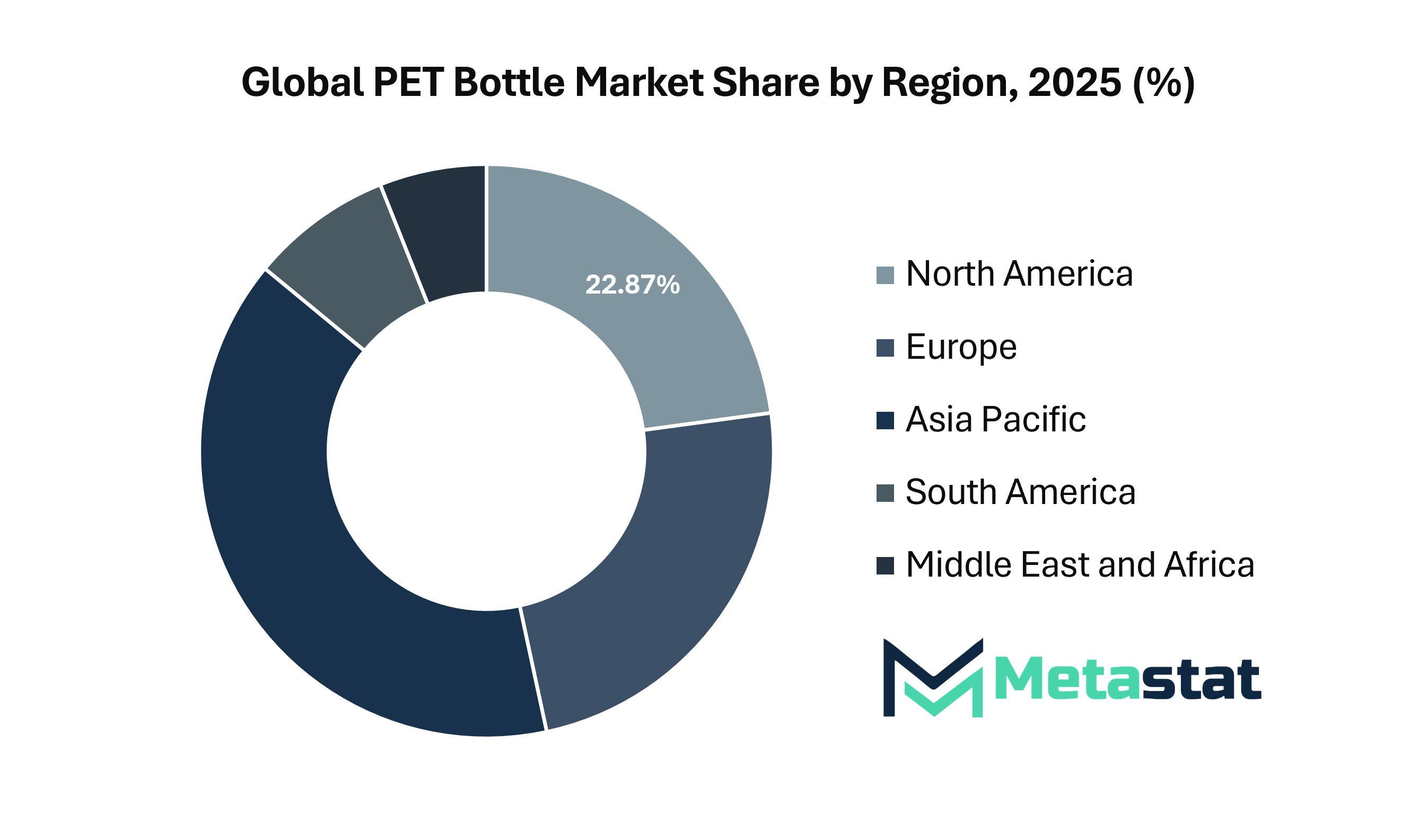
The global PET bottle market has evolved into one of the maximum usually debated packaging industries due to its applicability and elevated demand among various industries. PET bottles are favoured because of their light-weight nature, energy, and recyclability, making them a famous product for drinks, food packaging, private care items, and domestic merchandise. The market has extended through the years, fueled by means of patron call for and the need to expand greater environmentally friendly packaging answers. As the world's industries and governments influence recycling efforts and circular economy practice, PET bottles are probable to turn out to be the fulcrum of bundle techniques globally.
Most intriguing in the global PET bottle market is the combination of global giants and emerging regional players that are setting its tone. The likes of Indorama Ventures Public Company Limited, ALPLA Werke Alwin Lehner GmbH & Co KG, and Krones AG are establishing global benchmarks with their massive operations and investments in recycling technologies. Along with them, organizations like Extrupet Group (Pty) Ltd, Verdeco Recycling, Inc, and Evergreen Plastics, Inc are establishing robust roles at the regional level of recycling and manufacturing, providing localized solutions to the overall supply chain. This blend of international big-hitters and niche players enables the industry to be expansive yet responsive to consumer needs.
Sustainability is an ongoing priority for most PET bottle companies. Companies like Phoenix Technologies International LLC, Clear Path Recycling, and Carbon LITE Industries LLC are focused on the manufacturing of recycled PET (rPET) to minimize their impact. Concurrently, manner innovation in production and design with the aid of businesses which includes PolyQuest, Lotte Chemicals, and M&G Chemicals guarantees that PET bottles are manufactured with efficiency and less wastage. These modifications are an end result of the increasing strain from purchasers and regulators stressful sustainable practices, compelling the enterprise to paintings closer to long-term answers instead of short-time period remedies.
Regional operators also are increasingly more being mentioned by offering competitive alternatives to the sector leaders. Operators like Seiu Japan Co, Ltd, SEINAN Corporation, Kuusakoski Oy, BariQ, and Sorema are innovating in recycling technology and opening opportunities in their markets, gambling a position inside the global force closer to sustainability. This role suggests that innovation is not only a preserve of establishment businesses but also from regional operators who innovate swiftly to suit the demands of the neighbourhood marketplace. This stability of worldwide and local competition ensures that the global PET bottle market will maintain growing, and that it's going to bring increase and demanding situations alike as industries and governments cooperate to ensure responsible consumption and manufacturing.
Increasing regulatory bans and taxes on single-use plastics: The global PET bottle market will revel in stricter restrictions as extra international locations have bans and hefty levies on unmarried-use plastics. Such guidelines will compel industries to re-observe packaging behaviour. Companies will have to conform to stricter guidelines, growing compliance prices, and transition to ecologically suited options with a view to continue to be relevant.
Growing consumer shift towards sustainable alternatives (e.g., aluminum, glass): The global PET bottle market will face developing competition from alternatives like aluminum and glass as consumer attention concerning sustainability grows. Lifestyle changes will set off the usage of options which might be looked as if it would be more secure for the surroundings. This shift will have an effect on long-term demand as well as push manufacturers to redefine boom techniques.
Innovation in recycled content (rPET) and advanced recycling technologies: The global PET bottle market will experience sturdy opportunities thru the improvement of PET and progressive recycling technologies. Advances will enable accelerated recycling rates, higher bottle satisfactory, and decrease environmental footprint. This transformation will allow circular economy goals and provide opportunities for sustainable development, aligning production with future purchaser demands.
The business will continue to expand into cultural and economic discussions as well. As global PET bottle market look for products that are available with price and performance balance, PET bottles will be a case study of how accessibility is powered by innovation. The future is not only the tale of bottles delivering products but of an industry defining business-to-materials and consumer-to-materials interactions on a global level.
This research report categorizes the global PET bottle market based on various segments and regions, forecasts revenue growth, and analyzes trends in each submarket. The report analyses the key growth drivers, opportunities, and challenges influencing the global PET bottle market. Recent market developments and competitive strategies such as expansion, type launch, development, partnership, merger, and acquisition have been included to draw the competitive landscape in the market. The report strategically identifies and profiles the key market players and analyses their core competencies in each sub-segment of the global PET bottle market.
|
Report Attributes |
Details |
|
Study Period |
2021-2033 |
|
Base Year |
2025 |
|
Estimated Year |
2026 |
|
Forecast Period |
2026-2033 |
|
Historical Period |
2021-2025 |
|
Growth Rate |
CAGR 3.4% from 2026 to 2033 |
|
Revenue Unit |
USD billion |
|
Sales Volume Unit |
Kilotons |
|
Segmentation |
By Type, Grade, Application, Resin Type, and Region |
|
By Region |
North America (By Type, Grade, Application, Resin Type, and Country)
|
|
|
Europe (By Type, Grade, Application, Resin Type, and Country)
|
|
|
Asia Pacific (By Type, Grade, Application, Resin Type, and Country)
|
|
|
South America (By Type, Grade, Application, Resin Type, and Country)
|
|
|
Middle East and Africa (By Type, Grade, Application, Resin Type, and Country)
|
Find answers to common questions about this report
The Metastat Insights study shows that the Global PET Bottle market size was USD 47.6 billion in 2025.
The Global PET Bottle market is expected to grow at a CAGR of 3.4% over the forecast period (2026-2033).
The Metastat Insights analysis shows that the North America PET Bottle market size is estimated to be USD 13.4 billion by 2033.
Top players operating in the global PET bottle market are Extrupet Group (Pty) Ltd, Carbon LITE Industries LLC, Phoenix Technologies International LLC, and Others.
Global PET Bottle market is estimated to reach USD 62.1 billion by 2033.
The sugarcane-based PET bottle market focuses on the production and commercialization of polyethylene terephthalate (PET) bottles made from sugarcane biomass, offering a sustainable alternative to traditional petroleum-based plastics. This market has emerged in response to growing environmental concerns and consumer demand for eco-friendly packaging solutions. It encompasses various applications, with the beverage industry being the dominant segment, while personal care and food packaging are also gaining traction. The market is supported by advancements in bio-refining technologies and regulatory policies that favor sustainable materials, driving innovation and investment in this sector. Overall, the sugarcane-based PET bottle market reflects a broader trend towards sustainability in packaging.
The recycled PET bottles market involves the production and use of bottles made from recycled polyethylene terephthalate (PET), which is a type of plastic commonly used in packaging. This market is driven by increasing consumer demand for sustainable packaging solutions, as well as regulatory pressures aimed at reducing plastic waste. Key applications include the food and beverage industry, where recycled PET is favored for its environmental benefits and versatility. Technological advancements in recycling processes are enhancing the quality and efficiency of recycled PET, making it a more attractive option for manufacturers. Overall, the market is characterized by a shift towards circular economy practices and greater emphasis on sustainability.
The India PET Bottle Market is characterized by a strong demand for lightweight, shatter-resistant, and recyclable packaging solutions used primarily in beverages and consumer products. This market is driven by the rising consumption of packaged drinking water, soft drinks, and various fast-moving consumer goods (FMCG), alongside increasing quality expectations from consumers. Regulatory changes mandating recycled content in packaging are also reshaping the industry, creating opportunities for manufacturers who can effectively incorporate sustainable practices. The market features a diverse range of applications, including food, personal care, and pharmaceuticals, making it a vital component of the broader packaging sector in India.
The PET bottles market is a significant segment of the packaging industry, characterized by the demand for lightweight, durable, and recyclable packaging solutions. It has seen widespread use across various sectors, including beverages, food, personal care, and pharmaceuticals, driven by consumer preferences for convenience and affordability. The market is evolving with a growing emphasis on sustainability and recycling, positioning PET bottles as key components in circular economy practices. Innovations in design and functionality are also shaping the future of the market, as companies seek to enhance consumer interaction through smart packaging solutions.
The rPET price trend has shown fluctuations influenced by various factors, including raw material availability and demand from the packaging industry. As sustainability initiatives gain traction, the demand for recycled PET has increased, which can lead to upward pressure on prices. Additionally, changes in oil prices and the cost of virgin PET production can also impact rPET pricing. Overall, the market is experiencing a growing interest in rPET, which may result in a more stable or increasing price trend in the long term.
The PET beverage packaging market refers to the segment of the packaging industry that utilizes polyethylene terephthalate (PET) materials specifically for containing and protecting beverages. This market includes various forms of packaging such as plastic bottles, which are commonly used for water, soft drinks, juices, and other ready-to-drink products. The demand for PET packaging is driven by its lightweight nature, cost efficiency, and suitability for high-speed filling processes. Additionally, sustainability trends are influencing the market as brands increasingly seek to incorporate recycled materials into their packaging solutions. Overall, the PET beverage packaging market plays a crucial role in the broader beverage industry by providing effective and efficient packaging options.
The PET bottle manufacturing market involves the production of bottles made from polyethylene terephthalate, a type of plastic known for its strength, lightweight nature, and recyclability. This market is driven by the increasing demand for bottled beverages, personal care products, and food packaging. Additionally, the growing focus on sustainability and recycling initiatives is influencing manufacturers to innovate in their production processes. Overall, the PET bottle market is characterized by its adaptability to various industries and the ongoing trend towards environmentally friendly practices.
The PET bottle recycling market involves the collection, processing, and repurposing of used PET bottles to create new products, reducing environmental impact and promoting sustainability. This market is driven by increasing awareness of plastic waste and the demand for recycled materials in various industries. Key players in the market include recycling facilities, manufacturers of recycled PET products, and companies focused on sustainable packaging solutions. The growth in consumer preferences for eco-friendly products further supports the expansion of the PET bottle recycling market.
The Australia PET Bottle Market is characterized by a growing demand driven by increasing consumer preferences for lightweight, recyclable packaging solutions. This market is influenced by trends in sustainability and environmental awareness, leading to a rise in the use of PET bottles across various sectors, including beverages and food. The market is also supported by advancements in recycling technologies and initiatives aimed at reducing plastic waste. Overall, the PET bottle market in Australia reflects a shift towards more eco-friendly packaging options.
The analysts below cover Packaging research at Metastat Insights.
LEAD ANALYST
Utkarsh Khirodkar is a Lead Market Research Analyst at MetaStat Insight, specializing in market intelligence, technology sector assessments, and competitive strategy.

SENIOR RESEARCH ANALYST
Biotechnology · Food and Beverages · Medical Devices · Packaging
Snehal Pasalkar is a Research Analyst at MetaStat Insight, operating at the intersection of life sciences research, competitive strategy, and market intelligence.

INDUSTRY CONSULTANT - CHEMICALS & ADVANCED MATERIALS
Chemicals and Materials · Machinery & Equipment · Packaging
Amit Gadhekar Consultant for Chemicals and Materials at MetaStat Insight, directing sector-specific intelligence, research, and strategic consulting across global chemical and processing markets.
Replacing petrochemical surfactants with bio-based alternatives requires realistic timelines on industrial precision fermentation scaling. The market research broke down commercialization timelines, feedstock sugar price sensitivities, and regional cosmetic ingredient regulatory approvals in Europe and East Asia. That supplier readiness mapping gave our formulations team reliable context when comparing renewable chemical sourcing roadmaps.
Tracking ceramic matrix composite adoption in high-bypass aero engines requires strict attention to material qualification cycles and FAA airworthiness testing milestones. The MetaStat Insight team provided a detailed timeline of silicon carbide fiber manufacturing capacity and commercial foundry lead times. Having clear visibility into upstream thermal barrier coating supply helped us stress-test our long-term component procurement strategy.
Transitioning ultra-class mining haul trucks to alternative power requires concrete data on remote hydrogen refueling infrastructure economics. The report evaluated megawatt-scale electrolyzer installation expenses, onsite storage safety mandates, and heavy-duty fuel cell stack degradation under continuous duty cycles. That technical rigor helped our engineers benchmark realistic total operating cost horizons for off-highway fleet decarbonization.
Explore related market intelligence reports worth reading alongside this one.