
LEAD ANALYST
Utkarsh Khirodkar is a Lead Market Research Analyst at MetaStat Insight, specializing in market intelligence, technology sector assessments, and competitive strategy.

Global Flexible Packaging Barrier Paper Market Size, Share, By Paper Type (Kraft Paper, Greaseproof Paper, Parchment Paper, Glassine Paper), By Barrier Property (Moisture Barrier, Oxygen Barrier, Grease/Oil Barrier, Vapor Barrier, Aroma/Flavour Barrier), By Coating Type (Polymer Coatings, Wax Coatings, Aluminium Foil Coatings, Water-Based Coatings, Bio-Based/Biodegradable Coatings), By End-Use Industry (Food and Beverages, Personal Care and Cosmetics, Pharmaceuticals, Retail and Consumer Goods), Industry Analysis, Growth, Trends, and Forecast, 2026-2033
Report ID
MSI-4696
Published
November, 2026
Pages
308 Pages
Format
Historical
Base year
Forecast
Forecast period
Report Details
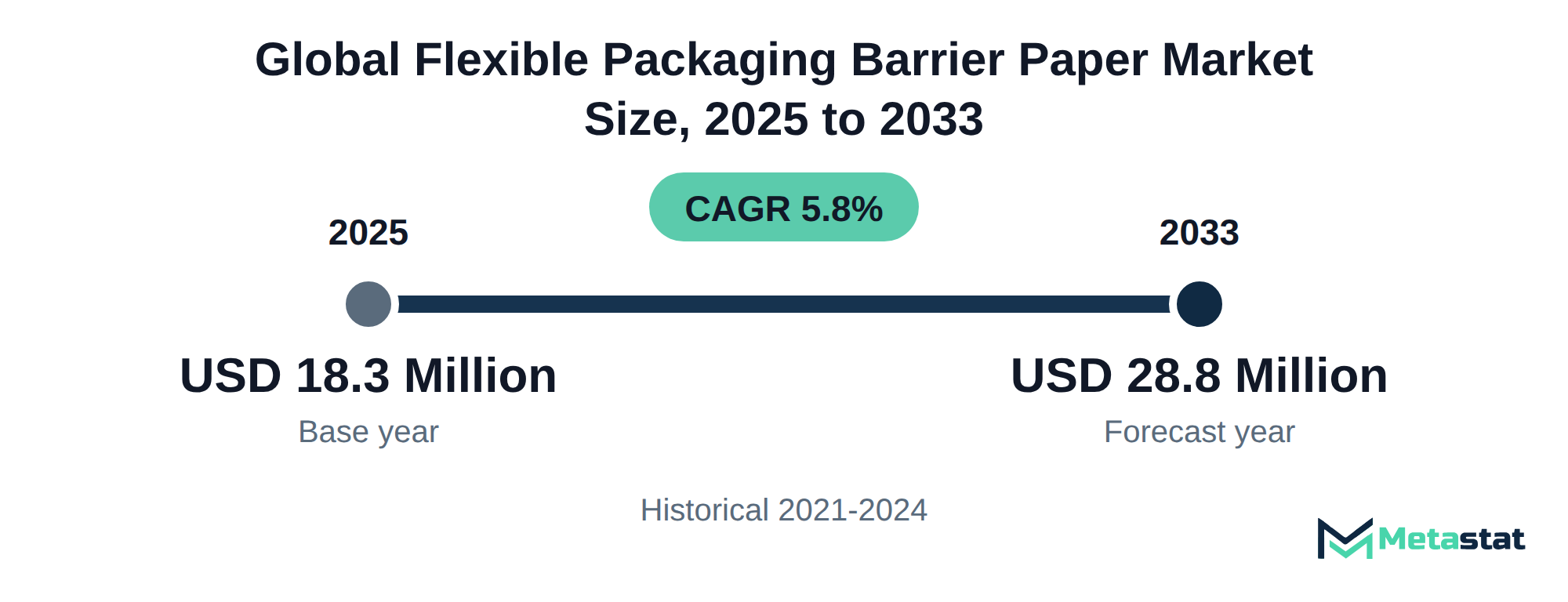
Market Valuation: Valued at $18.3 Million in 2025, projected to reach $28.8 Million by 2033 at a 5.8% CAGR.
Dominant Segment: Kraft paper leads the Flexible Packaging Barrier Paper market, driven by its strength and versatility in various applications, particularly in food and beverages.
Geographic Lead: North America is the leading region, holding 27.1% of the market in 2025, with the US expected to continue its dominance in 2026 due to a focus on innovative packaging solutions.
What's Inside: The report provides comprehensive coverage of market dynamics, competitive analysis, and forecasts from 2026 to 2033, detailing various paper types, barrier properties, and coating types.
Sustainability Trends: Growing consumer awareness and regulatory pressures are driving a shift towards sustainable packaging solutions, significantly impacting demand across multiple industries.
Technological Innovations: Advancements in barrier technologies are enhancing product performance, particularly in moisture and oxygen resistance, which is crucial for maintaining product integrity.
Choose Your License
Global Flexible Packaging Barrier Paper Market
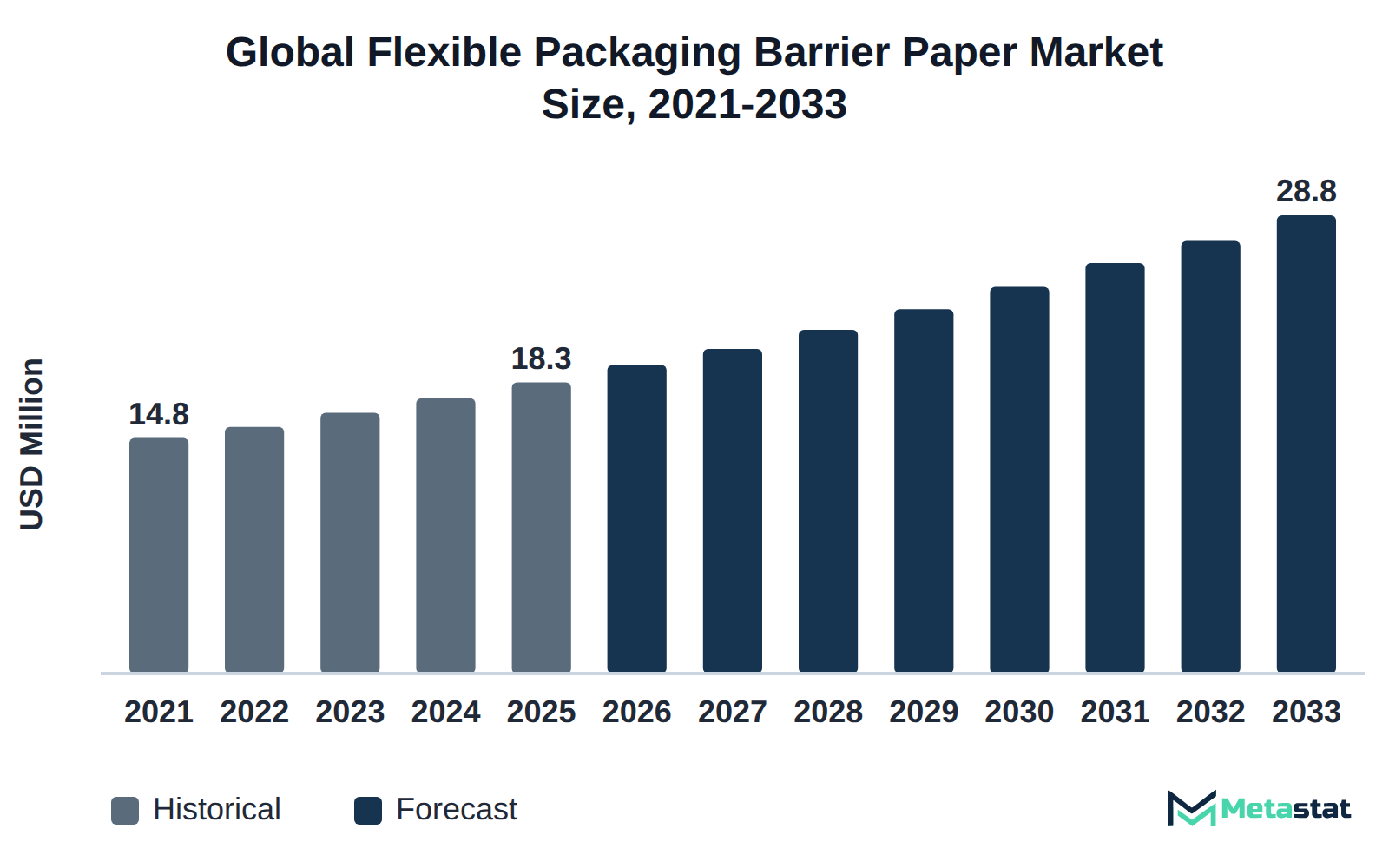
The global Flexible Packaging Barrier Paper market was valued at USD 18.3 million in 2025 and is projected to reach USD 28.8 million by 2033, growing at a CAGR of 5.8% over the forecast period.
The Flexible Packaging Barrier Paper market encompasses a variety of paper types and coatings designed to protect contents from external factors, ensuring product integrity and longevity. Buyers invest in these solutions to meet the growing demand for sustainable packaging options that maintain product quality while minimizing environmental impact. The need for efficient packaging solutions drives spending across various industries, including food and beverages, personal care, and pharmaceuticals.
Growth in the market is fueled by increasing consumer awareness regarding sustainable packaging. Kraft paper stands out as the most valuable segment, benefiting from its strength and versatility in various applications. North America holds 27.1% of the market in 2025, with the US leading in 2026. This region's focus on innovative packaging solutions supports continued investment and development within the sector.
Another significant contributor to market expansion involves rising demand from the food and beverages industry, which emphasizes the importance of barrier properties in packaging. More consumers seek convenient and safe packaging options, and producers adapt their offerings to meet these expectations. This trend highlights the market's capacity for growth and the increasing relevance of flexible packaging solutions.
The market serves applications across several industries, with significant investments driven by demand for sustainable and effective packaging solutions. Buyers prioritize flexible packaging barrier paper for its ability to maintain product freshness and safety, particularly in the food and beverage sector. The versatility of these materials allows them to serve multiple purposes, enhancing their appeal to businesses focused on sustainability and efficiency.
Rising consumer awareness of environmental concerns and the need for sustainable packaging options also support market growth. The food and beverages sector stands out with the most value, reflecting the rising demand for convenient and longer-lasting packaging solutions. North America holds 27.1% of the market in 2025, with the US leading in 2026, contributing significantly to overall growth trends.
Continued innovation in materials and coatings drives market expansion. The focus on enhancing barrier properties, including moisture and oxygen resistance, aligns with the evolving requirements of various end-use industries. This trend indicates a positive outlook for the Flexible Packaging Barrier Paper market, with sustained demand expected to influence future developments.
Barrier papers emerge as viable alternatives to plastic films in flexible food packaging. With increasing environmental awareness and regulatory pressure on single-use plastic packaging, manufacturers and end-users seek sustainable packaging solutions.
Specific product types, including Kraft paper, are expected to drive this transition, with a compound annual growth rate of 6.1% between 2026 and 2033. This shift highlights significant commercial potential for companies focusing on producing sustainable packaging materials. By adopting barrier paper alternatives, businesses enhance their environmental credentials and address consumer demand for eco-friendly options.
The transition from plastic films to barrier papers aligns with the broader trend toward sustainability in packaging. This transition supports a competitive edge in the flexible packaging barrier paper market. Companies can differentiate their product offerings while reducing plastic waste in the food packaging industry.
Water-based coatings represent an evolving trend within the Flexible Packaging Barrier Paper market, with a notable focus on sustainability and consumer safety. These coatings eliminate the use of mineral oils, aligning with increasing regulatory requirements and consumer preferences for eco-friendly products. The market for water-based coatings is projected to grow significantly, reflecting a compound annual growth rate (CAGR) of 8.4%. This growth indicates strong demand for environmentally friendly solutions in packaging.
Buyers of flexible packaging solutions frequently engage in long-term contracts to secure stable pricing and ensure a consistent supply of materials that meet their sustainability goals. Contract models typically involve multiyear agreements that allow buyers to lock in prices, minimizing exposure to market volatility. A significant benefit for buyers involves reducing procurement costs by committing to larger volumes over extended periods, enhancing overall operational efficiency.
With the projected growth in water-based coatings, suppliers prioritizing these innovations position themselves favorably within the market. Buyers increasingly seek partnerships with manufacturers that offer sustainable products, influencing procurement strategies and expanding market reach. Businesses aligning purchasing behaviors with eco-friendly practices enhance competitive positioning and contribute to revenue growth within the Flexible Packaging Barrier Paper market.
The growing emphasis on recyclability regulations and restrictions on per- and polyfluoroalkyl substances (PFAS) significantly influences the adoption of Flexible Packaging Barrier Paper. Increasing pressure from regulatory bodies to minimize environmental impacts drives industries to shift towards more sustainable packaging solutions. The Flexible Packaging Barrier Paper market aligns with this trend, providing an advantageous alternative that meets both recyclability standards and safety requirements.
For instance, the Food and Beverages sector stands out with an anticipated growth from USD 8.7 million in 2026 to USD 13.3 million by 2033, reflecting a compound annual growth rate of 6.2%. This growth indicates strong demand for barrier paper that adheres to new environmental standards while ensuring product integrity. Rising regulatory scrutiny has prompted companies to seek packaging solutions that eliminate harmful chemicals, including PFAS, which have been linked to adverse health effects.
By transitioning to Flexible Packaging Barrier Paper, manufacturers in the Food and Beverages sector comply with regulations and enhance their market appeal. Sustainability initiatives connect with environmentally conscious consumers, resulting in increased sales and brand loyalty. As the industry moves toward eco-friendly practices, demand for barrier paper solutions is expected to strengthen, making it a key part of sustainable packaging strategies.
Flexible packaging barrier paper provides an alternative to traditional plastic laminates, delivering crucial moisture, oxygen, and grease barriers. This paper type appeals to industries focused on sustainability and reducing plastic waste. In particular, kraft paper, a significant component of the flexible packaging barrier paper market, is expected to expand from USD 7.4 million in 2026 to USD 11.2 million by 2033, reflecting a compound annual growth rate (CAGR) of 6.1%.
The shift towards flexible packaging barrier paper aligns with the increasing demand from the food and beverages sector, which anticipates growth from USD 8.7 million in 2026 to USD 13.3 million in 2033, recording a CAGR of 6.2%. Buyers in this industry seek solutions that protect their products and meet consumer expectations for environmentally responsible packaging. By replacing plastic laminates with flexible packaging barrier paper, companies enhance their product appeal while contributing to sustainability goals.
The transition from plastic laminates to flexible packaging barrier paper presents a strategic opportunity for manufacturers aiming to innovate and respond to evolving market demands. This transformation could bring significant commercial benefits by helping companies serve environmentally conscious consumers and capture a larger share of the market.
Growing awareness of environmental issues drives demand for sustainable packaging solutions among consumers and businesses. The shift toward eco-friendly products influences industries including food and beverages, personal care, and pharmaceuticals, where companies seek to reduce their ecological footprint. Increased consumer preference for biodegradable and recyclable materials encourages manufacturers to invest in alternative solutions like flexible packaging barrier paper. This transition supports the growth of the Flexible Packaging Barrier Paper market, with a projected compound annual growth rate (CAGR) of 5.8% from 2026 to 2033. The market is expected to expand from USD 18.3 million in 2025 to USD 28.8 million by 2033, reflecting increased spending on sustainable packaging materials that enhance brand reputation and meet regulatory requirements.
Changing consumer behaviors and their emphasis on sustainability drive market growth. Businesses prioritizing environmentally responsible practices increase demand for flexible packaging barrier paper.
Advancements in barrier technologies significantly enhance performance across various applications in the Flexible Packaging Barrier Paper market. These innovations include the development of high-performance coatings that improve moisture, oxygen, and grease resistance. Suppliers focus on integrating new materials that improve barrier properties without compromising sustainability goals. For instance, polymer coatings incorporating bio-based materials provide effective protection while aligning with environmentally conscious practices.
The demand for these advanced solutions emerges predominantly from the food and beverage industry, where maintaining product integrity is crucial. Enhanced barrier properties directly benefit producers by extending shelf life and reducing spoilage, which translates into cost savings and increased customer satisfaction. Growth in the market is driven by these technological advancements, catering to evolving consumer preferences for sustainable and functional packaging. Suppliers prioritizing research and development position themselves competitively by offering innovative barrier paper solutions, capitalizing on the growing trend for effective and eco-friendly packaging options.
Rising material costs significantly affect the Flexible Packaging Barrier Paper market. Producers face increasing expenses for raw materials, impacting pricing strategies. Consequently, many buyers exhibit slower uptake and smaller order volumes, particularly in the food and beverages sector, where competitive pricing remains critical. Several manufacturers encounter challenges in justifying the higher costs associated with adopting barrier paper solutions. This hesitation to invest in flexible packaging options delays product replacements and innovations in packaging design, hindering overall market growth. The burden of these elevated costs shifts buyer preferences toward lower-cost alternatives, which limits the penetration of barrier paper innovations in various end-use industries. The market's long-term sustainability relies on addressing these pricing dynamics to encourage wider acceptance among targeted buyer groups.
Rising input costs challenge suppliers in the Flexible Packaging Barrier Paper market. Increased prices for raw materials, energy, and transportation impact profit margins and overall pricing strategies. Suppliers face pressure to maintain competitive pricing while absorbing these escalating costs, which hinders profitability. In response, many suppliers explore strategic partnerships and vertical integration to secure stable sourcing for raw materials and reduce costs. Others invest in innovative production techniques to enhance efficiency and minimize waste during manufacturing processes. These actions enable suppliers to remain competitive while managing the effects of rising input costs. How suppliers manage this challenge shapes long-term viability and growth potential within the market.
The Kraft Paper segment within the Flexible Packaging Barrier Paper market presents notable growth opportunities, driven by increasing consumer preference for sustainable packaging solutions. The shift towards environmentally friendly packaging options pushes manufacturers to invest in this durable and recyclable paper type. Key end-use industries, particularly food and beverages, increasingly seek kraft paper for its proven ability to provide effective barrier properties while minimizing environmental impact. This trend positions kraft paper as a leading choice for brands aiming to enhance their sustainability profile. Growth in the Kraft Paper segment reflects a broader market shift towards sustainable packaging, aligning with changing consumer preferences and regulatory pressures.
The Global Flexible Packaging Barrier Paper market is segmented based on Paper Type, Barrier Property, Coating Type, and End-Use Industry.
This paper type serves various applications in the food and beverage, personal care, and retail industries, providing necessary protection against elements that could compromise product quality. Increasing consumer preference for eco-friendly options drives demand for Kraft Paper, with manufacturers adopting more sustainable practices to enhance their product offerings. The growth rate of Kraft Paper surpasses that of Parchment Paper and Glassine Paper, attributed to its versatile use and effective barrier properties. The emphasis on sustainability continues to strengthen its appeal, making it a competitive choice in the market for Flexible Packaging Barrier Paper.
Greaseproof Paper segment is estimated to reach USD 6.6 million by 2033, at a CAGR of 6.4% during the forecast period. This paper type is primarily used for food packaging applications, serving the needs of the food and beverages industry. Its unique properties prevent grease and moisture penetration, ensuring product freshness and safety. A strong driver for growth stems from the increasing demand for sustainable packaging solutions in food service, driven by consumers and businesses seeking environmentally friendly alternatives to plastic. Compared to other segments, Greaseproof Paper exhibits a competitive growth rate, outperforming certain alternatives in the market. Its price point is generally higher than that of standard Kraft Paper, making it a premium choice among manufacturers focused on high-quality packaging solutions. This differentiation in application and pricing reinforces Greaseproof Paper's position within the broader flexible packaging landscape.
Parchment Paper segment is expected to reach USD 3.5 million by 2033. This type of paper serves various applications, particularly in the food and beverage industry, where it protects products from moisture and contaminants. Demand for parchment paper is driven by the rise in consumer preferences for sustainable packaging solutions, reflecting environmental awareness. Compared to other paper types, including Kraft Paper, which grows at a CAGR of 6.1%, parchment paper experiences slower growth, indicating distinct market dynamics. The average pricing of parchment paper tends to be lower, making it accessible to a broader range of buyers. Increased health consciousness among consumers and stringent regulations regarding food safety further support its adoption in the food industry, enhancing the segment's development. Innovations in barrier technology and changing consumer behavior continue to shape the market.
Glassine Paper, projected to grow at a CAGR of 7.5% during the forecast period, serves significant roles in various packaging applications. Commonly used in food packaging and pharmaceutical industries, this paper type offers excellent moisture and grease resistance. Demand drivers for this segment include the increasing focus on sustainable packaging solutions among brands. Buyers prefer Glassine Paper for its superior barrier properties compared to other types, contributing to its faster growth rate. This segment's growth differs from Kraft Paper's CAGR of 6.1% and Greaseproof Paper's CAGR of 6.4%, highlighting its unique advantages in specific applications. Market trends reflect a shift towards more eco-friendly materials, ensuring that Glassine Paper aligns with evolving consumer expectations for sustainable packaging solutions.
Other paper types in the Flexible Packaging Barrier Paper market encompass a variety of applications not specifically categorized under Kraft, Greaseproof, or Parchment Paper. This segment serves various industries including food and beverages, personal care, and retail, where unique packaging requirements exist. Demand in this category relies on innovative formulations and proprietary technologies that differentiate these products. Growing consumer expectations for sustainable and functional packaging drive interest in alternative materials. Compared to the more established segments, products classified under "Others" typically exhibit different growth trajectories and pricing strategies, focusing on niche applications. Manufacturers explore advancements in barrier properties and coating technologies to enhance their offerings, which influences the competitive landscape. This segment's adaptability to emerging market trends positions it uniquely within the broader market dynamics.
Moisture Barrier segment is valued at USD 5.3 million in 2026 and is projected to reach USD 7.4 million by 2033, at a CAGR of 5% during the forecast period. This segment primarily serves the food and beverage industry, where effective moisture protection is crucial for maintaining product quality and extending shelf life. Specific demands from manufacturers for enhanced protection against moisture drive growth in this segment. Compared to other barrier properties including Oxygen Barrier and Grease/Oil Barrier, the Moisture Barrier segment features a lower growth rate, primarily influenced by established applications and technologies that exist in this space. While the market faces challenges from rising costs and competition, the focus on sustainable packaging solutions continues to spur demand.
Oxygen Barrier segment is estimated to reach USD 6.4 million by 2033, at a CAGR of 6.5% during the forecast period. This segment primarily serves applications requiring protection against oxidative degradation, particularly in food packaging and pharmaceuticals. The growing demand for food preservation drives this segment, with consumers increasingly favoring products with extended shelf lives. In comparison to other barrier properties, including Moisture Barrier, the Oxygen Barrier segment exhibits a higher growth rate due to its crucial role in maintaining product integrity. The rising focus on sustainability further enhances the segment's appeal, with manufacturers seeking eco-friendly solutions without compromising performance. Ongoing advancements in barrier technologies enable suppliers to develop innovative products that meet the evolving needs of the market, thus strengthening their competitive positions.
Grease/Oil Barrier segment is expected to reach USD 7.2 million by 2033. This segment serves essential functions in packaging applications, particularly within the food and beverage industries, where the need for effective grease and oil resistance is critical. Demand is driven by an increasing focus on product preservation and consumer safety. The segment experiences growth at a CAGR of 6.5%, influenced by rising demand for sustainable packaging solutions that minimize environmental impact. Compared to other barrier properties, this segment differentiates itself with specific performance characteristics tailored for high-fat content products, setting it apart from alternatives including moisture or oxygen barriers. The market shows sustained interest as manufacturers seek to enhance product shelf life while adhering to evolving regulatory standards that promote environmentally friendly practices.
Vapor Barrier segment is projected to grow at a CAGR of 4.3% during the forecast period. This segment specializes in preventing vapor transmission, primarily applied in food packaging and pharmaceuticals to maintain product integrity. Industries including food and beverages rely heavily on this barrier to extend shelf life and preserve quality. Demand grows due to increasing consumer preferences for products with longer shelf stability and reduced waste. Compared to other segments, this segment experiences moderate growth, influenced by technological advancements and material innovations. While the Oxygen Barrier segment exhibits a higher CAGR of 6.5%, the Vapor Barrier segment stands out through its specific focus on moisture control, making it a distinct option for manufacturers targeting particular end-use applications. Market dynamics reflect a competitive landscape where innovation and consumer demand for performance drive investment and product development.
Aroma/Flavour Barrier enhances the preservation of taste and scent in products, primarily used in food and beverage applications. This barrier property serves critical functions in maintaining product integrity during storage and transport, appealing to manufacturers focused on quality assurance. Demand for this property arises from evolving consumer preferences for fresh and flavorful experiences, driving growth in sectors including gourmet foods and specialty beverages. Compared to other barrier properties, the Aroma/Flavour Barrier exhibits unique challenges, including potential higher production costs associated with specialized materials and technologies. This sub-segment attracts specific buyer groups seeking to differentiate their products in a competitive market. Manufacturers focusing on Aroma/Flavour Barrier solutions face opportunities to innovate through advanced coating technologies and sustainable materials, reflecting broader trends in the flexible packaging sector.
Polymer Coatings segment is valued at USD 6.1 million in 2026 and is projected to reach USD 8.5 million by 2033, at a CAGR of 4.9% during the forecast period. This segment finds application in various industries, particularly in food and beverages, where packaging integrity and product preservation are critical. The demand for these coatings reflects a growing emphasis on ensuring food safety and shelf life. Rising environmental awareness influences industry players to adopt sustainable practices, further driving the segment's growth. Compared to other coating types, Polymer Coatings exhibit a moderate growth rate, with a CAGR of 4.9%, positioning it competitively, although Water-Based Coatings show a higher CAGR of 8.4%. This differentiation highlights the varying priorities of manufacturers while seeking to balance performance, cost, and environmental impact within their product offerings in the Flexible Packaging Barrier Paper market.
Wax Coatings segment is estimated to reach USD 4.2 million by 2033, at a CAGR of 3.5% during the forecast period. This coating type provides a moisture-resistant layer, primarily used in packaging for food products to maintain freshness and extend shelf life. The food and beverage industry heavily relies on Wax Coatings, driving demand through the increasing emphasis on sustainable packaging solutions. The slower growth rate of this segment compared to others, including Greaseproof Paper, reflects the relatively lower demand in non-food applications. With a CAGR of 3.5%, Wax Coatings differentiate themselves by offering specific barrier properties suited for certain food products while maintaining competitive pricing. In contrast to more advanced coatings, Wax Coatings remain appealing to manufacturers seeking cost-effective solutions for moisture protection in packaging.
Aluminium Foil Coatings segment is expected to reach USD 3.7 million by 2033. This coating type serves essential functions in packaging, particularly in the food and beverage sector, where it enhances the protection of products against moisture and oxygen. Demand for Aluminium Foil Coatings is driven by increasing consumer demand for high-quality, durable packaging solutions. Compared to other coating types, Aluminium Foil Coatings experience steady growth and hold a strong market position. This segment appeals to manufacturers focused on delivering premium products, contrasting with segments including Water-Based Coatings, which exhibit higher growth rates due to their eco-friendly properties. The distinct properties of Aluminium Foil Coatings position it uniquely within the market, catering to buyers seeking specific barrier functionalities.
Water-Based Coatings segment is projected to grow at a CAGR of 8.4% during the forecast period. This coating type primarily serves applications in the food and beverage industry, offering effective moisture resistance while remaining environmentally friendly. Growing consumer demand for sustainable packaging solutions drives adoption of water-based coatings, leading to a shift away from traditional solvent-based options. Regulatory pressures concerning volatile organic compounds (VOCs) influence manufacturers to seek compliant alternatives. Compared to other coating types, water-based coatings often command higher price points due to their eco-friendly attributes and performance capabilities, differentiating them from wax and polymer coatings. In 2033, this segment is expected to achieve significant market penetration, contributing to the broader growth trends observed across the market.
Bio-Based/Biodegradable Coatings represent an innovative approach to flexible packaging solutions. These coatings cater to industries focused on sustainability, appealing to consumers who prioritize environmentally friendly products. Increasing regulatory pressures and consumer demand for sustainable alternatives drive growth in this segment. Retail and consumer goods, and food and beverage companies, are major users, seeking to enhance their product appeal and minimize environmental impact. Compared to other coating types, Bio-Based/Biodegradable Coatings stand out due to their environmental benefits, which attract a premium price point. The market shows significant interest in these sustainable options, reflecting a broader shift toward eco-conscious packaging solutions.
This segment is essential in packaging products including snacks, beverages, and other consumables, primarily for retailers and manufacturers in the food and beverage industry. Rising consumer preferences for convenience and sustainability significantly influence this segment's growth. The demand for innovative food and beverage consumer packaging that preserves product freshness and enhances shelf appeal drives investment and product development. Compared to other segments, the Food and Beverages segment experiences faster growth due to heightened consumer awareness regarding packaging materials that ensure food safety and quality. The market supports a diverse range of product applications, emphasizing the importance of barrier properties tailored for food preservation.
Personal Care and Cosmetics segment is estimated to reach USD 4.9 million by 2033, at a CAGR of 6.7% during the forecast period. This segment finds application in various personal care products including creams, lotions, and cosmetics, catering to manufacturers focused on delivering quality personal care packaging solutions. Demand for innovative packaging solutions drives growth in this segment, with consumers increasingly seeking eco-friendly and visually appealing options. The segment stands out within its group due to its higher growth rate compared to other end-use industries, reflecting a shift toward sustainable practices and premium product presentation. The Food and Beverages segment experiences significant growth. The Personal Care and Cosmetics segment benefits from distinct consumer preferences and packaging requirements, which positions it favorably in the competitive landscape of the Flexible Packaging Barrier Paper market.
The pharmaceuticals segment is expected to reach USD 4.6 million by 2033. This segment focuses on packaging solutions specifically tailored for pharmaceutical products, ensuring protection and compliance with stringent regulations. The rising demand for effective medication delivery systems drives growth in this segment, with manufacturers prioritizing materials that maintain drug integrity and shelf life. Compared to other segments, pharmaceuticals experience a higher price point due to the necessity for specialized barrier properties and compliance with safety standards. With a projected CAGR of 6.7%, this segment outpaces growth rates in Retail and Consumer Goods, reflecting the unique needs of pharmaceutical firms. The market's focus on innovative packaging technologies further enhances the value of barrier paper in pharmaceuticals, contributing to overall market expansion.
Retail and Consumer Goods segment is projected to grow at a CAGR of 3.9% during the forecast period. This segment is essential in packaging products for everyday consumers, including items including household goods and health and beauty products. The demand for sustainable and effective packaging solutions drives this segment, with businesses focusing on enhancing product appeal while maintaining environmental responsibility. This segment differentiates itself through its emphasis on aesthetics and consumer convenience, contrasting with segments like Food and Beverages, which prioritize preservation and safety. The market reflects a shift towards innovative packaging technologies, encouraging investment and development, leading to a projected value of USD 4.6 million by 2033.
The Others sub-segment covers various applications of flexible packaging not specifically classified into distinct categories like food and beverages or personal care. This segment often caters to niche markets including industrial packaging and specialty products, where standard solutions do not provide adequate protection or functionality. The driving forces for this sub-segment include increasing demand for customized packaging solutions tailored to unique product requirements and growing awareness of sustainability. Such factors enhance the adoption of various barrier papers, differentiating this sub-segment from its counterparts, which focus on more mainstream applications. The market for flexible packaging barrier paper is expected to experience shifts in consumer preferences towards specialized products, impacting growth dynamics and strategic initiatives among suppliers targeting this diverse segment.
Based on geography, the Global Flexible Packaging Barrier Paper market is divided into North America, Europe, Asia-Pacific, South America, Middle East, and Africa.
Demand for flexible packaging solutions in North America benefits from a strong focus on sustainability and innovation within the food and beverage industry. The region's emphasis on environmentally friendly packaging options drives investment in barrier technologies that enhance product preservation while minimizing environmental impact. Regulations surrounding food safety and waste management incentivize companies to shift toward more sustainable packaging methods, creating a favorable market environment. North America holds a significant share of the global market, accounting for 27.1% in 2025. By the end of 2033, North America is projected to reach USD 6.9 million, highlighting strong growth potential within the flexible packaging barrier paper market. The presence of major manufacturers and a well-established supply chain further enhance the region's competitive landscape, positioning it for continued expansion in the coming years.
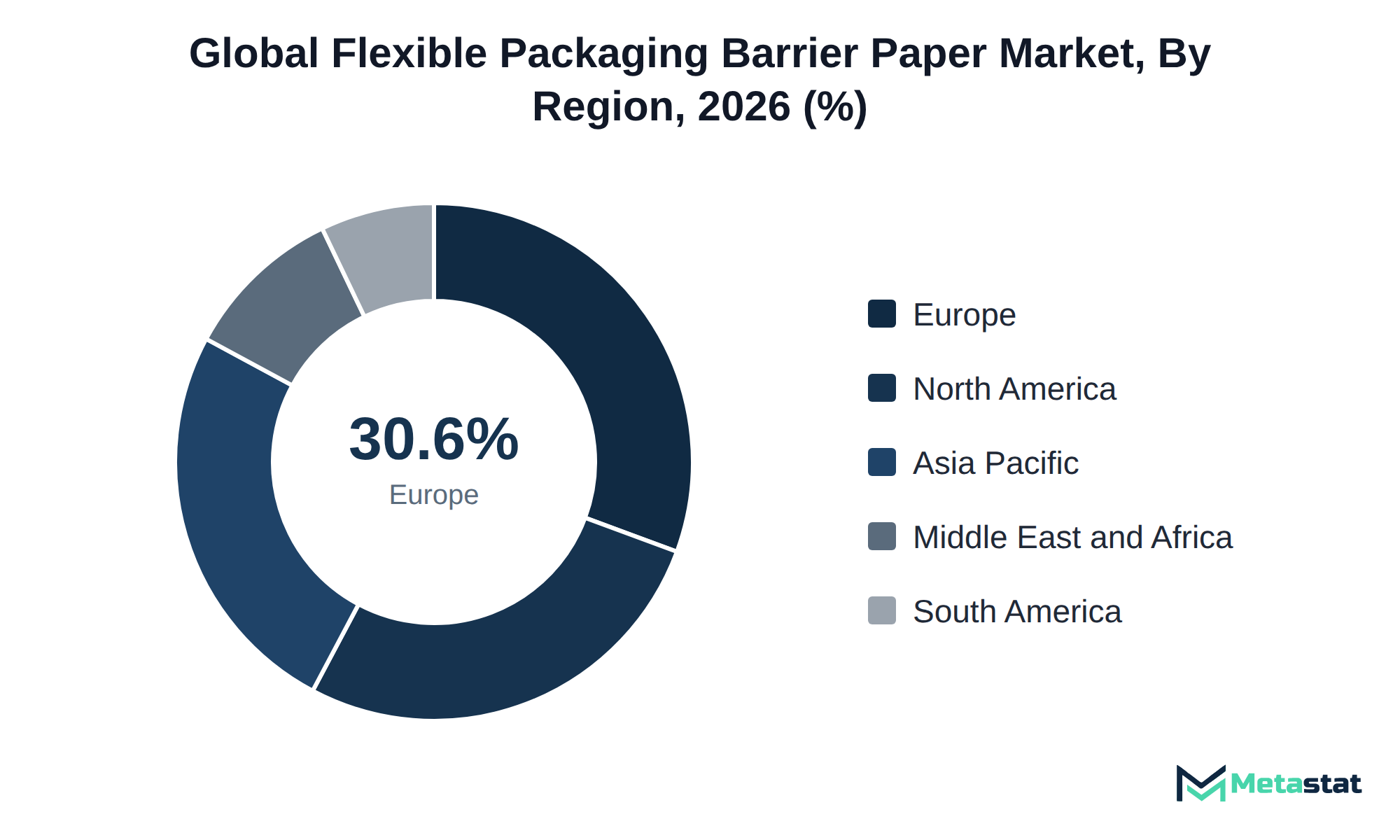
Europe represents a significant market for flexible packaging solutions, holding a share of 30.6% in 2025. Key drivers include strong demand from the food and beverage industry, where innovative packaging enhances product shelf life and consumer appeal. Germany and France stand out with advanced food processing sectors, while the UK's regulatory support for sustainable packaging solutions further stimulates market growth. Environmental regulations in several European countries encourage the adoption of eco-friendly materials, pushing manufacturers to invest in sustainable practices. This region's focus on quality and compliance with stringent safety standards enhances competition within the flexible packaging barrier paper market.
In the Asia-Pacific region, demand for flexible packaging barrier paper is driven by growth in the food and beverage sector, which needs effective packaging solutions that enhance product preservation. Countries including China and India exhibit significant consumption patterns due to increasing urbanization and rising disposable incomes, leading to heightened demand for packaged food products. Infrastructure advancements in packaging technology further support market expansion, particularly in India and Southeast Asia, where a growing middle class seeks convenience in food options. The region is projected to hold a share of USD [figure] of the global market in 2025, reflecting strong market potential. While companies innovate to meet consumer preferences, the Flexible Packaging Barrier Paper market is poised for steady growth, with increasing investment in sustainable packaging solutions. The focus on environmental regulations will likely influence manufacturers to adopt eco-friendly materials, aligning with consumer trends in various sectors.
The Flexible Packaging Barrier Paper market in South America experiences unique dynamics driven by local industry needs. Brazil and Argentina represent significant contributors to demand, particularly in the food and beverages sector. This sector's expansion aligns with growing consumer preferences for sustainable packaging solutions. Rising environmental awareness prompts companies to seek materials that minimize ecological impact, enhancing adoption rates. The regulatory environment in the region increasingly favors eco-friendly practices, compelling manufacturers to innovate their packaging products. By 2025, South America holds a 7.1% share of the global market, reflecting its growing importance. Investment in domestic production capacities strengthens the market's outlook, creating competitive advantages for local players while supporting growth and development.
In the Middle East and Africa, flexible packaging demand is driven by growing industries including food and beverages, pharmaceuticals, and personal care. The region's focus on improving packaging solutions supports market growth due to increasing consumer preferences for convenience and sustainability. Countries like Saudi Arabia and the UAE prioritize modernization and quality in their packaging processes, enhancing the market's potential. South Africa's expanding retail sector generates significant demand for innovative packaging options, reflecting a shift towards more environmentally friendly materials. The market in this region holds a share of 10.0% in 2025, indicating its importance within the global context. Investments in infrastructure and technological advancements further strengthen the region's position in the flexible packaging barrier paper market.
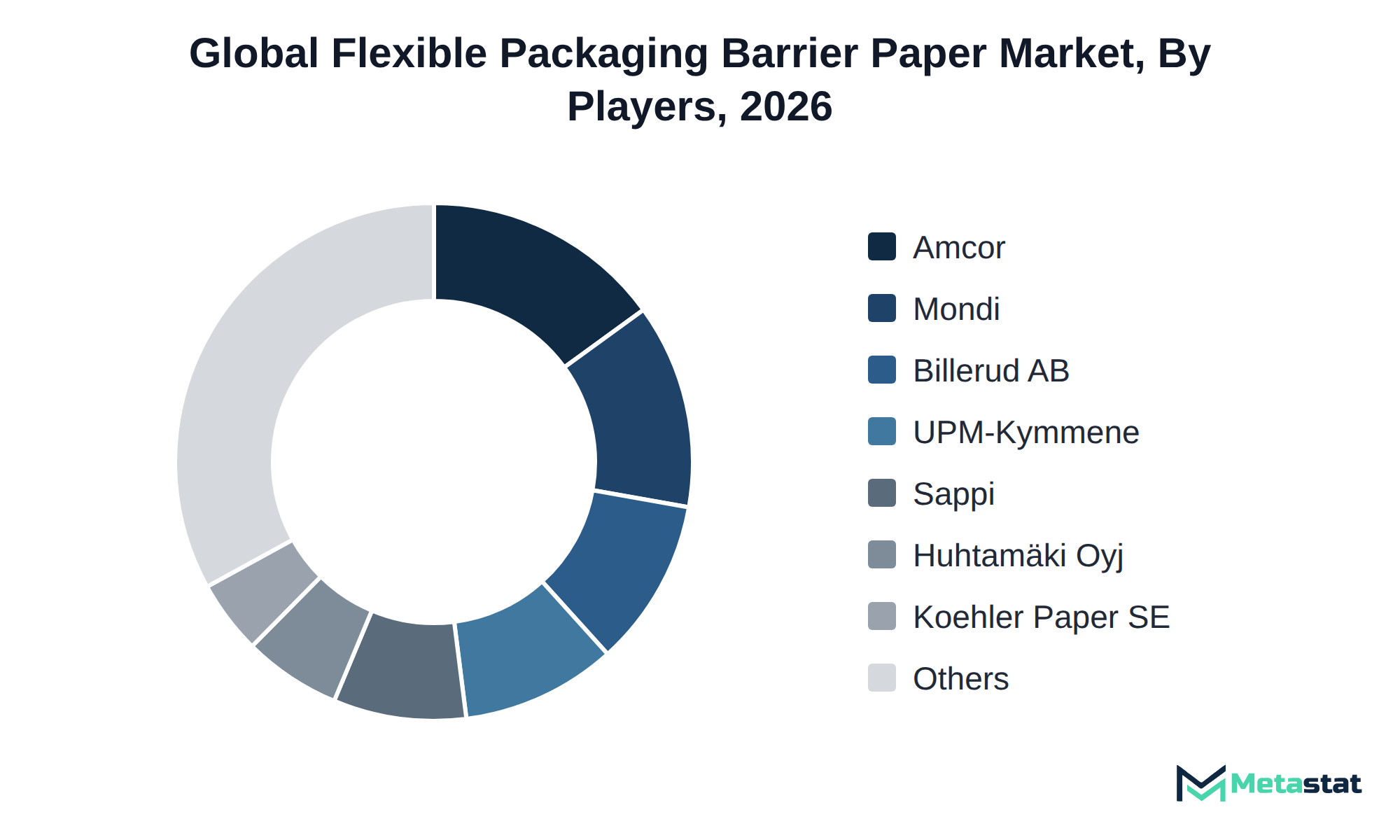
The competitive field in the Flexible Packaging Barrier Paper market divides primarily by product offerings and strategic positioning. Companies focus on various paper types, barrier properties, and coating types to differentiate themselves. Customer preferences center on price, certification, customization, and service quality. Firms use their capabilities to meet specific requirements across different end-use industries.
Mondi plc emphasizes Kraft Paper and Greaseproof Paper, aiming to meet the rising demand for sustainable packaging solutions in food and beverages. UPM-Kymmene Corporation targets moisture and oxygen barrier properties, catering to the food industry’s need for extended shelf life. Sappi Limited focuses on innovative coatings to enhance barrier performance, addressing customer needs for high-quality packaging.
Companies like Amcor plc and Huhtamäki Oyj respond to market trends with tailored solutions, ensuring alignment with customer sustainability goals. Koehler Paper SE specializes in Parchment and Glassine Paper, providing unique barrier properties that appeal to niche markets. This strategic focus on customization reflects a broader trend within the market toward personalized packaging solutions.
Flexible packaging barrier paper growth relies on several developments. First, the expansion of the Kraft Paper segment, driven by increasing demand for sustainable packaging solutions, is anticipated to reach USD 11.2 million by 2033, reflecting a CAGR of 6.1%. Second, advancements in barrier properties, particularly the Oxygen Barrier segment, expected to achieve a value of USD 6.4 million by 2033 with a CAGR of 6.5%, are crucial for enhancing product shelf life across various applications. A significant risk that could hinder market growth involves fluctuations in raw material costs, affecting profitability. Persisting cost pressures, especially in the polymer coatings segment, which anticipates growth to USD 8.5 million by 2033, could limit overall expansion in the Flexible Packaging Barrier Paper market.
By Paper Type: Kraft Paper, Greaseproof Paper, Parchment Paper, Glassine Paper, Others
By Barrier Property: Moisture Barrier, Oxygen Barrier, Grease/Oil Barrier, Vapor Barrier, Aroma/Flavour Barrier
By Coating Type: Polymer Coatings, Wax Coatings, Aluminium Foil Coatings, Water-Based Coatings, Bio-Based/Biodegradable Coatings
By End-Use Industry: Food and Beverages, Personal Care and Cosmetics, Pharmaceuticals, Retail and Consumer Goods, Others
The report strategically identifies and profiles the key market players and analyses their core competencies in each sub-segment of the Flexible Packaging Barrier Paper market.
|
Report Attributes |
Details |
|
Study Period |
2021-2033 |
|
Base Year |
2025 |
|
Estimated Year |
2026 |
|
Forecast Period |
2026-2033 |
|
Historical Period |
2021-2025 |
|
Growth Rate |
CAGR 5.8% from 2026 to 2033 |
|
Revenue Unit |
USD million |
|
Segmentation |
By Paper Type, Barrier Property, Coating Type, End-Use Industry, and Region |
|
By Region |
North America (By Paper Type, Barrier Property, Coating Type, End-Use Industry, and Country)
|
|
Europe (By Paper Type, Barrier Property, Coating Type, End-Use Industry, and Country)
|
|
|
Asia Pacific (By Paper Type, Barrier Property, Coating Type, End-Use Industry, and Country)
|
|
|
South America (By Paper Type, Barrier Property, Coating Type, End-Use Industry, and Country)
|
|
|
Middle East and Africa (By Paper Type, Barrier Property, Coating Type, End-Use Industry, and Country)
|
Find answers to common questions about this report
The Flexible Packaging Barrier Paper market size was valued at USD 18.3 million in 2025.
The market is projected to grow at a CAGR of 5.8% during the forecast period from 2026 to 2033.
The North America Flexible Packaging Barrier Paper market size is estimated to reach USD 6.9 million by 2033.
Kraft Paper leads the Flexible Packaging Barrier Paper market with a value of USD 7.4 million in 2026, reflecting its significant demand compared to other paper types.
Growing awareness of environmental issues drives demand for sustainable packaging solutions among consumers and businesses. Rising input costs challenge suppliers, impacting profit margins and overall pricing strategies.
Europe holds the dominant share of the Flexible Packaging Barrier Paper market, accounting for 30.6 percent of the total market share. This strong position reflects the region's significant demand and established presence in the industry.
Rising material costs restrain the Flexible Packaging Barrier Paper market growth, leading to increased expenses for raw materials that impact pricing strategies. This situation results in slower uptake and smaller order volumes, particularly in the food and beverages sector, where competitive pricing remains critical.
Growing consumer preference for sustainable packaging solutions significantly drives the adoption of flexible packaging barrier paper. The Kraft Paper segment, in particular, is expected to grow due to its effective barrier properties and minimal environmental impact, appealing to key end-use industries like food and beverages.
The Flexible Packaging Barrier Paper market is estimated to reach a valuation of USD 28.8 million by 2033.
Key players operating in the Flexible Packaging Barrier Paper market include Mondi plc, Billerud AB, UPM-Kymmene Corporation, Sappi Limited, Amcor plc, and Huhtamäki Oyj.
The analysts below cover Packaging research at Metastat Insights.
LEAD ANALYST
Utkarsh Khirodkar is a Lead Market Research Analyst at MetaStat Insight, specializing in market intelligence, technology sector assessments, and competitive strategy.

SENIOR RESEARCH ANALYST
Biotechnology · Food and Beverages · Medical Devices · Packaging
Snehal Pasalkar is a Research Analyst at MetaStat Insight, operating at the intersection of life sciences research, competitive strategy, and market intelligence.

INDUSTRY CONSULTANT - CHEMICALS & ADVANCED MATERIALS
Chemicals and Materials · Machinery & Equipment · Packaging
Amit Gadhekar Consultant for Chemicals and Materials at MetaStat Insight, directing sector-specific intelligence, research, and strategic consulting across global chemical and processing markets.
Ambulatory surgical centers have very different purchasing cycles for robotic-assisted surgery platforms than major hospital networks. The MetaStat Insight study focused squarely on capital expenditure depreciation, procedural reimbursement pathways, and surgeon training overhead. That operational clarity made it much simpler to validate multi-year procedure growth forecasts against actual ambulatory center adoption patterns.
When planning edge sensor rollouts across refinery environments, generic IoT reports typically miss the harsh-environment certification bottlenecks. MetaStat Insight gave an objective evaluation of ATEX and Class 1 Division 2 hardware availability, along with realistic five-year maintenance cycle cost projections. The comparison of wireless mesh versus private cellular backhaul helped our team pressure-test network reliability models for remote processing facilities.
In the biological seed treatment space, registration timelines vary drastically between the European Union, Brazil, and North America. The MetaStat Insight research handled these cross-border regulatory barriers with genuine nuance, mapping commercialization pathways alongside historical field adoption rates. The segmentation between microbial strains and biochemical active ingredients was particularly well structured.
Explore related market intelligence reports worth reading alongside this one.