
LEAD ANALYST
Utkarsh Khirodkar is a Lead Market Research Analyst at MetaStat Insight, specializing in market intelligence, technology sector assessments, and competitive strategy.

Global Plastic Processing Equipment Market Size, Share, By Equipment Type (Injection Molding Machines, Extrusion Machines, Blow Molding Machines, Thermoforming Machines and Others), By End-Use Industry (Packaging, Automotive, Building and Construction, Consumer Goods, Electrical and Electronics, Healthcare and Others), By Automation Level (Semi-Automated and Fully Automated), By Sales Channel (Direct Sales and Distributor Sales), Industry Analysis, Growth, Trends, and Forecast, 2026-2033
Report ID
MSI-5680
Published
November, 2026
Pages
298 Pages
Format
Historical
Base year
Forecast
Forecast period
Report Details
Market Valuation: Valued at $25.9 Billion in 2025, projected to reach $39.1 Billion by 2033 at a 5.2% CAGR.
Dominant Segment: The injection molding machines segment leads the market, driven by its versatility and efficiency in producing high-precision components across various industries.
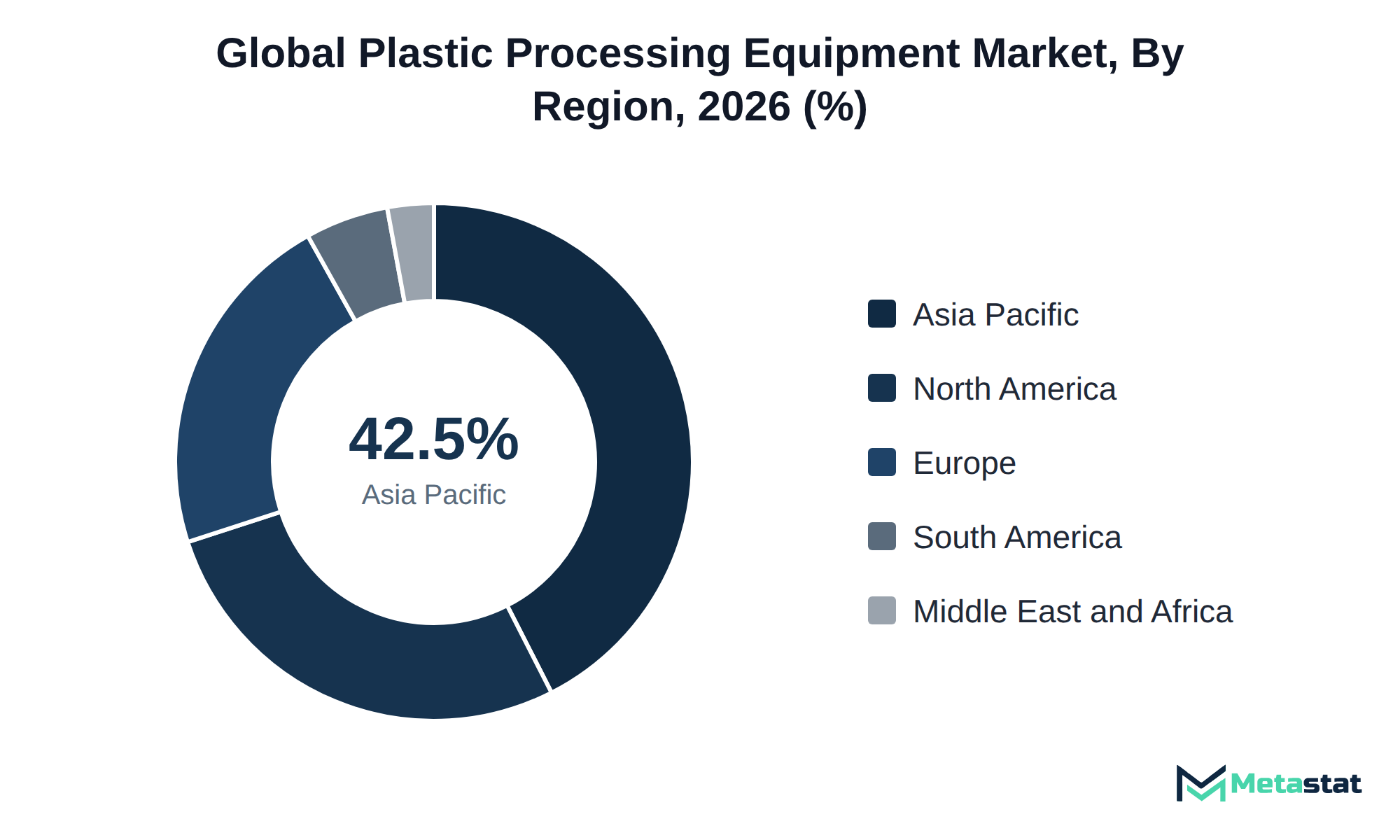
Geographic Lead: Asia Pacific holds the largest market share at 42.5%, with rapid growth fueled by robust manufacturing capabilities and increasing demand for sustainable plastic solutions.
What's Inside: The report includes a comprehensive analysis of market dynamics, competitive landscape, and detailed forecasts for the period from 2026 to 2033.
Automation Trends: The shift towards fully automated equipment is expected to enhance productivity and reduce operational costs, with projected revenue reaching USD 20.2 billion by 2033.
Choose Your License
Global Plastic Processing Equipment Market
The global Plastic Processing Equipment market was valued at USD 25.9 billion in 2025 and is projected to reach USD 39.1 billion by 2033, growing at a CAGR of 5.2% over the forecast period.
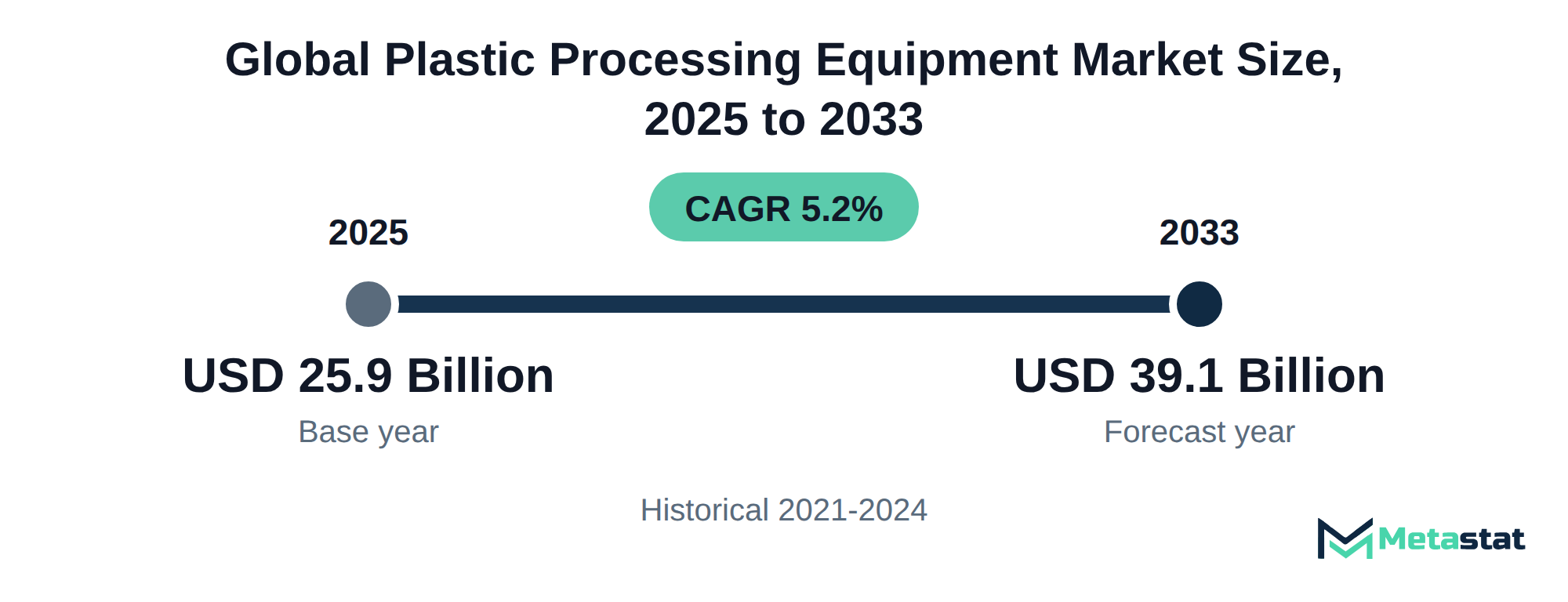
The Plastic Processing Equipment market covers machinery used to produce and process plastic materials. Buyers invest in this market to enhance manufacturing efficiency, improve product quality, and respond to rising demand across various end-use industries. Growing plastic use in packaging, automotive, and consumer goods drives spending on these machines.
Growth within the market is propelled by several factors. The injection molding machines segment holds the largest value, indicating a strong preference for this type of equipment due to its versatility and efficiency. In terms of regional distribution, Asia Pacific commands a share of 42.5%, surpassing North America, which holds 27.5% of the market in 2025, with the US leading in 2026. The rising demand for sustainable and innovative plastic solutions in various applications supports expansion across the market.
Investment in fully automated equipment is expected to further support market growth. Automation enhances productivity and reduces operational costs, aligning with industry trends toward efficiency and scalability. The continuous evolution of technologies within the Plastic Processing Equipment market positions it favorably for sustained development over the forecast period.
The Plastic Processing Equipment market serves various industries including packaging, automotive, and construction. Buyers invest in this equipment to enhance production efficiency and meet rising consumer demand for plastic products. The equipment enables manufacturers to produce high-quality components while minimizing waste and energy consumption. This focus on sustainability and operational efficiency drives spending in the market.
Growth in the market is propelled by advancements in automation technologies and a shift towards fully automated systems, which streamline production processes and reduce labor costs. Among the equipment types, Injection Molding Machines represent the largest segment, reflecting their widespread application in numerous industries. Strong demand stems from a solid manufacturing base and innovation in plastic processing technologies.
The market experiences substantial growth due to increased investments in infrastructure and manufacturing capabilities. The rapid expansion of the packaging industry contributes significantly to overall market demand, driven by changing consumer preferences and a heightened focus on sustainability. With ongoing technological advancements, the Plastic Processing Equipment market is projected to continue its upward trajectory in the coming years.
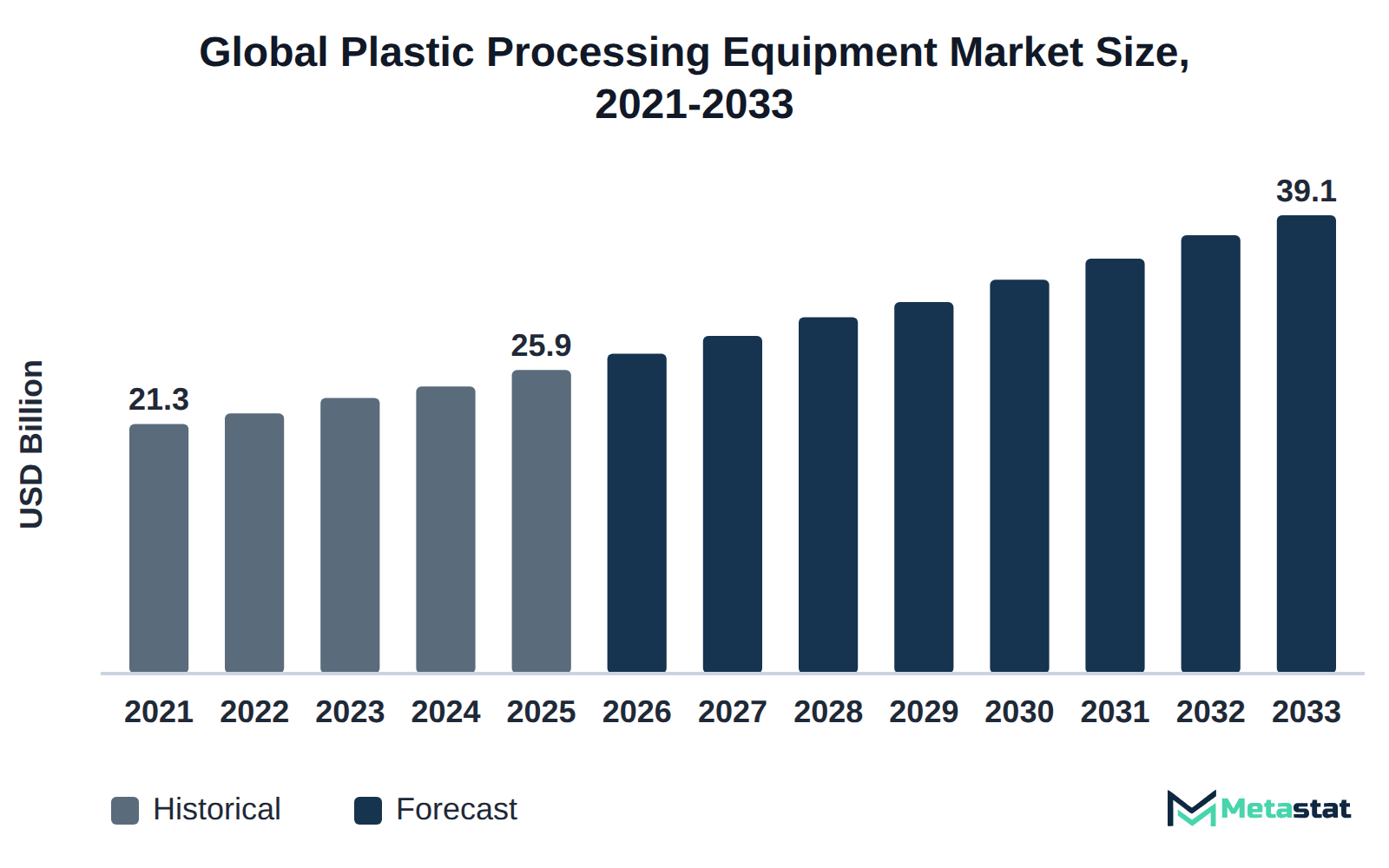
The shift towards electric injection molding machines and servo drives significantly influences investment strategies within the Plastic Processing Equipment market. This technology emphasizes energy efficiency and precision, catering to manufacturers seeking to enhance productivity while minimizing operational costs. Electric injection molding machines are projected to generate revenue reaching USD 19.2 billion by 2033, reflecting a compound annual growth rate (CAGR) of 4.9% from 2026.
Adoption of servo drive systems further complements this trend, enabling better control over machine functions and faster cycle times. This evolution aligns with broader industrial trends prioritizing automation and sustainability. For instance, fully automated equipment is anticipated to account for USD 20.2 billion in revenue by 2033, driven by increasing demand for high-throughput manufacturing processes.
This technological transition gives manufacturers that invest in modern equipment a competitive edge in innovation and efficiency. Electric solutions help manufacturers meet regulatory pressures for sustainability and attract environmentally conscious customers.
Pricing strategies in the Plastic Processing Equipment market have evolved significantly, particularly in the production of PET preforms and closures. Manufacturers increasingly focus on lightweighting and incorporating recycled content, which directly influences costs. In 2026, the sales from semi-automated equipment are projected to begin at USD 14.5 billion, reaching USD 18.9 billion by 2033, with a compound annual growth rate (CAGR) of 3.9%. This shift towards lighter products requires advanced machinery that balances efficiency and performance while managing expenses.
The adoption of contract models, including long-term agreements and volume-based pricing, supports manufacturers in stabilizing their operational costs. Suppliers offer attractive terms to secure commitments, anticipating demand fluctuations in the PET preform and closure market. Direct sales, projected to grow from USD 22.9 billion in 2026 to USD 33.4 billion by 2033, emphasize the importance of relationship-building between manufacturers and suppliers.
These evolving pricing and contract strategies reflect the drive towards sustainability and innovation within the industry, presenting commercial opportunities for buyers. By investing in advanced machinery that aligns with lightweighting and recycled content initiatives, companies optimize production processes and contribute to a more environmentally responsible future.
The rising demand for precision in medical molding significantly influences the Plastic Processing Equipment market. Medical applications require stringent adherence to precise specifications and quality standards, driving manufacturers to adopt advanced molding techniques. For instance, fully automated systems are expected to reach a value of USD 20.2 billion by 2033, contributing to the increased adoption of automated cells in medical applications.
These automated solutions enhance efficiency and accuracy while reducing human error, which is critical in the medical industry, where product reliability directly impacts patient safety. Automation allows for the consistent production of components, including syringes, IV bags, and various implants, ensuring that each product meets rigorous health standards.
Consequently, suppliers focusing on medical molding experience a growing need for equipment that supports high-volume production while maintaining precision. This trend points to a market opportunity for manufacturers that deliver innovative solutions for the unique demands of the healthcare sector.
Energy efficiency represents a significant factor in the evaluation of Plastic Processing Equipment. Equipment with lower energy consumption translates to reduced operational costs over the machinery's lifespan. For instance, fully automated equipment is projected to reach a total value of USD 20.2 billion by 2033, reflecting a compound annual growth rate of 6.7%. This segment typically features advanced technologies that optimize energy use, resulting in substantial savings for processors.
In addition to energy consumption, total ownership cost encompasses various factors, including maintenance, spare parts, and downtime during repairs. Processors increasingly prioritize equipment with lower initial purchase prices and lower long-term expenses. The semi-automated segment is anticipated to grow from USD 14.5 billion in 2026 to USD 18.9 billion in 2033, demonstrating a need for systems that balance cost and efficiency. Adopting energy-efficient machinery enhances competitiveness within the market, supporting profit margins while aligning with sustainability goals.
The growing emphasis on sustainability significantly influences purchasing decisions within the packaging sector. Companies prioritize eco-friendly solutions, leading to heightened investments in Plastic Processing Equipment, particularly machinery that supports the production of recyclable and biodegradable materials. This shift toward sustainable practices has resulted in a marked increase in volume demand for equipment that efficiently handles alternative materials. The packaging segment is projected to rise from USD 11.1 billion in 2026 to USD 15.7 billion in 2033, reflecting a compound annual growth rate of 5%. This financial commitment to advanced equipment reflects changing buyer preferences and moves the market toward more environmentally responsible production methods.
Technological innovations in automation significantly impact productivity within the plastic processing equipment sector. Enhanced automation systems streamline operations, reduce labor costs, and improve precision across various applications. Fully automated machinery integrates sophisticated software solutions, enabling real-time monitoring and adjustments, which enhances operational reliability and output consistency. Industries including packaging and automotive increasingly rely on these automated solutions to meet growing demand for faster turnaround times and increased production volumes. The emergence of smart manufacturing capabilities, characterized by data analytics and machine learning, drives equipment investments and upgrades. Suppliers in the market focus on developing advanced automation technologies, resulting in competitive advantages for businesses that adopt them. This shift facilitates the transition toward more efficient production methodologies, positioning companies to respond effectively to dynamic consumer demands while maintaining quality standards. The evolution of automation technology leads to increased adoption of advanced plastic processing equipment, further shaping market growth in the coming years.
Price sensitivity within the automotive and building industries significantly restricts adoption of advanced Plastic Processing Equipment. High capital costs associated with modern machinery deter investment, causing slower uptake among manufacturers focused on maintaining budget constraints. This situation leads to smaller orders and delayed equipment replacements, impacting overall productivity. Buyers prioritize cost-effective solutions, resulting in extended machinery lifecycles and reluctance to pursue innovations that enhance efficiency. The market experiences pressure for competitively priced alternatives, hindering the introduction of advanced technologies. Limitations in the automotive and building sectors reflect a broader hesitance towards significant capital expenditures, affecting growth opportunities and investment in the market.
Rising costs for raw materials present significant challenges for suppliers in the Plastic Processing Equipment market. Fluctuations in the prices of plastics and metals have escalated production expenses, leading to tighter profit margins across the industry. Suppliers respond to these pressures by investing in more efficient processing technologies and optimizing production methods to reduce waste and lower costs. Such strategies include adopting advanced automation technologies that enhance operational efficiency and minimize labor costs. Suppliers increasingly focus on developing innovative, cost-effective materials that meet performance standards while remaining economically viable. These measures help suppliers maintain competitiveness in a market characterized by increasing demand and evolving customer expectations, ultimately supporting long-term sustainability and growth in the sector.
The demand for injection molding machines stands out as a significant growth opportunity within the Plastic Processing Equipment market. Factors contributing to this growth include the increasing need for high-precision components across various industries, particularly in packaging and automotive sectors. Buyers recognize the advantages of enhanced efficiency and reduced waste associated with advanced injection molding technology. Enhanced capabilities, including improved energy efficiency and automation integration, present an attractive proposition for manufacturers aiming to optimize production processes. The market's shift toward adopting electric injection molding machines further supports this trend, positioning the technology as a key driver of future investment and competitiveness.
The Global Plastic Processing Equipment market is segmented based on Equipment Type, End-Use Industry, Automation Level, and Sales Channel.
This segment is crucial for producing plastic products, including components for packaging, automotive parts, and consumer goods. Demand for injection molding machines is driven by the need for high efficiency and precision in manufacturing processes. The growth rate of this segment is moderate compared to extrusion machines, which exhibit a higher CAGR of 5.6%. Buyers in this segment prioritize performance, energy efficiency, and flexibility, which sets it apart from other equipment types, including blow molding and thermoforming machines. Investment in advanced technology, particularly electric solutions, enhances production capabilities while meeting sustainability goals, reflecting the evolving landscape of the Plastic Processing Equipment market.
Extrusion Machines segment is estimated to reach USD 10.3 billion by 2033, at a CAGR of 5.6% during the forecast period. These machines are integral to producing various plastic products, particularly in sectors like packaging and construction. Industries employ extrusion machines for shaping plastic materials into continuous profiles, sheets, and films, which are common forms of extruded plastics. The drive towards increased efficiency and cost-effectiveness drives investment in this segment, with manufacturers responding to the growing need for lower energy consumption and waste reduction. Compared to other equipment types, including Injection Molding Machines, the extrusion segment experiences a higher growth rate, driven by demand from packaging applications, which are projected to expand significantly. This focus on sustainability and technological advancements influences purchasing decisions, positioning extrusion machines as a vital component in meeting evolving market demands.
Blow Molding Machines segment is expected to reach USD 5.5 billion by 2033. These machines produce hollow plastic parts through a process that inflates heated plastic into a mold. Industries including packaging and automotive heavily rely on blow molding for creating bottles, containers, and other specialized parts. The demand for eco-friendly packaging solutions drives growth, aligning with consumer preferences for sustainability. This segment experiences growth driven by innovation in material efficiency and design capabilities, with a projected CAGR of 5.6%. Compared to other equipment types, blow molding machines face different pricing dynamics and customer bases, appealing especially to companies focused on high-volume production rather than niche markets. Unlike injection molding, which caters to more diverse applications, blow molding primarily serves the packaging sector.
Thermoforming Machines segment is projected to grow at a CAGR of 5.7% during the forecast period. These machines are primarily used for producing plastic products by heating plastic sheets and forming them into desired shapes using molds. Industries including packaging and consumer goods frequently employ thermoforming technology for creating items like containers, trays, and lids. The increasing demand for lightweight packaging solutions drives growth in this segment, with manufacturers requiring efficient processes to meet evolving consumer preferences. Compared to other equipment types, thermoforming machines exhibit moderate growth prospects, influenced by pricing pressures and the need for innovation in materials. While both extrusion and injection molding machines experience higher growth rates, thermoforming remains a critical segment due to its versatility and adaptability in various applications.
Rotational molding machines, compression molding machines, and calenders serve diverse applications in the production of plastic items. These machines are widely used in industries including automotive, consumer goods, and construction, where specific molded components are critical. Factors driving growth in this segment include increasing demand for customized products and advancements in molding technologies. In contrast to other segments, this sub-segment experiences slower growth rates due to reliance on niche applications and market volatility. Investment in innovative technologies and sustainable practices enhances competitiveness while maintaining operational efficiency. The market dynamics surrounding this segment necessitate a focus on specialized manufacturing processes that distinguish it from more mainstream equipment types.
This segment serves various applications including food and beverage, consumer goods, and healthcare products. Demand is driven by the increasing preference for convenient and sustainable packaging solutions among consumers and manufacturers. The Packaging segment differentiates itself through a higher growth rate compared to other segments, reflecting a strong market response to evolving consumer preferences. The ongoing trend of sustainability in packaging design influences equipment investment, compelling producers to adopt advanced technologies to meet regulatory and consumer standards. The market experiences continuous innovations aimed at improving efficiency, reducing material waste, and enhancing product appeal, ensuring relevance in a competitive environment.
The automotive segment is estimated to reach USD 7 billion by 2033, at a CAGR of 4.8% during the forecast period. This segment primarily serves the automotive industry, focusing on the production of various components, including dashboards, interior and exterior panels, and safety features. Key drivers include the integration of advanced materials, including lightweight plastic components, aimed at improving fuel efficiency and reducing emissions. Compared to other segments, the automotive segment experiences slower growth, influenced by stringent regulations and the need for compliance with environmental standards. This contrasts with the packaging segment, which demonstrates a more significant growth trajectory due to increasing consumer demand for sustainable solutions. The automotive sector's focus on innovation and technological advancements supports its market position, while cost pressures associated with raw materials and production processes challenge players in the industry.
The Building and Construction segment is expected to reach USD 5.1 billion by 2033. This segment primarily focuses on producing plastic components used in construction materials, insulation, and other building products. Demand arises from contractors, builders, and construction firms requiring durable and lightweight materials for various applications. Growth in this segment is driven by increasing investment in infrastructure development and residential construction. Compared to other segments, including Packaging, which is projected to grow at a CAGR of 5.0%, the Building and Construction segment exhibits a slower growth rate. The adoption of advanced plastic processing technologies faces challenges due to price sensitivity among construction firms, which prioritize cost-effective solutions while maintaining quality standards. Overall, the Building and Construction segment contributes to the Plastic Processing Equipment market, reflecting ongoing trends in the construction industry.
The Consumer Goods segment is projected to grow at a CAGR of 4.9% during the forecast period. This segment encompasses a variety of products aimed at enhancing everyday life, commonly produced by manufacturers in sectors including household items, personal care, and various consumer appliances. The rising consumer preference for sustainable and eco-friendly products drives demand, compelling manufacturers to adopt advanced plastic processing technologies. Unique pricing strategies and flexible production methods distinguish this segment from others, with price points often varying significantly to accommodate diverse consumer preferences. Unlike the Packaging segment, which expects a higher growth rate, the Consumer Goods segment reflects steady growth, aligning with broader trends in consumer behavior. The transition towards more sustainable materials presents an opportunity for innovation, allowing manufacturers to explore new markets while maintaining competitive positioning in the market.
Electrical and Electronics applications employ plastic processing equipment to manufacture components including casings, connectors, and circuit boards. Industries in this segment prioritize precision and reliability due to the critical nature of electronic devices. The demand for advanced features in electronics continues to drive growth, influenced by rapid technological advancements and increasing complexity in electronic design. This segment experiences stable growth patterns compared to others, with the need for high-quality and precise manufacturing processes setting it apart from sectors including automotive and packaging. Price sensitivity in the electronics industry remains moderate, allowing for investment in higher-quality equipment, which enhances production efficiency. The market reflects a growing trend toward automation and smart manufacturing, aligning with broader industry shifts toward increased productivity and reduced operational costs.
Healthcare applies plastic processing equipment to medical devices, packaging for pharmaceuticals, and components for diagnostic equipment. The segment primarily caters to hospitals, medical device manufacturers, and pharmaceutical companies that rely on high-quality, sterile products. Increased demand for advanced medical technologies drives growth in this segment, supported by rising healthcare expenditures globally. Regulatory compliance and the need for precision in medical applications necessitate advanced equipment, differentiating this segment from others. Compared to segments like packaging and automotive, healthcare equipment often faces higher production costs due to stringent quality standards and lower tolerances for defects. This results in a different buyer profile, emphasizing reliability and safety over cost alone. The plastic processing equipment market reflects these dynamics, highlighting the importance of tailored solutions that meet the unique needs of the healthcare sector.
This segment includes applications in agriculture and industrial components, which employ various plastic processing technologies. Key buyers include manufacturers of agricultural equipment and industrial components requiring durable plastic parts. Growing trends in sustainable practices and innovation in material properties drive demand within this segment. Manufacturers focus on enhancing the performance characteristics of materials used in agricultural implements and industrial machinery. Compared to other sub-segments, this segment typically experiences slower growth, reflecting the specific needs and purchasing cycles of its buyers. Market trends in automation and efficiency impact how these segments evolve, prompting ongoing innovation tailored to meet stringent operational demands.
Applications in this segment primarily focus on the production of plastic components across various industries, including packaging, automotive, and consumer goods. Demand for semi-automated systems arises from the growing preference for cost-effective solutions that balance efficiency with manual intervention. This segment differs from fully automated options, which demand higher initial investments but offer greater scalability. The semi-automated approach appeals to small and medium-sized enterprises looking to optimize production without extensive capital outlay. The market benefits from ongoing technological advancements that enhance productivity while reducing operational costs.
This segment is significant in high-volume production across industries, particularly in sectors including packaging and automotive manufacturing. Increased demand for efficiency and precision drives growth in this segment, prompting manufacturers to invest in advanced technologies. Compared to the Semi-Automated segment, which shows a CAGR of 3.9%, the Fully Automated segment offers faster growth potential, attracting larger investments from OEMs focused on automation. Companies in this segment prioritize features including enhanced operational efficiency and reduced labor costs, making them appealing to buyers seeking to optimize production processes. The shift towards fully automated systems reflects broader trends in the market, where higher productivity and lower operational costs represent key competitive advantages.
This segment is essential in the distribution of plastic processing equipment, primarily serving manufacturers and suppliers directly. The demand for high-quality machinery drives purchases from companies in various sectors, including packaging and automotive. A significant factor influencing this segment is the increasing preference for direct relationships between buyers and manufacturers, allowing for tailored solutions and enhanced customer service. Compared to distributor sales, the direct sales channel typically achieves faster growth due to its ability to provide customized offerings and quicker response times, contributing to an anticipated competitive advantage. The market experiences continued investment in technology advancements, which further enhances the appeal of direct sales and strengthens these relationships.
Distributor Sales segment is estimated to reach USD 5.7 billion by 2033, at a CAGR of 3.6% during the forecast period. This sales channel is primarily employed by distributors who facilitate the delivery of plastic processing equipment to various industries, including packaging and automotive. The segment benefits from the increasing demand for more efficient distribution networks, driven by a rise in production activities. Compared to the Direct Sales segment, which is projected to grow at a CAGR of 5.5%, Distributor Sales experiences slower growth due to reliance on third-party relationships and varying regional market dynamics. Shifting preferences towards streamlined purchasing processes influence distributor strategies, impacting overall performance in the Plastic Processing Equipment market.
Based on geography, the Global Plastic Processing Equipment market is divided into North America, Europe, Asia-Pacific, South America, Middle East, and Africa.
Demand for the Plastic Processing Equipment market in North America derives primarily from the automotive and packaging industries. The region's focus on innovation and sustainability drives investment in advanced manufacturing technologies, particularly those aimed at reducing waste and improving efficiency. The United States, Canada, and Mexico lead in implementing modern processing techniques, attracting significant investment funding. North America is projected to reach USD 10.9 billion by the end of 2033, reflecting the region's robust industrial framework and growing consumer demand. The 27.5% share in 2025 reflects the region's weight in the global market and the need for manufacturers to adopt advanced equipment to maintain competitiveness.
Demand for plastic processing equipment in Europe is driven by the automotive and packaging sectors. Germany, a major player in the automotive industry, requires advanced machinery to meet stringent production standards. France and Italy contribute significantly to packaging innovations, particularly in sustainable materials. The market benefits from strong infrastructure, supported by investments in automation and digitalization initiatives. Regulations promoting sustainable production practices influence purchasing decisions across the region, enhancing competitiveness and efficiency. In 2025, Europe holds a 21.9% share of the global market, reflecting strong investment in high-tech solutions for production processes. The region's commitment to reducing environmental impact through efficient manufacturing significantly shapes the market landscape.
Asia-Pacific stands out in the Plastic Processing Equipment market, driven by strong demand from countries including China, Japan, and India. The region accounts for 42.5% of the global market share in 2025, reflecting significant growth potential in various industries. Rapid industrialization and urbanization fuel the need for efficient manufacturing processes in sectors including packaging and automotive. The market benefits from investments in advanced technologies and automation, particularly in fully automated equipment, which enhance production capabilities and reduce operational costs. Infrastructure improvements further accelerate market adoption, particularly in Southeast Asia, where growing economies increase demand for diverse plastic products. The ongoing expansion of manufacturing facilities in the region positions it favorably for future growth.
Brazil and Argentina drive demand for the Plastic Processing Equipment market, primarily fueled by growth in the packaging and automotive sectors within these countries. Challenges related to infrastructure investment affect operational efficiency in the region. A focus on sustainability trends influences the adoption of advanced processing technologies. The market share for South America in 2025 stands at 5.2%, reflecting growth potential driven by increasing consumer goods production capacity. Investment in automation technologies enhances productivity and meets rising consumer demands. Overall, the market presents opportunities for suppliers capable of addressing specific regional requirements.
Demand for plastic processing equipment in the Middle East and Africa focuses primarily on the automotive and packaging industries, with significant contributions from countries including Saudi Arabia and the UAE. The region faces unique challenges, including an evolving regulatory landscape that influences operational costs and market entry for new technologies. South Africa is a key market due to its growing manufacturing sector, which increasingly adopts advanced plastic processing methods. This market is expected to account for 2.9% of the global share in 2025, with anticipated growth driven by rising investments in local production facilities. The market expansion aligns with regional initiatives aimed at enhancing manufacturing capabilities and increasing the use of sustainable materials in production processes.
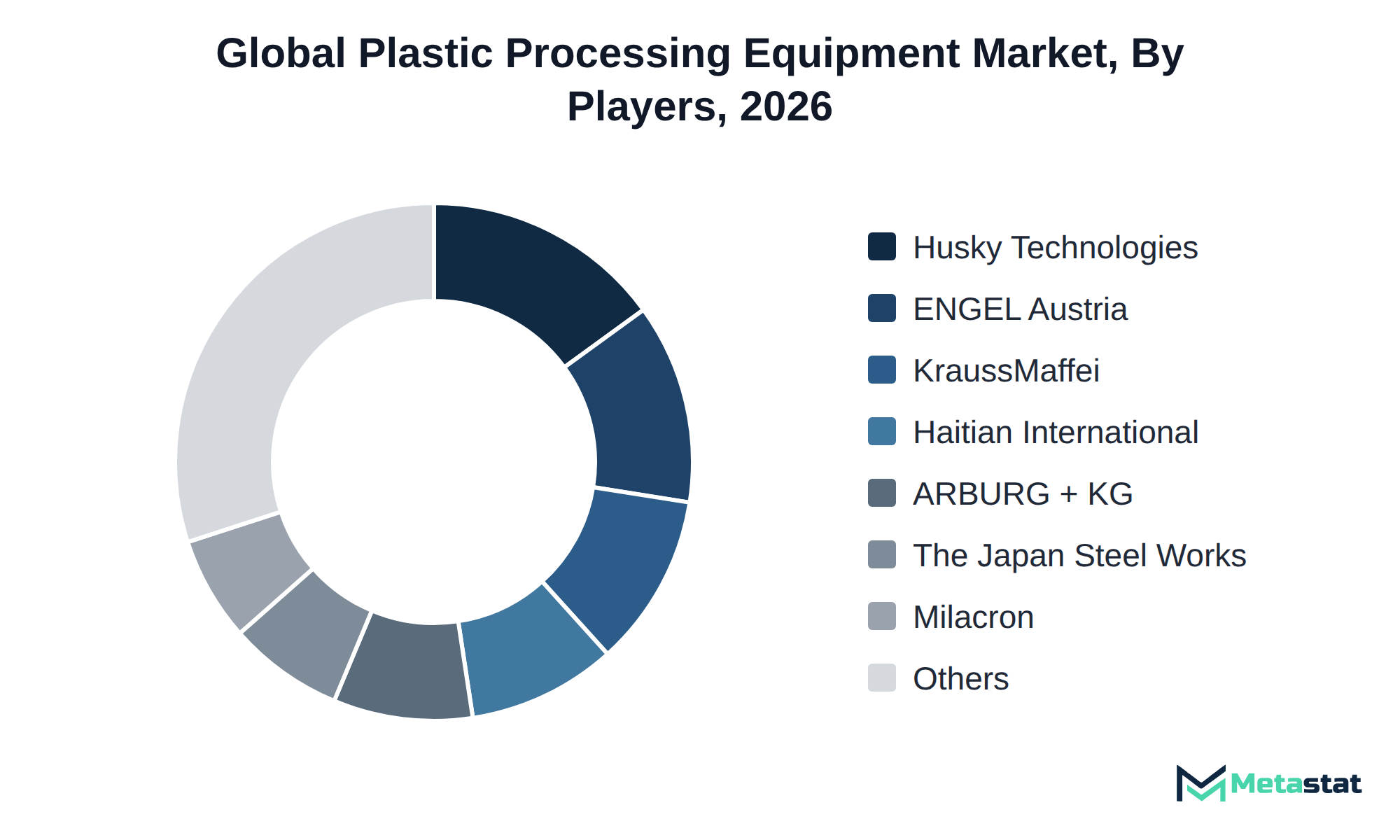
The competitive dynamics within the Plastic Processing Equipment market reflect various strategies employed by key players. Companies position themselves based on factors including pricing, customization, service offerings, and accreditation. Buyers prioritize these elements when making purchasing decisions, significantly influencing the competitive landscape.
Husky Technologies emphasizes innovations in injection molding machines, catering to the packaging and consumer goods sectors. ENGEL Austria GmbH and ARBURG GmbH + Co KG concentrate on fully automated solutions, enhancing efficiency for buyers focused on high-volume production. Meanwhile, Haitian International Holdings Limited stands out with a diverse range of machinery and a strong presence in emerging markets, appealing to cost-sensitive customers.
Plastic Processing Equipment market growth relies on several key developments. First, the expansion of the packaging industry is expected to drive demand, with the segment growing from USD 11.1 billion in 2026 to USD 15.7 billion by 2033. Increased consumer goods production will further boost equipment sales, supported by a 4.9% CAGR. Second, advancements in automation technology will enhance productivity and efficiency, with fully automated solutions anticipated to reach a value of USD 20.2 billion by 2033. Although this forecast presents a positive growth outlook, risks remain. Economic downturns or supply chain disruptions could significantly delay investments in new equipment. Regions including Asia Pacific, accounting for 42.5% of the market share, will heavily influence overall growth. Demand from North America, projected to reach USD 10.9 billion by 2033, further emphasizes the importance of regional dynamics in achieving the forecasted market expansion. Maintaining a focus on innovation and addressing potential challenges will shape the trajectory of the Plastic Processing Equipment market.
By Equipment Type: Injection Molding Machines, Extrusion Machines, Blow Molding Machines, Thermoforming Machines, Others (Rotational Molding Machines, Compression Molding Machines, Calenders)
By End-Use Industry: Packaging, Automotive, Building and Construction, Consumer Goods, Electrical and Electronics, Healthcare, Others (Agriculture, Industrial Components)
By Automation Level: Semi-Automated, Fully Automated
By Sales Channel: Direct Sales, Distributor Sales
The report strategically identifies and profiles the key market players and analyses their core competencies in each sub-segment of the Plastic Processing Equipment market.
Report Attributes | Details |
Study Period | 2021-2033 |
Base Year | 2025 |
Estimated Year | 2026 |
Forecast Period | 2026-2033 |
Historical Period | 2021-2025 |
Growth Rate | CAGR 5.2% from 2026 to 2033 |
Revenue Unit | USD billion |
Segmentation | By Equipment Type, End-Use Industry, Automation Level, Sales Channel, and Region |
By Region | North America (By Equipment Type, End-Use Industry, Automation Level, Sales Channel, and Country)
|
Europe (By Equipment Type, End-Use Industry, Automation Level, Sales Channel, and Country)
| |
Asia Pacific (By Equipment Type, End-Use Industry, Automation Level, Sales Channel, and Country)
| |
South America (By Equipment Type, End-Use Industry, Automation Level, Sales Channel, and Country)
| |
Middle East and Africa (By Equipment Type, End-Use Industry, Automation Level, Sales Channel, and Country)
|
Find answers to common questions about this report
The Plastic Processing Equipment market size was valued at USD 25.9 billion in 2025.
The market is projected to grow at a CAGR of 5.2% during the forecast period from 2026 to 2033.
The North America Plastic Processing Equipment market size is estimated to reach USD 10.9 billion by 2033.
Injection Molding Machines lead the Plastic Processing Equipment market, with a projected value of USD 19.2 billion by 2033. This segment's growth reflects its significant share compared to other equipment types.
The growing emphasis on sustainability significantly influences purchasing decisions, leading to heightened investments in equipment that supports the production of recyclable and biodegradable materials. Technological innovations in automation improve productivity, streamline operations, and enhance operational reliability, driving increased adoption of advanced machinery.
Price sensitivity within the automotive and building industries significantly restricts adoption of advanced equipment due to high capital costs associated with modern machinery. Rising costs for raw materials present challenges for suppliers, escalating production expenses and leading to tighter profit margins across the industry.
The demand for injection molding machines is a significant growth opportunity, driven by the increasing need for high-precision components in industries including packaging and automotive. Enhanced efficiency, reduced waste, and the shift towards electric injection molding machines further favor adoption, positioning this technology as a key driver of future investment.
The Plastic Processing Equipment market is estimated to reach a valuation of USD 39.1 billion by 2033.
Key players operating in the Plastic Processing Equipment market include Husky Technologies, ENGEL Austria GmbH, ARBURG GmbH + Co KG, Haitian International Holdings Limited, KraussMaffei Group GmbH, Milacron LLC, and FANUC CORPORATION.
The injection molding machines segment is projected to expand from USD 13.8 billion in 2026 to USD 19.2 billion by 2033, reflecting a compound annual growth rate of 4.9 percent.
The analysts below cover Packaging research at Metastat Insights.
LEAD ANALYST
Utkarsh Khirodkar is a Lead Market Research Analyst at MetaStat Insight, specializing in market intelligence, technology sector assessments, and competitive strategy.

SENIOR RESEARCH ANALYST
Biotechnology · Food and Beverages · Medical Devices · Packaging
Snehal Pasalkar is a Research Analyst at MetaStat Insight, operating at the intersection of life sciences research, competitive strategy, and market intelligence.

INDUSTRY CONSULTANT - CHEMICALS & ADVANCED MATERIALS
Chemicals and Materials · Machinery & Equipment · Packaging
Amit Gadhekar Consultant for Chemicals and Materials at MetaStat Insight, directing sector-specific intelligence, research, and strategic consulting across global chemical and processing markets.
Floating offshore wind feasibility relies heavily on specialized installation vessel availability and port crane limits, which most broad renewable energy forecasts ignore. The report delivered a thorough analysis of dry dock capacity, mooring chain supply constraints, and raw material pricing trends for deepwater anchor installations. It served as a solid independent sanity check for our offshore project capital expenditure assumptions.
Assessing commercial microgrid software adoption requires looking past top-level installation numbers and examining utility interconnection queues. The research provided verifiable data on average permitting timelines, tariff structures, and battery storage integration costs across regional utility territories. That grounded perspective was valuable for our team when building five-year demand projections for industrial microgrid controllers.
Ambulatory surgical centers have very different purchasing cycles for robotic-assisted surgery platforms than major hospital networks. The MetaStat Insight study focused squarely on capital expenditure depreciation, procedural reimbursement pathways, and surgeon training overhead. That operational clarity made it much simpler to validate multi-year procedure growth forecasts against actual ambulatory center adoption patterns.
Explore related market intelligence reports worth reading alongside this one.