
LEAD ANALYST
Utkarsh Khirodkar is a Lead Market Research Analyst at MetaStat Insight, specializing in market intelligence, technology sector assessments, and competitive strategy.

Global Knitwear Market Size, Share, By Product Type (Sweaters and Pullovers, Cardigans, T-Shirts and Polo Shirts, Sweatshirts and Hoodies, Dresses and Skirts, Trousers, Leggings and Shorts, Innerwear and Sleepwear, Socks and Hosiery, Knitted Jackets and Vests), By Material Type (Cotton, Sheep Wool, Cashmere, Synthetic Fibers, Regenerated Cellulosic Fibers, Blends), By End User (Men, Women, Children), By Distribution Channel (Online and Offline), Industry Analysis, Growth, Trends, and Forecast, 2026-2033
Report ID
MSI-5632
Published
October, 2026
Pages
263 Pages
Format
Historical
Base year
Forecast
Forecast period
Report Details
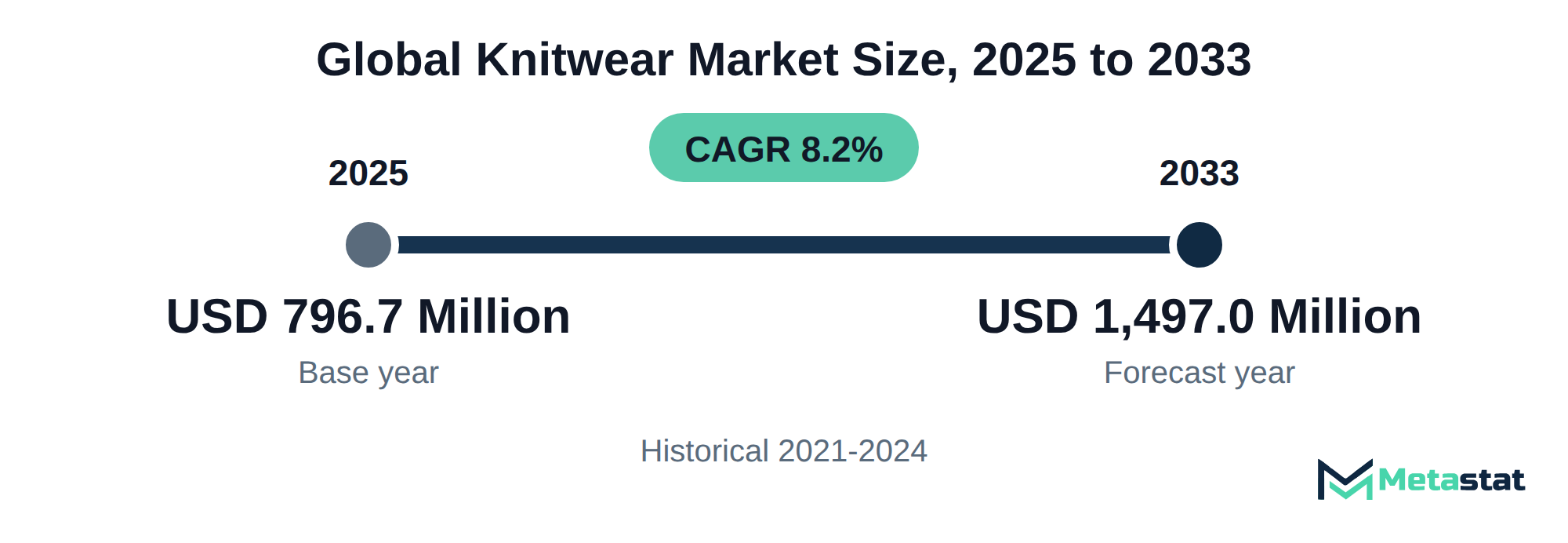
Market Valuation: Valued at $796.7 Million in 2025, projected to reach $1,497 Million by 2033 at a 8.2% CAGR.
Dominant Segment: Sweaters and pullovers lead the market, driven by strong consumer demand for versatile and fashionable options that offer comfort and style.
Geographic Lead: North America dominates the market, with the US expected to maintain its leadership position due to evolving fashion trends and high consumer spending.
What's Inside: The report includes a comprehensive analysis of market segmentation by product type, material, end user, and distribution channel, along with competitive insights and future forecasts.
Emerging Trends: Sustainable materials are gaining traction, as consumers increasingly seek eco-friendly options, influencing manufacturers to adapt their offerings accordingly.
Online Sales Growth: The shift toward online shopping is reshaping the market, with brands leveraging e-commerce to enhance accessibility and cater to changing consumer preferences.
Choose Your License
Global Knitwear Market
The global Knitwear market was valued at USD 796.7 million in 2025 and is projected to reach USD 1,497 million by 2033, growing at a CAGR of 8.2% over the forecast period.
The Knitwear market encompasses a variety of knitted garments, including sweaters, pullovers, and other apparel made from materials like cotton and wool. Buyers invest in this market due to the growing preference for comfortable and stylish clothing, particularly among men. The increasing trend toward casual and versatile fashion contributes to heightened consumer spending, resulting in significant market expansion.
Growth drivers in the Knitwear market include the expanding online retail sector, which enhances accessibility and convenience for consumers. Sweaters and pullovers represent the segment with the highest value, reflecting strong demand from consumers seeking warm and fashionable options. North America holds 100.0% of the market in 2025, with the US leading in 2026. This dominance in the regional share supports the overall expansion of the market, driven by evolving fashion trends and consumer preferences.
While the market progresses, the demand for high-quality knitwear continues to rise, supported by a combination of style and comfort. The focus on sustainable and eco-friendly materials further enhances consumer interest, positioning the market for significant growth. With a projected compound annual growth rate of 8.2%, investments in innovative designs and materials are expected to shape the future of knitwear offerings.
The Knitwear market includes various knitted garments that appeal to a broad consumer base. Buyers invest in this market due to the increasing preference for comfortable and stylish clothing options. The demand for knitwear is driven by fashion trends, seasonal changes, and the versatility of knitted apparel, which is worn in diverse settings. Consumers increasingly prioritize quality and sustainability, influencing their purchasing decisions. This focus on quality and style contributes to the market's growth trajectory.
Growth in the market is fueled by the rising popularity of sweaters and pullovers, which represent the most valuable segment. This region's robust consumer base and high disposable income support significant spending on knitwear, creating a competitive environment among suppliers. The market's expansion aligns with evolving consumer preferences for personalized and premium knitwear options.
The Knitwear market experiences considerable momentum, driven primarily by the increasing shift towards online shopping. Online retail channels give consumers convenient access to a broad selection of products and improve their shopping experience. Online platforms allow brands to present their offerings effectively, attracting a larger audience and facilitating market penetration. This shift to digital channels positions the market for sustained growth in the coming years.
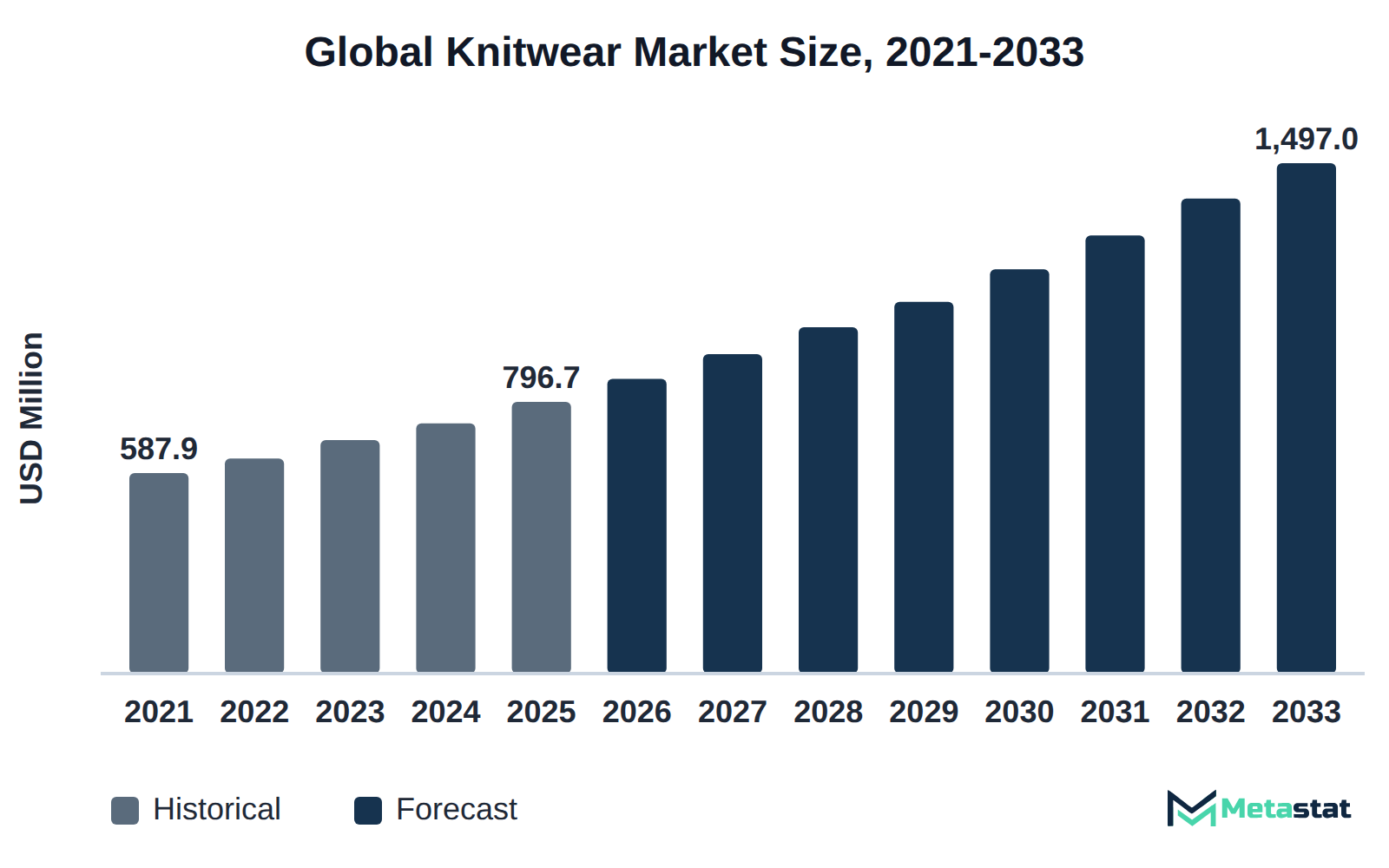
Cashmere and Merino knitwear commands premium pricing due to high fiber quality and craftsmanship. These luxury materials offer superior softness, warmth, and durability, making them highly sought after in the knitwear market. Cashmere, in particular, has gained recognition for its fine texture and insulating properties, appealing to consumers seeking high-quality apparel. The projected growth for sweaters and pullovers, from USD 864.3 million in 2026 to USD 1,497 million by 2033, highlights the demand for premium knitwear offerings.
The craftsmanship involved in producing cashmere and Merino wool garments significantly influences market positioning. Artisans employ traditional techniques, ensuring each piece meets high standards. This careful attention to detail enhances the product's appeal and justifies its higher price point. Such practices connect with consumers increasingly focused on sustainable fashion, further driving demand for these premium segments.
The emphasis on fiber quality and craftsmanship shapes purchasing behaviors. Retailers and brands that prioritize these attributes are likely to capture a larger share of the growing consumer base seeking luxurious, high-quality knitwear options.
Pricing strategies significantly impact the purchasing behavior of buyers in the Knitwear market. Buyers increasingly prefer transparent pricing models that align with their budgetary constraints and performance requirements. For example, 3D knitting technologies often command higher price points due to their advanced manufacturing processes and the enhanced performance attributes they provide. The related seamless apparel category also pairs knitted construction with performance-oriented design. The market's projected value of USD 1,497 million by 2033 highlights the importance of these technologies in driving buyer interest and willingness to invest.
Contract models are evolving in response to market dynamics, with long-term agreements gaining traction among suppliers and buyers. Such contracts typically include provisions for volume discounts, which incentivize larger orders and ensure supply stability. The anticipated compound annual growth rate (CAGR) of 8.2% for the segment encompassing knitwear indicates strong demand, prompting suppliers to adjust their pricing structures. This approach builds loyalty among buyers and enhances suppliers' operational efficiency.
Lightweight cotton knits have transformed inventory management for retailers by extending selling seasons beyond the winter months. These versatile garments offer comfort during transitional weather, appealing to consumers seeking lightweight options for layering throughout the year. Diversifying product lines with lightweight cotton knits aligns offerings with evolving consumer preferences, thereby enhancing sales opportunities.
The knitwear market for cotton products, particularly sweaters and pullovers, is projected to experience a compound annual growth rate (CAGR) of 8.2% from 2026 to 2033. This growth reflects increasing consumer demand for comfortable and stylish options that fit various occasions. Retailers responding to this trend benefit from improved stock turnover and increased foot traffic, with these garments attracting a broader audience.
Retailers incorporating lightweight cotton knits into their offerings expect to capitalize on significant market opportunities. This product category appeals not only to men but to women looking for breathable and fashionable knitwear. Expanding their ranges enhances competitiveness and customer loyalty, ensuring sustained growth in a dynamic knitwear market.
Reducing fit-related returns presents a significant challenge for online knitwear brands. In a market projected to reach USD 1,497 million by 2033, addressing sizing issues enhances customer satisfaction and loyalty. Many consumers prioritize fit when selecting knitwear, leading to high return rates when expectations are not met. Effective strategies include offering detailed size guides and implementing virtual fitting technologies. Such tools allow customers to visualize how garments will fit their specific body types.
Investing in enhanced measurement tools reduces fit-related returns. Brands incorporate technology that captures a customer's measurements via smartphone applications. Accurate data enhances the shopping experience, leading to informed purchase decisions. For instance, in the sweaters and pullovers segment, which is expected to grow at a CAGR of 8.2% from USD 864.3 million in 2026 to USD 1,497 million by 2033, implementing these tools yields better customer retention and lower return rates.
A feedback loop in which customers share insights on fit and comfort drives improvements in future product designs. This approach allows brands to adapt to consumer preferences swiftly, positioning brands to thrive in the competitive knitwear market. Engaging customers in this manner builds brand loyalty, encouraging repeat purchases and reducing the overall costs associated with returns.
Changing fashion preferences among male consumers drive increased spending on knitwear. Modern men increasingly prioritize stylish, comfortable options, influencing their purchasing decisions. This demographic shift supports higher demand for sweaters and pullovers, which are perceived as versatile and suitable for various occasions. The trend towards athleisure and casual wear further fuels this demand, contributing to an expansion in the market. In 2025, the market reached a value of USD 796.7 million, reflecting significant consumer interest. Evolving preferences drive retail strategies to adapt and capture this growing segment, enhancing product offerings and boosting sales.
Many brands have responded by focusing on online distribution channels, offering diverse styles and designs tailored to this demographic. Online sales of men’s knitwear are projected to grow significantly, supporting overall market expansion.
Innovations in sustainable materials drive growth in the knitwear market. Increasing consumer awareness regarding environmental impacts pushes manufacturers to explore eco-friendly fibers, including organic cotton and recycled textile fibers. These sustainable options attract environmentally conscious buyers, significantly altering purchasing behaviors and preferences. Suppliers adapt by incorporating these materials into their product lines, enhancing brand image and marketability. This shift towards sustainability opens new revenue streams for manufacturers while aligning with global trends prioritizing ethical consumption.
The demand for sustainable knitwear results in collaborations between brands and sustainable material suppliers, driving innovation and further expanding product offerings. Companies investing in sustainable practices experience competitive advantages, catering to a growing segment of conscious consumers. While this trend continues to evolve, brands that effectively communicate their commitment to sustainability strengthen their presence in the knitwear market. These material innovations enhance product appeal and support long-term growth.
Rising raw material costs exert pressure on the Knitwear market, affecting purchasing decisions among consumers. Increased expenses for essential fibers, including cotton and wool, lead to higher retail prices, which deter budget-conscious buyers. This impact manifests through slower uptake and smaller order sizes, particularly among price-sensitive segments including men’s knitwear. Retailers struggle to balance cost increases with customer expectations for affordability and quality, resulting in delayed replacement cycles for existing inventory. This situation compresses profit margins and impacts sales volume, further complicating market dynamics. In response, brands explore alternative sourcing strategies; however, the immediate effects of rising costs continue to influence buyer behavior significantly.
Compliance costs represent a significant challenge for suppliers within the knitwear sector. Increasing regulatory requirements surrounding sustainability and labor practices result in heightened operational expenses. Suppliers face pressure to implement sustainable practices while maintaining margins, leading to strategic adjustments in production processes. Many companies invest in advanced manufacturing technologies to improve efficiency and reduce compliance-related costs, aiming to mitigate the financial impact of these regulations. Several suppliers seek partnerships with third-party organizations to enhance adherence to compliance standards without overwhelming internal resources. This adaptation allows suppliers to maintain competitiveness while addressing regulatory demands. Overall, compliance costs constrain profit margins and may affect pricing strategies across product lines.
The online distribution channel presents significant growth potential within the knitwear market, driven by changing consumer shopping habits and increasing internet penetration. The rising preference for convenient shopping experiences facilitates demand for knitwear products through digital platforms. This shift aligns with the broader retail trend where consumers favor online options over traditional brick-and-mortar stores.
The opportunity lies in utilizing e-commerce capabilities to reach a wider audience, particularly among younger demographics who prioritize online shopping. Brands that invest in enhancing their online presence, including user-friendly interfaces and personalized marketing strategies, are likely to capture a larger share of the market. The transition to online sales channels improves accessibility and aligns with evolving consumer preferences for convenience, supporting sustained growth in the knitwear sector.
The Global Knitwear market is segmented based on Product Type, Material Type, End User, and Distribution Channel.
This segment caters primarily to adults seeking comfort and style in their wardrobe, with a significant focus on men’s fashion. Key drivers include increasing demand for versatile and casual wear, with consumers prioritizing comfort without sacrificing aesthetic appeal. Unlike other segments, including T-Shirts and Polo Shirts, this category exhibits higher growth potential and pricing power due to its perceived value and trend prominence. The trend toward sustainable and ethically produced materials further enhances its attractiveness, positioning this segment favorably against others in the market. Retailers are adapting strategies to meet evolving consumer preferences, leading to significant changes within the market.
Cardigans provide versatile layering options suitable for both casual and formal occasions. This segment appeals to a demographic that values comfort and style, with consumers seeking garments that offer both warmth and aesthetic appeal. The popularity of cardigans stems from their adaptability, allowing wearers to adjust their outfits according to varying temperatures and settings. Demand for cardigans is influenced by changing fashion trends and the increasing preference for comfortable yet stylish clothing. Compared to other segments, including sweaters and pullovers, cardigans face slower growth due to more specific fashion preferences and seasonal trends, positioning them as a niche choice within the broader market. This sub-segment serves individuals seeking practical yet fashionable solutions, differentiating them from traditional knitted garments that cater to a wider audience.
T-Shirts and Polo Shirts segment is expected to reach USD 0 million by 2033. This segment serves mainly casual and leisure apparel markets, appealing to consumers seeking comfort and style. A significant driver within this segment is the increasing demand for versatile clothing that suits both everyday wear and outdoor activities. The popularity of athleisure, a fashion trend, influences this demand, attracting various buyers, including men and women who prioritize comfort alongside style. In contrast to other segments, including Sweaters and Pullovers, which experience growth driven by seasonal demand, T-Shirts and Polo Shirts maintain a consistent appeal year-round due to their lightweight materials and casual nature. Overall, the pricing dynamics in this segment differ, with average price points generally lower than those found in premium offerings, reflecting a more budget-conscious consumer base.
Sweatshirts and hoodies represent a popular choice among consumers seeking casual and comfortable apparel. These garments serve practical purposes, often worn for leisure activities or within everyday attire. Demand for sweatshirts and hoodies stems from evolving lifestyle trends, with increasing consumer focus on comfort and versatility influencing purchasing behaviors. The youth demographic, in particular, drives sales in this segment, seeking stylish yet relaxed options. Compared to other product types, this segment experiences slower growth, with broader price ranges catering to various consumer preferences. While competitors in the knitwear market emphasize formal or semi-formal attire, sweatshirts and hoodies appeal to a casual audience, differentiating themselves with unique designs and fabric blends. This differentiation creates a distinct market positioning, enhancing the segment's appeal.
Dresses and skirts consist of knitted garments designed for women's fashion. These items serve various purposes, from casual wear to formal occasions, appealing particularly to female consumers seeking comfort and style. Knitted dresses for formal occasions overlap with the women's formal wear industry. Fashion trends significantly influence demand for this segment, with an increasing preference for versatile and stylish knitted dresses and skirts. This segment distinguishes itself from other product types due to its focus on female fashion needs, typically commanding a different pricing structure. While other segments like sweaters and pullovers enjoy consistent growth, dresses and skirts often experience fluctuating demand driven by seasonal fashion trends and changing consumer preferences. The market continues to evolve, responding to the latest styles and materials that enhance both aesthetic appeal and comfort, driving sustained interest in this segment.
Trousers, leggings, and shorts offer practical options for everyday wear, catering primarily to men seeking comfort and style. Increasing preferences for casual and athleisure styles fuel demand within this segment. Consumers gravitate towards these garments due to their versatility, making them suitable for various occasions. While this segment experiences growth, it attracts a different buyer profile compared to sweaters and pullovers, which command higher prices and premium positioning. With trends shifting towards casual dress codes, the market anticipates further expansion driven by evolving fashion dynamics. Innovation in fabric technologies enhances comfort and performance, positioning trousers, leggings, and shorts as staples in modern wardrobes, distinct from other product types in the market. Progress in the performance fabric industry also shapes the design of these garments.
Innerwear and sleepwear consist of knitted garments designed for comfort during rest and relaxation. This segment serves both men and women, fulfilling the demand for comfortable and stylish at-home apparel. Consumer trends leaning towards comfort and versatility drive this segment. The rise in remote working and staying at home has led to increased demand for such products. Compared to other segments, this category typically features lower price points and appeals to a broader demographic, including budget-conscious buyers. While sweaters and pullovers often see higher price tags due to material quality and fashion trends, innerwear maintains consistent sales due to its essential nature for daily living. The market continues to respond to evolving consumer preferences, reflecting a shift towards comfort-centric fashion.
Socks and hosiery encompass knitted garments designed for the feet and legs, catering to a wide demographic that includes men, women, and children. Functional products, including compression socks, add a performance-oriented option within this range. These items serve various purposes, from providing warmth and comfort to enhancing fashion statements. The demand for this sub-segment is influenced by changing consumer preferences toward stylish and functional footwear accessories. Factors including seasonal trends and increasing participation in sports and outdoor activities drive interest, particularly among younger consumers. Unlike other segments, including sweaters and pullovers, socks and hosiery typically experience a slower growth rate due to their more niche appeal and lower price points. This segment significantly contributes to the broader knitwear market, reflecting evolving fashion trends and consumer needs while avoiding the extensive investment required for larger apparel items.
Knitted jackets and vests offer stylish layering options that appeal to both casual and fashionable consumers. Primarily worn by adults, these garments provide warmth and comfort, making them ideal for various weather conditions. Demand for knitted jackets and vests is driven by increasing consumer preference for versatile clothing that combines style with functionality. Rising interest in sustainable fashion practices influences the adoption of knitted products made from eco-friendly materials. Compared to other segments like sweaters and pullovers, knitted jackets and vests experience slower growth due to their niche positioning within the broader Knitwear market. However, unique designs and premium materials set this segment apart, potentially attracting higher-end buyers focused on quality and sustainability.
Scarves, hats, and gloves form a diverse category of knitted accessories that enhance both functionality and style in daily attire. Widely used by consumers across various demographics, these items serve essential purposes, including providing warmth and completing outfits. Growth in this segment is driven by fashion trends emphasizing layering and personal expression, leading to heightened interest among women and men seeking to complement their wardrobes. This segment differs from others, including sweaters and pullovers, which exhibit substantial growth rates, indicating a more stable demand for accessories compared to core clothing items. Pricing strategies for scarves, hats, and gloves often fluctuate based on material choices, impacting their market positioning. The knitwear market demonstrates broad appeal, with this segment catering to consumers who value both practicality and style.
Widely used for a variety of knitted garments, cotton appeals to men seeking comfort and quality in their apparel. The expanding demand for versatile and breathable fabrics drives this segment's growth, particularly among younger consumers who prioritize sustainability and comfort. Unlike other material types, cotton maintains a competitive price point, making it attractive to a broader range of buyers. This segment benefits from the increasing trend toward casual wear, which further supports demand. Rising consumer interest in sustainable fashion influences this segment, with cotton often perceived as an eco-friendlier option compared to synthetic alternatives. Overall, the growth trajectory of cotton contributes significantly to the expansion of the market.
Sheep wool is a premium material choice in knitwear, valued for its softness and insulation properties. Garment makers typically work with this fiber in the form of wool yarn. Widely favored by consumers seeking warmth and comfort, sheep wool garments cater to a diverse demographic including men and women alike. Demand for sheep wool is driven by its superior quality compared to synthetic alternatives, often commanding higher prices in the market. This segment differentiates itself from others, including cotton, by offering greater durability and a distinctive aesthetic appeal. Sheep wool products generally exhibit slower growth relative to other materials, but they maintain a loyal customer base due to their unique characteristics and perceived value. Sustainability trends further influence consumer preferences, with environmentally conscious buyers increasingly opting for natural fibers like sheep wool. The market continues to evolve, reflecting shifts in consumer behavior and preferences.
This material is recognized for its luxurious feel and warmth, primarily found in high-end knitwear products targeting affluent consumers. These products sit alongside other luxury goods aimed at affluent buyers. The demand for cashmere products stems from the preference for premium and sustainable wardrobe options among buyers seeking to invest in high-quality apparel. Factors affecting this segment include fluctuating raw material prices and competition from synthetic alternatives, which limit growth potential. Compared to other materials like cotton, which is projected to reach USD 1,497 million by 2033, cashmere generally maintains a higher price point due to its scarcity and production costs. The market reflects a strong inclination towards sustainable fashion, impacting consumer choices and prompting brands to adopt ethical sourcing practices in their cashmere offerings.
Synthetic fibers are a versatile option in knitwear, appealing to manufacturers and consumers seeking innovative textile solutions. These materials offer cost-effective alternatives to natural fibers, making them attractive for various knitted products. Demand for synthetic fibers is driven by durability, ease of maintenance, and the ability to produce diverse textures and styles. This segment attracts budget-conscious consumers, distinguishing it from premium materials like cashmere and cotton, which cater to a more affluent demographic. While natural fibers often associate with higher price points, synthetic fibers enable brands to offer affordable knitwear without compromising style or functionality. The growing trend towards eco-friendly alternatives in materials influences future developments in synthetic fiber production, aligning with consumer preferences for sustainability.
Regenerated cellulosic fibers consist of fibers derived from plant-based materials, used for producing environmentally friendly knitwear. This material appeals to consumers seeking sustainable and biodegradable clothing options, particularly those prioritizing eco-conscious fashion. The growth of this segment is driven by increasing demand for sustainable materials among environmentally aware consumers, which has influenced many brands to incorporate regenerated fibers into their collections. Unlike more traditional materials, regenerated cellulosic fibers often carry a premium price due to their sustainable sourcing and manufacturing processes, differentiating them from other segments in the market. The market's focus on sustainability leads to innovative product development, with brands exploring new techniques to enhance the performance and aesthetics of knitwear made from these fibers.
Blends combine various fibers to create unique textile properties, appealing to a diverse range of consumers and brands. This material type is used for both casual and formal knitwear, catering to men, women, and children across multiple demographics. Demand for blends is driven by increasing consumer interest in versatile and high-performance fabrics that offer both comfort and style. Compared to segments like cotton and cashmere, blends provide a balance of affordability and quality, attracting buyers who seek functional yet fashionable options. Rising environmental consciousness influences market trends, as brands incorporating sustainable blends gain traction among consumers. This segment supports the market's growth by meeting the evolving demands of consumers, particularly in contemporary fashion that emphasizes both aesthetics and utility.
Others (Silk, Linen, Alpaca) includes luxurious fibers that appeal to consumers seeking unique textures and quality. These materials serve various applications, including high-end fashion and decorative knitwear, primarily targeting discerning buyers who prioritize exclusivity and comfort. Growing interest in sustainable and eco-friendly textiles drives demand for silk and linen, while alpaca fiber attracts attention due to its softness and warmth. This sub-segment stands apart from others like cotton or synthetic fibers, which cater to a broader audience and tend to be more affordable. Luxury positioning often leads to higher pricing within this category, influencing purchasing decisions among consumers who value craftsmanship and heritage. The segment's unique offerings differentiate it from mainstream options, contributing to its niche presence in the market.
This segment covers knitted garments designed for men, catering to various occasions, from casual wear to formal attire. Rising fashion consciousness among men, coupled with increasing disposable income, drives demand for stylish and comfortable knitwear. In comparison to other segments, the Men segment experiences significant growth, particularly in sweaters and pullovers, which are favored for their versatility and comfort. This differentiation contributes to its higher CAGR relative to other segments that focus on specific demographics, including children. The market's expansion reflects a growing acceptance of knitwear as a staple in men's fashion, supported by evolving trends and increasing availability through various distribution channels.
Women represent a vital demographic for knitwear, appealing to consumers seeking stylish and comfortable garments. This segment caters to a wide range of knitted clothing, including sweaters, cardigans, and dresses, designed to meet the diverse fashion needs of women. Demand for this segment increases due to rising fashion consciousness and a growing preference for versatile clothing that transitions easily from casual to formal settings. In comparison to the Men segment, the Women sub-segment benefits from broader style variations and color options, enhancing its appeal. The market's emphasis on sustainable fashion has influenced the Women segment, driving interest in eco-friendly materials and production practices. Overall, these trends contribute to the segment's growth potential and significance in the overall market.
This segment typically includes knitted apparel designed for young individuals, focusing on comfort and style. It forms part of the wider kids wear industry. Demand arises primarily from parents seeking quality clothing for their children, prioritizing durability and softness in fabric. External factors influencing this segment include shifting fashion trends among youth and an increasing emphasis on sustainable materials. Unlike the Men segment, which is projected to reach USD 1,497 million by 2033, the Children segment lacks significant growth potential, reflecting changing consumer priorities toward adult apparel. The overall market evolves with a focus on adult consumers, while children’s knitwear struggles to gain comparable traction.
Online channels are vital platforms for consumers seeking to purchase knitwear conveniently, catering primarily to tech-savvy buyers who prefer shopping from home. The growing trend towards online shopping fuels this segment, driven by increased smartphone penetration and improved internet access. Unlike offline distribution channels, this segment experiences faster growth due to the lower overhead costs associated with online retailing and the broader reach it offers to brands. While offline channels are often constrained by geographic limitations, online platforms provide a competitive advantage in terms of accessibility and consumer engagement, significantly influencing market dynamics.
Valued at USD 0 million by 2033, the Offline segment encompasses traditional retail channels for knitwear. This segment primarily serves consumers who prefer in-store shopping experiences, where tactile engagement with products enhances purchasing decisions. A significant driver for this segment involves the consumer's desire for immediate product access and the opportunity to try items before buying. Compared to the Online segment, which is projected to reach USD 1,497 million by 2033, the Offline segment lacks the same growth potential. The market increasingly shifts towards digital platforms, impacting foot traffic in physical stores. The continuous evolution of retail strategies leads to varying dynamics between these distribution channels, ultimately influencing customer preferences and spending patterns.
Based on geography, the Global Knitwear market is divided into North America, Europe, Asia-Pacific, South America, Middle East, and Africa.
Demand for knitwear in North America derives primarily from the United States, Canada, and Mexico. This region stands out due to its strong retail infrastructure and advanced e-commerce platforms, which give consumers access to many knitwear products. The increasing consumer preference for online shopping significantly influences market dynamics. North America is projected to reach USD 1,497 million by the end of 2033, reflecting sustained growth driven by strong demand for both casual and formal knitwear. The market's growth stems from shifting fashion trends prioritizing comfort and versatility, which attract diverse consumer segments. High purchasing power among consumers in this region enhances its overall appeal.
Demand for the knitwear market in Europe is driven by various consumer preferences for high-quality, fashionable apparel. In countries like Germany, France, and the UK, buyers increasingly seek sustainable materials, influencing purchasing decisions. Italy and Spain have a strong tradition of fashion, enhancing the market's appeal through local brands and luxury offerings. Russia presents unique opportunities due to a growing interest in Western-style clothing combined with traditional elements. Strong infrastructure supports efficient distribution channels, facilitating access to both online and offline markets. The market's focus on premium fabrics reflects broader trends in consumer behavior, with buyers prioritizing quality and sustainability in their choices.
In the Asia-Pacific region, demand for knitwear is driven predominantly by rapidly growing consumer markets in China, Japan, India, and South Korea. Increasing disposable incomes and a rising middle class enhance the appetite for comfortable and fashionable knitwear. Online retail channels gain traction, offering consumers easy access to a wide variety of products. Australia and Southeast Asia emerge as significant players, with local preferences influencing designs and materials used in knitwear production. The competitive landscape includes both established brands and emerging players, each vying for market share in this diverse region. The knitwear market in Asia-Pacific is projected to thrive, driven by favorable demographic trends and evolving consumer preferences.
In South America, demand for the knitwear market derives primarily from Brazil and Argentina, focusing on casual and stylish apparel among consumers. The rising popularity of online shopping significantly influences the market, with digital channels providing greater access to a variety of knitwear options. Brazil, with its dynamic fashion scene, contributes to this demand, supported by a growing middle class eager to embrace fashion trends. Argentina's consumer base increasingly seeks quality knitwear, driven by preferences for comfort and style. Infrastructure improvements in logistics and distribution enhance market accessibility, driving growth opportunities. The evolving knitwear market in South America reflects shifting consumer preferences and expanding online retail capabilities.
In the Middle East and Africa, demand for the knitwear market is shaped by diverse consumer preferences, particularly in countries including Saudi Arabia, UAE, and South Africa. The market thrives on the growing middle-class population, which boosts purchasing power and increases interest in fashionable clothing. Retail infrastructure in urban areas supports the distribution of these products, facilitating access to a wide range of knitwear options. A trend toward luxury apparel influences buyer behavior, with consumers seeking quality materials and unique designs. This region's market reflects an emerging demand for stylish and comfortable knitwear, contributing to its overall growth trajectory.
Companies within the Knitwear market adopt diverse strategies to capture consumer attention and maximize market share. Price sensitivity remains a significant factor influencing buyer decisions, with consumers often opting for products that balance quality and affordability. Customization options and certification standards, including organic or sustainable materials, attract a growing segment of eco-conscious customers.
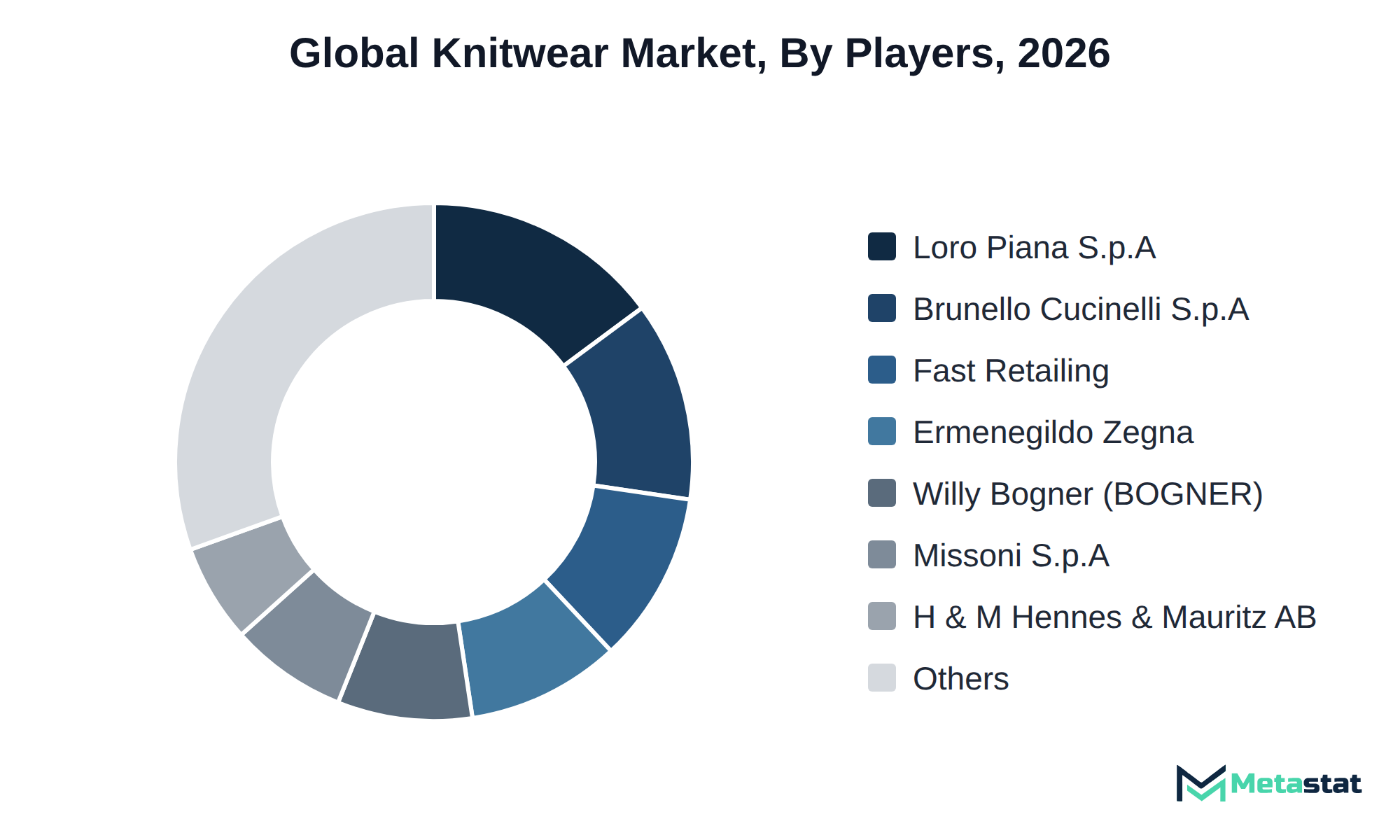
Willy Bogner GmbH (BOGNER) focuses on luxury knitwear, leveraging high-quality materials and craftsmanship to appeal to premium buyers. Fast Retailing Co., Ltd. emphasizes fast fashion, providing trendy knitwear at competitive prices, which attracts a broad consumer base. Meanwhile, Ralph Lauren Corporation positions itself within the lifestyle segment, offering a blend of classic and modern designs that cater to brand-loyal customers seeking style and quality.
The Knitwear market experiences unique trends driven by shifting consumer preferences towards sustainability and online shopping. Companies including H & M Hennes & Mauritz AB cater to this demand by offering eco-friendly knitwear options through their sustainable lines. In contrast, Jockey International, Inc. emphasizes comfort and functionality, targeting active consumers looking for versatile knitwear suitable for various occasions.
Understanding these dynamics enables companies in the market to position their offerings and tailor their strategies to meet evolving consumer needs.
The expansion of the knitwear market relies on several critical developments. First, increasing consumer demand for sweaters and pullovers, particularly in North America, will drive sales. This segment is projected to grow at an 8.2% CAGR, reflecting a shift in consumer preferences toward comfortable and versatile clothing options. Second, the growth of online distribution channels will enhance market accessibility, enabling brands to reach a wider audience. With more consumers opting for online shopping, this channel's significant contribution to overall sales will support market growth. However, the market faces risks that could hinder this growth trajectory. Supply chain disruptions, including those affecting cotton and synthetic fibers, could increase production costs and delay product availability. Rising production costs and delayed product availability affect pricing and consumer purchasing behavior, posing challenges for manufacturers and retailers. Effective management of these risks will be essential for the market to achieve the forecasted growth, ensuring that the knitwear market remains competitive and innovative in the coming years.
By Product Type: Sweaters and Pullovers, Cardigans, T-Shirts and Polo Shirts, Sweatshirts and Hoodies, Dresses and Skirts, Trousers, Leggings and Shorts, Innerwear and Sleepwear, Socks and Hosiery, Knitted Jackets and Vests, Others (Scarves, Hats, Gloves)
By Material Type: Cotton, Sheep Wool, Cashmere, Synthetic Fibers, Regenerated Cellulosic Fibers, Blends, Others (Silk, Linen, Alpaca)
By End User: Men, Women, Children
By Distribution Channel: Online, Offline
The report strategically identifies and profiles the key market players and analyses their core competencies in each sub-segment of the Knitwear market.
Report Attributes | Details |
Study Period | 2021-2033 |
Base Year | 2025 |
Estimated Year | 2026 |
Forecast Period | 2026-2033 |
Historical Period | 2021-2025 |
Growth Rate | CAGR 8.2% from 2026 to 2033 |
Revenue Unit | USD million |
Segmentation | By Product Type, Material Type, End User, Distribution Channel, and Region |
By Region | North America (By Product Type, Material Type, End User, Distribution Channel, and Country)
|
Europe (By Product Type, Material Type, End User, Distribution Channel, and Country)
| |
Asia Pacific (By Product Type, Material Type, End User, Distribution Channel, and Country)
| |
South America (By Product Type, Material Type, End User, Distribution Channel, and Country)
| |
Middle East and Africa (By Product Type, Material Type, End User, Distribution Channel, and Country)
|
Find answers to common questions about this report
The Knitwear market size was valued at USD 796.7 million in 2025.
The market is projected to grow at a CAGR of 8.2% during the forecast period from 2026 to 2033.
The North America Knitwear market size is estimated to reach USD 1,497 million by 2033.
The leading segment in the Knitwear market is Sweaters and Pullovers, with a projected value of USD 1,497 million by 2033. This segment demonstrates a compound annual growth rate of 8.2% from 2026 to 2033.
Changing fashion preferences among male consumers drive increased spending on knitwear, as modern men prioritize stylish and comfortable options. Innovations in sustainable materials attract environmentally-conscious buyers, significantly altering purchasing behaviors and preferences.
North America holds the dominant share of the Knitwear market, with a projected value of USD 1,497 million in 2033. This region represents the entire market share, indicating its leading position.
Rising raw material costs restrain growth in the knitwear market, leading to higher retail prices that deter budget-conscious buyers. Compliance costs related to sustainability and labor practices challenge suppliers, constraining profit margins and affecting pricing strategies across various product lines.
Changing fashion preferences among male consumers and the rising demand for sustainable materials significantly favor adoption in the knitwear industry. The shift towards online distribution channels enhances accessibility, aligning with consumer preferences for convenient shopping experiences.
The Knitwear market is estimated to reach a valuation of USD 1,497 million by 2033.
Key players operating in the Knitwear market include Willy Bogner GmbH (BOGNER), Loro Piana S.p.A., Brunello Cucinelli S.p.A., Ermenegildo Zegna N.V., Missoni S.p.A., Fast Retailing Co., Ltd., H & M Hennes & Mauritz AB, and Ralph Lauren Corporation.
The analysts below cover Consumer Goods research at Metastat Insights.
LEAD ANALYST
Utkarsh Khirodkar is a Lead Market Research Analyst at MetaStat Insight, specializing in market intelligence, technology sector assessments, and competitive strategy.
Evaluating calorific value requirements and air permit compliance across municipal waste facilities requires localized data. Metastat Insight structured their analysis around operational throughput capacity and feedstock composition variations in Latin America and Eastern Europe. Their competitive mapping of sorting equipment vendors helped clarify technology differences between optical separators and heavy media systems. The study provided an objective baseline during our capital expenditure reviews.
Decarbonizing industrial thermal processes hinges on refrigerant regulations and compressor efficiency limits. Metastat Insights delivered a thorough market analysis that evaluated natural refrigerants like CO2 and hydrocarbons against synthetic low-GWP alternatives. The breakdown of utility incentives and grid capacity constraints across key European manufacturing hubs offered valuable perspective. The follow-up conversation with their sector analysts addressed our specific questions on mechanical vapor recompression systems efficiently.
Assessing 200mm wafer transition schedules and substrate supply bottlenecks requires precise technical intelligence. MetaStat Insight supplied an actionable breakdown comparing planar and trench MOSFET architectures across automotive and industrial drive markets. The regional capacity estimates for Asia-Pacific foundries helped clarify lead-time uncertainties during our strategic planning session. When we needed additional clarification on high-purity raw material sourcing, their analyst team responded with helpful context within twenty-four hours.
Explore related market intelligence reports worth reading alongside this one.