
LEAD ANALYST
Utkarsh Khirodkar is a Lead Market Research Analyst at MetaStat Insight, specializing in market intelligence, technology sector assessments, and competitive strategy.

Global Sharing Economy Market Size, Share, By Business Model (C2C, B2C, B2B, C2B), By Booking Mode (Mobile Apps, Websites, Assisted), By Service Type (Shared Transportation, Shared Accommodation, Shared Workspaces and Venues, Shared Goods and Equipment, Household and Task Services, Freelance Professional Services, Delivery and Errand Services, Education and Tutoring, P2P Finance and Crowdfunding), By Revenue Model (Transaction Commissions, Direct Access and Usage Fees, Subscriptions and Memberships, Advertising and Lead Fees), Industry Analysis, Growth, Trends, and Forecast, 2026-2033
Report ID
MSI-5561
Published
October, 2026
Pages
261 Pages
Format
Historical
Base year
Forecast
Forecast period
Report Details
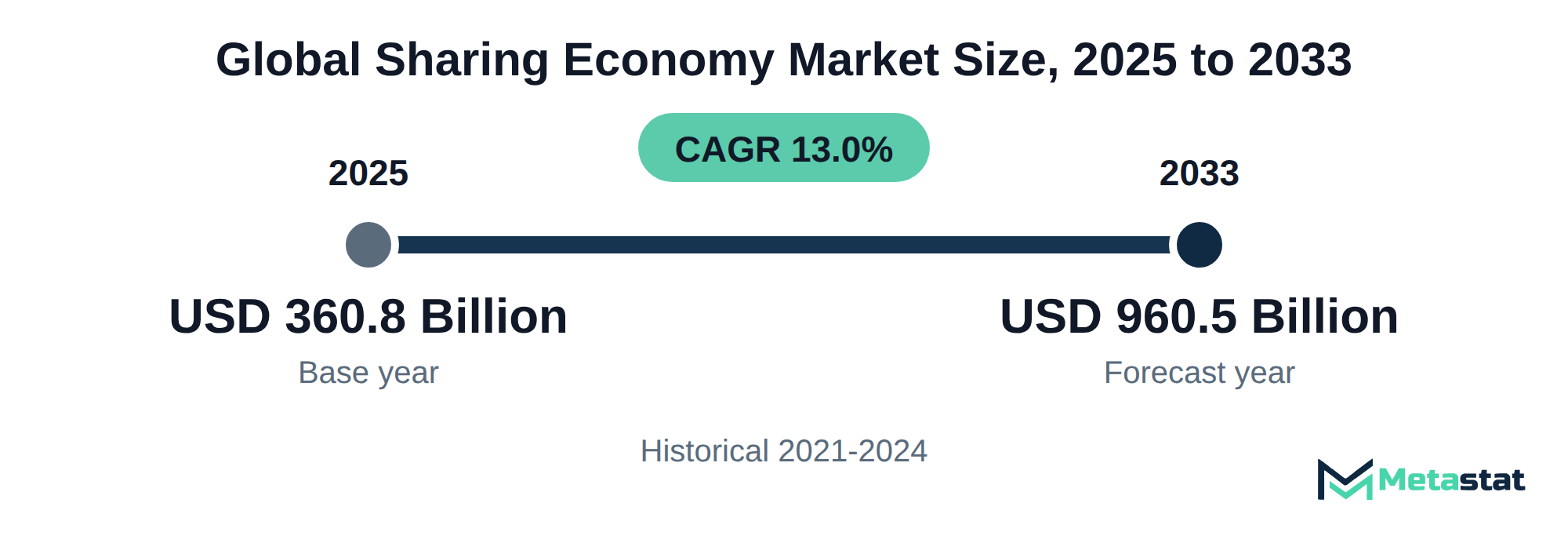
Market Valuation: Valued at $360.8 Billion in 2025, projected to reach $960.5 Billion by 2033 at a 13.0% CAGR.
Dominant Segment: C2C transactions lead the market, driven by consumer demand for affordable options and the appeal of peer-to-peer exchanges. This segment is projected to grow significantly, reflecting a cultural shift towards collaborative consumption.
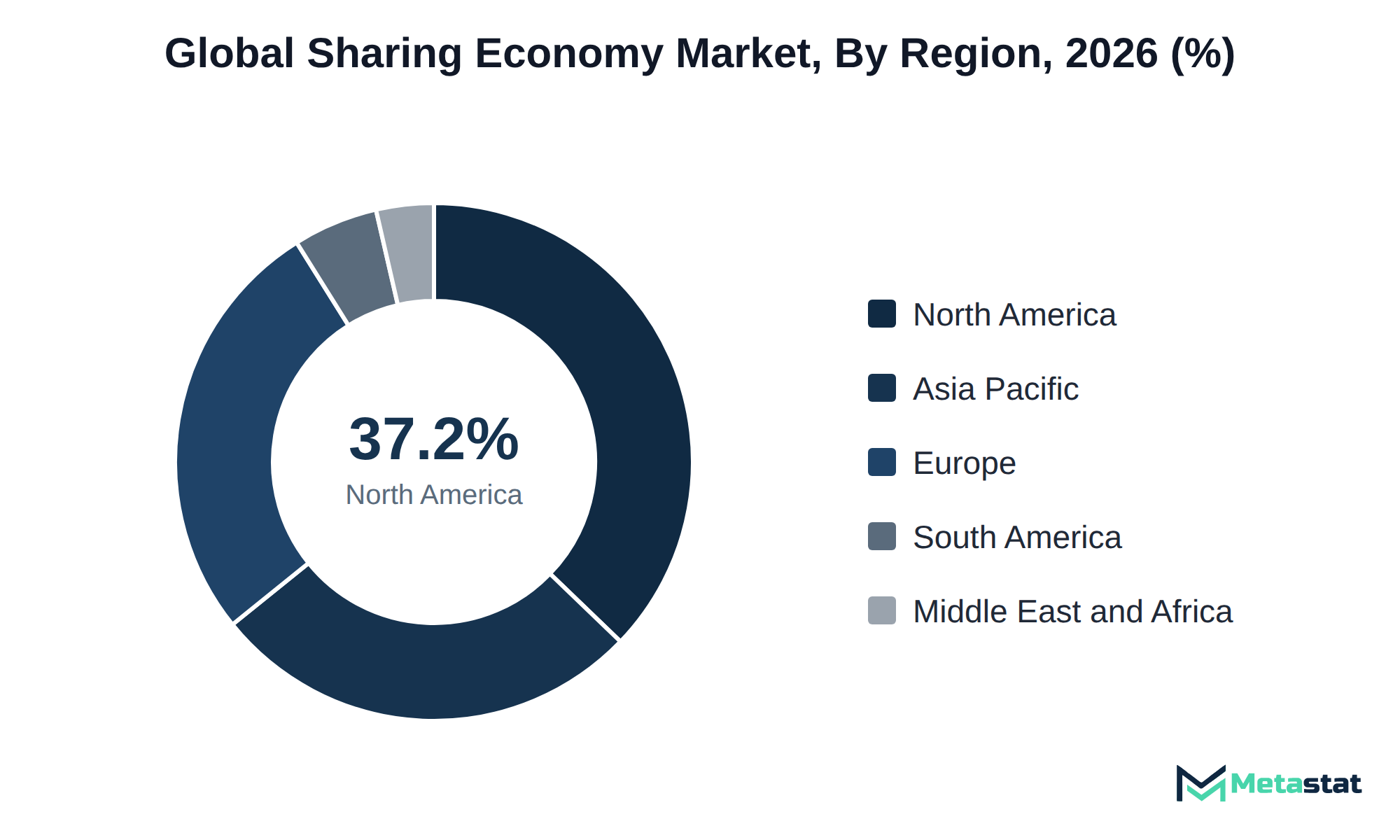
Geographic Lead: North America is the leading region in the Sharing Economy market, holding 37.2% of the market in 2025, with the US expected to maintain this position due to high internet penetration and a culture of sharing.
What's Inside: The report provides a comprehensive analysis of the Sharing Economy market, including detailed segmentation by business model, booking mode, service type, and revenue model, along with competitive coverage and growth forecasts.
Emerging Opportunities: The C2B segment is projected to grow at a CAGR of 14%, highlighting the increasing demand for flexible and specialized talent as businesses seek to enhance operational efficiency.
Mobile App Growth: The Mobile Apps segment is set to reach USD 793.5 billion by 2033, driven by the increasing reliance on digital solutions for convenience and accessibility in sharing services.
Choose Your License
Global Sharing Economy Market
The global Sharing Economy market was valued at USD 360.8 billion in 2025 and is projected to reach USD 960.5 billion by 2033, growing at a CAGR of 13.0% over the forecast period.
The Sharing Economy market encompasses a variety of services where consumers share resources, including transportation, accommodation, and workspaces. Rising demand for cost-effective solutions drives spending in this market, as buyers look to optimize their budgets and access diverse services. This trend reflects a cultural shift towards collaborative consumption, allowing individuals to monetize underutilized assets while creating connections within communities.
Growth in the market is propelled by a significant increase in mobile technology adoption, which facilitates access to sharing platforms. Among the various segments, C2C transactions hold the largest value due to their appeal to consumers looking for affordable options. North America holds 37.2% of the market in 2025, with the US leading in 2026. In comparison, Europe and Asia Pacific follow closely, collectively representing a substantial portion of the global market.
The rise of urbanization and changing consumer behavior contribute to the expansion of the Sharing Economy market. Increased mobility needs, especially in urban areas, drive demand for shared transportation services, including ride hailing. These dynamics challenge traditional ownership models, help innovative solutions gain traction, and raise the market's growth potential.
The Sharing Economy market includes diverse business models, where individuals and businesses provide services, share resources, and create value through collaborative consumption. Buyers invest in this market due to the increasing demand for flexible and cost-effective solutions that enhance convenience and accessibility. The appeal of shared services, particularly in transportation and accommodation, drives consumer interest, resulting in significant spending across various segments.
Growth in the market is fueled by the rise of digital platforms that facilitate peer-to-peer interactions. Among the segments, the C2C model stands out, reflecting a growing preference for shared services among consumers. This region benefits from high internet penetration and an entrenched culture of sharing, which supports the adoption of sharing economy services.
Technological advancements drive market expansion by enabling efficient transactions and improving user experiences. The increasing integration of mobile applications in the booking process supports consumer engagement, allowing users to access services quickly and effectively. Together, these factors support continued growth and new opportunities for the Sharing Economy market in the coming years.
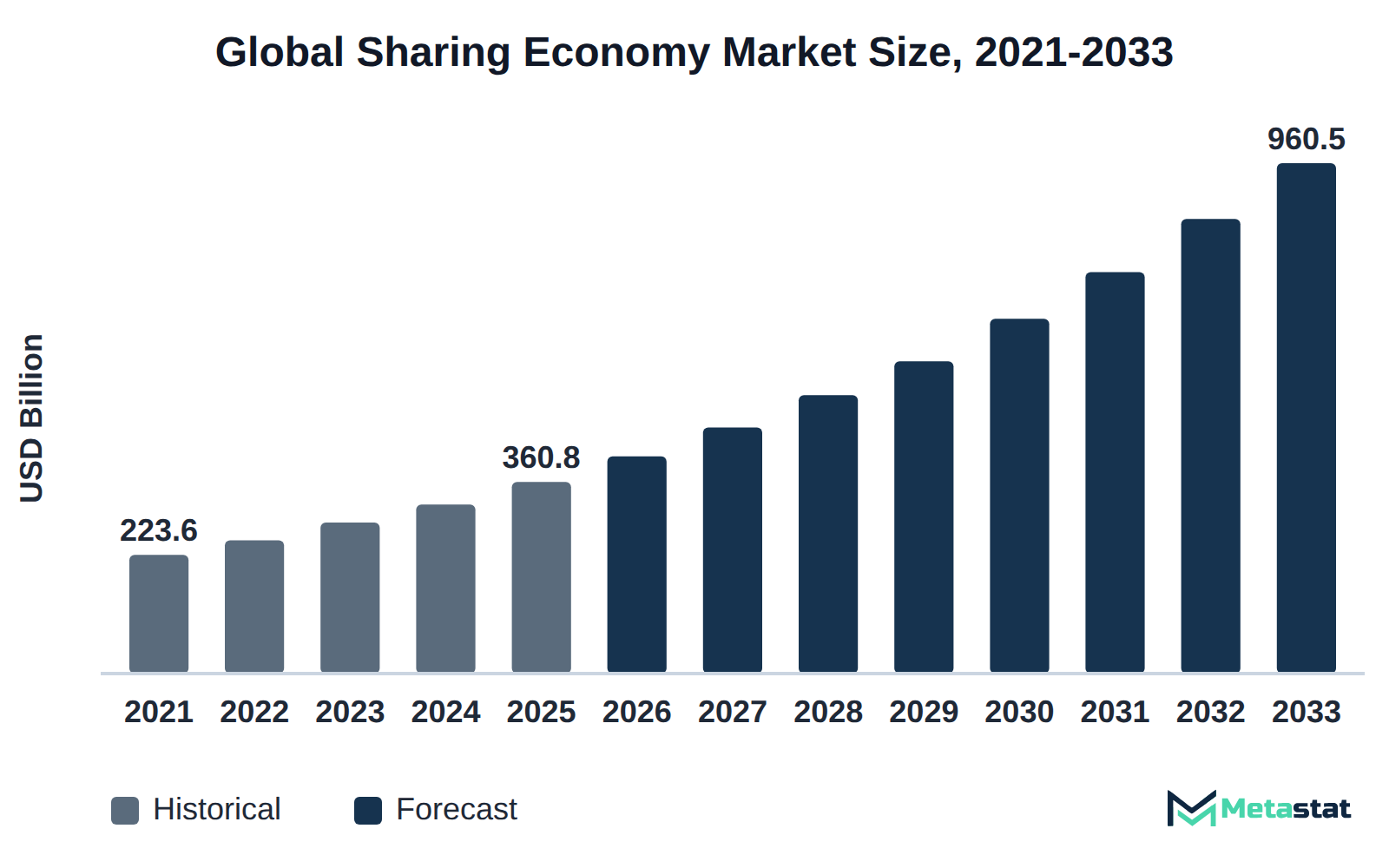
The integration of cloud and artificial intelligence (AI) architecture significantly transforms the infrastructure of platforms in the Sharing Economy market. Platforms using these technologies improve operational efficiency and user experience, addressing the growing demand for scalable and responsive services. For instance, the market is projected to reach USD 960.5 billion by 2033, reflecting the increasing reliance on advanced technologies to support business models and service offerings.
Cloud services facilitate rapid deployment and scalability, allowing platforms to manage vast amounts of data generated by users seamlessly. AI algorithms enhance user engagement by personalizing service offerings, optimizing transactions, and automating customer support. Companies operating in this market, including Uber Technologies, Inc. and Airbnb, Inc., use these technologies to improve service delivery and operational resilience, which improves customer satisfaction.
Demand for cloud and AI solutions in the Sharing Economy market drives innovation and competition among providers. Firms investing in these technologies position themselves to capture a larger share of the market by delivering superior services and enhancing user experiences. This technology shift addresses current consumer expectations and lays the groundwork for future advancements in service offerings.
Connected fleets in shared mobility use advanced technologies to improve operational efficiency and real-time utilization. Buyers prioritize flexible pricing models that align with usage patterns, ensuring cost-effectiveness and accessibility. The shift towards mobile apps as a primary booking mode offers users convenience, reflecting a growing trend in the Sharing Economy market. By 2033, revenue from mobile app bookings is projected to reach USD 793.5 billion, driven by increased consumer reliance on digital solutions.
Contract models in shared mobility vary widely, impacting how buyers navigate payments and services. Many companies adopt transaction-based pricing, which allows users to pay per ride or service used. This model aligns with consumer demand for transparency and flexibility. In the Sharing Economy market, transaction commissions are expected to grow from USD 135.2 billion in 2026 to USD 300.1 billion by 2033, highlighting a significant shift towards performance-based payment structures. This adaptability improves user satisfaction and retention and gives service providers a competitive edge.
The rental and shared space sectors within the Sharing Economy market increasingly adopt subscription monetization models. This shift arises from the need for predictability in revenue streams and the growing preference for flexible access to services among consumers. Subscription models allow providers to build long-term relationships with users, enhancing customer loyalty and recurring revenue.
In the context of shared accommodation, the market is projected to reach USD 228.2 billion by 2033, reflecting a significant growth trajectory driven by such monetization strategies. Providers increasingly implement subscriptions to offer users straightforward access to various rental options, ranging from vacation homes to urban apartments. This approach addresses the distinct needs of travelers who prefer convenience and predictability when searching for lodging.
While this trend continues, suppliers equipped with subscription models are expected to capture a larger share of the market. The focus on long-term user retention through subscription offerings strengthens the viability of shared spaces and supports the growth and sustainability of the Sharing Economy market.
Trust remains a critical factor for users engaging with sharing economy platforms. Strong measures are implemented to ensure user data privacy and security, creating a sense of confidence among users. In the market, platforms focusing on user data protection are gaining traction, particularly those employing advanced encryption technologies and transparent privacy policies. For instance, the adoption of mobile apps in the sharing economy is projected to reach USD 793.5 billion by 2033, reflecting a growing reliance on technology to facilitate secure transactions.
Platforms including Uber Technologies, Inc. and Airbnb, Inc. emphasize user ratings and verification processes. These features enhance trust and reduce the incidence of fraudulent activities, thereby protecting both users and service providers. Fraud detection and prevention is closely tied to these verification processes on peer-to-peer platforms. The market's growth hinges upon these trust-building mechanisms, which directly influence user adoption rates and retention. In a competitive environment, platforms that prioritize user data security differentiate themselves, driving engagement and revenue growth.
Consumers increasingly adopt sharing platforms due to rising costs associated with traditional ownership models. This shift occurs particularly among younger demographics, who prioritize affordability and flexibility in their access to services including transportation and accommodation. For instance, the market has observed significant growth in user engagement as individuals seek alternative solutions to ownership, driven by changing lifestyle preferences. The number of users is expected to expand as platforms become more mainstream, leading to increased competition and innovation. This trend reflects a fundamental behavior change in consumer spending, emphasizing access over ownership. The Sharing Economy market is projected to reach USD 960.5 billion by 2033, highlighting the substantial financial implications of this ongoing transformation.
The appeal of shared services continues to attract a diverse range of consumers, enhancing market growth. The increased willingness to share resources correlates directly with the rise in demand for cost-effective and efficient alternatives. This demand growth supports the overall expansion of the market.
The rise of mobile applications significantly impacts engagement in the Sharing Economy market. Users increasingly prefer mobile platforms for their convenience and accessibility, promoting effective interaction with service providers. This shift results from technological advancements, including improved internet connectivity and smartphone penetration, driving consumers to use sharing services with greater frequency.
Mobile apps facilitate real-time booking, instant communication, and user-friendly interfaces, enhancing customer experiences across segments including shared transportation and accommodations. Heightened adoption of mobile applications helps participants operate in the market more effectively and increases demand for shared resources.
Mobile platforms further enable businesses to gather valuable data on user preferences and behaviors, allowing for tailored services that align with consumer needs. This data-driven approach is essential for companies operating within the market, ensuring they remain competitive and responsive to evolving demands. Continued focus on mobile application development reinforces its role in shaping the future of the Sharing Economy market.
Price sensitivity acts as a significant restraint in the Sharing Economy market, particularly affecting consumer demand in the C2C and B2C segments. Many users hesitate to transition from traditional ownership models to shared services due to perceived high costs associated with usage fees and transaction commissions. This hesitancy results in slower uptake of platforms offering shared transportation and accommodation services, ultimately leading to reduced transaction volumes. The impact of price sensitivity is especially evident among cost-conscious consumers who prioritize affordability over convenience or access to premium services. Consequently, businesses operating within the market face challenges in achieving growth targets and expanding their customer base, which hinders overall market evolution. Addressing price concerns through competitive pricing strategies or value-added services remains essential for mitigating this restraint and promoting broader adoption of sharing platforms.
Suppliers in the market face significant margin pressure, driven by increasing operational costs and competitive pricing strategies. High competition leads to price reductions, diminishing profit margins across various service offerings. This challenge compels suppliers to adopt innovative strategies to maintain profitability. Many firms focus on enhancing operational efficiency through technology investments, streamlining service delivery and reducing costs. Suppliers are exploring new revenue models, including subscription and membership options, to diversify income streams and stabilize cash flow. The market's reliance on transaction-based revenue models exacerbates these margin pressures, compelling businesses to implement dynamic pricing strategies. These strategies aim to balance competitiveness with sustainable profit generation, particularly in fast-growing segments including shared transportation and accommodation. Suppliers must adapt to these pressures to meet changing consumer demands and preserve financial viability in a competitive market.
The C2C (Consumer-to-Consumer) segment presents a significant growth opportunity within the market, with a compound annual growth rate (CAGR) of 12.3% projected from 2026 to 2033. This segment facilitates peer-to-peer transactions, allowing individuals to share resources and services directly, bypassing traditional intermediaries. The increasing acceptance of the sharing economy by consumers, driven by shifting preferences towards collaborative consumption, positions this model favorably in the market. Rising demand for unique experiences and individualized services supports platforms that facilitate the C2C model. The surge in mobile app usage enhances access to these services, enabling consumers to engage more readily with platforms that facilitate peer exchanges. This evolving consumer behavior aligns with a projected market value of USD 377.1 billion by 2033 for the C2C segment. It highlights the potential for substantial returns among operators focused on this business model.
The Global Sharing Economy market is segmented based on Business Model, Booking Mode, Service Type, and Revenue Model.
C2C is valued at USD 167.4 billion in 2026 and is projected to reach USD 377.1 billion by 2033, at a CAGR of 12.3% during the forecast period. This segment facilitates direct transactions between consumers, enabling them to share resources including goods and services. It appeals to individuals seeking alternatives to traditional ownership, driven by economic considerations and the desire for flexible access to products. Compared to other segments, C2C distinguishes itself with a higher growth rate, supported by the increasing prevalence of digital platforms that streamline transactions. The shift towards mobile applications accelerates engagement, while the ongoing development of trust mechanisms enhances consumer confidence in participating in peer-to-peer exchanges. This dynamic supports broader adoption and strengthens the market significantly.
B2C is estimated to reach USD 368.9 billion by 2033, at a CAGR of 12.6% during the forecast period. This segment serves consumers seeking services directly from businesses, facilitating transactions in areas including transportation, accommodation, and professional services. The demand for convenience and immediate access to services drives growth in the B2C segment, attracting both established companies and new entrants. Compared to other segments, B2C experiences a higher growth rate, supported by an increasing number of digital platforms. In addition, the ongoing expansion of mobile applications enhances user engagement and streamlines access to services, differentiating B2C from the slower-growing C2C segment. While B2C faces challenges related to competition and consumer expectations, the overall trajectory reflects strong demand and evolving market dynamics.
B2B segment is expected to reach USD 146.7 billion by 2033. This segment primarily facilitates business-to-business transactions, offering services including shared resources, collaborative workspaces, and project outsourcing. Companies leverage these platforms to access specialized services while minimizing costs. Demand for this segment is driven by the growing trend of remote work and the need for flexible solutions. Compared to other business models, B2B operates with a focus on efficiency and cost-effectiveness, reflecting a distinct buyer base that prioritizes operational flexibility. The B2B segment exhibits a compound annual growth rate (CAGR) of 12.6%, slightly higher than the C2C model, which indicates robust demand for collaborative business solutions in the market.
C2B segment is projected to grow at a CAGR of 14% during the forecast period. This segment facilitates transactions where consumers provide goods or services to businesses, often encompassing freelance work and various professional services. The demand for C2B services is driven by businesses seeking flexible and specialized talent, enhancing operational efficiency and reducing fixed labor costs. Unlike other segments, C2B focuses on leveraging individual expertise for business applications, leading to faster growth compared to B2B segments, which face more rigid structures and pricing. With the growing acceptance of gig economy models, C2B transactions are positioned to expand rapidly, contributing significantly to the overall growth of the market.
Mobile Apps segment is valued at USD 321.8 billion in 2026 and is projected to reach USD 793.5 billion by 2033, at a CAGR of 13.8% during the forecast period. This segment serves a diverse range of consumers seeking convenience and accessibility in sharing services, including transportation, accommodation, and task management. The rapid adoption of smartphones and mobile internet connectivity drives engagement, increasing the demand for mobile applications. Compared to other booking modes, the Mobile Apps segment shows faster growth, outpacing the Websites segment, which is expected to achieve a CAGR of 10%. The increasing use of mobile technology enhances user experiences through real-time interaction, further strengthening the segment's competitive edge in the market. Innovations in mobile payment solutions and user-friendly interfaces contribute to the expanding user base and increased transaction volume.
The websites segment is estimated to reach USD 152.4 billion by 2033, at a CAGR of 10% during the forecast period. This segment functions as a platform where users access various services, including transportation and accommodation, facilitating connections between service providers and consumers. Businesses leverage websites for efficient booking and information dissemination, targeting tech-savvy consumers who prefer online interactions. The growing demand for digital solutions, driven by increasing reliance on the internet, supports this segment's expansion. Compared to other segments, including mobile apps, which show a higher CAGR of 13.8%, the websites segment experiences steadier growth due to established user habits and a strong base of existing platforms. Factors influencing growth include the affordability of internet access and advancements in website technologies, which enhance user experience and engagement.
Assisted segment is expected to reach USD 14.6 billion by 2033. This segment primarily serves users who prefer personalized assistance in booking services including transportation and accommodation. Demand in this segment is influenced by increasing complexity in consumer preferences, driving the need for tailored experiences. Unlike mobile apps, which experience a compound annual growth rate (CAGR) of 13.8%, the assisted segment shows a slower growth trajectory, reflecting its niche appeal. The market experiences a divergence in pricing strategies, with assisted services often priced higher due to the added value of personalized support. This dynamic creates distinct buyer profiles, focusing on users valuing convenience and direct interactions with service providers. Overall, shifts in consumer behavior toward premium experiences underpin the segment's development.
Shared Transportation segment is valued at USD 148.6 billion in 2026 and is projected to reach USD 331.7 billion by 2033, at a CAGR of 12.2% during the forecast period. This segment serves individuals and businesses seeking flexible and cost-effective travel solutions. Key drivers include the increasing adoption of mobile applications for ride-hailing and the growing preference for shared mobility options driven by environmental concerns. Comparative analysis shows that while the Shared Transportation segment exhibits strong growth, segments like Shared Accommodation display a slightly lower CAGR of 11.9%. Investment in technology enhancements, including electric vehicles and autonomous driving features, significantly influences the segment's dynamics, presenting opportunities for market players to differentiate themselves. The demand for shared transportation continues to flourish, driven by urbanization and changing consumer attitudes towards ownership.
The Shared Accommodation segment is estimated to reach USD 228.2 billion by 2033, at a CAGR of 11.9% during the forecast period. This segment focuses on providing lodging options through peer-to-peer platforms, allowing individuals to rent out their properties or spare rooms. Travelers and short-term renters access these services for cost-effective and diverse accommodation choices. Increasing travel demand, particularly among younger demographics seeking unique experiences, drives growth in this segment. Unlike Shared Transportation, which shows a CAGR of 12.2%, Shared Accommodation experiences slightly slower growth, reflecting different consumer preferences for longer stays and localized experiences. The regulatory environment surrounding rental properties, especially in urban areas, presents challenges that influence pricing and availability. The market benefits from technological advancements that facilitate easy booking and payment processes, enhancing user experience and satisfaction.
The Shared Workspaces and Venues segment is expected to reach USD 116.3 billion by 2033. This segment caters to various organizations and professionals seeking flexible work environments and meeting spaces, facilitating collaboration and networking opportunities. Continuous shifts towards remote work and the gig economy act as significant drivers for this segment. Businesses increasingly view shared workspaces, a form of flexible office space, as cost-effective solutions compared to traditional office leases, enhancing their appeal to startups and freelancers. Unlike Shared Transportation and Shared Accommodation, which exhibit faster growth rates, this segment's adoption expands steadily, driven by the growing trend of co-working spaces and the need for collaborative venues. The market evolves, reflecting changing workforce dynamics and preferences.
Shared Goods and Equipment segment is projected to grow at a CAGR of 14.6% during the forecast period. This segment includes the rental and sharing of items including tools, equipment, and other goods among consumers, serving individuals and businesses looking for cost-effective solutions. Demand for these services is driven by the growing preference for minimal ownership and sustainability. This trend stands out against other service types like Shared Transportation and Shared Accommodation due to its unique appeal to environmentally conscious consumers. Pricing flexibility and advancements in technology enhance accessibility, contributing to a strong growth trajectory. The segment's focus on convenience and affordability differentiates it from other segments that rely heavily on transportation or lodging services. The increasing number of platforms facilitates connections between suppliers and consumers, further enhancing its presence in the market.
Household and Task Services encompass a range of offerings that assist individuals with domestic responsibilities and various tasks, including cleaning, repairs, and personal assistance. Consumers of this segment typically include busy professionals, families, and individuals seeking convenience and time savings. This segment experiences growth driven by increasing demand for on-demand services, reflecting a cultural shift towards flexibility and ease of access. Users value the convenience and the ability to hire skilled labor for specific tasks without committing to long-term contracts, distinguishing this segment from Shared Transportation and Shared Accommodation. The segment benefits from technological advancements, enabling efficient connections between service providers and consumers. These factors position Household and Task Services with a unique appeal within the Sharing Economy market, catering to a demographic increasingly focused on maximizing efficiency in daily life.
Freelance Professional Services involve diverse offerings that connect independent professionals with clients seeking specific skill sets. This segment attracts freelancers across various fields, including writing, graphic design, programming, and consulting. Businesses and individuals leverage these services to enhance productivity and access specialized expertise without the commitment of full-time hiring. The demand for such services is driven by the increasing trend of remote work and the gig economy, supporting flexibility in workforce management. This segment differs from others in the service type category, experiencing higher demand from businesses aiming to reduce overhead costs associated with permanent hires. The rise in platforms facilitating freelance work aids in connecting service providers with clients, enhancing the overall efficiency of the market.
Delivery and Errand Services involve the provision of assistance for various tasks, including parcel delivery and personal errands. This segment serves individuals requiring support for daily activities or businesses seeking efficient logistics solutions. Increasing urbanization and changing consumer lifestyles drive demand for such services, particularly in metropolitan areas where convenience is prioritized. Delivery apps give consumers a direct way to book parcel delivery and personal errands. Unlike Shared Transportation or Shared Accommodation, this segment attracts a diverse clientele, including busy professionals and seniors who prefer not to handle errands personally. Competition within this space intensifies due to low barriers to entry and the presence of numerous emerging players. The market emphasizes the importance of reliability and speed, influencing consumer preferences towards established providers. Adapting to technological advancements enhances service delivery, setting this segment apart from others by focusing on personalized assistance and flexible service offerings, which are critical in an evolving consumer-centric landscape.
Education and Tutoring encompasses various services that facilitate learning and skill acquisition. Individuals seeking to enhance their knowledge or gain expertise in specific subjects often turn to online platforms offering tutoring and e-learning services. The segment experiences growth driven by increasing demand for flexible learning options and the rising importance of lifelong education. This demand arises from both students and professionals looking to upskill or reskill, contributing to the segment's expansion. Compared to other service types in the market, Education and Tutoring represents a unique offering, appealing to a diverse range of buyers, including students, job seekers, and lifelong learners. This segment's pricing structures vary, reflecting the specialized nature of services provided and the qualifications of tutors. These dynamics support a strong trajectory that aligns with overall growth trends in the market.
P2P Finance and Crowdfunding involves connecting individuals and businesses for funding purposes through various platforms, facilitating loans, investments, and crowdfunding without traditional financial institutions. This segment attracts users seeking alternative funding sources, including startups and small businesses seeking capital, and individuals desiring to invest in peer projects. Growing interest in decentralized finance and a shift towards more community-driven financial solutions drive activity in this area. Compared to other service types, P2P Finance and Crowdfunding typically experiences slower growth due to regulatory challenges and the need for robust trust mechanisms among participants. Differentiation from segments like Shared Transportation arises from reliance on financial transactions rather than physical goods or services, appealing to users focused on investment opportunities rather than service consumption. The Sharing Economy market continues to flourish, with this segment playing a unique role in reshaping funding landscapes.
This sub-segment focuses on sharing resources including storage spaces, parking spots, and kitchen facilities, catering to individuals and businesses seeking temporary access to these assets. Users include urban dwellers requiring flexible storage solutions, travelers seeking convenient parking options, and culinary entrepreneurs needing kitchen space for food preparation. Demand in this area is significantly driven by the increasing trend of urbanization and the growing emphasis on sustainability, encouraging shared access over ownership. Unlike other service types, this segment experiences slower growth compared to shared transportation and accommodation due to regulatory hurdles and shifts in consumer habits. These factors contribute to unique challenges in scaling operations, prompting service providers to innovate and streamline offerings. The Sharing Economy market continues to evolve, addressing the diverse needs of consumers while adapting to market dynamics.
Transaction Commissions segment is valued at USD 135.2 billion in 2026 and is projected to reach USD 300.1 billion by 2033, at a CAGR of 12.1% during the forecast period. This segment primarily serves platforms that facilitate peer-to-peer transactions, allowing users to access services or goods in exchange for a fee. Consumers and businesses increasingly adopt this model due to its perceived affordability and flexibility, driving market demand. A significant factor influencing this segment is the rising reliance on digital payment systems, enhancing transaction efficiency. Compared to other revenue model segments, Transaction Commissions experiences moderate growth, positioned between direct access fees and subscriptions in terms of pricing structures. The impact of competitive pricing strategies further differentiates this segment, enticing a broader customer base while encouraging innovation within the market.
Direct Access and Usage Fees segment is estimated to reach USD 483.8 billion by 2033, at a CAGR of 12.3% during the forecast period. This segment encompasses fees charged for direct access to services and resources, widely employed by consumers and businesses seeking flexibility and convenience. The rapid increase in mobile applications and digital platforms drives adoption, enabling users to access a wide range of services efficiently. Compared to other revenue models, Direct Access and Usage Fees exhibit a higher growth rate, driven by the shift toward immediate gratification and on-demand services. With a CAGR of 12.3%, this segment outpaces others, reflecting changing consumer preferences and an increasing reliance on technology. The competitive landscape intensifies as businesses explore innovative pricing strategies to enhance customer engagement and loyalty. The growing significance of the segment signals opportunities for investment and expansion in the Sharing Economy market.
Subscriptions and Memberships segment is expected to reach USD 140.3 billion by 2033. This segment attracts consumers seeking continual access to services and products without purchasing outright, serving various demographics including students, frequent travelers, and individuals accessing shared resources. Growth in this segment is driven by increasing preference for flexibility and cost efficiency in consumption. With a CAGR of 12.3%, the sub-segment demonstrates a faster growth trajectory compared to other revenue models, including Direct Access and Usage Fees, which are projected to reach USD 483.8 billion by 2033. The ongoing shift towards a subscription economy reflects a changing landscape in consumer behavior, where convenience and accessibility take precedence. The Sharing Economy market benefits from this trend, as more businesses adapt their revenue structures to incorporate subscription models to meet evolving customer expectations.
Advertising and Lead Fees segment is projected to grow at a CAGR of 16.3% during the forecast period. This segment focuses on monetizing advertising and generating leads for businesses through various platforms within the sharing economy, appealing to both service providers and consumers. Increased digital marketing strategies drive this segment, highlighting the importance of online visibility and customer acquisition for businesses operating in the market. Compared to other revenue models, this segment exhibits faster growth due to rising demand for targeted advertising solutions. With advancements in data analytics and online marketing, businesses leverage these advertising opportunities to enhance their reach and engagement with potential customers. While subscription-based models provide steady revenue, the dynamic nature of advertising and lead generation presents a more volatile yet lucrative option for businesses seeking rapid expansion and market penetration.
Based on geography, the Global Sharing Economy market is divided into North America, Europe, Asia-Pacific, South America, Middle East, and Africa.
The growth in the Sharing Economy market within North America stems from a diverse array of buyer groups, including individuals seeking flexible transportation options and businesses engaging shared services for operational efficiency. The region benefits from advanced digital infrastructure, which facilitates efficient transactions through mobile platforms and websites. Regulatory support for gig economy operations enhances the competitive landscape, attracting innovative companies that prioritize user experience. By 2033, North America is projected to reach USD 319.5 billion. The shift towards shared services continues to reshape consumer behavior, driving demand across various sectors.
Europe holds a share of the global market, representing 26.9% in 2025. The increasing adoption of digital platforms drives demand across various sectors, particularly in shared transportation and accommodation services. Countries including Germany, France, the UK, Italy, and Spain contribute to this trend, with urban populations embracing convenience in mobility and hospitality. Regulatory frameworks encouraging sustainability and shared resource utilization support market growth. Investments in technology infrastructure enhance user experience and facilitate smoother transactions, creating a more connected ecosystem. The region's unique socio-economic conditions, including high population density in major cities, further increase the demand for shared services, reinforcing Europe's position in the Sharing Economy market.
Asia-Pacific represents a significant portion of the Sharing Economy market, with a projected share of 27.00% in 2025. Demand arises from diverse sectors, including technology, tourism, and logistics, driven by rapid urbanization and a growing middle class. Countries including China and India exhibit strong adoption rates, with consumers increasingly favoring mobile apps for service access. Infrastructure improvements in digital payments and logistics support this trend, enhancing the user experience. The market is projected to reach USD 960.5 billion by 2033, reflecting a compound annual growth rate (CAGR) of 13%. This growth trajectory indicates substantial opportunities for both established players and emerging startups in the region, driving competitive dynamics and innovation.
Brazil and Argentina represent significant countries within the Sharing Economy market, driven by an increasing preference for cost-effective solutions and flexible access to services. The demand for shared mobility and accommodation options reflects a cultural shift toward collaborative consumption. Infrastructure improvements, including enhanced mobile connectivity and digital payment systems, facilitate growth in the sector. Local regulations promoting entrepreneurship support the emergence of various platforms, enabling users to access transportation, accommodation, and freelance services. With a regional market share of 5.3% in 2025, South America is expected to experience substantial expansion. The market is projected to attract investments aimed at enhancing user experiences and expanding service offerings.
Emerging trends within the Sharing Economy market in the Middle East and Africa highlight increasing consumer interest in shared services and resources. Rapid urbanization in countries including Saudi Arabia and the UAE drives demand for shared transportation and accommodation services. Infrastructure development initiatives, including the UAE's Smart City program, enhance connectivity and accessibility, promoting participation in the market. South Africa's growing middle class contributes to the rising demand for diverse service offerings, including shared workspaces and freelance professional services. The region's market share of 3.6% in 2025 reflects a solid foundation for future growth, with significant opportunities for expansion across various sectors.
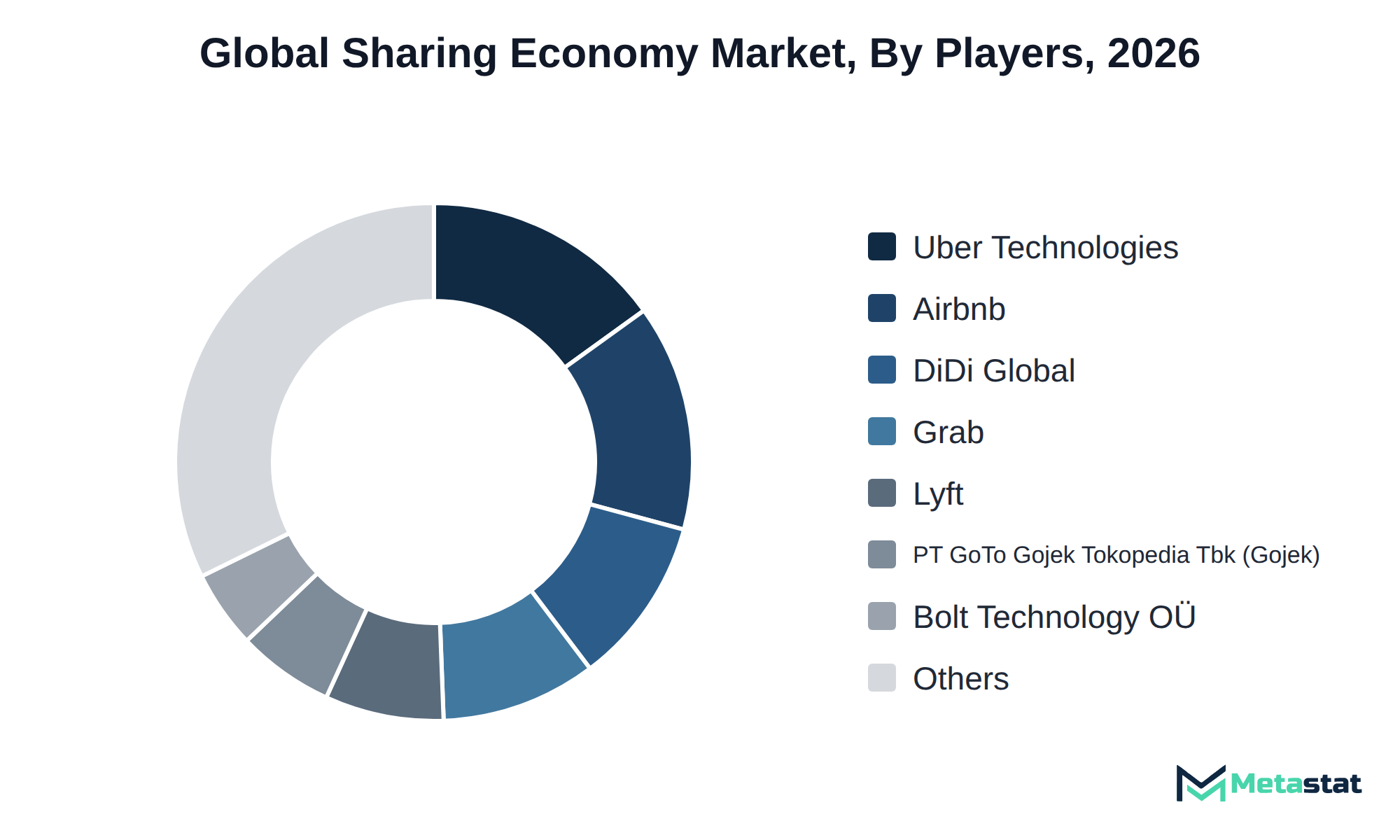
Companies in the Sharing Economy market compete across various business models, including C2C, B2C, B2B, and C2B. Each model attracts different buyer preferences, with factors including pricing, service quality, and the overall user experience influencing decisions. For instance, C2C platforms like Airbnb, Inc. and BlaBlaCar (Comuto SA) emphasize affordability and unique service offerings, appealing to consumers seeking cost-effective solutions. In contrast, B2B players including WeWork Companies LLC focus on providing customizable workspace solutions, catering to businesses prioritizing flexibility and community engagement.
The various service types within the market, including shared transportation and accommodation, allow companies to carve distinct niches. Companies like Uber Technologies, Inc. and Grab Holdings Limited focus heavily on shared transportation, leveraging technology to enhance user convenience and operational efficiency. Meanwhile, Airbnb, Inc. emphasizes shared accommodation, cultivating a diverse ecosystem of hosts and guests to enhance user engagement. The ongoing evolution within the market illustrates the different approaches companies adopt to capture consumer interest and drive growth.
Growth in the Sharing Economy market relies on several key developments. First, a significant shift towards mobile applications for booking services is anticipated, driving user engagement and accessibility. Second, the expansion of direct access and usage fees is expected, reaching USD 483.8 billion by 2033. This evolution reflects changing consumer preferences for flexible payment structures across various service types. Third, growth in the C2C business model, increasing from USD 167.4 billion to USD 377.1 billion by 2033, highlights a strong inclination towards peer-to-peer service offerings. However, risks exist that could hinder market progress. Economic downturns or regulatory challenges impede adoption, particularly in regions with stringent regulations, including Europe, where diverse compliance requirements restrict operational flexibility. Ensuring consumer trust and safety in shared services remains essential for sustained growth in the market.
By Booking Mode: Mobile Apps, Websites, Assisted
By Service Type: Shared Transportation, Shared Accommodation, Shared Workspaces and Venues, Shared Goods and Equipment, Household and Task Services, Freelance Professional Services, Delivery and Errand Services, Education and Tutoring, P2P Finance and Crowdfunding, Others (Storage, Parking, Kitchens)
By Revenue Model: Transaction Commissions, Direct Access and Usage Fees, Subscriptions and Memberships, Advertising and Lead Fees
The report strategically identifies and profiles the key market players and analyses their core competencies in each sub-segment of the Sharing Economy market.
Report Attributes | Details |
Study Period | 2021-2033 |
Base Year | 2025 |
Estimated Year | 2026 |
Forecast Period | 2026-2033 |
Historical Period | 2021-2025 |
Growth Rate | CAGR 13.0% from 2026 to 2033 |
Revenue Unit | USD billion |
Segmentation | By Business Model, Booking Mode, Service Type, Revenue Model, and Region |
By Region | North America (By Business Model, Booking Mode, Service Type, Revenue Model, and Country)
|
Europe (By Business Model, Booking Mode, Service Type, Revenue Model, and Country)
| |
Asia Pacific (By Business Model, Booking Mode, Service Type, Revenue Model, and Country)
| |
South America (By Business Model, Booking Mode, Service Type, Revenue Model, and Country)
| |
Middle East and Africa (By Business Model, Booking Mode, Service Type, Revenue Model, and Country)
|
Find answers to common questions about this report
The Sharing Economy market size was valued at USD 360.8 billion in 2025.
The market is projected to grow at a CAGR of 13.0% during the forecast period from 2026 to 2033.
The North America Sharing Economy market size is estimated to reach USD 319.5 billion by 2033.
The C2C segment leads the Sharing Economy market with a projected value of USD 377.1 billion by 2033, reflecting the highest growth rate among the business models.
Rising costs associated with traditional ownership models drive consumers toward sharing platforms, particularly among younger demographics prioritizing affordability and flexibility. Increased adoption of mobile applications enhances user engagement and facilitates interactions with service providers, further supporting market growth.
North America holds the dominant share of the Sharing Economy market, with a projected value of USD 319.5 billion in 2033, representing 37.2 percent of the total market.
Price sensitivity acts as a significant restraint on the Sharing Economy market growth. This factor particularly affects consumer demand in the C2C and B2C segments, with users hesitant to transition from traditional ownership models due to perceived high costs associated with usage fees and transaction commissions.
Increasing acceptance of the sharing economy, particularly among younger demographics, drives adoption due to a preference for affordability and flexibility. The popularity of mobile applications enhances access to shared services, facilitating greater user engagement and supporting overall market growth.
The Sharing Economy market is estimated to reach a valuation of USD 960.5 billion by 2033.
Key players operating in the Sharing Economy market include Uber Technologies, Inc., Airbnb, Inc., DiDi Global Inc., Grab Holdings Limited, Lyft, Inc., and Turo Inc. These companies provide core services that facilitate peer-to-peer transactions in various sectors, including transportation, accommodation, and freelance services.
The analysts below cover Consumer Goods research at Metastat Insights.
LEAD ANALYST
Utkarsh Khirodkar is a Lead Market Research Analyst at MetaStat Insight, specializing in market intelligence, technology sector assessments, and competitive strategy.
Evaluating calorific value requirements and air permit compliance across municipal waste facilities requires localized data. Metastat Insight structured their analysis around operational throughput capacity and feedstock composition variations in Latin America and Eastern Europe. Their competitive mapping of sorting equipment vendors helped clarify technology differences between optical separators and heavy media systems. The study provided an objective baseline during our capital expenditure reviews.
Decarbonizing industrial thermal processes hinges on refrigerant regulations and compressor efficiency limits. Metastat Insights delivered a thorough market analysis that evaluated natural refrigerants like CO2 and hydrocarbons against synthetic low-GWP alternatives. The breakdown of utility incentives and grid capacity constraints across key European manufacturing hubs offered valuable perspective. The follow-up conversation with their sector analysts addressed our specific questions on mechanical vapor recompression systems efficiently.
Assessing 200mm wafer transition schedules and substrate supply bottlenecks requires precise technical intelligence. MetaStat Insight supplied an actionable breakdown comparing planar and trench MOSFET architectures across automotive and industrial drive markets. The regional capacity estimates for Asia-Pacific foundries helped clarify lead-time uncertainties during our strategic planning session. When we needed additional clarification on high-purity raw material sourcing, their analyst team responded with helpful context within twenty-four hours.
Explore related market intelligence reports worth reading alongside this one.