
LEAD ANALYST
Utkarsh Khirodkar is a Lead Market Research Analyst at MetaStat Insight, specializing in market intelligence, technology sector assessments, and competitive strategy.

Global Crowdfunding Market Size, Share, By Funding Model (Donation-Based Crowdfunding, Reward-Based Crowdfunding, Equity-Based Crowdfunding, Debt-Based / Peer-to-Peer Lending Crowdfunding and Others (Revenue-Sharing, Royalty-Based, Hybrid Crowdfunding)), By End User (Individuals & Families, Startups & Small Businesses, Mid-Sized & Large Enterprises, Nonprofit & Charitable Organizations, Educational & Research Institutions, Government & Public-Sector Organizations, Cooperatives & Member-Owned Organizations and Others (Community Groups, Religious Organizations, Informal Groups)), By Platform Deployment (Cloud-Based and On-Premise), Industry Analysis, Growth, Trends, and Forecast, 2026-2033
Report ID
MSI-5271
Published
September, 2026
Pages
269 Pages
Format
Historical
Base year
Forecast
Forecast period
Report Details
Market Valuation: Valued at $2,150.5 Million in 2025, projected to reach $7,003.7 Million by 2033 at a 15.9% CAGR.
Dominant Segment: Donation-based crowdfunding leads the market, driven by a growing willingness among individuals to support social causes directly. This segment is projected to grow from USD 616.8 million in 2026 to USD 1,503 million by 2033, reflecting a CAGR of 13.6%.
Geographic Lead: North America holds the largest market share at 36.1%, attributed to increasing interest in crowdfunding among startups and small businesses. The region's technological advancements and consumer engagement further bolster its leading position.
What's Inside: The report provides a comprehensive analysis of the crowdfunding market, including competitive coverage across various funding models, end users, and platform deployments. It also includes detailed forecasts for the years 2026 to 2033.
Emerging Regional Demands: Growing interest in crowdfunding solutions is evident in emerging regions, where limited access to traditional financing drives participation. Enhanced digital connectivity and a rising entrepreneurial spirit are key factors contributing to this trend.
Increased Digital Transformation: The crowdfunding market is benefiting from digital transformation, characterized by technological advancements that optimize fundraising processes and enhance user experiences. This shift is attracting a broader audience and improving operational efficiency.
Choose Your License
Global Crowdfunding Market
The global Crowdfunding market was valued at USD 2,150.5 million in 2025 and is projected to reach USD 7,003.7 million by 2033, growing at a CAGR of 15.9% over the forecast period.
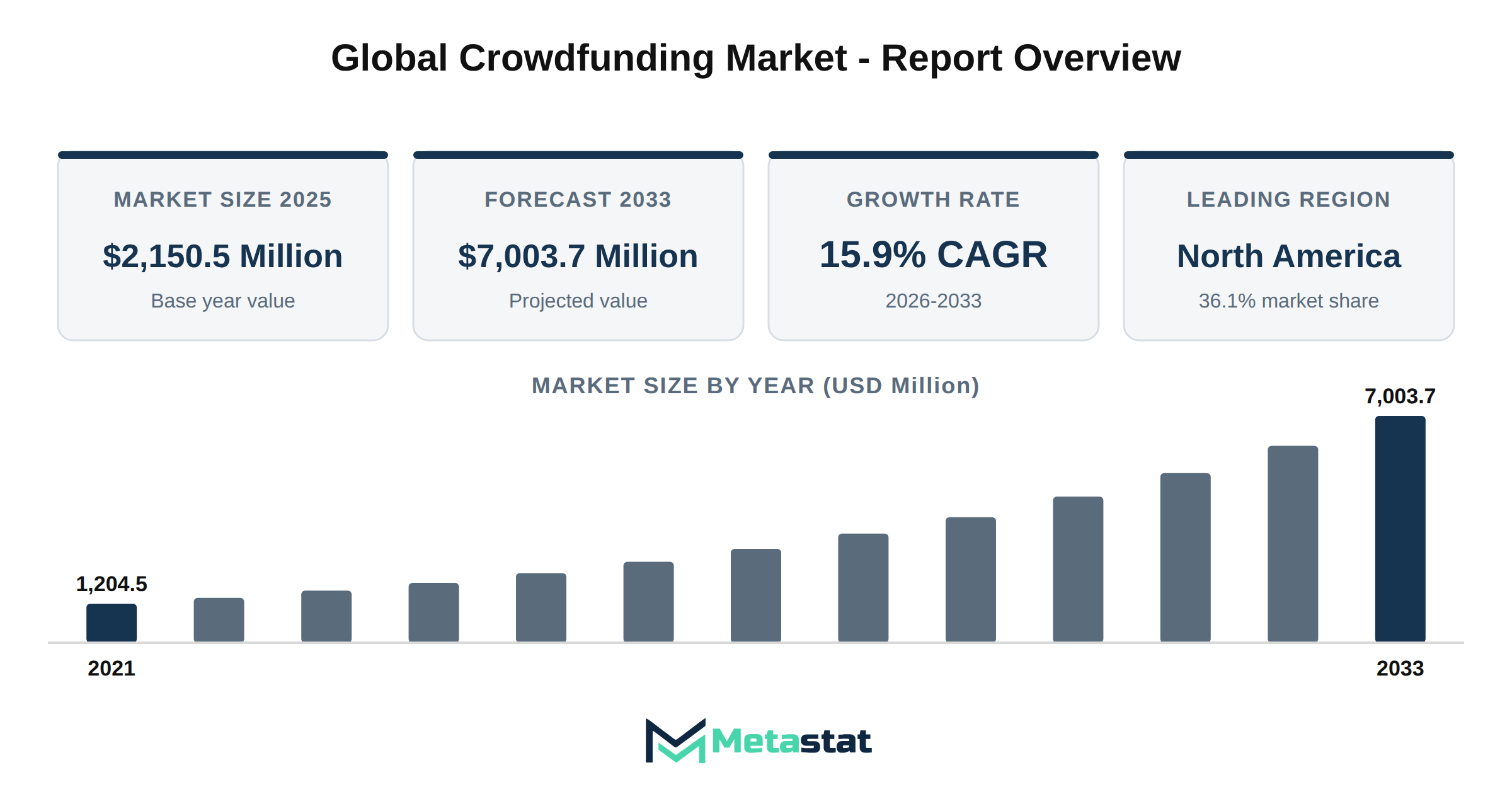
The global crowdfunding market reached a value of USD 2,150.5 million in 2025, reflecting a significant increase from USD 1,204.5 million in 2021. The market is projected to expand to USD 7,003.7 million by 2033, achieving a compound annual growth rate (CAGR) of 15.9% during the forecast period from 2026 to 2033. This growth is driven by advancements in technology and changing consumer behavior, which enhance the adoption of crowdfunding across diverse industries.
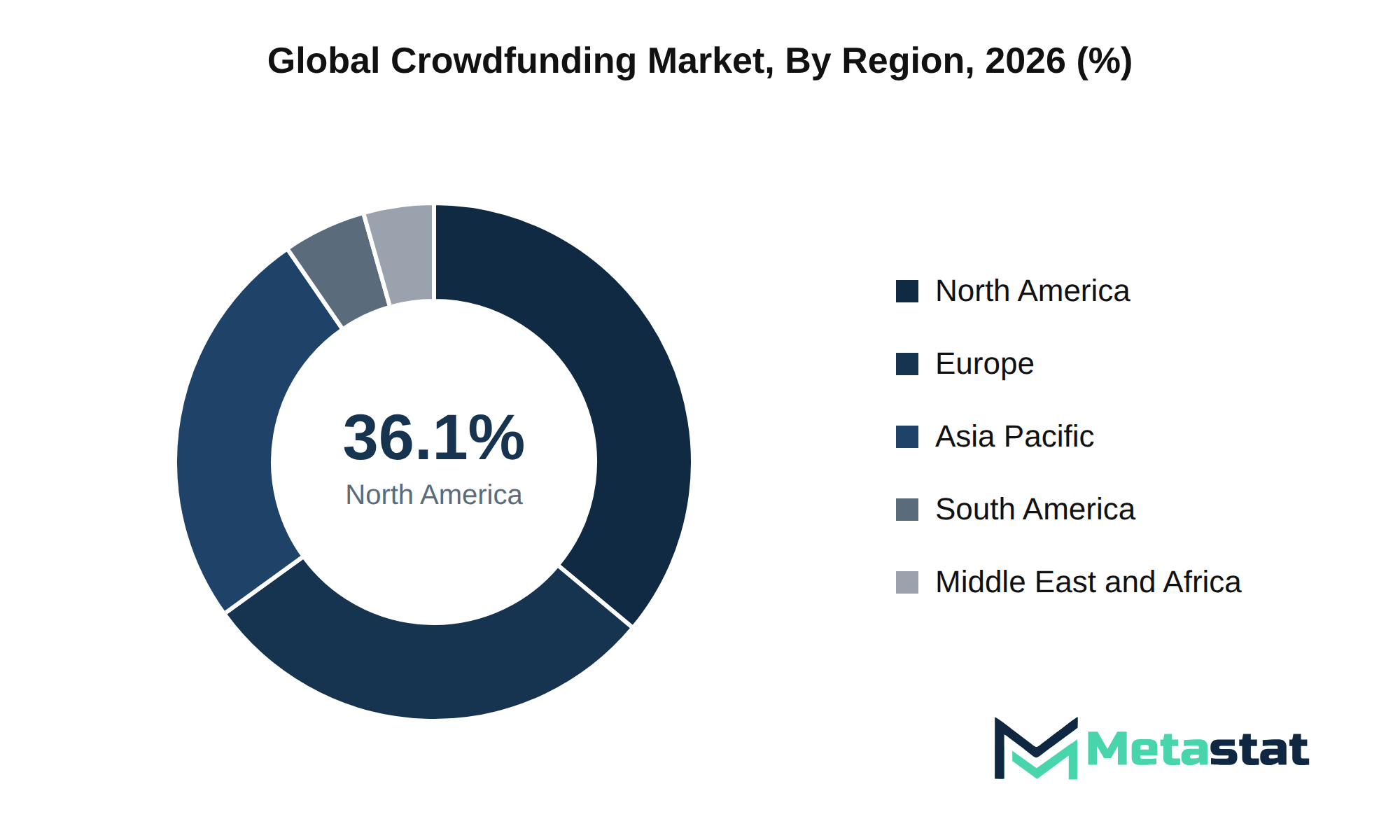
North America holds the largest market share at 36.1%, followed by Europe at 29%, and Asia Pacific at 25.4%. The increasing interest in crowdfunding platforms among startups and small businesses contributes to this regional dominance. The market dynamics highlight strong investment opportunities, particularly in sectors including real estate, renewable energy, and social causes. Investment in crowdfunding infrastructure, including cloud-based solutions, continues to gain traction, facilitating the expansion of services and options available to investors.
Donation-based crowdfunding is expected to exhibit strong growth, increasing from USD 616.8 million in 2026 to USD 1,503 million by 2033, at a CAGR of 13.6%. This segment's expansion is closely tied to rising social and medical causes that connect with individual contributors. Reward-based crowdfunding is projected to reach USD 2,082.2 million by 2033, driven by trends in product launches and presales, which attract a diverse range of backers.
Equity crowdfunding adoption among startups and SMEs presents a compelling opportunity, with expectations of reaching USD 1,581.4 million by 2033. This segment is essential for entrepreneurs seeking alternative funding sources, enhancing market participation from retail investors. The integration of tokenized securities into crowdfunding platforms further supports this growth, enabling fractional ownership and broadening access to investment.
Debt crowdfunding and peer-to-peer lending are anticipated to expand significantly, underpinned by favorable regulatory environments and increasing demand for alternative financing solutions. The market for cloud-based crowdfunding platforms is expected to see substantial growth, driven by advancements in technology that streamline operations and enhance user experience. Automation in KYC/AML processes and investor suitability assessments is projected to improve compliance and operational efficiency across the market.
The crowdfunding market experiences significant transformations driven by regulatory developments, technological advancements, and changing investor preferences. Regulations surrounding crowdfunding and cross-border transactions evolve to enhance investor protection, creating a safer environment for participants. This regulatory landscape supports increased participation from retail investors and institutional players, driving overall market growth.
Adoption of crowdfunding infrastructure-as-a-service simplifies platform development for startups and established businesses. This model allows organizations to leverage existing frameworks, reducing time and resources needed for market entry. Consequently, a broader range of players participate in the crowdfunding ecosystem, enhancing competition and diversity.
Tokenized securities and real-world asset integration present innovative opportunities for crowdfunding platforms. These advancements enable fractional ownership and democratize investment opportunities, attracting a wider range of investors. The resulting expansion in investment options contributes to the overall growth of the crowdfunding market.
Automation of KYC/AML processes and investor suitability assessments streamlines user onboarding, enhancing the efficiency of crowdfunding platforms. These improvements reduce operational risks and build trust among investors, encouraging more individuals to engage in crowdfunding initiatives.
Investor CRM and lifecycle analytics play crucial roles in optimizing engagement and retention strategies for crowdfunding platforms. By leveraging data analytics, platforms tailor communication and offerings to suit investor preferences, driving higher participation rates and improved campaign performance.
Embedded payments and API integration enhance user experience on crowdfunding platforms. These features simplify transaction processes, enabling efficient funding and investment activities. Such improvements attract more users and promote higher transaction volumes, contributing to market expansion.
Cybersecurity and data protection remain essential in maintaining trust within the crowdfunding market. Platforms that prioritize robust security measures safeguard investor information and mitigate risks associated with data breaches, enhancing their reputation and attracting more participants.
Growth drivers within the crowdfunding market include increasing equity crowdfunding adoption among startups and SMEs, driven by these entities seeking alternative funding sources outside traditional financial institutions. Reward-based crowdfunding trends highlight the significance of product launches and pre-sales, encouraging innovation and entrepreneurial ventures.
Expansion of debt crowdfunding and peer-to-peer lending offers flexible financing solutions for individuals and businesses. This growth reflects a shift in funding preferences, allowing participants to access necessary capital through diverse channels.
Cloud-based crowdfunding platforms demonstrate accelerated adoption trends, with businesses leveraging the scalability and flexibility of cloud solutions. This shift enables platforms to accommodate varying user demands and expand their service offerings effectively.
AI-driven campaign management and investor matching enhance the efficiency of crowdfunding initiatives. These technologies streamline processes, improving the likelihood of successful funding outcomes and increasing investor satisfaction.
Blockchain technology drives innovation in tokenized crowdfunding platforms. This integration provides transparency and security, appealing to a tech-savvy investor base and positioning the market for future growth.
Evolution of crowdfunding platform fee and pricing models reflects changing market dynamics and competitive pressures. Flexible pricing structures attract a broader range of users, enhancing platform viability and market penetration.
Retail investor participation in crowdfunding markets continues to grow, driven by increasing awareness and accessibility. This trend signifies a democratization of investment opportunities, allowing a diverse range of individuals to partake in funding initiatives.
Startup fundraising through regulated crowdfunding platforms gains traction, providing entrepreneurs with viable alternatives for capital generation. This shift supports innovation and economic development across various industries.
The future of the crowdfunding market hinges on ongoing regulatory developments and technological advancements. Cross-border crowdfunding initiatives enable global investor access, broadening market potential and fostering international collaboration.
Integration of KYC, AML, and digital identity solutions enhances security and compliance for crowdfunding platforms. These advancements contribute to a more robust ecosystem, ensuring investor protection and building market confidence.
Embedded payments and fintech integration within crowdfunding platforms streamline funding processes, enhancing user experience and encouraging participation. This trend positions the market for sustained growth and further innovation.
The competitive landscape of the crowdfunding market evolves due to platforms pursuing partnerships and M&A activities to enhance their offerings. This consolidation trend creates a more dynamic environment, driving innovation and improving service delivery.
Convergence of venture capital and crowdfunding models presents new opportunities for investors and entrepreneurs alike. This collaboration facilitates a more cooperative approach to funding, promoting growth across various sectors.
Investment trends in real estate crowdfunding reflect shifting investor preferences towards tangible assets, enhancing market appeal. Opportunities in renewable energy and impact crowdfunding highlight the increasing focus on sustainable and socially responsible investments.
Participation of institutional investors in crowdfunding platforms signifies a maturing market, bringing additional credibility and resources. This development supports overall growth and positions the crowdfunding market for long-term success.
North America, Europe, Asia Pacific, Latin America, and the Middle East and Africa each present distinct growth opportunities within the crowdfunding market. Understanding regional dynamics and investor preferences will be crucial for stakeholders aiming to capitalize on market potential.
Addressing cybersecurity and data protection challenges remains a priority for crowdfunding platforms aiming to build trust among users. Robust security measures will enhance platform reputation and facilitate sustained market growth.
Investor analytics and campaign performance optimization will drive improved outcomes for crowdfunding initiatives. Platforms that leverage these insights will enhance their competitiveness, ensuring long-term success in the evolving market.
Adoption of white-label crowdfunding infrastructure continues to rise, allowing businesses to enter the market with reduced barriers. This trend supports a more diverse range of platforms and encourages innovation within the crowdfunding ecosystem.
Partnerships and M&A activity among crowdfunding platforms will shape the competitive landscape, driving growth and innovation. Stakeholders should remain vigilant to capitalize on emerging opportunities and navigate challenges in this dynamic market.
Future growth opportunities in the global crowdfunding market hinge on technological advancements, regulatory developments, and changing investor preferences. Stakeholders remain adaptive to leverage the full potential of this evolving environment.
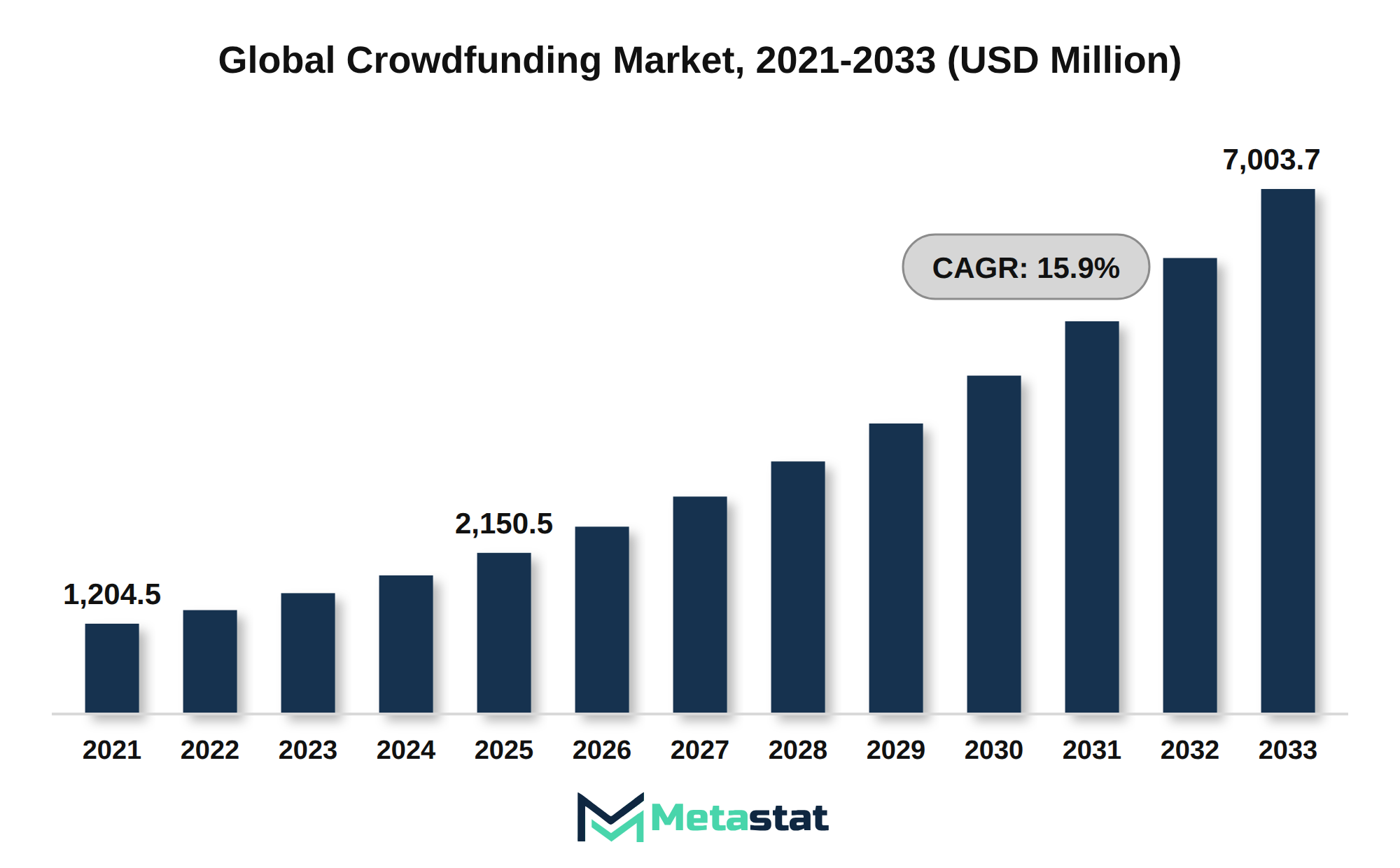
The crowdfunding market benefits from increased digital transformation, characterized by advancements in technology and evolving consumer behaviors. Businesses leverage automation, artificial intelligence, and software adoption to optimize fundraising processes and enhance user experience. This technological integration enables platforms to capture a broader audience, improving operational efficiency and reducing costs associated with traditional fundraising methods.
Shifting demographic patterns, including urbanization and lifestyle changes, contribute to the rising demand for crowdfunding solutions. Younger consumers exhibit a notable preference for digital platforms that align with their values, driving the need for innovative funding models. This shift encourages platforms to diversify their offerings, thus broadening their market appeal.
The capital investment environment supports crowdfunding activities through favorable interest rates and increased venture funding. This financial landscape encourages a culture of entrepreneurship, prompting startups and small businesses to seek alternative financing options. The market experiences significant growth, with a projected value of USD 7,003.7 million by 2033.
The crowdfunding market experiences accelerated growth due to evolving consumer behaviors, particularly influenced by demographic shifts and lifestyle changes. An aging population increasingly seeks alternative funding sources for personal projects and healthcare needs, driving demand across the market. Urbanization trends further contribute to this phenomenon, with individuals in metropolitan areas actively engaging in crowdfunding initiatives to support local businesses and community ventures.
Changing buying preferences favor innovative funding models, including reward-based and equity-based crowdfunding, appealing to consumers seeking unique investment opportunities. The rise of digital platforms enhances accessibility and convenience, allowing consumers to participate in crowdfunding campaigns more effortlessly. This integration of technology into the consumer experience ensures that the market adapts to shifting expectations and preferences.
These factors create a fertile ground for growth within the crowdfunding market. Evolving consumer behavior influences market dynamics, prompting participants to align their strategies with these insights to fully leverage emerging opportunities.
The crowdfunding market faces significant restraints due to regulatory compliance and macroeconomic challenges. Regulatory frameworks governing crowdfunding practices vary widely across regions, creating compliance hurdles for platforms operating internationally. This fragmentation complicates adherence to legal mandates, resulting in increased operational costs and potential barriers to entry for new entrants.
Macroeconomic headwinds, including inflationary pressures and resource scarcity, hinder market growth. Rising operational costs associated with maintaining compliance and addressing inflation impact the profitability of crowdfunding initiatives, particularly affecting startups and small businesses reliant on affordable funding options. Geopolitical instability contributes to uncertainty, limiting investment flows into the market.
Infrastructure gaps and connectivity deficits pose further challenges, particularly in developing regions. Insufficient technological infrastructure affects platform deployment and user accessibility, restricting growth opportunities within these markets. Skilled labor deficiencies and talent gaps exacerbate these issues, limiting the ability of crowdfunding platforms to innovate and manage operations efficiently.
Data security vulnerabilities and privacy concerns remain top priorities for the crowdfunding market. While platforms collect sensitive information, the risk of data breaches threatens user trust and engagement, impacting market growth. Intellectual property theft risks associated with innovative crowdfunding projects deter investors and creators alike, contributing to market stagnation.
Overall, these restraints create a challenging environment for the crowdfunding market, necessitating strategic adaptations from stakeholders. Addressing these factors will be essential for sustaining growth and expanding the market effectively.
The crowdfunding market experiences challenges due to geopolitical fragmentation, impacting cross-border investments and leading to uncertainty for investors and startups alike. Trade deficits and tariff frictions complicate international funding efforts, creating obstacles for platforms seeking to expand their reach and capitalize on diverse funding opportunities. The resulting complexity in regulatory environments across different regions increases compliance overhead, deterring participation and slowing market growth.
Technological disruptions reshape the crowdfunding landscape, affecting integration between various platforms and raising interoperability friction among systems. These challenges necessitate robust research and development efforts, hindered by resource allocation issues and funding limitations. Volatility in feedstock and component costs influences the pricing strategies of crowdfunding platforms, leading to margin pressures that affect overall profitability.
Logistics disruptions and supply chain instability create additional hurdles for crowdfunding projects, particularly those reliant on physical products or services. The tightening of global regulatory standards adds complexity, compelling platforms to adapt to evolving legal liabilities that vary by jurisdiction. These factors collectively exert pressure on operational budgets, requiring effective management to ensure sustainability and market positioning.
The crowdfunding market encounters workforce skill gaps, impeding the effective execution of projects. Automation displacements in the labor market contribute to talent retention pressures, with organizations striving to attract and maintain skilled individuals. Environmental concerns, including lifecycle footprints and decarbonization mandates, require crowdfunding platforms to align operations with sustainability demands, complicating business models.
Infrastructure gaps and retrofitting barriers hinder the adoption of innovative solutions, presenting implementation bottlenecks that slow market expansion. Intellectual property protection deficits expose crowdfunding projects to risks of infringement, undermining investor confidence. Cybersecurity risks and data vulnerabilities pose significant threats to platform integrity, necessitating ongoing investments in security measures. These challenges influence the crowdfunding market's trajectory, shaping its future growth potential and competitive dynamics.
The crowdfunding market benefits from increasing demand in emerging regions, where access to financing remains limited. Developing economies demonstrate rising interest in alternative funding sources, leading to increased participation in crowdfunding platforms. This trend results from a combination of factors, including a growing entrepreneurial spirit and the need for innovative solutions to address local challenges.
Infrastructure modernization significantly shapes the market. Enhanced digital connectivity facilitates access to crowdfunding platforms, allowing businesses and individuals to tap into wider audiences. Improved internet penetration and mobile device usage enable fundraisers to reach potential backers more effectively, thus driving investment opportunities across various sectors.
The geographical expansion of crowdfunding platforms has created new avenues for growth. Market players target untapped regions, adapting their offerings to meet local preferences and regulatory conditions. This strategic approach allows for better engagement with diverse end-users, ranging from startups to nonprofit organizations, enhancing the overall market.
Technological disruptions significantly impact the crowdfunding market, particularly through advancements in blockchain and artificial intelligence. These technologies streamline processes, improve transaction security, and enhance user experience. The integration of innovative solutions enables more efficient funding models, attracting a broader range of participants to the market.
Ongoing digital transformation across industries influences the growth of the crowdfunding market. Businesses increasingly adopt digital procurement shifts and commercial model transitions, driving collaboration among various sectors. This trend allows for the development of niche applications and tailored solutions, which further diversifies the market and strengthens its position.
Strategic consolidation within the market contributes to its evolution. Mergers and acquisitions among key players create synergies and expand service offerings, enhancing competitiveness. This consolidation enables firms to leverage shared resources and expertise, ultimately driving market growth and improving the overall funding landscape.
Changing consumer behavior impacts the crowdfunding market by increasing demand for eco-friendly and socially responsible projects. Participants increasingly seek alignment with sustainability imperatives, driving investments toward ventures that promote environmental, social, and governance (ESG) principles. This shift toward responsible funding aligns with broader trends in consumer preferences, enhancing the appeal of crowdfunding initiatives.
The market presents opportunities for growth through downstream market diversification and product integration. While crowdfunding platforms evolve, they expand their service offerings to include additional features including investment opportunities and educational resources. This comprehensive approach enhances user engagement and satisfaction, driving further participation and investment across the crowdfunding ecosystem.
The Global Crowdfunding market is segmented based on Funding Model, End User, and Platform Deployment.
Valued at USD 616.8 million in 2026, the Donation-Based Crowdfunding segment is projected to reach USD 1,503 million by 2033, reflecting a compound annual growth rate (CAGR) of 13.6% during the forecast period. This segment experiences growth driven by an increasing willingness of individuals to support social causes and projects directly. The rise of social media platforms enhances visibility for fundraising campaigns, contributing to heightened public engagement and participation.
Expansion in this segment aligns with consumer preferences shifting towards supporting charitable initiatives and community projects. Factors including ease of access to crowdfunding platforms and the emotional appeal of donation-based initiatives attract backers. Enhanced digital marketing efforts and storytelling techniques effectively connect potential donors to causes, further driving growth in the market.
Regulatory compliance influences the landscape of the Donation-Based Crowdfunding segment. Adherence to local regulations ensures transparency and builds trust among contributors, which in turn influences donor participation. Strategic opportunities arise from innovative platform enhancements and user experience improvements, enabling providers to differentiate themselves in a competitive environment.
Investment in technology and user engagement strategies remains essential for sustaining growth in this segment. Enhanced platform functionalities, including mobile compatibility and real-time updates, offer greater convenience and encourage regular contributions. The evolving nature of donor demographics suggests a shift towards younger generations, who seek both meaningful engagement and social impact through their contributions.
Overall, the Donation-Based Crowdfunding segment demonstrates a strong growth trajectory, driven by social engagement and technological advancements, ensuring its relevance within the broader crowdfunding market.
Continued interest in innovative funding solutions enhances the growth prospects of Reward-Based Crowdfunding. This segment allows individuals and organizations to gather financial support in exchange for non-monetary rewards, including products or services. The rise of digital platforms facilitates easy access to a broader audience, significantly increasing the funding capabilities for various projects.
Reward-Based Crowdfunding segment is estimated to reach USD 2,082.2 million by 2033, at a CAGR of 14.2% during the forecast period. Factors driving this growth include a surge in creative projects, the pursuit of community support for initiatives, and the shift towards more participatory funding models. Increased consumer acceptance of crowdfunding because a viable funding source encourages more individuals and businesses to engage with the market.
The segment's expansion reflects broader trends in consumer behavior, including a preference for supporting grassroots initiatives and a growing inclination toward entrepreneurship. This shift significantly impacts the dynamics of traditional financing avenues, prompting startups and small businesses to explore crowdfunding because a legitimate funding source. The emergence of new platforms regularly introduces innovative features that enhance user experience and attract potential backers, further stimulating market growth.
Regulatory compliance and evolving policies influence the segment's trajectory, because governments seek to establish frameworks that protect both funders and backers. These efforts contribute to the credibility of the market, building trust among participants. While the crowdfunding market continues to mature, companies that adapt to these regulatory changes position themselves favorably in a competitive environment.
Equity-Based Crowdfunding contributes to the overall growth of the Crowdfunding market. Rising interest from investors seeking alternative investment opportunities drives this segment, which is expected to reach USD 1,581.4 million by 2033. The shift towards equity-based models stems from startups and small businesses increasingly opting for this financing method, which offers shared ownership and potential returns on investment. Technological advancements enhance platforms that facilitate equity crowdfunding, improving user experience and increasing investor confidence.
Investor demand for equity-based options reflects a broader trend towards democratizing access to capital. This push aligns with growing awareness of the benefits associated with equity investments, including participation in company growth and value appreciation. Favorable regulatory frameworks support equity crowdfunding, creating an environment conducive to innovation and investment.
While more startups emerge and seek funding, equity-based crowdfunding continues to gain traction among individuals, families, and institutional investors. The evolving landscape encourages new entrants to explore equity models, which often yield higher returns compared to traditional funding methods. Consequently, the segment's growth is closely linked to broader economic trends influencing investment strategies and the entrepreneurial ecosystem.
Debt-Based / Peer-to-Peer Lending Crowdfunding segment is projected to grow at a CAGR of 17.5% during the forecast period. Increasing interest in alternative financing options drives demand for this segment, particularly among underserved borrowers seeking flexible lending terms. With traditional financial institutions often reluctant to lend to higher-risk individuals or small businesses, peer-to-peer platforms fill this gap by offering more accessible funding opportunities. This shift in consumer behavior reflects broader adoption trends, particularly among younger demographics that prefer digital solutions over conventional banking.
The evolution of technology within the crowdfunding market supports the accessibility of peer-to-peer lending platforms. Enhanced user experiences and streamlined application processes encourage adoption, enabling individuals and businesses to connect directly with potential lenders. While platforms continue to innovate, offering features including automated underwriting and risk assessment tools, operational efficiencies increase, lowering costs associated with lending. This technological maturation contributes to enhanced trust and a broader acceptance of peer-to-peer lending because a legitimate funding source.
Regulatory compliance standards play a crucial role in shaping the landscape of debt-based crowdfunding. Stricter regulations ensure consumer protection while creating a safer borrowing environment, ultimately enhancing investor confidence. Adapting to these regulations increases operational costs for platforms but leads to greater market legitimacy and adoption. This balance between compliance and innovation represents a strategic opportunity window for platforms to distinguish themselves in a competitive market.
By 2033, the Debt-Based / Peer-to-Peer Lending Crowdfunding segment is anticipated to become a vital component of the overall crowdfunding market, with a growing share of total funding. This growth trajectory reflects a broader acceptance of diverse funding models and changing consumer preferences in financing. Demand continues to rise, and investment in next-generation upgrades and enhancements will likely shape the future of the segment, leading to an expanded array of offerings and increased competitive dynamics.
Innovation within the crowdfunding market continues to evolve, particularly within the Others (Revenue-Sharing, Royalty-Based, Hybrid Crowdfunding) sub-segment. This area attracts interest due to its ability to cater to diverse funding needs, appealing to both investors and project creators seeking flexible funding solutions. Demand drivers include a shift towards alternative financing methods, where traditional investment avenues face challenges in meeting the needs of startups and small businesses.
Adoption of revenue-sharing and hybrid crowdfunding models thrives on the growing acceptance of technology-driven platforms that facilitate these transactions. This trend arises from the increasing need for businesses to access funds without surrendering equity or incurring debt. While these funding models gain traction, they attract a wider range of end-users, including startups, mid-sized enterprises, and established corporations seeking innovative ways to finance projects.
Technological maturation supports the expansion of this sub-segment. Advancements in digital platforms enable more efficient transactions, enhance user experience, and streamline regulatory compliance. This progress drives the growth of revenue-sharing and hybrid crowdfunding, leading to increased engagement from potential backers.
Regulatory compliance presents both challenges and opportunities within the market. Policymakers and regulatory bodies are adapting to the evolving landscape, which encourages businesses to seek guidance on compliance standards while creating a more transparent environment for investors. This regulatory attention positively influences investor confidence, further driving the growth of this sub-segment.
The dynamic nature of the crowdfunding market opens strategic opportunity windows for businesses to capitalize on emerging trends. Innovative funding frameworks, including revenue-sharing models, benefit from increased investor interest in socially responsible and impact-driven projects. This alignment with contemporary values enhances the appeal of hybrid crowdfunding solutions, encouraging greater participation from a diverse array of backers.
Valued at USD 695 million in 2026, the Individuals & Families segment is projected to reach USD 1,739 million by 2033, at a CAGR of 14% during the forecast period. Increased awareness of crowdfunding platforms drives rising participation from individuals and families seeking financial support for personal projects or charitable causes. The ability to connect directly with potential backers facilitates a more accessible funding avenue, particularly for those who do not qualify for traditional financing options.
Changes in consumer behavior further enhance segment growth. A shift toward social responsibility and community support drives demand for platforms that allow individuals to fund meaningful projects. The rising trend of crowdfunding for personal and family ventures reflects a broader cultural move toward collective financial empowerment, enabling users to contribute to causes they support passionately.
Technological advancements in crowdfunding platforms contribute to segment evolution. Next-gen upgrades, including enhanced user interfaces and mobile accessibility, streamline the funding process and improve the user experience. Increased investment in digital marketing strategies by these platforms boosts visibility and attracts new users, further expanding the market.
Regulatory compliance remains a significant consideration in this segment. Adapting to evolving regulations around crowdfunding imposes additional costs and complexities for platforms targeting individuals and families. Platforms that effectively navigate these challenges enhance trust and credibility, leading to increased engagement and funding.
Overall, the Individuals & Families segment significantly influences the Crowdfunding market. Increased participation, shifting consumer dynamics, and technological enhancements create a favorable growth trajectory for this segment, leading to substantial revenue increases in the coming years.
Funding for startups and small businesses fuels a significant portion of the crowdfunding market, driven by the increasing need for accessible capital sources. Entrepreneurs frequently face challenges securing traditional financing, prompting a shift towards crowdfunding platforms that offer flexible funding options. The segment is projected to reach USD 2,445 million by 2033, at a CAGR of 17.5% during the forecast period. Enhanced digital platforms streamline the connection between investors and startups, creating a favorable environment for investment. Evolving investor sentiments favor innovative ideas, leading to sustained interest in diverse ventures.
Technological advancements play a crucial role in segment expansion, with emerging platforms providing user-friendly interfaces and integrated solutions for funding. The continuous evolution of crowdfunding models has led to increased participation from investors seeking opportunities in early-stage companies. Evolving regulatory frameworks enhance trust and transparency within the market, attracting more participants to crowdfunding initiatives.
Competitive pressures among platforms drive innovation, allowing for more customized fundraising solutions tailored to the unique needs of startups and small businesses. The attraction of crowdfunding for these entities lies in the ability to engage directly with potential customers and supporters, creating a loyal community around their brands. This market dynamic creates a positive feedback loop, where successful campaigns inspire further entrepreneurial ventures, thereby expanding the overall market.
Growth in the Mid-Sized & Large Enterprises segment stems from increased demand for innovative funding solutions, enabling businesses to access capital efficiently. Companies within this segment recognize crowdfunding because a viable alternative to traditional financing, allowing for greater flexibility in securing funds. Accelerating digital adoption and evolving consumer preferences contribute significantly to market expansion, driven by firms leveraging technology to connect with potential investors. Regulatory frameworks supporting crowdfunding initiatives further enhance confidence among enterprises, promoting its adoption.
The segment is expected to reach USD 999.4 million by 2033, reflecting strong investment interest and diversification strategies among mid-sized and large enterprises. Companies increasingly explore crowdfunding platforms to fund projects, drive innovation, and improve market competitiveness. This trend leads to a significant shift in funding dynamics, allowing enterprises to engage directly with their target audience and build lasting relationships.
Technological advancements support the evolution of crowdfunding platforms, enabling enhanced user experiences and streamlined processes. This technological maturation drives efficiency, allowing businesses to reduce costs associated with traditional funding methods while increasing access to a broader range of investors. The market thrives on these developments, creating an environment ripe for strategic opportunities and growth.
Demand for crowdfunding services from nonprofit and charitable organizations fuels growth within this segment, driven by increasing awareness of crowdfunding because a viable funding alternative. Charitable entities increasingly engage online platforms to connect with donors, allowing for greater outreach and fundraising capacity. The segment is projected to grow at a CAGR of 13.9% during the forecast period, reflecting a solid commitment to innovative funding approaches in response to funding challenges.
Technological advancements enhance user experience on crowdfunding platforms, encouraging nonprofits to adopt these tools for fundraising. Features including real-time tracking of donations and personalized donor engagement strategies support organizations in building lasting relationships with their contributors. While the crowdfunding market evolves, organizations adapting to digital channels will likely experience improved fundraising outcomes.
Regulatory compliance remains a vital aspect impacting the segment. Nonprofits adhere to specific regulations governing fundraising activities, reinforcing the need for transparency and accountability. Compliance with these standards enhances trust among donors, positively influencing their willingness to contribute through crowdfunding campaigns.
Market players are increasingly focusing on tailored solutions for nonprofits, ensuring that platforms meet the unique needs of this sector. Enhanced support structures, including guidance on campaign development and donor engagement strategies, enable organizations to maximize their fundraising potential. This strategic emphasis on nonprofit organizations within the crowdfunding market positions stakeholders for sustained growth during the forecast period.
In the crowdfunding market, educational and research institutions represent a unique segment that increasingly relies on alternative funding methods. The growing competition for traditional funding sources alongside the rising costs of education drives these institutions to explore innovative financing solutions. Increased awareness of crowdfunding because a viable option enhances adoption rates across this segment, particularly among universities and research organizations seeking to launch new projects or initiatives.
Technological maturation supports this segment's expansion, driven by platforms specifically designed for educational projects that continue to evolve. Many institutions leverage these platforms to engage donors more effectively and present their initiatives, leading to greater funding success. The shift towards more project-based funding reflects a broader trend in consumption patterns, with stakeholders increasingly favoring specific projects over general donations.
Regulatory compliance standards impact funding strategies within this segment, necessitating a thorough understanding of the legal landscape surrounding crowdfunding activities. Institutions that navigate these regulations effectively position themselves to attract a wider range of backers, enhancing their overall funding potential. Continued evolution in this market segment highlights a robust opportunity for educational and research institutions to secure essential resources through innovative funding approaches.
In the crowdfunding market, strategic opportunity windows arise because institutions seek to tap into community engagement. By building relationships with local and global supporters, educational institutions leverage crowdfunding to bridge funding gaps, promote initiatives, and enhance their visibility. This dynamic creates a sustainable funding model that supports ongoing growth and development in the educational sector.
Engagement from Government and Public-Sector Organizations significantly contributes to the overall landscape of the crowdfunding market. Initiatives aimed at community development, social welfare projects, and public services increasingly leverage crowdfunding platforms to mobilize resources efficiently. The growing inclination among these organizations to adopt innovative funding mechanisms creates a more inclusive financial environment, directly addressing budget constraints and enhancing project financing opportunities.
External pressures, including economic fluctuations and evolving public priorities, drive the adoption of crowdfunding solutions. Regulatory frameworks increasingly support crowdfunding initiatives, providing guidelines that facilitate transparency and accountability. This shift encourages public-sector entities to explore diverse funding avenues while adhering to compliance standards. Enhanced trust in crowdfunding platforms facilitates governmental collaboration, streamlining processes for project development and execution.
Technological advancements play a crucial role in shaping the adoption of crowdfunding within this segment. Platforms that integrate advanced analytics and user-friendly interfaces enable public organizations to reach potential backers more effectively. Increasing digital literacy among stakeholders promotes broader engagement, allowing organizations to tap into a wider audience base. Crowdfunding serves because a strategic tool for public entities to fund projects and engage with communities, creating a sense of shared ownership and investment.
Downstream applications of crowdfunding extend to various sectors, including education, healthcare, and infrastructure. Public-sector organizations increasingly recognize the potential of crowdfunding to finance initiatives that align with societal goals. This trend enhances the market's growth potential, because more projects gain traction through collaborative funding efforts. The shift towards using crowdfunding for public good reflects a broader societal movement towards participatory governance and civic engagement.
Growth in the Cooperatives & Member-Owned Organizations sub-segment reflects a shift towards more collaborative and community-driven funding models. Increasing awareness of the benefits of collective action drives interest in crowdfunding services tailored to these organizations. Many cooperatives seek alternative funding sources to support projects that align with their mission and values, enhancing community engagement and encouraging member participation. The focus on sustainable practices within this segment has grown, leading to an increase in funding for projects that promote social and environmental responsibility.
Adoption of crowdfunding in this sector benefits from technological advancements that streamline the fundraising process and enable member contributions. Evolving platforms provide user-friendly interfaces that encourage participation from diverse stakeholders. Regulatory considerations specific to cooperatives shape funding strategies, prompting organizations to align their approaches with compliance standards. This focus on regulatory alignment ensures that fundraising efforts remain transparent and accountable, building trust among members and supporters.
Investment in marketing strategies tailored to cooperative structures enhances visibility and outreach efforts, enabling organizations to connect with potential funders more effectively. The market's emphasis on community-driven projects aligns well with the values of cooperatives, attracting individuals committed to supporting local initiatives. The crowdfunding market presents significant opportunities for cooperatives and member-owned organizations, positioning them to leverage collective resources and drive change within their communities.
Community groups, religious organizations, and informal groups increasingly seek funding options provided by the crowdfunding market. These entities engage with crowdfunding platforms to raise capital for various initiatives, including community projects, social causes, and events that do not attract traditional funding sources. The unique nature of these groups involves grassroots involvement, emphasizing the importance of community support and engagement.
In recent years, an increase in the number of crowdfunding platforms tailored to specific niches has facilitated access to funding for these groups. Enhanced awareness of crowdfunding potential among community-driven initiatives has led to growing demand for platforms that cater to their specific needs. The current market environment supports diversification in funding sources, allowing these organizations to connect with potential backers who align with their mission.
Technological advancements have played a critical role in this growth, simplifying the fundraising process for community organizations and enhancing user experience on crowdfunding platforms. Streamlined processes for creating campaigns and transparent communication channels between fundraisers and backers contribute to effective fundraising activities. Increased digital literacy among community leaders further enhances their ability to leverage the crowdfunding market effectively.
Regulatory compliance remains essential for these organizations to ensure adherence to legal requirements when conducting fundraising activities. Crowdfunding platforms incorporate compliance measures to protect both fundraisers and backers while building trust. Ensuring transparency and accountability in fundraising efforts allows community groups to strengthen their credibility and attract more supporters.
Demand for crowdfunding solutions from community groups and similar organizations reflects a broader shift toward decentralized funding mechanisms. While these entities explore alternative funding avenues, the crowdfunding market serves because an indispensable resource for driving community engagement and facilitating social impact initiatives.
Rapid advancements in technology and the growing demand for accessible funding solutions drive the growth of the Cloud-Based segment within the Crowdfunding market. Valued at USD 2,015.9 million in 2026, this segment is projected to reach USD 6,052.6 million by 2033, at a CAGR of 17% during the forecast period. Increasing preference for digital platforms among individuals and businesses supports the transition to cloud-based solutions, allowing for streamlined access to funding and broader reach for project creators.
Adoption of cloud-based crowdfunding platforms reflects a shift towards more flexible and scalable funding models. The ability to quickly adapt to market changes and implement next-gen upgrades enhances the appeal of these platforms for startups, small businesses, and nonprofit organizations. Regulatory compliance, including data protection and financial transparency, significantly influences the operational landscape, promoting trust and encouraging participation among users.
The market experiences significant consumption shifts, with users favoring platforms that offer user-friendly interfaces and integrated features for project management. While various industries embrace digital transformation, demand for cloud-based crowdfunding solutions is expected to grow, creating strategic opportunity windows for market players to innovate and expand their offerings. Emphasis on cost structures and pricing strategies ensures that these platforms remain competitive while maintaining profitability, thereby reinforcing their position in the evolving crowdfunding ecosystem.
Strong growth in the On-Premise segment reflects the increasing preference for localized control over crowdfunding platforms. Organizations and businesses adopt these solutions to maintain data privacy and security while ensuring compliance with regulations. The shift towards on-premise deployment aligns with rising concerns over data breaches and compliance with stringent data protection laws.
Valued at USD 951.1 million by 2033, the segment experiences a CAGR of 10.2% during the forecast period. This growth stems from the demand for customized crowdfunding solutions that cater to specific organizational needs. Companies prioritizing flexibility and integration with existing systems favor on-premise solutions.
Startups and small businesses increasingly rely on on-premise crowdfunding platforms for their funding needs. These solutions enable organizations to engage directly with their communities, building trust and promoting long-term relationships. Consequently, the overall landscape of the crowdfunding market sees significant transformation, supporting the upward trajectory of the On-Premise segment.
Based on geography, the Global Crowdfunding market is divided into North America, Europe, Asia-Pacific, South America, Middle East, and Africa.
North America represents a significant portion of the global crowdfunding market, capturing 36.1% of the total share in 2025. The market is projected to expand at a CAGR of 15.9% during the forecast period, reaching a market size (TAM) of USD 2,307 million by the end of 2033. This growth is driven by increasing consumer adoption of crowdfunding platforms across the United States, Canada, and Mexico, supported by a surge in funding opportunities for startups and small businesses.
The regulatory environment in North America encourages innovation, facilitating the creation of new crowdfunding models. Consumers and businesses increasingly leverage these platforms to access alternative financing sources, significantly influencing market dynamics. With advancements in technology and growing trust in online financial transactions, crowdfunding services gain traction among diverse user groups, including individuals and families.
Emerging market front-runners in this region consist of established platforms that cater to various funding models, including donation-based, reward-based, equity-based, and debt-based crowdfunding. Increased investment in cloud-based deployment options enhances operational efficiency, attracting more users and expanding market share. The competitive landscape continues to evolve, with domestic market participants consolidating their positions through strategic partnerships and collaborations.
Infrastructure modernization, particularly in urban areas, supports the acceleration of crowdfunding initiatives, allowing for enhanced user experiences and engagement. The focus on localized procurement dynamics ensures that platforms effectively serve their respective markets while adapting to cultural nuances and regional buying behaviors. This comprehensive approach positions the North American crowdfunding market for sustained growth.
Europe is a significant player in the crowdfunding market, comprising 29.0% of the global share in 2025. The region's diverse economies and robust financial infrastructure contribute to the increasing adoption of various crowdfunding models. Countries including Germany, France, and the UK show strong demand for both reward-based and equity-based crowdfunding, driven by a growing number of startups and innovative projects seeking funding. The evolving regulatory environment across Europe supports crowdfunding initiatives, providing clarity and stability that encourage investment.
Emerging market front-runners like Spain and Italy exhibit a rising interest in crowdfunding platforms, particularly among small businesses and nonprofit organizations. The localized approach taken by various platforms allows them to cater to specific cultural and economic contexts, enhancing user engagement and investment appeal. Geopolitical factors and regional compliance mandates shape the competitive environment, influencing how domestic market participants operate.
Infrastructure modernization efforts across Europe facilitate better access to crowdfunding services, creating opportunities for growth in underpenetrated territories. Local compliance mandates ensure that crowdfunding platforms align with national regulations, building consumer trust and encouraging participation. The presence of established participants, including Crowdcube Limited and Seedrs Limited, enhances competition while driving innovation within the market.
Overall, the crowdfunding market in Europe exhibits a varied environment characterized by several growth vectors. Continued investment in technology and infrastructure will further strengthen the market, ensuring it remains a vital component of the broader financial ecosystem in the region.
Asia-Pacific holds a significant position in the crowdfunding market. Countries including China, Japan, India, South Korea, and Australia exhibit growth potential driven by a rising number of startups and increased entrepreneurial activities. The rapid digitalization across the region facilitates easier access to crowdfunding platforms, attracting both individuals and businesses seeking alternative funding solutions.
In China, the entrepreneurial ecosystem flourishes, with numerous innovative startups leveraging crowdfunding to secure capital. Japan's mature market reflects a growing acceptance of alternative financing methods among established enterprises. India presents a unique opportunity, driven by a growing middle class and increasing internet penetration, promoting a culture of crowdfunding for various projects.
Southeast Asia's diverse market dynamics highlight distinct local preferences and cultural nuances that influence crowdfunding initiatives. Platforms offering localized solutions connect well with audiences, enhancing user engagement and participation. The Rest of Asia Pacific benefits from improving infrastructure and investment in technology, which supports the growth of crowdfunding ventures.
The Asia-Pacific region represents an active segment of the crowdfunding market, characterized by diverse growth opportunities, evolving consumer behaviors, and increasing digital adoption. This dynamic environment positions the region because a focal point for future investment and innovation in crowdfunding solutions.
The South American crowdfunding market demonstrates significant potential for growth, driven by increasing adoption among individuals, startups, and small businesses. Brazil and Argentina serve because the primary markets within the region, reflecting a strong interest in alternative funding sources. The crowdfunding market in South America benefits from a growing entrepreneurial culture, with local innovators seeking to finance diverse projects through crowdfunding platforms.
Investment in technology and digital infrastructure enhances access to crowdfunding opportunities. The region's young and tech-savvy population embraces online platforms for funding, facilitating a shift toward more accessible financial solutions. Challenges including regulatory frameworks and varying compliance procedures exist; however, these factors do not deter the enthusiasm for crowdfunding. The market's growth aligns with broader trends in technological advancement and entrepreneurship.
In South America, localized efforts in procurement and community engagement demonstrate the cultural nuances influencing crowdfunding adoption. Individuals and organizations increasingly leverage crowdfunding to support community initiatives, social causes, and innovative ventures. This trend reflects a shift toward community-oriented financing and emphasizes collaboration among local stakeholders.
Overall, the South American crowdfunding market presents promising dynamics that support expansion and diversification of funding models. With a focus on individual and small business engagement, the region holds significant potential for increased participation in the crowdfunding ecosystem. Ongoing growth in the market highlights the importance of addressing local challenges while capitalizing on emerging opportunities.
The Middle East and Africa exhibit a growing interest in the crowdfunding market, driven by increasing internet penetration and mobile connectivity. Countries including Saudi Arabia and the UAE show a notable rise in entrepreneurial activities, pushing demand for financing options among startups and small businesses. South Africa represents a key player in this landscape, with its diverse economy enabling innovative projects that attract crowdfunding investments.
The market in this region experiences challenges related to regulatory frameworks and compliance mandates, which vary significantly between countries. Localized procurement dynamics and cultural nuances influence the acceptance of crowdfunding practices among potential investors and fundraisers. Emerging market front-runners, particularly in technology and creative sectors, demonstrate the potential for significant market growth, attributed to their leverage of crowdfunding platforms to secure necessary funding.
Infrastructure modernization initiatives across the region support the development of crowdfunding ecosystems, enhancing the ability of businesses to access funding. Despite this progress, the market remains underpenetrated, presenting ample opportunities for growth. The competitive landscape features both local and international players, each vying for a share of the market while adapting to the unique demands of their target audiences.
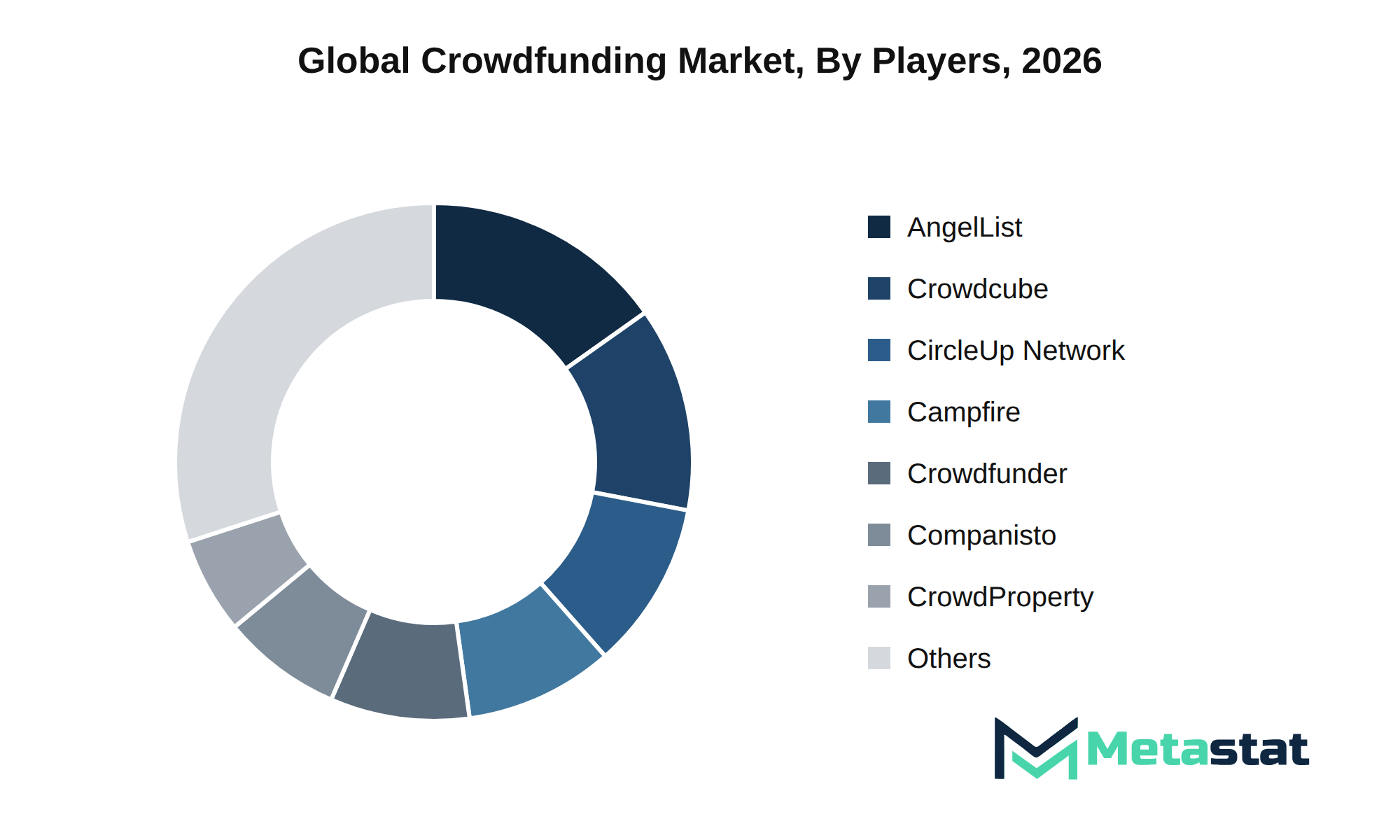
The Crowdfunding market experiences significant activity characterized by mergers, acquisitions, and strategic consolidations. Companies including AngelList Holdings LLC, GoFundMe Inc, and Indiegogo, Inc. lead initiatives that enhance market positioning through collaboration and partnership ecosystems. These strategic behaviors allow firms to optimize their go-to-market strategies, enabling more effective engagement with diverse customer segments including startups, nonprofits, and individuals.
Product differentiation remains a focal point, with platforms like Kickstarter, PBC and Fundrise LLC emphasizing unique value propositions to attract users. Investment in proprietary technologies enhances competitive positioning, driven by firms including LendingClub Corporation and EstateGuru developing advanced capabilities to streamline operations. Barriers to entry persist, restricting new entrants while existing players expand their influence through customer retention strategies focused on brand equity.
Technological defensibility significantly shapes the future competitive outlook. Companies invest in intellectual property portfolios to safeguard innovations, thereby fortifying their positions within the market. Overall, ongoing strategic growth vectors indicate a robust environment in the Crowdfunding market, presenting opportunities for established firms to broaden their reach while navigating competitive dynamics effectively.
Market size is forecast to rise from USD 2,150.5 million in 2025 to over USD 7,003.7 million by 2033. The base case estimates a growth trajectory from USD 2,150.5 million in 2025 to USD 7,003.7 million by 2033 at a 15.9% CAGR. In a bull case scenario, stronger economic conditions and heightened consumer interest could drive higher rates of investment and participation in the crowdfunding market, resulting in growth beyond the base projections. Conversely, a bear case scenario, characterized by economic downturns or regulatory hurdles, could constrain market expansion and lead to reduced growth rates.
Several macroeconomic factors will influence the crowdfunding market's evolution. Changes in downstream demand are anticipated due to shifts in consumer behavior and spending patterns, driven by advancements in next-generation technologies. Increasing integration of digital solutions and platforms facilitates market access for various participants, enhancing the potential for innovation.
Regulatory evolution will play a critical role in shaping the market landscape. Compliance milestones and regulatory frameworks evolve to ensure investor protection and market integrity, impacting operational strategies for crowdfunding platforms. Geopolitical realignments and evolving trade corridors influence funding availability and investment flows, adding complexity to the market environment. Strategic capital allocation directives from key stakeholders will guide investment decisions, addressing emerging white-space opportunities and unmet enterprise needs.
Finally, ongoing maturation of core industries supporting crowdfunding will lead to structural consumption shifts. These shifts will create high-growth pockets, presenting opportunities for both established and new players in the market. Adopting defensive strategies and creating effective growth recommendations will be essential for players navigating the evolving landscape.
The report strategically identifies and profiles the key market players and analyses their core competencies in each sub-segment of the Crowdfunding market.
Report Attributes | Details |
Study Period | 2021-2033 |
Base Year | 2025 |
Estimated Year | 2026 |
Forecast Period | 2026-2033 |
Historical Period | 2021-2025 |
Growth Rate | CAGR 15.9% from 2026 to 2033 |
Revenue Unit | USD million |
Segmentation | By Funding Model, End User, Platform Deployment, and Region |
By Region | North America (By Funding Model, End User, Platform Deployment, and Country)
|
Europe (By Funding Model, End User, Platform Deployment, and Country)
| |
Asia Pacific (By Funding Model, End User, Platform Deployment, and Country)
| |
South America (By Funding Model, End User, Platform Deployment, and Country)
| |
Middle East and Africa (By Funding Model, End User, Platform Deployment, and Country)
|
Find answers to common questions about this report
The Crowdfunding market size was valued at USD 2,150.5 million in 2025, according to the Metastat Insights study.
The Crowdfunding market is projected to grow at a CAGR of 15.9% during the forecast period from 2026 to 2033.
The North America Crowdfunding market size is estimated to reach USD 2,307 million by 2033.
The leading segment in the Crowdfunding market is Reward-Based Crowdfunding, projected to reach USD 2,082.2 million by 2033. This segment surpasses others in terms of revenue potential.
The crowdfunding market experiences growth driven by increased digital transformation, evolving consumer behaviors, and shifting demographic patterns. Younger consumers favor digital platforms that align with their values, while favorable capital investment conditions encourage startups to seek alternative funding options. These factors collectively enhance market appeal and operational efficiency.
North America holds the dominant share of the Crowdfunding market, with a value of USD 2,307 million projected for 2033, representing 36.1 percent of the total market.
The crowdfunding market faces significant restraints due to regulatory compliance challenges and macroeconomic headwinds. Varying regulatory frameworks create compliance hurdles, increasing operational costs, while inflationary pressures and resource scarcity hinder profitability. geopolitical instability and infrastructure gaps restrict growth opportunities, particularly in developing regions.
Increased digital transformation and the integration of technology enhance user experiences in crowdfunding, driving product adoption. Shifting demographic patterns, particularly among younger consumers, favor innovative funding models that align with their values, further supporting market growth. a favorable capital investment environment encourages startups to seek alternative financing options.
The Crowdfunding market is estimated to reach a valuation of USD 7,003.7 million by 2033.
Key players operating in the Crowdfunding market include AngelList Holdings LLC, Indiegogo, Inc., Kickstarter, GoFundMe Inc, Crowdcube Limited, Fundrise LLC, and CircleUp Network Inc.
The analysts below cover Banking & Finance research at Metastat Insights.
LEAD ANALYST
Utkarsh Khirodkar is a Lead Market Research Analyst at MetaStat Insight, specializing in market intelligence, technology sector assessments, and competitive strategy.

PRINCIPAL CONSULTANT - ENTERPRISE AI & EMERGING TECHNOLOGIES
Banking & Finance · Electronics and Semiconductor · Energy and Power · Healthcare IT · Information & Technology · Professional Services
Vijay Gunti is a Principal Consultant at MetaStat Insight, bringing over two decades of experience across enterprise digital transformation, technology strategy, and intelligent systems.
Evaluating sensor fusion reliability across harsh operating environments can be tricky without field-validated data. The study on agricultural autonomous guidance systems clearly separated stereo vision setups from automotive-grade solid-state LiDAR. We appreciated the regional infrastructure analysis, specifically around RTK network density across North America and South America. During our follow-up consultation, the MetaStat Insight team walked through tier-two perception software partnerships, giving our engineering leads a practical basis for vendor shortlisting.
Analyzing the transition from natural gas to green hydrogen in iron ore reduction requires realistic infrastructure timelines. Meta stat insight supplied a detailed regional assessment of DRI plant conversion costs and scrap metal availability in North America and Western Europe. Their report carefully examined pellet quality specs and electrical grid access constraints without making oversimplified market assumptions. The research material served as a practical reference during internal technology roadmap discussions.
Integrating zero-trust access controls across legacy electronic health record systems involves complex compliance overhead. Team produced an analysis that clearly separated identity governance and administration tools from privileged access management platforms. Their evaluation of HIPAA and GDPR compliance features across cloud native solutions gave our architecture group clear baseline criteria. The custom data request regarding biometric authentication adoption in hospital networks was returned promptly with clear documentation.
Explore related market intelligence reports worth reading alongside this one.
Starting from
$2950