
LEAD ANALYST
Utkarsh Khirodkar is a Lead Market Research Analyst at MetaStat Insight, specializing in market intelligence, technology sector assessments, and competitive strategy.

Austria Commercial Real Estate Investment and Leasing Market Size, Share, By Asset Class (Office Properties, Retail Properties, Industrial & Logistics Properties, Hotels & Hospitality Properties, Multifamily / Residential Investment Properties, Mixed-Use Properties, Others), By Investor Type (Real Estate Funds & Asset Managers, Insurance Companies & Pension Funds, Property Companies & Investment Vehicles, Real Estate Developers, Private Investors & Family Offices, Corporates & Owner-Occupiers, Public Sector & Government-Backed Entities), By Region (Vienna, Lower Austria, Upper Austria, Styria, Salzburg, Tyrol, Vorarlberg, Carinthia, Burgenland), Industry Analysis, Growth, Trends, and Forecast, 2026-2033
Report ID
MSI-5253
Published
September, 2026
Pages
300 Pages
Format
Historical
Base year
Forecast
Forecast period
Report Details
Market Valuation: Valued at $4,097.4 Million in 2025, projected to reach $6,434.7 Million by 2033 at a 5.8% CAGR.
Dominant Segment: The Multifamily / Residential Investment Properties segment leads the market, driven by increasing urbanization and a growing demand for diverse housing options.
Geographic Lead: Vienna is the leading region, projected to grow significantly due to strong demand for multifamily residential properties and modern office spaces.
What's Inside: The report provides a comprehensive analysis of market dynamics, competitive landscape, and detailed forecasts from 2026 to 2033, covering various asset classes and investor types.
Emerging Demands: The market is witnessing a shift towards sustainability and eco-friendly developments, attracting a broader range of investors focused on properties that meet environmental standards.
Choose Your License
Austria Commercial Real Estate Investment and Leasing Market
The Austria Commercial Real Estate Investment and Leasing market was valued at USD 4,097.4 million in 2025 and is projected to reach USD 6,434.7 million by 2033, growing at a CAGR of 5.8% over the forecast period.
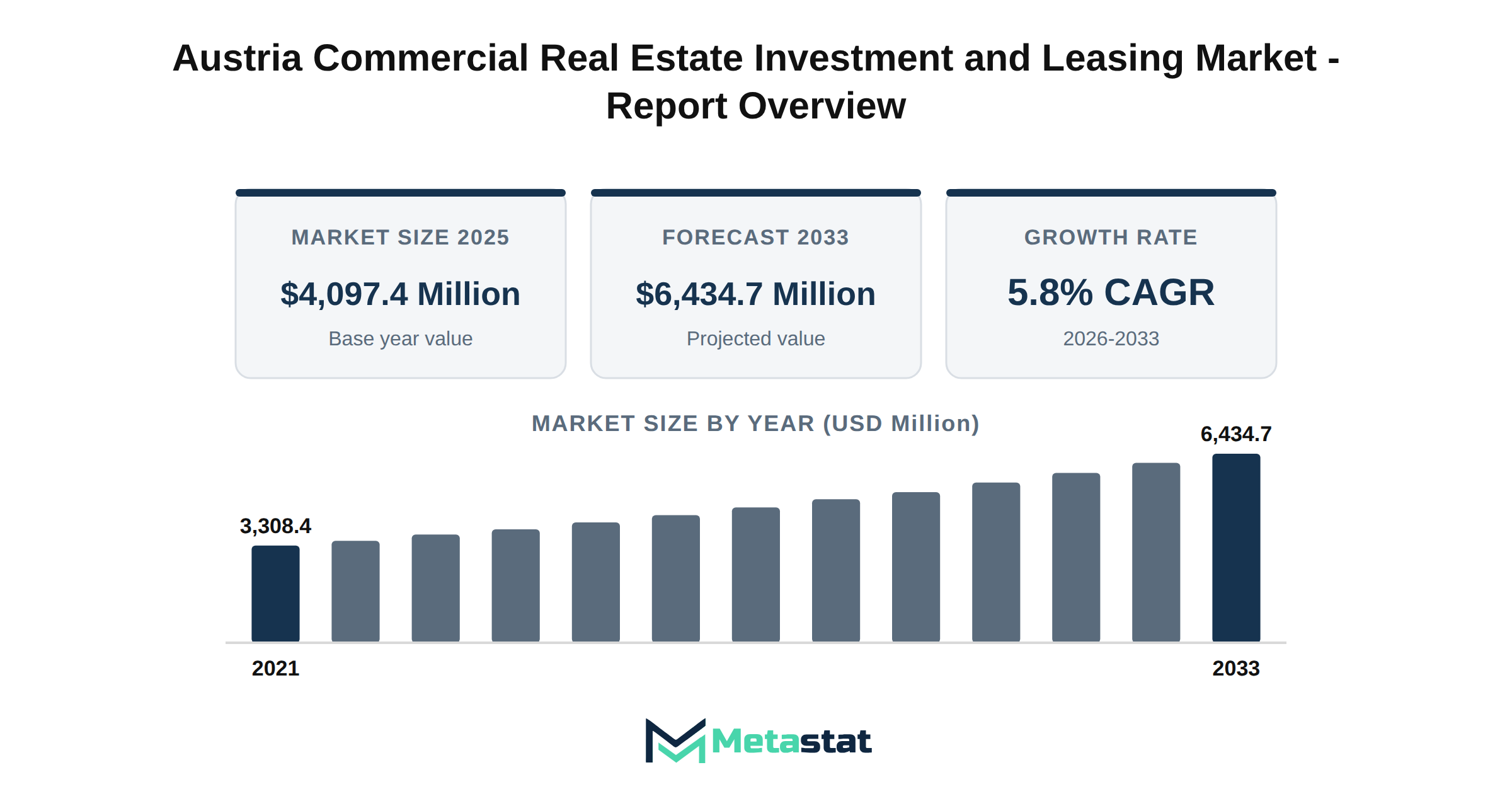
The Austria Commercial Real Estate Investment and Leasing market reached a valuation of USD 4,097.4 million in 2025, showing a steady increase from USD 3,308.4 million in 2021. This growth trajectory is projected to continue, with an estimated market value of USD 6,434.7 million by 2033, reflecting a compound annual growth rate (CAGR) of 5.8%. The market is characterized by diverse asset classes, including office properties, retail properties, industrial and logistics properties, hotels and hospitality properties, and multifamily residential investment properties.
Multifamily residential investment properties hold the largest market share at 32.1%, followed by office properties at 26.7%. The retail segment accounts for 7.9% of the market. Industrial and logistics properties represent 14.2%, while hotels and hospitality properties contribute 16.1%. Mixed-use properties and other categories, including data centers and healthcare facilities, constitute a smaller portion of the market, with 1% and 2.1% respectively.
Transaction volumes have shown consistent growth, driven by both domestic and international investors. Domestic capital flows continue to dominate, although cross-border investments are gaining traction. Increasing demand for leasing reflects robust interest in prime locations, leading to declining vacancy rates in key urban centers.
Financing conditions remain favorable, providing opportunities for new developments and acquisitions. Interest rates influence borrowing costs, prompting investors to seek optimal financing structures. This environment creates a competitive landscape among various investor types, including real estate funds, insurance companies, and property developers.
The development pipeline remains active, with numerous projects underway across different asset classes. Significant interest in asset repositioning and conversions reflects changing market dynamics and evolving tenant needs. Regulatory compliance and adherence to emerging standards shape development strategies, particularly regarding sustainability and environmental impact.
Inflationary pressures and currency volatility present challenges, influencing investment decisions and operational costs. Despite these factors, the Austria Commercial Real Estate Investment and Leasing market is poised for sustained growth, driven by ongoing urbanization and demographic trends.
The Austria Commercial Real Estate Investment and Leasing market experiences notable trends in commercial property pricing and yield. Current pricing dynamics reflect increasing demand across various asset classes, with multifamily and residential investment properties commanding the highest yields. The upward trajectory in rental rates contributes to investor confidence and enhances the attractiveness of the market.
Transaction volume reflects robust activity, with a healthy deal pipeline indicating strong investor interest. Both domestic and cross-border capital flows support this environment, with international investors seeking opportunities in Austria's stable economic landscape. This influx of foreign capital increases competition among local players, driving innovation and strategic partnerships.
Leasing demand exhibits positive momentum, characterized by declining vacancy rates and increased absorption in prime locations. These trends signal a recovering market, with businesses actively seeking quality spaces to accommodate their growth strategies. Ongoing demand for flexible office solutions and mixed-use developments further highlights shifting preferences in the leasing landscape.
The development pipeline remains active, with several projects underway to meet the increasing demand for commercial spaces. New supply is anticipated to align with evolving market needs, particularly in urban centers where demand for modern facilities is highest. This influx of new developments supports economic growth and contributes to job creation within the sector.
Financing conditions continue to evolve, influenced by interest rate fluctuations. Access to capital remains favorable for well-positioned investors, enabling them to finance acquisitions and developments. However, rising interest rates pose challenges for several stakeholders, necessitating strategic financial planning to mitigate impacts on project viability.
Asset repositioning presents opportunities for investors aiming to maximize value. The focus on sustainability and environmental considerations drives demand for properties that meet contemporary standards. Regulatory compliance and adherence to emerging standards influence investment decisions, shaping the future landscape of the Austria Commercial Real Estate Investment and Leasing market.
The market navigates a complex environment influenced by economic conditions, changing consumer preferences, and regulatory frameworks. The strategic outlook remains positive, driven by investor confidence and the ongoing evolution of commercial real estate dynamics.
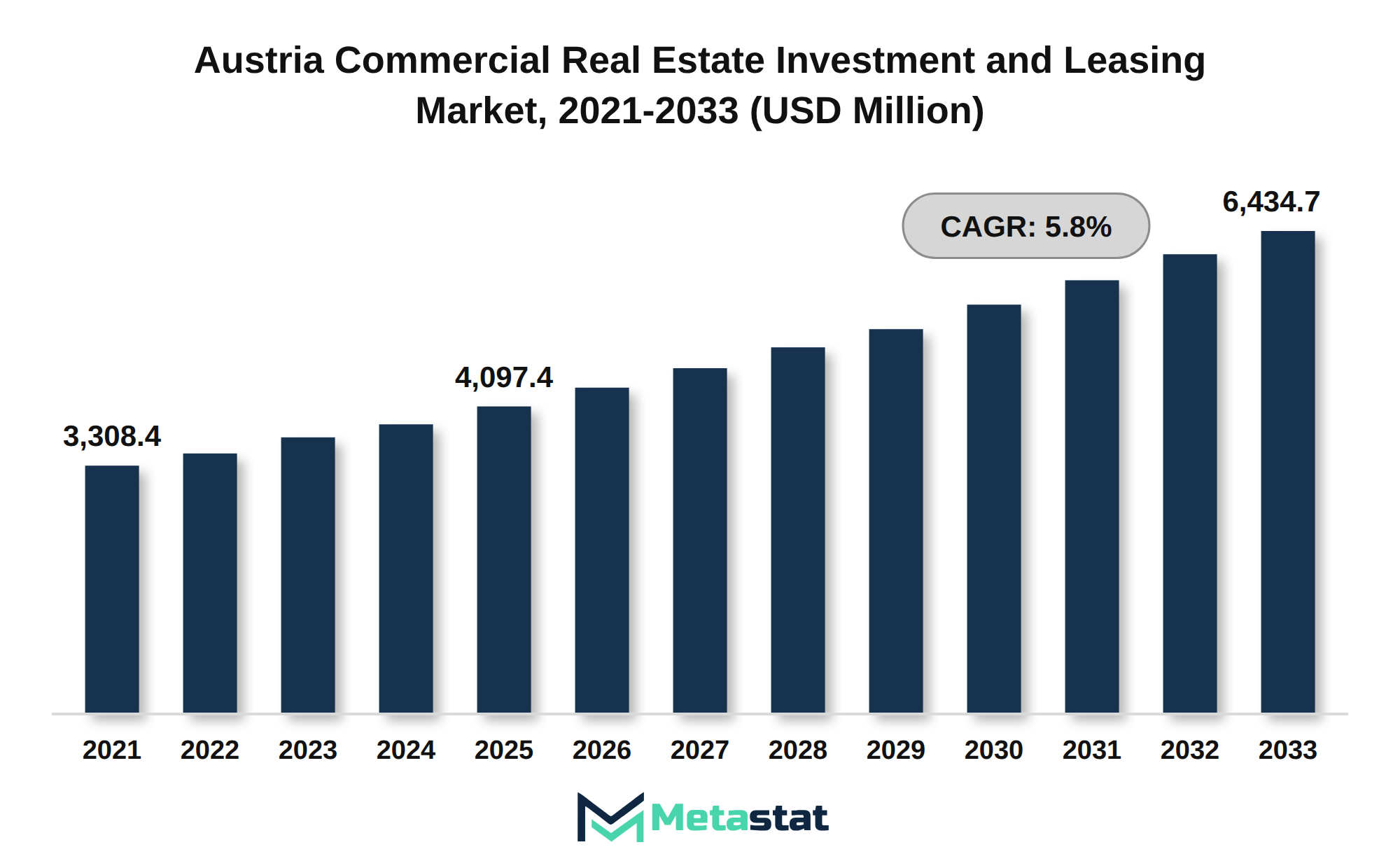
Positive macro-economic conditions significantly influence the Austria Commercial Real Estate Investment and Leasing market. Sustained GDP growth increases capital investment, creating a favorable environment for real estate transactions. Higher disposable incomes enhance consumer purchasing power, which raises demand for various property types, particularly in urban centers. This dynamic attracts diverse investor types, including real estate funds and asset managers, enhancing liquidity within the market.
Interest rates play a crucial role in shaping investment decisions. Low interest rates lower borrowing costs for investors, encouraging acquisition and development activities. In an environment of stable or rising GDP, real estate investment becomes an attractive alternative for investors seeking stable yields during fluctuating stock market performance. This trend contributes to a healthy growth forecast for the market, with a projected compound annual growth rate of 5.8 percent from 2026 to 2033.
The interaction of macro-economic factors, including GDP growth and favorable capital investment conditions, supports expansion in the Austria Commercial Real Estate Investment and Leasing market. This environment creates opportunities for various stakeholders, including investors, developers, and consumers, who benefit from increased property availability and improved market dynamics.
Robust infrastructure development significantly influences the growth trajectory of the Austria Commercial Real Estate Investment and Leasing market. Investments in transport networks, utilities, and digital connectivity improve accessibility and operational efficiency, driving demand for various asset classes. Enhanced infrastructure supports urbanization trends, facilitating the expansion of commercial and residential developments in key regions.
Improvements in public transport systems and road networks, particularly in urban centers like Vienna, attract businesses and investors seeking optimal locations. These developments stimulate economic activities, leading to increased investor confidence and enhanced capital flows into the market. The heightened interest in real estate investments directly correlates with the expansion and modernization of infrastructure, which allows for better service delivery and operational capabilities.
The market demonstrates resilience through infrastructure projects that stimulate job creation and economic vitality. This robust investment environment supports growth in sectors including industrial and logistics properties, driven by businesses increasingly seeking well-connected locations to optimize their supply chains. Consequently, the market's ongoing infrastructure enhancements contribute to its overall growth, positioning Austria because a competitive player within the broader European commercial real estate landscape.
The Austria Commercial Real Estate Investment and Leasing market faces significant regulatory challenges that impede growth. Increasing compliance hurdles associated with evolving legal mandates create barriers for investors and developers, resulting in delays and increased costs. These compliance requirements often necessitate substantial investments in legal advisory and related resources, diverting capital away from project development.
Macroeconomic headwinds, including rising inflationary pressures, add to the financial burden on stakeholders. Elevated operational costs stemming from inflation impact profitability and deter new investments. Supply chain disruptions limit the availability of essential materials, impeding construction timelines and increasing project costs. Geopolitical instability in the region exacerbates these issues, creating uncertainty that discourages investment.
Resource scarcity further complicates project execution, leading to increased competition for available materials and labor. The high capital investment requirements for projects in the market pose additional challenges. Investors often face difficulties securing financing in an environment characterized by rising interest rates, complicating long-term planning and investment strategies.
Technological obsolescence impacts competitiveness, resulting from firms struggling to keep pace with technological advancements in construction and property management. This factor, combined with rising workforce overhead and skilled labor deficiencies, constrains market expansion. These interconnected challenges create a complex environment that slows the overall progress of the Austria Commercial Real Estate Investment and Leasing market.
Geopolitical fragmentation poses significant challenges for the Austria Commercial Real Estate Investment and Leasing market. This instability generates uncertainties in international trade and investment, affecting market sentiment and leading to fluctuations in capital flows. Trade deficits and tariff frictions complicate cross-border transactions, limiting opportunities for foreign investors seeking to enter the Austrian market.
Technological disruptions compound these challenges, creating barriers for firms attempting to adopt new innovations necessary for competitive advantage. Rising input costs and margin pressures directly impact profitability, making it difficult for companies to maintain stable pricing strategies. The increasing complexity of compliance with tightening regional regulatory standards adds an additional layer of difficulty, resulting from businesses navigating evolving legal liabilities while managing overhead costs.
Logistics disruptions and supply chain instability further exacerbate the market's volatility. Interruptions in the supply chain affect project timelines and cost structures, leading to delays in new developments and downgrading investor confidence. Workforce skill gaps and talent retention pressures arise in this context, because companies seek to attract and retain qualified personnel amid automation displacements and changing market dynamics.
These factors collectively hinder the growth trajectory of the Austria Commercial Real Estate Investment and Leasing market. Addressing these challenges requires a concerted effort from stakeholders to enhance resilience and adaptability in an increasingly fragmented geopolitical environment.
The Austria Commercial Real Estate Investment and Leasing market presents significant opportunities driven by emerging regional demands and evolving buyer behaviors. An increasing focus on sustainability and green transformations influences investor preferences, directing capital towards properties that meet environmental, social, and governance (ESG) standards. This shift toward eco-friendly compliance attracts a broader range of investors and aligns with global trends prioritizing sustainable development.
Infrastructure modernization supports the market's growth by enhancing the attractiveness of urban centers, particularly in regions like Vienna. This modernization enables geographical expansion, allowing real estate developments to cater to diverse segments, including industrial, retail, and multifamily properties. Continuous demand for logistical improvements strengthens the appeal of industrial and logistics properties, indicated by a projected increase to USD 1,015.9 million by 2033.
Technological disruptions and digital transformation reshape operational frameworks in the market. Adoption of advanced analytics, digital procurement shifts, and process automation enables real estate firms to enhance productivity and operational yield. Consequently, these advancements attract investment by creating a more efficient and responsive property management environment.
Strategic consolidation and cross-industry mergers diversify the market landscape. Real estate funds and asset managers increasingly collaborate with technology firms to integrate innovative solutions that streamline processes and improve client engagement. This strategic alignment positions players within the Austria Commercial Real Estate Investment and Leasing market to capitalize on niche applications, cultivating growth in emerging sectors.
Overall, the market's growth trajectory is anticipated, with a compound annual growth rate (CAGR) of 5.8% from the base year 2025 through 2033. This growth reflects the dynamic nature of the market, driven by factors including downstream market diversification, asset life-cycle extensions, and value-chain optimization. The evolving landscape provides numerous avenues for investment and development, ensuring the continued relevance of the Austria Commercial Real Estate Investment and Leasing market within the broader economic framework.
The Austria Commercial Real Estate Investment and Leasing market is segmented based on Asset Class, Investor Type, and Region.
Significant investment in office properties drives ongoing growth in the Austria Commercial Real Estate Investment and Leasing market. Valued at USD 1,148.1 million in 2026, this segment is projected to reach USD 1,555 million by 2033, with a CAGR of 4.4% during the forecast period. Demand for flexible workspaces and modern facilities influences the expansion of this segment. Corporate tenants increasingly opt for spaces that promote collaboration and innovation, leading to a shift in design preferences.
Technological advancements play a crucial role in enhancing the attractiveness of office spaces, with smart building technologies improving operational efficiency and tenant experiences. Sustainability initiatives shape development trends, driven by investors seeking properties that align with environmental standards and energy-efficient practices. These factors contribute to heightened competition among developers and property managers in the market.
Rising demand for office properties is supported by a recovering economy, with businesses expanding their operations and requiring new office space. Regulatory compliance regarding health and safety measures further influences design and investment approaches. Given these dynamics, the office properties segment remains a vital component of the growth trajectory within the Austria Commercial Real Estate Investment and Leasing market.
In the Austria Commercial Real Estate Investment and Leasing market, the Retail Properties segment exhibits promising growth potential. This segment is expected to reach USD 465.1 million by 2033, at a CAGR of 4.6% during the forecast period. Increasing consumer demand for diverse retail experiences drives investment in this segment. Retailers prioritize locations that provide accessibility and visibility, influencing their leasing decisions. Emerging trends, including e-commerce integration and experiential retail, contribute to this segment's evolution, prompting landlords to adapt their properties to meet changing tenant requirements.
Upcoming retail developments aim to enhance customer engagement through innovative design and amenities. Properties integrating technology and sustainability attract higher interest from investors and tenants. Evolving consumer preferences, including a shift towards mixed-use developments, create opportunities for retail property investments in urban areas. The growing importance of community-centric spaces further increases demand in this segment.
Positive market dynamics and the evolving environment of retail spaces position the Retail Properties segment for significant growth within the Austria Commercial Real Estate Investment and Leasing market. The commitment to creating adaptable and engaging retail spaces supports the segment's ongoing expansion.
Growth in the Industrial & Logistics Properties segment arises from increasing demand for efficient supply chain management and rapid e-commerce expansion. Investments in technology and automation enhance operational efficiency, driving interest in modern logistics facilities. The sector benefits from the shift towards just-in-time inventory practices, which require strategically located warehouses to minimize delays and costs. Stakeholders in logistics and retail sectors prioritize properties that offer flexibility and scalability, ensuring responsiveness to market fluctuations.
Regulatory support for sustainable building practices influences investment decisions within the market. Many investors seek compliance with green certifications, signaling a commitment to environmental responsibility. This trend enhances asset value and attracts environmentally conscious tenants, further driving demand. The segment experiences pressure from rising construction costs, impacting profit margins and prompting stakeholders to streamline operations and adopt innovative construction methods to mitigate financial strain.
Industrial & Logistics Properties segment is expected to reach USD 1,015.9 million by 2033, reflecting a strong growth trajectory. Investments are anticipated to increase owing to stabilizing economic conditions and industries recovering from disruptions. Strategic opportunities arise through advancements in technology, including automation and digitalization, allowing properties to meet evolving consumer expectations. The focus on sustainability and efficiency positions this segment favorably within the broader Austria Commercial Real Estate Investment and Leasing market.
Growth within the Hotels & Hospitality Properties segment aligns with increasing consumer spending on travel and leisure activities. This trend results from evolving preferences for unique and experiential stays among travelers, driving demand for new and upgraded hospitality options. The ongoing recovery from previous disruptions in the travel sector fuels investment in this area, creating opportunities for property developers and investors within the Austria Commercial Real Estate Investment and Leasing market.
Hotels positioned in prime locations, including city centers and tourist attractions, attract higher occupancy rates and revenue per available room. This dynamic encourages real estate funds and asset managers to channel investments toward innovative hotel concepts that cater to changing consumer preferences. The segment is projected to grow at a CAGR of 6.2% during the forecast period, highlighting the potential for substantial returns in the hospitality sector.
Emerging trends in sustainability and technology integration within hospitality properties further enhance attractiveness for investors. The incorporation of energy-efficient systems and smart technologies improves operational efficiencies and aligns properties with evolving regulatory compliance standards. Adopting green building practices and certifications becomes essential in appealing to environmentally conscious consumers, positioning developers favorably within the competitive environment.
Strategic partnerships between hotel operators and local businesses create unique experiences for guests, adding value within the segment. This collaboration builds a resilient ecosystem that enhances customer satisfaction and loyalty while driving repeat business. Overall, the Hotels & Hospitality Properties segment contributes significantly to the growth trajectory of the Austria Commercial Real Estate Investment and Leasing market, reflecting broader trends within the tourism and travel industries.
Increased urbanization and a growing demand for multifamily housing significantly influence the expansion of the Multifamily / Residential Investment Properties segment within the Austria Commercial Real Estate Investment and Leasing market. Investors recognize the potential for stable rental income and capital appreciation, driving interest in this asset class. Factors contributing to this demand include demographic shifts, including a rising population and changing family structures, which create a need for diverse housing options.
Regulatory frameworks that support sustainable building practices enhance the attractiveness of multifamily developments. Compliance with energy efficiency standards and green certifications appeals to environmentally conscious consumers, encouraging investment in modern residential properties. This trend aligns with evolving market expectations, where tenants prioritize sustainability in their housing choices.
Competition among investors intensifies, prompting a focus on creating high-quality living environments that cater to varying lifestyles. This strategic opportunity window encourages developers to innovate and incorporate amenities that enhance tenant experiences. Consequently, the segment evolves to meet shifting consumer preferences, leading to improved occupancy rates and higher returns on investment.
Technological advancements facilitate efficient property management and enhance tenant engagement, further reinforcing the segment's position in the market. Smart home technologies and digital platforms streamline communication between property managers and residents, creating a sense of community and satisfaction. This adaptation to technological maturation highlights the segment’s capacity to remain relevant in an evolving market.
Overall, the Multifamily / Residential Investment Properties segment in the Austria Commercial Real Estate Investment and Leasing market represents a dynamic opportunity for investors, driven by strong demand factors, regulatory support, and technological integration.
Growing urbanization and evolving consumer preferences drive demand for Mixed-Use Properties in the Austria Commercial Real Estate Investment and Leasing market. These properties combine residential, commercial, and retail spaces, catering to the needs of modern urban dwellers seeking convenience and accessibility. The shift towards sustainable living and integrated community spaces enhances the attractiveness of these developments, attracting a diverse range of investors.
Development regulations increasingly favor mixed-use projects, providing an incentive for developers to invest in this segment. Collaborative environments that encourage interaction between different user groups promote active communities. This trend encourages investment from real estate funds, asset managers, and property companies, positioning them to capitalize on the opportunities presented by Mixed-Use Properties.
Investment in Mixed-Use Properties reflects broader shifts in lifestyle preferences, where consumers favor live-work-play environments over traditional single-use developments. This segmentation appeals to a wide demographic, including young professionals and families. The Austria Commercial Real Estate Investment and Leasing market recognizes the evolving landscape, leading to strategic opportunities for growth and expansion within this segment.
Growing reliance on technology fuels demand for data centers, healthcare facilities, and student housing within the Austria Commercial Real Estate Investment and Leasing market. Increasing adoption of cloud computing and digital services drives the need for data center capacity, which requires specific real estate solutions to accommodate complex infrastructures. Healthcare facilities receive heightened attention due to an aging population and rising health consciousness, creating opportunities for specialized healthcare real estate investments that cater to evolving patient needs.
Student housing benefits from the ongoing trend of higher education enrollment, particularly in urban areas, where demand for suitable living accommodations continues to rise. This segment's expansion aligns with demographic shifts and increased mobility among young adults seeking educational opportunities. Senior living developments gain traction, reflecting the aging population's need for dedicated residential solutions that provide care and support.
Regulatory compliance plays a critical role in shaping the development landscape, requiring investors to navigate specific standards across data center, healthcare, and housing projects. Adhering to these regulations influences project timelines and operational costs, necessitating careful planning and investment. Market players leverage innovative design and technology to create efficient, adaptable spaces that meet regulatory requirements while enhancing user experience.
Given the competitive dynamics, strategic investment in the "Others" sub-segment positions players to capture significant market share within the Austria Commercial Real Estate Investment and Leasing market. Integration of advanced technologies and sustainable practices supports the long-term viability of these assets, enabling developers and investors to cater to evolving consumer preferences while navigating market challenges.
Valued at USD 1,354.6 million in 2026, the Real Estate Funds & Asset Managers segment is projected to reach USD 2,026.4 million by 2033, reflecting a compound annual growth rate (CAGR) of 5.9% during the forecast period. Demand for real estate investments remains strong, driven by favorable economic conditions and institutional interest in diversifying portfolios. Increased capital allocation towards real estate, particularly within the Austria Commercial Real Estate Investment and Leasing market, supports growth in this segment.
Strategic investment decisions by funds and managers focus on attractive asset classes, including office, industrial, and multifamily properties. In the Austrian market, urbanization trends and demand for modern living and working spaces sustain interest in these investments. The evolving nature of real estate presents opportunities for innovative financing models and partnership structures that enhance returns for investors.
Regulatory frameworks play a crucial role in shaping the investment landscape, impacting compliance costs and operational strategies. Institutions prioritize adherence to standards while seeking avenues for growth within the Austria Commercial Real Estate Investment and Leasing market. A proactive approach towards adapting to regulatory changes allows funds and asset managers to capitalize on emerging market conditions.
Technological advancements in real estate analytics and property management further enhance decision-making capabilities for investors. Tools that facilitate data-driven insights enable more accurate forecasting of market trends and investment performance. Continued adoption of such technologies within the market drives efficiency and improves returns on investment.
Growth in the Insurance Companies & Pension Funds segment aligns with increasing interest in stable and income-generating assets within the Austria Commercial Real Estate Investment and Leasing market. This segment is expected to reach USD 663.9 million by 2033, at a CAGR of 5% during the forecast period. Factors including demographic shifts, particularly an aging population, drive demand for reliable investment opportunities in real estate. Regulatory changes and favorable tax policies play a crucial role in attracting these investors.
Technological advancements in property management and investment analysis enhance operational efficiencies for insurance companies and pension funds. These technologies facilitate better data analytics, enabling informed decision-making regarding investments. The segment's growth is supported by an evolving landscape where institutional investors actively seek diversification through real estate assets, particularly in urban centers with strong economic fundamentals.
Market dynamics indicate a shift toward multifamily and commercial properties, aligning with the investment strategies of insurance companies and pension funds. A focus on sustainable and green building practices aligns with the broader objectives of these investors to integrate ESG (Environmental, Social, and Governance) considerations into their portfolios. The Austria Commercial Real Estate Investment and Leasing market shows robust potential for this segment, reflecting confidence in the long-term performance of real estate assets.
Investment within the Property Companies & Investment Vehicles sub-segment reflects a strategic focus on diversified real estate portfolios. This diversification enables firms to mitigate risks associated with market volatility and fluctuating economic conditions, positioning them favorably in the Austria Commercial Real Estate Investment and Leasing market. With a projected growth trajectory, the segment is expected to reach USD 1,152.9 million by 2033, driven by increasing demand for sustainable and innovative property solutions.
Demand for mixed-use developments and urban regeneration projects highlights the importance of adaptability in investment strategies. Investors prioritize properties that meet evolving consumer preferences, enhancing occupancy rates and rental yields. This adaptability facilitates stronger performance across various asset classes, including office, retail, and industrial properties, thereby enhancing overall market resilience.
Technological advancements play a significant role in shaping this sub-segment. The integration of smart building technologies and data analytics allows property companies to optimize operational efficiencies, improve tenant experiences, and reduce costs. This trend aligns with the broader move towards digital transformation in the real estate sector, reinforcing competitiveness and attracting a diverse range of investors.
In light of regulatory pressures, compliance with environmental standards and sustainable practices has become essential. Investors increasingly seek properties that meet these standards, impacting investment decisions and shaping market dynamics. This compliance promotes long-term sustainability and fulfills the growing demand for environmentally responsible real estate solutions, further driving growth within the Austria Commercial Real Estate Investment and Leasing market.
Investment activity within the Real Estate Developers segment reflects strong growth prospects, with a projected CAGR of 6.5% during the forecast period. Increasing demand for residential and commercial properties drives developers to expand their portfolios, aligning with urbanization trends and population growth. This expansion stimulates competition among developers, leading to innovative project designs and efficient construction methods.
Heightened interest in mixed-use developments and sustainable building practices shapes the strategies of many developers in the market. Regulatory frameworks increasingly emphasize environmental compliance, prompting developers to adopt green technologies and practices to meet these standards. Such compliance enhances a developer's marketability and contributes to long-term operational savings.
Investment in technology and construction management tools improves project efficiency and cost-effectiveness. Developers employ digital platforms for project management, enhancing collaboration and reducing time-to-market for new developments. These technological advancements enable better risk management and contribute to an overall healthier investment climate.
Demand for affordable housing solutions remains a critical driver within the Real Estate Developers segment, reflecting changing consumer preferences. Developers focusing on creating cost-effective housing options capture significant market share, particularly in urban areas facing housing shortages. This strategic shift towards affordability aligns with broader economic trends and enhances overall sector demand in the Austria Commercial Real Estate Investment and Leasing market.
Overall, the Real Estate Developers segment plays a vital role in shaping the future of the Austria Commercial Real Estate Investment and Leasing market, driven by innovation, compliance, and a focus on consumer needs.
Investment from Private Investors and Family Offices signifies a growing trend within the Austria Commercial Real Estate Investment and Leasing market. This segment benefits from favorable economic conditions, enabling high-net-worth individuals and families to engage actively in real estate investment. Strong performance in various asset classes, particularly multifamily and mixed-use properties, appeals to this investor group seeking to diversify portfolios and enhance returns.
Demand for premium residential properties in urban areas aligns with changing demographics and lifestyles, further attracting private investors. The increasing emphasis on sustainability and eco-friendly developments encourages investments in properties that meet modern standards, promoting long-term value appreciation. Favorable financing conditions facilitate entry for private investors seeking to capitalize on opportunities in the market.
Market expansion experiences support from technological advancements that improve property management and investment analysis. Innovative tools streamline decision-making processes for investors, allowing for better assessment of potential acquisitions. The evolving regulatory environment continues to shape investment strategies, with compliance becoming essential for maximizing returns while minimizing risks.
The Private Investors and Family Offices segment in the Austria Commercial Real Estate Investment and Leasing market highlights a strategic shift toward diverse investment opportunities. This shift reflects broader economic trends and emphasizes the importance of adapting to emerging demands in the market.
Increasing focus on efficient space utilization and employee wellbeing drives demand for office spaces among corporates and owner-occupiers. The trend towards hybrid work models necessitates modernized spaces that accommodate both in-office and remote work, resulting in a shift towards flexible leasing agreements. Investment in upgraded infrastructure and technology-enhanced environments remains crucial, aligning with corporate sustainability initiatives and regulatory compliance standards. These dynamics contribute to robust interest in high-quality assets within the Austria Commercial Real Estate Investment and Leasing market.
Corporate entities emphasize strategic location selection to enhance operational efficiency and employee accessibility. Urban areas with strong transportation networks and amenities attract corporate investments, supporting the trend towards urbanization. This focus on location increases competition among real estate providers, prompting innovative solutions tailored to corporate needs. Increased interest in energy-efficient buildings and smart technologies reflects evolving corporate values, further shaping the investment landscape in the market.
Interest in Public Sector and Government-Backed Entities within the Austria Commercial Real Estate Investment and Leasing market stems from various factors, including the need for sustainable and affordable housing and the demand for public infrastructure projects. Government initiatives focused on urban development and community facilities drive investments in mixed-use and multifamily properties, aligning with broader social goals and improving public amenities.
Adoption of environmentally sustainable practices influences investment decisions in this sub-segment. Regulatory compliance standards related to energy efficiency and green building certifications drive public sector investments to align with national and local sustainability goals. Consequently, entities actively seek real estate solutions that fulfill operational needs while providing long-term value in terms of energy savings and environmental impact.
Investment dynamics involve collaborative projects between public entities and private developers, creating opportunities for innovative financing structures. Public-private partnerships facilitate the sharing of resources and risks, enabling large-scale projects that contribute to economic growth while addressing social needs. Such collaborations enhance the attractiveness of investments for stakeholders across the market.
Strategic opportunity windows arise from demographic shifts and urbanization trends, which heighten the demand for social infrastructure. Increased population density in urban centers increases the need for accessible public services, further driving investment in properties tailored for governmental use. Emphasis on healthcare, education, and community development projects demonstrates the significance of this sub-segment in the broader context of the market.
By focusing on long-term capital investment outlooks, Public Sector and Government-Backed Entities tap into emerging trends that shape the future of the Austria Commercial Real Estate Investment and Leasing market. This forward-looking perspective enables stakeholders to align their strategies with evolving societal needs and economic drivers, ensuring continued relevance and impact within the sector.
Valued at USD 2,510.7 million in 2026, the Vienna segment is projected to reach USD 3,659.4 million by 2033, reflecting a CAGR of 5.5% during the forecast period. Strong demand for multifamily residential properties shapes investment decisions within this segment. Urbanization and a shift towards sustainable living environments create a favorable backdrop for multifamily developments, attracting both international and local investors.
Investment in office properties within Vienna reflects the strategic priorities of businesses seeking modern, flexible workspaces. The city's economic stability and robust infrastructure enhance confidence among investors, leading to increased transactions and developments in this asset class. Ongoing projects aimed at enhancing commercial real estate offerings indicate significant potential for growth in the Austria Commercial Real Estate Investment and Leasing market.
The regulatory environment in Vienna supports sustainable building practices, influencing investment strategies among developers and investors. Compliance with stringent energy efficiency standards drives the adoption of innovative construction techniques and materials. This focus on sustainability aligns with growing consumer demand for environmentally friendly spaces, positioning the Vienna segment favorably in the competitive environment.
Overall, Vienna's commercial real estate market benefits from a convergence of favorable demographic trends, regulatory support, and evolving consumer preferences, driving sustained growth within the Austria Commercial Real Estate Investment and Leasing market.
Real estate investment in Lower Austria reflects strong growth prospects, influenced by the region's strategic location and economic stability. Projects in the commercial real estate sector gain traction due to rising interest from investors seeking opportunities in expanding markets. Valued at USD 539.6 million by 2033, the segment achieves a CAGR of 6.3% during the forecast period. This growth results from increasing demand for residential and mixed-use developments, driven by a demographic shift towards urban living.
Investors recognize Lower Austria for its favorable investment climate, characterized by supportive regulatory frameworks and growing infrastructure development. Local government initiatives aimed at enhancing connectivity and sustainable urban planning play a crucial role in facilitating investment. The Austria Commercial Real Estate Investment and Leasing market benefits from these developments, reflecting a conducive environment for both local and international investors.
Technological advancements in construction and property management contribute to the segment's expansion. Innovations streamline project execution and operational efficiency, enabling developers to respond effectively to market demands. The evolution of consumer preferences towards more sustainable and technologically integrated spaces further drives investment in Lower Austria's commercial real estate market.
Overall, the Lower Austria segment represents a promising area for real estate investment, supported by favorable demographic trends and robust economic indicators. Growth in this region substantially contributes to the broader Austria Commercial Real Estate Investment and Leasing market, highlighting its significance in the national landscape.
Investment in the Upper Austria segment reflects anticipated growth driven by increasing demand for commercial real estate solutions. Regional economic development initiatives and urban regeneration projects create favorable conditions for stakeholders in the Austria Commercial Real Estate Investment and Leasing market. With a projected market value of USD 547.5 million by 2033, the segment demonstrates its potential because a viable investment destination. Demand from various sectors, including industrial and logistics, fuels expansion within this region. Upper Austria's strategic location and well-developed infrastructure enhance its attractiveness for real estate investments.
The influence of technological advancements and sustainability initiatives shapes investor interest. Stakeholders actively seek properties that incorporate energy-efficient technologies and sustainable practices, aligning with broader market trends. This focus on sustainable development not only enhances the value of properties but attracts environmentally conscious investors. The increasing regulatory emphasis on sustainability standards further drives investments in commercial real estate.
Strong investor sentiment, particularly among Real Estate Funds and Asset Managers, highlights the segment's appeal. The anticipated CAGR of 6.3% indicates strong growth prospects, creating opportunities for various investment vehicles. Overall, Upper Austria offers a dynamic environment for commercial real estate investment, contributing significantly to the growth trajectory of the Austria Commercial Real Estate Investment and Leasing market.
Investment in Styria benefits from a strategic focus on urban development and infrastructure enhancement. The region's projected CAGR of 6.1% during the forecast period indicates a robust market outlook, driven by increasing interest in residential and commercial properties. Stakeholders invest in modern facilities to meet the growing demand for quality living and working spaces, addressing shifts in consumer preferences and lifestyles.
Adoption of sustainable building practices supports market growth, influencing developers and investors to prioritize eco-friendly projects. Regulatory compliance standards emphasizing energy efficiency contribute to the evolving landscape of the Austria Commercial Real Estate Investment and Leasing market. Enhanced public transportation links and accessibility further attract investment, reinforcing Styria's position because an emerging hub for real estate activities.
The competitive environment sees diverse player involvement, with local and international firms recognizing the opportunities available in the region. Investment activities reflect strong optimism, with stakeholders targeting properties that align with evolving consumer needs. Increased property values support capital investment, ensuring continued growth in Styria's real estate sector.
Investment activity in Salzburg reflects a stable interest in both residential and commercial properties, driven by a growing population and industrial expansion. Demand for high-quality office spaces continues to rise, fueled by an influx of businesses seeking to establish operations in the region. A strategic focus on sustainability and modern urban development enhances the attractiveness of Salzburg for real estate investment.
Investment in the Salzburg segment benefits from governmental support aimed at improving infrastructure and enhancing urban living standards. Regulatory compliance standards encourage sustainable building practices, aligning with broader environmental objectives. These factors contribute to a positive outlook for the Austria Commercial Real Estate Investment and Leasing market, particularly within this region.
Technological advancements in building management systems enhance operational efficiency and tenant satisfaction. Adoption of smart building technologies promotes energy efficiency and reduces operational costs, appealing to both investors and end-users. This evolution in product offerings positions Salzburg because an attractive market for future investments.
Overall, stakeholder engagement and community development initiatives create a thriving real estate environment. This dynamic contributes positively to the Austria Commercial Real Estate Investment and Leasing market, indicating strong growth potential in the Salzburg segment.
Investment in Tyrol benefits from a focus on diverse real estate opportunities, including residential, commercial, and mixed-use properties. The region's picturesque landscapes and robust tourism sector contribute to demand for hotels and hospitality properties, appealing to investors seeking growth in this segment. Enhanced infrastructure development supports continued interest in industrial and logistics properties, aligning with regional economic objectives.
Increased awareness of sustainability and environmental considerations influences real estate investment decisions. Investors prioritize properties that adhere to regulatory compliance standards and certifications, aiming to enhance the long-term viability of their investments. This trend reflects a broader shift within the Austria Commercial Real Estate Investment and Leasing market toward environmentally friendly practices and energy-efficient designs.
Strategic opportunity windows emerge due to evolving regional development plans, promoting urbanization and attracting further investment. Local governments actively facilitate growth, creating a favorable environment for real estate transactions and developments. Expectations surrounding pricing volatility and margin pressures require stakeholders to adopt agile strategies for optimizing their investment portfolios in Tyrol.
The Tyrol segment benefits from a resilient supply chain, ensuring access to essential resources for construction and development projects. Increased competition among real estate firms drives innovation and growth potential, providing opportunities for investors and developers to capitalize on emerging trends. This dynamic environment highlights the ongoing evolution of the Austria Commercial Real Estate Investment and Leasing market.
Real estate investment in Vorarlberg reflects a growing interest in the region's unique attributes and potential for development. Investors focus on residential and mixed-use properties, recognizing the area's appeal to both locals and tourists. Demand for quality housing and commercial spaces drives investment activity, fueled by rising population figures and economic stability. A strategic emphasis on sustainability and environmental considerations influences project selection, aligning with broader trends observed in the Austria Commercial Real Estate Investment and Leasing market. Regulatory frameworks encourage development while ensuring compliance with environmental standards, creating a balanced investment environment.
Increasing connectivity and infrastructure improvements enhance the region's attractiveness to businesses and residents alike. This trend creates a diverse array of investment opportunities, encompassing residential, commercial, and hospitality sectors. Investors actively seek properties that align with evolving consumer preferences, which emphasize accessibility and sustainability. While the market continues to mature, Vorarlberg stands poised for sustained investment interest, further contributing to the overall growth within the Austria Commercial Real Estate Investment and Leasing market.
Investment interest in Carinthia reflects a steady focus on regional development and a growing appreciation for its potential within the Austria Commercial Real Estate Investment and Leasing market. Increasing demand for mixed-use developments aligns with shifting urbanization patterns, attracting both residential and commercial investments to the area. The presence of natural resources and scenic landscapes contributes to the appeal of Carinthia, enhancing its attractiveness for multifamily and hospitality properties.
Strategic initiatives focused on infrastructure improvements create a favorable environment for real estate players, facilitating easier access to key markets. The region's unique geographical features encourage investments in logistics and industrial properties, creating new opportunities for development. Regulatory frameworks supporting sustainable building practices further entice investors concerned with environmental impacts, aligning with global trends toward sustainability.
Investment dynamics in Carinthia demonstrate resilience amid changing economic landscapes, driven by a combination of local demand and external investor interest. The Austria Commercial Real Estate Investment and Leasing market highlights Carinthia's potential to emerge because a viable player, supported by ongoing economic growth and strategic urban planning initiatives.
Investment in Burgenland benefits from a focus on regional development and urban renewal projects. Demand for real estate in this area aligns with the broader trends seen in the Austria Commercial Real Estate Investment and Leasing market, where economic growth stimulates interest in property development. Increased investments in infrastructure enhance the appeal of Burgenland, supporting its development because a residential and commercial hub. Stakeholders recognize the importance of sustainability and eco-friendly building practices, aligning with consumer preferences for environmentally responsible developments. Regulatory compliance is important, with local authorities encouraging developments that meet environmental standards. This strategic direction positions Burgenland for future growth and reinforces its contribution to the Austria Commercial Real Estate Investment and Leasing market.
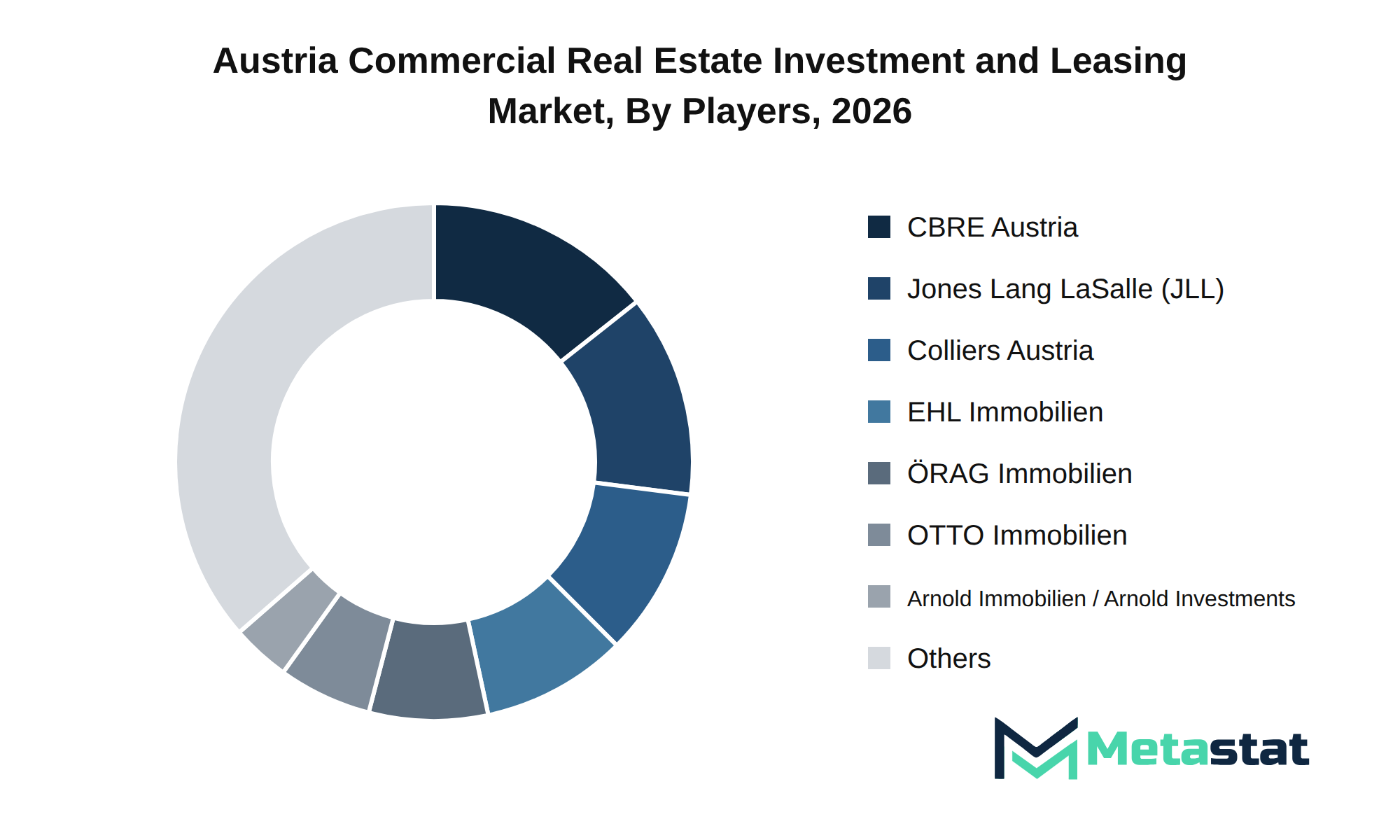
The Austria Commercial Real Estate Investment and Leasing market features a diverse array of players, each adopting distinct strategies to enhance market positioning. Key companies including CBRE Austria, Colliers Austria, and Jones Lang LaSalle GmbH (JLL) emphasize strategic consolidation and alliances, seeking to expand their influence through collaborative efforts. This approach provides a competitive edge, enabling these firms to offer comprehensive solutions across various asset classes including office, retail, and multifamily properties.
In response to evolving market conditions, firms including EHL Immobilien GmbH and ÖRAG Immobilien focus on product differentiation and pricing architectures that cater to specific customer segments. Their efforts to enhance customer retention strategies, combined with strong brand equity, contribute to a robust competitive environment. This dynamic is further supported by the presence of established players like SORAVIA and UBM Development AG, which leverage extensive networks and market knowledge to navigate barriers to entry effectively.
The Austria Commercial Real Estate Investment and Leasing market anticipates continued strategic growth driven by innovation and collaboration. Companies including Engel & Völkers Vienna Commercial and CA Immobilien Anlagen AG (CA Immo) actively pursue joint ventures and cross-industry partnerships to enhance service offerings. Such strategic movements position these firms favorably against new entrants, reinforcing their competitive standings within the market.
The Austria Commercial Real Estate Investment and Leasing market is projected to rise from USD 4,097.4 million in 2025 to over USD 6,434.7 million by 2033, representing a compound annual growth rate (CAGR) of 5.8%. This growth trajectory reflects several macroeconomic factors influencing demand dynamics within the industry.
In a bull case scenario, optimistic economic conditions, including robust job creation and increased consumer spending, drive higher demand for various property types. This scenario enhances investor confidence, leading to accelerated investments in office and multifamily properties, which currently hold the largest market shares. Conversely, in a bear case, economic downturns, including rising interest rates or geopolitical tensions, dampen market growth. This results in reduced investment activities and a slowdown in leasing transactions, particularly affecting sectors including retail and hospitality.
Structural shifts in consumption and evolving tenant preferences present additional complexities. The integration of next-generation technology into real estate operations aims to optimize efficiency and enhance tenant experiences. Regulatory evolution and compliance milestones continue to shape market conditions, requiring adaptability from industry players. Strategic capital allocation directives focused on sustainability and urban development create emerging white-space opportunities, addressing unmet enterprise needs within the market.
Overall, the Austria Commercial Real Estate Investment and Leasing market prepares for significant shifts driven by economic cycles, technological advancements, and evolving regulatory landscapes. Companies in this sector navigate these factors effectively to capitalize on growth opportunities and maintain competitive positioning.
The report strategically identifies and profiles the key market players and analyses their core competencies in each sub-segment of the Commercial Real Estate Investment and Leasing market.
Report Attributes | Details |
Study Period | 2021-2033 |
Base Year | 2025 |
Estimated Year | 2026 |
Forecast Period | 2026-2033 |
Historical Period | 2021-2025 |
Growth Rate | CAGR 5.8% from 2026 to 2033 |
Revenue Unit | USD million |
Segmentation | By Asset Class, Investor Type, Region, and Region |
Find answers to common questions about this report
The Austria Commercial Real Estate Investment and Leasing market size was valued at USD 4,097.4 million in 2025.
The Commercial Real Estate Investment and Leasing market is projected to grow at a CAGR of 5.8% during the forecast period from 2026 to 2033.
Multifamily / Residential Investment Properties lead the Austria Commercial Real Estate Investment and Leasing market, with a share of 32.1% in 2025. This segment surpasses other asset classes in terms of market presence.
Positive macro-economic conditions, including sustained GDP growth and increased capital investment, drive the Austria Commercial Real Estate Investment and Leasing market. robust infrastructure development enhances accessibility and operational efficiency, further stimulating demand across various asset classes.
The Austria Commercial Real Estate Investment and Leasing market experiences significant regulatory challenges, rising inflationary pressures, and supply chain disruptions. Compliance hurdles and increased operational costs deter investments, while geopolitical instability creates uncertainty, impacting market sentiment. These interconnected factors contribute to a complex environment that slows overall market growth.
The Commercial Real Estate Investment and Leasing market is estimated to reach a valuation of USD 6,434.7 million by 2033.
Key players in the Austria Commercial Real Estate Investment and Leasing market include CBRE Austria, Colliers Austria, CBS International GmbH - Cushman & Wakefield Exclusive Affiliate, Jones Lang LaSalle GmbH (JLL), EHL Immobilien GmbH, and CA Immobilien Anlagen AG (CA Immo).
Regulatory challenges, rising inflation, and supply chain disruptions significantly impact the Austria Commercial Real Estate Investment and Leasing market. Compliance with evolving legal mandates increases costs and delays, while geopolitical instability fosters uncertainty in investment.
Real estate funds and asset managers represent a significant portion of active investors in the Austria Commercial Real Estate Investment and Leasing market. These entities benefit from favorable macroeconomic conditions and increased liquidity.
Infrastructure development enhances accessibility and operational efficiency, driving demand for various asset classes in the Austria Commercial Real Estate Investment and Leasing market. Improved transport networks and digital connectivity attract businesses and investors to key regions.
The analysts below cover Banking & Finance research at Metastat Insights.
LEAD ANALYST
Utkarsh Khirodkar is a Lead Market Research Analyst at MetaStat Insight, specializing in market intelligence, technology sector assessments, and competitive strategy.

PRINCIPAL CONSULTANT - ENTERPRISE AI & EMERGING TECHNOLOGIES
Banking & Finance · Electronics and Semiconductor · Energy and Power · Healthcare IT · Information & Technology · Professional Services
Vijay Gunti is a Principal Consultant at MetaStat Insight, bringing over two decades of experience across enterprise digital transformation, technology strategy, and intelligent systems.
Evaluating sovereign cloud deployments for core banking platforms demands a clear view of data residency regulations and migration exit strategies. MetaStat Insight delivered an exhaustive review of regional latency tolerances, mainframe decommission milestones, and third-party vendor concentration risk. The regulatory compliance mapping across European and Asian financial jurisdictions gave our team a dependable baseline for multi-cloud infrastructure discussions.
Replacing petrochemical surfactants with bio-based alternatives requires realistic timelines on industrial precision fermentation scaling. The market research broke down commercialization timelines, feedstock sugar price sensitivities, and regional cosmetic ingredient regulatory approvals in Europe and East Asia. That supplier readiness mapping gave our formulations team reliable context when comparing renewable chemical sourcing roadmaps.
Tracking ceramic matrix composite adoption in high-bypass aero engines requires strict attention to material qualification cycles and FAA airworthiness testing milestones. The MetaStat Insight team provided a detailed timeline of silicon carbide fiber manufacturing capacity and commercial foundry lead times. Having clear visibility into upstream thermal barrier coating supply helped us stress-test our long-term component procurement strategy.
Explore related market intelligence reports worth reading alongside this one.