
LEAD ANALYST
Utkarsh Khirodkar is a Lead Market Research Analyst at MetaStat Insight, specializing in market intelligence, technology sector assessments, and competitive strategy.

Global Digital Asset Investment Management Market Size, Share, By Asset Type (Cryptocurrencies, Stablecoins & Tokenized Cash, Tokenized Equities, Tokenized Fixed-Income Securities, Tokenized Funds & Money-Market Instruments, Tokenized Commodities, Tokenized Real Estate & Infrastructure, Tokenized Private Credit & Other Real-World Assets, Others (NFTs, Digital Collectibles & Carbon Assets)), By Investor Type (Institutional Investors (Pension Funds, Insurers, Sovereign Funds & Endowments), Asset Managers & Hedge Funds, Banks, Broker-Dealers & Wealth Managers, Family Offices, High-Net-Worth & Ultra-High-Net-Worth Investors, Corporate Treasuries, Retail Investors), By Enterprise Size (SMEs and Large Enterprise), Industry Analysis, Growth, Trends, and Forecast, 2026-2033
Report ID
MSI-5221
Published
September, 2026
Pages
302 Pages
Format
Historical
Base year
Forecast
Forecast period
Report Details
Choose Your License
Global Digital Asset Investment Management Market
The global Digital Asset Investment Management market was valued at USD 367.1 billion in 2025 and is projected to reach USD 1,100.2 billion by 2033, growing at a CAGR of 14.7% over the forecast period.
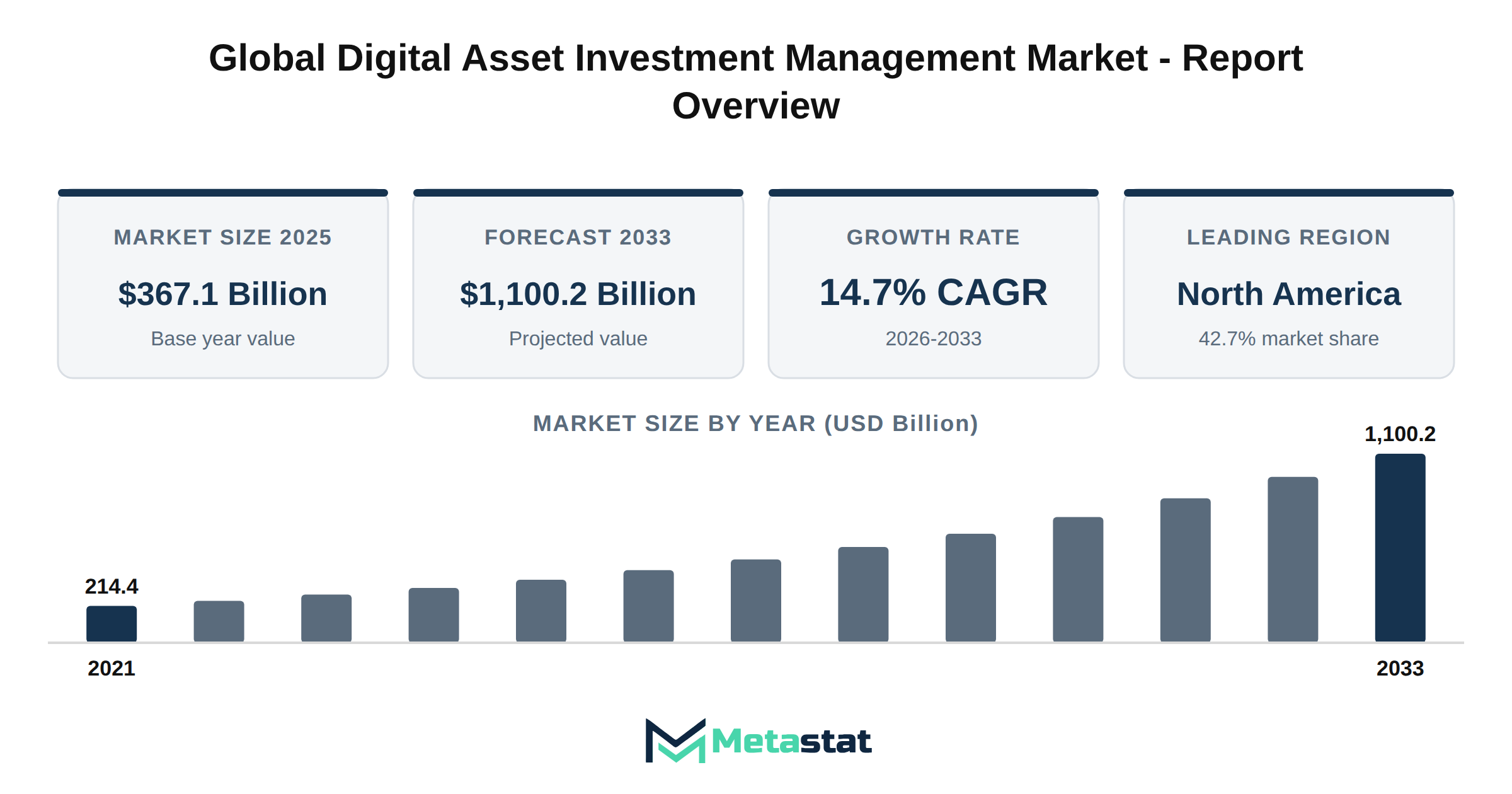
The Digital Asset Investment Management market reached a valuation of USD 367.1 billion in 2025, reflecting a strong growth trajectory since its valuation of USD 214.4 billion in 2021. The market is projected to expand significantly, reaching USD 1,100.2 billion by 2033, demonstrating a compound annual growth rate (CAGR) of 14.7% during the forecast period from 2026 to 2033.
North America holds a dominant share of the market at 42.7%, followed by Europe at 24.9% and Asia Pacific at 24.4%. The growth in North America, where the market is anticipated to value USD 444.5 billion by 2033 with a CAGR of 14.7%, reflects strong adoption by institutional investors and financial institutions.
Several trends influence the market. Digital asset regulatory harmonization facilitates more efficient transactions and broader acceptance among institutional investors. Institutional custody and counterparty risk management are critical areas of focus, ensuring secure asset handling and building confidence among investors. The expansion of real-world asset tokenization presents new opportunities for diversification and liquidity in investment portfolios.
Fee compression within digital asset platforms influences competitive dynamics, driving innovation in service offerings. Partnerships between traditional finance (TradFi) and cryptocurrency sectors enhance distribution channels, allowing wider access to digital asset investment options. Institutional allocation and adoption trends indicate an increasing shift towards integrating digital assets into traditional investment frameworks.
On-chain liquidity and market structure evolution support more efficient trading environments, benefiting investors seeking optimal execution of trades. Staking and yield strategies have evolved, offering enhanced opportunities for income generation from digital assets. Regulatory compliance and standards play a vital role in shaping the future of the market, with firms adapting to meet evolving regulatory requirements.
Digital asset regulatory harmonization continues to evolve, driven by the increasing demand for a clear framework surrounding digital assets. This shift benefits participants in the market, helping to reduce uncertainty and enhance investment confidence. Regulatory clarity creates a conducive environment for institutional players, encouraging broader participation and investment in digital asset management.
Institutional custody and counterparty risk management remain critical areas of focus. Institutional investors prioritize secure custody solutions that mitigate risks associated with digital asset holdings. Enhanced counterparty risk assessments and reliable custody frameworks strengthen institutional confidence, facilitating increased allocation towards digital assets.
The expansion of real-world asset tokenization presents significant opportunities within the market. Tokenization allows for increased liquidity and accessibility of traditionally illiquid assets, including real estate and commodities. This trend attracts a diverse range of investors, enhancing the market's growth potential and encouraging innovation in asset management strategies.
Fee compression in digital asset management is reshaping competitive dynamics. While more players enter the market, the pressure to lower fees intensifies. This trend benefits investors by reducing the cost of entry, promoting greater accessibility and participation in digital asset investment strategies.
Partnerships between traditional finance and cryptocurrency firms are transforming distribution channels. These collaborations enable traditional financial institutions to leverage blockchain technology and expand their offerings, enhancing client access to digital assets. Such partnerships bridge the gap between established financial systems and the emerging digital asset ecosystem.
Institutional allocation and adoption trends indicate a growing acceptance of digital assets among institutional investors. Increased allocation signifies a shift in perceptions, resulting from institutions recognizing the potential of digital assets to enhance portfolio diversification and yield generation. This trend is expected to influence future market dynamics significantly.
On-chain liquidity and market structure are essential for the efficient functioning of the digital asset market. Enhanced liquidity facilitates smoother transactions and price discovery, attracting more participants. A well-structured market encourages confidence among investors, supporting sustained growth and development.
The evolution of staking and yield strategies reflects a growing interest in generating passive income from digital assets. Investors increasingly seek opportunities that offer yield generation through staking mechanisms, which enhances demand for digital asset investment products. This trend highlights the importance of innovative strategies in attracting and retaining investors.

Several key trends are shaping the landscape of the Digital Asset Investment Management market, particularly in the realms of digital content creation and management. As organizations increasingly shift towards digital platforms, the demand for sophisticated content management solutions has surged. This trend is driven by the necessity for centralized repositories that can efficiently handle the rising volumes of digital assets, including images, videos, and documents. Companies are seeking systems that not only store assets but also enhance their discoverability through automated tagging and improved search functionalities. This evolution in digital content management is essential for organizations aiming to maintain brand consistency across various channels while accelerating content delivery and campaign execution.
Moreover, the integration of artificial intelligence (AI) and automation technologies is causing significant disruptions in asset management practices. AI-driven solutions are now capable of automating tasks such as metadata generation, content tagging, and even predictive analytics for content reuse. These advancements reduce the manual labor traditionally required in digital asset management, thereby increasing operational efficiency. As AI continues to evolve, it is expected to play an even more critical role in enabling automated workflows and enhancing decision-making processes within digital asset investment management. This shift towards automation not only streamlines operations but also enables organizations to respond more swiftly to market changes and consumer demands.
Another notable trend is the increasing migration towards cloud-based solutions, which is reshaping how organizations approach digital asset management. Cloud platforms offer scalability and flexibility, allowing businesses to expand their digital asset libraries without the need for substantial capital investment in physical infrastructure. This transition supports remote collaboration, enabling teams across different locations to access and manage assets seamlessly. The ability to integrate cloud-based systems with existing creative and content management tools further enhances the efficiency of digital asset workflows. As companies prioritize remote work capabilities, the demand for cloud solutions is expected to grow, reinforcing the importance of digital asset management platforms that support distributed teams.
In conclusion, the Digital Asset Investment Management market is witnessing a transformative shift driven by trends in digital content management, the integration of AI and automation, and the adoption of cloud-based solutions. These factors collectively enhance operational efficiency and enable organizations to meet the evolving demands of the digital landscape. As the market continues to expand, staying abreast of these trends will be crucial for both buyers and suppliers seeking to navigate the complexities of digital asset management effectively.
The Digital Asset Investment Management market experiences growth fueled by macro-economic factors, including GDP expansion and increased capital investments. Robust economic conditions enhance investor confidence, prompting greater allocation of funds into digital assets. Rising interest in cryptocurrencies and tokenized assets corresponds with significant growth in venture funding, supporting new projects and innovations within the sector.
Increased public-private spending power drives demand for digital asset investment. Organizations recognize the potential of digital assets to improve portfolio diversification and capitalize on emerging opportunities. This trend is evident in diverse sectors, where institutional investors, asset managers, and retail investors actively integrate digital asset strategies into their financial frameworks.
The market's growth trajectory indicates a compound annual growth rate of 14.7% from 2026 to 2033. This acceleration demonstrates a strong commitment to integrating digital asset management solutions that promote efficiency and meet evolving consumer behaviors. The convergence of capital investment environments and technological advancements positions the market for sustained growth, enhancing its appeal to a broader range of investors.
The Digital Asset Investment Management market experiences significant growth driven by the integration of advanced technologies including automation and artificial intelligence. This integration enhances operational efficiency and facilitates the digitization of legacy processes, allowing firms to optimize workflows and improve decision-making capabilities. Rapid advancements in technology lead to increased adoption rates among investors and asset managers, enhancing competitive edges within the market.
This surge in technological capability enables institutional investors, including pension funds and hedge funds, to leverage innovative tools for asset management. Enhanced data analytics and machine learning algorithms offer deeper insights into market trends and investment strategies, leading to better-informed decisions. The market sees an influx of capital and investment due to improved operational productivity and cost-efficiency initiatives.
The drive toward technological integration correlates with the growing emphasis on sustainability and environmental, social, and governance (ESG) mandates. Investors increasingly prefer digital assets that align with ethical and sustainable investment goals. This shift in consumer behavior creates opportunities for new product offerings and services in the Digital Asset Investment Management market, further boosting growth.
Regulatory tightening emerges because a significant restraint impacting the Digital Asset Investment Management market. Increased scrutiny from governing bodies creates challenges for market participants in compliance and operational processes. The ambiguity surrounding regulations regarding digital assets complicates strategic planning for firms and leads to hesitance in investments.
Capital stagnation presents a formidable headwind. Economic uncertainty causes investors to adopt a cautious approach towards new ventures, thereby limiting funding availability for market players. This situation creates a ripple effect, constraining growth opportunities for emerging firms and slowing overall market expansion.
Inflationary pressures affect consumer sentiment, leading to reduced disposable income levels. While purchasing power diminishes, demand for digital asset management services experiences a decline. Companies face challenges in maintaining profitability while adapting to shifting market conditions.
Geopolitical instability introduces additional complexities. Events including trade disputes and political unrest disrupt supply chains, affecting the timely delivery of crucial services. The uncertain environment prompts investors to reassess their positions, leading to potential capital flight and market fragmentation.
Infrastructure gaps contribute to operational inefficiencies within the market. Insufficient technological frameworks hinder effective service delivery, compelling firms to invest in upgrades that require substantial capital outlay. These high capital investment requirements create barriers for entry, particularly for small and medium-sized enterprises.
Finally, data security vulnerabilities and privacy concerns require heightened attention. Increased instances of cyber threats lead to significant risks for firms managing digital assets. Maintaining robust security measures demands ongoing investment, diverting resources from potential growth initiatives.
Geopolitical fragmentation presents a significant challenge for the Digital Asset Investment Management market. Increasing trade deficits and tariff friction create unpredictability in cross-border transactions, ultimately deterring foreign investment and complicating capital flows within the market. Investors express concern over the regulatory landscape, which varies widely across regions, generating additional compliance overhead and potential legal liabilities that could disrupt investment strategies.
Technological disruptions contribute to the challenge, driven by firms navigating complex research and development integrations. The evolving nature of digital assets demands continuous adaptation, which strains resources and limits agility. Interoperability friction among various digital asset platforms restricts transactions, impeding the overall growth of the market.
Pricing compression and margin pressures intensify competition among firms within the Digital Asset Investment Management market. Rising input cost structures further exacerbate profit margins, compelling firms to find innovative solutions while managing operational costs. Talent retention pressures emerge owing to the market seeking skilled professionals capable of navigating these complexities, adding to the workforce skill gaps faced by many organizations.
Environmental lifecycle footprints and sustainability demands add another layer of complexity. Firms encounter increasing pressure to adopt decarbonization mandates, requiring investments in new technologies and processes. This shift necessitates significant capital allocation and strategic planning, impacting the overall investment landscape within the market.
Infrastructure gaps and implementation bottlenecks slow the adoption of necessary technologies. Inadequate infrastructure limits firms' ability to leverage new digital asset solutions effectively, hindering growth opportunities. These factors create a challenging environment for stakeholders in the Digital Asset Investment Management market, necessitating strategic responses to mitigate these issues and capitalize on emerging opportunities.
The Digital Asset Investment Management market benefits from technological disruptions that enhance operational efficiencies and drive innovation. Advances in blockchain technology streamline transaction processes, reducing costs associated with traditional asset management. The integration of artificial intelligence and machine learning facilitates data analysis and risk assessment, enabling firms to make informed investment decisions. This evolution attracts institutional investors, driving increased demand for digital assets.
Infrastructure modernization plays a critical role in supporting the growth of the market. Upgraded digital infrastructure enables faster transaction processing and improved security measures, boosting investor confidence. Geographical expansion into emerging markets further stimulates market growth, driven by investors seeking opportunities in regions with developing economies and increasing digital adoption. Strategic consolidation through cross-industry mergers enhances competitive positioning, allowing firms to diversify their offerings and access new customer bases.
Next-generation innovations, including tokenization of traditional assets, create new investment avenues, enhancing the appeal of digital asset investment management. These innovations align with sustainability imperatives and ESG-driven investments, attracting environmentally conscious investors. The market experiences demand from various sectors, including finance, real estate, and commodities, contributing to downstream market diversification and product integration.
Evolving buying behaviors and digital procurement shifts influence investment strategies. Investors increasingly prioritize digital channels for asset acquisition, pushing firms to adapt their commercial models. Supply chain localization and strategic buffering further align with market trends, addressing potential disruptions and enhancing resilience. The focus on asset life-cycle extensions and process automation optimizes value chains, maximizing operational yields and supporting long-term growth.
Overall, the Digital Asset Investment Management market presents significant opportunities driven by technological advancements and changing investor preferences. Companies that effectively leverage these trends are well-positioned to capture market share and sustain growth in an evolving landscape.
The integration of artificial intelligence (AI) into digital asset investment management is transforming how firms approach content creation and management. AI-driven asset intelligence facilitates predictive content reuse and automates creative workflows, allowing organizations to enhance efficiency in their operations. By employing machine learning algorithms, firms can analyze historical data to predict which assets are likely to perform well in future campaigns. This capability not only streamlines creative processes but also significantly reduces the time and resources spent on producing redundant content. As a result, companies can focus on innovation and strategic initiatives, ultimately leading to improved market responsiveness and better alignment with consumer preferences.
However, the increasing reliance on digital assets brings forth significant challenges related to global content compliance. Organizations must navigate a complex landscape of copyright laws, licensing agreements, and regional regulations that vary widely across jurisdictions. Compliance with these regulations is crucial, as non-adherence can lead to costly legal repercussions and damage to brand reputation. Consequently, firms are investing in advanced digital asset management (DAM) platforms that incorporate compliance features, enabling them to manage rights and licenses effectively. This focus on compliance not only safeguards organizations but also enhances their credibility in the market, fostering trust among consumers and partners alike.
The integration of DAM platforms with e-commerce and marketing automation tools is another critical aspect driving growth in the digital asset investment management market. As companies seek to streamline their operations, the ability to connect DAM systems with e-commerce platforms and marketing automation solutions becomes increasingly vital. This integration allows for centralized management of digital assets, ensuring that marketing teams have immediate access to the most relevant and up-to-date content across multiple channels.
Furthermore, integrating DAM with e-commerce systems facilitates the efficient distribution of product images, videos, and descriptions, which is essential for maintaining brand consistency and optimizing customer experiences. As e-commerce continues to expand, the demand for robust digital asset management solutions that can handle large volumes of content and support multi-channel distribution becomes paramount. By leveraging these integrations, organizations can enhance their operational productivity, reduce time-to-market for campaigns, and ultimately drive sales growth.
In summary, the Digital Asset Investment Management market is witnessing significant shifts driven by technological advancements and compliance challenges. The adoption of AI for content management, coupled with the need for stringent compliance across various regions, creates both opportunities and hurdles for market participants. Additionally, the integration of DAM platforms with e-commerce and marketing automation tools is reshaping how organizations manage their digital assets, paving the way for more efficient and effective marketing strategies. As these dynamics evolve, stakeholders must remain agile and responsive to capitalize on emerging trends and address the complexities of the digital asset landscape.
The Global Digital Asset Investment Management market is segmented based on Asset Type, Investor Type, and Enterprise Size.
Valued at USD 299.3 billion in 2026, the cryptocurrencies segment is projected to reach USD 682.1 billion by 2033, at a CAGR of 12.5% during the forecast period. This growth reflects robust demand driven by increasing acceptance of cryptocurrencies because a legitimate asset class among institutional and retail investors. Adoption accelerates due to advancements in blockchain technology, enhancing security and transparency across transactions.
Institutional investors, including pension funds and insurers, significantly contribute to demand, seeking exposure to digital assets for portfolio diversification. Regulatory frameworks evolve, providing clearer guidance that supports institutional participation and further stabilizes the market. Younger demographics exhibit rising interest in cryptocurrencies, influencing consumption patterns and pushing for innovative investment solutions.
Price volatility remains a considerable factor influencing investment strategies within the market. Investors actively seek risk management tools to navigate fluctuations, leading to the development of derivative products and other financial instruments. Technological maturation continues, and the emergence of next-generation platforms enhances trading efficiency, attracting more participants.
The Digital Asset Investment Management market reflects a strategic opportunity for firms looking to capitalize on the ongoing evolution of cryptocurrencies. Innovations in fintech and payment solutions facilitate broader access to cryptocurrencies, reshaping traditional investment landscapes. Ongoing shifts in consumer behavior and regulatory advancements position the segment for substantial growth in the coming years.
Growth in the Stablecoins & Tokenized Cash segment reflects increasing demand for stability in the volatile cryptocurrency market. Investors seek alternatives that minimize price fluctuations, positioning stablecoins because a reliable choice for transactions and investment. This segment benefits from the general adoption of digital assets across various industries, with increasing acceptance of cryptocurrencies in mainstream financial systems enhancing its relevance.
Technological maturation drives advancements in blockchain infrastructure, facilitating the development of more secure and efficient stablecoin solutions. Innovations in product offerings, including enhanced compliance and regulatory features, improve market confidence. The expanding use cases for stablecoins and tokenized cash in decentralized finance (DeFi) platforms and cross-border transactions further contribute to this segment's growth.
Regulatory compliance emerges because a critical focus for investors, enhancing the segment's credibility and attractiveness. Policies supporting digital currencies encourage institutional investments, reinforcing market stability. By 2033, the Stablecoins & Tokenized Cash segment is estimated to reach USD 88 billion, at a CAGR of 18.4% during the forecast period. This trajectory emphasizes the segment's role in the broader Digital Asset Investment Management market, highlighting its importance in meeting evolving investor preferences.
Significant interest in the Tokenized Equities segment arises from the growing integration of blockchain technology into traditional financial markets. This integration enhances transparency and security, attracting institutional investors seeking innovative asset classes. High demand for tokenized equities stems from the ability to fractionalize ownership, enabling broader participation in equity markets, particularly among smaller investors. Regulatory clarity surrounding tokenized assets supports this trend, reducing perceived risks and encouraging adoption across various demographics.
Investment in tokenized equities reflects a shift in consumer behavior, where investors increasingly favor digital assets over traditional equities. This transition prompts established financial institutions to explore tokenization solutions, further driving segment growth. By 2033, the Tokenized Equities segment is expected to reach USD 44 billion, indicating significant expansion potential attributed to the market embracing decentralized finance (DeFi) platforms and related technologies.
Strategic collaborations between fintech firms and traditional asset managers enhance product offerings in tokenized equities, broadening the appeal of digital investments. Innovations in trading platforms and liquidity solutions improve market competitiveness, benefiting end-users with improved access and efficiency. The Digital Asset Investment Management market thrives on these advancements, aligning with the evolving preferences of investors while maintaining a focus on compliance and regulatory standards.
Rapid advancements in financial technology influence the Tokenized Fixed-Income Securities segment, enhancing the appeal of this investment vehicle. Increased adoption by institutional investors stems from the desire for liquidity and transparency in fixed-income markets. Strong regulatory frameworks contribute, ensuring compliance while building confidence in tokenized assets. This segment attracts a diverse range of investors, including pension funds and sovereign wealth funds, eager to explore innovative financial products. Cost efficiency and reduced transaction times further support the segment's growth trajectory.
The Tokenized Fixed-Income Securities segment is projected to grow at a CAGR of 18.4% during the forecast period. Market expansion leads to heightened competition among asset managers, prompting them to innovate and diversify their offerings. Enhanced technological capabilities facilitate the integration of tokenized securities into existing investment portfolios, driving demand among traditional investors. Overall, the Digital Asset Investment Management market experiences significant momentum with increasing interest in tokenized fixed-income products.
Interest in Tokenized Funds & Money-Market Instruments stems from the increasing demand for liquidity and efficiency in asset management. Investors seek innovative solutions that enable smoother transactions and improve portfolio diversification, driving adoption of this segment. The shift towards digital finance necessitates advanced instruments that offer integration with traditional financial systems, enhancing operational capabilities.
Technological advancements in blockchain and smart contracts support the evolution of tokenized funds, allowing for real-time settlements and reduced counterparty risks. Market participants recognize the benefits of tokenization, while competition intensifies among providers, prompting enhancements in product offerings to cater to a broader range of investor preferences. These factors contribute to a favorable environment for growth in the Digital Asset Investment Management market.
Regulatory compliance remains a critical aspect that shapes market dynamics. Clear frameworks and guidelines enable institutions to navigate the complexities of tokenized assets while ensuring transparency and security for investors. Compliance with evolving standards creates opportunities for market expansion, attracting institutional investors who prioritize regulatory adherence. This focus on compliance enhances market confidence, driving increased capital inflows into tokenized funds.
Strategic partnerships between traditional financial institutions and fintech companies drive innovation in this segment. Collaborations leverage existing infrastructures and expertise, enhancing service delivery and accessibility for clients. Such initiatives open strategic opportunity windows, enabling broader market penetration and acceptance of tokenized solutions among diverse investor types.
Growing interest in tokenized commodities reflects increasing acceptance of blockchain technology within traditional markets. Demand arises from investors seeking enhanced liquidity and transparency in commodity trading. This trend drives broader adoption across various sectors, including agriculture, energy, and metals, where tokenization streamlines transactions and reduces costs.
Technological advancements continue to drive the evolution of tokenized commodities, with enhanced platforms enabling faster transactions and improved security measures. The shift towards digital representation of physical assets aligns with the growing focus on sustainability, because tokenized commodities provide a method to track the lifecycle and environmental impact of resources. Regulatory compliance remains a crucial factor, influencing market dynamics and adoption rates.
Investment in tokenized commodities faces challenges related to pricing volatility and market maturity, impacting overall growth within the Digital Asset Investment Management market. Stakeholders express concerns regarding fluctuations that affect profit margins, leading to cautious exploration of these assets. Nevertheless, the potential for diversification within investment portfolios encourages ongoing interest from institutional and retail investors alike, highlighting strategic opportunity windows for market participants.
Increasing interest in the Tokenized Real Estate & Infrastructure segment reflects a broader trend towards alternative investment avenues within the Digital Asset Investment Management market. Investors seek new methods to diversify portfolios and improve liquidity through tokenization, enhancing accessibility and fractional ownership opportunities in traditionally illiquid assets including real estate. The adoption of this segment aligns with the overall maturation of blockchain technology, which drives innovation and improves transaction efficiencies.
Regulatory compliance remains critical for the growth of this segment. While jurisdictions develop frameworks that support tokenized assets, increased confidence among institutional and retail investors is anticipated. This regulatory clarity creates a conducive environment for the market, encouraging financial institutions to explore tokenized real estate because a viable investment strategy. The evolution of this segment will likely be influenced by the ongoing need for standardization and certification processes that assure the integrity and security of tokenized assets.
Capital investment in technological advancements directly impacts this segment's growth potential. Enhanced platforms and solutions for tokenized assets support smoother transactions and improved user experiences, promoting higher adoption rates across investor demographics. While financial technology progresses, the potential for innovative applications within the tokenized real estate and infrastructure space continues to expand, offering new opportunities for value creation and market penetration.
Investment in Tokenized Private Credit & Other Real-World Assets reflects a shift towards alternative financial structures, enhancing liquidity and access to capital. This segment aligns with growing demand from institutional investors seeking diversified portfolios and innovative financing solutions. The adoption of blockchain technology provides significant advantages in transparency and efficiency, making tokenization a compelling option for various assets.
Increased interest stems from regulatory developments that favor asset tokenization, facilitating compliance and standardization across markets. Enhanced access to a broader investor base through digital platforms attracts diverse stakeholders, including family offices and high-net-worth individuals, who recognize the benefits of tokenized assets. The market for digital asset investment management capitalizes on these trends, demonstrating potential for substantial growth.
Continued technological advancements and evolving consumer preferences contribute to market dynamics, positioning tokenized private credit because an attractive investment vehicle. Organizations that leverage this segment anticipate strategic opportunities, considering the favorable outlook for capital investments in the digital asset landscape.
Interest in NFTs, digital collectibles, and carbon assets has surged, reflecting shifts in consumer preferences toward unique digital goods and sustainable investment options. The evolution of blockchain technology supports the growth of these assets, enhancing transparency and security for buyers and sellers. Various artistic and cultural sectors increasingly embrace digital collectibles, which increases engagement and builds communities around these unique offerings. Sustainability concerns drive investor interest in carbon assets, prompting organizations to consider carbon credits a viable investment avenue in the context of environmental responsibility.
Regulatory frameworks continue to adapt, addressing compliance standards for NFTs and digital assets. This evolution encourages investment in well-regulated areas, promoting confidence in the market. Investor diversification strategies increasingly include exposure to these assets, with institutional interest highlighting their potential for long-term value appreciation. These dynamics contribute to the overall growth outlook for the Digital Asset Investment Management market.
Valued at USD 85.8 billion in 2026, the Institutional Investors (Pension Funds, Insurers, Sovereign Funds & Endowments) segment is projected to reach USD 256.1 billion by 2033, at a CAGR of 16.9% during the forecast period. This growth stems from increased allocation towards digital assets by institutional investors seeking diversification and enhanced returns in a low-interest-rate environment. The segment's expansion reflects a broader acceptance of digital assets, attributed to viable investment vehicles, driven by technological advancements and the maturation of blockchain infrastructures.
Institutional investors demonstrate a strong appetite for cryptocurrencies, which provide opportunities for higher yields compared to traditional asset classes. The growing recognition of crypto's potential to hedge against inflation further drives demand within this segment. Regulatory clarity surrounding digital assets enhances investor confidence, attracting substantial capital inflows from pension funds and insurance companies.
The ongoing evolution of investment products tailored for institutional investors creates a competitive landscape among market players. Enhanced product offerings, including tokenized equities and fixed-income securities, align with institutional objectives for transparency and liquidity. Such innovations strengthen the Digital Asset Investment Management market's position, reflecting a key component of diversified investment portfolios.
Shifts in asset allocation strategies among large institutional investors increase the focus on digital assets. These institutions increasingly seek exposure to non-traditional assets, driven by demographic changes and a growing base of high-net-worth individuals. The segment's growth trajectory suggests significant opportunities for market players to develop innovative solutions and enhance operational efficiencies, thereby addressing evolving investor needs.
Interest in the Asset Managers & Hedge Funds segment emerges from their growing focus on diversified investment strategies and the increasing acceptance of digital assets in traditional finance. Institutional investors, particularly those managing substantial portfolios, actively explore digital assets to enhance returns and capitalize on new market opportunities. The Digital Asset Investment Management market experiences a notable shift toward more innovative product offerings that cater to these investor preferences.
Investment inflow into this segment is projected to drive significant growth, with estimates indicating a value of USD 231 billion by 2033, at a CAGR of 14.1% during the forecast period. This expansion results from increased demand for asset management solutions that integrate cryptocurrencies and tokenized assets, which offer a unique value proposition compared to traditional investment vehicles. The focus on technological advancements and regulatory clarity plays a critical role in shaping investment strategies and encouraging wider adoption among asset managers and hedge funds.
Market dynamics, including pricing volatility and margin pressures, influence operational strategies within this segment. Asset Managers & Hedge Funds navigate fluctuating market conditions while optimizing their offerings to meet client expectations. The ongoing evolution of investment products, including enhanced cryptocurrency funds and diversified portfolios, reflects a commitment to addressing emerging investment trends in the Digital Asset Investment Management market.
Investor interest in the Digital Asset Investment Management market experiences a notable shift toward digital asset solutions, driven by the evolving financial landscape. The growing sophistication of clients among banks, broker-dealers, and wealth managers pushes firms to integrate advanced asset management capabilities, enhancing service offerings and client engagement. Adoption of blockchain technology within these institutions improves transparency and efficiency in transactions, addressing traditional inefficiencies common in legacy systems.
Steady growth in the regulatory framework surrounding digital assets creates an environment that enables banks and wealth managers to explore this segment confidently. Increased compliance standards encourage established financial institutions to develop robust digital asset strategies, aligning with client expectations for innovative investment solutions. The segment's expansion reflects a concerted effort by institutions to offer diversified portfolios that include cryptocurrencies, tokenized equities, and other digital assets, catering to an evolving investor demographic.
By 2033, the segment is projected to reach USD 176 billion. This figure highlights the significance of investment opportunities arising from the maturation of digital assets and the shift in consumer preferences toward digital wealth management. Strategic partnerships and investments in digital asset infrastructure become crucial for banks, broker-dealers, and wealth managers aiming to capture market share in this expanding landscape.
Increasing wealth concentration among high-net-worth individuals drives demand within the Family Offices segment. This demographic seeks diversified investment opportunities, particularly in digital assets, to enhance portfolios. The evolving landscape of digital asset investment management creates unique opportunities for family offices to engage with innovative financial products.
Family offices prioritize risk management and capital preservation, influencing their adoption of digital asset strategies. The regulatory environment surrounding digital assets continues to mature, providing a stable framework for these investors. Compliance with evolving regulations builds trust and facilitates increased participation in the market.
Family offices benefit from significant growth projections. The segment is projected to grow at a CAGR of 14.5% during the forecast period. Increased availability of tailored investment products and services designed specifically for high-net-worth individuals fuels this growth, presenting strategic opportunities for service providers within the digital asset investment management market.
Investment education and advisory services tailored to family offices strengthen their ability to navigate the complexities of digital asset investments. Expertise in technology and financial management enhances investment strategies, supporting long-term growth and sustainability in the market.
High-Net-Worth and Ultra-High-Net-Worth Investors exhibit a growing inclination toward digital assets, driven by the search for diversification and higher returns in an evolving financial landscape. Increased awareness of cryptocurrencies and other digital assets has led this investor group to seek innovative investment solutions that align with their wealth management strategies.
The expansion of digital asset offerings provides new opportunities for these investors to access alternative asset classes. Technological advancements reshape the investment ecosystem, while wealth managers enhance their services to include tailored solutions that meet the unique requirements of high-net-worth individuals. The integration of advanced analytics and digital platforms facilitates improved decision-making and portfolio management for this investor segment.
Regulatory compliance significantly shapes investment strategies within the Digital Asset Investment Management market. High-Net-Worth and Ultra-High-Net-Worth Investors prioritize compliance and risk management, influencing their choice of digital asset products and service providers. Robust regulatory frameworks build confidence and encourage participation among these investors, ultimately contributing to the segment's growth.
Increased focus on sustainable and socially responsible investing impacts the preferences of high-net-worth individuals. Demand for digital assets that align with environmental, social, and governance (ESG) criteria is expected to rise, prompting providers to develop products that cater to these values. The pursuit of ESG-aligned investments drives innovation and product evolution in the market.
Investment strategies for High-Net-Worth and Ultra-High-Net-Worth Investors continue to adapt to changing market dynamics. Monitoring consumption shifts and technological advancements is essential for wealth managers aiming to capture the full potential of this segment. By leveraging new opportunities and addressing emerging challenges, the market positions for sustained growth in appealing to this affluent investor group.
Interest in the Corporate Treasuries segment stems from the increasing recognition of digital assets, driven by viable investment options for large corporations. These entities prioritize capital efficiency and risk management, driving demand for innovative financial instruments tailored to their unique needs. Enhanced liquidity, diversification benefits, and the ability to navigate market volatility contribute significantly to corporate treasuries' adoption of digital assets.
Technological maturation plays a critical role in segment expansion. Improved security protocols and regulatory clarity surrounding digital asset investments enhance confidence among corporate treasuries. While technology evolves, tools that enable effective portfolio management become essential for these organizations, enhancing their operational efficiencies.
Strategic opportunity windows arise because companies seek to leverage digital asset investments for competitive advantage. Corporate treasuries recognize the potential for higher returns compared to traditional asset classes. This shift in consumption patterns reflects a broader trend in the Digital Asset Investment Management market, where institutional investors increasingly allocate resources toward innovative financial solutions.
Regulatory compliance standards significantly influence corporate treasuries' investment strategies. Adherence to evolving regulations ensures organizations mitigate risks associated with digital asset investments. Certification from regulatory bodies boosts confidence, encouraging corporations to engage with digital assets while maintaining compliance with established financial frameworks.
Cost structures associated with digital asset investments represent a vital consideration for corporate treasuries. While initial investments appear substantial, the long-term benefits of enhanced financial flexibility and potential market gains drive interest. Pricing volatility remains a concern, yet effective risk management strategies enable these entities to navigate fluctuations, ensuring sustainable engagement with digital assets.
Corporate treasuries increasingly recognize the strategic importance of digital assets within their investment portfolios. While technology continues to evolve and regulatory frameworks become clearer, engagement in the Digital Asset Investment Management market is expected to expand, presenting opportunities for growth and innovation.
Increasing engagement from retail investors drives growth in the Digital Asset Investment Management market. Factors driving this trend include rising financial literacy and the proliferation of user-friendly trading platforms that facilitate access to digital assets. Enhanced awareness and understanding of cryptocurrencies and tokenized assets lead to greater participation in the market among retail investors.
Technological advancements contribute to the expansion of this segment. Innovations in blockchain technology and the development of decentralized finance platforms create opportunities for retail investors to participate in asset management without intermediaries. These developments build confidence, encouraging more individuals to invest in digital assets.
Regulatory compliance impacts retail investor participation. Clear policies and regulations surrounding digital assets enhance investor protection, thereby increasing confidence among retail investors. This regulatory framework enables individuals to engage with the market while ensuring their investments are safeguarded.
Potential shifts in consumer behavior influence the landscape. Young and tech-savvy investors increasingly turn to digital assets for diversification, with a shift anticipated toward more innovative investment products tailored to this demographic. Retail investors seek alternatives to traditional financial instruments, driving demand for tokenized equities and cryptocurrencies.
Strategic opportunities arise from the growing interest in digital asset education. Educational initiatives targeting retail investors enhance market understanding and promote responsible investing practices. By providing investors with knowledge, market players stimulate further growth within the Digital Asset Investment Management market.
Valued at USD 122 billion in 2026, the SMEs segment of the Digital Asset Investment Management market is projected to reach USD 352.1 billion by 2033, at a CAGR of 16.3% during the forecast period. This growth aligns with a broader trend towards digital transformation, where SMEs increasingly adopt digital asset management solutions to enhance operational efficiency and streamline financial processes.
Demand drivers include the rising need for transparent financial transactions and improved asset liquidity. SMEs often face challenges in managing traditional assets, leading to a growing interest in digital assets that offer a more accessible and secure investment landscape. The segment expansion is supported by advancements in blockchain technology, which provide robust frameworks for the safe and efficient management of digital assets.
Technological maturation has enabled SMEs to integrate digital asset management systems seamlessly into existing operations. Enhanced user interfaces and advanced analytics tools facilitate better decision-making and investment strategies. The ongoing evolution of products tailored for SMEs supports this trend. Firms seek customizable solutions that align with their unique business models and investment goals.
Regulatory compliance standards play a significant role in shaping the segment's future, with increasing emphasis on investor protection and asset security. SMEs are adapting to these standards, which enhances trust and credibility in the Digital Asset Investment Management market. Strategic opportunity windows are emerging due to these companies investing in compliance-ready technologies and practices, further driving demand for digital asset solutions.
Cost structures within SMEs are evolving, with many organizations recognizing the long-term savings associated with transitioning to digital asset management. Pricing volatility in traditional markets and margin pressures from operational inefficiencies drive a compelling case for investment in this sector. The resilience of supply chains and the ability to leverage digital assets effectively position SMEs to capitalize on market opportunities.
Increasing investment from large enterprises in digital assets contributes to growth within the Digital Asset Investment Management market. This segment's expansion reflects a shift towards innovative asset management solutions, enabling businesses to diversify their portfolios and enhance liquidity. Regulatory advancements supporting the adoption of digital assets drive institutional interest, highlighting the necessity for compliance with evolving standards. Companies within this segment leverage technological maturation to enhance operational efficiencies and reduce costs associated with traditional asset management practices.
Large enterprises emphasize the importance of risk management and security in their digital asset strategies. The integration of advanced technologies strengthens their ability to navigate market volatility and respond to consumer demand for transparency. Familiarity with blockchain technology increases, and large enterprises adopt tokenized assets. This growth indicates a significant shift in investment strategies, where digital assets play an integral role in overall portfolio management.
Based on geography, the Global Digital Asset Investment Management market is divided into North America, Europe, Asia-Pacific, South America, Middle East, and Africa.
North America exhibits a strong growth trajectory in the Digital Asset Investment Management market, expanding at a CAGR of 14.7% within the forecast period, reaching a market size of USD 444.5 billion by the end of 2033. The region accounted for 42.7% of the global market share in 2025, reflecting a strong presence in digital asset investments.
Significant demand from institutional investors, including pension funds and insurers, fuels market growth. The projected value for institutional investors is USD 256.1 billion by 2033, driven by increasing allocations toward cryptocurrencies and tokenized assets. This investment trend highlights a strategic shift among financial institutions toward modernizing investment portfolios.
Increasing adoption of cryptocurrencies significantly influences market expansion. The segment is projected to grow from USD 299.3 billion in 2026 to USD 682.1 billion by 2033, driven by investor confidence and technological advancements. This growth reflects broader acceptance of digital currencies across various sectors, emphasizing the need for investment management solutions tailored to these assets.
Regulatory frameworks across the United States, Canada, and Mexico influence market dynamics. Local compliance mandates and trade policy shifts create both opportunities and challenges for market participants. Companies within the region are adapting to these frameworks to enhance operational efficiency and meet evolving investor expectations.
Competitive dynamics in North America feature several key players actively shaping the Digital Asset Investment Management market. Companies including BlackRock, Fidelity Investments, and Grayscale Investments leverage their expertise and resources to capture the growing demand for digital assets. This competition drives innovation and the development of new investment products and services.
The Digital Asset Investment Management market in Europe exhibits significant growth potential, influenced by various emerging trends and regional dynamics. Countries including Germany, France, the UK, Italy, Spain, and Russia contribute to robust demand for digital asset solutions, driven by increasing institutional adoption and growing interest in cryptocurrencies and tokenized assets.
Infrastructure modernization plays a critical role in facilitating market expansion. Enhanced regulatory frameworks and localized compliance mandates encourage investor confidence and support the adoption of digital asset management solutions. The presence of mature market dynamics creates a competitive landscape, with domestic market participants actively seeking to consolidate their positions through strategic partnerships and acquisitions.
Investor behavior in Europe reflects a shift towards digital asset investment, influenced by cultural nuances and regional B2B buying habits. The expansion of localized procurement dynamics allows companies to engage more effectively with clients, resulting in tailored solutions that cater to specific market needs. With a share of 24.9% of the global market in 2025, the European region stands poised for sustained growth in the Digital Asset Investment Management market.
The Asia-Pacific region represents a significant portion of the Digital Asset Investment Management market, with a share of 24.4% in 2025. The growing interest in digital assets among investors in China, Japan, India, and Australia drives market growth, fueled by increasing digitalization across various sectors.
China's regulatory framework encourages innovation in blockchain technology, while Japan's established financial infrastructure supports digital asset investments. India experiences a surge in adoption driven by a young, tech-savvy population seeking alternative investment opportunities. Southeast Asia shows increased activity in digital asset trading, particularly through platforms that cater to retail investors.
Infrastructure modernization across these countries enhances accessibility to digital asset investment platforms. The presence of local compliance mandates, especially in financial technology regulations, influences market dynamics significantly. Geopolitical factors, including cross-border trade corridors, contribute to deeper integration within the region.
Domestic market leaders, including various asset management firms, consolidate their positions by enhancing service offerings tailored to regional preferences. Cultural nuances in investment behavior shape the demand for digital assets, reflecting investors' pursuit of localized solutions that align with their financial goals.
The Digital Asset Investment Management market in the Asia-Pacific region continues to evolve, driven by emerging technologies, regulatory frameworks, and shifting investor behaviors. Market participants will focus on strategic entry barriers and foreign direct investment flows to capitalize on growth opportunities across this diverse region.
The Digital Asset Investment Management market in South America is projected to experience gradual growth, driven by an evolving financial landscape and increasing interest from investors. Countries including Brazil and Argentina significantly influence the market, with Brazil holding the largest share of digital asset investments in the region. Ongoing infrastructure modernization supports the development of digital asset platforms, enhancing access for institutional investors and retail customers.
Investment from institutional players in South America is expected to expand significantly, fueled by growing acceptance of digital assets among pension funds and other financial institutions. The region remains characterized by underpenetrated territories, presenting opportunities for market expansion through targeted investment efforts and localized strategies. Educational initiatives on digital assets and blockchain technology promote wider understanding and adoption among potential investors.
Regulatory frameworks are evolving, reflecting a more supportive environment for digital asset investments. However, challenges persist regarding compliance and market maturity, which influence investment decisions. The competitive landscape features a mix of domestic and international players, with established firms and emerging startups competing for market share. The Digital Asset Investment Management market in South America stands at a crucial juncture, balancing growth potential with the need for greater regulatory clarity and consumer education.
The Digital Asset Investment Management market in the Middle East and Africa demonstrates significant potential for growth, attributed to the increasing adoption of digital assets among institutional investors and high-net-worth individuals. Saudi Arabia and the UAE exhibit strong interest in cryptocurrencies and tokenized assets, driven by ongoing regulatory developments that support innovation and investment in this space. South Africa has begun to establish itself because a key player, with growing interest from local asset managers and financial institutions in managing digital assets effectively.
Infrastructure modernization remains a crucial factor, owing to countries within the region enhancing their financial technology ecosystems. The growing acceptance of blockchain technology facilitates improved transaction security and efficiency, encouraging increased participation from institutional investors. Emerging market front-runners in this sector emphasize the importance of localized procurement dynamics and regulatory compliance, ensuring that businesses align with local market expectations.
Market players in the region focus on cross-border trade corridors and supply chain regionalization strategies to capture a larger share of the market. Geopolitical fragmentation has prompted businesses to explore new investment opportunities within the region, making it imperative to understand the local competitive landscape. Domestic market leaders increasingly recognize the need for strategic partnerships to consolidate their positions and drive market penetration.
Ultimately, the Digital Asset Investment Management market in the Middle East and Africa is poised for expansion, supported by favorable market conditions and an evolving regulatory environment that encourages innovation and investment.

Applications of digital asset management (DAM) are pivotal in various sectors, particularly in sales, marketing, and media production. In sales, DAM systems streamline the management of promotional materials, enabling teams to access up-to-date content quickly, thereby enhancing efficiency in campaign execution. Marketing departments leverage DAM to ensure cohesive branding across multiple channels, facilitating the rapid deployment of marketing assets that resonate with target audiences. In media production, DAM plays a crucial role in organizing and preserving high-quality digital assets, such as videos and images, which are essential for content creation and distribution. This integration of DAM into these sectors not only optimizes workflows but also enhances the overall quality and consistency of digital content.
Deployment types of digital asset management solutions vary significantly, with cloud-based and on-premises options catering to different organizational needs. Cloud-based solutions offer scalability and flexibility, allowing organizations to manage assets remotely while reducing infrastructure costs. This model supports collaborative work environments, enabling teams to access and share digital assets from anywhere. Conversely, on-premises solutions provide organizations with greater control over their data and security, making them suitable for industries with stringent compliance requirements. The choice between these deployment types often hinges on factors such as budget, security concerns, and the specific operational needs of the organization.
The end-user segments for digital asset management encompass a diverse range of industries, including media, retail, and healthcare. In the media sector, organizations utilize DAM to manage extensive libraries of digital content, ensuring efficient retrieval and distribution while protecting intellectual property rights. Retailers benefit from DAM by maintaining a centralized repository for product images and marketing materials, which enhances the customer experience through consistent and timely content delivery. In healthcare, DAM systems are increasingly employed to manage sensitive patient data and medical imagery, ensuring compliance with regulatory standards while improving operational efficiency. This broad applicability underscores the versatility of digital asset management solutions and their critical role in enhancing operational capabilities across various sectors.
As the digital landscape continues to evolve, the integration of DAM solutions into business processes will likely expand, driven by the increasing volume of digital content and the need for streamlined asset management. Organizations that effectively implement these systems can expect to see improvements in efficiency, collaboration, and content quality, positioning themselves to better meet the demands of their respective markets.
The Digital Asset Investment Management market features significant competition among established players, leveraging strategic alliances, product differentiation, and technological advancements to enhance market positioning. Companies like BlackRock, Inc, Fidelity Investments, and Grayscale Investments focus on expanding their portfolios and integrating proprietary technologies in their operations to maintain competitive advantages. Their strategies emphasize customer retention and brand equity, creating a robust presence in the market.
Market participants engage in various tactics including mergers, acquisitions, and joint ventures to strengthen their market share. Galaxy Asset Management and Bitwise Asset Management pursue opportunities to consolidate resources and enhance their product offerings. Competitive dynamics are influenced by barriers to entry that newcomers face, often due to the established reputation and extensive infrastructure of existing firms like Coinbase Asset Management, LLC, and Franklin Templeton.
Ongoing investments in research and development pipelines by companies including VanEck and WisdomTree, Inc drive innovation in the sector. This commitment to technological advancement supports product differentiation, enabling players to address evolving consumer demands in the Digital Asset Investment Management market effectively.

Recent mergers and acquisitions have played a pivotal role in shaping the competitive landscape of the Digital Asset Investment Management market. Notably, in May 2023, Papirfly, a Norway-based technology company, acquired Keepeek SAS, a French firm specializing in digital asset management solutions. This strategic acquisition aims to enhance Papirfly's growth trajectory and solidify its leadership in brand management across Europe. By leveraging Keepeek's expertise, particularly in French-speaking markets, Papirfly is positioning itself to better meet localized demands while expanding its service offerings.
In addition to mergers and acquisitions, strategic partnerships are increasingly becoming a crucial tactic for companies looking to enhance their competitive positioning in the digital asset management space. Collaborations between established firms and emerging players facilitate the sharing of technologies and resources, enabling them to offer more comprehensive solutions. For instance, partnerships that integrate advanced analytics and artificial intelligence into digital asset management platforms can significantly improve asset retrieval and utilization efficiency. Such alliances not only bolster technical capabilities but also expand market reach, allowing participants to tap into new customer segments and geographical markets.
The Digital Asset Investment Management market is also witnessing the rise of emerging players that bring unique offerings to the table. These newcomers often focus on niche segments or innovative technological solutions that differentiate them from established firms. For example, companies that specialize in cloud-native digital asset management platforms are gaining traction by providing more agile and scalable solutions compared to traditional legacy systems. This trend is particularly relevant as organizations increasingly migrate to cloud-based infrastructures to enhance operational efficiency and data accessibility.
Moreover, the integration of user-friendly interfaces and advanced metadata management capabilities by these emerging players is changing how businesses manage their digital assets. This shift not only simplifies the user experience but also enhances compliance with evolving regulatory standards, making it easier for organizations to navigate the complexities of digital asset management.
As the market continues to evolve, the interplay between established firms and emerging players will be critical in determining the competitive dynamics. The ability to adapt to technological advancements and consumer demands will be a defining factor for success in the Digital Asset Investment Management market.
Market size is forecast to rise from USD 367.1 billion in 2025 to over USD 1,100.2 billion by 2033. The Digital Asset Investment Management market faces a dynamic macroeconomic environment influenced by factors including evolving technology integration, regulatory developments, and geopolitical shifts. Organizations adapt to new market conditions, emphasizing the need for innovative solutions to meet changing demand.
The bull case for the market envisions accelerated growth through enhanced technological advancements, including the integration of next-generation technologies and robust R&D commercialization timelines. This scenario highlights the potential for increased efficiencies and new product life cycles, benefiting stakeholders across various sectors. The bear case reflects challenges posed by regulatory compliance milestones and evolving policies that could adversely impact market dynamics.
Strategic capital allocation directives play a critical role in shaping investment trajectories. Organizations that commit to infrastructure improvements and capital expenditure initiatives position themselves favorably for growth in high-demand areas. Identifying emerging white-space opportunities and unmet enterprise needs drives expansion, encouraging investment in areas where demand outpaces supply.
Executive-level strategic imperatives focus on developing defensibility roadmaps to navigate market complexities. While the Digital Asset Investment Management market matures, entities prioritize innovative approaches that align with compliance requirements and market demands. Future growth recommendations emphasize the importance of agility in adapting to changing landscapes while maintaining a clear focus on technological integration and operational efficiency.
As the Digital Asset Investment Management market continues to evolve, several emerging technologies and market trends are poised to shape its trajectory. The integration of advanced technologies such as artificial intelligence (AI), machine learning, and blockchain is anticipated to enhance the efficiency and effectiveness of digital asset management solutions. These technologies enable better asset discovery, metadata tagging, and workflow automation, streamlining operations across various sectors. Furthermore, the shift towards omnichannel marketing strategies and the increasing demand for faster content delivery are driving organizations to adopt innovative digital asset management platforms that can support these needs. This technological evolution is expected to facilitate a more seamless experience for end-users, ultimately leading to broader adoption across industries.
Regulatory changes are another critical factor influencing the future of the Digital Asset Investment Management market. As governments and regulatory bodies worldwide implement new frameworks and guidelines surrounding digital assets, organizations must navigate these complexities to ensure compliance. The potential for stringent regulations could slow down market growth, particularly for firms that are unprepared or lack the necessary infrastructure to adapt. Conversely, regulatory clarity may create opportunities for growth by fostering trust and encouraging larger institutional investments in digital assets. Companies that proactively align their operations with evolving regulatory requirements will likely gain a competitive advantage in the market.
The long-term outlook for digital asset management adoption spans various sectors, including media and entertainment, banking, financial services, insurance (BFSI), retail, and healthcare. As organizations across these industries recognize the importance of efficient digital asset management in enhancing operational capabilities, the demand for suitable solutions is expected to increase. For instance, in the BFSI sector, the need for secure management of sensitive customer data and digital rights will drive the adoption of sophisticated digital asset management systems. Similarly, the retail sector's emphasis on creating cohesive brand experiences through effective asset utilization will further propel market growth.
As the Digital Asset Investment Management market matures, the focus will shift towards developing comprehensive strategies that address both technological integration and regulatory compliance. Organizations will need to prioritize investments in infrastructure and technology to remain agile and responsive to market demands. By identifying emerging opportunities and addressing unmet enterprise needs, businesses can position themselves for sustained growth in this dynamic landscape. The future of digital asset management is not only about technology but also about aligning with market trends and regulatory frameworks to create value for stakeholders across various sectors.
The report strategically identifies and profiles the key market players and analyses their core competencies in each sub-segment of the Digital Asset Investment Management market.
Report Attributes | Details |
Study Period | 2021-2033 |
Base Year | 2025 |
Estimated Year | 2026 |
Forecast Period | 2026-2033 |
Historical Period | 2021-2025 |
Growth Rate | CAGR 14.7% from 2026 to 2033 |
Revenue Unit | USD billion |
Segmentation | By Asset Type, Investor Type, Enterprise Size, and Region |
By Region | North America (By Asset Type, Investor Type, Enterprise Size, and Country)
|
Europe (By Asset Type, Investor Type, Enterprise Size, and Country)
| |
Asia Pacific (By Asset Type, Investor Type, Enterprise Size, and Country)
| |
South America (By Asset Type, Investor Type, Enterprise Size, and Country)
| |
Middle East and Africa (By Asset Type, Investor Type, Enterprise Size, and Country)
|
Find answers to common questions about this report
The Digital Asset Investment Management market size was valued at USD 367.1 billion in 2025, according to the Metastat Insights study.
The Digital Asset Investment Management market is projected to grow at a CAGR of 14.7% during the forecast period from 2026 to 2033.
The North America Digital Asset Investment Management market size is estimated to reach USD 444.5 billion by 2033.
The segment of Cryptocurrencies leads the Digital Asset Investment Management market, with a projected value of USD 682.1 billion by 2033. This figure represents significant growth from USD 299.3 billion in 2026, reflecting a compound annual growth rate of 12.5%.
Key drivers for the Digital Asset Investment Management market include macro-economic factors including GDP expansion and increased capital investments, which enhance investor confidence and fund allocation into digital assets. the integration of advanced technologies like automation and artificial intelligence improves operational efficiency, supporting the market's growth trajectory.
North America holds the dominant share of the Digital Asset Investment Management market, with a projected value of USD 444.5 billion in 2033, representing 42.7 percent of the total market.
Regulatory tightening and increased scrutiny from governing bodies complicate compliance and operational processes for firms, leading to hesitance in investments. Economic uncertainty and inflationary pressures reduce disposable income levels, further limiting demand for digital asset management services. geopolitical instability disrupts supply chains, affecting service delivery and investor confidence.
Robust economic conditions, increased capital investments, and rising interest in cryptocurrencies favor product adoption in the Digital Asset Investment Management market. Enhanced operational efficiency through advanced technologies, including automation and artificial intelligence, further supports the integration of digital asset strategies by institutional and retail investors.
The Digital Asset Investment Management market is estimated to reach a valuation of USD 1,100.2 billion by 2033.
Key players in the Digital Asset Investment Management market include BlackRock, Inc, Fidelity Investments, Grayscale Investments, Galaxy Asset Management, Bitwise Asset Management, and Coinbase Asset Management, LLC.
The key segments of the Digital Asset Investment Management market are categorized by Asset Type, Investor Type, and Enterprise Size. By Asset Type, the segments include cryptocurrencies, stablecoins & tokenized cash, tokenized equities, tokenized fixed-income securities, tokenized funds & money-market instruments, tokenized commodities, tokenized real estate & infrastructure, tokenized private credit & other real-world assets, and others such as NFTs and digital collectibles. By Investor Type, the segments comprise institutional investors (including pension funds, insurers, sovereign funds, and endowments), asset managers & hedge funds, banks, broker-dealers & wealth managers, family offices, high-net-worth & ultra-high-net-worth investors, corporate treasuries, and retail investors. Lastly, by Enterprise Size, the market is divided into SMEs and large enterprises.
The Digital Asset Investment Management market varies significantly by investor type, with institutional investors, including pension funds, insurers, and sovereign funds, projected to grow from USD 85.8 billion in 2026 to USD 256.1 billion by 2033, reflecting a CAGR of 16.9%. This growth is driven by their increased allocation towards digital assets for diversification and enhanced returns, particularly in a low-interest-rate environment. Other investor types include asset managers, banks, family offices, and retail investors, but specific figures for these segments are not provided in the report. The strong appetite for cryptocurrencies among institutional investors highlights their role in shaping the market's dynamics and growth trajectory.
Several trends are anticipated to influence the Digital Asset Investment Management market from 2026 to 2033. Digital asset regulatory harmonization is expected to facilitate more efficient transactions and broader acceptance among institutional investors. Additionally, institutional custody and counterparty risk management will be critical, ensuring secure asset handling and building investor confidence. The expansion of real-world asset tokenization presents new opportunities for diversification and liquidity in investment portfolios. Furthermore, partnerships between traditional finance and the cryptocurrency sector will enhance distribution channels, allowing wider access to digital asset investment options.
The Digital Asset Investment Management market has experienced significant growth, driven by increasing institutional adoption and regulatory advancements. Historical trends indicate a shift from experimental approaches to more structured investment strategies as institutions recognize the potential of digital assets. Factors such as rising liquidity pools and the need for diversified investment options have contributed to this growth. Overall, the market is transitioning into a mainstream investment avenue, with expectations of continued expansion leading up to 2025.
The analysts below cover Banking & Finance research at Metastat Insights.
LEAD ANALYST
Utkarsh Khirodkar is a Lead Market Research Analyst at MetaStat Insight, specializing in market intelligence, technology sector assessments, and competitive strategy.

PRINCIPAL CONSULTANT - ENTERPRISE AI & EMERGING TECHNOLOGIES
Banking & Finance · Electronics and Semiconductor · Energy and Power · Healthcare IT · Information & Technology · Professional Services
Vijay Gunti is a Principal Consultant at MetaStat Insight, bringing over two decades of experience across enterprise digital transformation, technology strategy, and intelligent systems.
Tracking capacity expansion in single-use bioprocessing requires dependable data on raw material availability and cleanroom-grade polymer supply chains. The competitive landscape chapter gave a grounded evaluation of secondary component suppliers across North America and Asia-Pacific rather than simply reprinting press releases. Having that level of supplier benchmarking helped clarify dual-sourcing considerations for our clinical pipeline planning.
When evaluating distributed energy resource management systems, standard research summaries tend to gloss over the operational differences between front-of-the-meter utility deployments and behind-the-meter industrial sites. The MetaStat Insight report addressed those distinctions directly, especially regarding software interoperability standards and grid interconnection backlogs. The five-year market sizing across regional transmission organizations provided actionable context for our grid modernization strategy.
Most industry reports on warehouse automation bundle autonomous mobile robots and fixed conveyor installations into the same top-level numbers, which complicates advisory work. This study split the market cleanly by payload tiers, navigation technology, and fleet management software layers. The regional forecast for Western Europe gave our team defensible adoption benchmarks when evaluating capital allocation for logistics clients, saving us days of secondary data scrubbing.
Explore related market intelligence reports worth reading alongside this one.