
LEAD ANALYST
Utkarsh Khirodkar is a Lead Market Research Analyst at MetaStat Insight, specializing in market intelligence, technology sector assessments, and competitive strategy.

Global Textile-to-Textile Recycling Market Size, Share, By Material Type (Polyester/PET, Cotton, Nylon/Polyamide, Cellulosic Fibers and Others), By Source (Post-Consumer Apparel, Post-Consumer Home & Institutional Textiles and Pre-Consumer Textile Manufacturing Waste), By Recycling Technology (Mechanical Recycling, Chemical Recycling, Thermo-Mechanical Recycling and Enzymatic/Biological Recycling), By End-Use Application (Apparel & Fashion, Home Textiles, Footwear & Accessories, Automotive Textiles, Industrial & Technical Textiles and Nonwoven Products), Industry Analysis, Growth, Trends, and Forecast, 2026-2033
Report ID
MSI-5310
Published
September, 2026
Pages
266 Pages
Format
Historical
Base year
Forecast
Forecast period
Report Details
Market Valuation: Valued at $1,779 Million in 2025, projected to reach $5,368.4 Million by 2033 at a 14.8% CAGR.
Dominant Segment: The Polyester/PET segment leads the market, driven by increasing regulatory measures regarding plastic waste and the demand for sustainable materials in apparel and home textiles.
Geographic Lead: North America shows significant growth potential, supported by rising consumer preferences for eco-friendly products and substantial investments in recycling infrastructure.
What's Inside: The report provides a comprehensive analysis of the market, including competitive coverage, detailed segmentation by material type, source, recycling technology, and end-use applications, along with forecasts up to 2033.
Emerging Regional Demands: Regions like Europe and Asia Pacific are investing heavily in recycling technologies, reflecting a strong commitment to sustainability and circular economy practices.
Choose Your License
Global Textile-to-Textile Recycling Market
The global Textile-to-Textile Recycling market was valued at USD 1,779 million in 2025 and is projected to reach USD 5,368.4 million by 2033, growing at a CAGR of 14.8% over the forecast period.
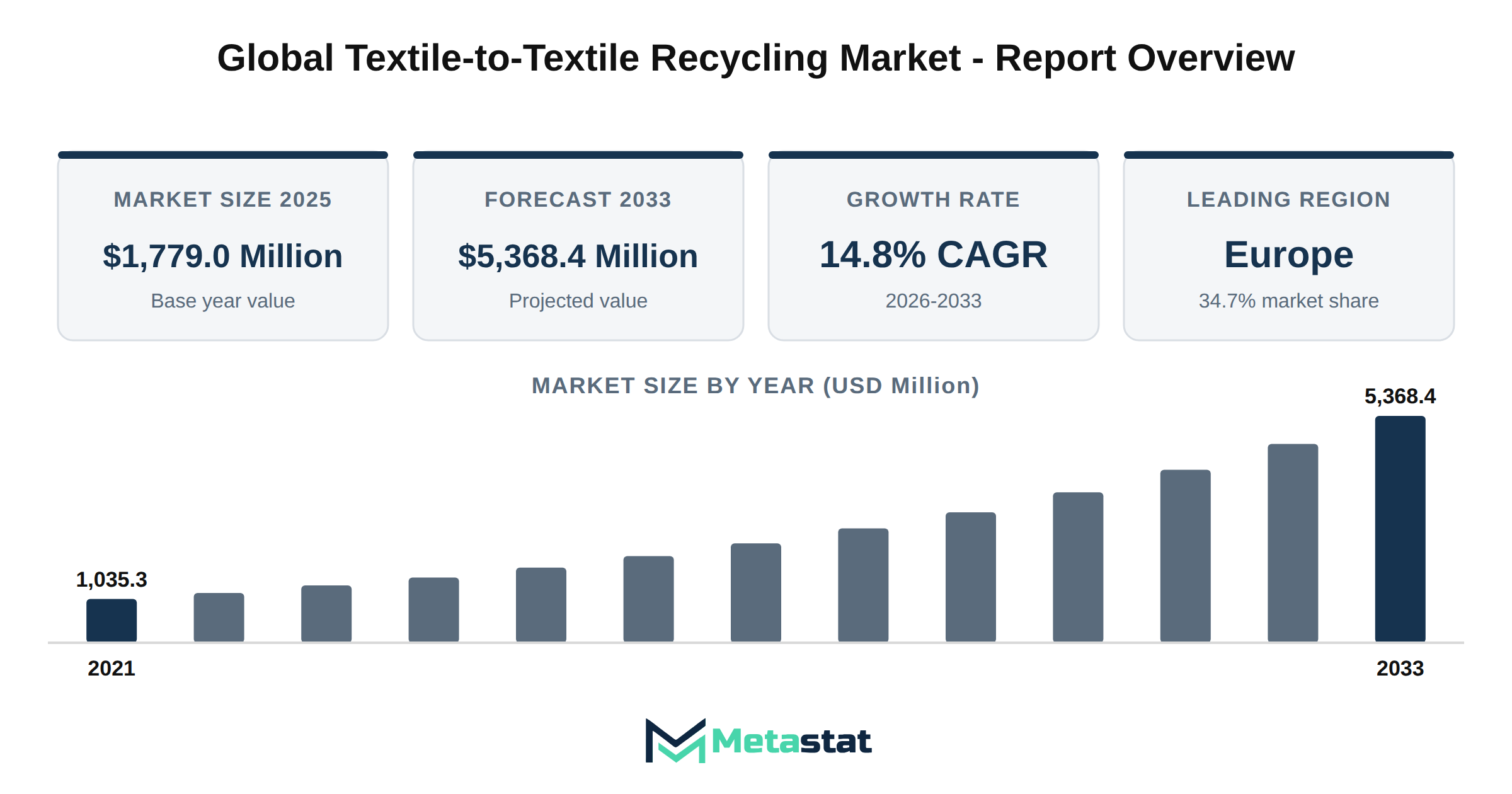
The Textile-to-Textile Recycling market has demonstrated significant growth potential, driven by increasing adoption of circular fashion practices. The emphasis on sustainability has prompted brands and consumers to seek environmentally responsible alternatives, creating robust demand for textile recycling solutions. This shift influences various stakeholders, including manufacturers, retailers, and consumers, who prioritize sustainable sourcing and waste reduction strategies.
Post-consumer clothing waste has reshaped recycling demand, highlighting the need for efficient systems to manage textile waste. The volume of discarded textiles requires enhanced collection and sorting processes, impacting producers and recyclers. This growing waste stream presents challenges and opportunities for the market, with innovative solutions emerging to address the complexities of textile recycling.
Technological advancements in fiber-to-fiber recycling significantly impact the textile value chain. Innovations in recycling technologies enhance material recovery and facilitate the transformation of waste into usable fibers. The efficient conversion of post-consumer textiles into new products strengthens the market's growth potential and drives investment in recycling infrastructure.
Adoption of mechanical and chemical recycling technologies demonstrates varied trajectories within the market. Mechanical recycling has established a solid foundation, while chemical recycling technologies gain traction due to their ability to process blended and complex materials. This dual approach allows the market to address diverse recycling needs and improve overall recovery rates.
Recent advances in polyester and cotton recycling technologies play a crucial role in market dynamics. Polyester recycling technologies evolve rapidly, with chemical recycling innovations enabling the recovery of high-quality fibers. In parallel, cotton recycling techniques improve, ensuring that valuable resources are preserved while meeting the rising demand for recycled materials.
Demand for recycled yarn in apparel and fashion manufacturing continues to grow. Brands increasingly incorporate recycled fibers into their collections, aligning product offerings with consumer preferences for sustainable options. This trend enhances brand reputation and drives the market's expansion, with more players entering the recycled fiber segment.
The clothing-to-yarn recycling process gains commercial scale, reflecting the industry's commitment to sustainability. Increased investment in recycling facilities and processes supports the development of efficient systems for converting post-consumer textiles into high-quality yarns. This transition contributes to a circular economy, reducing reliance on virgin materials.
Adoption of circular fashion principles significantly influences the Textile-to-Textile Recycling market. Brands increasingly prioritize sustainable practices, driving demand for recycled materials. This shift reflects a growing consumer awareness regarding environmental impacts and the lifecycle of clothing, creating a strong market for recycling solutions. The commitment to sustainability enhances brand loyalty and opens new revenue streams for companies embracing these practices.
Post-consumer clothing waste reshapes the demand for textile recycling. The growing volume of discarded apparel requires efficient recycling systems. Effective management of textile waste not only addresses environmental concerns but contributes to the circular economy, where materials are continuously reused, minimizing resource extraction and waste generation. Increased awareness surrounding the textile waste crisis enhances the urgency for efficient recycling solutions.
Fiber-to-fiber recycling technologies transform the textile value chain, improving the recovery and processing of textile waste into new fibers. Innovations in recycling technologies facilitate the breakdown of diverse materials, allowing for the efficient reprocessing of cotton, polyester, and other fibers. This advancement supports the market's growth by enhancing the quality and yield of recycled materials, making them more viable for various applications.
The competition between mechanical and chemical recycling technologies reflects industry dynamics. Mechanical recycling, while established, faces limitations in processing complex materials. Chemical recycling emerges because a promising alternative, enabling the recovery of high-quality fibers from blended textiles. The market's evolution towards chemical solutions indicates a significant shift in recycling methodologies, enhancing recycling rates and material quality.
Advances in polyester and cotton textile-to-textile recycling drive market demand. Polyester recycling, in particular, shows significant growth potential, with technological innovations improving efficiency and output. The cotton recycling segment gains traction, with brands increasingly focusing on sustainable cotton sourcing and processing. These advancements contribute to the overall growth trajectory of the market.
Recycled yarn demand across apparel and fashion manufacturing experiences notable growth. Manufacturers prioritize recycled materials to meet consumer expectations for sustainable products. This demand influences production practices, encouraging investments in recycling technologies and processes that support the transition towards circular fashion.
Clothing-to-yarn recycling processes emphasize the importance of commercial scale-up. Successful scaling of recycling technologies enhances the availability of recycled yarns in the market, promoting their adoption across various segments. Market participants focus on developing efficient processes that enable the conversion of waste textiles into high-quality yarns for fabric production.
Post-consumer textile collection and sorting infrastructure development remains crucial for market success. Effective collection systems streamline the flow of materials into recycling facilities, ensuring a steady supply of feedstock. Investments in sorting technologies improve the quality and efficiency of recycled materials, facilitating higher recycling rates.
Automated textile sorting technologies significantly improve fiber recovery rates. These innovations enhance the accuracy and efficiency of sorting processes, allowing recyclers to maximize the recovery of valuable materials from textile waste streams. Improved recovery rates contribute positively to the overall sustainability of the textile industry.
Challenges in recycling blended and multi-fiber textiles persist within the market. The complexity of these materials complicates separation and processing, often resulting in lower recycling rates. Addressing these challenges requires ongoing innovation and collaboration among stakeholders to develop effective solutions for mixed-fiber recycling.
Textile waste feedstock availability and supply chain dynamics impact the market's growth. Variability in waste generation patterns influences the stability of feedstock supplies. Establishing strong supply chains enhances the resilience of the recycling ecosystem, ensuring consistent access to materials for processing.
Recycled fiber quality, spinnability, and performance requirements remain critical considerations for manufacturers. High-quality recycled fibers meet industry standards to compete with virgin materials. Ensuring consistent quality and performance characteristics of recycled fibers is essential for promoting their adoption across various applications.
Brands increasingly focus on integrating recycled fiber content into their apparel collections. This trend reflects a broader commitment to sustainability and circularity within the fashion industry. Increased use of recycled fibers supports the overall growth of the market, aligning product offerings with consumer expectations for environmentally responsible choices.
Textile-to-textile recycling capacity expansion and investment trends indicate a positive outlook for the market. Growing investments in recycling infrastructure and technologies support increased production capabilities. A strong investment landscape fosters innovation and efficiency improvements, driving the overall growth of the market.
Circular textile partnerships between brands, recyclers, and fiber producers enhance collaboration within the market. These partnerships promote knowledge sharing and resource optimization, facilitating the development of integrated recycling solutions. Collaborative efforts contribute to the establishment of a more resilient and sustainable textile ecosystem.
Extended producer responsibility policies accelerate textile recycling initiatives. These regulations hold producers accountable for the lifecycle of their products, incentivizing them to invest in recycling solutions. By promoting a circular economy, such policies enhance recycling rates and drive market growth.
EU textile regulations drive fiber-to-fiber recycling adoption, promoting sustainability across the region. Stricter regulations encourage manufacturers to incorporate recycled materials into their products, creating a more sustainable textile industry. Compliance with these regulations positions companies favorably in the marketplace.
Recycled content mandates influence textile demand, because brands seek to meet regulatory requirements and consumer expectations. These mandates drive up the adoption of recycled materials, supporting market growth and encouraging innovation in recycling processes.
The economics of virgin fibers compared to textile-derived recycled fibers shapes market dynamics. Recycled fibers often provide a cost-effective alternative to virgin materials, especially in light of rising raw material prices. This economic advantage supports the continued expansion of the market.
Chemical recycling innovations for polyester and cellulosic textiles enhance the market landscape. These advancements improve the efficiency and effectiveness of recycling processes, enabling the recovery of high-quality fibers from waste streams. The ongoing development of these technologies positions the market for significant growth.
Enzymatic recycling emerges because a viable solution for polyester and synthetic fibers. This innovative approach offers the potential for more efficient and sustainable recycling processes. The adoption of enzymatic solutions contributes positively to the market's growth trajectory.
Closed-loop recycling opportunities for cotton-rich textile waste represent a significant growth area. These opportunities facilitate the efficient recycling of cotton, promoting sustainability within the industry. Closed-loop systems enhance resource efficiency and reduce environmental impacts, aligning with broader sustainability goals.
Asia Pacific textile recycling capacity and manufacturing opportunities are expanding rapidly. The region's growing focus on sustainability and circular economy practices promotes investment in recycling technologies. This trend positions Asia Pacific because a key player in the global textile-to-textile recycling market.
Europe's leadership in circular textile recycling infrastructure sets a benchmark for global practices. The region's advanced recycling systems and strong regulatory frameworks support the growth of the market. European initiatives serve because a model for other regions seeking to enhance their recycling capabilities.
North America's emerging textile-to-textile recycling ecosystem reflects a growing commitment to sustainability. Investment in recycling technologies and infrastructure supports the development of a robust market. This emerging ecosystem positions North America favorably in the global landscape.
The competitive landscape of textile-to-textile recycling technology providers highlights the diversity of solutions available. Various players contribute to the market's growth through innovative recycling processes and technologies. This competitive environment fosters continuous improvement and advancement within the sector.
Commercialization challenges for next-generation textile recycling technologies persist. While innovations offer significant potential, scaling these technologies for widespread use requires overcoming various obstacles. Addressing these challenges is crucial for realizing the market's full potential.
Traceability and certification requirements for recycled textile fibers play a vital role in ensuring quality and sustainability. These requirements build consumer trust and confidence in recycled products. Establishing robust traceability systems enhances the market's credibility and promotes wider adoption.
Decarbonization and resource savings from textile-to-textile recycling contribute positively to environmental sustainability. The industry increasingly recognizes the importance of reducing carbon footprints and conserving resources. This focus on sustainability supports the market's continued growth and evolution.
The future outlook for circular fibers and recycled yarn production appears promising. Ongoing advancements in recycling technologies and growing consumer demand for sustainable products position the market for strong growth. This outlook reflects the broader industry's shift towards circularity and sustainability.
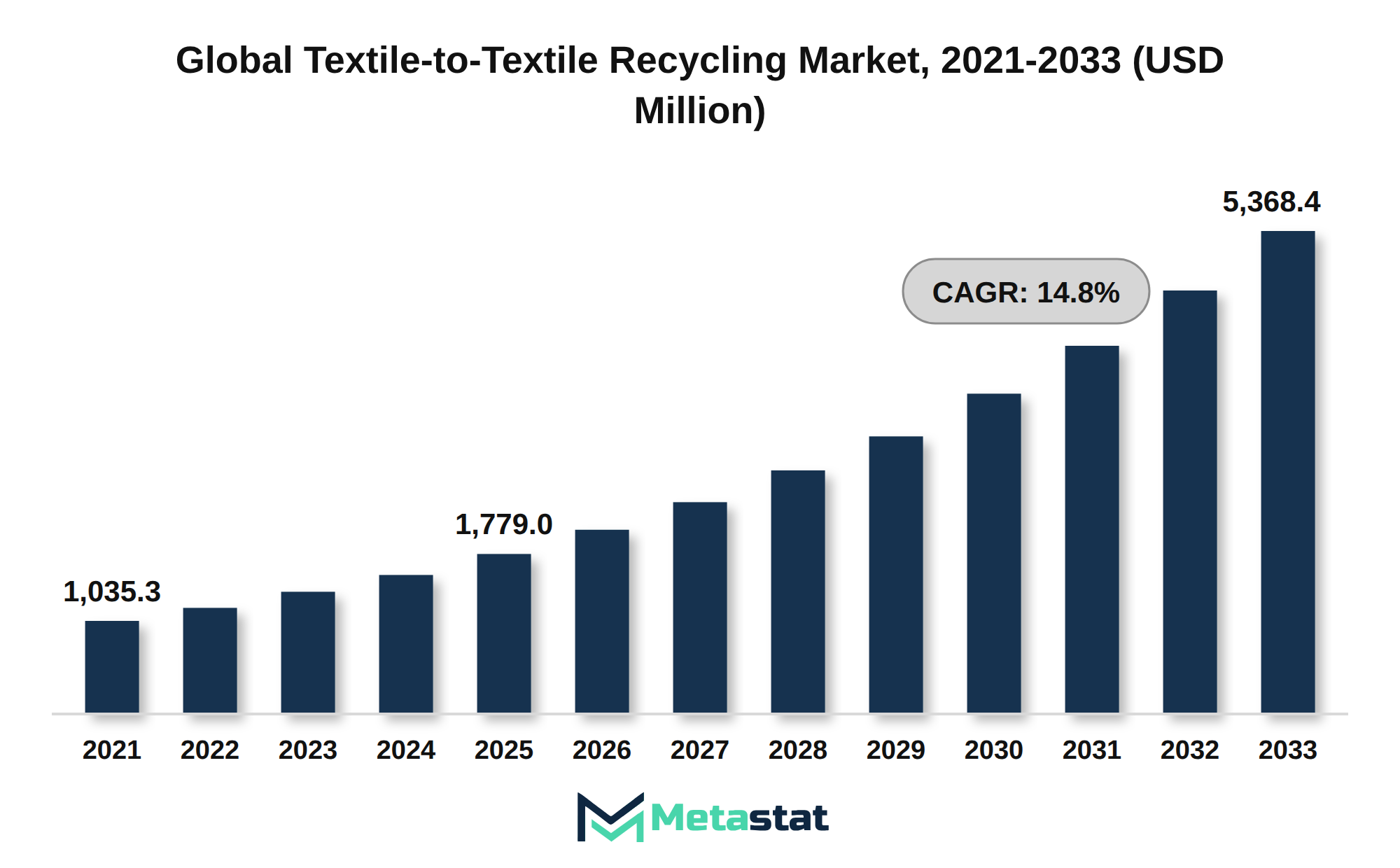
Growing consumer awareness regarding sustainability significantly influences the Textile-to-Textile Recycling market. Shifting consumer preferences favor environmentally friendly practices and materials, prompting manufacturers to adopt sustainable production methods. This transition aligns with broader societal trends emphasizing environmental responsibility and resource conservation.
Factors including urbanization and changing lifestyles contribute to heightened expectations for sustainability in products. Consumers increasingly prioritize brands that demonstrate commitment to circular economy principles, which encourages recycling and reducing textile waste. This pressure on brands to innovate and offer sustainable alternatives drives investment in recycling technologies and processes.
In addition, the market benefits from increased media focus on environmental issues, further strengthening the demand for recycled textiles. Companies respond by enhancing their sustainability initiatives to capture the attention of environmentally conscious consumers. This trend leads to greater collaboration across the value chain to develop effective recycling solutions, ultimately driving growth in the market.
While the market evolves, companies investing in innovative recycling technologies position themselves favorably to meet the rising demand for sustainable textiles. The ongoing commitment to sustainability enhances brand loyalty and opens new revenue streams across various segments of the market.
Advancements in technology significantly transform the Textile-to-Textile Recycling market by improving efficiency and reducing operational costs. Automation, artificial intelligence, and software adoption streamline recycling processes, enhancing the quality and speed of material recovery. This transformation encourages investment in modernized recycling facilities and drives the development of innovative recycling methods.
Companies increasingly embrace digital solutions to digitize legacy processes, allowing for better data management and analysis, which optimizes supply chain operations. Enhanced tracking systems enable firms to monitor material flows and recycling rates, improving accountability and transparency throughout the recycling process.
Integration of advanced technologies leads to improved material sorting and processing capabilities. For instance, artificial intelligence systems identify and categorize textiles more accurately, reducing contamination and increasing yield rates. This precision results in higher-quality recycled materials, which in turn boosts demand within the Textile-to-Textile Recycling market.
Investment in research and development for proprietary technologies drives market growth. Companies that innovate in recycling technologies gain competitive advantages, expand service offerings, and enhance product diversification. This strategic focus on technology adoption meets rising consumer expectations and aligns with sustainability goals, supporting a circular economy.
Overall, technological integration enhances the Textile-to-Textile Recycling market by enabling more effective recycling processes, improving product quality, and enhancing operational productivity. The push for innovation ensures that companies remain competitive in an evolving marketplace while addressing environmental concerns and consumer demands for sustainable practices.
The Textile-to-Textile Recycling market faces significant challenges due to stringent regulatory requirements and compliance hurdles. These legal mandates often require extensive documentation and adherence to specific standards, delaying project timelines and increasing operational costs. Companies operating in this environment allocate substantial resources to ensure compliance, diverting funds from investment in innovation and capacity expansion. This situation particularly affects smaller firms lacking the financial flexibility to meet such regulatory demands, resulting in reduced competitiveness in the market.
Macroeconomic headwinds, including inflationary pressures and rising operational costs, further complicate the landscape. Increasing costs for raw materials and labor strain profit margins, leading to cautious spending on new initiatives within the industry. This caution impacts potential advancements in recycling technology, which are crucial for improving efficiency and reducing waste in the Textile-to-Textile Recycling market.
Supply chain disruptions stemming from geopolitical instability exacerbate these challenges. Fluctuations in the availability of recycled materials disrupt production schedules, complicating planning processes for firms looking to scale operations. Such disruptions create uncertainty, leading to hesitance among investors and stakeholders regarding the market's long-term viability.
High capital investment requirements associated with adopting advanced recycling technologies contribute to market stagnation. Firms require substantial funding to upgrade facilities and implement innovative processes, which are difficult to secure in a fluctuating economic environment. These factors restrict growth opportunities within the market.
The Textile-to-Textile Recycling market encounters substantial challenges stemming from geopolitical fragmentation, which disrupts international trade flows. Trade deficits and tariff friction complicate the sourcing of materials and components required for recycling processes. Increased tariffs on imported textiles lead to higher operational costs for recyclers, ultimately affecting profitability and market dynamics.
Local and regional political tensions influence the reliability of supply chains, causing volatility in feedstock availability. Such disruptions hinder the consistent flow of materials necessary for recycling operations, presenting a significant operational hurdle for market participants. Compounded by logistical disruptions, these factors create an environment where maintaining a stable supply chain becomes increasingly difficult.
Evolving regulatory standards regarding sustainability and environmental compliance introduce further complexity. Compliance overhead associated with new regulations requires financial and human resources, straining smaller firms within the market. Continuous adaptation to these changing regulations diverts focus from core recycling activities, ultimately impacting the growth trajectory of the Textile-to-Textile Recycling market.
Rising input cost structures, driven by geopolitical tensions, contribute to pricing compression and margin pressures for recyclers. These economic stresses discourage investment in new technologies and processes essential for enhancing recycling efficiency. The market's potential for innovation and expansion faces significant constraints.
Addressing these challenges necessitates strategic collaboration among stakeholders to enhance stability within supply chains. By forming partnerships and adopting flexible operational strategies, firms operating within the Textile-to-Textile Recycling market navigate the complexities introduced by geopolitical fragmentation and position themselves for sustained growth.
Regional demands for sustainable practices create significant opportunities within the Textile-to-Textile Recycling market. Regions including North America, Europe, and Asia Pacific show increasing investments in recycling infrastructure, driven by consumer preferences for eco-friendly products and corporate sustainability goals. These investments create a robust market environment that supports emerging technologies and innovative recycling methods.
Infrastructure modernization enhances recycling capabilities and efficiencies. Upgraded facilities and advanced sorting technologies enable higher recovery rates and better quality of recycled fibers, particularly for materials including polyester and cotton. This modernization aligns with sustainability imperatives, pushing industries to adopt closed-loop systems that reduce waste and environmental impact.
Geographical expansion into developing markets presents additional opportunities for growth. Countries in South America and the Middle East and Africa exhibit rising demand for sustainable textiles, prompting investments in recycling initiatives. These regions provide access to a broader consumer base while addressing local challenges related to textile waste management.
Technological disruptions within the recycling sector introduce innovative processes that enhance operational efficiency and economic viability. The rise of advanced recycling technologies, including chemical and enzymatic recycling, supports the production of high-quality fibers from post-consumer textiles. This transition toward next-generation innovations drives the Textile-to-Textile Recycling market forward by aligning production with sustainability goals.
Increased focus on downstream market diversification encourages brands and manufacturers to integrate recycled materials into their product lines. This integration opens new revenue streams and enhances brand loyalty among environmentally conscious consumers. The market experiences a shift toward niche applications, including automotive textiles and nonwoven products, leveraging recycled materials while meeting specific market demands.
The Global Textile-to-Textile Recycling market is segmented based on Material Type, Source, Recycling Technology, and End-Use Application.
Growth in the Polyester/PET segment reflects a strong shift towards sustainable materials in various applications, particularly in the apparel and home textiles sectors. This segment is valued at USD 798.4 million in 2026 and is projected to reach USD 2,194.1 million by 2033, at a CAGR of 15.5% during the forecast period. Increasing regulatory measures regarding plastic waste and environmental impact drive demand for polyester recycling technologies. Enhancements in recycling processes, including chemical and enzymatic methods, improve material quality and expand the usable life cycle of polyester products.
Adoption of recycled polyester aligns with the growing trend towards circular economy principles within the Textile-to-Textile Recycling market. Brands recognize the commercial benefits of integrating sustainability into their business models, prompting investments in recycling technologies and partnerships with suppliers focused on recycled content. The evolution of consumer preferences favors companies that prioritize sustainability, creating a competitive edge for those leveraging recycled polyester in their product offerings.
Cost efficiencies arising from recycling processes contribute to the overall economic viability of the Polyester/PET segment. Technological advancements streamline recycling operations, reducing energy consumption and production costs. This economic advantage enhances profit margins, encouraging more manufacturers to transition towards recycled materials and invest in innovative recycling solutions.
Growing interest in sustainable textile solutions drives substantial demand for cotton recycling within the Textile-to-Textile Recycling market. This segment benefits from heightened consumer consciousness regarding environmental impacts and the increasing prevalence of circular economy practices. Technological advancements in recycling processes enhance the efficiency of cotton recovery, resulting in higher quality materials and lower production costs.
Investment in next-generation recycling technologies enables innovative product developments, allowing manufacturers to produce high-quality recycled cotton fibers. Cotton remains a favored material for sustainable fashion brands, and increased adoption of recycled cotton in apparel and home textiles further supports segment growth. Regulatory compliance standards aimed at reducing textile waste fuel market expansion, incentivizing companies to invest in sustainable practices.
Cost structures related to raw material sourcing for cotton recycling leverage existing supply chains, enhancing operational efficiency. Pricing volatility remains a concern, yet rising demand for sustainable products offsets potential margin pressures. By 2033, the cotton segment is estimated to reach USD 1,622.3 million, at a CAGR of 14.1% during the forecast period. This growth trajectory highlights strategic opportunity windows for companies involved in the Textile-to-Textile Recycling market.
Growing interest in sustainability drives demand for recycled nylon and polyamide materials. Environmental concerns surrounding textile waste prompt brands and consumers to seek alternatives to virgin materials. The expansion of eco-friendly practices within the fashion and apparel industries supports this shift. While consumers increasingly prioritize sustainable sourcing, manufacturers experience pressure to adapt their supply chains and engage in textile-to-textile recycling initiatives.
The Nylon/Polyamide segment is projected to reach USD 666.2 million by 2033. Innovations in recycling technologies enhance the efficiency of processing nylon and polyamide, further boosting segment growth. For example, advancements in chemical recycling methods provide more effective ways to deconstruct these synthetic fibers into reusable raw materials. This technological maturation facilitates broader adoption among manufacturers aiming to reduce their environmental footprint.
Increasing regulatory support and certification standards encourage companies to integrate recycled materials into their products. Legislative initiatives aimed at reducing landfill waste and promoting circular economy practices create a favorable environment for the market. Compliance with these regulations drives investments in recycling capabilities, strengthening overall supply chain resilience and supporting market expansion.
The focus on end-use applications including apparel and fashion highlights the segment's significant growth potential. Consumer preferences shift toward products made from recycled materials, enhancing brand loyalty and market share for companies engaged in nylon and polyamide recycling. Overall, the market benefits from a blend of demand drivers, technological advancements, and supportive regulations that collectively promote the uptake of recycled nylon and polyamide materials.
Growth in the Cellulosic Fibers segment aligns with a shift towards sustainable materials in the Textile-to-Textile Recycling market. Increased consumer preference for eco-friendly products drives demand for recycled cellulosic fibers, particularly in the apparel and home textiles sectors. This trend reflects broader societal movements aimed at reducing environmental impact and enhancing circular economy practices.
The Cellulosic Fibers segment is projected to grow at a CAGR of 14.4% during the forecast period. Enhancements in recycling technologies, particularly enzymatic and chemical recycling methods, facilitate the efficient processing of cellulosic materials. These advancements support the recovery of valuable fibers from post-consumer textiles, reducing reliance on virgin materials.
Regulatory pressures aimed at reducing waste and promoting recycling drive investment in this segment. Governments worldwide are implementing stricter regulations regarding textile waste, compelling brands and manufacturers to adopt more sustainable practices. This regulatory landscape encourages collaboration across the value chain, from raw material sourcing to end-use applications, promoting innovation and investment in cellulosic fiber recycling technologies.
Growing applications in the fashion industry further contribute to expansion within the market. Designers and brands increasingly integrate recycled cellulosic fibers into their collections, appealing to environmentally conscious consumers. This alignment with consumer values enhances brand loyalty and opens up new market segments, reinforcing demand for recycled cellulosic fibers.
Demand for recycled textiles within the Others sub-segment continues to rise owing to the growing emphasis on sustainability and environmental responsibility. This shift aligns with global movements promoting reduced waste and resource conservation. Increased regulatory pressures on textile waste management further encourage investments in innovative recycling technologies, enhancing the market's appeal among new entrants and established players alike.
Technological advancements play a crucial role in expanding the potential of this sub-segment. Continued research and development of novel recycling methods improve material recovery rates and broaden the range of textiles that are effectively processed. These innovations create strategic opportunities for firms looking to differentiate their offerings in the competitive Textile-to-Textile Recycling market.
End-use dynamics reflect shifts towards circular economy practices, pushing brands to adopt more sustainable sourcing strategies. The integration of recycled materials into product lines meets consumer demand for eco-friendly options. Market players increasingly recognize the benefit of incorporating recycled fibers, creating a more resilient supply chain that aligns with evolving consumer preferences.
Consumption shifts towards sustainably produced goods strengthen the market's growth trajectory. Corporations actively pursue certifications that verify the use of recycled materials, enhancing brand credibility and consumer trust. The competitive landscape in the market features heightened collaboration among stakeholders to develop comprehensive recycling solutions, addressing both industry needs and consumer expectations.
Pricing volatility remains a challenge owing to fluctuations in raw material costs impacting the overall cost structure within the sub-segment. Investments in supply chain resilience and strategic partnerships mitigate risks associated with sourcing. This ongoing focus on stability positions market participants to capitalize on emerging opportunities and drive future growth in the Textile-to-Textile Recycling market.
Valued at USD 920.2 million in 2026, the Post-Consumer Apparel segment is projected to reach USD 2,644.5 million by 2033, at a CAGR of 16.3% during the forecast period. This growth arises from the increasing emphasis on sustainability and the circular economy, prompting brands and consumers to seek responsible disposal and recycling solutions. Rising environmental awareness among consumers significantly influences purchasing decisions, leading to an increased demand for recycled apparel. This shift in consumer behavior is supported by initiatives from brands aiming to integrate recycled materials into their product lines, enhancing brand loyalty and attracting eco-conscious consumers.
Technological advancements play a crucial role in the growth of the market. Innovations in recycling methods, including chemical recycling and enzymatic processes, enhance the efficiency and quality of recycled fibers, making them more competitive with virgin materials. While brands increasingly invest in next-generation recycling technologies, decreasing operational costs associated with recycling processes drive further adoption.
Regulatory compliance standards increasingly demand higher sustainability benchmarks from manufacturers. Policies promoting recycling and circularity in textiles support the market's expansion, urging brands to adopt more sustainable practices through the use of recycled materials. These regulations encourage investment in recycling technologies and establish a framework for more sustainable production processes.
Shifts in consumption patterns towards sustainable products create strategic opportunities for businesses within the Textile-to-Textile Recycling market. Brands prioritizing the use of recycled materials effectively cater to a growing segment of environmentally conscious consumers, thereby enhancing their market position. Partnerships with recycling companies strengthen supply chain resilience, ensuring a steady flow of recycled materials to meet increasing demand.
Increasing focus on sustainability among consumers and companies creates strong demand for recycled textiles, particularly within the Post-Consumer Home & Institutional Textiles segment. This shift aligns with broader trends favoring environmentally friendly practices, driving investments into recycling technologies and processes. The segment is estimated to reach USD 1,036.6 million by 2033, at a CAGR of 15.1% during the forecast period.
Technological advancements in recycling processes enhance efficiency and reduce costs, making the market more attractive to stakeholders. Innovations in chemical recycling, in particular, enable higher recovery rates of valuable fibers, contributing to the overall growth of the segment. Partnerships between traditional textile manufacturers and recycling firms promote collaborative efforts toward sustainability.
Regulatory frameworks increasingly encourage the adoption of recycling initiatives, aligning with global sustainability goals. Compliance with emerging policies reinforces market expansion, prompting companies to integrate recycling programs into their operations. This regulatory support not only drives growth but enhances consumer trust in recycled products.
Shifting consumer preferences influence demand dynamics within the segment. Increasingly, consumers prioritize sustainable options in home and institutional textiles, leading brands to invest in recycled materials. This trend drives manufacturers and retailers to develop products that align with eco-friendly values.
Operational challenges, including cost structures and margin pressures, impact the segment's growth trajectory. Fluctuations in raw material prices create uncertainties, necessitating strategic responses from market players. Companies that effectively manage these challenges while capitalizing on emerging opportunities position themselves competitively within the Textile-to-Textile Recycling market. This positioning is critical for long-term success.
Increasing adoption of sustainable practices within manufacturing processes drives interest in the Pre-Consumer Textile Manufacturing Waste segment of the Textile-to-Textile Recycling market. This shift aligns with global initiatives aimed at reducing waste and promoting circularity in the textile industry. Regulatory frameworks emphasizing waste reduction and recycling strengthen demand for this segment.
Technological advancements enhance the efficiency of recycling processes, making it feasible to reclaim materials from textile manufacturing waste. Producers optimize operations by implementing next-generation recycling technology, which enhances yields and reduces costs. Investment in innovative recycling solutions supports the growth of this segment, leading to a projected value of USD 1,687.3 million by 2033.
Raw material sourcing challenges persist, yet the emphasis on pre-consumer waste offers a strategic advantage. This waste reduces environmental impact while addressing the increasing costs associated with virgin material procurement. This segment exhibits resilience amid pricing volatility, enabling manufacturers to secure a reliable supply of recycled materials.
The Pre-Consumer Textile Manufacturing Waste segment stands out within the Textile-to-Textile Recycling market due to its sustainability-driven demand and the strategic opportunities presented by technological evolution. The growth trajectory reflects an industry increasingly focused on circularity and resource efficiency, aligning with evolving consumer preferences and regulatory mandates.
Increasing emphasis on sustainability and circular economy principles drives demand for mechanical recycling in the Textile-to-Textile Recycling market. This method efficiently reprocesses used textiles, specifically polyester, cotton, and nylon, into new materials without significant degradation of quality. With a market value of USD 1,158.1 million in 2026, the mechanical recycling segment is projected to reach USD 2,621.4 million by 2033, reflecting a CAGR of 12.4% during the forecast period.
Technological maturation within mechanical recycling processes enhances efficiency and effectiveness, spurring further adoption across various applications. Innovations in sorting technologies and shredding techniques improve output quality and enable greater recovery rates, positioning mechanical recycling because a competitive choice for textile manufacturers. Primary demand drivers include increased regulatory pressures for sustainable production methods and heightened consumer demand for recycled textiles in apparel and home products.
The growth trajectory of the mechanical recycling segment closely aligns with shifts in end-use applications, particularly among brands prioritizing sustainable practices. Companies in the fashion and home textiles sectors increasingly incorporate recycled materials into their products, further validating the market's potential. While financial incentives and government support for recycling initiatives continue to expand, investments in mechanical recycling technologies are expected to flourish, creating a resilient supply chain.
Challenges concerning cost structures and pricing volatility persist, influenced by fluctuations in raw material availability and processing costs. Addressing these challenges through improved supply chain resilience will enhance the market’s capacity to meet growing demand. Strategic opportunity windows emerge because market players innovate and adapt to shifting consumer preferences while navigating regulatory compliance standards.
Investments in chemical recycling technologies demonstrate significant potential for the Textile-to-Textile Recycling market, driven by rising environmental awareness and regulatory pressures for sustainable practices. Industry players increasingly focus on advanced chemical processes that enable the breakdown of various synthetic textiles, allowing the regeneration of high-quality fibers. The segment is estimated to reach USD 1,982 million by 2033, at a CAGR of 18.2% during the forecast period.
Adoption of chemical recycling technologies caters to a broader range of textile types, enhancing downstream applications in apparel and home textiles. This flexibility supports manufacturers in meeting evolving consumer demands for eco-friendly products while complying with stringent regulations. Enhanced capabilities in chemical recycling further position firms to capitalize on the growing trend towards circularity in the textile industry.
Technological maturation within this segment influences operational efficiencies, reducing costs associated with textile waste management. Companies investing in chemical recycling methods gain strategic opportunities to improve supply chain resilience, ensuring a consistent flow of recycled materials for production. This trend aligns with the increasing emphasis on sustainability within the overall textile sector, driving growth in the market.
While the chemical recycling segment advances, its influence on pricing structures evolves, reflecting the balance between raw material availability and production costs. The ongoing development of innovative recycling technologies and processes strengthens competitive dynamics, presenting a landscape ripe for investment and growth. The market is poised for expansion, driven by stakeholder recognition of the benefits of chemical recycling in addressing textile waste and promoting sustainability.
Advancements in Thermo-Mechanical Recycling technology position this segment favorably within the broader Textile-to-Textile Recycling market. Increasing emphasis on resource efficiency and sustainability drives demand for this recycling method, which effectively converts textile waste into reusable materials. The segment is expected to reach USD 483.7 million by 2033, reflecting a growing appreciation for closed-loop systems in the textile industry.
Key drivers for adoption include regulatory support for sustainable waste management and increasing consumer awareness regarding environmental impacts. While brands prioritize eco-friendly practices, investments in Thermo-Mechanical Recycling technology gain traction, aligning with corporate social responsibility initiatives. The continuous evolution of recycling processes contributes to enhanced efficiency and quality of recycled materials, reinforcing the segment's importance in the market.
Raw material sourcing for Thermo-Mechanical Recycling relies heavily on post-consumer textiles, providing a reliable feedstock for manufacturers. This alignment with circular economy principles enhances resilience within the supply chain and reduces reliance on virgin materials. Consequently, the segment experiences evolving dynamics attributed to brands adapting to changing consumer preferences and regulatory pressures.
Technological maturation supports the segment's growth, enabling manufacturers to optimize processes and reduce costs. Innovations in equipment and methodologies improve the overall viability of Thermo-Mechanical Recycling, making it a competitive alternative to traditional textile disposal methods. This evolution supports increased margins and profitability for players operating within this space.
Technological advancements in enzymatic and biological processes drive the evolution of the Enzymatic/Biological Recycling segment within the Textile-to-Textile Recycling market. This segment is projected to grow at a CAGR of 19.1% during the forecast period, reflecting increasing adoption of eco-friendly recycling solutions. Consumer demand for sustainable practices influences the shift towards enzymatic recycling methods, which offer efficient and less energy-intensive alternatives compared to traditional mechanical recycling.
Environmental regulations and corporate sustainability initiatives further enhance the appeal of enzymatic recycling technologies. Tightening regulations globally compel businesses focusing on compliance with environmental standards to find value in implementing these innovative techniques. This aligns with the broader trend towards circular economy models, where minimizing waste and maximizing resource recovery becomes crucial. The potential for reduced operational costs, coupled with the growing market for recycled materials, positions the segment favorably for expansion.
In the competitive landscape, companies actively invest in research and development to refine enzymatic recycling processes, ensuring competitiveness in technological maturation. This strategic investment enhances product performance and supports downstream applications across various textile segments. Ultimately, the shift towards enzymatic and biological recycling reflects a significant opportunity for manufacturers seeking to capture market share in the evolving Textile-to-Textile Recycling market.
Valued at USD 931.3 million in 2026, the Apparel & Fashion segment is projected to reach USD 2,569.3 million by 2033, at a CAGR of 15.6% during the forecast period. Technological maturation in recycling processes supports the segment's rapid growth, particularly driven by advancements in chemical recycling that enable higher quality outputs and more efficient resource recovery. The increasing awareness of environmental sustainability among consumers prompts brands to seek recycled materials, transforming production practices within the apparel sector. This shift aligns with global trends towards circular fashion, compelling manufacturers to adopt innovative solutions that minimize waste and enhance material reuse.
Growing regulatory frameworks and compliance standards emphasize the importance of sustainability in textile production, driving brands to prioritize recycled materials in their supply chains. The demand for eco-friendly alternatives intensifies, increasing competition among textile manufacturers to develop advanced recycling technologies. Investments in next-generation upgrades and product evolution contribute to the segment's resilience against market fluctuations and disruptions. Strategic opportunity windows emerge for companies that effectively capitalize on these trends, positioning themselves favorably within the evolving Textile-to-Textile Recycling market.
Increasing awareness of eco-friendly practices among consumers fuels interest in the Home Textiles segment of the Textile-to-Textile Recycling market. This segment is projected to reach USD 962.6 million by 2033, at a CAGR of 14.3% during the forecast period. Demand for recycled textiles aligns with evolving consumer preferences for sustainable home products, driving manufacturers to explore innovative recycling technologies. These advancements facilitate the conversion of post-consumer textiles into new home products and enhance market growth. Regulatory compliance standards promoting waste reduction and recycling influence the dynamics within this sector, encouraging investment in sustainable practices.
Strategic opportunity windows arise because companies adapt their product offerings to include recycled materials, appealing to environmentally conscious consumers. Shifts in consumption patterns reflect a growing trend towards sustainable living and stimulate demand for recycled home textiles. Robust margins result from integrating recycled materials into existing product lines. Pricing volatility becomes a critical factor in maintaining competitiveness. Overall, the Home Textiles segment contributes significantly to the overall growth of the market, supported by technological maturation and evolving end-use dynamics.
Growing consumer awareness regarding sustainability significantly influences the Footwear & Accessories segment within the Textile-to-Textile Recycling market. This segment is expected to reach USD 507.8 million by 2033, reflecting a commitment to circular economy practices among companies and brands. Adoption of recycled materials in footwear production aligns with environmental goals and consumer demand for eco-friendly options, allowing manufacturers to enhance brand loyalty and strengthen market positioning.
Technological maturation within recycling processes, particularly in mechanical and chemical recycling, advances the quality of recycled fibers suitable for footwear applications. Companies leverage innovations in recycling technology to produce high-quality materials that meet performance standards, driving growth in this segment. Strategic collaborations among manufacturers and recycling technology firms enhance innovation and improve supply chain resilience, further supporting segment expansion.
Regulatory compliance standards push manufacturers to integrate recycled materials into their products, reducing reliance on virgin resources. This shift creates new opportunities for growth and investment in sustainable practices. The evolving landscape of consumer preferences emphasizes the importance of transparency and sustainability, prompting brands to adopt responsible sourcing and production methods.
Price volatility in raw materials presents challenges for the Footwear & Accessories segment. Fluctuating costs of virgin materials encourage manufacturers to explore recycled alternatives, which stabilize production costs over time. Investing in recycling initiatives positions companies strategically to adapt to market demands and regulatory requirements, enhancing their competitive edge within the Textile-to-Textile Recycling market.
Rapid adoption of sustainable materials in vehicle manufacturing contributes to growth in the Automotive Textiles segment. Increased regulatory scrutiny surrounding emissions and waste management pushes automotive manufacturers toward eco-friendly practices, driving the demand for high-quality recycled textiles. This trend reflects a shift toward circular economies within the automotive industry.
Technological advancements in recycling processes enhance the quality and versatility of automotive textiles, making recycled materials more appealing to manufacturers. Investment in innovative recycling techniques facilitates the transformation of waste textiles into usable products, further stimulating market growth. The Automotive Textiles segment is projected to grow at a CAGR of 13.6% during the forecast period, supported by these advancements.
Growing consumer demand for sustainable vehicles influences manufacturers to integrate recycled textiles into their offerings. This trend encourages investment in new product developments and partnerships aimed at expanding the use of recycled materials within the sector. The push for enhanced sustainability in automotive production supports a robust trajectory for the Textile-to-Textile Recycling market, reinforcing long-term demand.
Cost structures associated with recycled textile production tend to be more favorable than those linked to virgin materials, providing a competitive advantage for automotive manufacturers. More companies transition toward sustainable practices, resulting in heightened interest and participation from various stakeholders. The segment represents a significant opportunity for growth and transformation within the broader Textile-to-Textile Recycling market.
Adoption of recycled materials in industrial and technical textiles reflects a significant shift toward sustainable practices within various industries. This segment benefits from increased demand for eco-friendly products, driven by stringent regulatory compliance standards and evolving consumer preferences. Technological advancements enhance the quality and applicability of recycled textiles, positioning them favorably in applications that require durability and performance.
Next-generation upgrades in recycling technologies, including mechanical and chemical methods, facilitate the efficient processing of diverse textile types. These innovations lead to improved material properties, making recycled textiles more appealing for use in high-performance applications. Continued investments in research and development support the evolution of this segment, ensuring alignment with changing market dynamics.
Competition within the Textile-to-Textile Recycling market intensifies, driven by companies striving to differentiate their offerings through innovative products and sustainable processes. Strategic opportunity windows arise from collaboration among stakeholders, including manufacturers, retailers, and regulatory bodies. This cooperation enhances market resilience and creates a more robust supply chain capable of addressing environmental challenges.
Consumption shifts toward sustainable solutions in industrial and technical textiles are evident across multiple sectors, including automotive and construction. By prioritizing eco-conscious materials, companies enhance their brand reputation while contributing to environmental conservation. Such dynamics highlight the growing importance of the Textile-to-Textile Recycling market and its potential for long-term growth.
Market dynamics for Nonwoven Products within the Textile-to-Textile Recycling market reflect significant shifts in consumer behavior and regulatory frameworks. Rising environmental consciousness among consumers drives manufacturers to seek sustainable alternatives, propelling the demand for nonwoven textiles made from recycled materials. Material sourcing influences product performance and pricing, leading brands to prioritize suppliers demonstrating sustainable practices alongside compliance with environmental regulations.
The evolution of nonwoven products aligns with technological advancements in recycling methods, enhancing product quality and performance. Innovations in manufacturing processes facilitate improved recycling efficiencies, reinforcing the importance of sustainability in product development. This trend aligns with broader industrial shifts toward circular economy practices, encouraging manufacturers to invest in next-generation recycling technologies.
Continuous shifts in consumption patterns favor nonwoven textiles in various end-use applications, including healthcare, hygiene, and personal care products. While industries explore alternatives to traditional materials, nonwoven products gain traction due to their versatility and environmental advantages. The market experiences increased adoption of nonwoven textiles, driven by sustainability initiatives and consumer preferences for eco-friendly products.
Strategic opportunities arise for companies investing in the development of innovative nonwoven textiles, informed by market trends and regulatory pressures. Heightened competition within the industry compels manufacturers to adapt quickly, ensuring resilience within the supply chain. Investment in raw material sourcing and efficient logistics enables companies to mitigate costs while enhancing product offerings, strengthening their position within the Textile-to-Textile Recycling market.
Growing emphasis on sustainability within various industries drives the demand for upholstery, packaging textiles, and institutional textiles in the Textile-to-Textile Recycling market. Increasing pressure from regulatory bodies for environmentally friendly practices drives manufacturers to seek recycled material alternatives, reflecting a shift towards more sustainable production methodologies.
Adoption of innovative recycling technologies enhances the efficiency and cost-effectiveness of processing these textiles. Improved mechanical and chemical recycling methods facilitate higher recovery rates and better quality of recycled materials. This technological maturation encourages manufacturers to invest in advanced recycling solutions, reducing dependency on virgin materials.
Changes in consumer preferences towards eco-conscious products influence purchasing decisions, particularly in the upholstery and packaging sectors. Brands that demonstrate a commitment to sustainability often gain competitive advantages, attracting environmentally-aware consumers and building brand loyalty. This consumer shift supports growth within the segment, driven by more businesses opting for recycled fabric options.
Market resilience is supported by a robust supply chain and reliable raw material sourcing, mitigating risks associated with fluctuating prices of virgin textiles. By integrating recycled materials into their production processes, manufacturers contribute to a circular economy, effectively lowering waste and promoting responsible consumption.
Strategic opportunities arise from compliance with evolving regulatory frameworks surrounding textile waste management. Certifications related to sustainability and recycling standards further enhance market credibility, appealing to both manufacturers and consumers focused on sustainability initiatives within their operations and purchasing choices.
Based on geography, the Global Textile-to-Textile Recycling market is divided into North America, Europe, Asia-Pacific, South America, Middle East, and Africa.
North America represents a substantial share of the global Textile-to-Textile Recycling market, accounting for 23.4% in 2025. The expansion of this market at a CAGR of 14.8% within the forecast period positions it to reach a market size of USD 1,197.7 million by the end of 2033.
The demand for textile recycling in this region stems from increasing regulatory pressures aimed at reducing waste and promoting sustainable practices. The United States, Canada, and Mexico exhibit a growing commitment to achieving sustainability goals, influencing businesses to adopt recycling technologies and practices. Initiatives from local governments and organizations prioritize circular economy principles, driving investment in recycling infrastructure.
Producers of recycled textiles leverage advanced mechanical and chemical recycling methods to increase material recovery rates. This transition to innovative recycling technologies supports a broader adoption of recycled materials across various applications, including apparel, home textiles, and automotive textiles. The market's growth reflects these advancements and the shifting consumer preferences towards sustainable products.
Local market dynamics favor players exhibiting strong technological capabilities and established supply chains. Increased collaboration among stakeholders, including manufacturers, retailers, and recyclers, enhances overall efficiency. This consolidation within the North American market supports competitive pricing and develops localized procurement strategies.
The North American Textile-to-Textile Recycling market benefits from an expanding consumer base that values sustainable practices, creating a robust demand for recycled textiles. This emphasis on eco-friendly solutions aligns with broader trends in various industries, reinforcing the region's position because a leader in sustainable textile practices.
Strategic entry barriers and foreign direct investment flows play critical roles in shaping the competitive landscape. Companies that successfully navigate these challenges position themselves to capitalize on emerging opportunities within the market. Enhanced focus on localized manufacturing densities and nearshoring initiatives further strengthens regional capabilities, ensuring a resilient supply chain for recycled textiles.
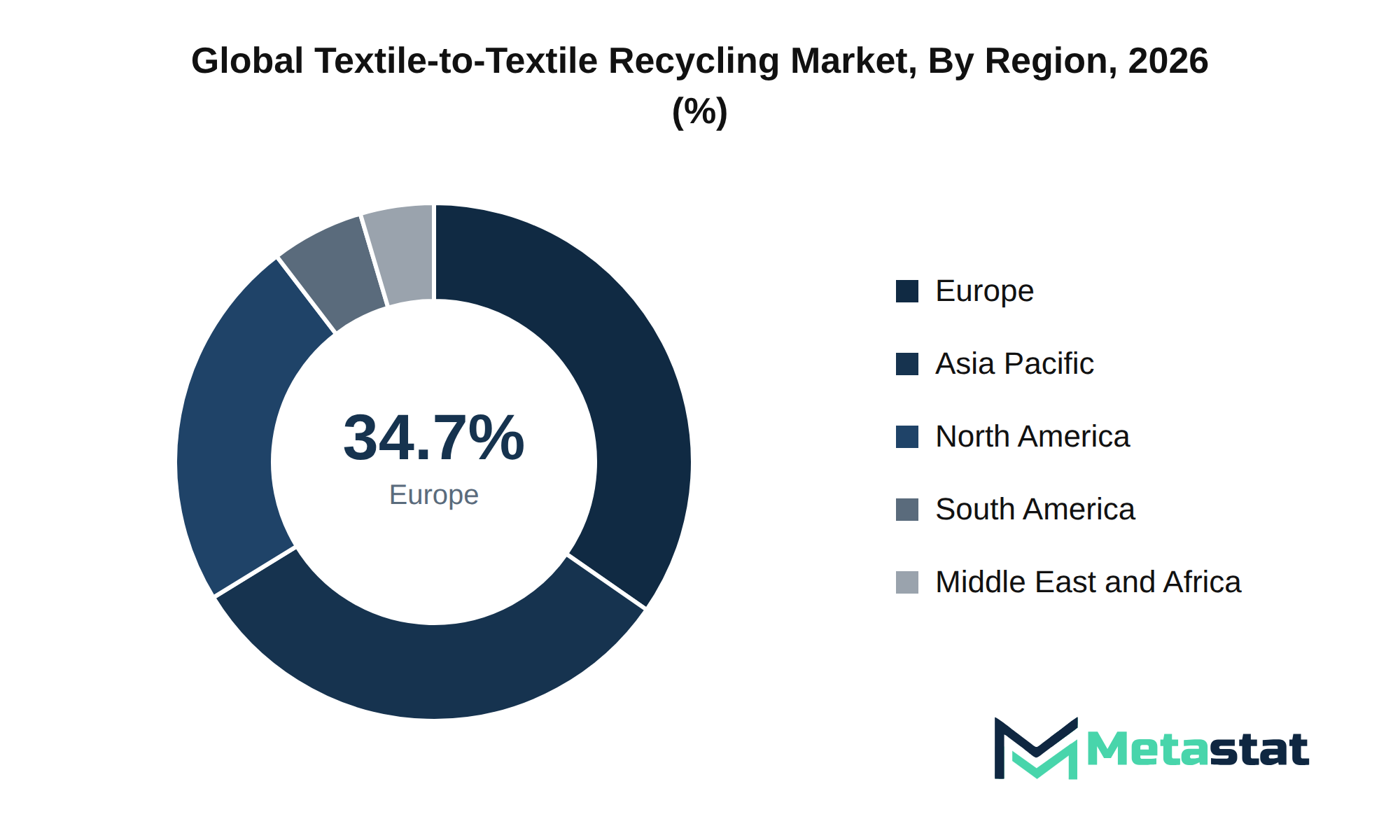
Europe represents a substantial share of the global Textile-to-Textile Recycling market, contributing 34.7% in 2025. A robust regulatory framework focused on sustainable practices drives the adoption of recycling technologies within major economies including Germany, France, the UK, Italy, and Spain. The demand for recycled materials in apparel and home textiles reflects a strong consumer preference for eco-friendly products.
Germany and France emerge because front-runners in the market, supported by established textile manufacturing industries and a commitment to environmental legislation. Strategic initiatives to modernize infrastructure enhance recycling capabilities, leading to increased operational efficiency among domestic producers. Investment in local recycling facilities positions these countries to capitalize on the growing market for post-consumer textiles.
Increasing cultural awareness regarding sustainability influences buying behaviors across the region, prompting brands to seek partnerships with recycling firms. The market's growth trajectory aligns with the European Union's ambitious climate goals, which promote circular economy practices. Collaboration among stakeholders within the supply chain facilitates knowledge sharing and technology transfer, enhancing market competitiveness.
In addition, localized procurement dynamics favor regional sourcing of recycled fibers, reducing reliance on imports. The market expands because businesses adopt innovative recycling technologies to enhance material recovery rates. Leading players in the region focus on developing advanced recycling processes, strengthening their market position.
Overall, the European Textile-to-Textile Recycling market exhibits strong potential for growth driven by regulatory support, cultural shifts towards sustainability, and advancements in recycling technologies. Strategic investments and collaborations among regional players will further reinforce the market's expansion in the coming years.
Asia-Pacific represents a significant portion of the Textile-to-Textile Recycling market, accounting for 31.6% of the global share in 2025. This region benefits from a growing focus on sustainable practices, with countries including China, Japan, and India adopting recycling technologies. Rapid urbanization and an expanding middle class enhance demand for recycled textiles across various applications.
Infrastructure modernization efforts across Asia-Pacific facilitate the growth of the recycling sector. Governments in these nations prioritize the development of efficient waste management systems and enhanced recycling facilities. Local compliance mandates and regulatory frameworks support increased investments in the market, ensuring that manufacturers adhere to sustainability targets.
Cultural attitudes toward sustainability shape B2B buying behaviors, with an increasing number of companies prioritizing recycled materials. Local procurement dynamics indicate a shift toward sourcing from domestic suppliers, which supports the market's growth potential. Foreign direct investment flows into the region aim to establish localized manufacturing densities, furthering the expansion of textile recycling initiatives.
Emerging market front-runners, including South Korea and Australia, contribute to the competitive landscape in Asia-Pacific. The presence of domestic players, along with the consolidation of vendors, enhances operational efficiency and encourages innovation in recycling technologies. This collaborative environment is expected to drive market growth and provide opportunities for businesses to capture value within the Textile-to-Textile Recycling market.
The Textile-to-Textile Recycling market in South America demonstrates unique characteristics influenced by regional dynamics. Brazil and Argentina lead the region, driving innovation and adoption of recycling practices. A growing commitment to sustainability among consumers and industries encourages investment in textile recycling technologies throughout the region.
Infrastructure modernization enhances recycling capabilities, with emerging market front-runners emphasizing the need for improved waste management systems. Regional resource availability, particularly in textile waste, positions South America favorably for expanding the market, while localized procurement dynamics influence business-to-business buying behaviors.
Cross-border trade corridors facilitate the movement of recycled materials, promoting collaboration among market participants. Domestic market players are gaining prominence, consolidating their positions to better serve the increasing demand for recycled textiles. Overall, these factors contribute to a robust outlook for the Textile-to-Textile Recycling market in South America.
The Middle East and Africa region demonstrates unique dynamics within the Textile-to-Textile Recycling market. This region holds potential for growth driven by increasing environmental awareness and shifting consumer attitudes towards sustainability. Countries including Saudi Arabia, UAE, and South Africa lead efforts to modernize their recycling infrastructure, enhancing operational efficiencies and enabling higher adoption rates of recycled textiles.
Emerging market front-runners in this region focus on developing localized manufacturing capacities, supporting domestic supply chains while reducing dependency on imports. Strategic entry barriers remain significant, but foreign direct investment flows are expected to augment local capabilities and enhance regional collaboration. The cultural emphasis on resource conservation aligns with the market's objectives, encouraging businesses to prioritize sustainable practices and invest in textile recycling technologies.
Competitive landscapes within the region feature a mix of established domestic players and new entrants focused on innovative recycling solutions. The presence of companies specializing in various recycling technologies enhances the market's resilience and adaptability. Localized procurement dynamics and regional B2B buying behaviors significantly impact purchasing decisions, shaping market growth prospects.
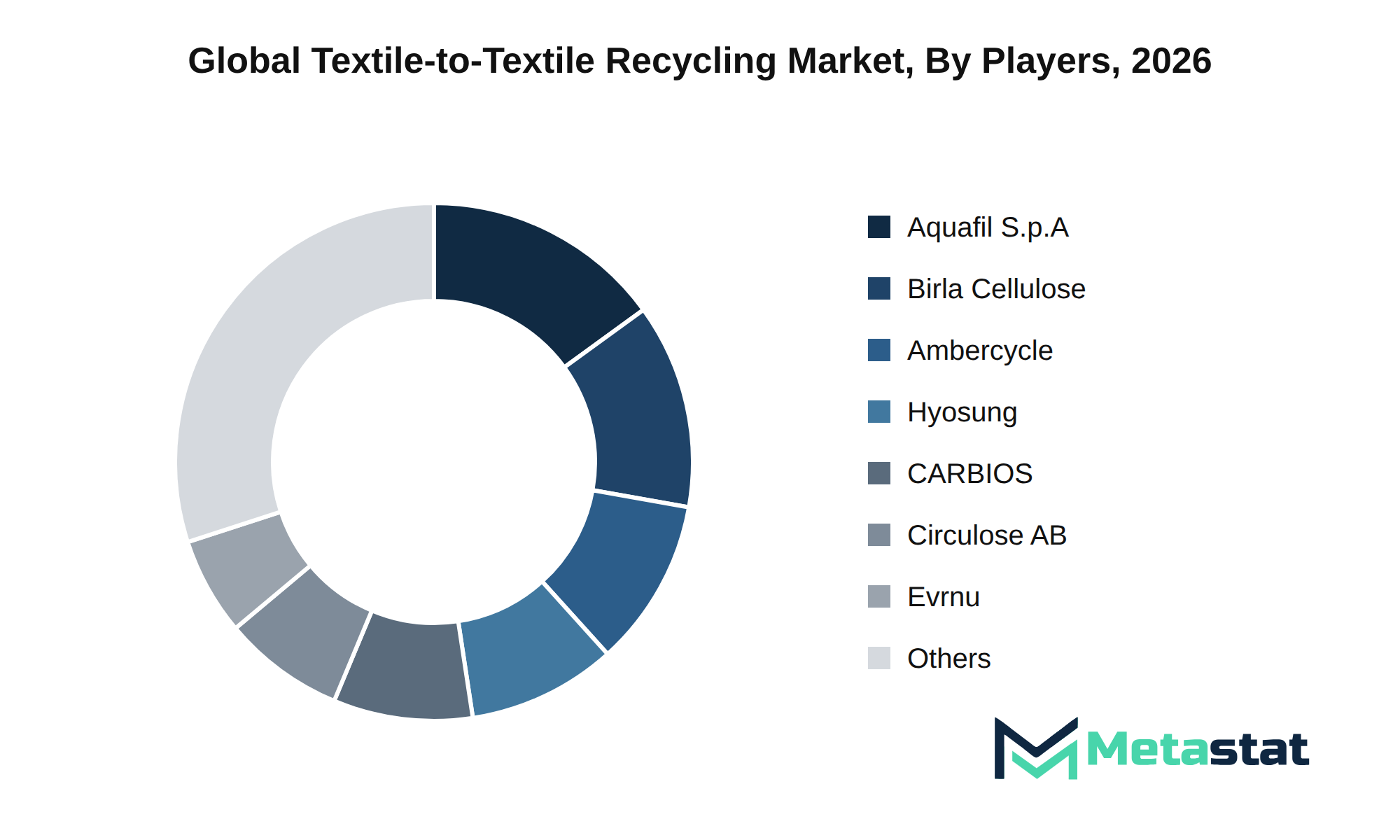
The Textile-to-Textile Recycling market features a diverse array of players employing various strategic behaviors to establish a competitive foothold. Companies including Ambercycle, Inc., Aquafil S.p.A., and Lenzing Group focus on product differentiation through proprietary technologies, enhancing their market offerings. Strategic alliances and joint ventures among firms like Renewcell AB and Evrnu, Inc. enable collaborative innovations and broadened market access.
Barriers to entry in the market primarily stem from established players with strong intellectual property portfolios and advanced R&D pipelines. Companies like Hyosung Group and Birla Cellulose apply their technological expertise to create robust competitive moats, making it challenging for new entrants to penetrate the market. The presence of organized value chains and supply chain dominance by established entities further consolidates their market positions.
The competitive outlook shows a growing focus on customer retention strategies, with firms emphasizing brand equity dynamics. Companies including Patagonia, Inc. and Unifi, Inc. invest significantly in marketing initiatives to strengthen consumer loyalty in the Textile-to-Textile Recycling market. Future growth vectors will center around innovations in recycling technology and sustainable practices to meet evolving consumer demands and regulatory requirements.
Market size is forecast to rise from USD 1,779 million in 2025 to over USD 5,368.4 million by 2033. The base case anticipates a growth trajectory of 14.8% CAGR, driven by increasing sustainability initiatives and consumer demand for recycled textiles. Investment in next-generation technologies and R&D commercialization will enable innovation, allowing companies to enhance capabilities and address emerging market needs.
Downstream demand shifts align with core industry maturation, driven by consumers prioritizing eco-friendly products. Compliance with evolving regulations will shape operational strategies, compelling players in the Textile-to-Textile Recycling market to adapt quickly to new standards. Ongoing geopolitical realignments and trade corridor transformations will influence global supply chains, creating opportunities for strategic capital allocation aimed at enhancing production efficiency.
Infrastructure commitments in key regions will support market expansion, encouraging investment in recycling facilities and technology upgrades. This environment will enable the emergence of high-growth pockets within the market, providing avenues for growth and operational resilience. The confluence of these factors will define the strategic imperatives for industry stakeholders, shaping defensibility roadmaps and future growth recommendations.
The report strategically identifies and profiles the key market players and analyses their core competencies in each sub-segment of the Textile-to-Textile Recycling market.
Report Attributes | Details |
Study Period | 2021-2033 |
Base Year | 2025 |
Estimated Year | 2026 |
Forecast Period | 2026-2033 |
Historical Period | 2021-2025 |
Growth Rate | CAGR 14.8% from 2026 to 2033 |
Revenue Unit | USD million |
Segmentation | By Material Type, Source, Recycling Technology, End-Use Application, and Region |
By Region | North America (By Material Type, Source, Recycling Technology, End-Use Application, and Country)
|
Europe (By Material Type, Source, Recycling Technology, End-Use Application, and Country)
| |
Asia Pacific (By Material Type, Source, Recycling Technology, End-Use Application, and Country)
| |
South America (By Material Type, Source, Recycling Technology, End-Use Application, and Country)
| |
Middle East and Africa (By Material Type, Source, Recycling Technology, End-Use Application, and Country)
|
Find answers to common questions about this report
The Textile-to-Textile Recycling market size was valued at USD 1,779 million in 2025, according to the Metastat Insights study.
The Textile-to-Textile Recycling market is projected to grow at a CAGR of 14.8% during the forecast period from 2026 to 2033.
The North America Textile-to-Textile Recycling market size is estimated to reach USD 1,197.7 million by 2033.
The leading segment in the Textile-to-Textile Recycling market is Post-Consumer Apparel, with a projected value of USD 2,644.5 million by 2033. This segment demonstrates the highest growth potential compared to other sources.
Key drivers for the Textile-to-Textile Recycling market include growing consumer awareness regarding sustainability and shifting preferences for environmentally friendly practices. Technological advancements improve efficiency and reduce operational costs, encouraging investment in innovative recycling processes.
Europe holds the dominant share of the Textile-to-Textile Recycling market, accounting for 34.7% in 2025. This positions Europe ahead of other regions, including North America at 23.4% and Asia Pacific at 31.6%.
The Textile-to-Textile Recycling market faces challenges from stringent regulatory requirements that increase operational costs and delay project timelines. Macroeconomic pressures, including inflation and rising raw material costs, further strain profit margins and hinder investment in innovation. geopolitical fragmentation disrupts trade flows, complicating material sourcing and affecting supply chain reliability.
Growing consumer awareness regarding sustainability and shifting preferences for environmentally friendly practices favor product adoption in the Textile-to-Textile Recycling market. Increased media focus on environmental issues and the commitment of brands to circular economy principles further enhance demand, prompting manufacturers to invest in innovative recycling technologies and processes.
The Textile-to-Textile Recycling market is estimated to reach a valuation of USD 5,368.4 million by 2033.
Key players operating in the Textile-to-Textile Recycling market include Ambercycle, Inc., Aquafil S.p.A., Birla Cellulose, Evrnu, Inc., Lenzing Group, Renewcell AB, and Recover Textile Systems, S.L.
The analysts below cover Chemicals and Materials research at Metastat Insights.
LEAD ANALYST
Utkarsh Khirodkar is a Lead Market Research Analyst at MetaStat Insight, specializing in market intelligence, technology sector assessments, and competitive strategy.

INDUSTRY CONSULTANT - CHEMICALS & ADVANCED MATERIALS
Chemicals and Materials · Machinery & Equipment · Packaging
Amit Gadhekar Consultant for Chemicals and Materials at MetaStat Insight, directing sector-specific intelligence, research, and strategic consulting across global chemical and processing markets.
Most industry reports on warehouse automation bundle autonomous mobile robots and fixed conveyor installations into the same top-level numbers, which complicates advisory work. This study split the market cleanly by payload tiers, navigation technology, and fleet management software layers. The regional forecast for Western Europe gave our team defensible adoption benchmarks when evaluating capital allocation for logistics clients, saving us days of secondary data scrubbing.
Analyzing the transition from natural gas to green hydrogen in iron ore reduction requires realistic infrastructure timelines. Meta stat insight supplied a detailed regional assessment of DRI plant conversion costs and scrap metal availability in North America and Western Europe. Their report carefully examined pellet quality specs and electrical grid access constraints without making oversimplified market assumptions. The research material served as a practical reference during internal technology roadmap discussions.
Integrating zero-trust access controls across legacy electronic health record systems involves complex compliance overhead. Team produced an analysis that clearly separated identity governance and administration tools from privileged access management platforms. Their evaluation of HIPAA and GDPR compliance features across cloud native solutions gave our architecture group clear baseline criteria. The custom data request regarding biometric authentication adoption in hospital networks was returned promptly with clear documentation.
Explore related market intelligence reports worth reading alongside this one.