
LEAD ANALYST
Utkarsh Khirodkar is a Lead Market Research Analyst at MetaStat Insight, specializing in market intelligence, technology sector assessments, and competitive strategy.

Global Calcium Nitrate Market Size, Share, By Grade (Agricultural Grade, Industrial/Technical Grade, Reagent/Analytical Grade and High-Purity/Specialty Grade), By Form (Granular/Prilled, Crystalline/Flake, Powder and Liquid/Solution), By Application (Fertilizers & Plant Nutrition, Concrete Admixtures & Setting Acceleration, Wastewater Treatment & Odor Control, Explosives & Mining Formulations, Thermal Storage & Cooling Media, Chemical Processing & Manufacturing, Laboratory, Research & Cell Culture and Others (Latex Processing, Metal Treatment, De-Icing Applications)), By End-Use Industry (Agriculture & Horticulture, Construction & Building Materials, Water & Wastewater Treatment, Mining & Explosives, Chemical Manufacturing, Ceramics, Glass & Latex, Research Laboratories & Life Sciences and Others (Oil & Gas, Metalworking)), Industry Analysis, Growth, Trends, and Forecast, 2026-2033
Report ID
MSI-5444
Published
October, 2026
Pages
291 Pages
Format
Historical
Base year
Forecast
Forecast period
Report Details
Market Valuation: Valued at $14.4 Billion in 2025, projected to reach $23.5 Billion by 2033 at a 6.3% CAGR.
Dominant Segment: Fertilizers & Plant Nutrition is the leading application, projected to reach USD 11.5 billion by 2033, driven by its critical role in supporting intensive farming and addressing soil nutrient deficiencies.
Geographic Lead: Asia Pacific holds the largest share at 35.8%, fueled by extensive agricultural activity, high population density, and sustained investments in infrastructure and agricultural modernization.
Fastest-Growing Segment: High-Purity/Specialty Grade is set to expand at the highest CAGR of 7.5% through 2033, reflecting rising demand in laboratory, research, and advanced manufacturing applications requiring stringent purity standards.
What's Inside: The report provides detailed segmentation by grade, form, application, and end-use industry, with market share analysis, growth drivers, and forecasts through 2033, as well as competitive landscape and regional insights.
Choose Your License
Global Calcium Nitrate Market
The global Calcium Nitrate market was valued at USD 14.4 billion in 2025 and is projected to reach USD 23.5 billion by 2033, growing at a CAGR of 6.3% over the forecast period.
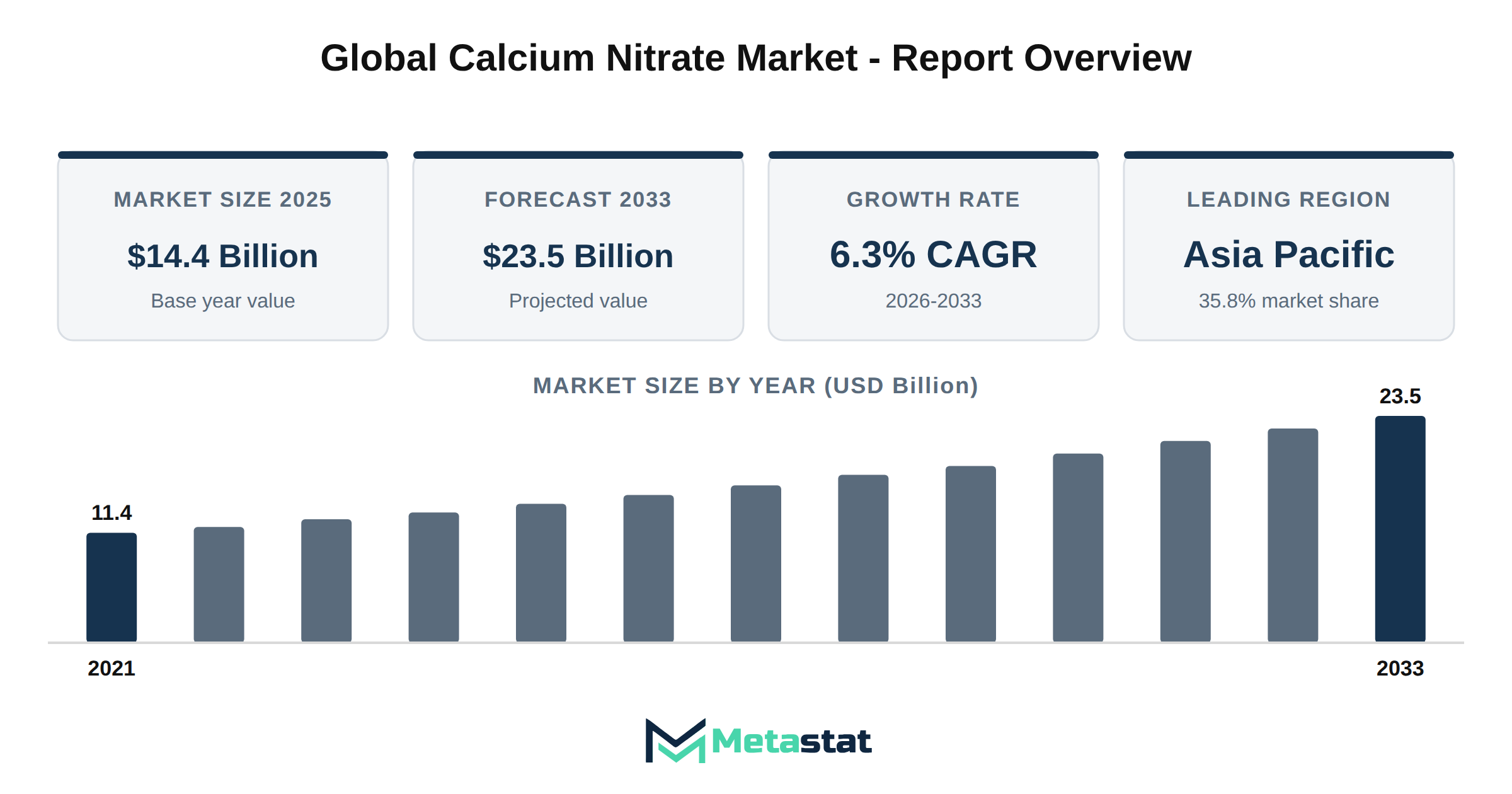
The Calcium Nitrate market covers a broad range of grades and forms, with primary demand driven by its role in fertilizers and plant nutrition, concrete admixtures, and wastewater treatment. Buyers from agriculture, bauxite cement and construction formulations, and water treatment sectors prioritize Calcium Nitrate for its high solubility, rapid nutrient release, and effectiveness in improving crop yield and soil quality. Fertilizer and plant nutrition applications represent the segment with the most value, reflecting the product’s central role in supporting intensive farming practices and addressing nutrient deficiencies in soils. In industrial effluent plants, it is frequently paired alongside polyferric sulfate for flocculants to optimize odor control and coagulation.
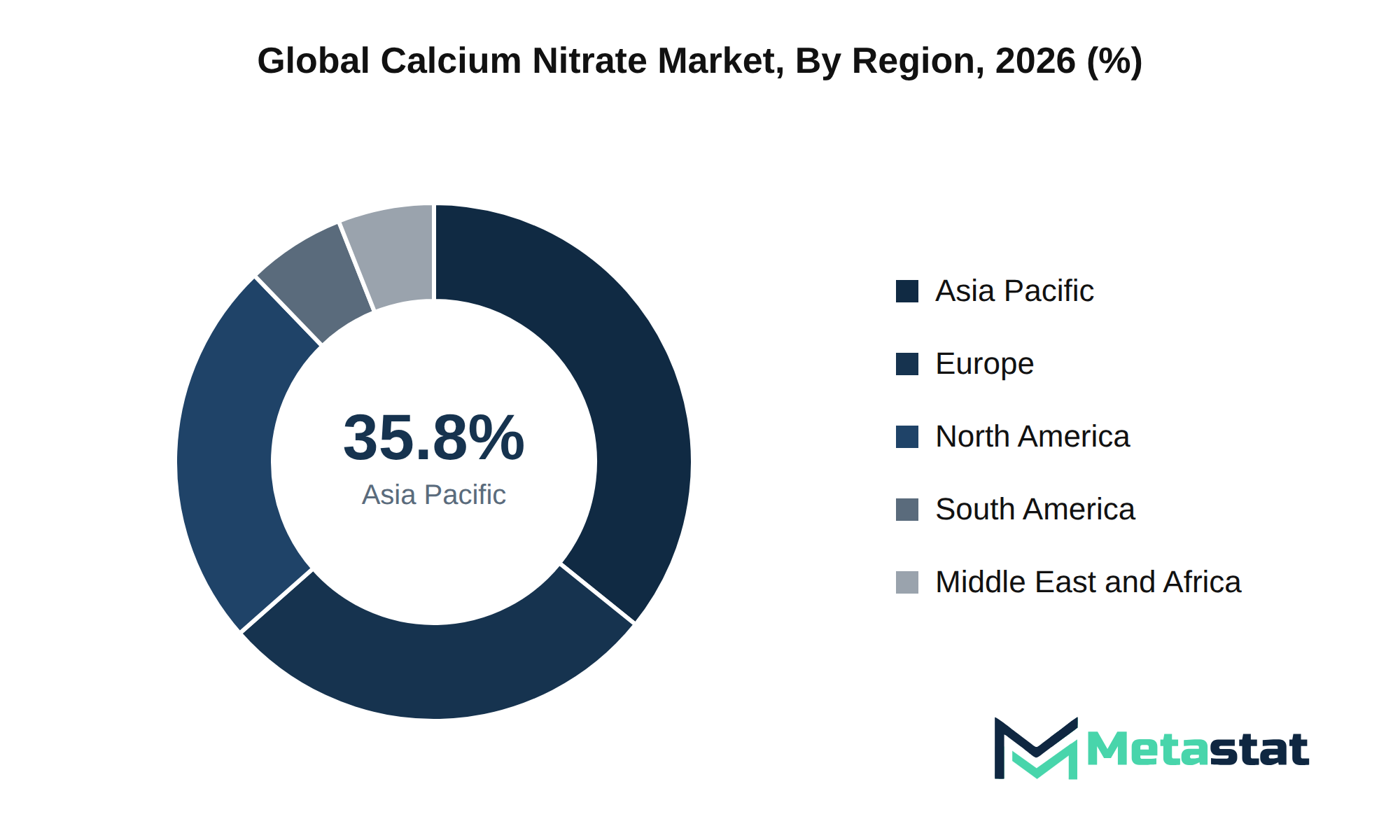
Asia Pacific holds the largest share of the global Calcium Nitrate market, accounting for 35.8% of total value. This region’s dominance results from extensive agricultural activity, high population density, and sustained investments in infrastructure and industrial projects. Emerging regional development contrasts conventional concrete works with modern timber frame construction techniques across new commercial builds. North America holds 24.3% of the market in 2025, with the US leading in 2026. Europe follows at 27.7%, supported by a strong presence in specialty fertilizers and regulated crop nutrition standards.
Increasing demand for high-efficiency fertilizers drives growth for the Calcium Nitrate market. Shifts in farming techniques, growing food security concerns, and the adoption of advanced crop management practices such as pairing specialty nutrients with biostimulants support higher consumption in agricultural applications. Technological advances that improve product purity and enable customization for targeted end-use industries further strengthen the market’s expansion. These developments also improve tank-mix compatibility with foliar fungicides used in integrated crop protection regimens.
Product selection in the Calcium Nitrate market spans agricultural, technical, analytical, and specialty grades, each supporting distinct buyer requirements. Fertilizer and plant nutrition applications generate the highest value, with USD 11.5 billion projected in 2033. Buyers in commercial agriculture, commercial flower seeds cultivation, and large-scale crop production account for the largest share of spending, driven by the product’s contribution to crop yield optimization and nutrient management. North America holds 24.3% of the market in 2025. The US leads in 2026.
Asia Pacific leads all other regions with a 35.8% share, reflecting intensive agricultural activity, rising demand for high-efficiency fertilizers, and government-supported initiatives for food security. This region’s dominance connects directly to substantial investments in agricultural modernization and infrastructure. The scale of adoption in Asia Pacific sets it apart from other regions. This dynamic mirrors broader industrial expansion, where on-site utility systems such as an industrial nitrogen generator see widespread integration across chemical synthesis facilities. Its position as the largest contributor to market revenue remains reinforced by these factors.
One main growth driver for the Calcium Nitrate market is the expanding adoption of digital crop farming and precision agriculture nutrient management practices in both developed and emerging agricultural economies. Buyers are shifting toward higher-yield and resource-efficient farming, which intensifies demand for input products that ensure stable nutrition delivery and soil health. Expanding adoption of these practices is expected to drive sustained expansion among manufacturers and suppliers positioned to serve the evolving requirements of the broader agribusiness sector.
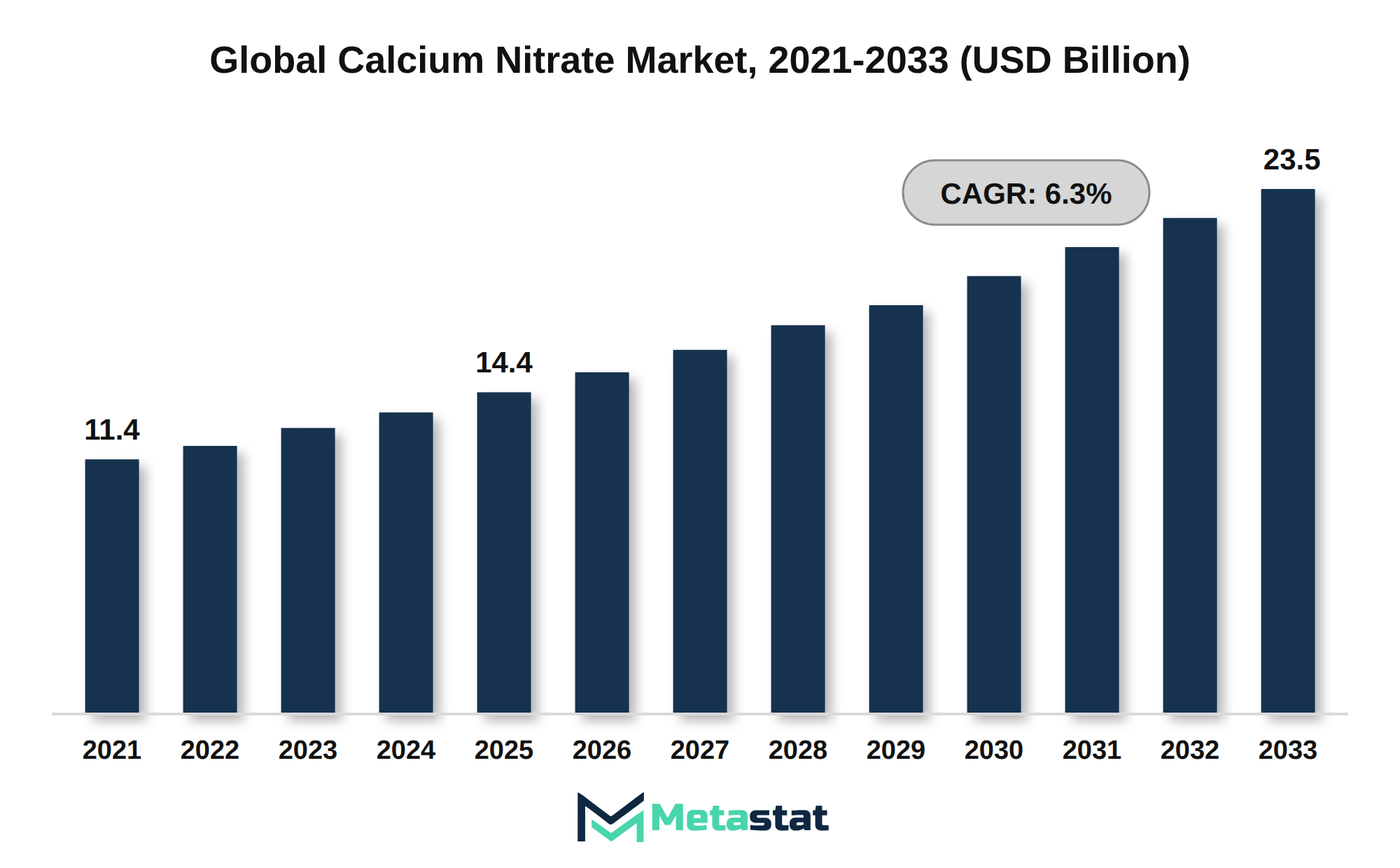
Widespread integration of calcium nitrate in precision fertigation and controlled-environment agriculture is supporting more targeted nutrient delivery and higher crop yields. In advanced horticultural operations utilizing engineered growing media and high-value greenhouse cultivation, calcium nitrate is preferred for its high solubility and compatibility with automated fertigation systems. These buyers rely on stable, consistent nutrient release to optimize both growth cycles and product quality. The market reflects this trend through the dominant share held by the Fertilizers & Plant Nutrition application, which is forecast to reach USD 11.5 billion by 2033. Precision fertigation enables growers to deliver calcium and nitrate nitrogen directly to the root zone, reducing nutrient losses and improving plant uptake efficiency. The shift is especially pronounced in regions facing water scarcity or where regulatory scrutiny around nutrient runoff is tightening, prompting adoption of closed-loop irrigation and hydroponic systems.
This transition supports higher-frequency, lower-volume dosing regimens that match plant requirements more closely. Suppliers address this demand by offering highly pure, fully dissolvable granular and liquid formulations, which integrate readily with automated dosing controls. This enables growers to achieve consistent plant nutrition while minimizing environmental impact and operational costs. Commercially, the adoption of precision fertigation with calcium nitrate underpins premium pricing for specialty crop producers and drives higher input volumes through more intensive cultivation cycles, strengthening long-term demand among controlled-environment and technologically advanced agricultural segments.
Industrial buyers in the Calcium Nitrate market have adopted multi-year contract models and volume-based pricing to manage procurement costs and secure supply, particularly across concrete admixtures, wastewater treatment, and mining formulations. Large-scale construction and building materials producers frequently negotiate structured supply agreements with pricing tied to annual tonnage, reflecting the importance of cost predictability in high-volume projects. In the concrete admixtures and setting acceleration segment, projected to reach USD 3.1 billion by 2033, contractors and construction firms prefer long-term supply contracts that lock in pricing to avoid budget overruns from volatile input costs.
Within wastewater treatment and odor control applications, where the segment is forecast to reach USD 2.6 billion by 2033, municipal authorities and private water operators often choose quarterly or annual tenders to encourage competitive pricing among suppliers. The procurement cycle is strongly influenced by compliance with seasonal demand surges and regulatory schedules, which affects contract length and payment milestones. In mining and explosives applications, spot purchases remain prevalent for unplanned operational requirements, yet major operators increasingly negotiate framework agreements to support continuous supply during peak production periods. These purchasing strategies directly impact supplier margins, inventory planning, and the ability to maintain stable distribution networks, shaping competition and revenue growth across the market.
Shifting agricultural demand and the emergence of specialty chemical applications are realigning both pricing and supply chains in the Calcium Nitrate market. Fertilizer buyers, including large-scale agriculture and horticulture operations, drive overall consumption, seeking reliable and cost-effective inputs for crop nutrition. The Agricultural Grade segment is projected to rise from USD 10.5 billion in 2026 to USD 15.7 billion by 2033, driven by high-volume bulk purchasing and the requirement for consistent product availability. This concentration of demand from fertilizer channels encourages producers to prioritize bulk output and optimize transportation, which helps moderate price volatility for this buyer group.
Meanwhile, specialty chemical sectors - covering industrial, analytical, and high-purity applications - demand tighter specification, batch-level traceability, and flexible packaging formats. The Industrial/Technical Grade segment alone is anticipated to reach USD 5.1 billion by 2033. Suppliers active in these channels face more variable order sizes and higher service requirements, impacting unit pricing and inventory turnover. Price differentiation between agricultural and specialty chemical channels, therefore, reflects both the scale of supply contracts and the cost of compliance or custom handling. For participants in the Calcium Nitrate market, these diverging buyer needs reinforce the importance of multi-channel distribution strategies and tailored pricing models to secure margin and maintain supply resilience under changing demand patterns.
Demand within the Calcium Nitrate market is shifting between agricultural and industrial end uses, reflecting changes in buyer priorities and downstream consumption trends. In agriculture and horticulture, buyers have expanded their purchases, supported by the segment’s projected rise from USD 7.9 billion in 2026 to USD 11.8 billion in 2033. Crop growers and large-scale producers seek higher-yield formulations, turning to agricultural grade for both primary fertilization and targeted plant nutrition. Precision farming and the need for balanced crop yields drive a preference for these formulations, which deliver both nitrogen and calcium in a single application. Fertilizer and plant nutrition applications are expected to grow from USD 7.7 billion in 2026 to USD 11.5 billion in 2033, indicating a substantial increase in uptake by the agriculture sector.
Meanwhile, industrial end uses - including construction and building materials, wastewater treatment, and mining - display distinct buying patterns. Construction and building materials are expected to reach USD 3.2 billion by 2033, driven by the role of calcium nitrate in concrete admixtures and setting acceleration. Industrial and technical grade buyers select the product for its consistency and compatibility with admixture systems, while water and wastewater treatment segment demand is projected to reach USD 2.6 billion by 2033, reflecting ongoing investments in municipal and industrial water infrastructure. The commercial implication is that suppliers in the Calcium Nitrate market targeting industrial buyers differentiate on grade quality, logistics, and application-specific technical support, while agricultural buyers prioritize nutritional efficacy and supply consistency.
Intensification of commercial agriculture is driving sustained volume growth across the Calcium Nitrate market, with growers scaling up operations to meet rising global food demand. Expansion of irrigated farmlands and high-value horticultural production, particularly in Asia Pacific and Europe, has increased the use of calcium nitrate-based fertilizers that deliver both calcium and nitrogen in a readily available form. This dual nutrient profile supports faster crop growth and strengthens resistance to physiological disorders, making the product a preferred input for fruit, vegetable, and specialty crop growers seeking higher yields and improved quality.
Producers that supply granulated and prilled calcium nitrate formulations have benefited from this momentum, with the Granular/Prilled segment projected to reach USD 9.4 billion by 2033. The resulting rise in demand has supported stable pricing for agricultural grades and enabled suppliers to invest in capacity expansion and distribution efficiency. Agricultural buyers are committing to larger contract volumes, directly supporting revenue expansion for suppliers operating in the Calcium Nitrate market.
Industrial buyers in the Calcium Nitrate market have faced persistent cost pressures due to volatility in raw material pricing. Fluctuations in the prices of limestone, ammonia, and nitric acid - essential upstream inputs - have resulted in unpredictable procurement costs for technical and specialty grade product lines. Construction and wastewater treatment sectors have become particularly sensitive to price shifts, leading to project delays and reduced batch sizes during periods of higher input costs. This pattern has tempered broader adoption and slowed replacement cycles for buyers seeking to optimize operational budgets. The Calcium Nitrate market reflects a pattern where suppliers pass through cost increases, limiting the ability of downstream industries to expand usage without significant price renegotiation or alternative sourcing.
Producers in the Calcium Nitrate market have faced sustained margin pressure driven by the high energy intensity of manufacturing processes. Significant thermal and electrical energy inputs are required during nitric acid synthesis and subsequent neutralization steps, particularly for technical and specialty grades. Fluctuations in energy prices directly affect production costs, making it challenging for suppliers to maintain stable pricing or protect profitability when utilities surge. To mitigate these risks, several manufacturers have prioritized investments in process optimization and energy recovery systems, seeking incremental efficiency gains. Suppliers pursuing high-purity or specialty product lines often encounter even greater sensitivity to energy volatility, which impacts their competitiveness in niche applications. The need for cost-containment has influenced site selection, with producers favoring regions that offer access to stable and affordable energy sources. These dynamics contribute to sustained margin management challenges for participants in the Calcium Nitrate market.
Specialty and high-purity grades present the strongest opportunity for revenue expansion, driven by their projected 7.5% CAGR - the highest among all grade segments in the Calcium Nitrate market. Uptake of these grades is increasing in laboratory, research, and life sciences applications where consistent purity and traceability are critical. Technical requirements for niche applications are tightening, leading buyers in advanced manufacturing, analytical testing, and biotechnology to replace lower-grade variants with high-purity alternatives. This shift supports price premiums and delivers higher margins for suppliers able to meet stringent quality standards. The combination of new end-user requirements and limited existing capacity in high-purity grade production positions this segment to outperform volume-oriented categories throughout the Calcium Nitrate market forecast period.
The Global Calcium Nitrate market is segmented based on Grade, Form, Application, and End-Use Industry.
Agricultural grade calcium nitrate is primarily adopted by large-scale commercial growers and horticultural producers seeking to drive higher yields and maximize nutrient uptake efficiency. Increased application in high-value horticulture and specialty crop production supports robust demand growth, with growers shifting toward crops requiring precise calcium and nitrate supplementation for quality and shelf life. In contrast to industrial or analytical grades, agricultural grade maintains a mid-range growth rate within the market, outpacing reagent/analytical grades but trailing behind the high-purity/specialty segment's projected 7.5% CAGR. Its use is concentrated in field and greenhouse production systems, where buyers prioritize consistent nutrient solubility and compatibility with automated fertigation. This segment’s pricing remains accessible to volume purchasers in agriculture, supporting its sustained adoption relative to the higher-cost, lower-volume specialty grades. Expanding production across Asia Pacific and Europe further anchors demand, reflecting the regionally differentiated structure of the market.
Industrial/Technical Grade is estimated to reach USD 5.1 billion by 2033, expanding at a CAGR of 6.5% through the forecast period. This segment primarily serves manufacturers in construction, water treatment, and explosives who require consistent purity and reliable performance for use in concrete admixtures, setting accelerators, and industrial process chemicals. Stronger growth compared to Agricultural Grade (6.5% versus 6%) reflects increasing demand across infrastructure and mining applications, where technical specifications and regulatory compliance drive formulation choices. Buyers in this segment frequently operate in highly regulated industries, where any deviation from established quality standards results in production delays or added compliance costs. Compared to Reagent/Analytical Grade, Industrial/Technical Grade delivers higher volume at lower unit prices, appealing to large-scale users prioritizing cost efficiency without sacrificing baseline quality. Volume demand in this category increases with infrastructure expansion and tightening environmental standards influencing industrial procurement strategies.
Expected to reach USD 1.5 billion by 2033, reagent/analytical grade is used primarily in laboratory, research, and analytical settings where high purity and consistency are essential. Demand in this segment comes from chemical research institutes, academic laboratories, life sciences, and pharmaceutical testing environments that require precise and contamination-free reagents. Buyers are typically scientific and technical procurement teams prioritizing product certification and batch traceability over price. Compared to agricultural and industrial/technical grades, reagent/analytical grade addresses more specialized applications and commands a higher price point due to stringent quality requirements. Growth in this segment trails both high-purity/specialty grade and industrial/technical grade, indicated by the lack of a high CAGR figure, which reflects slower adoption in commodity-driven markets. End users rely on consistent product specifications to meet regulatory and experimental standards, a factor that limits price competition but supports premiumization. Steady but niche demand for this grade aligns with the expansion of advanced research activities and increasing regulatory oversight in pharmaceutical and analytical workflows.
Projected to expand at a CAGR of 7.5% through 2033, high-purity and specialty grade products deliver the fastest growth among all grade segments tracked in the Calcium Nitrate market. This grade is specified in applications where trace contamination and batch variability disrupt sensitive performance requirements, including chemical synthesis, cell culture media, high-performance ceramics, and select pharmaceutical manufacturing steps. Buyers in this segment include advanced manufacturing firms, research laboratories, and regulated industries that require documentation and lot traceability, unlike the broader agricultural and industrial segments, which prioritize volume and price. Growth is influenced by rising demand for fine chemicals and custom synthesis, with downstream users shifting sourcing to suppliers that meet increasingly stringent purity certifications. Compared to agricultural grade’s 6% CAGR, the 7.5% pace in high-purity and specialty grade signals a clear acceleration in specialty-driven consumption. The premium pricing structure attached to this grade supports higher margins for qualified suppliers, contributing to the expanding role of specialty chemistries in the market supply chain.
Valued at USD 6.3 billion in 2026 and projected to reach USD 9.4 billion by 2033, the granular/prilled segment achieves a CAGR of 5.8% over the forecast period. This form is favored by buyers in agriculture and construction, driven by its ease of application, lower dust emission, and compatibility with bulk-handling systems. Fertilizer producers and distributors prefer granular/prilled calcium nitrate for broadcast and side-dress field application, supporting large-scale crop operations and high-volume blending. In comparison, the crystalline/flake segment is projected to reach USD 6.8 billion by 2033 at a slightly higher CAGR of 6.4%, yet granular/prilled maintains greater volume due to its dominance in bulk fertilizer distribution. Demand for this form is reinforced by infrastructure projects and commercial farming, where physical stability and storage life reduce handling costs. Adoption is further supported by standardization in application equipment, setting granular/prilled apart from powder and liquid solution forms.
Estimated to reach USD 6.8 billion by 2033 at a CAGR of 6.4%, crystalline or flake calcium nitrate is sought after for its ease of dissolution, purity, and adaptability in controlled formulations. Buyers in high-value applications - including specialty fertilizers, laboratory reagents, and industrial processes - select this form for its rapid solubility and suitability for precise mixing. Demand for crystalline/flake material is increasing among horticulture and greenhouse operators who require highly soluble nutrients for fertigation and hydroponics, and in specialty chemical and research settings where process accuracy is critical. When compared with granular/prilled form, crystalline/flake is projected to grow slightly faster, with the granular/prilled segment forecast at a 5.8% CAGR through 2033. The principal drivers for this segment are the shift to precision agriculture and the growing sophistication of downstream chemical processing, both of which warrant reliable, high-clarity solutions. While pricing tends to be higher than lower-purity or bulk forms, technical buyers accept this premium to ensure product performance, supporting steady value growth in this segment.
Powder segment is expected to reach USD 2.9 billion by 2033. Commonly selected by specialty manufacturers and research laboratories, powder-form calcium nitrate is preferred when rapid dissolution and uniform mixing are essential, including in chemical synthesis, cell culture, or analytical processes. Demand for powder form is shaped by its precise dosing properties and compatibility with controlled blending applications in life sciences and specialty chemical production. Compared to the granular/prilled segment, powder form offers greater reactivity and ease of handling for small-batch and high-purity requirements, although it serves buyers less focused on bulk fertilizer applications. The differentiation in growth rates among form segments is evident, with crystalline/flake advancing at a 6.4% CAGR through 2033, a pace that surpasses estimated expansion for powder, reflecting higher demand for crystalline materials in industrial and water treatment settings. Pricing for powder-form calcium nitrate tends to stand at a premium, justified by its targeted usage and higher purity standards. Buyers who place emphasis on accuracy and material consistency continue to drive this segment’s uptake.
Liquid and solution forms are projected to expand at a CAGR of 6.7% during the forecast period, outpacing granular/prilled’s 5.8% and closely tracking crystalline/flake’s 6.4%. These formulations are widely preferred in fertigation systems and specialty industrial processes where rapid solubility and precise dosing are critical. Fertilizer blenders, hydroponic growers, and wastewater treatment operators drive adoption, seeking the convenience of ready-to-use liquid calcium nitrate for improved operational efficiency and uniform application. Demand in this segment is accelerated by the shift toward automated and precision agriculture, where liquid solutions integrate more seamlessly with drip irrigation and mixing technologies than solid alternatives. Compared to granular and powder segments, liquid/solution buyers typically prioritize flexibility and speed of nutrient uptake, supporting higher willingness to pay for convenience and process compatibility. This segment is further supported by environmental compliance standards that favor solutions minimizing dust, spillage, and worker exposure risks during handling and application.
Fertilizers & Plant Nutrition segment is valued at USD 7.7 billion in 2026 and is projected to reach USD 11.5 billion by 2033, at a CAGR of 5.8% during the forecast period. This segment serves commercial crop producers and horticultural enterprises seeking efficient nutrient delivery to support higher yields, particularly for high-value fruit and vegetable crops. Demand is driven by the adoption of specialty fertilizers that address soil deficiency and deliver readily soluble calcium and nitrate to plant roots, resulting in improved plant growth and increased productivity. Compared to other application segments tracked in the Calcium Nitrate market, Fertilizers & Plant Nutrition generates the highest revenue and is closely aligned with seasonal agricultural cycles and food production targets. While industrial segments including Concrete Admixtures & Setting Acceleration achieve a slightly higher CAGR at 6.7%, volume growth in fertilizers is supported by broad-based adoption across both developed and emerging agricultural economies. The market for this segment is distinguished by price sensitivity among growers, who prioritize cost-effective formulations that maximize nutrient uptake.
Estimated to reach USD 3.1 billion by 2033, at a CAGR of 6.7%, this segment addresses the demand for admixtures that accelerate concrete setting and improve construction productivity. Buyers include major construction and infrastructure firms seeking to shorten project timelines and maintain performance in adverse weather conditions. Growth in this segment is propelled by rapid urbanization and increased investments in commercial and civil engineering projects, where fast turnaround delivers direct cost savings. In comparison to fertilizers and plant nutrition applications, which grow at a CAGR of 5.8%, concrete admixtures and setting acceleration outpace much of the application group and signal higher value-added use cases. Uptake is further supported by stricter building codes in developed regions, which encourage the adoption of high-performance additives over traditional solutions. The segment’s technical requirements and buyer profile set it apart from commodity-driven applications, reinforcing its role in growth.
Expected to reach USD 2.6 billion by 2033, wastewater treatment and odor control applications drive demand from municipal utilities and industrial plants focused on environmental compliance and public health. These buyers deploy calcium nitrate to suppress hydrogen sulfide generation, limit corrosion, and control odors in sewage networks and wastewater treatment facilities. Regulatory requirements for air and water quality, especially in urbanizing regions, have strengthened purchasing by municipal authorities and private operators. Compared with fertilizers and plant nutrition, which attain a forecast value of USD 11.5 billion by 2033, the wastewater treatment and odor control segment addresses different priorities, centering on environmental risk and infrastructure integrity rather than crop yield. Growth is tied to investments in urban wastewater infrastructure and policy-driven mandates, which set this segment apart from others in the market. Technical acceptance by utilities, rather than price sensitivity, defines adoption, resulting in stable demand despite market volatility. This segment is driven primarily by regulatory and operational factors rather than agricultural cycles or commodity price shifts.
Explosives & Mining Formulations segment is projected to grow at a CAGR of 6.8% during the forecast period. This segment serves mining companies and civil engineering operators that incorporate calcium nitrate in explosives to enhance blasting efficiency and manage environmental risks. Demand is propelled by the push for safer, more efficient mining operations and stricter environmental controls surrounding nitrate-based explosives. Compared to Wastewater Treatment & Odor Control, which lacks a reported CAGR, Explosives & Mining Formulations advances at a noticeably faster pace, reflecting increased investment in mineral extraction and infrastructure development. The segment stands out within the Calcium Nitrate market for its reliance on technical-grade material with controlled purity, since explosive formulations require precise chemical properties to ensure safe handling and performance. The market in this application is shaped by both regulations governing explosives and the evolution of mining practices toward higher mechanization, which drives consistent demand for specialized inputs. These factors combine to attract both established suppliers and new entrants seeking higher-margin technical applications.
Thermal storage and cooling media applications use calcium nitrate for its ability to store and transfer heat efficiently in large-scale energy and HVAC systems. Buyers include operators of solar thermal power plants and industrial facilities that depend on cost-effective thermal energy storage for load balancing and process optimization. Demand in this segment is directly influenced by investment in renewable energy infrastructure and the adoption of energy-efficient HVAC solutions, which require reliable phase-change or sensible heat storage materials. Compared to segments like fertilizers or concrete admixtures, this application draws procurement teams focused on long-term operational stability rather than immediate performance gains. A key adoption barrier is the higher upfront cost of specialized thermal storage systems incorporating calcium nitrate, which limits uptake among price-sensitive buyers. This segment stands apart by targeting energy and industrial efficiency instead of agricultural production or construction performance. Suppliers respond to specification requirements for purity and thermal stability, which differ from the agronomic criteria prioritized elsewhere in the market.
Manufacturers in chemical processing and manufacturing integrate calcium nitrate into production lines for specialty chemicals, catalysts, and certain heat transfer fluids. Primary buyers include chemical manufacturers focused on applications where the nitrate ion supports oxidation or process stability. Demand in this segment is influenced by industrial buyers who require dependable supply and consistent specifications rather than by volume-based price competition seen in fertilizers. Regulation shapes purchasing criteria, with buyers subject to strict oversight regarding nitrate handling, emissions, and hazardous materials management. Compared to fertilizers and plant nutrition, chemical processing applications require tighter quality assurance and more specialized logistics, contributing to higher unit costs. Steady expansion of industrial chemical sectors in regions including Asia Pacific drives demand, with manufacturing growth outpacing mature markets. Regulatory compliance and the operational requirements of industrial buyers with process-specific needs set this segment apart from those more responsive to agricultural cycles and commodity pricing. The growing presence of Asian chemical producers supports consistent volume gains for calcium nitrate used in downstream specialty processes, reinforcing the segment’s relevance in the overall market structure.
Used in analytical laboratories, cell culture facilities, and research institutions, this application segment relies on calcium nitrate’s high solubility and predictable reactivity for preparing growth media, reagents, and calibration solutions. Research-focused buyers specify purity and consistency to ensure experimental reproducibility and to meet strict protocol standards, making sourcing decisions distinctly different from those in fertilizer, construction, or industrial settings. Increasing investment in life sciences and biotechnology is a central demand driver, with laboratories expanding capacity and adopting more advanced experimental techniques. In contrast to segments serving bulk commodity applications, purchasing cycles in this field emphasize quality certifications and traceability, leading to a higher price point per unit. This segment sees steady adoption patterns influenced by ongoing academic and commercial research activity, while demand remains less sensitive to the price fluctuations that affect industrial or agricultural buyers. Manufacturers respond by maintaining dedicated production lines for laboratory-grade or cell culture-grade materials, often with third-party validation.
De-icing, latex processing, and metal treatment industries use this segment for its efficacy in preventing ice formation, improving latex product texture, and supporting metal finishing processes. Buyers include municipal agencies responsible for road safety, manufacturers of rubber goods, and companies engaged in metal surface preparation. Regulatory expectations for safer, more environmentally compatible de-icing alternatives drive adoption, with calcium nitrate presenting lower ecological toxicity than traditional chloride-based salts. Seasonal factors influence demand, with colder climates exhibiting higher consumption for de-icing applications, while industrial buyers focus on consistent supply quality for latex and metal processes. Compared to fertilizer and concrete admixture applications within the market, this segment addresses specialized needs, often commanding a premium due to performance and compliance requirements. Demand in this segment responds to regional weather patterns, materials innovation, and buyers’ willingness to invest in safer or higher-performing chemical solutions for end-user industries distinct from bulk commodity users.
Valued at USD 7.9 billion in 2026 and projected to reach USD 11.8 billion by 2033, this segment achieves a CAGR of 5.9% over the forecast period. Agriculture and horticulture users purchase calcium nitrate to amend soil and provide nutrients, targeting higher crop yields and improved plant health. Demand in this segment is driven by commercial growers, horticultural enterprises, and food producers seeking fast-acting calcium and nitrogen supplementation for various high-value crops, including fruits and vegetables. Regulatory emphasis on sustainable intensification and precision nutrient management supports continued adoption, particularly in regions with soil calcium deficiency. Compared to construction or water treatment buyers, agriculture and horticulture customers show greater sensitivity to seasonal cycles and commodity pricing, influencing their purchasing patterns in the market. Slower projected growth in this segment, relative to mining and explosives (CAGR 6.7%), reflects mature adoption and competitive pressure from substitute fertilizers in developed markets. Specialized requirements for solubility and purity set demand in this segment apart from chemical manufacturing or laboratory applications, reinforcing its specific role in the broader market.
Estimated to reach USD 3.2 billion by 2033, construction and building materials account for a rapidly expanding share of the Calcium Nitrate market. Contractors and concrete product manufacturers rely on calcium nitrate to accelerate setting and inhibit corrosion in ready-mix and precast concrete formulations. Demand is driven by the construction sector’s adoption of additives that enhance early strength and durability, especially for infrastructure and high-rise projects requiring faster cycle times and dependable performance in variable climates. A CAGR of 6.6% during the forecast period positions this segment ahead of water and wastewater treatment in speed of growth, yet slightly behind mining and explosives. End users in construction typically seek consistent quality and regulatory compliance, differentiating their requirements from agriculture, where price sensitivity prevails. Uptake in this segment is supported by revisions in building codes and performance standards, which encourage the use of admixtures that meet strict structural and environmental performance benchmarks.
Water and wastewater treatment applications are projected to reach USD 2.6 billion by 2033, underlining the segment’s significance for utilities and industrial operators facing regulatory and environmental pressures. Treatment plants rely on calcium nitrate to prevent the formation of hydrogen sulfide in sewer systems and to control odors, supporting compliance with stricter discharge standards and public health requirements. Operators select this chemical for its efficacy and compatibility with large-scale biological treatment processes, especially in regions where nutrient loading and odor emissions draw close scrutiny. Compared to the agriculture and construction end-use segments, this segment shows a lower forecast value, reflecting its specialized role and narrower buyer base. Demand for calcium nitrate in the water sector is strongly influenced by growing investments in municipal wastewater infrastructure and regulatory enforcement, making it a stable contributor to the overall market. Substitution by alternative odor control chemicals occurs only in niche contexts, since few products offer the same blend of solubility and reactivity for continuous-flow treatment systems. This segment provides a reliable but less volatile growth profile.
Projected to grow at a CAGR of 6.7% through 2033, the Mining & Explosives segment attracts manufacturers serving operations in quarrying, tunneling, and mineral extraction. Key buyers in this segment include mining companies and explosives formulators who require stable, high-purity calcium nitrate for emulsion explosives and blasting agents. Growth in this segment is directly influenced by ongoing expansion in infrastructure development and mineral resource extraction, particularly in regions with increasing investments in mining activities. Higher safety standards and the shift toward controlled blasting techniques drive a preference for precise chemical formulations, which increases reliance on calcium nitrate over alternative oxidizers. Compared to Agriculture & Horticulture’s 5.9% CAGR, Mining & Explosives is expanding at a faster rate, reflecting robust demand from industrial sectors with strict technical requirements. The market supports this trend by facilitating supply of specialized grades that address the safety, reactivity, and cost needs unique to the explosives industry. With limited substitutes that match its stability and performance profile, calcium nitrate maintains a strong position in this segment.
In chemical manufacturing, calcium nitrate functions in a key intermediate role for producers of specialty chemicals, catalysts, and select industrial additives. This sub-segment attracts demand from chemical processors seeking to leverage the material’s solubility and reactivity in synthesis and formulation steps for advanced products. The primary influence on purchasing decisions in this area is the requirement for high and consistent purity, which leads buyers to favor grades that meet exacting quality specifications. Pricing trends within the market signal a premium for these higher-purity inputs, setting chemical manufacturing apart from bulk-consuming segments including agriculture and construction, where cost efficiency ranks above purity. This sub-segment’s demand profile reflects lower volume but higher unit value, shaped by the critical role that consistent composition plays in downstream processing. Product innovation and regulatory shifts affecting allowable additives further reinforce buyer scrutiny and specification-driven procurement in this segment.
Producers of ceramics, glass, and latex use calcium nitrate to enhance product durability and process efficiency across specialized manufacturing lines. In the ceramics sector, technical ceramics manufacturers add calcium nitrate to lower firing temperatures and improve finished product strength, supporting precision requirements in electronics and advanced materials. Glass producers include it in formulations to prevent defects and modify thermal expansion coefficients, especially in specialty and optical glass. Latex product manufacturers depend on calcium nitrate for coagulant baths in glove and medical device production, where consistent compound quality and minimal contamination are critical. Demand in this segment is influenced by rising expectations for product uniformity and global safety standards in latex processing. Compared to segments including agriculture and mining, buyers in ceramics, glass, and latex often pay a premium for higher-purity grades, reflecting their need for low-impurity raw materials. These industries are less price sensitive than high-volume users in fertilizer applications, positioning the Ceramics, Glass & Latex sub-segment as a stable but differentiated contributor to overall revenue growth. Investment in purity control and formulation innovation remains steady in this segment.
Research laboratories and life sciences organizations depend on high-purity grades for analytical protocols, diagnostics, and experimental work where trace impurities influence outcomes. Buyers in this segment are chiefly universities, biotech firms, pharmaceutical producers, and contract research organizations seeking consistent quality and compliance with international laboratory standards. Stringent quality requirements push the average price per unit above commodity applications including construction or agriculture, reflecting the costs of specialized production, purification, and certification. Demand in this segment responds to expansion in life sciences R&D, driven by rising investment in advanced therapeutics, genomics, and cell biology, which triggers orders for analytical and reagent-grade materials. Unlike the agriculture and construction segments, where volume purchasing drives cost sensitivity, procurement decisions in research laboratories prioritize traceability, batch consistency, and proven purity for reproducibility and compliance. Suppliers active in the market address this segment with tailored product documentation and validation support, strengthening their brand reputation among institutional buyers. Differentiated demand dynamics in life sciences contrast with those of industrial and bulk end-users.
Oil and gas operations and metalworking facilities turn to this segment for its distinctive properties in corrosion inhibition, scale prevention, and processing efficiency. In oil and gas, calcium nitrate solutions address hydrogen sulfide control and provide an alternative to more hazardous or less effective chemicals. Metalworking buyers value its ability to limit corrosion on exposed metal surfaces and enhance surface treatment processes. Demand in this segment moves with infrastructure expansion in oil extraction, pipeline maintenance, and heavy equipment manufacturing, where long operational lifespans depend on effective prevention of corrosion and scaling. Unlike high-volume buyers in agriculture or construction, procurement in oil and gas and metalworking is driven by technical performance specifications and strict safety standards. This creates a differentiated price structure and supports a premium for tailored formulations, setting this segment apart from others in the Calcium Nitrate market. Increasing regulatory scrutiny on wastewater discharge and workplace safety further drives adoption of safer, compliant additives, strengthening the segment’s long-term alignment with the broader Calcium Nitrate market.
Based on geography, the Global Calcium Nitrate market is divided into North America, Europe, Asia-Pacific, South America, Middle East, and Africa.
Strong demand from large-scale agricultural suppliers and specialty fertilizer distributors drives volume in the United States, Canada, and Mexico. The region benefits from a robust agribusiness infrastructure, with buyers investing steadily in high-nitrate plant nutrition solutions that address both yield improvement and soil quality. Strict environmental compliance requirements in the United States lead buyers to prioritize formulations that limit leaching and runoff, supporting premium-priced product lines within the Calcium Nitrate market. Growth across the region reflects the influence of precision agriculture initiatives and a shift toward sustainable crop management practices, which increase the uptake of advanced calcium nitrate blends. North America is projected to reach USD 5.6 billion by the end of 2033, representing 24.3% of the global Calcium Nitrate market in 2025. This regional trajectory is further supported by ongoing product innovation and tailored supply strategies among producers targeting the distinct climate and regulatory environment of North American agriculture.
With a 27.7 percent share of global value in 2025, Europe stands out for its broad industrial base and high adoption rates among advanced manufacturing sectors. Fertilizer producers in Germany, France, and Spain purchase significant volumes of calcium nitrate for controlled-release formulations, which are preferred by commercial growers responding to stricter nutrient management guidelines. In the United Kingdom and Italy, specialty applications in chemical synthesis and laboratory analysis rely on high-purity and analytical grades to meet demanding quality standards. The region’s established infrastructure for both agriculture and industrial processing supports stable demand, while market participants often target product differentiation by supplying low-impurity and value-added grades. Regulatory pressure on environmental compliance drives ongoing investment in solutions that reduce runoff and support sustainable practices, benefiting suppliers with tailored offerings. Technology-driven users, stringent regulations, and a mature supply ecosystem shape commercial conditions in Europe.
Asia-Pacific holds a 35.8% share of the global Calcium Nitrate market in 2025, reflecting its status as the region with the highest demand. Rapid expansion of intensive agriculture drives significant consumption, particularly in China and India, where farmers prioritize yield enhancement and soil conditioning. Government-supported modernization in fertilizer management and a shift toward specialty nutrients support sustained growth for the market throughout the region. Industrial users in South Korea and Japan generate additional demand through the integration of advanced formulations into specialty chemical and electronics manufacturing processes. The presence of several key producers and a robust downstream industry infrastructure results in competitive pricing and supply reliability. These combined factors reinforce Asia-Pacific’s position as a central growth engine for the market.
Specialty crop producers and agrochemical distributors in Brazil and Argentina drive a notable share of regional demand, reflecting both the scale of export-oriented agriculture and the local emphasis on nutrient management. South America maintains a visible position in global market value, reflecting the presence of diversified end-use sectors and the importance of efficient fertilizer inputs to maintain soil productivity. Brazilian and Argentine growers increasingly adopt advanced formulations to address nutrient imbalances in intensive cropping systems, supporting steady consumption growth in the Calcium Nitrate market. Local supply chains in these countries adapt to shifting planting schedules and climate conditions, resulting in periodic surges in procurement volumes. In Rest of South America, smaller-scale agriculture and variable rainfall patterns contribute to fluctuating order cycles, with purchases peaking during periods of concentrated crop activity. The region's role in the Calcium Nitrate market reflects the connection between export-driven farming, evolving agronomic practices, and the emergence of nutrient stewardship programs among leading producers.
Specialized agricultural practices in Saudi Arabia and the UAE continue to influence regional demand, with growers adapting nutrient strategies to address arid climate and saline soil conditions. Greenhouse crop producers and large-scale irrigation projects account for an outsized share of consumption within the Calcium Nitrate market in the Middle East and Africa, reflecting the region’s focus on maximizing productivity from limited arable land. South Africa’s horticulture sector increases its use of advanced fertilizers, supporting the uptake of high-solubility calcium nitrate formulations. Fertilizer import reliance affects overall pricing and supply stability, shaping procurement decisions for distributors and agribusinesses. In 2025, this region accounts for a 6.00 percent share of global value, with growth linked to investments in food security, controlled-environment agriculture, and efficiency enhancements in water management. The market in the Middle East and Africa tracks closely with regional priorities for yield improvement and resource efficiency in high-value crop segments.
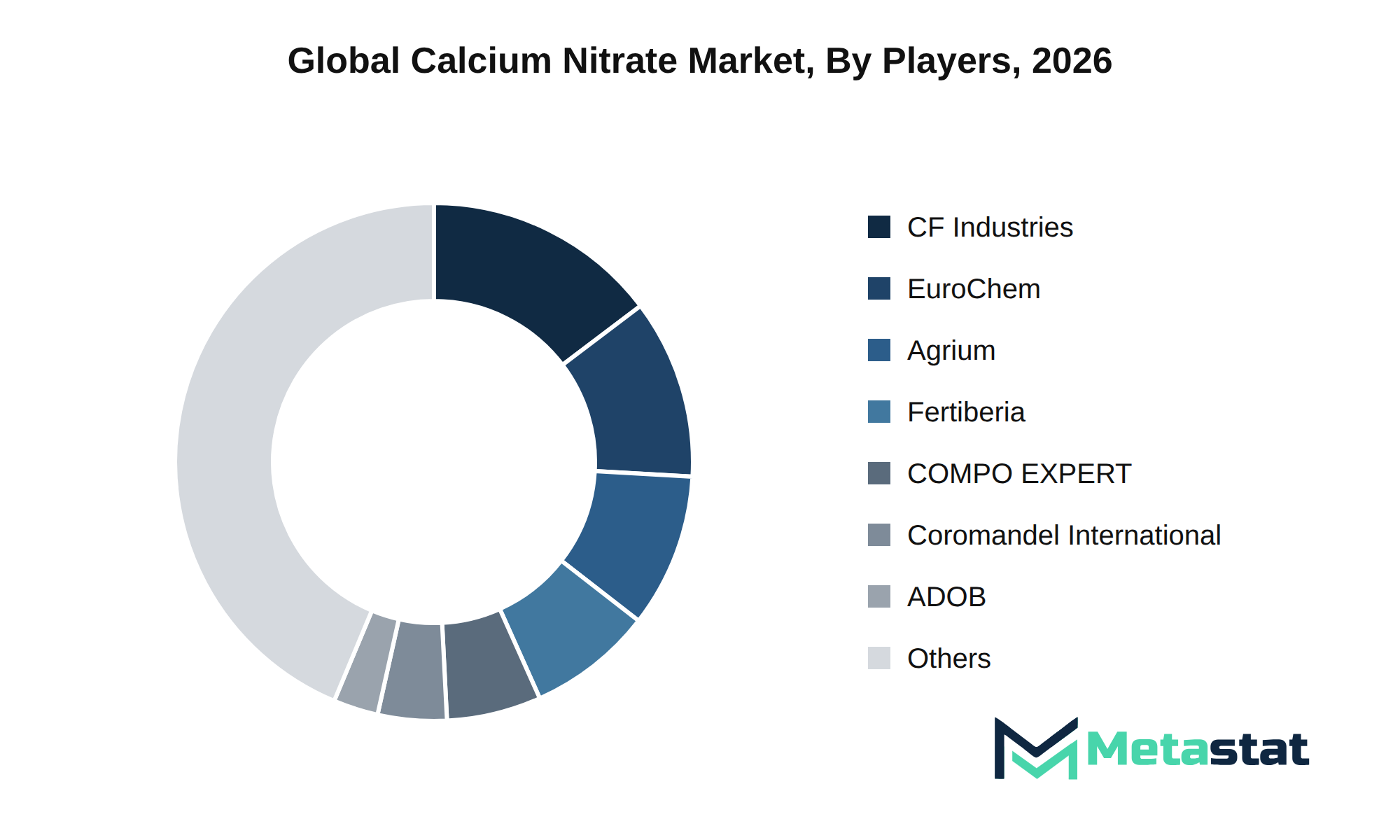
Competition in the Calcium Nitrate market centers on breadth of product grade, form, and end-use application coverage, with suppliers differentiating on technical expertise, product purity, and portfolio depth. Buyers evaluate suppliers on price stability, ability to supply high-purity or specialty grades, and responsiveness to industry-specific certification requirements. Large-scale fertilizer producers including Yara International ASA and SQM S.A. dedicate resources to meeting the volume and consistency requirements of agriculture and horticulture customers, while companies including Merck KGaA and Thermo Fisher Scientific Inc. maintain positions in reagent and analytical grades, supporting laboratory and life sciences applications through high-purity offerings.
Custom formulation is a competitive lever for players including COMPO EXPERT GmbH and Coromandel International Limited, who target specialized agricultural and horticultural needs. Suppliers including CF Industries Holdings, Inc and Uralchem Holding PLC supply industrial and technical grades for construction, wastewater treatment, and mining sectors, emphasizing supply reliability and operational scale. Several companies including ADOB and Shanxi Jiaocheng Tianlong Chemical Industry Co., Ltd. support demand in Asia Pacific, where the region accounts for 35.8% of total value, by tailoring offerings to local crop and climatic requirements. The market sees ongoing specification shifts among buyers, with supplier selection influenced by both product consistency and the ability to address sectoral regulatory or quality benchmarks.
Achieving this growth depends on expanding adoption of calcium nitrate-based fertilizers in Asia Pacific, where rising agricultural intensification and increased demand for crop yield enhancement drive volume uptake. The Fertilizers & Plant Nutrition segment is projected to remain the largest application, reflecting sustained investment in high-efficiency nutrient management by large-scale growers and horticultural operations. Meanwhile, ongoing infrastructure development supports higher consumption in the Construction & Building Materials sector, particularly in Europe, where concrete admixtures benefit from regulatory standards and public investment in resilient civil engineering projects. The future trajectory of the market is shaped by these sector-specific drivers alongside the continued shift toward liquid and specialty grades, which enable both precision agriculture and high-performance industrial uses. The primary risk to this forecast is price volatility linked to raw material cost fluctuations, primarily affecting producers and buyers in regions with high import dependence. Such instability challenges budget planning and procurement for both agribusinesses and construction firms, potentially slowing project initiation and fertilizer application rates. The pace at which suppliers and end-users adapt sourcing strategies or innovate with alternative inputs influences the resilience of the market through 2033.
By Form: Granular/Prilled, Crystalline/Flake, Powder, Liquid/Solution
By Application: Fertilizers & Plant Nutrition, Concrete Admixtures & Setting Acceleration, Wastewater Treatment & Odor Control, Explosives & Mining Formulations, Thermal Storage & Cooling Media, Chemical Processing & Manufacturing, Laboratory, Research & Cell Culture, Others (Latex Processing, Metal Treatment, De-Icing Applications)
By End-Use Industry: Agriculture & Horticulture, Construction & Building Materials, Water & Wastewater Treatment, Mining & Explosives, Chemical Manufacturing, Ceramics, Glass & Latex, Research Laboratories & Life Sciences, Others (Oil & Gas, Metalworking)
The report strategically identifies and profiles the key market players and analyses their core competencies in each sub-segment of the Calcium Nitrate market.
|
Report Attributes |
Details |
|
Study Period |
2021-2033 |
|
Base Year |
2025 |
|
Estimated Year |
2026 |
|
Forecast Period |
2026-2033 |
|
Historical Period |
2021-2025 |
|
Growth Rate |
CAGR 6.3% from 2026 to 2033 |
|
Revenue Unit |
USD billion |
|
Segmentation |
By Grade, Form, Application, End-Use Industry, and Region |
|
By Region |
North America (By Grade, Form, Application, End-Use Industry, and Country)
|
|
|
|
Asia Pacific (By Grade, Form, Application, End-Use Industry, and Country)
|
|
|
|
|
Middle East and Africa (By Grade, Form, Application, End-Use Industry, and Country)
|
Find answers to common questions about this report
The Calcium Nitrate market size was valued at USD 14.4 billion in 2025.
The projected CAGR is 6.3% for the forecast period from 2026 to 2033.
The North America Calcium Nitrate market size is estimated to reach USD 5.6 billion by 2033.
Agricultural Grade leads by value, reaching USD 15.7 billion in 2033 among all grade segments. This segment outpaces Industrial/Technical Grade, which is projected at USD 5.1 billion in 2033.
Intensification of commercial agriculture is increasing demand, as growers scale operations and expand irrigated farmlands, driving higher usage of calcium nitrate-based fertilizers for improved yields and crop quality. Specialty and high-purity grades are experiencing rapid uptake in laboratory, research, and life sciences applications, supporting revenue expansion for suppliers able to meet stringent quality requirements.
Asia Pacific holds the dominant share with 35.8 percent of the total market, leading all other regions by percentage share. Europe follows with 27.7 percent, and North America accounts for 24.3 percent.
Volatility in raw material prices, including limestone, ammonia, and nitric acid, creates unpredictable procurement costs for industrial buyers. High energy intensity during production drives sustained margin pressure, especially for technical and specialty grades. These factors limit broader adoption and slow replacement cycles in cost-sensitive sectors.
Intensification of commercial agriculture and expansion of irrigated farmlands are driving higher adoption, with growers seeking both calcium and nitrogen for improved crop yields. Stable pricing for agricultural grades and the dual nutrient profile support increased contract volumes from fruit, vegetable, and specialty crop producers.
The Calcium Nitrate market is estimated to reach a valuation of USD 23.5 billion by 2033.
Companies active in this industry include ADOB, Agrium Inc., Airedale Group, Avantor, Inc., CF Industries Holdings, Inc., COMPO EXPERT GmbH, and Shanxi Jiaocheng Tianlong Chemical Industry Co., Ltd. These firms manufacture or supply core calcium nitrate products to various end-use sectors.
The analysts below cover Chemicals and Materials research at Metastat Insights.
LEAD ANALYST
Utkarsh Khirodkar is a Lead Market Research Analyst at MetaStat Insight, specializing in market intelligence, technology sector assessments, and competitive strategy.

INDUSTRY CONSULTANT - CHEMICALS & ADVANCED MATERIALS
Chemicals and Materials · Machinery & Equipment · Packaging
Amit Gadhekar Consultant for Chemicals and Materials at MetaStat Insight, directing sector-specific intelligence, research, and strategic consulting across global chemical and processing markets.
Replacing petrochemical surfactants with bio-based alternatives requires realistic timelines on industrial precision fermentation scaling. The market research broke down commercialization timelines, feedstock sugar price sensitivities, and regional cosmetic ingredient regulatory approvals in Europe and East Asia. That supplier readiness mapping gave our formulations team reliable context when comparing renewable chemical sourcing roadmaps.
Tracking ceramic matrix composite adoption in high-bypass aero engines requires strict attention to material qualification cycles and FAA airworthiness testing milestones. The MetaStat Insight team provided a detailed timeline of silicon carbide fiber manufacturing capacity and commercial foundry lead times. Having clear visibility into upstream thermal barrier coating supply helped us stress-test our long-term component procurement strategy.
Transitioning ultra-class mining haul trucks to alternative power requires concrete data on remote hydrogen refueling infrastructure economics. The report evaluated megawatt-scale electrolyzer installation expenses, onsite storage safety mandates, and heavy-duty fuel cell stack degradation under continuous duty cycles. That technical rigor helped our engineers benchmark realistic total operating cost horizons for off-highway fleet decarbonization.
Explore related market intelligence reports worth reading alongside this one.
Starting from
$2950