
LEAD ANALYST
Utkarsh Khirodkar is a Lead Market Research Analyst at MetaStat Insight, specializing in market intelligence, technology sector assessments, and competitive strategy.

US and Europe Laser Market Size, Share, By Laser Source (Fiber Lasers, Diode Lasers, CO₂ Lasers, Solid-State Lasers, Excimer and Ultraviolet Lasers, Others), By System Architecture (Laser Plotter Systems, Galvo Systems, Integrated Production-Line Laser Systems, Robotic Laser Processing Cells), By Processing Operation (Laser Engraving, Laser Marking and Coding, Laser Cutting, Laser Ablation and Surface Structuring, Laser Welding), By Region (United States, Germany, United Kingdom, France, Italy, Rest of Europe), Industry Analysis, Growth, Trends, and Forecast, 2026-2033
Report ID
MSI-5816
Published
November, 2026
Pages
310 Pages
Format
Historical
Base year
Forecast
Forecast period
Report Details
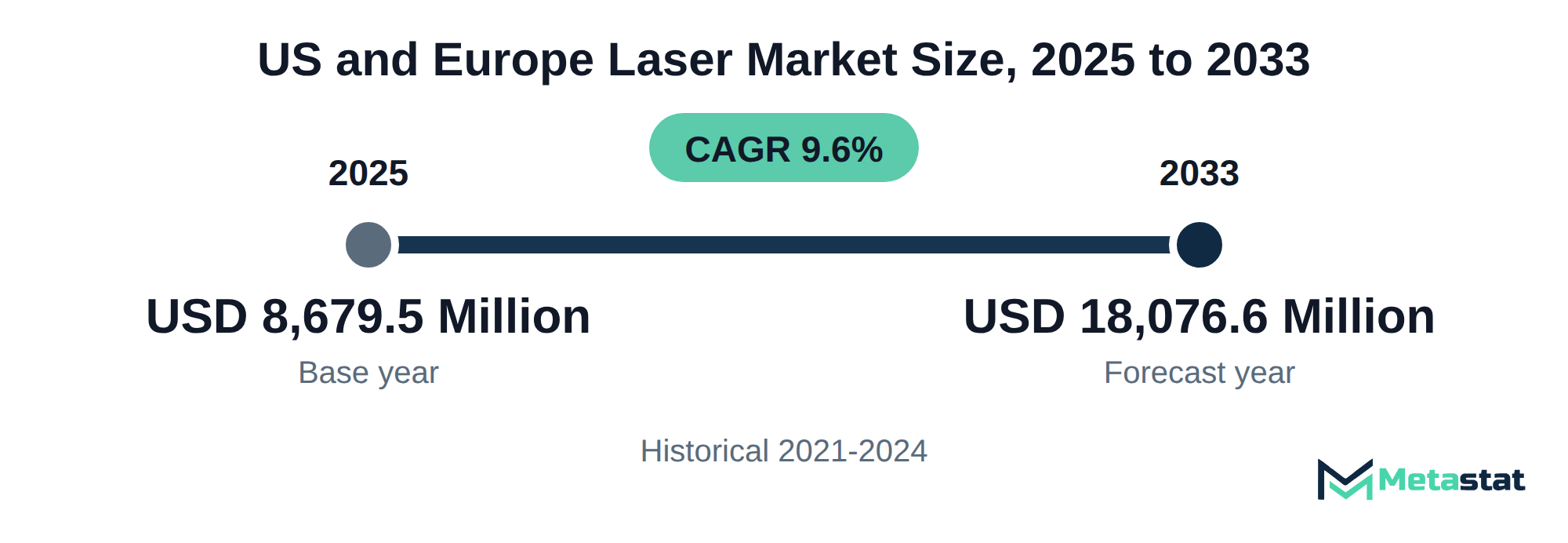
Market Valuation: Valued at $8,679.5 Million in 2025, projected to reach $18,076.6 Million by 2033 at a 9.6% CAGR.
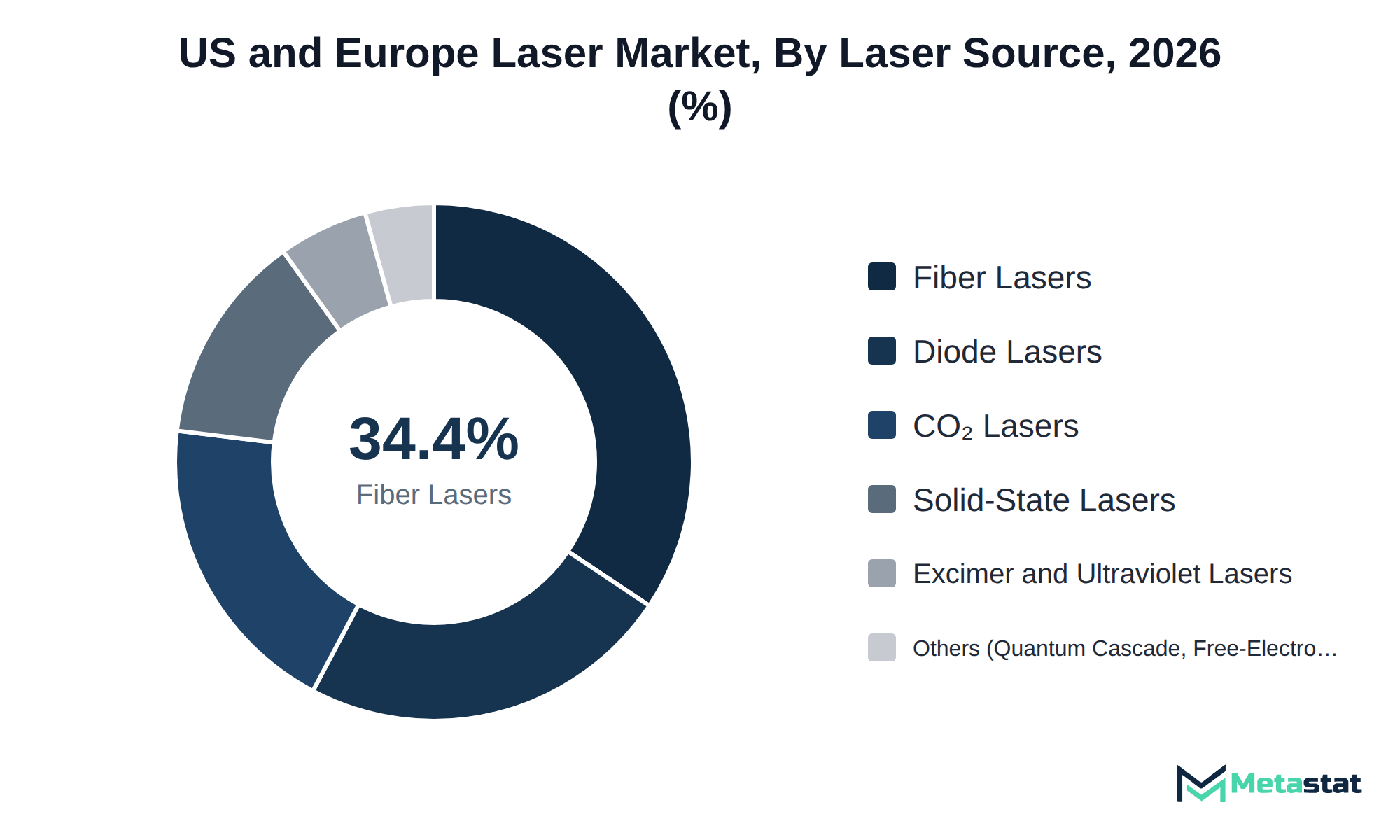
Dominant Segment: Fiber lasers lead the market, driven by their efficiency and precision, with projected revenue growth from USD 3,309.3 million in 2026 to USD 6,583.5 million by 2033, reflecting a CAGR of 10.3%.
Geographic Lead: The United States holds the largest market share, bolstered by significant investments in laser technology across various sectors, particularly in manufacturing and aerospace.
What's Inside: The report provides a comprehensive analysis of the US and Europe Laser market, covering various laser sources, system architectures, and processing operations, along with competitive landscape insights and growth forecasts.
Emerging Applications: The market is expanding due to increasing adoption of laser technologies in medical devices, electronics, and automotive industries, with laser engraving projected to reach USD 3,098.3 million by 2033, growing at a CAGR of 8.8%.
Choose Your License
US and Europe Laser Market
The US and Europe Laser market was valued at USD 8,679.5 million in 2025 and is projected to reach USD 18,076.6 million by 2033, growing at a CAGR of 9.6% over the forecast period.
The US and Europe Laser market encompasses a variety of laser technologies and systems across industries for applications including cutting, engraving, and marking. Buyers invest in this market to enhance operational efficiency, achieve precision in manufacturing, and meet the increasing demand for automation in production processes. This market serves sectors including automotive, aerospace, electronics, and medical devices, where laser solutions replace traditional methods due to their speed and accuracy.
Growth in the market is driven by technological advancements, particularly in fiber lasers, which represent the segment with the highest value. The increasing adoption of these lasers across various applications reflects their efficiency and reliability. In terms of regional performance, the United States holds the largest share, demonstrating significant demand and investment in laser technology. This strong market presence supports further innovation and expansion in the laser sector.
One primary growth driver in the market is the escalating need for automated solutions in manufacturing processes. This trend is evident as industries strive for higher productivity and reduced operational costs. The shift towards automation increases the demand for advanced laser systems capable of delivering high-quality results with minimal downtime. Consequently, the market is projected to experience sustained growth as industries continue to embrace these technologies.
The US and Europe Laser market serves a broad range of applications, including high-precision manufacturing, medical procedures, and telecommunications. Buyers invest in this technology to enhance productivity, improve product quality, and reduce operational costs. Industries including automotive, aerospace, and electronics represent significant consumer groups, driven by the demand for efficiency and innovation in their respective fields.
Growth in the market is supported by advancements in laser technology, particularly in fiber lasers, which represent the segment with the highest value. These lasers deliver improved performance and versatility, making them ideal for various applications. The United States maintains the largest share of the market, reflecting strong industrial activity and investment in laser systems across numerous sectors.
One primary driver of growth stems from increasing automation in manufacturing processes. Companies prioritize adopting advanced laser systems to streamline operations and enhance production capabilities. This trend boosts efficiency and contributes to the overall expansion of the market, positioning laser technology as a fundamental component of modern industrial practices.
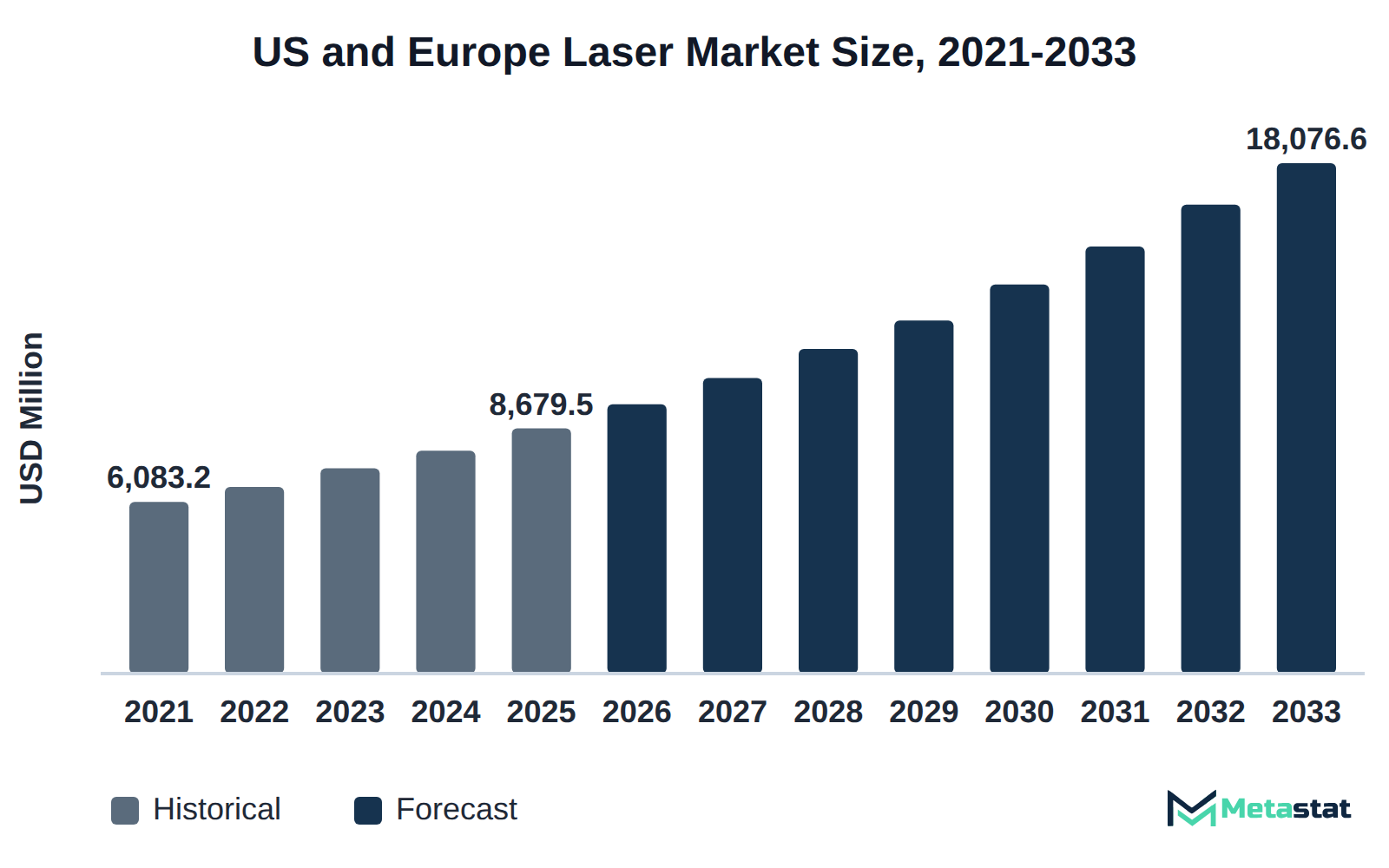
Adoption of fiber lasers is rapidly transforming industrial processing within the US and Europe Laser market. This technology provides significant advantages in terms of precision and efficiency, making it an attractive option for various applications. The transition toward fiber lasers is evident, with revenue expected to rise from USD 3,309.3 million in 2026 to USD 6,583.5 million by 2033, representing a compound annual growth rate (CAGR) of 10.3%. This shift reflects a broader trend toward high-precision manufacturing processes that demand enhanced operational capabilities.
Industries including automotive, aerospace, and electronics are increasingly integrating fiber laser technology into their operations. This integration results in improved cutting speeds and quality, driving down operational costs while facilitating complex designs. The enhanced performance characteristics of fiber lasers, including their ability to maintain consistency across high-volume production, contribute to overall cost reduction within manufacturing processes. Greater efficiency in these sectors translates to increased competitiveness in the global market.
The US and Europe Laser market thus experiences broadening adoption as firms seek to capitalize on the technological benefits of fiber lasers. Companies that invest in this technology position themselves favorably for future growth, particularly within high-precision applications. While the shift continues, the market anticipates substantial enhancements in productivity and innovation across various industrial segments.
The purchasing dynamics in the US and Europe Laser market reflect a growing trend towards integrated solutions that enhance operational efficiency. Buyers prioritize cost-effective options, and detailed contract models facilitate long-term partnerships with suppliers. For instance, Galvo systems are expected to reach a value of USD 5,996 million by 2033, illustrating the shift towards high-precision and automated solutions that enable manufacturers to streamline production processes.
Contract models typically involve upfront investments with guarantees for maintenance and upgrades, aligning buyers' interests with suppliers' capabilities. This arrangement mitigates risks associated with rapid technological advancements and assures a consistent performance level, driving manufacturers towards suppliers who offer comprehensive service packages. The robust demand for Galvo systems within the market highlights the shift in buyer behavior, where long-term investment strategies take precedence over short-term cost considerations.
By enabling automation and improving production accuracy, these systems play a critical role in reducing operational costs. Consequently, businesses realize enhanced productivity and lower overall manufacturing expenses, reinforcing the trend of investing in advanced laser technologies. The US and Europe Laser market continues to evolve, with buyers increasingly valuing partners who provide not only products but integrated solutions that support growth and innovation.
The US and Europe Laser market experiences significant growth driven by rising adoption of lasers in various industries, particularly medical devices, electronics, automotive, and aerospace production. Integration of laser technologies enhances precision and efficiency in manufacturing processes. For example, laser cutting and engraving techniques have become essential in the medical sector for producing intricate components, including surgical instruments and implants.
In the laser engraving segment, the market is projected to reach USD 3,098.3 million by 2033, reflecting a compound annual growth rate (CAGR) of 8.8% from 2026. This growth aligns with increasing demand for high-quality, custom medical devices and components, which require precise and reliable manufacturing methods. Companies in the medical device sector invest in advanced laser systems to improve production quality while reducing operational costs.
This trend creates opportunities for suppliers of laser technology to expand their offerings tailored to the specific needs of these industries. The US and Europe Laser market stands to benefit from these advancements, driving innovation and enhancing the competitiveness of manufacturers across sectors.
Rising adoption of advanced laser technologies in various industries drives demand significantly. The increasing reliance on precision manufacturing, medical applications, and materials processing necessitates higher efficiency and accuracy, which fiber lasers offer. Industries including automotive, aerospace, and electronics benefit from the enhanced performance of these technologies, leading to cost savings and improved product quality.
In addition to fiber lasers, diode lasers exhibit substantial growth potential, with a value of USD 4,358.3 million by 2033. Their versatility and efficiency in various applications, including laser marking and coding, contribute to their expanding presence in the market. Increased focus on automation and smart manufacturing solutions enables companies to incorporate these advanced technologies into their operations, further boosting demand.
The expansion of laser-based applications significantly influences purchasing decisions among industrial buyers in the US and Europe. Increased focus on precision and automation drives manufacturers to invest in advanced laser technologies that enhance operational efficiency. Buyers in sectors including automotive, electronics, and medical devices seek to adopt new laser processes to improve product quality and reduce production times. In 2025, the market recorded a value of USD 8,679.5 million, reflecting the growing trend of integrating laser systems into production workflows. The demand for innovative laser solutions supports substantial volume growth, with manufacturers striving to meet evolving consumer expectations. This shift indicates a structural change in buyer behavior, pushing companies to prioritize investments in laser technologies to maintain competitiveness in their respective industries.
Growing need for high-performance laser solutions
Increased requirements for high-performance laser solutions drive expenditure among buyers across various sectors in the US and Europe Laser market. Industries including packaging, aerospace, and electronics pursue advanced laser technologies to achieve enhanced processing capabilities and improved product outcomes. The transition to laser systems reduces operational costs while meeting stringent quality standards. This transition highlights how technological advancements motivate investments in laser solutions, enabling companies to adapt to market demands and increase efficiency in their operations.
Advancements in laser technologies significantly boost processing capabilities within various industries. Innovations in laser sources, including fiber and diode lasers, support improvements in efficiency and precision, appealing to sectors including manufacturing and healthcare. The introduction of high-quality laser systems enables faster production cycles, reduced operational costs, and enhanced product yields. Enhanced performance characteristics transform applications including laser cutting, engraving, and marking, where accuracy is critical.
The US and Europe Laser market benefits from these technological advancements, with businesses prioritizing investments in systems that streamline operations and increase competitiveness. The ongoing development of integrated production-line systems and robotic laser processing cells creates new opportunities for manufacturers aiming to optimize workflow. This competitive edge influences purchasing decisions, prompting buyers to select advanced laser solutions that offer superior functionality compared to traditional methods.
Price sensitivity among buyers in the US and Europe Laser market restricts adoption rates, particularly in small to medium-sized enterprises (SMEs). Many SMEs face budget constraints, impacting their ability to invest in advanced laser technologies. The costs associated with high-end laser systems deter potential customers, resulting in slower uptake and smaller order sizes. Companies operating in sectors including manufacturing and automotive frequently delay replacements or upgrades due to these financial considerations. Heightened competition among laser technology providers leads to fluctuating pricing strategies, exacerbating uncertainty regarding investment decisions. Buyers often seek alternative solutions or less expensive technologies, further limiting demand for premium laser products in the market. This constraint affects immediate purchasing behavior and influences long-term growth projections for the industry.
Rising input costs present a significant challenge for suppliers operating in the US and Europe Laser market. Fluctuations in the prices of raw materials, coupled with supply chain disruptions, inflate operational expenses. Suppliers experience pressure on profit margins, compelling them to reassess pricing strategies and cost structures. Many suppliers respond by investing in more efficient manufacturing processes, seeking to streamline operations and reduce overheads. Suppliers increasingly explore alternative materials and sourcing options to mitigate the impact of rising costs. This strategic shift maintains competitiveness while ensuring product quality remains uncompromised. Adaptability becomes evident in the face of ongoing market fluctuations, highlighting the importance of innovation and resource optimization in sustaining profitability and growth. Suppliers that navigate these challenges effectively position themselves favorably in the evolving market.
The laser engraving segment is positioned for significant growth within the US and Europe Laser market, with a compound annual growth rate (CAGR) of 8.8%. This segment addresses increasing demand for customization and personalization across various industries, including consumer goods and textiles. Businesses invest in laser engraving technologies to enhance product differentiation, streamline production processes, and improve overall efficiency. The projected market value for laser engraving is expected to reach USD 3,098.3 million by 2033, reflecting a robust trajectory driven by technological advancements. Increased adoption among small to medium-sized enterprises (SMEs) signals a shift towards more accessible laser solutions, expanding the market's potential. Suppliers that focus on innovative laser engraving systems leverage this opportunity to capture a larger share of the growing demand.
The US and Europe Laser market is segmented based on Laser Source, System Architecture, Processing Operation, and Region.
These lasers are widely applied in various applications, including material processing, telecommunications, and medical technologies. Their high efficiency and precision underlie growing demand from industries that require high-quality outcomes. Key drivers for the Fiber Lasers segment include an increasing focus on automation in manufacturing and the rising need for advanced processing capabilities. Compared to other laser sources, including CO₂ and solid-state lasers, fiber lasers exhibit a faster growth trajectory, with the segment's CAGR of 10.3% outpacing the growth of solid-state lasers at 8.7%. This distinction highlights the shift towards fiber technology, which aligns with contemporary production needs across sectors requiring enhanced performance.
Diode Lasers segment is estimated to reach USD 4,358.3 million by 2033, at a CAGR of 10% during the forecast period. These lasers serve various applications, including industrial cutting, marking, and medical device manufacturing. The growing trend toward automation and the increasing need for precision in manufacturing processes drive demand for diode lasers, particularly among medium and large enterprises that prioritize efficiency and quality. This segment experiences significant growth, outpacing other laser sources, including Solid-State Lasers, which have a lower CAGR of 8.7%. Diode Lasers differ from Fiber Lasers, which are gaining traction due to their efficiency and versatility. While Fiber Lasers have a CAGR of 10.3%, diode lasers maintain competitive pricing, appealing to a broader range of buyers. Ongoing advancements in diode laser technology further enhance their operational capabilities, supporting their adoption across diverse industries in the US and Europe Laser market.
CO₂ Lasers segment is expected to reach USD 3,185.1 million by 2033. This technology serves various applications, including cutting and engraving materials in industries including manufacturing and healthcare. Demand for CO₂ lasers is driven by the increasing need for precision in material processing and the ability to handle a diverse range of materials, including plastics, wood, and metals. Compared to other laser types, CO₂ lasers experience slower growth, with a lack of significant technological advancements impacting their market position. While fiber and diode lasers offer higher efficiency rates, CO₂ lasers maintain a solid user base due to their established role in specific applications. Industries that prioritize versatility in laser processing techniques favor CO₂ lasers, ensuring ongoing demand despite the competitive landscape.
Solid-State Lasers segment is projected to grow at a CAGR of 8.7% during the forecast period. These lasers find applications in various industries, including telecommunications, medical devices, and high-precision manufacturing. Users leverage Solid-State Lasers for their efficiency and versatility, particularly in processes like laser cutting and engraving. The segment's growth is driven by advancements in technology that enhance performance, along with increasing demand for high-quality laser processing. Compared to other laser types, Solid-State Lasers exhibit slower growth, with applications that often require specialized equipment. This distinguishes them from fiber and diode lasers, which experience faster growth rates due to wider adoption across multiple sectors. The market reflects a shift towards more efficient and powerful laser technologies, ensuring solid demand for Solid-State Lasers.
Excimer and Ultraviolet Lasers play a crucial role in various industrial applications, particularly in the fields of micromachining and photolithography. Industries including electronics and semiconductor manufacturing heavily employ these lasers for precise material processing, enabling the production of intricate designs and patterns on substrates. Demand for these lasers is driven by the increasing need for miniaturization in electronic components, necessitating advanced processing technologies. Unlike other laser types, including fiber lasers, Excimer and Ultraviolet Lasers primarily serve niche markets requiring specialized capabilities. This segment differentiates itself through its unique applications, which often command higher price points compared to more commonly used laser sources. The rapid evolution of technology and the growing sophistication of manufacturing processes contribute to consistent interest in this segment, ensuring it remains a vital aspect of the US and Europe Laser market.
Quantum cascade and free-electron lasers represent specialized technologies within the laser source segment. These lasers find applications in various scientific and industrial fields, primarily for advanced research, spectroscopy, and high-precision measurements. Demand for this sub-segment stems from increasing research activities and advancements in materials science. Research institutions and specialized manufacturers drive purchasing decisions, recognizing the unique capabilities these lasers offer. Compared to other laser types, including fiber lasers or diode lasers, quantum cascade and free-electron lasers involve higher costs due to their complexity and niche applications. This segment's distinct features facilitate specific applications that other technologies do not accommodate, shaping the dynamics of the US and Europe Laser market.
Laser Plotter Systems segment is valued at USD 2,565.8 million in 2026 and is projected to reach USD 4,493.8 million by 2033, at a CAGR of 8.3% during the forecast period. These systems serve precision cutting, engraving, and marking in various industries, including manufacturing, packaging, and signage. Demand for Laser Plotter Systems is driven by the increasing need for automation and efficiency in production processes. Businesses seek to enhance their operational capabilities while reducing lead times, thereby propelling growth in this segment. Compared to other systems, including Galvo Systems, which experience a CAGR of 10.3%, Laser Plotter Systems exhibit moderate growth, reflecting a different pricing structure and target buyer demographic. This differentiation positions Laser Plotter Systems as a reliable choice for users requiring versatility and precision in applications.
Galvo Systems segment is estimated to reach USD 5,996 million by 2033, at a CAGR of 10.3% during the forecast period. This technology primarily serves industries including manufacturing, automotive, and electronics, where precision and speed in laser processing are essential. The adoption of Galvo Systems is driven by increasing demand for automation and efficiency in production lines. These systems offer faster processing speeds compared to traditional laser systems, helping to reduce operational costs for manufacturers. In contrast to other segments like Laser Plotter Systems, which exhibit a CAGR of 8.3%, Galvo Systems demonstrate a more significant growth trajectory, reflecting heightened interest among buyers for high-performance laser solutions. The market for Galvo Systems continues to expand, positioning it as a key player in the evolving landscape of laser technologies.
Integrated Production-Line Laser Systems segment is expected to reach USD 5,050.6 million by 2033. These systems serve high-volume manufacturing processes, offering automated solutions for tasks including cutting, welding, and marking. Industries including automotive, electronics, and consumer goods adopt these systems for their efficiency and precision. Increasing demand for automation drives growth in this segment, supported by advancements in laser technologies that enhance processing capabilities. This segment demonstrates a compound annual growth rate (CAGR) of 8.3%, slower than the Galvo Systems segment, which is projected to achieve a CAGR of 10.3%. Factors influencing Integrated Production-Line Laser Systems include the need for operational efficiency and reduced labor costs, essential for manufacturers competing in a price-sensitive environment. The market's trajectory reflects a continuous shift towards integrated solutions, differentiating it from other segments in this group that focus on standalone or less automated systems.
Robotic Laser Processing Cells segment is projected to grow at a CAGR of 8.3% during the forecast period. These systems facilitate automated laser processing tasks, primarily used in manufacturing sectors for applications including cutting, welding, and assembly. Industries including automotive, electronics, and aerospace adopt these solutions for enhanced precision and efficiency. Increasing demand for automation in manufacturing drives this segment, with companies seeking to improve productivity and reduce labor costs. Compared to other sub-segments, Robotic Laser Processing Cells exhibit a more gradual growth trajectory, differing from the faster-growing Galvo Systems segment, which is anticipated to achieve a CAGR of 10.3%. The market benefits from technological advancements that broaden the scope of applications and enhance processing capabilities. This reflects a strong alignment between innovation and user demand across various industries, creating ample opportunities for expansion in the US and Europe laser market.
This segment finds extensive applications across industries including manufacturing, packaging, and signage, where precision and customization are critical. The rising demand for personalized products significantly drives growth, particularly among businesses emphasizing branding and unique offerings. Compared to other segments like Laser Cutting, which holds a higher market value, Laser Engraving experiences slower growth; however, it provides a distinct advantage in applications requiring finer detail and intricate designs. Investments in advanced laser technologies enhance engraving capabilities, further supporting its adoption in specialized markets. The US and Europe Laser market continues to shape the competitive landscape as businesses seek to differentiate their products through effective engraving solutions.
Laser Marking and Coding segment is estimated to reach USD 4,063.6 million by 2033, at a CAGR of 10.2% during the forecast period. This segment serves diverse industries, including pharmaceuticals, electronics, and packaging, where precise marking and coding of products ensure compliance and traceability. The increasing regulatory requirements drive demand for high-quality marking solutions, enhancing product safety and brand integrity. Unlike other processing operations, Laser Marking and Coding benefits from rapid technological advancements, leading to efficient integration of systems. This segment distinguishes itself through faster growth compared to Laser Engraving, reflecting broader adoption of these technologies across various applications. The rising focus on automation and digitalization supports the segment's expansion, establishing it as a critical component in the US and Europe Laser market.
Laser Cutting segment is expected to reach USD 5,092.2 million by 2033. This segment finds extensive use in industries including automotive, aerospace, and electronics for precision cutting of various materials, including metals, plastics, and composites. Demand for advanced cutting techniques drives growth in this segment, highlighting the increasing need for efficiency and accuracy in manufacturing processes. Adoption of innovative technologies, including fiber lasers, enhances cutting speed and quality, distinguishing this segment from others including Laser Engraving, which grows at a slower pace. With a compound annual growth rate (CAGR) anticipated to reflect a robust increase, Laser Cutting proves essential for high-volume production environments, shaping operational standards across the US and Europe Laser market.
Laser Ablation and Surface Structuring segment is projected to grow at a CAGR of 11.1% during the forecast period. This technology finds applications in various industries, including electronics, automotive, and medical devices, for precise material removal and surface enhancement. The demand for advanced manufacturing techniques drives the growth of this segment, driven by manufacturers increasingly seeking higher precision and quality in their processes. Compared to other segments, including Laser Marking and Coding, which has a CAGR of 10.2%, Laser Ablation and Surface Structuring demonstrates a faster growth trajectory. Its ability to deliver superior results in complex applications positions this segment favorably within the US and Europe Laser market, appealing to buyers requiring innovative and effective solutions. The integration of automation and advancements in laser technology continuously enhances capabilities, reinforcing demand within this segment.
Laser welding employs high-intensity laser beams to join materials, primarily metals, by melting and fusing them together. This technology finds extensive applications in industries including automotive, aerospace, and manufacturing, where precision and speed are critical. The demand for laser welding is driven by the need for lightweight and strong materials, particularly in automotive and aerospace applications, where reducing weight improves fuel efficiency. Compared to other processing operations, laser welding benefits from its ability to create precise, clean seams without excessive heat, which distorts materials. This attribute differentiates it from processes like traditional welding, which introduces warping or requires additional post-processing. Investment in advanced laser welding technologies continues to grow as manufacturers seek to enhance productivity and quality, contributing to the overall expansion of the US and Europe laser market.
United States segment is valued at USD 5,157 million in 2026 and is projected to reach USD 9,667.3 million by 2033, at a CAGR of 9.4% during the forecast period. This segment finds extensive application across various industries, including manufacturing, medical devices, and aerospace, where precision and efficiency are critical. Growth is driven by increasing adoption of advanced laser technologies for cutting, marking, and engraving applications, particularly in high-demand environments including automotive and electronics. Compared to other regional segments, the United States exhibits a robust demand trajectory due to significant investments in technological innovation and automation. Companies in this segment focus on enhancing product offerings, contributing to competitive pricing and improved market positioning, further propelling growth within the US and Europe Laser market.
Germany segment is estimated to reach USD 2,176.4 million by 2033, at a CAGR of 9.7% during the forecast period. This segment finds substantial use in industrial applications, particularly in manufacturing and automation sectors. Key drivers include a growing emphasis on precision manufacturing and advancements in laser technology, which enhance efficiency and productivity. In comparison to other segments, Germany's growth rate stands out, reflecting strong investment in high-tech processes. The adoption of laser systems in various industries, including automotive and electronics, continues to rise, promoting further market expansion. The market benefits from increasing demand for innovative production methods that leverage the capabilities of laser systems.
United Kingdom segment is expected to reach USD 1,592.5 million by 2033. This segment finds extensive application in manufacturing, particularly in the automotive and electronics sectors, where precision and quality are critical. Demand for advanced processing techniques fuels growth, driven by the need for high accuracy in production. The segment stands out due to its focus on laser marking and engraving applications, which are essential for branding and traceability in various industries. Compared to other segments, it experiences slower growth rates, reflecting a more mature market. Increased investment in automation and digitalization within industries enhances the segment's prospects. Consequently, the market experiences a shift toward integrating laser technologies to improve efficiency and output quality.
France segment is projected to grow at a CAGR of 9.7% during the forecast period. This segment is applied primarily in industrial applications including precision cutting and engraving, serving manufacturing, automotive, and aerospace sectors. The increasing demand for high-quality and precise processing techniques drives the growth of this sub-segment, reflecting a broader trend towards automation and efficiency. Unlike other segments, the France segment demonstrates moderate growth compared to its counterparts in the region, aligning closely with the overall market trends while benefiting from advancements in laser technology. Ongoing investment in modernization and upgrading of equipment in France's industrial base influences this segment's trajectory, resulting in a positive outlook for the coming years in the US and Europe Laser market.
Italy's segment focuses on various laser technologies, catering to multiple applications in industries including manufacturing, automotive, and electronics. Demand drivers include increasing adoption of automation and precision engineering, which enhance productivity and product quality. Italian manufacturers seek advanced laser systems for processes like cutting, marking, and engraving, enabling them to meet stringent quality standards. Compared to other European segments, Italy's market features a diverse range of applications but exhibits slower growth due to higher operational costs and initial investment hurdles faced by small and medium enterprises. This environment differentiates it from regions like Germany and the United Kingdom, where investment in laser technology is more robust, supported by stronger industrial infrastructure. The US and Europe Laser market is expected to evolve, shaping the future of manufacturing across various sectors.
Covering a diverse range of applications, the Rest of Europe segment consists of countries outside the primary markets of Germany, the United Kingdom, and France. This segment primarily serves manufacturers in industries including automotive, electronics, and packaging, employing laser technology for cutting, engraving, and marking purposes. Demand in this area benefits from growing investments in automation and precision manufacturing processes, driven by the need for increased efficiency and reduced operational costs. The segment experiences a unique market dynamic, often characterized by different pricing structures compared to the larger markets. While growth rates differ from the leading regions, ongoing technological advancements and local initiatives continue to enhance adoption rates across various industries in the Rest of Europe.
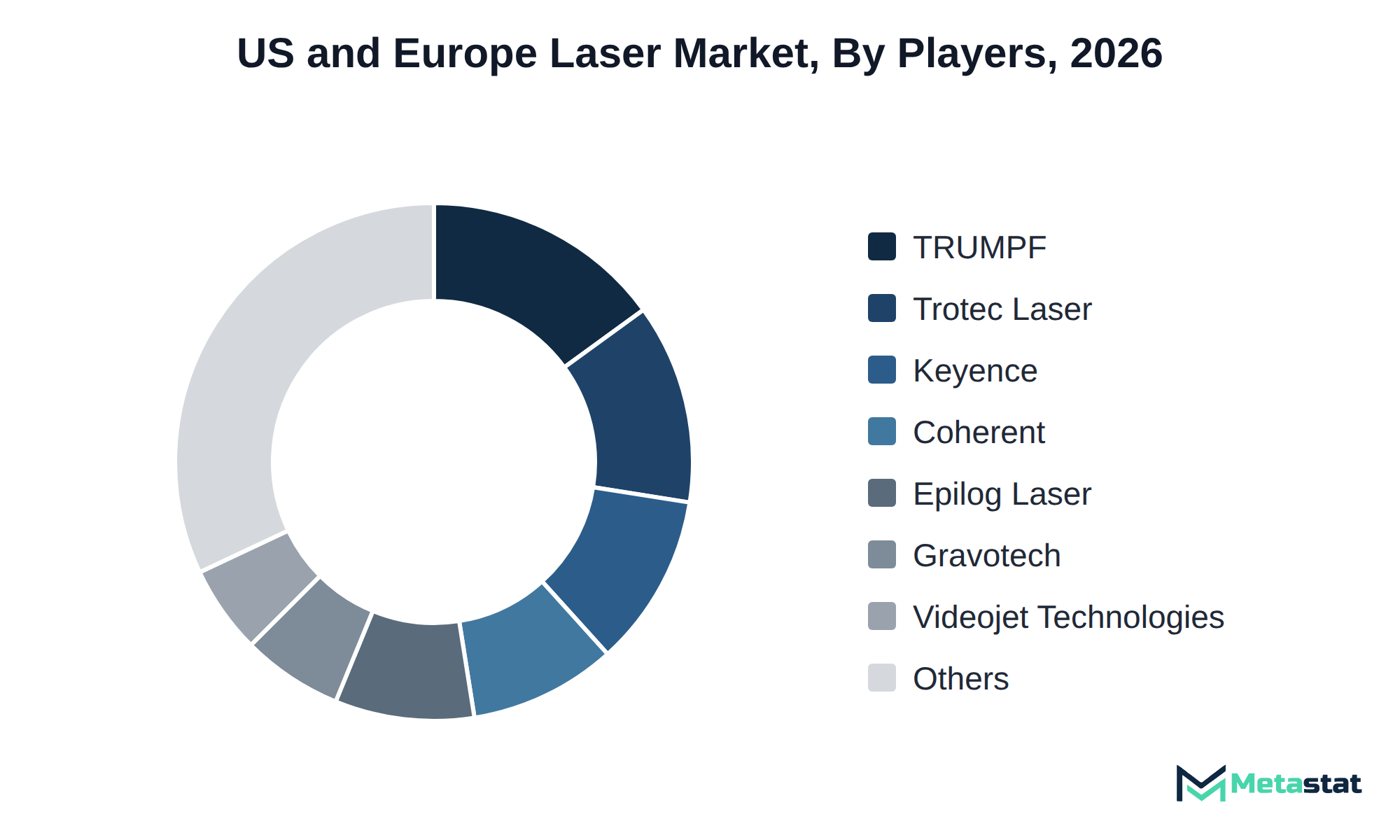
Competition in the US and Europe Laser market revolves around various factors including price, service, customization, and ecosystem offerings. Companies differentiate themselves by providing tailored solutions that meet specific customer requirements, influencing buyer decisions.
Trotec Laser GmbH focuses on delivering high-quality laser engraving and cutting systems, emphasizing customization and support. TRUMPF emphasizes integrated solutions that enhance productivity, appealing to buyers seeking advanced technology and automation. Coherent Corp. operates in the market with its diverse laser solutions, targeting industries requiring precision and efficiency.
Buyers in the market prioritize certifications and service levels, driving companies to meet stringent industry standards. The ability to offer a robust ecosystem of products and services enhances the attractiveness of suppliers. Companies like Epilog Laser and Keyence Corporation leverage their reputations for reliability and performance to capture market share, ensuring competitiveness in an evolving environment.
To achieve this growth, several developments occur. First, the adoption of fiber lasers, expected to see a CAGR of 10.3%, will drive significant gains in the laser source segment. The transition to efficient laser technologies, including diode lasers with a projected value of USD 4,358.3 million by 2033, supports this trend. However, risks exist that could hinder this forecast. Supply chain disruptions or economic downturns impede growth trajectories across segments. The availability of high-quality, cost-effective materials remains crucial for maintaining momentum in laser processing applications. With these key factors influencing the US and Europe Laser market, the outlook remains cautiously optimistic, driven by technological advancements and market stability.
By Laser Source: Fiber Lasers, Diode Lasers, CO₂ Lasers, Solid-State Lasers, Excimer and Ultraviolet Lasers, Others (Quantum Cascade, Free-Electron)
By System Architecture: Laser Plotter Systems, Galvo Systems, Integrated Production-Line Laser Systems, Robotic Laser Processing Cells
By Processing Operation: Laser Engraving, Laser Marking and Coding, Laser Cutting, Laser Ablation and Surface Structuring, Laser Welding
By Region: United States, Germany, United Kingdom, France, Italy, Rest of Europe
The report strategically identifies and profiles the key market players and analyses their core competencies in each sub-segment of the Laser market.
Report Attributes | Details |
Study Period | 2021-2033 |
Base Year | 2025 |
Estimated Year | 2026 |
Forecast Period | 2026-2033 |
Historical Period | 2021-2025 |
Growth Rate | CAGR 9.6% from 2026 to 2033 |
Revenue Unit | USD million |
Segmentation | By Laser Source, System Architecture, Processing Operation, Region, and Region |
Find answers to common questions about this report
The Laser market size was valued at USD 8,679.5 million in 2025.
The market is projected to grow at a CAGR of 9.6% during the forecast period from 2026 to 2033.
The leading segment in the Laser market is Fiber Lasers, with a projected value of USD 6,583.5 million by 2033. This segment exhibits the highest growth rate at 10.3% CAGR during the forecast period.
Increased focus on precision and automation drives manufacturers to invest in advanced laser technologies that enhance operational efficiency. The transition to laser systems reduces operational costs while meeting stringent quality standards.
The expansion of laser-based applications significantly influences purchasing decisions among industrial buyers, driven by the need for high-performance solutions across sectors like packaging and aerospace. Technological advancements enhance processing capabilities, enabling companies to improve product outcomes and reduce operational costs, thus favoring adoption in the market.
The Laser market is estimated to reach a valuation of USD 18,076.6 million by 2033.
Key players operating in the Laser industry include Trotec Laser GmbH, TRUMPF, Coherent Corp., Gravotech, Epilog Laser, Keyence Corporation, and Videojet Technologies.
The laser engraving segment is expected to achieve a compound annual growth rate (CAGR) of 8.8%, reaching a market value of USD 3,098.3 million by 2033.
Industries including automotive, electronics, and medical devices drive laser technology adoption, seeking to enhance product quality and reduce production times.
Suppliers face challenges from rising input costs and supply chain disruptions, which inflate operational expenses and pressure profit margins.
The analysts below cover Electronics and Semiconductor research at Metastat Insights.
LEAD ANALYST
Utkarsh Khirodkar is a Lead Market Research Analyst at MetaStat Insight, specializing in market intelligence, technology sector assessments, and competitive strategy.

PRINCIPAL CONSULTANT - ENTERPRISE AI & EMERGING TECHNOLOGIES
Banking & Finance · Electronics and Semiconductor · Energy and Power · Healthcare IT · Information & Technology · Professional Services
Vijay Gunti is a Principal Consultant at MetaStat Insight, bringing over two decades of experience across enterprise digital transformation, technology strategy, and intelligent systems.

PRINCIPAL CONSULTANT - QUALITY SYSTEMS & COMPLIANCE
Electronics and Semiconductor · Machinery & Equipment · Professional Services
Omkar Phadtare is an Industry Consultant at MetaStat Insight, specializing in quality systems, regulatory compliance, and standards benchmarking to drive data-driven market intelligence and strategic industry research.

ENERGY & INFRASTRUCTURE INDUSTRY CONSULTANT
Automotive and Transportation · Electronics and Semiconductor · Energy and Power · Machinery & Equipment
Saurabh Vasant Ganvir consults for Energy & Infrastructure Industry at MetaStat Insight, specializing in renewable energy, solar EPC, and electric vehicle (EV) infrastructure markets.

LEAD CONSULTANT - COMMUNICATION, TELECOM, AND IT
Electronics and Semiconductor · Information & Technology · Machinery & Equipment · Professional Services
Ravindra Sathe Consultants for Communication, Telecom, and IT at MetaStat Insight. He leads the firm's industry research initiatives across telecommunications infrastructure, digital connectivity, enterprise networking, and emerging information technology domains.
Floating offshore wind feasibility relies heavily on specialized installation vessel availability and port crane limits, which most broad renewable energy forecasts ignore. The report delivered a thorough analysis of dry dock capacity, mooring chain supply constraints, and raw material pricing trends for deepwater anchor installations. It served as a solid independent sanity check for our offshore project capital expenditure assumptions.
Assessing commercial microgrid software adoption requires looking past top-level installation numbers and examining utility interconnection queues. The research provided verifiable data on average permitting timelines, tariff structures, and battery storage integration costs across regional utility territories. That grounded perspective was valuable for our team when building five-year demand projections for industrial microgrid controllers.
Ambulatory surgical centers have very different purchasing cycles for robotic-assisted surgery platforms than major hospital networks. The MetaStat Insight study focused squarely on capital expenditure depreciation, procedural reimbursement pathways, and surgeon training overhead. That operational clarity made it much simpler to validate multi-year procedure growth forecasts against actual ambulatory center adoption patterns.
Explore related market intelligence reports worth reading alongside this one.
Starting from
$2950