
The Automotive Cross Car Beam sector is evolving with advancements in materials and manufacturing. This blog explores key trends and challenges shaping the outlook through 2033.
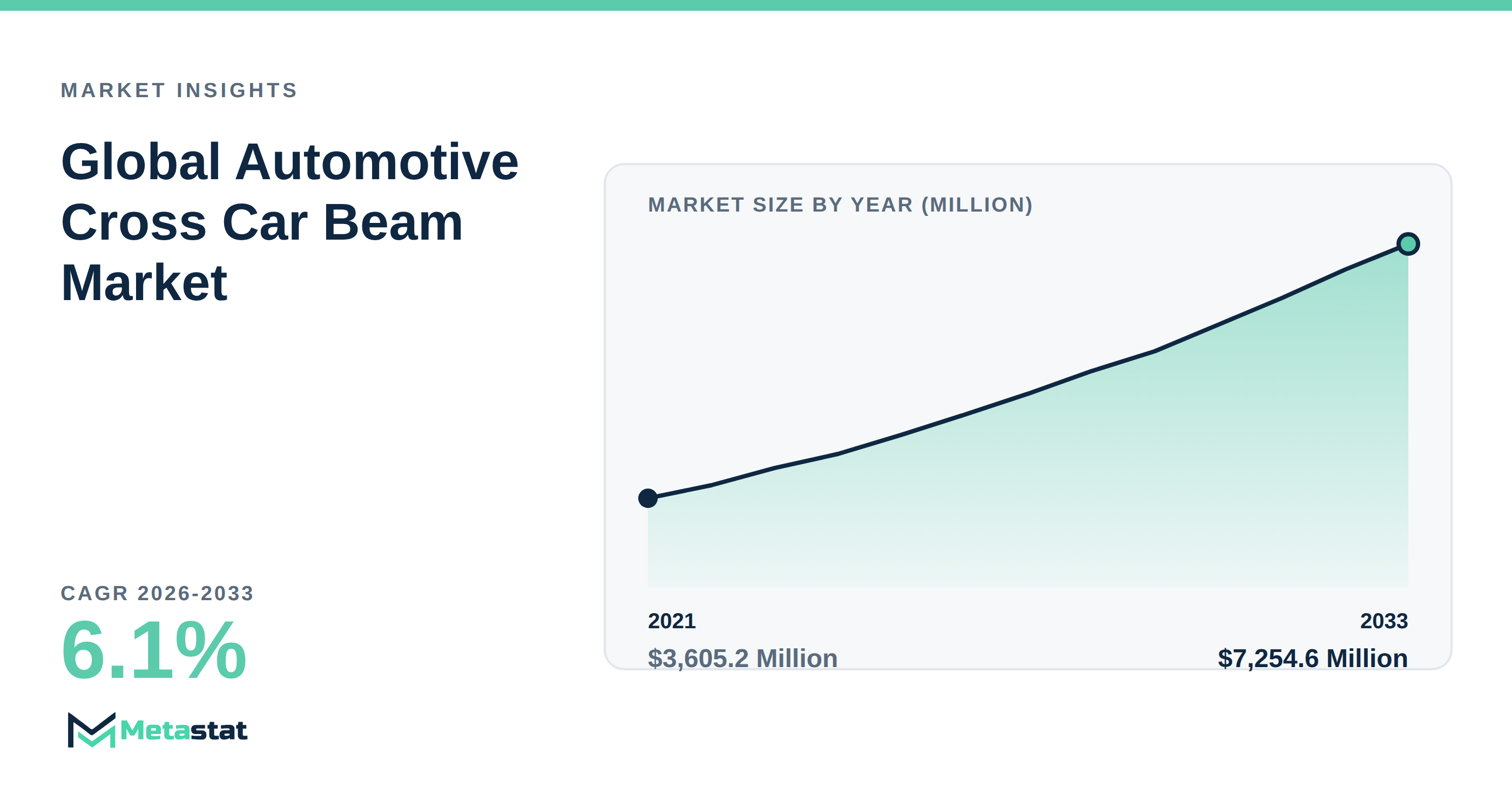
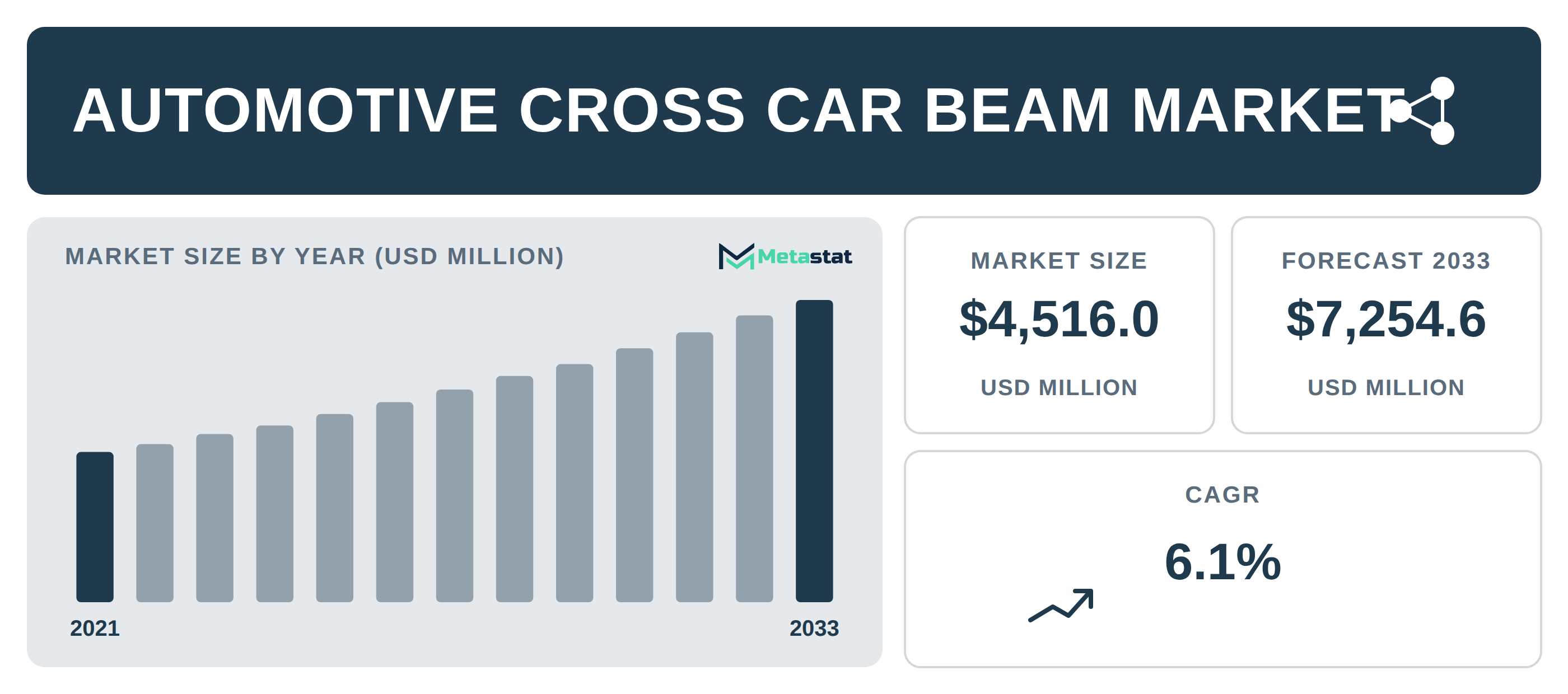
The Automotive Cross Car Beam sector is entering a dynamic phase as it moves towards 2033. Key trends emerging now are reshaping the competitive landscape, impacting how manufacturers source components and approach design innovations. Understanding these shifts is essential for stakeholders aiming to leverage upcoming opportunities and mitigate potential challenges. For a detailed overview of the trends and projections, refer to the Automotive Cross Car Beam market size and forecast report.
How are lightweight materials changing production strategies?
The increasing emphasis on lightweight materials, especially aluminum and magnesium, is a defining trend in the Automotive Cross Car Beam outlook. Manufacturers are prioritizing these options to enhance vehicle efficiency and meet stringent regulatory standards on emissions. The growing demand for aluminum cross car beams reflects a shift towards materials that deliver superior performance while reducing weight. This trend not only illustrates evolving consumer preferences but highlights the industry's broader commitment to sustainability and innovation.
What role do manufacturing processes play in shaping competitiveness?
Manufacturing techniques are central to the market's evolution. Advanced methods, including hydraulic tube forming and high-pressure die casting, are gaining traction due to their ability to produce complex geometries while minimizing material waste. The hydroforming process is gaining popularity as it allows manufacturers to create intricate shapes that enhance structural integrity. Automotive producers adopting these techniques achieve significant operational efficiencies, enabling them to produce lighter, high-strength components that align with the current focus on fuel efficiency.
What is driving the shift in OEM procurement models?
Original Equipment Manufacturers (OEMs) are increasingly evaluating their procurement strategies, choosing between Build-to-Print and Full-Service Supplier models. The latter is gaining popularity, projected to generate USD 2,603.7 million by 2033, as it offers a comprehensive solution that reduces complexity in vehicle production. While manufacturers lean towards integrating supply chains to enhance efficiency, understanding the nuances between these models becomes critical for decision-makers looking to align with evolving trends in automotive sourcing.
How will regional dynamics influence automotive sourcing?
Regional developments play a crucial role in shaping the Automotive Cross Car Beam outlook. North America is projected to experience substantial growth due to a robust automotive sector and innovations in lightweight materials. Similarly, the Asia-Pacific region is driving demand through increased passenger vehicle production and evolving consumer preferences. Stakeholders should pay close attention to these regional dynamics, as they impact sourcing strategies and supply chain management.
What challenges are manufacturers likely to face?
Despite the promising outlook, fluctuations in raw material prices present a significant challenge. Variability in the costs of steel, aluminum, and magnesium complicates budgeting and procurement decisions for manufacturers. This instability deters investment in new technologies or materials that enhance vehicle performance. Suppliers will develop strategies that address price sensitivity and ensure competitive pricing while maintaining high-quality standards in production.
The shifting landscape of the Automotive Cross Car Beam sector offers numerous opportunities for innovation and growth. By keeping abreast of these changes, companies position themselves strategically to capitalize on evolving consumer demands and industry trends. The focus on lightweight materials, advanced manufacturing processes, and procurement strategies will be essential for stakeholders aiming to thrive in this competitive environment.
Tags
About the Authors

LEAD ANALYST
Utkarsh Khirodkar is a Lead Market Research Analyst at MetaStat Insight, specializing in market intelligence, technology sector assessments, and competitive strategy.

ENERGY & INFRASTRUCTURE INDUSTRY CONSULTANT
Automotive and Transportation · Electronics and Semiconductor · Energy and Power · Machinery & Equipment
Saurabh Vasant Ganvir consults for Energy & Infrastructure Industry at MetaStat Insight, specializing in renewable energy, solar EPC, and electric vehicle (EV) infrastructure markets.