
LEAD ANALYST
Utkarsh Khirodkar is a Lead Market Research Analyst at MetaStat Insight, specializing in market intelligence, technology sector assessments, and competitive strategy.

Global Automotive Cross Car Beam Market Size, Share, By Product Type (Steel Cross Car Beams, Aluminum Cross Car Beams, Magnesium Cross Car Beams, Metal-Plastic Hybrid Cross Car Beams and Fiber-Reinforced Composite Cross Car Beams), By Manufacturing Process (Sheet Metal Stamping and Welding, Tube Hydroforming, Conventional Tube Forming and Welding, High-Pressure Die Casting, Aluminum Extrusion and Fabrication and Injection Molding and Hybrid Overmolding), By Vehicle Type (Passenger Cars, Light Commercial Vehicles and Heavy Commercial Vehicles), By OEM Procurement Model (Build-to-Print (OEM-Designed) and Full-Service Supplier (Supplier-Designed) and Joint Development and Co-Engineering), Industry Analysis, Growth, Trends, and Forecast, 2026-2033
Report ID
MSI-5471
Published
October, 2026
Pages
298 Pages
Format
Historical
Base year
Forecast
Forecast period
Report Details
Market Valuation: Valued at $4,516 Million in 2025, projected to reach $7,254.6 Million by 2033 at a 6.1% CAGR.
Dominant Segment: Steel Cross Car Beams lead the market, driven by their strength and cost-effectiveness, appealing to budget-conscious OEMs seeking durable solutions.
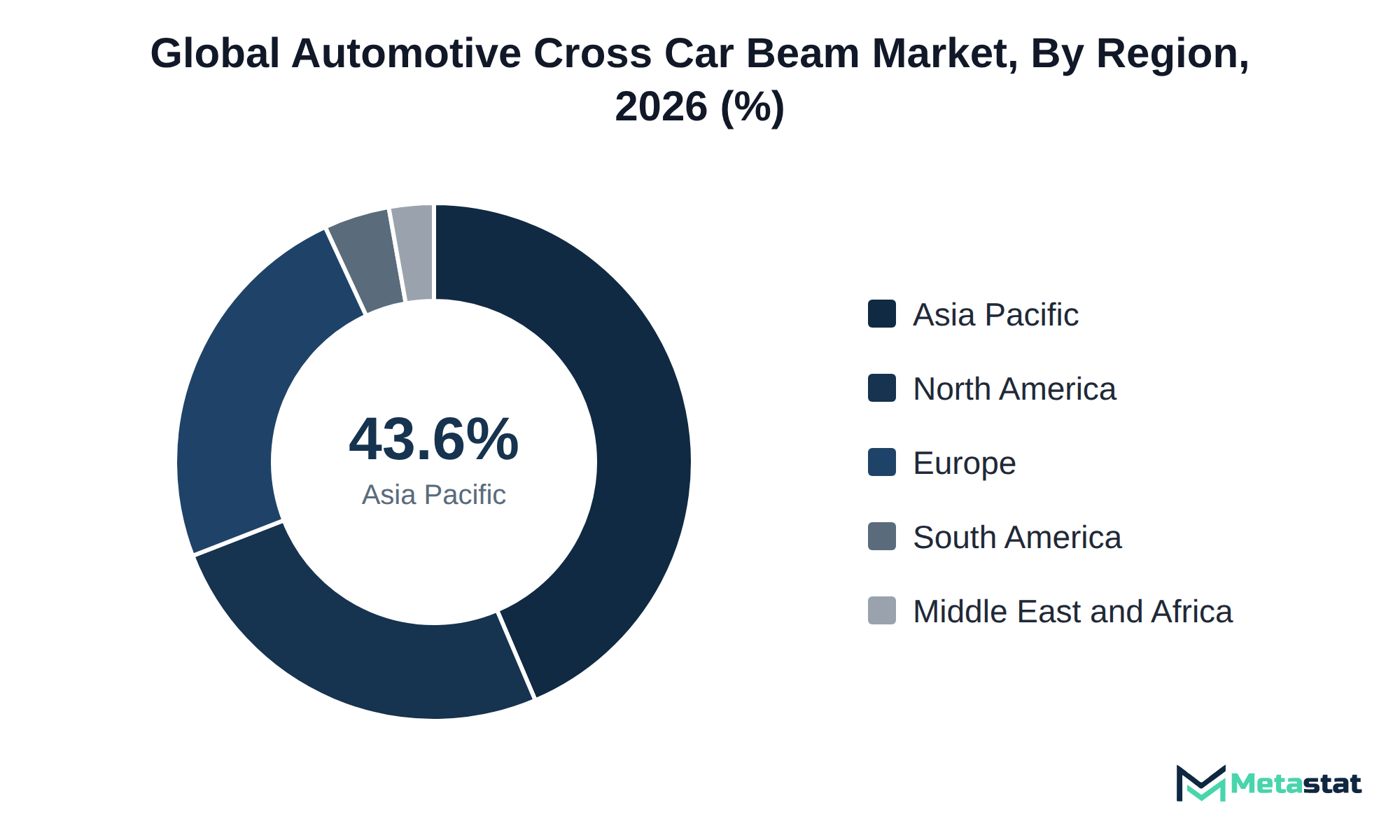
Geographic Lead: Asia Pacific dominates the market with a 43.6% share in 2025, fueled by rapid industrial growth and rising automotive production.
What's Inside: The report includes comprehensive analysis on market dynamics, competitive landscape, and detailed forecasts from 2026 to 2033, covering various product types and manufacturing processes.
Emerging Trends: Aluminum Cross Car Beams are projected to grow at a CAGR of 8.8%, reflecting the automotive industry's shift towards lightweight materials for improved fuel efficiency.
Manufacturing Innovations: Technological advancements in processes like tube hydroforming and high-pressure die casting are enhancing efficiency and reducing waste, driving market growth.
Choose Your License
Global Automotive Cross Car Beam Market
The global Automotive Cross Car Beam market was valued at USD 4,516 million in 2025 and is projected to reach USD 7,254.6 million by 2033, growing at a CAGR of 6.1% over the forecast period.
The Automotive Cross Car Beam market encompasses various structural components used in vehicle manufacturing, primarily designed to enhance safety and support various interior elements. Buyers invest in these products to improve vehicle performance, durability, and compliance with safety standards. This market serves the automotive industry, with a focus on passenger cars, light commercial vehicles, and heavy commercial vehicles, reflecting the ongoing advancements in automotive engineering.
Growth in this market is driven by an increasing demand for lightweight materials that enhance fuel efficiency while maintaining structural integrity. Among the product types, Steel Cross Car Beams dominate in value, attributed to their strength and cost-effectiveness. North America holds 25.5% of the market in 2025, with the US leading in 2026, while Asia Pacific follows closely with a share of 43.6%. The growing emphasis on reducing emissions and improving fuel efficiency supports demand for innovative cross car beam solutions.
Innovations in manufacturing processes, including high-pressure die casting and tube hydroforming, contribute to the expansion of the Automotive Cross Car Beam market. These processes allow for the creation of lighter and more efficient components, addressing the automotive sector's shift toward sustainability. Regional players are investing in advanced technologies to meet the evolving needs of manufacturers, which will further enhance competition and drive growth in the coming years.
The market includes a range of cross car beams, primarily constructed from materials like steel, aluminum, and magnesium. Buyers invest in these components primarily for their roles in improving vehicle safety and structural integrity. The increasing focus on vehicle lightweighting and fuel efficiency drives demand, prompting manufacturers to seek innovative solutions that meet regulatory standards while enhancing performance.
Steel cross car beams represent the most significant segment within the market, driven by their durability and cost-effectiveness. Asia Pacific stands out with the largest market share, accounting for 43.6% of the total. Rapid industrial growth and rising automotive production in the region contribute to this dominance, with manufacturers focusing on advanced materials and processes to meet evolving consumer preferences.
The growth of electric and hybrid vehicles further stimulates investment in cross car beams, as these vehicles require specialized components to accommodate unique design and safety requirements. This trend indicates strong potential for market expansion as manufacturers adapt to changing automotive landscapes.

The adoption of hydroformed steel cross car beams in automotive manufacturing presents a significant shift from traditional stamped options. While stamped steel beams have long served the industry, strategic advantages associated with hydroforming are increasingly recognized. Hydroformed beams allow for superior design flexibility, enabling complex shapes that enhance structural integrity while minimizing weight. This capability becomes crucial in meeting the automotive industry's stringent performance and fuel efficiency standards.
The segment of stamped steel cross car beams is projected to grow from USD 3,051 million in 2026 to USD 4,080 million by 2033, reflecting a compound annual growth rate (CAGR) of 4.2%. In comparison, hydroformed methods exhibit a CAGR of 7.1%, indicating a growing preference for this innovative manufacturing process. The shift towards hydroforming supports improvements in vehicle performance and safety, which are critical considerations for manufacturers aiming to enhance competitiveness in the market.
Automotive manufacturers increasingly prioritize lightweight components to achieve fuel efficiency, making the hydroformed option a compelling choice. This transition aligns with evolving consumer expectations and facilitates compliance with regulatory standards, ultimately driving growth within the automotive cross car beam market.
Purchasing patterns for aluminum, magnesium, and hybrid cross car beams reflect a significant trend toward lightweighting in the automotive sector. The demand for aluminum cross car beams is projected to reach USD 1,866.6 million by 2033, driven by stringent regulations on emissions and fuel efficiency. Buyers prioritize materials that contribute to overall vehicle weight reduction, enhancing performance while adhering to environmental standards.
Contracts with suppliers often adopt a full-service model, where companies seek comprehensive solutions that include design, manufacturing, and logistics. The full-service supplier model is anticipated to account for USD 2,603.7 million by 2033, highlighting a preference for integrated supply solutions that streamline operations and reduce procurement complexities. This approach ensures that buyers receive not only components but strategic support in optimizing vehicle design and production schedules.
Price negotiations play a crucial role in procurement, with buyers leveraging competition among suppliers to secure favorable terms. The competitive nature of the automotive cross car beam market creates an environment where pricing strategies evolve, enabling buyers to achieve cost efficiencies while maintaining quality. The ongoing shift toward lightweight materials necessitates careful attention to both pricing and supply agreements, ensuring that buyers capitalize on emerging market opportunities.
The pricing dynamics within the Automotive Cross Car Beam market reflect the materials and manufacturing processes employed. This stability in pricing is partly due to the widespread use of steel in automotive components, which keeps production costs manageable and consistent.
Tooling costs play a critical role in determining the overall pricing of cross car beams. Investment in advanced manufacturing technologies including Sheet Metal Stamping and Welding, projected to expand from USD 1,905.3 million in 2026 to USD 2,552.2 million by 2033, drives initial costs. Suppliers adopting these technologies achieve higher efficiency and output quality, thereby influencing competitive pricing strategies.
Buyers seeking high-quality components for passenger vehicles focus on the balance between cost and performance. The Automotive Cross Car Beam market provides various options that meet these criteria, helping manufacturers align their production processes with consumer demand while managing operational expenses effectively.
Automotive OEMs face critical decisions when selecting between Build-to-Print and Full-Service Cross Car Beam suppliers. Each procurement model offers distinct advantages that influence OEM choice based on specific project requirements and operational strategies. Build-to-Print suppliers typically allow OEMs to leverage their designs, ensuring precision and conformity to exact specifications. In the Automotive Cross Car Beam market, the Build-to-Print model's revenue is projected to reach USD 2,848.1 million by 2033, reflecting strong interest in this approach from manufacturers who prioritize customization and integration.
On the other hand, Full-Service suppliers provide a comprehensive solution, encompassing design, engineering, and manufacturing responsibilities. This model appeals to OEMs seeking streamlined operations, often reducing lead times and minimizing the need for in-house expertise. Full-Service suppliers are expected to achieve USD 2,603.7 million in revenue by 2033, with their growth reflecting a trend towards outsourcing complex manufacturing processes. Ultimately, the choice between these suppliers hinges on OEMs' strategic focus - whether on detailed control and customization or on efficiency and integration within their supply chains.
Growing consumer preference for passenger vehicles drives increased demand for cross car beams within the market. This shift results from a rise in disposable income, leading to higher purchasing power among consumers, particularly in regions including Asia Pacific. Enhanced comfort and safety features in modern passenger vehicles contribute to this demand shift, prompting automotive manufacturers to invest in advanced structural components. The market demonstrates significant growth potential, with the expected value reaching USD 5,652 million by 2033 for passenger cars. This escalation reflects a broader trend in the automotive sector, with manufacturers seeking to optimize vehicle performance through innovative materials and designs, thereby increasing overall market competitiveness. The heightened focus on safety and comfort highlights the importance of quality cross car beams, compelling manufacturers to invest in advanced technologies that meet evolving consumer expectations. Such dynamics are essential for understanding the trajectory of the market.
Technological advancements in manufacturing processes drive efficiency within the Automotive Cross Car Beam market. Innovations including tube hydroforming and high-pressure die casting significantly reduce material waste and labor costs compared to traditional methods. These processes enable manufacturers to produce lighter, stronger components that align with the automotive industry's goals for lightweighting and sustainability. The shift towards more advanced manufacturing techniques attracts investment from various stakeholders, including OEMs and component suppliers, seeking to enhance their competitive edge.
The adoption of automation and robotics in production facilities facilitates consistent quality and reduces production times. Improved manufacturing technologies result in a streamlined supply chain, decreasing lead times for automotive cross car beams. This efficiency supports increasing demand for high-performance vehicles. Advancements in manufacturing processes contribute to the growth of the market while meeting the evolving requirements of automotive manufacturers.
Price volatility within the Automotive Cross Car Beam market affects purchasing decisions related to advanced materials. Fluctuations in the costs of steel, aluminum, and magnesium create uncertainty, which hampers buyer confidence. Vehicle manufacturers, particularly those producing passenger cars, face challenges in budgeting for these components when prices shift unpredictably. This situation results in smaller order sizes and delayed replacements while companies seek to manage costs. Manufacturers often opt for more stable, lower-cost alternatives, delaying the transition to high-performance materials. Such price sensitivity leads to slower uptake of innovative cross car beam solutions, directly impacting market growth. The strategic focus shifts toward cost containment, limiting potential advancements and efficiencies within the sector.
Rising input costs for raw materials present significant challenges for suppliers in the Automotive Cross Car Beam market. Increasing prices for essential materials, including steel and aluminum, directly affect production expenses. Suppliers respond by optimizing manufacturing processes and seeking alternative materials that offer cost advantages without compromising structural integrity. Many suppliers invest in advanced technologies to enhance efficiency and reduce waste during production. This strategic shift aims to mitigate the impact of fluctuating material costs while maintaining competitive pricing in the market. Growing demand for high-performance cross car beams requires suppliers to balance quality and cost pressures effectively. Suppliers that innovate through material substitution and process improvement are likely to strengthen their market position and achieve sustainable growth given these challenges.
Aluminum cross car beams represent a significant growth opportunity within the Automotive Cross Car Beam market. This segment is projected to expand at a compound annual growth rate (CAGR) of 8.8% through 2033, reflecting increased demand for lightweight materials that enhance vehicle efficiency and performance. Automotive manufacturers prioritize aluminum components due to their favorable strength-to-weight ratio, which supports compliance with stringent fuel economy regulations and emission standards.
The rising integration of aluminum in vehicle designs aligns with an industry-wide shift towards materials that improve overall vehicle performance while reducing weight. Suppliers focusing on aluminum cross car beam manufacturing capture a larger share of the market by addressing the needs of OEMs aiming to enhance vehicle fuel efficiency. Increased investment in innovative production techniques expands the market potential for manufacturers specializing in aluminum solutions.
The Global Automotive Cross Car Beam market is segmented based on Product Type, Manufacturing Process, Vehicle Type, and OEM Procurement Model.
These beams play a critical role in providing structural integrity and support for various components in vehicles, primarily used by automotive manufacturers focused on safety and performance. The increasing emphasis on vehicle safety standards drives demand for this segment, particularly among passenger car manufacturers. Compared to other segments, including Aluminum Cross Car Beams, which grow at a faster CAGR of 8.8%, Steel Cross Car Beams experience slower growth due to competition from lighter alternatives that enhance fuel efficiency. However, the relatively lower cost associated with steel continues to appeal to budget-conscious OEMs, making this segment a stable choice in the evolving Automotive Cross Car Beam market.
Aluminum Cross Car Beams segment is estimated to reach USD 1,866.6 million by 2033, at a CAGR of 8.8% during the forecast period. These beams serve vital roles in reducing vehicle weight while maintaining structural integrity, appealing primarily to automotive manufacturers focused on fuel efficiency and performance. Key forces driving growth include the increasing emphasis on lightweight materials for enhanced fuel efficiency and regulatory pressures aimed at reducing emissions. Compared to other segments, the aluminum variant exhibits a higher growth rate due to its advantageous properties, including corrosion resistance and a favorable strength-to-weight ratio, making it a preferred choice among manufacturers. With a focus on innovative materials, the market sees significant investments in aluminum cross car beams, positioning it as a critical area for development within the automotive sector.
Magnesium Cross Car Beams segment is expected to reach USD 427.3 million by 2033. These components serve primarily in vehicle manufacturing, providing structural support while contributing to weight reduction initiatives. Growing demand for lightweight materials among automotive manufacturers drives interest in magnesium beams. Compared to other segments, including aluminum cross car beams, magnesium cross car beams experience slower growth, with a compound annual growth rate (CAGR) of 8.8%. Light commercial vehicle OEMs often seek materials that balance strength and weight, influencing purchasing decisions. Increasing focus on sustainability and fuel efficiency enhances this segment's relevance, with manufacturers striving to meet evolving consumer preferences and regulatory standards. The competitive landscape for magnesium beams emphasizes innovation in production techniques and material enhancements, positioning them distinctly within the broader market dynamics.
Metal-Plastic Hybrid Cross Car Beams segment is projected to grow at a CAGR of 9.1% during the forecast period. This segment comprises a blend of metal and plastic materials, optimizing strength and weight reduction for automotive applications. Manufacturers apply these beams primarily to enhance vehicle safety and support interior components, appealing to OEMs focused on lightweighting strategies. The rising demand for fuel-efficient vehicles stimulates growth in this segment, distinguishing it from steel and aluminum alternatives, which exhibit slower growth rates. The projected market value for Metal-Plastic Hybrid Cross Car Beams reflects increasing adoption, driving innovation in design and production methods. Competitive pricing and the integration of advanced materials further position this sub-segment favorably against traditional options, enhancing its attractiveness for automotive manufacturers. By 2033, the market for this sub-segment is expected to expand significantly, highlighting its potential within the broader automotive market.
Fiber-Reinforced Composite Cross Car Beams represent a lightweight alternative in the automotive sector, primarily serving to enhance structural integrity while minimizing overall vehicle weight. This segment caters to manufacturers focused on creating more efficient vehicles through advanced materials. The increasing emphasis on fuel efficiency, driven by environmental regulations and consumer demand for greener vehicles, drives the adoption of these beams. Compared to steel and aluminum options, fiber-reinforced composites typically offer superior strength-to-weight ratios, positioning them favorably for applications where weight reduction is critical. The Automotive Cross Car Beam market benefits from ongoing innovations in composite technologies that continue to lower production costs and improve performance characteristics, making these beams an attractive choice for various vehicle types.
This manufacturing process involves shaping and assembling metal parts using high-pressure stamping and welding techniques, primarily employed by automotive manufacturers to create structural components for vehicle interiors. The segment experiences growth driven by the demand for cost-effective and efficient production methods. Compared to other manufacturing processes, including Tube Hydroforming, which holds a higher CAGR of 7.1%, the Sheet Metal Stamping and Welding segment demonstrates steady growth, appealing to manufacturers focused on balancing cost and quality. Factors influencing this segment include the ongoing shift toward lightweight materials and evolving industry standards that prioritize durability and safety in vehicle design, further driving adoption among automotive OEMs.
Tube Hydroforming segment is estimated to reach USD 1,368.2 million by 2033, at a CAGR of 7.1% during the forecast period. This manufacturing process involves shaping metal tubes into complex geometries through the application of high pressure, making it suitable for producing lightweight and high-strength automotive components. Automotive manufacturers apply tube hydroforming for its ability to create intricate shapes while maintaining structural integrity. This segment experiences growth driven by increasing demand for lightweight vehicle structures, which enhances fuel efficiency. Compared to other manufacturing processes, tube hydroforming typically offers a faster production cycle and lower material waste. The segment's expected CAGR of 7.1% outpaces other sub-segments, highlighting its growing significance in meeting evolving requirements of the automotive sector. The market continues to evolve, with manufacturers seeking advanced methods to improve efficiency and performance.
Conventional Tube Forming and Welding segment is expected to reach USD 659.4 million by 2033. This manufacturing process produces cross car beams that provide structural support and stability within various vehicle types. It finds application particularly among automotive manufacturers who prioritize cost-effectiveness and efficiency in production. Increasing demand for affordable vehicle models drives growth in this segment, which is projected to expand at a CAGR of 6.3%, slower than the growth of other processes like Tube Hydroforming at 7.1%. Challenges related to technological advancements and competition from alternative methods influence the dynamics of this segment. The focus on maintaining lower production costs while meeting quality standards differentiates Conventional Tube Forming and Welding from other manufacturing processes in the market.
High-Pressure Die Casting segment is projected to grow at a CAGR of 8.5% during the forecast period. This manufacturing process involves molten metal injected into molds under high pressure, creating precise and complex shapes essential for automotive components. Automotive manufacturers apply this technique for producing high-strength components that enhance vehicle performance and safety. Increasing demand for lightweight vehicles drives the growth of this segment. High-Pressure Die Casting distinguishes itself from others due to its ability to produce intricate designs at a lower weight, offering advantages compared to conventional methods. While other manufacturing processes experience modest growth, High-Pressure Die Casting stands out with its anticipated expansion in the market, primarily serving the needs of passenger car manufacturers focused on improving efficiency.
Aluminum Extrusion and Fabrication involves shaping and assembling aluminum materials for use in automotive cross car beams. This manufacturing process is primarily adopted by automotive manufacturers focused on lightweight and durable components. The growth of this segment reflects increasing demand for energy-efficient vehicles that contribute to overall fuel efficiency and lower emissions. The automotive industry is transitioning towards materials that enhance vehicle performance while maintaining safety standards. Compared to other processes, aluminum extrusion and fabrication presents advantages in weight reduction and corrosion resistance, which appeal to manufacturers aiming for higher performance specifications. The market experiences pressure from rising raw material costs, influencing production decisions and pricing strategies. The focus on sustainable manufacturing practices drives interest in this segment, differentiating it from traditional steel options that dominate other sub-segments.
Injection Molding and Hybrid Overmolding involves advanced techniques used in the production of automotive components. This approach is used for creating intricate designs while ensuring a balance between strength and weight reduction. Manufacturers focusing on this segment typically serve OEMs seeking innovative solutions for passenger cars and light commercial vehicles. Demand within this sub-segment is influenced by the automotive industry's shift towards lightweight materials, driven by the improve fuel efficiency and reduce emissions. Competitive pricing and technological innovation drive adoption, differentiating this segment from others, including traditional metal forming methods, which experience slower growth due to higher costs and lower flexibility in design adaptations. The market experiences increased interest from stakeholders prioritizing sustainability and performance in automotive applications.
Compression molding and roll forming techniques serve distinct purposes within the manufacturing process of automotive cross car beams. These methods primarily produce components with complex shapes and high precision, appealing to manufacturers focused on enhancing vehicle performance and safety. Adoption of these processes is influenced by increasing demand for lightweight materials, which contribute to improved fuel efficiency and emissions reduction. Compared to other manufacturing methods in the market, including sheet metal stamping, compression molding and roll forming present lower production costs while allowing for innovative design flexibility. This broader applicability makes them attractive to a diverse range of buyers, including OEMs and Tier 1 suppliers, who prioritize both cost-effectiveness and performance in their procurement strategies. The Automotive Cross Car Beam market continues to expand, driven by these emerging manufacturing techniques that support the evolving needs of the automotive industry.
Passenger Cars segment is valued at USD 3,688.5 million in 2026 and is projected to reach USD 5,652 million by 2033, at a CAGR of 6.3% during the forecast period. This segment is a critical component in enhancing vehicle structure and safety, primarily used by automotive manufacturers focused on passenger vehicles. The increasing demand for lightweight materials and improved fuel efficiency drives growth in this segment. Compared to Light Commercial Vehicles and Heavy Commercial Vehicles, the Passenger Cars segment exhibits higher growth potential, reflecting consumer preference for fuel-efficient and environmentally friendly options. Manufacturers actively seek to adopt innovative materials and manufacturing processes to meet evolving consumer demands and regulatory standards, further propelling market expansion. The competitive landscape remains dynamic, with various suppliers aiming to capture a larger share of the automotive market.
Light Commercial Vehicles segment is estimated to reach USD 1,326.9 million by 2033, at a CAGR of 5.4% during the forecast period. This segment serves various industries, primarily focusing on transportation and logistics. The demand for light commercial vehicles is driven by growth in e-commerce and delivery services, which require efficient transportation solutions. Compared to other vehicle types, this segment experiences steady growth due to its necessity for urban logistics and last-mile delivery. Price sensitivity in this segment influences purchasing decisions, with buyers seeking a balance between durability and cost-effectiveness. Light commercial vehicles face competition from passenger cars, which have a higher growth rate of 6.3%. The Automotive Cross Car Beam market continues to evolve, with manufacturers adapting to changing needs and preferences within this segment.
Heavy Commercial Vehicles segment is expected to reach USD 275.7 million by 2033. This segment primarily serves the transportation and logistics industries, featuring vehicles designed for carrying heavy loads and performing demanding tasks. The growth of this segment reflects increasing infrastructure development and demand for efficient transportation solutions. Rising regulations related to emissions and fuel efficiency drive manufacturers to adopt lighter and more fuel-efficient cross car beam options. Compared to other vehicle types, the Heavy Commercial Vehicles segment exhibits slower growth, highlighting a more mature market compared to the Passenger Cars segment, which is projected to grow at 6.3%. The distinct characteristics of heavy commercial vehicles necessitate robust components that withstand demanding operational conditions, contributing to a different competitive landscape within the market.
Build-to-Print (OEM-Designed) segment is valued at USD 2,117.7 million in 2026 and is projected to reach USD 2,848.1 million by 2033, at a CAGR of 4.3% during the forecast period. This segment primarily caters to automotive manufacturers seeking precision-engineered components that align with OEM specifications. Growth in this segment is driven by increasing demand for customized solutions tailored to specific vehicle designs and performance requirements. Compared to other segments, this one demonstrates slower growth due to the complexity and time associated with meeting precise specifications, which limits rapid scaling. The Build-to-Print approach differs from Full-Service Supplier models, which offer broader, integrated solutions. This specificity in production and design offers distinct advantages in quality and fit, crucial for high-performance applications in the automotive cross car beam market.
Full-Service Supplier (Supplier-Designed) segment is estimated to reach USD 2,603.7 million by 2033, at a CAGR of 7.2% during the forecast period. This segment caters to automotive manufacturers seeking complete solutions from suppliers, including design, engineering, and production of cross car beams. The growing trend towards integrated supply chains drives demand for full-service suppliers, particularly among original equipment manufacturers (OEMs) aiming to reduce complexity and enhance efficiency. Compared to other procurement models, this segment exhibits faster growth due to the rising preference for streamlined processes in vehicle production. The market benefits from increasing investments in advanced manufacturing technologies that enhance product quality while optimizing costs, ultimately benefiting OEMs through improved supply chain dynamics.
Joint Development and Co-Engineering segment is expected to reach USD 1,802.8 million by 2033. This segment focuses on collaborative efforts between original equipment manufacturers (OEMs) and suppliers to create tailored cross car beam solutions that enhance vehicle performance and safety. Demand from OEMs for innovative designs drives growth, reflecting a trend towards customized manufacturing. With a CAGR of 7.2%, the Joint Development and Co-Engineering segment represents a significant shift towards more integrated and responsive supply chain partnerships, emphasizing flexibility in design and production processes. The automotive industry increasingly values these collaborations, which facilitate rapid adaptation to market trends and consumer preferences.
Based on geography, the Global Automotive Cross Car Beam market is divided into North America, Europe, Asia-Pacific, South America, Middle East, and Africa.
Projected growth in the Automotive Cross Car Beam market for North America is driven by increasing demand from the automotive sector, particularly in the United States, Canada, and Mexico. Factors influencing this growth include advances in vehicle design and a rising focus on lightweight materials, which enhance fuel efficiency and performance. The market's share in 2025 stands at 25.5%, reflecting a strong presence in the overall global market. North America is projected to reach USD 1,771.6 million by the end of 2033, with significant contributions from key players including Antolin and Gestamp Automoción, S.A. These players focus on innovative manufacturing processes and product development to optimize supply chains and cater to evolving consumer preferences.
Demand in Europe for the Automotive Cross Car Beam market is driven by the automotive industry's push toward lightweight materials to enhance fuel efficiency and reduce emissions. Key countries, including Germany and France, focus on advanced manufacturing techniques, which facilitate the production of high-quality cross car beams. European regulations on vehicle emissions further support this shift, compelling manufacturers to innovate and adopt lightweight solutions. The market experiences a share of 24.0% in 2025, reflecting its significance within the broader landscape. Germany, with its robust automotive sector, alongside countries like the UK and Italy, acts as a major contributor to this demand. Investment in research and development for new materials, including aluminum and magnesium, plays a critical role in market growth.
In the Asia-Pacific region, significant growth in the Automotive Cross Car Beam market stems from the increasing production of passenger cars and light commercial vehicles. Countries including China and India drive demand with their expanding automotive industries and rising consumer preferences for advanced vehicle features. South Korea's focus on innovative manufacturing processes enhances competitiveness in this market. Infrastructure development, particularly in electric vehicle charging stations and highways, supports the growth of automotive manufacturing. The region holds a share of 43.6% of the global market in 2025, reflecting strong market dynamics and investment potential in automotive technologies. Overall, these factors contribute to an expected growth trajectory in the Automotive Cross Car Beam market across Asia-Pacific.
Growth in the Automotive Cross Car Beam market in South America is driven primarily by the automotive manufacturing sector, particularly in Brazil and Argentina. Economic activities in these countries support increased vehicle production, leading to heightened demand for cross car beams. The relatively low manufacturing costs compared to other regions attract investment in automotive production facilities. Increased focus on fuel efficiency and vehicle safety has prompted manufacturers to adopt advanced materials and design techniques, enhancing overall vehicle performance. With the market share in South America projected at 4.1% in 2025, opportunities exist for suppliers to penetrate this growing market effectively. Continuous improvements in infrastructure and investment in new technologies will further strengthen the automotive supply chain, contributing to market expansion through 2033.
The Middle East and Africa region holds a share of 2.8% of the global market in 2025, reflecting specific demand dynamics. Countries including Saudi Arabia, UAE, and South Africa drive the market due to increasing investments in automotive manufacturing and infrastructure development. The automotive industry in these countries focuses on the adoption of lightweight materials to enhance vehicle efficiency and performance. The region's growing consumer base for passenger vehicles contributes to market expansion. Local players actively pursue collaborations with international suppliers to enhance production capabilities and reduce costs. The market evolves, driven by a combination of regional demand trends and an increasing emphasis on sustainability within the automotive sector.
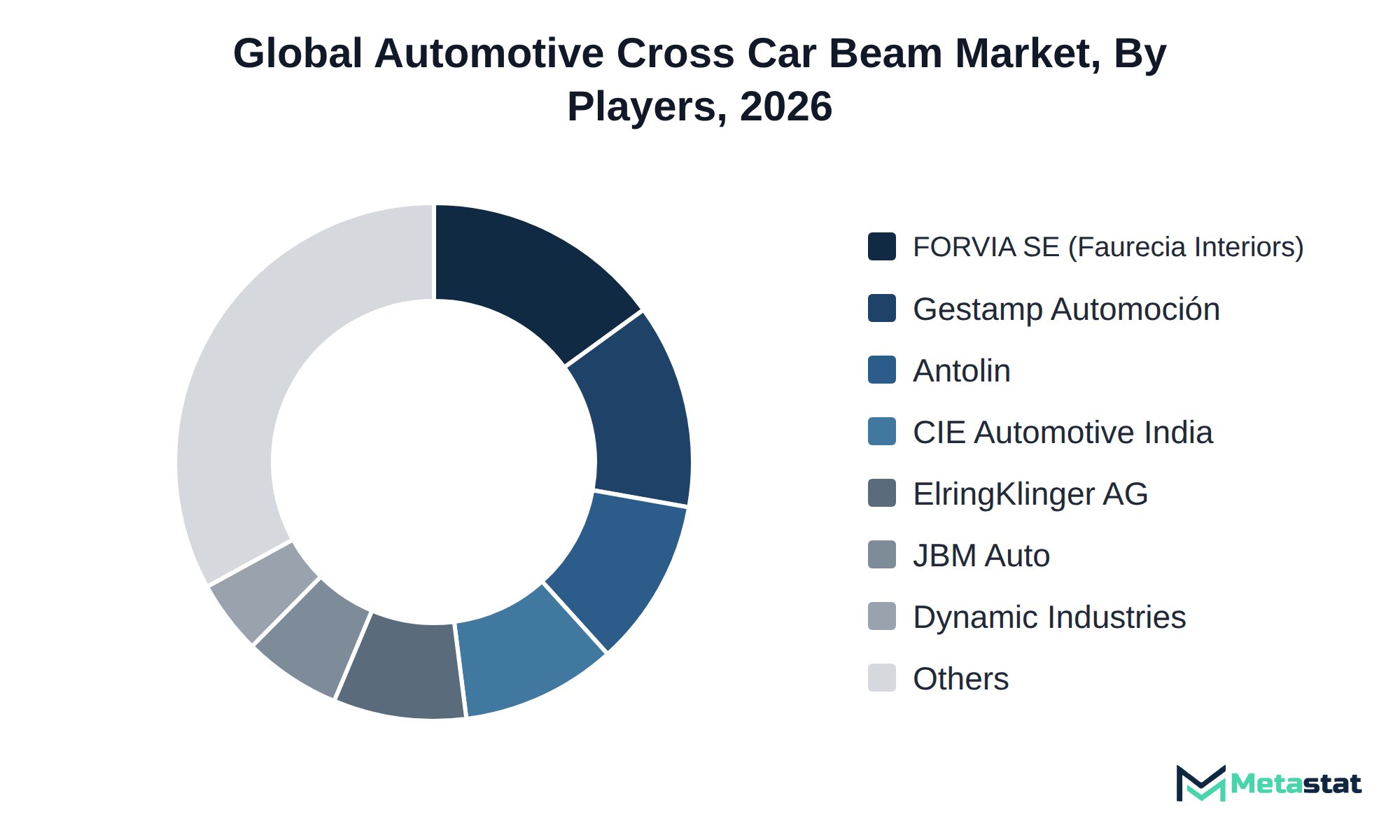
Companies within the Automotive Cross Car Beam market engage in various strategic behaviors to secure competitive advantages. The field divides prominently by product type, with manufacturers specializing in steel, aluminum, and hybrid cross car beams. Buyers prioritize factors including price, certification, and customization in their purchasing decisions.
Antolin focuses on innovative designs and efficient manufacturing processes, positioning itself to meet diverse customer specifications. ElringKlinger AG emphasizes high-quality materials and advanced engineering solutions tailored to specific vehicle requirements. Gestamp Automoción, S.A. demonstrates a commitment to sustainability and lightweight solutions, appealing to environmentally conscious buyers.
Growth in the Automotive Cross Car Beam market relies on several key developments. Increased adoption of aluminum cross car beams, projected to reach USD 1,866.6 million by 2033 at a CAGR of 8.8%, will enhance market penetration due to their lightweight properties, appealing to manufacturers aiming for fuel efficiency. However, risks exist that could hinder progress. Fluctuations in raw material prices, especially for steel and aluminum, constrain production costs and ultimately affect pricing strategies across regions, particularly in North America and Europe, where competitive pressures are intense. Ensuring supply chain stability and managing cost fluctuations will be crucial for market participants to capitalize on the anticipated growth in the Automotive Cross Car Beam market.
By Product Type: Steel Cross Car Beams, Aluminum Cross Car Beams, Magnesium Cross Car Beams, Metal-Plastic Hybrid Cross Car Beams, Fiber-Reinforced Composite Cross Car Beams
By Manufacturing Process: Sheet Metal Stamping and Welding, Tube Hydroforming, Conventional Tube Forming and Welding, High-Pressure Die Casting, Aluminum Extrusion and Fabrication, Injection Molding and Hybrid Overmolding, Others (Compression Molding, Roll Forming)
By Vehicle Type: Passenger Cars, Light Commercial Vehicles, Heavy Commercial Vehicles
By OEM Procurement Model: Build-to-Print (OEM-Designed), Full-Service Supplier (Supplier-Designed), Joint Development and Co-Engineering
The report strategically identifies and profiles the key market players and analyses their core competencies in each sub-segment of the Automotive Cross Car Beam market.
Report Attributes | Details |
Study Period | 2021-2033 |
Base Year | 2025 |
Estimated Year | 2026 |
Forecast Period | 2026-2033 |
Historical Period | 2021-2025 |
Growth Rate | CAGR 6.1% from 2026 to 2033 |
Revenue Unit | USD million |
Segmentation | By Product Type, Manufacturing Process, Vehicle Type, OEM Procurement Model, and Region |
By Region | North America (By Product Type, Manufacturing Process, Vehicle Type, OEM Procurement Model, and Country)
|
Europe (By Product Type, Manufacturing Process, Vehicle Type, OEM Procurement Model, and Country)
| |
Asia Pacific (By Product Type, Manufacturing Process, Vehicle Type, OEM Procurement Model, and Country)
| |
South America (By Product Type, Manufacturing Process, Vehicle Type, OEM Procurement Model, and Country)
| |
Middle East and Africa (By Product Type, Manufacturing Process, Vehicle Type, OEM Procurement Model, and Country)
|
Find answers to common questions about this report
The Automotive Cross Car Beam market size was valued at USD 4,516 million in 2025.
The market is projected to grow at a CAGR of 6.1% during the forecast period from 2026 to 2033.
The North America Automotive Cross Car Beam market size is estimated to reach USD 1,771.6 million by 2033.
Steel Cross Car Beams lead the market with a projected value of USD 4,080 million by 2033. This segment outpaces others in terms of revenue generation.
Growing consumer preference for passenger vehicles drives increased demand for cross car beams, fueled by rising disposable income and enhanced comfort and safety features. Technological advancements in manufacturing processes improve efficiency, enabling the production of lighter, stronger components that align with the automotive industry's goals for lightweighting and sustainability.
Price volatility in the Automotive Cross Car Beam market restrains growth by affecting purchasing decisions related to advanced materials, which creates uncertainty and hampers buyer confidence. Rising input costs for raw materials, including steel and aluminum, challenge suppliers, impacting production expenses and limiting advancements.
Several factors favor adoption in the Automotive Cross Car Beam industry. Increased demand for lightweight materials enhances vehicle efficiency and performance, aligning with manufacturers' goals to comply with stringent fuel economy regulations. technological advancements in manufacturing processes improve production efficiency, further supporting market growth.
The Automotive Cross Car Beam market is estimated to reach a valuation of USD 7,254.6 million by 2033.
Key players operating in the Automotive Cross Car Beam market include Antolin, Autocomp Corporation Panse Private Limited, Belrise Industries Limited, CIE Automotive India Limited, FORVIA SE (Faurecia Interiors), JBM Auto Limited, KIRCHHOFF Automotive GmbH, and Yanfeng Automotive Interiors.
The Aluminum Cross Car Beams segment is projected to reach USD 1,866.6 million by 2033, reflecting a strong demand for lightweight materials.
The analysts below cover Automotive and Transportation research at Metastat Insights.
LEAD ANALYST
Utkarsh Khirodkar is a Lead Market Research Analyst at MetaStat Insight, specializing in market intelligence, technology sector assessments, and competitive strategy.

ENERGY & INFRASTRUCTURE INDUSTRY CONSULTANT
Automotive and Transportation · Electronics and Semiconductor · Energy and Power · Machinery & Equipment
Saurabh Vasant Ganvir consults for Energy & Infrastructure Industry at MetaStat Insight, specializing in renewable energy, solar EPC, and electric vehicle (EV) infrastructure markets.
Decarbonizing industrial thermal processes hinges on refrigerant regulations and compressor efficiency limits. Metastat Insights delivered a thorough market analysis that evaluated natural refrigerants like CO2 and hydrocarbons against synthetic low-GWP alternatives. The breakdown of utility incentives and grid capacity constraints across key European manufacturing hubs offered valuable perspective. The follow-up conversation with their sector analysts addressed our specific questions on mechanical vapor recompression systems efficiently.
Assessing 200mm wafer transition schedules and substrate supply bottlenecks requires precise technical intelligence. MetaStat Insight supplied an actionable breakdown comparing planar and trench MOSFET architectures across automotive and industrial drive markets. The regional capacity estimates for Asia-Pacific foundries helped clarify lead-time uncertainties during our strategic planning session. When we needed additional clarification on high-purity raw material sourcing, their analyst team responded with helpful context within twenty-four hours.
Tracking maintenance cycle demand for secondary flight display units and terrain collision avoidance systems across regional jet fleets involves complex aftermarket dynamics. MetaStat Insight provided practical analysis separating airline retrofit programs from OEM forward-fit production schedules in North America and Southeast Asia. The supplier matrix highlighted component obsolescence timelines without resorting to vague generalizations. The dataset served as a dependable reference during our annual program review meetings.
Explore related market intelligence reports worth reading alongside this one.